42 stories credited to NOTUS
Latest story Apr 22, 2026 · on ChamberLight since Apr 2026
A story can appear as several articles (copies of the same piece), so counts of stories and of articles differ.
Scores for NOTUS
Political lean
39 stories · 95% range 45–48 · updated Sep 24, 2026
Originality
42 stories · updated Sep 24, 2026
Writing quality 84 of 100: the average rating of 39 stories, each rated on its own (separate from credibility). How it is measured
Scores last checked Sep 24, 2026.
Stories ChamberLight collected, by month
Stories credited to NOTUS, by publication date. ChamberLight collects articles that mention the officials it tracks, so this shows its own coverage of this source, not how much the source publishes.
- Stories from NOTUS
- Shaded: ChamberLight collected no stories, or almost none, from any outlet (a gap in its collection, not in the outlet’s publishing)
Show as a table
| Month | Stories | All outlets |
|---|---|---|
| March 2026 | 3 | 365 |
| April 2026 | 39 | 4,537 |
| May 2026 | 0 | none collected |
| June 2026 | 0 | none collected |
| July 2026 | 0 | none collected |
| August 2026 | 0 | 1 (collection gap) |
| September 2026 | 0 | 598 |
Top topics
Share of this source’s stories tagged with each topic. A story can carry several topics, so the shares do not add up to 100%.
- Ethics/Corruption31
74% of 42 stories · 62% across all outlets
- Budget/Spending24
57% of 42 stories · 33% across all outlets
- Economy12
29% of 42 stories · 26% across all outlets
- Defense/Military8
19% of 42 stories · 26% across all outlets
- Foreign Policy8
19% of 42 stories · 30% across all outlets
- Voting Rights8
19% of 42 stories · 20% across all outlets
- Criminal Justice7
17% of 42 stories · 20% across all outlets
- Immigration6
14% of 42 stories · 13% across all outlets
The thin mark on each bar is the topic’s share across all outlets.
Who they cover
Party of the officials these stories are mainly about, across all 77 officials named. A story counts once for each official it is mainly about, so the split is over 118 story–official pairs, from 42 stories.
- Republican54% · 64 pairs
- Democrat32% · 38 pairs
- Party not recorded10% · 12 pairs
- Independent3% · 4 pairs
Most covered
Stories mainly about each official, and their share of the source’s 42 stories.
- 1Donald TrumpR11 stories · 26%
- 2Markwayne MullinR7 stories · 17%
- 3Charles SchumerD5 stories · 12%
- 4Robert F. Kennedy Jr.R5 stories · 12%
- 5Eric SwalwellD4 stories · 10%
- 6John ThuneR3 stories · 7%
- 7Bernard SandersI2 stories · 5%
- 8Bill CassidyR2 stories · 5%
- 9Cory MillsR2 stories · 5%
- 10Darrell IssaR2 stories · 5%
+ 67 other officials (75 story–official pairs)
Article tone
ChamberLight’s article analysis assigns each story a tone toward the official it covers. It describes the coverage of that official, not NOTUS’s stance, and reader votes do not change it. 42 stories.
- Good Look
- 9 (21%)
- Mixed
- 24 (57%)
- Informational
- 1 (2%)
- Bad Look
- 8 (19%)
Related sources
Lean 95% range 45–48 · updated Sep 24, 2026
Similar lean · 3 shared topics
Lean 95% range 44–50 · updated Sep 24, 2026
Similar lean · 3 shared topics
Lean 95% range 43–49 · updated Sep 24, 2026
Similar lean · 3 shared topics
Lean 95% range 45–50 · updated Sep 24, 2026
Similar lean · 2 shared topics
Lean 95% range 40–51 · updated Sep 24, 2026
Similar lean · 2 shared topics
Lean 95% range 38–53 · updated Sep 24, 2026
Similar lean · 1 shared topic
Challenges to these scores
No one has challenged a score on this page yet. Anyone can; editors publish every outcome here.
Articles served from notus.org
118
American Spirit Airlines
View of Spirit Airlines terminal at Pittsburgh International Airport as the company is facing forced liquidation due to fuel price surge on April 16, 2026. mpi34/mpi34/MediaPunch/IPxGood afternoon. This is the Final NOTUS newsletter for April 22, 2026. You can get it in your inbox every day by signing up here — it’s free! THE LATEST How quickly will the global economy recover after the U.S. war with Iran ends? Donald Trump has insisted that prices will drop almost immediately after hostilities end — but according to a classified Pentagon assessment presented to Congress this week, it could take up to six months to clear the Strait of Hormuz of mines and fully reopen the crucial global shipping corridor to commercial traffic. The estimate was shared by senior U.S. military officials during a classified briefing of the House Armed Services Committee, The Washington Post reported. Iran also said it seized two cargo ships today near the strait. The attack brought new uncertainty into a fragile ceasefire that Trump extended indefinitely yesterday. Who won the redistricting war? After Virginia voters approved a new congressional map that is more favorable to Democrats, it looks like a draw, NOTUS’ Paul Kane reports. The Cook Political Report redistricting tracker predicts that the best-case scenario for Republicans is a four-seat pickup — the same number that Democrats could pick up under their best-case scenario. In other words, so far it’s a statistical wash. THE HILL Rep. David Scott, a Democrat from Georgia, has died at the age of 80. Scott’s passing, announced by his office, marks the fifth death of a sitting lawmaker this Congress. The veteran lawmaker served more than 20 years in the House and in 2021 became the first Black chair of the Agriculture Committee. Robert F. Kennedy Jr. tangled with several of his Republican critics on Capitol Hill today during a pair of hearings. Lawmakers grilled the health secretary on a number of issues, including whether Trump’s nominee for CDC director, Erica Schwartz, would be able to make her own vaccine-related decisions — something he refused to commit to earlier this week. He told Sen. Bill Cassidy that Schwartz would be allowed to operate independently of other political appointees — or even fire people who have undermined trust in immunizations. Democrats also pressed Kennedy on a number of things, including the Trump administration’s deals with pharmaceutical companies, the cost of promotional videos created by Kennedy’s office and his stance on the measles vaccine. THE ADMINISTRATION A federal judge tossed the embattled Kash Patel’s other defamation lawsuit — the one he filed against former MSNBC contributor Frank Figliuzzi for saying that Patel had “been visible at nightclubs far more than” at FBI headquarters. U.S. District Judge George Hanks Jr. wrote that with context, the comment “cannot have been perceived by a person of ordinary intelligence as stating actual facts about Patel.” The Trump administration may bail out Spirit Airlines. A deal under discussion could include a loan of up to $500 million for Spirit and equity for the U.S. government, The Wall Street Journal reported. Sean Duffy seems skeptical: “If no one else wants to buy them, why would we buy them?” the transportation secretary told Reuters. FCC Chair Brendan Carr wants to put a warning label on TV programs that feature transgender characters and themes. His agency is seeking public comment on whether TV ratings, which typically warn of violence or sexual content, should also flag programs with themes that explore gender identity, according to a public notice posted today. The notice also floated the idea of adding representatives from faith-based organizations to the FCC’s TV Oversight Management Board. HEAR US OUT https://x.com/KLF/status/2046993134484074871?s=20 Thank you for reading! Today’s newsletter was produced by Kelly Poe and Andrew Burton. If you liked it, please forward it to a friend. If someone shared it with you, please subscribe — it’s free! Got a tip or comments to share? Email us at finalnotus@notus.com.
American Spirit Airlines
View of Spirit Airlines terminal at Pittsburgh International Airport as the company is facing forced liquidation due to fuel price surge on April 16, 2026. mpi34/mpi34/MediaPunch/IPxGood afternoon. This is the Final NOTUS newsletter for April 22, 2026. You can get it in your inbox every day by signing up here — it’s free! THE LATEST How quickly will the global economy recover after the U.S. war with Iran ends? Donald Trump has insisted that prices will drop almost immediately after hostilities end — but according to a classified Pentagon assessment presented to Congress this week, it could take up to six months to clear the Strait of Hormuz of mines and fully reopen the crucial global shipping corridor to commercial traffic. The estimate was shared by senior U.S. military officials during a classified briefing of the House Armed Services Committee, The Washington Post reported. Iran also said it seized two cargo ships today near the strait. The attack brought new uncertainty into a fragile ceasefire that Trump extended indefinitely yesterday. Who won the redistricting war? After Virginia voters approved a new congressional map that is more favorable to Democrats, it looks like a draw, NOTUS’ Paul Kane reports. The Cook Political Report redistricting tracker predicts that the best-case scenario for Republicans is a four-seat pickup — the same number that Democrats could pick up under their best-case scenario. In other words, so far it’s a statistical wash. THE HILL Rep. David Scott, a Democrat from Georgia, has died at the age of 80. Scott’s passing, announced by his office, marks the fifth death of a sitting lawmaker this Congress. The veteran lawmaker served more than 20 years in the House and in 2021 became the first Black chair of the Agriculture Committee. Robert F. Kennedy Jr. tangled with several of his Republican critics on Capitol Hill today during a pair of hearings. Lawmakers grilled the health secretary on a number of issues, including whether Trump’s nominee for CDC director, Erica Schwartz, would be able to make her own vaccine-related decisions — something he refused to commit to earlier this week. He told Sen. Bill Cassidy that Schwartz would be allowed to operate independently of other political appointees — or even fire people who have undermined trust in immunizations. Democrats also pressed Kennedy on a number of things, including the Trump administration’s deals with pharmaceutical companies, the cost of promotional videos created by Kennedy’s office and his stance on the measles vaccine. THE ADMINISTRATION A federal judge tossed the embattled Kash Patel’s other defamation lawsuit — the one he filed against former MSNBC contributor Frank Figliuzzi for saying that Patel had “been visible at nightclubs far more than” at FBI headquarters. U.S. District Judge George Hanks Jr. wrote that with context, the comment “cannot have been perceived by a person of ordinary intelligence as stating actual facts about Patel.” The Trump administration may bail out Spirit Airlines. A deal under discussion could include a loan of up to $500 million for Spirit and equity for the U.S. government, The Wall Street Journal reported. Sean Duffy seems skeptical: “If no one else wants to buy them, why would we buy them?” the transportation secretary told Reuters. FCC Chair Brendan Carr wants to put a warning label on TV programs that feature transgender characters and themes. His agency is seeking public comment on whether TV ratings, which typically warn of violence or sexual content, should also flag programs with themes that explore gender identity, according to a public notice posted today. The notice also floated the idea of adding representatives from faith-based organizations to the FCC’s TV Oversight Management Board. HEAR US OUT https://x.com/KLF/status/2046993134484074871?s=20 Thank you for reading! Today’s newsletter was produced by Kelly Poe and Andrew Burton. If you liked it, please forward it to a friend. If someone shared it with you, please subscribe — it’s free! Got a tip or comments to share? Email us at finalnotus@notus.com.
American Spirit Airlines
View of Spirit Airlines terminal at Pittsburgh International Airport as the company is facing forced liquidation due to fuel price surge on April 16, 2026. mpi34/mpi34/MediaPunch/IPxGood afternoon. This is the Final NOTUS newsletter for April 22, 2026. You can get it in your inbox every day by signing up here — it’s free! THE LATEST How quickly will the global economy recover after the U.S. war with Iran ends? Donald Trump has insisted that prices will drop almost immediately after hostilities end — but according to a classified Pentagon assessment presented to Congress this week, it could take up to six months to clear the Strait of Hormuz of mines and fully reopen the crucial global shipping corridor to commercial traffic. The estimate was shared by senior U.S. military officials during a classified briefing of the House Armed Services Committee, The Washington Post reported. Iran also said it seized two cargo ships today near the strait. The attack brought new uncertainty into a fragile ceasefire that Trump extended indefinitely yesterday. Who won the redistricting war? After Virginia voters approved a new congressional map that is more favorable to Democrats, it looks like a draw, NOTUS’ Paul Kane reports. The Cook Political Report redistricting tracker predicts that the best-case scenario for Republicans is a four-seat pickup — the same number that Democrats could pick up under their best-case scenario. In other words, so far it’s a statistical wash. THE HILL Rep. David Scott, a Democrat from Georgia, has died at the age of 80. Scott’s passing, announced by his office, marks the fifth death of a sitting lawmaker this Congress. The veteran lawmaker served more than 20 years in the House and in 2021 became the first Black chair of the Agriculture Committee. Robert F. Kennedy Jr. tangled with several of his Republican critics on Capitol Hill today during a pair of hearings. Lawmakers grilled the health secretary on a number of issues, including whether Trump’s nominee for CDC director, Erica Schwartz, would be able to make her own vaccine-related decisions — something he refused to commit to earlier this week. He told Sen. Bill Cassidy that Schwartz would be allowed to operate independently of other political appointees — or even fire people who have undermined trust in immunizations. Democrats also pressed Kennedy on a number of things, including the Trump administration’s deals with pharmaceutical companies, the cost of promotional videos created by Kennedy’s office and his stance on the measles vaccine. THE ADMINISTRATION A federal judge tossed the embattled Kash Patel’s other defamation lawsuit — the one he filed against former MSNBC contributor Frank Figliuzzi for saying that Patel had “been visible at nightclubs far more than” at FBI headquarters. U.S. District Judge George Hanks Jr. wrote that with context, the comment “cannot have been perceived by a person of ordinary intelligence as stating actual facts about Patel.” The Trump administration may bail out Spirit Airlines. A deal under discussion could include a loan of up to $500 million for Spirit and equity for the U.S. government, The Wall Street Journal reported. Sean Duffy seems skeptical: “If no one else wants to buy them, why would we buy them?” the transportation secretary told Reuters. FCC Chair Brendan Carr wants to put a warning label on TV programs that feature transgender characters and themes. His agency is seeking public comment on whether TV ratings, which typically warn of violence or sexual content, should also flag programs with themes that explore gender identity, according to a public notice posted today. The notice also floated the idea of adding representatives from faith-based organizations to the FCC’s TV Oversight Management Board. HEAR US OUT https://x.com/KLF/status/2046993134484074871?s=20 Thank you for reading! Today’s newsletter was produced by Kelly Poe and Andrew Burton. If you liked it, please forward it to a friend. If someone shared it with you, please subscribe — it’s free! Got a tip or comments to share? Email us at finalnotus@notus.com.

Senate Democrats to Force Republicans to Vote on Affordability Measures During ICE Funding Debate
Senate Minority Leader Chuck Schumer, D-N.Y., holds a news conference about the budget process that Republicans hope will fund Immigration and Customs Enforcement and Border Patrol, at the Capitol in Washington, Wednesday, April 22, 2026. J. Scott Applewhite/APAs Senate Republicans move forward with passing a narrow, party-line bill to fund immigration enforcement, Democrats are planning to put Republicans on the spot with a series of votes aimed at lowering the cost of living. Republicans plan to pass the measure, which will provide three years of funding for Immigration and Customs Enforcement and parts of Customs and Border Protection, through reconciliation, a process that allows senators to push amendments relevant to the bill in a marathon voting session. Senate Minority Leader Chuck Schumer told reporters on Wednesday that Democrats are seeking to use the “vote-a-rama” to divide Republicans and spotlight some of the GOP’s most unpopular policies by forcing a series of votes on affordability issues. “You’re going to have lots of amendments,” Schumer said. “The focus of those amendments is to show the contrast. We are for reducing costs for the American people –– whether it’s housing, or whether it’s health care, or whether it’s electric costs, or whether it’s groceries or whether it’s child care, and they are funding a rogue police force that is not even popular with the American people.” Democrats’ focus on affordability comes as U.S. energy prices skyrocket and an end to the U.S.-Israeli war against Iran remains unclear. Ahead of the midterm elections, Democrats have focused their messaging on the high cost of living under President Donald Trump and a GOP-controlled Congress. Some Republicans are now worried the lack of affordability provisions in the bill could end up being a political mistake. Senate Majority Leader John Thune had insisted that the bill remain “skinny” to ensure it could be passed quickly and without too much debate. But Republicans like Sen. John Kennedy, a longtime advocate of using the reconciliation process to promote party-line issues, said that strategy could end up being a liability. “I understand where the leadership is, I would probably be doing the same thing if I were [them],” Kennedy said. “But this is going to be the last train leaving the station. And the cost of living is something that is on the minds of the American people, and they want us to address it.” Though Schumer declined to share exactly how many amendments Democrats would put up ahead of the marathon voting session, Sen. Brian Schatz, the Democratic chief deputy whip, said that he hopes the series of votes will spotlight for voters what priorities are missing from the reconciliation bill. “When you're in the majority in the Senate, you get limited opportunities to use this unusual tool of reconciliation once, maybe twice in a year,” Schatz said. “And so it's pretty significant that using this tool, they have decided to do exactly nothing about the cost of living.” The budget resolution introduced to the Senate on Tuesday would direct up to $140 billion to fund the immigration enforcement agencies for years to come. Though the projected price tag of the package may be closer to $70 billion in the end, Sen. Patty Murray told reporters that her party plans to illustrate that number as an example of a stark refusal from Republicans to work on lowering costs. “GOP senators are practically telling the American people in no uncertain terms, just a few months before an election, that Republicans don't care about the cost of living,” Murray said. “They don't care about lowering prices or making health care more affordable, or building more housing or expanding access to child care.” Murray, the top Democrat on the Senate Appropriations Committee, said that Democrats plan to focus on the cost of health care in particular during the voting marathon. Senate Democrats shut down the majority of the federal government for 43 days over the issue in the fall, making medical costs a major talking point in the lead-up to the midterms. “Health care premiums have doubled or tripled, or worse, pricing millions out of their coverage,” Murray said. “So what are Republicans doing about all of that? Nothing. Their urgent, top priority this week is shoveling at least $70 billion at ICE and Border Patrol.” Sen. Amy Klobuchar echoed Murray, adding that Democrats plan to compare the price of some of these Democrat-touted spending measures –– lowering health care costs, building affordable housing –– with the cost of funding ICE and CBP. “Do you want to put $70 billion into ICE, or do you want to help people afford their health care premiums with an extension of the tax credits?” Klobuchar told reporters on Wednesday. “Seniors, do you want to get free dental and vision and hearing through Medicare for a year, or do you want to fund this?” In addition to the focus on affordability, Democratic leaders also said that they plan to hammer Republicans for using the reconciliation process to fund agencies unpopular with Americans. Senate Democrats have blocked funding for the Department of Homeland Security for 68 days, following the killings of two American citizens in Minneapolis by immigration enforcement officers. During the lead-up to the vote on the reconciliation bill and during the vote-a-rama itself, Murray said that Democrats will also focus on highlighting Republicans’ unwillingness to reform the agency. “Democrats have spent months at the table pushing Republicans to just do the right thing and pass truly basic reforms, things like judicial warrants or use of force standards,” Murray said. “Republicans in the White House agreed to a handful of reforms themselves, until they decided to abandon the negotiations and rejected doing any reform.” Schumer said Democrats plan to slam Republicans for their unwillingness to compromise, flipping a common GOP-attack line that Democrats want to “defund the police.” “What we want for Border Patrol and ICE is what every police department does,” Schumer said. “They don’t run around wearing masks, they don’t knock down doors without a warrant and they don’t come in and not tell local law enforcement what they are doing. They are the ones who are against a good, strong police force.”
Senate Democrats to Force Republicans to Vote on Affordability Measures During ICE Funding Debate
Senate Minority Leader Chuck Schumer, D-N.Y., holds a news conference about the budget process that Republicans hope will fund Immigration and Customs Enforcement and Border Patrol, at the Capitol in Washington, Wednesday, April 22, 2026. J. Scott Applewhite/APAs Senate Republicans move forward with passing a narrow, party-line bill to fund immigration enforcement, Democrats are planning to put Republicans on the spot with a series of votes aimed at lowering the cost of living. Republicans plan to pass the measure, which will provide three years of funding for Immigration and Customs Enforcement and parts of Customs and Border Protection, through reconciliation, a process that allows senators to push amendments relevant to the bill in a marathon voting session. Senate Minority Leader Chuck Schumer told reporters on Wednesday that Democrats are seeking to use the “vote-a-rama” to divide Republicans and spotlight some of the GOP’s most unpopular policies by forcing a series of votes on affordability issues. “You’re going to have lots of amendments,” Schumer said. “The focus of those amendments is to show the contrast. We are for reducing costs for the American people –– whether it’s housing, or whether it’s health care, or whether it’s electric costs, or whether it’s groceries or whether it’s child care, and they are funding a rogue police force that is not even popular with the American people.” Democrats’ focus on affordability comes as U.S. energy prices skyrocket and an end to the U.S.-Israeli war against Iran remains unclear. Ahead of the midterm elections, Democrats have focused their messaging on the high cost of living under President Donald Trump and a GOP-controlled Congress. Some Republicans are now worried the lack of affordability provisions in the bill could end up being a political mistake. Senate Majority Leader John Thune had insisted that the bill remain “skinny” to ensure it could be passed quickly and without too much debate. But Republicans like Sen. John Kennedy, a longtime advocate of using the reconciliation process to promote party-line issues, said that strategy could end up being a liability. “I understand where the leadership is, I would probably be doing the same thing if I were [them],” Kennedy said. “But this is going to be the last train leaving the station. And the cost of living is something that is on the minds of the American people, and they want us to address it.” Though Schumer declined to share exactly how many amendments Democrats would put up ahead of the marathon voting session, Sen. Brian Schatz, the Democratic chief deputy whip, said that he hopes the series of votes will spotlight for voters what priorities are missing from the reconciliation bill. “When you're in the majority in the Senate, you get limited opportunities to use this unusual tool of reconciliation once, maybe twice in a year,” Schatz said. “And so it's pretty significant that using this tool, they have decided to do exactly nothing about the cost of living.” The budget resolution introduced to the Senate on Tuesday would direct up to $140 billion to fund the immigration enforcement agencies for years to come. Though the projected price tag of the package may be closer to $70 billion in the end, Sen. Patty Murray told reporters that her party plans to illustrate that number as an example of a stark refusal from Republicans to work on lowering costs. “GOP senators are practically telling the American people in no uncertain terms, just a few months before an election, that Republicans don't care about the cost of living,” Murray said. “They don't care about lowering prices or making health care more affordable, or building more housing or expanding access to child care.” Murray, the top Democrat on the Senate Appropriations Committee, said that Democrats plan to focus on the cost of health care in particular during the voting marathon. Senate Democrats shut down the majority of the federal government for 43 days over the issue in the fall, making medical costs a major talking point in the lead-up to the midterms. “Health care premiums have doubled or tripled, or worse, pricing millions out of their coverage,” Murray said. “So what are Republicans doing about all of that? Nothing. Their urgent, top priority this week is shoveling at least $70 billion at ICE and Border Patrol.” Sen. Amy Klobuchar echoed Murray, adding that Democrats plan to compare the price of some of these Democrat-touted spending measures –– lowering health care costs, building affordable housing –– with the cost of funding ICE and CBP. “Do you want to put $70 billion into ICE, or do you want to help people afford their health care premiums with an extension of the tax credits?” Klobuchar told reporters on Wednesday. “Seniors, do you want to get free dental and vision and hearing through Medicare for a year, or do you want to fund this?” In addition to the focus on affordability, Democratic leaders also said that they plan to hammer Republicans for using the reconciliation process to fund agencies unpopular with Americans. Senate Democrats have blocked funding for the Department of Homeland Security for 68 days, following the killings of two American citizens in Minneapolis by immigration enforcement officers. During the lead-up to the vote on the reconciliation bill and during the vote-a-rama itself, Murray said that Democrats will also focus on highlighting Republicans’ unwillingness to reform the agency. “Democrats have spent months at the table pushing Republicans to just do the right thing and pass truly basic reforms, things like judicial warrants or use of force standards,” Murray said. “Republicans in the White House agreed to a handful of reforms themselves, until they decided to abandon the negotiations and rejected doing any reform.” Schumer said Democrats plan to slam Republicans for their unwillingness to compromise, flipping a common GOP-attack line that Democrats want to “defund the police.” “What we want for Border Patrol and ICE is what every police department does,” Schumer said. “They don’t run around wearing masks, they don’t knock down doors without a warrant and they don’t come in and not tell local law enforcement what they are doing. They are the ones who are against a good, strong police force.”
Senate Democrats to Force Republicans to Vote on Affordability Measures During ICE Funding Debate
Senate Minority Leader Chuck Schumer, D-N.Y., holds a news conference about the budget process that Republicans hope will fund Immigration and Customs Enforcement and Border Patrol, at the Capitol in Washington, Wednesday, April 22, 2026. J. Scott Applewhite/APAs Senate Republicans move forward with passing a narrow, party-line bill to fund immigration enforcement, Democrats are planning to put Republicans on the spot with a series of votes aimed at lowering the cost of living. Republicans plan to pass the measure, which will provide three years of funding for Immigration and Customs Enforcement and parts of Customs and Border Protection, through reconciliation, a process that allows senators to push amendments relevant to the bill in a marathon voting session. Senate Minority Leader Chuck Schumer told reporters on Wednesday that Democrats are seeking to use the “vote-a-rama” to divide Republicans and spotlight some of the GOP’s most unpopular policies by forcing a series of votes on affordability issues. “You’re going to have lots of amendments,” Schumer said. “The focus of those amendments is to show the contrast. We are for reducing costs for the American people –– whether it’s housing, or whether it’s health care, or whether it’s electric costs, or whether it’s groceries or whether it’s child care, and they are funding a rogue police force that is not even popular with the American people.” Democrats’ focus on affordability comes as U.S. energy prices skyrocket and an end to the U.S.-Israeli war against Iran remains unclear. Ahead of the midterm elections, Democrats have focused their messaging on the high cost of living under President Donald Trump and a GOP-controlled Congress. Some Republicans are now worried the lack of affordability provisions in the bill could end up being a political mistake. Senate Majority Leader John Thune had insisted that the bill remain “skinny” to ensure it could be passed quickly and without too much debate. But Republicans like Sen. John Kennedy, a longtime advocate of using the reconciliation process to promote party-line issues, said that strategy could end up being a liability. “I understand where the leadership is, I would probably be doing the same thing if I were [them],” Kennedy said. “But this is going to be the last train leaving the station. And the cost of living is something that is on the minds of the American people, and they want us to address it.” Though Schumer declined to share exactly how many amendments Democrats would put up ahead of the marathon voting session, Sen. Brian Schatz, the Democratic chief deputy whip, said that he hopes the series of votes will spotlight for voters what priorities are missing from the reconciliation bill. “When you're in the majority in the Senate, you get limited opportunities to use this unusual tool of reconciliation once, maybe twice in a year,” Schatz said. “And so it's pretty significant that using this tool, they have decided to do exactly nothing about the cost of living.” The budget resolution introduced to the Senate on Tuesday would direct up to $140 billion to fund the immigration enforcement agencies for years to come. Though the projected price tag of the package may be closer to $70 billion in the end, Sen. Patty Murray told reporters that her party plans to illustrate that number as an example of a stark refusal from Republicans to work on lowering costs. “GOP senators are practically telling the American people in no uncertain terms, just a few months before an election, that Republicans don't care about the cost of living,” Murray said. “They don't care about lowering prices or making health care more affordable, or building more housing or expanding access to child care.” Murray, the top Democrat on the Senate Appropriations Committee, said that Democrats plan to focus on the cost of health care in particular during the voting marathon. Senate Democrats shut down the majority of the federal government for 43 days over the issue in the fall, making medical costs a major talking point in the lead-up to the midterms. “Health care premiums have doubled or tripled, or worse, pricing millions out of their coverage,” Murray said. “So what are Republicans doing about all of that? Nothing. Their urgent, top priority this week is shoveling at least $70 billion at ICE and Border Patrol.” Sen. Amy Klobuchar echoed Murray, adding that Democrats plan to compare the price of some of these Democrat-touted spending measures –– lowering health care costs, building affordable housing –– with the cost of funding ICE and CBP. “Do you want to put $70 billion into ICE, or do you want to help people afford their health care premiums with an extension of the tax credits?” Klobuchar told reporters on Wednesday. “Seniors, do you want to get free dental and vision and hearing through Medicare for a year, or do you want to fund this?” In addition to the focus on affordability, Democratic leaders also said that they plan to hammer Republicans for using the reconciliation process to fund agencies unpopular with Americans. Senate Democrats have blocked funding for the Department of Homeland Security for 68 days, following the killings of two American citizens in Minneapolis by immigration enforcement officers. During the lead-up to the vote on the reconciliation bill and during the vote-a-rama itself, Murray said that Democrats will also focus on highlighting Republicans’ unwillingness to reform the agency. “Democrats have spent months at the table pushing Republicans to just do the right thing and pass truly basic reforms, things like judicial warrants or use of force standards,” Murray said. “Republicans in the White House agreed to a handful of reforms themselves, until they decided to abandon the negotiations and rejected doing any reform.” Schumer said Democrats plan to slam Republicans for their unwillingness to compromise, flipping a common GOP-attack line that Democrats want to “defund the police.” “What we want for Border Patrol and ICE is what every police department does,” Schumer said. “They don’t run around wearing masks, they don’t knock down doors without a warrant and they don’t come in and not tell local law enforcement what they are doing. They are the ones who are against a good, strong police force.”

Who Won The Redistricting War? Lawmakers Admit It’s Maybe a Draw
Allen G. Breed/APThe redistricting wars are close to ending, and some veteran lawmakers aren’t sure what has been accomplished. After Virginians narrowly approved new maps on Tuesday in favor of Democrats for its congressional delegation, neither party is coming out on top. The Cook Political Report has maintained a redistricting tracker for the past several months, and the best-case scenario for Republicans after all the reconfiguring is finished is a net gain of only four seats. And the best-case scenario for Democrats? A net gain of … only four seats. House Republicans’ political campaign chief acknowledged that the hype of last summer’s Texas redistricting had been largely countered by Democratic-led states and provided no real edge ahead of November’s elections. “I think we'll retain the majority either way. I mean, if you look at the landscape of the seats that are up for grabs, the redistricting may have changed a few seats here or there,” Rep. Richard Hudson, chair of the National Republican Congressional Committee, told NOTUS on Tuesday, before Virginia’s results came in later that night. Democrats took a we-told-you-so approach to the near deadlock after so many states drew up new congressional maps. "We told the Republicans, when they started this in Texas, that we weren't going to let them further jerry-rig the maps, that we had to have a level playing field. So they went ahead," said House Minority Whip Katherine Clark, also suggesting a very minimal shift had occurred with the redistricting. "Whether we come out ahead or behind, we had to match what they were trying to do,” Clark said. The Florida Legislature may try to draw up new maps netting a couple extra Republican seats in a special session, and legal observers are awaiting a Supreme Court ruling on the constitutionality of districts drawn to produce minority districts to overcome decades of racial injustice in some southern states. The historically narrow majorities of this era egged party leaders into this political arms race. The 119th Congress is the third straight to start with a single-digit edge for the majority party, the first time that has happened since the 1790s, when the number of House seats was a fraction of the current 435. With the belief that every additional seat could be a majority maker, Republicans started this latest round of mid-decade redistricting hoping to build a buffer against President Donald Trump’s low approval ratings. Yet the one clear impact has been to force a bunch of veteran lawmakers into the awkward decision of whether to run in a new district, sometimes far afield from their current constituents, run against another incumbent of their own party in a primary or to retire altogether. Take Rep. Darrell Issa, the Republican first elected in 2000 who retired in 2018 only to win a different Southern California seat in 2020. California Democrats won the referendum last fall by a wide margin in an effort to gain up to five seats, saying they were only responding to the GOP-dominated Texas Legislature’s new House maps. Issa, 72, considered moving to Texas and running in a safely GOP district there or running in a nearby district outside San Diego with a slight Democratic lean, before deciding to retire again at the end of his term. "There's the obvious question of, is it ever a mistake to start a war? I don't know,” Issa said Tuesday. Other California Republicans got pushed into similar decisions. A little north of Issa’s district, Reps. Ken Calvert and Young Kim are running against each other in a member-versus-member primary in one of the few remaining GOP-friendly districts in Southern California. Calvert, 72, in office since 1993, and Kim, 63, serving in her third term, have been two reliable allies for House Republican leaders. Both Republicans have defended swing districts in recent years and had been gearing up for another tough reelection in November. Instead, they are battling it out in June’s so-called jungle primary, in which the top two vote-getters advance to November. Rep. Kevin Kiley, who has won two tough races outside Sacramento, has been the rare Republican who denounced the Texas redistricting from the outset. He has pleaded with House Speaker Mike Johnson to take up his legislation to ban mid-decade redistricting and criticized White House aides for pushing GOP-led states to do so. He decided to run in a seat heavily favored for Democrats, but in doing so renounced his membership in the national Republican Party to run as an independent, while still caucusing with the GOP for the sake of getting committee assignments. “The best way to counter gerrymandering and its insidious impacts on democracy is simply to take partisanship out of the equation,” Kiley told reporters last month. In Texas, Democratic and Republican incumbents found themselves on the outside looking in. Rep. Marc Veasey, in his seventh term representing a Dallas-area district, had risen in influence as a senior member of the New Democrat Coalition and on the Energy and Commerce Committee. Instead, after Republicans carved up the Dallas-Fort Worth region, Veasey had few options left in Congress. He briefly considered running for a county executive position, but is now going to retire from elected politics. Two other incumbent Democrats, Reps. Al Green and Julie Johnson, are stuck in runoff elections next month in their primary nomination fights. Texas Republicans had lots more options for politically safe seats, but quite a few simply decided it was time to move on. Four GOP Texans decided to retire rather than seek reelection, two more sought statewide office rather than run for the House and another, Rep. Dan Crenshaw, lost to a far-right challenger in the GOP primary for his new district. Tony Gonzales resigned amid an ethics probe into an extramarital affair with an aide. When the final runoff ballots are counted, almost a third of the state’s massive 38-member delegation could be heading for the exits. In Virginia, where less than 52% of those voting favored new maps for House seats, the likely effect is to oust four fairly reliable Republican supporters of leadership: Reps. Ben Cline, Jen Kiggans, John McGuire and Rob Wittman. Kiggans and either Cline or McGuire have a chance in two of the districts, which now swing more toward Democrats. Issa lamented that the Supreme Court has never found mid-decade redistricting unconstitutional based on the fact that there was no new census performed to divide seats among the states and districts within each state in the even-handed manner that happens traditionally at the start of each decade. "The right way to stop it is simply to say that, if you want to do it, you’ve got to figure out how to get a new census,” Issa said. “And if you don't have an accurate census, I don't think you have a right to do it." Issa acknowledged he never had the chance to make this argument to Johnson or Trump, but he called the entire mid-decade redistricting effort “inherently wrong” and bad for constituents who will not get consistent representation. “My constituents deserve not to have their member of Congress, by the drawing of lines, changed every two years,” Issa said. “The representation, the quality of the representation by district, is an upheaval that they shouldn't have.”
Who Won The Redistricting War? Lawmakers Admit It’s Maybe a Draw
Allen G. Breed/APThe redistricting wars are close to ending, and some veteran lawmakers aren’t sure what has been accomplished. After Virginians narrowly approved new maps on Tuesday in favor of Democrats for its congressional delegation, neither party is coming out on top. The Cook Political Report has maintained a redistricting tracker for the past several months, and the best-case scenario for Republicans after all the reconfiguring is finished is a net gain of only four seats. And the best-case scenario for Democrats? A net gain of … only four seats. House Republicans’ political campaign chief acknowledged that the hype of last summer’s Texas redistricting had been largely countered by Democratic-led states and provided no real edge ahead of November’s elections. “I think we'll retain the majority either way. I mean, if you look at the landscape of the seats that are up for grabs, the redistricting may have changed a few seats here or there,” Rep. Richard Hudson, chair of the National Republican Congressional Committee, told NOTUS on Tuesday, before Virginia’s results came in later that night. Democrats took a we-told-you-so approach to the near deadlock after so many states drew up new congressional maps. "We told the Republicans, when they started this in Texas, that we weren't going to let them further jerry-rig the maps, that we had to have a level playing field. So they went ahead," said House Minority Whip Katherine Clark, also suggesting a very minimal shift had occurred with the redistricting. "Whether we come out ahead or behind, we had to match what they were trying to do,” Clark said. The Florida Legislature may try to draw up new maps netting a couple extra Republican seats in a special session, and legal observers are awaiting a Supreme Court ruling on the constitutionality of districts drawn to produce minority districts to overcome decades of racial injustice in some southern states. The historically narrow majorities of this era egged party leaders into this political arms race. The 119th Congress is the third straight to start with a single-digit edge for the majority party, the first time that has happened since the 1790s, when the number of House seats was a fraction of the current 435. With the belief that every additional seat could be a majority maker, Republicans started this latest round of mid-decade redistricting hoping to build a buffer against President Donald Trump’s low approval ratings. Yet the one clear impact has been to force a bunch of veteran lawmakers into the awkward decision of whether to run in a new district, sometimes far afield from their current constituents, run against another incumbent of their own party in a primary or to retire altogether. Take Rep. Darrell Issa, the Republican first elected in 2000 who retired in 2018 only to win a different Southern California seat in 2020. California Democrats won the referendum last fall by a wide margin in an effort to gain up to five seats, saying they were only responding to the GOP-dominated Texas Legislature’s new House maps. Issa, 72, considered moving to Texas and running in a safely GOP district there or running in a nearby district outside San Diego with a slight Democratic lean, before deciding to retire again at the end of his term. "There's the obvious question of, is it ever a mistake to start a war? I don't know,” Issa said Tuesday. Other California Republicans got pushed into similar decisions. A little north of Issa’s district, Reps. Ken Calvert and Young Kim are running against each other in a member-versus-member primary in one of the few remaining GOP-friendly districts in Southern California. Calvert, 72, in office since 1993, and Kim, 63, serving in her third term, have been two reliable allies for House Republican leaders. Both Republicans have defended swing districts in recent years and had been gearing up for another tough reelection in November. Instead, they are battling it out in June’s so-called jungle primary, in which the top two vote-getters advance to November. Rep. Kevin Kiley, who has won two tough races outside Sacramento, has been the rare Republican who denounced the Texas redistricting from the outset. He has pleaded with House Speaker Mike Johnson to take up his legislation to ban mid-decade redistricting and criticized White House aides for pushing GOP-led states to do so. He decided to run in a seat heavily favored for Democrats, but in doing so renounced his membership in the national Republican Party to run as an independent, while still caucusing with the GOP for the sake of getting committee assignments. “The best way to counter gerrymandering and its insidious impacts on democracy is simply to take partisanship out of the equation,” Kiley told reporters last month. In Texas, Democratic and Republican incumbents found themselves on the outside looking in. Rep. Marc Veasey, in his seventh term representing a Dallas-area district, had risen in influence as a senior member of the New Democrat Coalition and on the Energy and Commerce Committee. Instead, after Republicans carved up the Dallas-Fort Worth region, Veasey had few options left in Congress. He briefly considered running for a county executive position, but is now going to retire from elected politics. Two other incumbent Democrats, Reps. Al Green and Julie Johnson, are stuck in runoff elections next month in their primary nomination fights. Texas Republicans had lots more options for politically safe seats, but quite a few simply decided it was time to move on. Four GOP Texans decided to retire rather than seek reelection, two more sought statewide office rather than run for the House and another, Rep. Dan Crenshaw, lost to a far-right challenger in the GOP primary for his new district. Tony Gonzales resigned amid an ethics probe into an extramarital affair with an aide. When the final runoff ballots are counted, almost a third of the state’s massive 38-member delegation could be heading for the exits. In Virginia, where less than 52% of those voting favored new maps for House seats, the likely effect is to oust four fairly reliable Republican supporters of leadership: Reps. Ben Cline, Jen Kiggans, John McGuire and Rob Wittman. Kiggans and either Cline or McGuire have a chance in two of the districts, which now swing more toward Democrats. Issa lamented that the Supreme Court has never found mid-decade redistricting unconstitutional based on the fact that there was no new census performed to divide seats among the states and districts within each state in the even-handed manner that happens traditionally at the start of each decade. "The right way to stop it is simply to say that, if you want to do it, you’ve got to figure out how to get a new census,” Issa said. “And if you don't have an accurate census, I don't think you have a right to do it." Issa acknowledged he never had the chance to make this argument to Johnson or Trump, but he called the entire mid-decade redistricting effort “inherently wrong” and bad for constituents who will not get consistent representation. “My constituents deserve not to have their member of Congress, by the drawing of lines, changed every two years,” Issa said. “The representation, the quality of the representation by district, is an upheaval that they shouldn't have.”
Who Won The Redistricting War? Lawmakers Admit It’s Maybe a Draw
Allen G. Breed/APThe redistricting wars are close to ending, and some veteran lawmakers aren’t sure what has been accomplished. After Virginians narrowly approved new maps on Tuesday in favor of Democrats for its congressional delegation, neither party is coming out on top. The Cook Political Report has maintained a redistricting tracker for the past several months, and the best-case scenario for Republicans after all the reconfiguring is finished is a net gain of only four seats. And the best-case scenario for Democrats? A net gain of … only four seats. House Republicans’ political campaign chief acknowledged that the hype of last summer’s Texas redistricting had been largely countered by Democratic-led states and provided no real edge ahead of November’s elections. “I think we'll retain the majority either way. I mean, if you look at the landscape of the seats that are up for grabs, the redistricting may have changed a few seats here or there,” Rep. Richard Hudson, chair of the National Republican Congressional Committee, told NOTUS on Tuesday, before Virginia’s results came in later that night. Democrats took a we-told-you-so approach to the near deadlock after so many states drew up new congressional maps. "We told the Republicans, when they started this in Texas, that we weren't going to let them further jerry-rig the maps, that we had to have a level playing field. So they went ahead," said House Minority Whip Katherine Clark, also suggesting a very minimal shift had occurred with the redistricting. "Whether we come out ahead or behind, we had to match what they were trying to do,” Clark said. The Florida Legislature may try to draw up new maps netting a couple extra Republican seats in a special session, and legal observers are awaiting a Supreme Court ruling on the constitutionality of districts drawn to produce minority districts to overcome decades of racial injustice in some southern states. The historically narrow majorities of this era egged party leaders into this political arms race. The 119th Congress is the third straight to start with a single-digit edge for the majority party, the first time that has happened since the 1790s, when the number of House seats was a fraction of the current 435. With the belief that every additional seat could be a majority maker, Republicans started this latest round of mid-decade redistricting hoping to build a buffer against President Donald Trump’s low approval ratings. Yet the one clear impact has been to force a bunch of veteran lawmakers into the awkward decision of whether to run in a new district, sometimes far afield from their current constituents, run against another incumbent of their own party in a primary or to retire altogether. Take Rep. Darrell Issa, the Republican first elected in 2000 who retired in 2018 only to win a different Southern California seat in 2020. California Democrats won the referendum last fall by a wide margin in an effort to gain up to five seats, saying they were only responding to the GOP-dominated Texas Legislature’s new House maps. Issa, 72, considered moving to Texas and running in a safely GOP district there or running in a nearby district outside San Diego with a slight Democratic lean, before deciding to retire again at the end of his term. "There's the obvious question of, is it ever a mistake to start a war? I don't know,” Issa said Tuesday. Other California Republicans got pushed into similar decisions. A little north of Issa’s district, Reps. Ken Calvert and Young Kim are running against each other in a member-versus-member primary in one of the few remaining GOP-friendly districts in Southern California. Calvert, 72, in office since 1993, and Kim, 63, serving in her third term, have been two reliable allies for House Republican leaders. Both Republicans have defended swing districts in recent years and had been gearing up for another tough reelection in November. Instead, they are battling it out in June’s so-called jungle primary, in which the top two vote-getters advance to November. Rep. Kevin Kiley, who has won two tough races outside Sacramento, has been the rare Republican who denounced the Texas redistricting from the outset. He has pleaded with House Speaker Mike Johnson to take up his legislation to ban mid-decade redistricting and criticized White House aides for pushing GOP-led states to do so. He decided to run in a seat heavily favored for Democrats, but in doing so renounced his membership in the national Republican Party to run as an independent, while still caucusing with the GOP for the sake of getting committee assignments. “The best way to counter gerrymandering and its insidious impacts on democracy is simply to take partisanship out of the equation,” Kiley told reporters last month. In Texas, Democratic and Republican incumbents found themselves on the outside looking in. Rep. Marc Veasey, in his seventh term representing a Dallas-area district, had risen in influence as a senior member of the New Democrat Coalition and on the Energy and Commerce Committee. Instead, after Republicans carved up the Dallas-Fort Worth region, Veasey had few options left in Congress. He briefly considered running for a county executive position, but is now going to retire from elected politics. Two other incumbent Democrats, Reps. Al Green and Julie Johnson, are stuck in runoff elections next month in their primary nomination fights. Texas Republicans had lots more options for politically safe seats, but quite a few simply decided it was time to move on. Four GOP Texans decided to retire rather than seek reelection, two more sought statewide office rather than run for the House and another, Rep. Dan Crenshaw, lost to a far-right challenger in the GOP primary for his new district. Tony Gonzales resigned amid an ethics probe into an extramarital affair with an aide. When the final runoff ballots are counted, almost a third of the state’s massive 38-member delegation could be heading for the exits. In Virginia, where less than 52% of those voting favored new maps for House seats, the likely effect is to oust four fairly reliable Republican supporters of leadership: Reps. Ben Cline, Jen Kiggans, John McGuire and Rob Wittman. Kiggans and either Cline or McGuire have a chance in two of the districts, which now swing more toward Democrats. Issa lamented that the Supreme Court has never found mid-decade redistricting unconstitutional based on the fact that there was no new census performed to divide seats among the states and districts within each state in the even-handed manner that happens traditionally at the start of each decade. "The right way to stop it is simply to say that, if you want to do it, you’ve got to figure out how to get a new census,” Issa said. “And if you don't have an accurate census, I don't think you have a right to do it." Issa acknowledged he never had the chance to make this argument to Johnson or Trump, but he called the entire mid-decade redistricting effort “inherently wrong” and bad for constituents who will not get consistent representation. “My constituents deserve not to have their member of Congress, by the drawing of lines, changed every two years,” Issa said. “The representation, the quality of the representation by district, is an upheaval that they shouldn't have.”
Who Won The Redistricting War? Lawmakers Admit It’s Maybe a Draw
Allen G. Breed/APThe redistricting wars are close to ending, and some veteran lawmakers aren’t sure what has been accomplished. After Virginians narrowly approved new maps on Tuesday in favor of Democrats for its congressional delegation, neither party is coming out on top. The Cook Political Report has maintained a redistricting tracker for the past several months, and the best-case scenario for Republicans after all the reconfiguring is finished is a net gain of only four seats. And the best-case scenario for Democrats? A net gain of … only four seats. House Republicans’ political campaign chief acknowledged that the hype of last summer’s Texas redistricting had been largely countered by Democratic-led states and provided no real edge ahead of November’s elections. “I think we'll retain the majority either way. I mean, if you look at the landscape of the seats that are up for grabs, the redistricting may have changed a few seats here or there,” Rep. Richard Hudson, chair of the National Republican Congressional Committee, told NOTUS on Tuesday, before Virginia’s results came in later that night. Democrats took a we-told-you-so approach to the near deadlock after so many states drew up new congressional maps. "We told the Republicans, when they started this in Texas, that we weren't going to let them further jerry-rig the maps, that we had to have a level playing field. So they went ahead," said House Minority Whip Katherine Clark, also suggesting a very minimal shift had occurred with the redistricting. "Whether we come out ahead or behind, we had to match what they were trying to do,” Clark said. The Florida Legislature may try to draw up new maps netting a couple extra Republican seats in a special session, and legal observers are awaiting a Supreme Court ruling on the constitutionality of districts drawn to produce minority districts to overcome decades of racial injustice in some southern states. The historically narrow majorities of this era egged party leaders into this political arms race. The 119th Congress is the third straight to start with a single-digit edge for the majority party, the first time that has happened since the 1790s, when the number of House seats was a fraction of the current 435. With the belief that every additional seat could be a majority maker, Republicans started this latest round of mid-decade redistricting hoping to build a buffer against President Donald Trump’s low approval ratings. Yet the one clear impact has been to force a bunch of veteran lawmakers into the awkward decision of whether to run in a new district, sometimes far afield from their current constituents, run against another incumbent of their own party in a primary or to retire altogether. Take Rep. Darrell Issa, the Republican first elected in 2000 who retired in 2018 only to win a different Southern California seat in 2020. California Democrats won the referendum last fall by a wide margin in an effort to gain up to five seats, saying they were only responding to the GOP-dominated Texas Legislature’s new House maps. Issa, 72, considered moving to Texas and running in a safely GOP district there or running in a nearby district outside San Diego with a slight Democratic lean, before deciding to retire again at the end of his term. "There's the obvious question of, is it ever a mistake to start a war? I don't know,” Issa said Tuesday. Other California Republicans got pushed into similar decisions. A little north of Issa’s district, Reps. Ken Calvert and Young Kim are running against each other in a member-versus-member primary in one of the few remaining GOP-friendly districts in Southern California. Calvert, 72, in office since 1993, and Kim, 63, serving in her third term, have been two reliable allies for House Republican leaders. Both Republicans have defended swing districts in recent years and had been gearing up for another tough reelection in November. Instead, they are battling it out in June’s so-called jungle primary, in which the top two vote-getters advance to November. Rep. Kevin Kiley, who has won two tough races outside Sacramento, has been the rare Republican who denounced the Texas redistricting from the outset. He has pleaded with House Speaker Mike Johnson to take up his legislation to ban mid-decade redistricting and criticized White House aides for pushing GOP-led states to do so. He decided to run in a seat heavily favored for Democrats, but in doing so renounced his membership in the national Republican Party to run as an independent, while still caucusing with the GOP for the sake of getting committee assignments. “The best way to counter gerrymandering and its insidious impacts on democracy is simply to take partisanship out of the equation,” Kiley told reporters last month. In Texas, Democratic and Republican incumbents found themselves on the outside looking in. Rep. Marc Veasey, in his seventh term representing a Dallas-area district, had risen in influence as a senior member of the New Democrat Coalition and on the Energy and Commerce Committee. Instead, after Republicans carved up the Dallas-Fort Worth region, Veasey had few options left in Congress. He briefly considered running for a county executive position, but is now going to retire from elected politics. Two other incumbent Democrats, Reps. Al Green and Julie Johnson, are stuck in runoff elections next month in their primary nomination fights. Texas Republicans had lots more options for politically safe seats, but quite a few simply decided it was time to move on. Four GOP Texans decided to retire rather than seek reelection, two more sought statewide office rather than run for the House and another, Rep. Dan Crenshaw, lost to a far-right challenger in the GOP primary for his new district. Tony Gonzales resigned amid an ethics probe into an extramarital affair with an aide. When the final runoff ballots are counted, almost a third of the state’s massive 38-member delegation could be heading for the exits. In Virginia, where less than 52% of those voting favored new maps for House seats, the likely effect is to oust four fairly reliable Republican supporters of leadership: Reps. Ben Cline, Jen Kiggans, John McGuire and Rob Wittman. Kiggans and either Cline or McGuire have a chance in two of the districts, which now swing more toward Democrats. Issa lamented that the Supreme Court has never found mid-decade redistricting unconstitutional based on the fact that there was no new census performed to divide seats among the states and districts within each state in the even-handed manner that happens traditionally at the start of each decade. "The right way to stop it is simply to say that, if you want to do it, you’ve got to figure out how to get a new census,” Issa said. “And if you don't have an accurate census, I don't think you have a right to do it." Issa acknowledged he never had the chance to make this argument to Johnson or Trump, but he called the entire mid-decade redistricting effort “inherently wrong” and bad for constituents who will not get consistent representation. “My constituents deserve not to have their member of Congress, by the drawing of lines, changed every two years,” Issa said. “The representation, the quality of the representation by district, is an upheaval that they shouldn't have.”

Just How Tough Are RFK Jr.’s Republican Critics Going to Be?
Sen. Bill Cassidy has been critical of the Trump administration's actions on vaccines. Bill Clark/APHealth Secretary Robert F. Kennedy Jr. on Wednesday will face the two Republican lawmakers historically willing to criticize him: Sens. Bill Cassidy and John Barrasso. Yet it’s unclear whether the two senators – both doctors – will be willing to pick a fight with President Donald Trump’s health secretary ahead of the midterm elections. Kennedy is scheduled to appear before the Senate Finance Committee and the Health, Education, Labor and Pensions Committee; it is senators’ first shot in more than seven months to publicly question Kennedy over his controversial actions to roll back vaccine recommendations, bypass his hand-selected panel of vaccine advisors and revise a federal website to suggest autism might be linked to infant vaccines. Sign Up for NOTUS’ Free Daily Newsletter Cassidy, a Louisiana gastroenterologist who chairs the Senate HELP committee, has been Kennedy’s harshest critic on vaccine policy. Earlier this year, Cassidy wrote on X that the Centers for Disease Control and Prevention’s decision to cut the number of recommended childhood vaccines from 17 to 11 will “make America sicker.” Tensions escalated dramatically between the two in November, when Kennedy scorned his promises to Cassidy not to remove assertions on federal websites denying a link between vaccines and autism. But Cassidy has recently signaled he’s focusing on the top voter concern of affordability, holding a hearing last week on lowering drug prices and announcing a policy package aimed at giving insurance subsidies directly to people and making prices more transparent. He is facing a primary challenger next month who is backed by allies of the administration’s Make America Healthy Again movement. Barrasso, a Wyoming orthopedic surgeon who told Kennedy last year his policies made Americans more vulnerable to measles and hepatitis B, is up for reelection in 2030. A slate of other issues more appealing to the party’s conservative base — abortion, family planning funding — as well as issues with broad appeal like drug prices and health affordability, could feature heavily in Republicans’ questioning of Kennedy. Kennedy will almost certainly face more sharp questions from Democrats, who see him as a fundamental threat to the nation’s public health system. Sen. Ron Wyden, the top Democrat on the Finance Committee, plans to press Kennedy on allegations by journalist Olivia Nuzzi – who wrote about an affair with Kennedy in her 2025 book “American Canto” – that he used a psychedelic known to induce near-death experiences. “Someone in this position engaging in illegal drug use demonstrates a severe lack of sound judgment,” Wyden wrote in a letter to Kennedy ahead of the hearing. Sen. Angela Alsobrooks, the junior senator from Maryland who has led calls for Kennedy’s resignation and clashed with him in previous hearings, told NOTUS that Democrats “have to really be on our toes to make sure we are holding him accountable.” Alsobrooks said she doesn’t see a way for Democrats to collaborate with Kennedy, even on issues where they may overlap with the MAHA movement, because the health secretary is “not trustworthy.” “He’s absolutely a person whose credibility has been shot,” Alsobrooks said. “Those issues are important, of course — healthy foods and all that. But he’s certainly not the representative.” Alsobrooks added that she would have doubts about voting for any nominee for a health leadership position in the Trump administration, regardless of their scientific credentials,. “They have largely selected people not on the basis of their credentials, but on the basis of whether or not they would rubber stamp this president’s agenda,” she said. Testifying Tuesday before a House Energy and Commerce subcommittee, Kennedy refused to commit to accepting any vaccine recommendations made by Erica Schwartz, the White House’s new CDC nominee who has been largely endorsed by the public health establishment. “I’m not going to make that kind of commitment,” Kennedy said in response to a question from Rep. Raul Ruiz, a California Democrat. Criticism from Republicans has been sparse: Only one Republican directly confronted Kennedy on an issue during hearings in the House last week. Blake Moore, a Utah representative on the House Ways and Means Committee, told Kennedy he was “underwhelmed” by Trump’s September statement linking Tylenol use during pregnancy to autism. “My wife was hurt,” said Moore, whose son is on the autism spectrum. Kennedy appeared to be trying to stay on message during his previous hearings, but at times appeared on shaky footing when questions about hot-button topics — like spiking costs on the Affordable Care Act marketplaces that cover about 23 million Americans. He told Texas Democratic Rep. Greg Casar last week that “almost all” of the 1.5 million people who have dropped off this year are illegal immigrants — even though his own subordinates have acknowledged it’s because of spiking premium costs after congressional Republicans didn’t extend extra, COVID-era subsidies. “I don’t know about … undocumented immigrants,” Centers for Medicare & Medicaid Services Administrator Mehmet Oz told NOTUS on Tuesday when asked about Kennedy’s comments. “I do know the total number that dropped off — 1.5 million — is far lower than the number that had been projected by others.” Correction: This story has been updated to accurately reflect the end of Sen. John Barrasso's term. He is up for reelection in 2030.
Just How Tough Are RFK Jr.’s Republican Critics Going to Be?
Sen. Bill Cassidy has been critical of the Trump administration's actions on vaccines. Bill Clark/APHealth Secretary Robert F. Kennedy Jr. on Wednesday will face the two Republican lawmakers historically willing to criticize him: Sens. Bill Cassidy and John Barrasso. Yet it’s unclear whether the two senators – both doctors – will be willing to pick a fight with President Donald Trump’s health secretary ahead of the midterm elections. Kennedy is scheduled to appear before the Senate Finance Committee and the Health, Education, Labor and Pensions Committee; it is senators’ first shot in more than seven months to publicly question Kennedy over his controversial actions to roll back vaccine recommendations, bypass his hand-selected panel of vaccine advisors and revise a federal website to suggest autism might be linked to infant vaccines. Sign Up for NOTUS’ Free Daily Newsletter Cassidy, a Louisiana gastroenterologist who chairs the Senate HELP committee, has been Kennedy’s harshest critic on vaccine policy. Earlier this year, Cassidy wrote on X that the Centers for Disease Control and Prevention’s decision to cut the number of recommended childhood vaccines from 17 to 11 will “make America sicker.” Tensions escalated dramatically between the two in November, when Kennedy scorned his promises to Cassidy not to remove assertions on federal websites denying a link between vaccines and autism. But Cassidy has recently signaled he’s focusing on the top voter concern of affordability, holding a hearing last week on lowering drug prices and announcing a policy package aimed at giving insurance subsidies directly to people and making prices more transparent. He is facing a primary challenger next month who is backed by allies of the administration’s Make America Healthy Again movement. Barrasso, a Wyoming orthopedic surgeon who told Kennedy last year his policies made Americans more vulnerable to measles and hepatitis B, is up for reelection in 2030. A slate of other issues more appealing to the party’s conservative base — abortion, family planning funding — as well as issues with broad appeal like drug prices and health affordability, could feature heavily in Republicans’ questioning of Kennedy. Kennedy will almost certainly face more sharp questions from Democrats, who see him as a fundamental threat to the nation’s public health system. Sen. Ron Wyden, the top Democrat on the Finance Committee, plans to press Kennedy on allegations by journalist Olivia Nuzzi – who wrote about an affair with Kennedy in her 2025 book “American Canto” – that he used a psychedelic known to induce near-death experiences. “Someone in this position engaging in illegal drug use demonstrates a severe lack of sound judgment,” Wyden wrote in a letter to Kennedy ahead of the hearing. Sen. Angela Alsobrooks, the junior senator from Maryland who has led calls for Kennedy’s resignation and clashed with him in previous hearings, told NOTUS that Democrats “have to really be on our toes to make sure we are holding him accountable.” Alsobrooks said she doesn’t see a way for Democrats to collaborate with Kennedy, even on issues where they may overlap with the MAHA movement, because the health secretary is “not trustworthy.” “He’s absolutely a person whose credibility has been shot,” Alsobrooks said. “Those issues are important, of course — healthy foods and all that. But he’s certainly not the representative.” Alsobrooks added that she would have doubts about voting for any nominee for a health leadership position in the Trump administration, regardless of their scientific credentials,. “They have largely selected people not on the basis of their credentials, but on the basis of whether or not they would rubber stamp this president’s agenda,” she said. Testifying Tuesday before a House Energy and Commerce subcommittee, Kennedy refused to commit to accepting any vaccine recommendations made by Erica Schwartz, the White House’s new CDC nominee who has been largely endorsed by the public health establishment. “I’m not going to make that kind of commitment,” Kennedy said in response to a question from Rep. Raul Ruiz, a California Democrat. Criticism from Republicans has been sparse: Only one Republican directly confronted Kennedy on an issue during hearings in the House last week. Blake Moore, a Utah representative on the House Ways and Means Committee, told Kennedy he was “underwhelmed” by Trump’s September statement linking Tylenol use during pregnancy to autism. “My wife was hurt,” said Moore, whose son is on the autism spectrum. Kennedy appeared to be trying to stay on message during his previous hearings, but at times appeared on shaky footing when questions about hot-button topics — like spiking costs on the Affordable Care Act marketplaces that cover about 23 million Americans. He told Texas Democratic Rep. Greg Casar last week that “almost all” of the 1.5 million people who have dropped off this year are illegal immigrants — even though his own subordinates have acknowledged it’s because of spiking premium costs after congressional Republicans didn’t extend extra, COVID-era subsidies. “I don’t know about … undocumented immigrants,” Centers for Medicare & Medicaid Services Administrator Mehmet Oz told NOTUS on Tuesday when asked about Kennedy’s comments. “I do know the total number that dropped off — 1.5 million — is far lower than the number that had been projected by others.” Correction: This story has been updated to accurately reflect the end of Sen. John Barrasso's term. He is up for reelection in 2030.
Just How Tough Are RFK Jr.’s Republican Critics Going to Be?
Sen. Bill Cassidy has been critical of the Trump administration's actions on vaccines. Bill Clark/APHealth Secretary Robert F. Kennedy Jr. on Wednesday will face the two Republican lawmakers historically willing to criticize him: Sens. Bill Cassidy and John Barrasso. Yet it’s unclear whether the two senators – both doctors – will be willing to pick a fight with President Donald Trump’s health secretary ahead of the midterm elections. Kennedy is scheduled to appear before the Senate Finance Committee and the Health, Education, Labor and Pensions Committee; it is senators’ first shot in more than seven months to publicly question Kennedy over his controversial actions to roll back vaccine recommendations, bypass his hand-selected panel of vaccine advisors and revise a federal website to suggest autism might be linked to infant vaccines. Sign Up for NOTUS’ Free Daily Newsletter Cassidy, a Louisiana gastroenterologist who chairs the Senate HELP committee, has been Kennedy’s harshest critic on vaccine policy. Earlier this year, Cassidy wrote on X that the Centers for Disease Control and Prevention’s decision to cut the number of recommended childhood vaccines from 17 to 11 will “make America sicker.” Tensions escalated dramatically between the two in November, when Kennedy scorned his promises to Cassidy not to remove assertions on federal websites denying a link between vaccines and autism. But Cassidy has recently signaled he’s focusing on the top voter concern of affordability, holding a hearing last week on lowering drug prices and announcing a policy package aimed at giving insurance subsidies directly to people and making prices more transparent. He is facing a primary challenger next month who is backed by allies of the administration’s Make America Healthy Again movement. Barrasso, a Wyoming orthopedic surgeon who told Kennedy last year his policies made Americans more vulnerable to measles and hepatitis B, is up for reelection in 2030. A slate of other issues more appealing to the party’s conservative base — abortion, family planning funding — as well as issues with broad appeal like drug prices and health affordability, could feature heavily in Republicans’ questioning of Kennedy. Kennedy will almost certainly face more sharp questions from Democrats, who see him as a fundamental threat to the nation’s public health system. Sen. Ron Wyden, the top Democrat on the Finance Committee, plans to press Kennedy on allegations by journalist Olivia Nuzzi – who wrote about an affair with Kennedy in her 2025 book “American Canto” – that he used a psychedelic known to induce near-death experiences. “Someone in this position engaging in illegal drug use demonstrates a severe lack of sound judgment,” Wyden wrote in a letter to Kennedy ahead of the hearing. Sen. Angela Alsobrooks, the junior senator from Maryland who has led calls for Kennedy’s resignation and clashed with him in previous hearings, told NOTUS that Democrats “have to really be on our toes to make sure we are holding him accountable.” Alsobrooks said she doesn’t see a way for Democrats to collaborate with Kennedy, even on issues where they may overlap with the MAHA movement, because the health secretary is “not trustworthy.” “He’s absolutely a person whose credibility has been shot,” Alsobrooks said. “Those issues are important, of course — healthy foods and all that. But he’s certainly not the representative.” Alsobrooks added that she would have doubts about voting for any nominee for a health leadership position in the Trump administration, regardless of their scientific credentials,. “They have largely selected people not on the basis of their credentials, but on the basis of whether or not they would rubber stamp this president’s agenda,” she said. Testifying Tuesday before a House Energy and Commerce subcommittee, Kennedy refused to commit to accepting any vaccine recommendations made by Erica Schwartz, the White House’s new CDC nominee who has been largely endorsed by the public health establishment. “I’m not going to make that kind of commitment,” Kennedy said in response to a question from Rep. Raul Ruiz, a California Democrat. Criticism from Republicans has been sparse: Only one Republican directly confronted Kennedy on an issue during hearings in the House last week. Blake Moore, a Utah representative on the House Ways and Means Committee, told Kennedy he was “underwhelmed” by Trump’s September statement linking Tylenol use during pregnancy to autism. “My wife was hurt,” said Moore, whose son is on the autism spectrum. Kennedy appeared to be trying to stay on message during his previous hearings, but at times appeared on shaky footing when questions about hot-button topics — like spiking costs on the Affordable Care Act marketplaces that cover about 23 million Americans. He told Texas Democratic Rep. Greg Casar last week that “almost all” of the 1.5 million people who have dropped off this year are illegal immigrants — even though his own subordinates have acknowledged it’s because of spiking premium costs after congressional Republicans didn’t extend extra, COVID-era subsidies. “I don’t know about … undocumented immigrants,” Centers for Medicare & Medicaid Services Administrator Mehmet Oz told NOTUS on Tuesday when asked about Kennedy’s comments. “I do know the total number that dropped off — 1.5 million — is far lower than the number that had been projected by others.” Correction: This story has been updated to accurately reflect the end of Sen. John Barrasso's term. He is up for reelection in 2030.
Just How Tough Are RFK Jr.’s Republican Critics Going to Be?
Sen. Bill Cassidy has been critical of the Trump administration's actions on vaccines. Bill Clark/APHealth Secretary Robert F. Kennedy Jr. on Wednesday will face the two Republican lawmakers historically willing to criticize him: Sens. Bill Cassidy and John Barrasso. Yet it’s unclear whether the two senators – both doctors – will be willing to pick a fight with President Donald Trump’s health secretary ahead of the midterm elections. Kennedy is scheduled to appear before the Senate Finance Committee and the Health, Education, Labor and Pensions Committee; it is senators’ first shot in more than seven months to publicly question Kennedy over his controversial actions to roll back vaccine recommendations, bypass his hand-selected panel of vaccine advisors and revise a federal website to suggest autism might be linked to infant vaccines. Sign Up for NOTUS’ Free Daily Newsletter Cassidy, a Louisiana gastroenterologist who chairs the Senate HELP committee, has been Kennedy’s harshest critic on vaccine policy. Earlier this year, Cassidy wrote on X that the Centers for Disease Control and Prevention’s decision to cut the number of recommended childhood vaccines from 17 to 11 will “make America sicker.” Tensions escalated dramatically between the two in November, when Kennedy scorned his promises to Cassidy not to remove assertions on federal websites denying a link between vaccines and autism. But Cassidy has recently signaled he’s focusing on the top voter concern of affordability, holding a hearing last week on lowering drug prices and announcing a policy package aimed at giving insurance subsidies directly to people and making prices more transparent. He is facing a primary challenger next month who is backed by allies of the administration’s Make America Healthy Again movement. Barrasso, a Wyoming orthopedic surgeon who told Kennedy last year his policies made Americans more vulnerable to measles and hepatitis B, is up for reelection in 2030. A slate of other issues more appealing to the party’s conservative base — abortion, family planning funding — as well as issues with broad appeal like drug prices and health affordability, could feature heavily in Republicans’ questioning of Kennedy. Kennedy will almost certainly face more sharp questions from Democrats, who see him as a fundamental threat to the nation’s public health system. Sen. Ron Wyden, the top Democrat on the Finance Committee, plans to press Kennedy on allegations by journalist Olivia Nuzzi – who wrote about an affair with Kennedy in her 2025 book “American Canto” – that he used a psychedelic known to induce near-death experiences. “Someone in this position engaging in illegal drug use demonstrates a severe lack of sound judgment,” Wyden wrote in a letter to Kennedy ahead of the hearing. Sen. Angela Alsobrooks, the junior senator from Maryland who has led calls for Kennedy’s resignation and clashed with him in previous hearings, told NOTUS that Democrats “have to really be on our toes to make sure we are holding him accountable.” Alsobrooks said she doesn’t see a way for Democrats to collaborate with Kennedy, even on issues where they may overlap with the MAHA movement, because the health secretary is “not trustworthy.” “He’s absolutely a person whose credibility has been shot,” Alsobrooks said. “Those issues are important, of course — healthy foods and all that. But he’s certainly not the representative.” Alsobrooks added that she would have doubts about voting for any nominee for a health leadership position in the Trump administration, regardless of their scientific credentials,. “They have largely selected people not on the basis of their credentials, but on the basis of whether or not they would rubber stamp this president’s agenda,” she said. Testifying Tuesday before a House Energy and Commerce subcommittee, Kennedy refused to commit to accepting any vaccine recommendations made by Erica Schwartz, the White House’s new CDC nominee who has been largely endorsed by the public health establishment. “I’m not going to make that kind of commitment,” Kennedy said in response to a question from Rep. Raul Ruiz, a California Democrat. Criticism from Republicans has been sparse: Only one Republican directly confronted Kennedy on an issue during hearings in the House last week. Blake Moore, a Utah representative on the House Ways and Means Committee, told Kennedy he was “underwhelmed” by Trump’s September statement linking Tylenol use during pregnancy to autism. “My wife was hurt,” said Moore, whose son is on the autism spectrum. Kennedy appeared to be trying to stay on message during his previous hearings, but at times appeared on shaky footing when questions about hot-button topics — like spiking costs on the Affordable Care Act marketplaces that cover about 23 million Americans. He told Texas Democratic Rep. Greg Casar last week that “almost all” of the 1.5 million people who have dropped off this year are illegal immigrants — even though his own subordinates have acknowledged it’s because of spiking premium costs after congressional Republicans didn’t extend extra, COVID-era subsidies. “I don’t know about … undocumented immigrants,” Centers for Medicare & Medicaid Services Administrator Mehmet Oz told NOTUS on Tuesday when asked about Kennedy’s comments. “I do know the total number that dropped off — 1.5 million — is far lower than the number that had been projected by others.” Correction: This story has been updated to accurately reflect the end of Sen. John Barrasso's term. He is up for reelection in 2030.
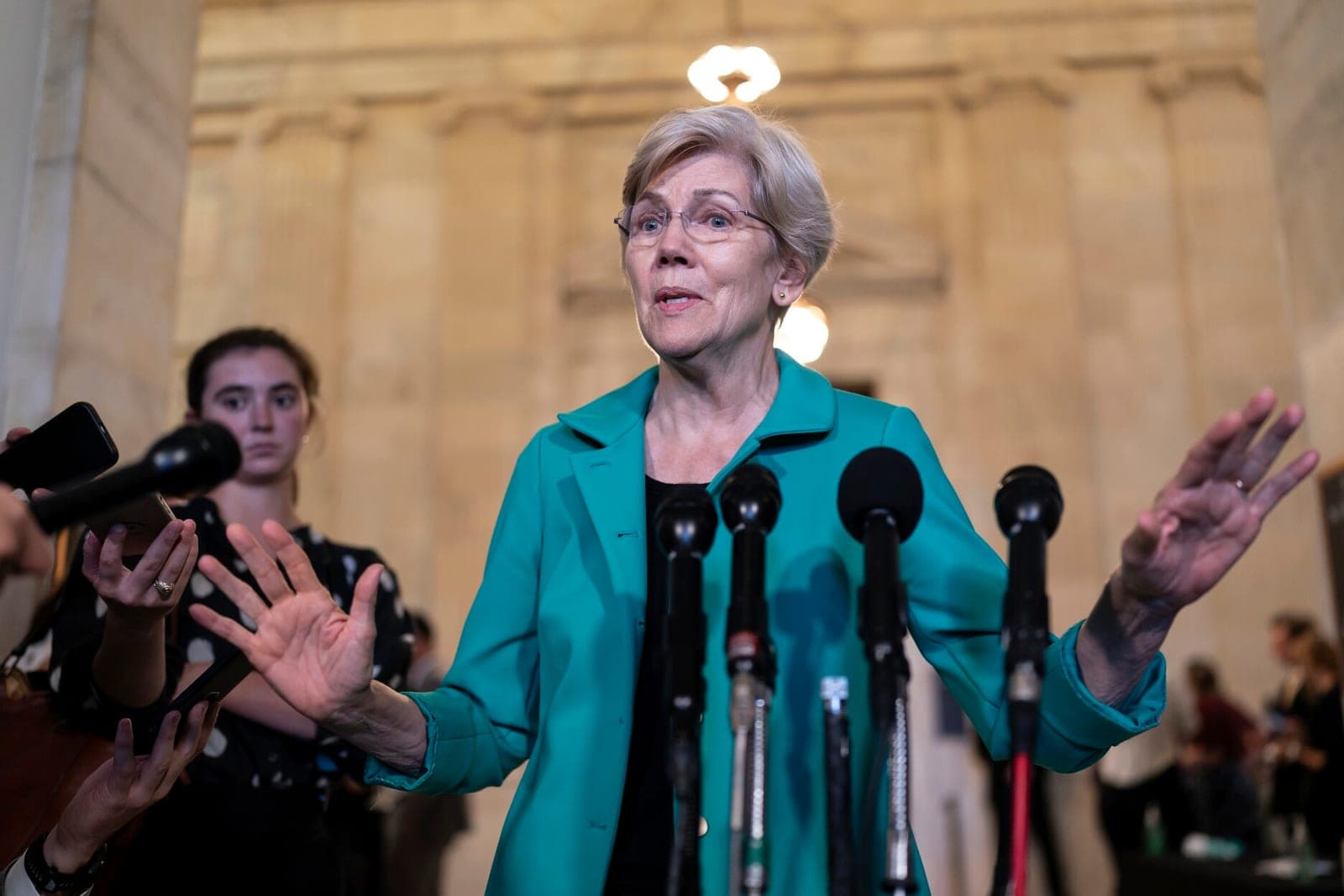
The Working Families Party Wants Democrats to Embrace a Jobs Program to Counter AI
Sen. Elizabeth Warren talks to press at the Capitol, Sept. 13, 2023. J. Scott Applewhite/APA major progressive group on Tuesday unveiled a new agenda that calls on liberal candidates to adopt far-reaching economic proposals, including a federal jobs program meant to help with job losses tied to the rise of artificial intelligence. Leaders connected with the Working Families Party say they hope the platform will serve as a policy foundation for progressive campaigns in this year’s midterm election. That includes being a standard for challengers to more moderate Democratic incumbents, and helping the Democratic Party writ large embrace a more expansive vision of governance. “These are the basics of what every Democratic candidate should be talking about,” said Rep. Delia Ramirez, a Democrat from Illinois, who has endorsed the agenda. “And certainly to me, they are a litmus test for anyone who cares about working people.” The agenda, known as the Working Families Guarantee, is another missive in an ongoing fight between the Democrats’ lefty and centrist factions. Already, the platform has received support from a handful of marquee 2026 Democratic candidates, including progressive Senate hopeful Graham Platner in Maine, Brad Lander in New York’s 10th Congressional District and Bob Brooks in Pennsylvania’s 7th Congressional District. Democratic Sens. Elizabeth Warren and Ed Markey have also backed the platform, along with Reps. Greg Casar and Pramila Jayapal. It is also part of an emerging policy response to the proliferation of artificial intelligence tools and the fear that they could lead to a surge of job losses for blue- and white-collar workers. The six-point platform shared first with NOTUS calls for a federal jobs program that would seek to supply people with a union job. Some progressive politicians during Trump’s first term promoted federal job programs, but the idea lost momentum with Democratic leaders in part because of the steep price. The fear that AI could lead to massive job losses in almost all sectors of the economy, however, helped lead WFP to include it in its new policy platform. Maurice Mitchell, WFP’s national director, said society has arrived at a crossroads. “One direction is very decidedly pro-robot and another direction is very pro-people,” he said in an interview. “And when you talk to most people, they’re not on the side of robots. But when you talk to a number of politicians, they’re clearly captured by that robot lobby or they’re ambivalent. And that’s not going to cut it in this moment when people are outraged by the impact of data centers in their communities to what it might mean for blue-collar and white-collar jobs.” The platform, developed by Working Families Power, a nonprofit affiliate of the Working Families Party, also includes calls for affordable housing, “guaranteed low-cost childcare” and 12 weeks of paid family and medical leave for all employees. It also renews a demand for the implementation of a single-payer health care system, a subject of intense debate within the party during its 2020 presidential primary. The platform does not, as of now, include specific details on how to implement those policies, other than calling for higher taxes on wealthier Americans to raise needed revenue. But WFP officials say it was the result of a comprehensive research program meant to identify the most pressing needs of working-class voters and match them with policy proposals that meet their demands. Ramirez said that if Democrats want to actually excite their base ahead of the fall’s election and then enact an agenda in Congress that satisfies them, they need to adopt the agenda. “People are tired of politicians who come to Washington and tinker around the edges of the affordability crisis,” she said. “This is a moment where the base is asking us to be bold about an agenda that meets the scale of the problem.”
The Working Families Party Wants Democrats to Embrace a Jobs Program to Counter AI
Sen. Elizabeth Warren talks to press at the Capitol, Sept. 13, 2023. J. Scott Applewhite/APA major progressive group on Tuesday unveiled a new agenda that calls on liberal candidates to adopt far-reaching economic proposals, including a federal jobs program meant to help with job losses tied to the rise of artificial intelligence. Leaders connected with the Working Families Party say they hope the platform will serve as a policy foundation for progressive campaigns in this year’s midterm election. That includes being a standard for challengers to more moderate Democratic incumbents, and helping the Democratic Party writ large embrace a more expansive vision of governance. “These are the basics of what every Democratic candidate should be talking about,” said Rep. Delia Ramirez, a Democrat from Illinois, who has endorsed the agenda. “And certainly to me, they are a litmus test for anyone who cares about working people.” The agenda, known as the Working Families Guarantee, is another missive in an ongoing fight between the Democrats’ lefty and centrist factions. Already, the platform has received support from a handful of marquee 2026 Democratic candidates, including progressive Senate hopeful Graham Platner in Maine, Brad Lander in New York’s 10th Congressional District and Bob Brooks in Pennsylvania’s 7th Congressional District. Democratic Sens. Elizabeth Warren and Ed Markey have also backed the platform, along with Reps. Greg Casar and Pramila Jayapal. It is also part of an emerging policy response to the proliferation of artificial intelligence tools and the fear that they could lead to a surge of job losses for blue- and white-collar workers. The six-point platform shared first with NOTUS calls for a federal jobs program that would seek to supply people with a union job. Some progressive politicians during Trump’s first term promoted federal job programs, but the idea lost momentum with Democratic leaders in part because of the steep price. The fear that AI could lead to massive job losses in almost all sectors of the economy, however, helped lead WFP to include it in its new policy platform. Maurice Mitchell, WFP’s national director, said society has arrived at a crossroads. “One direction is very decidedly pro-robot and another direction is very pro-people,” he said in an interview. “And when you talk to most people, they’re not on the side of robots. But when you talk to a number of politicians, they’re clearly captured by that robot lobby or they’re ambivalent. And that’s not going to cut it in this moment when people are outraged by the impact of data centers in their communities to what it might mean for blue-collar and white-collar jobs.” The platform, developed by Working Families Power, a nonprofit affiliate of the Working Families Party, also includes calls for affordable housing, “guaranteed low-cost childcare” and 12 weeks of paid family and medical leave for all employees. It also renews a demand for the implementation of a single-payer health care system, a subject of intense debate within the party during its 2020 presidential primary. The platform does not, as of now, include specific details on how to implement those policies, other than calling for higher taxes on wealthier Americans to raise needed revenue. But WFP officials say it was the result of a comprehensive research program meant to identify the most pressing needs of working-class voters and match them with policy proposals that meet their demands. Ramirez said that if Democrats want to actually excite their base ahead of the fall’s election and then enact an agenda in Congress that satisfies them, they need to adopt the agenda. “People are tired of politicians who come to Washington and tinker around the edges of the affordability crisis,” she said. “This is a moment where the base is asking us to be bold about an agenda that meets the scale of the problem.”
The Working Families Party Wants Democrats to Embrace a Jobs Program to Counter AI
Sen. Elizabeth Warren talks to press at the Capitol, Sept. 13, 2023. J. Scott Applewhite/APA major progressive group on Tuesday unveiled a new agenda that calls on liberal candidates to adopt far-reaching economic proposals, including a federal jobs program meant to help with job losses tied to the rise of artificial intelligence. Leaders connected with the Working Families Party say they hope the platform will serve as a policy foundation for progressive campaigns in this year’s midterm election. That includes being a standard for challengers to more moderate Democratic incumbents, and helping the Democratic Party writ large embrace a more expansive vision of governance. “These are the basics of what every Democratic candidate should be talking about,” said Rep. Delia Ramirez, a Democrat from Illinois, who has endorsed the agenda. “And certainly to me, they are a litmus test for anyone who cares about working people.” The agenda, known as the Working Families Guarantee, is another missive in an ongoing fight between the Democrats’ lefty and centrist factions. Already, the platform has received support from a handful of marquee 2026 Democratic candidates, including progressive Senate hopeful Graham Platner in Maine, Brad Lander in New York’s 10th Congressional District and Bob Brooks in Pennsylvania’s 7th Congressional District. Democratic Sens. Elizabeth Warren and Ed Markey have also backed the platform, along with Reps. Greg Casar and Pramila Jayapal. It is also part of an emerging policy response to the proliferation of artificial intelligence tools and the fear that they could lead to a surge of job losses for blue- and white-collar workers. The six-point platform shared first with NOTUS calls for a federal jobs program that would seek to supply people with a union job. Some progressive politicians during Trump’s first term promoted federal job programs, but the idea lost momentum with Democratic leaders in part because of the steep price. The fear that AI could lead to massive job losses in almost all sectors of the economy, however, helped lead WFP to include it in its new policy platform. Maurice Mitchell, WFP’s national director, said society has arrived at a crossroads. “One direction is very decidedly pro-robot and another direction is very pro-people,” he said in an interview. “And when you talk to most people, they’re not on the side of robots. But when you talk to a number of politicians, they’re clearly captured by that robot lobby or they’re ambivalent. And that’s not going to cut it in this moment when people are outraged by the impact of data centers in their communities to what it might mean for blue-collar and white-collar jobs.” The platform, developed by Working Families Power, a nonprofit affiliate of the Working Families Party, also includes calls for affordable housing, “guaranteed low-cost childcare” and 12 weeks of paid family and medical leave for all employees. It also renews a demand for the implementation of a single-payer health care system, a subject of intense debate within the party during its 2020 presidential primary. The platform does not, as of now, include specific details on how to implement those policies, other than calling for higher taxes on wealthier Americans to raise needed revenue. But WFP officials say it was the result of a comprehensive research program meant to identify the most pressing needs of working-class voters and match them with policy proposals that meet their demands. Ramirez said that if Democrats want to actually excite their base ahead of the fall’s election and then enact an agenda in Congress that satisfies them, they need to adopt the agenda. “People are tired of politicians who come to Washington and tinker around the edges of the affordability crisis,” she said. “This is a moment where the base is asking us to be bold about an agenda that meets the scale of the problem.”

Nancy Mace Introduces Resolution to Expel Her Republican Colleague Cory Mills
Tom Williams/APRep. Nancy Mace filed a motion Monday evening to expel her Republican colleague, Rep. Cory Mills, from the House, just hours after NOTUS reported that Mills was considering doing the same to her. “The swamp has protected Cory Mills for far too long and we are done letting it slide. We tried to censure him and strip him from his committee assignments. Both parties blocked it, but we are not backing down,” Mace said in a post on X. “The evidence against Mills is overwhelming: beating women and telling them to lie about it, cyberstalking women, lying about his military service, and profiting off his seat. Any Member who votes to keep him here is voting to protect a woman beater and a fraud. He needs to be expelled IMMEDIATELY.” Mace’s resolution cites several accusations against Mills, including sexual misconduct, misrepresenting his military service, campaign finance violations and illegal involvement in federal contracts. In November, the House Ethics Committee launched a formal investigation against Mills after he became the subject of a third censure resolution. Following Mace’s resolution Monday evening, House Minority Leader Hakeem Jeffries called for the panel’s probe to be “expedited so we can take up his fate on the House floor.” “I support waiting for the Ethics Committee to report out what’s going on in terms of the investigation and that needs to happen sooner rather than later,” Jeffries said. In response to Mace’s resolution, Mills posted on X: “Rather than political fundraising theatrics by Mace “introduced” ignoring due process, why not notice for a vote?” “Nancy thinks allegations and accusations is due process and should concern South Carolinians if she was to be considered for Governor,” Mills wrote. “Even though she’s under investigation by the Ethics committee and in courts in South Carolina. Will Nancy share her alleged TRO issued for harassment of her ex-fiancé? Nancy’s ‘I don’t drink alcohol’ when there’s videos of her drinking and spitting alcohol into a woman’s mouth for a game?” Mace’s resolution came just hours after NOTUS reported that Mills was considering a dueling expulsion resolution against Mace. According to a source familiar with Mills’ resolution, it would focus on a verbal altercation between Mace and security staff at Charleston International Airport, where she reportedly berated workers and called them “incompetent.” Mace, also a gubernatorial candidate in South Carolina, addressed the report by saying that security was unprepared for her arrival and left her vulnerable. She is also currently under investigation by the House Ethics Committee, which recently said it would be expanding its review. Last year, Mace tried to censure Mills and remove him from both the House Foreign Affairs and Armed Services committees. Her efforts were ultimately blocked and referred to the Ethics Committee, which separately has been investigating Mills since August 2024. Mace’s resolution to expel Mills is the latest source of tension within the House. The chamber is expected to vote to expel Rep. Sheila Cherfilus-McCormick later this week after she was found guilty by the Ethics Committee of dozens of House rule violations. Reps. Eric Swalwell and Tony Gonzales also avoided expulsion resolutions last week by resigning from their seats. Swalwell has faced a flurry of sexual misconduct and assault allegations, which led him to drop out of the California gubernatorial race and resign from Congress. Gonzales, who also resigned from Congress last week, admitted to having an affair with a staffer after she died by self-immolation last year.
Nancy Mace Introduces Resolution to Expel Her Republican Colleague Cory Mills
Tom Williams/APRep. Nancy Mace filed a motion Monday evening to expel her Republican colleague, Rep. Cory Mills, from the House, just hours after NOTUS reported that Mills was considering doing the same to her. “The swamp has protected Cory Mills for far too long and we are done letting it slide. We tried to censure him and strip him from his committee assignments. Both parties blocked it, but we are not backing down,” Mace said in a post on X. “The evidence against Mills is overwhelming: beating women and telling them to lie about it, cyberstalking women, lying about his military service, and profiting off his seat. Any Member who votes to keep him here is voting to protect a woman beater and a fraud. He needs to be expelled IMMEDIATELY.” Mace’s resolution cites several accusations against Mills, including sexual misconduct, misrepresenting his military service, campaign finance violations and illegal involvement in federal contracts. In November, the House Ethics Committee launched a formal investigation against Mills after he became the subject of a third censure resolution. Following Mace’s resolution Monday evening, House Minority Leader Hakeem Jeffries called for the panel’s probe to be “expedited so we can take up his fate on the House floor.” “I support waiting for the Ethics Committee to report out what’s going on in terms of the investigation and that needs to happen sooner rather than later,” Jeffries said. In response to Mace’s resolution, Mills posted on X: “Rather than political fundraising theatrics by Mace “introduced” ignoring due process, why not notice for a vote?” “Nancy thinks allegations and accusations is due process and should concern South Carolinians if she was to be considered for Governor,” Mills wrote. “Even though she’s under investigation by the Ethics committee and in courts in South Carolina. Will Nancy share her alleged TRO issued for harassment of her ex-fiancé? Nancy’s ‘I don’t drink alcohol’ when there’s videos of her drinking and spitting alcohol into a woman’s mouth for a game?” Mace’s resolution came just hours after NOTUS reported that Mills was considering a dueling expulsion resolution against Mace. According to a source familiar with Mills’ resolution, it would focus on a verbal altercation between Mace and security staff at Charleston International Airport, where she reportedly berated workers and called them “incompetent.” Mace, also a gubernatorial candidate in South Carolina, addressed the report by saying that security was unprepared for her arrival and left her vulnerable. She is also currently under investigation by the House Ethics Committee, which recently said it would be expanding its review. Last year, Mace tried to censure Mills and remove him from both the House Foreign Affairs and Armed Services committees. Her efforts were ultimately blocked and referred to the Ethics Committee, which separately has been investigating Mills since August 2024. Mace’s resolution to expel Mills is the latest source of tension within the House. The chamber is expected to vote to expel Rep. Sheila Cherfilus-McCormick later this week after she was found guilty by the Ethics Committee of dozens of House rule violations. Reps. Eric Swalwell and Tony Gonzales also avoided expulsion resolutions last week by resigning from their seats. Swalwell has faced a flurry of sexual misconduct and assault allegations, which led him to drop out of the California gubernatorial race and resign from Congress. Gonzales, who also resigned from Congress last week, admitted to having an affair with a staffer after she died by self-immolation last year.

Cory Mills Is Weighing an Expulsion Resolution Against Nancy Mace
Rep. Nancy Mace walks with her dog as she departs a vote at the U.S. Capitol. Her Republican colleague, Rep. Cory Mills, is weighing a resolution to expel her from the House following an incident where she berated TSA agents at the Charleston International Airport. (Francis Chung/POLITICO/AP) Francis Chung/POLITICO/APTag. You’re it. Embattled Republican Rep. Cory Mills is weighing an expulsion resolution against Rep. Nancy Mace, and he has already drafted the text, NOTUS has learned. A source familiar with the resolution told NOTUS that it would, among other things, point to her interaction at the Charleston International Airport in her home state, where she berated security officers and Transportation Security Administration officials. An officer wrote that Mace repeatedly called employees “fucking incompetent” in a report last October. Mace, a Republican who is running for governor of South Carolina, argued at the time that security agents were unprepared for her arrival and left her vulnerable. After NOTUS reported on Mills' resolution, Mace posted on X, "Cory Mills lied about his military service, has been accused of beating women, has a restraining order against him, and has allegedly been stuffing his own pockets with federal contracts while sitting in Congress. As a survivor, I will always stand up and right the wrongs of others. He is only coming after me because he knows he’s next.” Mace is currently under investigation by the House Ethics Committee. The committee announced last month that it was extending its review into Mace that was first announced in January. The possible Mills resolution is the latest in a deluge of expulsion resolutions from members of the House this year. Reps. Eric Swalwell, a Democrat from California, and Tony Gonzales, a Republican from Texas, avoided dueling expulsion resolutions last week by resigning. Swalwell faced allegations of sexual misconduct and sexual assault from a former staffer and inappropriate conduct from others. Gonzales admitted to texting sexually explicit messages and having an affair with a married former aide who died by suicide. The House is expected to vote to expel Democratic Rep. Sheila Cherfilus McCormick this week following sanction recommendations from the Ethics Committee, which has been investigating the Florida lawmaker for misusing Federal Emergency Management Agency funds after the agency overpaid her. Cherfilus McCormick was also indicted by a grand jury on federal charges. Mills faces his own threats of expulsion based on allegations of stolen valor, alleged conflicts for profiting from federal contracts as a sitting member and alleged violence against women. Mace tried unsuccessfully to censure and strip Mills from House Foreign Affairs and Armed Services committee assignments last year. The effort was blocked and referred to the Ethics Committee, which who has been separately investigating Mills since August 2024. Last week, exacerbated by the flurry of misconduct allegations from several other members, Mace accelerated her effort against Mills, calling for his and three other colleagues’ expulsion. “Congress has serious moral and ethical problems and these four are the face of it,” Mace wrote of her recent push to expel Swalwell, Cherfilus McCormick, Gonzales and Mills. “Washington has protected its own for too long. It needs to end now. We're calling on these four to resign or face expulsion." This story was updated with new information.