46 stories credited to Conservative Angle
2 stories on conservativeangle.com credited to other publishers
Latest story Apr 22, 2026 · on ChamberLight since Apr 2026
A story can appear as several articles (copies of the same piece), so counts of stories and of articles differ.
Scores for Conservative Angle
Political lean
46 stories · 95% range 71–78 · updated Sep 24, 2026
Originality
24 of those 46 carry an unconfirmed copying flag, which is not evidence either way.
48 stories · updated Sep 24, 2026
Writing quality 67 of 100: the average rating of 46 stories, each rated on its own (separate from credibility). How it is measured
Scores last checked Sep 25, 2026.
Articles this site reproduces
How provenance is decidedOriginal publishers of articles on conservativeangle.com
Counted from articles on conservativeangle.com whose original publisher is verified from the page itself or confirmed by an independent signal.
Stories ChamberLight collected, by month
Stories credited to Conservative Angle, by publication date. ChamberLight collects articles that mention the officials it tracks, so this shows its own coverage of this source, not how much the source publishes.
- Stories from Conservative Angle
- Shaded: ChamberLight collected no stories, or almost none, from any outlet (a gap in its collection, not in the outlet’s publishing)
Show as a table
| Month | Stories | All outlets |
|---|---|---|
| April 2026 | 46 | 3,360 |
| May 2026 | 0 | none collected |
| June 2026 | 0 | none collected |
| July 2026 | 0 | none collected |
| August 2026 | 0 | 1 (collection gap) |
| September 2026 | 0 | 598 |
Top topics
Share of this source’s stories tagged with each topic. A story can carry several topics, so the shares do not add up to 100%.
- Ethics/Corruption35
76% of 46 stories · 60% across all outlets
- Budget/Spending24
52% of 46 stories · 32% across all outlets
- Criminal Justice13
28% of 46 stories · 20% across all outlets
- Defense/Military13
28% of 46 stories · 25% across all outlets
- Voting Rights10
22% of 46 stories · 19% across all outlets
- Economy7
15% of 46 stories · 25% across all outlets
- Foreign Policy6
13% of 46 stories · 29% across all outlets
- Immigration6
13% of 46 stories · 13% across all outlets
The thin mark on each bar is the topic’s share across all outlets.
Who they cover
Party of the officials these stories are mainly about, across all 53 officials named. A story counts once for each official it is mainly about, so the split is over 95 story–official pairs, from 46 stories.
- Republican71% · 67 pairs
- Democrat21% · 20 pairs
- Party not recorded7% · 7 pairs
- Independent1% · 1 pair
Most covered
Stories mainly about each official, and their share of the source’s 46 stories.
- 1Donald TrumpR12 stories · 26%
- 2John ThuneR7 stories · 15%
- 3Eric SwalwellD5 stories · 11%
- 4Tony GonzalesR5 stories · 11%
- 5Anna Paulina Luna–4 stories · 9%
- 6Cory MillsR3 stories · 7%
- 7Mike JohnsonR3 stories · 7%
- 8Nancy MaceR3 stories · 7%
- 9Tim ScottR3 stories · 7%
- 10Chip RoyR2 stories · 4%
+ 43 other officials (48 story–official pairs)
Article tone
ChamberLight’s article analysis assigns each story a tone toward the official it covers. It describes the coverage of that official, not Conservative Angle’s stance, and reader votes do not change it. 46 stories.
- Good Look
- 11 (24%)
- Mixed
- 23 (50%)
- Informational
- 1 (2%)
- Bad Look
- 11 (24%)
Related sources
Lean 95% range 67–82 · updated Sep 24, 2026
Similar lean · 2 shared topics
Lean 95% range 70–78 · updated Sep 24, 2026
Similar lean · 2 shared topics
Lean 95% range 66–80 · updated Sep 25, 2026
Similar lean · 1 shared topic
Lean 95% range 66–78 · updated Sep 25, 2026
Similar lean · 2 shared topics
Lean 95% range 73–81 · updated Sep 25, 2026
Similar lean · 3 shared topics
Lean 95% range 72–84 · updated Sep 24, 2026
Similar lean · 2 shared topics
Challenges to these scores
No one has challenged a score on this page yet. Anyone can; editors publish every outcome here.
Articles served from conservativeangle.com
99
Clarence Thomas and Samuel Alito Unlikely to Retire from Supreme Court
Rumors have swirled that the U.S. Supreme Court’s two most conservative-aligned members may retire soon in a bid to allow President Donald Trump to appoint another originalist, conservative-aligned justice while he still has a Republican majority in the U.S. Senate. According to multiple reports, however, neither of the long-serving justices has any plans to step down. Fox News reported late last week that Justice Samuel Alito intends to remain on the Supreme Court, while ABC News confirmed that Justice Clarence Thomas is also unlikely to retire. Thomas, who was appointed by President George H.W. Bush to succeed Thurgood Marshall, has served on the bench for nearly 35 years, while Alito, who was appointed by George W. Bush to succeed Sandra Day O’Connor, has served for over 20 years. The two are the court’s longest-serving members, along with Chief Justice John Roberts, another appointee of George W. Bush, who succeeded William Rehnquist and has served 124 days longer than Alito. Alito has already hired law clerks for the coming Supreme Court term and is expected to remain on the bench at least through 2027, while Thomas “continues to love the work,” according to sources cited by ABC News. Appearing on “Washington Watch” last week, legal scholar Ilya Shapiro, a senior fellow and director of constitutional studies at the Manhattan Institute and former lecturer at Georgetown University’s Center for the Constitution, cautioned, “Unless you hear about a retirement from the justice or maybe his wife, I would discount all of it. It’s just rumors — based on rumors, based on speculation.” Shapiro observed that 77-year-old Thomas is just months away from becoming the longest-serving justice in the Supreme Court’s history and has “said that they’re going to have to carry him out. So I doubt he’s going to retire — certainly not this year.” REACH PRO-LIFE PEOPLE WORLDWIDE! Advertise with LifeNews to reach hundreds of thousands of pro-life readers every week. Contact us today. “So that’s why all the focus right now is on Justice Alito,” who is 76 years old, Shapiro observed. “You know, he reads the political tea leaves the same as all of us. They’re not immune from understanding these different currents. But at the same time, he’s at the height of his powers, and he seems to be enjoying his job,” Shapiro continued. Both Thomas and Alito have sided with the Trump administration in a number of crucial, high-profile cases, even when the other Republican-appointed justices — including Justices Neil Gorsuch, Brett Kavanaugh, and Amy Coney Barrett, who were appointed to the bench by Trump during his first term — have been reticent to do so. Alito, frequently joined by Thomas, has authored a number of high-profile opinions and dissents. Speculation over the possible retirements of Thomas and Alito comes after Trump himself suggested in a Fox News interview earlier this month that he already has a list of potential Supreme Court appointees and intends to put as many as three new justices on the bench before the end of his term. “In theory, it’s two — you just read the statistics — it could be two, could be three, could be one,” he said. The only other two justices who may retire before Trump leaves office would be 71-year-old Roberts or 71-year-old Sonia Sotomayor, who was appointed by Barack Obama and has been on the bench for nearly 17 years. Vacancies on the bench were created during Trump’s first term by the deaths of Antonin Scalia (who was succeeded by Gorsuch) and Ruth Bader Ginsburg (who was succeeded by Barrett), and the retirement of Anthony Kennedy (who was succeeded by Kavanaugh). “I don’t know. I’m prepared to do it,” Trump said of appointing new justices in the event of retirements. While some have speculated that Judges James Ho of the U.S. Court of Appeals for the Fifth Circuit or Aileen Cannon of the U.S. District Court for the Southern District of Florida may be on the president’s shortlist, he has not confirmed any names. Shapiro noted that Trump “hasn’t put out a new list” since his first term, when he considered justices almost exclusively from a cadre compiled by the Federalist Society. While “some of the folks on his previous list have effectively aged out” and would be unlikely to be considered for a seat on the bench, Shapiro opined, any potential Supreme Court nominee would “probably [be] one of the judges who he appointed in his first term.” However, it “could be someone else. Could be someone like the solicitor general, John Sauer, who Trump likes a lot and is doing a good job defending administration policies. But there are a lot of very good, solid judges who Trump appointed, whom he likes and who, for that matter, clerked for Alito and Thomas.” The most recent addition to the Supreme Court was Ketanji Brown Jackson, who was appointed by Joe Biden to replace then-nearly-84-year-old Stephen Breyer, who was appointed by Bill Clinton. Breyer confirmed in a New York Times interview at the time that he intended to retire so that a Democrat-held White House and a Democrat-controlled Senate could pick his replacement. Breyer cited a conversation he had once had with Scalia, who said, “I don’t want somebody appointed who will just reverse everything I’ve done for the last 25 years.” Breyer said that Scalia’s advice “will inevitably be in the psychology” of his decision to retire. As midterm elections draw nearer and Republicans worry about the potential loss of an already-narrow majority in the House of Representatives and the potential shrinking of their embattled Senate majority, similar arguments have been advanced to press Thomas or Alito to resign to allow Trump a chance to appoint a conservative-aligned justice without a contentious Senate confirmation fight. Senate Judiciary Chairman Chuck Grassley (R-Iowa) suggested that either Senator Ted Cruz (R-Texas) or Senator Mike Lee (R-Utah) could replace Alito. Cruz said that he isn’t interested in the position and would prefer to focus on policy and politics, while Lee said simply that he hopes Alito will “stay on the court forever.” LifeNews Note: S.A. McCarthy serves as a news writer at The Washigton Stand. The post Clarence Thomas and Samuel Alito Unlikely to Retire from Supreme Court appeared first on LifeNews.com. The post <a href=https://www.lifenews.com/2026/04/22/clarence-thomas-and-samuel-alito-unlikely-to-retire-from-supreme-court/ target=_blank >Clarence Thomas and Samuel Alito Unlikely to Retire from Supreme Court</a> appeared first on Conservative Angle | Conservative Angle - Conservative News Clearing House
Clarence Thomas and Samuel Alito Unlikely to Retire from Supreme Court
Rumors have swirled that the U.S. Supreme Court’s two most conservative-aligned members may retire soon in a bid to allow President Donald Trump to appoint another originalist, conservative-aligned justice while he still has a Republican majority in the U.S. Senate. According to multiple reports, however, neither of the long-serving justices has any plans to step down. Fox News reported late last week that Justice Samuel Alito intends to remain on the Supreme Court, while ABC News confirmed that Justice Clarence Thomas is also unlikely to retire. Thomas, who was appointed by President George H.W. Bush to succeed Thurgood Marshall, has served on the bench for nearly 35 years, while Alito, who was appointed by George W. Bush to succeed Sandra Day O’Connor, has served for over 20 years. The two are the court’s longest-serving members, along with Chief Justice John Roberts, another appointee of George W. Bush, who succeeded William Rehnquist and has served 124 days longer than Alito. Alito has already hired law clerks for the coming Supreme Court term and is expected to remain on the bench at least through 2027, while Thomas “continues to love the work,” according to sources cited by ABC News. Appearing on “Washington Watch” last week, legal scholar Ilya Shapiro, a senior fellow and director of constitutional studies at the Manhattan Institute and former lecturer at Georgetown University’s Center for the Constitution, cautioned, “Unless you hear about a retirement from the justice or maybe his wife, I would discount all of it. It’s just rumors — based on rumors, based on speculation.” Shapiro observed that 77-year-old Thomas is just months away from becoming the longest-serving justice in the Supreme Court’s history and has “said that they’re going to have to carry him out. So I doubt he’s going to retire — certainly not this year.” REACH PRO-LIFE PEOPLE WORLDWIDE! Advertise with LifeNews to reach hundreds of thousands of pro-life readers every week. Contact us today. “So that’s why all the focus right now is on Justice Alito,” who is 76 years old, Shapiro observed. “You know, he reads the political tea leaves the same as all of us. They’re not immune from understanding these different currents. But at the same time, he’s at the height of his powers, and he seems to be enjoying his job,” Shapiro continued. Both Thomas and Alito have sided with the Trump administration in a number of crucial, high-profile cases, even when the other Republican-appointed justices — including Justices Neil Gorsuch, Brett Kavanaugh, and Amy Coney Barrett, who were appointed to the bench by Trump during his first term — have been reticent to do so. Alito, frequently joined by Thomas, has authored a number of high-profile opinions and dissents. Speculation over the possible retirements of Thomas and Alito comes after Trump himself suggested in a Fox News interview earlier this month that he already has a list of potential Supreme Court appointees and intends to put as many as three new justices on the bench before the end of his term. “In theory, it’s two — you just read the statistics — it could be two, could be three, could be one,” he said. The only other two justices who may retire before Trump leaves office would be 71-year-old Roberts or 71-year-old Sonia Sotomayor, who was appointed by Barack Obama and has been on the bench for nearly 17 years. Vacancies on the bench were created during Trump’s first term by the deaths of Antonin Scalia (who was succeeded by Gorsuch) and Ruth Bader Ginsburg (who was succeeded by Barrett), and the retirement of Anthony Kennedy (who was succeeded by Kavanaugh). “I don’t know. I’m prepared to do it,” Trump said of appointing new justices in the event of retirements. While some have speculated that Judges James Ho of the U.S. Court of Appeals for the Fifth Circuit or Aileen Cannon of the U.S. District Court for the Southern District of Florida may be on the president’s shortlist, he has not confirmed any names. Shapiro noted that Trump “hasn’t put out a new list” since his first term, when he considered justices almost exclusively from a cadre compiled by the Federalist Society. While “some of the folks on his previous list have effectively aged out” and would be unlikely to be considered for a seat on the bench, Shapiro opined, any potential Supreme Court nominee would “probably [be] one of the judges who he appointed in his first term.” However, it “could be someone else. Could be someone like the solicitor general, John Sauer, who Trump likes a lot and is doing a good job defending administration policies. But there are a lot of very good, solid judges who Trump appointed, whom he likes and who, for that matter, clerked for Alito and Thomas.” The most recent addition to the Supreme Court was Ketanji Brown Jackson, who was appointed by Joe Biden to replace then-nearly-84-year-old Stephen Breyer, who was appointed by Bill Clinton. Breyer confirmed in a New York Times interview at the time that he intended to retire so that a Democrat-held White House and a Democrat-controlled Senate could pick his replacement. Breyer cited a conversation he had once had with Scalia, who said, “I don’t want somebody appointed who will just reverse everything I’ve done for the last 25 years.” Breyer said that Scalia’s advice “will inevitably be in the psychology” of his decision to retire. As midterm elections draw nearer and Republicans worry about the potential loss of an already-narrow majority in the House of Representatives and the potential shrinking of their embattled Senate majority, similar arguments have been advanced to press Thomas or Alito to resign to allow Trump a chance to appoint a conservative-aligned justice without a contentious Senate confirmation fight. Senate Judiciary Chairman Chuck Grassley (R-Iowa) suggested that either Senator Ted Cruz (R-Texas) or Senator Mike Lee (R-Utah) could replace Alito. Cruz said that he isn’t interested in the position and would prefer to focus on policy and politics, while Lee said simply that he hopes Alito will “stay on the court forever.” LifeNews Note: S.A. McCarthy serves as a news writer at The Washigton Stand. The post Clarence Thomas and Samuel Alito Unlikely to Retire from Supreme Court appeared first on LifeNews.com. The post <a href=https://www.lifenews.com/2026/04/22/clarence-thomas-and-samuel-alito-unlikely-to-retire-from-supreme-court/ target=_blank >Clarence Thomas and Samuel Alito Unlikely to Retire from Supreme Court</a> appeared first on Conservative Angle | Conservative Angle - Conservative News Clearing House

Red-state AI regulation push has links to the Left
Two groups with ties to the Left are engaged in coordinated campaigns to promote artificial intelligence regulation in three Republican-controlled states, public records show. While President Donald Trump, himself generously supported by many tech interests, has voiced opposition to state-level AI regulation, some red-state leaders have nonetheless proposed laws to rein in the emerging technology. Nebraska, Tennessee, and Utah have attempted to buck the White House on this front. Encode AI and the Secure AI Project, nonprofit groups with staffing and financial ties to the Left, have had a hand in driving this divide between the Trump administration and each of these states. Encode AI was founded by activist Sneha Revanur in 2020, who continues to lead the organization. In a 2023 interview with Politico, which described Revanur as the “Greta Thunberg of AI,” she disclosed that her organization was primarily funded by the philanthropies of liberal billionaire Pierre Omidyar. Recent tax filings show that liberal grantmakers, such as those linked to Omidyar and major Democratic donors, are still cutting checks to Encode AI. Among Encode AI’s relatively short list of staffers, several have worked for Democratic lawmakers or left-of-center activist organizations. Revanur interned for former Rep. Cori Bush (D-MO), according to a previous version of her LinkedIn page. Her group previously criticized Immigration and Customs Enforcement, though the blog post containing their critiques has since been scrubbed. Despite its links to the Left, Encode AI is officially nonpartisan and promotes Democrats and Republicans whom it believes are aligned with its goals, such as Pete Buttigieg and Sen. Marsha Blackburn (R-TN). “Encode is a nonpartisan nonprofit working to advance the responsible development of AI for the benefit of all,” Adam Billen, the group’s co-executive director, told the Washington Examiner. “We partner with policymakers at every level of government, across both parties, to promote smart, effective legislation that protects the public and supports innovation.” SAIP, meanwhile, is led by Nick Beckstead, a seven-year veteran of Dustin Moskovitz’s Open Philanthropy. Moskovitz, a Facebook co-founder, is a major Democratic donor. The organization’s policy director is also an alumnus of Open Philanthropy, which has since rebranded as Coefficient Giving. SAIP does not publicly disclose its donors. “The Secure AI Project continues to be proud to support both Republican and Democratic legislators in protecting children and the public from risks of severe harm from advanced AI,” a spokesman for the group told the Washington Examiner. “In all the states where we work, the public overwhelmingly supports responsible guardrails on AI. This likely underpins much of the inbound interest we have from elected officials to support AI safety legislation.” To advance their preferred policies in GOP-led states, the duo of groups relies on a combination of political donations, lobbying, and public advocacy campaigns. In Nebraska, for instance, Encode AI and SAIP retained lobbyists within days of each other in early January. Further entangling the two groups is the fact that they retained the same law firm, Radcliffe, Gilbertson & Brady, to provide them with lobbying services. The Tennessee Capitol is seen, Jan. 22, 2024, in Nashville, Tenn. On Thursday, April 25, 2024, Tennessee’s GOP-controlled Statehouse gave their final approval to legislation criminalizing adults who help minors receive gender-affirming care without parental consent, clearing the way for the first-in-the-nation proposal to be sent to Gov. Bill Lee’s desk for his signature. (AP Photo/George Walker IV, File) These aren’t lightweight operations. Combined, the duo of organizations spent nearly $50,000, in addition to staff time, on lobbying efforts in Nebraska between January and mid-March, records show. That is a considerable sum for a state-level lobbying effort. Through this spending, the duo of groups is seeking to advance the Transparency in Artificial Intelligence Risk Management Act, a piece of legislation that would require firms operating AI chatbots to submit safety plans, implement a formal risk mitigation system, and make such materials publicly available. Interestingly, the bill was introduced by a Republican lawmaker on Jan. 15, just days after Encode AI and SAIP registered lobbyists in Nebraska. Everything happening in Nebraska follows a familiar pattern. Also in January of this year, Encode AI cut a $10,000 check to State Rep. Doug Fiefia’s (R-UT) campaign account. Once again, the GOP lawmaker introduced AI safety legislation supported by Encode AI and SAIP just days later. The two groups also registered lobbyists in Utah in the months leading up to the bill’s introduction. The bill introduced in Utah is strikingly similar to the one being pushed in Nebraska. Both require AI companies to promulgate public safety plans and impose consequences if they fail to do so. In Tennessee, Encode AI and SAIP once again registered lobbyists before a pair of Republican state lawmakers introduced legislation that, like in Utah and Nebraska, requires AI companies to publish detailed safety plans. Once again, Encode AI and SAIP appear to be working with the same law firm to aid in their lobbying efforts, suggesting coordination. The effort to get these laws across the finish line does not stop at lobbying and political contributions. In Tennessee and Utah, Encode AI and SAIP have launched public advocacy campaigns seeking to win over voters. In Utah, Encode AI commissioned a poll that found broad support for the AI safety legislation it was backing. It then used that polling data in a mass texting campaign to convince voters that they should pressure their representatives to support the bill. The groups — which are based out of Washington, D.C., and San Francisco — are employing a similar playbook in Tennessee, where they run a group called Tennesseans for AI Safety. One of the talking points this group has pushed most aggressively is a commissioned poll showing overwhelming support for the AI safety bill working its way through the state’s legislature. The Utah State Capitol, Sunday, Jan. 18, 2026, in Salt Lake City. (AP Photo/Sydney Schaefer) Critics of laws such as those proposed in Nebraska, Utah, and Tennessee argue that rigid safety plans could impose technical burdens that hamper technological innovation and that a patchwork of state regulations, rather than uniform federal policies, could create an uncertain business environment. Proponents, meanwhile, claim that the federal government is moving too slowly and that safety regulations are needed as soon as possible to prevent the new technologies from harming people. ORGANIZATIONS WITH STRONG TIES TO THE LEFT INFLUENCED AI POLICY IN A DEEP RED STATE Some have encouraged conservatives to be wary of other conservatives who take certain policy positions after brushes with liberal money. “There is nothing inherently wrong with a conservative organization taking funds from liberal entities or with a conservative organization dissenting from some conservative orthodoxy,” Capital Research Center director of research Mike Watson wrote in 2021. “But when nominal conservatives start rushing to the left as left-wing dollars flow into their institutions, skepticism is warranted.” Indeed, the Trump administration has attempted to clamp down on state-level AI regulation efforts in Utah, Nebraska, and Tennessee. The post <a href=https://www.washingtonexaminer.com/news/investigations/4537325/red-state-ai-regulation-push-has-links-to-the-left/ target=_blank >Red-state AI regulation push has links to the Left</a> appeared first on Conservative Angle | Conservative Angle - Conservative News Clearing House
Red-state AI regulation push has links to the Left
Two groups with ties to the Left are engaged in coordinated campaigns to promote artificial intelligence regulation in three Republican-controlled states, public records show. While President Donald Trump, himself generously supported by many tech interests, has voiced opposition to state-level AI regulation, some red-state leaders have nonetheless proposed laws to rein in the emerging technology. Nebraska, Tennessee, and Utah have attempted to buck the White House on this front. Encode AI and the Secure AI Project, nonprofit groups with staffing and financial ties to the Left, have had a hand in driving this divide between the Trump administration and each of these states. Encode AI was founded by activist Sneha Revanur in 2020, who continues to lead the organization. In a 2023 interview with Politico, which described Revanur as the “Greta Thunberg of AI,” she disclosed that her organization was primarily funded by the philanthropies of liberal billionaire Pierre Omidyar. Recent tax filings show that liberal grantmakers, such as those linked to Omidyar and major Democratic donors, are still cutting checks to Encode AI. Among Encode AI’s relatively short list of staffers, several have worked for Democratic lawmakers or left-of-center activist organizations. Revanur interned for former Rep. Cori Bush (D-MO), according to a previous version of her LinkedIn page. Her group previously criticized Immigration and Customs Enforcement, though the blog post containing their critiques has since been scrubbed. Despite its links to the Left, Encode AI is officially nonpartisan and promotes Democrats and Republicans whom it believes are aligned with its goals, such as Pete Buttigieg and Sen. Marsha Blackburn (R-TN). “Encode is a nonpartisan nonprofit working to advance the responsible development of AI for the benefit of all,” Adam Billen, the group’s co-executive director, told the Washington Examiner. “We partner with policymakers at every level of government, across both parties, to promote smart, effective legislation that protects the public and supports innovation.” SAIP, meanwhile, is led by Nick Beckstead, a seven-year veteran of Dustin Moskovitz’s Open Philanthropy. Moskovitz, a Facebook co-founder, is a major Democratic donor. The organization’s policy director is also an alumnus of Open Philanthropy, which has since rebranded as Coefficient Giving. SAIP does not publicly disclose its donors. “The Secure AI Project continues to be proud to support both Republican and Democratic legislators in protecting children and the public from risks of severe harm from advanced AI,” a spokesman for the group told the Washington Examiner. “In all the states where we work, the public overwhelmingly supports responsible guardrails on AI. This likely underpins much of the inbound interest we have from elected officials to support AI safety legislation.” To advance their preferred policies in GOP-led states, the duo of groups relies on a combination of political donations, lobbying, and public advocacy campaigns. In Nebraska, for instance, Encode AI and SAIP retained lobbyists within days of each other in early January. Further entangling the two groups is the fact that they retained the same law firm, Radcliffe, Gilbertson & Brady, to provide them with lobbying services. The Tennessee Capitol is seen, Jan. 22, 2024, in Nashville, Tenn. On Thursday, April 25, 2024, Tennessee’s GOP-controlled Statehouse gave their final approval to legislation criminalizing adults who help minors receive gender-affirming care without parental consent, clearing the way for the first-in-the-nation proposal to be sent to Gov. Bill Lee’s desk for his signature. (AP Photo/George Walker IV, File) These aren’t lightweight operations. Combined, the duo of organizations spent nearly $50,000, in addition to staff time, on lobbying efforts in Nebraska between January and mid-March, records show. That is a considerable sum for a state-level lobbying effort. Through this spending, the duo of groups is seeking to advance the Transparency in Artificial Intelligence Risk Management Act, a piece of legislation that would require firms operating AI chatbots to submit safety plans, implement a formal risk mitigation system, and make such materials publicly available. Interestingly, the bill was introduced by a Republican lawmaker on Jan. 15, just days after Encode AI and SAIP registered lobbyists in Nebraska. Everything happening in Nebraska follows a familiar pattern. Also in January of this year, Encode AI cut a $10,000 check to State Rep. Doug Fiefia’s (R-UT) campaign account. Once again, the GOP lawmaker introduced AI safety legislation supported by Encode AI and SAIP just days later. The two groups also registered lobbyists in Utah in the months leading up to the bill’s introduction. The bill introduced in Utah is strikingly similar to the one being pushed in Nebraska. Both require AI companies to promulgate public safety plans and impose consequences if they fail to do so. In Tennessee, Encode AI and SAIP once again registered lobbyists before a pair of Republican state lawmakers introduced legislation that, like in Utah and Nebraska, requires AI companies to publish detailed safety plans. Once again, Encode AI and SAIP appear to be working with the same law firm to aid in their lobbying efforts, suggesting coordination. The effort to get these laws across the finish line does not stop at lobbying and political contributions. In Tennessee and Utah, Encode AI and SAIP have launched public advocacy campaigns seeking to win over voters. In Utah, Encode AI commissioned a poll that found broad support for the AI safety legislation it was backing. It then used that polling data in a mass texting campaign to convince voters that they should pressure their representatives to support the bill. The groups — which are based out of Washington, D.C., and San Francisco — are employing a similar playbook in Tennessee, where they run a group called Tennesseans for AI Safety. One of the talking points this group has pushed most aggressively is a commissioned poll showing overwhelming support for the AI safety bill working its way through the state’s legislature. The Utah State Capitol, Sunday, Jan. 18, 2026, in Salt Lake City. (AP Photo/Sydney Schaefer) Critics of laws such as those proposed in Nebraska, Utah, and Tennessee argue that rigid safety plans could impose technical burdens that hamper technological innovation and that a patchwork of state regulations, rather than uniform federal policies, could create an uncertain business environment. Proponents, meanwhile, claim that the federal government is moving too slowly and that safety regulations are needed as soon as possible to prevent the new technologies from harming people. ORGANIZATIONS WITH STRONG TIES TO THE LEFT INFLUENCED AI POLICY IN A DEEP RED STATE Some have encouraged conservatives to be wary of other conservatives who take certain policy positions after brushes with liberal money. “There is nothing inherently wrong with a conservative organization taking funds from liberal entities or with a conservative organization dissenting from some conservative orthodoxy,” Capital Research Center director of research Mike Watson wrote in 2021. “But when nominal conservatives start rushing to the left as left-wing dollars flow into their institutions, skepticism is warranted.” Indeed, the Trump administration has attempted to clamp down on state-level AI regulation efforts in Utah, Nebraska, and Tennessee. The post <a href=https://www.washingtonexaminer.com/news/investigations/4537325/red-state-ai-regulation-push-has-links-to-the-left/ target=_blank >Red-state AI regulation push has links to the Left</a> appeared first on Conservative Angle | Conservative Angle - Conservative News Clearing House

House expulsion feud between Nancy Mace and Cory Mills bursts into public view
Reps. Nancy Mace (R-SC) and Cory Mills (R-FL) have launched a full-out war against each other, trading barbs and accusations online as the House undergoes an ethics reckoning that has seen three members resign. Mace has introduced a motion to expel Mills on the House floor, and Mills is weighing whether to move forward with his own against the South Carolina Republican. Both Mace and Mills are under House ethics investigations. Mills has been accused of domestic violence, stolen valor, and financial misconduct. Mace is facing allegations of financial misconduct. Both have denied wrongdoing. Mills posted a litany of statements on X on Tuesday, challenging Mace to “call the vote” against him, claiming that her motion against him is “political theatre” she is using to get donations. He wrote, “You claim to ‘hold the line,’ or is that only peacocking as well?” Mills’s posts attacking Mace include references to her drinking habits, with images and video allegedly showing the congresswoman with alcohol, as well as high turnover in her office. Mace has said she doesn’t “drink much” because of a genetic condition she has called “hemochromatosis.” “The only acceptable outcome for Cory Mills is expulsion,” Mace said in a post on X. “We didn’t come to Congress to watch people abuse their position of power and get away with it. Cory, your days are numbered. Start packing.” The back and forth between Mills and Mace comes amid a cultural reckoning on Capitol Hill, sparked by allegations of sexual misconduct by now-former Reps. Eric Swalwell and Tony Gonzales. Both men resigned last week as pressure grew against them. A third member, former Rep. Sheila Cherfilus-McCormick, resigned Tuesday ahead of a planned House Ethics Committee sanctions hearing. The Florida Democrat, who was found guilty of wrongdoing in 25 ethics violations by the panel last month, was accused of stealing $5 million from the Federal Emergency Management Agency and funneling a portion of it to her campaign account. Now, with all three gone, focus will likely turn to Mills. Mace has not said when she will bring up her motion, with her office saying it will likely be sometime next week. Mace’s introduction of her expulsion resolution against Mills came after reporting that he was considering bringing his own expulsion resolution against Mace. However, Mills has yet to announce a resolution against Mace, telling the Washington Examiner on Tuesday that he is “still weighing that out.” “I believe in due process,” Mills said. “I think the due process should have been the key from the very beginning. It’s the catalyst of what we run things on, and we have an ethics committee and other things because of that exact reason, committee of jurisdiction.” It’s not clear how much support an expulsion resolution against Mills would garner. To be successful, a motion to expel a member needs to reach a two-thirds majority. It’s unlikely that Speaker Mike Johnson (R-LA) would approve of Mills’s expulsion, as the speaker has previously supported letting the House Ethics Committee do its work before moving against a member. However, Rep. Kat Cammack (R-FL) has signaled she may support an effort to expel Mills, saying in a post on X, “I don’t care if you are Republican or Democrat. No one is above the law.” Mace announced her motion to oust Mills on Monday afternoon, saying in a statement that “the swamp has protected Cory Mills for far too long and we are done letting it slide. “We tried to censure him and strip him from his committee assignments,” Mace said. “Both parties blocked it, but we are not backing down.” SHEILA CHERFILUS-MCCORMICK RESIGNS AHEAD OF LIKELY HOUSE EXPULSION She continued, “The evidence against Mills is overwhelming: beating women and telling them to lie about it, cyberstalking women, lying about his military service, and profiting off his seat. Any Member who votes to keep him here is voting to protect a woman beater and a fraud. He needs to be expelled immediately.” Mace previously tried to censure Mills and remove him from the House foreign affairs and armed services committees last year. That effort was blocked on the House floor and sent to the House Ethics Committee, which has been investigating Mills since August 2024. The post <a href=https://www.washingtonexaminer.com/news/4538263/nancy-mace-cory-mills-expulsion-feud/ target=_blank >House expulsion feud between Nancy Mace and Cory Mills bursts into public view</a> appeared first on Conservative Angle | Conservative Angle - Conservative News Clearing House
House expulsion feud between Nancy Mace and Cory Mills bursts into public view
Reps. Nancy Mace (R-SC) and Cory Mills (R-FL) have launched a full-out war against each other, trading barbs and accusations online as the House undergoes an ethics reckoning that has seen three members resign. Mace has introduced a motion to expel Mills on the House floor, and Mills is weighing whether to move forward with his own against the South Carolina Republican. Both Mace and Mills are under House ethics investigations. Mills has been accused of domestic violence, stolen valor, and financial misconduct. Mace is facing allegations of financial misconduct. Both have denied wrongdoing. Mills posted a litany of statements on X on Tuesday, challenging Mace to “call the vote” against him, claiming that her motion against him is “political theatre” she is using to get donations. He wrote, “You claim to ‘hold the line,’ or is that only peacocking as well?” Mills’s posts attacking Mace include references to her drinking habits, with images and video allegedly showing the congresswoman with alcohol, as well as high turnover in her office. Mace has said she doesn’t “drink much” because of a genetic condition she has called “hemochromatosis.” “The only acceptable outcome for Cory Mills is expulsion,” Mace said in a post on X. “We didn’t come to Congress to watch people abuse their position of power and get away with it. Cory, your days are numbered. Start packing.” The back and forth between Mills and Mace comes amid a cultural reckoning on Capitol Hill, sparked by allegations of sexual misconduct by now-former Reps. Eric Swalwell and Tony Gonzales. Both men resigned last week as pressure grew against them. A third member, former Rep. Sheila Cherfilus-McCormick, resigned Tuesday ahead of a planned House Ethics Committee sanctions hearing. The Florida Democrat, who was found guilty of wrongdoing in 25 ethics violations by the panel last month, was accused of stealing $5 million from the Federal Emergency Management Agency and funneling a portion of it to her campaign account. Now, with all three gone, focus will likely turn to Mills. Mace has not said when she will bring up her motion, with her office saying it will likely be sometime next week. Mace’s introduction of her expulsion resolution against Mills came after reporting that he was considering bringing his own expulsion resolution against Mace. However, Mills has yet to announce a resolution against Mace, telling the Washington Examiner on Tuesday that he is “still weighing that out.” “I believe in due process,” Mills said. “I think the due process should have been the key from the very beginning. It’s the catalyst of what we run things on, and we have an ethics committee and other things because of that exact reason, committee of jurisdiction.” It’s not clear how much support an expulsion resolution against Mills would garner. To be successful, a motion to expel a member needs to reach a two-thirds majority. It’s unlikely that Speaker Mike Johnson (R-LA) would approve of Mills’s expulsion, as the speaker has previously supported letting the House Ethics Committee do its work before moving against a member. However, Rep. Kat Cammack (R-FL) has signaled she may support an effort to expel Mills, saying in a post on X, “I don’t care if you are Republican or Democrat. No one is above the law.” Mace announced her motion to oust Mills on Monday afternoon, saying in a statement that “the swamp has protected Cory Mills for far too long and we are done letting it slide. “We tried to censure him and strip him from his committee assignments,” Mace said. “Both parties blocked it, but we are not backing down.” SHEILA CHERFILUS-MCCORMICK RESIGNS AHEAD OF LIKELY HOUSE EXPULSION She continued, “The evidence against Mills is overwhelming: beating women and telling them to lie about it, cyberstalking women, lying about his military service, and profiting off his seat. Any Member who votes to keep him here is voting to protect a woman beater and a fraud. He needs to be expelled immediately.” Mace previously tried to censure Mills and remove him from the House foreign affairs and armed services committees last year. That effort was blocked on the House floor and sent to the House Ethics Committee, which has been investigating Mills since August 2024. The post <a href=https://www.washingtonexaminer.com/news/4538263/nancy-mace-cory-mills-expulsion-feud/ target=_blank >House expulsion feud between Nancy Mace and Cory Mills bursts into public view</a> appeared first on Conservative Angle | Conservative Angle - Conservative News Clearing House

Report: John Thune blocking election-integrity move that 8 of 10 Americans WANT!
U.S. Sen. John Thune, R-S.D. John Thune, the Republican from South Dakota who is Senate majority leader, is blocking action on an election-integrity move that the House of Representatives has passed, that President Donald Trump is calling for, and that 8 out of 10 Americans want to see happen. That’s according to a report at the Federalist, which documented polling showing the public’s concerns about the issue, and a statement from a member of Congress who is charging Thune has put the SAVE America Act on the back burner. The Federalist report said multiple pollings have show the plan to require voter ID in order to cast ballots in U.S. election “remains an 80-20 issue” for Americans. It cited a new CAPS-Harris poll that confirmed majority support for plans like counting ballots within 24 hours of an election day, removing noncitizens from the voter rolls, and allowing states to share voting records with the Department of Homeland Security. “Fearmongers” in opposition to the plan claim it would disenfranchise voters en masse “by enacting these common-sense safeguards.” Americans, the poll confirmed, aren’t worried about that. In that poll, 68% support all the main provisions of SAVE America, including 45% of Democrats and 90% of Republicans. “Interestingly, 54 percent of respondents — including more than a third of Democrats — agree that it is more important to ‘do everything possible to stop voter fraud and illegal immigrants from voting’ than it is to ensure that ‘eligible citizens aren’t denied the ability to vote,'” the Federalist reported. Almost two-thirds want the law “before the 2026 midterms.” However, Rep. Anna Paulina Luna has gone on the record with news that Thune is slow-walking the plan, and it might even be dropped entirely. Just so America knows, after two weeks in recess, John Thune is no longer considering the SAVE America Act. — Rep. Anna Paulina Luna (@RepLuna) April 20, 2026 News: Thune does NOT commit to holding a vote to get back onto the SAVE America Act after the budget resolution & FISA reauthorization are done. (Senate will come off of SAVE this week to pass the budget resolution; would require another vote) “If we don’t have other pressing… https://t.co/aZI5tUyCw3 — Andrew Desiderio (@AndrewDesiderio) April 20, 2026 It’s common sense: U.S. elections should be for U.S. citizens only. Pass the SAVE America Act. pic.twitter.com/Z3xyb05MEA — The White House (@WhiteHouse) April 21, 2026 RINO Leader John Thune STABS Trump and America in the Back Again, Refuses to Nuke the Filibuster to Pass SAVE America Act: ‘That’s Not Going to Happen” READ: https://t.co/uNr6HaDKtI pic.twitter.com/bHBfwoeBh5 — The Gateway Pundit (@gatewaypundit) April 21, 2026 The Trump administration in recent days has gone to court against several states over their refusal to hand over voter roll records to the DHS. Leftists, from that, have assembled the wild claim that Trump is working on “an attempt to take over election administration,” the report said. But Harmeet Dhillon, of the Department of Justice, made clear that voter rolls are “riddled” with “dead people” and noncitizens. A Harvard-Harris poll from March found 78% of respondents support removing noncitizens from voter rolls, and that includes 70% of Democrats, whose party is fighting the plan. The Gateway Pundit, citing Luna, said, “After months of dragging their feet, floating fake ‘solutions,’ and pretending to fight for election integrity, Thune has officially thrown in the towel on President Trump’s signature voter protection bill.” The post <a href=https://www.wnd.com/2026/04/report-john-thune-blocking-election-integrity-move-that/?utm_source=rss&utm_medium=rss&utm_campaign=report-john-thune-blocking-election-integrity-move-that target=_blank >Report: John Thune blocking election-integrity move that 8 of 10 Americans WANT!</a> appeared first on Conservative Angle | Conservative Angle - Conservative News Clearing House
Report: John Thune blocking election-integrity move that 8 of 10 Americans WANT!
U.S. Sen. John Thune, R-S.D. John Thune, the Republican from South Dakota who is Senate majority leader, is blocking action on an election-integrity move that the House of Representatives has passed, that President Donald Trump is calling for, and that 8 out of 10 Americans want to see happen. That’s according to a report at the Federalist, which documented polling showing the public’s concerns about the issue, and a statement from a member of Congress who is charging Thune has put the SAVE America Act on the back burner. The Federalist report said multiple pollings have show the plan to require voter ID in order to cast ballots in U.S. election “remains an 80-20 issue” for Americans. It cited a new CAPS-Harris poll that confirmed majority support for plans like counting ballots within 24 hours of an election day, removing noncitizens from the voter rolls, and allowing states to share voting records with the Department of Homeland Security. “Fearmongers” in opposition to the plan claim it would disenfranchise voters en masse “by enacting these common-sense safeguards.” Americans, the poll confirmed, aren’t worried about that. In that poll, 68% support all the main provisions of SAVE America, including 45% of Democrats and 90% of Republicans. “Interestingly, 54 percent of respondents — including more than a third of Democrats — agree that it is more important to ‘do everything possible to stop voter fraud and illegal immigrants from voting’ than it is to ensure that ‘eligible citizens aren’t denied the ability to vote,'” the Federalist reported. Almost two-thirds want the law “before the 2026 midterms.” However, Rep. Anna Paulina Luna has gone on the record with news that Thune is slow-walking the plan, and it might even be dropped entirely. Just so America knows, after two weeks in recess, John Thune is no longer considering the SAVE America Act. — Rep. Anna Paulina Luna (@RepLuna) April 20, 2026 News: Thune does NOT commit to holding a vote to get back onto the SAVE America Act after the budget resolution & FISA reauthorization are done. (Senate will come off of SAVE this week to pass the budget resolution; would require another vote) “If we don’t have other pressing… https://t.co/aZI5tUyCw3 — Andrew Desiderio (@AndrewDesiderio) April 20, 2026 It’s common sense: U.S. elections should be for U.S. citizens only. Pass the SAVE America Act. pic.twitter.com/Z3xyb05MEA — The White House (@WhiteHouse) April 21, 2026 RINO Leader John Thune STABS Trump and America in the Back Again, Refuses to Nuke the Filibuster to Pass SAVE America Act: ‘That’s Not Going to Happen” READ: https://t.co/uNr6HaDKtI pic.twitter.com/bHBfwoeBh5 — The Gateway Pundit (@gatewaypundit) April 21, 2026 The Trump administration in recent days has gone to court against several states over their refusal to hand over voter roll records to the DHS. Leftists, from that, have assembled the wild claim that Trump is working on “an attempt to take over election administration,” the report said. But Harmeet Dhillon, of the Department of Justice, made clear that voter rolls are “riddled” with “dead people” and noncitizens. A Harvard-Harris poll from March found 78% of respondents support removing noncitizens from voter rolls, and that includes 70% of Democrats, whose party is fighting the plan. The Gateway Pundit, citing Luna, said, “After months of dragging their feet, floating fake ‘solutions,’ and pretending to fight for election integrity, Thune has officially thrown in the towel on President Trump’s signature voter protection bill.” The post <a href=https://www.wnd.com/2026/04/report-john-thune-blocking-election-integrity-move-that/?utm_source=rss&utm_medium=rss&utm_campaign=report-john-thune-blocking-election-integrity-move-that target=_blank >Report: John Thune blocking election-integrity move that 8 of 10 Americans WANT!</a> appeared first on Conservative Angle | Conservative Angle - Conservative News Clearing House
Report: John Thune blocking election-integrity move that 8 of 10 Americans WANT!
U.S. Sen. John Thune, R-S.D. John Thune, the Republican from South Dakota who is Senate majority leader, is blocking action on an election-integrity move that the House of Representatives has passed, that President Donald Trump is calling for, and that 8 out of 10 Americans want to see happen. That’s according to a report at the Federalist, which documented polling showing the public’s concerns about the issue, and a statement from a member of Congress who is charging Thune has put the SAVE America Act on the back burner. The Federalist report said multiple pollings have show the plan to require voter ID in order to cast ballots in U.S. election “remains an 80-20 issue” for Americans. It cited a new CAPS-Harris poll that confirmed majority support for plans like counting ballots within 24 hours of an election day, removing noncitizens from the voter rolls, and allowing states to share voting records with the Department of Homeland Security. “Fearmongers” in opposition to the plan claim it would disenfranchise voters en masse “by enacting these common-sense safeguards.” Americans, the poll confirmed, aren’t worried about that. In that poll, 68% support all the main provisions of SAVE America, including 45% of Democrats and 90% of Republicans. “Interestingly, 54 percent of respondents — including more than a third of Democrats — agree that it is more important to ‘do everything possible to stop voter fraud and illegal immigrants from voting’ than it is to ensure that ‘eligible citizens aren’t denied the ability to vote,'” the Federalist reported. Almost two-thirds want the law “before the 2026 midterms.” However, Rep. Anna Paulina Luna has gone on the record with news that Thune is slow-walking the plan, and it might even be dropped entirely. Just so America knows, after two weeks in recess, John Thune is no longer considering the SAVE America Act. — Rep. Anna Paulina Luna (@RepLuna) April 20, 2026 News: Thune does NOT commit to holding a vote to get back onto the SAVE America Act after the budget resolution & FISA reauthorization are done. (Senate will come off of SAVE this week to pass the budget resolution; would require another vote) “If we don’t have other pressing… https://t.co/aZI5tUyCw3 — Andrew Desiderio (@AndrewDesiderio) April 20, 2026 It’s common sense: U.S. elections should be for U.S. citizens only. Pass the SAVE America Act. pic.twitter.com/Z3xyb05MEA — The White House (@WhiteHouse) April 21, 2026 RINO Leader John Thune STABS Trump and America in the Back Again, Refuses to Nuke the Filibuster to Pass SAVE America Act: ‘That’s Not Going to Happen” READ: https://t.co/uNr6HaDKtI pic.twitter.com/bHBfwoeBh5 — The Gateway Pundit (@gatewaypundit) April 21, 2026 The Trump administration in recent days has gone to court against several states over their refusal to hand over voter roll records to the DHS. Leftists, from that, have assembled the wild claim that Trump is working on “an attempt to take over election administration,” the report said. But Harmeet Dhillon, of the Department of Justice, made clear that voter rolls are “riddled” with “dead people” and noncitizens. A Harvard-Harris poll from March found 78% of respondents support removing noncitizens from voter rolls, and that includes 70% of Democrats, whose party is fighting the plan. The Gateway Pundit, citing Luna, said, “After months of dragging their feet, floating fake ‘solutions,’ and pretending to fight for election integrity, Thune has officially thrown in the towel on President Trump’s signature voter protection bill.” The post <a href=https://www.wnd.com/2026/04/report-john-thune-blocking-election-integrity-move-that/?utm_source=rss&utm_medium=rss&utm_campaign=report-john-thune-blocking-election-integrity-move-that target=_blank >Report: John Thune blocking election-integrity move that 8 of 10 Americans WANT!</a> appeared first on Conservative Angle | Conservative Angle - Conservative News Clearing House

Eight things the GOP wants to dedicate to Trump, as Democrats try to crack down on renaming
President Donald Trump has made a career out of slapping his name on buildings and products, and those seeking favor have found following suit is the easiest way to his heart. Republicans in Congress and state legislatures, and foreign leaders, have earned favor by proposing initiatives to brand projects and sites after the president. Democrats have opposed the trend, with Rep. Raul Ruiz (D-CA) introducing a bill on Monday to “prohibit a sitting President, or officer or employee on behalf of a sitting President, from naming or designating a public building after such President.” The measure is unlikely to pass in the Republican-controlled Congress, keeping open the possibility of Republicans dedicating a slew of projects to Trump. Here are just a few of the things Republican lawmakers are trying to dedicate to Trump: Add Trump’s face to Mount Rushmore A week after Trump was inaugurated for his second term as president, Rep. Anna Paulina Luna (R-FL) introduced a bill to cement the president’s legacy by adding his face to the U.S. icon, the first addition in nearly a century. “President Trump’s bold leadership and steadfast dedication to America’s greatness have cemented his place in history,” Luna said in a statement at the time. “Mount Rushmore, a timeless symbol of our nation’s freedom and strength, deserves to reflect his towering legacy—a legacy further solidified by the powerful start to his second term. He will be forever remembered among the great like Presidents George Washington, Thomas Jefferson, Abraham Lincoln, and Theodore Roosevelt.” Rename Palm Beach and Dulles Airport after Trump Republicans have also proposed renaming leading airports in Florida and Virginia after Trump. Rep. Brian Mast (R-FL) introduced a bill in March, paired with a state effort in Florida, to rename Palm Beach International Airport to the Donald J. Trump International Airport, and replace the airport code with his initials, DJT. Rep. Addison McDowell (R-NC) introduced a bill the week of Trump’s inauguration to his second term to rename the Washington Dulles International Airport to the Donald J. Trump International Airport. The Florida renaming effort has a greater chance of succeeding, given the state’s ruby-red politics. Nominate Trump for the Nobel Peace Prize Trump’s longtime desire for the Nobel Peace Prize is well-known, as he has repeatedly mentioned the award during his second term. Congressional Republicans have been eager to help Trump obtain his dream, with Reps. Luna, Earl Carter (R-GA), Claudia Tenney (R-NY), Marlin Stutzman (R-IN), Andy Barr (R-KY), and Andy Ogles (R-TN), all of whom have nominated the president at different times. THE CASE FOR TRUMP WINNING A NOBEL PEACE PRIZE His diplomatic efforts to end wars in Ukraine, the Caucasus, Iran, and the Congo have been particularly noticed. Make Trump’s birthday a federal holiday In February 2025, Tenney introduced the “Trump’s Birthday and Flag Day Holiday Establishment Act,” which would make June 14 a federal holiday. Though Flag Day is a nationally celebrated holiday, it isn’t a federal holiday, so government employees don’t get the day off. Tenney’s bill would finally designate the day as a federal holiday and use Flag Day’s coincidental timing with Trump’s birthday to justify its recognition. “Just as George Washington’s Birthday is codified as a federal holiday, this bill will add Trump’s Birthday to this list, recognizing him as the founder of America’s Golden Age,” Tenney said at the time. “Additionally, as our nation prepares to celebrate its 250th anniversary, we should create a new federal holiday honoring the American Flag and all that it represents. By designating Trump’s Birthday and Flag Day as a federal holiday, we can ensure President Trump’s contributions to American greatness and the importance of the American Flag are forever enshrined into law.” Give Trump the Congressional Gold Medal In October, Rep. Derrick Van Orden (R-WI) introduced the “Donald J. Trump Congressional Gold Medal Act,” which would “award a Congressional Gold Medal to President Donald J. Trump, in recognition of his extraordinary peacemaking efforts throughout the world and in facilitating the Trump peace agreement to end the war in Gaza and bring lasting peace to the Middle East.” The Congressional Gold Medal is the highest civilian honor that Congress can award. No further action has been taken on the bill after it was recommended to the House Committee on Financial Services in October. Make a $250 bill adorned with Trump’s face In February 2025, Rep. Joe Wilson (R-SC) introduced the “Donald J. Trump $250 Bill Act,” which would create an exemption to the law banning living figures from appearing on currency to allow Trump to appear on the nation’s currency. The choice to put his face on a $250 bill wasn’t coincidental, with the number commemorating the United States’s 250th birthday. “Bidenflation has destroyed the economy forcing American families to carry more cash,” Wilson said at the time. “President Trump is working tirelessly to fight inflation and help American families. This achievement is deserving of currency recognition, which is why I am grateful to introduce this legislation. The most valuable bill for the most valuable President!” The bill caused a stir when it was introduced, but it hasn’t made progress since. Commission an NIH study on Trump Derangement Syndrome Trump’s deeply polarizing nature has led his supporters to coin a new term used to describe his critics: Trump Derangement Syndrome, a term Trump himself often uses. In May, Rep. Warren Davidson (R-OH) and Rep. Barry Moore (R-AL) introduced a bill to commission an official National Institutes of Health study examining the causes and impact of the phenomenon, the so-called “Trump Derangement Syndrome (TDS) Research Act of 2025.” “TDS has divided families, the country, and led to nationwide violence—including two assassination attempts on President Trump,” Davidson said at the time. “The TDS Research Act would require the NIH to study this toxic state of mind, so we can understand the root cause and identify solutions. Instead of funding ludicrous studies such as giving methamphetamine to cats or teaching monkeys to gamble for their drinking water, the NIH should use that funding to research issues that are relevant to the real world.” The bill hasn’t advanced beyond its introduction and was widely interpreted as a troll move. Rename Greenland to Red, White, and Blueland In February 2025, as tensions with Denmark and Europe flared up over the president’s increasing demands to acquire Greenland, Carter introduced a bill to rename the island before it was even in U.S. hands. “America is back and will soon be bigger than ever with the addition of Red, White, and Blueland,” he said at the time. “President Trump has correctly identified the purchase of what is now Greenland as a national security priority, and we will proudly welcome its people to join the freest nation to ever exist when our Negotiator-in-Chief inks this monumental deal.” TRUMP PRAISES BIG TECH FOR NOT REQUESTING TARIFF REFUNDS: ‘I’LL REMEMBER THEM’ Though the bill didn’t rename the island after Trump specifically, it touched on his love of overt American iconography and the possession of Greenland. Despite another flare-up over Greenland in January, the bill has failed to make any progress. The post <a href=https://www.washingtonexaminer.com/news/white-house/4537485/eight-things-gop-wants-dedicate-trump-democrats-crack-down-renaming/ target=_blank >Eight things the GOP wants to dedicate to Trump, as Democrats try to crack down on renaming</a> appeared first on Conservative Angle | Conservative Angle - Conservative News Clearing House
Eight things the GOP wants to dedicate to Trump, as Democrats try to crack down on renaming
President Donald Trump has made a career out of slapping his name on buildings and products, and those seeking favor have found following suit is the easiest way to his heart. Republicans in Congress and state legislatures, and foreign leaders, have earned favor by proposing initiatives to brand projects and sites after the president. Democrats have opposed the trend, with Rep. Raul Ruiz (D-CA) introducing a bill on Monday to “prohibit a sitting President, or officer or employee on behalf of a sitting President, from naming or designating a public building after such President.” The measure is unlikely to pass in the Republican-controlled Congress, keeping open the possibility of Republicans dedicating a slew of projects to Trump. Here are just a few of the things Republican lawmakers are trying to dedicate to Trump: Add Trump’s face to Mount Rushmore A week after Trump was inaugurated for his second term as president, Rep. Anna Paulina Luna (R-FL) introduced a bill to cement the president’s legacy by adding his face to the U.S. icon, the first addition in nearly a century. “President Trump’s bold leadership and steadfast dedication to America’s greatness have cemented his place in history,” Luna said in a statement at the time. “Mount Rushmore, a timeless symbol of our nation’s freedom and strength, deserves to reflect his towering legacy—a legacy further solidified by the powerful start to his second term. He will be forever remembered among the great like Presidents George Washington, Thomas Jefferson, Abraham Lincoln, and Theodore Roosevelt.” Rename Palm Beach and Dulles Airport after Trump Republicans have also proposed renaming leading airports in Florida and Virginia after Trump. Rep. Brian Mast (R-FL) introduced a bill in March, paired with a state effort in Florida, to rename Palm Beach International Airport to the Donald J. Trump International Airport, and replace the airport code with his initials, DJT. Rep. Addison McDowell (R-NC) introduced a bill the week of Trump’s inauguration to his second term to rename the Washington Dulles International Airport to the Donald J. Trump International Airport. The Florida renaming effort has a greater chance of succeeding, given the state’s ruby-red politics. Nominate Trump for the Nobel Peace Prize Trump’s longtime desire for the Nobel Peace Prize is well-known, as he has repeatedly mentioned the award during his second term. Congressional Republicans have been eager to help Trump obtain his dream, with Reps. Luna, Earl Carter (R-GA), Claudia Tenney (R-NY), Marlin Stutzman (R-IN), Andy Barr (R-KY), and Andy Ogles (R-TN), all of whom have nominated the president at different times. THE CASE FOR TRUMP WINNING A NOBEL PEACE PRIZE His diplomatic efforts to end wars in Ukraine, the Caucasus, Iran, and the Congo have been particularly noticed. Make Trump’s birthday a federal holiday In February 2025, Tenney introduced the “Trump’s Birthday and Flag Day Holiday Establishment Act,” which would make June 14 a federal holiday. Though Flag Day is a nationally celebrated holiday, it isn’t a federal holiday, so government employees don’t get the day off. Tenney’s bill would finally designate the day as a federal holiday and use Flag Day’s coincidental timing with Trump’s birthday to justify its recognition. “Just as George Washington’s Birthday is codified as a federal holiday, this bill will add Trump’s Birthday to this list, recognizing him as the founder of America’s Golden Age,” Tenney said at the time. “Additionally, as our nation prepares to celebrate its 250th anniversary, we should create a new federal holiday honoring the American Flag and all that it represents. By designating Trump’s Birthday and Flag Day as a federal holiday, we can ensure President Trump’s contributions to American greatness and the importance of the American Flag are forever enshrined into law.” Give Trump the Congressional Gold Medal In October, Rep. Derrick Van Orden (R-WI) introduced the “Donald J. Trump Congressional Gold Medal Act,” which would “award a Congressional Gold Medal to President Donald J. Trump, in recognition of his extraordinary peacemaking efforts throughout the world and in facilitating the Trump peace agreement to end the war in Gaza and bring lasting peace to the Middle East.” The Congressional Gold Medal is the highest civilian honor that Congress can award. No further action has been taken on the bill after it was recommended to the House Committee on Financial Services in October. Make a $250 bill adorned with Trump’s face In February 2025, Rep. Joe Wilson (R-SC) introduced the “Donald J. Trump $250 Bill Act,” which would create an exemption to the law banning living figures from appearing on currency to allow Trump to appear on the nation’s currency. The choice to put his face on a $250 bill wasn’t coincidental, with the number commemorating the United States’s 250th birthday. “Bidenflation has destroyed the economy forcing American families to carry more cash,” Wilson said at the time. “President Trump is working tirelessly to fight inflation and help American families. This achievement is deserving of currency recognition, which is why I am grateful to introduce this legislation. The most valuable bill for the most valuable President!” The bill caused a stir when it was introduced, but it hasn’t made progress since. Commission an NIH study on Trump Derangement Syndrome Trump’s deeply polarizing nature has led his supporters to coin a new term used to describe his critics: Trump Derangement Syndrome, a term Trump himself often uses. In May, Rep. Warren Davidson (R-OH) and Rep. Barry Moore (R-AL) introduced a bill to commission an official National Institutes of Health study examining the causes and impact of the phenomenon, the so-called “Trump Derangement Syndrome (TDS) Research Act of 2025.” “TDS has divided families, the country, and led to nationwide violence—including two assassination attempts on President Trump,” Davidson said at the time. “The TDS Research Act would require the NIH to study this toxic state of mind, so we can understand the root cause and identify solutions. Instead of funding ludicrous studies such as giving methamphetamine to cats or teaching monkeys to gamble for their drinking water, the NIH should use that funding to research issues that are relevant to the real world.” The bill hasn’t advanced beyond its introduction and was widely interpreted as a troll move. Rename Greenland to Red, White, and Blueland In February 2025, as tensions with Denmark and Europe flared up over the president’s increasing demands to acquire Greenland, Carter introduced a bill to rename the island before it was even in U.S. hands. “America is back and will soon be bigger than ever with the addition of Red, White, and Blueland,” he said at the time. “President Trump has correctly identified the purchase of what is now Greenland as a national security priority, and we will proudly welcome its people to join the freest nation to ever exist when our Negotiator-in-Chief inks this monumental deal.” TRUMP PRAISES BIG TECH FOR NOT REQUESTING TARIFF REFUNDS: ‘I’LL REMEMBER THEM’ Though the bill didn’t rename the island after Trump specifically, it touched on his love of overt American iconography and the possession of Greenland. Despite another flare-up over Greenland in January, the bill has failed to make any progress. The post <a href=https://www.washingtonexaminer.com/news/white-house/4537485/eight-things-gop-wants-dedicate-trump-democrats-crack-down-renaming/ target=_blank >Eight things the GOP wants to dedicate to Trump, as Democrats try to crack down on renaming</a> appeared first on Conservative Angle | Conservative Angle - Conservative News Clearing House
Eight things the GOP wants to dedicate to Trump, as Democrats try to crack down on renaming
President Donald Trump has made a career out of slapping his name on buildings and products, and those seeking favor have found following suit is the easiest way to his heart. Republicans in Congress and state legislatures, and foreign leaders, have earned favor by proposing initiatives to brand projects and sites after the president. Democrats have opposed the trend, with Rep. Raul Ruiz (D-CA) introducing a bill on Monday to “prohibit a sitting President, or officer or employee on behalf of a sitting President, from naming or designating a public building after such President.” The measure is unlikely to pass in the Republican-controlled Congress, keeping open the possibility of Republicans dedicating a slew of projects to Trump. Here are just a few of the things Republican lawmakers are trying to dedicate to Trump: Add Trump’s face to Mount Rushmore A week after Trump was inaugurated for his second term as president, Rep. Anna Paulina Luna (R-FL) introduced a bill to cement the president’s legacy by adding his face to the U.S. icon, the first addition in nearly a century. “President Trump’s bold leadership and steadfast dedication to America’s greatness have cemented his place in history,” Luna said in a statement at the time. “Mount Rushmore, a timeless symbol of our nation’s freedom and strength, deserves to reflect his towering legacy—a legacy further solidified by the powerful start to his second term. He will be forever remembered among the great like Presidents George Washington, Thomas Jefferson, Abraham Lincoln, and Theodore Roosevelt.” Rename Palm Beach and Dulles Airport after Trump Republicans have also proposed renaming leading airports in Florida and Virginia after Trump. Rep. Brian Mast (R-FL) introduced a bill in March, paired with a state effort in Florida, to rename Palm Beach International Airport to the Donald J. Trump International Airport, and replace the airport code with his initials, DJT. Rep. Addison McDowell (R-NC) introduced a bill the week of Trump’s inauguration to his second term to rename the Washington Dulles International Airport to the Donald J. Trump International Airport. The Florida renaming effort has a greater chance of succeeding, given the state’s ruby-red politics. Nominate Trump for the Nobel Peace Prize Trump’s longtime desire for the Nobel Peace Prize is well-known, as he has repeatedly mentioned the award during his second term. Congressional Republicans have been eager to help Trump obtain his dream, with Reps. Luna, Earl Carter (R-GA), Claudia Tenney (R-NY), Marlin Stutzman (R-IN), Andy Barr (R-KY), and Andy Ogles (R-TN), all of whom have nominated the president at different times. THE CASE FOR TRUMP WINNING A NOBEL PEACE PRIZE His diplomatic efforts to end wars in Ukraine, the Caucasus, Iran, and the Congo have been particularly noticed. Make Trump’s birthday a federal holiday In February 2025, Tenney introduced the “Trump’s Birthday and Flag Day Holiday Establishment Act,” which would make June 14 a federal holiday. Though Flag Day is a nationally celebrated holiday, it isn’t a federal holiday, so government employees don’t get the day off. Tenney’s bill would finally designate the day as a federal holiday and use Flag Day’s coincidental timing with Trump’s birthday to justify its recognition. “Just as George Washington’s Birthday is codified as a federal holiday, this bill will add Trump’s Birthday to this list, recognizing him as the founder of America’s Golden Age,” Tenney said at the time. “Additionally, as our nation prepares to celebrate its 250th anniversary, we should create a new federal holiday honoring the American Flag and all that it represents. By designating Trump’s Birthday and Flag Day as a federal holiday, we can ensure President Trump’s contributions to American greatness and the importance of the American Flag are forever enshrined into law.” Give Trump the Congressional Gold Medal In October, Rep. Derrick Van Orden (R-WI) introduced the “Donald J. Trump Congressional Gold Medal Act,” which would “award a Congressional Gold Medal to President Donald J. Trump, in recognition of his extraordinary peacemaking efforts throughout the world and in facilitating the Trump peace agreement to end the war in Gaza and bring lasting peace to the Middle East.” The Congressional Gold Medal is the highest civilian honor that Congress can award. No further action has been taken on the bill after it was recommended to the House Committee on Financial Services in October. Make a $250 bill adorned with Trump’s face In February 2025, Rep. Joe Wilson (R-SC) introduced the “Donald J. Trump $250 Bill Act,” which would create an exemption to the law banning living figures from appearing on currency to allow Trump to appear on the nation’s currency. The choice to put his face on a $250 bill wasn’t coincidental, with the number commemorating the United States’s 250th birthday. “Bidenflation has destroyed the economy forcing American families to carry more cash,” Wilson said at the time. “President Trump is working tirelessly to fight inflation and help American families. This achievement is deserving of currency recognition, which is why I am grateful to introduce this legislation. The most valuable bill for the most valuable President!” The bill caused a stir when it was introduced, but it hasn’t made progress since. Commission an NIH study on Trump Derangement Syndrome Trump’s deeply polarizing nature has led his supporters to coin a new term used to describe his critics: Trump Derangement Syndrome, a term Trump himself often uses. In May, Rep. Warren Davidson (R-OH) and Rep. Barry Moore (R-AL) introduced a bill to commission an official National Institutes of Health study examining the causes and impact of the phenomenon, the so-called “Trump Derangement Syndrome (TDS) Research Act of 2025.” “TDS has divided families, the country, and led to nationwide violence—including two assassination attempts on President Trump,” Davidson said at the time. “The TDS Research Act would require the NIH to study this toxic state of mind, so we can understand the root cause and identify solutions. Instead of funding ludicrous studies such as giving methamphetamine to cats or teaching monkeys to gamble for their drinking water, the NIH should use that funding to research issues that are relevant to the real world.” The bill hasn’t advanced beyond its introduction and was widely interpreted as a troll move. Rename Greenland to Red, White, and Blueland In February 2025, as tensions with Denmark and Europe flared up over the president’s increasing demands to acquire Greenland, Carter introduced a bill to rename the island before it was even in U.S. hands. “America is back and will soon be bigger than ever with the addition of Red, White, and Blueland,” he said at the time. “President Trump has correctly identified the purchase of what is now Greenland as a national security priority, and we will proudly welcome its people to join the freest nation to ever exist when our Negotiator-in-Chief inks this monumental deal.” TRUMP PRAISES BIG TECH FOR NOT REQUESTING TARIFF REFUNDS: ‘I’LL REMEMBER THEM’ Though the bill didn’t rename the island after Trump specifically, it touched on his love of overt American iconography and the possession of Greenland. Despite another flare-up over Greenland in January, the bill has failed to make any progress. The post <a href=https://www.washingtonexaminer.com/news/white-house/4537485/eight-things-gop-wants-dedicate-trump-democrats-crack-down-renaming/ target=_blank >Eight things the GOP wants to dedicate to Trump, as Democrats try to crack down on renaming</a> appeared first on Conservative Angle | Conservative Angle - Conservative News Clearing House

Explosive Claim Forces A Tough Question Democrats Can’t Dodge
Secretary Markwayne Mullin warned Tuesday that the Department of Homeland Security (DHS) will run out of emergency cash by May, and said that Democrats must either agree to fund the department or explain why they want “open borders.” President Donald Trump earlier approved emergency funds from the One Big Beautiful Bill Act to pay Homeland Security personnel. More than two months into the DHS shutdown, that money is nearly gone. “But that money is dried up if I continue down this path the first week of May,” Mullin said on Fox & Friends Tuesday. MULLIN says DHS will run out of emergency cash to pay his workforce at the end of April “There’s no more money.” pic.twitter.com/KYdXI8Algt — Jennie Taer (@JennieSTaer) April 21, 2026 DHS is shelling out more than $1.6 billion to pay its workforce every two weeks, the new secretary said, adding, “so the money is going extremely fast.” “After we get through April, which I got two more weeks,” Mullin said. “I’ve got one payroll left, and there is no emergency funds, so the president can’t do another executive order for us to use money because there’s no more money there.” Roughly two-thirds of DHS employees are furloughed, according to Mullin. The Senate is expected to vote as early as this week on a budget blueprint for a reconciliation package to fund Immigration and Customs Enforcement (ICE) and Customs and Border Protection (CBP). However, Republicans and Democrats have yet to reach a final agreement on a long-term funding solution. “What the Democrats need to do is explain to the American people why they want open borders and why they don’t want to deport these illegals that are truly running our cities and running our streets. And at some point, they need to be held accountable because they’re putting the homeland at risk … because our adversaries are taking advantage of the weakness,” he said. Senate Republicans, including Sen. Ted Cruz (R-TX), are pushing for a funding package that would extend ICE and CBP funding into the next decade, while also including defense spending, according to The Hill. Senate Majority Leader John Thune (R-SD) has advocated for a “skinny” funding package that is more likely to pass both chambers, the outlet reported. Sen. Thom Tillis (R-NC) has advocated for a “tight” bill, according to The Hill. “Why are we trying to make this more difficult? In fact, if you’ve got a really great set of ideas, then convince Sen. Graham to create another reconciliation vehicle, and we can do it after we dispense with the matter at hand,” he said. The post <a href=https://www.dailywire.com/news/explosive-claim-forces-a-tough-question-democrats-cant-dodge target=_blank >Explosive Claim Forces A Tough Question Democrats Can’t Dodge</a> appeared first on Conservative Angle | Conservative Angle - Conservative News Clearing House
Explosive Claim Forces A Tough Question Democrats Can’t Dodge
Secretary Markwayne Mullin warned Tuesday that the Department of Homeland Security (DHS) will run out of emergency cash by May, and said that Democrats must either agree to fund the department or explain why they want “open borders.” President Donald Trump earlier approved emergency funds from the One Big Beautiful Bill Act to pay Homeland Security personnel. More than two months into the DHS shutdown, that money is nearly gone. “But that money is dried up if I continue down this path the first week of May,” Mullin said on Fox & Friends Tuesday. MULLIN says DHS will run out of emergency cash to pay his workforce at the end of April “There’s no more money.” pic.twitter.com/KYdXI8Algt — Jennie Taer (@JennieSTaer) April 21, 2026 DHS is shelling out more than $1.6 billion to pay its workforce every two weeks, the new secretary said, adding, “so the money is going extremely fast.” “After we get through April, which I got two more weeks,” Mullin said. “I’ve got one payroll left, and there is no emergency funds, so the president can’t do another executive order for us to use money because there’s no more money there.” Roughly two-thirds of DHS employees are furloughed, according to Mullin. The Senate is expected to vote as early as this week on a budget blueprint for a reconciliation package to fund Immigration and Customs Enforcement (ICE) and Customs and Border Protection (CBP). However, Republicans and Democrats have yet to reach a final agreement on a long-term funding solution. “What the Democrats need to do is explain to the American people why they want open borders and why they don’t want to deport these illegals that are truly running our cities and running our streets. And at some point, they need to be held accountable because they’re putting the homeland at risk … because our adversaries are taking advantage of the weakness,” he said. Senate Republicans, including Sen. Ted Cruz (R-TX), are pushing for a funding package that would extend ICE and CBP funding into the next decade, while also including defense spending, according to The Hill. Senate Majority Leader John Thune (R-SD) has advocated for a “skinny” funding package that is more likely to pass both chambers, the outlet reported. Sen. Thom Tillis (R-NC) has advocated for a “tight” bill, according to The Hill. “Why are we trying to make this more difficult? In fact, if you’ve got a really great set of ideas, then convince Sen. Graham to create another reconciliation vehicle, and we can do it after we dispense with the matter at hand,” he said. The post <a href=https://www.dailywire.com/news/explosive-claim-forces-a-tough-question-democrats-cant-dodge target=_blank >Explosive Claim Forces A Tough Question Democrats Can’t Dodge</a> appeared first on Conservative Angle | Conservative Angle - Conservative News Clearing House
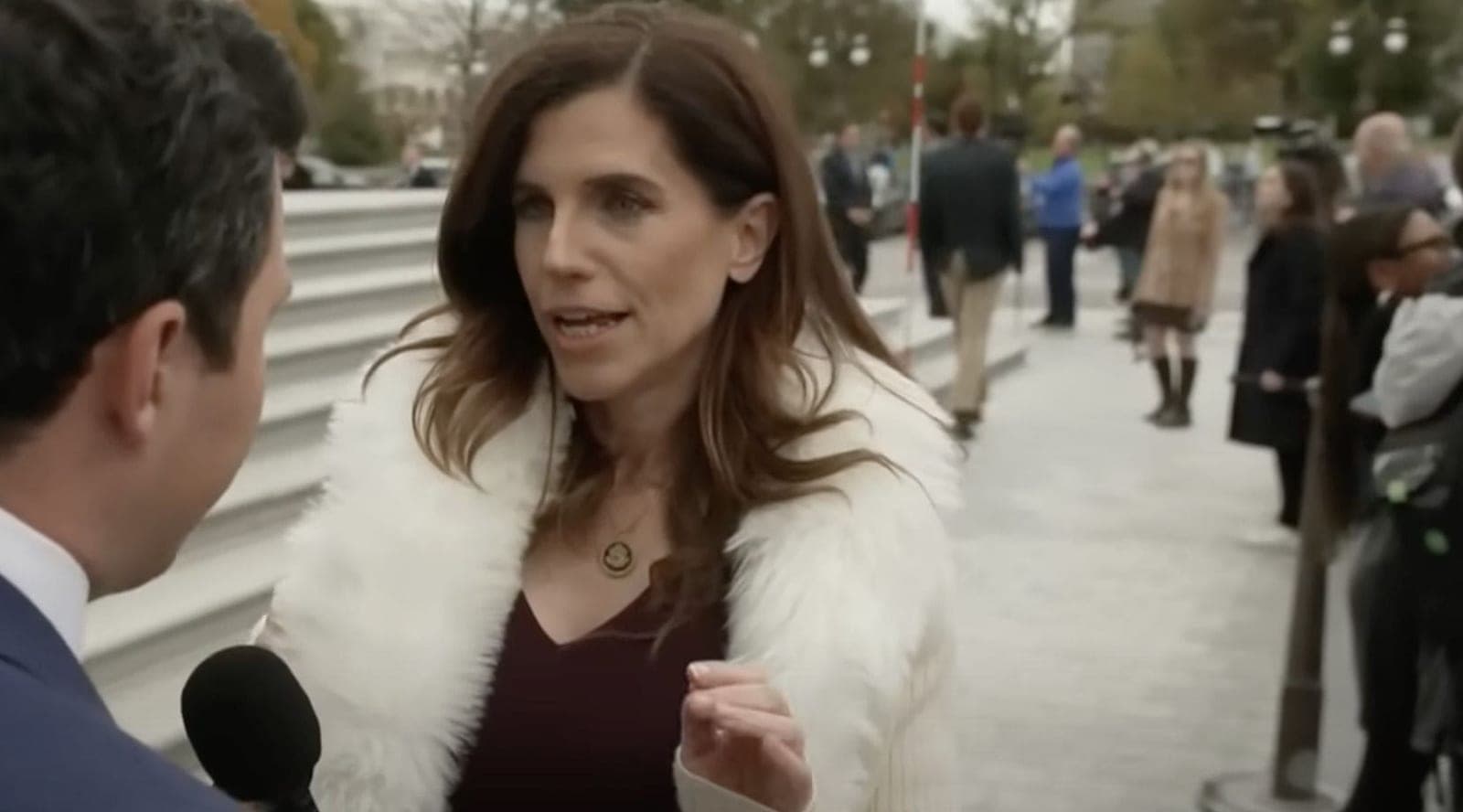
‘Bring It On’: Rep. Mace Fights Fire With Fire After Fellow Republican Pushes For Her Expulsion
Two Republican lawmakers facing their own unique political pressures are reportedly turning their attention to trying to expel one another from Congress. The latest development in an ongoing saga involving Reps. Nancy Mace (R-SC) and Cory Mills (R-FL) came amid reports that the latter had already drafted a resolution seeking to expel the former. Mace didn’t take the news lightly, as NBC News reported: Mills is being investigated by the House Ethics Committee in connection with allegations of “sexual misconduct and/or dating violence” and campaign finance violations. He has denied any wrongdoing. While some Democrats have called for his expulsion, Mace went further by announcing Monday evening that she had filed a measure that would remove him from office. “The swamp has protected Cory Mills for far too long and we are done letting it slide,” Mace said in a statement. “We tried to censure him and strip him from his committee assignments. Both parties blocked it, but we are not backing down.” Mace offered a resolution to censure Mills in November. The House voted to refer the matter to the Ethics Committee. The South Carolina congresswoman stayed on offense with a series of social media posts: I would expect nothing less from a politician as corrupt as Cory Mills. Bring it on. — Rep. Nancy Mace (@RepNancyMace) April 20, 2026 Cory Mills is coming after me because I am standing up for you. Mills is unfit to serve anywhere, in any capacity. If you’re a conservative exposing corruption, the machine comes after you. And if they can’t find it, they just make it up. So I say bring it on. I was built… pic.twitter.com/Z1KVHKFVm5 — Nancy Mace (@NancyMace) April 20, 2026 Meanwhile, Mills was busy griping about Mace on the same platform: Nancy wants you to believe she’s fighting for you, but she’s not. One minute she’s MAGA, the next she isn’t. Nancy Mace is a hypocrite who abuses her power and is an opportunist. She even attacked @POTUS. Call my vote forward Nancy! https://t.co/9vjZPKey5U pic.twitter.com/qEgdqjTLmB — Cory Mills (@CoryMillsFL) April 21, 2026 The Daily Caller offered some additional context into the controversies surrounding Mills: Mills has faced mounting scrutiny in recent months. In September, he drew attention after being one of four Republicans to oppose a resolution from Mace to censure Democratic Minnesota Rep. Ilhan Omar at a time when he was also facing the possibility of a retaliatory censure from House Democrats. The House Ethics Committee announced a formal investigation into Mills in November, just hours before he was set to face a censure resolution that could have weakened his standing in Congress. He ultimately narrowly avoided a formal rebuke after most House Republicans voted to block a separate effort led by Mace to strip him of his committee assignments. Mace intensified her criticism, forcing a vote in November on a resolution to remove Mills from the House Armed Services and Foreign Affairs committees, citing multiple ethics concerns. The resolution drew on reporting from NOTUS citing soldiers disputing aspects of Mills’ Bronze Star account, as well as a December 2024 Office of Congressional Ethics report suggesting he may have violated House rules by potentially retaining federal contracts while in office. The Florida congressman has also been linked to a range of other controversies — including sextortion allegations, accusations of embellishing his military record, questions surrounding his religious affiliation and claims of financial misconduct — according to The Blaze and Sollenberger. His former girlfriend, Lindsey Langston, the 2024 Miss United States winner, reportedly filed a restraining order alleging he threatened to release explicit videos of her. Former colleagues have accused Mills of overstating aspects of his service in the U.S. Army and as a private contractor, according to The Blaze. He was reportedly married in 2014 by a radical Islamic cleric tied to the Muslim Brotherhood at a Virginia mosque, despite his public alignment with Christianity, the outlet reported. Here’s some more coverage of the latest developments: The post <a href=https://wltreport.com/2026/04/21/bring-it-rep-mace-fights-fire-fire-after/#utm_source=rss&utm_medium=rss&utm_campaign=bring-it-rep-mace-fights-fire-fire-after target=_blank >‘Bring It On’: Rep. Mace Fights Fire With Fire After Fellow Republican Pushes For Her Expulsion</a> appeared first on Conservative Angle | Conservative Angle - Conservative News Clearing House

Which party is ahead in the midterm elections fundraising game?
Multiple GOP fundraising committees on the national stage are significantly outpacing their Democratic counterparts so far this year as the high-stakes midterm elections near. On Monday, the National Republican Congressional Committee released its record-breaking total for the first quarter: $47.1 million, including $28.1 million in March. Republicans point to the fundraising numbers as proof of mass “enthusiasm behind our agenda to lower costs and keep Americans safe,” NRCC Chairman Richard Hudson said in a statement. Hours later, the Democratic Congressional Campaign Committee posted its first-quarter numbers in a similar press release that sold them as record-breaking. Of the $45.3 million total from January to March, the group brought in $21.5 million last month. Rep. Suzan DelBene (D-WA), who also chairs the DCCC, is bullish about Democrats’ opportunity to regain control of Congress. RNC HOLDS $117 MILLION IN ITS COFFERS WHILE DNC STILL IN THE RED “United behind the leadership of Hakeem Jeffries, House Democrats’ message of lower costs, affordable health care, and reining in the culture of corruption that’s defined Republican rule the last year, we’re seeing a groundswell of support from all corners of the country,” she said. “Democrats have the momentum, message, and resources to take back the majority in November.” As one of the DCCC’s recent press releases insists, Democrats outraised Republicans in 42 individual races. Democratic challenger Rebecca Cooke, for one, hauled in $2.4 million for the first three months of 2026 against Rep. Derrick Van Orden (R-WI), who garnered $1.3 million during the same period. While both parties are confident about their chances of winning congressional races, the Republican Party is leading the charge money-wise. RNC vs. DNC This fundraising advantage is most clearly demonstrated by the Republican National Committee, which raised $21.2 million in March and held nearly $116.7 million in on-hand cash as of March 31. The Federal Election Commission made these figures publicly available by the filing deadline on Monday. For comparison, the Democratic National Committee raised $11.4 million last month and had nearly $13.9 million in the bank at the end of the latest monthly reporting period. Further adding to its large financial disadvantage, the DNC has over $18.3 million in debt, whereas the RNC still has no debt. The DNC’s outstanding debt stems from a $15 million loan that the committee took in October 2025, a sign of financial distress following the party’s widespread 2024 election losses. Despite this, the DNC is optimistic about overperforming in many of this year’s elections after its fall 2025 winning streak. A DNC official noted the group’s fundraising tallies, far behind those of the RNC, are not unusual for a midterm election cycle when the opposing party controls Congress and the White House. The same was true in 2018 when President Donald Trump was in office for his first term. However, the official said, the DNC raised over $4 million more in March than at this point in 2018 and has 50% more cash on hand than at this time eight years ago. The committee also touted its $6 million in fundraising generated from grassroots supporters, more than 1.5 times the amount raised in March 2018, and pointed to 11 donations that exceeded $100,000 as proof of voters’ enthusiasm for the Democratic Party. Republican and Democratic committees for House and Senate The pattern of Republicans dominating the competition financially held across the top party committees in March. As mentioned above, the NRCC outraised the DCCC by close to $7 million. But the NRCC also had a $78.2 million cash advantage over the DCCC’s $69.9 million. The pattern broke down in February, when the DCCC raised more money ($13.7 million to $9.9 million) compared to its Republican counterpart, but that slight lead didn’t last very long. It was also undermined by a narrow cash gap that left the NRCC on top ($57.6 million to $57.4 million). Meanwhile, the National Republican Senatorial Committee held on to its lead from February to March by raising about $15.6 million last month compared to the Democratic Senatorial Campaign Committee’s $12.4 million. The NRSC also led the DSCC in cash, $43 million to $36.5 million. Neither of the House nor Senate committees from both parties has any outstanding debts. SENATE DEMOCRATS RAISE MASSIVE CAMPAIGN FUNDS AS GOP CANDIDATES LAG The Republican super PACs are also doing substantially better than the Democratic super PACs. The Republican Party’s Congressional Leadership Fund and Senate Leadership Fund have a combined $257 million in cash on hand, about $118 million more than the total from the Democratic Party’s House Majority PAC and Senate Majority PAC. Democratic candidates show more strength than committees Despite the Democratic Party’s growing disadvantage, individual Democratic candidates for the Senate reported large fundraising hauls for the first quarter of the year. Sen. Jon Ossoff (D-GA) and former North Carolina Gov. Roy Cooper were among the top candidates with the most funds, although Sens. Susan Collins (R-ME) and John Cornyn (R-TX) had sizable portions of their own. The post <a href=https://www.washingtonexaminer.com/news/campaigns/congressional/4535271/which-party-is-ahead-midterm-fundraising-game/ target=_blank >Which party is ahead in the midterm elections fundraising game?</a> appeared first on Conservative Angle | Conservative Angle - Conservative News Clearing House
Which party is ahead in the midterm elections fundraising game?
Multiple GOP fundraising committees on the national stage are significantly outpacing their Democratic counterparts so far this year as the high-stakes midterm elections near. On Monday, the National Republican Congressional Committee released its record-breaking total for the first quarter: $47.1 million, including $28.1 million in March. Republicans point to the fundraising numbers as proof of mass “enthusiasm behind our agenda to lower costs and keep Americans safe,” NRCC Chairman Richard Hudson said in a statement. Hours later, the Democratic Congressional Campaign Committee posted its first-quarter numbers in a similar press release that sold them as record-breaking. Of the $45.3 million total from January to March, the group brought in $21.5 million last month. Rep. Suzan DelBene (D-WA), who also chairs the DCCC, is bullish about Democrats’ opportunity to regain control of Congress. RNC HOLDS $117 MILLION IN ITS COFFERS WHILE DNC STILL IN THE RED “United behind the leadership of Hakeem Jeffries, House Democrats’ message of lower costs, affordable health care, and reining in the culture of corruption that’s defined Republican rule the last year, we’re seeing a groundswell of support from all corners of the country,” she said. “Democrats have the momentum, message, and resources to take back the majority in November.” As one of the DCCC’s recent press releases insists, Democrats outraised Republicans in 42 individual races. Democratic challenger Rebecca Cooke, for one, hauled in $2.4 million for the first three months of 2026 against Rep. Derrick Van Orden (R-WI), who garnered $1.3 million during the same period. While both parties are confident about their chances of winning congressional races, the Republican Party is leading the charge money-wise. RNC vs. DNC This fundraising advantage is most clearly demonstrated by the Republican National Committee, which raised $21.2 million in March and held nearly $116.7 million in on-hand cash as of March 31. The Federal Election Commission made these figures publicly available by the filing deadline on Monday. For comparison, the Democratic National Committee raised $11.4 million last month and had nearly $13.9 million in the bank at the end of the latest monthly reporting period. Further adding to its large financial disadvantage, the DNC has over $18.3 million in debt, whereas the RNC still has no debt. The DNC’s outstanding debt stems from a $15 million loan that the committee took in October 2025, a sign of financial distress following the party’s widespread 2024 election losses. Despite this, the DNC is optimistic about overperforming in many of this year’s elections after its fall 2025 winning streak. A DNC official noted the group’s fundraising tallies, far behind those of the RNC, are not unusual for a midterm election cycle when the opposing party controls Congress and the White House. The same was true in 2018 when President Donald Trump was in office for his first term. However, the official said, the DNC raised over $4 million more in March than at this point in 2018 and has 50% more cash on hand than at this time eight years ago. The committee also touted its $6 million in fundraising generated from grassroots supporters, more than 1.5 times the amount raised in March 2018, and pointed to 11 donations that exceeded $100,000 as proof of voters’ enthusiasm for the Democratic Party. Republican and Democratic committees for House and Senate The pattern of Republicans dominating the competition financially held across the top party committees in March. As mentioned above, the NRCC outraised the DCCC by close to $7 million. But the NRCC also had a $78.2 million cash advantage over the DCCC’s $69.9 million. The pattern broke down in February, when the DCCC raised more money ($13.7 million to $9.9 million) compared to its Republican counterpart, but that slight lead didn’t last very long. It was also undermined by a narrow cash gap that left the NRCC on top ($57.6 million to $57.4 million). Meanwhile, the National Republican Senatorial Committee held on to its lead from February to March by raising about $15.6 million last month compared to the Democratic Senatorial Campaign Committee’s $12.4 million. The NRSC also led the DSCC in cash, $43 million to $36.5 million. Neither of the House nor Senate committees from both parties has any outstanding debts. SENATE DEMOCRATS RAISE MASSIVE CAMPAIGN FUNDS AS GOP CANDIDATES LAG The Republican super PACs are also doing substantially better than the Democratic super PACs. The Republican Party’s Congressional Leadership Fund and Senate Leadership Fund have a combined $257 million in cash on hand, about $118 million more than the total from the Democratic Party’s House Majority PAC and Senate Majority PAC. Democratic candidates show more strength than committees Despite the Democratic Party’s growing disadvantage, individual Democratic candidates for the Senate reported large fundraising hauls for the first quarter of the year. Sen. Jon Ossoff (D-GA) and former North Carolina Gov. Roy Cooper were among the top candidates with the most funds, although Sens. Susan Collins (R-ME) and John Cornyn (R-TX) had sizable portions of their own. The post <a href=https://www.washingtonexaminer.com/news/campaigns/congressional/4535271/which-party-is-ahead-midterm-fundraising-game/ target=_blank >Which party is ahead in the midterm elections fundraising game?</a> appeared first on Conservative Angle | Conservative Angle - Conservative News Clearing House
‘Bring It On’: Rep. Mace Fights Fire With Fire After Fellow Republican Pushes For Her Expulsion
Two Republican lawmakers facing their own unique political pressures are reportedly turning their attention to trying to expel one another from Congress. The latest development in an ongoing saga involving Reps. Nancy Mace (R-SC) and Cory Mills (R-FL) came amid reports that the latter had already drafted a resolution seeking to expel the former. Mace didn’t take the news lightly, as NBC News reported: Mills is being investigated by the House Ethics Committee in connection with allegations of “sexual misconduct and/or dating violence” and campaign finance violations. He has denied any wrongdoing. While some Democrats have called for his expulsion, Mace went further by announcing Monday evening that she had filed a measure that would remove him from office. “The swamp has protected Cory Mills for far too long and we are done letting it slide,” Mace said in a statement. “We tried to censure him and strip him from his committee assignments. Both parties blocked it, but we are not backing down.” Mace offered a resolution to censure Mills in November. The House voted to refer the matter to the Ethics Committee. The South Carolina congresswoman stayed on offense with a series of social media posts: I would expect nothing less from a politician as corrupt as Cory Mills. Bring it on. — Rep. Nancy Mace (@RepNancyMace) April 20, 2026 Cory Mills is coming after me because I am standing up for you. Mills is unfit to serve anywhere, in any capacity. If you’re a conservative exposing corruption, the machine comes after you. And if they can’t find it, they just make it up. So I say bring it on. I was built… pic.twitter.com/Z1KVHKFVm5 — Nancy Mace (@NancyMace) April 20, 2026 Meanwhile, Mills was busy griping about Mace on the same platform: Nancy wants you to believe she’s fighting for you, but she’s not. One minute she’s MAGA, the next she isn’t. Nancy Mace is a hypocrite who abuses her power and is an opportunist. She even attacked @POTUS. Call my vote forward Nancy! https://t.co/9vjZPKey5U pic.twitter.com/qEgdqjTLmB — Cory Mills (@CoryMillsFL) April 21, 2026 The Daily Caller offered some additional context into the controversies surrounding Mills: Mills has faced mounting scrutiny in recent months. In September, he drew attention after being one of four Republicans to oppose a resolution from Mace to censure Democratic Minnesota Rep. Ilhan Omar at a time when he was also facing the possibility of a retaliatory censure from House Democrats. The House Ethics Committee announced a formal investigation into Mills in November, just hours before he was set to face a censure resolution that could have weakened his standing in Congress. He ultimately narrowly avoided a formal rebuke after most House Republicans voted to block a separate effort led by Mace to strip him of his committee assignments. Mace intensified her criticism, forcing a vote in November on a resolution to remove Mills from the House Armed Services and Foreign Affairs committees, citing multiple ethics concerns. The resolution drew on reporting from NOTUS citing soldiers disputing aspects of Mills’ Bronze Star account, as well as a December 2024 Office of Congressional Ethics report suggesting he may have violated House rules by potentially retaining federal contracts while in office. The Florida congressman has also been linked to a range of other controversies — including sextortion allegations, accusations of embellishing his military record, questions surrounding his religious affiliation and claims of financial misconduct — according to The Blaze and Sollenberger. His former girlfriend, Lindsey Langston, the 2024 Miss United States winner, reportedly filed a restraining order alleging he threatened to release explicit videos of her. Former colleagues have accused Mills of overstating aspects of his service in the U.S. Army and as a private contractor, according to The Blaze. He was reportedly married in 2014 by a radical Islamic cleric tied to the Muslim Brotherhood at a Virginia mosque, despite his public alignment with Christianity, the outlet reported. Here’s some more coverage of the latest developments: The post <a href=https://wltreport.com/2026/04/21/bring-it-rep-mace-fights-fire-fire-after/#utm_source=rss&utm_medium=rss&utm_campaign=bring-it-rep-mace-fights-fire-fire-after target=_blank >‘Bring It On’: Rep. Mace Fights Fire With Fire After Fellow Republican Pushes For Her Expulsion</a> appeared first on Conservative Angle | Conservative Angle - Conservative News Clearing House

The questions Kevin Warsh will face during his confirmation hearing
Kevin Warsh, President Donald Trump’s pick for chairman of the Federal Reserve, will face an onslaught of questions during his confirmation hearing on Tuesday. Here is what to expect. Trump nominated Warsh, 56, earlier this year to replace outgoing Fed Chairman Jerome Powell, whose term is ending in mid-May. Powell is under investigation by the Justice Department, which has raised the stakes for Warsh’s confirmation hearing. WARSHACH TEST: TRUMP’S FED CHAIRMAN PICK KEEPS MONETARY ANALYSTS GUESSING Plus, since Warsh’s nomination was announced, the United States and Iran went to war, causing energy prices to spike and sending inflation spiking nearly a full percentage point higher. Warsh will be in a tricky position on Tuesday as he navigates questions about the Fed’s independence, monetary policy, and more. “He’s in a tough situation to navigate,” Dennis Lockhart, former president of the Federal Reserve Bank of Atlanta who worked with Warsh for several years at the Fed, told the Washington Examiner. Fed independence At the top of the list of questions Warsh will face relates to the Fed’s status as an independent agency separate from the White House. Trump has been pushing Powell to cut interest rates since he entered his second term, but Powell has resisted, emphasizing the independent nature of the central bank. And the investigation into the current Fed chairman has made the matter ever more prescient. Earlier this year, in a video statement, Powell announced he was being investigated by the Justice Department for claims he made about the Fed headquarters renovation during congressional testimony. But he argued that the inquiry is an effort by Trump to influence interest rate policy. Stephen Kates, a financial analyst at Bankrate, told the Washington Examiner that questions about the Fed’s independence will be heavily featured in the hearing. “What role is Warsh going to play?” Kates asked. “Is he going to stand against that? How will he do that? How is he going to insulate the Federal Reserve from speculation that it’s not independent from actual coordination with the White House? … How would he approach that, that pressure, which is not going to abate?” Warsh’s testimony was leaked on Monday prior to the hearing. In it, Warsh pledges to defend the central bank’s independence. Warsh will say that “monetary policy independence is essential,” according to the prepared testimony. “In sum, I believe that monetary policy independence is earned—and better policy decisions crafted—by steering clear of distractions,” Warsh will say. “I am committed to ensuring that the conduct of monetary policy remains strictly independent. I am equally committed to working with the administration and Congress on non-monetary matters that are part of the Fed’s remit.” It will also be worth watching retiring Sen. Thom Tillis (R-NC) and what he says during the hearing. That is because he is threatening to block Warsh until the legal probing into Powell has concluded. Notably, Tim Scott (R-SC), chairman of the Banking committee, on Tuesday of last week said that he thinks the Justice Department will drop its investigation into Powell, which would allow Tillis to back off. “The second step, later on, we’ll have a vote on Kevin Warsh,” Scott said. “I believe that the DOJ will finish and wrap this up in the next several weeks, and Thom Tillis will be a ‘yes’ on Kevin Warsh.” Interest rates and inflation Absent questions about Fed independence, although closely tied to the matter, Warsh will also likely face a torrent of questions about his monetary policy philosophy and what he thinks is the best course for interest rates. Warsh has said interest rates should be lower: a key demand from Trump. “I think it’s incredibly unlikely that Trump would have nominated without some sort of promise and pledge as to his fidelity to lowering rates in the short term,” Marc Short, chairman of Advancing American Freedom and former chief of staff to Vice President Mike Pence, told the Washington Examiner. But economic conditions have changed dramatically since Warsh was nominated, especially because of the Iran war, in ways that would make it much more difficult for the central bank to pursue monetary easing. Most significantly, inflation rose sharply in March, in large part due to higher oil prices. Lockhart, the former Fed president, said he expects some lawmakers on the panel will try to see if Warsh gave the president any sort of promises about how he will pursue interest rate policy. “Some in the Banking committee are going to want to probe what assurances he’s given the president in order to get this job,” Lockhart said. “Kevin’s a careful navigator, so I suspect he’ll be able to navigate that with some degree of ambiguity, frankly.” Kates said that Warsh will likely be asked about his opinions on how the Fed has handled inflation in recent years and what he thinks should have been done with interest rate policy. “Almost a past, present, future type of thing — because he’s made it plain that he thinks interest rates could and should be lower, and that AI and technology will be deflationary,” he said. Financial disclosures Democrats are also expected to grill Warsh about his finances. Ahead of the meeting, the Fed nominee disclosed financial interests exceeding $100 million. He is married to Jane Lauder, who serves on the board of Estée Lauder Companies. Citing confidentiality, he declined to reveal the underlying holdings of the biggest investments. The Office of Government Ethics said that Warsh would have to divest from several dozen holdings. Warsh has said he would divest if confirmed, but the Wall Street Journal reported that Democrats on the panel intend to question him on the contents of those investments. “Without the ability to review Mr. Warsh’s holdings in public and in detail, it is impossible to determine whether Mr. Warsh is holding an interest in institutions he would be responsible for regulating as Fed Chair,” Democrats on the Banking committee said in a staff memo. Background and philosophy During his testimony, Warsh will talk a bit about his background and experience, and lawmakers on the committee might ask him questions related to his economic philosophy, which has evolved over time, and about his previous tenure at the Fed. Former President George W. Bush nominated Warsh, a one-time Morgan Stanley banker, to the Fed board in 2006. Warsh held that role under both Bush and President Barack Obama. After leaving the central bank, Warsh worked as a distinguished visiting fellow at Stanford University’s Hoover Institution. Warsh has faced some criticism for his handling of the 2008 financial crisis and its fallout. At that time, the Fed took extraordinary measures to intervene in the economy and prop up markets. Unemployment was spiraling, and then-Fed Chairman Ben Bernanke spearheaded looser money policies that Warsh at the time panned as being possibly inflationary. TRUMP SETS STAGE FOR SHOWDOWN WITH POWELL OVER WHO RUNS THE FED IN MID-MAY When he was back at the Fed earlier in his career, Warsh developed a reputation as an inflation hawk, meaning he was seen as more hesitant about looser money policies and more concerned with rising prices. But Warsh will face questions about how his thinking on troubles such as that has evolved. “A lot that he said between 2006 and 2011 are now in transcripts of the meetings that are available to the public,” Lockhart said. “And there’s some contrast between a rather hawkish profile at that time and the somewhat more dovish profile that he has projected recently, particularly in the run up to his nomination.” The post <a href=https://www.washingtonexaminer.com/policy/finance-and-economy/4536357/questions-kevin-warsh-confirmation-hearing/ target=_blank >The questions Kevin Warsh will face during his confirmation hearing</a> appeared first on Conservative Angle | Conservative Angle - Conservative News Clearing House
The questions Kevin Warsh will face during his confirmation hearing
Kevin Warsh, President Donald Trump’s pick for chairman of the Federal Reserve, will face an onslaught of questions during his confirmation hearing on Tuesday. Here is what to expect. Trump nominated Warsh, 56, earlier this year to replace outgoing Fed Chairman Jerome Powell, whose term is ending in mid-May. Powell is under investigation by the Justice Department, which has raised the stakes for Warsh’s confirmation hearing. WARSHACH TEST: TRUMP’S FED CHAIRMAN PICK KEEPS MONETARY ANALYSTS GUESSING Plus, since Warsh’s nomination was announced, the United States and Iran went to war, causing energy prices to spike and sending inflation spiking nearly a full percentage point higher. Warsh will be in a tricky position on Tuesday as he navigates questions about the Fed’s independence, monetary policy, and more. “He’s in a tough situation to navigate,” Dennis Lockhart, former president of the Federal Reserve Bank of Atlanta who worked with Warsh for several years at the Fed, told the Washington Examiner. Fed independence At the top of the list of questions Warsh will face relates to the Fed’s status as an independent agency separate from the White House. Trump has been pushing Powell to cut interest rates since he entered his second term, but Powell has resisted, emphasizing the independent nature of the central bank. And the investigation into the current Fed chairman has made the matter ever more prescient. Earlier this year, in a video statement, Powell announced he was being investigated by the Justice Department for claims he made about the Fed headquarters renovation during congressional testimony. But he argued that the inquiry is an effort by Trump to influence interest rate policy. Stephen Kates, a financial analyst at Bankrate, told the Washington Examiner that questions about the Fed’s independence will be heavily featured in the hearing. “What role is Warsh going to play?” Kates asked. “Is he going to stand against that? How will he do that? How is he going to insulate the Federal Reserve from speculation that it’s not independent from actual coordination with the White House? … How would he approach that, that pressure, which is not going to abate?” Warsh’s testimony was leaked on Monday prior to the hearing. In it, Warsh pledges to defend the central bank’s independence. Warsh will say that “monetary policy independence is essential,” according to the prepared testimony. “In sum, I believe that monetary policy independence is earned—and better policy decisions crafted—by steering clear of distractions,” Warsh will say. “I am committed to ensuring that the conduct of monetary policy remains strictly independent. I am equally committed to working with the administration and Congress on non-monetary matters that are part of the Fed’s remit.” It will also be worth watching retiring Sen. Thom Tillis (R-NC) and what he says during the hearing. That is because he is threatening to block Warsh until the legal probing into Powell has concluded. Notably, Tim Scott (R-SC), chairman of the Banking committee, on Tuesday of last week said that he thinks the Justice Department will drop its investigation into Powell, which would allow Tillis to back off. “The second step, later on, we’ll have a vote on Kevin Warsh,” Scott said. “I believe that the DOJ will finish and wrap this up in the next several weeks, and Thom Tillis will be a ‘yes’ on Kevin Warsh.” Interest rates and inflation Absent questions about Fed independence, although closely tied to the matter, Warsh will also likely face a torrent of questions about his monetary policy philosophy and what he thinks is the best course for interest rates. Warsh has said interest rates should be lower: a key demand from Trump. “I think it’s incredibly unlikely that Trump would have nominated without some sort of promise and pledge as to his fidelity to lowering rates in the short term,” Marc Short, chairman of Advancing American Freedom and former chief of staff to Vice President Mike Pence, told the Washington Examiner. But economic conditions have changed dramatically since Warsh was nominated, especially because of the Iran war, in ways that would make it much more difficult for the central bank to pursue monetary easing. Most significantly, inflation rose sharply in March, in large part due to higher oil prices. Lockhart, the former Fed president, said he expects some lawmakers on the panel will try to see if Warsh gave the president any sort of promises about how he will pursue interest rate policy. “Some in the Banking committee are going to want to probe what assurances he’s given the president in order to get this job,” Lockhart said. “Kevin’s a careful navigator, so I suspect he’ll be able to navigate that with some degree of ambiguity, frankly.” Kates said that Warsh will likely be asked about his opinions on how the Fed has handled inflation in recent years and what he thinks should have been done with interest rate policy. “Almost a past, present, future type of thing — because he’s made it plain that he thinks interest rates could and should be lower, and that AI and technology will be deflationary,” he said. Financial disclosures Democrats are also expected to grill Warsh about his finances. Ahead of the meeting, the Fed nominee disclosed financial interests exceeding $100 million. He is married to Jane Lauder, who serves on the board of Estée Lauder Companies. Citing confidentiality, he declined to reveal the underlying holdings of the biggest investments. The Office of Government Ethics said that Warsh would have to divest from several dozen holdings. Warsh has said he would divest if confirmed, but the Wall Street Journal reported that Democrats on the panel intend to question him on the contents of those investments. “Without the ability to review Mr. Warsh’s holdings in public and in detail, it is impossible to determine whether Mr. Warsh is holding an interest in institutions he would be responsible for regulating as Fed Chair,” Democrats on the Banking committee said in a staff memo. Background and philosophy During his testimony, Warsh will talk a bit about his background and experience, and lawmakers on the committee might ask him questions related to his economic philosophy, which has evolved over time, and about his previous tenure at the Fed. Former President George W. Bush nominated Warsh, a one-time Morgan Stanley banker, to the Fed board in 2006. Warsh held that role under both Bush and President Barack Obama. After leaving the central bank, Warsh worked as a distinguished visiting fellow at Stanford University’s Hoover Institution. Warsh has faced some criticism for his handling of the 2008 financial crisis and its fallout. At that time, the Fed took extraordinary measures to intervene in the economy and prop up markets. Unemployment was spiraling, and then-Fed Chairman Ben Bernanke spearheaded looser money policies that Warsh at the time panned as being possibly inflationary. TRUMP SETS STAGE FOR SHOWDOWN WITH POWELL OVER WHO RUNS THE FED IN MID-MAY When he was back at the Fed earlier in his career, Warsh developed a reputation as an inflation hawk, meaning he was seen as more hesitant about looser money policies and more concerned with rising prices. But Warsh will face questions about how his thinking on troubles such as that has evolved. “A lot that he said between 2006 and 2011 are now in transcripts of the meetings that are available to the public,” Lockhart said. “And there’s some contrast between a rather hawkish profile at that time and the somewhat more dovish profile that he has projected recently, particularly in the run up to his nomination.” The post <a href=https://www.washingtonexaminer.com/policy/finance-and-economy/4536357/questions-kevin-warsh-confirmation-hearing/ target=_blank >The questions Kevin Warsh will face during his confirmation hearing</a> appeared first on Conservative Angle | Conservative Angle - Conservative News Clearing House