2 stories credited to Words & Money
Latest story Apr 14, 2026 · on ChamberLight since Apr 2026
Scores for Words & Money
Writing quality not enough rated stories yet: 2 of 10. How it is measured
Scores last checked Sep 24, 2026.
Stories ChamberLight collected, by month
Stories credited to Words & Money, by publication date. ChamberLight collects articles that mention the officials it tracks, so this shows its own coverage of this source, not how much the source publishes.
- Stories from Words & Money
- Shaded: ChamberLight collected no stories, or almost none, from any outlet (a gap in its collection, not in the outlet’s publishing)
Show as a table
| Month | Stories | All outlets |
|---|---|---|
| April 2026 | 2 | 3,466 |
| May 2026 | 0 | none collected |
| June 2026 | 0 | none collected |
| July 2026 | 0 | none collected |
| August 2026 | 0 | 1 (collection gap) |
| September 2026 | 0 | 598 |
Top topics
Share of this source’s stories tagged with each topic. A story can carry several topics, so the shares do not add up to 100%.
- Education2
100% of 2 stories · 3% across all outlets
- Ethics/Corruption2
100% of 2 stories · 62% across all outlets
- Voting Rights1
50% of 2 stories · 20% across all outlets
The thin mark on each bar is the topic’s share across all outlets.
Who they cover
Party of the officials these stories are mainly about, across all 1 officials named. A story counts once for each official it is mainly about, so the split is over 2 story–official pairs, from 2 stories.
- Democrat100% · 2 pairs
Most covered
Stories mainly about each official, and their share of the source’s 2 stories.
Article tone
ChamberLight’s article analysis assigns each story a tone toward the official it covers. It describes the coverage of that official, not Words & Money’s stance, and reader votes do not change it. 2 stories.
- Good Look
- 1 (50%)
- Mixed
- 1 (50%)
- Informational
- 0 (0%)
- Bad Look
- 0 (0%)
Challenges to these scores
No one has challenged a score on this page yet. Anyone can; editors publish every outcome here.
Articles served from wordsandmoney.com
2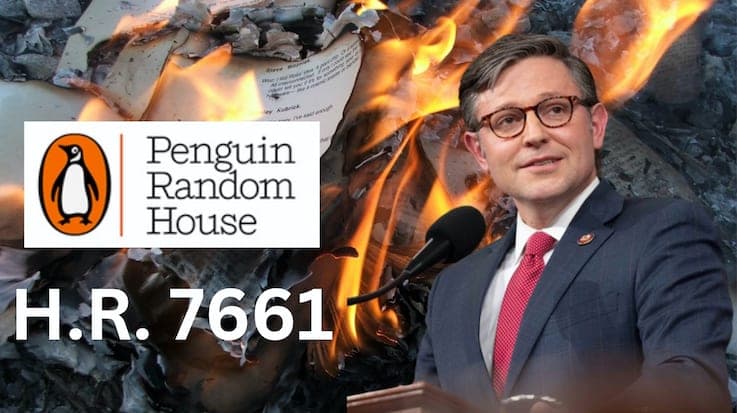
Penguin Random House Urges Congress to Reject Republican Book Banning Bill
With the U.S. Congress returning to work this week, Penguin Random House is urging lawmakers to reject a pernicious Republican-backed book banning bill, known as H.R. 7661. Introduced on February 24, the bill, also known as the “Stop the Sexualization of Children Act,” would block funding for any federal program that supports access to books or other materials for minors (defined as under the age of 18) that includes sexually oriented material.” Critics of the bill—which was introduced hours after President Trump attacked transgender rights in his State of the Union address—say the real target of the measure is made clear in its definition of “sexually oriented material,” which explicitly calls out material that “involves gender dysphoria or transgenderism.’’ Penguin Random House Sends Letter to Congress Urging Opposition to H.R. 7661 Penguin Random House Sends Letter to Congress Urging Opposition to H.R. 7661 #TeamPRH penguinrandomhouse.com In a letter to Congress this week, Skip Dye, SVP & Director of Sales Operations & Library Sales for Penguin Random House raised concerns about the bill’s threat to intellectual freedom and to students’ ability to engage with diverse ideas. “On behalf of Penguin Random House, the world’s largest trade publisher, we write to express our strong opposition to H.R. 7661,” Dye wrote, calling the bill “a direct threat to intellectual freedom,” and to the publisher’s mission. “While framed as addressing explicit content, the bill’s ambiguous language and definitions extend beyond explicit material to include content related to identity and ideology, narrowing the range of stories and perspectives available to students of all identities and backgrounds,” Dye writes. “By attaching vague and expansive restrictions to funding, this bill creates strong incentives for schools to remove or avoid a wide range of books and materials. In practice, educators and librarians will be forced to self-censor to protect their budgets, resulting in further marginalization of vulnerable communities.” Last month, the House Committee on Education and Workforce passed the bill out of committee. And while the bill is unlikely to muster enough support to get through the U.S. Senate, publishers and their allies—including the American Library Association and PEN America among others—aren’t taking any chances. “Americans have long defended a simple principle: the government should not decide what we think, say, or read,” Dye wrote in his letter. “Educators and librarians should be allowed to do their jobs and make decisions based on what is appropriate for their students—not on federal funding constraints. We urge you to oppose H.R. 7661.” Meanwhile, Democrats in Congress now have introduced two bills that would seek to protect the freedom to read. As Words & Money reported last week, Massachusetts Congresswoman Ayanna Pressley announced the introduction of the Books Save Lives Act of 2026, federal legislation that, according to a release, “aims to promote inclusive literature and to counter the right wing attacks on the freedom to read nationwide.” And last December, Rhode Island Senator Jack Reed and Arizona Rep. Adelita Grijalva introduced the Right to Read Act. A Coalition in Opposition 100 Grassroots Groups Urge Congress to Reject Bill to Censor Books in Public Schools PEN America today joined more than 100 grassroots literary organizations, along with publications, booksellers and publishers in calling on Congress to reject a bill that would in effect mandate book censorship in the nation’s public schools. PEN Americastrimel Meanwhile, more than 100 more organizations, including library associations, publishers (including Penguin Random House), booksellers, and advocacy groups signed on to a statement opposing H.B. 7661. "H.R. 7661, if passed, will compel nationwide book censorship. It confuses obscenity with identity and stigmatizes vulnerable young people, particularly trans children and teens, based on who they are, the statement, hosted on the PEN America website states."Together, we say that this bill goes against the U.S. Constitution, local self-determination, access to books, and a society that is welcoming for everyone, no matter who they are. Our schools deserve better than this. Our children and teens—all of them, without exception—deserve better than this." The statement urges the U.S. House of Representatives to vote "no" on H.R. 7661 or, "better yet, to not take it up for a vote at all." PEN America also urges members of the public to tell their representatives to oppose H.R. 766 A version of this article also appeared in Publishing Perspectives.

The Queue: Library News for the Week Ending April 10, 2026
Massachusetts Rep. Ayanna Pressley Introduces Freedom to Read Bill in Congress Among the many takeaways from the Eighth Circuit’s decision this week to allow Iowa’s book banning law S.F. 496 to go into effect is that the courts alone will likely not be enough to protect the freedom to read in our schools and libraries. Legislation must also be part of the solution. On that score, Massachusetts Congresswoman Ayanna Pressley (MA-07) this week announced the introduction of the Books Save Lives Act of 2026, federal legislation that, according to a release, "aims to promote inclusive literature and to counter the right wing attacks on the freedom to read nationwide." PHOTOS: With Book Bans on the Rise, Pressley Introduces Bill to Fight Back, Promote Inclusive Literature - Ayanna Pressley Pressley Unveiled Bill at Community Read-In Event in Somerville There Have Been Nearly 23,000 Book Bans in Public Schools Since… Ayanna PressleyRicardo Sanchez Pressley announced the bill this week at a community “read-in” event at All She Wrote Books in Somerville, Massachusetts. Among the bill’s provisions, the Books Save Lives Act would ensure primary and secondary schools have a library with a trained librarian; require public libraries and school libraries to maintain a diverse collection of books; classify discriminatory book bans as violations of federal civil rights laws; and direct the Government Accountability Office to report on the effect of book bans on underrepresented communities. The bill’s text is available here. The measure has so far picked up some 22 co-sponsors, and the endorsement of publishers (including four of the Big Five Publishers—with HarperCollins a notable absence) as well as several freedom to read organizations, including We Need Diverse Books, American Booksellers for Free Expression, Authors Against Book Bans, the Authors Guild, EveryLibrary, and the Independent Book Publishers Association (IBPA), among others. The bill is the second in support of libraries and the freedom to read introduced in this Congress, joining the bicameral Right to Read Act, introduced in December 2025 by Senator Jack Reed (D-RI) and Rep. Adelita Grijalva (D-AZ-07). The legislation also comes as Congress is currently considering a book banning bill, H.R. 7661, put forth by House Republicans that would block federal funding for schools that refuse to ban so-called "sexually explicit" material. Major Publishers, PEN America Team Up for a Program to Protect Authors Facing Harassment New Program Announced to Safeguard U.S. Authors Facing Harassment and Threats Building on years of work opposing book bans and supporting U.S. journalists under attack online, PEN America, the writers organization, is expanding its expertise to meet a growing need for safety support in the literary community. PEN Americastrimel PEN America, with support from several major publishing houses and literary agencies, announced a plan this week to establish a "U.S. Author Safety Program" to help protect writers facing "harassment and threats driven by a pernicious wave of censorship that is eroding free expression and disrupting authors’ professional lives." Under the program, PEN America plans to offer "safety training, consultations, resources and peer support for U.S. authors who are facing harassment and security risks connected to their work." The program is slated to roll out starting this summer. “We have heard from countless authors, illustrators, and translators who are under siege, fending off a steady stream of abuse and threats, online and at book events,” said Clarisse Rosaz Shariyf, co-chief executive officer of PEN America. “Through this new program, the literary and publishing community is stepping up together because writers should not be forced to choose between their safety and their voice." Freedom to Read Bill Advancing in Alaska Legislation to protect librarians from harassment moving in state Senate A bill to protect librarians from harassment and actions to censor books is moving through the state Senate. Senate Bill 238, sponsored by Sen. Scott Kawasaki, D-Fairbanks, would also allow Mat-Su Valley FrontiersmanTim Bradner For the Frontiersman The Frontiersman reports that a bill to protect librarians and the freedom to read is advancing in the Alaska State Senate. “The Senate Education Committee held two hearings on SB 238 and sent the bill, titled the ‘Freedom to Read Act’ out of committee March 23, on to the Senate Judiciary Committee,” the outlet reports. Notably, the Alaska bill also creates a private right of action that allows students, parents and guardians, authors, booksellers, or publishers to file a civil lawsuit if library material is unduly censored, much like the Rhode Island freedom to read law passed last year that is widely considered to be the gold standard for such laws. “This gives power directly to those affected by censorship and provides an avenue for recourse,” the bill’s author, senator Scott Kawaski told reporters. Minnesota's Library Ebook Bill Stalls Over a Procedural Dispute Library e-book bill stalls in commerce committee over deadline dispute - Session Daily - Minnesota House of Representatives Minnesota LegislatureLisa Kaczke You can add Minnesota to the list of states considering a library ebook bill, with the introduction of HF3698. However, the Minnesota Legislature reports that the bill stalled this week after "a partisan dispute" over deadlines and procedures. "HF3698, as amended, would address a 'growing imbalance in the digital book marketplace,' said Sarah Hawkins, legislative committee co-chair of the Minnesota Library Association," the report notes. Once again, the Association of American Publishers voiced opposition, telling lawmakers that when "publishers can’t meet the contract demands laid out in the bill, libraries will lose access to new releases, have higher costs, and be unable to license ebooks entirely," the report states. As Words & Money reported last month, one of the goals of this current wave of library ebook legislation is to bring negotiation into a digital library marketplace that currently lacks it. But in their testimony against the bill, the Authors Guild offered this interesting bit of insight: "Publishers will likely not concede to changing the terms and their business model, and as a consequence, Minnesota libraries would not be able to license many new books or renew existing licenses for what could be a substantial portion of their catalogue." New Hampshire Lawmakers Push Yet Another Book Banning Bill Lawmakers consider bill to allow removal of books from schools; Supporters say it’s not a book ban New Hampshire lawmakers are debating another bill that would allow families to challenge books and other materials at public schools. WMURJon Schoenheider Freedom to read advocates in New Hampshire are hoping that the third time won't be a charm for New Hampshire lawmakers. According to WMUR, lawmakers in the Granite State are debating yet another bill that would allow families to challenge books and other materials at public schools. "This is the third year that lawmakers have tried to pass such legislation," the report states, adding that Governor Kelly Ayotte vetoed a different version of the measure last year. Texas Library Debates Changes to Its Collection Policy Irving Public Library Board advances proposed changes to collections policy, modifies some revisions The move comes after weeks of back-and-forth over how the current development policy should be changed, if at all. KERAAndy Lusk KERA News reports that "after weeks of back-and-forth" over how the current development policy at the Irving (Texas) Public Library should be changed, the Irving Public Library Board this week submitted "a slate of proposed changes" to the library's collection policy, particularly as it concerns diverse books. According to the report, one resident said the newly worded book collection policy "contains vague descriptions and relies heavily upon subjective content definitions,” and that the changes are apparently being made to appease a conservative political action committee, Families For Irving, which, KERA notes, exists to ensure that Irving’s "cultural" institutions, including its libraries, "reflect the traditional family values of our community." Canadian Librarians Push Back Against Alberta's Proposed Censorship Alberta’s Public Libraries Raise Serious Concerns About Bill 28: Privacy, Local Control, and the Future of Library Services — Coalition of Alberta Public Libraries (CAP Libraries) Coalition sends letter to Premier Smith and Minister Williams seeking collaborative path forward Published Date: April 9, 2026 Coalition of Alberta Public Libraries (CAP Libraries)Tobi Ikuepamitan In a release this week, The Coalition of Alberta Public Libraries (CAP Libraries), which represents some 324 public library service points across the province of Alberta, warned against a controversial measure, Bill 28, aimed at keeping allegedly "sexually explicit materials" away from minors in public spaces. "If passed, this bill would undermine access to information, local decision-making, and the privacy of Albertans,” said Ron Sheppard, Director of Parkland Regional Library System, in a release. “Library staff work every day to support families and respect parental responsibility. Bill 28 would place library workers in gatekeeping roles that don’t reflect how public libraries operate and would make everyday service far more difficult for communities across Alberta." The release also points to a January 2026 survey commissioned by the CAP Libraries and carried out by Alberta pollster Janet Brown which found that 82% of Alberta residents trust their public libraries to make appropriate decisions about what materials are available, and 69% believe trained library staff should make such decisions rather than politicians. "This confirms that public libraries are among Alberta’s most trusted and widely used public institutions," the group noted, and that "a vast majority of Albertans trust public librarians more than provincial leaders to make decisions about library materials." Are Book Bans Causing Publishers to Cut Back on Books for Young Readers? Where and How Book Censorship Is Impacting Children’s Publishing Right Now: Book Censorship News, April 10, 2026 Publishing imprints for young readers are shuttering thanks to a softening school and library market. That’s the result of book censorship. BOOK RIOTKelly Jensen Over at Book Riot, Kelly Jensen leads off her weekly censorship news column with a look at how book bans appear to be contributing to a "softening school and library market." "In mid-March, Dial Books, a long-time imprint at Penguin Random House, shut down unexpectedly," Jensen writes. "Industry chatter suggested that one of the key reasons for this decision was a 'softening' of the school and library market. That’s the kind phrasing for libraries and schools are no longer buying books the way they once did... While books have been banned nationwide in unbelievable numbers since 2021, that’s not been the only thing happening. Numerous schools and libraries nationwide have been told they cannot purchase new materials, while others have been told that in order to acquire new materials, they need to jump through several hoops before they can hit purchase.” Tamika Barnes Wins 2027-2028 ALA Presidency Barnes Wins 2027–2028 ALA Presidency | American Libraries Magazine Tamika Barnes, associate dean of Perimeter College Library Services at Georgia State University, has been elected 2026–2027 ALA president-. American Libraries Magazine Via American Libraries, congratulations to Tamika Barnes, associate dean of Perimeter College Library Services at Georgia State University in Atlanta, who has been elected 2026–2027 president-elect of the American Library Association (ALA). Barnes received 3,827 votes, while her opponent, Becky Calzada, district library coordinator at Leander (Tex.) Independent School District, received 2,742 votes. You can check out the full ALA election results on the ALA Elections page. In her candidate statement published in American Libraries in March, Barnes said her presidency would focus on four pillars: "unified advocacy; inclusive leadership and professional growth; equity, access, and intellectual freedom; and transparency and stewardship." Barnes will assume the ALA presidency at the conclusion of the 2027 ALA Annual Conference and Exhibition in New Orleans. Maria McCauley, Director of Libraries at the Cambridge Public Library in Massachusetts will be inaugurated as the 2026-2027 president at the conclusion of this year's ALA Annual Conference. Chicago Public Library, Schools Partner to Expand Access Chicago Turns All Public School IDs Into Library Cards To Boost Student Access Chicago Public Library and CPS announced the expansion of The 81 Club, building on a pilot launched in 2022 to give students access to the library system’s vast collection and databases. Block Club ChicagoMichael Liptrot Book Club Chicago reports on the expansion of The 81 Club, a partnership between the Chicago Public Library and Chicago Public Schools that allows "school identification cards to double as library cards." Named after the city’s 81 library locations, "the program builds on a 2022 pilot and looks to remove any barriers to accessing the library system’s six million-item collection as well as its online databases and free academic support, according to the city," the report notes. “This partnership is what it looks like in action when young people have access, not just to books, but to stories, art and creative expression," said Chicago Department of Cultural Affairs acting commissioner Kenya Merritt. "What’s really powerful about this collaboration is that it’s going to reach every single CPS student. That’s how we make equity real." And Finally This Week... “People Who Power Possibility”: 2026 I Love My Librarian Award Winners Announced! The American Library Association announced the winners of the 2026 I Love My Librarian Award, nominated by library lovers across the U.S. I Love LibrariesChase Ollis The American Library Association this week announced the winners of the 2026 I Love My Librarian Award. The 2026 award winners are: Mahasin Ameen (Indiana University, Indianapolis); Valerie Byrd Fort (University of South Carolina, Columbia, S.C.); Jenny Cox (Georgetown Middle School, Georgetown, S.C.); Joanne Doucette (Massachusetts College of Pharmacy and Health Sciences, Boston, Mass.); Tracy Fitzmaurice (Fontana Regional Library, Bryson City, N.C.); Mia Gittlen (Milpitas High School, Milpitas, Calif.); Mary Anne Russo (Hubbard Public Library, Hubbard, Ohio); Deb Sica (Alameda County Library, Fremont, Calif.); Zachary Stier (Ericson Public Library, Boone, Iowa); Christine Szeluga (Cranford High School, Cranford, N.J.). “These librarians are people who power possibility in our neighborhoods, our schools, and our places of higher learning," ALA President Sam Helmick, in a statement. "Their leadership, creativity, and innovation strengthen the communities they serve, and we are proud to honor them.” Each winner will receive a $5,000 cash prize as well as complimentary registration and a travel stipend to attend ALA’s Annual Conference, where they will be celebrated on Friday, June 26 (the event will also be livestreamed on ALA’s YouTube channel).