8 stories credited to WhoWhatWhy
Latest story Apr 15, 2026 · on ChamberLight since Apr 2026
A story can appear as several articles (copies of the same piece), so counts of stories and of articles differ.
Scores for WhoWhatWhy
Writing quality not enough rated stories yet: 3 of 10. How it is measured
Scores last checked Sep 24, 2026.
Stories ChamberLight collected, by month
Stories credited to WhoWhatWhy, by publication date. ChamberLight collects articles that mention the officials it tracks, so this shows its own coverage of this source, not how much the source publishes.
- Stories from WhoWhatWhy
- Shaded: ChamberLight collected no stories, or almost none, from any outlet (a gap in its collection, not in the outlet’s publishing)
Show as a table
| Month | Stories | All outlets |
|---|---|---|
| September 2025 | 1 | 42 |
| October 2025 | 0 | 50 |
| November 2025 | 0 | 79 |
| December 2025 | 0 | 27 |
| January 2026 | 0 | 87 |
| February 2026 | 0 | 180 |
| March 2026 | 4 | 1,094 |
| April 2026 | 3 | 4,537 |
| May 2026 | 0 | none collected |
| June 2026 | 0 | none collected |
| July 2026 | 0 | none collected |
| August 2026 | 0 | 1 (collection gap) |
| September 2026 | 0 | 598 |
Top topics
Share of this source’s stories tagged with each topic. A story can carry several topics, so the shares do not add up to 100%.
- Ethics/Corruption7
88% of 8 stories · 62% across all outlets
- Budget/Spending4
50% of 8 stories · 33% across all outlets
- Criminal Justice3
38% of 8 stories · 20% across all outlets
- Defense/Military3
38% of 8 stories · 26% across all outlets
- Voting Rights3
38% of 8 stories · 20% across all outlets
- Foreign Policy2
25% of 8 stories · 30% across all outlets
- Economy1
13% of 8 stories · 26% across all outlets
- Environment/Climate1
13% of 8 stories · 5% across all outlets
The thin mark on each bar is the topic’s share across all outlets.
Who they cover
Party of the officials these stories are mainly about, across all 11 officials named. A story counts once for each official it is mainly about, so the split is over 15 story–official pairs, from 8 stories.
- Republican60% · 9 pairs
- Democrat20% · 3 pairs
- Party not recorded20% · 3 pairs
Most covered
Stories mainly about each official, and their share of the source’s 8 stories.
- 1Donald TrumpR3 stories · 38%
- 2John CornynR2 stories · 25%
- 3Warren Paxton–2 stories · 25%
- 4Brooke RollinsR1 story · 13%
- 5James ComerR1 story · 13%
- 6James Talarico–1 story · 13%
- 7Jamie RaskinD1 story · 13%
- 8Nancy MaceR1 story · 13%
- 9Pete HegsethR1 story · 13%
- 10Rosa DeLauroD1 story · 13%
+ 1 other official (1 story–official pair)
Article tone
ChamberLight’s article analysis assigns each story a tone toward the official it covers. It describes the coverage of that official, not WhoWhatWhy’s stance, and reader votes do not change it. 8 stories.
- Good Look
- 0 (0%)
- Mixed
- 2 (25%)
- Informational
- 0 (0%)
- Bad Look
- 6 (75%)
Challenges to these scores
No one has challenged a score on this page yet. Anyone can; editors publish every outcome here.
Articles served from whowhatwhy.org
15
Forest Service Reorganization Is Illegal. USDA Lawyer Told Them to Do It Anyway.
Somewhere inside the US Department of Agriculture, there’s a memo. It was produced by the USDA’s Office of General Counsel. It reviews the appropriations laws that Congress passed and the president signed, laws that explicitly prohibit the reorganization of the Forest Service without advance congressional approval. And it instructs the agency to treat those laws as unconstitutional and proceed with the reorganization anyway. Not through a court challenge. Not through litigation. Not through any process that involves a judge, a hearing, or public scrutiny. Through an internal legal directive that tells federal employees to file the required notice with Congress and then act as if the law doesn’t exist. The dismantling that’s happening right now — as scientists pack their offices, regional foresters are told their jobs no longer exist, and 193 million acres of American public land lose the institutional architecture that has managed them for over a century — is proceeding in open, knowing, documented defiance of federal law. And the man who produced that directive was installed for exactly this purpose. But he didn’t act alone. And he didn’t do it for the first time. They Already Got Away With It Once In the spring of 2019, the USDA Office of General Counsel was run by a man named Stephen Vaden. Working under him was his deputy, Tyler Clarkson. Congress had included language in the appropriations bill that year prohibiting the USDA from spending money to relocate offices or employees without advance approval from the appropriations committees. The language was clear. The intent was unmistakable. And the two men in charge of the USDA’s legal shop had a problem: The administration wanted to relocate two research agencies, the Economic Research Service and the National Institute of Food and Agriculture, from Washington to Kansas City. Congress said no. So Vaden wrote a legal memorandum. He cited INS v. Chadha, a 1983 Supreme Court case where the justices struck down a procedure that allowed one chamber of Congress to override an executive decision after the fact — a so-called “legislative veto.” The case involved immigration. It had nothing to do with how Congress attaches conditions to the money it appropriates. But Vaden took the ruling and stretched it to fit his needs. He declared the approval requirement unconstitutional and instructed the department to proceed without permission. When the USDA inspector general investigated and concluded the relocations were illegal, Vaden’s response was a single sentence that should have ended his career in public service: “USDA is not required to abide by unconstitutional laws.” The Government Accountability Office confirmed the relocations violated federal law. It didn’t matter. The agencies were moved. Seventy-five percent of the affected staff left rather than uproot their lives. Dozens of critical research projects on veterans’ health, the opioid epidemic, and food safety were delayed or abandoned. Millions of taxpayer dollars were wasted. The agencies never recovered. Vaden and Clarkson had proven their concept. Defy Congress. Cite Chadha. Call the law unconstitutional. Move fast enough that the damage is done before anyone can stop you. Then dare Congress to do something about it. Congress did nothing. The Band Gets Back Together In December 2024, Donald Trump announced he would nominate Stephen Vaden, the man who told the inspector general that the USDA doesn’t have to follow the law, to be deputy secretary of agriculture. The number two at the USDA. The person who would oversee day-to-day operations and, as it turned out, the person Secretary of Agriculture Brooke Rollins would put in charge of the most sweeping agency dismantling in modern history. To get him, Trump pulled Vaden off a lifetime federal judgeship on the US Court of International Trade. A lifetime appointment, traded for a political position. That’s how badly they wanted him back. Vaden has been a Federalist Society member since 2005 — the conservative legal network that has served as the pipeline for virtually every major judicial and legal appointment in Republican administrations for decades. Its core constitutional project is concentrating power in the executive branch and stripping Congress of the ability to check it. Vaden didn’t just attend their events. He served on the Administrative Law and Regulation Practice Group executive committee — the working group dedicated to the exact legal theories he’d later use to overrule Congress. At his confirmation hearing in April 2025, sitting in front of the senators who would vote on his nomination, Vaden was asked directly whether he would commit to working with Congress on any reorganizations. His answer: We carry out the will of Congress. USDA has no independent authority separate from Congress. It is not established by the Constitution; it is a creature of statute. Remember those words. You’re going to need them. The Senate confirmed Vaden on June 10, 2025, on a party-line vote of 48–45. Seven weeks later, on July 24, Rollins signed the memorandum laying out the blueprint for the Forest Service dismantling. Seven days after that, on July 31, the Senate confirmed Tyler Clarkson, Vaden’s former deputy during the 2019 Kansas City relocation, as USDA general counsel. The agency’s top lawyer. The same office Vaden ran when he wrote the memo declaring congressional law unconstitutional. Clarkson was confirmed on a strict party-line vote of 52–45. Every Democrat voted no. Clarkson was president of the Federalist Society chapter at the University of Virginia School of Law. Between administrations, he worked at the Office of Information and Regulatory Affairs, the White House’s nerve center for deregulation, on “regulatory enforcement reform.” Then he went to the private sector. Then the administration brought him back. And Rollins told us why. At Clarkson’s confirmation, she said he “will serve a critical role in implementing USDA’s farmer first reorganization.” That’s not what you say about a lawyer you hired to provide departmental legal advice. That’s what you say about a lawyer you hired to remove legal obstacles. The secretary of agriculture told the American public that the general counsel’s job was to implement the reorganization — not to evaluate whether it was legal, but to make it happen. And that’s exactly what he did. The Laws They Were Brought Back to Break While Vaden and Clarkson were being installed, Congress was writing the laws they would be asked to circumvent. In November 2025, Congress passed the agriculture appropriations bill. Section 716 lists six things the secretary of agriculture cannot do without written approval from the appropriations committees, 30 days in advance. Two of them are “relocates an office or employees” and “reorganizes offices, programs, or activities.” You want to relocate an office, you need Congress to sign off. You want to reorganize a program, you need Congress to sign off. You cannot spend a dollar on either without advance written approval from the appropriations committees of both chambers. Section 716 also prohibits creating any new organizational entity with five or more people without committee approval. The administration is creating 15 new state director offices. Every single one triggers this provision on its own. And the law includes a standstill clause: During the 30-day notification period, the secretary cannot take any action to begin implementation and cannot make any public announcement “in any form.” The administration rolled the reorganization out with a press release, a fact sheet, a memo from the chief to all employees, and a dedicated webpage on fs.usda.gov. The standstill was blown the moment they hit publish. Two months later, in January 2026, Congress passed the interior appropriations bill, the law that actually writes the checks for the Forest Service. Section 421 says none of those funds can be reprogrammed without advance notification and approval from the appropriations committees. And the explanatory statement of Section 421 defines what counts as a “reprogramming” with extraordinary precision. It covers “reorganizations, workforce restructure, reshaping, transfer of functions.” The threshold is 10 staff members. And Congress included a phrase that destroys the administration’s most obvious defense: The guidelines apply “even without a change in funding.” They can’t argue this isn’t a reprogramming because the budget lines stayed the same. Congress saw that coming and killed it. Two laws. Both signed by the president. Both prohibiting exactly what the administration announced on March 31. Both requiring advance approval that was never obtained. And these aren’t partisan documents. They’re bipartisan appropriations bills that passed with overwhelming Republican support. The interior-environment package cleared the Senate 82–15. Republican committee chairs helped shape the restriction language. Republican appropriators approved it. This is a Republican Congress telling a Republican president’s own agency: You do not have permission to do this. The president signed those words into law. And the two men he installed at the USDA told the agency to ignore them. The Legal Fiction The argument Clarkson’s office is using comes directly from the Federalist Society’s intellectual project: the unitary executive doctrine. The theory goes like this: Article II vests all executive power in the president, and therefore Congress cannot condition executive action on committee approval because it amounts to a “legislative veto.” The citation is INS v. Chadha, the same case Vaden cited in 2019. The problem is that Chadha was about something completely different. In that case, one chamber of Congress tried to override an executive decision on its own — no vote in the other chamber, no presidential signature. The Court said that’s not how lawmaking works. Fair enough. But Sections 421 and 716 aren’t one chamber acting alone. They’re laws. They passed both chambers. The president signed them. They’re the process the Chadha ruling said you have to follow. Clarkson’s argument is that the Constitution prohibits Congress from attaching conditions to the money it appropriates — which is like saying Congress has the power of the purse but isn’t allowed to hold the strings. If Clarkson’s reasoning holds, it doesn’t just void these two parts of a spending bill. It voids every appropriations rider, every reprogramming restriction, every spending condition Congress has ever attached to any bill. The power of the purse becomes a suggestion. The constitutional architecture that gives the Legislature control over federal spending completely collapses. Vaden got away with it in 2019 because Congress chose not to fight. Clarkson is getting away with it now for the same reason. The Full Cast Vaden and Clarkson are the architects. But I’d be remiss if I didn’t give you the full picture of this cast of crooks at USDA. The Forest Service chief is Tom Schultz. A former logging industry executive. The man now overseeing the agency that manages 193 million acres of public forest was, until recently, in the business of cutting them down. Prior to Schultz no Forest Service chief had ever been chosen from outside the agency. Schultz reports to Michael Boren at the USDA, the undersecretary of agriculture for natural resources and environment, the highest civilian authority over the Forest Service. Boren is a billionaire Idaho rancher, co-founder of Clearwater Analytics, and Trump megadonor with zero prior government experience. He was confirmed on a party-line vote with every Democrat voting against him. Boren’s relationship with the Forest Service, prior to being handed authority over it, consisted primarily of fighting it. The agency accused a company he controlled of building an unauthorized cabin on national forest land. Federal officials documented an unauthorized diversion of a geothermal stream from public land onto his private ranch. He built a private airstrip in the Sawtooth National Recreation Area, on land Congress designated as nationally significant, over the objections of hundreds of his neighbors. When the Blaine County Commission tried to restrict the project, Boren sued his critics, including a sitting county commissioner and Olympic athlete Dick Fosbury, for defamation. The suits were dismissed. The message wasn’t. At his confirmation hearing, Boren dismissed these conflicts as “disagreements” and called the Forest Service “very aggressive.” Before he even arrived at the USDA, the administration parked him at the Interior Department, where Secretary Doug Burgum gave him authority to reorganize and fire staff across Interior’s agencies. The Center for Western Priorities noted he had “no relevant experience managing public lands” but was handed “free rein to reorganize and fire thousands more employees.” He was sworn in at the USDA on January 22, 2026, two months before the Forest Service reorganization was announced. And then there’s the White House connection. The USDA’s White House liaison, the conduit between the department and the West Wing, is Dominic Restuccia. His previous job: legislative assistant to Republican Sen. Mike Lee of Utah. Yes, that Mike Lee. The man who slithers land transfer amendments into must-pass bills the way pickpockets work a crowd. The one whose state is suing to seize 18.5 million acres of federal land, and whose governor celebrated the Forest Service headquarters move to Salt Lake City as “a big win for Utah.” The Forest Service’s official response (which continues to change) to our original reporting on the dismantling said land transfer “has never been discussed.” Not much of a denial right? Sounds more like the answer of someone who isn’t ready to announce it yet, not someone who hasn’t thought about it. Especially when your White House liaison came directly from the office of the senator who has made stealing public lands his life’s work. A logging executive as chief. A billionaire crook as his boss. A Federalist Society lawyer producing memos that declare the law unconstitutional. The architect of the last illegal USDA reorganization running the operation. And Mike Lee’s former staffer as the conduit to the White House. Every one of them was installed for exactly this purpose. How This Can Be Stopped Last summer, the Supreme Court made it harder. In Trump v. CASA, the court’s conservative majority ruled 6–3 that federal courts lack authority to issue nationwide injunctions, the kind of sweeping court orders that had been used dozens of times to block this administration’s executive actions. Under the new rule, a court can only protect the specific plaintiffs who filed the lawsuit, not everyone affected by the policy. That means no single judge can freeze the Forest Service reorganization for the whole agency with a stroke of a pen. The administration designed this dismantling knowing that the legal backstop had been removed. But the door isn’t shut. The court explicitly left open two paths. The first is class-wide injunctive relief — if a union or organization files suit on behalf of its members and gets the class certified, the court can protect the entire class. The National Federation of Federal Employees represents 20,000 Forest Service workers. There’s your class. The second is narrower but potent: If a court finds that the only way to make the plaintiffs whole is to stop the entire policy, it can do exactly that with what amounts to a nationwide injunction. The merits aren’t a close call. The text of the law is unambiguous. The reorganization triggers every provision of both laws. The required approval was not obtained. And the administration’s own lawyers have internally documented both the existence of the requirement and their decision to treat it as void. That’s not a case where the government can claim ignorance or good-faith compliance. It’s an admission. The harm is irreparable, and we have the proof, because we’ve watched this happen before. When the Bureau of Land Management was relocated to Grand Junction, CO, 87 percent of affected staff left. Three people showed up. The Biden administration spent years trying to reverse the damage and never fully succeeded. That’s the textbook definition of irreparable harm: damage that can’t be undone by a later court order, no matter how favorable. A lawsuit needs to happen now. Every day without a filing is another day of scientists packing boxes, regional offices going dark, and an agency being destroyed in violation of the laws that fund it. Where Is Congress? These are Congress’s own laws. The Appropriations Committee wrote Section 716 and Section 421. They defined what a reorganization is. They set the threshold. They required approval. They included a standstill clause. They did this months ago, knowing the Forest Service reorganization was coming, because the Rollins memo had been public since July 2025 and the Senate had already held hearings on it. And now the administration is executing that reorganization in open defiance of the provisions Congress wrote to prevent it, with the USDA’s lawyers declaring those provisions unconstitutional by internal memo. Steve Lenkart, executive director of the National Federation of Federal Employees, said it best in a recent interview with The Guardian: Trump’s moves are illegal, because this kind of activity was explicitly prohibited in fiscal year 2026 appropriations. The Republican Congress is allowing the White House to break the law and violate the constitution, without so much as a peep from our big, brave, so-called freedom-seeking Republicans. They won’t even uphold their own oaths to support and defend the constitution from tyranny. This is a direct challenge to Article I of the Constitution. To the power of the purse. To the foundational principle that Congress controls how federal money is spent. If the executive branch can void an appropriations condition by memo, then every rider in every bill is unenforceable. Every condition the president signs into law can be erased the next morning by the department that doesn’t want to follow it. Where are the Appropriations Committee chairs who wrote these laws? Where are the senators and representatives who voted for them? Where is the Republican leadership that passed these provisions and is now watching the White House tear them up? What You Can Do Call your senators. Both of them. Tell them the Forest Service reorganization is proceeding without the congressional approval required by Section 716 of the Agriculture Appropriations Act and Section 421 of the Interior Appropriations Act. Use those numbers. Say them out loud. Staffers write down what they don’t recognize, and these are the provisions their bosses voted for. If your senator is a Republican, the question is simple: You voted for a law that requires the USDA to get committee approval before reorganizing or relocating any office. The USDA didn’t get that approval. Their own lawyers declared your law unconstitutional. What are you going to do about it? If your senator is a Democrat, the question is just as simple: The legal basis for stopping this already exists. Where are the subpoenas? Where are the hearings? Why is the USDA’s general counsel allowed to declare a duly enacted law unconstitutional by internal memo and face no consequences? Make them answer. Make their staff write it down. Call back next week and ask what happened. Jim Pattiz is an award-winning filmmaker and conservationist who serves as the co-founder of More Than Just Parks. Jim has spent his career traveling to America’s most wild & precious spaces telling the stories of public lands. This story has been shared with the author’s permission. Forest Service Reorganization Is Illegal. USDA Lawyer Told Them to Do It Anyway. originally appeared on WhoWhatWhy
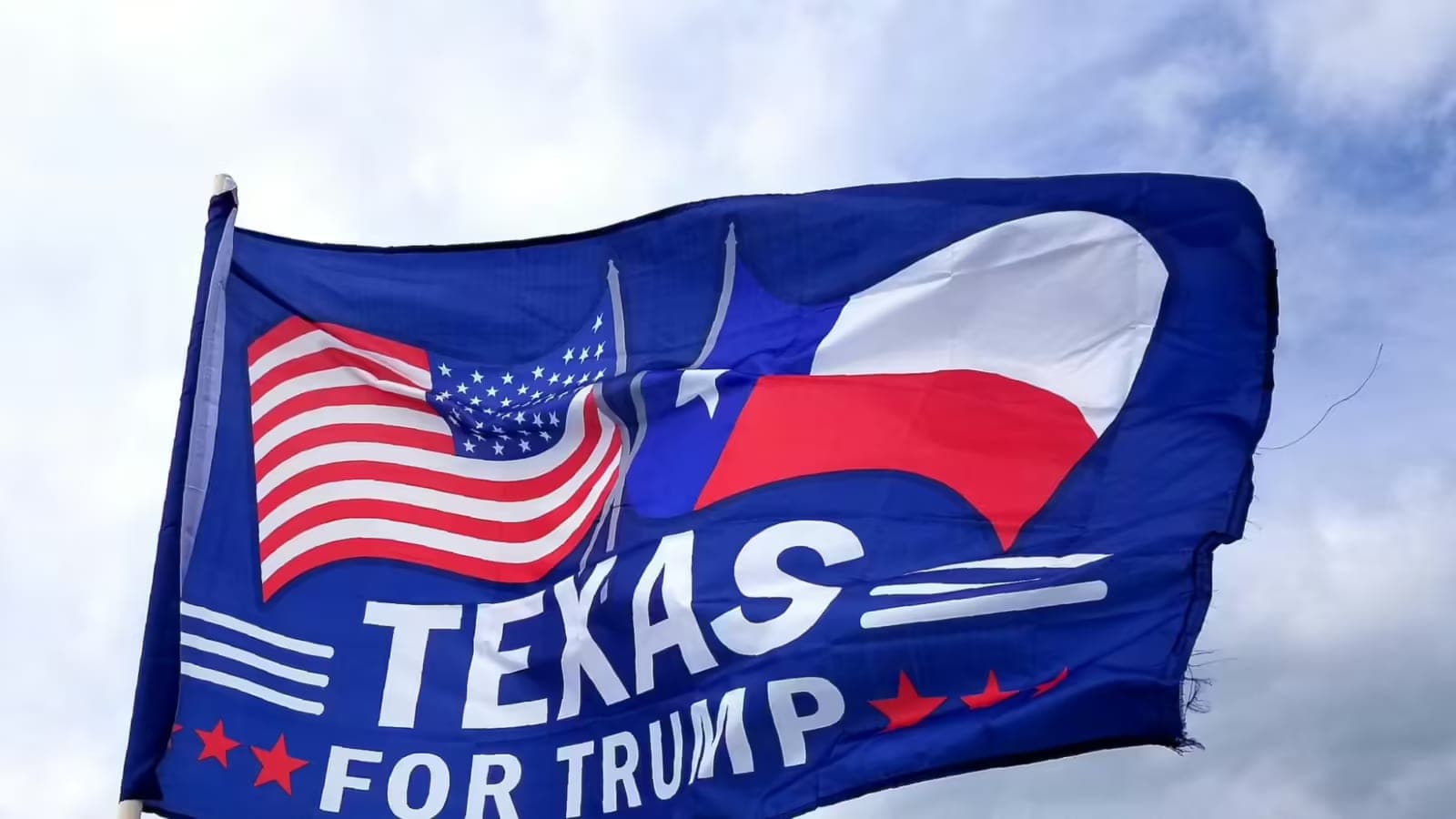
Trump Gives Democrats a Texas-Sized Gift
It’s been six weeks since Texas Republicans sent the Senate primary between incumbent John Cornyn and Attorney General Ken Paxton to a runoff, and it will be another six weeks until they choose their candidate for the midterms. That means that Democrat James Talarico can spend three months campaigning, raising money, and watching the two GOP rivals maul each other instead of attacking him. And they have. There is no love lost between Cornyn and Paxton, and while they have largely kept their powder dry since the first round of voting on March 3, they (and their allied groups) had already burned through more than $100 million combined by then. This is a scenario that GOP leaders had hoped to avoid because, while the Lone Star State has been solidly red, there is a chance that Talarico could be swept into office in a blue wave, and not drawing any fire right now will only boost his chances. Stephen Colbert hosts Texas State Rep. James Talarico for an online-exclusive interview, February 16, 2026. Photo credit: The Late Show with Stephen Colbert / YouTube Therefore, senior Republicans were delighted when Donald Trump announced on March 4 that he would finally make an endorsement in the race. They had been urging the president to back Cornyn, who is viewed as the stronger candidate in the general election. However, Trump had previously refused to do so because Paxton is a loyal supporter and, more importantly, this race is completely up in the air — and he he wants to keep pretending that all of his endorsed candidates win. The day after the first vote, however, the president certainly made it sound as though he would step in and end this messy fight. “The Republican Primary Race for the United States Senate in the Great State of Texas, a State I LOVE and won 3 times in Record Numbers (the HIGHEST vote ever recorded, by far!!!), cannot, for the good of the Party, and our Country, itself, be allowed to go on any longer,” he wrote in a social media post. “IT MUST STOP NOW! We have an easy to beat, Radical Left Opponent, and we have to TOTALLY FOCUS on putting him away, quickly and decisively!” At this point, we imagine that Senate Majority Leader John Thune (R-SD) and other Republicans hoping to cling to control of the Senate were nodding along vigorously. It got even better. “Both John and Ken ran great races, but not good enough. Now, this one, must be PERFECT! My Endorsements within the Republican Party have been virtually insurmountable! It is such an honor to realize and say that almost everyone I Endorse WINS, and wins by a lot, especially in Texas!” Trump added. “I will be making my Endorsement soon, and will be asking the candidate that I don’t Endorse to immediately DROP OUT OF THE RACE!” Well, that would certainly have settled it and allowed Republicans to train their fire on Talarico. There is just one problem: Trump never made that endorsement. We suspect it’s because it isn’t a sure thing, and he wants to maintain that purported near-perfect record (which isn’t even close to perfect – there are plenty of candidates that Trump has backed that have gone on to lose). In other words, out of his personal vanity, Trump is kneecapping the GOP’s chances of retaining the Senate (and out of our own personal vanity, we’d like to point out that we wrote on March 4 that the president had put himself in a no-win situation in the Lone Star State). He could end this at any time, before Cornyn and Paxton beat each other up more and waste even more money that, from a Republican perspective, would be better spent on attacking Talarico. For example, by making ads like this one: Then again, that clip isn’t for Texas voters. A political action committee supporting Paxton ran it in the West Palm Beach market so that the president would see it when watching Fox News at Mar-a-Lago. But even that hasn’t worked to get Trump off the sidelines, which means that, as things stand now, the two candidates will have to settle the race the old-fashioned way… at great expense to both campaigns and the GOP overall. Well played, Mr. President; another masterful gambit! Trump Gives Democrats a Texas-Sized Gift originally appeared on WhoWhatWhy
Trump Gives Democrats a Texas-Sized Gift
It’s been six weeks since Texas Republicans sent the Senate primary between incumbent John Cornyn and Attorney General Ken Paxton to a runoff, and it will be another six weeks until they choose their candidate for the midterms. That means that Democrat James Talarico can spend three months campaigning, raising money, and watching the two GOP rivals maul each other instead of attacking him. And they have. There is no love lost between Cornyn and Paxton, and while they have largely kept their powder dry since the first round of voting on March 3, they (and their allied groups) had already burned through more than $100 million combined by then. This is a scenario that GOP leaders had hoped to avoid because, while the Lone Star State has been solidly red, there is a chance that Talarico could be swept into office in a blue wave, and not drawing any fire right now will only boost his chances. Stephen Colbert hosts Texas State Rep. James Talarico for an online-exclusive interview, February 16, 2026. Photo credit: The Late Show with Stephen Colbert / YouTube Therefore, senior Republicans were delighted when Donald Trump announced on March 4 that he would finally make an endorsement in the race. They had been urging the president to back Cornyn, who is viewed as the stronger candidate in the general election. However, Trump had previously refused to do so because Paxton is a loyal supporter and, more importantly, this race is completely up in the air — and he he wants to keep pretending that all of his endorsed candidates win. The day after the first vote, however, the president certainly made it sound as though he would step in and end this messy fight. “The Republican Primary Race for the United States Senate in the Great State of Texas, a State I LOVE and won 3 times in Record Numbers (the HIGHEST vote ever recorded, by far!!!), cannot, for the good of the Party, and our Country, itself, be allowed to go on any longer,” he wrote in a social media post. “IT MUST STOP NOW! We have an easy to beat, Radical Left Opponent, and we have to TOTALLY FOCUS on putting him away, quickly and decisively!” At this point, we imagine that Senate Majority Leader John Thune (R-SD) and other Republicans hoping to cling to control of the Senate were nodding along vigorously. It got even better. “Both John and Ken ran great races, but not good enough. Now, this one, must be PERFECT! My Endorsements within the Republican Party have been virtually insurmountable! It is such an honor to realize and say that almost everyone I Endorse WINS, and wins by a lot, especially in Texas!” Trump added. “I will be making my Endorsement soon, and will be asking the candidate that I don’t Endorse to immediately DROP OUT OF THE RACE!” Well, that would certainly have settled it and allowed Republicans to train their fire on Talarico. There is just one problem: Trump never made that endorsement. We suspect it’s because it isn’t a sure thing, and he wants to maintain that purported near-perfect record (which isn’t even close to perfect – there are plenty of candidates that Trump has backed that have gone on to lose). In other words, out of his personal vanity, Trump is kneecapping the GOP’s chances of retaining the Senate (and out of our own personal vanity, we’d like to point out that we wrote on March 4 that the president had put himself in a no-win situation in the Lone Star State). He could end this at any time, before Cornyn and Paxton beat each other up more and waste even more money that, from a Republican perspective, would be better spent on attacking Talarico. For example, by making ads like this one: Then again, that clip isn’t for Texas voters. A political action committee supporting Paxton ran it in the West Palm Beach market so that the president would see it when watching Fox News at Mar-a-Lago. But even that hasn’t worked to get Trump off the sidelines, which means that, as things stand now, the two candidates will have to settle the race the old-fashioned way… at great expense to both campaigns and the GOP overall. Well played, Mr. President; another masterful gambit! Trump Gives Democrats a Texas-Sized Gift originally appeared on WhoWhatWhy
Trump Gives Democrats a Texas-Sized Gift
It’s been six weeks since Texas Republicans sent the Senate primary between incumbent John Cornyn and Attorney General Ken Paxton to a runoff, and it will be another six weeks until they choose their candidate for the midterms. That means that Democrat James Talarico can spend three months campaigning, raising money, and watching the two GOP rivals maul each other instead of attacking him. And they have. There is no love lost between Cornyn and Paxton, and while they have largely kept their powder dry since the first round of voting on March 3, they (and their allied groups) had already burned through more than $100 million combined by then. This is a scenario that GOP leaders had hoped to avoid because, while the Lone Star State has been solidly red, there is a chance that Talarico could be swept into office in a blue wave, and not drawing any fire right now will only boost his chances. Stephen Colbert hosts Texas State Rep. James Talarico for an online-exclusive interview, February 16, 2026. Photo credit: The Late Show with Stephen Colbert / YouTube Therefore, senior Republicans were delighted when Donald Trump announced on March 4 that he would finally make an endorsement in the race. They had been urging the president to back Cornyn, who is viewed as the stronger candidate in the general election. However, Trump had previously refused to do so because Paxton is a loyal supporter and, more importantly, this race is completely up in the air — and he he wants to keep pretending that all of his endorsed candidates win. The day after the first vote, however, the president certainly made it sound as though he would step in and end this messy fight. “The Republican Primary Race for the United States Senate in the Great State of Texas, a State I LOVE and won 3 times in Record Numbers (the HIGHEST vote ever recorded, by far!!!), cannot, for the good of the Party, and our Country, itself, be allowed to go on any longer,” he wrote in a social media post. “IT MUST STOP NOW! We have an easy to beat, Radical Left Opponent, and we have to TOTALLY FOCUS on putting him away, quickly and decisively!” At this point, we imagine that Senate Majority Leader John Thune (R-SD) and other Republicans hoping to cling to control of the Senate were nodding along vigorously. It got even better. “Both John and Ken ran great races, but not good enough. Now, this one, must be PERFECT! My Endorsements within the Republican Party have been virtually insurmountable! It is such an honor to realize and say that almost everyone I Endorse WINS, and wins by a lot, especially in Texas!” Trump added. “I will be making my Endorsement soon, and will be asking the candidate that I don’t Endorse to immediately DROP OUT OF THE RACE!” Well, that would certainly have settled it and allowed Republicans to train their fire on Talarico. There is just one problem: Trump never made that endorsement. We suspect it’s because it isn’t a sure thing, and he wants to maintain that purported near-perfect record (which isn’t even close to perfect – there are plenty of candidates that Trump has backed that have gone on to lose). In other words, out of his personal vanity, Trump is kneecapping the GOP’s chances of retaining the Senate (and out of our own personal vanity, we’d like to point out that we wrote on March 4 that the president had put himself in a no-win situation in the Lone Star State). He could end this at any time, before Cornyn and Paxton beat each other up more and waste even more money that, from a Republican perspective, would be better spent on attacking Talarico. For example, by making ads like this one: Then again, that clip isn’t for Texas voters. A political action committee supporting Paxton ran it in the West Palm Beach market so that the president would see it when watching Fox News at Mar-a-Lago. But even that hasn’t worked to get Trump off the sidelines, which means that, as things stand now, the two candidates will have to settle the race the old-fashioned way… at great expense to both campaigns and the GOP overall. Well played, Mr. President; another masterful gambit! Trump Gives Democrats a Texas-Sized Gift originally appeared on WhoWhatWhy

Bondi Gets Canned, But Lawmakers Want to Depose Her Over Epstein Files
If the yardstick for attorneys general is whether they impartially applied the law and insulated the Department of Justice from political influences, then Pam Bondi was probably the worst person ever to hold that position. In her brief tenure, she spearheaded an unprecedented weaponization of DOJ, purged the department of employees who helped prosecute Donald Trump, protected the president from embarrassing disclosures, and used flimsy pretexts to prosecute his perceived adversaries. And it still wasn’t enough. On Thursday, Trump announced in a social media post that he had fired his attorney general. While he called Bondi a “great American patriot and a loyal friend,” the president reportedly got rid of her for failing to adequately, in his eyes, punish his nemeses. For example, high-profile cases against former FBI Director James Comey and New York’s Attorney General Letitia James went nowhere. Bondi leaves behind a department in shambles. She oversaw an exodus of career employees who didn’t want to be part of its weaponization, and DOJ, which usually boasts an outstanding success rate in court, keeps losing in court as it has to represent the most lawless administration in history. Democrats celebrated the news of her dismissal. “The attorney general has the best lawyer’s job in America. The mission is justice, and the clients are the American people,” said Rep. Jamie Raskin (D-MD), the ranking member of the House Judiciary Committee. “But Pam Bondi abandoned that mission, indeed never accepted it. She never acted as anything but Donald Trump’s personal criminal defense and personal injury attorney, transforming the people’s Department of Justice into the President’s private instrument of vengeance, targeting his critics with a bureaucracy of vendetta while canceling out justice for his favored political friends and allies.” The lawmaker also left no doubt that Bondi still owes Congress some answers about her (mis)handling of the Epstein files. “Her firing today is long overdue, but it does not erase the damage done, and it does not absolve her of accountability,” Raskin stated. “Democrats in Congress will continue to investigate, expose, and hold Pam Bondi and others at DOJ accountable for their serial abuses of power and their betrayals of the Constitution.” After being subpoenaed last month, Bondi is scheduled to sit for a deposition on April 14, and both Democrats and Republicans who want her to answer their questions under oath said on Thursday that they still expect her to appear. “My subpoena still stands,” said Rep. Nancy Mace (R-SC), one of a handful of GOP lawmakers who pushed for the release of the files related to the crimes and associates of Jeffrey Epstein. The lawmaker added that the House Oversight Committee subpoenaed Bondi by name and not by her title. Democrats echoed her sentiments. “Pam Bondi helped carry out the most egregious cover up in American history. That’s why I introduced Articles of Impeachment against her,” said Rep. Yassamin Ansari (D-AZ). “She may be fired, but she is not above the law. Bondi must still comply with our subpoena and testify before the Oversight Committee about her criminally botched Epstein Files release.” We can only hope that lawmakers will continue to scrutinize her time as attorney general. The politicization of DOJ is one of the most egregious abuses of the Trump administration, which is saying something, and anybody involved should be held to account. But not to worry; if Bondi were to be prosecuted and convicted, we know of a cushy minimum-security prison that allows VIPs to play with puppies. Maybe she can become friends with Epstein confidante Ghislaine Maxwell, who was transferred there after meeting with Trump’s former attorney Todd Blanche. Speaking of… Blanche will now head DOJ on an interim basis, which means that Bondi may not keep the title as worst attorney general in history for long. Bondi Gets Canned, But Lawmakers Want to Depose Her Over Epstein Files originally appeared on WhoWhatWhy
Bondi Gets Canned, But Lawmakers Want to Depose Her Over Epstein Files
If the yardstick for attorneys general is whether they impartially applied the law and insulated the Department of Justice from political influences, then Pam Bondi was probably the worst person ever to hold that position. In her brief tenure, she spearheaded an unprecedented weaponization of DOJ, purged the department of employees who helped prosecute Donald Trump, protected the president from embarrassing disclosures, and used flimsy pretexts to prosecute his perceived adversaries. And it still wasn’t enough. On Thursday, Trump announced in a social media post that he had fired his attorney general. While he called Bondi a “great American patriot and a loyal friend,” the president reportedly got rid of her for failing to adequately, in his eyes, punish his nemeses. For example, high-profile cases against former FBI Director James Comey and New York’s Attorney General Letitia James went nowhere. Bondi leaves behind a department in shambles. She oversaw an exodus of career employees who didn’t want to be part of its weaponization, and DOJ, which usually boasts an outstanding success rate in court, keeps losing in court as it has to represent the most lawless administration in history. Democrats celebrated the news of her dismissal. “The attorney general has the best lawyer’s job in America. The mission is justice, and the clients are the American people,” said Rep. Jamie Raskin (D-MD), the ranking member of the House Judiciary Committee. “But Pam Bondi abandoned that mission, indeed never accepted it. She never acted as anything but Donald Trump’s personal criminal defense and personal injury attorney, transforming the people’s Department of Justice into the President’s private instrument of vengeance, targeting his critics with a bureaucracy of vendetta while canceling out justice for his favored political friends and allies.” The lawmaker also left no doubt that Bondi still owes Congress some answers about her (mis)handling of the Epstein files. “Her firing today is long overdue, but it does not erase the damage done, and it does not absolve her of accountability,” Raskin stated. “Democrats in Congress will continue to investigate, expose, and hold Pam Bondi and others at DOJ accountable for their serial abuses of power and their betrayals of the Constitution.” After being subpoenaed last month, Bondi is scheduled to sit for a deposition on April 14, and both Democrats and Republicans who want her to answer their questions under oath said on Thursday that they still expect her to appear. “My subpoena still stands,” said Rep. Nancy Mace (R-SC), one of a handful of GOP lawmakers who pushed for the release of the files related to the crimes and associates of Jeffrey Epstein. The lawmaker added that the House Oversight Committee subpoenaed Bondi by name and not by her title. Democrats echoed her sentiments. “Pam Bondi helped carry out the most egregious cover up in American history. That’s why I introduced Articles of Impeachment against her,” said Rep. Yassamin Ansari (D-AZ). “She may be fired, but she is not above the law. Bondi must still comply with our subpoena and testify before the Oversight Committee about her criminally botched Epstein Files release.” We can only hope that lawmakers will continue to scrutinize her time as attorney general. The politicization of DOJ is one of the most egregious abuses of the Trump administration, which is saying something, and anybody involved should be held to account. But not to worry; if Bondi were to be prosecuted and convicted, we know of a cushy minimum-security prison that allows VIPs to play with puppies. Maybe she can become friends with Epstein confidante Ghislaine Maxwell, who was transferred there after meeting with Trump’s former attorney Todd Blanche. Speaking of… Blanche will now head DOJ on an interim basis, which means that Bondi may not keep the title as worst attorney general in history for long. Bondi Gets Canned, But Lawmakers Want to Depose Her Over Epstein Files originally appeared on WhoWhatWhy
Bondi Gets Canned, But Lawmakers Want to Depose Her Over Epstein Files
If the yardstick for attorneys general is whether they impartially applied the law and insulated the Department of Justice from political influences, then Pam Bondi was probably the worst person ever to hold that position. In her brief tenure, she spearheaded an unprecedented weaponization of DOJ, purged the department of employees who helped prosecute Donald Trump, protected the president from embarrassing disclosures, and used flimsy pretexts to prosecute his perceived adversaries. And it still wasn’t enough. On Thursday, Trump announced in a social media post that he had fired his attorney general. While he called Bondi a “great American patriot and a loyal friend,” the president reportedly got rid of her for failing to adequately, in his eyes, punish his nemeses. For example, high-profile cases against former FBI Director James Comey and New York’s Attorney General Letitia James went nowhere. Bondi leaves behind a department in shambles. She oversaw an exodus of career employees who didn’t want to be part of its weaponization, and DOJ, which usually boasts an outstanding success rate in court, keeps losing in court as it has to represent the most lawless administration in history. Democrats celebrated the news of her dismissal. “The attorney general has the best lawyer’s job in America. The mission is justice, and the clients are the American people,” said Rep. Jamie Raskin (D-MD), the ranking member of the House Judiciary Committee. “But Pam Bondi abandoned that mission, indeed never accepted it. She never acted as anything but Donald Trump’s personal criminal defense and personal injury attorney, transforming the people’s Department of Justice into the President’s private instrument of vengeance, targeting his critics with a bureaucracy of vendetta while canceling out justice for his favored political friends and allies.” The lawmaker also left no doubt that Bondi still owes Congress some answers about her (mis)handling of the Epstein files. “Her firing today is long overdue, but it does not erase the damage done, and it does not absolve her of accountability,” Raskin stated. “Democrats in Congress will continue to investigate, expose, and hold Pam Bondi and others at DOJ accountable for their serial abuses of power and their betrayals of the Constitution.” After being subpoenaed last month, Bondi is scheduled to sit for a deposition on April 14, and both Democrats and Republicans who want her to answer their questions under oath said on Thursday that they still expect her to appear. “My subpoena still stands,” said Rep. Nancy Mace (R-SC), one of a handful of GOP lawmakers who pushed for the release of the files related to the crimes and associates of Jeffrey Epstein. The lawmaker added that the House Oversight Committee subpoenaed Bondi by name and not by her title. Democrats echoed her sentiments. “Pam Bondi helped carry out the most egregious cover up in American history. That’s why I introduced Articles of Impeachment against her,” said Rep. Yassamin Ansari (D-AZ). “She may be fired, but she is not above the law. Bondi must still comply with our subpoena and testify before the Oversight Committee about her criminally botched Epstein Files release.” We can only hope that lawmakers will continue to scrutinize her time as attorney general. The politicization of DOJ is one of the most egregious abuses of the Trump administration, which is saying something, and anybody involved should be held to account. But not to worry; if Bondi were to be prosecuted and convicted, we know of a cushy minimum-security prison that allows VIPs to play with puppies. Maybe she can become friends with Epstein confidante Ghislaine Maxwell, who was transferred there after meeting with Trump’s former attorney Todd Blanche. Speaking of… Blanche will now head DOJ on an interim basis, which means that Bondi may not keep the title as worst attorney general in history for long. Bondi Gets Canned, But Lawmakers Want to Depose Her Over Epstein Files originally appeared on WhoWhatWhy
Iran Raises a Critical Question: Who Do We Talk to To Get Out of This Mess?
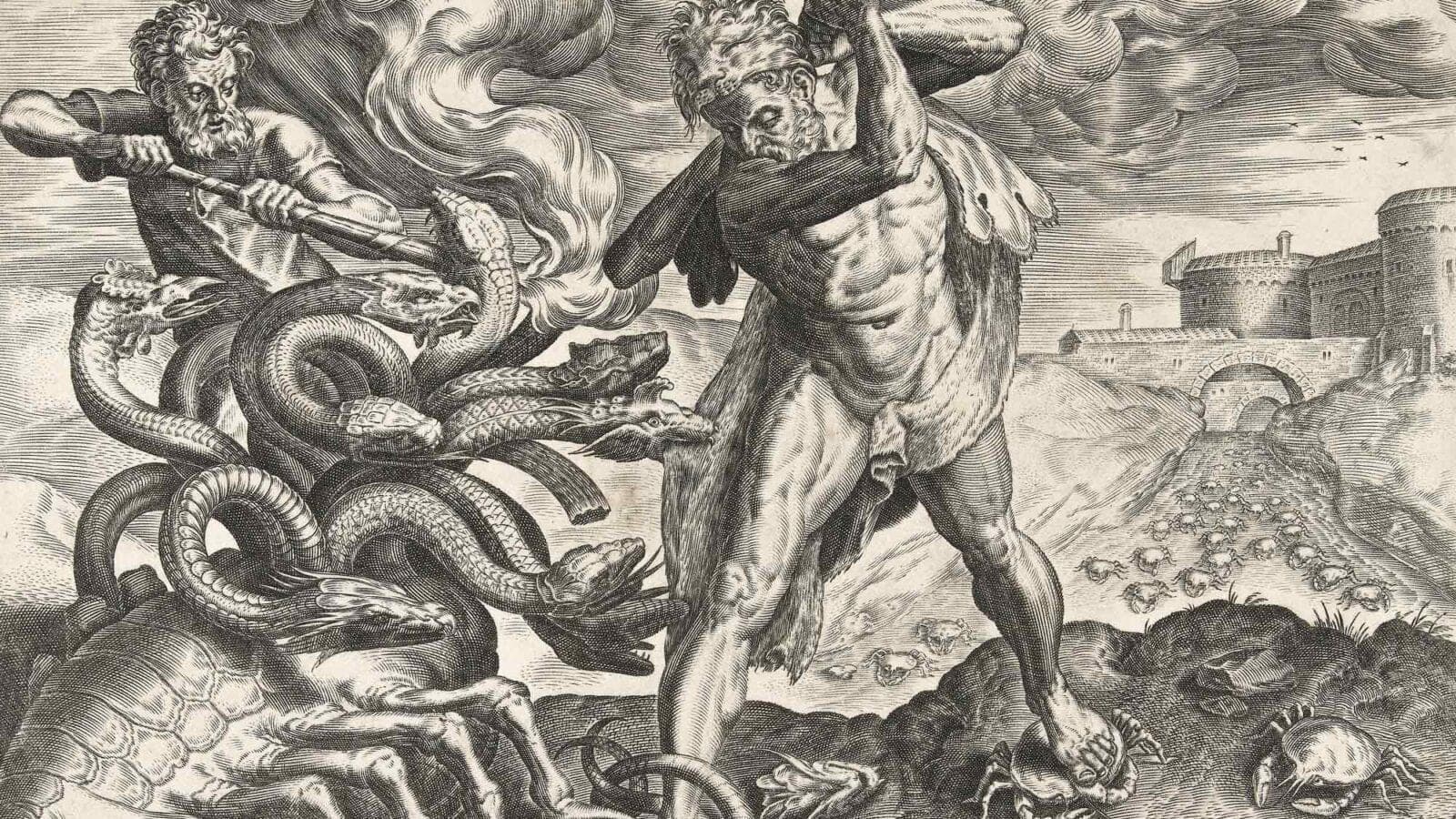
In Greek mythology, Hercules had to confront a multiheaded monster known as the Hydra. When you cut off the monster’s head, two more appeared in its place. In killing most of Iran’s known leadership, the American-Israeli bombing campaign against Iran has effectively created the modern equivalent of the Hydra. The Iranians had already seen what an American-Israeli attack could be like during the massive American-Israeli bombardment last June. That attack was designed to knock out Iran’s nuclear program, but missed its cache of highly enriched uranium. Forewarned, Iran’s leadership created four layers of replacements for commanders who might be killed in a new assault. In addition to picking ready replacements for key personnel, they decentralized their forces, dispersing them into 31 semi-autonomous command centers, each equipped with its own supply of missiles and ammunition, and support troops. It’s a safe bet that any of the independent command groups have enough asymmetric firepower to keep the Strait of Hormuz closed, effectively paralyzing the global energy supply. The assassination of Ali Larijani, a brutal but pragmatic politician who had headed Iran’s security apparatus, is just one example of the possible negative effects inherent in murdering Iran’s top leadership. Larijani may have been a reprehensible character, but if the US decided it needed to end the confrontation, he was one of the few people who had enough authority to convince Iran’s different commanders to stand down. The danger now is that one Iranian faction may agree to a ceasefire while another continues the attacks on Gulf shipping. Ali Larijani in the parliament of Iran, July 1, 2023. Photo credit: Hamed Malekpour / Wikimedia (CC BY-SA 4.0) As it stands now, neither Donald Trump, Steve Witkoff, nor Trump’s son-in-law, Jared Kushner, knows who on the other side can be trusted to begin negotiations. It’s doubtful that the Iranians know themselves. The likelihood is that the individual commanders will need to go through a turbulent period before they can decide among themselves who is really in control. What is apparent is that the government is now firmly in the hands of the Islamic Revolutionary Guard Corps (IRGC). Iran’s civilian population has suffered. The IRGC is more in control than it was before the bombing began. Not long ago, there was some speculation that different ethnic groups, notably the Kurds, might challenge the Guard’s authority. That option seems to have vanished as the Guard and its militia component, the Basij, have tightened their control over a shell-shocked population. It is a safe guess that if Iran was not really serious about building a nuclear device before, it certainly will be now. In effect, Donald Trump and Israeli Prime Minister Benjamin Netanyahu kicked a hornet’s nest when they attacked Iran. Now it’s not clear how they will get out of the mess that they created. The Greek myth about the Hydra was, of course, an allegory, an attempt to explain the situation the Greeks faced in ancient times by relating the problem and its solution to a simple story that everyone could understand. Hercules eventually realized that cutting off the heads of the Hydra couldn’t work. Instead, he used a torch to burn the heads to a stump. In today’s terms, that would mean stamping out each of Iran’s autonomous command centers. That’s unlikely to be done from the air. The situation recalls a routine lecture I heard during the first day of US Army basic training. The lecture was delivered by a general whose name I’ve forgotten, but I remember his key point: “Air power and artillery are impressive,” he said, “but in the end it is always the rifleman on the ground who delivers victory.” Donald Trump currently has two Marine expeditionary groups headed for Iran, along with another 2,000 troops from the 82nd Airborne Division, roughly two-thirds of America’s available rapid deployment force. The total is around 7,000 men. The Pentagon is refusing to confirm or deny a story that ran in The Wall Street Journal that Trump is now considering sending an additional 10,000 troops into the region. In Vietnam, at the peak of US deployment, more than 500,000 US troops were on the ground. During the Iraq War, roughly 170,000 US troops were deployed. Both wars ended in failure, but it was really Vietnam that constituted a near-perfect study in the dangers inherent in asymmetric warfare. Wars are asymmetric when one side has overwhelming power, and the other has next to nothing, except ingenuity and a gift for doing the unexpected. The classic example was the duel between David and Goliath. In the current struggle, the US and Israel find themselves playing the role of Goliath. Goliath’s fatal weakness was hubris, a failure to understand what the other side can suddenly come up with. What really matters in combat is not always obvious. Who could have imagined, in the case of David and Goliath, that a simple slingshot would prove more powerful than a sword? Anyone can fall victim to hubris. In Vietnam, I remember an American Army colonel casually commenting that the war was all about money. “Whoever has the most,” he said, “wins.” I was dismayed at the colonel’s cluelessness. The US clearly had the most money, and it was clear, even then, that it was losing. “There are a bunch of guys out there dressed in black pajamas and wearing sandals made from airplane tires,” I told him, “and they are making fools out of the US Army. I don’t see how you can say it’s about money.” In Vietnam, the US used helicopter-borne sophisticated sensors that could detect a human presence moving beneath a seemingly impenetrable jungle canopy. Once the sensors had detected a mass troop concentration, B-52 strikes were called in. The North Vietnamese caught on fairly quickly and began hanging plastic bags of urine in the trees. The odor tricked the helicopter-borne sensors into believing the enemy was still there, even though it had long since moved on. Countless B-52 strikes dropped hundreds of thousands of dollars of bombs on empty jungle. The only thing that had been accomplished was to blow up a bunch of trees and the US economy. The US has always been tempted by new technology that proved inconsequential or useless on the battlefield. Vietnam’s total population during the war was less than half of Iran’s today. Iraq’s population during George Bush’s war there was less than a third of Iran’s population today. Considerably more than 7,000 men will be needed on the ground if the US really wants to control the situation. It may not be worth the effort. It is hard to see how the US can prevail in Iran, so it may make more sense not to try. The Vietnam War was lost from the start because the US knew from the beginning that if it passed a certain limit, China would enter the war and overwhelm the US with sheer numbers. From the start, the whole affair became a war of attrition in which the US had a great deal to lose and nothing to gain. The Iranians are considerably more technically sophisticated than Vietnam, and it is clear that Russia and China are more than ready to help Iran from behind the scenes. A number of Iranian missiles have been at least partially reengineered from Russian models. It is not clear how Russia and China will react if the US rampages through Iran the way it did in Vietnam and Iraq. Pushed too far, the situation could be the spark that ignites World War III, although it’s not likely to come to that. The more likely scenario is that Trump’s initiative will lead to some serious American casualties. Kharg Island petrochemical complex, 1970. Photo credit: National Iranian Oil Company (NIOC) / Wikimedia (PD) Trump may have been told that a few crack American combat groups can seize and hold Kharg Island, effectively cutting off all Iranian oil exports and strangling the country into submission. Holding Kharg Island, however, will make some of America’s crack troops a target for drone and missile attacks, which will not only lead to casualties but also exhaust US resources. Part of the asymmetry of the current conflict is that Iran can produce its Shahed drones for as little as $20,000 a piece, and it is producing thousands of them. In contrast, a Patriot missile costs at least $3 million. The US burned through $2.4 billion worth of Patriots in just the first five days of its attack against Iran. That’s a boon to American arms manufacturers, but it is ultimately unsustainable as far as the US Treasury is concerned. Even if US troops survive a ground war in Iran, the damage to the flow of oil and gas needed to keep the world functioning would do critical damage to the entire world economy. None of this had to happen, but the fact is that Donald Trump made it happen. Of course, not everyone sees the war as a bad thing. Saudi Arabia and some of the Gulf emirates have encouraged Trump to keep the attack going for a bit. The Saudis are concerned that fossil fuels may be on the way out, and the war gives them a chance to make billions on the increased cost of oil. The oil companies that invested millions in getting Trump elected are already earning billions of extra dollars from the surge in prices. Refueling at an admittedly notorious gas station in Los Angeles has already hit more than $8 a gallon. Russia has experienced a surge in profits, and even Iran is managing to make a bundle. Trump insists that the US doesn’t need the Strait of Hormuz because it is a net oil exporter and isn’t afraid of shortages. But the price of oil depends on the total global supply. Energy costs will skyrocket everywhere, especially in the US, which transports nearly everything by truck. That said, Trump has done his best to sabotage alternative energy. In the midst of the bombing, he refunded nearly a billion dollars to the French oil company, Total, in order to take back its leases on a potential offshore wind farm that Trump wanted to kill. The condition was that Total promised not to invest the refunded money in wind energy. Speculators also stand to gain from the war. During the Russian occupation of Afghanistan, the Kremlin became experts at dumping gold on the market just after they had created a crisis, and then watching the price skyrocket. The Wall Street Journal recently reported that a flurry of activity hit the American stock market just 15 minutes before Trump posted on Truth Social reassuring investors that a resolution was in sight and that oil supplies might not be shut off. It’s not known if there was any connection, but Forbes and other news media reported that the Trump family holdings have nearly doubled since Trump took office, from $3.9 billion to from $6 billion to $7.3 billion. California Rep. Robert Garcia (D), and Oregon Sen. Ron Wyden (D) both wrote complaints to the White House, charging that Trump’s son-in-law Jared Kushner was carrying out negotiations in the Middle East for the US government while simultaneously attempting to raise millions of dollars from the Saudis as private investment in his personal equity fund. Secretary of Defense Pete Hegseth has repeatedly stated that the US is no longer interested in “nation building.” Trump made it clear during his kidnapping of Venezuela’s President Nicolás Maduro that he doesn’t really care what kind of government is installed after the US has engaged in regime change, as long as it agrees to do business with the US on Trump’s terms. Trump may have similar plans for the Middle East. From a regional point of view, the massive bombing campaign looks very much like an attempt to reestablish colonialism, only this time with a larger share of the region’s oil going to the United States. It goes without saying that hardly anyone in the region is willing to accept that without a fight. The real losers in the mess that Trump has created are ordinary Iranians who had hoped for a change in government once the 86-year old Supreme Leader Ali Khamenei had been forced to retire. With the IRGC now firmly in control, liberation from that brutal regime may not happen for decades. Australia has already begun refusing visas to Iranians, fearing a new surge in refugees fleeing the country. The only sensible resolution will ultimately have to come from diplomatic negotiations, and that will be difficult as long as the US and Israel continue attempting to bomb the country back to the Stone Age. The rational approach is to let things cool off and eventually begin talking again. Unfortunately, as long as immense profits can be made from the chaos, it’s difficult to get anyone in Tehran or Trump’s administration to think rationally about long-term consequences. Iran Raises a Critical Question: Who Do We Talk to To Get Out of This Mess? originally appeared on WhoWhatWhy
Pete Hegseth’s ‘No Quarter’ War-Crime Directive
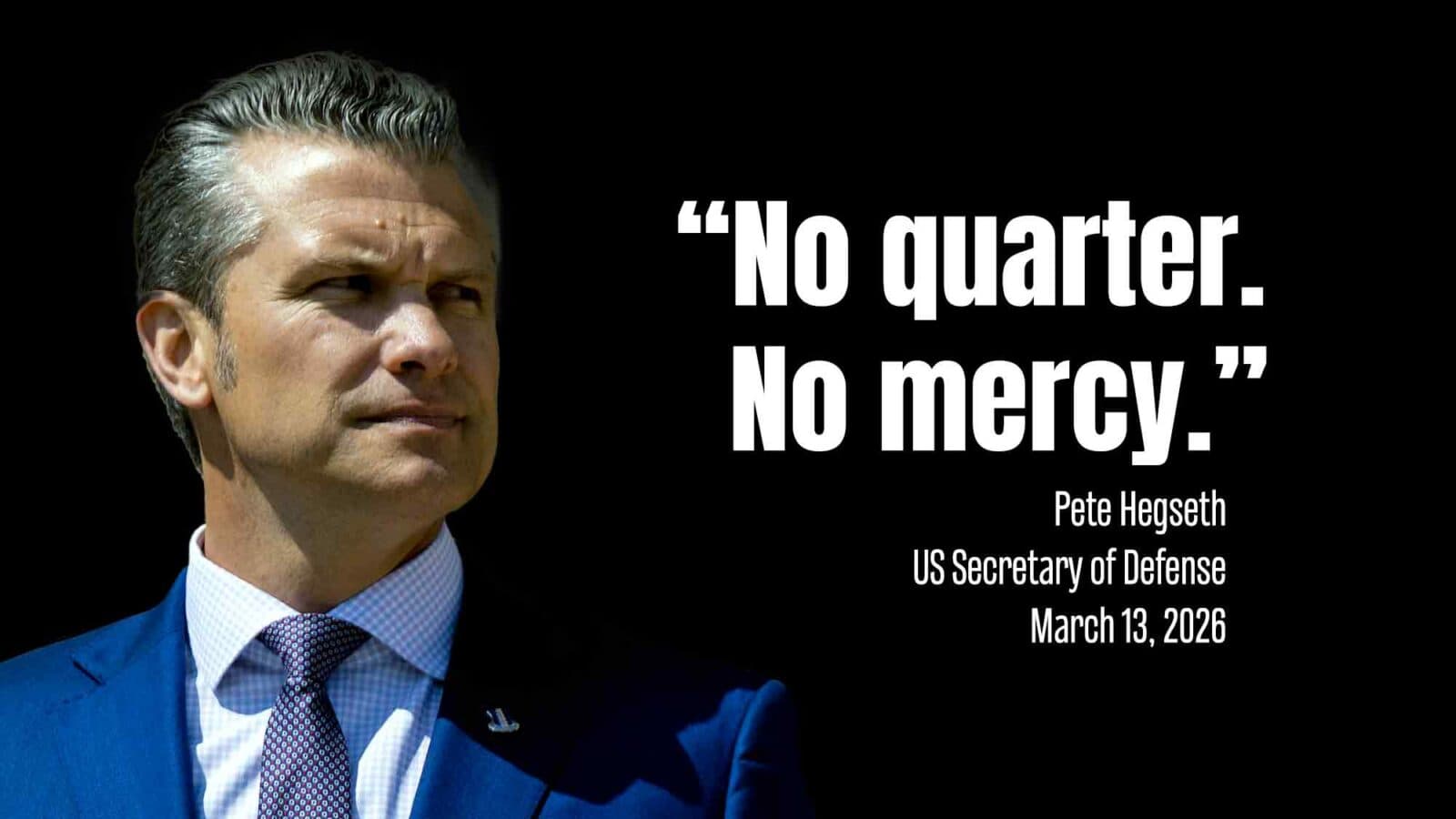
Friday, from a Pentagon podium, in an official government briefing, Secretary of Defense Pete Hegseth said this: “We will keep pressing. We will keep pushing, keep advancing, no quarter, no mercy for our enemies.” The line appears in the official Pentagon transcript, was quoted by Reuters, and was also reported by The New York Times. That is not just thuggish rhetoric. It is not just chest-thumping. It is not just one more example of the coarsened language of Trump-era politics bleeding into national security. “No quarter” has a specific meaning in the law of war. It means refusing to spare the lives of enemy fighters even if they are wounded, helpless, or trying to surrender. It is illegal to give such an order and Hegseth knows it. You do not need the Red Cross to tell you it’s illegal although they will. It’s called Rule 46. Rule 46 says that ordering that no quarter will be given, threatening an adversary with it, or conducting hostilities on that basis is prohibited. The Pentagon’s own law-of-war system says the US military must comply with the law of war, and under that body of law a “no quarter” order is unlawful. So let’s be clear about what happened here. The American defense secretary did not merely sound bloodthirsty. He used language that civilized militaries do not use. They do not use it because it is illegal, and civilized militaries (not an oxymoron, by the way) are supposed to think that way. And here is what makes it worse: He cannot plausibly hide behind ignorance. This exact issue was already litigated, publicly and extensively, just a few months ago. In the fallout from the September 2 double-tap boat strike, The Washington Post reported that Hegseth had issued a verbal order to kill everyone aboard a suspected drug boat, and legal experts quoted in that reporting said such an order would in essence amount to a “no quarter” order. In other words, this was not some phrase he stumbled into innocently. The meaning of “no quarter” was already on the record. It had already been debated in public. He knows all about it because he’s been tagged with it before. It had already been attached to his name, his conduct, and the legality of lethal action taken under his authority. He already knew — or had every reason to know — exactly how explosive those words were. And yet he said them anyway. That is the real scandal. Not that Hegseth is crude, or stupid, or ignorant, though he is all of that. Nor is it that he is reckless. We already knew that too. The scandal is that the secretary of defense of the United States stood at the Pentagon and casually invoked the language of unlawful warfare, after previously being dragged through a national controversy over the very same concept, and did so as though it were merely a tougher, manlier way of saying “we mean business.” I’m sorry. We have normalized many things in this country, tragically so. But this is beyond the pale for the military leader of any country. It is especially beyond the pale for America. It takes a lot these days to generate outrage but this should — this must — generate outrage. Will it? Hell if I know. The United States has spent generations telling itself — and telling the world — that what distinguishes us from barbarism is not that we avoid force, but that we discipline it. That what makes our military honorable is not that it is gentle, but that it is governed. That even in war there are lines, and that America, however imperfectly, is supposed to recognize them. “No quarter” is the language of a man who does not believe in those lines. Or worse, who believes they are for suckers. That possibility is not hypothetical. The Times notes that in his 2024 book Hegseth suggested US compliance with the Geneva Conventions had contributed to battlefield struggles in Iraq and Afghanistan. The Times also reported that his “no quarter” remark drew criticism from international law experts, and quoted Rep. Jason Crow (D-CO), an Iraq War veteran, saying Hegseth has “a very clear disdain” for the law of war and basic humanity. So my take on this — it wasn’t a slip. It was a reveal. Maybe what we saw Friday was not a momentary lapse of diction, but the open expression of a worldview: that restraint is weakness, law is for fools, and America wins by threatening to become what it once claimed to oppose. If so, then the problem is larger than one phrase. The problem is that the United States is now represented — and in critical ways commanded — by a man who talks like a war criminal even when standing behind an official lectern. Some will try to wave this away. They will say he was speaking colloquially. They will say everyone knows he did not literally mean that surrendering troops should be killed. They will say critics are being precious, legalistic, or anti-military. No. That defense is too easy, and in this case it is dishonest. Words matter, especially from people who command organized violence. Military language matters. Legal language matters. The language used by a defense secretary at a televised wartime briefing matters most of all. If the secretary cannot distinguish between macho bluster and terminology that the laws of war specifically forbid, then he is unfit for the office he holds. And if he can distinguish it, and used it anyway, that is worse. There is no good version of this story. Either Pete Hegseth did not know what “no quarter” means, in which case he is dangerously ignorant and should not be running the Pentagon. Or he did know what it means, in which case the American people just watched their defense secretary publicly threaten a form of warfare that the civilized world long ago placed outside the bounds of lawful conduct. Choose whichever explanation you like. Neither is acceptable. This should not be normalized. It should not be spun. It should not be buried under the day’s other headlines. It should be treated as what it is: a disqualifying statement by a disqualified man. Once, Hegseth and his defenders had room to wriggle. There were leaks, denials, competing accounts, fog, ambiguity. Today there was none. He said it himself. On camera. At the Pentagon. In the government’s own transcript. America is not supposed to be represented this way. And any country that keeps men like this in command long enough eventually learns the same lesson: When leaders start talking as though law is optional, they rarely stop at talk. End of rant. But I’m not apologizing for this one. Too many Americans have served honorably for too long to be represented by this fool. As a service to our readers, we curate exceptional stories through partnerships with outside writers and thinkers. Michael D. Sellers is a former CIA officer currently working as a criminal defense and civil rights investigator. This column has been adapted with the author’s permission from his substack Deeper Look with Michael Sellers. Pete Hegseth’s ‘No Quarter’ War-Crime Directive originally appeared on WhoWhatWhy
The Art of the Deal Break
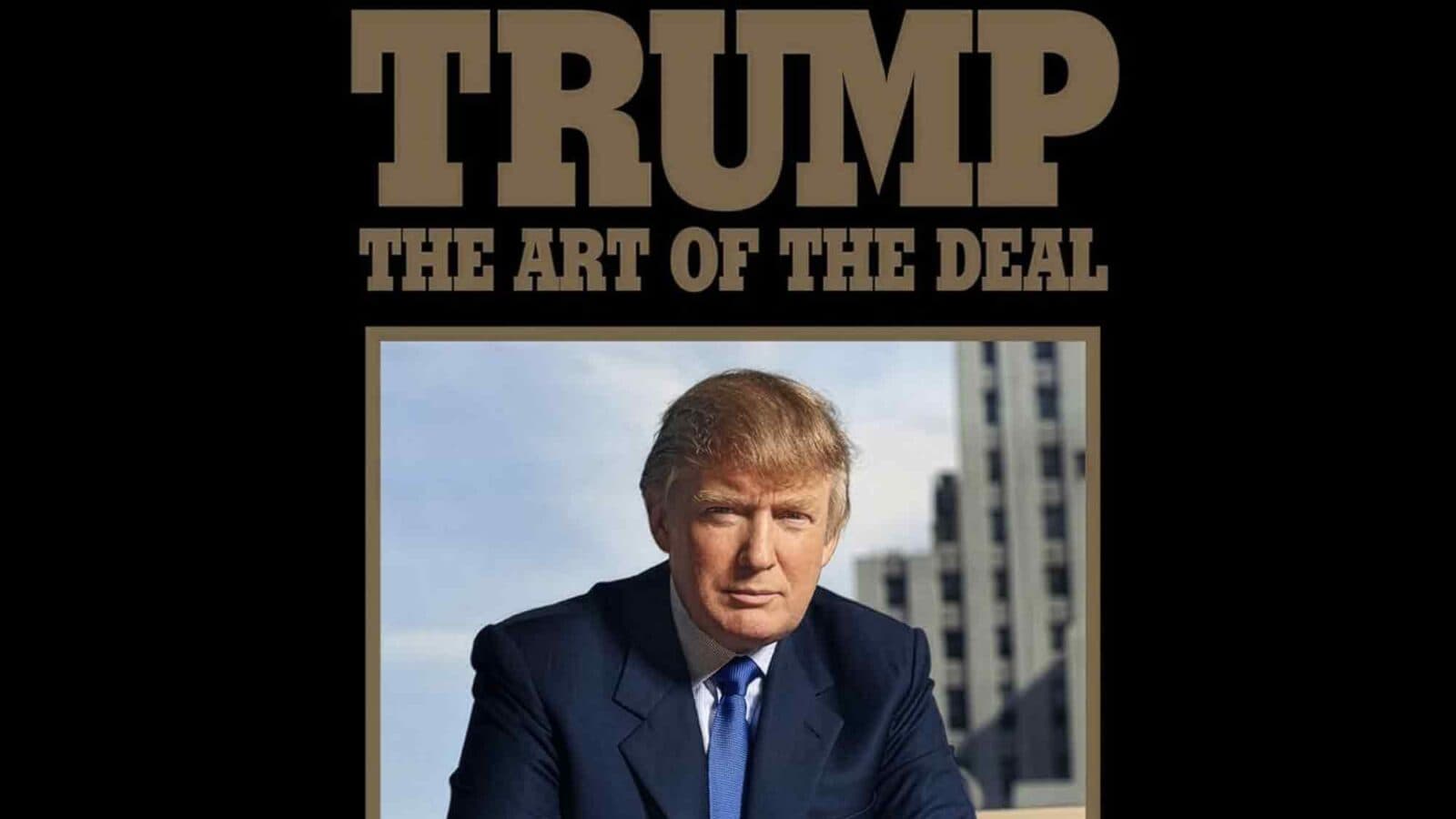
While Donald Trump has spent a lifetime creating the illusion that he is a skillful negotiator, his time in the White House has shown that he doesn’t make deals; he breaks them. To anybody who has closely followed his career, that comes as no surprise. To Trump, The Art of the Deal, as he called the book that propelled him into the limelight, has always been about bullying, browbeating, and conning his business associates. When he was primarily involved in real estate and branding himself, those tactics harmed only the investors whose money he squandered and the contractors he stiffed. As president, however, the damage he is doing as a dealbreaker is incalculably greater. Trump is single-handedly destroying the reputation and trustworthiness of the United States on the global stage. The current war in the Middle East is the perfect example. A master dealmaker would have found a way to get Iran to agree to set aside its nuclear ambition and maybe bring the country back into the fold of the international community. And, by all accounts, an agreement that would have achieved the former and possibly paved the path toward the latter was in reach. Immediately after the US and Israel attacked Iran, Oman’s Foreign Minister Badr Albusaidi, who served as a mediator in the talks, said he was dismayed by what happened. “Active and serious negotiations have yet again been undermined. Neither the interests of the United States nor the cause of global peace are well served by this,” he said. “And I pray for the innocents who will suffer. I urge the United States not to get sucked in further. This is not your war.” Just a day earlier, Albusaidi had appeared on CBS’s Face the Nation and proclaimed that the parties had achieved a breakthrough in getting Iran to agree that it will never obtain the nuclear material required to make a bomb. “This is something completely new,” he said. “It really makes the enrichment argument less relevant, because now we are talking about zero stockpiling.” His sentiments were echoed by Iran’s Foreign Minister Abbas Araghchi after the initial strikes. “A deal was within reach. We left Geneva with [the] understanding that we’d seal a deal next time we meet,” he stated. “Those who wanted to spoil diplomacy succeeded in their mission. But it was Mr. Trump, yet again, who ultimately ordered bombing of the negotiating table.” Perhaps he should have known that the president wasn’t interested in traditional diplomacy; it was all about him getting his way. As it always is. As a real estate developer, Trump had a long history of refusing to pay small businesses and contractors he hired to do work for him. Then, with an army of lawyers at his disposal, he would tie them up in court and force them to simply give up, take less money, or go bankrupt. As president, he is still using the same playbook. The main difference is that the lawyers have been replaced by the world’s most powerful military and the economic might of the United States. What has not changed is that Trump only preys on the weak. As soon as he meets real resistance from an adversary with the means to fight back, he retreats. China is a great example of a country that won’t allow itself to be bullied, and whenever the EU has shown a spine, the president has backed off, as with his threat to take over Greenland. Similarly, he also tucks tail and runs whenever one of his schemes causes stocks to fall, which was especially apparent when his tariff threats backfired. That spawned the term TACO, which stands for “Trump Always Chickens Out.” That is what Iran, which is hopelessly outmatched militarily, is aiming for. Last year, it offered only token resistance when the US attacked its nuclear facilities. This time, Tehran is punching back in a way that causes economic pain across the globe and especially in the United States. And that caught the Trump administration flat-footed. But not only that, it is also serving up a blueprint of how to resist the president. Obviously, standing up to a bully is no small feat. However, in the case of Trump, history has shown that it is the only effective course of action. That doesn’t just apply to foreign policy. For example, when Trump tried to coerce major US law firms into doing his bidding, a handful of them resisted and are now winning. What that teaches any of the president’s targets, whether at home or abroad, is that the only option they have is to push back. And that creates a lot of adversaries. There is no doubt that the US is the most powerful country on Earth. However, it is not strong enough to fight everybody, militarily or otherwise. But that is what Trump is accomplishing by picking fights everywhere and turning allies into foes. Almost worst of all is that he does it only for limited, short-term gains. In just a year, he has upset the status quo of global trade without having anything to show for it — apart from higher prices for American consumers. In the process, he is causing incalculable long-term damage to the US. It will take years to rebuild the relationships Trump is fraying with his combative style and by demonstrating that he cannot be relied on even if deals are reached. Former partners like Canada, the EU, and Great Britain are forging new alliances because they no longer feel that the US can be trusted. They’re right, of course. And it’s not just because Trump is a bully but also because he doesn’t uphold the deals that he does make. Back home, congressional Democrats should also take note. For example, the administration is illegally blocking or moving around funds that Congress appropriated for specific purposes. To be fair, the Democrats know this. “This administration is lawless to its core. Ever since the moment they took office, President Trump and Director [Russell] Vought [of the Office of Management and Budget] have been breaking the law,” said Rosa DeLauro (D-CT), the ranking member of the House Appropriations Committee. “Day after day, this administration undermines the power of Congress, while Republicans sit idly by and let them do it. President Trump and Director Vought have nothing but contempt for the rule of law,” she added. “We must stand against this law breaking and protect our authority as a co-equal branch of government.” Fair enough. Of course, the logical consequence is that Democrats should not make any deals with Trump. It is a lesson that everybody should take to heart, whether it is opposition lawmakers, rogue regimes like Iran, former allies, law firms, universities, companies, or the contractors building the president’s ballroom. Trump is a bully who cannot be trusted, and the only strategy that has proven to work against him is to fight back. The Art of the Deal Break originally appeared on WhoWhatWhy
The Art of the Deal Break
While Donald Trump has spent a lifetime creating the illusion that he is a skillful negotiator, his time in the White House has shown that he doesn’t make deals; he breaks them. To anybody who has closely followed his career, that comes as no surprise. To Trump, The Art of the Deal, as he called the book that propelled him into the limelight, has always been about bullying, browbeating, and conning his business associates. When he was primarily involved in real estate and branding himself, those tactics harmed only the investors whose money he squandered and the contractors he stiffed. As president, however, the damage he is doing as a dealbreaker is incalculably greater. Trump is single-handedly destroying the reputation and trustworthiness of the United States on the global stage. The current war in the Middle East is the perfect example. A master dealmaker would have found a way to get Iran to agree to set aside its nuclear ambition and maybe bring the country back into the fold of the international community. And, by all accounts, an agreement that would have achieved the former and possibly paved the path toward the latter was in reach. Immediately after the US and Israel attacked Iran, Oman’s Foreign Minister Badr Albusaidi, who served as a mediator in the talks, said he was dismayed by what happened. “Active and serious negotiations have yet again been undermined. Neither the interests of the United States nor the cause of global peace are well served by this,” he said. “And I pray for the innocents who will suffer. I urge the United States not to get sucked in further. This is not your war.” Just a day earlier, Albusaidi had appeared on CBS’s Face the Nation and proclaimed that the parties had achieved a breakthrough in getting Iran to agree that it will never obtain the nuclear material required to make a bomb. “This is something completely new,” he said. “It really makes the enrichment argument less relevant, because now we are talking about zero stockpiling.” His sentiments were echoed by Iran’s Foreign Minister Abbas Araghchi after the initial strikes. “A deal was within reach. We left Geneva with [the] understanding that we’d seal a deal next time we meet,” he stated. “Those who wanted to spoil diplomacy succeeded in their mission. But it was Mr. Trump, yet again, who ultimately ordered bombing of the negotiating table.” Perhaps he should have known that the president wasn’t interested in traditional diplomacy; it was all about him getting his way. As it always is. As a real estate developer, Trump had a long history of refusing to pay small businesses and contractors he hired to do work for him. Then, with an army of lawyers at his disposal, he would tie them up in court and force them to simply give up, take less money, or go bankrupt. As president, he is still using the same playbook. The main difference is that the lawyers have been replaced by the world’s most powerful military and the economic might of the United States. What has not changed is that Trump only preys on the weak. As soon as he meets real resistance from an adversary with the means to fight back, he retreats. China is a great example of a country that won’t allow itself to be bullied, and whenever the EU has shown a spine, the president has backed off, as with his threat to take over Greenland. Similarly, he also tucks tail and runs whenever one of his schemes causes stocks to fall, which was especially apparent when his tariff threats backfired. That spawned the term TACO, which stands for “Trump Always Chickens Out.” That is what Iran, which is hopelessly outmatched militarily, is aiming for. Last year, it offered only token resistance when the US attacked its nuclear facilities. This time, Tehran is punching back in a way that causes economic pain across the globe and especially in the United States. And that caught the Trump administration flat-footed. But not only that, it is also serving up a blueprint of how to resist the president. Obviously, standing up to a bully is no small feat. However, in the case of Trump, history has shown that it is the only effective course of action. That doesn’t just apply to foreign policy. For example, when Trump tried to coerce major US law firms into doing his bidding, a handful of them resisted and are now winning. What that teaches any of the president’s targets, whether at home or abroad, is that the only option they have is to push back. And that creates a lot of adversaries. There is no doubt that the US is the most powerful country on Earth. However, it is not strong enough to fight everybody, militarily or otherwise. But that is what Trump is accomplishing by picking fights everywhere and turning allies into foes. Almost worst of all is that he does it only for limited, short-term gains. In just a year, he has upset the status quo of global trade without having anything to show for it — apart from higher prices for American consumers. In the process, he is causing incalculable long-term damage to the US. It will take years to rebuild the relationships Trump is fraying with his combative style and by demonstrating that he cannot be relied on even if deals are reached. Former partners like Canada, the EU, and Great Britain are forging new alliances because they no longer feel that the US can be trusted. They’re right, of course. And it’s not just because Trump is a bully but also because he doesn’t uphold the deals that he does make. Back home, congressional Democrats should also take note. For example, the administration is illegally blocking or moving around funds that Congress appropriated for specific purposes. To be fair, the Democrats know this. “This administration is lawless to its core. Ever since the moment they took office, President Trump and Director [Russell] Vought [of the Office of Management and Budget] have been breaking the law,” said Rosa DeLauro (D-CT), the ranking member of the House Appropriations Committee. “Day after day, this administration undermines the power of Congress, while Republicans sit idly by and let them do it. President Trump and Director Vought have nothing but contempt for the rule of law,” she added. “We must stand against this law breaking and protect our authority as a co-equal branch of government.” Fair enough. Of course, the logical consequence is that Democrats should not make any deals with Trump. It is a lesson that everybody should take to heart, whether it is opposition lawmakers, rogue regimes like Iran, former allies, law firms, universities, companies, or the contractors building the president’s ballroom. Trump is a bully who cannot be trusted, and the only strategy that has proven to work against him is to fight back. The Art of the Deal Break originally appeared on WhoWhatWhy

Trump Puts Himself in a No-Win Situation in Texas
Donald Trump likes to pick winners so much that he usually doesn’t get involved in competitive primaries. After all, if his choice were to lose, he believes that would reflect poorly on him. And the president isn’t wrong, especially because he makes such a big deal of the impact of his endorsement. That is why he never indicated a preference in the race for the Republican Senate primary in Texas. His indecisiveness has come at a steep cost. If Trump had picked a candidate, chances are that the GOP could have avoided a messy situation in which the three contenders — incumbent Sen. John Cornyn, state Attorney General Ken Paxton, and Rep. Wesley Hunt — spent $100 million and spilled a lot of bad blood in a primary that is now headed to a runoff between the top two vote getters. For example, Hunt, who finished a distant third but got enough votes to prevent Cornyn or Paxton from reaching the 50-percent threshold, said he would not even have gotten into the race if the president had made an endorsement beforehand. Now, Trump is trying to do damage control. In a social media post on Wednesday, he announced that not only would he make an endorsement soon, but also that he expects the other candidate to drop out immediately. Because the prospect of losing the Senate majority, which is a real possibility if Democrat James Talarico were to prevail in November, is even more troubling to the president than simply betting on the wrong horse in a race. In his post, Trump said the GOP primary, “cannot, for the good of the party, and our Country, itself, be allowed to go on any longer,” adding that “IT MUST STOP NOW!” That is probably how all those donors feel who needlessly wasted $100 million. And it is certainly how Senate Republicans feel who believe that the scandal-burdened Paxton could cost them the seat while Cornyn is most likely to win. They have been lobbying Trump all along to endorse the incumbent. However, because Paxton is one of the most loyal MAGA soldiers, he never did. That is all about to change, according to the president. “Both John and Ken ran great races, but not good enough. Now, this one, must be PERFECT! My Endorsements within the Republican Party have been virtually insurmountable! It is such an honor to realize and say that almost everyone I Endorse WINS, and wins by a lot, especially in Texas!” wrote the ever-succinct Trump. “I will be making my Endorsement soon, and will be asking the candidate that I don’t Endorse to immediately DROP OUT OF THE RACE! Is that fair? We must win in November!!!” Ever the showman, the president now assures himself a captive audience until he unveils his decision, just like in one of the episodes of The Apprentice. When he does, there are two options: Either the spurned candidate — and common sense dictates that it will be Paxton (although common sense isn’t Trump’s strongest suit) — does his master’s bidding or he stays in the race. If it’s the former, then it shows how beholden Republicans are to Trump and highlights the party’s cult-like nature. Trump is asking one of the two men to essentially end his political career and abandon a race in which he invested a lot of time, energy, and (other people’s) money. Its an extraordinary ask and unrivaled in recent US history. If it’s the latter, then it makes Trump look weak. Furthermore, both of them got about 900,000 votes on Tuesday, and there is a good chance that not all of their respective supporters will be happy with the president’s decision, especially because it has already been a very acrimonious primary between the right-wing Paxton and the DC insider Cornyn. If Trump chooses the senator, then that will surely be viewed as a betrayal among many in the MAGA base who have already had to swallow the fact that the president just plunged the country into another war in the Middle East, not to mention that whole Epstein mess. The bottom line is that Trump has handled the entire thing very clumsily from start to finish, and, if Talarico were to come out ahead in November, would only have himself to blame. Trump Puts Himself in a No-Win Situation in Texas originally appeared on WhoWhatWhy
Trump Puts Himself in a No-Win Situation in Texas
Donald Trump likes to pick winners so much that he usually doesn’t get involved in competitive primaries. After all, if his choice were to lose, he believes that would reflect poorly on him. And the president isn’t wrong, especially because he makes such a big deal of the impact of his endorsement. That is why he never indicated a preference in the race for the Republican Senate primary in Texas. His indecisiveness has come at a steep cost. If Trump had picked a candidate, chances are that the GOP could have avoided a messy situation in which the three contenders — incumbent Sen. John Cornyn, state Attorney General Ken Paxton, and Rep. Wesley Hunt — spent $100 million and spilled a lot of bad blood in a primary that is now headed to a runoff between the top two vote getters. For example, Hunt, who finished a distant third but got enough votes to prevent Cornyn or Paxton from reaching the 50-percent threshold, said he would not even have gotten into the race if the president had made an endorsement beforehand. Now, Trump is trying to do damage control. In a social media post on Wednesday, he announced that not only would he make an endorsement soon, but also that he expects the other candidate to drop out immediately. Because the prospect of losing the Senate majority, which is a real possibility if Democrat James Talarico were to prevail in November, is even more troubling to the president than simply betting on the wrong horse in a race. In his post, Trump said the GOP primary, “cannot, for the good of the party, and our Country, itself, be allowed to go on any longer,” adding that “IT MUST STOP NOW!” That is probably how all those donors feel who needlessly wasted $100 million. And it is certainly how Senate Republicans feel who believe that the scandal-burdened Paxton could cost them the seat while Cornyn is most likely to win. They have been lobbying Trump all along to endorse the incumbent. However, because Paxton is one of the most loyal MAGA soldiers, he never did. That is all about to change, according to the president. “Both John and Ken ran great races, but not good enough. Now, this one, must be PERFECT! My Endorsements within the Republican Party have been virtually insurmountable! It is such an honor to realize and say that almost everyone I Endorse WINS, and wins by a lot, especially in Texas!” wrote the ever-succinct Trump. “I will be making my Endorsement soon, and will be asking the candidate that I don’t Endorse to immediately DROP OUT OF THE RACE! Is that fair? We must win in November!!!” Ever the showman, the president now assures himself a captive audience until he unveils his decision, just like in one of the episodes of The Apprentice. When he does, there are two options: Either the spurned candidate — and common sense dictates that it will be Paxton (although common sense isn’t Trump’s strongest suit) — does his master’s bidding or he stays in the race. If it’s the former, then it shows how beholden Republicans are to Trump and highlights the party’s cult-like nature. Trump is asking one of the two men to essentially end his political career and abandon a race in which he invested a lot of time, energy, and (other people’s) money. Its an extraordinary ask and unrivaled in recent US history. If it’s the latter, then it makes Trump look weak. Furthermore, both of them got about 900,000 votes on Tuesday, and there is a good chance that not all of their respective supporters will be happy with the president’s decision, especially because it has already been a very acrimonious primary between the right-wing Paxton and the DC insider Cornyn. If Trump chooses the senator, then that will surely be viewed as a betrayal among many in the MAGA base who have already had to swallow the fact that the president just plunged the country into another war in the Middle East, not to mention that whole Epstein mess. The bottom line is that Trump has handled the entire thing very clumsily from start to finish, and, if Talarico were to come out ahead in November, would only have himself to blame. Trump Puts Himself in a No-Win Situation in Texas originally appeared on WhoWhatWhy
Trump Puts Himself in a No-Win Situation in Texas
Donald Trump likes to pick winners so much that he usually doesn’t get involved in competitive primaries. After all, if his choice were to lose, he believes that would reflect poorly on him. And the president isn’t wrong, especially because he makes such a big deal of the impact of his endorsement. That is why he never indicated a preference in the race for the Republican Senate primary in Texas. His indecisiveness has come at a steep cost. If Trump had picked a candidate, chances are that the GOP could have avoided a messy situation in which the three contenders — incumbent Sen. John Cornyn, state Attorney General Ken Paxton, and Rep. Wesley Hunt — spent $100 million and spilled a lot of bad blood in a primary that is now headed to a runoff between the top two vote getters. For example, Hunt, who finished a distant third but got enough votes to prevent Cornyn or Paxton from reaching the 50-percent threshold, said he would not even have gotten into the race if the president had made an endorsement beforehand. Now, Trump is trying to do damage control. In a social media post on Wednesday, he announced that not only would he make an endorsement soon, but also that he expects the other candidate to drop out immediately. Because the prospect of losing the Senate majority, which is a real possibility if Democrat James Talarico were to prevail in November, is even more troubling to the president than simply betting on the wrong horse in a race. In his post, Trump said the GOP primary, “cannot, for the good of the party, and our Country, itself, be allowed to go on any longer,” adding that “IT MUST STOP NOW!” That is probably how all those donors feel who needlessly wasted $100 million. And it is certainly how Senate Republicans feel who believe that the scandal-burdened Paxton could cost them the seat while Cornyn is most likely to win. They have been lobbying Trump all along to endorse the incumbent. However, because Paxton is one of the most loyal MAGA soldiers, he never did. That is all about to change, according to the president. “Both John and Ken ran great races, but not good enough. Now, this one, must be PERFECT! My Endorsements within the Republican Party have been virtually insurmountable! It is such an honor to realize and say that almost everyone I Endorse WINS, and wins by a lot, especially in Texas!” wrote the ever-succinct Trump. “I will be making my Endorsement soon, and will be asking the candidate that I don’t Endorse to immediately DROP OUT OF THE RACE! Is that fair? We must win in November!!!” Ever the showman, the president now assures himself a captive audience until he unveils his decision, just like in one of the episodes of The Apprentice. When he does, there are two options: Either the spurned candidate — and common sense dictates that it will be Paxton (although common sense isn’t Trump’s strongest suit) — does his master’s bidding or he stays in the race. If it’s the former, then it shows how beholden Republicans are to Trump and highlights the party’s cult-like nature. Trump is asking one of the two men to essentially end his political career and abandon a race in which he invested a lot of time, energy, and (other people’s) money. Its an extraordinary ask and unrivaled in recent US history. If it’s the latter, then it makes Trump look weak. Furthermore, both of them got about 900,000 votes on Tuesday, and there is a good chance that not all of their respective supporters will be happy with the president’s decision, especially because it has already been a very acrimonious primary between the right-wing Paxton and the DC insider Cornyn. If Trump chooses the senator, then that will surely be viewed as a betrayal among many in the MAGA base who have already had to swallow the fact that the president just plunged the country into another war in the Middle East, not to mention that whole Epstein mess. The bottom line is that Trump has handled the entire thing very clumsily from start to finish, and, if Talarico were to come out ahead in November, would only have himself to blame. Trump Puts Himself in a No-Win Situation in Texas originally appeared on WhoWhatWhy
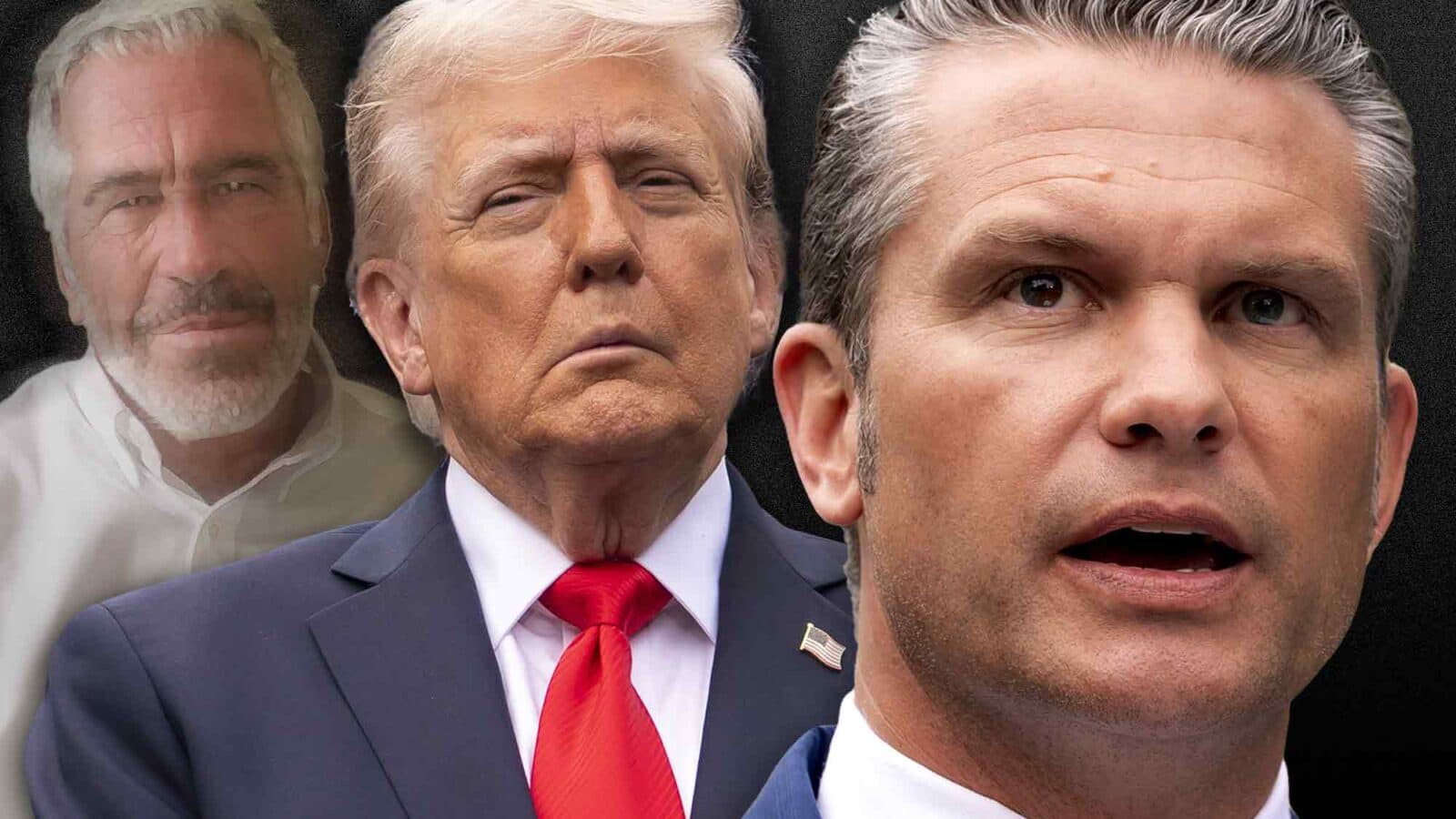
The Quantico Enigma: A Pep Talk, a Coup, or Just Another Epstein Distraction?
In an overheated news environment this past week, once we got through the Jimmy Kimmel affair, the indictment of former FBI Director James Comey dominated — edging out something that seemed far more sinister. Secretary of War (sic) Pete Hegseth’s unprecedented summoning — with no explanation — of the US military’s top brass from around the world to an all-in-person session in Virginia. To begin the very day Congress decides whether or not the government will shut down. A shutdown that Trump Budget Director Russell Vought, an author of the radical Project 2025, says will be accompanied not just by temporary furloughs, but mass, permanent firings. The result would be a government that is close to 100 percent about “homeland protection” — borders, law enforcement, military. Now, that timing may very well be a coincidence — and may be cleared up by the time you read this. But the baffling move deeply worries me. I think it would worry anyone who read or watched the 1964 classic Seven Days in May. It’s about a military coup in the United States. None less than John F. Kennedy speculated that he himself might face a military coup. Could this country be headed that way? And why have a coup when you’re already in charge? Well, you have one when you’re impatient with obstacles and a mixed won-lost record. We know that many of the people at the administration’s highest levels have explicit contempt for democracy, and pine for a full-blown authoritarian regime. The indictment of James Comey, even after Donald Trump’s own top prosecutorial figures said there was no case to be made, tells us a lot. This may be just the beginning. The plan is to punish anyone who stood in Trump’s way, with his most ardent cheerleaders calling for ever harsher measures of retribution — including previously unthinkable proposals like jailing the entire Democratic side of a congressional committee. That was pushed into my X feed this week by Elon Musk and his acolytes. So we know Trump et al. have the inclination and the temperament for a coup. The real question is — could they do it? More likely, at least at this juncture, they may be thinking about getting rid of those generals most likely to resist unreasonable orders, which include any patently illegal demands that would involve violating the US Constitution. And the safest way to conduct such a purge is to use, as justification, the government shutdown, and the mass layoffs they have promised will result. (In any case, according to an anonymous source, the military bigwigs will be warned that they all “need to row in the same direction” — or face career consequences.) We can guess what direction that will be. The same source also said Hegseth will “outline a new vision for national security under the Trump administration that includes more emphasis on homeland security and the Western Hemisphere over far-flung conflicts.” For the geographically challenged, Venezuela is in the Western Hemisphere. Plus, the DOD — oops, DOW — under Trump has already been talking about dramatically thinning the upper ranks. OK, but you could deliver the bad news from a distance. Why bring them together? Well, having the potentially aggrieved all close at hand and far from their commands seems prudent. It’s like firing someone and not letting them go back to clean out their office — times 1,000. Or maybe it is some bizarre publicity stunt, perhaps one designed to shore up Hegseth’s shaky status with the administration, to say nothing of the American people. Trump, who claimed he didn’t know anything about the unprecedented military gathering, would no doubt appreciate yet another major distraction. (President-in-waiting JD Vance, always trying to firm up his authority, said he did know about Secretary Pete’s plan, whatever it is. Another interesting possibility: One of my colleagues, a military veteran and journalist of long standing, noted that Trump is increasingly out of the loop, and pondered whether this could be some kind of a test of a “soft coup.” On Saturday, a variation on these themes emerged, as Trump announced (via social media, natch) he’s sending troops into… Portland, OR — which is, according to him, “war ravaged” — saying the action was necessary to protect immigration-related facilities supposedly “under siege” by Antifa and “other domestic terrorists.” In fact, it’s a very small protest that has been generally peaceful and has been going on for months — hardly a “war ravaged” situation or emergency. Pure pretext for domestic militarization. They’re not even trying to plausibly disguise it anymore. One important thing we do know: Hegseth intends to discuss with his generals his deep passion for, and commitment to, preventing beards. He wrote, “The Department must remain vigilant in maintaining the grooming standards which underpin the warrior ethos.” (As I recall, Hitler’s men, civilians and soldiers alike, were beardless, and their stubbly heads were shaven all around the edges, leaving well disciplined patches of hair on top.) By the time you read this, we’ll either know the deal or at least have the benefit of many more theories. NEWSFLASH: As I was wrapping this up, came news that Trump himself now plans to attend the meeting with top generals. *** Meanwhile, back to the thing they most want to divert our attention from: The Epstein files, and in what ways Donald Trump is mentioned in them. The Epstein matter continues to be so worrying for the pro-authoritarian forces that they not only seek to distract from without — they distract from within, by introducing red herrings. Like this from Gotcha Video pioneer James O’Keefe: a “World Exclusive Bombshell” where a Trump DOJ investigator is offering “secretly taped” idle speculation to a stranger he met by chance in an airport, and tossing in the right-wing kitchen sink: Bill Clinton, Mossad, CIA — but “nothing on Trump there.” The DOJ investigator later expressed mortification that his casual, and likely uninformed, remarks were treated as important revelations from an insider. That’s just an example. Misleading chum is being fed to TrumpWorld because TrumpWorld has sunk its teeth into the Epstein story and won’t let go — and if they lose faith in Trump, he’s cooked. Alexander Acosta Meanwhile, a House committee’s closed-door grilling of one Alexander Acosta has come and gone. Which, however, does nothing to quiet suspicions about why Epstein was handled so gingerly in his earlier encounter with the US justice system. Acosta was the US attorney (appointed by George W. Bush) for the Southern District of Florida, who, after a years-long investigation, negotiated a sweetheart plea deal in 2008 with Jeffrey Epstein (one count of soliciting prostitution, one count of procuring a minor for prostitution). The deal that Acosta cut with Epstein is enormously controversial because of how leniently Epstein was treated: He was sentenced to only 18 months in a county jail (he served only 13), and was allowed to participate in a work release program — which allowed him to go home for 12 hours a day, six days a week, and, among other things, continue his activities with very young girls. In 2017, Donald Trump seemed to reward Acosta for something by appointing him as labor secretary. He resigned in 2019 when Epstein was indicted on new, more serious charges (sex trafficking and abusing minors for years ) — charges that were followed by Epstein’s death in custody and the explosion of the story to its current evergreen status. The House Oversight Committee — chaired by Kentucky Rep. James Comer (not to be confused with James Comey) — subpoenaed Acosta for a deposition as part of its ongoing investigation into the federal government’s handling of the Epstein and Ghislaine Maxwell cases. Comer said: We want to know what went on during the prosecution, when many believe that Epstein was awarded a sweetheart plea deal. So, we’re going to ask a lot of questions about this. This is going to be a pretty hard-hitting deposition. How “hard-hitting“ was it? After the September 19 closed-door session, Comer released a selective “readout” of the transcribed session. We know what that readout said; you can read it yourself in two minutes. It basically minimized the irregular treatment of Epstein — and clearly had been carefully planned to do exactly that. Since we don’t have access to video or transcript of the entire session, we don’t know all the questions that were asked — nor the answers. But it seems, at least from what we do know, via the readout and committee leaks, that many aspects need further clarification. Remaining Mysteries Acosta has explained that one reason he did not pursue Epstein more aggressively was that he was told to back off. An anonymous source (allegedly a Trump White House senior official) told journalist Vicky Ward of The Daily Beast that, during Acosta’s vetting, he allegedly offered this explanation for why he gave Epstein such a deal: He was told that “Epstein ‘belonged to intelligence’ and to leave it alone,” and that Epstein was a figure “above his pay grade.” (In 2020, Acosta denied ever saying that; Vicky Ward said that her source never retracted that statement.) Did the Oversight Committee ask Acosta about the alleged “intelligence” angle — or anything at all about whether and why he had backed off prosecuting Acosta more vigorously? If those questions were not asked, why not? And if they were asked but not answered, why not? On the other hand, is it possible that the magic words — “belonged to intelligence” (like “national security”) — were just a bit of fabrication to get Acosta to back off? A lie employed by someone with a very different reason to protect Epstein? In any case, if a US intelligence agency is complicit in covering up ongoing criminal behavior that is ruining young girls’ lives, shouldn’t we investigate this odious use of taxpayer’s money? *** Acosta’s attorney, Jeffrey Neiman, said, “Mr. Acosta stated that, with today’s knowledge, the 2006 prosecution would have been handled differently, as far more is known about Epstein now than nearly two decades ago.” What’s new? How does “today’s knowledge” differ from what was well known 20 years ago? Rep. Melanie Stansbury (D-NM) said, “At least 40 minors gave sworn statements to the FBI as part of the investigation that they had been raped, abused and trafficked.” She also said: What Mr. Acosta just told us is, that, based on his assessment of the case with his team, that he did not see sufficient evidence to move forward with prosecuting the case — that there were weaknesses in the case. But when asked if he had directly reviewed the evidence itself in this case, he said that he had not actually read the statements of the victims. If Acosta did not review the evidence, how would he know “there were weaknesses in the case?” Rep. Dave Min (D-CA), a former SEC prosecutor and member of the Oversight Committee, summed up his impressions of Acosta’s testimony: And I’ll tell you, after the first hour of sitting with Alex Acosta, I found him to be completely non-credible as a witness. His answers were evasive, he obfuscated and they were just not believable. What is Alexander Acosta hiding and why? WhoWhatWhy is currently examining the most tantalizing aspect of all: the claim that Epstein had ties to some intelligence service. More on that in the near future. The Quantico Enigma: A Pep Talk, a Coup, or Just Another Epstein Distraction? originally appeared on WhoWhatWhy