3 stories credited to Times of San Diego
1 story on timesofsandiego.com credited to other publishers
Latest story Apr 14, 2026 · on ChamberLight since Apr 2026
A story can appear as several articles (copies of the same piece), so counts of stories and of articles differ.
Scores for Times of San Diego
Writing quality not enough rated stories yet: 3 of 10. How it is measured
Scores last checked Sep 24, 2026.
Articles this site reproduces
How provenance is decidedOriginal publishers of articles on timesofsandiego.com
Counted from articles on timesofsandiego.com whose original publisher is verified from the page itself or confirmed by an independent signal.
Stories ChamberLight collected, by month
Stories credited to Times of San Diego, by publication date. ChamberLight collects articles that mention the officials it tracks, so this shows its own coverage of this source, not how much the source publishes.
- Stories from Times of San Diego
- Shaded: ChamberLight collected no stories, or almost none, from any outlet (a gap in its collection, not in the outlet’s publishing)
Show as a table
| Month | Stories | All outlets |
|---|---|---|
| March 2026 | 1 | 148 |
| April 2026 | 2 | 4,537 |
| May 2026 | 0 | none collected |
| June 2026 | 0 | none collected |
| July 2026 | 0 | none collected |
| August 2026 | 0 | 1 (collection gap) |
| September 2026 | 0 | 598 |
Top topics
Share of this source’s stories tagged with each topic. A story can carry several topics, so the shares do not add up to 100%.
- Ethics/Corruption3
100% of 3 stories · 62% across all outlets
- Budget/Spending1
33% of 3 stories · 33% across all outlets
- Criminal Justice1
33% of 3 stories · 20% across all outlets
- Economy1
33% of 3 stories · 26% across all outlets
- Immigration1
33% of 3 stories · 13% across all outlets
- Voting Rights1
33% of 3 stories · 20% across all outlets
The thin mark on each bar is the topic’s share across all outlets.
Who they cover
Party of the officials these stories are mainly about, across all 11 officials named. A story counts once for each official it is mainly about, so the split is over 12 story–official pairs, from 3 stories.
- Republican67% · 8 pairs
- Democrat33% · 4 pairs
Most covered
Stories mainly about each official, and their share of the source’s 3 stories.
- 1Donald TrumpR2 stories · 67%
- 2Amy KlobucharD1 story · 33%
- 3April McClain DelaneyD1 story · 33%
- 4Cindy Hyde-SmithR1 story · 33%
- 5Darrell IssaR1 story · 33%
- 6Eric SwalwellD1 story · 33%
- 7James JusticeR1 story · 33%
- 8Jon HustedR1 story · 33%
- 9Kevin HernR1 story · 33%
- 10Markwayne MullinR1 story · 33%
+ 1 other official (1 story–official pair)
Article tone
ChamberLight’s article analysis assigns each story a tone toward the official it covers. It describes the coverage of that official, not Times of San Diego’s stance, and reader votes do not change it. 3 stories.
- Good Look
- 0 (0%)
- Mixed
- 2 (67%)
- Informational
- 1 (33%)
- Bad Look
- 0 (0%)
Challenges to these scores
No one has challenged a score on this page yet. Anyone can; editors publish every outcome here.
Articles served from timesofsandiego.com
15
Ultra-rich in Congress think they can sell an affordability agenda
Much of the responsibility for making the Republican Party’s case for President Donald Trump’s economy falls to members of Congress. That comes with an awkward complication: Many of the highest-profile Republican members are unimaginably rich. Members tasked with translating broad economic promises about affordability into law, while defending the results back home, are often many tax brackets removed from their constituents. The last time many of them had to skip a meal to pay the bills might have been long ago, if ever, and that can make leveling with struggling people more difficult. “How many lawyers would you hire that were penniless? How many doctors would you hire that didn’t go to medical school?” said Rep. Darrell Issa, a retiring Republican from California who has been one of the House’s wealthiest members for years. “The selection of members of Congress is made based on wanting to pick somebody from your community that, appropriately, doesn’t represent you as a failure but represents you as a success.” Issa said NOTUS should note in this story that he was “offended” by the suggestion that millionaires, who are overrepresented in Congress when compared to America’s broader population, are overrepresented in Congress. “Being in touch with the voters is not insulated simply because you have some wealth,” Issa continued. “If you have to fly these shitty airlines back and forth in coach every week, getting upgraded when you’re lucky and waiting in long lines, you’re not out of touch with voters.” Issa’s argument that Americans often view a politician’s wealth as a measure of competence is not new. Trump took up a similar tactic to reach office. And this year, his administration signaled repeatedly that it would approach economic issues with laser-eyed focus, even deploying Trump on a cross-country tour to talk about his party’s affordability agenda. But his penchant for tariffs and a war that’s disrupted the global oil supply has created market volatility and raised the cost of living at a time when voters’ economic frustrations have reached a fever pitch. America’s attention toward the affordability crisis arrives at a time when Congress is in a decades-long PR crisis. Only a quarter of Americans held a favorable view of Congress as of 2023, a figure that has tumbled since the mid-2000s, when the institution saw 53% favorability, according to the Pew Research Center. Those negative perceptions are largely driven by the idea that politicians are bought and paid for and only look out for their own, Navigator Research, a progressive research firm, found in a poll conducted early this year. Working-class voters in battleground states largely echoed these sentiments in focus groups the firm ran late last year. A whopping 80% of Americans, according to Navigator’s polling, said they believe their elected officials are unable to get anything done because they’re too focused on enriching themselves and their donors. And 77% said elected officials are too out of touch with, and don’t understand, the struggles of average people. “Americans don’t feel like any politicians really ‘get it.’ Americans are living paycheck to paycheck and can no longer afford basic necessities like gas and groceries — and they can tell that politicians as a whole aren’t experiencing the same day-to-day struggles they are,” said Maryann Cousens, Navigator’s senior manager of polling and analytics, in an email. “If someone can show they have an understanding of the daily struggles of normal people, then they’ll have significantly more credibility when promoting an affordability agenda,” Cousens continued. Anat Shenker-Osorio, a progressive consultant who attends panels with disaffected voters, said Americans are becoming more conscious of the class differences between them and their representation in Congress: “If we’re not at pitchforks, we’re kind of close to that,” Shenker-Osorio said. “We see over and over again, this desire among politicians and electeds to present themselves as ‘the dude you can have a beer with,’ and when they live in a gated mansion and belong to a country club and so on, it’s a little hard to pull that off,” Shenker-Osorio said. “The other piece of it is that [voters] don’t like the idea — and they increasingly are very aware — that money buys influence and buys decision-making that goes against working people.” The counterargument is that a politician’s wealth can work in their favor on the campaign trail — depending on how they got it. One Republican campaign operative told NOTUS that many wealthy politicians with business backgrounds have found success connecting with working-class voters and unions by leaning into that while campaigning, arguing that they created jobs in their districts or states. Still, as the midterms inch closer and gas prices reach higher, messaging about the economy in a way that doesn’t further anger America’s already-peeved consumers might get even harder for wealthy politicians. Pain at the pump, which Trump has said may not let up or even get worse this year, usually spells panic for elected officials because it hands the out-of-power party an opportunity for political attacks. Many Democrats have already taken to holding press conferences at gas stations to highlight gas prices hitting $4 a gallon due to the Iran war’s oil-market disruptions. While Democrats can point to the numbers and note that they’re not the ones running the ship, Republicans have to message around the disruptions and offer solutions. Americans’ frustrations have forced the wealthiest Republican senator to admit that many view the institution his party leads as out of touch. “This place is starving, and I don’t mean this egotistically, but it is starving for somebody that will talk to the people like I talk to the people,” said Sen. Jim Justice, the Republican. “What this place needs, so badly, are people with just a lot of everyday people that are grounded in what they do, common sense, logic and reason. We need that really bad.” Justice said, despite his wealth, there’s “nothing hoity-toity” about his lifestyle. He does still fly his private jet home nearly every day — because finding a place in the District of Columbia, he said, was “really, really, really expensive.” He added that he “downgraded” the jet to save some money. For other wealthy politicians, addressing people’s economic concerns has led to some faux pas this year. Sen. Jon Husted of Ohio said that impoverished people are “not very experienced at navigating the real world,” and that “you literally have to teach people how to budget.” Sen. Cindy Hyde-Smith drew fire for suggesting that Americans who can’t afford beef “have so many proteins to choose from.” The Democratic Senatorial Campaign Committee is ready to use comments like those to portray Republicans as “out of touch” ahead of the midterms, spokesperson Maeve Coyle told NOTUS in an email. “Republican Senate candidates are mocking voters over their concerns about rising costs,” Coyle said. “In November, voters will hold them accountable.” Meanwhile, the National Republican Senatorial Committee blamed Democrats and touted Republicans’ reconciliation package as an improvement to the status quo. “The Democrat Party drove costs of living up across every sector of the economy under Joe Biden and poured fuel on the fire time and again,” spokesperson Joanna Rodriguez said in a statement. “Republicans gave American working families the largest tax cut in history and has gone after the waste, fraud and abuse of taxpayer dollars that happened on Democrats’ watch.” Some of the lawmakers leading the Republicans’ charge to focus on working families inhabit an entirely different financial reality: Rep. Kevin Hern of Oklahoma entered the House in 2018 with a median net worth of $61 million, and that figure has ballooned since he took office. He announced his candidacy for Senate in March — and if successful, he would be one of the chamber’s many millionaires. He didn’t think that wealthy lawmakers are at odds with Americans’ economic frustrations. “There are very wealthy Democrats up here, too. And so I’m not critical of them either. I think that if they had done something illegal, they’d be in jail. They worked hard. There are some who have inherited it, obviously, but that’s very few as well,” Hern told NOTUS. “People want to see everyday Americans up here. They don’t want to see über-wealthy people up here. We all get elected. Nobody puts themselves here.” “I think people need to respect the idea that it’s the greatest nation that’s ever existed for people to take advantage of the opportunity — the guaranteed opportunity, not the guaranteed outcomes,” Hern added. Some rich Democrats on the campaign trail have found ways to neutralize wealth-related criticism by setting themselves apart from their economic class. Take Tom Steyer, a billionaire largely bankrolling his own campaign to be California’s next governor. He’s positioned himself as “the billionaire who will take on the billionaires.” And Illinois Gov. JB Pritzker, a billionaire, often repeats that “people like me should pay more and people like you should pay less.” Both frame their wealth as a tool for political independence because they don’t have to rely on money from corporate PACs or wealthy donors. Some wealthy Democrats in Congress said they work to navigate the optics of their affluence, like Rep. April McClain Delaney of Maryland, who is personally wealthy but represents impoverished communities in the outstretch of Appalachia that reaches into her district. “The hardest part is that people feel like the system is rigged against them. Unless you have access to capital, it’s rigged against them. And so, I say, listen, we can refashion and remake America fit for purpose,” McClain Delaney said. “I don’t say ‘fit for purpose’ to them, but I say we can make it work for people.” This story was produced as part of a partnership between NOTUS — a publication from the nonpartisan Allbritton Journalism Institute — and NEWSWELL, home of Times of San Diego, Santa Barbara News-Press and Stocktonia.
Ultra-rich in Congress think they can sell an affordability agenda
Much of the responsibility for making the Republican Party’s case for President Donald Trump’s economy falls to members of Congress. That comes with an awkward complication: Many of the highest-profile Republican members are unimaginably rich. Members tasked with translating broad economic promises about affordability into law, while defending the results back home, are often many tax brackets removed from their constituents. The last time many of them had to skip a meal to pay the bills might have been long ago, if ever, and that can make leveling with struggling people more difficult. “How many lawyers would you hire that were penniless? How many doctors would you hire that didn’t go to medical school?” said Rep. Darrell Issa, a retiring Republican from California who has been one of the House’s wealthiest members for years. “The selection of members of Congress is made based on wanting to pick somebody from your community that, appropriately, doesn’t represent you as a failure but represents you as a success.” Issa said NOTUS should note in this story that he was “offended” by the suggestion that millionaires, who are overrepresented in Congress when compared to America’s broader population, are overrepresented in Congress. “Being in touch with the voters is not insulated simply because you have some wealth,” Issa continued. “If you have to fly these shitty airlines back and forth in coach every week, getting upgraded when you’re lucky and waiting in long lines, you’re not out of touch with voters.” Issa’s argument that Americans often view a politician’s wealth as a measure of competence is not new. Trump took up a similar tactic to reach office. And this year, his administration signaled repeatedly that it would approach economic issues with laser-eyed focus, even deploying Trump on a cross-country tour to talk about his party’s affordability agenda. But his penchant for tariffs and a war that’s disrupted the global oil supply has created market volatility and raised the cost of living at a time when voters’ economic frustrations have reached a fever pitch. America’s attention toward the affordability crisis arrives at a time when Congress is in a decades-long PR crisis. Only a quarter of Americans held a favorable view of Congress as of 2023, a figure that has tumbled since the mid-2000s, when the institution saw 53% favorability, according to the Pew Research Center. Those negative perceptions are largely driven by the idea that politicians are bought and paid for and only look out for their own, Navigator Research, a progressive research firm, found in a poll conducted early this year. Working-class voters in battleground states largely echoed these sentiments in focus groups the firm ran late last year. A whopping 80% of Americans, according to Navigator’s polling, said they believe their elected officials are unable to get anything done because they’re too focused on enriching themselves and their donors. And 77% said elected officials are too out of touch with, and don’t understand, the struggles of average people. “Americans don’t feel like any politicians really ‘get it.’ Americans are living paycheck to paycheck and can no longer afford basic necessities like gas and groceries — and they can tell that politicians as a whole aren’t experiencing the same day-to-day struggles they are,” said Maryann Cousens, Navigator’s senior manager of polling and analytics, in an email. “If someone can show they have an understanding of the daily struggles of normal people, then they’ll have significantly more credibility when promoting an affordability agenda,” Cousens continued. Anat Shenker-Osorio, a progressive consultant who attends panels with disaffected voters, said Americans are becoming more conscious of the class differences between them and their representation in Congress: “If we’re not at pitchforks, we’re kind of close to that,” Shenker-Osorio said. “We see over and over again, this desire among politicians and electeds to present themselves as ‘the dude you can have a beer with,’ and when they live in a gated mansion and belong to a country club and so on, it’s a little hard to pull that off,” Shenker-Osorio said. “The other piece of it is that [voters] don’t like the idea — and they increasingly are very aware — that money buys influence and buys decision-making that goes against working people.” The counterargument is that a politician’s wealth can work in their favor on the campaign trail — depending on how they got it. One Republican campaign operative told NOTUS that many wealthy politicians with business backgrounds have found success connecting with working-class voters and unions by leaning into that while campaigning, arguing that they created jobs in their districts or states. Still, as the midterms inch closer and gas prices reach higher, messaging about the economy in a way that doesn’t further anger America’s already-peeved consumers might get even harder for wealthy politicians. Pain at the pump, which Trump has said may not let up or even get worse this year, usually spells panic for elected officials because it hands the out-of-power party an opportunity for political attacks. Many Democrats have already taken to holding press conferences at gas stations to highlight gas prices hitting $4 a gallon due to the Iran war’s oil-market disruptions. While Democrats can point to the numbers and note that they’re not the ones running the ship, Republicans have to message around the disruptions and offer solutions. Americans’ frustrations have forced the wealthiest Republican senator to admit that many view the institution his party leads as out of touch. “This place is starving, and I don’t mean this egotistically, but it is starving for somebody that will talk to the people like I talk to the people,” said Sen. Jim Justice, the Republican. “What this place needs, so badly, are people with just a lot of everyday people that are grounded in what they do, common sense, logic and reason. We need that really bad.” Justice said, despite his wealth, there’s “nothing hoity-toity” about his lifestyle. He does still fly his private jet home nearly every day — because finding a place in the District of Columbia, he said, was “really, really, really expensive.” He added that he “downgraded” the jet to save some money. For other wealthy politicians, addressing people’s economic concerns has led to some faux pas this year. Sen. Jon Husted of Ohio said that impoverished people are “not very experienced at navigating the real world,” and that “you literally have to teach people how to budget.” Sen. Cindy Hyde-Smith drew fire for suggesting that Americans who can’t afford beef “have so many proteins to choose from.” The Democratic Senatorial Campaign Committee is ready to use comments like those to portray Republicans as “out of touch” ahead of the midterms, spokesperson Maeve Coyle told NOTUS in an email. “Republican Senate candidates are mocking voters over their concerns about rising costs,” Coyle said. “In November, voters will hold them accountable.” Meanwhile, the National Republican Senatorial Committee blamed Democrats and touted Republicans’ reconciliation package as an improvement to the status quo. “The Democrat Party drove costs of living up across every sector of the economy under Joe Biden and poured fuel on the fire time and again,” spokesperson Joanna Rodriguez said in a statement. “Republicans gave American working families the largest tax cut in history and has gone after the waste, fraud and abuse of taxpayer dollars that happened on Democrats’ watch.” Some of the lawmakers leading the Republicans’ charge to focus on working families inhabit an entirely different financial reality: Rep. Kevin Hern of Oklahoma entered the House in 2018 with a median net worth of $61 million, and that figure has ballooned since he took office. He announced his candidacy for Senate in March — and if successful, he would be one of the chamber’s many millionaires. He didn’t think that wealthy lawmakers are at odds with Americans’ economic frustrations. “There are very wealthy Democrats up here, too. And so I’m not critical of them either. I think that if they had done something illegal, they’d be in jail. They worked hard. There are some who have inherited it, obviously, but that’s very few as well,” Hern told NOTUS. “People want to see everyday Americans up here. They don’t want to see über-wealthy people up here. We all get elected. Nobody puts themselves here.” “I think people need to respect the idea that it’s the greatest nation that’s ever existed for people to take advantage of the opportunity — the guaranteed opportunity, not the guaranteed outcomes,” Hern added. Some rich Democrats on the campaign trail have found ways to neutralize wealth-related criticism by setting themselves apart from their economic class. Take Tom Steyer, a billionaire largely bankrolling his own campaign to be California’s next governor. He’s positioned himself as “the billionaire who will take on the billionaires.” And Illinois Gov. JB Pritzker, a billionaire, often repeats that “people like me should pay more and people like you should pay less.” Both frame their wealth as a tool for political independence because they don’t have to rely on money from corporate PACs or wealthy donors. Some wealthy Democrats in Congress said they work to navigate the optics of their affluence, like Rep. April McClain Delaney of Maryland, who is personally wealthy but represents impoverished communities in the outstretch of Appalachia that reaches into her district. “The hardest part is that people feel like the system is rigged against them. Unless you have access to capital, it’s rigged against them. And so, I say, listen, we can refashion and remake America fit for purpose,” McClain Delaney said. “I don’t say ‘fit for purpose’ to them, but I say we can make it work for people.” This story was produced as part of a partnership between NOTUS — a publication from the nonpartisan Allbritton Journalism Institute — and NEWSWELL, home of Times of San Diego, Santa Barbara News-Press and Stocktonia.
Ultra-rich in Congress think they can sell an affordability agenda
Much of the responsibility for making the Republican Party’s case for President Donald Trump’s economy falls to members of Congress. That comes with an awkward complication: Many of the highest-profile Republican members are unimaginably rich. Members tasked with translating broad economic promises about affordability into law, while defending the results back home, are often many tax brackets removed from their constituents. The last time many of them had to skip a meal to pay the bills might have been long ago, if ever, and that can make leveling with struggling people more difficult. “How many lawyers would you hire that were penniless? How many doctors would you hire that didn’t go to medical school?” said Rep. Darrell Issa, a retiring Republican from California who has been one of the House’s wealthiest members for years. “The selection of members of Congress is made based on wanting to pick somebody from your community that, appropriately, doesn’t represent you as a failure but represents you as a success.” Issa said NOTUS should note in this story that he was “offended” by the suggestion that millionaires, who are overrepresented in Congress when compared to America’s broader population, are overrepresented in Congress. “Being in touch with the voters is not insulated simply because you have some wealth,” Issa continued. “If you have to fly these shitty airlines back and forth in coach every week, getting upgraded when you’re lucky and waiting in long lines, you’re not out of touch with voters.” Issa’s argument that Americans often view a politician’s wealth as a measure of competence is not new. Trump took up a similar tactic to reach office. And this year, his administration signaled repeatedly that it would approach economic issues with laser-eyed focus, even deploying Trump on a cross-country tour to talk about his party’s affordability agenda. But his penchant for tariffs and a war that’s disrupted the global oil supply has created market volatility and raised the cost of living at a time when voters’ economic frustrations have reached a fever pitch. America’s attention toward the affordability crisis arrives at a time when Congress is in a decades-long PR crisis. Only a quarter of Americans held a favorable view of Congress as of 2023, a figure that has tumbled since the mid-2000s, when the institution saw 53% favorability, according to the Pew Research Center. Those negative perceptions are largely driven by the idea that politicians are bought and paid for and only look out for their own, Navigator Research, a progressive research firm, found in a poll conducted early this year. Working-class voters in battleground states largely echoed these sentiments in focus groups the firm ran late last year. A whopping 80% of Americans, according to Navigator’s polling, said they believe their elected officials are unable to get anything done because they’re too focused on enriching themselves and their donors. And 77% said elected officials are too out of touch with, and don’t understand, the struggles of average people. “Americans don’t feel like any politicians really ‘get it.’ Americans are living paycheck to paycheck and can no longer afford basic necessities like gas and groceries — and they can tell that politicians as a whole aren’t experiencing the same day-to-day struggles they are,” said Maryann Cousens, Navigator’s senior manager of polling and analytics, in an email. “If someone can show they have an understanding of the daily struggles of normal people, then they’ll have significantly more credibility when promoting an affordability agenda,” Cousens continued. Anat Shenker-Osorio, a progressive consultant who attends panels with disaffected voters, said Americans are becoming more conscious of the class differences between them and their representation in Congress: “If we’re not at pitchforks, we’re kind of close to that,” Shenker-Osorio said. “We see over and over again, this desire among politicians and electeds to present themselves as ‘the dude you can have a beer with,’ and when they live in a gated mansion and belong to a country club and so on, it’s a little hard to pull that off,” Shenker-Osorio said. “The other piece of it is that [voters] don’t like the idea — and they increasingly are very aware — that money buys influence and buys decision-making that goes against working people.” The counterargument is that a politician’s wealth can work in their favor on the campaign trail — depending on how they got it. One Republican campaign operative told NOTUS that many wealthy politicians with business backgrounds have found success connecting with working-class voters and unions by leaning into that while campaigning, arguing that they created jobs in their districts or states. Still, as the midterms inch closer and gas prices reach higher, messaging about the economy in a way that doesn’t further anger America’s already-peeved consumers might get even harder for wealthy politicians. Pain at the pump, which Trump has said may not let up or even get worse this year, usually spells panic for elected officials because it hands the out-of-power party an opportunity for political attacks. Many Democrats have already taken to holding press conferences at gas stations to highlight gas prices hitting $4 a gallon due to the Iran war’s oil-market disruptions. While Democrats can point to the numbers and note that they’re not the ones running the ship, Republicans have to message around the disruptions and offer solutions. Americans’ frustrations have forced the wealthiest Republican senator to admit that many view the institution his party leads as out of touch. “This place is starving, and I don’t mean this egotistically, but it is starving for somebody that will talk to the people like I talk to the people,” said Sen. Jim Justice, the Republican. “What this place needs, so badly, are people with just a lot of everyday people that are grounded in what they do, common sense, logic and reason. We need that really bad.” Justice said, despite his wealth, there’s “nothing hoity-toity” about his lifestyle. He does still fly his private jet home nearly every day — because finding a place in the District of Columbia, he said, was “really, really, really expensive.” He added that he “downgraded” the jet to save some money. For other wealthy politicians, addressing people’s economic concerns has led to some faux pas this year. Sen. Jon Husted of Ohio said that impoverished people are “not very experienced at navigating the real world,” and that “you literally have to teach people how to budget.” Sen. Cindy Hyde-Smith drew fire for suggesting that Americans who can’t afford beef “have so many proteins to choose from.” The Democratic Senatorial Campaign Committee is ready to use comments like those to portray Republicans as “out of touch” ahead of the midterms, spokesperson Maeve Coyle told NOTUS in an email. “Republican Senate candidates are mocking voters over their concerns about rising costs,” Coyle said. “In November, voters will hold them accountable.” Meanwhile, the National Republican Senatorial Committee blamed Democrats and touted Republicans’ reconciliation package as an improvement to the status quo. “The Democrat Party drove costs of living up across every sector of the economy under Joe Biden and poured fuel on the fire time and again,” spokesperson Joanna Rodriguez said in a statement. “Republicans gave American working families the largest tax cut in history and has gone after the waste, fraud and abuse of taxpayer dollars that happened on Democrats’ watch.” Some of the lawmakers leading the Republicans’ charge to focus on working families inhabit an entirely different financial reality: Rep. Kevin Hern of Oklahoma entered the House in 2018 with a median net worth of $61 million, and that figure has ballooned since he took office. He announced his candidacy for Senate in March — and if successful, he would be one of the chamber’s many millionaires. He didn’t think that wealthy lawmakers are at odds with Americans’ economic frustrations. “There are very wealthy Democrats up here, too. And so I’m not critical of them either. I think that if they had done something illegal, they’d be in jail. They worked hard. There are some who have inherited it, obviously, but that’s very few as well,” Hern told NOTUS. “People want to see everyday Americans up here. They don’t want to see über-wealthy people up here. We all get elected. Nobody puts themselves here.” “I think people need to respect the idea that it’s the greatest nation that’s ever existed for people to take advantage of the opportunity — the guaranteed opportunity, not the guaranteed outcomes,” Hern added. Some rich Democrats on the campaign trail have found ways to neutralize wealth-related criticism by setting themselves apart from their economic class. Take Tom Steyer, a billionaire largely bankrolling his own campaign to be California’s next governor. He’s positioned himself as “the billionaire who will take on the billionaires.” And Illinois Gov. JB Pritzker, a billionaire, often repeats that “people like me should pay more and people like you should pay less.” Both frame their wealth as a tool for political independence because they don’t have to rely on money from corporate PACs or wealthy donors. Some wealthy Democrats in Congress said they work to navigate the optics of their affluence, like Rep. April McClain Delaney of Maryland, who is personally wealthy but represents impoverished communities in the outstretch of Appalachia that reaches into her district. “The hardest part is that people feel like the system is rigged against them. Unless you have access to capital, it’s rigged against them. And so, I say, listen, we can refashion and remake America fit for purpose,” McClain Delaney said. “I don’t say ‘fit for purpose’ to them, but I say we can make it work for people.” This story was produced as part of a partnership between NOTUS — a publication from the nonpartisan Allbritton Journalism Institute — and NEWSWELL, home of Times of San Diego, Santa Barbara News-Press and Stocktonia.
Ultra-rich in Congress think they can sell an affordability agenda
Much of the responsibility for making the Republican Party’s case for President Donald Trump’s economy falls to members of Congress. That comes with an awkward complication: Many of the highest-profile Republican members are unimaginably rich. Members tasked with translating broad economic promises about affordability into law, while defending the results back home, are often many tax brackets removed from their constituents. The last time many of them had to skip a meal to pay the bills might have been long ago, if ever, and that can make leveling with struggling people more difficult. “How many lawyers would you hire that were penniless? How many doctors would you hire that didn’t go to medical school?” said Rep. Darrell Issa, a retiring Republican from California who has been one of the House’s wealthiest members for years. “The selection of members of Congress is made based on wanting to pick somebody from your community that, appropriately, doesn’t represent you as a failure but represents you as a success.” Issa said NOTUS should note in this story that he was “offended” by the suggestion that millionaires, who are overrepresented in Congress when compared to America’s broader population, are overrepresented in Congress. “Being in touch with the voters is not insulated simply because you have some wealth,” Issa continued. “If you have to fly these shitty airlines back and forth in coach every week, getting upgraded when you’re lucky and waiting in long lines, you’re not out of touch with voters.” Issa’s argument that Americans often view a politician’s wealth as a measure of competence is not new. Trump took up a similar tactic to reach office. And this year, his administration signaled repeatedly that it would approach economic issues with laser-eyed focus, even deploying Trump on a cross-country tour to talk about his party’s affordability agenda. But his penchant for tariffs and a war that’s disrupted the global oil supply has created market volatility and raised the cost of living at a time when voters’ economic frustrations have reached a fever pitch. America’s attention toward the affordability crisis arrives at a time when Congress is in a decades-long PR crisis. Only a quarter of Americans held a favorable view of Congress as of 2023, a figure that has tumbled since the mid-2000s, when the institution saw 53% favorability, according to the Pew Research Center. Those negative perceptions are largely driven by the idea that politicians are bought and paid for and only look out for their own, Navigator Research, a progressive research firm, found in a poll conducted early this year. Working-class voters in battleground states largely echoed these sentiments in focus groups the firm ran late last year. A whopping 80% of Americans, according to Navigator’s polling, said they believe their elected officials are unable to get anything done because they’re too focused on enriching themselves and their donors. And 77% said elected officials are too out of touch with, and don’t understand, the struggles of average people. “Americans don’t feel like any politicians really ‘get it.’ Americans are living paycheck to paycheck and can no longer afford basic necessities like gas and groceries — and they can tell that politicians as a whole aren’t experiencing the same day-to-day struggles they are,” said Maryann Cousens, Navigator’s senior manager of polling and analytics, in an email. “If someone can show they have an understanding of the daily struggles of normal people, then they’ll have significantly more credibility when promoting an affordability agenda,” Cousens continued. Anat Shenker-Osorio, a progressive consultant who attends panels with disaffected voters, said Americans are becoming more conscious of the class differences between them and their representation in Congress: “If we’re not at pitchforks, we’re kind of close to that,” Shenker-Osorio said. “We see over and over again, this desire among politicians and electeds to present themselves as ‘the dude you can have a beer with,’ and when they live in a gated mansion and belong to a country club and so on, it’s a little hard to pull that off,” Shenker-Osorio said. “The other piece of it is that [voters] don’t like the idea — and they increasingly are very aware — that money buys influence and buys decision-making that goes against working people.” The counterargument is that a politician’s wealth can work in their favor on the campaign trail — depending on how they got it. One Republican campaign operative told NOTUS that many wealthy politicians with business backgrounds have found success connecting with working-class voters and unions by leaning into that while campaigning, arguing that they created jobs in their districts or states. Still, as the midterms inch closer and gas prices reach higher, messaging about the economy in a way that doesn’t further anger America’s already-peeved consumers might get even harder for wealthy politicians. Pain at the pump, which Trump has said may not let up or even get worse this year, usually spells panic for elected officials because it hands the out-of-power party an opportunity for political attacks. Many Democrats have already taken to holding press conferences at gas stations to highlight gas prices hitting $4 a gallon due to the Iran war’s oil-market disruptions. While Democrats can point to the numbers and note that they’re not the ones running the ship, Republicans have to message around the disruptions and offer solutions. Americans’ frustrations have forced the wealthiest Republican senator to admit that many view the institution his party leads as out of touch. “This place is starving, and I don’t mean this egotistically, but it is starving for somebody that will talk to the people like I talk to the people,” said Sen. Jim Justice, the Republican. “What this place needs, so badly, are people with just a lot of everyday people that are grounded in what they do, common sense, logic and reason. We need that really bad.” Justice said, despite his wealth, there’s “nothing hoity-toity” about his lifestyle. He does still fly his private jet home nearly every day — because finding a place in the District of Columbia, he said, was “really, really, really expensive.” He added that he “downgraded” the jet to save some money. For other wealthy politicians, addressing people’s economic concerns has led to some faux pas this year. Sen. Jon Husted of Ohio said that impoverished people are “not very experienced at navigating the real world,” and that “you literally have to teach people how to budget.” Sen. Cindy Hyde-Smith drew fire for suggesting that Americans who can’t afford beef “have so many proteins to choose from.” The Democratic Senatorial Campaign Committee is ready to use comments like those to portray Republicans as “out of touch” ahead of the midterms, spokesperson Maeve Coyle told NOTUS in an email. “Republican Senate candidates are mocking voters over their concerns about rising costs,” Coyle said. “In November, voters will hold them accountable.” Meanwhile, the National Republican Senatorial Committee blamed Democrats and touted Republicans’ reconciliation package as an improvement to the status quo. “The Democrat Party drove costs of living up across every sector of the economy under Joe Biden and poured fuel on the fire time and again,” spokesperson Joanna Rodriguez said in a statement. “Republicans gave American working families the largest tax cut in history and has gone after the waste, fraud and abuse of taxpayer dollars that happened on Democrats’ watch.” Some of the lawmakers leading the Republicans’ charge to focus on working families inhabit an entirely different financial reality: Rep. Kevin Hern of Oklahoma entered the House in 2018 with a median net worth of $61 million, and that figure has ballooned since he took office. He announced his candidacy for Senate in March — and if successful, he would be one of the chamber’s many millionaires. He didn’t think that wealthy lawmakers are at odds with Americans’ economic frustrations. “There are very wealthy Democrats up here, too. And so I’m not critical of them either. I think that if they had done something illegal, they’d be in jail. They worked hard. There are some who have inherited it, obviously, but that’s very few as well,” Hern told NOTUS. “People want to see everyday Americans up here. They don’t want to see über-wealthy people up here. We all get elected. Nobody puts themselves here.” “I think people need to respect the idea that it’s the greatest nation that’s ever existed for people to take advantage of the opportunity — the guaranteed opportunity, not the guaranteed outcomes,” Hern added. Some rich Democrats on the campaign trail have found ways to neutralize wealth-related criticism by setting themselves apart from their economic class. Take Tom Steyer, a billionaire largely bankrolling his own campaign to be California’s next governor. He’s positioned himself as “the billionaire who will take on the billionaires.” And Illinois Gov. JB Pritzker, a billionaire, often repeats that “people like me should pay more and people like you should pay less.” Both frame their wealth as a tool for political independence because they don’t have to rely on money from corporate PACs or wealthy donors. Some wealthy Democrats in Congress said they work to navigate the optics of their affluence, like Rep. April McClain Delaney of Maryland, who is personally wealthy but represents impoverished communities in the outstretch of Appalachia that reaches into her district. “The hardest part is that people feel like the system is rigged against them. Unless you have access to capital, it’s rigged against them. And so, I say, listen, we can refashion and remake America fit for purpose,” McClain Delaney said. “I don’t say ‘fit for purpose’ to them, but I say we can make it work for people.” This story was produced as part of a partnership between NOTUS — a publication from the nonpartisan Allbritton Journalism Institute — and NEWSWELL, home of Times of San Diego, Santa Barbara News-Press and Stocktonia.
Ultra-rich in Congress think they can sell an affordability agenda
Much of the responsibility for making the Republican Party’s case for President Donald Trump’s economy falls to members of Congress. That comes with an awkward complication: Many of the highest-profile Republican members are unimaginably rich. Members tasked with translating broad economic promises about affordability into law, while defending the results back home, are often many tax brackets removed from their constituents. The last time many of them had to skip a meal to pay the bills might have been long ago, if ever, and that can make leveling with struggling people more difficult. “How many lawyers would you hire that were penniless? How many doctors would you hire that didn’t go to medical school?” said Rep. Darrell Issa, a retiring Republican from California who has been one of the House’s wealthiest members for years. “The selection of members of Congress is made based on wanting to pick somebody from your community that, appropriately, doesn’t represent you as a failure but represents you as a success.” Issa said NOTUS should note in this story that he was “offended” by the suggestion that millionaires, who are overrepresented in Congress when compared to America’s broader population, are overrepresented in Congress. “Being in touch with the voters is not insulated simply because you have some wealth,” Issa continued. “If you have to fly these shitty airlines back and forth in coach every week, getting upgraded when you’re lucky and waiting in long lines, you’re not out of touch with voters.” Issa’s argument that Americans often view a politician’s wealth as a measure of competence is not new. Trump took up a similar tactic to reach office. And this year, his administration signaled repeatedly that it would approach economic issues with laser-eyed focus, even deploying Trump on a cross-country tour to talk about his party’s affordability agenda. But his penchant for tariffs and a war that’s disrupted the global oil supply has created market volatility and raised the cost of living at a time when voters’ economic frustrations have reached a fever pitch. America’s attention toward the affordability crisis arrives at a time when Congress is in a decades-long PR crisis. Only a quarter of Americans held a favorable view of Congress as of 2023, a figure that has tumbled since the mid-2000s, when the institution saw 53% favorability, according to the Pew Research Center. Those negative perceptions are largely driven by the idea that politicians are bought and paid for and only look out for their own, Navigator Research, a progressive research firm, found in a poll conducted early this year. Working-class voters in battleground states largely echoed these sentiments in focus groups the firm ran late last year. A whopping 80% of Americans, according to Navigator’s polling, said they believe their elected officials are unable to get anything done because they’re too focused on enriching themselves and their donors. And 77% said elected officials are too out of touch with, and don’t understand, the struggles of average people. “Americans don’t feel like any politicians really ‘get it.’ Americans are living paycheck to paycheck and can no longer afford basic necessities like gas and groceries — and they can tell that politicians as a whole aren’t experiencing the same day-to-day struggles they are,” said Maryann Cousens, Navigator’s senior manager of polling and analytics, in an email. “If someone can show they have an understanding of the daily struggles of normal people, then they’ll have significantly more credibility when promoting an affordability agenda,” Cousens continued. Anat Shenker-Osorio, a progressive consultant who attends panels with disaffected voters, said Americans are becoming more conscious of the class differences between them and their representation in Congress: “If we’re not at pitchforks, we’re kind of close to that,” Shenker-Osorio said. “We see over and over again, this desire among politicians and electeds to present themselves as ‘the dude you can have a beer with,’ and when they live in a gated mansion and belong to a country club and so on, it’s a little hard to pull that off,” Shenker-Osorio said. “The other piece of it is that [voters] don’t like the idea — and they increasingly are very aware — that money buys influence and buys decision-making that goes against working people.” The counterargument is that a politician’s wealth can work in their favor on the campaign trail — depending on how they got it. One Republican campaign operative told NOTUS that many wealthy politicians with business backgrounds have found success connecting with working-class voters and unions by leaning into that while campaigning, arguing that they created jobs in their districts or states. Still, as the midterms inch closer and gas prices reach higher, messaging about the economy in a way that doesn’t further anger America’s already-peeved consumers might get even harder for wealthy politicians. Pain at the pump, which Trump has said may not let up or even get worse this year, usually spells panic for elected officials because it hands the out-of-power party an opportunity for political attacks. Many Democrats have already taken to holding press conferences at gas stations to highlight gas prices hitting $4 a gallon due to the Iran war’s oil-market disruptions. While Democrats can point to the numbers and note that they’re not the ones running the ship, Republicans have to message around the disruptions and offer solutions. Americans’ frustrations have forced the wealthiest Republican senator to admit that many view the institution his party leads as out of touch. “This place is starving, and I don’t mean this egotistically, but it is starving for somebody that will talk to the people like I talk to the people,” said Sen. Jim Justice, the Republican. “What this place needs, so badly, are people with just a lot of everyday people that are grounded in what they do, common sense, logic and reason. We need that really bad.” Justice said, despite his wealth, there’s “nothing hoity-toity” about his lifestyle. He does still fly his private jet home nearly every day — because finding a place in the District of Columbia, he said, was “really, really, really expensive.” He added that he “downgraded” the jet to save some money. For other wealthy politicians, addressing people’s economic concerns has led to some faux pas this year. Sen. Jon Husted of Ohio said that impoverished people are “not very experienced at navigating the real world,” and that “you literally have to teach people how to budget.” Sen. Cindy Hyde-Smith drew fire for suggesting that Americans who can’t afford beef “have so many proteins to choose from.” The Democratic Senatorial Campaign Committee is ready to use comments like those to portray Republicans as “out of touch” ahead of the midterms, spokesperson Maeve Coyle told NOTUS in an email. “Republican Senate candidates are mocking voters over their concerns about rising costs,” Coyle said. “In November, voters will hold them accountable.” Meanwhile, the National Republican Senatorial Committee blamed Democrats and touted Republicans’ reconciliation package as an improvement to the status quo. “The Democrat Party drove costs of living up across every sector of the economy under Joe Biden and poured fuel on the fire time and again,” spokesperson Joanna Rodriguez said in a statement. “Republicans gave American working families the largest tax cut in history and has gone after the waste, fraud and abuse of taxpayer dollars that happened on Democrats’ watch.” Some of the lawmakers leading the Republicans’ charge to focus on working families inhabit an entirely different financial reality: Rep. Kevin Hern of Oklahoma entered the House in 2018 with a median net worth of $61 million, and that figure has ballooned since he took office. He announced his candidacy for Senate in March — and if successful, he would be one of the chamber’s many millionaires. He didn’t think that wealthy lawmakers are at odds with Americans’ economic frustrations. “There are very wealthy Democrats up here, too. And so I’m not critical of them either. I think that if they had done something illegal, they’d be in jail. They worked hard. There are some who have inherited it, obviously, but that’s very few as well,” Hern told NOTUS. “People want to see everyday Americans up here. They don’t want to see über-wealthy people up here. We all get elected. Nobody puts themselves here.” “I think people need to respect the idea that it’s the greatest nation that’s ever existed for people to take advantage of the opportunity — the guaranteed opportunity, not the guaranteed outcomes,” Hern added. Some rich Democrats on the campaign trail have found ways to neutralize wealth-related criticism by setting themselves apart from their economic class. Take Tom Steyer, a billionaire largely bankrolling his own campaign to be California’s next governor. He’s positioned himself as “the billionaire who will take on the billionaires.” And Illinois Gov. JB Pritzker, a billionaire, often repeats that “people like me should pay more and people like you should pay less.” Both frame their wealth as a tool for political independence because they don’t have to rely on money from corporate PACs or wealthy donors. Some wealthy Democrats in Congress said they work to navigate the optics of their affluence, like Rep. April McClain Delaney of Maryland, who is personally wealthy but represents impoverished communities in the outstretch of Appalachia that reaches into her district. “The hardest part is that people feel like the system is rigged against them. Unless you have access to capital, it’s rigged against them. And so, I say, listen, we can refashion and remake America fit for purpose,” McClain Delaney said. “I don’t say ‘fit for purpose’ to them, but I say we can make it work for people.” This story was produced as part of a partnership between NOTUS — a publication from the nonpartisan Allbritton Journalism Institute — and NEWSWELL, home of Times of San Diego, Santa Barbara News-Press and Stocktonia.
Ultra-rich in Congress think they can sell an affordability agenda
Much of the responsibility for making the Republican Party’s case for President Donald Trump’s economy falls to members of Congress. That comes with an awkward complication: Many of the highest-profile Republican members are unimaginably rich. Members tasked with translating broad economic promises about affordability into law, while defending the results back home, are often many tax brackets removed from their constituents. The last time many of them had to skip a meal to pay the bills might have been long ago, if ever, and that can make leveling with struggling people more difficult. “How many lawyers would you hire that were penniless? How many doctors would you hire that didn’t go to medical school?” said Rep. Darrell Issa, a retiring Republican from California who has been one of the House’s wealthiest members for years. “The selection of members of Congress is made based on wanting to pick somebody from your community that, appropriately, doesn’t represent you as a failure but represents you as a success.” Issa said NOTUS should note in this story that he was “offended” by the suggestion that millionaires, who are overrepresented in Congress when compared to America’s broader population, are overrepresented in Congress. “Being in touch with the voters is not insulated simply because you have some wealth,” Issa continued. “If you have to fly these shitty airlines back and forth in coach every week, getting upgraded when you’re lucky and waiting in long lines, you’re not out of touch with voters.” Issa’s argument that Americans often view a politician’s wealth as a measure of competence is not new. Trump took up a similar tactic to reach office. And this year, his administration signaled repeatedly that it would approach economic issues with laser-eyed focus, even deploying Trump on a cross-country tour to talk about his party’s affordability agenda. But his penchant for tariffs and a war that’s disrupted the global oil supply has created market volatility and raised the cost of living at a time when voters’ economic frustrations have reached a fever pitch. America’s attention toward the affordability crisis arrives at a time when Congress is in a decades-long PR crisis. Only a quarter of Americans held a favorable view of Congress as of 2023, a figure that has tumbled since the mid-2000s, when the institution saw 53% favorability, according to the Pew Research Center. Those negative perceptions are largely driven by the idea that politicians are bought and paid for and only look out for their own, Navigator Research, a progressive research firm, found in a poll conducted early this year. Working-class voters in battleground states largely echoed these sentiments in focus groups the firm ran late last year. A whopping 80% of Americans, according to Navigator’s polling, said they believe their elected officials are unable to get anything done because they’re too focused on enriching themselves and their donors. And 77% said elected officials are too out of touch with, and don’t understand, the struggles of average people. “Americans don’t feel like any politicians really ‘get it.’ Americans are living paycheck to paycheck and can no longer afford basic necessities like gas and groceries — and they can tell that politicians as a whole aren’t experiencing the same day-to-day struggles they are,” said Maryann Cousens, Navigator’s senior manager of polling and analytics, in an email. “If someone can show they have an understanding of the daily struggles of normal people, then they’ll have significantly more credibility when promoting an affordability agenda,” Cousens continued. Anat Shenker-Osorio, a progressive consultant who attends panels with disaffected voters, said Americans are becoming more conscious of the class differences between them and their representation in Congress: “If we’re not at pitchforks, we’re kind of close to that,” Shenker-Osorio said. “We see over and over again, this desire among politicians and electeds to present themselves as ‘the dude you can have a beer with,’ and when they live in a gated mansion and belong to a country club and so on, it’s a little hard to pull that off,” Shenker-Osorio said. “The other piece of it is that [voters] don’t like the idea — and they increasingly are very aware — that money buys influence and buys decision-making that goes against working people.” The counterargument is that a politician’s wealth can work in their favor on the campaign trail — depending on how they got it. One Republican campaign operative told NOTUS that many wealthy politicians with business backgrounds have found success connecting with working-class voters and unions by leaning into that while campaigning, arguing that they created jobs in their districts or states. Still, as the midterms inch closer and gas prices reach higher, messaging about the economy in a way that doesn’t further anger America’s already-peeved consumers might get even harder for wealthy politicians. Pain at the pump, which Trump has said may not let up or even get worse this year, usually spells panic for elected officials because it hands the out-of-power party an opportunity for political attacks. Many Democrats have already taken to holding press conferences at gas stations to highlight gas prices hitting $4 a gallon due to the Iran war’s oil-market disruptions. While Democrats can point to the numbers and note that they’re not the ones running the ship, Republicans have to message around the disruptions and offer solutions. Americans’ frustrations have forced the wealthiest Republican senator to admit that many view the institution his party leads as out of touch. “This place is starving, and I don’t mean this egotistically, but it is starving for somebody that will talk to the people like I talk to the people,” said Sen. Jim Justice, the Republican. “What this place needs, so badly, are people with just a lot of everyday people that are grounded in what they do, common sense, logic and reason. We need that really bad.” Justice said, despite his wealth, there’s “nothing hoity-toity” about his lifestyle. He does still fly his private jet home nearly every day — because finding a place in the District of Columbia, he said, was “really, really, really expensive.” He added that he “downgraded” the jet to save some money. For other wealthy politicians, addressing people’s economic concerns has led to some faux pas this year. Sen. Jon Husted of Ohio said that impoverished people are “not very experienced at navigating the real world,” and that “you literally have to teach people how to budget.” Sen. Cindy Hyde-Smith drew fire for suggesting that Americans who can’t afford beef “have so many proteins to choose from.” The Democratic Senatorial Campaign Committee is ready to use comments like those to portray Republicans as “out of touch” ahead of the midterms, spokesperson Maeve Coyle told NOTUS in an email. “Republican Senate candidates are mocking voters over their concerns about rising costs,” Coyle said. “In November, voters will hold them accountable.” Meanwhile, the National Republican Senatorial Committee blamed Democrats and touted Republicans’ reconciliation package as an improvement to the status quo. “The Democrat Party drove costs of living up across every sector of the economy under Joe Biden and poured fuel on the fire time and again,” spokesperson Joanna Rodriguez said in a statement. “Republicans gave American working families the largest tax cut in history and has gone after the waste, fraud and abuse of taxpayer dollars that happened on Democrats’ watch.” Some of the lawmakers leading the Republicans’ charge to focus on working families inhabit an entirely different financial reality: Rep. Kevin Hern of Oklahoma entered the House in 2018 with a median net worth of $61 million, and that figure has ballooned since he took office. He announced his candidacy for Senate in March — and if successful, he would be one of the chamber’s many millionaires. He didn’t think that wealthy lawmakers are at odds with Americans’ economic frustrations. “There are very wealthy Democrats up here, too. And so I’m not critical of them either. I think that if they had done something illegal, they’d be in jail. They worked hard. There are some who have inherited it, obviously, but that’s very few as well,” Hern told NOTUS. “People want to see everyday Americans up here. They don’t want to see über-wealthy people up here. We all get elected. Nobody puts themselves here.” “I think people need to respect the idea that it’s the greatest nation that’s ever existed for people to take advantage of the opportunity — the guaranteed opportunity, not the guaranteed outcomes,” Hern added. Some rich Democrats on the campaign trail have found ways to neutralize wealth-related criticism by setting themselves apart from their economic class. Take Tom Steyer, a billionaire largely bankrolling his own campaign to be California’s next governor. He’s positioned himself as “the billionaire who will take on the billionaires.” And Illinois Gov. JB Pritzker, a billionaire, often repeats that “people like me should pay more and people like you should pay less.” Both frame their wealth as a tool for political independence because they don’t have to rely on money from corporate PACs or wealthy donors. Some wealthy Democrats in Congress said they work to navigate the optics of their affluence, like Rep. April McClain Delaney of Maryland, who is personally wealthy but represents impoverished communities in the outstretch of Appalachia that reaches into her district. “The hardest part is that people feel like the system is rigged against them. Unless you have access to capital, it’s rigged against them. And so, I say, listen, we can refashion and remake America fit for purpose,” McClain Delaney said. “I don’t say ‘fit for purpose’ to them, but I say we can make it work for people.” This story was produced as part of a partnership between NOTUS — a publication from the nonpartisan Allbritton Journalism Institute — and NEWSWELL, home of Times of San Diego, Santa Barbara News-Press and Stocktonia.
Ultra-rich in Congress think they can sell an affordability agenda
Much of the responsibility for making the Republican Party’s case for President Donald Trump’s economy falls to members of Congress. That comes with an awkward complication: Many of the highest-profile Republican members are unimaginably rich. Members tasked with translating broad economic promises about affordability into law, while defending the results back home, are often many tax brackets removed from their constituents. The last time many of them had to skip a meal to pay the bills might have been long ago, if ever, and that can make leveling with struggling people more difficult. “How many lawyers would you hire that were penniless? How many doctors would you hire that didn’t go to medical school?” said Rep. Darrell Issa, a retiring Republican from California who has been one of the House’s wealthiest members for years. “The selection of members of Congress is made based on wanting to pick somebody from your community that, appropriately, doesn’t represent you as a failure but represents you as a success.” Issa said NOTUS should note in this story that he was “offended” by the suggestion that millionaires, who are overrepresented in Congress when compared to America’s broader population, are overrepresented in Congress. “Being in touch with the voters is not insulated simply because you have some wealth,” Issa continued. “If you have to fly these shitty airlines back and forth in coach every week, getting upgraded when you’re lucky and waiting in long lines, you’re not out of touch with voters.” Issa’s argument that Americans often view a politician’s wealth as a measure of competence is not new. Trump took up a similar tactic to reach office. And this year, his administration signaled repeatedly that it would approach economic issues with laser-eyed focus, even deploying Trump on a cross-country tour to talk about his party’s affordability agenda. But his penchant for tariffs and a war that’s disrupted the global oil supply has created market volatility and raised the cost of living at a time when voters’ economic frustrations have reached a fever pitch. America’s attention toward the affordability crisis arrives at a time when Congress is in a decades-long PR crisis. Only a quarter of Americans held a favorable view of Congress as of 2023, a figure that has tumbled since the mid-2000s, when the institution saw 53% favorability, according to the Pew Research Center. Those negative perceptions are largely driven by the idea that politicians are bought and paid for and only look out for their own, Navigator Research, a progressive research firm, found in a poll conducted early this year. Working-class voters in battleground states largely echoed these sentiments in focus groups the firm ran late last year. A whopping 80% of Americans, according to Navigator’s polling, said they believe their elected officials are unable to get anything done because they’re too focused on enriching themselves and their donors. And 77% said elected officials are too out of touch with, and don’t understand, the struggles of average people. “Americans don’t feel like any politicians really ‘get it.’ Americans are living paycheck to paycheck and can no longer afford basic necessities like gas and groceries — and they can tell that politicians as a whole aren’t experiencing the same day-to-day struggles they are,” said Maryann Cousens, Navigator’s senior manager of polling and analytics, in an email. “If someone can show they have an understanding of the daily struggles of normal people, then they’ll have significantly more credibility when promoting an affordability agenda,” Cousens continued. Anat Shenker-Osorio, a progressive consultant who attends panels with disaffected voters, said Americans are becoming more conscious of the class differences between them and their representation in Congress: “If we’re not at pitchforks, we’re kind of close to that,” Shenker-Osorio said. “We see over and over again, this desire among politicians and electeds to present themselves as ‘the dude you can have a beer with,’ and when they live in a gated mansion and belong to a country club and so on, it’s a little hard to pull that off,” Shenker-Osorio said. “The other piece of it is that [voters] don’t like the idea — and they increasingly are very aware — that money buys influence and buys decision-making that goes against working people.” The counterargument is that a politician’s wealth can work in their favor on the campaign trail — depending on how they got it. One Republican campaign operative told NOTUS that many wealthy politicians with business backgrounds have found success connecting with working-class voters and unions by leaning into that while campaigning, arguing that they created jobs in their districts or states. Still, as the midterms inch closer and gas prices reach higher, messaging about the economy in a way that doesn’t further anger America’s already-peeved consumers might get even harder for wealthy politicians. Pain at the pump, which Trump has said may not let up or even get worse this year, usually spells panic for elected officials because it hands the out-of-power party an opportunity for political attacks. Many Democrats have already taken to holding press conferences at gas stations to highlight gas prices hitting $4 a gallon due to the Iran war’s oil-market disruptions. While Democrats can point to the numbers and note that they’re not the ones running the ship, Republicans have to message around the disruptions and offer solutions. Americans’ frustrations have forced the wealthiest Republican senator to admit that many view the institution his party leads as out of touch. “This place is starving, and I don’t mean this egotistically, but it is starving for somebody that will talk to the people like I talk to the people,” said Sen. Jim Justice, the Republican. “What this place needs, so badly, are people with just a lot of everyday people that are grounded in what they do, common sense, logic and reason. We need that really bad.” Justice said, despite his wealth, there’s “nothing hoity-toity” about his lifestyle. He does still fly his private jet home nearly every day — because finding a place in the District of Columbia, he said, was “really, really, really expensive.” He added that he “downgraded” the jet to save some money. For other wealthy politicians, addressing people’s economic concerns has led to some faux pas this year. Sen. Jon Husted of Ohio said that impoverished people are “not very experienced at navigating the real world,” and that “you literally have to teach people how to budget.” Sen. Cindy Hyde-Smith drew fire for suggesting that Americans who can’t afford beef “have so many proteins to choose from.” The Democratic Senatorial Campaign Committee is ready to use comments like those to portray Republicans as “out of touch” ahead of the midterms, spokesperson Maeve Coyle told NOTUS in an email. “Republican Senate candidates are mocking voters over their concerns about rising costs,” Coyle said. “In November, voters will hold them accountable.” Meanwhile, the National Republican Senatorial Committee blamed Democrats and touted Republicans’ reconciliation package as an improvement to the status quo. “The Democrat Party drove costs of living up across every sector of the economy under Joe Biden and poured fuel on the fire time and again,” spokesperson Joanna Rodriguez said in a statement. “Republicans gave American working families the largest tax cut in history and has gone after the waste, fraud and abuse of taxpayer dollars that happened on Democrats’ watch.” Some of the lawmakers leading the Republicans’ charge to focus on working families inhabit an entirely different financial reality: Rep. Kevin Hern of Oklahoma entered the House in 2018 with a median net worth of $61 million, and that figure has ballooned since he took office. He announced his candidacy for Senate in March — and if successful, he would be one of the chamber’s many millionaires. He didn’t think that wealthy lawmakers are at odds with Americans’ economic frustrations. “There are very wealthy Democrats up here, too. And so I’m not critical of them either. I think that if they had done something illegal, they’d be in jail. They worked hard. There are some who have inherited it, obviously, but that’s very few as well,” Hern told NOTUS. “People want to see everyday Americans up here. They don’t want to see über-wealthy people up here. We all get elected. Nobody puts themselves here.” “I think people need to respect the idea that it’s the greatest nation that’s ever existed for people to take advantage of the opportunity — the guaranteed opportunity, not the guaranteed outcomes,” Hern added. Some rich Democrats on the campaign trail have found ways to neutralize wealth-related criticism by setting themselves apart from their economic class. Take Tom Steyer, a billionaire largely bankrolling his own campaign to be California’s next governor. He’s positioned himself as “the billionaire who will take on the billionaires.” And Illinois Gov. JB Pritzker, a billionaire, often repeats that “people like me should pay more and people like you should pay less.” Both frame their wealth as a tool for political independence because they don’t have to rely on money from corporate PACs or wealthy donors. Some wealthy Democrats in Congress said they work to navigate the optics of their affluence, like Rep. April McClain Delaney of Maryland, who is personally wealthy but represents impoverished communities in the outstretch of Appalachia that reaches into her district. “The hardest part is that people feel like the system is rigged against them. Unless you have access to capital, it’s rigged against them. And so, I say, listen, we can refashion and remake America fit for purpose,” McClain Delaney said. “I don’t say ‘fit for purpose’ to them, but I say we can make it work for people.” This story was produced as part of a partnership between NOTUS — a publication from the nonpartisan Allbritton Journalism Institute — and NEWSWELL, home of Times of San Diego, Santa Barbara News-Press and Stocktonia.
Ultra-rich in Congress think they can sell an affordability agenda
Much of the responsibility for making the Republican Party’s case for President Donald Trump’s economy falls to members of Congress. That comes with an awkward complication: Many of the highest-profile Republican members are unimaginably rich. Members tasked with translating broad economic promises about affordability into law, while defending the results back home, are often many tax brackets removed from their constituents. The last time many of them had to skip a meal to pay the bills might have been long ago, if ever, and that can make leveling with struggling people more difficult. “How many lawyers would you hire that were penniless? How many doctors would you hire that didn’t go to medical school?” said Rep. Darrell Issa, a retiring Republican from California who has been one of the House’s wealthiest members for years. “The selection of members of Congress is made based on wanting to pick somebody from your community that, appropriately, doesn’t represent you as a failure but represents you as a success.” Issa said NOTUS should note in this story that he was “offended” by the suggestion that millionaires, who are overrepresented in Congress when compared to America’s broader population, are overrepresented in Congress. “Being in touch with the voters is not insulated simply because you have some wealth,” Issa continued. “If you have to fly these shitty airlines back and forth in coach every week, getting upgraded when you’re lucky and waiting in long lines, you’re not out of touch with voters.” Issa’s argument that Americans often view a politician’s wealth as a measure of competence is not new. Trump took up a similar tactic to reach office. And this year, his administration signaled repeatedly that it would approach economic issues with laser-eyed focus, even deploying Trump on a cross-country tour to talk about his party’s affordability agenda. But his penchant for tariffs and a war that’s disrupted the global oil supply has created market volatility and raised the cost of living at a time when voters’ economic frustrations have reached a fever pitch. America’s attention toward the affordability crisis arrives at a time when Congress is in a decades-long PR crisis. Only a quarter of Americans held a favorable view of Congress as of 2023, a figure that has tumbled since the mid-2000s, when the institution saw 53% favorability, according to the Pew Research Center. Those negative perceptions are largely driven by the idea that politicians are bought and paid for and only look out for their own, Navigator Research, a progressive research firm, found in a poll conducted early this year. Working-class voters in battleground states largely echoed these sentiments in focus groups the firm ran late last year. A whopping 80% of Americans, according to Navigator’s polling, said they believe their elected officials are unable to get anything done because they’re too focused on enriching themselves and their donors. And 77% said elected officials are too out of touch with, and don’t understand, the struggles of average people. “Americans don’t feel like any politicians really ‘get it.’ Americans are living paycheck to paycheck and can no longer afford basic necessities like gas and groceries — and they can tell that politicians as a whole aren’t experiencing the same day-to-day struggles they are,” said Maryann Cousens, Navigator’s senior manager of polling and analytics, in an email. “If someone can show they have an understanding of the daily struggles of normal people, then they’ll have significantly more credibility when promoting an affordability agenda,” Cousens continued. Anat Shenker-Osorio, a progressive consultant who attends panels with disaffected voters, said Americans are becoming more conscious of the class differences between them and their representation in Congress: “If we’re not at pitchforks, we’re kind of close to that,” Shenker-Osorio said. “We see over and over again, this desire among politicians and electeds to present themselves as ‘the dude you can have a beer with,’ and when they live in a gated mansion and belong to a country club and so on, it’s a little hard to pull that off,” Shenker-Osorio said. “The other piece of it is that [voters] don’t like the idea — and they increasingly are very aware — that money buys influence and buys decision-making that goes against working people.” The counterargument is that a politician’s wealth can work in their favor on the campaign trail — depending on how they got it. One Republican campaign operative told NOTUS that many wealthy politicians with business backgrounds have found success connecting with working-class voters and unions by leaning into that while campaigning, arguing that they created jobs in their districts or states. Still, as the midterms inch closer and gas prices reach higher, messaging about the economy in a way that doesn’t further anger America’s already-peeved consumers might get even harder for wealthy politicians. Pain at the pump, which Trump has said may not let up or even get worse this year, usually spells panic for elected officials because it hands the out-of-power party an opportunity for political attacks. Many Democrats have already taken to holding press conferences at gas stations to highlight gas prices hitting $4 a gallon due to the Iran war’s oil-market disruptions. While Democrats can point to the numbers and note that they’re not the ones running the ship, Republicans have to message around the disruptions and offer solutions. Americans’ frustrations have forced the wealthiest Republican senator to admit that many view the institution his party leads as out of touch. “This place is starving, and I don’t mean this egotistically, but it is starving for somebody that will talk to the people like I talk to the people,” said Sen. Jim Justice, the Republican. “What this place needs, so badly, are people with just a lot of everyday people that are grounded in what they do, common sense, logic and reason. We need that really bad.” Justice said, despite his wealth, there’s “nothing hoity-toity” about his lifestyle. He does still fly his private jet home nearly every day — because finding a place in the District of Columbia, he said, was “really, really, really expensive.” He added that he “downgraded” the jet to save some money. For other wealthy politicians, addressing people’s economic concerns has led to some faux pas this year. Sen. Jon Husted of Ohio said that impoverished people are “not very experienced at navigating the real world,” and that “you literally have to teach people how to budget.” Sen. Cindy Hyde-Smith drew fire for suggesting that Americans who can’t afford beef “have so many proteins to choose from.” The Democratic Senatorial Campaign Committee is ready to use comments like those to portray Republicans as “out of touch” ahead of the midterms, spokesperson Maeve Coyle told NOTUS in an email. “Republican Senate candidates are mocking voters over their concerns about rising costs,” Coyle said. “In November, voters will hold them accountable.” Meanwhile, the National Republican Senatorial Committee blamed Democrats and touted Republicans’ reconciliation package as an improvement to the status quo. “The Democrat Party drove costs of living up across every sector of the economy under Joe Biden and poured fuel on the fire time and again,” spokesperson Joanna Rodriguez said in a statement. “Republicans gave American working families the largest tax cut in history and has gone after the waste, fraud and abuse of taxpayer dollars that happened on Democrats’ watch.” Some of the lawmakers leading the Republicans’ charge to focus on working families inhabit an entirely different financial reality: Rep. Kevin Hern of Oklahoma entered the House in 2018 with a median net worth of $61 million, and that figure has ballooned since he took office. He announced his candidacy for Senate in March — and if successful, he would be one of the chamber’s many millionaires. He didn’t think that wealthy lawmakers are at odds with Americans’ economic frustrations. “There are very wealthy Democrats up here, too. And so I’m not critical of them either. I think that if they had done something illegal, they’d be in jail. They worked hard. There are some who have inherited it, obviously, but that’s very few as well,” Hern told NOTUS. “People want to see everyday Americans up here. They don’t want to see über-wealthy people up here. We all get elected. Nobody puts themselves here.” “I think people need to respect the idea that it’s the greatest nation that’s ever existed for people to take advantage of the opportunity — the guaranteed opportunity, not the guaranteed outcomes,” Hern added. Some rich Democrats on the campaign trail have found ways to neutralize wealth-related criticism by setting themselves apart from their economic class. Take Tom Steyer, a billionaire largely bankrolling his own campaign to be California’s next governor. He’s positioned himself as “the billionaire who will take on the billionaires.” And Illinois Gov. JB Pritzker, a billionaire, often repeats that “people like me should pay more and people like you should pay less.” Both frame their wealth as a tool for political independence because they don’t have to rely on money from corporate PACs or wealthy donors. Some wealthy Democrats in Congress said they work to navigate the optics of their affluence, like Rep. April McClain Delaney of Maryland, who is personally wealthy but represents impoverished communities in the outstretch of Appalachia that reaches into her district. “The hardest part is that people feel like the system is rigged against them. Unless you have access to capital, it’s rigged against them. And so, I say, listen, we can refashion and remake America fit for purpose,” McClain Delaney said. “I don’t say ‘fit for purpose’ to them, but I say we can make it work for people.” This story was produced as part of a partnership between NOTUS — a publication from the nonpartisan Allbritton Journalism Institute — and NEWSWELL, home of Times of San Diego, Santa Barbara News-Press and Stocktonia.
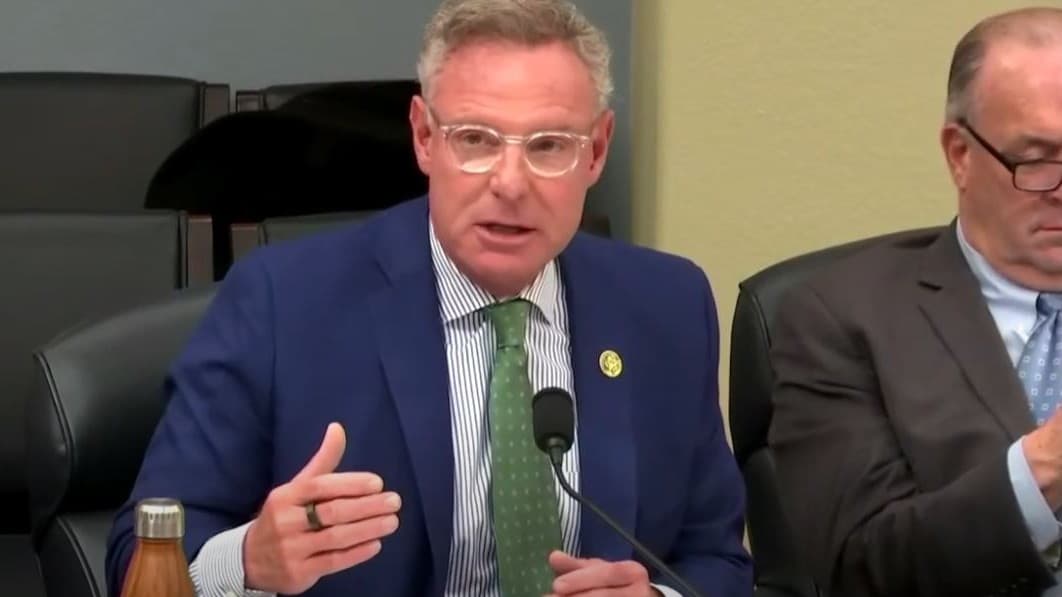
Rep. Scott Peters joins Dem calls for Swalwell to drop gubernatorial campaign
Rep. Scott Peters, D-San Diego, withdrew his support Saturday for the gubernatorial candidacy of Rep. Eric Swalwell, D-Dublin, and joined the growing chorus calling for Swalwell to quit the race after at least four women accused him of sexual misconduct — including a former staffer. “The allegations of wrongdoing against Eric Swalwell are shocking and extremely serious, and my heart goes out to anyone who was harmed,” Peters said. “It is in everyone’s interest to ensure that justice is done. There is no way that Eric can wage a viable campaign for governor. I am withdrawing my support for him and asking him to do the right thing and cease his campaign.” The firestorm erupted Friday when the San Francisco Chronicle published a story alleging that a female employee had a consensual relationship with the married congressman, including sexual encounters with Swalwell while working for him. She further claimed he sexually assaulted her on two occasions when she was drunk and unable to give her consent. Later in the day CNN reported three more women had accused Swalwell of sexual misconduct, including sending unsolicited nude photos. Swalwell disputed the allegations in a social media video Friday: “A lot has been said about me today through anonymous allegations,” Swalwell said. ” … These allegations of sexual assault are flat false. They are absolutely false. They did not happen; they have never happened, and I will fight them with everything I have. “They also come on the eve of an election where I have been the front- runner candidate for governor in California. I do not suggest to you in any way that I’m perfect or that I’m a saint. I have certainly made mistakes in judgment in my past. But those mistakes are between me and my wife, and to her I apologize deeply for putting her in this position. I also apologize to you if in any way you have doubted your support for me, but I think you know who I am. For over 20 years, I have served the public as a city councilman, as a member of Congress, and as a prosecutor who went to court on behalf of victims, particularly on behalf of sexual assault victims.” He elaborated in a statement to NBC4. “For nearly 20 years, I have served the public — as a prosecutor and a congressman — and have always protected women,” he said. “I will defend myself with the facts and where necessary bring legal action.” The station reported that Swalwell, 45, met with his family Friday in the San Francisco Bay Area although the outcome was unclear. He and his wife, Brittany Watts, have three children. Swalwell’s campaign did not respond to a request for a response to Peters’ statement. Other California elected officials were urging Swalwell to withdraw from the race, and many were also saying he should resign his seat in Congress. Former Los Angeles Mayor and state Assembly Speaker Antonio Villaraigosa issued a statement saying in part that “reporting on the horrific allegations that Eric Swalwell abused his position and repeatedly sexually assaulted a staffer is shocking and reprehensible. Further, Eric Swalwell’s attempt to silence victims to save his campaign for governor — a campaign he was unfit to enter given these allegations — is a shameful disgrace to our democracy. “Now that victims are finally being heard, it has become abundantly clear that Eric Swalwell must withdraw from the governor’s race and immediately resign from Congress. I’m calling on him to live by the words that he has repeatedly professed, and encourage all victims to come forward to speak freely without fear of threats or legal retribution from Mr. Swalwell so that he can face accountability for his alleged actions. In California, we believe women and no one is above the law,” Villaraigosa added. Sen. Adam Schiff, D-California, and Former House Speaker Nancy Pelosi, D-San Francisco, both rescinded their endorsements, as did Service Employees International Union California. “SEIU California has formally voted to rescind its endorsement of Eric Swalwell and to urge him to withdraw immediately from the race,” the union said in a statement Saturday. “As a union predominantly made up of women, SEIU has prioritized fighting for workplaces free of sexual harassment and assault. Many of our members have faced sexual harassment, coercion, abuse of power, and rape in the workplace and know firsthand how difficult it is to come forward in any circumstances, but especially when your abuser has more power than you do and your livelihood and future are at stake. “We are grateful to the women who courageously spoke out to share their stories: Every person who stands up to power and speaks out about abuse is helping to create safer workplaces and a safer society for all,” the statement concluded. California’s other Democratic Senator, Alex Padilla, and gubernatorial candidates Tom Steyer, Tony Thurmond and Matt Mahan also called for Swalwell to withdraw from the race. The California Teachers Association has suspend its endorsement. Californians for a Fighter, an independent group supporting Swalwell, said the group was “suspending campaign activity immediately” in light of the allegations, and the fundraising platform ActBlue has stopped accepting donations for his campaign. Sen. Ruben Gallego, D-Ariz., a longtime Swalwell ally, also withdrew his endorsement, describing the allegations as “indefensible.” A CBS News report linked viral rumors about Swalwell in the days before the Chronicle story was published to influencer Cheyenne Hunter, who describes herself as a progressive activist. She has a law degree from the UC Irvine School of Law, where gubernatorial candidate Katie Porter is a professor. “I have been working with a number of women who are in the process of coming forward and sharing their stories of sexual harassment and even alleged abuse at the hands of Eric Swalwell,” Hunter posted April 5 on X. “I got involved because the first victim who approached me is a close friend, but when I saw that there were others who’s experiences fit the same pattern of manipulation and abuse of power, I knew I couldn’t stay silent.” Porter told CBS News that she did not have any “direct relationship” to releasing the allegations just weeks before the June 2 primary. “In light of the allegations of sexual assault, Eric Swalwell should resign from Congress and end his campaign for public office, ” Porter posted on X. “But those decisions do not absolve him of taking responsibility for his misconduct, especially when he has attempted to silence and retaliate against these victims. These allegations merit full investigations, and these women deserve the right to pursue justice.” Swalwell questioned the timing of the allegations being reported. “These allegations are false and come on the eve of an election against the frontrunner for governor,” Swalwell said in his media statement. “My focus in the coming days is to be with my wife and children and defend our decades of service against these lies.” Meanwhile, his fellow gubernatorial candidates were continuing the push for him to step aside. “I hope Eric Swalwell will do the right thing and get out of this race now,” San Jose Mayor Matt Mahan said at a Beverly Hills news conference Friday. Earlier Friday, Mahan wrote on X: “To the survivor who risked everything to come forward — I believe you. To the Democratic Party — you’d better hold him accountable. If we don’t we have no credibility asking anyone else to do the same. To (Swalwell) — drop out.” State Superintendent of Public Instruction Tony Thurmond also hastily called a news conference Friday afternoon in downtown Los Angeles, calling on Swalwell to withdraw from the governor’s race and resign from Congress. In a video posted on social media after the Chronicle story was released, Thurmond pointed to earlier allegations that began circulating online about possible inappropriate contact by Swalwell with female staff members — accusations Swalwell also denied. “These are credible women represented by legal counsel working with investigative journalists to make sure their stories are told safely and on the record,” Thurmond said. “The number of women who have come forward is by all accounts shocking, and Congressman Swalwell’s response has been to call it a conspiracy and to attack the women who were brave enough to speak out. “… California cannot have a governor who treats the people who work for him as something to take advantage of,” he added. “We cannot have a governor who silences victims. … Leadership requires accountability and right now, Eric Swalwell is refusing to be accountable for anything. He needs to step aside.” California Democratic Party Chair Rusty Hicks called the accusations “deeply disturbing in a statement, but stopped short of calling for Swalwell to leave the race. “First, the stories of victims and survivors should be heard and believed. Period,” Hicks said. “Second, any person engaged in misconduct must take responsibility and be held accountable for their actions — including a Member of Congress and candidate for governor. Finally, my call for all — repeat, all — candidates for Governor to ‘honestly assess the viability of their candidacy and campaign’ still stands.” According to the Los Angeles Times, an attorney for Swalwell’s campaign sent a cease-and-desist letter on Thursday to an unknown person demanding they stop accusing Swalwell of assault. On Friday, Politico reported that several members of Swalwell’s campaign staffers resigned just prior to the Chronicle’s story being published. One, adviser Courtni Pugh, confirmed her departure to Politico, which reported that at least four other people had also left, including both campaign chairs. Republican gubernatorial candidate Steve Hilton has been polling at the top of the 10-candidate gubernatorial race, along with fellow Republican Riverside County Sheriff Chad Bianco. Swalwell had been close behind, leading among the eight Democrats in the race. Hilton said Friday that it’s “incredible that the big unions that run California picked Swalwell as their puppet, knowing full well that all this was out there. For all their endless lectures on gender equality and their `values,’ it’s obvious that today’s California Democratic Party doesn’t care about them at all, except for its own power.” Incumbent Gov. Gavin Newsom, who is termed out, has not called on Swalwell to drop his campaign, but said in a statement that “As we continue to learn more, these allegations from multiple sources are deeply troubling and must be taken seriously.” House Minority Leader Hakeem Jeffries, D-N.Y., House Minority Whip Katherine Clark, D-Mass., and Democratic Caucus Chair Pete Aguilar, D-San Bernardino, also called for the congressman to exit the race. Also Saturday, Rep. Anna Paulina Luna, R-Fla., said she planned to file a motion to expel Swalwell from office, which would require a two-thirds vote from the House of Representatives. In New York on Saturday, the Manhattan District Attorney’s Office announced plans to investigate the allegation from the former staffer who accused Swalwell of having sex with her when she was heavily intoxicated after a night of drinking with him in New York City in April 2024 and unable to consent.
Rep. Scott Peters joins Dem calls for Swalwell to drop gubernatorial campaign
Rep. Scott Peters, D-San Diego, withdrew his support Saturday for the gubernatorial candidacy of Rep. Eric Swalwell, D-Dublin, and joined the growing chorus calling for Swalwell to quit the race after at least four women accused him of sexual misconduct — including a former staffer. “The allegations of wrongdoing against Eric Swalwell are shocking and extremely serious, and my heart goes out to anyone who was harmed,” Peters said. “It is in everyone’s interest to ensure that justice is done. There is no way that Eric can wage a viable campaign for governor. I am withdrawing my support for him and asking him to do the right thing and cease his campaign.” The firestorm erupted Friday when the San Francisco Chronicle published a story alleging that a female employee had a consensual relationship with the married congressman, including sexual encounters with Swalwell while working for him. She further claimed he sexually assaulted her on two occasions when she was drunk and unable to give her consent. Later in the day CNN reported three more women had accused Swalwell of sexual misconduct, including sending unsolicited nude photos. Swalwell disputed the allegations in a social media video Friday: “A lot has been said about me today through anonymous allegations,” Swalwell said. ” … These allegations of sexual assault are flat false. They are absolutely false. They did not happen; they have never happened, and I will fight them with everything I have. “They also come on the eve of an election where I have been the front- runner candidate for governor in California. I do not suggest to you in any way that I’m perfect or that I’m a saint. I have certainly made mistakes in judgment in my past. But those mistakes are between me and my wife, and to her I apologize deeply for putting her in this position. I also apologize to you if in any way you have doubted your support for me, but I think you know who I am. For over 20 years, I have served the public as a city councilman, as a member of Congress, and as a prosecutor who went to court on behalf of victims, particularly on behalf of sexual assault victims.” He elaborated in a statement to NBC4. “For nearly 20 years, I have served the public — as a prosecutor and a congressman — and have always protected women,” he said. “I will defend myself with the facts and where necessary bring legal action.” The station reported that Swalwell, 45, met with his family Friday in the San Francisco Bay Area although the outcome was unclear. He and his wife, Brittany Watts, have three children. Swalwell’s campaign did not respond to a request for a response to Peters’ statement. Other California elected officials were urging Swalwell to withdraw from the race, and many were also saying he should resign his seat in Congress. Former Los Angeles Mayor and state Assembly Speaker Antonio Villaraigosa issued a statement saying in part that “reporting on the horrific allegations that Eric Swalwell abused his position and repeatedly sexually assaulted a staffer is shocking and reprehensible. Further, Eric Swalwell’s attempt to silence victims to save his campaign for governor — a campaign he was unfit to enter given these allegations — is a shameful disgrace to our democracy. “Now that victims are finally being heard, it has become abundantly clear that Eric Swalwell must withdraw from the governor’s race and immediately resign from Congress. I’m calling on him to live by the words that he has repeatedly professed, and encourage all victims to come forward to speak freely without fear of threats or legal retribution from Mr. Swalwell so that he can face accountability for his alleged actions. In California, we believe women and no one is above the law,” Villaraigosa added. Sen. Adam Schiff, D-California, and Former House Speaker Nancy Pelosi, D-San Francisco, both rescinded their endorsements, as did Service Employees International Union California. “SEIU California has formally voted to rescind its endorsement of Eric Swalwell and to urge him to withdraw immediately from the race,” the union said in a statement Saturday. “As a union predominantly made up of women, SEIU has prioritized fighting for workplaces free of sexual harassment and assault. Many of our members have faced sexual harassment, coercion, abuse of power, and rape in the workplace and know firsthand how difficult it is to come forward in any circumstances, but especially when your abuser has more power than you do and your livelihood and future are at stake. “We are grateful to the women who courageously spoke out to share their stories: Every person who stands up to power and speaks out about abuse is helping to create safer workplaces and a safer society for all,” the statement concluded. California’s other Democratic Senator, Alex Padilla, and gubernatorial candidates Tom Steyer, Tony Thurmond and Matt Mahan also called for Swalwell to withdraw from the race. The California Teachers Association has suspend its endorsement. Californians for a Fighter, an independent group supporting Swalwell, said the group was “suspending campaign activity immediately” in light of the allegations, and the fundraising platform ActBlue has stopped accepting donations for his campaign. Sen. Ruben Gallego, D-Ariz., a longtime Swalwell ally, also withdrew his endorsement, describing the allegations as “indefensible.” A CBS News report linked viral rumors about Swalwell in the days before the Chronicle story was published to influencer Cheyenne Hunter, who describes herself as a progressive activist. She has a law degree from the UC Irvine School of Law, where gubernatorial candidate Katie Porter is a professor. “I have been working with a number of women who are in the process of coming forward and sharing their stories of sexual harassment and even alleged abuse at the hands of Eric Swalwell,” Hunter posted April 5 on X. “I got involved because the first victim who approached me is a close friend, but when I saw that there were others who’s experiences fit the same pattern of manipulation and abuse of power, I knew I couldn’t stay silent.” Porter told CBS News that she did not have any “direct relationship” to releasing the allegations just weeks before the June 2 primary. “In light of the allegations of sexual assault, Eric Swalwell should resign from Congress and end his campaign for public office, ” Porter posted on X. “But those decisions do not absolve him of taking responsibility for his misconduct, especially when he has attempted to silence and retaliate against these victims. These allegations merit full investigations, and these women deserve the right to pursue justice.” Swalwell questioned the timing of the allegations being reported. “These allegations are false and come on the eve of an election against the frontrunner for governor,” Swalwell said in his media statement. “My focus in the coming days is to be with my wife and children and defend our decades of service against these lies.” Meanwhile, his fellow gubernatorial candidates were continuing the push for him to step aside. “I hope Eric Swalwell will do the right thing and get out of this race now,” San Jose Mayor Matt Mahan said at a Beverly Hills news conference Friday. Earlier Friday, Mahan wrote on X: “To the survivor who risked everything to come forward — I believe you. To the Democratic Party — you’d better hold him accountable. If we don’t we have no credibility asking anyone else to do the same. To (Swalwell) — drop out.” State Superintendent of Public Instruction Tony Thurmond also hastily called a news conference Friday afternoon in downtown Los Angeles, calling on Swalwell to withdraw from the governor’s race and resign from Congress. In a video posted on social media after the Chronicle story was released, Thurmond pointed to earlier allegations that began circulating online about possible inappropriate contact by Swalwell with female staff members — accusations Swalwell also denied. “These are credible women represented by legal counsel working with investigative journalists to make sure their stories are told safely and on the record,” Thurmond said. “The number of women who have come forward is by all accounts shocking, and Congressman Swalwell’s response has been to call it a conspiracy and to attack the women who were brave enough to speak out. “… California cannot have a governor who treats the people who work for him as something to take advantage of,” he added. “We cannot have a governor who silences victims. … Leadership requires accountability and right now, Eric Swalwell is refusing to be accountable for anything. He needs to step aside.” California Democratic Party Chair Rusty Hicks called the accusations “deeply disturbing in a statement, but stopped short of calling for Swalwell to leave the race. “First, the stories of victims and survivors should be heard and believed. Period,” Hicks said. “Second, any person engaged in misconduct must take responsibility and be held accountable for their actions — including a Member of Congress and candidate for governor. Finally, my call for all — repeat, all — candidates for Governor to ‘honestly assess the viability of their candidacy and campaign’ still stands.” According to the Los Angeles Times, an attorney for Swalwell’s campaign sent a cease-and-desist letter on Thursday to an unknown person demanding they stop accusing Swalwell of assault. On Friday, Politico reported that several members of Swalwell’s campaign staffers resigned just prior to the Chronicle’s story being published. One, adviser Courtni Pugh, confirmed her departure to Politico, which reported that at least four other people had also left, including both campaign chairs. Republican gubernatorial candidate Steve Hilton has been polling at the top of the 10-candidate gubernatorial race, along with fellow Republican Riverside County Sheriff Chad Bianco. Swalwell had been close behind, leading among the eight Democrats in the race. Hilton said Friday that it’s “incredible that the big unions that run California picked Swalwell as their puppet, knowing full well that all this was out there. For all their endless lectures on gender equality and their `values,’ it’s obvious that today’s California Democratic Party doesn’t care about them at all, except for its own power.” Incumbent Gov. Gavin Newsom, who is termed out, has not called on Swalwell to drop his campaign, but said in a statement that “As we continue to learn more, these allegations from multiple sources are deeply troubling and must be taken seriously.” House Minority Leader Hakeem Jeffries, D-N.Y., House Minority Whip Katherine Clark, D-Mass., and Democratic Caucus Chair Pete Aguilar, D-San Bernardino, also called for the congressman to exit the race. Also Saturday, Rep. Anna Paulina Luna, R-Fla., said she planned to file a motion to expel Swalwell from office, which would require a two-thirds vote from the House of Representatives. In New York on Saturday, the Manhattan District Attorney’s Office announced plans to investigate the allegation from the former staffer who accused Swalwell of having sex with her when she was heavily intoxicated after a night of drinking with him in New York City in April 2024 and unable to consent.

Billionaire tax is a no-brainer for progressive California Democrats, right? Not so fast.
A woman holds a sign in a 2024 picket line for SEIU-United Healthcare Workers West, the union sponsoring the effort to enact a tax on billionaires. (File photo courtesy of SEIU) This story was originally published by CalMatters. Sign up for their newsletters. A union-backed proposal to tax California’s billionaires to fund health care has put some progressive lawmakers — and their labor allies — in a quandary. Taxing the rich to backfill Trump-induced federal funding cuts might sound like a no-brainer policy for the party’s left flank, which counts wealth inequality among its top issues. But despite a strong show of support from prominent national figures, including Sen. Bernie Sanders of Vermont and liberal economist Robert Reich, the “2026 California Billionaire Tax Act” has become a hot potato for labor leaders. The proposed initiative would levy a one-time tax of 5% on any resident of California whose net worth exceeds $1 billion, which applies to around 200 people, according to Forbes. That money would plug an estimated $100 billion hole left by federal cuts to Medi-Cal and other social service programs. Publicly, prominent labor and progressive players have largely kept quiet, unlike Gov. Gavin Newsom who has aired his disdain loud and clear. Yet in private, some union leaders and their allies in the Legislature rail against the measure. Of the critics who spoke with CalMatters for this story — three union leaders and five members of the Legislative Progressive Caucus — only one lawmaker would criticize the measure openly. Critics question its feasibility and whether the state even knows how to accurately appraise a billionaire’s total wealth, a crucial step to evaluating how much tax they would owe. They fear long-term revenue loss by driving wealthy people out of California. And some resent that the union sponsoring the initiative, SEIU-United Healthcare Workers West, designed the measure to predominantly benefit its members rather than boost the state’s general fund, where it could go to all budget needs. “It’s not that taxing billionaires in itself is wrong,” said Keely Martin Bosler, formerly the top state budget officer to Newsom and former Gov. Jerry Brown. She is now a Democratic consultant who has advised several of California’s most powerful labor groups, including the Service Employees International Union of California, the parent union of SEIU-UHW. “The way in which this tax specifically is constructed is problematic.” Former Assemblywoman Lorena Gonzalez, who now leads the California Federation of Labor Unions. (File photo by Ken Stone/Times of San Diego) Many progressive state lawmakers and Capitol heavyweights, such as Sen. Scott Wiener of San Francisco and the powerful California Labor Federation, have sidestepped the question of whether they’d support it, declining for now to take a position on an initiative that has yet to officially qualify for the ballot. “The Labor Federation won’t take it up for an endorsement until July,” said Lorena Gonzalez, a former San Diego lawmaker and the organization’s president, in a text message. Yet if the tax lands on the November ballot, as it appears on track to do, progressive critics will be saddled with the tricky optics of opposing — or at least not supporting — a measure that embodies one of their base’s core tenets: taxing the rich. Even the mere threat the measure could qualify for the ballot has already spurred a torrent of opposition spending — more than $50 million in total so far — from billionaires such as Google co-founder Sergey Brin and cryptocurrency mogul Chris Larsen. Brin’s group, known as “Building a Better California,” has also spawned three new competing ballot measures designed to undermine the billionaires’ tax. Critics fear that if billionaires like Brin become even bigger perennial spenders in California politics, they could neuter the progressive agenda by bankrolling more business-friendly candidates and ousting left-leaning, labor-aligned legislators. But the measure’s proponents say they are undeterred by the secretive detractors and challenge their critics to put their names behind their words. “What we have is a group of so-called leaders who are not reflecting the attitudes of their own constituents,” said Dave Regan, executive director of SEIU-UHW and the de facto leader of the billionaire tax measure. “That’s why they want to be anonymous.” Regan said he’s confident the initiative will amass enough signatures to qualify for the ballot before the end of April. Then, he said, “We believe a lot of those people are going to come around and change because this makes sense, because the public is supportive, because their own members are supportive.” The case for, and against, the billionaires’ tax So far, polling has shown the billionaire tax is relatively popular with voters. Recent surveys show just over half of Californians surveyed said they’re inclined to vote for it. Critics point out that California’s existing state tax structure is entirely based on income, rather than net worth. The state would have to appraise each person’s assets, including real estate, art, automobiles and private and public businesses. The billionaires could pay in installments, handing over 1% of their wealth annually for five years. Bosler said that with income tax filings, the Franchise Tax Board can use data from federal tax returns to verify its own analysis. Since there’s no federal wealth tax, California would be forging uncharted territory with no tax compliance support from any other source or agency — a risky move that could invite legal challenges. “The state is not a miracle worker, like, they’re not going to suddenly be able to do all of this like perfectly,” said Bosler. “I mean they will do their best, but I just think this is expertise that they have built up over 50-plus years. Like, none of this is in their wheelhouse at this point.” But champions of the tax argue it is the only real solution on the table so far to save hospitals, health care jobs and, ultimately, patient lives they say are at risk due to federal funding cuts to Medi-Cal and food assistance programs. Supporters note that the tax is not intended to solve California’s structural budget problems. “It’s one-time funding to fill what we hope is a one-time hole,” said Brian Galle, a tax law professor at UC Berkeley who helped craft the measure. Galle said only around 200 people would be subjected to the tax, so the extra burden on the Franchise Tax Board wouldn’t be too great. “It’s not like FTB is going to get a blizzard of tens of thousands of new returns that they’re going to have to figure out a whole new data system for cracking,” said Galle. Why some progressives aren’t on board Those who have qualms with the initiative have largely kept their criticisms private. One liberal state legislator, who spoke on the condition of anonymity, said the infighting among the unions puts progressive lawmakers in a difficult position. While he empathizes with the urgency that health care workers feel, he and other Democrats are not convinced the policy could withstand legal challenges and worry about the wealthy employing savvy accounting maneuvers to skirt the tax altogether. Some organizations that are synonymous with progressive politics in California, such as the Working Families Party, also haven’t taken a position, even as other unions such as the Teamsters and AFSCME California support it. Even the powerhouse labor union SEIU California is choosing not to take a position on the measure, which is spearheaded by one of its local affiliates, SEIU-United Healthcare Workers West. Assembly Speaker Robert Rivas, right, speaks with San Diego Assemblymember Chris Ward at the state Capitol in Sacramento on Sept. 12, 2025. (Photo by Fred Greaves for CalMatters) San Diego Assemblymember Chris Ward, a member of the progressive caucus, called the measure a “well-meaning effort by UHW,” but criticized the proposal for being just a one-time tax primarily benefiting the health care sector rather than boosting the state’s overall revenues. Regan said SEIU-UHW made the tax one-time to nullify the argument that it would push billionaires out of the state. Ward noted that he and his colleagues are considering “superior” bills, such as one that would close a corporate tax loop to generate $3 billion per year, and another that would create a new tax on corporations that pay workers so little that they qualify for Medi-Cal and nutrition assistance. Regan argued these measures would only make California more unaffordable, since businesses would pass their increased costs along to consumers. Ward, the sole state lawmaker who would candidly share his concerns about the initiative with CalMatters, said he and his colleagues have heard pushback from “a number of other labor organizations that don’t support that initiative,” primarily because its members would not directly benefit from any of the revenue. Uniting labor, he said, is the key to any successful revenue solution. “There’s a need to look at a wealth tax for a more broad range, including health care workers but other purposes that are state priorities,” Ward said, “and that will be left off of the table if this is the only question we’re seeing.” CalMatters‘ Nadia Lathan contributed to this story. CalMatters is a nonpartisan and nonprofit news organization bringing Californians stories that probe, explain and explore solutions to quality of life issues while holding our leaders accountable.
Billionaire tax is a no-brainer for progressive California Democrats, right? Not so fast.
A woman holds a sign in a 2024 picket line for SEIU-United Healthcare Workers West, the union sponsoring the effort to enact a tax on billionaires. (File photo courtesy of SEIU) This story was originally published by CalMatters. Sign up for their newsletters. A union-backed proposal to tax California’s billionaires to fund health care has put some progressive lawmakers — and their labor allies — in a quandary. Taxing the rich to backfill Trump-induced federal funding cuts might sound like a no-brainer policy for the party’s left flank, which counts wealth inequality among its top issues. But despite a strong show of support from prominent national figures, including Sen. Bernie Sanders of Vermont and liberal economist Robert Reich, the “2026 California Billionaire Tax Act” has become a hot potato for labor leaders. The proposed initiative would levy a one-time tax of 5% on any resident of California whose net worth exceeds $1 billion, which applies to around 200 people, according to Forbes. That money would plug an estimated $100 billion hole left by federal cuts to Medi-Cal and other social service programs. Publicly, prominent labor and progressive players have largely kept quiet, unlike Gov. Gavin Newsom who has aired his disdain loud and clear. Yet in private, some union leaders and their allies in the Legislature rail against the measure. Of the critics who spoke with CalMatters for this story — three union leaders and five members of the Legislative Progressive Caucus — only one lawmaker would criticize the measure openly. Critics question its feasibility and whether the state even knows how to accurately appraise a billionaire’s total wealth, a crucial step to evaluating how much tax they would owe. They fear long-term revenue loss by driving wealthy people out of California. And some resent that the union sponsoring the initiative, SEIU-United Healthcare Workers West, designed the measure to predominantly benefit its members rather than boost the state’s general fund, where it could go to all budget needs. “It’s not that taxing billionaires in itself is wrong,” said Keely Martin Bosler, formerly the top state budget officer to Newsom and former Gov. Jerry Brown. She is now a Democratic consultant who has advised several of California’s most powerful labor groups, including the Service Employees International Union of California, the parent union of SEIU-UHW. “The way in which this tax specifically is constructed is problematic.” Former Assemblywoman Lorena Gonzalez, who now leads the California Federation of Labor Unions. (File photo by Ken Stone/Times of San Diego) Many progressive state lawmakers and Capitol heavyweights, such as Sen. Scott Wiener of San Francisco and the powerful California Labor Federation, have sidestepped the question of whether they’d support it, declining for now to take a position on an initiative that has yet to officially qualify for the ballot. “The Labor Federation won’t take it up for an endorsement until July,” said Lorena Gonzalez, a former San Diego lawmaker and the organization’s president, in a text message. Yet if the tax lands on the November ballot, as it appears on track to do, progressive critics will be saddled with the tricky optics of opposing — or at least not supporting — a measure that embodies one of their base’s core tenets: taxing the rich. Even the mere threat the measure could qualify for the ballot has already spurred a torrent of opposition spending — more than $50 million in total so far — from billionaires such as Google co-founder Sergey Brin and cryptocurrency mogul Chris Larsen. Brin’s group, known as “Building a Better California,” has also spawned three new competing ballot measures designed to undermine the billionaires’ tax. Critics fear that if billionaires like Brin become even bigger perennial spenders in California politics, they could neuter the progressive agenda by bankrolling more business-friendly candidates and ousting left-leaning, labor-aligned legislators. But the measure’s proponents say they are undeterred by the secretive detractors and challenge their critics to put their names behind their words. “What we have is a group of so-called leaders who are not reflecting the attitudes of their own constituents,” said Dave Regan, executive director of SEIU-UHW and the de facto leader of the billionaire tax measure. “That’s why they want to be anonymous.” Regan said he’s confident the initiative will amass enough signatures to qualify for the ballot before the end of April. Then, he said, “We believe a lot of those people are going to come around and change because this makes sense, because the public is supportive, because their own members are supportive.” The case for, and against, the billionaires’ tax So far, polling has shown the billionaire tax is relatively popular with voters. Recent surveys show just over half of Californians surveyed said they’re inclined to vote for it. Critics point out that California’s existing state tax structure is entirely based on income, rather than net worth. The state would have to appraise each person’s assets, including real estate, art, automobiles and private and public businesses. The billionaires could pay in installments, handing over 1% of their wealth annually for five years. Bosler said that with income tax filings, the Franchise Tax Board can use data from federal tax returns to verify its own analysis. Since there’s no federal wealth tax, California would be forging uncharted territory with no tax compliance support from any other source or agency — a risky move that could invite legal challenges. “The state is not a miracle worker, like, they’re not going to suddenly be able to do all of this like perfectly,” said Bosler. “I mean they will do their best, but I just think this is expertise that they have built up over 50-plus years. Like, none of this is in their wheelhouse at this point.” But champions of the tax argue it is the only real solution on the table so far to save hospitals, health care jobs and, ultimately, patient lives they say are at risk due to federal funding cuts to Medi-Cal and food assistance programs. Supporters note that the tax is not intended to solve California’s structural budget problems. “It’s one-time funding to fill what we hope is a one-time hole,” said Brian Galle, a tax law professor at UC Berkeley who helped craft the measure. Galle said only around 200 people would be subjected to the tax, so the extra burden on the Franchise Tax Board wouldn’t be too great. “It’s not like FTB is going to get a blizzard of tens of thousands of new returns that they’re going to have to figure out a whole new data system for cracking,” said Galle. Why some progressives aren’t on board Those who have qualms with the initiative have largely kept their criticisms private. One liberal state legislator, who spoke on the condition of anonymity, said the infighting among the unions puts progressive lawmakers in a difficult position. While he empathizes with the urgency that health care workers feel, he and other Democrats are not convinced the policy could withstand legal challenges and worry about the wealthy employing savvy accounting maneuvers to skirt the tax altogether. Some organizations that are synonymous with progressive politics in California, such as the Working Families Party, also haven’t taken a position, even as other unions such as the Teamsters and AFSCME California support it. Even the powerhouse labor union SEIU California is choosing not to take a position on the measure, which is spearheaded by one of its local affiliates, SEIU-United Healthcare Workers West. Assembly Speaker Robert Rivas, right, speaks with San Diego Assemblymember Chris Ward at the state Capitol in Sacramento on Sept. 12, 2025. (Photo by Fred Greaves for CalMatters) San Diego Assemblymember Chris Ward, a member of the progressive caucus, called the measure a “well-meaning effort by UHW,” but criticized the proposal for being just a one-time tax primarily benefiting the health care sector rather than boosting the state’s overall revenues. Regan said SEIU-UHW made the tax one-time to nullify the argument that it would push billionaires out of the state. Ward noted that he and his colleagues are considering “superior” bills, such as one that would close a corporate tax loop to generate $3 billion per year, and another that would create a new tax on corporations that pay workers so little that they qualify for Medi-Cal and nutrition assistance. Regan argued these measures would only make California more unaffordable, since businesses would pass their increased costs along to consumers. Ward, the sole state lawmaker who would candidly share his concerns about the initiative with CalMatters, said he and his colleagues have heard pushback from “a number of other labor organizations that don’t support that initiative,” primarily because its members would not directly benefit from any of the revenue. Uniting labor, he said, is the key to any successful revenue solution. “There’s a need to look at a wealth tax for a more broad range, including health care workers but other purposes that are state priorities,” Ward said, “and that will be left off of the table if this is the only question we’re seeing.” CalMatters‘ Nadia Lathan contributed to this story. CalMatters is a nonpartisan and nonprofit news organization bringing Californians stories that probe, explain and explore solutions to quality of life issues while holding our leaders accountable.
The Trump administration won’t rule out the possibility of federal agents at polls
Election officials and lawmakers are alarmed that the administration hasn’t been clear about the circumstances under which it would send federal agents to the polls in November. Elections have been a clear target for the second Trump administration as the president seeks more federal control over how states run their elections. President Donald Trump has made passage of the SAVE America Act, a voter ID bill that would make it more difficult for many Americans to register to vote and cast their ballots, a priority for Congress. And for months, the Department of Homeland Security has also refused to rule out the possibility of sending agents to polls. “I am very concerned about this and they need to make commitments that they’re going to have free and fair voting places,” Sen. Amy Klobuchar told NOTUS. “I think there’s going to be a lot of litigation because to me, that’s where it feels like they’re headed. They’re trying to scare people so they don’t want to vote.” In his confirmation hearing, Secretary of Homeland Security Markwayne Mullin said that he couldn’t “guarantee hypothetically what threat would be” at a polling place that would warrant sending agents to the polls. “The only reason why my officers would be there is if there was a specific threat for them to be there, not for intimidation,” Mullin said at his committee confirmation hearing in response to a question from Michigan Sen. Elissa Slotkin about whether he felt he had the authority to place uniformed officers at polling places. That answer was similar to the one given by his predecessor, Kristi Noem, who had also refused to rule out the possibility while also saying the agency had “no plans” to have Immigration and Customs Enforcement officers at polling locations. Nine secretaries of state wrote a letter to Mullin during his confirmation process, asking for a definitive response on whether federal agents could be expected at the polls this November. “Every time there’s sort of a new either outrageous or unusual use of ICE being in places where they would not normally need to be, it gives people concern. And of course, one of the biggest concerns folks have is that people who are otherwise eligible to vote, citizens, will just stay home,” New Mexico Secretary of State Maggie Toulouse Oliver, one of the election officials who signed the letter, told NOTUS. For example, she said that tribal members in her state have been mistaken as immigrants by DHS agents in immigration enforcement operations. David Becker, the executive director of the Center for Election Innovation and Research, said that the “law is extremely clear” around deploying armed forces around polling locations. Federal law bars armed “troops or armed men” from being deployed near a polling location, unless to repel “armed enemies of the United States.” “If there’s any attempt to deploy troops or armed men at voting locations, I’m 100% confident that courts are going to strike this down immediately,” Becker said. “Those who are scared of the American voter and act out of fear of the American voter rarely find a way to stop the American voter from making their voice heard,” Becker said. Federal immigration agents could, however, try and intercept people “outside of the electioneering zone,” said Patrick Eddington, a senior fellow at libertarian think tank the Cato Institute. That type of chilling effect, he argued, could have an outsize influence on which party will control the House of Representatives. “I think it’s a perfectly plausible activity if (White House officials) pick in advance 10 to 20 districts to be outside where that kind of activity could materially suppress the vote enough to actually have a determinative effect in favor of the Republicans,” Eddington said. White House Deputy Press Secretary Abigail Jackson referred NOTUS to a video of Press Secretary Karoline Leavitt at a briefing in early February. “That’s not something I’ve ever heard the president consider, no,” Leavitt said when asked whether Trump was considering sending ICE agents to polling locations. “I can’t guarantee that an ICE agent won’t be around a polling location in November,” Leavitt said when the reporter followed up. “That’s frankly a very silly hypothetical question. But what I can tell you is I haven’t heard the president discuss any formal plans to put ICE outside of polling locations. It’s a disingenuous question.” In a call with state election officials in February, the DHS senior election integrity official, Heather Honey, a vocal denier of Trump’s 2020 election loss, reportedly also said that ICE would not be at the polls this November. But the comments made by Mullin and Noem have put Democrats and election officials on edge. And outside voices are weighing in to encourage the administration. Last week, Trump ally Steve Bannon said on his podcast that the administration should be looking at ICE’s deployment to airports as a “test case” to “perfect ICE’s involvement in the 2026 midterm election.” In the past two months, as a response to the administration’s hedging, at least eight states have introduced or passed legislation that would, in various manners, limit federal agents’ access to the polls. In Virginia, legislation that would compel federal agents to stay at least 40 feet away from a polling place passed the state general assembly. While the administration has not said it would deploy agents to the polls, lawmakers at the state level are preparing themselves for the possibility. “That makes me more concerned,” said Katrina Callsen, a Virginia state delegate who introduced the legislation, when asked about Mullin’s comments at his confirmation hearing. “That is not shutting the door. That is leaving it open with this kind of ambiguous, undefined way why there might need to be federal agents at our polling places. So if he cannot clearly define and illustrate and point out what he is anticipating, no, I don’t feel comfortable.” Republican lawmakers on Capitol Hill were not alarmed by the remarks. “The Democrats have said they don’t want ICE agents at polling places,” Sen. James Lankford, a Republican member of the Homeland Security Committee, told NOTUS. “The obvious question is, people that are not legally present shouldn’t be at a polling place. What is the issue here?” The Republican Party has made election security and immigration enforcement cornerstones of their messaging in recent years and have often tied the two together. “If it’s necessary from a law enforcement perspective, I hope it wouldn’t be. I can’t imagine the rationale for it other than if they thought there was mass illegal voting,” Sen. Josh Hawley, another Republican committee member, told NOTUS. This story was produced as part of a partnership between NOTUS — a publication from the nonpartisan Allbritton Journalism Institute — and NEWSWELL, home of Times of San Diego, Santa Barbara News-Press and Stocktonia.
The Trump administration won’t rule out the possibility of federal agents at polls
Election officials and lawmakers are alarmed that the administration hasn’t been clear about the circumstances under which it would send federal agents to the polls in November. Elections have been a clear target for the second Trump administration as the president seeks more federal control over how states run their elections. President Donald Trump has made passage of the SAVE America Act, a voter ID bill that would make it more difficult for many Americans to register to vote and cast their ballots, a priority for Congress. And for months, the Department of Homeland Security has also refused to rule out the possibility of sending agents to polls. “I am very concerned about this and they need to make commitments that they’re going to have free and fair voting places,” Sen. Amy Klobuchar told NOTUS. “I think there’s going to be a lot of litigation because to me, that’s where it feels like they’re headed. They’re trying to scare people so they don’t want to vote.” In his confirmation hearing, Secretary of Homeland Security Markwayne Mullin said that he couldn’t “guarantee hypothetically what threat would be” at a polling place that would warrant sending agents to the polls. “The only reason why my officers would be there is if there was a specific threat for them to be there, not for intimidation,” Mullin said at his committee confirmation hearing in response to a question from Michigan Sen. Elissa Slotkin about whether he felt he had the authority to place uniformed officers at polling places. That answer was similar to the one given by his predecessor, Kristi Noem, who had also refused to rule out the possibility while also saying the agency had “no plans” to have Immigration and Customs Enforcement officers at polling locations. Nine secretaries of state wrote a letter to Mullin during his confirmation process, asking for a definitive response on whether federal agents could be expected at the polls this November. “Every time there’s sort of a new either outrageous or unusual use of ICE being in places where they would not normally need to be, it gives people concern. And of course, one of the biggest concerns folks have is that people who are otherwise eligible to vote, citizens, will just stay home,” New Mexico Secretary of State Maggie Toulouse Oliver, one of the election officials who signed the letter, told NOTUS. For example, she said that tribal members in her state have been mistaken as immigrants by DHS agents in immigration enforcement operations. David Becker, the executive director of the Center for Election Innovation and Research, said that the “law is extremely clear” around deploying armed forces around polling locations. Federal law bars armed “troops or armed men” from being deployed near a polling location, unless to repel “armed enemies of the United States.” “If there’s any attempt to deploy troops or armed men at voting locations, I’m 100% confident that courts are going to strike this down immediately,” Becker said. “Those who are scared of the American voter and act out of fear of the American voter rarely find a way to stop the American voter from making their voice heard,” Becker said. Federal immigration agents could, however, try and intercept people “outside of the electioneering zone,” said Patrick Eddington, a senior fellow at libertarian think tank the Cato Institute. That type of chilling effect, he argued, could have an outsize influence on which party will control the House of Representatives. “I think it’s a perfectly plausible activity if (White House officials) pick in advance 10 to 20 districts to be outside where that kind of activity could materially suppress the vote enough to actually have a determinative effect in favor of the Republicans,” Eddington said. White House Deputy Press Secretary Abigail Jackson referred NOTUS to a video of Press Secretary Karoline Leavitt at a briefing in early February. “That’s not something I’ve ever heard the president consider, no,” Leavitt said when asked whether Trump was considering sending ICE agents to polling locations. “I can’t guarantee that an ICE agent won’t be around a polling location in November,” Leavitt said when the reporter followed up. “That’s frankly a very silly hypothetical question. But what I can tell you is I haven’t heard the president discuss any formal plans to put ICE outside of polling locations. It’s a disingenuous question.” In a call with state election officials in February, the DHS senior election integrity official, Heather Honey, a vocal denier of Trump’s 2020 election loss, reportedly also said that ICE would not be at the polls this November. But the comments made by Mullin and Noem have put Democrats and election officials on edge. And outside voices are weighing in to encourage the administration. Last week, Trump ally Steve Bannon said on his podcast that the administration should be looking at ICE’s deployment to airports as a “test case” to “perfect ICE’s involvement in the 2026 midterm election.” In the past two months, as a response to the administration’s hedging, at least eight states have introduced or passed legislation that would, in various manners, limit federal agents’ access to the polls. In Virginia, legislation that would compel federal agents to stay at least 40 feet away from a polling place passed the state general assembly. While the administration has not said it would deploy agents to the polls, lawmakers at the state level are preparing themselves for the possibility. “That makes me more concerned,” said Katrina Callsen, a Virginia state delegate who introduced the legislation, when asked about Mullin’s comments at his confirmation hearing. “That is not shutting the door. That is leaving it open with this kind of ambiguous, undefined way why there might need to be federal agents at our polling places. So if he cannot clearly define and illustrate and point out what he is anticipating, no, I don’t feel comfortable.” Republican lawmakers on Capitol Hill were not alarmed by the remarks. “The Democrats have said they don’t want ICE agents at polling places,” Sen. James Lankford, a Republican member of the Homeland Security Committee, told NOTUS. “The obvious question is, people that are not legally present shouldn’t be at a polling place. What is the issue here?” The Republican Party has made election security and immigration enforcement cornerstones of their messaging in recent years and have often tied the two together. “If it’s necessary from a law enforcement perspective, I hope it wouldn’t be. I can’t imagine the rationale for it other than if they thought there was mass illegal voting,” Sen. Josh Hawley, another Republican committee member, told NOTUS. This story was produced as part of a partnership between NOTUS — a publication from the nonpartisan Allbritton Journalism Institute — and NEWSWELL, home of Times of San Diego, Santa Barbara News-Press and Stocktonia.
The Trump administration won’t rule out the possibility of federal agents at polls
Election officials and lawmakers are alarmed that the administration hasn’t been clear about the circumstances under which it would send federal agents to the polls in November. Elections have been a clear target for the second Trump administration as the president seeks more federal control over how states run their elections. President Donald Trump has made passage of the SAVE America Act, a voter ID bill that would make it more difficult for many Americans to register to vote and cast their ballots, a priority for Congress. And for months, the Department of Homeland Security has also refused to rule out the possibility of sending agents to polls. “I am very concerned about this and they need to make commitments that they’re going to have free and fair voting places,” Sen. Amy Klobuchar told NOTUS. “I think there’s going to be a lot of litigation because to me, that’s where it feels like they’re headed. They’re trying to scare people so they don’t want to vote.” In his confirmation hearing, Secretary of Homeland Security Markwayne Mullin said that he couldn’t “guarantee hypothetically what threat would be” at a polling place that would warrant sending agents to the polls. “The only reason why my officers would be there is if there was a specific threat for them to be there, not for intimidation,” Mullin said at his committee confirmation hearing in response to a question from Michigan Sen. Elissa Slotkin about whether he felt he had the authority to place uniformed officers at polling places. That answer was similar to the one given by his predecessor, Kristi Noem, who had also refused to rule out the possibility while also saying the agency had “no plans” to have Immigration and Customs Enforcement officers at polling locations. Nine secretaries of state wrote a letter to Mullin during his confirmation process, asking for a definitive response on whether federal agents could be expected at the polls this November. “Every time there’s sort of a new either outrageous or unusual use of ICE being in places where they would not normally need to be, it gives people concern. And of course, one of the biggest concerns folks have is that people who are otherwise eligible to vote, citizens, will just stay home,” New Mexico Secretary of State Maggie Toulouse Oliver, one of the election officials who signed the letter, told NOTUS. For example, she said that tribal members in her state have been mistaken as immigrants by DHS agents in immigration enforcement operations. David Becker, the executive director of the Center for Election Innovation and Research, said that the “law is extremely clear” around deploying armed forces around polling locations. Federal law bars armed “troops or armed men” from being deployed near a polling location, unless to repel “armed enemies of the United States.” “If there’s any attempt to deploy troops or armed men at voting locations, I’m 100% confident that courts are going to strike this down immediately,” Becker said. “Those who are scared of the American voter and act out of fear of the American voter rarely find a way to stop the American voter from making their voice heard,” Becker said. Federal immigration agents could, however, try and intercept people “outside of the electioneering zone,” said Patrick Eddington, a senior fellow at libertarian think tank the Cato Institute. That type of chilling effect, he argued, could have an outsize influence on which party will control the House of Representatives. “I think it’s a perfectly plausible activity if (White House officials) pick in advance 10 to 20 districts to be outside where that kind of activity could materially suppress the vote enough to actually have a determinative effect in favor of the Republicans,” Eddington said. White House Deputy Press Secretary Abigail Jackson referred NOTUS to a video of Press Secretary Karoline Leavitt at a briefing in early February. “That’s not something I’ve ever heard the president consider, no,” Leavitt said when asked whether Trump was considering sending ICE agents to polling locations. “I can’t guarantee that an ICE agent won’t be around a polling location in November,” Leavitt said when the reporter followed up. “That’s frankly a very silly hypothetical question. But what I can tell you is I haven’t heard the president discuss any formal plans to put ICE outside of polling locations. It’s a disingenuous question.” In a call with state election officials in February, the DHS senior election integrity official, Heather Honey, a vocal denier of Trump’s 2020 election loss, reportedly also said that ICE would not be at the polls this November. But the comments made by Mullin and Noem have put Democrats and election officials on edge. And outside voices are weighing in to encourage the administration. Last week, Trump ally Steve Bannon said on his podcast that the administration should be looking at ICE’s deployment to airports as a “test case” to “perfect ICE’s involvement in the 2026 midterm election.” In the past two months, as a response to the administration’s hedging, at least eight states have introduced or passed legislation that would, in various manners, limit federal agents’ access to the polls. In Virginia, legislation that would compel federal agents to stay at least 40 feet away from a polling place passed the state general assembly. While the administration has not said it would deploy agents to the polls, lawmakers at the state level are preparing themselves for the possibility. “That makes me more concerned,” said Katrina Callsen, a Virginia state delegate who introduced the legislation, when asked about Mullin’s comments at his confirmation hearing. “That is not shutting the door. That is leaving it open with this kind of ambiguous, undefined way why there might need to be federal agents at our polling places. So if he cannot clearly define and illustrate and point out what he is anticipating, no, I don’t feel comfortable.” Republican lawmakers on Capitol Hill were not alarmed by the remarks. “The Democrats have said they don’t want ICE agents at polling places,” Sen. James Lankford, a Republican member of the Homeland Security Committee, told NOTUS. “The obvious question is, people that are not legally present shouldn’t be at a polling place. What is the issue here?” The Republican Party has made election security and immigration enforcement cornerstones of their messaging in recent years and have often tied the two together. “If it’s necessary from a law enforcement perspective, I hope it wouldn’t be. I can’t imagine the rationale for it other than if they thought there was mass illegal voting,” Sen. Josh Hawley, another Republican committee member, told NOTUS. This story was produced as part of a partnership between NOTUS — a publication from the nonpartisan Allbritton Journalism Institute — and NEWSWELL, home of Times of San Diego, Santa Barbara News-Press and Stocktonia.