2 stories credited to themeateater.com
Latest story Apr 16, 2026 · on ChamberLight since Apr 2026
A story can appear as several articles (copies of the same piece), so counts of stories and of articles differ.
Scores for themeateater.com
Writing quality not enough rated stories yet: 2 of 10. How it is measured
Scores last checked Sep 25, 2026.
Stories ChamberLight collected, by month
Stories credited to themeateater.com, by publication date. ChamberLight collects articles that mention the officials it tracks, so this shows its own coverage of this source, not how much the source publishes.
- Stories from themeateater.com
- Shaded: ChamberLight collected no stories, or almost none, from any outlet (a gap in its collection, not in the outlet’s publishing)
Show as a table
| Month | Stories | All outlets |
|---|---|---|
| April 2026 | 2 | 4,161 |
| May 2026 | 0 | none collected |
| June 2026 | 0 | none collected |
| July 2026 | 0 | none collected |
| August 2026 | 0 | 1 (collection gap) |
| September 2026 | 0 | 1,320 |
Top topics
Share of this source’s stories tagged with each topic. A story can carry several topics, so the shares do not add up to 100%.
- Environment/Climate2
100% of 2 stories · 5% across all outlets
- Budget/Spending1
50% of 2 stories · 31% across all outlets
- Economy1
50% of 2 stories · 26% across all outlets
- Ethics/Corruption1
50% of 2 stories · 58% across all outlets
The thin mark on each bar is the topic’s share across all outlets.
Who they cover
Party of the officials these stories are mainly about, across all 4 officials named. A story counts once for each official it is mainly about, so the split is over 4 story–official pairs, from 2 stories.
- Democrat50% · 2 pairs
- Republican50% · 2 pairs
Most covered
Stories mainly about each official, and their share of the source’s 2 stories.
Article tone
ChamberLight’s article analysis assigns each story a tone toward the official it covers. It describes the coverage of that official, not themeateater.com’s stance, and reader votes do not change it. 2 stories.
- Good Look
- 0 (0%)
- Mixed
- 2 (100%)
- Informational
- 0 (0%)
- Bad Look
- 0 (0%)
Challenges to these scores
No one has challenged a score on this page yet. Anyone can; editors publish every outcome here.
Articles served from themeateater.com
4
Senate Votes Against Protecting Boundary Waters
The United States Senate voted today on H.J. 140 to repeal the 20-year mining moratorium on federal land in the headwaters of the Boundary Waters Canoe Area Wilderness Area. The vote, which was an unprecedented use of the Congressional Review Act, passed narrowly, with 50 Republican Senators voting in favor of the action; 49 Senators opposed it, including two Republican defectors, Senator Susan Collins of Maine and Thom Tillis of North Carolina. The decision paves the way for the Trump Administration to reinstate leases for a massive copper sulfide mine proposed by Twin Metals, a subsidiary Chilean mining colossus Antofagasta. The vote followed several hours of debate on the Senate floor, which stretched from late into the evening on April 15th into the morning of the 16th. Both of Minnesota’s Senators, Tina Smith and Amy Klobuchar, spoke urgently and at length about the need to protect the Boundary Waters. “This is an incredibly special place, beloved by Minnesotans and people all around the country, and this mine poses an unacceptable threat to it,” Senator Smith said. “[The Boundary Waters have] some of the cleanest water you’ll find anywhere in this country. You can drink it right out of the middle of the lakes. You’ll find lake trout, northern pike, and walleye—there is no better place in the world for that.” Senator Martin Heinrich of New Mexico also spoke out against the action, which was soundly opposed by dozens of hunting and fishing conservation groups. “Public lands are the closest, most tangible thing we have to being able to represent true Jeffersonian democracy,” he said. “They are the thing that often unites us across the political spectrum. If you take these public lands away, you tear away the places where we are most free. This is an issue of heritage, and of our inheritance.” On the other hand, Republican Representative Pete Stauber, who represents Northeast Minnesota, spearheaded the effort to repeal the mining moratorium, arguing that it cost “countless good-paying union jobs, and it also put our nation’s mineral security at risk.” He said that it is possible to hold the proposed mine to a high environmental standard, despite the dismal environmental track record for the style of mining. Opponents of Stauber’s effort also argued that the Antofagasta mine would not improve mineral security, given the foreign ties of the mining corporation, as well as the fact that the ore would almost certainly need to be exported to Asia to be processed and then purchased from Antofagasta. Still, political pressure from the Trump Administration helped Stauber’s effort succeed. “The short-sightedness of this incredibly disappointing decision is staggering. By overturning the mining moratorium in the Rainy River Watershed, our elected officials have put the interests of a few above the benefit of many. including the future generations we are fighting for,” said Lukas Leaf, executive director of Sportsmen for the Boundary Waters. “Paving the way for the Twin Metals mine does little, if anything, to satisfy the America First agenda, and is a direct assault on our outdoor heritage and public lands nationwide.” The original mineral withdrawal was instituted by the Department of the Interior in 2023. The use of the Congressional Review Act (CRA) for a mineral withdrawal is unprecedented. Historically, the act has been used in a far more limited scope to review recent rules instituted by federal agencies, not overturn moratoriums several years old. "This unprecedented use of the CRA to strike down public land management actions could have broad and long-lasting ripple effects far beyond the Boundary Waters,” MeatEater’s Director of Conservation Mark Kenyon said. “If carefully considered, years-long planning processes to manage our public lands can be disregarded with a simple majority vote, Americans of all political persuasions will pay the price for generations to come. Our public lands should not be left adrift and at the mercy of the political winds of the moment." The CRA also prohibits a management agency from again issuing a new rule “that is substantially the same” as the old one, meaning that reinstating the Rainy River Watershed mining moratorium is now off the table. It also opens up the door for future uses of the CRA to claw back mineral withdrawals and land management plans several years after they were instituted by federal politicians, without any public process. “We're disappointed by today's vote, especially considering the dramatic outpouring of public input from the hunting, fishing, and outdoor community in defense of the Boundary Waters region,” Mark said. “The will of the people was obviously heard, but apparently not heeded. Nonetheless, we look forward to continuing to raise the voices of the hunting and angling community as this process moves on." That the vote came down to such a narrow margin is a testament to the effort of sportsmen and women across the country. “The support over the past few months from this community has been incredible and almost overwhelming,” Leaf said. “We’re super thankful for the amount of support that’s been coming in and how quickly people have been willing to go to bat for this issue.” He added that the fight to conserve the Boundary Waters is far from over. While the Twin Metals leases will almost certainly be reinstated, the process to actually develop the mine remains arduous and requires agency reviews and approvals of mining plans and permits. “This is far from shovels in the ground,” Leaf said. “Folks need to understand that this isn’t the end-all and be-all of this situation. It is a huge step forward for the supporters of this project, but there’s still a ways to go for getting it off the ground.”
Senate Votes Against Protecting Boundary Waters
The United States Senate voted today on H.J. 140 to repeal the 20-year mining moratorium on federal land in the headwaters of the Boundary Waters Canoe Area Wilderness Area. The vote, which was an unprecedented use of the Congressional Review Act, passed narrowly, with 50 Republican Senators voting in favor of the action; 49 Senators opposed it, including two Republican defectors, Senator Susan Collins of Maine and Thom Tillis of North Carolina. The decision paves the way for the Trump Administration to reinstate leases for a massive copper sulfide mine proposed by Twin Metals, a subsidiary Chilean mining colossus Antofagasta. The vote followed several hours of debate on the Senate floor, which stretched from late into the evening on April 15th into the morning of the 16th. Both of Minnesota’s Senators, Tina Smith and Amy Klobuchar, spoke urgently and at length about the need to protect the Boundary Waters. “This is an incredibly special place, beloved by Minnesotans and people all around the country, and this mine poses an unacceptable threat to it,” Senator Smith said. “[The Boundary Waters have] some of the cleanest water you’ll find anywhere in this country. You can drink it right out of the middle of the lakes. You’ll find lake trout, northern pike, and walleye—there is no better place in the world for that.” Senator Martin Heinrich of New Mexico also spoke out against the action, which was soundly opposed by dozens of hunting and fishing conservation groups. “Public lands are the closest, most tangible thing we have to being able to represent true Jeffersonian democracy,” he said. “They are the thing that often unites us across the political spectrum. If you take these public lands away, you tear away the places where we are most free. This is an issue of heritage, and of our inheritance.” On the other hand, Republican Representative Pete Stauber, who represents Northeast Minnesota, spearheaded the effort to repeal the mining moratorium, arguing that it cost “countless good-paying union jobs, and it also put our nation’s mineral security at risk.” He said that it is possible to hold the proposed mine to a high environmental standard, despite the dismal environmental track record for the style of mining. Opponents of Stauber’s effort also argued that the Antofagasta mine would not improve mineral security, given the foreign ties of the mining corporation, as well as the fact that the ore would almost certainly need to be exported to Asia to be processed and then purchased from Antofagasta. Still, political pressure from the Trump Administration helped Stauber’s effort succeed. “The short-sightedness of this incredibly disappointing decision is staggering. By overturning the mining moratorium in the Rainy River Watershed, our elected officials have put the interests of a few above the benefit of many. including the future generations we are fighting for,” said Lukas Leaf, executive director of Sportsmen for the Boundary Waters. “Paving the way for the Twin Metals mine does little, if anything, to satisfy the America First agenda, and is a direct assault on our outdoor heritage and public lands nationwide.” The original mineral withdrawal was instituted by the Department of the Interior in 2023. The use of the Congressional Review Act (CRA) for a mineral withdrawal is unprecedented. Historically, the act has been used in a far more limited scope to review recent rules instituted by federal agencies, not overturn moratoriums several years old. "This unprecedented use of the CRA to strike down public land management actions could have broad and long-lasting ripple effects far beyond the Boundary Waters,” MeatEater’s Director of Conservation Mark Kenyon said. “If carefully considered, years-long planning processes to manage our public lands can be disregarded with a simple majority vote, Americans of all political persuasions will pay the price for generations to come. Our public lands should not be left adrift and at the mercy of the political winds of the moment." The CRA also prohibits a management agency from again issuing a new rule “that is substantially the same” as the old one, meaning that reinstating the Rainy River Watershed mining moratorium is now off the table. It also opens up the door for future uses of the CRA to claw back mineral withdrawals and land management plans several years after they were instituted by federal politicians, without any public process. “We're disappointed by today's vote, especially considering the dramatic outpouring of public input from the hunting, fishing, and outdoor community in defense of the Boundary Waters region,” Mark said. “The will of the people was obviously heard, but apparently not heeded. Nonetheless, we look forward to continuing to raise the voices of the hunting and angling community as this process moves on." That the vote came down to such a narrow margin is a testament to the effort of sportsmen and women across the country. “The support over the past few months from this community has been incredible and almost overwhelming,” Leaf said. “We’re super thankful for the amount of support that’s been coming in and how quickly people have been willing to go to bat for this issue.” He added that the fight to conserve the Boundary Waters is far from over. While the Twin Metals leases will almost certainly be reinstated, the process to actually develop the mine remains arduous and requires agency reviews and approvals of mining plans and permits. “This is far from shovels in the ground,” Leaf said. “Folks need to understand that this isn’t the end-all and be-all of this situation. It is a huge step forward for the supporters of this project, but there’s still a ways to go for getting it off the ground.”
Senate Votes Against Protecting Boundary Waters
The United States Senate voted today on H.J. 140 to repeal the 20-year mining moratorium on federal land in the headwaters of the Boundary Waters Canoe Area Wilderness Area. The vote, which was an unprecedented use of the Congressional Review Act, passed narrowly, with 50 Republican Senators voting in favor of the action; 49 Senators opposed it, including two Republican defectors, Senator Susan Collins of Maine and Thom Tillis of North Carolina. The decision paves the way for the Trump Administration to reinstate leases for a massive copper sulfide mine proposed by Twin Metals, a subsidiary Chilean mining colossus Antofagasta. The vote followed several hours of debate on the Senate floor, which stretched from late into the evening on April 15th into the morning of the 16th. Both of Minnesota’s Senators, Tina Smith and Amy Klobuchar, spoke urgently and at length about the need to protect the Boundary Waters. “This is an incredibly special place, beloved by Minnesotans and people all around the country, and this mine poses an unacceptable threat to it,” Senator Smith said. “[The Boundary Waters have] some of the cleanest water you’ll find anywhere in this country. You can drink it right out of the middle of the lakes. You’ll find lake trout, northern pike, and walleye—there is no better place in the world for that.” Senator Martin Heinrich of New Mexico also spoke out against the action, which was soundly opposed by dozens of hunting and fishing conservation groups. “Public lands are the closest, most tangible thing we have to being able to represent true Jeffersonian democracy,” he said. “They are the thing that often unites us across the political spectrum. If you take these public lands away, you tear away the places where we are most free. This is an issue of heritage, and of our inheritance.” On the other hand, Republican Representative Pete Stauber, who represents Northeast Minnesota, spearheaded the effort to repeal the mining moratorium, arguing that it cost “countless good-paying union jobs, and it also put our nation’s mineral security at risk.” He said that it is possible to hold the proposed mine to a high environmental standard, despite the dismal environmental track record for the style of mining. Opponents of Stauber’s effort also argued that the Antofagasta mine would not improve mineral security, given the foreign ties of the mining corporation, as well as the fact that the ore would almost certainly need to be exported to Asia to be processed and then purchased from Antofagasta. Still, political pressure from the Trump Administration helped Stauber’s effort succeed. “The short-sightedness of this incredibly disappointing decision is staggering. By overturning the mining moratorium in the Rainy River Watershed, our elected officials have put the interests of a few above the benefit of many. including the future generations we are fighting for,” said Lukas Leaf, executive director of Sportsmen for the Boundary Waters. “Paving the way for the Twin Metals mine does little, if anything, to satisfy the America First agenda, and is a direct assault on our outdoor heritage and public lands nationwide.” The original mineral withdrawal was instituted by the Department of the Interior in 2023. The use of the Congressional Review Act (CRA) for a mineral withdrawal is unprecedented. Historically, the act has been used in a far more limited scope to review recent rules instituted by federal agencies, not overturn moratoriums several years old. "This unprecedented use of the CRA to strike down public land management actions could have broad and long-lasting ripple effects far beyond the Boundary Waters,” MeatEater’s Director of Conservation Mark Kenyon said. “If carefully considered, years-long planning processes to manage our public lands can be disregarded with a simple majority vote, Americans of all political persuasions will pay the price for generations to come. Our public lands should not be left adrift and at the mercy of the political winds of the moment." The CRA also prohibits a management agency from again issuing a new rule “that is substantially the same” as the old one, meaning that reinstating the Rainy River Watershed mining moratorium is now off the table. It also opens up the door for future uses of the CRA to claw back mineral withdrawals and land management plans several years after they were instituted by federal politicians, without any public process. “We're disappointed by today's vote, especially considering the dramatic outpouring of public input from the hunting, fishing, and outdoor community in defense of the Boundary Waters region,” Mark said. “The will of the people was obviously heard, but apparently not heeded. Nonetheless, we look forward to continuing to raise the voices of the hunting and angling community as this process moves on." That the vote came down to such a narrow margin is a testament to the effort of sportsmen and women across the country. “The support over the past few months from this community has been incredible and almost overwhelming,” Leaf said. “We’re super thankful for the amount of support that’s been coming in and how quickly people have been willing to go to bat for this issue.” He added that the fight to conserve the Boundary Waters is far from over. While the Twin Metals leases will almost certainly be reinstated, the process to actually develop the mine remains arduous and requires agency reviews and approvals of mining plans and permits. “This is far from shovels in the ground,” Leaf said. “Folks need to understand that this isn’t the end-all and be-all of this situation. It is a huge step forward for the supporters of this project, but there’s still a ways to go for getting it off the ground.”
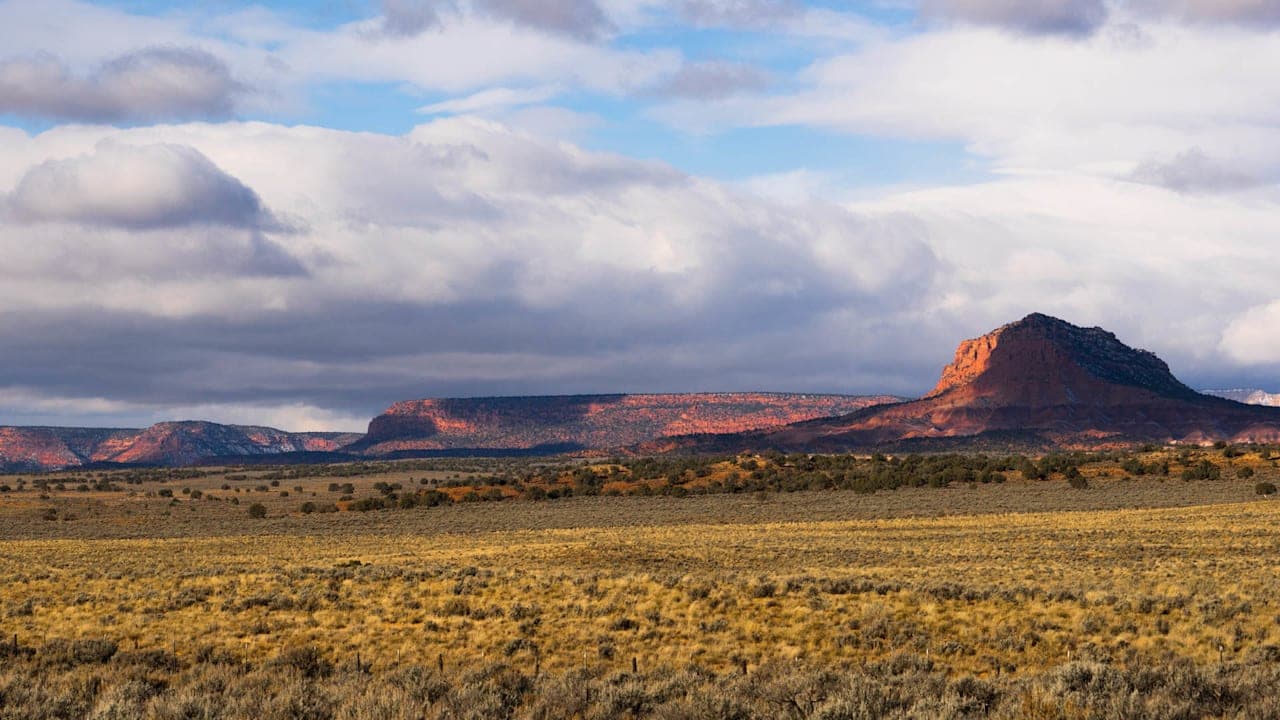
Utah Delegation Uses Unprecedented Tactic to Go After National Monument Plan
Utah legislators are using the Congressional Review Act (CRA) to go after the management plan for Grand Staircase-Escalante National Monument. Earlier this month, Senator Mike Lee and Utah’s congressional delegation introduced a joint resolution of approval seeking to overturn the 1.9 million-acre monument’s Resource Management Plan, which was instituted in January 2025. Grand Staircase-Escalante National Monument, which is located in Southern Utah and encompasses striking red-rock canyons and Native American art and ruins, has long been a spark point in the debate over public land management. The monument was first designated by President Clinton in 1996 under the Antiquities Act of 1906, which gives presidents the ability to designate national monuments “to provide general legal protection of cultural and natural resources of historic or scientific interest on federal lands.” Utah politicians, however, have long said that the designation was too large and that its restrictions on resource development were an unnecessary imposition on the local community, prompting the Trump Administration to halve the size of the monument in 2017. The Biden Administration restored its size in 2021, and that decision was upheld in court. Now, though, Grand Staircase-Escalante is again at the heart of the debate over how to best manage our public lands. “The Antiquities Act was written to protect specific objects and to reserve only the smallest area compatible with their protection,” said Lee in a press release. “Instead, we have a 1.9 million acre, sweeping land-use regime finalized in the last days of a failed president, with generational consequences for rural Utah communities.” Meanwhile, environmental advocates are slamming the move as an attempt to degrade public land management despite the current management plan being developed with feedback from diverse community members and stakeholders. “I would argue the plan could not be improved when it comes to outdoor access and the years of local input behind it,” Axie Navas, Director of Designation Campaigns for The Wilderness Society, told MeatEater. “Hunting is allowed in almost the entire monument. Recreational target shooting is allowed in 91% of the monument. Most of the monument is open to grazing, and grazing levels have remained steady since 1996…This plan protects our freedom to explore this special place.” Jay Banta, a former refuge manager for the Fish and Wildlife Service and a BHA life member, says hunting and fishing opportunities are plentiful within the monument, with opportunities to target species including brown trout, bighorn sheep, mule deer, elk, turkey, and small game. “There are some really unique hunting opportunities,” Banta said, who’s primarily hunted spring turkey in the designation. “I’ve hunted turkeys in seven or eight states, but there’s no place I’ve been where there are petroglyphs and rock arches and bridges in the middle of a red rock canyon—and really fun and challenging turkey hunting.” It’s not clear what, exactly, the Utah designation would like to overturn in the current management plan, considering its emphasis on preserving grazing and mixed-use recreational access. Though Utah lawmakers have not explicitly stated what they would like to be changed, Navas and other environmentalists suspect that opening up drilling and energy extraction within the monument are part of the motivation, given Lee’s history on public lands and the stated priorities of the Trump Administration. “What Lee and [Representative Celeste] Maloy seem to be doing what they are already on the record for doing: sowing chaos in our public land system and trying to dismantle it piece-by-piece,” Navas said. “That is the broader agenda that this seems to be a part of.” Larger Ramifications The fight over Grand Staircase-Escalante has broader ramifications than the isolated monument, largely because of Lee’s use of the CRA. Historically, the Congressional Review Act of 1996 has been sparingly used to overturn federally issued “rules.” Beginning in 2025, however, federal lawmakers have begun using the CRA untraditionally, invoking it for everything from dismantling BLM Resource Management Plans (RMPs) to the currently stalled attempt to undo a mining ban in the headwaters of the Boundary Waters. Now, the Lee is turning the tool against a national monument management plan for the first time in history. “This is precedent-setting and has never happened before,” Navas said. “It enables a handful of Washington politicians to come and swoop in and rewrite management for these beloved public lands.” Lee’s perspective is that “Congress does not surrender its oversight responsibility simply because an agency labels something a ‘plan’ rather than a ‘rule.’” However, one of the unknowns for using the CRA to strike a management plan is that it would forbid management agencies from issuing a new rule “that is substantially the same” as the old one. Sources tell MeatEater that how this would play out for a management plan is still unclear, considering its novel use and that most aspects of whatever new plan is instituted would almost certainly closely resemble many of the provisions in the old plan. This dynamic could open the door for litigation, particularly from industry groups. Under the CRA, a joint resolution requires both houses of Congress to act on it within 60 days, and it cannot be filibustered, meaning it requires a simple majority to pass. Consider making your voice heard on the issue by contacting your local legislators today.