2 stories credited to Orlando Weekly
Latest story Apr 17, 2026 · on ChamberLight since Apr 2026
A story can appear as several articles (copies of the same piece), so counts of stories and of articles differ.
Scores for Orlando Weekly
Writing quality not enough rated stories yet: 2 of 10. How it is measured
Scores last checked Sep 25, 2026.
Stories ChamberLight collected, by month
Stories credited to Orlando Weekly, by publication date. ChamberLight collects articles that mention the officials it tracks, so this shows its own coverage of this source, not how much the source publishes.
- Stories from Orlando Weekly
- Shaded: ChamberLight collected no stories, or almost none, from any outlet (a gap in its collection, not in the outlet’s publishing)
Show as a table
| Month | Stories | All outlets |
|---|---|---|
| April 2026 | 2 | 4,233 |
| May 2026 | 0 | none collected |
| June 2026 | 0 | none collected |
| July 2026 | 0 | none collected |
| August 2026 | 0 | 1 (collection gap) |
| September 2026 | 0 | 598 |
Top topics
Share of this source’s stories tagged with each topic. A story can carry several topics, so the shares do not add up to 100%.
- Budget/Spending2
100% of 2 stories · 30% across all outlets
- Ethics/Corruption2
100% of 2 stories · 56% across all outlets
- Healthcare1
50% of 2 stories · 7% across all outlets
- Voting Rights1
50% of 2 stories · 18% across all outlets
The thin mark on each bar is the topic’s share across all outlets.
Who they cover
Party of the officials these stories are mainly about, across all 6 officials named. A story counts once for each official it is mainly about, so the split is over 6 story–official pairs, from 2 stories.
- Republican50% · 3 pairs
- Party not recorded33% · 2 pairs
- Democrat17% · 1 pair
Most covered
Stories mainly about each official, and their share of the source’s 2 stories.
Article tone
ChamberLight’s article analysis assigns each story a tone toward the official it covers. It describes the coverage of that official, not Orlando Weekly’s stance, and reader votes do not change it. 2 stories.
- Good Look
- 0 (0%)
- Mixed
- 2 (100%)
- Informational
- 0 (0%)
- Bad Look
- 0 (0%)
Challenges to these scores
No one has challenged a score on this page yet. Anyone can; editors publish every outcome here.
Articles served from orlandoweekly.com
7
‘Shirtless in a hot tub with Kid Rock’: Democrats in Congress question RFK Jr. priorities
California Democratic Rep. Linda T. Sánchez at a House Ways and Means Committee hearing on April 16, 2026, shows a poster of Health and Human Services Secretary Robert F. Kennedy Jr. drinking milk in a hot tub with Kid Rock. Also pictured, from left, are Illinois Democratic Rep. Danny K. Davis, Alabama Democratic Rep. Terri A. Sewell, and Washington Democratic Rep. Suzan K. DelBene. Credit: Screenshot from committee webcast Health and Human Services Secretary Robert F. Kennedy, Jr. testified before Congress on Thursday that he’s not pleased with how spending cuts to programs that help lower-income Americans afford food will affect his efforts to bolster healthy eating habits. “Am I happy about the cuts? No, I’m not happy about the cuts,” Kennedy said during a lengthy hearing in front of the House Ways and Means Committee, one of several congressional panels he’ll testify before in the days ahead. Kennedy added that President Donald Trump and White House budget director Russ Vought also didn’t truly want to propose funding cuts to the Special Supplemental Nutrition Program for Women, Infants, and Children, often called WIC, and the Supplemental Nutrition Assistance Program, or SNAP. “Nobody wants to make the cuts. Russ Vought doesn’t want to make the cuts. President Trump doesn’t,” he said. “But we got a $39 trillion debt.” Wisconsin Democratic Rep. Gwen Moore, who asked the questions, then referenced comments Kennedy made earlier in the hearing about Froot Loops, when he said it “isn’t even a food. It’s just poison.” Moore noted the cereal is “a lot cheaper than good, healthy food.” Froot Loops includes a corn flour blend, sugar, wheat flour, whole grain oat flour, modified food starch and other ingredients. Trump advocates reductions for HHS The Trump administration’s budget request for the fiscal year set to begin on Oct. 1 proposes Congress increase defense spending by more than half a trillion dollars, accounting for a 43% boost, and that lawmakers cut domestic spending by 10%. It suggested Congress reduce spending at HHS by $15.8 billion, or 12.5%, to $111.1 billion, though lawmakers largely rejected proposed spending cuts to the department during last year’s government funding process. Vought testified earlier this week that the administration expects to ask Congress for additional defense spending for the war in Iran, though he said he couldn’t give lawmakers a ballpark estimate for how much that will add to the current request for $1.5 trillion in defense funding. Lawmakers questioned Kennedy about dozens of other issues throughout the hearing, including how he’s spoken about vaccines since being confirmed HHS secretary, the rise in measles cases throughout the country and comments Kennedy and Trump made about the possible causes of autism. Utah Republican Rep. Blake Moore, after sharing that his 10-year-old is on the autism spectrum, said he was “underwhelmed” by what the administration has released so far about possible causes. He also said that his wife was hurt by claims from Trump and Kennedy that women who take Tylenol when pregnant could increase the risk their children are later diagnosed with autism. “We don’t even know if she took Tylenol during her pregnancy, but that was a hurtful moment for her,” Blake Moore said. “And I just want to encourage the administration and your team to keep at it. And I think there’s more we can do here with low expectations.” Medical experts say that decades of research shows autism is the result of a combination of genetic and environmental factors. Measles death California Democratic Rep. Linda T. Sánchez questioned Kennedy about comments he made during his Senate confirmation hearing on vaccines, arguing that he hasn’t stuck to the commitments he made during that process. She then asked him if the measles vaccine could have prevented a boy from dying of the disease in Texas. “It’s possible, certainly,” Kennedy said. But, he repeatedly declined to answer a question from Sánchez about whether Trump approved the Centers for Disease Control and Prevention’s decision to remove a messaging campaign to encourage vaccination, even as she asked it several times. Sánchez then displayed a poster showing a photograph of Kennedy and Kid Rock to illustrate her discontent with his work so far as HHS Secretary. “Now, one thing that I find incredible is that you suspended this pro-vaccine messaging campaign. But somehow you’re spending taxpayer dollars to drink milk shirtless in a hot tub with Kid Rock,” she said. “And somehow you think that’s a better public health message than informing the public about the importance of vaccines.” Day care, Medicaid, Black maternal health Illinois Democratic Rep. Danny K. Davis pressed Kennedy about whether he agrees with a statement Trump made earlier this month when the president said, “We can’t take care of day care. It’s not possible for us to take care of day care. Medicaid, Medicare, all of these individual things. They can do it on a state basis. You can’t do it on a federal. We have to take care of one thing, military protection.” Kennedy responded that he was “told to make a 12% cut across our department” because the national debt, which has accumulated over decades, has reached $39 trillion. “We’re now having to tighten our belt,” Kennedy said. Davis also questioned Kennedy on funding and initiatives to reduce Black maternal mortality, saying “the Trump administration is undermining Black maternal health from all sides.” “The GOP slashed over a trillion dollars from Medicaid, which pays for over 40% of births in the United States. President Trump just proposed cutting maternal and child health programs by over $800 million,” he said. “DOGE canceled funds for several research projects that could save countless Black mothers, like the Morehouse School of Medicine research on improving the health of Black pregnant and postpartum women.” Kennedy responded by arguing that he and others in the Trump administration are “doing more to advance maternal health than any other administration in history.” “There was tremendous duplication in the departments. We had 42 different maternal health services in our department,” Kennedy said. “And we cut some of those and consolidated them. Right now, we are investing huge amounts of money in maternal health.” Florida Phoenix is part of States Newsroom, a nonprofit news network supported by grants and a coalition of donors as a 501c(3) public charity. Contact Michael Moline for questions: info@floridaphoenix.com. Follow Florida Phoenix on Facebook and Twitter. Subscribe to Orlando Weekly newsletters. Follow us: Apple News | Google News | NewsBreak | Reddit | Instagram | Facebook | Bluesky | Or sign up for our RSS Feed Related Stories The post ‘Shirtless in a hot tub with Kid Rock’: Democrats in Congress question RFK Jr. priorities appeared first on Orlando Weekly.
‘Shirtless in a hot tub with Kid Rock’: Democrats in Congress question RFK Jr. priorities
California Democratic Rep. Linda T. Sánchez at a House Ways and Means Committee hearing on April 16, 2026, shows a poster of Health and Human Services Secretary Robert F. Kennedy Jr. drinking milk in a hot tub with Kid Rock. Also pictured, from left, are Illinois Democratic Rep. Danny K. Davis, Alabama Democratic Rep. Terri A. Sewell, and Washington Democratic Rep. Suzan K. DelBene. Credit: Screenshot from committee webcast Health and Human Services Secretary Robert F. Kennedy, Jr. testified before Congress on Thursday that he’s not pleased with how spending cuts to programs that help lower-income Americans afford food will affect his efforts to bolster healthy eating habits. “Am I happy about the cuts? No, I’m not happy about the cuts,” Kennedy said during a lengthy hearing in front of the House Ways and Means Committee, one of several congressional panels he’ll testify before in the days ahead. Kennedy added that President Donald Trump and White House budget director Russ Vought also didn’t truly want to propose funding cuts to the Special Supplemental Nutrition Program for Women, Infants, and Children, often called WIC, and the Supplemental Nutrition Assistance Program, or SNAP. “Nobody wants to make the cuts. Russ Vought doesn’t want to make the cuts. President Trump doesn’t,” he said. “But we got a $39 trillion debt.” Wisconsin Democratic Rep. Gwen Moore, who asked the questions, then referenced comments Kennedy made earlier in the hearing about Froot Loops, when he said it “isn’t even a food. It’s just poison.” Moore noted the cereal is “a lot cheaper than good, healthy food.” Froot Loops includes a corn flour blend, sugar, wheat flour, whole grain oat flour, modified food starch and other ingredients. Trump advocates reductions for HHS The Trump administration’s budget request for the fiscal year set to begin on Oct. 1 proposes Congress increase defense spending by more than half a trillion dollars, accounting for a 43% boost, and that lawmakers cut domestic spending by 10%. It suggested Congress reduce spending at HHS by $15.8 billion, or 12.5%, to $111.1 billion, though lawmakers largely rejected proposed spending cuts to the department during last year’s government funding process. Vought testified earlier this week that the administration expects to ask Congress for additional defense spending for the war in Iran, though he said he couldn’t give lawmakers a ballpark estimate for how much that will add to the current request for $1.5 trillion in defense funding. Lawmakers questioned Kennedy about dozens of other issues throughout the hearing, including how he’s spoken about vaccines since being confirmed HHS secretary, the rise in measles cases throughout the country and comments Kennedy and Trump made about the possible causes of autism. Utah Republican Rep. Blake Moore, after sharing that his 10-year-old is on the autism spectrum, said he was “underwhelmed” by what the administration has released so far about possible causes. He also said that his wife was hurt by claims from Trump and Kennedy that women who take Tylenol when pregnant could increase the risk their children are later diagnosed with autism. “We don’t even know if she took Tylenol during her pregnancy, but that was a hurtful moment for her,” Blake Moore said. “And I just want to encourage the administration and your team to keep at it. And I think there’s more we can do here with low expectations.” Medical experts say that decades of research shows autism is the result of a combination of genetic and environmental factors. Measles death California Democratic Rep. Linda T. Sánchez questioned Kennedy about comments he made during his Senate confirmation hearing on vaccines, arguing that he hasn’t stuck to the commitments he made during that process. She then asked him if the measles vaccine could have prevented a boy from dying of the disease in Texas. “It’s possible, certainly,” Kennedy said. But, he repeatedly declined to answer a question from Sánchez about whether Trump approved the Centers for Disease Control and Prevention’s decision to remove a messaging campaign to encourage vaccination, even as she asked it several times. Sánchez then displayed a poster showing a photograph of Kennedy and Kid Rock to illustrate her discontent with his work so far as HHS Secretary. “Now, one thing that I find incredible is that you suspended this pro-vaccine messaging campaign. But somehow you’re spending taxpayer dollars to drink milk shirtless in a hot tub with Kid Rock,” she said. “And somehow you think that’s a better public health message than informing the public about the importance of vaccines.” Day care, Medicaid, Black maternal health Illinois Democratic Rep. Danny K. Davis pressed Kennedy about whether he agrees with a statement Trump made earlier this month when the president said, “We can’t take care of day care. It’s not possible for us to take care of day care. Medicaid, Medicare, all of these individual things. They can do it on a state basis. You can’t do it on a federal. We have to take care of one thing, military protection.” Kennedy responded that he was “told to make a 12% cut across our department” because the national debt, which has accumulated over decades, has reached $39 trillion. “We’re now having to tighten our belt,” Kennedy said. Davis also questioned Kennedy on funding and initiatives to reduce Black maternal mortality, saying “the Trump administration is undermining Black maternal health from all sides.” “The GOP slashed over a trillion dollars from Medicaid, which pays for over 40% of births in the United States. President Trump just proposed cutting maternal and child health programs by over $800 million,” he said. “DOGE canceled funds for several research projects that could save countless Black mothers, like the Morehouse School of Medicine research on improving the health of Black pregnant and postpartum women.” Kennedy responded by arguing that he and others in the Trump administration are “doing more to advance maternal health than any other administration in history.” “There was tremendous duplication in the departments. We had 42 different maternal health services in our department,” Kennedy said. “And we cut some of those and consolidated them. Right now, we are investing huge amounts of money in maternal health.” Florida Phoenix is part of States Newsroom, a nonprofit news network supported by grants and a coalition of donors as a 501c(3) public charity. Contact Michael Moline for questions: info@floridaphoenix.com. Follow Florida Phoenix on Facebook and Twitter. Subscribe to Orlando Weekly newsletters. Follow us: Apple News | Google News | NewsBreak | Reddit | Instagram | Facebook | Bluesky | Or sign up for our RSS Feed Related Stories The post ‘Shirtless in a hot tub with Kid Rock’: Democrats in Congress question RFK Jr. priorities appeared first on Orlando Weekly.
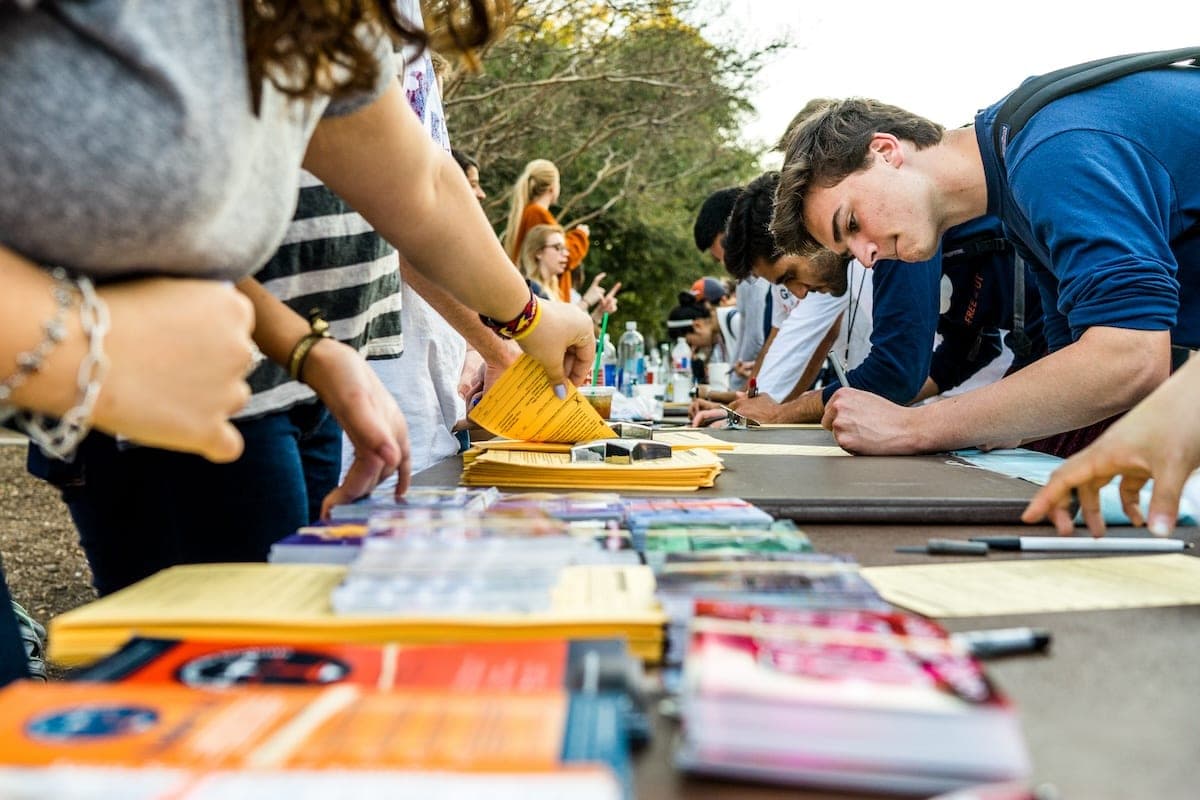
Trump’s SAVE America Act would end voter registration drives nationwide
Credit: Shutterstock Before Wyoming elections, the state’s League of Women Voters tries to get voter registration information into the hands of residents at events and gatherings. But under state law, League volunteers can’t sign up voters themselves — only local election officials can do that. “It’s been tough,” said Linda Barton, president of the League of Women Voters of Wyoming. She added that her group does its best to offer registration information. “We provide a lot of printed literature that we hand out all over the state.” Congress may take Wyoming’s approach nationwide. The SAVE America Act would effectively ban voter registration drives, a mainstay of college campuses and neighborhood events. The U.S. Senate began debating a version of President Donald Trump’s signature elections measure last month, after the House passed it in February. The legislation would require voters to show photo identification to cast a ballot. It would also require individuals to present documents proving their citizenship, such as a passport or birth certificate, to government officials in person to register to vote. Trump and Republican members of Congress have cast the proposal as necessary to secure elections and crack down on noncitizen voters ahead of the midterms. Democrats and other critics warn it risks disenfranchising wide swaths of Americans. Studies have shown noncitizen voting is extremely rare. In many states, civic groups have long provided applications to would-be voters that they can quickly fill out. During the 2024 election cycle, voter registration drives accounted for 3.7% of registrations, according to survey data from the federal Election Assistance Commission. While a small percentage, the figure still represents 2.1 million Americans. Twenty-four states and the District of Columbia placed no restrictions on voter registration drives as of November 2024, according to the Movement Advancement Project, a Colorado-based think tank. An additional 24 states impose some limits, while Wyoming and New Hampshire prohibit them. Bill would end registration drives nationwide Every form of voter registration drive would effectively end under the SAVE America Act as currently drafted in the Senate, said Brian Miller, executive director of NonprofitVOTE, which aids nonprofit organizations in helping individuals vote and participate in the democratic process. Community-based groups, universities, food pantries and others who help register voters would all be affected. “That’s the high school civics teacher who works with his graduating class … gone, they can’t do that anymore,” Miller said. NonprofitVOTE, working with 120 organizations across nine states, engaged 60,000 voters during the 2022 midterm cycle, according to a report by the group. It found that individuals reached by nonprofits were 10 percentage points more likely to cast a ballot than comparable registered voters. The effect was more pronounced among younger voters. Those ages 18 to 24 who were engaged by nonprofit groups were 12 percentage points more likely to cast a ballot than comparable registered voters. Hispanic Federation, a nationwide Hispanic and Latino advocacy group, says it has registered 160,000 voters since 2016. Frederick Vélez III Burgos, the federation’s senior director for communications and community outreach, said the organization works to register voters because of language and cultural barriers, work schedules and other factors that make the process challenging. “There’s just a group of people and communities that is just very difficult to get registered through normal means,” Burgos said. Top Trump priority Trump has made clear the SAVE America Act is his top legislative priority and he has urged Congress to pass the measure before moving to other business. While Republicans control both chambers of Congress, support for the proposal falls short of the 60 votes needed to break a filibuster in the Senate. “The SAVE Act would gut tried-and-true methods of voter registration, including registration by mail and registering online,” Senate Minority Leader Chuck Schumer, a New York Democrat, said earlier this year. Still, Senate Republican leaders in March kicked off an extended, wide-ranging debate over the bill. It remains unclear when the debate will end. Congress is scheduled to be in recess until mid-April. GOP proponents have dismissed concerns that the legislation would make registering to vote and casting a ballot difficult. Sen. Chuck Grassley, an Iowa Republican, said on the Senate floor that the bill offers multiple ways to prove citizenship and “gives states the flexibility to create other pathways to show proof of citizenship.” Grassley noted that his mother was one of the first women to cast a ballot after ratification of the 19th Amendment, which guaranteed women the right to vote. “The SAVE America Act doesn’t infringe on these hard-fought voting rights. It would preserve the integrity of every vote cast in a federal election,” Grassley said. Hard-to-reach voters Third-party voter registration drives date back to voter education and registration efforts by the National American Woman Suffrage Association, according to Joshua Douglas, a University of Kentucky law professor who specializes in voting rights and election law. The association eventually morphed into the League of Women Voters, which helped spearhead registration efforts following the 19th Amendment. Voter registration drives typically aid voters who may not otherwise have opportunities to register, Douglas wrote in an email to States Newsroom. They may not have a driver’s license or may not be thinking about registering. “There is a long history of civic organizations engaged in voter registration drives and this legislation would make that work harder,” Douglas wrote. Tom Lopach, president and CEO of the nonpartisan Voter Participation Center, an organization that works to register voters from underrepresented populations, said he fears some members of Congress haven’t fully read the bill or digested how it would affect voting. Since VPC was founded in 2003, it has helped register 7 million voters, Lopach said. “And that’s just us,” he said. “When you think about the League of Women Voters, when you think about in-person voter registration drives happening in a grocery store parking lot, or knocking doors in a neighborhood, you would have tens of millions of Americans not registered and then not voting.” States trending toward more restrictions Even if the SAVE America Act doesn’t become law, some states have taken steps to make voter registration drives more difficult. The Center for Public Integrity and NPR found in 2024 that at least six states had passed legislation cracking down on voter registration drives following the 2020 election. Some of the bills imposed massive fines for violations or barred noncitizens from participating. As recently as March, the North Carolina State Board of Elections announced it would require groups conducting voter registration drives to print their own registration forms. The board cited significant costs, after it provided nearly 1.3 million applications to organizations and government agencies in 2024 at a cost of more than $269,000. “Nothing about this temporary tightening of our practice surrounding voter registration drives changes the fact that any North Carolina citizen who wants a voter registration application will always be able to get one simply by contacting their county board of elections or the State Board,” Sam Hayes, the board’s executive director, told NC Newsline. Courts have blocked some state-level restrictions. A federal court prohibited Kansas from enforcing a 2021 law that barred out-of-state organizations from distributing advance mail ballot applications to voters and prohibited applications that contained personalized voter information. Kansas has appealed the decision. The Missouri Supreme Court last week ruled against a state law that prohibited groups like the League of Women Voters from using paid workers in voter registration drives. The state’s high court also struck down requirements that individuals who solicit more than 10 registration applications must register with the state and be Missouri voters. The law had also prohibited encouraging someone to obtain an absentee ballot. Kay Park, president of the League of Women Voters of Missouri, called the restrictions “ridiculous” and said that while they were in effect the organization did nothing with absentee ballots — such as suggesting an absentee ballot could be an option for someone with a disability, for instance. The League of Women Voters of Missouri holds voter registration drives in high schools, Park said. While Missouri residents must be 18 to vote, they can register once they’re 17 ½ years old. The SAVE America Act would effectively end those drives. If the legislation becomes law, Park said the Missouri league would likely focus more of its efforts on helping individuals obtain identification documents and birth certifications — something it’s already trying to do. “It just puts another cog in the wheel,” Park said. Wyoming model In Wyoming, Barton and her fellow League of Women Voters members are already grappling with a state-level proof-of-citizenship voter registration law passed last year, regardless of whether Congress passes the SAVE America Act. Residents who want to register to vote must visit a county clerk’s office and bring a valid passport or birth certificate. Wyoming also accepts REAL ID-compliant driver’s licenses and tribal IDs, as long as they do not indicate the individual is a noncitizen, and a few other documents, such as a naturalization certificate. Individuals may register by mail but must include copies of their documents along with a notarized application. The new state requirements were championed by Wyoming Secretary of State Chuck Gray, a Republican who is running for the state’s U.S. House seat. “As the chief election official of Wyoming that has experience with these common sense election integrity measures, I can tell you that the SAVE America Act will be easy for states to implement,” Gray wrote in a March 17 letter to Senate Majority Leader John Thune, a South Dakota Republican. Gray didn’t respond to questions from States Newsroom. Barton said without the option to hold voter registration drives, going to events and speaking to clubs and organizations like Rotary are imperative. “I just think that the only other choice is to be out there, communicating as much as possible,” she said. Florida Phoenix is part of States Newsroom, a nonprofit news network supported by grants and a coalition of donors as a 501c(3) public charity. Contact Michael Moline for questions: info@floridaphoenix.com. Follow Florida Phoenix on Facebook and Twitter. Subscribe to Orlando Weekly newsletters. Follow us: Apple News | Google News | NewsBreak | Reddit | Instagram | Facebook | Bluesky | Or sign up for our RSS Feed Related Stories The post Trump’s SAVE America Act would end voter registration drives nationwide appeared first on Orlando Weekly.
Trump’s SAVE America Act would end voter registration drives nationwide
Credit: Shutterstock Before Wyoming elections, the state’s League of Women Voters tries to get voter registration information into the hands of residents at events and gatherings. But under state law, League volunteers can’t sign up voters themselves — only local election officials can do that. “It’s been tough,” said Linda Barton, president of the League of Women Voters of Wyoming. She added that her group does its best to offer registration information. “We provide a lot of printed literature that we hand out all over the state.” Congress may take Wyoming’s approach nationwide. The SAVE America Act would effectively ban voter registration drives, a mainstay of college campuses and neighborhood events. The U.S. Senate began debating a version of President Donald Trump’s signature elections measure last month, after the House passed it in February. The legislation would require voters to show photo identification to cast a ballot. It would also require individuals to present documents proving their citizenship, such as a passport or birth certificate, to government officials in person to register to vote. Trump and Republican members of Congress have cast the proposal as necessary to secure elections and crack down on noncitizen voters ahead of the midterms. Democrats and other critics warn it risks disenfranchising wide swaths of Americans. Studies have shown noncitizen voting is extremely rare. In many states, civic groups have long provided applications to would-be voters that they can quickly fill out. During the 2024 election cycle, voter registration drives accounted for 3.7% of registrations, according to survey data from the federal Election Assistance Commission. While a small percentage, the figure still represents 2.1 million Americans. Twenty-four states and the District of Columbia placed no restrictions on voter registration drives as of November 2024, according to the Movement Advancement Project, a Colorado-based think tank. An additional 24 states impose some limits, while Wyoming and New Hampshire prohibit them. Bill would end registration drives nationwide Every form of voter registration drive would effectively end under the SAVE America Act as currently drafted in the Senate, said Brian Miller, executive director of NonprofitVOTE, which aids nonprofit organizations in helping individuals vote and participate in the democratic process. Community-based groups, universities, food pantries and others who help register voters would all be affected. “That’s the high school civics teacher who works with his graduating class … gone, they can’t do that anymore,” Miller said. NonprofitVOTE, working with 120 organizations across nine states, engaged 60,000 voters during the 2022 midterm cycle, according to a report by the group. It found that individuals reached by nonprofits were 10 percentage points more likely to cast a ballot than comparable registered voters. The effect was more pronounced among younger voters. Those ages 18 to 24 who were engaged by nonprofit groups were 12 percentage points more likely to cast a ballot than comparable registered voters. Hispanic Federation, a nationwide Hispanic and Latino advocacy group, says it has registered 160,000 voters since 2016. Frederick Vélez III Burgos, the federation’s senior director for communications and community outreach, said the organization works to register voters because of language and cultural barriers, work schedules and other factors that make the process challenging. “There’s just a group of people and communities that is just very difficult to get registered through normal means,” Burgos said. Top Trump priority Trump has made clear the SAVE America Act is his top legislative priority and he has urged Congress to pass the measure before moving to other business. While Republicans control both chambers of Congress, support for the proposal falls short of the 60 votes needed to break a filibuster in the Senate. “The SAVE Act would gut tried-and-true methods of voter registration, including registration by mail and registering online,” Senate Minority Leader Chuck Schumer, a New York Democrat, said earlier this year. Still, Senate Republican leaders in March kicked off an extended, wide-ranging debate over the bill. It remains unclear when the debate will end. Congress is scheduled to be in recess until mid-April. GOP proponents have dismissed concerns that the legislation would make registering to vote and casting a ballot difficult. Sen. Chuck Grassley, an Iowa Republican, said on the Senate floor that the bill offers multiple ways to prove citizenship and “gives states the flexibility to create other pathways to show proof of citizenship.” Grassley noted that his mother was one of the first women to cast a ballot after ratification of the 19th Amendment, which guaranteed women the right to vote. “The SAVE America Act doesn’t infringe on these hard-fought voting rights. It would preserve the integrity of every vote cast in a federal election,” Grassley said. Hard-to-reach voters Third-party voter registration drives date back to voter education and registration efforts by the National American Woman Suffrage Association, according to Joshua Douglas, a University of Kentucky law professor who specializes in voting rights and election law. The association eventually morphed into the League of Women Voters, which helped spearhead registration efforts following the 19th Amendment. Voter registration drives typically aid voters who may not otherwise have opportunities to register, Douglas wrote in an email to States Newsroom. They may not have a driver’s license or may not be thinking about registering. “There is a long history of civic organizations engaged in voter registration drives and this legislation would make that work harder,” Douglas wrote. Tom Lopach, president and CEO of the nonpartisan Voter Participation Center, an organization that works to register voters from underrepresented populations, said he fears some members of Congress haven’t fully read the bill or digested how it would affect voting. Since VPC was founded in 2003, it has helped register 7 million voters, Lopach said. “And that’s just us,” he said. “When you think about the League of Women Voters, when you think about in-person voter registration drives happening in a grocery store parking lot, or knocking doors in a neighborhood, you would have tens of millions of Americans not registered and then not voting.” States trending toward more restrictions Even if the SAVE America Act doesn’t become law, some states have taken steps to make voter registration drives more difficult. The Center for Public Integrity and NPR found in 2024 that at least six states had passed legislation cracking down on voter registration drives following the 2020 election. Some of the bills imposed massive fines for violations or barred noncitizens from participating. As recently as March, the North Carolina State Board of Elections announced it would require groups conducting voter registration drives to print their own registration forms. The board cited significant costs, after it provided nearly 1.3 million applications to organizations and government agencies in 2024 at a cost of more than $269,000. “Nothing about this temporary tightening of our practice surrounding voter registration drives changes the fact that any North Carolina citizen who wants a voter registration application will always be able to get one simply by contacting their county board of elections or the State Board,” Sam Hayes, the board’s executive director, told NC Newsline. Courts have blocked some state-level restrictions. A federal court prohibited Kansas from enforcing a 2021 law that barred out-of-state organizations from distributing advance mail ballot applications to voters and prohibited applications that contained personalized voter information. Kansas has appealed the decision. The Missouri Supreme Court last week ruled against a state law that prohibited groups like the League of Women Voters from using paid workers in voter registration drives. The state’s high court also struck down requirements that individuals who solicit more than 10 registration applications must register with the state and be Missouri voters. The law had also prohibited encouraging someone to obtain an absentee ballot. Kay Park, president of the League of Women Voters of Missouri, called the restrictions “ridiculous” and said that while they were in effect the organization did nothing with absentee ballots — such as suggesting an absentee ballot could be an option for someone with a disability, for instance. The League of Women Voters of Missouri holds voter registration drives in high schools, Park said. While Missouri residents must be 18 to vote, they can register once they’re 17 ½ years old. The SAVE America Act would effectively end those drives. If the legislation becomes law, Park said the Missouri league would likely focus more of its efforts on helping individuals obtain identification documents and birth certifications — something it’s already trying to do. “It just puts another cog in the wheel,” Park said. Wyoming model In Wyoming, Barton and her fellow League of Women Voters members are already grappling with a state-level proof-of-citizenship voter registration law passed last year, regardless of whether Congress passes the SAVE America Act. Residents who want to register to vote must visit a county clerk’s office and bring a valid passport or birth certificate. Wyoming also accepts REAL ID-compliant driver’s licenses and tribal IDs, as long as they do not indicate the individual is a noncitizen, and a few other documents, such as a naturalization certificate. Individuals may register by mail but must include copies of their documents along with a notarized application. The new state requirements were championed by Wyoming Secretary of State Chuck Gray, a Republican who is running for the state’s U.S. House seat. “As the chief election official of Wyoming that has experience with these common sense election integrity measures, I can tell you that the SAVE America Act will be easy for states to implement,” Gray wrote in a March 17 letter to Senate Majority Leader John Thune, a South Dakota Republican. Gray didn’t respond to questions from States Newsroom. Barton said without the option to hold voter registration drives, going to events and speaking to clubs and organizations like Rotary are imperative. “I just think that the only other choice is to be out there, communicating as much as possible,” she said. Florida Phoenix is part of States Newsroom, a nonprofit news network supported by grants and a coalition of donors as a 501c(3) public charity. Contact Michael Moline for questions: info@floridaphoenix.com. Follow Florida Phoenix on Facebook and Twitter. Subscribe to Orlando Weekly newsletters. Follow us: Apple News | Google News | NewsBreak | Reddit | Instagram | Facebook | Bluesky | Or sign up for our RSS Feed Related Stories The post Trump’s SAVE America Act would end voter registration drives nationwide appeared first on Orlando Weekly.
Trump’s SAVE America Act would end voter registration drives nationwide
Credit: Shutterstock Before Wyoming elections, the state’s League of Women Voters tries to get voter registration information into the hands of residents at events and gatherings. But under state law, League volunteers can’t sign up voters themselves — only local election officials can do that. “It’s been tough,” said Linda Barton, president of the League of Women Voters of Wyoming. She added that her group does its best to offer registration information. “We provide a lot of printed literature that we hand out all over the state.” Congress may take Wyoming’s approach nationwide. The SAVE America Act would effectively ban voter registration drives, a mainstay of college campuses and neighborhood events. The U.S. Senate began debating a version of President Donald Trump’s signature elections measure last month, after the House passed it in February. The legislation would require voters to show photo identification to cast a ballot. It would also require individuals to present documents proving their citizenship, such as a passport or birth certificate, to government officials in person to register to vote. Trump and Republican members of Congress have cast the proposal as necessary to secure elections and crack down on noncitizen voters ahead of the midterms. Democrats and other critics warn it risks disenfranchising wide swaths of Americans. Studies have shown noncitizen voting is extremely rare. In many states, civic groups have long provided applications to would-be voters that they can quickly fill out. During the 2024 election cycle, voter registration drives accounted for 3.7% of registrations, according to survey data from the federal Election Assistance Commission. While a small percentage, the figure still represents 2.1 million Americans. Twenty-four states and the District of Columbia placed no restrictions on voter registration drives as of November 2024, according to the Movement Advancement Project, a Colorado-based think tank. An additional 24 states impose some limits, while Wyoming and New Hampshire prohibit them. Bill would end registration drives nationwide Every form of voter registration drive would effectively end under the SAVE America Act as currently drafted in the Senate, said Brian Miller, executive director of NonprofitVOTE, which aids nonprofit organizations in helping individuals vote and participate in the democratic process. Community-based groups, universities, food pantries and others who help register voters would all be affected. “That’s the high school civics teacher who works with his graduating class … gone, they can’t do that anymore,” Miller said. NonprofitVOTE, working with 120 organizations across nine states, engaged 60,000 voters during the 2022 midterm cycle, according to a report by the group. It found that individuals reached by nonprofits were 10 percentage points more likely to cast a ballot than comparable registered voters. The effect was more pronounced among younger voters. Those ages 18 to 24 who were engaged by nonprofit groups were 12 percentage points more likely to cast a ballot than comparable registered voters. Hispanic Federation, a nationwide Hispanic and Latino advocacy group, says it has registered 160,000 voters since 2016. Frederick Vélez III Burgos, the federation’s senior director for communications and community outreach, said the organization works to register voters because of language and cultural barriers, work schedules and other factors that make the process challenging. “There’s just a group of people and communities that is just very difficult to get registered through normal means,” Burgos said. Top Trump priority Trump has made clear the SAVE America Act is his top legislative priority and he has urged Congress to pass the measure before moving to other business. While Republicans control both chambers of Congress, support for the proposal falls short of the 60 votes needed to break a filibuster in the Senate. “The SAVE Act would gut tried-and-true methods of voter registration, including registration by mail and registering online,” Senate Minority Leader Chuck Schumer, a New York Democrat, said earlier this year. Still, Senate Republican leaders in March kicked off an extended, wide-ranging debate over the bill. It remains unclear when the debate will end. Congress is scheduled to be in recess until mid-April. GOP proponents have dismissed concerns that the legislation would make registering to vote and casting a ballot difficult. Sen. Chuck Grassley, an Iowa Republican, said on the Senate floor that the bill offers multiple ways to prove citizenship and “gives states the flexibility to create other pathways to show proof of citizenship.” Grassley noted that his mother was one of the first women to cast a ballot after ratification of the 19th Amendment, which guaranteed women the right to vote. “The SAVE America Act doesn’t infringe on these hard-fought voting rights. It would preserve the integrity of every vote cast in a federal election,” Grassley said. Hard-to-reach voters Third-party voter registration drives date back to voter education and registration efforts by the National American Woman Suffrage Association, according to Joshua Douglas, a University of Kentucky law professor who specializes in voting rights and election law. The association eventually morphed into the League of Women Voters, which helped spearhead registration efforts following the 19th Amendment. Voter registration drives typically aid voters who may not otherwise have opportunities to register, Douglas wrote in an email to States Newsroom. They may not have a driver’s license or may not be thinking about registering. “There is a long history of civic organizations engaged in voter registration drives and this legislation would make that work harder,” Douglas wrote. Tom Lopach, president and CEO of the nonpartisan Voter Participation Center, an organization that works to register voters from underrepresented populations, said he fears some members of Congress haven’t fully read the bill or digested how it would affect voting. Since VPC was founded in 2003, it has helped register 7 million voters, Lopach said. “And that’s just us,” he said. “When you think about the League of Women Voters, when you think about in-person voter registration drives happening in a grocery store parking lot, or knocking doors in a neighborhood, you would have tens of millions of Americans not registered and then not voting.” States trending toward more restrictions Even if the SAVE America Act doesn’t become law, some states have taken steps to make voter registration drives more difficult. The Center for Public Integrity and NPR found in 2024 that at least six states had passed legislation cracking down on voter registration drives following the 2020 election. Some of the bills imposed massive fines for violations or barred noncitizens from participating. As recently as March, the North Carolina State Board of Elections announced it would require groups conducting voter registration drives to print their own registration forms. The board cited significant costs, after it provided nearly 1.3 million applications to organizations and government agencies in 2024 at a cost of more than $269,000. “Nothing about this temporary tightening of our practice surrounding voter registration drives changes the fact that any North Carolina citizen who wants a voter registration application will always be able to get one simply by contacting their county board of elections or the State Board,” Sam Hayes, the board’s executive director, told NC Newsline. Courts have blocked some state-level restrictions. A federal court prohibited Kansas from enforcing a 2021 law that barred out-of-state organizations from distributing advance mail ballot applications to voters and prohibited applications that contained personalized voter information. Kansas has appealed the decision. The Missouri Supreme Court last week ruled against a state law that prohibited groups like the League of Women Voters from using paid workers in voter registration drives. The state’s high court also struck down requirements that individuals who solicit more than 10 registration applications must register with the state and be Missouri voters. The law had also prohibited encouraging someone to obtain an absentee ballot. Kay Park, president of the League of Women Voters of Missouri, called the restrictions “ridiculous” and said that while they were in effect the organization did nothing with absentee ballots — such as suggesting an absentee ballot could be an option for someone with a disability, for instance. The League of Women Voters of Missouri holds voter registration drives in high schools, Park said. While Missouri residents must be 18 to vote, they can register once they’re 17 ½ years old. The SAVE America Act would effectively end those drives. If the legislation becomes law, Park said the Missouri league would likely focus more of its efforts on helping individuals obtain identification documents and birth certifications — something it’s already trying to do. “It just puts another cog in the wheel,” Park said. Wyoming model In Wyoming, Barton and her fellow League of Women Voters members are already grappling with a state-level proof-of-citizenship voter registration law passed last year, regardless of whether Congress passes the SAVE America Act. Residents who want to register to vote must visit a county clerk’s office and bring a valid passport or birth certificate. Wyoming also accepts REAL ID-compliant driver’s licenses and tribal IDs, as long as they do not indicate the individual is a noncitizen, and a few other documents, such as a naturalization certificate. Individuals may register by mail but must include copies of their documents along with a notarized application. The new state requirements were championed by Wyoming Secretary of State Chuck Gray, a Republican who is running for the state’s U.S. House seat. “As the chief election official of Wyoming that has experience with these common sense election integrity measures, I can tell you that the SAVE America Act will be easy for states to implement,” Gray wrote in a March 17 letter to Senate Majority Leader John Thune, a South Dakota Republican. Gray didn’t respond to questions from States Newsroom. Barton said without the option to hold voter registration drives, going to events and speaking to clubs and organizations like Rotary are imperative. “I just think that the only other choice is to be out there, communicating as much as possible,” she said. Florida Phoenix is part of States Newsroom, a nonprofit news network supported by grants and a coalition of donors as a 501c(3) public charity. Contact Michael Moline for questions: info@floridaphoenix.com. Follow Florida Phoenix on Facebook and Twitter. Subscribe to Orlando Weekly newsletters. Follow us: Apple News | Google News | NewsBreak | Reddit | Instagram | Facebook | Bluesky | Or sign up for our RSS Feed Related Stories The post Trump’s SAVE America Act would end voter registration drives nationwide appeared first on Orlando Weekly.
Trump’s SAVE America Act would end voter registration drives nationwide
Credit: Shutterstock Before Wyoming elections, the state’s League of Women Voters tries to get voter registration information into the hands of residents at events and gatherings. But under state law, League volunteers can’t sign up voters themselves — only local election officials can do that. “It’s been tough,” said Linda Barton, president of the League of Women Voters of Wyoming. She added that her group does its best to offer registration information. “We provide a lot of printed literature that we hand out all over the state.” Congress may take Wyoming’s approach nationwide. The SAVE America Act would effectively ban voter registration drives, a mainstay of college campuses and neighborhood events. The U.S. Senate began debating a version of President Donald Trump’s signature elections measure last month, after the House passed it in February. The legislation would require voters to show photo identification to cast a ballot. It would also require individuals to present documents proving their citizenship, such as a passport or birth certificate, to government officials in person to register to vote. Trump and Republican members of Congress have cast the proposal as necessary to secure elections and crack down on noncitizen voters ahead of the midterms. Democrats and other critics warn it risks disenfranchising wide swaths of Americans. Studies have shown noncitizen voting is extremely rare. In many states, civic groups have long provided applications to would-be voters that they can quickly fill out. During the 2024 election cycle, voter registration drives accounted for 3.7% of registrations, according to survey data from the federal Election Assistance Commission. While a small percentage, the figure still represents 2.1 million Americans. Twenty-four states and the District of Columbia placed no restrictions on voter registration drives as of November 2024, according to the Movement Advancement Project, a Colorado-based think tank. An additional 24 states impose some limits, while Wyoming and New Hampshire prohibit them. Bill would end registration drives nationwide Every form of voter registration drive would effectively end under the SAVE America Act as currently drafted in the Senate, said Brian Miller, executive director of NonprofitVOTE, which aids nonprofit organizations in helping individuals vote and participate in the democratic process. Community-based groups, universities, food pantries and others who help register voters would all be affected. “That’s the high school civics teacher who works with his graduating class … gone, they can’t do that anymore,” Miller said. NonprofitVOTE, working with 120 organizations across nine states, engaged 60,000 voters during the 2022 midterm cycle, according to a report by the group. It found that individuals reached by nonprofits were 10 percentage points more likely to cast a ballot than comparable registered voters. The effect was more pronounced among younger voters. Those ages 18 to 24 who were engaged by nonprofit groups were 12 percentage points more likely to cast a ballot than comparable registered voters. Hispanic Federation, a nationwide Hispanic and Latino advocacy group, says it has registered 160,000 voters since 2016. Frederick Vélez III Burgos, the federation’s senior director for communications and community outreach, said the organization works to register voters because of language and cultural barriers, work schedules and other factors that make the process challenging. “There’s just a group of people and communities that is just very difficult to get registered through normal means,” Burgos said. Top Trump priority Trump has made clear the SAVE America Act is his top legislative priority and he has urged Congress to pass the measure before moving to other business. While Republicans control both chambers of Congress, support for the proposal falls short of the 60 votes needed to break a filibuster in the Senate. “The SAVE Act would gut tried-and-true methods of voter registration, including registration by mail and registering online,” Senate Minority Leader Chuck Schumer, a New York Democrat, said earlier this year. Still, Senate Republican leaders in March kicked off an extended, wide-ranging debate over the bill. It remains unclear when the debate will end. Congress is scheduled to be in recess until mid-April. GOP proponents have dismissed concerns that the legislation would make registering to vote and casting a ballot difficult. Sen. Chuck Grassley, an Iowa Republican, said on the Senate floor that the bill offers multiple ways to prove citizenship and “gives states the flexibility to create other pathways to show proof of citizenship.” Grassley noted that his mother was one of the first women to cast a ballot after ratification of the 19th Amendment, which guaranteed women the right to vote. “The SAVE America Act doesn’t infringe on these hard-fought voting rights. It would preserve the integrity of every vote cast in a federal election,” Grassley said. Hard-to-reach voters Third-party voter registration drives date back to voter education and registration efforts by the National American Woman Suffrage Association, according to Joshua Douglas, a University of Kentucky law professor who specializes in voting rights and election law. The association eventually morphed into the League of Women Voters, which helped spearhead registration efforts following the 19th Amendment. Voter registration drives typically aid voters who may not otherwise have opportunities to register, Douglas wrote in an email to States Newsroom. They may not have a driver’s license or may not be thinking about registering. “There is a long history of civic organizations engaged in voter registration drives and this legislation would make that work harder,” Douglas wrote. Tom Lopach, president and CEO of the nonpartisan Voter Participation Center, an organization that works to register voters from underrepresented populations, said he fears some members of Congress haven’t fully read the bill or digested how it would affect voting. Since VPC was founded in 2003, it has helped register 7 million voters, Lopach said. “And that’s just us,” he said. “When you think about the League of Women Voters, when you think about in-person voter registration drives happening in a grocery store parking lot, or knocking doors in a neighborhood, you would have tens of millions of Americans not registered and then not voting.” States trending toward more restrictions Even if the SAVE America Act doesn’t become law, some states have taken steps to make voter registration drives more difficult. The Center for Public Integrity and NPR found in 2024 that at least six states had passed legislation cracking down on voter registration drives following the 2020 election. Some of the bills imposed massive fines for violations or barred noncitizens from participating. As recently as March, the North Carolina State Board of Elections announced it would require groups conducting voter registration drives to print their own registration forms. The board cited significant costs, after it provided nearly 1.3 million applications to organizations and government agencies in 2024 at a cost of more than $269,000. “Nothing about this temporary tightening of our practice surrounding voter registration drives changes the fact that any North Carolina citizen who wants a voter registration application will always be able to get one simply by contacting their county board of elections or the State Board,” Sam Hayes, the board’s executive director, told NC Newsline. Courts have blocked some state-level restrictions. A federal court prohibited Kansas from enforcing a 2021 law that barred out-of-state organizations from distributing advance mail ballot applications to voters and prohibited applications that contained personalized voter information. Kansas has appealed the decision. The Missouri Supreme Court last week ruled against a state law that prohibited groups like the League of Women Voters from using paid workers in voter registration drives. The state’s high court also struck down requirements that individuals who solicit more than 10 registration applications must register with the state and be Missouri voters. The law had also prohibited encouraging someone to obtain an absentee ballot. Kay Park, president of the League of Women Voters of Missouri, called the restrictions “ridiculous” and said that while they were in effect the organization did nothing with absentee ballots — such as suggesting an absentee ballot could be an option for someone with a disability, for instance. The League of Women Voters of Missouri holds voter registration drives in high schools, Park said. While Missouri residents must be 18 to vote, they can register once they’re 17 ½ years old. The SAVE America Act would effectively end those drives. If the legislation becomes law, Park said the Missouri league would likely focus more of its efforts on helping individuals obtain identification documents and birth certifications — something it’s already trying to do. “It just puts another cog in the wheel,” Park said. Wyoming model In Wyoming, Barton and her fellow League of Women Voters members are already grappling with a state-level proof-of-citizenship voter registration law passed last year, regardless of whether Congress passes the SAVE America Act. Residents who want to register to vote must visit a county clerk’s office and bring a valid passport or birth certificate. Wyoming also accepts REAL ID-compliant driver’s licenses and tribal IDs, as long as they do not indicate the individual is a noncitizen, and a few other documents, such as a naturalization certificate. Individuals may register by mail but must include copies of their documents along with a notarized application. The new state requirements were championed by Wyoming Secretary of State Chuck Gray, a Republican who is running for the state’s U.S. House seat. “As the chief election official of Wyoming that has experience with these common sense election integrity measures, I can tell you that the SAVE America Act will be easy for states to implement,” Gray wrote in a March 17 letter to Senate Majority Leader John Thune, a South Dakota Republican. Gray didn’t respond to questions from States Newsroom. Barton said without the option to hold voter registration drives, going to events and speaking to clubs and organizations like Rotary are imperative. “I just think that the only other choice is to be out there, communicating as much as possible,” she said. Florida Phoenix is part of States Newsroom, a nonprofit news network supported by grants and a coalition of donors as a 501c(3) public charity. Contact Michael Moline for questions: info@floridaphoenix.com. Follow Florida Phoenix on Facebook and Twitter. Subscribe to Orlando Weekly newsletters. Follow us: Apple News | Google News | NewsBreak | Reddit | Instagram | Facebook | Bluesky | Or sign up for our RSS Feed Related Stories The post Trump’s SAVE America Act would end voter registration drives nationwide appeared first on Orlando Weekly.
Trump’s SAVE America Act would end voter registration drives nationwide
Credit: Shutterstock Before Wyoming elections, the state’s League of Women Voters tries to get voter registration information into the hands of residents at events and gatherings. But under state law, League volunteers can’t sign up voters themselves — only local election officials can do that. “It’s been tough,” said Linda Barton, president of the League of Women Voters of Wyoming. She added that her group does its best to offer registration information. “We provide a lot of printed literature that we hand out all over the state.” Congress may take Wyoming’s approach nationwide. The SAVE America Act would effectively ban voter registration drives, a mainstay of college campuses and neighborhood events. The U.S. Senate began debating a version of President Donald Trump’s signature elections measure last month, after the House passed it in February. The legislation would require voters to show photo identification to cast a ballot. It would also require individuals to present documents proving their citizenship, such as a passport or birth certificate, to government officials in person to register to vote. Trump and Republican members of Congress have cast the proposal as necessary to secure elections and crack down on noncitizen voters ahead of the midterms. Democrats and other critics warn it risks disenfranchising wide swaths of Americans. Studies have shown noncitizen voting is extremely rare. In many states, civic groups have long provided applications to would-be voters that they can quickly fill out. During the 2024 election cycle, voter registration drives accounted for 3.7% of registrations, according to survey data from the federal Election Assistance Commission. While a small percentage, the figure still represents 2.1 million Americans. Twenty-four states and the District of Columbia placed no restrictions on voter registration drives as of November 2024, according to the Movement Advancement Project, a Colorado-based think tank. An additional 24 states impose some limits, while Wyoming and New Hampshire prohibit them. Bill would end registration drives nationwide Every form of voter registration drive would effectively end under the SAVE America Act as currently drafted in the Senate, said Brian Miller, executive director of NonprofitVOTE, which aids nonprofit organizations in helping individuals vote and participate in the democratic process. Community-based groups, universities, food pantries and others who help register voters would all be affected. “That’s the high school civics teacher who works with his graduating class … gone, they can’t do that anymore,” Miller said. NonprofitVOTE, working with 120 organizations across nine states, engaged 60,000 voters during the 2022 midterm cycle, according to a report by the group. It found that individuals reached by nonprofits were 10 percentage points more likely to cast a ballot than comparable registered voters. The effect was more pronounced among younger voters. Those ages 18 to 24 who were engaged by nonprofit groups were 12 percentage points more likely to cast a ballot than comparable registered voters. Hispanic Federation, a nationwide Hispanic and Latino advocacy group, says it has registered 160,000 voters since 2016. Frederick Vélez III Burgos, the federation’s senior director for communications and community outreach, said the organization works to register voters because of language and cultural barriers, work schedules and other factors that make the process challenging. “There’s just a group of people and communities that is just very difficult to get registered through normal means,” Burgos said. Top Trump priority Trump has made clear the SAVE America Act is his top legislative priority and he has urged Congress to pass the measure before moving to other business. While Republicans control both chambers of Congress, support for the proposal falls short of the 60 votes needed to break a filibuster in the Senate. “The SAVE Act would gut tried-and-true methods of voter registration, including registration by mail and registering online,” Senate Minority Leader Chuck Schumer, a New York Democrat, said earlier this year. Still, Senate Republican leaders in March kicked off an extended, wide-ranging debate over the bill. It remains unclear when the debate will end. Congress is scheduled to be in recess until mid-April. GOP proponents have dismissed concerns that the legislation would make registering to vote and casting a ballot difficult. Sen. Chuck Grassley, an Iowa Republican, said on the Senate floor that the bill offers multiple ways to prove citizenship and “gives states the flexibility to create other pathways to show proof of citizenship.” Grassley noted that his mother was one of the first women to cast a ballot after ratification of the 19th Amendment, which guaranteed women the right to vote. “The SAVE America Act doesn’t infringe on these hard-fought voting rights. It would preserve the integrity of every vote cast in a federal election,” Grassley said. Hard-to-reach voters Third-party voter registration drives date back to voter education and registration efforts by the National American Woman Suffrage Association, according to Joshua Douglas, a University of Kentucky law professor who specializes in voting rights and election law. The association eventually morphed into the League of Women Voters, which helped spearhead registration efforts following the 19th Amendment. Voter registration drives typically aid voters who may not otherwise have opportunities to register, Douglas wrote in an email to States Newsroom. They may not have a driver’s license or may not be thinking about registering. “There is a long history of civic organizations engaged in voter registration drives and this legislation would make that work harder,” Douglas wrote. Tom Lopach, president and CEO of the nonpartisan Voter Participation Center, an organization that works to register voters from underrepresented populations, said he fears some members of Congress haven’t fully read the bill or digested how it would affect voting. Since VPC was founded in 2003, it has helped register 7 million voters, Lopach said. “And that’s just us,” he said. “When you think about the League of Women Voters, when you think about in-person voter registration drives happening in a grocery store parking lot, or knocking doors in a neighborhood, you would have tens of millions of Americans not registered and then not voting.” States trending toward more restrictions Even if the SAVE America Act doesn’t become law, some states have taken steps to make voter registration drives more difficult. The Center for Public Integrity and NPR found in 2024 that at least six states had passed legislation cracking down on voter registration drives following the 2020 election. Some of the bills imposed massive fines for violations or barred noncitizens from participating. As recently as March, the North Carolina State Board of Elections announced it would require groups conducting voter registration drives to print their own registration forms. The board cited significant costs, after it provided nearly 1.3 million applications to organizations and government agencies in 2024 at a cost of more than $269,000. “Nothing about this temporary tightening of our practice surrounding voter registration drives changes the fact that any North Carolina citizen who wants a voter registration application will always be able to get one simply by contacting their county board of elections or the State Board,” Sam Hayes, the board’s executive director, told NC Newsline. Courts have blocked some state-level restrictions. A federal court prohibited Kansas from enforcing a 2021 law that barred out-of-state organizations from distributing advance mail ballot applications to voters and prohibited applications that contained personalized voter information. Kansas has appealed the decision. The Missouri Supreme Court last week ruled against a state law that prohibited groups like the League of Women Voters from using paid workers in voter registration drives. The state’s high court also struck down requirements that individuals who solicit more than 10 registration applications must register with the state and be Missouri voters. The law had also prohibited encouraging someone to obtain an absentee ballot. Kay Park, president of the League of Women Voters of Missouri, called the restrictions “ridiculous” and said that while they were in effect the organization did nothing with absentee ballots — such as suggesting an absentee ballot could be an option for someone with a disability, for instance. The League of Women Voters of Missouri holds voter registration drives in high schools, Park said. While Missouri residents must be 18 to vote, they can register once they’re 17 ½ years old. The SAVE America Act would effectively end those drives. If the legislation becomes law, Park said the Missouri league would likely focus more of its efforts on helping individuals obtain identification documents and birth certifications — something it’s already trying to do. “It just puts another cog in the wheel,” Park said. Wyoming model In Wyoming, Barton and her fellow League of Women Voters members are already grappling with a state-level proof-of-citizenship voter registration law passed last year, regardless of whether Congress passes the SAVE America Act. Residents who want to register to vote must visit a county clerk’s office and bring a valid passport or birth certificate. Wyoming also accepts REAL ID-compliant driver’s licenses and tribal IDs, as long as they do not indicate the individual is a noncitizen, and a few other documents, such as a naturalization certificate. Individuals may register by mail but must include copies of their documents along with a notarized application. The new state requirements were championed by Wyoming Secretary of State Chuck Gray, a Republican who is running for the state’s U.S. House seat. “As the chief election official of Wyoming that has experience with these common sense election integrity measures, I can tell you that the SAVE America Act will be easy for states to implement,” Gray wrote in a March 17 letter to Senate Majority Leader John Thune, a South Dakota Republican. Gray didn’t respond to questions from States Newsroom. Barton said without the option to hold voter registration drives, going to events and speaking to clubs and organizations like Rotary are imperative. “I just think that the only other choice is to be out there, communicating as much as possible,” she said. Florida Phoenix is part of States Newsroom, a nonprofit news network supported by grants and a coalition of donors as a 501c(3) public charity. Contact Michael Moline for questions: info@floridaphoenix.com. Follow Florida Phoenix on Facebook and Twitter. Subscribe to Orlando Weekly newsletters. Follow us: Apple News | Google News | NewsBreak | Reddit | Instagram | Facebook | Bluesky | Or sign up for our RSS Feed Related Stories The post Trump’s SAVE America Act would end voter registration drives nationwide appeared first on Orlando Weekly.