7 stories credited to Now Georgia
Latest story Sep 23, 2026 · on ChamberLight since Apr 2026
A story can appear as several articles (copies of the same piece), so counts of stories and of articles differ.
Scores for Now Georgia
Writing quality not enough rated stories yet: 6 of 10. How it is measured
Scores last checked Sep 24, 2026.
Stories ChamberLight collected, by month
Stories credited to Now Georgia, by publication date. ChamberLight collects articles that mention the officials it tracks, so this shows its own coverage of this source, not how much the source publishes.
- Stories from Now Georgia
- Shaded: ChamberLight collected no stories, or almost none, from any outlet (a gap in its collection, not in the outlet’s publishing)
Show as a table
| Month | Stories | All outlets |
|---|---|---|
| March 2026 | 1 | 148 |
| April 2026 | 4 | 4,537 |
| May 2026 | 0 | none collected |
| June 2026 | 0 | none collected |
| July 2026 | 0 | none collected |
| August 2026 | 0 | 1 (collection gap) |
| September 2026 | 2 | 598 |
Top topics
Share of this source’s stories tagged with each topic. A story can carry several topics, so the shares do not add up to 100%.
- Budget/Spending3
43% of 7 stories · 33% across all outlets
- Infrastructure3
43% of 7 stories · 8% across all outlets
- Defense/Military2
29% of 7 stories · 26% across all outlets
- Economy2
29% of 7 stories · 26% across all outlets
- Ethics/Corruption2
29% of 7 stories · 62% across all outlets
- Foreign Policy2
29% of 7 stories · 30% across all outlets
- Immigration2
29% of 7 stories · 13% across all outlets
- Technology/Privacy2
29% of 7 stories · 10% across all outlets
The thin mark on each bar is the topic’s share across all outlets.
Who they cover
Party of the officials these stories are mainly about, across all 13 officials named. A story counts once for each official it is mainly about, so the split is over 16 story–official pairs, from 7 stories.
- Republican69% · 11 pairs
- Democrat25% · 4 pairs
- Party not recorded6% · 1 pair
Most covered
Stories mainly about each official, and their share of the source’s 7 stories.
- 1Donald TrumpR3 stories · 43%
- 2Raphael WarnockD2 stories · 29%
- 3Andrew ClydeR1 story · 14%
- 4Charles SchumerD1 story · 14%
- 5J. VanceR1 story · 14%
- 6John HoevenR1 story · 14%
- 7Jon HustedR1 story · 14%
- 8Jon OssoffD1 story · 14%
- 9Kristi NoemR1 story · 14%
- 10Marjorie Taylor Greene–1 story · 14%
+ 3 other officials (3 story–official pairs)
Article tone
ChamberLight’s article analysis assigns each story a tone toward the official it covers. It describes the coverage of that official, not Now Georgia’s stance, and reader votes do not change it. 7 stories.
- Good Look
- 3 (43%)
- Mixed
- 3 (43%)
- Informational
- 0 (0%)
- Bad Look
- 1 (14%)
Challenges to these scores
No one has challenged a score on this page yet. Anyone can; editors publish every outcome here.
Articles served from nowgeorgia.com
16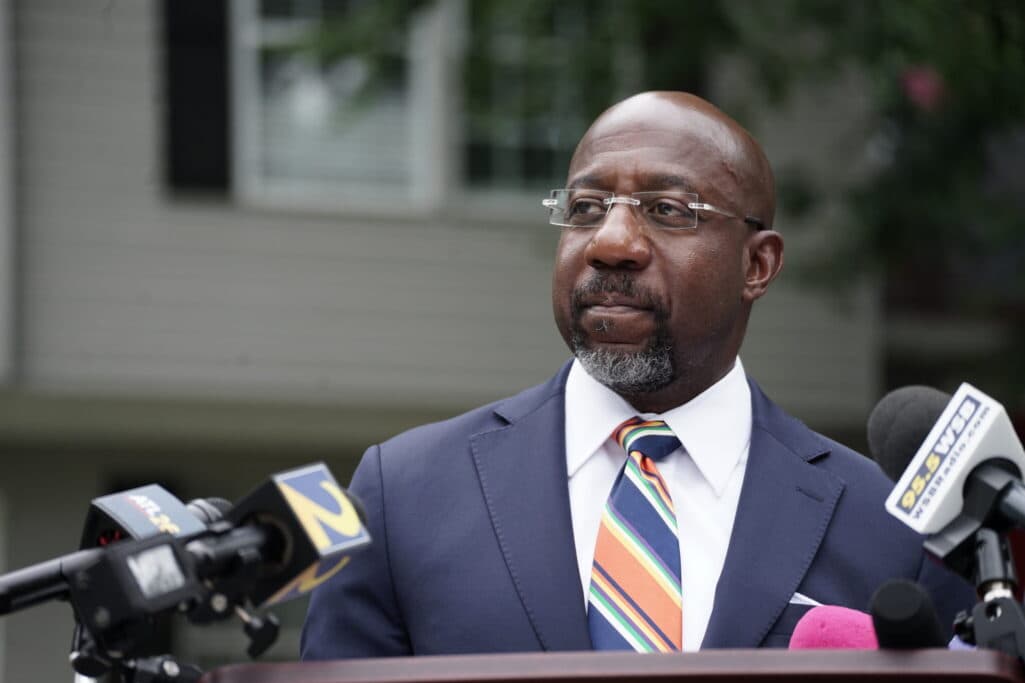
Warnock urges greater federal oversight of automatic license plate readers
Warnock urges greater federal oversight of automatic license plate readers (Georgia Recorder) — U.S. Sen. Raphael Warnock is calling for federal guardrails around the use of automatic license plate readers, citing multiple cases of law enforcement misusing the cameras to stalk and harass U.S. citizens. Warnock, a Democrat, is teaming up with U.S. Sen. Katie Britt, an Alaba…

Midterms could deliver verdict on data centers
Midterms could deliver verdict on data centers WASHINGTON — The rare 2026 issue that draws huge support from Republicans and Democrats in Congress is the same one that’s mobilized many Americans: restrictions on giant data centers. The House has overwhelmingly passed legislation forcing state regulators to consider requirements that data centers…

US House narrowly defeats resolution limiting Trump war powers
WASHINGTON (States News) — The approval gap on President Donald Trump’s war in Iran narrowed slightly Thursday in the U.S. House, when a War Powers Resolution gained a handful of votes, though still falling just short of passage. The effort to force Trump to seek congressional authorization before further action in Iran failed 213-214, with one Republican voting present — shrinking the daylight compared to a 212-219 result in early March. Democrats Greg Landsman of Ohio, Juan Vargas of California and Henry Cuellar of Texas flipped to vote in favor of the resolution brought to the floor by Rep. Gregory Meeks, D-N.Y. Rep. Jared Golden, D-Maine, remained the only Democrat in opposition. As he did in early March, Rep. Thomas Massie, R-Ky., supported curtailing Trump’s military operations in the Middle East without further approval from Congress. Rep. Warren Davidson, R-Ohio, switched his support from last month’s “yes” vote to “present” Thursday. The vote occurred one day after the Senate rejected a similar proposal, for the fourth time. The Senate’s vote margin has remained unchanged, with the exception of a couple absences. Ceasefire between Israel and Lebanon The vote also happened minutes after Trump announced on his social media platform Truth Social a 10-day ceasefire between Israel and Lebanon, a separate deadly war front that flared just days after the United States and Israel launched their Feb. 28 joint strikes on Iran. The U.S. and Iran, meanwhile, are more than halfway through a two-week ceasefire that began on tenuous ground on April 7. Talks with the Iranians, led by Vice President JD Vance, collapsed Saturday in Islamabad, Pakistan. The war is “very close to being over,” Trump told Fox Business host Maria Bartiromo Wednesday. Trump told the New York Post Tuesday that Iran-U.S. peace talks could pick up again “over the next two days.” Secretary of Defense Pete Hegseth said Thursday the U.S. military remains “locked and loaded” on Iran’s “critical dual use infrastructure,” including power plants and energy infrastructure, if the regime does not meet U.S. demands. Strait of Hormuz The U.S. is three days into a blockade on vessels from any nation sailing in and out of Iranian ports and coastline. Thirteen vessels turned around to comply with orders from the U.S. Navy in the waters just east of the narrowest point in the Strait of Hormuz, Chair of the Joint Chiefs of Staff Gen. Dan Caine said during a joint press briefing Thursday morning from the Pentagon. U.S. Central Command updated that figure to 14 in a Thursday morning X post. Caine said more than 10,000 sailors, marines and airmen are executing the operation on more than a dozen ships and dozens of aircraft. Caine said in addition to the blockade, U.S. forces in all international waters are ordered to “actively pursue any Iranian flagged vessel or any vessel attempting to provide material support to Iran.” The flashpoint in the Strait of Hormuz has rocked global energy markets, causing massive fuel shortages and soaring gas prices. Americans are paying on average $4.09 for a gallon of regular gas, and $5.61 for a gallon of diesel, according to AAA. The war has claimed the lives of 13 American troops, and injured 398 as of Thursday, according to the Pentagon. Thousands of civilians have been killed and injured across the Middle East since the start of the conflict.
US House narrowly defeats resolution limiting Trump war powers
WASHINGTON (States News) — The approval gap on President Donald Trump’s war in Iran narrowed slightly Thursday in the U.S. House, when a War Powers Resolution gained a handful of votes, though still falling just short of passage. The effort to force Trump to seek congressional authorization before further action in Iran failed 213-214, with one Republican voting present — shrinking the daylight compared to a 212-219 result in early March. Democrats Greg Landsman of Ohio, Juan Vargas of California and Henry Cuellar of Texas flipped to vote in favor of the resolution brought to the floor by Rep. Gregory Meeks, D-N.Y. Rep. Jared Golden, D-Maine, remained the only Democrat in opposition. As he did in early March, Rep. Thomas Massie, R-Ky., supported curtailing Trump’s military operations in the Middle East without further approval from Congress. Rep. Warren Davidson, R-Ohio, switched his support from last month’s “yes” vote to “present” Thursday. The vote occurred one day after the Senate rejected a similar proposal, for the fourth time. The Senate’s vote margin has remained unchanged, with the exception of a couple absences. Ceasefire between Israel and Lebanon The vote also happened minutes after Trump announced on his social media platform Truth Social a 10-day ceasefire between Israel and Lebanon, a separate deadly war front that flared just days after the United States and Israel launched their Feb. 28 joint strikes on Iran. The U.S. and Iran, meanwhile, are more than halfway through a two-week ceasefire that began on tenuous ground on April 7. Talks with the Iranians, led by Vice President JD Vance, collapsed Saturday in Islamabad, Pakistan. The war is “very close to being over,” Trump told Fox Business host Maria Bartiromo Wednesday. Trump told the New York Post Tuesday that Iran-U.S. peace talks could pick up again “over the next two days.” Secretary of Defense Pete Hegseth said Thursday the U.S. military remains “locked and loaded” on Iran’s “critical dual use infrastructure,” including power plants and energy infrastructure, if the regime does not meet U.S. demands. Strait of Hormuz The U.S. is three days into a blockade on vessels from any nation sailing in and out of Iranian ports and coastline. Thirteen vessels turned around to comply with orders from the U.S. Navy in the waters just east of the narrowest point in the Strait of Hormuz, Chair of the Joint Chiefs of Staff Gen. Dan Caine said during a joint press briefing Thursday morning from the Pentagon. U.S. Central Command updated that figure to 14 in a Thursday morning X post. Caine said more than 10,000 sailors, marines and airmen are executing the operation on more than a dozen ships and dozens of aircraft. Caine said in addition to the blockade, U.S. forces in all international waters are ordered to “actively pursue any Iranian flagged vessel or any vessel attempting to provide material support to Iran.” The flashpoint in the Strait of Hormuz has rocked global energy markets, causing massive fuel shortages and soaring gas prices. Americans are paying on average $4.09 for a gallon of regular gas, and $5.61 for a gallon of diesel, according to AAA. The war has claimed the lives of 13 American troops, and injured 398 as of Thursday, according to the Pentagon. Thousands of civilians have been killed and injured across the Middle East since the start of the conflict.
US House narrowly defeats resolution limiting Trump war powers
WASHINGTON (States News) — The approval gap on President Donald Trump’s war in Iran narrowed slightly Thursday in the U.S. House, when a War Powers Resolution gained a handful of votes, though still falling just short of passage. The effort to force Trump to seek congressional authorization before further action in Iran failed 213-214, with one Republican voting present — shrinking the daylight compared to a 212-219 result in early March. Democrats Greg Landsman of Ohio, Juan Vargas of California and Henry Cuellar of Texas flipped to vote in favor of the resolution brought to the floor by Rep. Gregory Meeks, D-N.Y. Rep. Jared Golden, D-Maine, remained the only Democrat in opposition. As he did in early March, Rep. Thomas Massie, R-Ky., supported curtailing Trump’s military operations in the Middle East without further approval from Congress. Rep. Warren Davidson, R-Ohio, switched his support from last month’s “yes” vote to “present” Thursday. The vote occurred one day after the Senate rejected a similar proposal, for the fourth time. The Senate’s vote margin has remained unchanged, with the exception of a couple absences. Ceasefire between Israel and Lebanon The vote also happened minutes after Trump announced on his social media platform Truth Social a 10-day ceasefire between Israel and Lebanon, a separate deadly war front that flared just days after the United States and Israel launched their Feb. 28 joint strikes on Iran. The U.S. and Iran, meanwhile, are more than halfway through a two-week ceasefire that began on tenuous ground on April 7. Talks with the Iranians, led by Vice President JD Vance, collapsed Saturday in Islamabad, Pakistan. The war is “very close to being over,” Trump told Fox Business host Maria Bartiromo Wednesday. Trump told the New York Post Tuesday that Iran-U.S. peace talks could pick up again “over the next two days.” Secretary of Defense Pete Hegseth said Thursday the U.S. military remains “locked and loaded” on Iran’s “critical dual use infrastructure,” including power plants and energy infrastructure, if the regime does not meet U.S. demands. Strait of Hormuz The U.S. is three days into a blockade on vessels from any nation sailing in and out of Iranian ports and coastline. Thirteen vessels turned around to comply with orders from the U.S. Navy in the waters just east of the narrowest point in the Strait of Hormuz, Chair of the Joint Chiefs of Staff Gen. Dan Caine said during a joint press briefing Thursday morning from the Pentagon. U.S. Central Command updated that figure to 14 in a Thursday morning X post. Caine said more than 10,000 sailors, marines and airmen are executing the operation on more than a dozen ships and dozens of aircraft. Caine said in addition to the blockade, U.S. forces in all international waters are ordered to “actively pursue any Iranian flagged vessel or any vessel attempting to provide material support to Iran.” The flashpoint in the Strait of Hormuz has rocked global energy markets, causing massive fuel shortages and soaring gas prices. Americans are paying on average $4.09 for a gallon of regular gas, and $5.61 for a gallon of diesel, according to AAA. The war has claimed the lives of 13 American troops, and injured 398 as of Thursday, according to the Pentagon. Thousands of civilians have been killed and injured across the Middle East since the start of the conflict.
US House narrowly defeats resolution limiting Trump war powers
WASHINGTON (States News) — The approval gap on President Donald Trump’s war in Iran narrowed slightly Thursday in the U.S. House, when a War Powers Resolution gained a handful of votes, though still falling just short of passage. The effort to force Trump to seek congressional authorization before further action in Iran failed 213-214, with one Republican voting present — shrinking the daylight compared to a 212-219 result in early March. Democrats Greg Landsman of Ohio, Juan Vargas of California and Henry Cuellar of Texas flipped to vote in favor of the resolution brought to the floor by Rep. Gregory Meeks, D-N.Y. Rep. Jared Golden, D-Maine, remained the only Democrat in opposition. As he did in early March, Rep. Thomas Massie, R-Ky., supported curtailing Trump’s military operations in the Middle East without further approval from Congress. Rep. Warren Davidson, R-Ohio, switched his support from last month’s “yes” vote to “present” Thursday. The vote occurred one day after the Senate rejected a similar proposal, for the fourth time. The Senate’s vote margin has remained unchanged, with the exception of a couple absences. Ceasefire between Israel and Lebanon The vote also happened minutes after Trump announced on his social media platform Truth Social a 10-day ceasefire between Israel and Lebanon, a separate deadly war front that flared just days after the United States and Israel launched their Feb. 28 joint strikes on Iran. The U.S. and Iran, meanwhile, are more than halfway through a two-week ceasefire that began on tenuous ground on April 7. Talks with the Iranians, led by Vice President JD Vance, collapsed Saturday in Islamabad, Pakistan. The war is “very close to being over,” Trump told Fox Business host Maria Bartiromo Wednesday. Trump told the New York Post Tuesday that Iran-U.S. peace talks could pick up again “over the next two days.” Secretary of Defense Pete Hegseth said Thursday the U.S. military remains “locked and loaded” on Iran’s “critical dual use infrastructure,” including power plants and energy infrastructure, if the regime does not meet U.S. demands. Strait of Hormuz The U.S. is three days into a blockade on vessels from any nation sailing in and out of Iranian ports and coastline. Thirteen vessels turned around to comply with orders from the U.S. Navy in the waters just east of the narrowest point in the Strait of Hormuz, Chair of the Joint Chiefs of Staff Gen. Dan Caine said during a joint press briefing Thursday morning from the Pentagon. U.S. Central Command updated that figure to 14 in a Thursday morning X post. Caine said more than 10,000 sailors, marines and airmen are executing the operation on more than a dozen ships and dozens of aircraft. Caine said in addition to the blockade, U.S. forces in all international waters are ordered to “actively pursue any Iranian flagged vessel or any vessel attempting to provide material support to Iran.” The flashpoint in the Strait of Hormuz has rocked global energy markets, causing massive fuel shortages and soaring gas prices. Americans are paying on average $4.09 for a gallon of regular gas, and $5.61 for a gallon of diesel, according to AAA. The war has claimed the lives of 13 American troops, and injured 398 as of Thursday, according to the Pentagon. Thousands of civilians have been killed and injured across the Middle East since the start of the conflict.

Couvillon challenges fellow Republican Clyde in 9th District
When it comes to the issues facing Georgia’s 9th District Congressional representative, Sam Couvillon doesn’t differ at all from the incumbent, Andrew Clyde, or from general Republican principles. He’s ardently pro-gun rights, tough on immigration and on the federal budget, and ardently anti-abortion (though he considers that a state issue). But when it comes to how he’ll represent the district if elected, Couvillon says he’ll be a very different kind of Congressman. The primary, in which Clyde, Couvillon, and a third Republican candidate, Gregg Poole, will face off, is slated for Tuesday, May 19th. Early voting will take place from April 27th to May 15th, including two Saturdays. Two Democrats—Nick Alex and Caitlin Gegen–are also vying for the Congressional nod on the same dates. The Mayor You Could Call As Gainesville mayor for four years, Couvillon said he made a point of being highly responsive and available to his constituents; he often answered his own phone, finding a concerned Gainesville resident on the other end with a problem for him to solve. But as a mayor and constituent of Clyde, he placed himself among many who he said had reached out to the incumbent Congressman, Clyde, on behalf of his own constituents from the district’s largest city, often with disappointing results. In 2021, Couvillon says, “we needed to get the main post office moved; it’s a 1967 building, and it sits in the middle of the town. Traffic was a mess. We needed to move that.” Couvillon met with Clyde, but…” I never heard anything at all.” Now, out in the 12 counties of the district where he’s been campaigning to replace Clyde, Couvillon says, he hears similar stories of non-responsiveness about the incumbent. Constituent Needs Ignored by Clyde, Couvillon Says For example, Stephens County Hospital in Toccoa badly needed to update its operating rooms. “They needed $1 million,” Couvillon says, “but Clyde didn’t respond, and didn’t help. [Georgia Democratic Senator] Raphael Warnock got that $1 million delivered.” Elsewhere, another county official sought $250,000 for a new fire truck to serve the entire community for both fires and emergency medical transport. “The Congressman told us that’s not in his purview,’” Couvillon quoted the county official. “[Democratic Senator] Jon Ossoff got that firetruck for them.” Couvillon says, if elected, he will make constituent service, approachability, and ongoing dialogue a central element of his office’s efforts, recognizing that different parts of the district might have widely varying needs. “This county is so diverse,” he said. “I think it’s important not to try to find one issue in the district, but to work with each county and municipality, and to try to identify their needs”—a hospital in one place, a domestic violence shelter in a second, a wastewater treatment plan in a third, and agricultural support in a fourth. “I don’t want to spend willy-nilly, but if you’re a farmer who suffered financial devastation in a natural disaster, through no fault of [your] own,” Couvillon wants to help, he says. ‘No’ to the South Georgia Farmers When it came to Hurricane Helene in September 2024,” our congressman turned his back on the farmers,” voting against federal funds to compensate them—mostly in the southern part of the state–whose farms and revenue were destroyed. “How do you think those areas are going to respond when we need something?” Couvillon asked. A call to Clyde’s campaign office on Tuesday, seeking comment on some of Couvillon’s criticisms, had not been returned at press time. Couvillon hearkens back to Doug Collins, Clyde’s predecessor, as “a responsive and respected congressman.” “He helped us with police video” in Gainesville, the candidate said. “We needed new hardware, because what we had would only save the video for 48 hours. If people had a complaint, it was often more than two days after an incident. He helped with stuff like that.” And even when Collins said “no” to a request, Couvillon says, at least he answered. “The point is, he was responsive.” Couvillon, 55, has been in the insurance business throughout his government service as mayor and councilman in Gainesville, but he is critical of some aspects of the nation’s insurance establishment. He would like the Affordable Care Act, aka Obamacare, which relies on the health insurance business and indirectly subsidizes it, to be replaced with government support directly to healthcare consumers. He called the existing system “a disaster” that enriches bureaucrats and the insurance industry but makes healthcare unaffordable to middle- and lower-income patients. Endorsements from Public Figures Couvillon, noting endorsements are hard to come by when one “primaries” an incumbent, but pointed proudly to two public figures who have stepped forward—former Gov. Nathan Deal, who was a congressman from 2003 to 2010, representing the 9th and 10th districts, and served as governor from 2011 to 2019. Rabun County Sheriff Mark Gerrells has also stepped forward in support, Couvillon said. Neither Deal nor Gerrells was available to confirm their endorsements at press time. Couvillon did identify a single area in which he wasn’t totally on President Trump’s page; he said that if he’d been consulted, he would have advised the administration not to go to war with Iran in February. “But now that we’re in it, I support our troops and what we’re trying to do,” he added. In what remains of his spare time, Couvillon enjoys spending time with his wife, his two grown daughters—both living in Raleigh, N.C.–friends, mentoring young people, playing golf, and watching University of Georgia football. He characterized the campaign trail as all-consuming, yet often rewarding. “At times, I go into a meeting, and people say, ‘Hey, you’re running against the incumbent; it’s going to be tough.’ And I talk, and by the time I leave, they’re picking up my signs, they’re taking my material, I’m getting commitments: ‘Hey, I’m going to support you.’”
Couvillon challenges fellow Republican Clyde in 9th District
When it comes to the issues facing Georgia’s 9th District Congressional representative, Sam Couvillon doesn’t differ at all from the incumbent, Andrew Clyde, or from general Republican principles. He’s ardently pro-gun rights, tough on immigration and on the federal budget, and ardently anti-abortion (though he considers that a state issue). But when it comes to how he’ll represent the district if elected, Couvillon says he’ll be a very different kind of Congressman. The primary, in which Clyde, Couvillon, and a third Republican candidate, Gregg Poole, will face off, is slated for Tuesday, May 19th. Early voting will take place from April 27th to May 15th, including two Saturdays. Two Democrats—Nick Alex and Caitlin Gegen–are also vying for the Congressional nod on the same dates. The Mayor You Could Call As Gainesville mayor for four years, Couvillon said he made a point of being highly responsive and available to his constituents; he often answered his own phone, finding a concerned Gainesville resident on the other end with a problem for him to solve. But as a mayor and constituent of Clyde, he placed himself among many who he said had reached out to the incumbent Congressman, Clyde, on behalf of his own constituents from the district’s largest city, often with disappointing results. In 2021, Couvillon says, “we needed to get the main post office moved; it’s a 1967 building, and it sits in the middle of the town. Traffic was a mess. We needed to move that.” Couvillon met with Clyde, but…” I never heard anything at all.” Now, out in the 12 counties of the district where he’s been campaigning to replace Clyde, Couvillon says, he hears similar stories of non-responsiveness about the incumbent. Constituent Needs Ignored by Clyde, Couvillon Says For example, Stephens County Hospital in Toccoa badly needed to update its operating rooms. “They needed $1 million,” Couvillon says, “but Clyde didn’t respond, and didn’t help. [Georgia Democratic Senator] Raphael Warnock got that $1 million delivered.” Elsewhere, another county official sought $250,000 for a new fire truck to serve the entire community for both fires and emergency medical transport. “The Congressman told us that’s not in his purview,’” Couvillon quoted the county official. “[Democratic Senator] Jon Ossoff got that firetruck for them.” Couvillon says, if elected, he will make constituent service, approachability, and ongoing dialogue a central element of his office’s efforts, recognizing that different parts of the district might have widely varying needs. “This county is so diverse,” he said. “I think it’s important not to try to find one issue in the district, but to work with each county and municipality, and to try to identify their needs”—a hospital in one place, a domestic violence shelter in a second, a wastewater treatment plan in a third, and agricultural support in a fourth. “I don’t want to spend willy-nilly, but if you’re a farmer who suffered financial devastation in a natural disaster, through no fault of [your] own,” Couvillon wants to help, he says. ‘No’ to the South Georgia Farmers When it came to Hurricane Helene in September 2024,” our congressman turned his back on the farmers,” voting against federal funds to compensate them—mostly in the southern part of the state–whose farms and revenue were destroyed. “How do you think those areas are going to respond when we need something?” Couvillon asked. A call to Clyde’s campaign office on Tuesday, seeking comment on some of Couvillon’s criticisms, had not been returned at press time. Couvillon hearkens back to Doug Collins, Clyde’s predecessor, as “a responsive and respected congressman.” “He helped us with police video” in Gainesville, the candidate said. “We needed new hardware, because what we had would only save the video for 48 hours. If people had a complaint, it was often more than two days after an incident. He helped with stuff like that.” And even when Collins said “no” to a request, Couvillon says, at least he answered. “The point is, he was responsive.” Couvillon, 55, has been in the insurance business throughout his government service as mayor and councilman in Gainesville, but he is critical of some aspects of the nation’s insurance establishment. He would like the Affordable Care Act, aka Obamacare, which relies on the health insurance business and indirectly subsidizes it, to be replaced with government support directly to healthcare consumers. He called the existing system “a disaster” that enriches bureaucrats and the insurance industry but makes healthcare unaffordable to middle- and lower-income patients. Endorsements from Public Figures Couvillon, noting endorsements are hard to come by when one “primaries” an incumbent, but pointed proudly to two public figures who have stepped forward—former Gov. Nathan Deal, who was a congressman from 2003 to 2010, representing the 9th and 10th districts, and served as governor from 2011 to 2019. Rabun County Sheriff Mark Gerrells has also stepped forward in support, Couvillon said. Neither Deal nor Gerrells was available to confirm their endorsements at press time. Couvillon did identify a single area in which he wasn’t totally on President Trump’s page; he said that if he’d been consulted, he would have advised the administration not to go to war with Iran in February. “But now that we’re in it, I support our troops and what we’re trying to do,” he added. In what remains of his spare time, Couvillon enjoys spending time with his wife, his two grown daughters—both living in Raleigh, N.C.–friends, mentoring young people, playing golf, and watching University of Georgia football. He characterized the campaign trail as all-consuming, yet often rewarding. “At times, I go into a meeting, and people say, ‘Hey, you’re running against the incumbent; it’s going to be tough.’ And I talk, and by the time I leave, they’re picking up my signs, they’re taking my material, I’m getting commitments: ‘Hey, I’m going to support you.’”
Couvillon challenges fellow Republican Clyde in 9th District
When it comes to the issues facing Georgia’s 9th District Congressional representative, Sam Couvillon doesn’t differ at all from the incumbent, Andrew Clyde, or from general Republican principles. He’s ardently pro-gun rights, tough on immigration and on the federal budget, and ardently anti-abortion (though he considers that a state issue). But when it comes to how he’ll represent the district if elected, Couvillon says he’ll be a very different kind of Congressman. The primary, in which Clyde, Couvillon, and a third Republican candidate, Gregg Poole, will face off, is slated for Tuesday, May 19th. Early voting will take place from April 27th to May 15th, including two Saturdays. Two Democrats—Nick Alex and Caitlin Gegen–are also vying for the Congressional nod on the same dates. The Mayor You Could Call As Gainesville mayor for four years, Couvillon said he made a point of being highly responsive and available to his constituents; he often answered his own phone, finding a concerned Gainesville resident on the other end with a problem for him to solve. But as a mayor and constituent of Clyde, he placed himself among many who he said had reached out to the incumbent Congressman, Clyde, on behalf of his own constituents from the district’s largest city, often with disappointing results. In 2021, Couvillon says, “we needed to get the main post office moved; it’s a 1967 building, and it sits in the middle of the town. Traffic was a mess. We needed to move that.” Couvillon met with Clyde, but…” I never heard anything at all.” Now, out in the 12 counties of the district where he’s been campaigning to replace Clyde, Couvillon says, he hears similar stories of non-responsiveness about the incumbent. Constituent Needs Ignored by Clyde, Couvillon Says For example, Stephens County Hospital in Toccoa badly needed to update its operating rooms. “They needed $1 million,” Couvillon says, “but Clyde didn’t respond, and didn’t help. [Georgia Democratic Senator] Raphael Warnock got that $1 million delivered.” Elsewhere, another county official sought $250,000 for a new fire truck to serve the entire community for both fires and emergency medical transport. “The Congressman told us that’s not in his purview,’” Couvillon quoted the county official. “[Democratic Senator] Jon Ossoff got that firetruck for them.” Couvillon says, if elected, he will make constituent service, approachability, and ongoing dialogue a central element of his office’s efforts, recognizing that different parts of the district might have widely varying needs. “This county is so diverse,” he said. “I think it’s important not to try to find one issue in the district, but to work with each county and municipality, and to try to identify their needs”—a hospital in one place, a domestic violence shelter in a second, a wastewater treatment plan in a third, and agricultural support in a fourth. “I don’t want to spend willy-nilly, but if you’re a farmer who suffered financial devastation in a natural disaster, through no fault of [your] own,” Couvillon wants to help, he says. ‘No’ to the South Georgia Farmers When it came to Hurricane Helene in September 2024,” our congressman turned his back on the farmers,” voting against federal funds to compensate them—mostly in the southern part of the state–whose farms and revenue were destroyed. “How do you think those areas are going to respond when we need something?” Couvillon asked. A call to Clyde’s campaign office on Tuesday, seeking comment on some of Couvillon’s criticisms, had not been returned at press time. Couvillon hearkens back to Doug Collins, Clyde’s predecessor, as “a responsive and respected congressman.” “He helped us with police video” in Gainesville, the candidate said. “We needed new hardware, because what we had would only save the video for 48 hours. If people had a complaint, it was often more than two days after an incident. He helped with stuff like that.” And even when Collins said “no” to a request, Couvillon says, at least he answered. “The point is, he was responsive.” Couvillon, 55, has been in the insurance business throughout his government service as mayor and councilman in Gainesville, but he is critical of some aspects of the nation’s insurance establishment. He would like the Affordable Care Act, aka Obamacare, which relies on the health insurance business and indirectly subsidizes it, to be replaced with government support directly to healthcare consumers. He called the existing system “a disaster” that enriches bureaucrats and the insurance industry but makes healthcare unaffordable to middle- and lower-income patients. Endorsements from Public Figures Couvillon, noting endorsements are hard to come by when one “primaries” an incumbent, but pointed proudly to two public figures who have stepped forward—former Gov. Nathan Deal, who was a congressman from 2003 to 2010, representing the 9th and 10th districts, and served as governor from 2011 to 2019. Rabun County Sheriff Mark Gerrells has also stepped forward in support, Couvillon said. Neither Deal nor Gerrells was available to confirm their endorsements at press time. Couvillon did identify a single area in which he wasn’t totally on President Trump’s page; he said that if he’d been consulted, he would have advised the administration not to go to war with Iran in February. “But now that we’re in it, I support our troops and what we’re trying to do,” he added. In what remains of his spare time, Couvillon enjoys spending time with his wife, his two grown daughters—both living in Raleigh, N.C.–friends, mentoring young people, playing golf, and watching University of Georgia football. He characterized the campaign trail as all-consuming, yet often rewarding. “At times, I go into a meeting, and people say, ‘Hey, you’re running against the incumbent; it’s going to be tough.’ And I talk, and by the time I leave, they’re picking up my signs, they’re taking my material, I’m getting commitments: ‘Hey, I’m going to support you.’”

Trump threatens ‘a whole civilization will die’ in Iran; Schumer calls him ‘extremely sick’
WASHINGTON (States Newsroom) — President Donald Trump continued to escalate his rhetoric against Iran Tuesday, even as some Republicans in Congress began to back away from his declarations, threatening that “A whole civilization will die tonight, never to be brought back again.” “I don’t want that to happen, but it probably will,” he wrote on his social media platform, Truth Social. He ended the 85-word message with “God Bless the Great People of Iran!” Trump posted the early-morning message roughly 12 hours before his self-imposed deadline for Iran to open the Strait of Hormuz or otherwise face U.S. strikes on the country’s bridges and power plants, he wrote Sunday in an expletive-laden Truth Social post. Senate Minority Leader Chuck Schumer, D-N.Y, denounced Trump as “an extremely sick person.” “Each Republican who refuses to join us in voting against this wanton war of choice owns every consequence of whatever the hell this is,” he wrote on X Tuesday morning. Some Democrats in Congress said it’s time to invoke the 25th Amendment to the Constitution and remove Trump from office. Threats follow rescue operations Trump’s flurry of fresh threats followed Iran’s downing of two U.S. military aircraft. U.S. forces and intelligence officers launched a major operation to rescue one of the plane’s weapons system officers, which proved successful Sunday, according to the president and U.S. officials. Two pilots had already been rescued. As of Tuesday, the United States struck Kharg Island, Iran’s main oil export terminal, accordingto The Associated Press, and Israeli forces struck eight bridges, according to a post on X by Israel’s military. Israeli Prime Minister Benjamin Netanyahu said Tuesday forces had also struck railways. “Yesterday, we destroyed transport planes and dozens of helicopters. Today, we attacked the train tracks and bridges used by the Revolutionary Guards,” he wrote on social media. Trump repeated the threat to bomb Iran’s civilian infrastructure Monday during a lengthy White House press conference. Targeting civilian infrastructure violates international humanitarian law, including the Geneva Conventions that were updated following World War II. Sens. Ron Johnson, John Curtis express objections Republicans on Capitol Hill, with the exception of Kentucky’s Sen. Rand Paul and Rep. Thomas Massie, have blocked efforts to rein in Trump’s war on Iran, but two more GOP voices against the conflict emerged in recent days. Sen. Ron Johnson, R-Wis., told conservative commentator John Solomon Monday that he is against Trump’s threats to bomb civilian targets in Iran. “I hope and pray that President Trump is just using this as bluster,” he said on the “John Solomon Reports” podcast, produced by Just the News. “… We are not at war with the Iranian people. We are trying to liberate them.” Sen. John Curtis, R-Utah, declared opposition Friday to funding the U.S.-Israeli war in Iran. “I stand by the President’s actions taken in defense of our national security interests in the Middle East. But we must be clear-eyed about history and the Constitution. While I support maintaining our readiness and replenishing stockpiles, I cannot support funding for further military operations without a formal declaration of war from Congress,” he wrote on X. The U.S. and Israel began a joint bombing campaign on Iran on Feb. 28, killing the Islamic state’s top religious leader, Supreme Leader Ali Khamenei, and numerous other senior leaders. In response, Iran has targeted global oil trade by effectively choking off the Strait of Hormuz, a major maritime passage for one-fifth of the world’s petroleum and liquid natural gas. 25th Amendment Trump’s rash threat to wipe out Iran’s “whole civilization” sparked numerous calls to remove the president from office. Former U.S. House GOP lawmaker and Trump loyalist, Marjorie Taylor Greene of Georgia, swiftly denounced Trump’s latest threat. “25TH AMENDMENT!!! Not a single bomb has dropped on America. We cannot kill an entire civilization. This is evil and madness,” she posted on X. Nearly two dozen Democratic lawmakers, including several progressive members, also turned to social media to appeal for the 25th Amendment, which authorizes the vice president and a majority of Cabinet members or Congress to deem the president unfit for office. The amendment has never been invoked. Rep. Yassamin Ansari, D-Ariz., accused Trump of threatening “massive war crimes” and also implicated Secretary of Defense Pete Hegseth. “In the last 48 hours alone, the rhetoric has crossed every line. Pete Hegseth is complicit. I’ve called for the 25th Amendment and am introducing Articles of Impeachment against Hegseth,” said Ansari, an Iranian-American. Sen. Ed Markey, D-Mass., said “removal is the top priority.” In a video message posted on X, Markey urged the House to “immediately” come back into session and pass articles of impeachment against Trump, and for the Senate to remove him from office. “He is completely unstable and dangerous,” Markey said. Sen. Sheldon Whitehouse, D-R.I., countered the calls, saying, “The president is facing serious mental decline; I’m with you on that.” “But unfortunately, invoking the 25th is not realistic right now, given his oddball cabinet of sycophants and eccentrics, and Republican ‘spines of foam.’ We’re going to have to buckle down and win this the old-fashioned way.” Rep. Marcy Kaptur, whose seat in red northwest Ohio is under threat, stopped short of mentioning the 25th Amendment, but urged GOP congressional leadership to act as Trump is “recklessly threatening to commit atrocities and war crimes.” “This is unhinged saber rattling that follows consistent threats over the past week to violate international law. The President is using the might of the United States military to wage war without constitutionally mandated approval from Congress. Until Congress reasserts itself as a co-equal branch of government, he will remain unchecked and the security of our nation will continue to be at risk,” she said in a statement. This is a developing story and will be updated.
Trump threatens ‘a whole civilization will die’ in Iran; Schumer calls him ‘extremely sick’
WASHINGTON (States Newsroom) — President Donald Trump continued to escalate his rhetoric against Iran Tuesday, even as some Republicans in Congress began to back away from his declarations, threatening that “A whole civilization will die tonight, never to be brought back again.” “I don’t want that to happen, but it probably will,” he wrote on his social media platform, Truth Social. He ended the 85-word message with “God Bless the Great People of Iran!” Trump posted the early-morning message roughly 12 hours before his self-imposed deadline for Iran to open the Strait of Hormuz or otherwise face U.S. strikes on the country’s bridges and power plants, he wrote Sunday in an expletive-laden Truth Social post. Senate Minority Leader Chuck Schumer, D-N.Y, denounced Trump as “an extremely sick person.” “Each Republican who refuses to join us in voting against this wanton war of choice owns every consequence of whatever the hell this is,” he wrote on X Tuesday morning. Some Democrats in Congress said it’s time to invoke the 25th Amendment to the Constitution and remove Trump from office. Threats follow rescue operations Trump’s flurry of fresh threats followed Iran’s downing of two U.S. military aircraft. U.S. forces and intelligence officers launched a major operation to rescue one of the plane’s weapons system officers, which proved successful Sunday, according to the president and U.S. officials. Two pilots had already been rescued. As of Tuesday, the United States struck Kharg Island, Iran’s main oil export terminal, accordingto The Associated Press, and Israeli forces struck eight bridges, according to a post on X by Israel’s military. Israeli Prime Minister Benjamin Netanyahu said Tuesday forces had also struck railways. “Yesterday, we destroyed transport planes and dozens of helicopters. Today, we attacked the train tracks and bridges used by the Revolutionary Guards,” he wrote on social media. Trump repeated the threat to bomb Iran’s civilian infrastructure Monday during a lengthy White House press conference. Targeting civilian infrastructure violates international humanitarian law, including the Geneva Conventions that were updated following World War II. Sens. Ron Johnson, John Curtis express objections Republicans on Capitol Hill, with the exception of Kentucky’s Sen. Rand Paul and Rep. Thomas Massie, have blocked efforts to rein in Trump’s war on Iran, but two more GOP voices against the conflict emerged in recent days. Sen. Ron Johnson, R-Wis., told conservative commentator John Solomon Monday that he is against Trump’s threats to bomb civilian targets in Iran. “I hope and pray that President Trump is just using this as bluster,” he said on the “John Solomon Reports” podcast, produced by Just the News. “… We are not at war with the Iranian people. We are trying to liberate them.” Sen. John Curtis, R-Utah, declared opposition Friday to funding the U.S.-Israeli war in Iran. “I stand by the President’s actions taken in defense of our national security interests in the Middle East. But we must be clear-eyed about history and the Constitution. While I support maintaining our readiness and replenishing stockpiles, I cannot support funding for further military operations without a formal declaration of war from Congress,” he wrote on X. The U.S. and Israel began a joint bombing campaign on Iran on Feb. 28, killing the Islamic state’s top religious leader, Supreme Leader Ali Khamenei, and numerous other senior leaders. In response, Iran has targeted global oil trade by effectively choking off the Strait of Hormuz, a major maritime passage for one-fifth of the world’s petroleum and liquid natural gas. 25th Amendment Trump’s rash threat to wipe out Iran’s “whole civilization” sparked numerous calls to remove the president from office. Former U.S. House GOP lawmaker and Trump loyalist, Marjorie Taylor Greene of Georgia, swiftly denounced Trump’s latest threat. “25TH AMENDMENT!!! Not a single bomb has dropped on America. We cannot kill an entire civilization. This is evil and madness,” she posted on X. Nearly two dozen Democratic lawmakers, including several progressive members, also turned to social media to appeal for the 25th Amendment, which authorizes the vice president and a majority of Cabinet members or Congress to deem the president unfit for office. The amendment has never been invoked. Rep. Yassamin Ansari, D-Ariz., accused Trump of threatening “massive war crimes” and also implicated Secretary of Defense Pete Hegseth. “In the last 48 hours alone, the rhetoric has crossed every line. Pete Hegseth is complicit. I’ve called for the 25th Amendment and am introducing Articles of Impeachment against Hegseth,” said Ansari, an Iranian-American. Sen. Ed Markey, D-Mass., said “removal is the top priority.” In a video message posted on X, Markey urged the House to “immediately” come back into session and pass articles of impeachment against Trump, and for the Senate to remove him from office. “He is completely unstable and dangerous,” Markey said. Sen. Sheldon Whitehouse, D-R.I., countered the calls, saying, “The president is facing serious mental decline; I’m with you on that.” “But unfortunately, invoking the 25th is not realistic right now, given his oddball cabinet of sycophants and eccentrics, and Republican ‘spines of foam.’ We’re going to have to buckle down and win this the old-fashioned way.” Rep. Marcy Kaptur, whose seat in red northwest Ohio is under threat, stopped short of mentioning the 25th Amendment, but urged GOP congressional leadership to act as Trump is “recklessly threatening to commit atrocities and war crimes.” “This is unhinged saber rattling that follows consistent threats over the past week to violate international law. The President is using the might of the United States military to wage war without constitutionally mandated approval from Congress. Until Congress reasserts itself as a co-equal branch of government, he will remain unchecked and the security of our nation will continue to be at risk,” she said in a statement. This is a developing story and will be updated.
Trump threatens ‘a whole civilization will die’ in Iran; Schumer calls him ‘extremely sick’
WASHINGTON (States Newsroom) — President Donald Trump continued to escalate his rhetoric against Iran Tuesday, even as some Republicans in Congress began to back away from his declarations, threatening that “A whole civilization will die tonight, never to be brought back again.” “I don’t want that to happen, but it probably will,” he wrote on his social media platform, Truth Social. He ended the 85-word message with “God Bless the Great People of Iran!” Trump posted the early-morning message roughly 12 hours before his self-imposed deadline for Iran to open the Strait of Hormuz or otherwise face U.S. strikes on the country’s bridges and power plants, he wrote Sunday in an expletive-laden Truth Social post. Senate Minority Leader Chuck Schumer, D-N.Y, denounced Trump as “an extremely sick person.” “Each Republican who refuses to join us in voting against this wanton war of choice owns every consequence of whatever the hell this is,” he wrote on X Tuesday morning. Some Democrats in Congress said it’s time to invoke the 25th Amendment to the Constitution and remove Trump from office. Threats follow rescue operations Trump’s flurry of fresh threats followed Iran’s downing of two U.S. military aircraft. U.S. forces and intelligence officers launched a major operation to rescue one of the plane’s weapons system officers, which proved successful Sunday, according to the president and U.S. officials. Two pilots had already been rescued. As of Tuesday, the United States struck Kharg Island, Iran’s main oil export terminal, accordingto The Associated Press, and Israeli forces struck eight bridges, according to a post on X by Israel’s military. Israeli Prime Minister Benjamin Netanyahu said Tuesday forces had also struck railways. “Yesterday, we destroyed transport planes and dozens of helicopters. Today, we attacked the train tracks and bridges used by the Revolutionary Guards,” he wrote on social media. Trump repeated the threat to bomb Iran’s civilian infrastructure Monday during a lengthy White House press conference. Targeting civilian infrastructure violates international humanitarian law, including the Geneva Conventions that were updated following World War II. Sens. Ron Johnson, John Curtis express objections Republicans on Capitol Hill, with the exception of Kentucky’s Sen. Rand Paul and Rep. Thomas Massie, have blocked efforts to rein in Trump’s war on Iran, but two more GOP voices against the conflict emerged in recent days. Sen. Ron Johnson, R-Wis., told conservative commentator John Solomon Monday that he is against Trump’s threats to bomb civilian targets in Iran. “I hope and pray that President Trump is just using this as bluster,” he said on the “John Solomon Reports” podcast, produced by Just the News. “… We are not at war with the Iranian people. We are trying to liberate them.” Sen. John Curtis, R-Utah, declared opposition Friday to funding the U.S.-Israeli war in Iran. “I stand by the President’s actions taken in defense of our national security interests in the Middle East. But we must be clear-eyed about history and the Constitution. While I support maintaining our readiness and replenishing stockpiles, I cannot support funding for further military operations without a formal declaration of war from Congress,” he wrote on X. The U.S. and Israel began a joint bombing campaign on Iran on Feb. 28, killing the Islamic state’s top religious leader, Supreme Leader Ali Khamenei, and numerous other senior leaders. In response, Iran has targeted global oil trade by effectively choking off the Strait of Hormuz, a major maritime passage for one-fifth of the world’s petroleum and liquid natural gas. 25th Amendment Trump’s rash threat to wipe out Iran’s “whole civilization” sparked numerous calls to remove the president from office. Former U.S. House GOP lawmaker and Trump loyalist, Marjorie Taylor Greene of Georgia, swiftly denounced Trump’s latest threat. “25TH AMENDMENT!!! Not a single bomb has dropped on America. We cannot kill an entire civilization. This is evil and madness,” she posted on X. Nearly two dozen Democratic lawmakers, including several progressive members, also turned to social media to appeal for the 25th Amendment, which authorizes the vice president and a majority of Cabinet members or Congress to deem the president unfit for office. The amendment has never been invoked. Rep. Yassamin Ansari, D-Ariz., accused Trump of threatening “massive war crimes” and also implicated Secretary of Defense Pete Hegseth. “In the last 48 hours alone, the rhetoric has crossed every line. Pete Hegseth is complicit. I’ve called for the 25th Amendment and am introducing Articles of Impeachment against Hegseth,” said Ansari, an Iranian-American. Sen. Ed Markey, D-Mass., said “removal is the top priority.” In a video message posted on X, Markey urged the House to “immediately” come back into session and pass articles of impeachment against Trump, and for the Senate to remove him from office. “He is completely unstable and dangerous,” Markey said. Sen. Sheldon Whitehouse, D-R.I., countered the calls, saying, “The president is facing serious mental decline; I’m with you on that.” “But unfortunately, invoking the 25th is not realistic right now, given his oddball cabinet of sycophants and eccentrics, and Republican ‘spines of foam.’ We’re going to have to buckle down and win this the old-fashioned way.” Rep. Marcy Kaptur, whose seat in red northwest Ohio is under threat, stopped short of mentioning the 25th Amendment, but urged GOP congressional leadership to act as Trump is “recklessly threatening to commit atrocities and war crimes.” “This is unhinged saber rattling that follows consistent threats over the past week to violate international law. The President is using the might of the United States military to wage war without constitutionally mandated approval from Congress. Until Congress reasserts itself as a co-equal branch of government, he will remain unchecked and the security of our nation will continue to be at risk,” she said in a statement. This is a developing story and will be updated.

DHS pauses new immigrant warehouse purchases amid review of Noem-era contracts
WASHINGTON (AP) — The Department of Homeland Security is pausing the purchase of new warehouses intended to house immigrants as it scrutinizes all contracts signed under former Homeland Security Secretary Kristi Noem, according to a senior Homeland Security official. The development comes just days after the new Homeland Security Secretary, Markwayne Mullin, was sworn in last week to lead a department that was steeped in controversy during Noem’s tenure but also central to President Trump’s mass deportation agenda. The official spoke on condition of anonymity because they were not authorized to speak publicly on the matter. News of the pause was first reported by NBC News. The official also said that warehouse purchases that were already made are also being scrutinized. When asked about reports of the pause, the Department of Homeland Security said in a statement that “as with any transition, we are reviewing agency policies and proposals.” The Department also noted that Mullin said during his confirmation hearing that he wanted to “work with community leaders” and “be good partners.” Mullin inherited a $38.3 billion plan to boost detention capacity to 92,000 beds by acquiring eight large-scale detention centers, capable of housing 7,000 to 10,000 detainees each, and 16 smaller regional processing centers. The plan was hatched during Noem’ s tenure but immediately ran into intense opposition around the country by residents and communities opposed to such large Immigration and Customs Enforcement facilities in their neighborhoods. Many objected on moral grounds to ICE’s presence in their neighborhoods, while others questioned whether the facilities would be a drain on local resources, such as sewer and water systems. So far, 11 warehouses have been purchased in Arizona, Georgia, Maryland, Michigan, New Jersey, Pennsylvania, Texas and Utah, with the federal government spending a combined $1.074 billion. But lawsuits are pending in three of the states. Meanwhile, the capacity of at least one warehouse has been scaled back. Plans initially called for a warehouse in the Phoenix suburb of Surprise to be used as a 1,500-bed processing site, but Homeland Security now plans to cap occupied beds at 542, Surprise Mayor Kevin Sarter said during a news conference on Monday. In many cases, mayors, county commissioners, governors and members of Congress learned about ICE’s ambitions only after the agency bought or leased space for detainees, leading to shock and frustration even in areas that have backed Trump. The warehouse plan ran into challenges from the start. Eight deals were scuttled in places like Kansas City, Missouri, when owners decided not to sell. Pressed on the lack of information during his confirmation hearing, Mullin acknowledged there had been issues. “We’ve got to protect the homeland and we’re going to do that,” Mullin said. “But obviously we want to work with community leaders.” Mullin, who took over and expanded his family’s plumbing business before representing Oklahoma in the U.S House and Senate, said that “one thing I do know is construction.” He noted that most municipalities don’t have the capacity in their infrastructure for waste and water. “So, it’s important that we’re talking to the communities and if we’re having additional needs, we can work with the cities,” he said at his confirmation hearing earlier this month. By Rebecca Santana and Heather Hollingsworth
DHS pauses new immigrant warehouse purchases amid review of Noem-era contracts
WASHINGTON (AP) — The Department of Homeland Security is pausing the purchase of new warehouses intended to house immigrants as it scrutinizes all contracts signed under former Homeland Security Secretary Kristi Noem, according to a senior Homeland Security official. The development comes just days after the new Homeland Security Secretary, Markwayne Mullin, was sworn in last week to lead a department that was steeped in controversy during Noem’s tenure but also central to President Trump’s mass deportation agenda. The official spoke on condition of anonymity because they were not authorized to speak publicly on the matter. News of the pause was first reported by NBC News. The official also said that warehouse purchases that were already made are also being scrutinized. When asked about reports of the pause, the Department of Homeland Security said in a statement that “as with any transition, we are reviewing agency policies and proposals.” The Department also noted that Mullin said during his confirmation hearing that he wanted to “work with community leaders” and “be good partners.” Mullin inherited a $38.3 billion plan to boost detention capacity to 92,000 beds by acquiring eight large-scale detention centers, capable of housing 7,000 to 10,000 detainees each, and 16 smaller regional processing centers. The plan was hatched during Noem’ s tenure but immediately ran into intense opposition around the country by residents and communities opposed to such large Immigration and Customs Enforcement facilities in their neighborhoods. Many objected on moral grounds to ICE’s presence in their neighborhoods, while others questioned whether the facilities would be a drain on local resources, such as sewer and water systems. So far, 11 warehouses have been purchased in Arizona, Georgia, Maryland, Michigan, New Jersey, Pennsylvania, Texas and Utah, with the federal government spending a combined $1.074 billion. But lawsuits are pending in three of the states. Meanwhile, the capacity of at least one warehouse has been scaled back. Plans initially called for a warehouse in the Phoenix suburb of Surprise to be used as a 1,500-bed processing site, but Homeland Security now plans to cap occupied beds at 542, Surprise Mayor Kevin Sarter said during a news conference on Monday. In many cases, mayors, county commissioners, governors and members of Congress learned about ICE’s ambitions only after the agency bought or leased space for detainees, leading to shock and frustration even in areas that have backed Trump. The warehouse plan ran into challenges from the start. Eight deals were scuttled in places like Kansas City, Missouri, when owners decided not to sell. Pressed on the lack of information during his confirmation hearing, Mullin acknowledged there had been issues. “We’ve got to protect the homeland and we’re going to do that,” Mullin said. “But obviously we want to work with community leaders.” Mullin, who took over and expanded his family’s plumbing business before representing Oklahoma in the U.S House and Senate, said that “one thing I do know is construction.” He noted that most municipalities don’t have the capacity in their infrastructure for waste and water. “So, it’s important that we’re talking to the communities and if we’re having additional needs, we can work with the cities,” he said at his confirmation hearing earlier this month. By Rebecca Santana and Heather Hollingsworth

Some airport bottlenecks ease as TSA says workers got their pay
After weeks of chaos in U.S. airports, the Transportation Safety Administration said Monday that most of its officers received much of their backpay Monday for working during the shutdown. Weary travelers hope the overdue paychecks will lead to the end of the hours-long security linestravelers experienced at several major U.S. airports in recent weeks. Wait times at some TSA security bottlenecks, such as the airport checkpoints in Atlanta and Houston, already had improved significantly Monday morning. But how long it will take for long security lines to consistently return to normal — and how long federal immigration officers will maintain a visible presence in airport terminals — remains unknown as the busy spring break travel season continues. “Working without pay forced more than 500 officers to leave TSA and thousands were forced to call out,” said Acting TSA Assistant Secretary Lauren Bis. The DHS shutdown resulted in not only travel delays but also warnings of airport closures as TSA workers missing paychecks stopped going to work. Those workers were just recovering financially since last fall’s extended government shutdown. Wait times still pushed beyond two hours at New York’s LaGuardia Airport Monday morning. Baltimore-Washington International Airport had minimal wait-times Monday morning, but continued to advise travelers to arrive three hours before their scheduled departure. President Donald Trump on Friday ordered the Department of Homeland Security to pay TSA officers immediately to ease the lines plaguing airports. The move came after Trump rejected bipartisan congressional efforts to fund the TSA while negotiations continue with Democrats, who have refused to approve more funding without restraints on Trump’s immigration enforcement and mass deportation operations. Democrats are demanding better identification for the officers, judicial warrants in some cases and for agents to refrain from conducting raids around schools, churches or other sensitive places. Republicans and the White House have been willing to negotiate on some points, but the sides have yet to reach a final agreement. On Monday, there were few signs of progress on Capitol Hill, where the Senate held a short session without considering the House bill and resumed its two-week break. GOP Sen. John Hoeven of North Dakota said afterward that Senate Republicans are talking with Democrats and also the House as they try to find a way to funding DHS. TSA employees had gone without pay since DHS funding lapsed in February. The department’s shutdown reached 44 days on Sunday, eclipsing the record 43-day shutdown last fall that affected all of the federal government. The DHS shutdown has resulted in not only travel delays but also warnings of airport closures as TSA workers missing paychecks stopped going to work. Those workers had already endured the nation’s longest government shutdown last fall. Multiple airports experienced greater than 40% callout rates, and nearly 500 of the agency’s nearly 50,000 transportation security officers quit during the shutdown. Trump deployed Immigration and Customs Enforcement agents to some airports a week ago to help with security as TSA callouts rose nationwide. How long they stay, White House border czar Tom Homan said, depends on how quickly TSA employees return to work. A TSA statement said the agency “has immediately begun the process of paying its workforce,” with paychecks arriving “as early as Monday.” The overall absentee rate among TSA officers scheduled to work dipped slightly on Sunday, according to DHS. The highest were concentrated at major airports that have seen consistently elevated absences lately. Those included BWI, both of Houston’s main airports; Louis Armstrong International Airport in New Orleans; Atlanta’s Hartsfield-Jackson International Airport; and John F. Kennedy International Airport in New York. By AP’s John Seewer
Some airport bottlenecks ease as TSA says workers got their pay
After weeks of chaos in U.S. airports, the Transportation Safety Administration said Monday that most of its officers received much of their backpay Monday for working during the shutdown. Weary travelers hope the overdue paychecks will lead to the end of the hours-long security linestravelers experienced at several major U.S. airports in recent weeks. Wait times at some TSA security bottlenecks, such as the airport checkpoints in Atlanta and Houston, already had improved significantly Monday morning. But how long it will take for long security lines to consistently return to normal — and how long federal immigration officers will maintain a visible presence in airport terminals — remains unknown as the busy spring break travel season continues. “Working without pay forced more than 500 officers to leave TSA and thousands were forced to call out,” said Acting TSA Assistant Secretary Lauren Bis. The DHS shutdown resulted in not only travel delays but also warnings of airport closures as TSA workers missing paychecks stopped going to work. Those workers were just recovering financially since last fall’s extended government shutdown. Wait times still pushed beyond two hours at New York’s LaGuardia Airport Monday morning. Baltimore-Washington International Airport had minimal wait-times Monday morning, but continued to advise travelers to arrive three hours before their scheduled departure. President Donald Trump on Friday ordered the Department of Homeland Security to pay TSA officers immediately to ease the lines plaguing airports. The move came after Trump rejected bipartisan congressional efforts to fund the TSA while negotiations continue with Democrats, who have refused to approve more funding without restraints on Trump’s immigration enforcement and mass deportation operations. Democrats are demanding better identification for the officers, judicial warrants in some cases and for agents to refrain from conducting raids around schools, churches or other sensitive places. Republicans and the White House have been willing to negotiate on some points, but the sides have yet to reach a final agreement. On Monday, there were few signs of progress on Capitol Hill, where the Senate held a short session without considering the House bill and resumed its two-week break. GOP Sen. John Hoeven of North Dakota said afterward that Senate Republicans are talking with Democrats and also the House as they try to find a way to funding DHS. TSA employees had gone without pay since DHS funding lapsed in February. The department’s shutdown reached 44 days on Sunday, eclipsing the record 43-day shutdown last fall that affected all of the federal government. The DHS shutdown has resulted in not only travel delays but also warnings of airport closures as TSA workers missing paychecks stopped going to work. Those workers had already endured the nation’s longest government shutdown last fall. Multiple airports experienced greater than 40% callout rates, and nearly 500 of the agency’s nearly 50,000 transportation security officers quit during the shutdown. Trump deployed Immigration and Customs Enforcement agents to some airports a week ago to help with security as TSA callouts rose nationwide. How long they stay, White House border czar Tom Homan said, depends on how quickly TSA employees return to work. A TSA statement said the agency “has immediately begun the process of paying its workforce,” with paychecks arriving “as early as Monday.” The overall absentee rate among TSA officers scheduled to work dipped slightly on Sunday, according to DHS. The highest were concentrated at major airports that have seen consistently elevated absences lately. Those included BWI, both of Houston’s main airports; Louis Armstrong International Airport in New Orleans; Atlanta’s Hartsfield-Jackson International Airport; and John F. Kennedy International Airport in New York. By AP’s John Seewer