6 stories credited to Mitchell Republic
2 stories on mitchellrepublic.com credited to other publishers
Latest story Sep 18, 2026 · on ChamberLight since Apr 2026
A story can appear as several articles (copies of the same piece), so counts of stories and of articles differ.
Scores for Mitchell Republic
Writing quality not enough rated stories yet: 5 of 10. How it is measured
Scores last checked Sep 25, 2026.
Articles this site reproduces
How provenance is decidedOriginal publishers of articles on mitchellrepublic.com
Counted from articles on mitchellrepublic.com whose original publisher is verified from the page itself or confirmed by an independent signal.
Stories ChamberLight collected, by month
Stories credited to Mitchell Republic, by publication date. ChamberLight collects articles that mention the officials it tracks, so this shows its own coverage of this source, not how much the source publishes.
- Stories from Mitchell Republic
- Shaded: ChamberLight collected no stories, or almost none, from any outlet (a gap in its collection, not in the outlet’s publishing)
Show as a table
| Month | Stories | All outlets |
|---|---|---|
| April 2026 | 5 | 4,378 |
| May 2026 | 0 | none collected |
| June 2026 | 0 | none collected |
| July 2026 | 0 | none collected |
| August 2026 | 0 | 1 (collection gap) |
| September 2026 | 1 | 1,320 |
Top topics
Share of this source’s stories tagged with each topic. A story can carry several topics, so the shares do not add up to 100%.
- Budget/Spending4
67% of 6 stories · 31% across all outlets
- Economy2
33% of 6 stories · 26% across all outlets
- Ethics/Corruption2
33% of 6 stories · 58% across all outlets
- Voting Rights2
33% of 6 stories · 19% across all outlets
- Defense/Military1
17% of 6 stories · 25% across all outlets
- Education1
17% of 6 stories · 3% across all outlets
- Environment/Climate1
17% of 6 stories · 5% across all outlets
- Healthcare1
17% of 6 stories · 8% across all outlets
The thin mark on each bar is the topic’s share across all outlets.
Who they cover
Party of the officials these stories are mainly about, across all 4 officials named. A story counts once for each official it is mainly about, so the split is over 8 story–official pairs, from 6 stories.
- Republican75% · 6 pairs
- Party not recorded25% · 2 pairs
Most covered
Stories mainly about each official, and their share of the source’s 6 stories.
Article tone
ChamberLight’s article analysis assigns each story a tone toward the official it covers. It describes the coverage of that official, not Mitchell Republic’s stance, and reader votes do not change it. 6 stories.
- Good Look
- 3 (50%)
- Mixed
- 3 (50%)
- Informational
- 0 (0%)
- Bad Look
- 0 (0%)
Challenges to these scores
No one has challenged a score on this page yet. Anyone can; editors publish every outcome here.
Articles served from mitchellrepublic.com
12
Ballot measure could auto-repeal Medicaid expansion, SD attorney general says in contrast to lawmakers
Legislators say amendment would let them consider ending expanded coverage, but ballot language describes federal-funding trigger as automatic
Poll: Johnson widens lead in SD GOP governor race
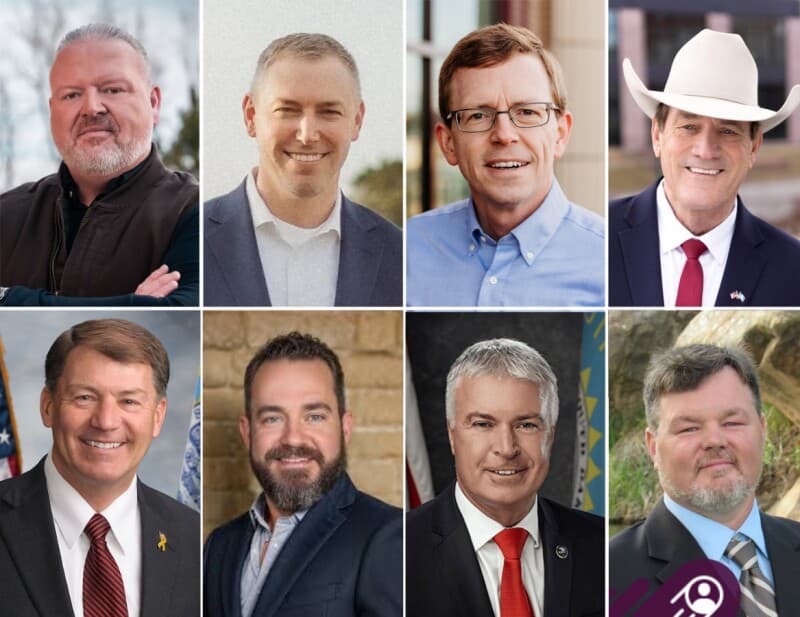
PIERRE, S.D. – With seven weeks until the June 2 primary, U.S. House Rep. Dusty Johnson is close to avoiding a runoff in the race to secure the GOP nomination for governor, according to a new poll sponsored by South Dakota News Watch and the Chiesman Center for Democracy at the University of South Dakota. In the contests for U.S. House of Representatives and U.S. Senate, state Attorney General Marty Jackley and U.S. Sen. Mike Rounds have solid leads over their challengers.The scientific survey of 500 registered Republicans, conducted April 7-11 by Mason-Dixon Polling and Strategy, found Johnson leading the four-way contest for governor with 34% of likely GOP primary voters supporting his candidacy. The other three candidates are effectively tied for second due to the margin of error being plus-or-minus 4.5%. State House Speaker Jon Hansen, of Dell Rapids, has 18% support from GOP voters, and Aberdeen businessman Toby Doeden and Gov. Larry Rhoden both have 17%. Roughly 14% of those surveyed were undecided. If no candidate receives at least 35% of the vote on the June 2 ballot, a runoff between the top two finishers will take place July 28. The winner of the contest will meet Democrat Dan Ahlers in the Nov. 3 general election. Rhoden's support drops; Hansen surges While Johnson, who grew up in Pierre and lives in Mitchell, saw a 6-point increase from the News Watch/Chiesman poll conducted last October, Rhoden's support fell 10 points. Julia Hellwege, director of the Chiesman Center and USD associate professor in political science, said Rhoden's association with his predecessor, former Gov. Kristi Noem, could be behind the drop in poll numbers. Rhoden served as lieutenant governor under Noem and became governor in January 2025 when President Donald Trump made her secretary of the Department of Homeland Security. He fired her last month after severe criticism. Hellwege pointed out the poll found that Johnson even leads in West River, a stronghold for Rhoden, who is from Union Center east of Sturgis. She said one candidate more than any other has been the main beneficiary of the declining support for the sitting governor. Hellwege said in comparing the new poll results with those from last year, a certain pattern can be seen. That includes the surge in support for Hansen and Johnson, a decline in support for Rhoden, a stable level of support for Doeden and a lower number of undecided voters. SD governor: Johnson in driver's seat Hellwege highlighted the extent to which the math favors Johnson. "Even if all the undecided voters go to one of those second-place candidates, plus if you factor in the margin of error, they still would barely reach where Johnson is sitting right now," Hellwege said. Brad Coker, founder of Mason-Dixon Polling and Strategy, ranked as one of the least-biased and most-factual pollsters, also believes Johnson is in a comfortable position. "Johnson is moving into the clear front-runner status," he said. On the flip side, Doeden's 35% unfavorable rating and high name recognition indicate his support has mostly peaked, Coker said. The poll was conducted after the four candidates met in the March 31 KELO-TV debate but before the April 13 SDPB and South Dakota News Watch forum. U.S. House: Jackley has comfortable lead Since Johnson ran for governor, that opened up South Dakota's only seat in the U.S. House of Representatives. In that contest, Jackley – who is from Sturgis and previously served as U.S. attorney for the District of South Dakota – has a comfortable lead toward securing the GOP nomination. According to the poll, he has 68% support from South Dakota Republican voters surveyed, well ahead of challenger James Bialota Jr., who has 12%, with 20% of respondents undecided. The winner will face Democrat Nicole "Nikki" Gronli in the November general election. U.S. Senate: Incumbent Rounds ahead by large margin Rounds – who's from Pierre and was South Dakota's governor from 2003 to 2011 – also enjoys a sizable lead over his challenger. The winner will take on Democrat Julian Beaudion in November. — This story originally published on southdakotanewswatch.org.

$4 million for gunsmithing program is latest economic development grant from governor amid campaign
RAPID CITY — South Dakota’s governor, who’s in the midst of an election campaign, awarded another grant Tuesday from an economic development fund he controls. Republican Gov. Larry Rhoden announced a $4 million Future Fund award for Western Dakota Technical College in Rapid City. The college will use the money to move a gunsmithing school from Colorado and incorporate it into Western Dakota’s offerings for students. Rhoden, who attended Western Dakota decades ago but didn’t graduate, made the announcement at the college. “It’s fitting to me that South Dakota would be home for a school like this,” Rhoden said. “South Dakota is the most Second Amendment-friendly state in the nation.” Last week, Rhoden granted $6 million from the Future Fund to establish a South Dakota Defense Institute in Rapid City that will help companies in the state earn federal military contracts. That grant brought the unobligated balance of the Future Fund down to $13 million, a spokesperson for the Governor’s Office of Economic Development said at the time. Since then, the spokesperson said, the fund has received revenue and interest that have brought the unobligated balance up to $19 million, even after accounting for the $4 million grant to Western Dakota Tech. A similar spurt of Future Fund grants from Rhoden last year sparked criticism from the three Republicans who are running for his job. Aberdeen businessman Toby Doeden called the grants an “attempt to buy votes,” state House Speaker Jon Hansen said the Future Fund was “funding the governor’s political future,” and U.S. Rep. Dusty Johnson said although Future Fund grants are an important economic development tool, “they aren’t meant to help someone’s campaign.” Meanwhile, Johnson has pledged that if he’s elected, he’ll use $2 million from the Future Fund to create a new local business startup initiative. Upon being reminded of that criticism Tuesday by South Dakota Searchlight, Rhoden called it “ridiculous” and said he’s awarding Future Fund grants to projects and ideas that will improve the state’s economy and workforce. “I am doing my job,” Rhoden said. “If you look at the opportunities that I have as a governor, as far as an appropriate use for Future Funds, this is picture perfect.” The state gets money for the Future Fund by charging a fee to employers. They pay the fee when they submit payroll taxes that support unemployment benefits. The late Republican Gov. George Mickelson convinced lawmakers to create the fund in 1987. They placed it under the governor’s exclusive control to enable quick responses to economic opportunities. State law says only that the fund “must be used for purposes related to research and economic development for the state,” but that’s about to change. Lawmakers approved new restrictions earlier this year, in response to past uses of the fund by Rhoden’s predecessor, former Gov. Kristi Noem. Rhoden was elevated from lieutenant governor after Noem resigned in January 2025 to become secretary of the federal Department of Homeland Security. Noem’s controversial uses of the Future Fund included a fireworks show at Mount Rushmore, the construction of a state-owned shooting range near Rapid City that legislators refused to fund, a rodeo in Sioux Falls where Noem carried the American flag into the arena on horseback, and a workforce recruitment advertising campaign that featured Noem as the star. Rhoden signed the legislative Future Fund reforms into law last month, but they won’t take effect until July 1 — after the June 2 primary election pitting Rhoden against three opponents for the Republican nomination. The reforms add legal definitions for acceptable uses of the fund, mandate more reporting to legislators about awards, specify the information required of applicants, direct the Governor’s Office of Economic Development to formulate rules for the fund’s use, and require the office to make recommendations to the governor about potential awards. The latest grant from Rhoden will help move the equipment, faculty and curriculum of the Colorado School of Trades, which operates solely as a gunsmithing school, to Western Dakota Tech. The president of the Colorado school, Ryan Lishner, said Tuesday that gun policies in Colorado “are starting to impede what firearms dealers and firearms manufacturers can do, and that’s getting to where it’s impacting our educational process.” He views South Dakota as willing to support the gunsmithing program “at a much higher level than Colorado was going to do.” The Colorado school can accommodate up to 20 faculty members and 140 students. After completing the 14-month program, students go on to professions ranging from self-employed gunsmiths to employees of major firearms manufacturers. “Western Dakota Tech is going to have the ability to grow that program to a much higher level,” Lishner said. This story was originally published on SouthDakotaSearchlight.com.
Primary season enters next phase in South Dakota
PIERRE — The field is set for the 2026 South Dakota Primary Election on June 2 for state legislative races as well as governor, U.S. House and U.S. Senate. Since Democrats had only one nominee qualify for each of the three statewide primary contests, those candidates are automatically that party's nominee for the Nov. 3 general election and will not appear on the June ballot. While the deadline for candidates to submit the required signatures was March 31, it typically takes state election workers several days to verify their veracity. Challenges to a candidate's signatures must be filed by 5 p.m. today, Friday, April 10. Here is a rundown of the June 2 primary election races. Statewide, legislative, local offices Governor: Aberdeen businessman Toby Doeden, state House Speaker Jon Hansen, U.S. Rep. Dusty Johnson and Gov. Larry Rhoden all qualified for the GOP primary contest after collecting the required 2,171 signatures. Now each candidate will hope they get 35% of the vote and avoid a runoff election eight weeks later. The winner of the contest will meet Democrat Dan Ahlers in the general election. U.S. House of Representatives: Since Johnson has declined to seek reelection for Congress to run for governor, the state's only congressional seat is open. Attorney General Marty Jackley is being challenged by James Bialota Jr. for the GOP nomination and the chance to face off against Democrat Nicole "Nikki" Gronli in November. U.S. Senate: Incumbent Republican U.S. Sen. Mike Rounds is being challenged by Justin McNeal on the GOP primary ballot. The winner of that contest will take on Democrat Julian Beaudion in the general election. Legislature, county and local races: In addition to statewide offices, hundreds of other candidates qualified for legislative and county and local races, including county treasurer, auditor, finance officer, sheriff, register of deeds, coroner and county commissioner as well as school board, mayor, city council and others. That full list is available on the Secretary of State's website. Constitutional and statutory offices While voters elect candidates for governor in the primary election, political parties choose other state executive candidates at conventions. Here are the constitutional and statutory offices that have elections in 2026: lieutenant governor, attorney general, auditor, secretary of state, treasurer, commissioner of School and Public Lands and Public Utilities Commission. The South Dakota Democratic Party holds its convention June 6 in Sioux Falls. The Republican party's convention is June 25-27 in Rapid City. Temperature check: Republican Republican Sen. Jim Mehlhaff of Pierre, majority leader of the state Senate, expects comfortable wins for Jackley and Rounds in their respective primary races. He thinks the gubernatorial contest could come down to either Johnson or Rhoden, pouring skepticism on a poll released last month that showed Doeden ahead of the current governor. "I don't think it will hold water in the long term," Mehlhaff told News Watch. "It doesn't mean Toby Doeden isn't running a hard race, I just don't think he's there yet." In terms of the state legislative races, Mehlhaff, who faces two primary challengers for his seat in District 24, said a theme he has noticed this election cycle is several incumbent state senators who lost their seat in 2024 are attempting to make a comeback. That includes former Sen. Jean Hunhoff of Yankton challenging current Sen. Lauren Nelson for the GOP nomination in District 18. Hunhoff lost to Nelson by fewer than 100 votes in the 2024 Republican primary. Other examples Mehlhaff cited include former Sen. Erin Tobin, who is looking to take back District 21 from Sen. Mykala Voita, and District 3, where there will be a rematch between Katherine "Katie" Washnok and Sen. Carl Perry. Melhalff said the 2024 primary results could have been impacted by the lack of competitive statewide races, something that isn't the case this year with the high-profile contests, including statewide races for governor, U.S. House and U.S. Senate. "There was no big draw to drive turnout, and this time obviously there is, so I think we are going to see a much bigger turnout," Melhaff said. "It will be interesting to see how that affects all those rematches." Temperature check: Democrat On the Democratic side, Rep. Erik Muckey of Sioux Falls praised his party's nominees for statewide office and believes, with Republicans set to be engaged in a number of vicious primary battles, his party could give the GOP a run for its money in the general election. "Above all, they each possess something South Dakotans value: ability to cast a vision for the future and focus on the state above partisanship. That's something we sorely lack right now as a state," Muckey told News Watch in a text message. In addition to laying out their plan to address issues pertinent to South Dakota, Muckey said Democrats across the state will highlight growing public disapproval of President Donald Trump's performance, including his handling of the Jeffrey Epstein files, cuts to Medicare and Medicaid and the war against Iran. "Republican leadership locally and nationally consistently places party above state and country. It's time for South Dakotans to be prioritized over politics, and our candidates will bring the message and the actions to back it up," he said. Correction: this story was updated April 10, 2026 to correct the party affiliation of former Sen. Erin Tobin and the description of Katherine "Katie" Washnok. — This story originally published on southdakotanewswatch.org.
Primary season enters next phase in South Dakota
PIERRE — The field is set for the 2026 South Dakota Primary Election on June 2 for state legislative races as well as governor, U.S. House and U.S. Senate. Since Democrats had only one nominee qualify for each of the three statewide primary contests, those candidates are automatically that party's nominee for the Nov. 3 general election and will not appear on the June ballot. While the deadline for candidates to submit the required signatures was March 31, it typically takes state election workers several days to verify their veracity. Challenges to a candidate's signatures must be filed by 5 p.m. today, Friday, April 10. Here is a rundown of the June 2 primary election races. Statewide, legislative, local offices Governor: Aberdeen businessman Toby Doeden, state House Speaker Jon Hansen, U.S. Rep. Dusty Johnson and Gov. Larry Rhoden all qualified for the GOP primary contest after collecting the required 2,171 signatures. Now each candidate will hope they get 35% of the vote and avoid a runoff election eight weeks later. The winner of the contest will meet Democrat Dan Ahlers in the general election. U.S. House of Representatives: Since Johnson has declined to seek reelection for Congress to run for governor, the state's only congressional seat is open. Attorney General Marty Jackley is being challenged by James Bialota Jr. for the GOP nomination and the chance to face off against Democrat Nicole "Nikki" Gronli in November. U.S. Senate: Incumbent Republican U.S. Sen. Mike Rounds is being challenged by Justin McNeal on the GOP primary ballot. The winner of that contest will take on Democrat Julian Beaudion in the general election. Legislature, county and local races: In addition to statewide offices, hundreds of other candidates qualified for legislative and county and local races, including county treasurer, auditor, finance officer, sheriff, register of deeds, coroner and county commissioner as well as school board, mayor, city council and others. That full list is available on the Secretary of State's website. Constitutional and statutory offices While voters elect candidates for governor in the primary election, political parties choose other state executive candidates at conventions. Here are the constitutional and statutory offices that have elections in 2026: lieutenant governor, attorney general, auditor, secretary of state, treasurer, commissioner of School and Public Lands and Public Utilities Commission. The South Dakota Democratic Party holds its convention June 6 in Sioux Falls. The Republican party's convention is June 25-27 in Rapid City. Temperature check: Republican Republican Sen. Jim Mehlhaff of Pierre, majority leader of the state Senate, expects comfortable wins for Jackley and Rounds in their respective primary races. He thinks the gubernatorial contest could come down to either Johnson or Rhoden, pouring skepticism on a poll released last month that showed Doeden ahead of the current governor. "I don't think it will hold water in the long term," Mehlhaff told News Watch. "It doesn't mean Toby Doeden isn't running a hard race, I just don't think he's there yet." In terms of the state legislative races, Mehlhaff, who faces two primary challengers for his seat in District 24, said a theme he has noticed this election cycle is several incumbent state senators who lost their seat in 2024 are attempting to make a comeback. That includes former Sen. Jean Hunhoff of Yankton challenging current Sen. Lauren Nelson for the GOP nomination in District 18. Hunhoff lost to Nelson by fewer than 100 votes in the 2024 Republican primary. Other examples Mehlhaff cited include former Sen. Erin Tobin, who is looking to take back District 21 from Sen. Mykala Voita, and District 3, where there will be a rematch between Katherine "Katie" Washnok and Sen. Carl Perry. Melhalff said the 2024 primary results could have been impacted by the lack of competitive statewide races, something that isn't the case this year with the high-profile contests, including statewide races for governor, U.S. House and U.S. Senate. "There was no big draw to drive turnout, and this time obviously there is, so I think we are going to see a much bigger turnout," Melhaff said. "It will be interesting to see how that affects all those rematches." Temperature check: Democrat On the Democratic side, Rep. Erik Muckey of Sioux Falls praised his party's nominees for statewide office and believes, with Republicans set to be engaged in a number of vicious primary battles, his party could give the GOP a run for its money in the general election. "Above all, they each possess something South Dakotans value: ability to cast a vision for the future and focus on the state above partisanship. That's something we sorely lack right now as a state," Muckey told News Watch in a text message. In addition to laying out their plan to address issues pertinent to South Dakota, Muckey said Democrats across the state will highlight growing public disapproval of President Donald Trump's performance, including his handling of the Jeffrey Epstein files, cuts to Medicare and Medicaid and the war against Iran. "Republican leadership locally and nationally consistently places party above state and country. It's time for South Dakotans to be prioritized over politics, and our candidates will bring the message and the actions to back it up," he said. Correction: this story was updated April 10, 2026 to correct the party affiliation of former Sen. Erin Tobin and the description of Katherine "Katie" Washnok. — This story originally published on southdakotanewswatch.org.
Primary season enters next phase in South Dakota
PIERRE — The field is set for the 2026 South Dakota Primary Election on June 2 for state legislative races as well as governor, U.S. House and U.S. Senate. Since Democrats had only one nominee qualify for each of the three statewide primary contests, those candidates are automatically that party's nominee for the Nov. 3 general election and will not appear on the June ballot. While the deadline for candidates to submit the required signatures was March 31, it typically takes state election workers several days to verify their veracity. Challenges to a candidate's signatures must be filed by 5 p.m. today, Friday, April 10. Here is a rundown of the June 2 primary election races. Statewide, legislative, local offices Governor: Aberdeen businessman Toby Doeden, state House Speaker Jon Hansen, U.S. Rep. Dusty Johnson and Gov. Larry Rhoden all qualified for the GOP primary contest after collecting the required 2,171 signatures. Now each candidate will hope they get 35% of the vote and avoid a runoff election eight weeks later. The winner of the contest will meet Democrat Dan Ahlers in the general election. U.S. House of Representatives: Since Johnson has declined to seek reelection for Congress to run for governor, the state's only congressional seat is open. Attorney General Marty Jackley is being challenged by James Bialota Jr. for the GOP nomination and the chance to face off against Democrat Nicole "Nikki" Gronli in November. U.S. Senate: Incumbent Republican U.S. Sen. Mike Rounds is being challenged by Justin McNeal on the GOP primary ballot. The winner of that contest will take on Democrat Julian Beaudion in the general election. Legislature, county and local races: In addition to statewide offices, hundreds of other candidates qualified for legislative and county and local races, including county treasurer, auditor, finance officer, sheriff, register of deeds, coroner and county commissioner as well as school board, mayor, city council and others. That full list is available on the Secretary of State's website. Constitutional and statutory offices While voters elect candidates for governor in the primary election, political parties choose other state executive candidates at conventions. Here are the constitutional and statutory offices that have elections in 2026: lieutenant governor, attorney general, auditor, secretary of state, treasurer, commissioner of School and Public Lands and Public Utilities Commission. The South Dakota Democratic Party holds its convention June 6 in Sioux Falls. The Republican party's convention is June 25-27 in Rapid City. Temperature check: Republican Republican Sen. Jim Mehlhaff of Pierre, majority leader of the state Senate, expects comfortable wins for Jackley and Rounds in their respective primary races. He thinks the gubernatorial contest could come down to either Johnson or Rhoden, pouring skepticism on a poll released last month that showed Doeden ahead of the current governor. "I don't think it will hold water in the long term," Mehlhaff told News Watch. "It doesn't mean Toby Doeden isn't running a hard race, I just don't think he's there yet." In terms of the state legislative races, Mehlhaff, who faces two primary challengers for his seat in District 24, said a theme he has noticed this election cycle is several incumbent state senators who lost their seat in 2024 are attempting to make a comeback. That includes former Sen. Jean Hunhoff of Yankton challenging current Sen. Lauren Nelson for the GOP nomination in District 18. Hunhoff lost to Nelson by fewer than 100 votes in the 2024 Republican primary. Other examples Mehlhaff cited include former Sen. Erin Tobin, who is looking to take back District 21 from Sen. Mykala Voita, and District 3, where there will be a rematch between Katherine "Katie" Washnok and Sen. Carl Perry. Melhalff said the 2024 primary results could have been impacted by the lack of competitive statewide races, something that isn't the case this year with the high-profile contests, including statewide races for governor, U.S. House and U.S. Senate. "There was no big draw to drive turnout, and this time obviously there is, so I think we are going to see a much bigger turnout," Melhaff said. "It will be interesting to see how that affects all those rematches." Temperature check: Democrat On the Democratic side, Rep. Erik Muckey of Sioux Falls praised his party's nominees for statewide office and believes, with Republicans set to be engaged in a number of vicious primary battles, his party could give the GOP a run for its money in the general election. "Above all, they each possess something South Dakotans value: ability to cast a vision for the future and focus on the state above partisanship. That's something we sorely lack right now as a state," Muckey told News Watch in a text message. In addition to laying out their plan to address issues pertinent to South Dakota, Muckey said Democrats across the state will highlight growing public disapproval of President Donald Trump's performance, including his handling of the Jeffrey Epstein files, cuts to Medicare and Medicaid and the war against Iran. "Republican leadership locally and nationally consistently places party above state and country. It's time for South Dakotans to be prioritized over politics, and our candidates will bring the message and the actions to back it up," he said. Correction: this story was updated April 10, 2026 to correct the party affiliation of former Sen. Erin Tobin and the description of Katherine "Katie" Washnok. — This story originally published on southdakotanewswatch.org.

Letter: Workhorse for our educators, children and grandchildren
To the Editor: As a resident and investor in Mitchell’s future, I believe we have a unique opportunity to return South Dakota to a place of stability and focus. I remember the "Daugaard Era" as a time when leadership meant quiet competence and real results for our schools. As Chief of Staff then, Dusty Johnson was the engine behind that success—balancing budgets and moving our state forward without the constant political drama. Today, he is the only candidate with a realistic plan to fund education as our state's #1 priority while providing homeowners with a direct $400 property tax credit. There is a stark contrast in this race. While one competitor brags about dumping millions of his own dollars into a campaign to feed his ego, Dusty has spent his career earning the trust of thousands of South Dakotans who fund his campaign because they believe in his vision. If a candidate has something truly good for society to offer, they should be able to inspire people to fund their election rather than trying to buy it with his wealth. We don’t need a second election to decide what we already know. Let’s finish the job on June 2 by hitting that 35% mark and putting a proven workhorse back to work for South Dakota. If we don’t, taxpayers will be stuck footing the bill for a costly, unnecessary runoff in July. Remember the technical steps: You must be a registered Republican to vote in this primary. If you need to update your party, you must submit a paper form to the Davison County Auditor’s Office (200 E. 4th Ave) by May 18. Once registered, you don't have to wait for June. Early voting starts April 17 at the Auditor’s Office, open Monday through Friday, 8 a.m. to 5 p.m. Let’s stand up for our educators, our children, and our grandchildren. Let’s get it right the first time and put a proven workhorse in the governor's office. Roger Musick Mitchell
Governor candidates differ in evaluating $15 million of state aid for Brookings project
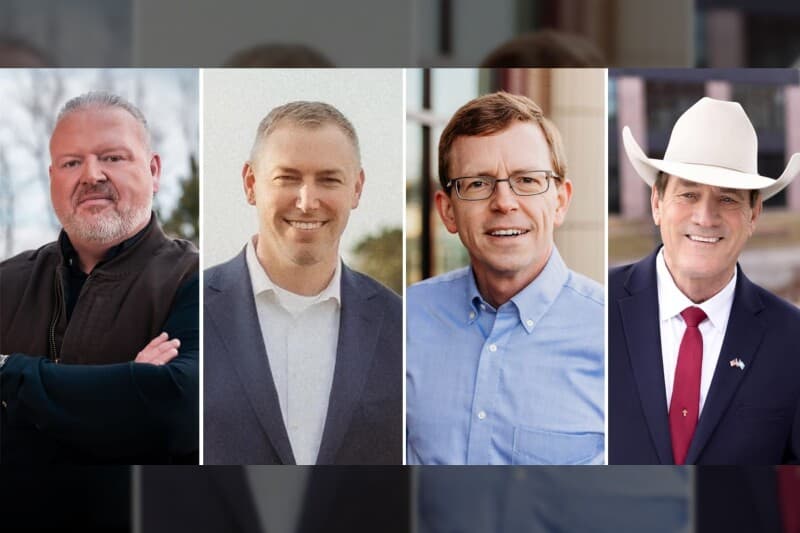
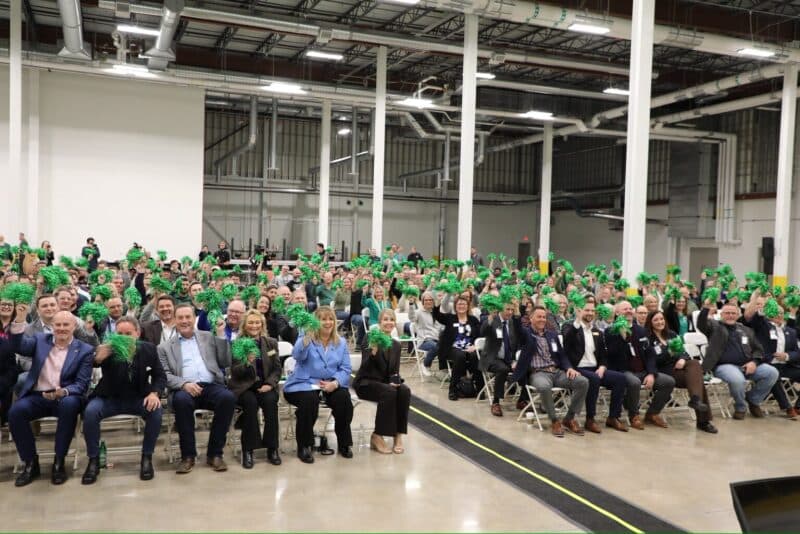
BROOKINGS — Workers waving pompoms greeted South Dakota Republican Gov. Larry Rhoden during a recent celebration for a business expansion that benefited from $15 million in state tax rebates, two days after Republican primary candidates for governor debated the state’s role in economic development. The event for Solventum, a Minnesota-based, publicly traded company that was formerly part of 3M, marked the completion of a $220 million expansion at Solventum’s Brookings facility. The plant employs about 1,200 people who produce health care supplies, including bandaging, dressings, wraps and tapes. State economic development officials helped the project with $15 million from the Reinvestment Payment Program. The program rebated Solventum for sales and use taxes the company paid for equipment or construction costs associated with the expansion. From left, the Republican candidates for governor of South Dakota: U.S. Rep. Dusty Johnson, Gov. Larry Rhoden, Aberdeen businessman Toby Doeden, and state House Speaker Jon Hansen. (Photos by South Dakota Searchlight) The city of Brookings also helped the project with $3.5 million in financing from a tax increment financing district. A TIF district provides upfront financing to help with project costs, and captures the new and higher property taxes generated by the development to pay off the financing. CEO, Rhoden offer praise Solventum CEO Bryan Hanson attended the ribbon-cutting ceremony and praised the partnership his company has with the state and local governments. He said the company weighed other locations before choosing to expand in Brookings. “You don’t spend hundreds of millions of dollars in a state that doesn’t embrace business,” Hanson said. During the debate among the four Republican candidates for governor two days prior, Rhoden said such ribbon cuttings are evidence that South Dakota’s economy is doing well. “Every week I’m going to ribbon cuttings and groundbreakings, and a lot of them were expansions or businesses that are moving here,” Rhoden said at the time. Questions of economic development have been a balancing act for the Rhoden administration. Last year, he signed a bill into law that bans the use of eminent domain to gain land access for carbon sequestration pipelines, which stalled a proposed multi-billion-dollar pipeline that would pass through the state. This year, Rhoden and his economic development team spent much of the recently concluded legislative session defending business incentives, such as the ones that benefited Solventum, as tools for growth. Several bills failed that would have restricted those tools. The bills came from lawmakers who believe the state has gotten too involved with helping private businesses, or shouldn’t be involved at all. Hansen: Current economic development model ‘unfair’ State House Speaker Jon Hansen, who is running for the Republican nomination for governor, has called the state’s economic development grants and loans “corporate welfare.” Hansen said this week in a statement issued in response to South Dakota Searchlight questions that the difference between him and the other Republican candidates is that he opposes the state’s current economic development model. He said the model is run by state officials who use taxes collected from South Dakota businesses to “hand out the money to any big corporation of their choosing, including many who then donate back to future political campaigns.” “I think this is unfair to our South Dakota businesses and entrepreneurs and, as we’ve seen, is a breeding ground for corruption and backroom deals,” he said. Hansen has singled out state aid for the CJ Schwan’s company, which has benefited from $69 million in state grants and loans. One of the state officials who was involved in initial discussions with the company about its construction of a food production plant in Sioux Falls now works for the company as a vice president. Meanwhile, the chairman of the state Board of Economic Development, who abstained from matters related to CJ Schwan’s, is a member of the company’s corporate board and is involved with a corporation that rents office space to CJ Schwan’s. Hansen, while not specifically saying whether he approved or disapproved of the Solventum aid, said he wants to focus on lower taxes, lighter regulation and a freer market to help South Dakota businesses grow on their own. “If there are any programs that are salvageable, it will be those that are fairly available to every South Dakotan — not those massive tax giveaways where politicians and bureaucrats in Pierre pick their favored corporation to sometimes attract future political contributions,” Hansen said. Johnson: State can do more to encourage prosperity U.S. Rep. Dusty Johnson, another Republican candidate for governor, spoke favorably of state economic development tools in an interview with Searchlight. “I believe South Dakota can be a great place to do business, and I’m glad these companies choose to invest in our state and our people,” he said of Solventum. He said what’s at issue in the race for governor is not one specific economic development project, but “whether or not we’re doing everything we can to make the state more prosperous.” In conversations he’s had with businesspeople, he said, they’ve told him “we can do better.” As evidence, Johnson cited CNBC’s 2025 ranking of the state as 35th in the nation for business. Johnson said the state should do more for homegrown entrepreneurs, and his “Launch South Dakota” plan calls for a $2 million investment to support local business startups. The money would come from the governor-controlled Future Fund for economic development. Doeden: State spending is ‘reckless’ Another Republican candidate for governor, Toby Doeden, issued a statement in response to Searchlight questions. While not saying whether he approved or disapproved of the Solventum aid, he criticized what he called “reckless spending” by the state, including on economic development. “Instead of handing out massive taxpayer-funded subsidies to out-of-state corporations,” Doeden said, “we will use those funds to build out our rural health care and finally make meaningful improvements in our infrastructure.” “We will support our homegrown small businesses and they will invest in their people and their communities,” Doeden added. The primary election to determine the Republican nominee for governor is June 2. Announced candidates for the Democratic nomination for governor include Dan Ahlers, a former state legislator and executive director of the state Democratic Party, and Robert Arnold, a Dakota State University student who served as a legislative intern. This story was originally published on SouthDakotaSearchlight.com.
Governor candidates differ in evaluating $15 million of state aid for Brookings project
BROOKINGS — Workers waving pompoms greeted South Dakota Republican Gov. Larry Rhoden during a recent celebration for a business expansion that benefited from $15 million in state tax rebates, two days after Republican primary candidates for governor debated the state’s role in economic development. The event for Solventum, a Minnesota-based, publicly traded company that was formerly part of 3M, marked the completion of a $220 million expansion at Solventum’s Brookings facility. The plant employs about 1,200 people who produce health care supplies, including bandaging, dressings, wraps and tapes. State economic development officials helped the project with $15 million from the Reinvestment Payment Program. The program rebated Solventum for sales and use taxes the company paid for equipment or construction costs associated with the expansion. From left, the Republican candidates for governor of South Dakota: U.S. Rep. Dusty Johnson, Gov. Larry Rhoden, Aberdeen businessman Toby Doeden, and state House Speaker Jon Hansen. (Photos by South Dakota Searchlight) The city of Brookings also helped the project with $3.5 million in financing from a tax increment financing district. A TIF district provides upfront financing to help with project costs, and captures the new and higher property taxes generated by the development to pay off the financing. CEO, Rhoden offer praise Solventum CEO Bryan Hanson attended the ribbon-cutting ceremony and praised the partnership his company has with the state and local governments. He said the company weighed other locations before choosing to expand in Brookings. “You don’t spend hundreds of millions of dollars in a state that doesn’t embrace business,” Hanson said. During the debate among the four Republican candidates for governor two days prior, Rhoden said such ribbon cuttings are evidence that South Dakota’s economy is doing well. “Every week I’m going to ribbon cuttings and groundbreakings, and a lot of them were expansions or businesses that are moving here,” Rhoden said at the time. Questions of economic development have been a balancing act for the Rhoden administration. Last year, he signed a bill into law that bans the use of eminent domain to gain land access for carbon sequestration pipelines, which stalled a proposed multi-billion-dollar pipeline that would pass through the state. This year, Rhoden and his economic development team spent much of the recently concluded legislative session defending business incentives, such as the ones that benefited Solventum, as tools for growth. Several bills failed that would have restricted those tools. The bills came from lawmakers who believe the state has gotten too involved with helping private businesses, or shouldn’t be involved at all. Hansen: Current economic development model ‘unfair’ State House Speaker Jon Hansen, who is running for the Republican nomination for governor, has called the state’s economic development grants and loans “corporate welfare.” Hansen said this week in a statement issued in response to South Dakota Searchlight questions that the difference between him and the other Republican candidates is that he opposes the state’s current economic development model. He said the model is run by state officials who use taxes collected from South Dakota businesses to “hand out the money to any big corporation of their choosing, including many who then donate back to future political campaigns.” “I think this is unfair to our South Dakota businesses and entrepreneurs and, as we’ve seen, is a breeding ground for corruption and backroom deals,” he said. Hansen has singled out state aid for the CJ Schwan’s company, which has benefited from $69 million in state grants and loans. One of the state officials who was involved in initial discussions with the company about its construction of a food production plant in Sioux Falls now works for the company as a vice president. Meanwhile, the chairman of the state Board of Economic Development, who abstained from matters related to CJ Schwan’s, is a member of the company’s corporate board and is involved with a corporation that rents office space to CJ Schwan’s. Hansen, while not specifically saying whether he approved or disapproved of the Solventum aid, said he wants to focus on lower taxes, lighter regulation and a freer market to help South Dakota businesses grow on their own. “If there are any programs that are salvageable, it will be those that are fairly available to every South Dakotan — not those massive tax giveaways where politicians and bureaucrats in Pierre pick their favored corporation to sometimes attract future political contributions,” Hansen said. Johnson: State can do more to encourage prosperity U.S. Rep. Dusty Johnson, another Republican candidate for governor, spoke favorably of state economic development tools in an interview with Searchlight. “I believe South Dakota can be a great place to do business, and I’m glad these companies choose to invest in our state and our people,” he said of Solventum. He said what’s at issue in the race for governor is not one specific economic development project, but “whether or not we’re doing everything we can to make the state more prosperous.” In conversations he’s had with businesspeople, he said, they’ve told him “we can do better.” As evidence, Johnson cited CNBC’s 2025 ranking of the state as 35th in the nation for business. Johnson said the state should do more for homegrown entrepreneurs, and his “Launch South Dakota” plan calls for a $2 million investment to support local business startups. The money would come from the governor-controlled Future Fund for economic development. Doeden: State spending is ‘reckless’ Another Republican candidate for governor, Toby Doeden, issued a statement in response to Searchlight questions. While not saying whether he approved or disapproved of the Solventum aid, he criticized what he called “reckless spending” by the state, including on economic development. “Instead of handing out massive taxpayer-funded subsidies to out-of-state corporations,” Doeden said, “we will use those funds to build out our rural health care and finally make meaningful improvements in our infrastructure.” “We will support our homegrown small businesses and they will invest in their people and their communities,” Doeden added. The primary election to determine the Republican nominee for governor is June 2. Announced candidates for the Democratic nomination for governor include Dan Ahlers, a former state legislator and executive director of the state Democratic Party, and Robert Arnold, a Dakota State University student who served as a legislative intern. This story was originally published on SouthDakotaSearchlight.com.

Second Black Hills mining proposal selected for federal fast-track permitting
Federal officials have selected a second Black Hills mining proposal for an expedited permitting process. The Bear Lodge Rare Earth Mining Project is on the Wyoming side of the Black Hills, and it’s expected to produce rare earth elements critical to alloy and magnet production. It will be included in FAST-41, a federal process meant to improve coordination among permitting agencies and hold them accountable to deadlines. The 25-person federal Permitting Council says it can shave 18 months off a project’s review time. The project has been stalled for several years by permitting, market saturation from China and challenges raising capital, according to reporting from the Cowboy State Daily. China processes a majority of the world’s rare earth elements. Wyoming Republican U.S. Sen. Cynthia Lummis said the proposed mine will encourage American mineral independence. “The Bear Lodge Project in northeastern Wyoming is on track to become an important domestic source of critical elements like neodymium and praseodymium, which our defense systems and high-tech manufacturers depend on,” Lummis said in a news release. Rare earth elements have multiple uses, ranging from batteries and lasers to radiation shielding for nuclear reactions. A specific element identified for the Bear Lodge project would be used to make magnets for electric vehicle motors, wind turbines and other applications. The first fast-tracked Black Hills project — the long-lingering Dewey-Burdock uranium mining proposal in southwestern South Dakota — remains in progress on multiple permitting items, according to the federal infrastructure permitting dashboard. The Dewey-Burdock project is named for rural locations near Edgemont along the southwestern edge of the Black Hills. It has been in the works for nearly two decades. It requires numerous federal, state and local permits, and has been mired in administrative and court appeals for years. The Black Hills Clean Water Alliance, NDN Collective and Oglala Sioux Tribe are among the project’s opponents. If the Dewey-Burdock permits are approved at the federal level, the state can begin its own permitting process. A spokeswoman with the company leading the project said she hopes it will begin development within the next couple of years. The Bear Lodge Rare Earth project is proposed by Rare Element Resources, which would operate the mining and processing arms of the project. The company completed construction of a $60 million rare earth processing and demonstration plan in Upton, Wyoming, late last year. Rare Element Resources did not respond to requests for comment from South Dakota Searchlight. The FAST-41 process was created by Title 41 of the “Fixing America’s Surface Transportation Act,” signed into law by President Barack Obama in 2015. It originally focused on transportation infrastructure. It was expanded to mining projects during the final days of Donald Trump’s first presidential administration in 2021. Trump signed an executive order last year directing federal officials to accelerate domestic critical mineral production, including copper, zinc, titanium and uranium. His administration is increasingly using FAST-41 to carry out the order. This story was originally published on SouthDakotaSearchlight.com.
Second Black Hills mining proposal selected for federal fast-track permitting
Federal officials have selected a second Black Hills mining proposal for an expedited permitting process. The Bear Lodge Rare Earth Mining Project is on the Wyoming side of the Black Hills, and it’s expected to produce rare earth elements critical to alloy and magnet production. It will be included in FAST-41, a federal process meant to improve coordination among permitting agencies and hold them accountable to deadlines. The 25-person federal Permitting Council says it can shave 18 months off a project’s review time. The project has been stalled for several years by permitting, market saturation from China and challenges raising capital, according to reporting from the Cowboy State Daily. China processes a majority of the world’s rare earth elements. Wyoming Republican U.S. Sen. Cynthia Lummis said the proposed mine will encourage American mineral independence. “The Bear Lodge Project in northeastern Wyoming is on track to become an important domestic source of critical elements like neodymium and praseodymium, which our defense systems and high-tech manufacturers depend on,” Lummis said in a news release. Rare earth elements have multiple uses, ranging from batteries and lasers to radiation shielding for nuclear reactions. A specific element identified for the Bear Lodge project would be used to make magnets for electric vehicle motors, wind turbines and other applications. The first fast-tracked Black Hills project — the long-lingering Dewey-Burdock uranium mining proposal in southwestern South Dakota — remains in progress on multiple permitting items, according to the federal infrastructure permitting dashboard. The Dewey-Burdock project is named for rural locations near Edgemont along the southwestern edge of the Black Hills. It has been in the works for nearly two decades. It requires numerous federal, state and local permits, and has been mired in administrative and court appeals for years. The Black Hills Clean Water Alliance, NDN Collective and Oglala Sioux Tribe are among the project’s opponents. If the Dewey-Burdock permits are approved at the federal level, the state can begin its own permitting process. A spokeswoman with the company leading the project said she hopes it will begin development within the next couple of years. The Bear Lodge Rare Earth project is proposed by Rare Element Resources, which would operate the mining and processing arms of the project. The company completed construction of a $60 million rare earth processing and demonstration plan in Upton, Wyoming, late last year. Rare Element Resources did not respond to requests for comment from South Dakota Searchlight. The FAST-41 process was created by Title 41 of the “Fixing America’s Surface Transportation Act,” signed into law by President Barack Obama in 2015. It originally focused on transportation infrastructure. It was expanded to mining projects during the final days of Donald Trump’s first presidential administration in 2021. Trump signed an executive order last year directing federal officials to accelerate domestic critical mineral production, including copper, zinc, titanium and uranium. His administration is increasingly using FAST-41 to carry out the order. This story was originally published on SouthDakotaSearchlight.com.

Platte-Winner bridge project receives $65M in federal funds
WINNER — A major bridge over the Missouri River in South Dakota is receiving $65 million in federal funding for its upcoming renovation project. The Platte-Winner bridge received Competitive Highway Bridge Program (CHBP) funding from the Federal Highway Administration, according to U.S. Rep. Dusty Johnson's office. The announcement was made on Friday, April 3. “This is huge news for South Dakota. Our hard-fought advocacy efforts to secure $65 million for this bridge were successful,” Johnson said in a statement. “This is a great investment in South Dakota’s infrastructure and I’m grateful the Administration awarded our state this funding.” The South Dakota Department of Transportation held a Major Bridge Investment Study on the Highway 44 bridge with a recommendation to be replaced. The current alignment of SD44 over the river has experienced numerous landslides, resulting in millions of dollars in repair and mitigation expenses since the bridge opened to traffic in 1966, according to a DOT website that outlines the project. No specific timeline has been set for replacement, though the DOT website says the Corridor Study and Environmental Assessment phase of work on the SD44 bridge is complete. The South Dakota Department of Transportation (SDDOT) is preparing to advertise the project for construction bids.