2 stories credited to Mirror Indy
Latest story Apr 16, 2026 · on ChamberLight since Apr 2026
A story can appear as several articles (copies of the same piece), so counts of stories and of articles differ.
Scores for Mirror Indy
Writing quality not enough rated stories yet: 1 of 10. How it is measured
Scores last checked Sep 24, 2026.
Stories ChamberLight collected, by month
Stories credited to Mirror Indy, by publication date. ChamberLight collects articles that mention the officials it tracks, so this shows its own coverage of this source, not how much the source publishes.
- Stories from Mirror Indy
- Shaded: ChamberLight collected no stories, or almost none, from any outlet (a gap in its collection, not in the outlet’s publishing)
Show as a table
| Month | Stories | All outlets |
|---|---|---|
| April 2026 | 2 | 2,576 |
| May 2026 | 0 | none collected |
| June 2026 | 0 | none collected |
| July 2026 | 0 | none collected |
| August 2026 | 0 | 1 (collection gap) |
| September 2026 | 0 | 598 |
Top topics
Share of this source’s stories tagged with each topic. A story can carry several topics, so the shares do not add up to 100%.
- Criminal Justice1
50% of 2 stories · 20% across all outlets
- Economy1
50% of 2 stories · 26% across all outlets
- Education1
50% of 2 stories · 3% across all outlets
- Ethics/Corruption1
50% of 2 stories · 62% across all outlets
- Immigration1
50% of 2 stories · 13% across all outlets
- Voting Rights1
50% of 2 stories · 20% across all outlets
The thin mark on each bar is the topic’s share across all outlets.
Who they cover
Party of the officials these stories are mainly about, across all 3 officials named. A story counts once for each official it is mainly about, so the split is over 3 story–official pairs, from 2 stories.
- Republican67% · 2 pairs
- Democrat33% · 1 pair
Most covered
Stories mainly about each official, and their share of the source’s 2 stories.
Article tone
ChamberLight’s article analysis assigns each story a tone toward the official it covers. It describes the coverage of that official, not Mirror Indy’s stance, and reader votes do not change it. 2 stories.
- Good Look
- 2 (100%)
- Mixed
- 0 (0%)
- Informational
- 0 (0%)
- Bad Look
- 0 (0%)
Challenges to these scores
No one has challenged a score on this page yet. Anyone can; editors publish every outcome here.
Articles served from mirrorindy.org
3
Republicans hope to flip this Indiana Senate seat
A Democratic state senator isn’t seeking reelection, and Republicans see a chance to turn a district red. State Sen. J.D. Ford, an Indianapolis Democrat, is running for the 5th Congressional District in the U.S. House of Representatives, leaving his state senate seat vacant in 2027. Ford, who represents State Senate District 29, made history when he was elected in 2018 as the first openly gay member of the Indiana General Assembly. The 29th district, which was mainly held by Republicans before Ford was elected, includes parts of Pike and Wayne townships and stretches north to portions of Carmel and Zionsville. The race to fill the open Senate seat has caught the attention of two Republican governors from the state, who have each endorsed separate candidates in the race. These are the candidates in the May 5 primary hoping to succeed Ford. Meet the Republicans Mike Delph represented Senate District 29 from 2005 until 2018, when he lost to Ford. With Ford out of the picture, Delph is hoping for a comeback. Mike Delph, candidate for State Senate District 29. Delph, who lives in Carmel, is a self-described Christian conservative, anti-abortion Republican, and a supporter of President Donald Trump. He recently received an endorsement from Gov. Mike Braun. “I’ve not sought out endorsements, but I’ve gotten endorsements,” said Delph, “but the big endorsement I’m looking for is the endorsement of the Republican Party voters. I think if I’m successful, I’ve got the expertise and the know-how to aggressively advocate in the legislature for all of my constituents.” In his endorsement announcement, Braun said Delph will push for “aggressive property tax relief” and “make Indiana more affordable for hardworking taxpayers.” John Ruckelshaus, candidate for State Senate 29. Another former state senator is also hoping to return to public office — with support from former Indiana governor. John Ruckelshaus, also a Carmel resident, represented District 30, which includes parts of the north side, from 2016 to 2020. He lost to Fady Qaddoura, an Indianapolis Democrat, in the 2020 election. He has the backing of former Republican Gov. Mitch Daniels, who said Ruckelshaus is “a genuine servant leader who always puts the public interest first.” Reflecting on the 2026 legislative session, Ruckelshaus said state officials pursued growth and infrastructure without fully respecting local planning and affordability. “My approach is shaped by a conservative, pro‑opportunity mindset — one that former Gov. Mitch Daniels has endorsed as practical and grounded in real‑world results for central Indiana,” he told Mirror Indy. The third Republican in the race is Roni Ford, a former Pike Township School Board member and former community outreach staffer for U.S. Sen. Todd Young. Ford lives in Wayne Township. Roni Ford, candidate for State Senate District 29. She said her time working for the senator allowed her to establish connections with elected officials, neighborhood organizations and everyday constituents. “I believe my background, my diversity in my relationships, makes me a better candidate,” Ford said. “I have the thought process and the background to understand what the public really wants, not what I think the public wants.” As a supporter of marriage equality and abortion rights, she considers herself a moderate Republican. Meet the Democrats The Rev. David Greene is a pastor at Purpose of Life Ministries on the west side and president of the Concerned Clergy of Indianapolis, a community activist group made up of faith leaders. The Reverend David Greene, candidate for State Senate District 29. Credit: Brett Phelps/Mirror Indy/CatchLight Local/Report for America If elected, he would focus on increasing access to child care and lowering the cost of living for Hoosiers. “I believe the political challenges we’re looking at are moral issues, and those issues require that we no longer be silent,” Greene said. Demetrice Hicks is president of the Pike Township Board of Trustees and a director of clinical operations at a mental health treatment facility. He’s running for District 29 because he believes Indy residents are hurting. “People cannot afford prescription drugs, health insurance, basic groceries,” Hicks said. “I don’t think there is enough intentionality in helping people in their everyday lives at the state level.” Kristina Moorhead is a health policy expert who previously worked in the state’s Office of Medicaid Policy and Planning. Her campaign is focused on affordability, good governance and fully funding public education. Demetrice Hicks, candidate for State Senate District 29 She said Indiana Republicans have championed causes that are unpopular with a majority of Hoosier voters. “Time and again, Republicans have advanced policies that conflict with the views of the people they were elected to serve,” Moorhead said. “If our government is not representing the people, then the people must have a direct path to act.” Kevin Short has spent his career in social work, education and philanthropy. He is passionate about improving roads, strengthening education and crime reduction, but he believes Senate Bill 285, the state’s ban on homeless encampments, is a step in the wrong direction. “Instead of criminalizing homelessness, we should find ways to prevent it,” Short said. The primary election is May 5, and the general election is Nov. 3. How to vote in the Indiana primary Marion County residents with a valid government-issued photo ID can vote early at the City-County Building from April 7 through May 5, and at one of nine early voting centers from April 25 through May 5. On election day, which is May 5, residents can vote at one of the county’s 182 vote centers from 6 a.m. until 6 p.m. Those still in line when the polls close at 6 p.m. should stay in line to cast their ballots. The deadline to register to vote is April 6. Visit the state’s Voter Portal to check your registration status. Mirror Indy, a nonprofit newsroom, is funded through grants and donations from individuals, foundations and organizations. Peter Blanchard covers local government. Reach him at 317-605-4836 or peter.blanchard@mirrorindy.org. Follow him on X @peterlblanchard. The post Republicans hope to flip this Indiana Senate seat appeared first on Mirror Indy.
Republicans hope to flip this Indiana Senate seat
A Democratic state senator isn’t seeking reelection, and Republicans see a chance to turn a district red. State Sen. J.D. Ford, an Indianapolis Democrat, is running for the 5th Congressional District in the U.S. House of Representatives, leaving his state senate seat vacant in 2027. Ford, who represents State Senate District 29, made history when he was elected in 2018 as the first openly gay member of the Indiana General Assembly. The 29th district, which was mainly held by Republicans before Ford was elected, includes parts of Pike and Wayne townships and stretches north to portions of Carmel and Zionsville. The race to fill the open Senate seat has caught the attention of two Republican governors from the state, who have each endorsed separate candidates in the race. These are the candidates in the May 5 primary hoping to succeed Ford. Meet the Republicans Mike Delph represented Senate District 29 from 2005 until 2018, when he lost to Ford. With Ford out of the picture, Delph is hoping for a comeback. Mike Delph, candidate for State Senate District 29. Delph, who lives in Carmel, is a self-described Christian conservative, anti-abortion Republican, and a supporter of President Donald Trump. He recently received an endorsement from Gov. Mike Braun. “I’ve not sought out endorsements, but I’ve gotten endorsements,” said Delph, “but the big endorsement I’m looking for is the endorsement of the Republican Party voters. I think if I’m successful, I’ve got the expertise and the know-how to aggressively advocate in the legislature for all of my constituents.” In his endorsement announcement, Braun said Delph will push for “aggressive property tax relief” and “make Indiana more affordable for hardworking taxpayers.” John Ruckelshaus, candidate for State Senate 29. Another former state senator is also hoping to return to public office — with support from former Indiana governor. John Ruckelshaus, also a Carmel resident, represented District 30, which includes parts of the north side, from 2016 to 2020. He lost to Fady Qaddoura, an Indianapolis Democrat, in the 2020 election. He has the backing of former Republican Gov. Mitch Daniels, who said Ruckelshaus is “a genuine servant leader who always puts the public interest first.” Reflecting on the 2026 legislative session, Ruckelshaus said state officials pursued growth and infrastructure without fully respecting local planning and affordability. “My approach is shaped by a conservative, pro‑opportunity mindset — one that former Gov. Mitch Daniels has endorsed as practical and grounded in real‑world results for central Indiana,” he told Mirror Indy. The third Republican in the race is Roni Ford, a former Pike Township School Board member and former community outreach staffer for U.S. Sen. Todd Young. Ford lives in Wayne Township. Roni Ford, candidate for State Senate District 29. She said her time working for the senator allowed her to establish connections with elected officials, neighborhood organizations and everyday constituents. “I believe my background, my diversity in my relationships, makes me a better candidate,” Ford said. “I have the thought process and the background to understand what the public really wants, not what I think the public wants.” As a supporter of marriage equality and abortion rights, she considers herself a moderate Republican. Meet the Democrats The Rev. David Greene is a pastor at Purpose of Life Ministries on the west side and president of the Concerned Clergy of Indianapolis, a community activist group made up of faith leaders. The Reverend David Greene, candidate for State Senate District 29. Credit: Brett Phelps/Mirror Indy/CatchLight Local/Report for America If elected, he would focus on increasing access to child care and lowering the cost of living for Hoosiers. “I believe the political challenges we’re looking at are moral issues, and those issues require that we no longer be silent,” Greene said. Demetrice Hicks is president of the Pike Township Board of Trustees and a director of clinical operations at a mental health treatment facility. He’s running for District 29 because he believes Indy residents are hurting. “People cannot afford prescription drugs, health insurance, basic groceries,” Hicks said. “I don’t think there is enough intentionality in helping people in their everyday lives at the state level.” Kristina Moorhead is a health policy expert who previously worked in the state’s Office of Medicaid Policy and Planning. Her campaign is focused on affordability, good governance and fully funding public education. Demetrice Hicks, candidate for State Senate District 29 She said Indiana Republicans have championed causes that are unpopular with a majority of Hoosier voters. “Time and again, Republicans have advanced policies that conflict with the views of the people they were elected to serve,” Moorhead said. “If our government is not representing the people, then the people must have a direct path to act.” Kevin Short has spent his career in social work, education and philanthropy. He is passionate about improving roads, strengthening education and crime reduction, but he believes Senate Bill 285, the state’s ban on homeless encampments, is a step in the wrong direction. “Instead of criminalizing homelessness, we should find ways to prevent it,” Short said. The primary election is May 5, and the general election is Nov. 3. How to vote in the Indiana primary Marion County residents with a valid government-issued photo ID can vote early at the City-County Building from April 7 through May 5, and at one of nine early voting centers from April 25 through May 5. On election day, which is May 5, residents can vote at one of the county’s 182 vote centers from 6 a.m. until 6 p.m. Those still in line when the polls close at 6 p.m. should stay in line to cast their ballots. The deadline to register to vote is April 6. Visit the state’s Voter Portal to check your registration status. Mirror Indy, a nonprofit newsroom, is funded through grants and donations from individuals, foundations and organizations. Peter Blanchard covers local government. Reach him at 317-605-4836 or peter.blanchard@mirrorindy.org. Follow him on X @peterlblanchard. The post Republicans hope to flip this Indiana Senate seat appeared first on Mirror Indy.
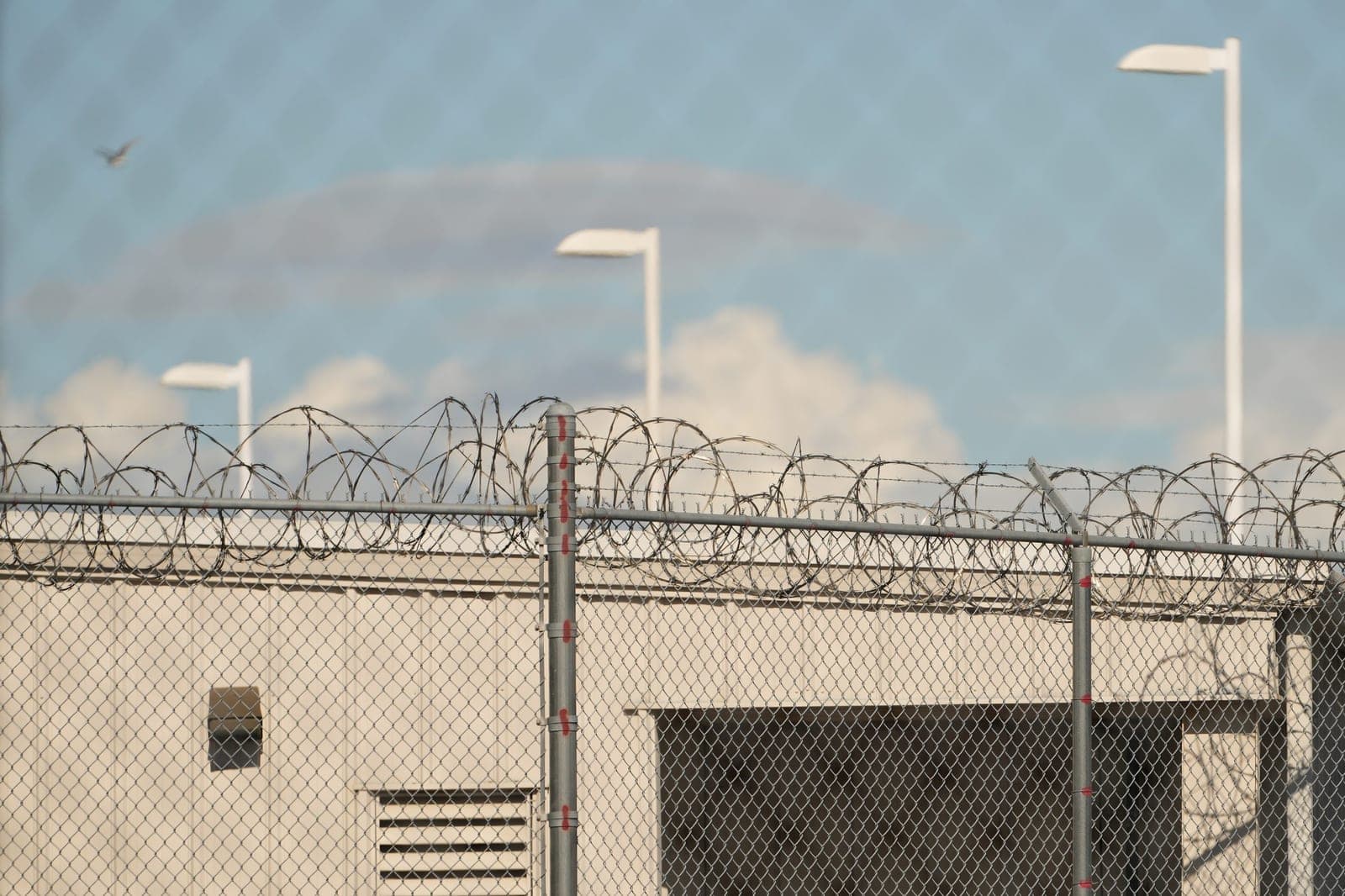
Public Editor: ICE detainees’ deaths raise questions about news coverage of Asian communities
Despite the recent deaths of two Asian American immigrants in the custody of U.S. Immigration and Customs Enforcement at the correctional facility in Bunker Hill, voices from Indianapolis’ Asian community have been missing from news coverage. In fact, it’s easier to find a restaurant review of the city’s Asian cuisine than it is to know what’s going on in that community, based on local coverage. On April 1, Tuan Van Bui, 55, was the 48th person to die in ICE custody during the current administration. He was the second person to die at Indiana’s immigration detention center, the Miami Correctional Facility, which ICE has been using since October 2025. A detainee originally from Cambodia, Lorth Sim, 59, died in custody on Feb. 16 of cardiovascular disease and diabetes complications. Bui’s death is still under investigation. U.S. Rep. André Carson called for a full investigation into both deaths and raised concerns about poor conditions at the facility after a tour of it on April 9. Most of Indy’s news outlets are covering immigration policy issues, especially Senate Bill 76 (the FAIRNESS Act), which passed this year. That measure requires local governments to cooperate with ICE. Here’s how some local outlets have approached immigration: WFYI: policy analysis, legislative updates and community impact IndyStar: Investigative reports on federal DHS/ICE plans and local law enforcement Indiana Capital Chronicle: Statehouse-specific reporting on immigration bills and executive orders Mirror Indy: Alignment of state bills with federal enforcement goals and community advocacy And yet, we know hardly anything about the two men who died or the communities they came from. No outlet has quoted anyone from the Vietnamese or Cambodian communities to explore how these deaths have impacted them or what their lives have been like since ICE ramped up its presence in our state. Everything we know about Bui’s death, the latest, comes from an ICE press release. The government paints him as a “criminal illegal alien from Vietnam” who’s had multiple run-ins with the authorities, resulting in over a dozen arrests. Even the national news failed to convey anything more than these details. With the only information coming from ICE, which seems intent on dehumanizing the men who have died in custody, I can see how challenging it is to offer a complete story. That challenge is compounded by the fact that journalists in our community do not appear to have strong connections to our Asian American communities. Most of the stories that we news consumers get about Asians in Indy are about food and festivals, something my journalism mentors called “zoo reporting.” This amounts to reporting on an ethnic community through the lens of the white majority, highlighting limited aspects of that community’s culture. When news stories on small communities are shallow, they never reflect the people in our neighborhoods with the respect, depth, analysis, and consideration they do for the majority population. Treated like foreigners Rupal Thanawala, president of the board of directors for the Asian American Alliance of Indianapolis, said her heart aches for all of the deaths that have happened in ICE detention centers. She believes that Asians are not well represented in the media and are often misrepresented. “We are often treated as foreigners or outsiders,” she said. “Although many residents are third- or fourth-generation Americans. We cherish our heritage, but are proud to be Americans.” Thanawala said that she wished local journalists called about the good things that are happening in Indy’s Asian community, not just when tragedy strikes, as has happened in the past. “What’s happening right now and always with our communities, we are an afterthought, always,” she said. “I feel that there’s so many great things happening. There’s so many other issues also happening about our community that have not been covered in the media.” Feeling invisible Thanawala said she feels like segments of her community go unnoticed because they make up only a small portion of the population. Even in May, which is Asian American and Pacific Islander Heritage Month, she said, it’s difficult to attract the attention of local media. It’s been even more difficult to get inclusive stories about America’s 250th anniversary. “There has really not been enough attention because they say, ‘oh, you’re just 2% of the population or 3% — whatever number you want to say — so, you’re not that critical for us,” she said. “We are contributing to this society as any other responsible citizen.” According to 2024 Census data, 4.2% of the city’s population identifies as Asian, and 12.7% of residents were born outside of the country. Additionally, the largest populations of foreign-born residents are from Mexico, India, and China, in that order. Because members of the Asian community make up such a small percentage of the population in the state, Thanawala said her organization’s strategy has been to build collaborations with more than 200 Asian American organizations in Indiana to collectively make their presence known. “So, just to give you perspective, we have around 275,000 Asian Americans by the Bureau of Census,” she said, describing the entire state, which includes the larger populations of Indians, Chinese and Burmese residents, but represent over 45 nationalities and cultures. ICE’s presence in the state has her community scared. “We can be very visibly identified as an Asian American, and that’s why, as a precaution, a lot of people started carrying their state-issued ID cards and passports — because they don’t want to be targeted.” There are consequences for our entire community when the voices of our neighbors go missing from coverage. Angie Chuang, associate professor of journalism at the University of Colorado, Boulder, notes this disparity in her book “American Otherness in Journalism.” “For much of their history in the United States, Asian American immigrants have often been rendered invisible, or have been inaccurately lumped under a problematic stereotype of the ‘model minority,’” she said via email. “The perception that Asian immigrants are a monolith defined by high-achieving ethnic groups recruited for their high education and professional expertise starting in the mid-1960s overlooks the genuine struggles of refugee and working-class Asian immigrant populations.” Chuang noted that the deaths of a Vietnamese man and a Cambodian man in Indiana while in ICE custody are two examples of how Asian immigrant communities have been profoundly impacted by ICE crackdowns. “Many of those detained in the ICE actions in Minneapolis were Hmong immigrants from Laos who were U.S. citizens and veterans of the U.S. ‘secret wars’ in that country,” Chuang said. “These stories have been underreported overall, and often Asian American immigrant and refugee populations are left out of news media narratives about impacts of increased ICE enforcement and abuse of power.” Unnoticed deaths The two men who have died here in ICE custody are virtually unknown and therefore invisible. Journalists haven’t shared the perspectives of their families or from anyone who knew them. Sim, the Cambodian man, was arrested in Boston and transferred here. All we know about Bui is that he was taken into custody in Philadelphia, Indiana. It’s possible that no one in our community has any connection to either man, but that doesn’t mean no one here is mourning their deaths. When communities don’t see themselves represented in the newsroom staff or coverage, they may not reach out to reporters to share significant stories. Would you trust a medium where you never saw the people around you in its work? Stories grow cold and fade away when reporters don’t have ties within a community or connection to sources for deep reporting. We are diminished by the thin narratives we have about Tuan Van Bui and Lorth Sim. They died in the custody of our government, in a facility in our community. And yet we know so little about them or about our Vietnamese and Cambodian communities. We are all poorer for our inability to know our neighbors. Tracey Compton is Poynter’s Indianapolis Public Editor. You can send your questions about local media to her at indypubliceditor@poynter.org. Mirror Indy publishes the Indianapolis public editor columns as part of a partnership with Poynter Institute to increase media literacy and trust in local journalism. The post Public Editor: ICE detainees’ deaths raise questions about news coverage of Asian communities appeared first on Mirror Indy.