6 stories credited to KESQ
13 stories on kesq.com credited to other publishers
Latest story Apr 22, 2026 · on ChamberLight since Apr 2026
A story can appear as several articles (copies of the same piece), so counts of stories and of articles differ.
Scores for KESQ
Originality
2 of those 4 carry an unconfirmed copying flag, which is not evidence either way.
19 stories · updated Sep 24, 2026
Scores last checked Sep 25, 2026.
Articles this site reproduces
How provenance is decidedOriginal publishers of articles on kesq.com
Counted from articles on kesq.com whose original publisher is verified from the page itself or confirmed by an independent signal.
Stories ChamberLight collected, by month
Stories credited to KESQ, by publication date. ChamberLight collects articles that mention the officials it tracks, so this shows its own coverage of this source, not how much the source publishes.
- Stories from KESQ
- Shaded: ChamberLight collected no stories, or almost none, from any outlet (a gap in its collection, not in the outlet’s publishing)
Show as a table
| Month | Stories | All outlets |
|---|---|---|
| April 2026 | 6 | 3,219 |
| May 2026 | 0 | none collected |
| June 2026 | 0 | none collected |
| July 2026 | 0 | none collected |
| August 2026 | 0 | 1 (collection gap) |
| September 2026 | 0 | 598 |
Top topics
Share of this source’s stories tagged with each topic. A story can carry several topics, so the shares do not add up to 100%.
- Ethics/Corruption5
83% of 6 stories · 56% across all outlets
- Voting Rights4
67% of 6 stories · 18% across all outlets
- Criminal Justice3
50% of 6 stories · 18% across all outlets
- Budget/Spending2
33% of 6 stories · 30% across all outlets
- Economy1
17% of 6 stories · 24% across all outlets
- Foreign Policy1
17% of 6 stories · 28% across all outlets
- Healthcare1
17% of 6 stories · 7% across all outlets
- Labor/Unions1
17% of 6 stories · 4% across all outlets
The thin mark on each bar is the topic’s share across all outlets.
Who they cover
Party of the officials these stories are mainly about, across all 8 officials named. A story counts once for each official it is mainly about, so the split is over 9 story–official pairs, from 6 stories.
- Democrat44% · 4 pairs
- Republican44% · 4 pairs
- Party not recorded11% · 1 pair
Most covered
Stories mainly about each official, and their share of the source’s 6 stories.
Article tone
ChamberLight’s article analysis assigns each story a tone toward the official it covers. It describes the coverage of that official, not KESQ’s stance, and reader votes do not change it. 6 stories.
- Good Look
- 0 (0%)
- Mixed
- 4 (67%)
- Informational
- 0 (0%)
- Bad Look
- 2 (33%)
Challenges to these scores
No one has challenged a score on this page yet. Anyone can; editors publish every outcome here.
Articles served from kesq.com
43
Virginia voters to decide on new House map with major midterm implications
CNN By Jeff Zeleny, CNN (CNN) — Virginia is the latest front in an unprecedented coast-to-coast redistricting war, with voters on Tuesday set to determine whether to accept or reject a Democratic plan to dramatically redraw the state’s congressional maps and help shape the midterm elections. Nearly 1.4 million Virginians have already cast early ballots, a sign of remarkable interest for an April special election, ahead of Tuesday’s final day of voting. If enacted, the plan could help Democrats win 10 of the state’s 11 congressional districts – a major shift from the current balance of six seats held by Democrats and five by Republicans. “We didn’t start this fight, but I’m saying to Virginia, we need to finish it,” Delores McQuinn, a Democratic member of the House of Delegates, told CNN at a rally in the final days of the redistricting campaign. “We can help level the playing field.” Virginia is one of the final chapters in a redistricting arms race that President Donald Trump started last year in Texas when he said Republicans were “entitled to five more seats.” California Democrats responded, along with a handful of other states, in a tit-for-tat that has ultimately yielded nine more Republican-friendly seats and six that favor Democrats. “What’s happening now is the most blatant power grab that has ever been demonstrated,” said Glenn Youngkin, a former Virginia governor and a leading Republican voice against the measure, who avoided mention of how Texas kicked off the rare mid-decade redistricting fight. Democrats have raised more than twice as much money than Republicans in the closely watched contest that could help determine which party controls Congress after the fall elections. On advertising alone, Democrats have spent $55 million, according to AdImpact, compared to $23 million for Republicans. Despite the wide disparity, Democrats acknowledge that victory is far from certain, saying turnout on Election Day will be critical. Republicans share that sentiment and believe creating a 10-1 advantage for Democrats is at odds with the electorate in a state former Vice President Kamala Harris won with nearly 52% of the vote in 2024. Here are a few dynamics at play – for Virginia and the nation. High stakes for Democrats For Democrats, the stakes in Virginia are remarkably high. So, too, are the rewards. If the referendum succeeds Tuesday night, the party suddenly has more breathing room in its quest to win control of the US House in the midterm elections. The national political winds already favor Democrats this year, but a Virginia victory would super-charge their prospects. “They thought that Democrats were going to step back,” House Democratic Leader Hakeem Jeffries told supporters during a rally in the final days of the campaign. “Well, we’re making clear we’re not here to step back. We’re here to fight back.” On the eve of the election, Jeffries told reporters: “It’s gonna be close because Virginia is a purple state.” Jeffries has been at the center of the Democratic strategy in Virginia, a plan that has long worried some state party leaders as a potential overreach. His comments Monday underscore how cautiously Democrats are eyeing — and lowering expectations for — the special election, which comes five months after the party swept the Virginia governor’s race by 15 percentage points last fall. But if Democrats win in November, Jeffries stands the most to gain – likely becoming House Speaker, a fact he rarely mentions, but one that his Republican rivals point out again and again. “Do you want to see Speaker Hakeem Jeffries?” Speaker Mike Johnson said as he rallied Republican opposition to the referendum, trying to use Jeffries as a motivating force by sounding the alarm about the prospect of the GOP losing its majority next year. Trump, Obama loom large The president has been a dominating factor in the race, but nearly an absent one. Aside from a tele-rally on the eve of the election, Trump played little hands-on role in the GOP campaign urging Virginians to vote against the referendum. “The whole country is watching it’s so important and so unfair what they’ve done,” Trump said in brief remarks Monday evening. “We need every Virginia patriot to get out and vote no, no, no on the radical Democrats’ unfair ballot referendum.” Yet he played a central part on the Democratic side, with his name repeatedly invoked to raise enthusiasm among Trump critics. “Voting yes will stop Donald Trump’s scheme to rig the midterm elections,” Rep. Jennifer McClellan, a Virginia Democrat, told supporters at a rally in Richmond. “Voting yes will stop the MAGA power grab.” With the midterm elections a little more than six months away, Tuesday’s outcome could offer fresh clues for which side Trump motivates more – Republicans or Democrats. Former President Barack Obama has also been at the center of the Virginia race – featured in ads on both sides – as Democrats have called on him to rally the party’s base even as Republicans have seized on his previous comments speaking against gerrymandering. “By voting yes, you can push back against the Republicans trying to give themselves an unfair advantage in the midterms,” Obama said in a video released Friday, which aides said was intended to clear up any confusion. “By voting yes, you can take a temporary step to level the playing field.” Groups opposing the redistricting effort have featured some of Obama’s past criticisms of gerrymandering, including this sentiment aimed at independent voters in TV ads and mailers: “Because of things like political gerrymandering, our parties have moved further and further apart and it’s harder and harder to find common ground.” National implications, but local elections The national implications of the Virginia referendum are clear, given the narrow GOP majority in the House and the redistricting battle playing out across the country for nearly a year. But the race could also hinge on far more local concerns, including those of rural voters like Tara Bowman of Woodstock. She lives about 90 minutes away from the Washington suburbs of Fairfax and McLean, with whom she has no interest in sharing a member of Congress. “I think the new map is absolutely horrible,” Bowman said. “I do not want my congressman to be from Fairfax. No, no, no, no.” To produce a 10-1 advantage in the state’s congressional delegation, Virginia Democrats are proposing a new map that would carve up deep blue districts in northern Virginia and around Richmond, while creating a new district along the Blue Ridge Mountains that connects several college towns. The constitutional amendment on the ballot Tuesday would allow lawmakers to redraw the state’s congressional map before the November elections, returning the authority of drawing districts to a redistricting commission in 2031 following the next census. If voters reject the referendum, the current map with its 6-to-5 split in favor of Democrats remains in place – and campaigns for those seats will begin in earnest. For all the national implications hanging over the race, including a question of which party should control Congress in November, the decisions voters make on Tuesday will be done far closer to home. CNN’s David Wright contributed to this report. The-CNN-Wire ™ & © 2026 Cable News Network, Inc., a Warner Bros. Discovery Company. All rights reserved. The post Virginia voters to decide on new House map with major midterm implications appeared first on KESQ.
Virginia voters to decide on new House map with major midterm implications
CNN By Jeff Zeleny, CNN (CNN) — Virginia is the latest front in an unprecedented coast-to-coast redistricting war, with voters on Tuesday set to determine whether to accept or reject a Democratic plan to dramatically redraw the state’s congressional maps and help shape the midterm elections. Nearly 1.4 million Virginians have already cast early ballots, a sign of remarkable interest for an April special election, ahead of Tuesday’s final day of voting. If enacted, the plan could help Democrats win 10 of the state’s 11 congressional districts – a major shift from the current balance of six seats held by Democrats and five by Republicans. “We didn’t start this fight, but I’m saying to Virginia, we need to finish it,” Delores McQuinn, a Democratic member of the House of Delegates, told CNN at a rally in the final days of the redistricting campaign. “We can help level the playing field.” Virginia is one of the final chapters in a redistricting arms race that President Donald Trump started last year in Texas when he said Republicans were “entitled to five more seats.” California Democrats responded, along with a handful of other states, in a tit-for-tat that has ultimately yielded nine more Republican-friendly seats and six that favor Democrats. “What’s happening now is the most blatant power grab that has ever been demonstrated,” said Glenn Youngkin, a former Virginia governor and a leading Republican voice against the measure, who avoided mention of how Texas kicked off the rare mid-decade redistricting fight. Democrats have raised more than twice as much money than Republicans in the closely watched contest that could help determine which party controls Congress after the fall elections. On advertising alone, Democrats have spent $55 million, according to AdImpact, compared to $23 million for Republicans. Despite the wide disparity, Democrats acknowledge that victory is far from certain, saying turnout on Election Day will be critical. Republicans share that sentiment and believe creating a 10-1 advantage for Democrats is at odds with the electorate in a state former Vice President Kamala Harris won with nearly 52% of the vote in 2024. Here are a few dynamics at play – for Virginia and the nation. High stakes for Democrats For Democrats, the stakes in Virginia are remarkably high. So, too, are the rewards. If the referendum succeeds Tuesday night, the party suddenly has more breathing room in its quest to win control of the US House in the midterm elections. The national political winds already favor Democrats this year, but a Virginia victory would super-charge their prospects. “They thought that Democrats were going to step back,” House Democratic Leader Hakeem Jeffries told supporters during a rally in the final days of the campaign. “Well, we’re making clear we’re not here to step back. We’re here to fight back.” On the eve of the election, Jeffries told reporters: “It’s gonna be close because Virginia is a purple state.” Jeffries has been at the center of the Democratic strategy in Virginia, a plan that has long worried some state party leaders as a potential overreach. His comments Monday underscore how cautiously Democrats are eyeing — and lowering expectations for — the special election, which comes five months after the party swept the Virginia governor’s race by 15 percentage points last fall. But if Democrats win in November, Jeffries stands the most to gain – likely becoming House Speaker, a fact he rarely mentions, but one that his Republican rivals point out again and again. “Do you want to see Speaker Hakeem Jeffries?” Speaker Mike Johnson said as he rallied Republican opposition to the referendum, trying to use Jeffries as a motivating force by sounding the alarm about the prospect of the GOP losing its majority next year. Trump, Obama loom large The president has been a dominating factor in the race, but nearly an absent one. Aside from a tele-rally on the eve of the election, Trump played little hands-on role in the GOP campaign urging Virginians to vote against the referendum. “The whole country is watching it’s so important and so unfair what they’ve done,” Trump said in brief remarks Monday evening. “We need every Virginia patriot to get out and vote no, no, no on the radical Democrats’ unfair ballot referendum.” Yet he played a central part on the Democratic side, with his name repeatedly invoked to raise enthusiasm among Trump critics. “Voting yes will stop Donald Trump’s scheme to rig the midterm elections,” Rep. Jennifer McClellan, a Virginia Democrat, told supporters at a rally in Richmond. “Voting yes will stop the MAGA power grab.” With the midterm elections a little more than six months away, Tuesday’s outcome could offer fresh clues for which side Trump motivates more – Republicans or Democrats. Former President Barack Obama has also been at the center of the Virginia race – featured in ads on both sides – as Democrats have called on him to rally the party’s base even as Republicans have seized on his previous comments speaking against gerrymandering. “By voting yes, you can push back against the Republicans trying to give themselves an unfair advantage in the midterms,” Obama said in a video released Friday, which aides said was intended to clear up any confusion. “By voting yes, you can take a temporary step to level the playing field.” Groups opposing the redistricting effort have featured some of Obama’s past criticisms of gerrymandering, including this sentiment aimed at independent voters in TV ads and mailers: “Because of things like political gerrymandering, our parties have moved further and further apart and it’s harder and harder to find common ground.” National implications, but local elections The national implications of the Virginia referendum are clear, given the narrow GOP majority in the House and the redistricting battle playing out across the country for nearly a year. But the race could also hinge on far more local concerns, including those of rural voters like Tara Bowman of Woodstock. She lives about 90 minutes away from the Washington suburbs of Fairfax and McLean, with whom she has no interest in sharing a member of Congress. “I think the new map is absolutely horrible,” Bowman said. “I do not want my congressman to be from Fairfax. No, no, no, no.” To produce a 10-1 advantage in the state’s congressional delegation, Virginia Democrats are proposing a new map that would carve up deep blue districts in northern Virginia and around Richmond, while creating a new district along the Blue Ridge Mountains that connects several college towns. The constitutional amendment on the ballot Tuesday would allow lawmakers to redraw the state’s congressional map before the November elections, returning the authority of drawing districts to a redistricting commission in 2031 following the next census. If voters reject the referendum, the current map with its 6-to-5 split in favor of Democrats remains in place – and campaigns for those seats will begin in earnest. For all the national implications hanging over the race, including a question of which party should control Congress in November, the decisions voters make on Tuesday will be done far closer to home. CNN’s David Wright contributed to this report. The-CNN-Wire ™ & © 2026 Cable News Network, Inc., a Warner Bros. Discovery Company. All rights reserved. The post Virginia voters to decide on new House map with major midterm implications appeared first on KESQ.

Feud between Mace and Mills flares as the Republicans trade barbs, expulsion threats
By Sarah Ferris, Ellis Kim, CNN (CNN) — A deeply personal grudge between a pair of Republicans — Reps. Cory Mills of Florida and Nancy Mace of South Carolina — has escalated on Capitol Hill, as Mills accused his long-time foe of trying to profit off efforts to oust him. The spat between the two firebrand conservatives is gaining traction in the halls of Congress and online among the MAGA base at a precarious time for President Donald Trump’s party. GOP leadership is already struggling to keep its razor-thin majority on track to advance key priorities — and needs every one of its Republican seats. While Mills and Mace have traded personal barbs for years, some of their more serious threats in recent days could jeopardize the fragile GOP unity in Congress. The two have floated bringing dueling expulsion measures — the most severe consequence possible for a member of Congress — in direct defiance of GOP leaders’ pleas to keep the peace in their party. Speaker Mike Johnson, who governs the House with just a two-vote margin, made clear to reporters Monday evening that he did not support members of his party going after each other. “It is not something I encourage, no. Look, we have a process here,” Johnson said, adding later: “So no, I’m not in favor.” Mills has since backed down from his threat to force an ouster vote against Mace — but Mace has only appeared to embrace the stand-off, telling CNN: “Bring it on.” If a vote takes place, it could cause ugly divisions in the narrowly divided House GOP, with significant implications for Johnson’s tiny majority. Asked about Mace’s expulsion push on Tuesday, Mills dismissed it as “political theatrics for fundraising,” lashing out at Mace for singling him out for allegations that he said have never been proven by a court or an independent watchdog. He went directly after the congresswoman, calling her out for “always creating drama” with the intent of raising money, but then not following through with her threats. Mace is currently threatening to force a vote to expel Mills on the floor, but she has not yet triggered it. “If you’re going to file a resolution, why not call it a privileged motion where you can actually put it on the floor for a vote? Why just fundraise off of it?” Mills said of Mace. “Cory Mills can call it whatever he wants, but the guy is clearly unfit to serve. He should worry less about me and more about packing up his office. His days are numbered,” Mace said in a statement to CNN in response to a request for comment. A Defiant Mills says he won’t resign Mills told CNN on Tuesday he would not resign from Congress, despite calls from some in his own party to step down amid questions over sexual misconduct and other allegations. “There’s absolutely no reason to resign,” he told CNN, adding that Johnson has told him in conversations not to. “He told me not to resign, and he told me that this is why we have this process.” The speaker would not confirm the exchange directly, but he insisted Mills should be afforded due process. “Cory Mills is going through the same due process that was afforded to Cherfilus-McCormick and anyone else who has allegations made against them,” the speaker said. “I’ve asked and answered this question a thousand times. He is in the middle of an Ethics Committee process and so everyone is due the opportunity to present their defenses and go through that.” He also wouldn’t say directly whether he will support Mills’ reelection bid, though he noted he views himself “in charge” of reelecting GOP incumbents. “He’s an incumbent and I’m in charge of getting all the incumbents — Republican incumbents reelected, and so – of course, that was all done well before any of these allegations were coming out. But he has the right to answer to the allegations, and that’s what they’re doing,” Johnson said. He said he would no longer comment on Mills, telling reporters, “I’m done commenting on it. I can’t. The speaker of the House does not put a thumb on the scale for the Ethics Committee investigation.” The Ethics Committee is currently looking into multiple allegations made against Mills, including campaign finance violations and sexual misconduct. The Florida congressman has also been under investigation by DC police for allegedly assaulting an individual. He was also previously ordered by a judge not to have any contact with an ex-girlfriend, who accused the congressman of having threatened to release sexually explicit images and videos of her after their relationship ended. Mills has repeatedly denied all of the allegations against him, remaining defiant amid renewed scrutiny. “I can tell you that there’s no open criminal or civil case against me, nothing. I’ve never been arrested and/or charged with anything that’s criminal and or civil. I have no federal indictments or anything for alleged federal fraud. … And I’ve never had any type of sexual misconduct or inappropriate behavior that involves staff or Hill and things like this,” the Florida congressman said Tuesday of the myriad allegations he’s facing. It’s not clear yet whether Mace’s push will meet the high bar for expulsion, which requires two-thirds of members to support it. But some key Republicans told CNN on Tuesday they’re not ruling it out. GOP Rep. Lauren Boebert left the door open to voting to expel Mills, one of the remaining lawmakers under review by the House Ethics Committee following a series of resignations in the past week. She told CNN that she would want to weigh the details of a resolution to expel him if it comes to the floor. Mills repeatedly bristled at being lumped together with the three lawmakers who recently resigned from the House in disgrace — former Reps. Eric Swalwell, Tony Gonzales, and Sheila Cherfilus-McCormick — and who faced calls for their expulsion this month before they stepped down. He argued the investigation is different and stressed that he is fully cooperating with the House Ethics Committee. “This is political tit for tat. If one goes, they want another one to go. I’m not in the category of Swalwell, a Gonzales, and or a Cherfilus-McCormick,” he said. He added that he and his lawyers have so far turned over many “documents” to the ethics panel but did not have any insight into how much longer that probe could last. “Whether you’re the speaker, minority leader, whatever, no one has that level of visibility. All I can say is, everything they’ve asked of us, we’ve compiled,” he said. This story has been updated with additional details. The-CNN-Wire ™ & © 2026 Cable News Network, Inc., a Warner Bros. Discovery Company. All rights reserved. CNN’s Manu Raju, Alison Main, Kendall Wright and Arpita Dasika contributed to this report. The post Feud between Mace and Mills flares as the Republicans trade barbs, expulsion threats appeared first on KESQ.
Feud between Mace and Mills flares as the Republicans trade barbs, expulsion threats
By Sarah Ferris, Ellis Kim, CNN (CNN) — A deeply personal grudge between a pair of Republicans — Reps. Cory Mills of Florida and Nancy Mace of South Carolina — has escalated on Capitol Hill, as Mills accused his long-time foe of trying to profit off efforts to oust him. The spat between the two firebrand conservatives is gaining traction in the halls of Congress and online among the MAGA base at a precarious time for President Donald Trump’s party. GOP leadership is already struggling to keep its razor-thin majority on track to advance key priorities — and needs every one of its Republican seats. While Mills and Mace have traded personal barbs for years, some of their more serious threats in recent days could jeopardize the fragile GOP unity in Congress. The two have floated bringing dueling expulsion measures — the most severe consequence possible for a member of Congress — in direct defiance of GOP leaders’ pleas to keep the peace in their party. Speaker Mike Johnson, who governs the House with just a two-vote margin, made clear to reporters Monday evening that he did not support members of his party going after each other. “It is not something I encourage, no. Look, we have a process here,” Johnson said, adding later: “So no, I’m not in favor.” Mills has since backed down from his threat to force an ouster vote against Mace — but Mace has only appeared to embrace the stand-off, telling CNN: “Bring it on.” If a vote takes place, it could cause ugly divisions in the narrowly divided House GOP, with significant implications for Johnson’s tiny majority. Asked about Mace’s expulsion push on Tuesday, Mills dismissed it as “political theatrics for fundraising,” lashing out at Mace for singling him out for allegations that he said have never been proven by a court or an independent watchdog. He went directly after the congresswoman, calling her out for “always creating drama” with the intent of raising money, but then not following through with her threats. Mace is currently threatening to force a vote to expel Mills on the floor, but she has not yet triggered it. “If you’re going to file a resolution, why not call it a privileged motion where you can actually put it on the floor for a vote? Why just fundraise off of it?” Mills said of Mace. “Cory Mills can call it whatever he wants, but the guy is clearly unfit to serve. He should worry less about me and more about packing up his office. His days are numbered,” Mace said in a statement to CNN in response to a request for comment. A Defiant Mills says he won’t resign Mills told CNN on Tuesday he would not resign from Congress, despite calls from some in his own party to step down amid questions over sexual misconduct and other allegations. “There’s absolutely no reason to resign,” he told CNN, adding that Johnson has told him in conversations not to. “He told me not to resign, and he told me that this is why we have this process.” The speaker would not confirm the exchange directly, but he insisted Mills should be afforded due process. “Cory Mills is going through the same due process that was afforded to Cherfilus-McCormick and anyone else who has allegations made against them,” the speaker said. “I’ve asked and answered this question a thousand times. He is in the middle of an Ethics Committee process and so everyone is due the opportunity to present their defenses and go through that.” He also wouldn’t say directly whether he will support Mills’ reelection bid, though he noted he views himself “in charge” of reelecting GOP incumbents. “He’s an incumbent and I’m in charge of getting all the incumbents — Republican incumbents reelected, and so – of course, that was all done well before any of these allegations were coming out. But he has the right to answer to the allegations, and that’s what they’re doing,” Johnson said. He said he would no longer comment on Mills, telling reporters, “I’m done commenting on it. I can’t. The speaker of the House does not put a thumb on the scale for the Ethics Committee investigation.” The Ethics Committee is currently looking into multiple allegations made against Mills, including campaign finance violations and sexual misconduct. The Florida congressman has also been under investigation by DC police for allegedly assaulting an individual. He was also previously ordered by a judge not to have any contact with an ex-girlfriend, who accused the congressman of having threatened to release sexually explicit images and videos of her after their relationship ended. Mills has repeatedly denied all of the allegations against him, remaining defiant amid renewed scrutiny. “I can tell you that there’s no open criminal or civil case against me, nothing. I’ve never been arrested and/or charged with anything that’s criminal and or civil. I have no federal indictments or anything for alleged federal fraud. … And I’ve never had any type of sexual misconduct or inappropriate behavior that involves staff or Hill and things like this,” the Florida congressman said Tuesday of the myriad allegations he’s facing. It’s not clear yet whether Mace’s push will meet the high bar for expulsion, which requires two-thirds of members to support it. But some key Republicans told CNN on Tuesday they’re not ruling it out. GOP Rep. Lauren Boebert left the door open to voting to expel Mills, one of the remaining lawmakers under review by the House Ethics Committee following a series of resignations in the past week. She told CNN that she would want to weigh the details of a resolution to expel him if it comes to the floor. Mills repeatedly bristled at being lumped together with the three lawmakers who recently resigned from the House in disgrace — former Reps. Eric Swalwell, Tony Gonzales, and Sheila Cherfilus-McCormick — and who faced calls for their expulsion this month before they stepped down. He argued the investigation is different and stressed that he is fully cooperating with the House Ethics Committee. “This is political tit for tat. If one goes, they want another one to go. I’m not in the category of Swalwell, a Gonzales, and or a Cherfilus-McCormick,” he said. He added that he and his lawyers have so far turned over many “documents” to the ethics panel but did not have any insight into how much longer that probe could last. “Whether you’re the speaker, minority leader, whatever, no one has that level of visibility. All I can say is, everything they’ve asked of us, we’ve compiled,” he said. This story has been updated with additional details. The-CNN-Wire ™ & © 2026 Cable News Network, Inc., a Warner Bros. Discovery Company. All rights reserved. CNN’s Manu Raju, Alison Main, Kendall Wright and Arpita Dasika contributed to this report. The post Feud between Mace and Mills flares as the Republicans trade barbs, expulsion threats appeared first on KESQ.
Feud between Mace and Mills flares as the Republicans trade barbs, expulsion threats
By Sarah Ferris, Ellis Kim, CNN (CNN) — A deeply personal grudge between a pair of Republicans — Reps. Cory Mills of Florida and Nancy Mace of South Carolina — has escalated on Capitol Hill, as Mills accused his long-time foe of trying to profit off efforts to oust him. The spat between the two firebrand conservatives is gaining traction in the halls of Congress and online among the MAGA base at a precarious time for President Donald Trump’s party. GOP leadership is already struggling to keep its razor-thin majority on track to advance key priorities — and needs every one of its Republican seats. While Mills and Mace have traded personal barbs for years, some of their more serious threats in recent days could jeopardize the fragile GOP unity in Congress. The two have floated bringing dueling expulsion measures — the most severe consequence possible for a member of Congress — in direct defiance of GOP leaders’ pleas to keep the peace in their party. Speaker Mike Johnson, who governs the House with just a two-vote margin, made clear to reporters Monday evening that he did not support members of his party going after each other. “It is not something I encourage, no. Look, we have a process here,” Johnson said, adding later: “So no, I’m not in favor.” Mills has since backed down from his threat to force an ouster vote against Mace — but Mace has only appeared to embrace the stand-off, telling CNN: “Bring it on.” If a vote takes place, it could cause ugly divisions in the narrowly divided House GOP, with significant implications for Johnson’s tiny majority. Asked about Mace’s expulsion push on Tuesday, Mills dismissed it as “political theatrics for fundraising,” lashing out at Mace for singling him out for allegations that he said have never been proven by a court or an independent watchdog. He went directly after the congresswoman, calling her out for “always creating drama” with the intent of raising money, but then not following through with her threats. Mace is currently threatening to force a vote to expel Mills on the floor, but she has not yet triggered it. “If you’re going to file a resolution, why not call it a privileged motion where you can actually put it on the floor for a vote? Why just fundraise off of it?” Mills said of Mace. “Cory Mills can call it whatever he wants, but the guy is clearly unfit to serve. He should worry less about me and more about packing up his office. His days are numbered,” Mace said in a statement to CNN in response to a request for comment. A Defiant Mills says he won’t resign Mills told CNN on Tuesday he would not resign from Congress, despite calls from some in his own party to step down amid questions over sexual misconduct and other allegations. “There’s absolutely no reason to resign,” he told CNN, adding that Johnson has told him in conversations not to. “He told me not to resign, and he told me that this is why we have this process.” The speaker would not confirm the exchange directly, but he insisted Mills should be afforded due process. “Cory Mills is going through the same due process that was afforded to Cherfilus-McCormick and anyone else who has allegations made against them,” the speaker said. “I’ve asked and answered this question a thousand times. He is in the middle of an Ethics Committee process and so everyone is due the opportunity to present their defenses and go through that.” He also wouldn’t say directly whether he will support Mills’ reelection bid, though he noted he views himself “in charge” of reelecting GOP incumbents. “He’s an incumbent and I’m in charge of getting all the incumbents — Republican incumbents reelected, and so – of course, that was all done well before any of these allegations were coming out. But he has the right to answer to the allegations, and that’s what they’re doing,” Johnson said. He said he would no longer comment on Mills, telling reporters, “I’m done commenting on it. I can’t. The speaker of the House does not put a thumb on the scale for the Ethics Committee investigation.” The Ethics Committee is currently looking into multiple allegations made against Mills, including campaign finance violations and sexual misconduct. The Florida congressman has also been under investigation by DC police for allegedly assaulting an individual. He was also previously ordered by a judge not to have any contact with an ex-girlfriend, who accused the congressman of having threatened to release sexually explicit images and videos of her after their relationship ended. Mills has repeatedly denied all of the allegations against him, remaining defiant amid renewed scrutiny. “I can tell you that there’s no open criminal or civil case against me, nothing. I’ve never been arrested and/or charged with anything that’s criminal and or civil. I have no federal indictments or anything for alleged federal fraud. … And I’ve never had any type of sexual misconduct or inappropriate behavior that involves staff or Hill and things like this,” the Florida congressman said Tuesday of the myriad allegations he’s facing. It’s not clear yet whether Mace’s push will meet the high bar for expulsion, which requires two-thirds of members to support it. But some key Republicans told CNN on Tuesday they’re not ruling it out. GOP Rep. Lauren Boebert left the door open to voting to expel Mills, one of the remaining lawmakers under review by the House Ethics Committee following a series of resignations in the past week. She told CNN that she would want to weigh the details of a resolution to expel him if it comes to the floor. Mills repeatedly bristled at being lumped together with the three lawmakers who recently resigned from the House in disgrace — former Reps. Eric Swalwell, Tony Gonzales, and Sheila Cherfilus-McCormick — and who faced calls for their expulsion this month before they stepped down. He argued the investigation is different and stressed that he is fully cooperating with the House Ethics Committee. “This is political tit for tat. If one goes, they want another one to go. I’m not in the category of Swalwell, a Gonzales, and or a Cherfilus-McCormick,” he said. He added that he and his lawyers have so far turned over many “documents” to the ethics panel but did not have any insight into how much longer that probe could last. “Whether you’re the speaker, minority leader, whatever, no one has that level of visibility. All I can say is, everything they’ve asked of us, we’ve compiled,” he said. This story has been updated with additional details. The-CNN-Wire ™ & © 2026 Cable News Network, Inc., a Warner Bros. Discovery Company. All rights reserved. CNN’s Manu Raju, Alison Main, Kendall Wright and Arpita Dasika contributed to this report. The post Feud between Mace and Mills flares as the Republicans trade barbs, expulsion threats appeared first on KESQ.

Virginia voters to decide on new House map with major midterm implications
By Jeff Zeleny, CNN (CNN) — Virginia is the latest front in an unprecedented coast-to-coast redistricting war, with voters on Tuesday set to determine whether to accept or reject a Democratic plan to dramatically redraw the state’s congressional maps and help shape the midterm elections. Nearly 1.4 million Virginians have already cast early ballots, a sign of remarkable interest for an April special election, ahead of Tuesday’s final day of voting. If enacted, the plan could help Democrats win 10 of the state’s 11 congressional districts – a major shift from the current balance of six seats held by Democrats and five by Republicans. “We didn’t start this fight, but I’m saying to Virginia, we need to finish it,” Delores McQuinn, a Democratic member of the House of Delegates, told CNN at a rally in the final days of the redistricting campaign. “We can help level the playing field.” Virginia is one of the final chapters in a redistricting arms race that President Donald Trump started last year in Texas when he said Republicans were “entitled to five more seats.” California Democrats responded, along with a handful of other states, in a tit-for-tat that has ultimately yielded nine more Republican-friendly seats and six that favor Democrats. “What’s happening now is the most blatant power grab that has ever been demonstrated,” said Glenn Youngkin, a former Virginia governor and a leading Republican voice against the measure, who avoided mention of how Texas kicked off the rare mid-decade redistricting fight. Democrats have raised more than twice as much money than Republicans in the closely watched contest that could help determine which party controls Congress after the fall elections. On advertising alone, Democrats have spent $55 million, according to AdImpact, compared to $23 million for Republicans. Despite the wide disparity, Democrats acknowledge that victory is far from certain, saying turnout on Election Day will be critical. Republicans share that sentiment and believe creating a 10-1 advantage for Democrats is at odds with the electorate in a state former Vice President Kamala Harris won with nearly 52% of the vote in 2024. Here are a few dynamics at play – for Virginia and the nation. High stakes for Democrats For Democrats, the stakes in Virginia are remarkably high. So, too, are the rewards. If the referendum succeeds Tuesday night, the party suddenly has more breathing room in its quest to win control of the US House in the midterm elections. The national political winds already favor Democrats this year, but a Virginia victory would super-charge their prospects. “They thought that Democrats were going to step back,” House Democratic Leader Hakeem Jeffries told supporters during a rally in the final days of the campaign. “Well, we’re making clear we’re not here to step back. We’re here to fight back.” On the eve of the election, Jeffries told reporters: “It’s gonna be close because Virginia is a purple state.” Jeffries has been at the center of the Democratic strategy in Virginia, a plan that has long worried some state party leaders as a potential overreach. His comments Monday underscore how cautiously Democrats are eyeing — and lowering expectations for — the special election, which comes five months after the party swept the Virginia governor’s race by 15 percentage points last fall. But if Democrats win in November, Jeffries stands the most to gain – likely becoming House Speaker, a fact he rarely mentions, but one that his Republican rivals point out again and again. “Do you want to see Speaker Hakeem Jeffries?” Speaker Mike Johnson said as he rallied Republican opposition to the referendum, trying to use Jeffries as a motivating force by sounding the alarm about the prospect of the GOP losing its majority next year. Trump, Obama loom large The president has been a dominating factor in the race, but nearly an absent one. Aside from a tele-rally on the eve of the election, Trump played little hands-on role in the GOP campaign urging Virginians to vote against the referendum. “The whole country is watching it’s so important and so unfair what they’ve done,” Trump said in brief remarks Monday evening. “We need every Virginia patriot to get out and vote no, no, no on the radical Democrats’ unfair ballot referendum.” Yet he played a central part on the Democratic side, with his name repeatedly invoked to raise enthusiasm among Trump critics. “Voting yes will stop Donald Trump’s scheme to rig the midterm elections,” Rep. Jennifer McClellan, a Virginia Democrat, told supporters at a rally in Richmond. “Voting yes will stop the MAGA power grab.” With the midterm elections a little more than six months away, Tuesday’s outcome could offer fresh clues for which side Trump motivates more – Republicans or Democrats. Former President Barack Obama has also been at the center of the Virginia race – featured in ads on both sides – as Democrats have called on him to rally the party’s base even as Republicans have seized on his previous comments speaking against gerrymandering. “By voting yes, you can push back against the Republicans trying to give themselves an unfair advantage in the midterms,” Obama said in a video released Friday, which aides said was intended to clear up any confusion. “By voting yes, you can take a temporary step to level the playing field.” Groups opposing the redistricting effort have featured some of Obama’s past criticisms of gerrymandering, including this sentiment aimed at independent voters in TV ads and mailers: “Because of things like political gerrymandering, our parties have moved further and further apart and it’s harder and harder to find common ground.” National implications, but local elections The national implications of the Virginia referendum are clear, given the narrow GOP majority in the House and the redistricting battle playing out across the country for nearly a year. But the race could also hinge on far more local concerns, including those of rural voters like Tara Bowman of Woodstock. She lives about 90 minutes away from the Washington suburbs of Fairfax and McLean, with whom she has no interest in sharing a member of Congress. “I think the new map is absolutely horrible,” Bowman said. “I do not want my congressman to be from Fairfax. No, no, no, no.” To produce a 10-1 advantage in the state’s congressional delegation, Virginia Democrats are proposing a new map that would carve up deep blue districts in northern Virginia and around Richmond, while creating a new district along the Blue Ridge Mountains that connects several college towns. The constitutional amendment on the ballot Tuesday would allow lawmakers to redraw the state’s congressional map before the November elections, returning the authority of drawing districts to a redistricting commission in 2031 following the next census. If voters reject the referendum, the current map with its 6-to-5 split in favor of Democrats remains in place – and campaigns for those seats will begin in earnest. For all the national implications hanging over the race, including a question of which party should control Congress in November, the decisions voters make on Tuesday will be done far closer to home. CNN’s David Wright contributed to this report. The-CNN-Wire ™ & © 2026 Cable News Network, Inc., a Warner Bros. Discovery Company. All rights reserved. The post Virginia voters to decide on new House map with major midterm implications appeared first on KESQ.
Virginia voters to decide on new House map with major midterm implications
By Jeff Zeleny, CNN (CNN) — Virginia is the latest front in an unprecedented coast-to-coast redistricting war, with voters on Tuesday set to determine whether to accept or reject a Democratic plan to dramatically redraw the state’s congressional maps and help shape the midterm elections. Nearly 1.4 million Virginians have already cast early ballots, a sign of remarkable interest for an April special election, ahead of Tuesday’s final day of voting. If enacted, the plan could help Democrats win 10 of the state’s 11 congressional districts – a major shift from the current balance of six seats held by Democrats and five by Republicans. “We didn’t start this fight, but I’m saying to Virginia, we need to finish it,” Delores McQuinn, a Democratic member of the House of Delegates, told CNN at a rally in the final days of the redistricting campaign. “We can help level the playing field.” Virginia is one of the final chapters in a redistricting arms race that President Donald Trump started last year in Texas when he said Republicans were “entitled to five more seats.” California Democrats responded, along with a handful of other states, in a tit-for-tat that has ultimately yielded nine more Republican-friendly seats and six that favor Democrats. “What’s happening now is the most blatant power grab that has ever been demonstrated,” said Glenn Youngkin, a former Virginia governor and a leading Republican voice against the measure, who avoided mention of how Texas kicked off the rare mid-decade redistricting fight. Democrats have raised more than twice as much money than Republicans in the closely watched contest that could help determine which party controls Congress after the fall elections. On advertising alone, Democrats have spent $55 million, according to AdImpact, compared to $23 million for Republicans. Despite the wide disparity, Democrats acknowledge that victory is far from certain, saying turnout on Election Day will be critical. Republicans share that sentiment and believe creating a 10-1 advantage for Democrats is at odds with the electorate in a state former Vice President Kamala Harris won with nearly 52% of the vote in 2024. Here are a few dynamics at play – for Virginia and the nation. High stakes for Democrats For Democrats, the stakes in Virginia are remarkably high. So, too, are the rewards. If the referendum succeeds Tuesday night, the party suddenly has more breathing room in its quest to win control of the US House in the midterm elections. The national political winds already favor Democrats this year, but a Virginia victory would super-charge their prospects. “They thought that Democrats were going to step back,” House Democratic Leader Hakeem Jeffries told supporters during a rally in the final days of the campaign. “Well, we’re making clear we’re not here to step back. We’re here to fight back.” On the eve of the election, Jeffries told reporters: “It’s gonna be close because Virginia is a purple state.” Jeffries has been at the center of the Democratic strategy in Virginia, a plan that has long worried some state party leaders as a potential overreach. His comments Monday underscore how cautiously Democrats are eyeing — and lowering expectations for — the special election, which comes five months after the party swept the Virginia governor’s race by 15 percentage points last fall. But if Democrats win in November, Jeffries stands the most to gain – likely becoming House Speaker, a fact he rarely mentions, but one that his Republican rivals point out again and again. “Do you want to see Speaker Hakeem Jeffries?” Speaker Mike Johnson said as he rallied Republican opposition to the referendum, trying to use Jeffries as a motivating force by sounding the alarm about the prospect of the GOP losing its majority next year. Trump, Obama loom large The president has been a dominating factor in the race, but nearly an absent one. Aside from a tele-rally on the eve of the election, Trump played little hands-on role in the GOP campaign urging Virginians to vote against the referendum. “The whole country is watching it’s so important and so unfair what they’ve done,” Trump said in brief remarks Monday evening. “We need every Virginia patriot to get out and vote no, no, no on the radical Democrats’ unfair ballot referendum.” Yet he played a central part on the Democratic side, with his name repeatedly invoked to raise enthusiasm among Trump critics. “Voting yes will stop Donald Trump’s scheme to rig the midterm elections,” Rep. Jennifer McClellan, a Virginia Democrat, told supporters at a rally in Richmond. “Voting yes will stop the MAGA power grab.” With the midterm elections a little more than six months away, Tuesday’s outcome could offer fresh clues for which side Trump motivates more – Republicans or Democrats. Former President Barack Obama has also been at the center of the Virginia race – featured in ads on both sides – as Democrats have called on him to rally the party’s base even as Republicans have seized on his previous comments speaking against gerrymandering. “By voting yes, you can push back against the Republicans trying to give themselves an unfair advantage in the midterms,” Obama said in a video released Friday, which aides said was intended to clear up any confusion. “By voting yes, you can take a temporary step to level the playing field.” Groups opposing the redistricting effort have featured some of Obama’s past criticisms of gerrymandering, including this sentiment aimed at independent voters in TV ads and mailers: “Because of things like political gerrymandering, our parties have moved further and further apart and it’s harder and harder to find common ground.” National implications, but local elections The national implications of the Virginia referendum are clear, given the narrow GOP majority in the House and the redistricting battle playing out across the country for nearly a year. But the race could also hinge on far more local concerns, including those of rural voters like Tara Bowman of Woodstock. She lives about 90 minutes away from the Washington suburbs of Fairfax and McLean, with whom she has no interest in sharing a member of Congress. “I think the new map is absolutely horrible,” Bowman said. “I do not want my congressman to be from Fairfax. No, no, no, no.” To produce a 10-1 advantage in the state’s congressional delegation, Virginia Democrats are proposing a new map that would carve up deep blue districts in northern Virginia and around Richmond, while creating a new district along the Blue Ridge Mountains that connects several college towns. The constitutional amendment on the ballot Tuesday would allow lawmakers to redraw the state’s congressional map before the November elections, returning the authority of drawing districts to a redistricting commission in 2031 following the next census. If voters reject the referendum, the current map with its 6-to-5 split in favor of Democrats remains in place – and campaigns for those seats will begin in earnest. For all the national implications hanging over the race, including a question of which party should control Congress in November, the decisions voters make on Tuesday will be done far closer to home. CNN’s David Wright contributed to this report. The-CNN-Wire ™ & © 2026 Cable News Network, Inc., a Warner Bros. Discovery Company. All rights reserved. The post Virginia voters to decide on new House map with major midterm implications appeared first on KESQ.
Virginia voters to decide on new House map with major midterm implications
By Jeff Zeleny, CNN (CNN) — Virginia is the latest front in an unprecedented coast-to-coast redistricting war, with voters on Tuesday set to determine whether to accept or reject a Democratic plan to dramatically redraw the state’s congressional maps and help shape the midterm elections. Nearly 1.4 million Virginians have already cast early ballots, a sign of remarkable interest for an April special election, ahead of Tuesday’s final day of voting. If enacted, the plan could help Democrats win 10 of the state’s 11 congressional districts – a major shift from the current balance of six seats held by Democrats and five by Republicans. “We didn’t start this fight, but I’m saying to Virginia, we need to finish it,” Delores McQuinn, a Democratic member of the House of Delegates, told CNN at a rally in the final days of the redistricting campaign. “We can help level the playing field.” Virginia is one of the final chapters in a redistricting arms race that President Donald Trump started last year in Texas when he said Republicans were “entitled to five more seats.” California Democrats responded, along with a handful of other states, in a tit-for-tat that has ultimately yielded nine more Republican-friendly seats and six that favor Democrats. “What’s happening now is the most blatant power grab that has ever been demonstrated,” said Glenn Youngkin, a former Virginia governor and a leading Republican voice against the measure, who avoided mention of how Texas kicked off the rare mid-decade redistricting fight. Democrats have raised more than twice as much money than Republicans in the closely watched contest that could help determine which party controls Congress after the fall elections. On advertising alone, Democrats have spent $55 million, according to AdImpact, compared to $23 million for Republicans. Despite the wide disparity, Democrats acknowledge that victory is far from certain, saying turnout on Election Day will be critical. Republicans share that sentiment and believe creating a 10-1 advantage for Democrats is at odds with the electorate in a state former Vice President Kamala Harris won with nearly 52% of the vote in 2024. Here are a few dynamics at play – for Virginia and the nation. High stakes for Democrats For Democrats, the stakes in Virginia are remarkably high. So, too, are the rewards. If the referendum succeeds Tuesday night, the party suddenly has more breathing room in its quest to win control of the US House in the midterm elections. The national political winds already favor Democrats this year, but a Virginia victory would super-charge their prospects. “They thought that Democrats were going to step back,” House Democratic Leader Hakeem Jeffries told supporters during a rally in the final days of the campaign. “Well, we’re making clear we’re not here to step back. We’re here to fight back.” On the eve of the election, Jeffries told reporters: “It’s gonna be close because Virginia is a purple state.” Jeffries has been at the center of the Democratic strategy in Virginia, a plan that has long worried some state party leaders as a potential overreach. His comments Monday underscore how cautiously Democrats are eyeing — and lowering expectations for — the special election, which comes five months after the party swept the Virginia governor’s race by 15 percentage points last fall. But if Democrats win in November, Jeffries stands the most to gain – likely becoming House Speaker, a fact he rarely mentions, but one that his Republican rivals point out again and again. “Do you want to see Speaker Hakeem Jeffries?” Speaker Mike Johnson said as he rallied Republican opposition to the referendum, trying to use Jeffries as a motivating force by sounding the alarm about the prospect of the GOP losing its majority next year. Trump, Obama loom large The president has been a dominating factor in the race, but nearly an absent one. Aside from a tele-rally on the eve of the election, Trump played little hands-on role in the GOP campaign urging Virginians to vote against the referendum. “The whole country is watching it’s so important and so unfair what they’ve done,” Trump said in brief remarks Monday evening. “We need every Virginia patriot to get out and vote no, no, no on the radical Democrats’ unfair ballot referendum.” Yet he played a central part on the Democratic side, with his name repeatedly invoked to raise enthusiasm among Trump critics. “Voting yes will stop Donald Trump’s scheme to rig the midterm elections,” Rep. Jennifer McClellan, a Virginia Democrat, told supporters at a rally in Richmond. “Voting yes will stop the MAGA power grab.” With the midterm elections a little more than six months away, Tuesday’s outcome could offer fresh clues for which side Trump motivates more – Republicans or Democrats. Former President Barack Obama has also been at the center of the Virginia race – featured in ads on both sides – as Democrats have called on him to rally the party’s base even as Republicans have seized on his previous comments speaking against gerrymandering. “By voting yes, you can push back against the Republicans trying to give themselves an unfair advantage in the midterms,” Obama said in a video released Friday, which aides said was intended to clear up any confusion. “By voting yes, you can take a temporary step to level the playing field.” Groups opposing the redistricting effort have featured some of Obama’s past criticisms of gerrymandering, including this sentiment aimed at independent voters in TV ads and mailers: “Because of things like political gerrymandering, our parties have moved further and further apart and it’s harder and harder to find common ground.” National implications, but local elections The national implications of the Virginia referendum are clear, given the narrow GOP majority in the House and the redistricting battle playing out across the country for nearly a year. But the race could also hinge on far more local concerns, including those of rural voters like Tara Bowman of Woodstock. She lives about 90 minutes away from the Washington suburbs of Fairfax and McLean, with whom she has no interest in sharing a member of Congress. “I think the new map is absolutely horrible,” Bowman said. “I do not want my congressman to be from Fairfax. No, no, no, no.” To produce a 10-1 advantage in the state’s congressional delegation, Virginia Democrats are proposing a new map that would carve up deep blue districts in northern Virginia and around Richmond, while creating a new district along the Blue Ridge Mountains that connects several college towns. The constitutional amendment on the ballot Tuesday would allow lawmakers to redraw the state’s congressional map before the November elections, returning the authority of drawing districts to a redistricting commission in 2031 following the next census. If voters reject the referendum, the current map with its 6-to-5 split in favor of Democrats remains in place – and campaigns for those seats will begin in earnest. For all the national implications hanging over the race, including a question of which party should control Congress in November, the decisions voters make on Tuesday will be done far closer to home. CNN’s David Wright contributed to this report. The-CNN-Wire ™ & © 2026 Cable News Network, Inc., a Warner Bros. Discovery Company. All rights reserved. The post Virginia voters to decide on new House map with major midterm implications appeared first on KESQ.

How a must-win Michigan Senate race turned messy for Democrats
By Manu Raju, Alison Main, CNN (CNN) — Sitting in a coffee shop in his hometown of Ann Arbor, Abdul El-Sayed is ready to dispel the notion that he’s unelectable. The 41-year-old son of Egyptian immigrants whose sharply progressive views align with those of Sen. Bernie Sanders, El-Sayed is seen by many Democrats in Washington as the kind of candidate they fear: someone who wins a primary and loses in November, costing them a shot at the Senate majority. El-Sayed scoffs at that. “I think there is this notion that electability is about being the least offensive,” he told CNN. “If that were true, why would Donald Trump have won the presidency twice?” Whether he’s right could have enormous ramifications for control of the Senate. Michigan’s open Senate seat is now emerging as a GOP hedge against a potential takeover for Democrats, who need to net four seats to flip the chamber. Losing Michigan would make the Democrats’ task almost impossible, a major reason why a leading Republican outside group just announced plans to pour $45 million into the state – more than any other pickup opportunity – to boost former Rep. Mike Rogers, the likely GOP nominee. Republicans are hoping that the ultimate Democratic nominee emerging from the August 4 primary emerges battered and cash-strapped, giving Rogers a leg up. “If he wins this seat, if they are successful in trying to buy this seat, then there is no path at all for Democrats to take control of the US Senate,” said state Sen. Mallory McMorrow, one of the three Democrats vying for the party’s nomination. Yet Democrats have to resolve their own internal struggles first. Rep. Haley Stevens, a 42-year-old who represents a district in the Detroit suburbs, is a favorite among many in the party establishment who see her as the most electable. The 39-year-old McMorrow is trying to brand herself as a candidate who can woo both traditional Democrats and progressives hungry for a shakeup of their party’s leadership. El-Sayed, a former public health official who wrote a book on Medicare for All, is pushing to the left on several key issues. The thorny questions facing Democratic voters: Should they back a candidate certain to energize their progressive base? Or should they fall in line behind the party establishment and pick someone who might better woo swing voters? “Anybody committed to shutting down Trump and the MAGA movement,” said Jeff Albright, an undecided Democratic voter in the Detroit suburb of Canton, when asked about his most important issue. “That’s No. 1.” The splits within the party The fight so far has revealed huge splits among Michigan Democrats over major issues – on immigration enforcement, health care, support for Israel and the state of their party’s leadership. El-Sayed has called to abolish US Immigration and Customs Enforcement while Stevens and McMorrow want changes to ICE’s practices instead. El-Sayed has sworn off any corporate PAC money while Stevens continues to accept PAC funding, despite her calls to overturn the Supreme Court’s Citizens United ruling. While McMorrow now bans corporate donations to her campaign, it’s a shift from her position accepting them when running for state Senate, something she says shows she’s “willing to be someone who evolves” and has now learned how to campaign “differently.” “We can’t be Republican-light,” McMorrow said in an interview at a brewery in the Detroit suburbs. El-Sayed attacked McMorrow for “a flip” in positions. “It’s not just your positions, it’s about whether or not you truly and deeply hold on to them,” El-Sayed said before pointing to Sen. John Fetterman, the Pennsylvania Democrat who has broken with his party and become a villain on the left. “I think so many of us are frustrated by the likes of John Fetterman, a guy who campaigned saying that he was going to take on the swamp, only to become the ogre who lives in the swamp.” El-Sayed bashed both his Democratic foes for a “lack of courage.” “It’s just the same lack of courage that Democrats deploy to argue as to why they should be taking money from corporations, or why they should be hedging their bets on clear, obvious policies like abolishing ICE or guaranteeing health care through Medicare for All,” he said. “What you’re seeing in this race right now is that people are sick and tired of the same old Democrats who lack courage.” McMorrow said a lot of El-Sayed’s campaign is just rhetoric. “Rhetoric is nice, but results are better,” said McMorrow, who is the state Senate Democratic whip. “Just doing rounds and talking about issues and having rhetoric without knowing how to actually implement those things is not going to shake it up at all. That’s just lobbing bombs from the outside.” Asked if she thought El-Sayed would get trounced by Republicans in a general election, Stevens instead focused on her own campaign and her economic message, arguing that she’s “the best person or the only person that can beat Mike Rogers.” How they’d work with their party’s Senate leader also is a flashpoint. Stevens, who has praised Sen. Chuck Schumer as a “great leader” in the past, wouldn’t say if she stood by those comments when asked by CNN, calling it “inside baseball.” El-Sayed said Sen. Chris Van Hollen of Maryland should be the next Democratic leader, as he bashed Schumer over his stance of providing aid to Israel. McMorrow also said it’s time for a change. “We need new leadership,” she said. “Because if you look at polling, the only thing less popular than Donald Trump is the Democratic Party,” McMorrow said. “That’s rough. So we need to run very different Democrats.” The Israel divide There’s perhaps no bigger dividing line in Michigan or national Democratic politics than Israel. There are sizable Arab American and Jewish voter blocs in and around Detroit. Trump flipped Michigan in November 2024 in part by appealing to both Muslims and Jews disaffected by former President Joe Biden’s handling of the Israel-Hamas war. El-Sayed makes no bones about his views, attacking the American Israel Public Affairs Committee, calling Israeli Prime Minister Benjamin Netanyahu a “war criminal,” and referring to Israel’s military campaign in Gaza after Hamas’ October 7 attacks as a “genocide.” Asked if he thinks Israel is as evil as Hamas, El-Sayed said: “Yes. Killing tens of thousands of people makes you pretty damn evil,” he said. “It’s not how evil is this one versus that one: Hamas evil, Israeli government evil. You can say both.” Stevens has the backing of AIPAC, something El-Sayed says is “disastrous for our politics.” “We’re running for Senate for Michigan, and as a senator from Michigan, you should be more interested in what’s happening in Michigan than you are interested in what’s happening in Tel Aviv,” El-Sayed said. Stevens wouldn’t say when asked if she embraced AIPAC’s support. “I’m campaigning in a grassroots way alongside a ton of engaged Michiganders,” she said when asked about AIPAC, saying voters were asking her about their high energy costs. Last year, a United Nations inquiry concluded that Israel had committed genocide against Palestinians in Gaza – an accusation the Israeli government firmly rejects, as does Stevens. “I don’t agree with that,” Stevens said when asked if it were a genocide. McMorrow first notably characterized the Israeli military action in Gaza as a “genocide” when pressed on the issue at a campaign event last fall, though she told voters that the definition of the conflict matters less than reaching a “solution.” She also made clear she would not seek the support of AIPAC, as she faced scrutiny for a Drop Site News report saying she had produced a candidate position paper for the pro-Israel group, according to a campaign call with donors. And on Friday, McMorrow posted on X: “I have not, am not, and will not take money from AIPAC.” Asked by CNN if she believes Netanyahu is a war criminal, McMorrow said: “Watching the devastation, I do believe that war crimes were committed.” The Piker rallies Both McMorrow and Stevens criticized El-Sayed for barnstorming college campuses with left-wing streamer Hasan Piker, who has a history of inflammatory comments, including saying Hamas is “a thousand times better” than Israel and saying “America deserved 9/11.” Piker has walked back the remarks about September 11, but Stevens seized upon them. “That’s not someone I’d be campaigning with,” Stevens said. “Because it’s un-American and we shouldn’t say that America deserved 9/11. This is about winning for Michigan.” El-Sayed took umbrage at Stevens’ criticism. “My understanding of America is, it’s a place where we’re willing to have conversations with folks with whom we disagree,” El-Sayed said. El-Sayed added: “It’s that penchant for cancel culture that I think people hate about Democrats. We sit here from on high and then scold people about who they’re allowed to talk to and who they’re not.” One Democratic voter in Lansing says she would not vote for El-Sayed if he became the nominee, citing in particular his position on Israel. “I don’t want somebody who’s going to pander to whatever is the ‘omnicause’ of the day,” said Robin Gillis, a Stevens supporter. “I want someone who is normal about it. I’m a normal Democrat. I want to vote for a normal Democrat.” Are swing voters ‘mythical’? Earlier this month at Michigan State University, hundreds of students lined up for a chance to hear from both Piker and El-Sayed, with many college-age voters citing the candidate’s staunchly progressive and anti-Israel views. Nick Coffin-Callis, a Democratic voter in Lansing, noted El-Sayed’s support for Medicare for All and free childcare as well as his opposition to Israel. Those views, even if they propel him to a primary victory, could give Rogers and his well-funded allies material for attack ads that national Democrats fear. But when asked if El-Sayed’s ideas would put off swing voters in this purple state, Coffin-Callis demurred in a way that captures the progressive base’s current mood. “I think these swing voters in the center are mythical creatures,” Coffin-Callis said. “I don’t think they necessarily exist.” The-CNN-Wire ™ & © 2026 Cable News Network, Inc., a Warner Bros. Discovery Company. All rights reserved. The post How a must-win Michigan Senate race turned messy for Democrats appeared first on KESQ.
How a must-win Michigan Senate race turned messy for Democrats
By Manu Raju, Alison Main, CNN (CNN) — Sitting in a coffee shop in his hometown of Ann Arbor, Abdul El-Sayed is ready to dispel the notion that he’s unelectable. The 41-year-old son of Egyptian immigrants whose sharply progressive views align with those of Sen. Bernie Sanders, El-Sayed is seen by many Democrats in Washington as the kind of candidate they fear: someone who wins a primary and loses in November, costing them a shot at the Senate majority. El-Sayed scoffs at that. “I think there is this notion that electability is about being the least offensive,” he told CNN. “If that were true, why would Donald Trump have won the presidency twice?” Whether he’s right could have enormous ramifications for control of the Senate. Michigan’s open Senate seat is now emerging as a GOP hedge against a potential takeover for Democrats, who need to net four seats to flip the chamber. Losing Michigan would make the Democrats’ task almost impossible, a major reason why a leading Republican outside group just announced plans to pour $45 million into the state – more than any other pickup opportunity – to boost former Rep. Mike Rogers, the likely GOP nominee. Republicans are hoping that the ultimate Democratic nominee emerging from the August 4 primary emerges battered and cash-strapped, giving Rogers a leg up. “If he wins this seat, if they are successful in trying to buy this seat, then there is no path at all for Democrats to take control of the US Senate,” said state Sen. Mallory McMorrow, one of the three Democrats vying for the party’s nomination. Yet Democrats have to resolve their own internal struggles first. Rep. Haley Stevens, a 42-year-old who represents a district in the Detroit suburbs, is a favorite among many in the party establishment who see her as the most electable. The 39-year-old McMorrow is trying to brand herself as a candidate who can woo both traditional Democrats and progressives hungry for a shakeup of their party’s leadership. El-Sayed, a former public health official who wrote a book on Medicare for All, is pushing to the left on several key issues. The thorny questions facing Democratic voters: Should they back a candidate certain to energize their progressive base? Or should they fall in line behind the party establishment and pick someone who might better woo swing voters? “Anybody committed to shutting down Trump and the MAGA movement,” said Jeff Albright, an undecided Democratic voter in the Detroit suburb of Canton, when asked about his most important issue. “That’s No. 1.” The splits within the party The fight so far has revealed huge splits among Michigan Democrats over major issues – on immigration enforcement, health care, support for Israel and the state of their party’s leadership. El-Sayed has called to abolish US Immigration and Customs Enforcement while Stevens and McMorrow want changes to ICE’s practices instead. El-Sayed has sworn off any corporate PAC money while Stevens continues to accept PAC funding, despite her calls to overturn the Supreme Court’s Citizens United ruling. While McMorrow now bans corporate donations to her campaign, it’s a shift from her position accepting them when running for state Senate, something she says shows she’s “willing to be someone who evolves” and has now learned how to campaign “differently.” “We can’t be Republican-light,” McMorrow said in an interview at a brewery in the Detroit suburbs. El-Sayed attacked McMorrow for “a flip” in positions. “It’s not just your positions, it’s about whether or not you truly and deeply hold on to them,” El-Sayed said before pointing to Sen. John Fetterman, the Pennsylvania Democrat who has broken with his party and become a villain on the left. “I think so many of us are frustrated by the likes of John Fetterman, a guy who campaigned saying that he was going to take on the swamp, only to become the ogre who lives in the swamp.” El-Sayed bashed both his Democratic foes for a “lack of courage.” “It’s just the same lack of courage that Democrats deploy to argue as to why they should be taking money from corporations, or why they should be hedging their bets on clear, obvious policies like abolishing ICE or guaranteeing health care through Medicare for All,” he said. “What you’re seeing in this race right now is that people are sick and tired of the same old Democrats who lack courage.” McMorrow said a lot of El-Sayed’s campaign is just rhetoric. “Rhetoric is nice, but results are better,” said McMorrow, who is the state Senate Democratic whip. “Just doing rounds and talking about issues and having rhetoric without knowing how to actually implement those things is not going to shake it up at all. That’s just lobbing bombs from the outside.” Asked if she thought El-Sayed would get trounced by Republicans in a general election, Stevens instead focused on her own campaign and her economic message, arguing that she’s “the best person or the only person that can beat Mike Rogers.” How they’d work with their party’s Senate leader also is a flashpoint. Stevens, who has praised Sen. Chuck Schumer as a “great leader” in the past, wouldn’t say if she stood by those comments when asked by CNN, calling it “inside baseball.” El-Sayed said Sen. Chris Van Hollen of Maryland should be the next Democratic leader, as he bashed Schumer over his stance of providing aid to Israel. McMorrow also said it’s time for a change. “We need new leadership,” she said. “Because if you look at polling, the only thing less popular than Donald Trump is the Democratic Party,” McMorrow said. “That’s rough. So we need to run very different Democrats.” The Israel divide There’s perhaps no bigger dividing line in Michigan or national Democratic politics than Israel. There are sizable Arab American and Jewish voter blocs in and around Detroit. Trump flipped Michigan in November 2024 in part by appealing to both Muslims and Jews disaffected by former President Joe Biden’s handling of the Israel-Hamas war. El-Sayed makes no bones about his views, attacking the American Israel Public Affairs Committee, calling Israeli Prime Minister Benjamin Netanyahu a “war criminal,” and referring to Israel’s military campaign in Gaza after Hamas’ October 7 attacks as a “genocide.” Asked if he thinks Israel is as evil as Hamas, El-Sayed said: “Yes. Killing tens of thousands of people makes you pretty damn evil,” he said. “It’s not how evil is this one versus that one: Hamas evil, Israeli government evil. You can say both.” Stevens has the backing of AIPAC, something El-Sayed says is “disastrous for our politics.” “We’re running for Senate for Michigan, and as a senator from Michigan, you should be more interested in what’s happening in Michigan than you are interested in what’s happening in Tel Aviv,” El-Sayed said. Stevens wouldn’t say when asked if she embraced AIPAC’s support. “I’m campaigning in a grassroots way alongside a ton of engaged Michiganders,” she said when asked about AIPAC, saying voters were asking her about their high energy costs. Last year, a United Nations inquiry concluded that Israel had committed genocide against Palestinians in Gaza – an accusation the Israeli government firmly rejects, as does Stevens. “I don’t agree with that,” Stevens said when asked if it were a genocide. McMorrow first notably characterized the Israeli military action in Gaza as a “genocide” when pressed on the issue at a campaign event last fall, though she told voters that the definition of the conflict matters less than reaching a “solution.” She also made clear she would not seek the support of AIPAC, as she faced scrutiny for a Drop Site News report saying she had produced a candidate position paper for the pro-Israel group, according to a campaign call with donors. And on Friday, McMorrow posted on X: “I have not, am not, and will not take money from AIPAC.” Asked by CNN if she believes Netanyahu is a war criminal, McMorrow said: “Watching the devastation, I do believe that war crimes were committed.” The Piker rallies Both McMorrow and Stevens criticized El-Sayed for barnstorming college campuses with left-wing streamer Hasan Piker, who has a history of inflammatory comments, including saying Hamas is “a thousand times better” than Israel and saying “America deserved 9/11.” Piker has walked back the remarks about September 11, but Stevens seized upon them. “That’s not someone I’d be campaigning with,” Stevens said. “Because it’s un-American and we shouldn’t say that America deserved 9/11. This is about winning for Michigan.” El-Sayed took umbrage at Stevens’ criticism. “My understanding of America is, it’s a place where we’re willing to have conversations with folks with whom we disagree,” El-Sayed said. El-Sayed added: “It’s that penchant for cancel culture that I think people hate about Democrats. We sit here from on high and then scold people about who they’re allowed to talk to and who they’re not.” One Democratic voter in Lansing says she would not vote for El-Sayed if he became the nominee, citing in particular his position on Israel. “I don’t want somebody who’s going to pander to whatever is the ‘omnicause’ of the day,” said Robin Gillis, a Stevens supporter. “I want someone who is normal about it. I’m a normal Democrat. I want to vote for a normal Democrat.” Are swing voters ‘mythical’? Earlier this month at Michigan State University, hundreds of students lined up for a chance to hear from both Piker and El-Sayed, with many college-age voters citing the candidate’s staunchly progressive and anti-Israel views. Nick Coffin-Callis, a Democratic voter in Lansing, noted El-Sayed’s support for Medicare for All and free childcare as well as his opposition to Israel. Those views, even if they propel him to a primary victory, could give Rogers and his well-funded allies material for attack ads that national Democrats fear. But when asked if El-Sayed’s ideas would put off swing voters in this purple state, Coffin-Callis demurred in a way that captures the progressive base’s current mood. “I think these swing voters in the center are mythical creatures,” Coffin-Callis said. “I don’t think they necessarily exist.” The-CNN-Wire ™ & © 2026 Cable News Network, Inc., a Warner Bros. Discovery Company. All rights reserved. The post How a must-win Michigan Senate race turned messy for Democrats appeared first on KESQ.
How a must-win Michigan Senate race turned messy for Democrats
By Manu Raju, Alison Main, CNN (CNN) — Sitting in a coffee shop in his hometown of Ann Arbor, Abdul El-Sayed is ready to dispel the notion that he’s unelectable. The 41-year-old son of Egyptian immigrants whose sharply progressive views align with those of Sen. Bernie Sanders, El-Sayed is seen by many Democrats in Washington as the kind of candidate they fear: someone who wins a primary and loses in November, costing them a shot at the Senate majority. El-Sayed scoffs at that. “I think there is this notion that electability is about being the least offensive,” he told CNN. “If that were true, why would Donald Trump have won the presidency twice?” Whether he’s right could have enormous ramifications for control of the Senate. Michigan’s open Senate seat is now emerging as a GOP hedge against a potential takeover for Democrats, who need to net four seats to flip the chamber. Losing Michigan would make the Democrats’ task almost impossible, a major reason why a leading Republican outside group just announced plans to pour $45 million into the state – more than any other pickup opportunity – to boost former Rep. Mike Rogers, the likely GOP nominee. Republicans are hoping that the ultimate Democratic nominee emerging from the August 4 primary emerges battered and cash-strapped, giving Rogers a leg up. “If he wins this seat, if they are successful in trying to buy this seat, then there is no path at all for Democrats to take control of the US Senate,” said state Sen. Mallory McMorrow, one of the three Democrats vying for the party’s nomination. Yet Democrats have to resolve their own internal struggles first. Rep. Haley Stevens, a 42-year-old who represents a district in the Detroit suburbs, is a favorite among many in the party establishment who see her as the most electable. The 39-year-old McMorrow is trying to brand herself as a candidate who can woo both traditional Democrats and progressives hungry for a shakeup of their party’s leadership. El-Sayed, a former public health official who wrote a book on Medicare for All, is pushing to the left on several key issues. The thorny questions facing Democratic voters: Should they back a candidate certain to energize their progressive base? Or should they fall in line behind the party establishment and pick someone who might better woo swing voters? “Anybody committed to shutting down Trump and the MAGA movement,” said Jeff Albright, an undecided Democratic voter in the Detroit suburb of Canton, when asked about his most important issue. “That’s No. 1.” The splits within the party The fight so far has revealed huge splits among Michigan Democrats over major issues – on immigration enforcement, health care, support for Israel and the state of their party’s leadership. El-Sayed has called to abolish US Immigration and Customs Enforcement while Stevens and McMorrow want changes to ICE’s practices instead. El-Sayed has sworn off any corporate PAC money while Stevens continues to accept PAC funding, despite her calls to overturn the Supreme Court’s Citizens United ruling. While McMorrow now bans corporate donations to her campaign, it’s a shift from her position accepting them when running for state Senate, something she says shows she’s “willing to be someone who evolves” and has now learned how to campaign “differently.” “We can’t be Republican-light,” McMorrow said in an interview at a brewery in the Detroit suburbs. El-Sayed attacked McMorrow for “a flip” in positions. “It’s not just your positions, it’s about whether or not you truly and deeply hold on to them,” El-Sayed said before pointing to Sen. John Fetterman, the Pennsylvania Democrat who has broken with his party and become a villain on the left. “I think so many of us are frustrated by the likes of John Fetterman, a guy who campaigned saying that he was going to take on the swamp, only to become the ogre who lives in the swamp.” El-Sayed bashed both his Democratic foes for a “lack of courage.” “It’s just the same lack of courage that Democrats deploy to argue as to why they should be taking money from corporations, or why they should be hedging their bets on clear, obvious policies like abolishing ICE or guaranteeing health care through Medicare for All,” he said. “What you’re seeing in this race right now is that people are sick and tired of the same old Democrats who lack courage.” McMorrow said a lot of El-Sayed’s campaign is just rhetoric. “Rhetoric is nice, but results are better,” said McMorrow, who is the state Senate Democratic whip. “Just doing rounds and talking about issues and having rhetoric without knowing how to actually implement those things is not going to shake it up at all. That’s just lobbing bombs from the outside.” Asked if she thought El-Sayed would get trounced by Republicans in a general election, Stevens instead focused on her own campaign and her economic message, arguing that she’s “the best person or the only person that can beat Mike Rogers.” How they’d work with their party’s Senate leader also is a flashpoint. Stevens, who has praised Sen. Chuck Schumer as a “great leader” in the past, wouldn’t say if she stood by those comments when asked by CNN, calling it “inside baseball.” El-Sayed said Sen. Chris Van Hollen of Maryland should be the next Democratic leader, as he bashed Schumer over his stance of providing aid to Israel. McMorrow also said it’s time for a change. “We need new leadership,” she said. “Because if you look at polling, the only thing less popular than Donald Trump is the Democratic Party,” McMorrow said. “That’s rough. So we need to run very different Democrats.” The Israel divide There’s perhaps no bigger dividing line in Michigan or national Democratic politics than Israel. There are sizable Arab American and Jewish voter blocs in and around Detroit. Trump flipped Michigan in November 2024 in part by appealing to both Muslims and Jews disaffected by former President Joe Biden’s handling of the Israel-Hamas war. El-Sayed makes no bones about his views, attacking the American Israel Public Affairs Committee, calling Israeli Prime Minister Benjamin Netanyahu a “war criminal,” and referring to Israel’s military campaign in Gaza after Hamas’ October 7 attacks as a “genocide.” Asked if he thinks Israel is as evil as Hamas, El-Sayed said: “Yes. Killing tens of thousands of people makes you pretty damn evil,” he said. “It’s not how evil is this one versus that one: Hamas evil, Israeli government evil. You can say both.” Stevens has the backing of AIPAC, something El-Sayed says is “disastrous for our politics.” “We’re running for Senate for Michigan, and as a senator from Michigan, you should be more interested in what’s happening in Michigan than you are interested in what’s happening in Tel Aviv,” El-Sayed said. Stevens wouldn’t say when asked if she embraced AIPAC’s support. “I’m campaigning in a grassroots way alongside a ton of engaged Michiganders,” she said when asked about AIPAC, saying voters were asking her about their high energy costs. Last year, a United Nations inquiry concluded that Israel had committed genocide against Palestinians in Gaza – an accusation the Israeli government firmly rejects, as does Stevens. “I don’t agree with that,” Stevens said when asked if it were a genocide. McMorrow first notably characterized the Israeli military action in Gaza as a “genocide” when pressed on the issue at a campaign event last fall, though she told voters that the definition of the conflict matters less than reaching a “solution.” She also made clear she would not seek the support of AIPAC, as she faced scrutiny for a Drop Site News report saying she had produced a candidate position paper for the pro-Israel group, according to a campaign call with donors. And on Friday, McMorrow posted on X: “I have not, am not, and will not take money from AIPAC.” Asked by CNN if she believes Netanyahu is a war criminal, McMorrow said: “Watching the devastation, I do believe that war crimes were committed.” The Piker rallies Both McMorrow and Stevens criticized El-Sayed for barnstorming college campuses with left-wing streamer Hasan Piker, who has a history of inflammatory comments, including saying Hamas is “a thousand times better” than Israel and saying “America deserved 9/11.” Piker has walked back the remarks about September 11, but Stevens seized upon them. “That’s not someone I’d be campaigning with,” Stevens said. “Because it’s un-American and we shouldn’t say that America deserved 9/11. This is about winning for Michigan.” El-Sayed took umbrage at Stevens’ criticism. “My understanding of America is, it’s a place where we’re willing to have conversations with folks with whom we disagree,” El-Sayed said. El-Sayed added: “It’s that penchant for cancel culture that I think people hate about Democrats. We sit here from on high and then scold people about who they’re allowed to talk to and who they’re not.” One Democratic voter in Lansing says she would not vote for El-Sayed if he became the nominee, citing in particular his position on Israel. “I don’t want somebody who’s going to pander to whatever is the ‘omnicause’ of the day,” said Robin Gillis, a Stevens supporter. “I want someone who is normal about it. I’m a normal Democrat. I want to vote for a normal Democrat.” Are swing voters ‘mythical’? Earlier this month at Michigan State University, hundreds of students lined up for a chance to hear from both Piker and El-Sayed, with many college-age voters citing the candidate’s staunchly progressive and anti-Israel views. Nick Coffin-Callis, a Democratic voter in Lansing, noted El-Sayed’s support for Medicare for All and free childcare as well as his opposition to Israel. Those views, even if they propel him to a primary victory, could give Rogers and his well-funded allies material for attack ads that national Democrats fear. But when asked if El-Sayed’s ideas would put off swing voters in this purple state, Coffin-Callis demurred in a way that captures the progressive base’s current mood. “I think these swing voters in the center are mythical creatures,” Coffin-Callis said. “I don’t think they necessarily exist.” The-CNN-Wire ™ & © 2026 Cable News Network, Inc., a Warner Bros. Discovery Company. All rights reserved. The post How a must-win Michigan Senate race turned messy for Democrats appeared first on KESQ.

High gas prices become another midterm warning sign for Republicans
By Arit John, CNN (CNN) — In a midterm election that will likely be decided by how voters feel about the economy, Republicans are grappling with how to discuss the war in Iran and its impact on fuel costs. Republicans had spent the weeks before the war touting lower prices under President Donald Trump. Now, with the national average for gas rising above $4 a gallon for the first time since 2022 and Trump’s economic approval ratings hitting a record low, Democrats are seeking to tie the war to their broader affordability message, arguing that Republicans are more focused on foreign affairs than reducing costs at home. The Democratic Congressional Campaign Committee, House Democrats’ campaign arm, started running digital ads last month in all of their 44 target districts blaming congressional Republicans for higher gas prices. Some Democratic candidates like Janelle Stelson, who is seeking a rematch against Rep. Scott Perry, a Pennsylvania Republican, have taken their message directly to the voters at gas stations in the districts they seek to represent. “We should be spending money at home, not $1 billion a day for a war in Iran,” Stelson told CNN in an interview. “Meantime, you have everybody here in central Pennsylvania saying, ‘Look at me. I need help. I could use a little, teeny piece of that money.’” (The Center for Strategic and International Studies, a Washington, DC-based think tank, has estimated the war costs more than $890 million a day.) Perry’s campaign did not respond to requests from CNN. But the congressman told City & State Pennsylvania that he hoped to see gas prices fall soon. “Like so many citizens across our region and nation, I want gas prices to come down, and I understand firsthand the strain these high prices put on families,” Perry said in a statement to the outlet. “It’s everyone’s goal that resolution will be brought to the War in Iran soon, so we can be rid of the threat of a nuclear Iran and energy prices can return to pre-war levels.” Oil prices dropped Friday after Trump and Iran announced the Strait of Hormuz is open to commercial vessels for the remainder of the ceasefire between the two nations. “I think a lot of Republicans are breathing a sigh of relief that this episode is winding down,” said Alex Conant, a Republican strategist. “Trump was elected to tame inflation and create jobs, and if he can show progress on that before the midterms, Republicans will be in much better shape.” Republicans have argued that higher gas prices are temporary – even though gas prices tend to shoot up quickly when oil becomes more expensive and take longer to fall when oil prices decline. Analysts say that high gas prices will linger even after the military conflict ends. The House GOP’s campaign arm also points to policies like tax breaks on tips that it says have boosted incomes. “After years of Democrats’ reckless policies that drove up costs to record levels, voters see the difference and trust Republicans to keep the economy moving in the right direction,” Mike Marinella, a spokesperson for the National Republican Congressional Committee, said in a statement. Searching for the right message Democrats note that lower oil prices don’t necessarily mean voters will feel that at the pump and prices in other sectors are high. “No matter how hard they try, there is absolutely no way for congressional Republicans to outrun the political albatross that their broken promises on affordability have become when the midterms arrive, and voters reject them,” Democratic Congressional Campaign Committee spokesperson Viet Shelton said in a statement. Throughout the war, Democrats have zeroed in on comments their Republican opponents have made seeking to justify the war or urging Americans to endure higher gas prices temporarily. In Minnesota, Republican Senate candidate Michele Tafoya encouraged Americans to “keep a stiff upper lip.” “Maybe you take one less trip to Starbucks and so that gas goes a little further until this thing is over and these gas prices come back down again,” she told radio host Todd Starnes last month. “Let’s just try to be patriots about this.” In San Diego, where Republicans are hoping to hold onto the redrawn House seat being vacated by Rep. Darrell Issa, San Diego County Supervisor Jim Desmond defended the war effort days after he launched his campaign last month, saying it was necessary to prevent Iran from getting nuclear weapons. “No pain, no gain,” Desmond said during an interview on Real America News. “It’s unfortunate that oil prices are going up, but I do believe this is a spike and President Trump is right – once we are able to get rid of their nuclear capabilities, oil prices will come down again.” One of the Democrats running in the open primary for Issa’s old seat, San Diego city councilmember Marni von Wilpert, has referenced the comments throughout her campaign, including at her own recent gas station press conference. Republicans have also compared the current spike in gas costs to the high prices under former President Joe Biden. Gas prices rose to a record high average price of $5 a gallon in 2022, according to AAA, fueled by Russia’s invasion of Ukraine, US and European sanctions on Russia and the slow return of US oil production and refinery capabilities to pre-pandemic levels. Asked how much longer his constituents will need to tolerate gas prices over $4 a gallon, New York Rep. Mike Lawler told Bloomberg News his constituents “suffered greatly” under those prices under Biden and “many of my Democratic colleagues said everything was great.” “But the fact is, this is a short-term fluctuation in the oil markets that we will focus on like a laser to bring down and ensure that gas prices come back below $3 as expeditiously as possible,” Lawler said. In Democratic-led states like California and New York, where costs for gas and other goods were already high compared to the rest of the country, Republicans are urging their candidates to shift some of the attention to Democratic policies they argue have also contributed to high costs. “These Republicans in blue states need to run against their blue-state governance — and pretend they’ve never heard of Donald Trump,” said Rob Stutzman, a California-based Republican strategist. Brent Buchanan, a Republican pollster, advised his party’s candidates to be transparent with voters about the path forward. “People want to know what the plan is,” he said. “Voters are more forgiving when they know what’s ahead, even if that means we’re going to have high gas prices until the end of August.” The-CNN-Wire ™ & © 2026 Cable News Network, Inc., a Warner Bros. Discovery Company. All rights reserved. The post High gas prices become another midterm warning sign for Republicans appeared first on KESQ.
High gas prices become another midterm warning sign for Republicans
By Arit John, CNN (CNN) — In a midterm election that will likely be decided by how voters feel about the economy, Republicans are grappling with how to discuss the war in Iran and its impact on fuel costs. Republicans had spent the weeks before the war touting lower prices under President Donald Trump. Now, with the national average for gas rising above $4 a gallon for the first time since 2022 and Trump’s economic approval ratings hitting a record low, Democrats are seeking to tie the war to their broader affordability message, arguing that Republicans are more focused on foreign affairs than reducing costs at home. The Democratic Congressional Campaign Committee, House Democrats’ campaign arm, started running digital ads last month in all of their 44 target districts blaming congressional Republicans for higher gas prices. Some Democratic candidates like Janelle Stelson, who is seeking a rematch against Rep. Scott Perry, a Pennsylvania Republican, have taken their message directly to the voters at gas stations in the districts they seek to represent. “We should be spending money at home, not $1 billion a day for a war in Iran,” Stelson told CNN in an interview. “Meantime, you have everybody here in central Pennsylvania saying, ‘Look at me. I need help. I could use a little, teeny piece of that money.’” (The Center for Strategic and International Studies, a Washington, DC-based think tank, has estimated the war costs more than $890 million a day.) Perry’s campaign did not respond to requests from CNN. But the congressman told City & State Pennsylvania that he hoped to see gas prices fall soon. “Like so many citizens across our region and nation, I want gas prices to come down, and I understand firsthand the strain these high prices put on families,” Perry said in a statement to the outlet. “It’s everyone’s goal that resolution will be brought to the War in Iran soon, so we can be rid of the threat of a nuclear Iran and energy prices can return to pre-war levels.” Oil prices dropped Friday after Trump and Iran announced the Strait of Hormuz is open to commercial vessels for the remainder of the ceasefire between the two nations. “I think a lot of Republicans are breathing a sigh of relief that this episode is winding down,” said Alex Conant, a Republican strategist. “Trump was elected to tame inflation and create jobs, and if he can show progress on that before the midterms, Republicans will be in much better shape.” Republicans have argued that higher gas prices are temporary – even though gas prices tend to shoot up quickly when oil becomes more expensive and take longer to fall when oil prices decline. Analysts say that high gas prices will linger even after the military conflict ends. The House GOP’s campaign arm also points to policies like tax breaks on tips that it says have boosted incomes. “After years of Democrats’ reckless policies that drove up costs to record levels, voters see the difference and trust Republicans to keep the economy moving in the right direction,” Mike Marinella, a spokesperson for the National Republican Congressional Committee, said in a statement. Searching for the right message Democrats note that lower oil prices don’t necessarily mean voters will feel that at the pump and prices in other sectors are high. “No matter how hard they try, there is absolutely no way for congressional Republicans to outrun the political albatross that their broken promises on affordability have become when the midterms arrive, and voters reject them,” Democratic Congressional Campaign Committee spokesperson Viet Shelton said in a statement. Throughout the war, Democrats have zeroed in on comments their Republican opponents have made seeking to justify the war or urging Americans to endure higher gas prices temporarily. In Minnesota, Republican Senate candidate Michele Tafoya encouraged Americans to “keep a stiff upper lip.” “Maybe you take one less trip to Starbucks and so that gas goes a little further until this thing is over and these gas prices come back down again,” she told radio host Todd Starnes last month. “Let’s just try to be patriots about this.” In San Diego, where Republicans are hoping to hold onto the redrawn House seat being vacated by Rep. Darrell Issa, San Diego County Supervisor Jim Desmond defended the war effort days after he launched his campaign last month, saying it was necessary to prevent Iran from getting nuclear weapons. “No pain, no gain,” Desmond said during an interview on Real America News. “It’s unfortunate that oil prices are going up, but I do believe this is a spike and President Trump is right – once we are able to get rid of their nuclear capabilities, oil prices will come down again.” One of the Democrats running in the open primary for Issa’s old seat, San Diego city councilmember Marni von Wilpert, has referenced the comments throughout her campaign, including at her own recent gas station press conference. Republicans have also compared the current spike in gas costs to the high prices under former President Joe Biden. Gas prices rose to a record high average price of $5 a gallon in 2022, according to AAA, fueled by Russia’s invasion of Ukraine, US and European sanctions on Russia and the slow return of US oil production and refinery capabilities to pre-pandemic levels. Asked how much longer his constituents will need to tolerate gas prices over $4 a gallon, New York Rep. Mike Lawler told Bloomberg News his constituents “suffered greatly” under those prices under Biden and “many of my Democratic colleagues said everything was great.” “But the fact is, this is a short-term fluctuation in the oil markets that we will focus on like a laser to bring down and ensure that gas prices come back below $3 as expeditiously as possible,” Lawler said. In Democratic-led states like California and New York, where costs for gas and other goods were already high compared to the rest of the country, Republicans are urging their candidates to shift some of the attention to Democratic policies they argue have also contributed to high costs. “These Republicans in blue states need to run against their blue-state governance — and pretend they’ve never heard of Donald Trump,” said Rob Stutzman, a California-based Republican strategist. Brent Buchanan, a Republican pollster, advised his party’s candidates to be transparent with voters about the path forward. “People want to know what the plan is,” he said. “Voters are more forgiving when they know what’s ahead, even if that means we’re going to have high gas prices until the end of August.” The-CNN-Wire ™ & © 2026 Cable News Network, Inc., a Warner Bros. Discovery Company. All rights reserved. The post High gas prices become another midterm warning sign for Republicans appeared first on KESQ.
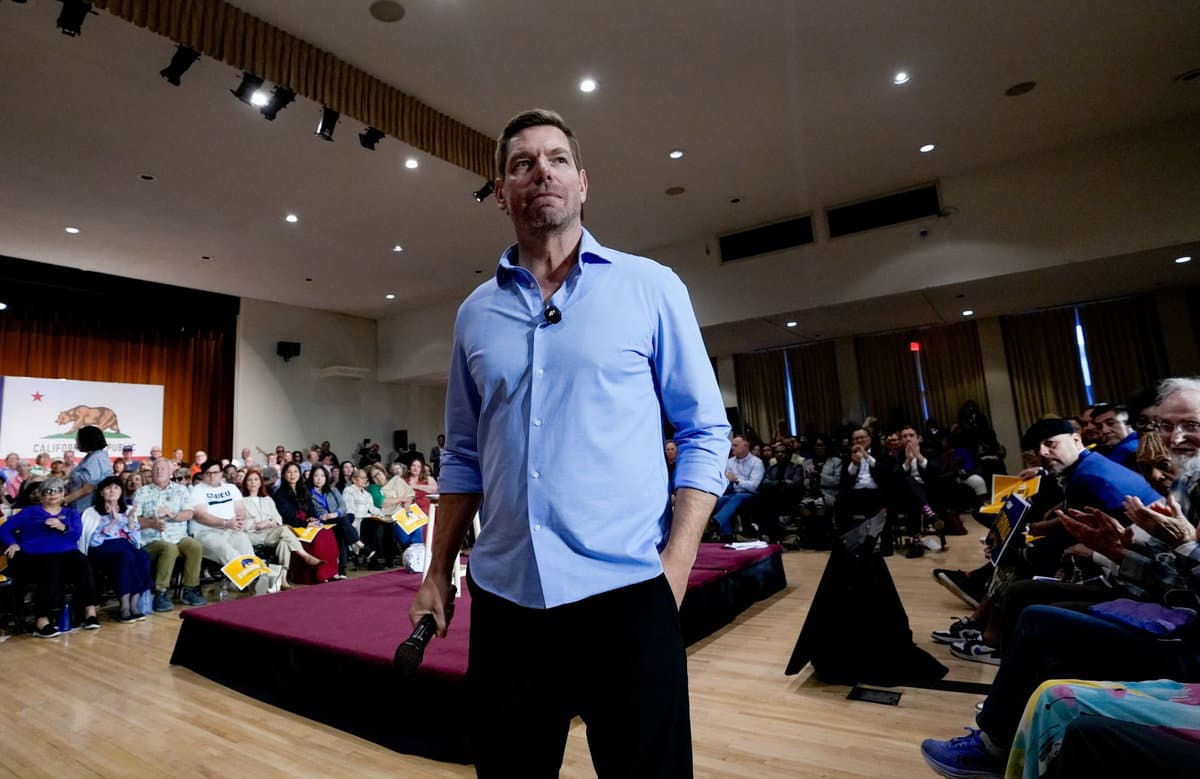
Inside the sudden downfall of Eric Swalwell
By Sarah Ferris, CNN (CNN) — As one California Democrat prepared to formally endorse Rep. Eric Swalwell for governor this spring, the lawmaker hesitated. They had heard rumors the married father of three slept around in Washington and worried about putting their name behind him in a crucial contest. This member, who spoke on the condition of anonymity to speak freely, was clear they had not heard about the now-public allegations of criminal sexual assault or relationships with subordinates in Congress, which is a violation of House ethics rules. But when this member had asked about the rumored infidelity — which Democrats on Capitol Hill widely described to CNN as an “open secret” — they were assured by some of Swalwell’s close friends that all the rumors were “just activities before he was married” and encouraged to formally back him in the race. This person was not alone: Other members also directly questioned Swalwell and his team about what would happen if his history of womanizing in Washington came out publicly, only to be brushed off by his team, another person confirmed. Weeks later, that California member, along with nearly two dozen others, abruptly withdrew their endorsements as Swalwell faced a torrent of sexual assault and misconduct allegations published by CNN and others. Swalwell’s downfall was swift. In a remarkable 100 hours, he went from the front-runner in a race to lead the nation’s most populous state to abandoning his House seat in disgrace. His resignation, effective Tuesday, capped a 13-year congressional career, in which he held coveted party positions and was seen by some as part of a new generation of Democratic leadership. CNN has reached out to Swalwell’s attorney for this story, but did not receive a response. The congressman has repeatedly vowed to fight what he called “the serious, false allegation made against” him. His exit from both the governor’s race and Congress was the result of an intense, unusually quick pressure campaign from his fellow Democratic lawmakers — notably led by his one-time mentor, former Speaker Nancy Pelosi. This bloc of powerful Democrats, the loudest of whom were women, decided to not only immediately sever ties with Swalwell, but to push him out of Congress for good. And in an extraordinary — and politically advantageous — move, they worked to ensure that Swalwell would not be the only one punished for serious allegations of sexual misconduct inside the US Capitol. Once the party had officially abandoned Swalwell, they set out to make a bipartisan pact with GOP colleagues to ensure the same consequence would befall GOP Rep. Tony Gonzales of Texas, who has admitted to having a sexual relationship with a former staffer who later committed suicide. The whisper network hits Washington The end of Swalwell’s career came into view a few weeks earlier, as vague mentions of his alleged sexual misconduct surfaced online from well-known TikTokers before any survivors officially came forward. Those online influencers, who were well-known in some corners of the Democratic Party, hinted at women who were claiming to have suffered from Swalwell’s alleged misconduct, including some who had worked for him. One woman, Cheyenne Hunt, is a lawyer and former Hill staffer who once ran her own campaign for a House seat. Hunt said she helped pursue accountability for Swalwell “because the first victim who approached me is a close friend,” as she posted on X on April 6, days before CNN’s first published account. But, she said, when she learned of others whose experiences “fit the same pattern of manipulation and abuse of power, I knew I couldn’t stay silent.” These posts by Hunt and others began popping up in the California delegation’s members-only group chat, according to one person familiar with the conversations. None of his colleagues, though, had yet spoken out publicly. As recently as Tuesday, Swalwell was pressing forward with his bid for the governors’ mansion, holding a “community town hall” during Congress’ spring break from Washington. Hours after his campaign sought to publicly push back against the swirling social media claims that a number of women would soon come forward with accusations of sexual misconduct, Swalwell took questions from the audience in Sacramento. But it was a civil stop on the campaign trail: No one asked about the allegations, and Swalwell stuck to his usual themes. But he was soon forced to respond. Speaking to reporters afterward, he fiercely denied the allegations of having relationships with staffers and forcing his team to sign non-disclosure agreements — while suggesting the accusations were only surfacing because of the proximity to the primary. “Look, we’re 27 days before an election starts,” Swalwell told reporters. The full extent of those allegations materialized last Friday, as several women went public describing sexual abuse by the now-former congressman. In the following days, women with additional disturbing claims came forward, with one woman publicly alleging Swalwell drugged and then raped her in a hotel room around a political event. A lawyer for Swalwell said he “categorically and unequivocally denies each and every allegation of sexual misconduct and assault that has been leveled against him.” Inside the US Capitol, the accusations unleashed a sense of fury and disgust among some senior Democrats, including his long-time mentor, Pelosi, who felt blindsided by the accusations, according to multiple people familiar with the internal discussions. Not all Democrats, however, were as shell-shocked. In interviews, dozens of lawmakers and senior aides said Swalwell’s womanizing reputation was widely known, though those relationships were believed to be consensual. Several reacted to Swalwell’s decision to enter the governor’s race with an eyeroll, rather than any real concern — just as they did his short-lived presidential bid in 2020. But when they learned of the new predatory — and in some cases potentially criminal — allegations, top House Democrats decided almost immediately to sever ties. Hours after the first report surfaced by the San Francisco Chronicle, and CNN soon after, House Minority Leader Hakeem Jeffries privately conferred with his top two deputies, Reps. Katherine Clark and Pete Aguilar. None of them had any direct conversations with Swalwell after the reports dropped — adhering to the party’s strict no tolerance policy since the Hill’s #MeToo push a decade earlier, according to multiple people familiar with the conversations. Instead, they quickly agreed to put all three of their names on a blistering statement calling on him to drop out of the California governor’s race. Then, as those damning news reports rippled through members’ inboxes on Friday, it was Pelosi who helped put a definitive end to Swalwell’s career in Washington and Sacramento. ‘One of Pelosi’s boys’ Swalwell had been fiercely loyal to the veteran Democrat and was known as “one of Pelosi’s boys” by members and aides during her speakership. In Pelosi’s four decades in politics, one of her many repeated mantras is that “nothing ever resolves itself.” In this instance as House Democrats faced a growing political storm and a humiliating expulsion vote against one of their own members, Pelosi decided to resolve the Swalwell crisis herself. The 86-year-old said she had phoned Swalwell and urged him to leave politics — a rare and stunning public statement from the immensely private former House speaker. In the hours before, she had received phone calls and texts from many of her fellow California Democrats, who wanted to know whether she planned to take action, according to one person close to Pelosi. They knew that Pelosi had been Swalwell’s most important ally in the Capitol and at home. (Multiple Democrats said they were confident that Pelosi was being truthful when she said she had never heard the unsavory accusations against Swalwell.) In her time leading the party, Pelosi appointed him to powerful panels, including the House Intelligence Committee. In one of her last acts as speaker, she made him one of the faces of President Donald Trump’s second impeachment after the January 6, 2021, US Capitol attack. “He owed pretty much everything he’s done here to Pelosi,” one senior Democratic aide said of Swalwell. “She kind of adopted Swalwell” into her northern California family, another senior Democratic aide added. “She saw him as a rising star.” She also defended him at a key moment in his career: Shortly after he arrived in Congress, US officials investigated Swalwell for his connection to a Chinese spy who was running a secretive operation to gain access to US politicians to gather intel on Washington. Pelosi and Democratic leadership privately, but immediately, confronted Swalwell about his connection with the suspected Chinese spy and told him to cut all ties. He vowed that he did, was never charged with a crime and later was cleared by a separate House Ethics Committee investigation into the matter. More recently, Democratic leaders appeared to stand by Swalwell as he was newly in the crosshairs of the Trump administration and allies who were seeking to damage his gubernatorial campaign by reviving the spy claims. The FBI, at the request of the White House, dedicated resources in recent weeks to redact files from the investigation and turned them over to the White House, according to people familiar with the matter. But on the misconduct allegations, there was no discussion, no back-and-forth with the two colleagues from the same northern California alliance in the state’s famous “five family” factions. Pelosi was asked Monday evening at a George Washington University event if she had recommended Swalwell step down, but she did not directly answer. Instead, she said resigning was “his decision” and “the right thing to do.” Once it became clear that top Democrats, including Jeffries and Pelosi, were abandoning the congressman, several rank-and-file members began mobilizing a push to oust him from their ranks. It wasn’t just about Swalwell. From their homes across the country, several female members phoned their House GOP colleagues to make sure that whatever punishment happened to Swalwell was going to be the same for Gonzales, the Texas Republican facing his own torrent of accusations. These women from both parties — led by Reps. Teresa Leger Fernandez, a Democrat from New Mexico, and Anna Paulina Luna, a Florida Republican — effectively reached an accountability pact in the narrowly divided House. If the Democrat is punished, then the Republican, will too be punished. Privately, even some party leaders were involved. Clark spoke with GOP leaders to push for an “expel for expel” resolution to both members’ misconduct, according to a person involved in the discussions. Then, as more accusations came out, it became a “resign for resign.” A spokesperson for Speaker Mike Johnson’s office denied there was anything coordinated between the two parties at the leadership-level on this issue. The-CNN-Wire ™ & © 2026 Cable News Network, Inc., a Warner Bros. Discovery Company. All rights reserved. CNN’s Eric Bradner, Dana Bash, Evan Perez and Hannah Rabinowitz contributed to this report. The post Inside the sudden downfall of Eric Swalwell appeared first on KESQ.
Inside the sudden downfall of Eric Swalwell
By Sarah Ferris, CNN (CNN) — As one California Democrat prepared to formally endorse Rep. Eric Swalwell for governor this spring, the lawmaker hesitated. They had heard rumors the married father of three slept around in Washington and worried about putting their name behind him in a crucial contest. This member, who spoke on the condition of anonymity to speak freely, was clear they had not heard about the now-public allegations of criminal sexual assault or relationships with subordinates in Congress, which is a violation of House ethics rules. But when this member had asked about the rumored infidelity — which Democrats on Capitol Hill widely described to CNN as an “open secret” — they were assured by some of Swalwell’s close friends that all the rumors were “just activities before he was married” and encouraged to formally back him in the race. This person was not alone: Other members also directly questioned Swalwell and his team about what would happen if his history of womanizing in Washington came out publicly, only to be brushed off by his team, another person confirmed. Weeks later, that California member, along with nearly two dozen others, abruptly withdrew their endorsements as Swalwell faced a torrent of sexual assault and misconduct allegations published by CNN and others. Swalwell’s downfall was swift. In a remarkable 100 hours, he went from the front-runner in a race to lead the nation’s most populous state to abandoning his House seat in disgrace. His resignation, effective Tuesday, capped a 13-year congressional career, in which he held coveted party positions and was seen by some as part of a new generation of Democratic leadership. CNN has reached out to Swalwell’s attorney for this story, but did not receive a response. The congressman has repeatedly vowed to fight what he called “the serious, false allegation made against” him. His exit from both the governor’s race and Congress was the result of an intense, unusually quick pressure campaign from his fellow Democratic lawmakers — notably led by his one-time mentor, former Speaker Nancy Pelosi. This bloc of powerful Democrats, the loudest of whom were women, decided to not only immediately sever ties with Swalwell, but to push him out of Congress for good. And in an extraordinary — and politically advantageous — move, they worked to ensure that Swalwell would not be the only one punished for serious allegations of sexual misconduct inside the US Capitol. Once the party had officially abandoned Swalwell, they set out to make a bipartisan pact with GOP colleagues to ensure the same consequence would befall GOP Rep. Tony Gonzales of Texas, who has admitted to having a sexual relationship with a former staffer who later committed suicide. The whisper network hits Washington The end of Swalwell’s career came into view a few weeks earlier, as vague mentions of his alleged sexual misconduct surfaced online from well-known TikTokers before any survivors officially came forward. Those online influencers, who were well-known in some corners of the Democratic Party, hinted at women who were claiming to have suffered from Swalwell’s alleged misconduct, including some who had worked for him. One woman, Cheyenne Hunt, is a lawyer and former Hill staffer who once ran her own campaign for a House seat. Hunt said she helped pursue accountability for Swalwell “because the first victim who approached me is a close friend,” as she posted on X on April 6, days before CNN’s first published account. But, she said, when she learned of others whose experiences “fit the same pattern of manipulation and abuse of power, I knew I couldn’t stay silent.” These posts by Hunt and others began popping up in the California delegation’s members-only group chat, according to one person familiar with the conversations. None of his colleagues, though, had yet spoken out publicly. As recently as Tuesday, Swalwell was pressing forward with his bid for the governors’ mansion, holding a “community town hall” during Congress’ spring break from Washington. Hours after his campaign sought to publicly push back against the swirling social media claims that a number of women would soon come forward with accusations of sexual misconduct, Swalwell took questions from the audience in Sacramento. But it was a civil stop on the campaign trail: No one asked about the allegations, and Swalwell stuck to his usual themes. But he was soon forced to respond. Speaking to reporters afterward, he fiercely denied the allegations of having relationships with staffers and forcing his team to sign non-disclosure agreements — while suggesting the accusations were only surfacing because of the proximity to the primary. “Look, we’re 27 days before an election starts,” Swalwell told reporters. The full extent of those allegations materialized last Friday, as several women went public describing sexual abuse by the now-former congressman. In the following days, women with additional disturbing claims came forward, with one woman publicly alleging Swalwell drugged and then raped her in a hotel room around a political event. A lawyer for Swalwell said he “categorically and unequivocally denies each and every allegation of sexual misconduct and assault that has been leveled against him.” Inside the US Capitol, the accusations unleashed a sense of fury and disgust among some senior Democrats, including his long-time mentor, Pelosi, who felt blindsided by the accusations, according to multiple people familiar with the internal discussions. Not all Democrats, however, were as shell-shocked. In interviews, dozens of lawmakers and senior aides said Swalwell’s womanizing reputation was widely known, though those relationships were believed to be consensual. Several reacted to Swalwell’s decision to enter the governor’s race with an eyeroll, rather than any real concern — just as they did his short-lived presidential bid in 2020. But when they learned of the new predatory — and in some cases potentially criminal — allegations, top House Democrats decided almost immediately to sever ties. Hours after the first report surfaced by the San Francisco Chronicle, and CNN soon after, House Minority Leader Hakeem Jeffries privately conferred with his top two deputies, Reps. Katherine Clark and Pete Aguilar. None of them had any direct conversations with Swalwell after the reports dropped — adhering to the party’s strict no tolerance policy since the Hill’s #MeToo push a decade earlier, according to multiple people familiar with the conversations. Instead, they quickly agreed to put all three of their names on a blistering statement calling on him to drop out of the California governor’s race. Then, as those damning news reports rippled through members’ inboxes on Friday, it was Pelosi who helped put a definitive end to Swalwell’s career in Washington and Sacramento. ‘One of Pelosi’s boys’ Swalwell had been fiercely loyal to the veteran Democrat and was known as “one of Pelosi’s boys” by members and aides during her speakership. In Pelosi’s four decades in politics, one of her many repeated mantras is that “nothing ever resolves itself.” In this instance as House Democrats faced a growing political storm and a humiliating expulsion vote against one of their own members, Pelosi decided to resolve the Swalwell crisis herself. The 86-year-old said she had phoned Swalwell and urged him to leave politics — a rare and stunning public statement from the immensely private former House speaker. In the hours before, she had received phone calls and texts from many of her fellow California Democrats, who wanted to know whether she planned to take action, according to one person close to Pelosi. They knew that Pelosi had been Swalwell’s most important ally in the Capitol and at home. (Multiple Democrats said they were confident that Pelosi was being truthful when she said she had never heard the unsavory accusations against Swalwell.) In her time leading the party, Pelosi appointed him to powerful panels, including the House Intelligence Committee. In one of her last acts as speaker, she made him one of the faces of President Donald Trump’s second impeachment after the January 6, 2021, US Capitol attack. “He owed pretty much everything he’s done here to Pelosi,” one senior Democratic aide said of Swalwell. “She kind of adopted Swalwell” into her northern California family, another senior Democratic aide added. “She saw him as a rising star.” She also defended him at a key moment in his career: Shortly after he arrived in Congress, US officials investigated Swalwell for his connection to a Chinese spy who was running a secretive operation to gain access to US politicians to gather intel on Washington. Pelosi and Democratic leadership privately, but immediately, confronted Swalwell about his connection with the suspected Chinese spy and told him to cut all ties. He vowed that he did, was never charged with a crime and later was cleared by a separate House Ethics Committee investigation into the matter. More recently, Democratic leaders appeared to stand by Swalwell as he was newly in the crosshairs of the Trump administration and allies who were seeking to damage his gubernatorial campaign by reviving the spy claims. The FBI, at the request of the White House, dedicated resources in recent weeks to redact files from the investigation and turned them over to the White House, according to people familiar with the matter. But on the misconduct allegations, there was no discussion, no back-and-forth with the two colleagues from the same northern California alliance in the state’s famous “five family” factions. Pelosi was asked Monday evening at a George Washington University event if she had recommended Swalwell step down, but she did not directly answer. Instead, she said resigning was “his decision” and “the right thing to do.” Once it became clear that top Democrats, including Jeffries and Pelosi, were abandoning the congressman, several rank-and-file members began mobilizing a push to oust him from their ranks. It wasn’t just about Swalwell. From their homes across the country, several female members phoned their House GOP colleagues to make sure that whatever punishment happened to Swalwell was going to be the same for Gonzales, the Texas Republican facing his own torrent of accusations. These women from both parties — led by Reps. Teresa Leger Fernandez, a Democrat from New Mexico, and Anna Paulina Luna, a Florida Republican — effectively reached an accountability pact in the narrowly divided House. If the Democrat is punished, then the Republican, will too be punished. Privately, even some party leaders were involved. Clark spoke with GOP leaders to push for an “expel for expel” resolution to both members’ misconduct, according to a person involved in the discussions. Then, as more accusations came out, it became a “resign for resign.” A spokesperson for Speaker Mike Johnson’s office denied there was anything coordinated between the two parties at the leadership-level on this issue. The-CNN-Wire ™ & © 2026 Cable News Network, Inc., a Warner Bros. Discovery Company. All rights reserved. CNN’s Eric Bradner, Dana Bash, Evan Perez and Hannah Rabinowitz contributed to this report. The post Inside the sudden downfall of Eric Swalwell appeared first on KESQ.

Talarico raises $27 million in first quarter as Senate Democrats announce strong fundraising numbers
By David Wright, CNN (CNN) — Texas Democratic Senate candidate James Talarico announced a massive first-quarter fundraising haul of more than $27 million on Wednesday, among the largest totals reported by a US Senate candidate. Talarico, a state representative and Presbyterian seminarian, won the Democratic nomination in March over US Rep. Jasmine Crockett. His campaign said he has raised $10 million since the March 3 primary. Democrats are hoping Talarico will be able to put reliably red Texas in play at the statewide level as they face a tough national map for Senate control that would require them to net four seats. The Democratic state representative will face the winner of a May 26 runoff in the Republican primary between incumbent Sen. John Cornyn and state Attorney General Ken Paxton. Talarico’s campaign has drawn comparisons to former Rep. Beto O’Rourke’s 2018 bid against Republican Sen. Ted Cruz, in which O’Rourke raised then record-sums and galvanized state Democrats, ultimately losing to Cruz by less than three points. In the first quarter of that election year, O’Rourke had raised $6.8 million, and he went on to raise a total of $80 million for the race. No Democrat has won statewide in Texas in three decades. But Cornyn’s allies argue nominating Paxton would require Republicans to invest tens of millions of dollars in a general election. Talarico is among several Democratic Senate candidates announcing strong first-quarter fundraising totals this week around the Wednesday deadline to file reports with the Federal Election Commission. Georgia Sen. Jon Ossoff, who has a competitive reelection contest as the only incumbent Democrat running in a state won by President Donald Trump in 2024, said that he raised $14 million in the first quarter and would report over $31 million in cash on hand. Meanwhile, former North Carolina Gov. Roy Cooper, running in another battleground contest pivotal to Democratic hopes of flipping the Senate, said that he raised $13.8 million. The-CNN-Wire ™ & © 2026 Cable News Network, Inc., a Warner Bros. Discovery Company. All rights reserved. The post Talarico raises $27 million in first quarter as Senate Democrats announce strong fundraising numbers appeared first on KESQ.
Talarico raises $27 million in first quarter as Senate Democrats announce strong fundraising numbers
By David Wright, CNN (CNN) — Texas Democratic Senate candidate James Talarico announced a massive first-quarter fundraising haul of more than $27 million on Wednesday, among the largest totals reported by a US Senate candidate. Talarico, a state representative and Presbyterian seminarian, won the Democratic nomination in March over US Rep. Jasmine Crockett. His campaign said he has raised $10 million since the March 3 primary. Democrats are hoping Talarico will be able to put reliably red Texas in play at the statewide level as they face a tough national map for Senate control that would require them to net four seats. The Democratic state representative will face the winner of a May 26 runoff in the Republican primary between incumbent Sen. John Cornyn and state Attorney General Ken Paxton. Talarico’s campaign has drawn comparisons to former Rep. Beto O’Rourke’s 2018 bid against Republican Sen. Ted Cruz, in which O’Rourke raised then record-sums and galvanized state Democrats, ultimately losing to Cruz by less than three points. In the first quarter of that election year, O’Rourke had raised $6.8 million, and he went on to raise a total of $80 million for the race. No Democrat has won statewide in Texas in three decades. But Cornyn’s allies argue nominating Paxton would require Republicans to invest tens of millions of dollars in a general election. Talarico is among several Democratic Senate candidates announcing strong first-quarter fundraising totals this week around the Wednesday deadline to file reports with the Federal Election Commission. Georgia Sen. Jon Ossoff, who has a competitive reelection contest as the only incumbent Democrat running in a state won by President Donald Trump in 2024, said that he raised $14 million in the first quarter and would report over $31 million in cash on hand. Meanwhile, former North Carolina Gov. Roy Cooper, running in another battleground contest pivotal to Democratic hopes of flipping the Senate, said that he raised $13.8 million. The-CNN-Wire ™ & © 2026 Cable News Network, Inc., a Warner Bros. Discovery Company. All rights reserved. The post Talarico raises $27 million in first quarter as Senate Democrats announce strong fundraising numbers appeared first on KESQ.

Trump says he’ll fire Powell next month if he stays in his role at the Fed
By David Goldman, Bryan Mena, Morgan Leason, CNN (CNN) — President Donald Trump said he will fire Federal Reserve Chair Jerome Powell if he does not step aside when his term at the helm of the central bank expires next month. “Then I’ll have to fire him,” Trump told Fox Business’ Maria Bartiromo Wednesday in response to a question about Powell staying on at the Fed. The timing of Powell’s departure from the Fed has been complicated by a criminal investigation into the Fed chair by the Department of Justice that accuses Powell of lying to Congress in testimony last year about the Fed’s $2.5 billion-dollar renovation of its Washington, DC, headquarters. It’s a subject the Trump administration has zoned in on as part of its repeated criticism of Powell’s leadership of the Fed. Trump in January nominated former Fed governor Kevin Warsh to replace Powell, whose term leading the central bank expires on May 15. But North Carolina Republican Sen. Thom Tillis, a key member of the committee that approves Fed nominees, reiterated this week that he will not vote to confirm Warsh until the Powell probe has concluded. The Trump administration doubled down on its support for the probe this week, despite the likelihood that it will delay Warsh’s nomination and could lead to a legal faceoff with Powell that could prolong Trump’s unwanted Fed chair to stay at the central bank. Two prosecutors working for the District of Columbia US Attorney’s office, led by Jeanine Pirro, were turned away Tuesday after showing up at the Fed’s headquarters in an unannounced visit to check on renovation progress. “Any construction project that has cost overruns of almost 80% over the original construction budget deserves some serious review,” Pirro said in a statement. And these people are in charge of monetary policy in the United States?” Robert Hur, a lawyer representing the Fed, told one of the prosecutors not to visit the building again without a Fed lawyer present, according to correspondence obtained by CNN. The visit – and Trump’s renewed threat to fire Powell – escalates an already extraordinary battle between the administration and the central bank. The actions and threats raise significant questions about the central bank’s prized independence and its ability to lead itself through unprecedented attempts from the White House to interfere with its affairs. Powell’s tenure With just one month to go until Powell’s time as chair is set to expire, Warsh has yet to be confirmed by the Senate and the full chamber. That leaves the potential for Powell to remain in place as chair “pro tempore,” per Fed regulations. Powell confirmed at a press briefing in March that if Warsh isn’t confirmed by the Senate by May 15, Powell would remain as Fed chair “pro tem” in the interim. “That’s what the law calls for. That’s what we’ve done on several occasions,” Powell said at the time. The Senate Banking Committee has scheduled a confirmation hearing for Warsh for April 21. However, Tillis remains a key holdout. Trump on Wednesday said he was hopeful that the Senate Banking Committee would confirm Warsh next week, saying Tillis “is an American; he knows what to do.” But he also acknowledged Tillis may stick to his guns and that the probe could interfere with his ability to get Warsh seated at the Fed next month. The probe Trump said he wanted Powell out at the Fed – but not enough to ask Pirro to call off the investigation. “Does that mean we stop a probe of a building that I would have done for $25 million that’s going to cost maybe $4 billion? Don’t you think we have to find out what happened there?” Trump said in the interview conducted at the White House. “I have to find out.” The investigation, which Powell in January strongly rebuked as politicized, has been fraught from the start. Pirro’s subpoenas took the White House by surprise and cast a shadow over Warsh’s nomination chances. A federal judge last month quashed the Justice Department’s subpoenas, a decision that Pirro said she plans to appeal. The criminal investigation follows Trump’s repeated criticism of Powell’s leadership of the Fed. The president, who has constantly bashed Powell for keeping interest rates high, called Powell a “disaster” for the country Wednesday. “Here’s a man who took this little, tiny building and a couple of other little, tiny complex, and he’s spending more than $3 billion. I want to know who the contractor is, because that contractor is making billions of dollars, perhaps.” “It is probably corrupt, but what it really is is incompetent, and we have to show the incompetence of that,” Trump said. The Fed has said the cost overruns are due to “unforeseen conditions” requiring more spending to rectify, such as “more asbestos than anticipated, toxic contamination in soil, and a higher-than-expected water table.” Firing Powell Trump said if he’s forced to fire Powell – a legally dubious action – so be it. “I’ve held back firing him. I’ve wanted to fire him, but I hate to be controversial,” Trump told Bartiromo. Powell said last month he would not step down from the Fed as long as the Department of Justice’s criminal investigation is ongoing. “I have no intention of leaving the Board until the investigation is well and truly over with transparency and finality,” Powell said. Firing Powell would raise significant legal questions and would not take place immediately – Powell has said he would defend the Fed’s independence and would almost certainly challenge any action to remove him. Although Trump can legally fire Fed officials, he can do so only “for cause,” according to Section 10 of the Federal Reserve Act. Whether Powell has taken any action that would fit that legal definition remains unclear, although Powell, himself a lawyer, has repeatedly said the president cannot remove him from his job. Trump also tried to fire Fed Governor Lisa Cook for cause, arguing she had committed mortgage fraud – allegations Cook denies. Cook, who remains in her role at the central bank, fought the Trump administration in a case that the Supreme Court heard in January. Justices appeared skeptical the president had the authority to remove her, and they could issue a decision as early as Friday. Powell’s term as governor ends in January 2028, but he said he has not decided whether to remain on the Board once his chairmanship ends, a step that past Fed chairs typically have not taken. The-CNN-Wire ™ & © 2026 Cable News Network, Inc., a Warner Bros. Discovery Company. All rights reserved. The post Trump says he’ll fire Powell next month if he stays in his role at the Fed appeared first on KESQ.

Worried about the midterms, Republicans mobilize rural Virginia voters against redistricting
By David Wright, Fredreka Schouten, CNN Bridgewater, Virginia (CNN) — Tara Bowman lives on a farm in Woodstock, Virginia, a town of some 6,000 people nestled along the banks of the Shenandoah River’s North Fork. But under a redistricting plan Virginia voters may enact next week, Bowman’s community would be in the same congressional district as wealthy Washington suburbs such as Fairfax and McLean some 90 miles away. It’s part of a sweeping Democratic effort to dilute Republican votes across Virginia to help Democrats win 10 of the state’s 11 US House seats in November’s midterm elections – the latest and one of the last remaining fights in the coast-to-coast redistricting battle that President Donald Trump set off last year in Texas. Currently, Virginia Republicans – including Bowman’s congressman, Rep. Ben Cline – hold five House seats and Democrats six. “We’re 100% rural. We have lots of farming, small business,” an incredulous Bowman said at a weekend rally organized by redistricting opponents. “I can’t believe they’re gonna give me a congressman from Fairfax.” Saturday’s event, which drew hundreds to a hangar in an aviation park deep in the Shenandoah Valley, marked an intensifying campaign by groups opposed to the map to mobilize rural voters in the final sprint to Tuesday’s election. A Democratic-controlled House “would turn all the committees of Congress into investigative bodies” and impeach President Donald Trump, House Speaker Mike Johnson told the audience, assembled in a county that supported Trump by a 40-point margin less than two years ago. “You have the power to protect fair maps in Virginia and to protect, truly, the entire House Republican majority in the Congress,” Johnson said. “That’s in your hands right now.” At the same event, Glenn Youngkin, the state’s Republican former governor, called the map a “monstrosity” that would “overwhelm and overcome the voice of the people.” Opponents are heartened by a recent Washington Post poll that shows 52% of likely voters support the redistricting effort, despite heavy spending by Democratic-aligned groups and the state’s increasingly blue tint in national elections. Despite the sky-high stakes for Trump and Republicans, however, Democrats have swamped Republicans in spending throughout the monthslong, multimillion-dollar redistricting campaign. Early on, the Republicans’ strategy focused heavily on trying to block the referendum in court. (A case over the redraw is still pending before the state Supreme Court, which opted to let next week’s vote proceed before deciding the merits of a lawsuit brought by opponents.) As of Monday, Democratic groups had spent more than $48.2 million on the airwaves, urging a “yes” vote on the referendum, according to AdImpact, which tracks political advertising. Republicans have dramatically increased their advertising activity in recent days, but still lag in the ad wars, spending about $17 million. A Johnson fundraiser held a few hours after the rally brought in $500,000 for the anti-redistricting effort, according to his team. But some rural voters told CNN they were alarmed both by the map and the Democrats’ lopsided spending advantage. “Other than a couple of shows like this with a few people, giving speeches, showing up, there has not been a significant push to offset what the Democrats are doing,” said Michael Clancy, a resident of Harrisonburg, who attended the Johnson rally. “It seems like they want to lose the midterms,” Clancy said of Republican leaders. How the new map would work Misshapen district boundaries are not unique to Virginia mapmakers nor to one political party. Lawmakers in heavily Democratic Illinois and deep-red Tennessee have each drawn maps that carve up Chicago and Nashville, respectively, for partisan advantage. Texas’ GOP-controlled legislature kicked off an unprecedented mid-decade redistricting gambit at Trump’s behest last year with a map aimed at flipping five US House seats. California responded by putting a map to the state’s overwhelmingly Democratic electorate last November that seeks to largely offset Texas’ move. More states have entered the fray and Florida still could. So far, four Republican-led states have crafted new maps that give their party the opportunity to flip as many as nine House seats while Democrats have the chance of flipping six. In Virginia, voters are being asked to amend the state’s constitution and temporarily suspend a provision that gives a bipartisan commission – rather than state legislators – map-drawing authority. Voters approved the bipartisan redistricting amendment in 2020. Democrats want to snake districts out from Washington’s liberal suburbs, deep into rural territory, creating misshapen boundaries that Republicans have disparaged. For instance, opponents dubbed the proposed 7th Congressional District – where Johnson rallied voters Saturday – the “lobster claw” because it curves around another district like the pincers of a crustacean. Democratic Rep. Jennifer McClellan, who represents the Richmond area in central Virginia, dismissed suggestions that the new maps would create an unfair urban-rural divide across the commonwealth. “Whether you are in an urban city or you are in a rural area, you have equally been hurt by Donald Trump and his policies,” McClellan told reporters recently. “We have more in common than not, and we are fighting for rural Virginia just like we are fighting for urban and suburban Virginia. We will continue to do that after this redistricting referendum passes.” Democrats say they want to ‘stop the MAGA power grab’ House Democratic Leader Hakeem Jeffries, who is poised to ascend to the speakership if his party flips control of the US House, also spent the weekend in Virginia rallying supporters. “They thought that Democrats were going to step back,” Jeffries said at an event in Richmond. “Well, we’re making clear we’re not here to step back, we’re here to fight back.” “Voting yes will stop the MAGA power grab,” Jeffries said. “Voting yes will level the playing field. Voting yes will stop Donald Trump’s scheme to rig the midterm elections.” On Thursday night, Jeffries will join other top Democrats, including Virginia Gov. Abigail Spanberger, and US Sen. Mark Warner, and a slew of digital creators for a virtual rally aimed at boosting turnout. Early voting ends Saturday. Election Day is Tuesday. Data analyzed by CNN of the early vote so far suggests Democrats have an advantage in their push to enact the new map. Nearly 63,000 early in-person votes were cast on April 11, according to data from L2, slightly higher than the equivalent day ahead of last fall’s election in which Democrats swept all three statewide offices. Republicans involved in the campaign against the map defended their decision-making and argue their chances are better than some observers think. Virginia Republican Party Chairman Jeff Ryer told CNN that he’s “very happy” with the support he’s received from the Republican National Committee. The RNC has helped finance ongoing court challenges, said Ryer, who took over the state party in February. The national party also has eight field staff working in the state, helping support thousands of GOP volunteers fighting the map, he said. “We feel as though we’re getting our message out when voters are making up their minds,” Ryer added, pointing to the recent surge in spending by groups opposed the map. “The Democrats have deployed over $50 million to rig Virginia’s Congressional maps and yet the referendum is extremely close, as all sides acknowledge,” Mike Young, campaign manager of the anti-referendum group Virginians for Fair Maps, said in a statement to CNN. “That didn’t happen by accident or dumb luck.” The-CNN-Wire ™ & © 2026 Cable News Network, Inc., a Warner Bros. Discovery Company. All rights reserved. CNN’s Jeff Zeleny and Edward Wu contributed to this report. The post Worried about the midterms, Republicans mobilize rural Virginia voters against redistricting appeared first on KESQ.
Trump says he’ll fire Powell next month if he stays in his role at the Fed
By David Goldman, Bryan Mena, Morgan Leason, CNN (CNN) — President Donald Trump said he will fire Federal Reserve Chair Jerome Powell if he does not step aside when his term at the helm of the central bank expires next month. “Then I’ll have to fire him,” Trump told Fox Business’ Maria Bartiromo Wednesday in response to a question about Powell staying on at the Fed. The timing of Powell’s departure from the Fed has been complicated by a criminal investigation into the Fed chair by the Department of Justice that accuses Powell of lying to Congress in testimony last year about the Fed’s $2.5 billion-dollar renovation of its Washington, DC, headquarters. It’s a subject the Trump administration has zoned in on as part of its repeated criticism of Powell’s leadership of the Fed. Trump in January nominated former Fed governor Kevin Warsh to replace Powell, whose term leading the central bank expires on May 15. But North Carolina Republican Sen. Thom Tillis, a key member of the committee that approves Fed nominees, reiterated this week that he will not vote to confirm Warsh until the Powell probe has concluded. The Trump administration doubled down on its support for the probe this week, despite the likelihood that it will delay Warsh’s nomination and could lead to a legal faceoff with Powell that could prolong Trump’s unwanted Fed chair to stay at the central bank. Two prosecutors working for the District of Columbia US Attorney’s office, led by Jeanine Pirro, were turned away Tuesday after showing up at the Fed’s headquarters in an unannounced visit to check on renovation progress. “Any construction project that has cost overruns of almost 80% over the original construction budget deserves some serious review,” Pirro said in a statement. And these people are in charge of monetary policy in the United States?” Robert Hur, a lawyer representing the Fed, told one of the prosecutors not to visit the building again without a Fed lawyer present, according to correspondence obtained by CNN. The visit – and Trump’s renewed threat to fire Powell – escalates an already extraordinary battle between the administration and the central bank. The actions and threats raise significant questions about the central bank’s prized independence and its ability to lead itself through unprecedented attempts from the White House to interfere with its affairs. Powell’s tenure With just one month to go until Powell’s time as chair is set to expire, Warsh has yet to be confirmed by the Senate and the full chamber. That leaves the potential for Powell to remain in place as chair “pro tempore,” per Fed regulations. Powell confirmed at a press briefing in March that if Warsh isn’t confirmed by the Senate by May 15, Powell would remain as Fed chair “pro tem” in the interim. “That’s what the law calls for. That’s what we’ve done on several occasions,” Powell said at the time. The Senate Banking Committee has scheduled a confirmation hearing for Warsh for April 21. However, Tillis remains a key holdout. Trump on Wednesday said he was hopeful that the Senate Banking Committee would confirm Warsh next week, saying Tillis “is an American; he knows what to do.” But he also acknowledged Tillis may stick to his guns and that the probe could interfere with his ability to get Warsh seated at the Fed next month. The probe Trump said he wanted Powell out at the Fed – but not enough to ask Pirro to call off the investigation. “Does that mean we stop a probe of a building that I would have done for $25 million that’s going to cost maybe $4 billion? Don’t you think we have to find out what happened there?” Trump said in the interview conducted at the White House. “I have to find out.” The investigation, which Powell in January strongly rebuked as politicized, has been fraught from the start. Pirro’s subpoenas took the White House by surprise and cast a shadow over Warsh’s nomination chances. A federal judge last month quashed the Justice Department’s subpoenas, a decision that Pirro said she plans to appeal. The criminal investigation follows Trump’s repeated criticism of Powell’s leadership of the Fed. The president, who has constantly bashed Powell for keeping interest rates high, called Powell a “disaster” for the country Wednesday. “Here’s a man who took this little, tiny building and a couple of other little, tiny complex, and he’s spending more than $3 billion. I want to know who the contractor is, because that contractor is making billions of dollars, perhaps.” “It is probably corrupt, but what it really is is incompetent, and we have to show the incompetence of that,” Trump said. The Fed has said the cost overruns are due to “unforeseen conditions” requiring more spending to rectify, such as “more asbestos than anticipated, toxic contamination in soil, and a higher-than-expected water table.” Firing Powell Trump said if he’s forced to fire Powell – a legally dubious action – so be it. “I’ve held back firing him. I’ve wanted to fire him, but I hate to be controversial,” Trump told Bartiromo. Powell said last month he would not step down from the Fed as long as the Department of Justice’s criminal investigation is ongoing. “I have no intention of leaving the Board until the investigation is well and truly over with transparency and finality,” Powell said. Firing Powell would raise significant legal questions and would not take place immediately – Powell has said he would defend the Fed’s independence and would almost certainly challenge any action to remove him. Although Trump can legally fire Fed officials, he can do so only “for cause,” according to Section 10 of the Federal Reserve Act. Whether Powell has taken any action that would fit that legal definition remains unclear, although Powell, himself a lawyer, has repeatedly said the president cannot remove him from his job. Trump also tried to fire Fed Governor Lisa Cook for cause, arguing she had committed mortgage fraud – allegations Cook denies. Cook, who remains in her role at the central bank, fought the Trump administration in a case that the Supreme Court heard in January. Justices appeared skeptical the president had the authority to remove her, and they could issue a decision as early as Friday. Powell’s term as governor ends in January 2028, but he said he has not decided whether to remain on the Board once his chairmanship ends, a step that past Fed chairs typically have not taken. The-CNN-Wire ™ & © 2026 Cable News Network, Inc., a Warner Bros. Discovery Company. All rights reserved. The post Trump says he’ll fire Powell next month if he stays in his role at the Fed appeared first on KESQ.