3 stories credited to The Indianapolis Star
Latest story Apr 16, 2026 · on ChamberLight since Apr 2026
A story can appear as several articles (copies of the same piece), so counts of stories and of articles differ.
Scores for The Indianapolis Star
Writing quality not enough rated stories yet: 2 of 10. How it is measured
Scores last checked Sep 25, 2026.
Stories ChamberLight collected, by month
Stories credited to The Indianapolis Star, by publication date. ChamberLight collects articles that mention the officials it tracks, so this shows its own coverage of this source, not how much the source publishes.
- Stories from The Indianapolis Star
- Shaded: ChamberLight collected no stories, or almost none, from any outlet (a gap in its collection, not in the outlet’s publishing)
Show as a table
| Month | Stories | All outlets |
|---|---|---|
| April 2026 | 3 | 2,576 |
| May 2026 | 0 | none collected |
| June 2026 | 0 | none collected |
| July 2026 | 0 | none collected |
| August 2026 | 0 | 1 (collection gap) |
| September 2026 | 0 | 598 |
Top topics
Share of this source’s stories tagged with each topic. A story can carry several topics, so the shares do not add up to 100%.
- Voting Rights3
100% of 3 stories · 18% across all outlets
- Ethics/Corruption2
67% of 3 stories · 56% across all outlets
- Budget/Spending1
33% of 3 stories · 30% across all outlets
- Criminal Justice1
33% of 3 stories · 18% across all outlets
- Education1
33% of 3 stories · 2% across all outlets
- Healthcare1
33% of 3 stories · 7% across all outlets
The thin mark on each bar is the topic’s share across all outlets.
Who they cover
Party of the officials these stories are mainly about, across all 4 officials named. A story counts once for each official it is mainly about, so the split is over 4 story–official pairs, from 3 stories.
- Republican50% · 2 pairs
- Democrat25% · 1 pair
- Party not recorded25% · 1 pair
Most covered
Stories mainly about each official, and their share of the source’s 3 stories.
Article tone
ChamberLight’s article analysis assigns each story a tone toward the official it covers. It describes the coverage of that official, not The Indianapolis Star’s stance, and reader votes do not change it. 3 stories.
- Good Look
- 0 (0%)
- Mixed
- 3 (100%)
- Informational
- 0 (0%)
- Bad Look
- 0 (0%)
Challenges to these scores
No one has challenged a score on this page yet. Anyone can; editors publish every outcome here.
Articles served from indystar.com
4
How much André Carson's opponents are raising in 7th District primary
Indiana politics in 60 seconds IndyStar Statehouse reporter Kayla Dwyer breaks down Indiana politics in 60 seconds for the week of April 6. Former statewide candidate Destiny Wells went toe-to-toe with U.S. Rep. André Carson in terms of raising money this quarter in the crowded Democratic primary for Indiana's 7th Congressional District, which represents Indianapolis. Carson still remains far ahead of the competition in terms of his overall war chest, though. Wells raised $121,000 to Carson's $130,000, despite jumping into the race at the last minute and thus having just under two months to do so. Carson still has more money to work with, reporting $629,000 in the bank heading into peak primary season, compared to Wells' $116,000 and George Hornedo's $24,000. It's one of the most closely watched primaries among Indiana's Congressional seats, both for its amount of competition for an incumbent and for the fact that this district has a target on its back anytime the Republican-controlled legislature tries to conduct redistricting. Wells hardly spent any money in this first quarter, seeming to save her juice for prime time. Carson, meanwhile, spent about as much as he raised this quarter, on things like travel-related expenses and consulting. Hornedo spent about $60,000, three times as much as he raised this quarter, mostly on consulting services and software. He also has personally loaned $94,000 to his campaign since last year, which remains indebted to him. Denise Paul Hatch did not file any campaign finance reports. IndyStar has interviewed each of these candidates about their reasons for running and some hot-button issues in this race. View Carson's interview here, Hornedo's here, Wells' here and Hatch's here. Over in the 4th District, where it's Republicans who have the primary to watch, the incumbent and the challenger are not far from one another in terms of funding. Incumbent U.S. Rep. Jim Baird raised $78,000 this quarter, leaving himself with $179,000 in the bank heading into the primary election. He also still owes himself $210,000 in loans he made to his campaign in 2018 and 2024. State Rep. Craig Haggard, R-Mooresville, meanwhile raised $43,500 and now has $117,000 in the bank. Contact state government and politics reporter Kayla Dwyer at kdwyer@indystar.com or follow her on X @kayla_dwyer17.
How much André Carson's opponents are raising in 7th District primary
Indiana politics in 60 seconds IndyStar Statehouse reporter Kayla Dwyer breaks down Indiana politics in 60 seconds for the week of April 6. Former statewide candidate Destiny Wells went toe-to-toe with U.S. Rep. André Carson in terms of raising money this quarter in the crowded Democratic primary for Indiana's 7th Congressional District, which represents Indianapolis. Carson still remains far ahead of the competition in terms of his overall war chest, though. Wells raised $121,000 to Carson's $130,000, despite jumping into the race at the last minute and thus having just under two months to do so. Carson still has more money to work with, reporting $629,000 in the bank heading into peak primary season, compared to Wells' $116,000 and George Hornedo's $24,000. It's one of the most closely watched primaries among Indiana's Congressional seats, both for its amount of competition for an incumbent and for the fact that this district has a target on its back anytime the Republican-controlled legislature tries to conduct redistricting. Wells hardly spent any money in this first quarter, seeming to save her juice for prime time. Carson, meanwhile, spent about as much as he raised this quarter, on things like travel-related expenses and consulting. Hornedo spent about $60,000, three times as much as he raised this quarter, mostly on consulting services and software. He also has personally loaned $94,000 to his campaign since last year, which remains indebted to him. Denise Paul Hatch did not file any campaign finance reports. IndyStar has interviewed each of these candidates about their reasons for running and some hot-button issues in this race. View Carson's interview here, Hornedo's here, Wells' here and Hatch's here. Over in the 4th District, where it's Republicans who have the primary to watch, the incumbent and the challenger are not far from one another in terms of funding. Incumbent U.S. Rep. Jim Baird raised $78,000 this quarter, leaving himself with $179,000 in the bank heading into the primary election. He also still owes himself $210,000 in loans he made to his campaign in 2018 and 2024. State Rep. Craig Haggard, R-Mooresville, meanwhile raised $43,500 and now has $117,000 in the bank. Contact state government and politics reporter Kayla Dwyer at kdwyer@indystar.com or follow her on X @kayla_dwyer17.
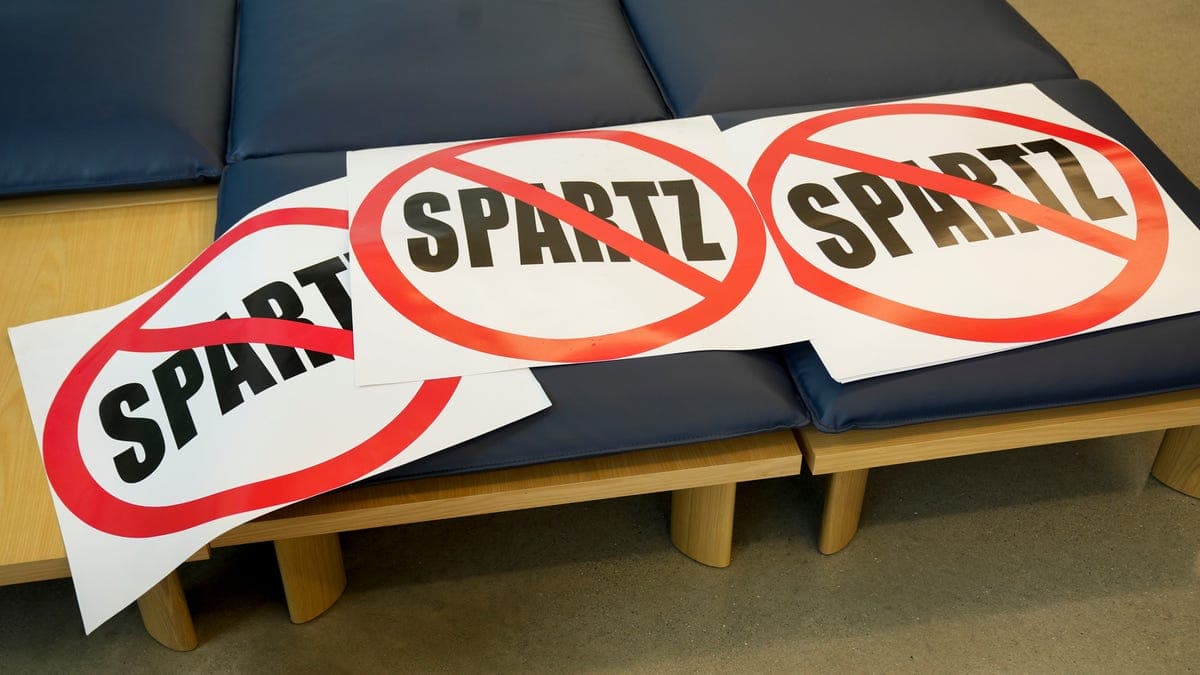
5th District Democratic primary has unified goal: Unseat Victoria Spartz
Indiana politics in 60 seconds IndyStar Statehouse reporter Kayla Dwyer breaks down Indiana politics in 60 seconds for the week of April 6. Differentiation can be a challenge when a primary contest is as big as the Democratic race is in Indiana's 5th Congressional District, representing suburban and rural counties north of Indianapolis. When you ask seven Democratic candidates how they're going to act on reproductive rights in Congress, they're bound to say roughly the same thing: "Codify Roe V. Wade." "Get the government out of exam rooms." After the second such response, this became clear to Fishers resident Shelley Fabrizio, who whispered to her neighbor at the Fishers Art Center town hall April 15, "They're all going to say the same thing." In the end, she's not sure they achieved much in the way of differentiation. But that may be beside the point: She walked in there with an idea of who she'd probably vote for and came away leaning toward two or three of them. She was among roughly 300 people who packed the threater with standing room only to hear out what party leaders think is a record number of primary candidates in the 5th district, amid another record of 54 candidates running for races up and down the ballot in perhaps-swingable Hamilton County. "I'm going to go home tonight and ponder," she said. "It's a wonderful problem to have." Those candidates on the May Democratic ballot include Steven Avit, a chiropractor from Carmel; State Sen. J.D. Ford of Indianapolis; Jackson Franklin of Muncie, a staff sergeant in the Indiana Army National Guard; Phil Goss, a Noblesville resident who operates a family farm in Fort Wayne; Dylan McKenna, a technology salesman who lives in Westfield; Tara Nelson, a Carmel resident who works in global finance; and Deborah Pickett, a U.S. Army Reservist and who was the Democratic nominee in this district in 2024. On the Republican primary ballot, voters can choose between incumbent Republican U.S. Rep. Victoria and Scott King, an Army veteran. Besides many of the issues, there's a singular goal that unites the Democrats: unseating Spartz. That's a taller task in this district since the last round of map-drawing in 2021. Prior to that redistricting cycle, Spartz won the seat in her first election in 2020 by less than 5 percentage points. In her next two elections post-redistricting, when portions of Indianapolis were drawn out of the district, she won by double digits. Nonetheless, the fervor for this mission is such that former Democratic party chair Robin Winston, one of the night's moderators, dedicated the last question to asking each candidate to affirm their committment to supporting the Democratic nominee regardless of who it is. All gave a variation of "absolutely." "We are seven different shades of blue," Avit said. The candidates do have their varying backgrounds and found some ways to share unique viewpoints. Nelson touted her billboard on 96th Street that says "Impeach Trump," saying this is a primary motivation for her and she'll be loud about it. Ford said he's the only candidate with a voting record to stand on. Franklin repeatedly said candidates shouldn't take corporate PAC dollars. McKenna said it should be illegal for members of Congress to trade stocks or buy cryptocurrency. Avit said Republicans have a point that when it comes to energy, overregulation and red tape can cause problems. Goss said there should be instant online access to and verification of how members of Congress raise and spend money, rather than quarterly reports. Pickett argued for portable health care that follows patients between jobs. Another special flavor to this primary is that all seven of the candidates have been very "present," Hamilton County executive director Raleigh Brown said. "Sometimes people will file and you don't hear from them," she said. But these candidates have all been showing up to county and city events. "They are everywhere, which is like my dream," she said. Party chair Josh Lowry doesn't think they could have packed a room like this two years ago. He took the reins of the party after losing his Statehouse bid two years ago; he hired a full time executive director, secured a full time office, and got more organized. They are feeling that if there's any year for flipping this seat, this would be the year. "It was so red for so long, that that just got ingrained in people's minds that that's how it is," Lowry said. "I think this is going to be the year where they see it all the way through." Robby Slaughter, a Hamilton County resident who ran as an independent candidate for the seat in 2024, isn't convinced, and what he witnessed at the town hall didn't help. He saw a slate of candidates that basically ranged from "progressive left" to "standard left," but what he didn't hear was a plan from any of them on how to draw over Republican or independent voters in the general election, which is crucial to the math of winning the district. "No candidate tonight has shown me they have the capacity to bring over enough voters to win in November," he said. The full panel can be viewed here. Contact IndyStar Statehouse reporter Kayla Dwyer at kdwyer@indystar.com or follow her on X@kayla_dwyer17.

Federal judge blocks law banning college IDs at voting booth
Rep. André Carson talks about accepting PAC dollars Rep. André Carson describes his campaign as a "Robin Hood model" in a sit-down with Politics Editor Kaitlin Lange. A federal judge blocked the enforcement of a law that would've prevented students from using their college IDs to vote, calling the Republican-backed legislation "a solution in search of a problem" that would disproportionately impact young voters. The ruling issued on April 14 by U.S. District Court Judge Richard Young means that students and young voters can use their college IDs in the upcoming midterm elections on May 5 as a lawsuit challenging the legislation moves through the court system. Last year, Gov. Mike Braun signed Senate Bill 10, which prevents college students from using their state university-issued ID as a form of identification at the voting booth. Republicans called it an election security measure, while Democrats said it's an effort to suppress voter turnout among young people. Advocacy organizations and an Indiana University junior sued Secretary of State Diego Morales and other Indiana election officials, arguing that the law discriminates against and deprives students and young voters of their right to vote. In his 34-page decision, Young agreed that the plaintiffs have shown SB 10's "potential for irreparable harm," estimating that about 40,000 young voters could be impacted by the law. He wrote that there's no evidence student IDs have ever caused any confusion in the electoral process, or that they've been used to engage in voter fraud and other voting-related misconduct. "There is no question about the legitimacy or importance of Indiana's interest in 'protecting the integrity and reliability of the electoral process,'" Young wrote, adding that to prevent students and young voters from using their college IDs, the state of Indiana "must better document that unique problems student IDs raise." "Without more evidence," Young wrote, "the court cannot conclude that SB 10 is necessary to protect public confidence in Indiana's elections." By banning the use of college IDs to vote, Young wrote, SB 10 "selectively excluded" a form of identification that has long complied with Indiana's voter ID law. The judge also recognized that hundreds of thousands of public university students in Indiana have relied on their student ID cards for nearly two decades, and these types of identification "made the difference in whether they could vote." Young agreed with the plaintiffs that students are far less likely than other voters to have alternative forms of ID, like a state driver's license. To obtain a driver's license in Indiana, students must have several documents proving their identity, including a birth certificate or current passport, a document proving lawful status in the U.S., Social Security card, and two documents proving Indiana residency, such as a bank statement or utility bill. The judge acknowledged that students, especially those from out of state, do not have their birth certificates with them and ordering new copies presents more roadblocks. Students, especially those who live in campus dorms, also generally do not have mortgages, rental contracts, homeowner's insurance, utility bills and other documents in their own names proving Indiana residency. Contact IndyStar reporter Kristine Phillips at (317) 444-3026 or at kphillips@indystar.com.