31 stories credited to IJR
Latest story Sep 22, 2026 · on ChamberLight since Apr 2026
A story can appear as several articles (copies of the same piece), so counts of stories and of articles differ.
Scores for IJR
Political lean
27 stories · 95% range 62–72 · updated Sep 24, 2026
Originality
20 of those 31 carry an unconfirmed copying flag, which is not evidence either way.
31 stories · updated Sep 24, 2026
Writing quality 66 of 100: the average rating of 27 stories, each rated on its own (separate from credibility). How it is measured
Scores last checked Sep 25, 2026.
Stories ChamberLight collected, by month
Stories credited to IJR, by publication date. ChamberLight collects articles that mention the officials it tracks, so this shows its own coverage of this source, not how much the source publishes.
- Stories from IJR
- Shaded: ChamberLight collected no stories, or almost none, from any outlet (a gap in its collection, not in the outlet’s publishing)
Show as a table
| Month | Stories | All outlets |
|---|---|---|
| March 2026 | 5 | 1,043 |
| April 2026 | 25 | 4,537 |
| May 2026 | 0 | none collected |
| June 2026 | 0 | none collected |
| July 2026 | 0 | none collected |
| August 2026 | 0 | 1 (collection gap) |
| September 2026 | 1 | 598 |
Top topics
Share of this source’s stories tagged with each topic. A story can carry several topics, so the shares do not add up to 100%.
- Ethics/Corruption23
74% of 31 stories · 60% across all outlets
- Voting Rights11
36% of 31 stories · 19% across all outlets
- Defense/Military9
29% of 31 stories · 25% across all outlets
- Foreign Policy7
23% of 31 stories · 29% across all outlets
- Budget/Spending6
19% of 31 stories · 32% across all outlets
- Criminal Justice6
19% of 31 stories · 20% across all outlets
- Economy6
19% of 31 stories · 25% across all outlets
- Immigration4
13% of 31 stories · 13% across all outlets
The thin mark on each bar is the topic’s share across all outlets.
Who they cover
Party of the officials these stories are mainly about, across all 38 officials named. A story counts once for each official it is mainly about, so the split is over 53 story–official pairs, from 31 stories.
- Republican66% · 35 pairs
- Democrat21% · 11 pairs
- Party not recorded13% · 7 pairs
Most covered
Stories mainly about each official, and their share of the source’s 31 stories.
- 1Donald TrumpR10 stories · 32%
- 2Anna Paulina Luna–2 stories · 6%
- 3John FettermanD2 stories · 6%
- 4Joni ErnstR2 stories · 6%
- 5Lindsey GrahamR2 stories · 6%
- 6Mike JohnsonR2 stories · 6%
- 7Mike LeeR2 stories · 6%
- 8Abdul El-Sayed–1 story · 3%
- 9Benjamin Sasse–1 story · 3%
- 10Bill CassidyR1 story · 3%
+ 28 other officials (28 story–official pairs)
Article tone
ChamberLight’s article analysis assigns each story a tone toward the official it covers. It describes the coverage of that official, not IJR’s stance, and reader votes do not change it. 31 stories.
- Good Look
- 7 (23%)
- Mixed
- 20 (65%)
- Informational
- 2 (6%)
- Bad Look
- 2 (6%)
Related sources
Lean 95% range 62.2–71.2 · updated Sep 25, 2026
Similar lean · 1 shared topic
Lean 95% range 64–68 · updated Sep 25, 2026
Similar lean · 2 shared topics
Lean 95% range 63–74 · updated Sep 25, 2026
Similar lean · 2 shared topics
Lean 95% range 55–73 · updated Sep 24, 2026
Similar lean · 1 shared topic
Lean 95% range 64–77 · updated Sep 25, 2026
Similar lean · 1 shared topic
Lean 95% range 58–69 · updated Sep 24, 2026
Similar lean · 1 shared topic
Challenges to these scores
No one has challenged a score on this page yet. Anyone can; editors publish every outcome here.
Articles served from ijr.com
53
Curtis Seeks Subpoenas for Trump Jr., Hunter Biden
On Sept. 22, 2026, Sen. John Curtis asked Judiciary to subpoena Donald Trump Jr. and Hunter Biden after a Putin-linked oligarch helped fund Trump Jr.'s Bahamas wedding party.
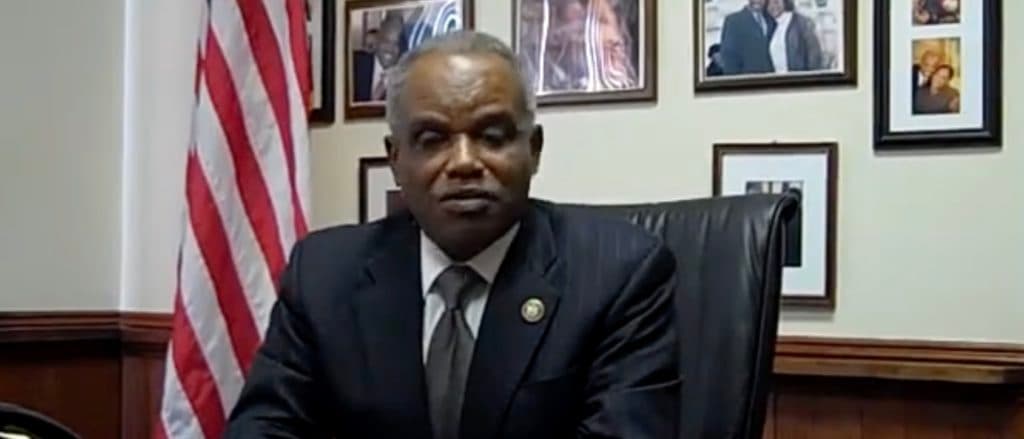
Democratic Rep. David Scott Dies In Office
Georgia Democratic Rep. David Scott died at the age of 80 on Tuesday night, shortly after filing paperwork to seek a 13th term in office. The Democratic representative, who served in the Georgia General Assembly before becoming a House member, unexpectedly died after 50 years in elected office and became the fifth incumbent lawmaker in the lower chamber to die in the past 13 months, according to the Atlanta-Journal Constitution (AJC) and other outlets. His death was confirmed by his office to the AJC on Wednesday. “It is with deep sorrow that we share the unexpected passing of Congressman David Scott,” a post shared on X from his official account read in part, adding that more information would be shared within the next few days. Members of Congress from both sides of the aisle expressed their grief for the lawmaker’s passing. “Congressman Scott’s passing is deeply sad,” House Minority Leader Hakeem Jeffries told reporters, according to NBC News. “David Scott was a trailblazer who served the district that he represented admirably, rose up from humble beginnings to become the first African American ever to chair the House [Agriculture] Committee. He cared about the people that he represented. He was fiercely committed to getting things done for the people of the great state of Georgia, and he’ll be deeply missed.” Democratic colleagues, Washington Rep. Pramila Jayapal, New Jersey Rep. Josh Gottheimer and New York Rep. Grace Meng, also sent their condolences. “We are all deeply saddened by the news of Rep. David Scott’s passing,” Republican House Speaker Mike Johnson wrote on X, “We are lifting up David’s wife Alfredia, his two daughters, and his grandchildren in prayer as they mourn.” Scott was facing a strong primary field for Georgia’s 13th congressional district, including challenges from State Rep. Jasmine Clarke and State Sen. Emmanuel Jones, according to GPB. The primary challenges followed concerns about his health and voting record, CBS News reported in November 2025. Voters had also expressed their discomfort about his age and whether they represented his ideals in Congress, the outlet reported at the time. It wasn’t immediately clear if the seat will remain vacant until the next session of Congress or if a special election would be held. All content created by the Daily Caller News Foundation, an independent and nonpartisan newswire service, is available without charge to any legitimate news publisher that can provide a large audience. All republished articles must include our logo, our reporter’s byline and their DCNF affiliation. For any questions about our guidelines or partnering with us, please contact licensing@dailycallernewsfoundation.org.

Fetterman On Virginia Redistricting: ‘We All Lose At This Point’
Sen. John Fetterman (D-Pa.) was not happy a Democratic redistricting initiative passed in Virginia. “We all lose at this point,” Fetterman said Tuesday night while on NewsNation’s “Cuomo,” per The Hill. “I mean, I think everyone loses for that,” Fetterman said when he was told Democrats were projected to win approval of a gerrymandered congressional map in Tuesday’s election. Fetterman pointed out the Democratic push to redraw congressional boundaries in Virginia to pick up more House seats in the midterm elections was in response to a GOP effort to redraw district lines in Texas. He said the tit for tat strategy isn’t good for the country. “I understand this was all that started after Texas decided to kind of do the same thing. I mean, I get the logic to do the things, but overall, we all lose at this point,” he said, adding two wrongs don’t make a right. “The wrong thing doesn’t make it the right thing, but that’s where we are. And if we continue to just attack the other side, whether it’s a red state or whether it’s a blue state, our democracy is degraded,” he said. Watch: .@SenFettermanPA says “our democracy hurts” through the passing of the Virginia redistricting referendum that is likely to favor Democrats in Congress. “I get the logic to do it, but overall, we all lose at this point,” Fetterman said. @ChrisCuomo #CUOMO MORE:… pic.twitter.com/L9drMcjw1n — NewsNation (@NewsNation) April 22, 2026 The Virginia redistricting initiative passed narrowly by a vote of 51% to 49%. It will allow Democrats to rework the state’s congressional boundaries that will allow their party to potentially control 10 of the 11 seats in the House delegation. Democrats currently hold a six-seat-to-five-seat advantage in the delegation. The new map would stay in place until after the 2030 census. House Democratic Leader Hakeem Jeffries (N.Y.), on the other hand, was happy with the results. “Last July, Donald Trump demanded that Texas draw five new Republican seats in the middle of a decade, igniting a chain reaction of corrupt MAGA state legislators attempting to rig the midterm elections. While many expected Democrats to roll over and play dead, we did the opposite,” Jeffries said in a statement.
Fetterman On Virginia Redistricting: ‘We All Lose At This Point’
Sen. John Fetterman (D-Pa.) was not happy a Democratic redistricting initiative passed in Virginia. “We all lose at this point,” Fetterman said Tuesday night while on NewsNation’s “Cuomo,” per The Hill. “I mean, I think everyone loses for that,” Fetterman said when he was told Democrats were projected to win approval of a gerrymandered congressional map in Tuesday’s election. Fetterman pointed out the Democratic push to redraw congressional boundaries in Virginia to pick up more House seats in the midterm elections was in response to a GOP effort to redraw district lines in Texas. He said the tit for tat strategy isn’t good for the country. “I understand this was all that started after Texas decided to kind of do the same thing. I mean, I get the logic to do the things, but overall, we all lose at this point,” he said, adding two wrongs don’t make a right. “The wrong thing doesn’t make it the right thing, but that’s where we are. And if we continue to just attack the other side, whether it’s a red state or whether it’s a blue state, our democracy is degraded,” he said. Watch: .@SenFettermanPA says “our democracy hurts” through the passing of the Virginia redistricting referendum that is likely to favor Democrats in Congress. “I get the logic to do it, but overall, we all lose at this point,” Fetterman said. @ChrisCuomo #CUOMO MORE:… pic.twitter.com/L9drMcjw1n — NewsNation (@NewsNation) April 22, 2026 The Virginia redistricting initiative passed narrowly by a vote of 51% to 49%. It will allow Democrats to rework the state’s congressional boundaries that will allow their party to potentially control 10 of the 11 seats in the House delegation. Democrats currently hold a six-seat-to-five-seat advantage in the delegation. The new map would stay in place until after the 2030 census. House Democratic Leader Hakeem Jeffries (N.Y.), on the other hand, was happy with the results. “Last July, Donald Trump demanded that Texas draw five new Republican seats in the middle of a decade, igniting a chain reaction of corrupt MAGA state legislators attempting to rig the midterm elections. While many expected Democrats to roll over and play dead, we did the opposite,” Jeffries said in a statement.

Soros-Linked Dark Money Puts Lopsided Democrat Gerrymander Of Virginia Across Finish Line
Virginia voters narrowly approved a gerrymandered House map Tuesday — one expected to add four Democratic seats in the midterms. The 2026 Virginia redistricting amendment passed with 51% of voters backing the “yes” campaign and 49% casting their ballot for “no” with 94% of votes counted, the Associated Press reported. As a result, the light blue state, where former Vice President Kamala Harris won less than 52% of the vote in 2024, will likely see 91% of its House seats drawn to favor Democrats. Prior to the state’s new lopsided gerrymander, Democrats held six of Virginia’s 11 seats, or 55% — a percentage just slightly higher than the share of the vote Harris won there. The new map, which some analysts say will disenfranchise the state’s rural areas, leaves just one Republican-held seat, the Ninth District. It redraws the four seats held by Republican Virginia Reps. Rob Wittman, Jen Kiggans, John McGuire and Ben Cline to favor Democrats. Dark money groups backing the successful “yes” campaign significantly outspent the opposition to the referendum. The chief group in support of the 10 to one Democratic gerrymander — known as Virginians for Fair Elections — raised $64 million, with a quarter of this total going to television ads, The Washington Post (WaPo) reported on April 16. The outlet also likened uncovering the source of the group’s money to taking apart a many-layered Russian nesting doll. Virginians for Fair Elections notably took $5 million from the Fund for Policy Reform Inc., a group affiliated with and funded by left-wing billionaire George Soros’ Open Society Foundations network, Fox News reported citing the Virginia Public Access Project. Meanwhile, House Majority Forward, a left-wing spending group linked to House Minority Leader Hakeem Jeffries and not required to disclose its donors, poured about $40 million into the pro-gerrymander effort, WaPo reported. Virginians for Fair Maps, the group that funneled the most money into the “no” campaign, contributed only $20 million total, according to the outlet. The referendum was supported by a wide array of prominent Democrats, including Virginia Gov. Abigail Spanberger, both of the state’s U.S. senators Mark Warner and Tim Kaine as well as former President Barack Obama. In justifying their support for the extremely lopsided map, the politicians often presented it as an opportunity to fight back against Republicans and President Donald Trump, who backed GOP-friendly redistricting efforts the same cycle, such as the successful one in Texas. TODAY is Election Day! I’ve talked a lot about how Virginia’s approach to redistricting is different. It’s temporary, it’s responsive to other states, but most importantly — it’s up to YOU. Find your polling location at https://t.co/zlFMUhsjmV and join me in voting YES! pic.twitter.com/Yr0RvdxikO — Abigail Spanberger (@SpanbergerForVA) April 21, 2026 “Republicans want to steal enough seats in Congress to rig the next election and wield unchecked power for two more years. But you can stop them by voting ‘yes’ on April 21,” Obama said in a pro-gerrymander ad released by Virginians for Fair Elections. “I’ve talked a lot about how Virginia’s approach to redistricting is different,” Spanberger wrote in a Tuesday morning X post sent about 12 hours before polls closed. “It’s temporary, it’s responsive to other states, but most importantly — it’s up to YOU. … join me in voting YES!” “Today’s redistricting referendum is about one thing: President Trump’s power grab,” the governor later wrote in an X post Tuesday afternoon. “Last summer, he said he’s ‘entitled’ to more seats in Congress, and states across the country got to work to give him what he demanded.” Despite Spanberger’s support, the map passed by a substantially smaller margin than the 15-point landslide victory the governor won in November 2025. The day before Election Day, Trump participated in a tele-rally with Speaker of the House Mike Johnson urging Virginians to vote “no” on the referendum. “The whole country is watching. So important and so unfair what they’ve done,” Trump said during his Monday remarks. “We need every Virginia patriot to get out and vote no, no, no on the radical Democrats’ unfair ballot referendum. It is so crazy what they’re doing. So go to your polling place tomorrow and vote.” The actual 40-word referendum question presented to voters as the sole entry on the Tuesday ballot read: “Should the Constitution of Virginia be amended to allow the General Assembly to temporarily adopt new congressional districts to restore fairness in the upcoming elections, while ensuring Virginia’s standard redistricting process resumes for all future redistricting after the 2030 census?” (Featured Image Media Credit: Screen Capture/CSPAN) All content created by the Daily Caller News Foundation, an independent and nonpartisan newswire service, is available without charge to any legitimate news publisher that can provide a large audience. All republished articles must include our logo, our reporter’s byline and their DCNF affiliation. For any questions about our guidelines or partnering with us, please contact licensing@dailycallernewsfoundation.org.

Senate Seeks $70,000,000,000 For ICE, CBP Operations As Shutdown Drags On
Senate Republicans are seeking to push a large reconciliation bill focusing on funding immigration law enforcement operations as the partial government shutdown extends past the 65-day mark. Republicans in the chamber, led by South Carolina Sen. Lindsey Graham, unveiled a concurrent resolution, backed by Senate Majority Leader John Thune, that requests $70 billion between 2026 and 2035 for Immigration and Customs Enforcement (ICE) and Customs and Border Patrol (CBP) operations. “Republicans are doing something that must be done quickly, and that our Democrat colleagues are trying to prevent us from doing. That something is simple: fully fund Border Patrol and ICE at a time of great threat to the United States,” Graham told reporters. The senator recently came under fire for his staunch support of the Iran war and mockery for his late March trip to Disney World during the conflict. At the same time, the House also signaled a willingness to expedite the reconciliation bill before voting on separate legislation to fully fund and reopen the Department of Homeland Security (DHS). The Senate-backed DHS funding bill, which excludes funding for ICE and CBP, has been in limbo since its early-morning passage on March 27. It was approved by unanimous consent with only five senators present, just hours before the Senate took a two-week vacation. “The Senate is moving starting today on the scaled-down reconciliation bill to focus on ICE and CBP, and we’re going to expedite that when it comes over here,” House Majority Leader Steve Scalise told Bloomberg. “The sequencing is important. We’ve got to make sure that we don’t isolate and, as I say, make an orphan out of key agencies of the department,” Republican House Speaker Mike Johnson told The Hill. “And there’s some concern on our side that if you do the bulk of the department first before that, and they could be left out, we can’t allow for that.” The Senate is expected to vote to adopt the budget sometime this week and only needs 51 votes to pass, according to Politico. The DHS has been shut down since Feb. 14 following a standoff between Senate Democrats and Republicans over reforms for ICE following the shooting deaths of Renee Good and Alex Pretti in Minneapolis in January. Democrats sought to tag a list of changes to the agency and tie it to any funding for the DHS, including body cams, a ban on face masks and judicial warrants. Johnson, who initially called the DHS funding bill passed in March a “joke” and slammed it as a “gambit,” announced earlier in April that he had worked with Thune to pursue the two-pronged approach to end the shutdown. The DHS secured $165 billion in appropriations through the One Big Beautiful Bill Act passed in 2025, including funding to hire personnel and complete the wall at the southern border. Other agencies, including the Transportation Security Administration, have not been able to pay their staff on time. President Donald Trump signed an executive order on March 27 paying workers in airports, including back pay, during the shutdown. All content created by the Daily Caller News Foundation, an independent and nonpartisan newswire service, is available without charge to any legitimate news publisher that can provide a large audience. All republished articles must include our logo, our reporter’s byline and their DCNF affiliation. For any questions about our guidelines or partnering with us, please contact licensing@dailycallernewsfoundation.org.
Senate Seeks $70,000,000,000 For ICE, CBP Operations As Shutdown Drags On
Senate Republicans are seeking to push a large reconciliation bill focusing on funding immigration law enforcement operations as the partial government shutdown extends past the 65-day mark. Republicans in the chamber, led by South Carolina Sen. Lindsey Graham, unveiled a concurrent resolution, backed by Senate Majority Leader John Thune, that requests $70 billion between 2026 and 2035 for Immigration and Customs Enforcement (ICE) and Customs and Border Patrol (CBP) operations. “Republicans are doing something that must be done quickly, and that our Democrat colleagues are trying to prevent us from doing. That something is simple: fully fund Border Patrol and ICE at a time of great threat to the United States,” Graham told reporters. The senator recently came under fire for his staunch support of the Iran war and mockery for his late March trip to Disney World during the conflict. At the same time, the House also signaled a willingness to expedite the reconciliation bill before voting on separate legislation to fully fund and reopen the Department of Homeland Security (DHS). The Senate-backed DHS funding bill, which excludes funding for ICE and CBP, has been in limbo since its early-morning passage on March 27. It was approved by unanimous consent with only five senators present, just hours before the Senate took a two-week vacation. “The Senate is moving starting today on the scaled-down reconciliation bill to focus on ICE and CBP, and we’re going to expedite that when it comes over here,” House Majority Leader Steve Scalise told Bloomberg. “The sequencing is important. We’ve got to make sure that we don’t isolate and, as I say, make an orphan out of key agencies of the department,” Republican House Speaker Mike Johnson told The Hill. “And there’s some concern on our side that if you do the bulk of the department first before that, and they could be left out, we can’t allow for that.” The Senate is expected to vote to adopt the budget sometime this week and only needs 51 votes to pass, according to Politico. The DHS has been shut down since Feb. 14 following a standoff between Senate Democrats and Republicans over reforms for ICE following the shooting deaths of Renee Good and Alex Pretti in Minneapolis in January. Democrats sought to tag a list of changes to the agency and tie it to any funding for the DHS, including body cams, a ban on face masks and judicial warrants. Johnson, who initially called the DHS funding bill passed in March a “joke” and slammed it as a “gambit,” announced earlier in April that he had worked with Thune to pursue the two-pronged approach to end the shutdown. The DHS secured $165 billion in appropriations through the One Big Beautiful Bill Act passed in 2025, including funding to hire personnel and complete the wall at the southern border. Other agencies, including the Transportation Security Administration, have not been able to pay their staff on time. President Donald Trump signed an executive order on March 27 paying workers in airports, including back pay, during the shutdown. All content created by the Daily Caller News Foundation, an independent and nonpartisan newswire service, is available without charge to any legitimate news publisher that can provide a large audience. All republished articles must include our logo, our reporter’s byline and their DCNF affiliation. For any questions about our guidelines or partnering with us, please contact licensing@dailycallernewsfoundation.org.
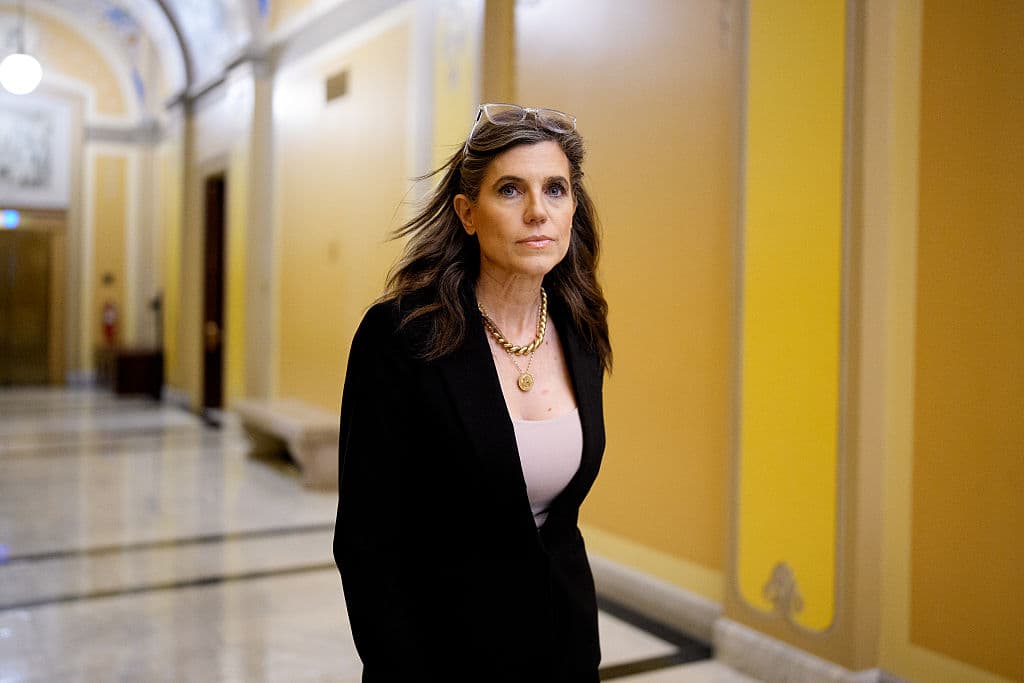
Mace Moves to Expel Mills as Allegations Mount
A fresh push to remove a sitting lawmaker from Congress is underway after Rep. Nancy Mace introduced a resolution targeting fellow Republican Cory Mills. According to the New York Post, a measure was filed on Monday that seeks to expel Mills from the House of Representatives over a series of allegations, including domestic violence, sexual misconduct, stolen valor, and profiting from federal contracts while in office. The effort follows months of scrutiny. Mills has been under investigation by the House Ethics Committee since November, after a previous attempt by Mace to censure him and remove him from committee assignments failed. At that time, the allegations were referred to the panel for further review. Mace said she believes enough time has passed without action. “The swamp has protected Cory Mills for far too long, and we are done letting it slide,” she said in a statement. “We tried to censure him and strip him from his committee assignments. Both parties blocked it, but we are not backing down,” she added. Although the Ethics Committee has not released its findings, Mace argued the case against Mills is already clear. She accused him of “beating women and telling them to lie about it, cyberstalking women, lying about his military service, and profiting off his seat.” “Any Member who votes to keep him here is voting to protect a woman beater and a fraud,” Mace asserted. “He needs to be expelled immediately.” An expulsion vote would require support from two-thirds of the House, a high threshold in a narrowly divided chamber. It remains uncertain whether the resolution could gain enough backing to pass. The move comes shortly after the resignations of former lawmakers Tony Gonzales and Eric Swalwell, both of whom stepped down following allegations of sexual misconduct. Mills, for his part, has pushed back against the effort and urged patience as the investigation continues. “I personally think that you should allow due process,” he told reporters, according to The Hill. “The precedence that she’s setting right now is that you only have to be investigated, and she’s under investigation,” he continued. “So I think that, by her own admission, she’s kind of also saying that she should be expelled as well.” The Ethics Committee is also examining Mace over separate allegations tied to lodging reimbursements, adding another layer of tension to the dispute as both lawmakers remain under scrutiny.
Mace Moves to Expel Mills as Allegations Mount
A fresh push to remove a sitting lawmaker from Congress is underway after Rep. Nancy Mace introduced a resolution targeting fellow Republican Cory Mills. According to the New York Post, a measure was filed on Monday that seeks to expel Mills from the House of Representatives over a series of allegations, including domestic violence, sexual misconduct, stolen valor, and profiting from federal contracts while in office. The effort follows months of scrutiny. Mills has been under investigation by the House Ethics Committee since November, after a previous attempt by Mace to censure him and remove him from committee assignments failed. At that time, the allegations were referred to the panel for further review. Mace said she believes enough time has passed without action. “The swamp has protected Cory Mills for far too long, and we are done letting it slide,” she said in a statement. “We tried to censure him and strip him from his committee assignments. Both parties blocked it, but we are not backing down,” she added. Although the Ethics Committee has not released its findings, Mace argued the case against Mills is already clear. She accused him of “beating women and telling them to lie about it, cyberstalking women, lying about his military service, and profiting off his seat.” “Any Member who votes to keep him here is voting to protect a woman beater and a fraud,” Mace asserted. “He needs to be expelled immediately.” An expulsion vote would require support from two-thirds of the House, a high threshold in a narrowly divided chamber. It remains uncertain whether the resolution could gain enough backing to pass. The move comes shortly after the resignations of former lawmakers Tony Gonzales and Eric Swalwell, both of whom stepped down following allegations of sexual misconduct. Mills, for his part, has pushed back against the effort and urged patience as the investigation continues. “I personally think that you should allow due process,” he told reporters, according to The Hill. “The precedence that she’s setting right now is that you only have to be investigated, and she’s under investigation,” he continued. “So I think that, by her own admission, she’s kind of also saying that she should be expelled as well.” The Ethics Committee is also examining Mace over separate allegations tied to lodging reimbursements, adding another layer of tension to the dispute as both lawmakers remain under scrutiny.

The Good, The Bad And The Ugly: Inside Swamp’s New Farm Bill
House lawmakers advanced a farm bill in March that would spend more than $1 trillion over a decade without putting a dent in the U.S.’ massive spending deluge. The legislation seeks to leave in place SNAP policy changes first implemented in the One Big Beautiful Bill (OBBB) in July 2025, while expanding federal control over pesticide labeling and directs additional funding to broadband, climate and conservation initiatives. The bill also includes a provision affecting ranchers, setting up a possible showdown between rival factions of GOP lawmakers. ‘Glass Half Full’ Compared to the previous Farm Bill passed in 2018, which was projected to cost roughly $867 billion over a decade, spending has remained relatively unchanged, shifting funds instead of making noticeable cuts. “No big increase, but no real cuts,” Bryan Riley, director of the free trade initiative at the National Taxpayers Union, told the Daily Caller News Foundation, describing the bill as a “glass half full” approach, avoiding major spending hikes but falling short of meaningful reductions. The bill would have no effect on direct spending over the 2026-2036 period, according to the Congressional Budget Office (CBO), meaning it reallocates funds within the farm bill which is projected to exceed $1 trillion over the next decade. The U.S. faces a growing debt burden expected to hit $40 trillion by November. The CBO’s findings come as lawmakers continue to preside over the massive national debt, with mandatory spending programs like Social Security, Medicare and Medicaid driving a large share of federal spending. Despite warnings, Congress failed to enact significant deficit reduction, as public approval for Congress hit 16% in March, according to Gallup. Federal Overreach? The Farm bill could also face additional resistance from lawmakers over a provision tied to the Food Security and Farm Protection Act (S. 1326), which would limit states’ ability to propose agricultural standards on products originating from out-of-state producers. Supporters of the provision, including lawmakers such as Republican Iowa Sen. Joni Ernst, argued that the measure would protect farmers and ranchers from the burdensome and conflicting state regulations. Ernst was a co-sponsor of the bill in 2023, which formerly was known as the Ending Agricultural Trade Suppression (EATS) Act. According to sources with knowledge of the bill, Republican Florida Rep. Anna Paulina Luna, Republican South Carolina Rep. Nancy Mace and Republican New York Rep. Andrew Garbarino are expected to push to have the language removed as the bill moves forward. “As liberal activists who have never set foot on a farm try to ban our bacon with dangerous and arbitrary overregulation, I’m fighting to make sure the voices of the farmers and experts who know best are heard,” Ernst said in a statement to the DCNF. “After the U.S. Supreme Court left an open invitation for Congress to strike down Proposition 12, it’s time we band together to end California’s war on breakfast and other nonsensical standards that threaten our national security, jeopardize the livelihoods of our farmers, and hike up prices at the grocery store.” Ernst added. The measure has drawn support from industry stakeholders, including the largest pork manufacturer in the U.S., Smithfield Foods, a Chinese-owned company. However, the provision has also drawn opposition from ranchers and advocacy groups who argued that the measure could override state-level standards, negatively affecting local producers who rely on these distinctions and potentially leading to the closure of locally owned farms and ranches. “This would override state-level standards and make it harder for producers who have invested in meeting those requirements to compete,” Marty Irby, president and CEO of Capitol South, a firm that represents ranchers opposing the provision, told the DCNF. “It would be a one-size-fits all policy,” Irby said. Irby noted the provision could have a major impact on the pork market, adding “you’ll see a ton of pork producers go out of business.” Farming And MAHA America’s agricultural sector faces pressure due to the war with Iran, which has disrupted fertilizer supply and contributed to higher consumer prices seen at the supermarket. Food costs are predicted to increase 3.6% according to the Department of Agriculture (USDA). “A lot of problems farmers are facing are tied to trade,” Riley told the DCNF, citing tariffs and export challenges along with broader Middle East tensions. The bill also includes a provision requiring national uniformity in pesticide labeling, limiting a state’s ability to impose additional warning requirements beyond those approved by the Environmental Protection Agency (EPA). Federal law currently limits a state’s ability to impose its own labeling on products, but this provision would go one step further, restricting potential liability lawsuits against the pesticide companies. “If consumers are not warned about the potential harm associated with their use of pesticide products, they do not have the ability to make a smart decision on product choice,” Jay Feldman, executive director of the nonprofit group Beyond Pesticides, told the DCNF. The provision is part of a broader debate over the regulations of pesticide use. Groups such as the nonprofit Beyond Pesticides argue that the language could shield companies from “failure to warn” litigation by cutting down the ability to require additional warnings beyond federally approved labels. The issue has drawn scrutiny from the Make America Healthy Again (MAHA) movement, as Health and Human Services Secretary Robert F. Kennedy has argued that manufacturers should be held accountable for failing to warn consumers about potential health issues. The legislation also redirects funding toward new projects, including an additional $350 million to the Reconnect broadband program, which received $2 billion under former President Joe Biden’s Infrastructure Investment and Jobs Act, sparking questions about potential overlap as multiple programs have been tasked with expanding broadband access in rural areas. “There are far too many overlapping federal programs funding broadband deployment, making duplication and waste of taxpayer dollars inevitable,” Randolph May, president of the Free State Foundation, told the DCNF. “At a minimum, the ReConnect program funding should be suspended until existing broadband funds are fully disbursed.” The USDA failed to set clear performance goals for broadband initiatives and identified gaps in oversight to address fraud risks, according to a 2022 Government Accountability Office (GAO) review that examined programs, including ReConnect. In 2020, House Republicans called for an audit of the USDA Broadband Program, citing potential overlap within the program. The bill also seeks to raise conservation funding, including initiatives tied to environmental and climate-focused agricultural practices, issues that have been a key priority for Democrats for years. These programs fund efforts like soil conservation, water management and emission reduction programs, raising questions about spending priorities as the bill fails to reduce federal spending. “Throughout this markup, it became clearer than ever before that our country needs a new farm bill, and we don’t need it next year, or next Congress. We need it now. I look forward to working in good faith with my colleagues on both sides of the aisle as we move toward a final vote on the House floor,” House Agriculture Committee Chairman Glenn Thompson said in a statement released in March. The bill would strengthen the safety net for many farmers by expanding crop insurance and loan programs and providing disaster assistance, while also stabilizing rural health systems by expanding access to care, according to the statement. The legislation passed the committee in March and now heads to the House floor, as the current spending bill is set to expire in September. While farm bills have historically been bipartisan-supported pieces of legislation, this measure faces uncertainty as Democrats seek to reimplement SNAP benefits cut in the OBBB. The House Rules Committee is expected to take up the bill as it moves to the floor for a vote, according to a notice released by the House Rules Committee on Thursday. “This may not be the end of story,” said Riley, suggesting Congress may have to revisit additional spending in the future. All content created by the Daily Caller News Foundation, an independent and nonpartisan newswire service, is available without charge to any legitimate news publisher that can provide a large audience. All republished articles must include our logo, our reporter’s byline and their DCNF affiliation. For any questions about our guidelines or partnering with us, please contact licensing@dailycallernewsfoundation.org.
The Good, The Bad And The Ugly: Inside Swamp’s New Farm Bill
House lawmakers advanced a farm bill in March that would spend more than $1 trillion over a decade without putting a dent in the U.S.’ massive spending deluge. The legislation seeks to leave in place SNAP policy changes first implemented in the One Big Beautiful Bill (OBBB) in July 2025, while expanding federal control over pesticide labeling and directs additional funding to broadband, climate and conservation initiatives. The bill also includes a provision affecting ranchers, setting up a possible showdown between rival factions of GOP lawmakers. ‘Glass Half Full’ Compared to the previous Farm Bill passed in 2018, which was projected to cost roughly $867 billion over a decade, spending has remained relatively unchanged, shifting funds instead of making noticeable cuts. “No big increase, but no real cuts,” Bryan Riley, director of the free trade initiative at the National Taxpayers Union, told the Daily Caller News Foundation, describing the bill as a “glass half full” approach, avoiding major spending hikes but falling short of meaningful reductions. The bill would have no effect on direct spending over the 2026-2036 period, according to the Congressional Budget Office (CBO), meaning it reallocates funds within the farm bill which is projected to exceed $1 trillion over the next decade. The U.S. faces a growing debt burden expected to hit $40 trillion by November. The CBO’s findings come as lawmakers continue to preside over the massive national debt, with mandatory spending programs like Social Security, Medicare and Medicaid driving a large share of federal spending. Despite warnings, Congress failed to enact significant deficit reduction, as public approval for Congress hit 16% in March, according to Gallup. Federal Overreach? The Farm bill could also face additional resistance from lawmakers over a provision tied to the Food Security and Farm Protection Act (S. 1326), which would limit states’ ability to propose agricultural standards on products originating from out-of-state producers. Supporters of the provision, including lawmakers such as Republican Iowa Sen. Joni Ernst, argued that the measure would protect farmers and ranchers from the burdensome and conflicting state regulations. Ernst was a co-sponsor of the bill in 2023, which formerly was known as the Ending Agricultural Trade Suppression (EATS) Act. According to sources with knowledge of the bill, Republican Florida Rep. Anna Paulina Luna, Republican South Carolina Rep. Nancy Mace and Republican New York Rep. Andrew Garbarino are expected to push to have the language removed as the bill moves forward. “As liberal activists who have never set foot on a farm try to ban our bacon with dangerous and arbitrary overregulation, I’m fighting to make sure the voices of the farmers and experts who know best are heard,” Ernst said in a statement to the DCNF. “After the U.S. Supreme Court left an open invitation for Congress to strike down Proposition 12, it’s time we band together to end California’s war on breakfast and other nonsensical standards that threaten our national security, jeopardize the livelihoods of our farmers, and hike up prices at the grocery store.” Ernst added. The measure has drawn support from industry stakeholders, including the largest pork manufacturer in the U.S., Smithfield Foods, a Chinese-owned company. However, the provision has also drawn opposition from ranchers and advocacy groups who argued that the measure could override state-level standards, negatively affecting local producers who rely on these distinctions and potentially leading to the closure of locally owned farms and ranches. “This would override state-level standards and make it harder for producers who have invested in meeting those requirements to compete,” Marty Irby, president and CEO of Capitol South, a firm that represents ranchers opposing the provision, told the DCNF. “It would be a one-size-fits all policy,” Irby said. Irby noted the provision could have a major impact on the pork market, adding “you’ll see a ton of pork producers go out of business.” Farming And MAHA America’s agricultural sector faces pressure due to the war with Iran, which has disrupted fertilizer supply and contributed to higher consumer prices seen at the supermarket. Food costs are predicted to increase 3.6% according to the Department of Agriculture (USDA). “A lot of problems farmers are facing are tied to trade,” Riley told the DCNF, citing tariffs and export challenges along with broader Middle East tensions. The bill also includes a provision requiring national uniformity in pesticide labeling, limiting a state’s ability to impose additional warning requirements beyond those approved by the Environmental Protection Agency (EPA). Federal law currently limits a state’s ability to impose its own labeling on products, but this provision would go one step further, restricting potential liability lawsuits against the pesticide companies. “If consumers are not warned about the potential harm associated with their use of pesticide products, they do not have the ability to make a smart decision on product choice,” Jay Feldman, executive director of the nonprofit group Beyond Pesticides, told the DCNF. The provision is part of a broader debate over the regulations of pesticide use. Groups such as the nonprofit Beyond Pesticides argue that the language could shield companies from “failure to warn” litigation by cutting down the ability to require additional warnings beyond federally approved labels. The issue has drawn scrutiny from the Make America Healthy Again (MAHA) movement, as Health and Human Services Secretary Robert F. Kennedy has argued that manufacturers should be held accountable for failing to warn consumers about potential health issues. The legislation also redirects funding toward new projects, including an additional $350 million to the Reconnect broadband program, which received $2 billion under former President Joe Biden’s Infrastructure Investment and Jobs Act, sparking questions about potential overlap as multiple programs have been tasked with expanding broadband access in rural areas. “There are far too many overlapping federal programs funding broadband deployment, making duplication and waste of taxpayer dollars inevitable,” Randolph May, president of the Free State Foundation, told the DCNF. “At a minimum, the ReConnect program funding should be suspended until existing broadband funds are fully disbursed.” The USDA failed to set clear performance goals for broadband initiatives and identified gaps in oversight to address fraud risks, according to a 2022 Government Accountability Office (GAO) review that examined programs, including ReConnect. In 2020, House Republicans called for an audit of the USDA Broadband Program, citing potential overlap within the program. The bill also seeks to raise conservation funding, including initiatives tied to environmental and climate-focused agricultural practices, issues that have been a key priority for Democrats for years. These programs fund efforts like soil conservation, water management and emission reduction programs, raising questions about spending priorities as the bill fails to reduce federal spending. “Throughout this markup, it became clearer than ever before that our country needs a new farm bill, and we don’t need it next year, or next Congress. We need it now. I look forward to working in good faith with my colleagues on both sides of the aisle as we move toward a final vote on the House floor,” House Agriculture Committee Chairman Glenn Thompson said in a statement released in March. The bill would strengthen the safety net for many farmers by expanding crop insurance and loan programs and providing disaster assistance, while also stabilizing rural health systems by expanding access to care, according to the statement. The legislation passed the committee in March and now heads to the House floor, as the current spending bill is set to expire in September. While farm bills have historically been bipartisan-supported pieces of legislation, this measure faces uncertainty as Democrats seek to reimplement SNAP benefits cut in the OBBB. The House Rules Committee is expected to take up the bill as it moves to the floor for a vote, according to a notice released by the House Rules Committee on Thursday. “This may not be the end of story,” said Riley, suggesting Congress may have to revisit additional spending in the future. All content created by the Daily Caller News Foundation, an independent and nonpartisan newswire service, is available without charge to any legitimate news publisher that can provide a large audience. All republished articles must include our logo, our reporter’s byline and their DCNF affiliation. For any questions about our guidelines or partnering with us, please contact licensing@dailycallernewsfoundation.org.
The Good, The Bad And The Ugly: Inside Swamp’s New Farm Bill
House lawmakers advanced a farm bill in March that would spend more than $1 trillion over a decade without putting a dent in the U.S.’ massive spending deluge. The legislation seeks to leave in place SNAP policy changes first implemented in the One Big Beautiful Bill (OBBB) in July 2025, while expanding federal control over pesticide labeling and directs additional funding to broadband, climate and conservation initiatives. The bill also includes a provision affecting ranchers, setting up a possible showdown between rival factions of GOP lawmakers. ‘Glass Half Full’ Compared to the previous Farm Bill passed in 2018, which was projected to cost roughly $867 billion over a decade, spending has remained relatively unchanged, shifting funds instead of making noticeable cuts. “No big increase, but no real cuts,” Bryan Riley, director of the free trade initiative at the National Taxpayers Union, told the Daily Caller News Foundation, describing the bill as a “glass half full” approach, avoiding major spending hikes but falling short of meaningful reductions. The bill would have no effect on direct spending over the 2026-2036 period, according to the Congressional Budget Office (CBO), meaning it reallocates funds within the farm bill which is projected to exceed $1 trillion over the next decade. The U.S. faces a growing debt burden expected to hit $40 trillion by November. The CBO’s findings come as lawmakers continue to preside over the massive national debt, with mandatory spending programs like Social Security, Medicare and Medicaid driving a large share of federal spending. Despite warnings, Congress failed to enact significant deficit reduction, as public approval for Congress hit 16% in March, according to Gallup. Federal Overreach? The Farm bill could also face additional resistance from lawmakers over a provision tied to the Food Security and Farm Protection Act (S. 1326), which would limit states’ ability to propose agricultural standards on products originating from out-of-state producers. Supporters of the provision, including lawmakers such as Republican Iowa Sen. Joni Ernst, argued that the measure would protect farmers and ranchers from the burdensome and conflicting state regulations. Ernst was a co-sponsor of the bill in 2023, which formerly was known as the Ending Agricultural Trade Suppression (EATS) Act. According to sources with knowledge of the bill, Republican Florida Rep. Anna Paulina Luna, Republican South Carolina Rep. Nancy Mace and Republican New York Rep. Andrew Garbarino are expected to push to have the language removed as the bill moves forward. “As liberal activists who have never set foot on a farm try to ban our bacon with dangerous and arbitrary overregulation, I’m fighting to make sure the voices of the farmers and experts who know best are heard,” Ernst said in a statement to the DCNF. “After the U.S. Supreme Court left an open invitation for Congress to strike down Proposition 12, it’s time we band together to end California’s war on breakfast and other nonsensical standards that threaten our national security, jeopardize the livelihoods of our farmers, and hike up prices at the grocery store.” Ernst added. The measure has drawn support from industry stakeholders, including the largest pork manufacturer in the U.S., Smithfield Foods, a Chinese-owned company. However, the provision has also drawn opposition from ranchers and advocacy groups who argued that the measure could override state-level standards, negatively affecting local producers who rely on these distinctions and potentially leading to the closure of locally owned farms and ranches. “This would override state-level standards and make it harder for producers who have invested in meeting those requirements to compete,” Marty Irby, president and CEO of Capitol South, a firm that represents ranchers opposing the provision, told the DCNF. “It would be a one-size-fits all policy,” Irby said. Irby noted the provision could have a major impact on the pork market, adding “you’ll see a ton of pork producers go out of business.” Farming And MAHA America’s agricultural sector faces pressure due to the war with Iran, which has disrupted fertilizer supply and contributed to higher consumer prices seen at the supermarket. Food costs are predicted to increase 3.6% according to the Department of Agriculture (USDA). “A lot of problems farmers are facing are tied to trade,” Riley told the DCNF, citing tariffs and export challenges along with broader Middle East tensions. The bill also includes a provision requiring national uniformity in pesticide labeling, limiting a state’s ability to impose additional warning requirements beyond those approved by the Environmental Protection Agency (EPA). Federal law currently limits a state’s ability to impose its own labeling on products, but this provision would go one step further, restricting potential liability lawsuits against the pesticide companies. “If consumers are not warned about the potential harm associated with their use of pesticide products, they do not have the ability to make a smart decision on product choice,” Jay Feldman, executive director of the nonprofit group Beyond Pesticides, told the DCNF. The provision is part of a broader debate over the regulations of pesticide use. Groups such as the nonprofit Beyond Pesticides argue that the language could shield companies from “failure to warn” litigation by cutting down the ability to require additional warnings beyond federally approved labels. The issue has drawn scrutiny from the Make America Healthy Again (MAHA) movement, as Health and Human Services Secretary Robert F. Kennedy has argued that manufacturers should be held accountable for failing to warn consumers about potential health issues. The legislation also redirects funding toward new projects, including an additional $350 million to the Reconnect broadband program, which received $2 billion under former President Joe Biden’s Infrastructure Investment and Jobs Act, sparking questions about potential overlap as multiple programs have been tasked with expanding broadband access in rural areas. “There are far too many overlapping federal programs funding broadband deployment, making duplication and waste of taxpayer dollars inevitable,” Randolph May, president of the Free State Foundation, told the DCNF. “At a minimum, the ReConnect program funding should be suspended until existing broadband funds are fully disbursed.” The USDA failed to set clear performance goals for broadband initiatives and identified gaps in oversight to address fraud risks, according to a 2022 Government Accountability Office (GAO) review that examined programs, including ReConnect. In 2020, House Republicans called for an audit of the USDA Broadband Program, citing potential overlap within the program. The bill also seeks to raise conservation funding, including initiatives tied to environmental and climate-focused agricultural practices, issues that have been a key priority for Democrats for years. These programs fund efforts like soil conservation, water management and emission reduction programs, raising questions about spending priorities as the bill fails to reduce federal spending. “Throughout this markup, it became clearer than ever before that our country needs a new farm bill, and we don’t need it next year, or next Congress. We need it now. I look forward to working in good faith with my colleagues on both sides of the aisle as we move toward a final vote on the House floor,” House Agriculture Committee Chairman Glenn Thompson said in a statement released in March. The bill would strengthen the safety net for many farmers by expanding crop insurance and loan programs and providing disaster assistance, while also stabilizing rural health systems by expanding access to care, according to the statement. The legislation passed the committee in March and now heads to the House floor, as the current spending bill is set to expire in September. While farm bills have historically been bipartisan-supported pieces of legislation, this measure faces uncertainty as Democrats seek to reimplement SNAP benefits cut in the OBBB. The House Rules Committee is expected to take up the bill as it moves to the floor for a vote, according to a notice released by the House Rules Committee on Thursday. “This may not be the end of story,” said Riley, suggesting Congress may have to revisit additional spending in the future. All content created by the Daily Caller News Foundation, an independent and nonpartisan newswire service, is available without charge to any legitimate news publisher that can provide a large audience. All republished articles must include our logo, our reporter’s byline and their DCNF affiliation. For any questions about our guidelines or partnering with us, please contact licensing@dailycallernewsfoundation.org.

Luna Announces Another Senator Under Review
Allegations of misconduct involving an unnamed U.S. senator were referred to the Senate Ethics Committee this week, though key details about the claims remain unclear. Rep. Anna Paulina Luna, a Republican from Florida, first raised the issue publicly in a post on X late Wednesday. She did not identify the senator in question or describe the specific nature of the allegations, but suggested the matter was serious enough to warrant immediate attention from Senate leadership. “It seems like the Senate has its own trash to take out,” Luna wrote, calling on Senate Majority Leader John Thune to investigate. She added that her chief of staff would be reaching out directly to Thune’s office. By Thursday morning, Thune confirmed that his office had received the information and passed it along through official channels. He declined to offer further details, saying he was not familiar with the specifics but that the allegations had been referred to the Senate Ethics Committee, which is responsible for reviewing such matters. “I don’t know what the particulars are about this,” Thune said. “All I know is that we referred it to the proper authorities.” Rep. Anna Paulina Luna just torched Senate Majority Leader John Thune. She called him out directly for blocking the SAVE America Act and voter ID: “John Thune is a problem… he has every ability to embrace the standing filibuster or remove the filibuster… but he’s the one… pic.twitter.com/84ohZSfKHo — Don Keith (@RealDonKeith) April 17, 2026 The Senate Ethics Committee has not publicly commented on the situation. Sen. James Lankford of Oklahoma, who chairs the panel, also declined to discuss the matter, saying he does not speak about ongoing ethics issues. The lack of detail has left many questions unanswered, including the identity of the senator involved and whether the allegations relate to personal misconduct, financial impropriety, or other potential violations. The timing of Luna’s post comes as Congress is already dealing with renewed scrutiny over lawmakers’ conduct, particularly in the wake of several recent scandals in the House. Former Rep. Eric Swalwell, a Democrat from California, resigned earlier this week following a report alleging he sexually assaulted a former staffer. Multiple women have since come forward with additional accusations, which he has denied. In a separate case, former Rep. Tony Gonzales, a Republican from Texas, also stepped down after acknowledging an affair with a former staffer. He has not addressed other allegations that have surfaced. Those developments have prompted some lawmakers to question whether reforms passed in 2018—meant to strengthen reporting procedures and accountability around harassment and misconduct—are working as intended. That overhaul followed the broader #MeToo movement and was designed to make it easier for victims, including congressional staff, to come forward. Sen. Ruben Gallego of Arizona recently suggested that further changes may be needed, pointing to concerns that staffers may still feel hesitant to report misconduct. For now, the situation raised by Luna remains at an early stage. With the matter now in the hands of the Senate Ethics Committee, any investigation or findings are likely to unfold largely out of public view, at least in the initial phases. Fox News
Luna Announces Another Senator Under Review
Allegations of misconduct involving an unnamed U.S. senator were referred to the Senate Ethics Committee this week, though key details about the claims remain unclear. Rep. Anna Paulina Luna, a Republican from Florida, first raised the issue publicly in a post on X late Wednesday. She did not identify the senator in question or describe the specific nature of the allegations, but suggested the matter was serious enough to warrant immediate attention from Senate leadership. “It seems like the Senate has its own trash to take out,” Luna wrote, calling on Senate Majority Leader John Thune to investigate. She added that her chief of staff would be reaching out directly to Thune’s office. By Thursday morning, Thune confirmed that his office had received the information and passed it along through official channels. He declined to offer further details, saying he was not familiar with the specifics but that the allegations had been referred to the Senate Ethics Committee, which is responsible for reviewing such matters. “I don’t know what the particulars are about this,” Thune said. “All I know is that we referred it to the proper authorities.” Rep. Anna Paulina Luna just torched Senate Majority Leader John Thune. She called him out directly for blocking the SAVE America Act and voter ID: “John Thune is a problem… he has every ability to embrace the standing filibuster or remove the filibuster… but he’s the one… pic.twitter.com/84ohZSfKHo — Don Keith (@RealDonKeith) April 17, 2026 The Senate Ethics Committee has not publicly commented on the situation. Sen. James Lankford of Oklahoma, who chairs the panel, also declined to discuss the matter, saying he does not speak about ongoing ethics issues. The lack of detail has left many questions unanswered, including the identity of the senator involved and whether the allegations relate to personal misconduct, financial impropriety, or other potential violations. The timing of Luna’s post comes as Congress is already dealing with renewed scrutiny over lawmakers’ conduct, particularly in the wake of several recent scandals in the House. Former Rep. Eric Swalwell, a Democrat from California, resigned earlier this week following a report alleging he sexually assaulted a former staffer. Multiple women have since come forward with additional accusations, which he has denied. In a separate case, former Rep. Tony Gonzales, a Republican from Texas, also stepped down after acknowledging an affair with a former staffer. He has not addressed other allegations that have surfaced. Those developments have prompted some lawmakers to question whether reforms passed in 2018—meant to strengthen reporting procedures and accountability around harassment and misconduct—are working as intended. That overhaul followed the broader #MeToo movement and was designed to make it easier for victims, including congressional staff, to come forward. Sen. Ruben Gallego of Arizona recently suggested that further changes may be needed, pointing to concerns that staffers may still feel hesitant to report misconduct. For now, the situation raised by Luna remains at an early stage. With the matter now in the hands of the Senate Ethics Committee, any investigation or findings are likely to unfold largely out of public view, at least in the initial phases. Fox News

School Where Charlie Kirk Was Killed Cancels Speaker Over Assassination Remarks
Utah Valley University announced author Sharon McMahon would not be speaking at its April 29 commencement ceremony following objections from conservative groups, citing safety concerns. The selection of author and podcaster McMahon drew strong objections from students and groups at UVU, where Charlie Kirk was shot and killed last year, over remarks she made after the assassination. In a brief Thursday release, the university said they would proceed without a commencement speaker. “Due to increased safety concerns related to the speaker and in consultation with public safety professionals and Sharon McMahon, Utah Valley University has decided to proceed without a featured commencement speaker for this year’s ceremony,” the university said. “We look forward to coming together as a community to celebrate UVU’s largest graduating class in history, with more than 13,400 graduates, about one third of whom are the first in their families to graduate from college.” Sharon McMahon will no longer be speaking at UVU’s commencement. https://t.co/UPUDrOoBhd pic.twitter.com/ELkn4Vi5f0 — TPUSAatUVU (@TPUSAatUVU) April 16, 2026 “Sharon McMahon was an inappropriate speaker to begin with, and there are still better options available for this year’s commencement speaker,” Caleb Chilcutt, president of the UVU chapter of TPUSA, said in a Thursday statement posted on X. “Sharon McMahon posted a now-deleted series of out-of-context quotes from Charlie in an effort to tarnish his name and minimize the tragedy,” Chilcutt said in a statement posted April 9. On The Charlie Kirk Show on Thursday, producer Blake Neff and TPUSA spox Andrew Kolvet were grateful for the cancellation, but criticized the school’s framing of its decision. WATCH: “So we covered with the chapter leader at Utah Valley, the other day how they got a commencement speaker who had attacked Charlie after his death, tried to explain why people might be celebrating his death, why people might, that why he was a figure of bigotry and hate, and we criticizde that, and Utah Valley just announced minutes ago, they will have no commencement speaker for this spring,” Blake Neff said. “Now here’s what’s annoying, they say it’s not because, oh, we picked a terrible speaker and that was our bad, they say they have increased safety concerns about what happened, so of course, basically, you know, it’s our fault, we were engaged in menacing behavior, they say, but regardless, it’s a speaker they shouldn’t have chosen.” “Listen, this was, nobody was making any threats about this, nobody was, not on the show or anywhere else,” Andrew Kolvet responded. “We were just saying it was, it was a bad idea. Well, anyways, hallelujah, good. I’m glad they got the memo and thank you also to, Senator Mike Lee who’s been very loud about that in Utah.” While McMahon condemned the Kirk assassination in a social media post on the day of Kirk’s assassination, she took aim at Kirk in a Sept. 12 Instagram post archived by KSL, a Salt Lake City-area TV station, claiming he pushed “bigoted ideas.” “It’s important to remember that the incredible tragedy of a public assassination does not erase the harm many experienced from his words, and the ensuing actions his followers took,” McMahon posted. Conservatives drew attention to McMahon’s post about Kirk almost immediately. “What if Charlie Kirk had been a beloved figure on the left, rather than among conservatives? And what if Sharon McMahon were a conservative—one who had defamed Charlie Kirk immediately after his horrific assassination at UVU? Would UVU have scheduled her to speak at commencement?” Republican Sen. Mike Lee posted on X. “Not in a million years. Not in ten million years. So why does UVU think this is okay? It’s not.” TPUSA and McMahon did not immediately respond to requests for comment from the Daily Caller News Foundation. All content created by the Daily Caller News Foundation, an independent and nonpartisan newswire service, is available without charge to any legitimate news publisher that can provide a large audience. All republished articles must include our logo, our reporter’s byline and their DCNF affiliation. For any questions about our guidelines or partnering with us, please contact licensing@dailycallernewsfoundation.org.

Veterans, Active-Duty Members Could See Concealed Carry Nationwide Under New Bill
Republican North Carolina Rep. Pat Harrigan introduced a bill Thursday to allow active-duty and honorably discharged special operators across the U.S. to carry concealed weapons, the Daily Caller News Foundation first learned. The Special Operations Forces Concealed Carry Act would extend federal concealed carry authority to “qualified special operators” — elite military personnel whose training and marksmanship standards match or exceed those of retired law enforcement officers. The legislation would also recognize their service “without undermining existing safeguards on firearm possession in sensitive places,” according to the bill’s text. “Federal law already trusts retired police officers to carry concealed nationwide,” Harrigan, a combat-decorated Green Beret, told the DCNF in a statement. “That makes sense. But it makes no sense that a retired SEAL or Green Beret, someone who spent a career mastering firearms under the most demanding conditions in the world, has no equivalent recognition under federal law.” “This bill fixes that,” the North Carolina Republican continued. “It does not create new rights or weaken any safeguard. It simply extends an existing, proven framework to the warriors who have earned it more than anyone.” Harrigan’s legislation would also establish permanent eligibility for qualified operators with no annual firearms requalification requirement, and would define qualifying service roles across the U.S. Army, Navy, Marine Corps, and Air Force. Under the Law Enforcement Officers Safety Act of 2004, officers are allowed to carry concealed weapons not only in their jurisdictions but in all 50 U.S. states as long as certain conditions are met, according to the FBI’s Law Enforcement Bulletin. As of 2023, there were close to 22.9 million concealed carry permit holders across the nation, the U.S. Concealed Carry Association reported in June 2024. All content created by the Daily Caller News Foundation, an independent and nonpartisan newswire service, is available without charge to any legitimate news publisher that can provide a large audience. All republished articles must include our logo, our reporter’s byline and their DCNF affiliation. For any questions about our guidelines or partnering with us, please contact licensing@dailycallernewsfoundation.org.

Tulsi Gabbard Reportedly Broke With Trump On Renewing Deep State Spy Tool
Director of National Intelligence (DNI) Tulsi Gabbard reportedly disagreed with President Donald Trump during a February meeting over a clean extension of a provision within a surveillance court bill despite publicly supporting it last year. Gabbard met with the president in February over Section 702 of the Foreign Intelligence Surveillance Act (FISA) and reforms that could be proposed, Politico’s Morning Cyber newsletter reported citing two anonymous sources. The section allows for the monitoring of communications between foreigners and, in some cases, American citizens without a warrant. The meeting repeatedly ended with no meaningful compromise, with the president continuing to push for a clean extension of the provision, according to Politico. The White House and the Office of the Director of National Intelligence (ODNI) did not immediately respond to requests for comment from the Daily Caller News Foundation. Gabbard previously criticized the tool before becoming the DNI when serving as a Democratic congresswoman representing Hawaii, co-sponsoring legislation with Republican Kentucky Rep. Thomas Massie in 2020 that sought to end data collection. She had also called the FISA program “an overreach” of congressional powers. “Unfortunately Congress just passed a bill allowing continuation of intel/law enforcement agencies to infringe on your civil liberties,” Gabbard wrote in 2020. “Patriot Act & Foreign Intelligence Surveillance Act (FISA) needed real reforms to prevent these constitutional abuses. Congress failed to do this.” Upon being promoted to DNI, the former Democrat shifted her tone on Section 702 by calling the program “crucial” and that it “must be safeguarded to protect our national while ensuring the civil liberties of Americans,” Punchbowl News reported in 2025. “My prior concerns about FISA were based on insufficient protections for civil liberties, particularly regarding the FBI’s misuse of warrantless search powers on American citizens,” Gabbard told ABC News at the time. Trump posted to Truth Social on Wednesday that he supported a clean extension of FISA’s Section 702 with no amendments, saying that he would be “willing to risk the giving up of [his] Rights and Privileges” for the extension. “Our Military Patriots desperately need FISA 702, and it is one of the reasons we have had such tremendous SUCCESS on the battlefield,” Trump wrote in part. A group of bipartisan senators spoke against a clean extension of the FISA extension, citing threats Artificial Intelligence poses concerning mass surveillance of Americans’ personal data. Republican Utah Sen. Mike Lee also introduced a bill that would force agencies to get a warrant before buying Americans’ data or accessing private communications. Republican House Speaker Mike Johnson is aiming for a new vote on Thursday following extended GOP resistance to the bill, according to Politico. Talks between White House officials and GOP holdouts are still ongoing with no deal in place, the outlet reported. All content created by the Daily Caller News Foundation, an independent and nonpartisan newswire service, is available without charge to any legitimate news publisher that can provide a large audience. All republished articles must include our logo, our reporter’s byline and their DCNF affiliation. For any questions about our guidelines or partnering with us, please contact licensing@dailycallernewsfoundation.org.
Tulsi Gabbard Reportedly Broke With Trump On Renewing Deep State Spy Tool
Director of National Intelligence (DNI) Tulsi Gabbard reportedly disagreed with President Donald Trump during a February meeting over a clean extension of a provision within a surveillance court bill despite publicly supporting it last year. Gabbard met with the president in February over Section 702 of the Foreign Intelligence Surveillance Act (FISA) and reforms that could be proposed, Politico’s Morning Cyber newsletter reported citing two anonymous sources. The section allows for the monitoring of communications between foreigners and, in some cases, American citizens without a warrant. The meeting repeatedly ended with no meaningful compromise, with the president continuing to push for a clean extension of the provision, according to Politico. The White House and the Office of the Director of National Intelligence (ODNI) did not immediately respond to requests for comment from the Daily Caller News Foundation. Gabbard previously criticized the tool before becoming the DNI when serving as a Democratic congresswoman representing Hawaii, co-sponsoring legislation with Republican Kentucky Rep. Thomas Massie in 2020 that sought to end data collection. She had also called the FISA program “an overreach” of congressional powers. “Unfortunately Congress just passed a bill allowing continuation of intel/law enforcement agencies to infringe on your civil liberties,” Gabbard wrote in 2020. “Patriot Act & Foreign Intelligence Surveillance Act (FISA) needed real reforms to prevent these constitutional abuses. Congress failed to do this.” Upon being promoted to DNI, the former Democrat shifted her tone on Section 702 by calling the program “crucial” and that it “must be safeguarded to protect our national while ensuring the civil liberties of Americans,” Punchbowl News reported in 2025. “My prior concerns about FISA were based on insufficient protections for civil liberties, particularly regarding the FBI’s misuse of warrantless search powers on American citizens,” Gabbard told ABC News at the time. Trump posted to Truth Social on Wednesday that he supported a clean extension of FISA’s Section 702 with no amendments, saying that he would be “willing to risk the giving up of [his] Rights and Privileges” for the extension. “Our Military Patriots desperately need FISA 702, and it is one of the reasons we have had such tremendous SUCCESS on the battlefield,” Trump wrote in part. A group of bipartisan senators spoke against a clean extension of the FISA extension, citing threats Artificial Intelligence poses concerning mass surveillance of Americans’ personal data. Republican Utah Sen. Mike Lee also introduced a bill that would force agencies to get a warrant before buying Americans’ data or accessing private communications. Republican House Speaker Mike Johnson is aiming for a new vote on Thursday following extended GOP resistance to the bill, according to Politico. Talks between White House officials and GOP holdouts are still ongoing with no deal in place, the outlet reported. All content created by the Daily Caller News Foundation, an independent and nonpartisan newswire service, is available without charge to any legitimate news publisher that can provide a large audience. All republished articles must include our logo, our reporter’s byline and their DCNF affiliation. For any questions about our guidelines or partnering with us, please contact licensing@dailycallernewsfoundation.org.

Scientists Can’t Seem To Stop Going Missing Under Mysterious Circumstances
Ten U.S. researchers and scientists have reportedly died or disappeared over the past 33 months amid increasing speculation about the cause of some of the disappearances, according to news coverage. Steven Garcia, a 48-year-old government contractor who allegedly had top-level clearance at a key nuclear facility disappeared in August 2025 after reportedly leaving behind his phone, wallet and keys, taking a gun and leaving his home in New Mexico on foot, NewsNation reported Thursday. Moreover, retired Air Force Maj. Gen. William Neil McCasland similarly went missing on Feb. 27 after leaving his home in Albuquerque on foot, the outlet reported. Eight other well-known scientists and researchers in the U.S. have reportedly died or gone missing over the past few years, raising questions about whether some of these cases might involve suspicious circumstances. However, U.S. officials have not identified any definitive connection between the cases, according to an April 9 Newsweek report. Kansas City National Security Campus (KCNSC), who Garcia served as a contractor for, produces 80% of the non-nuclear material part of the U.S.’ nuclear weapons, The Daily Mail reported, citing an anonymous source. “Over the past year, 10 different US specialists, ranging from scientists working on aerospace, nuclear and UAP research have all gone missing. Most of the cases have been labelled as old person wandering off, or disappearing when hiking,” professor and independent journalist Adam Cochran wrote in a Tuesday X post responding to the Daily Mail’s story. “But it’s way too many to be a coincidence especially when many of them worked together, and all happened to work on top US secrets…” During a Wednesday press briefing, Fox News’ Peter Doocy asked White House press secretary Karoline Leavitt about whether the U.S. government is planning to investigate the spate of reported disappearances and deaths. “There are now 10 American scientists who have either gone missing or died since mid-2024,” the reporter said. “They all reportedly had access to classified nuclear or aerospace material. Is anybody investigating this to see if these things are connected?” Leavitt replied that she has not yet “spoken to our relevant agencies about it.” “I will certainly do that, and we’ll get you an answer,” she stated. “If true, of course, that’s definitely something I think this government and administration would deem worth looking into. So let me do that for you.” The White House did not respond to the Daily Caller News Foundation’s request for comment on Thursday. Republican Tennessee Rep. Tim Burchett told The Daily Mail in an interview published on March 22 that he thinks there is potentially a connection between other individuals throughout the U.S. having gone missing under similar “suspicious circumstances.” “There have been several others throughout the country that have disappeared under suspicious circumstances,” the Tennessee Republican told the outlet, adding “I think we ought to be paying attention to it.” Republican Missouri Rep. Eric Burlison wrote in a March 29 X post that the reports of the missing scientists is part of a larger “transparency problem” in the U.S. government. “Missing scientists. Classified programs. Advanced tech,” Burlison wrote in the social media post. “This isn’t speculation, it’s a transparency problem. Congress is pushing for answers.” All content created by the Daily Caller News Foundation, an independent and nonpartisan newswire service, is available without charge to any legitimate news publisher that can provide a large audience. All republished articles must include our logo, our reporter’s byline and their DCNF affiliation. For any questions about our guidelines or partnering with us, please contact licensing@dailycallernewsfoundation.org.
Scientists Can’t Seem To Stop Going Missing Under Mysterious Circumstances
Ten U.S. researchers and scientists have reportedly died or disappeared over the past 33 months amid increasing speculation about the cause of some of the disappearances, according to news coverage. Steven Garcia, a 48-year-old government contractor who allegedly had top-level clearance at a key nuclear facility disappeared in August 2025 after reportedly leaving behind his phone, wallet and keys, taking a gun and leaving his home in New Mexico on foot, NewsNation reported Thursday. Moreover, retired Air Force Maj. Gen. William Neil McCasland similarly went missing on Feb. 27 after leaving his home in Albuquerque on foot, the outlet reported. Eight other well-known scientists and researchers in the U.S. have reportedly died or gone missing over the past few years, raising questions about whether some of these cases might involve suspicious circumstances. However, U.S. officials have not identified any definitive connection between the cases, according to an April 9 Newsweek report. Kansas City National Security Campus (KCNSC), who Garcia served as a contractor for, produces 80% of the non-nuclear material part of the U.S.’ nuclear weapons, The Daily Mail reported, citing an anonymous source. “Over the past year, 10 different US specialists, ranging from scientists working on aerospace, nuclear and UAP research have all gone missing. Most of the cases have been labelled as old person wandering off, or disappearing when hiking,” professor and independent journalist Adam Cochran wrote in a Tuesday X post responding to the Daily Mail’s story. “But it’s way too many to be a coincidence especially when many of them worked together, and all happened to work on top US secrets…” During a Wednesday press briefing, Fox News’ Peter Doocy asked White House press secretary Karoline Leavitt about whether the U.S. government is planning to investigate the spate of reported disappearances and deaths. “There are now 10 American scientists who have either gone missing or died since mid-2024,” the reporter said. “They all reportedly had access to classified nuclear or aerospace material. Is anybody investigating this to see if these things are connected?” Leavitt replied that she has not yet “spoken to our relevant agencies about it.” “I will certainly do that, and we’ll get you an answer,” she stated. “If true, of course, that’s definitely something I think this government and administration would deem worth looking into. So let me do that for you.” The White House did not respond to the Daily Caller News Foundation’s request for comment on Thursday. Republican Tennessee Rep. Tim Burchett told The Daily Mail in an interview published on March 22 that he thinks there is potentially a connection between other individuals throughout the U.S. having gone missing under similar “suspicious circumstances.” “There have been several others throughout the country that have disappeared under suspicious circumstances,” the Tennessee Republican told the outlet, adding “I think we ought to be paying attention to it.” Republican Missouri Rep. Eric Burlison wrote in a March 29 X post that the reports of the missing scientists is part of a larger “transparency problem” in the U.S. government. “Missing scientists. Classified programs. Advanced tech,” Burlison wrote in the social media post. “This isn’t speculation, it’s a transparency problem. Congress is pushing for answers.” All content created by the Daily Caller News Foundation, an independent and nonpartisan newswire service, is available without charge to any legitimate news publisher that can provide a large audience. All republished articles must include our logo, our reporter’s byline and their DCNF affiliation. For any questions about our guidelines or partnering with us, please contact licensing@dailycallernewsfoundation.org.