3 stories credited to HousingWire
Latest story Apr 16, 2026 · on ChamberLight since Apr 2026
A story can appear as several articles (copies of the same piece), so counts of stories and of articles differ.
Scores for HousingWire
Writing quality not enough rated stories yet: 1 of 10. How it is measured
Scores last checked Sep 25, 2026.
Stories ChamberLight collected, by month
Stories credited to HousingWire, by publication date. ChamberLight collects articles that mention the officials it tracks, so this shows its own coverage of this source, not how much the source publishes.
- Stories from HousingWire
- Shaded: ChamberLight collected no stories, or almost none, from any outlet (a gap in its collection, not in the outlet’s publishing)
Show as a table
| Month | Stories | All outlets |
|---|---|---|
| September 2025 | 1 | 42 |
| October 2025 | 0 | 50 |
| November 2025 | 0 | 79 |
| December 2025 | 0 | 27 |
| January 2026 | 0 | 87 |
| February 2026 | 0 | 180 |
| March 2026 | 1 | 1,094 |
| April 2026 | 1 | 4,537 |
| May 2026 | 0 | none collected |
| June 2026 | 0 | none collected |
| July 2026 | 0 | none collected |
| August 2026 | 0 | 1 (collection gap) |
| September 2026 | 0 | 598 |
Top topics
Share of this source’s stories tagged with each topic. A story can carry several topics, so the shares do not add up to 100%.
- Budget/Spending3
100% of 3 stories · 30% across all outlets
- Economy3
100% of 3 stories · 24% across all outlets
- Ethics/Corruption2
67% of 3 stories · 56% across all outlets
- Housing1
33% of 3 stories · 1% across all outlets
The thin mark on each bar is the topic’s share across all outlets.
Who they cover
Party of the officials these stories are mainly about, across all 5 officials named. A story counts once for each official it is mainly about, so the split is over 5 story–official pairs, from 3 stories.
- Republican100% · 5 pairs
Most covered
Stories mainly about each official, and their share of the source’s 3 stories.
Article tone
ChamberLight’s article analysis assigns each story a tone toward the official it covers. It describes the coverage of that official, not HousingWire’s stance, and reader votes do not change it. 3 stories.
- Good Look
- 1 (33%)
- Mixed
- 2 (67%)
- Informational
- 0 (0%)
- Bad Look
- 0 (0%)
Challenges to these scores
No one has challenged a score on this page yet. Anyone can; editors publish every outcome here.
Articles served from housingwire.com
5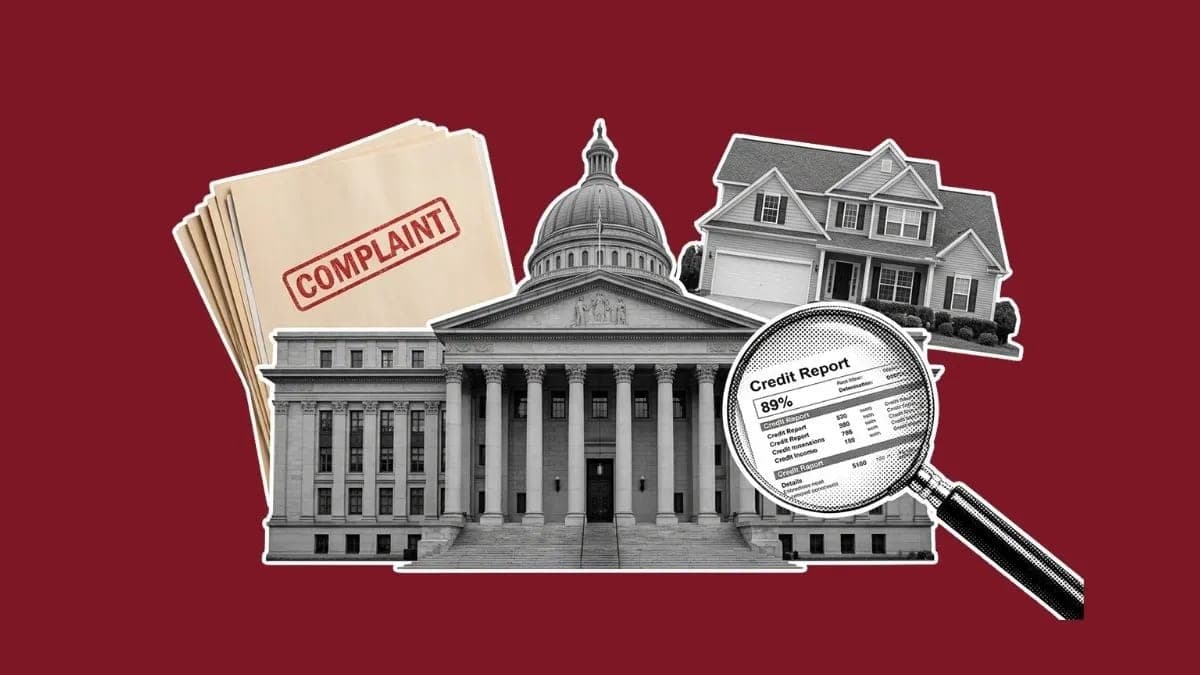
House subcommittee weighs FCRA changes, CFPB complaint limits
The House Financial Services Subcommittee on Financial Institutions held a hearing on Thursday morning examining ways to expand access to credit, with lawmakers also considering several bills aimed at reshaping credit reporting rules and consumer protections. The hearing, “Promoting Access to Credit for Everyday Americans,” comes as policymakers continue to weigh changes to the credit reporting system amid ongoing debates over consumer access to credit and regulatory oversight of financial institutions. The conversation focused on a slate of Republican-backed bills to amend the Fair Credit Reporting Act (FCRA), expand the use of alternative data in credit files and tighten controls on complaints filed with the Consumer Financial Protection Bureau (CFPB). In addition to the hearing, the subcommittee will consider several pieces of legislation related to credit reporting and consumer protections. Witnesses included Dan Smith, president and CEO of the Consumer Data Industry Association; Rebecca Kuehn, a partner at Hudson Cook; Celia Winslow, president and CEO of the American Financial Services Association; Veneshia Ferdinand, director of compliance policy at Simmons Bank, testifying on behalf of the American Bankers Association; and Chi Chi Wu, director of consumer reporting and data advocacy at the National Consumer Law Center. Absent from the hearing was French Hill (R-Ark.), chairman of the House Financial Services Committee, who spoke earlier in the week at the Mortgage Bankers Association (MBA)’s National Advocacy Event. Hill did not get into specifics about legislation but instead pushed for advancing smaller, targeted bills with bipartisan support rather than sweeping packages — an approach he argues can help move financial services legislation more effectively through Congress. Congressman Andy Barr (R-Ky.) opened the hearing by defending the current framework as essential to economic mobility, warning that proposals to exclude certain debts or adopt “positive-only” reporting would erode accuracy. “A credit reporting system that ignores real obligations is not more fair, it’s simply less accurate,” Barr said. “When accuracy suffers, access to credit suffers with it.” ‘Credit washing’ claims Barr also pointed to what he described as a surge in duplicative or fraudulent complaints in the CPFB’s database, which are often tied to credit repair firms. He promoted his bill, the Eliminating Fraud in the CFPB Consumer Complaint Database Act (H.R. 7588), which would require consumers to attest to complaints under penalty of perjury and allow institutions to dismiss those deemed illegitimate. The witnesses echoed concerns about so-called “credit washing,” where mass disputes or false identity theft claims are used to remove accurate negative information. Winslow said bad actors “flood lenders, bureaus and the CFPB complaint database” with form disputes, forcing removals. “Corrupt that data and the whole system is compromised,” Winslow said, adding that the result is tighter lending standards and higher costs for borrowers. Ferdinand said lenders rely on complete reports to meet legal obligations. “Removing accurate information … does not eliminate the risk — it just hides it,” she said. A central point of debate was the FCRA Liability Harmonization Act (H.R. 5775), which would cap damages and limit attorneys fees in credit reporting lawsuits. Supporters, including Smith and Kuehn, said uncapped liability has fueled costly litigation, discouraged data reporting such as rent and utilities, and limited competition. “The liability risk … is enormous. It’s uncapped and it will put a company out of business overnight,” Smith said. “The FCRA framework works because it balances consumer protection and access to credit,” Ferdinand said. Kuehn added that large settlements ultimately raise costs for consumers while reducing innovation and credit access. Democrats and consumer advocates sharply disagreed. Wu said the bills under consideration would “drastically reduce accountability” for errors and make it harder for consumers to seek relief. “We oppose each of the bills posted today, which all benefit the big three credit bureaus, the most complained-about financial services companies with 5 million complaints to CFPB,” Wu said at the start of her testimony. “Instead of these four giveaway bills, we urge Congress to pass meaningful reform of the credit reporting industry.” Democrats also criticized changes at the CFPB under Director Russell Vought, arguing the agency has made it harder for consumers to file complaints. Lawmakers in both parties showed interest in expanding the use of alternative data — such as rent, utility and telecom payments — to help consumers with limited credit histories. Rep. Young Kim (R-Calif.) promoted legislation to incorporate such data, while industry witnesses supported broader reporting but opposed the exclusion of negative information. Wu warned that including negative rental data could harm vulnerable tenants, arguing any such reporting should be voluntary and limited to positive information. Members also raised concerns about artificial intelligence, with witnesses noting it could both reduce errors and enable more sophisticated fraud. Smith called AI a “significant risk,” while Winslow said a large share of disputes are already driven by questionable claims. MBA voices concerns MBA, in a letter submitted for the record, raised separate concerns about the structure of the credit reporting market. The trade group argued that a lack of competition among the three major credit bureaus — Experian, TransUnion and Equifax — has driven steep cost increases for lenders and borrowers. MBA said its members have faced credit reporting cost increases of as much as 350% in recent years, along with projected hikes of 40% to 50% in 2026. These costs are passed on to borrowers through higher closing costs. The group attributed the increases in part to the long-standing tri-merge requirement that forces lenders to obtain reports from all three bureaus for mortgages backed by Fannie Mae, Freddie Mac and federal agencies. “MBA and its members are strong supporters of the welcome focus on pursuing all avenues to improve housing affordability by the Trump administration — and within the individual party caucuses in both the House and Senate,” according to the letter signed by Bill Killmer, the MBA’s senior vice president of legislative and political affairs. “Given the recent exorbitant price increases cited above, we believe removing the current mortgage tri-merge framework should be a key element on any checklist of affordability initiatives put forth by federal policymakers.” The group ended its letter by stating that single-file credit reports are already used safely in other consumer lending markets, and that eliminating the tri-merge requirement for most Fannie- and Freddie-backed loans would increase competition, lower closing costs and improve access to homeownership without adding risk. MBA also pointed to data showing most borrowers have high credit scores, proposing a single-report option for those above 700, while noting that federal housing regulators have previously determined a tri-merge report is not necessary.
House subcommittee weighs FCRA changes, CFPB complaint limits
The House Financial Services Subcommittee on Financial Institutions held a hearing on Thursday morning examining ways to expand access to credit, with lawmakers also considering several bills aimed at reshaping credit reporting rules and consumer protections. The hearing, “Promoting Access to Credit for Everyday Americans,” comes as policymakers continue to weigh changes to the credit reporting system amid ongoing debates over consumer access to credit and regulatory oversight of financial institutions. The conversation focused on a slate of Republican-backed bills to amend the Fair Credit Reporting Act (FCRA), expand the use of alternative data in credit files and tighten controls on complaints filed with the Consumer Financial Protection Bureau (CFPB). In addition to the hearing, the subcommittee will consider several pieces of legislation related to credit reporting and consumer protections. Witnesses included Dan Smith, president and CEO of the Consumer Data Industry Association; Rebecca Kuehn, a partner at Hudson Cook; Celia Winslow, president and CEO of the American Financial Services Association; Veneshia Ferdinand, director of compliance policy at Simmons Bank, testifying on behalf of the American Bankers Association; and Chi Chi Wu, director of consumer reporting and data advocacy at the National Consumer Law Center. Absent from the hearing was French Hill (R-Ark.), chairman of the House Financial Services Committee, who spoke earlier in the week at the Mortgage Bankers Association (MBA)’s National Advocacy Event. Hill did not get into specifics about legislation but instead pushed for advancing smaller, targeted bills with bipartisan support rather than sweeping packages — an approach he argues can help move financial services legislation more effectively through Congress. Congressman Andy Barr (R-Ky.) opened the hearing by defending the current framework as essential to economic mobility, warning that proposals to exclude certain debts or adopt “positive-only” reporting would erode accuracy. “A credit reporting system that ignores real obligations is not more fair, it’s simply less accurate,” Barr said. “When accuracy suffers, access to credit suffers with it.” ‘Credit washing’ claims Barr also pointed to what he described as a surge in duplicative or fraudulent complaints in the CPFB’s database, which are often tied to credit repair firms. He promoted his bill, the Eliminating Fraud in the CFPB Consumer Complaint Database Act (H.R. 7588), which would require consumers to attest to complaints under penalty of perjury and allow institutions to dismiss those deemed illegitimate. The witnesses echoed concerns about so-called “credit washing,” where mass disputes or false identity theft claims are used to remove accurate negative information. Winslow said bad actors “flood lenders, bureaus and the CFPB complaint database” with form disputes, forcing removals. “Corrupt that data and the whole system is compromised,” Winslow said, adding that the result is tighter lending standards and higher costs for borrowers. Ferdinand said lenders rely on complete reports to meet legal obligations. “Removing accurate information … does not eliminate the risk — it just hides it,” she said. A central point of debate was the FCRA Liability Harmonization Act (H.R. 5775), which would cap damages and limit attorneys fees in credit reporting lawsuits. Supporters, including Smith and Kuehn, said uncapped liability has fueled costly litigation, discouraged data reporting such as rent and utilities, and limited competition. “The liability risk … is enormous. It’s uncapped and it will put a company out of business overnight,” Smith said. “The FCRA framework works because it balances consumer protection and access to credit,” Ferdinand said. Kuehn added that large settlements ultimately raise costs for consumers while reducing innovation and credit access. Democrats and consumer advocates sharply disagreed. Wu said the bills under consideration would “drastically reduce accountability” for errors and make it harder for consumers to seek relief. “We oppose each of the bills posted today, which all benefit the big three credit bureaus, the most complained-about financial services companies with 5 million complaints to CFPB,” Wu said at the start of her testimony. “Instead of these four giveaway bills, we urge Congress to pass meaningful reform of the credit reporting industry.” Democrats also criticized changes at the CFPB under Director Russell Vought, arguing the agency has made it harder for consumers to file complaints. Lawmakers in both parties showed interest in expanding the use of alternative data — such as rent, utility and telecom payments — to help consumers with limited credit histories. Rep. Young Kim (R-Calif.) promoted legislation to incorporate such data, while industry witnesses supported broader reporting but opposed the exclusion of negative information. Wu warned that including negative rental data could harm vulnerable tenants, arguing any such reporting should be voluntary and limited to positive information. Members also raised concerns about artificial intelligence, with witnesses noting it could both reduce errors and enable more sophisticated fraud. Smith called AI a “significant risk,” while Winslow said a large share of disputes are already driven by questionable claims. MBA voices concerns MBA, in a letter submitted for the record, raised separate concerns about the structure of the credit reporting market. The trade group argued that a lack of competition among the three major credit bureaus — Experian, TransUnion and Equifax — has driven steep cost increases for lenders and borrowers. MBA said its members have faced credit reporting cost increases of as much as 350% in recent years, along with projected hikes of 40% to 50% in 2026. These costs are passed on to borrowers through higher closing costs. The group attributed the increases in part to the long-standing tri-merge requirement that forces lenders to obtain reports from all three bureaus for mortgages backed by Fannie Mae, Freddie Mac and federal agencies. “MBA and its members are strong supporters of the welcome focus on pursuing all avenues to improve housing affordability by the Trump administration — and within the individual party caucuses in both the House and Senate,” according to the letter signed by Bill Killmer, the MBA’s senior vice president of legislative and political affairs. “Given the recent exorbitant price increases cited above, we believe removing the current mortgage tri-merge framework should be a key element on any checklist of affordability initiatives put forth by federal policymakers.” The group ended its letter by stating that single-file credit reports are already used safely in other consumer lending markets, and that eliminating the tri-merge requirement for most Fannie- and Freddie-backed loans would increase competition, lower closing costs and improve access to homeownership without adding risk. MBA also pointed to data showing most borrowers have high credit scores, proposing a single-report option for those above 700, while noting that federal housing regulators have previously determined a tri-merge report is not necessary.
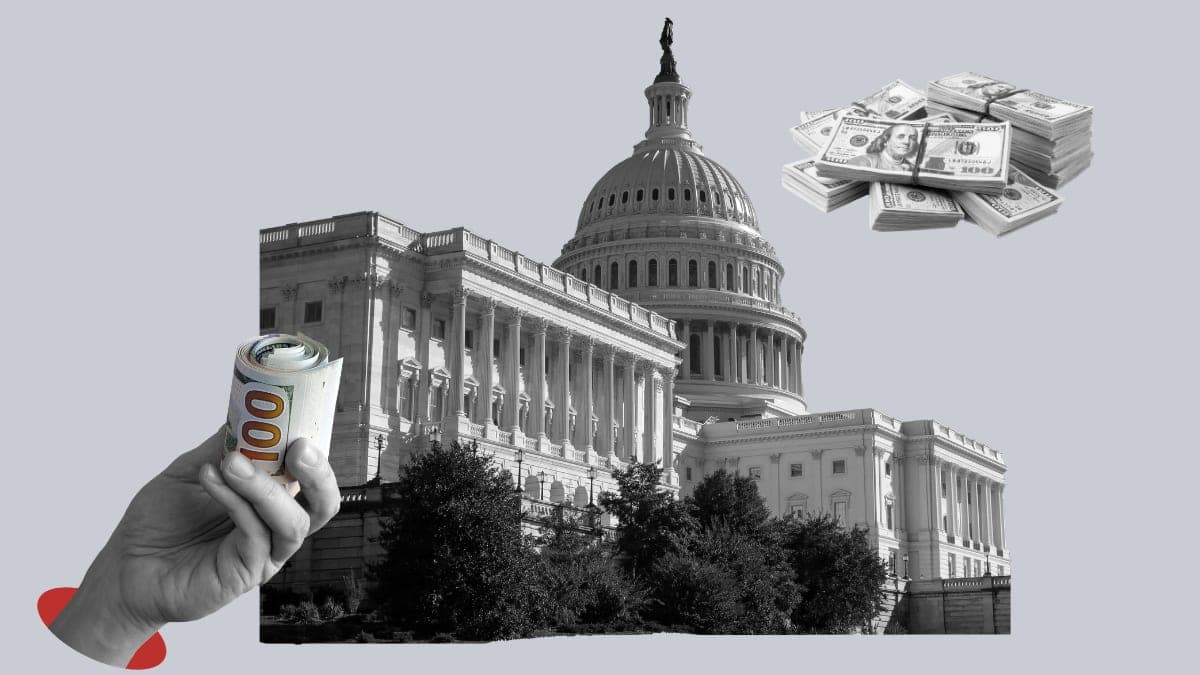
Follow the money: How NAR’s $10M PAC spend breaks down
In 2026, the National Association of Realtors (NAR) promised members that it will focus its lobbying efforts on championing policies that promote and expand access for the next generation of real estate owners and that it would work to support and elect “Realtor champions” in the 2026 midterm elections this coming November. Documents filed with the Federal Election Commission in mid-March reveal that between January 1, 2025, and February 28, 2026, NAR’s Realtor Political Action Committee (RPAC), disbursed $10.02 million in funds to political candidates, party committee funding and fund transfers within NAR’s political network, including transfers to state-level Realtor Political Action Committees and other internal expenditures, such as $1.58 in operating expenses. Of the operating expenses detailed in the filing, $887,301.22 went to NAR to cover “reimbursement for admin and solicitation costs,” for RPAC fundraising in excess of that permitted by the one-third rule established in the FEC regulations. Money for a Hall of Fame wall Additionally, a total of $415,794.55 was paid to DB Engineering LLC for the construction of the RPAC Hall of Fame Wall, which is located on the rooftop of NAR’s Washington, D.C. building and features the names of those who have contributed an aggregate lifetime amount of at least $25,000 to RPAC. Fundraising and Disbursement Trustees voted to authorize the expenditure to construct the wall. “We reached capacity on our rooftop Hall of Fame Wall — a good problem to have — and transitioned to a digital format, ensuring we can continue recognizing inductees in perpetuity while expanding how we showcase RPAC investment and impact,” the spokesperson added. Individual candidate funding From the remaining disbursed funds, $1.27 million was directed to the campaigns of individual candidates. The top funding recipients included Congressman Mark Harris (R-NC), who received $13,000 and is up for reelection this year, Congressman Matthew Van Epps (R-TN), who received $10,000 and won a special election in December 2025, and Congressman Joe Courtney (D-CT), who is also up for reelection this year and received $6,000. Several candidates also received $5,000 donations including Congresswoman Melissa Bean (D-IL), Congressman Clay Higgins (R-LA) and Congressman Pete Sessions (R-TX). Political candidates in Texas received the largest contribution at roughly $147,000, followed by California ($126,000), North Carolina ($76,000) and Illinois ($75,000). In addition to funds disbursed directly to candidates, NAR also funneled money to funds used for advertising and messaging about candidates, cataloged in the independent expenditures portion of its filings. In total, NAR recorded $425,714.00 in independent expenditures, representing 23 different contributions. The largest single contribution was $216,070.00 to Bridge Impact LLC to help pay for digital advertising and design costs for Senator John Cornyn’s (R-TX) campaign. Lots of love for Texas In total, Senator Cornyn’s campaign received nearly $288,000 in funding from NAR’s PAC. Senator Cornyn is currently involved in a tight Republican primary runoff, where he is facing Texas Attorney General Ken Paxton. He currently sits on the Senate Finance, Judiciary, Intelligence, Foreign Relations and Budget Committees and he has previously served as the Republican Whip. The advertising campaigns supporting several other federal lawmakers from Texas also received financial support, including Tony Gonzales ($40,090.00), a republican congressman representing the state’s 23rd congressional district, Dan Crenshaw ($13,008.00) a republican representing the 2nd congressional district, Julie Johnson ($10,481.00), a democrat representing the 32nd congressional district and Henry Cuellar ($10,387.00), a democrat representing the 28th congressional district. In addition, NAR’s PAC also made large contributions to advertising campaigns supporting Jimmy Patronis ($40,539.00), a republican congressman representing Florida’s 1st congressional district and Sean Casten ($12,087.00), a democrat representing Illinois’s 6th congressional district. According to NAR, the group of bipartisan Realtors who make up the national RPAC Disbursements Trustees Committee work together with state and local Realtor members to determine which federal candidates RPAC will disburse funds too. Funding national party committees In addition to its indirect and direct support of candidates, NAR’s PAC also contributed a significant amount of funding to national party committees on both sides of the political spectrum. In total, the Republican National Committee and Democratic National Committee-aligned entities each received a total of $210,000 in combined contributions. Additionally, the National Republican Congressional Committee, National Republican Senatorial Committee, Democratic Congressional Campaign Committee and Democratic Senatorial Campaign Committee all received roughly $150,000 each. NAR’s PAC also made some sizable contributions to state-level Realtor PACs, with South Carolina, Maryland, Indiana and South Dakota being some of the largest beneficiaries. In total, NAR’s PAC transferred $436,571.12 to affiliated Realtor PAC’s between January 2025 and the end of February 2026. These funds are typically used to support political candidates at the state level. On the receiving end, RPAC was the recipient of $8.048 million in contributions from individuals and $3.247 million in transfers from affiliated committees during the 14 month period covered by the filings. In December, Shannon McGahn, NAR’s chief advocacy officer told HousingWire that it was “encouraging” that housing affordability had “emerged as one of the few truly bipartisan issues in Washington.” “Whether it’s the ROAD to Housing Act, the More Homes on the Market Act, or broader supply-focused reforms, there is growing agreement that the status quo isn’t working,” she said. “Realtors are optimistic because lawmakers from both parties recognize that housing is not a red or blue issue — it’s a red, white, and blue issue. NAR will continue working with Congress and the Administration to advance practical, bipartisan solutions that expand supply, lower costs, and help more Americans achieve the dream of homeownership.”

Stephen Miran confirmed as Fed governor ahead of FOMC meeting
In a narrow 48-47 vote, the U.S. Senate confirmed economist Stephen Miran to the Federal Reserve Board of Governors on Monday evening ahead of a highly anticipated FOMC meeting. The Board confirmed that Miran took the oath of office on Tuesday morning, administered by Judge Elizabeth L. Branch of the United States Court of Appeals for the Eleventh Circuit. Miran, chairman of the White House Council of Economic Advisers, was approved by the Senate Banking Committee last week with all Republicans voting in favor and all Democrats opposed. Sen. Lisa Murkowski of Alaska was the only Republican to vote against Miran’s confirmation on Monday. Miran, who is stepping in to complete Adriana Kugler’s term through January 2026 after she resigned from the board on Aug. 1, joins the Fed’s 12-member rate-setting board. It is not clear whether Miran will be nominated to stay on past Kugler’s term. The two-day FOMC meeting will feature a vote on cutting the Federal funds rate. The Trump administration has pressured Fed Chair Jerome Powell to lower rates or resign, and is now applying pressure to Fed Governors, including an effort to fire Fed Governor Lisa Cook for cause. An appeals court on Monday night blocked Trump’s attempt to remove Cook while the case moves through the courts. Miran’s confirmation hearings were fast-tracked to make sure he can participate in the meeting. Miran will not step down from his White House post, rather he will take unpaid leave, which makes Miran the first sitting presidential staffer to serve on the Fed’s board in its 111-year history. Democrats such as Sens. Elizabeth Warren (Mass.) and Jack Reed (R.I.) have questioned Miran’s independence. Miran said during his Sept. 4 hearing that, if confirmed, “I will act independently, as the Federal Reserve always does, based on my own personal analysis of economic data.”
Stephen Miran confirmed as Fed governor ahead of FOMC meeting
In a narrow 48-47 vote, the U.S. Senate confirmed economist Stephen Miran to the Federal Reserve Board of Governors on Monday evening ahead of a highly anticipated FOMC meeting. The Board confirmed that Miran took the oath of office on Tuesday morning, administered by Judge Elizabeth L. Branch of the United States Court of Appeals for the Eleventh Circuit. Miran, chairman of the White House Council of Economic Advisers, was approved by the Senate Banking Committee last week with all Republicans voting in favor and all Democrats opposed. Sen. Lisa Murkowski of Alaska was the only Republican to vote against Miran’s confirmation on Monday. Miran, who is stepping in to complete Adriana Kugler’s term through January 2026 after she resigned from the board on Aug. 1, joins the Fed’s 12-member rate-setting board. It is not clear whether Miran will be nominated to stay on past Kugler’s term. The two-day FOMC meeting will feature a vote on cutting the Federal funds rate. The Trump administration has pressured Fed Chair Jerome Powell to lower rates or resign, and is now applying pressure to Fed Governors, including an effort to fire Fed Governor Lisa Cook for cause. An appeals court on Monday night blocked Trump’s attempt to remove Cook while the case moves through the courts. Miran’s confirmation hearings were fast-tracked to make sure he can participate in the meeting. Miran will not step down from his White House post, rather he will take unpaid leave, which makes Miran the first sitting presidential staffer to serve on the Fed’s board in its 111-year history. Democrats such as Sens. Elizabeth Warren (Mass.) and Jack Reed (R.I.) have questioned Miran’s independence. Miran said during his Sept. 4 hearing that, if confirmed, “I will act independently, as the Federal Reserve always does, based on my own personal analysis of economic data.”