3 stories credited to Grist
Latest story Apr 16, 2026 · on ChamberLight since Apr 2026
A story can appear as several articles (copies of the same piece), so counts of stories and of articles differ.
Scores for Grist
Writing quality not enough rated stories yet: 3 of 10. How it is measured
Scores last checked Sep 25, 2026.
Stories ChamberLight collected, by month
Stories credited to Grist, by publication date. ChamberLight collects articles that mention the officials it tracks, so this shows its own coverage of this source, not how much the source publishes.
- Stories from Grist
- Shaded: ChamberLight collected no stories, or almost none, from any outlet (a gap in its collection, not in the outlet’s publishing)
Show as a table
| Month | Stories | All outlets |
|---|---|---|
| March 2026 | 1 | 425 |
| April 2026 | 2 | 4,537 |
| May 2026 | 0 | none collected |
| June 2026 | 0 | none collected |
| July 2026 | 0 | none collected |
| August 2026 | 0 | 1 (collection gap) |
| September 2026 | 0 | 598 |
Top topics
Share of this source’s stories tagged with each topic. A story can carry several topics, so the shares do not add up to 100%.
- Environment/Climate3
100% of 3 stories · 4% across all outlets
- Budget/Spending2
67% of 3 stories · 30% across all outlets
- Economy1
33% of 3 stories · 24% across all outlets
- Ethics/Corruption1
33% of 3 stories · 56% across all outlets
- Infrastructure1
33% of 3 stories · 7% across all outlets
The thin mark on each bar is the topic’s share across all outlets.
Who they cover
Party of the officials these stories are mainly about, across all 6 officials named. A story counts once for each official it is mainly about, so the split is over 8 story–official pairs, from 3 stories.
- Republican75% · 6 pairs
- Democrat25% · 2 pairs
Most covered
Stories mainly about each official, and their share of the source’s 3 stories.
Article tone
ChamberLight’s article analysis assigns each story a tone toward the official it covers. It describes the coverage of that official, not Grist’s stance, and reader votes do not change it. 3 stories.
- Good Look
- 0 (0%)
- Mixed
- 1 (33%)
- Informational
- 0 (0%)
- Bad Look
- 2 (67%)
Challenges to these scores
No one has challenged a score on this page yet. Anyone can; editors publish every outcome here.
Articles served from grist.org
8
Republicans deploy little-known law to open Minnesota wilderness to mining
Minnesota’s Boundary Waters comprise a vast stretch of wilderness bordering Canada, with over a million acres of untouched forest and thousands of lakes and streams. Accessible largely by canoe, it is an ecological gem and one of the most popular spots in the country for outdoor recreation. On Thursday, Senate Republicans voted 50-49 to open the area up to mining — passing a resolution that repeals a 20-year moratorium using a little-known law called the Congressional Review Act, or CRA. The act was designed in the 1990s by then-House Speaker Newt Gingrich, who sought to cut back on government bureaucracy by eliminating regulations. It was engineered to allow Congress to quickly overturn regulatory rules with a simple majority, rather than the usual two-thirds vote. Critics say it’s dangerous because it enables public rules and regulations based on years of research to be quickly overturned with little debate. “It allows Congress to basically do a thumbs up or a thumbs down, where otherwise a filibuster would apply,” explained Erik Schlenker-Goodrich, executive director of the Western Environmental Law Center, a nonprofit, public interest law firm. During the CRA’s first 20 years of existence, it was used only once by the second Bush administration. But President Trump and Republicans have worked to dramatically expand and weaponize the CRA, with the Boundary Waters case being the latest example, Schlenker-Goodrich said. In 2017, the Trump administration invalidated 17 rules from the Obama era. In 2025 alone, Trump signed 22 CRA repeals. The CRA technically gives Congress 60 days to overturn a rule after it’s passed. The Boundary Waters protections were passed over three years ago during the Biden administration, and not as a rule, but rather as a Public Land Order. This puts the Senate and administration in territory that is “extraordinarily legally questionable,” said Blaine Miller-McFeeley, a senior legislative representative at Earthjustice. “We are not done fighting, and there are a lot of open questions because this is such uncharted territory.” The decision could set a dangerous precedent. Should the resolution be allowed to stand, it could open up all land management decisions to political attacks. Republican Senator Mike Lee of Utah, for example, has proposed a CRA resolution to eliminate the resource management plan for the Grand Staircase Escalante National Monument. “All of these place-based attacks are occurring concurrently with talk on permitting reform,” Schlenker-Goodrich pointed out. Signed by President Richard Nixon in 1970, the National Environmental Policy Act, or NEPA, requires federal agencies to assess how large-scale development would affect the environment before approving them. The policy has been an important tool for environmentalists, helping to halt or delay major industrial complexes or infrastructure. But in recent years, it has also curbed the deployment of solar and wind energy, as well as updates to the country’s grid required to accommodate new clean energy. Reforming NEPA has gained broad, bipartisan support in Congress, but when matched with this new use of the CRA, it could put protected areas in grave danger, Schlenker-Goodrich warned. The Trump administration’s use of the CRA also effectively cuts tribal nations out of Boundary Water negotiations. “Three tribes — the Bois Forte Band, the Fond du Lac Band, and the Grand Portage Band of Chippewa — have extensive treaty rights in Northeastern Minnesota,” New Mexico Senator Martin Heinrich said in remarks on the Senate floor. “These rights are guaranteed to them by the 1854 Treaty of La Pointe and have been reaffirmed by federal courts over and over again. By overturning the Public Land Order with a CRA resolution, Senate Republicans will not only cut tribes out of the conversation. They disrespect tribal treaty rights and directly risk those tribes’ guaranteed access to their traditional way of life and subsistence use of this place.” The mining ban repeal comes despite widespread opposition from environmentalists, outdoor recreation companies, and neighboring communities. Minnesota Senator Tina Smith spoke on the Senate floor for five hours on Wednesday night in an attempt to block the vote. “The Senate and House should follow the law,” Smith said, according to CBS News. “They should follow the laws they wrote about how public land orders are treated in this country. I do not believe that happened here.” The main winner out of the Boundary Waters debacle is Twin Metals, a subsidiary of Chilean mining outfit Antofagasta. The company fought under the first Trump administration to build a copper and nickel mine on the Duluth Complex, one of the world’s largest undeveloped deposits of critical minerals located just 5 miles south of the Boundary Waters. At the time, the company was run by billionaire Andrónico Luksic, who was criticized for his connections to the Trump family — specifically for renting a house in Washington, D.C. to Trump’s daughter, Ivanka. Although Luksic has since stepped down from Antofagasta’s board, his family controls a majority stake in the company. An aerial view of a tailings pond used to store byproducts of a copper mine in Rancagua, Chile in 2019. Martin Bernetti / AFP via Getty Images “The corruption of rich individuals around the world is a big part of this,” said Miller-McFeeley. So are data centers. Since retaking office, the administration has raced to ramp up domestic production of critical minerals — the materials that are required for computing, batteries, renewable energy, and military technology. Copper is critical to the artificial intelligence boom. The analytics giant S&P Global published a report earlier this year warning that copper demand was projected to expand 50 percent by 2040. Another recent report from the Carnegie Endowment for Peace predicted a significant nickel deficit by 2035, due in large part to demand from the defense industry and the United States’ “limited ability to increase domestic production.” Crucially, the report recommended shoring up international partnerships, rather than opening up protected land to mining, and it will take much more than mining to make the U.S. self-reliant when it comes to critical minerals. The country currently has only three copper smelters and no nickel smelters, making production the real bottleneck. Antofagasta would likely “ship its product abroad to be processed and sold offshore, and then maybe resold back to the U.S.,” said Miller-McFeeley. Even if this is merely a test case for the administration to see how far they’re able to push legal limits, it has once again set the federal government in opposition of its own researchers. “The U.S. Forest Service is 100 percent opposed to mining in this watershed,” said Marc Fink, director of the Public Lands Law Center and a senior attorney for the Center for Biological Diversity. In 2016, the Forest Service determined that a sulfide-ore copper mine, such as the one Twin Metals is proposing, could cause “extreme” and “serious and irreplaceable harm” to the area. “This clearly goes against the science and the administration’s own agencies,” Fink said. “It’s a really unfortunate situation, but we’ll definitely keep fighting.” The Boundary Waters bill will now head to President Trump’s desk. He is expected to sign it. Editor’s note: Earthjustice is an advertiser with Grist. Advertisers have no role in Grist’s editorial decisions. This story was originally published by Grist with the headline Republicans deploy little-known law to open Minnesota wilderness to mining on Apr 16, 2026.
Republicans deploy little-known law to open Minnesota wilderness to mining
Minnesota’s Boundary Waters comprise a vast stretch of wilderness bordering Canada, with over a million acres of untouched forest and thousands of lakes and streams. Accessible largely by canoe, it is an ecological gem and one of the most popular spots in the country for outdoor recreation. On Thursday, Senate Republicans voted 50-49 to open the area up to mining — passing a resolution that repeals a 20-year moratorium using a little-known law called the Congressional Review Act, or CRA. The act was designed in the 1990s by then-House Speaker Newt Gingrich, who sought to cut back on government bureaucracy by eliminating regulations. It was engineered to allow Congress to quickly overturn regulatory rules with a simple majority, rather than the usual two-thirds vote. Critics say it’s dangerous because it enables public rules and regulations based on years of research to be quickly overturned with little debate. “It allows Congress to basically do a thumbs up or a thumbs down, where otherwise a filibuster would apply,” explained Erik Schlenker-Goodrich, executive director of the Western Environmental Law Center, a nonprofit, public interest law firm. During the CRA’s first 20 years of existence, it was used only once by the second Bush administration. But President Trump and Republicans have worked to dramatically expand and weaponize the CRA, with the Boundary Waters case being the latest example, Schlenker-Goodrich said. In 2017, the Trump administration invalidated 17 rules from the Obama era. In 2025 alone, Trump signed 22 CRA repeals. The CRA technically gives Congress 60 days to overturn a rule after it’s passed. The Boundary Waters protections were passed over three years ago during the Biden administration, and not as a rule, but rather as a Public Land Order. This puts the Senate and administration in territory that is “extraordinarily legally questionable,” said Blaine Miller-McFeeley, a senior legislative representative at Earthjustice. “We are not done fighting, and there are a lot of open questions because this is such uncharted territory.” The decision could set a dangerous precedent. Should the resolution be allowed to stand, it could open up all land management decisions to political attacks. Republican Senator Mike Lee of Utah, for example, has proposed a CRA resolution to eliminate the resource management plan for the Grand Staircase Escalante National Monument. “All of these place-based attacks are occurring concurrently with talk on permitting reform,” Schlenker-Goodrich pointed out. Signed by President Richard Nixon in 1970, the National Environmental Policy Act, or NEPA, requires federal agencies to assess how large-scale development would affect the environment before approving them. The policy has been an important tool for environmentalists, helping to halt or delay major industrial complexes or infrastructure. But in recent years, it has also curbed the deployment of solar and wind energy, as well as updates to the country’s grid required to accommodate new clean energy. Reforming NEPA has gained broad, bipartisan support in Congress, but when matched with this new use of the CRA, it could put protected areas in grave danger, Schlenker-Goodrich warned. The Trump administration’s use of the CRA also effectively cuts tribal nations out of Boundary Water negotiations. “Three tribes — the Bois Forte Band, the Fond du Lac Band, and the Grand Portage Band of Chippewa — have extensive treaty rights in Northeastern Minnesota,” New Mexico Senator Martin Heinrich said in remarks on the Senate floor. “These rights are guaranteed to them by the 1854 Treaty of La Pointe and have been reaffirmed by federal courts over and over again. By overturning the Public Land Order with a CRA resolution, Senate Republicans will not only cut tribes out of the conversation. They disrespect tribal treaty rights and directly risk those tribes’ guaranteed access to their traditional way of life and subsistence use of this place.” The mining ban repeal comes despite widespread opposition from environmentalists, outdoor recreation companies, and neighboring communities. Minnesota Senator Tina Smith spoke on the Senate floor for five hours on Wednesday night in an attempt to block the vote. “The Senate and House should follow the law,” Smith said, according to CBS News. “They should follow the laws they wrote about how public land orders are treated in this country. I do not believe that happened here.” The main winner out of the Boundary Waters debacle is Twin Metals, a subsidiary of Chilean mining outfit Antofagasta. The company fought under the first Trump administration to build a copper and nickel mine on the Duluth Complex, one of the world’s largest undeveloped deposits of critical minerals located just 5 miles south of the Boundary Waters. At the time, the company was run by billionaire Andrónico Luksic, who was criticized for his connections to the Trump family — specifically for renting a house in Washington, D.C. to Trump’s daughter, Ivanka. Although Luksic has since stepped down from Antofagasta’s board, his family controls a majority stake in the company. An aerial view of a tailings pond used to store byproducts of a copper mine in Rancagua, Chile in 2019. Martin Bernetti / AFP via Getty Images “The corruption of rich individuals around the world is a big part of this,” said Miller-McFeeley. So are data centers. Since retaking office, the administration has raced to ramp up domestic production of critical minerals — the materials that are required for computing, batteries, renewable energy, and military technology. Copper is critical to the artificial intelligence boom. The analytics giant S&P Global published a report earlier this year warning that copper demand was projected to expand 50 percent by 2040. Another recent report from the Carnegie Endowment for Peace predicted a significant nickel deficit by 2035, due in large part to demand from the defense industry and the United States’ “limited ability to increase domestic production.” Crucially, the report recommended shoring up international partnerships, rather than opening up protected land to mining, and it will take much more than mining to make the U.S. self-reliant when it comes to critical minerals. The country currently has only three copper smelters and no nickel smelters, making production the real bottleneck. Antofagasta would likely “ship its product abroad to be processed and sold offshore, and then maybe resold back to the U.S.,” said Miller-McFeeley. Even if this is merely a test case for the administration to see how far they’re able to push legal limits, it has once again set the federal government in opposition of its own researchers. “The U.S. Forest Service is 100 percent opposed to mining in this watershed,” said Marc Fink, director of the Public Lands Law Center and a senior attorney for the Center for Biological Diversity. In 2016, the Forest Service determined that a sulfide-ore copper mine, such as the one Twin Metals is proposing, could cause “extreme” and “serious and irreplaceable harm” to the area. “This clearly goes against the science and the administration’s own agencies,” Fink said. “It’s a really unfortunate situation, but we’ll definitely keep fighting.” The Boundary Waters bill will now head to President Trump’s desk. He is expected to sign it. Editor’s note: Earthjustice is an advertiser with Grist. Advertisers have no role in Grist’s editorial decisions. This story was originally published by Grist with the headline Republicans deploy little-known law to open Minnesota wilderness to mining on Apr 16, 2026.
Republicans deploy little-known law to open Minnesota wilderness to mining
Minnesota’s Boundary Waters comprise a vast stretch of wilderness bordering Canada, with over a million acres of untouched forest and thousands of lakes and streams. Accessible largely by canoe, it is an ecological gem and one of the most popular spots in the country for outdoor recreation. On Thursday, Senate Republicans voted 50-49 to open the area up to mining — passing a resolution that repeals a 20-year moratorium using a little-known law called the Congressional Review Act, or CRA. The act was designed in the 1990s by then-House Speaker Newt Gingrich, who sought to cut back on government bureaucracy by eliminating regulations. It was engineered to allow Congress to quickly overturn regulatory rules with a simple majority, rather than the usual two-thirds vote. Critics say it’s dangerous because it enables public rules and regulations based on years of research to be quickly overturned with little debate. “It allows Congress to basically do a thumbs up or a thumbs down, where otherwise a filibuster would apply,” explained Erik Schlenker-Goodrich, executive director of the Western Environmental Law Center, a nonprofit, public interest law firm. During the CRA’s first 20 years of existence, it was used only once by the second Bush administration. But President Trump and Republicans have worked to dramatically expand and weaponize the CRA, with the Boundary Waters case being the latest example, Schlenker-Goodrich said. In 2017, the Trump administration invalidated 17 rules from the Obama era. In 2025 alone, Trump signed 22 CRA repeals. The CRA technically gives Congress 60 days to overturn a rule after it’s passed. The Boundary Waters protections were passed over three years ago during the Biden administration, and not as a rule, but rather as a Public Land Order. This puts the Senate and administration in territory that is “extraordinarily legally questionable,” said Blaine Miller-McFeeley, a senior legislative representative at Earthjustice. “We are not done fighting, and there are a lot of open questions because this is such uncharted territory.” The decision could set a dangerous precedent. Should the resolution be allowed to stand, it could open up all land management decisions to political attacks. Republican Senator Mike Lee of Utah, for example, has proposed a CRA resolution to eliminate the resource management plan for the Grand Staircase Escalante National Monument. “All of these place-based attacks are occurring concurrently with talk on permitting reform,” Schlenker-Goodrich pointed out. Signed by President Richard Nixon in 1970, the National Environmental Policy Act, or NEPA, requires federal agencies to assess how large-scale development would affect the environment before approving them. The policy has been an important tool for environmentalists, helping to halt or delay major industrial complexes or infrastructure. But in recent years, it has also curbed the deployment of solar and wind energy, as well as updates to the country’s grid required to accommodate new clean energy. Reforming NEPA has gained broad, bipartisan support in Congress, but when matched with this new use of the CRA, it could put protected areas in grave danger, Schlenker-Goodrich warned. The Trump administration’s use of the CRA also effectively cuts tribal nations out of Boundary Water negotiations. “Three tribes — the Bois Forte Band, the Fond du Lac Band, and the Grand Portage Band of Chippewa — have extensive treaty rights in Northeastern Minnesota,” New Mexico Senator Martin Heinrich said in remarks on the Senate floor. “These rights are guaranteed to them by the 1854 Treaty of La Pointe and have been reaffirmed by federal courts over and over again. By overturning the Public Land Order with a CRA resolution, Senate Republicans will not only cut tribes out of the conversation. They disrespect tribal treaty rights and directly risk those tribes’ guaranteed access to their traditional way of life and subsistence use of this place.” The mining ban repeal comes despite widespread opposition from environmentalists, outdoor recreation companies, and neighboring communities. Minnesota Senator Tina Smith spoke on the Senate floor for five hours on Wednesday night in an attempt to block the vote. “The Senate and House should follow the law,” Smith said, according to CBS News. “They should follow the laws they wrote about how public land orders are treated in this country. I do not believe that happened here.” The main winner out of the Boundary Waters debacle is Twin Metals, a subsidiary of Chilean mining outfit Antofagasta. The company fought under the first Trump administration to build a copper and nickel mine on the Duluth Complex, one of the world’s largest undeveloped deposits of critical minerals located just 5 miles south of the Boundary Waters. At the time, the company was run by billionaire Andrónico Luksic, who was criticized for his connections to the Trump family — specifically for renting a house in Washington, D.C. to Trump’s daughter, Ivanka. Although Luksic has since stepped down from Antofagasta’s board, his family controls a majority stake in the company. An aerial view of a tailings pond used to store byproducts of a copper mine in Rancagua, Chile in 2019. Martin Bernetti / AFP via Getty Images “The corruption of rich individuals around the world is a big part of this,” said Miller-McFeeley. So are data centers. Since retaking office, the administration has raced to ramp up domestic production of critical minerals — the materials that are required for computing, batteries, renewable energy, and military technology. Copper is critical to the artificial intelligence boom. The analytics giant S&P Global published a report earlier this year warning that copper demand was projected to expand 50 percent by 2040. Another recent report from the Carnegie Endowment for Peace predicted a significant nickel deficit by 2035, due in large part to demand from the defense industry and the United States’ “limited ability to increase domestic production.” Crucially, the report recommended shoring up international partnerships, rather than opening up protected land to mining, and it will take much more than mining to make the U.S. self-reliant when it comes to critical minerals. The country currently has only three copper smelters and no nickel smelters, making production the real bottleneck. Antofagasta would likely “ship its product abroad to be processed and sold offshore, and then maybe resold back to the U.S.,” said Miller-McFeeley. Even if this is merely a test case for the administration to see how far they’re able to push legal limits, it has once again set the federal government in opposition of its own researchers. “The U.S. Forest Service is 100 percent opposed to mining in this watershed,” said Marc Fink, director of the Public Lands Law Center and a senior attorney for the Center for Biological Diversity. In 2016, the Forest Service determined that a sulfide-ore copper mine, such as the one Twin Metals is proposing, could cause “extreme” and “serious and irreplaceable harm” to the area. “This clearly goes against the science and the administration’s own agencies,” Fink said. “It’s a really unfortunate situation, but we’ll definitely keep fighting.” The Boundary Waters bill will now head to President Trump’s desk. He is expected to sign it. Editor’s note: Earthjustice is an advertiser with Grist. Advertisers have no role in Grist’s editorial decisions. This story was originally published by Grist with the headline Republicans deploy little-known law to open Minnesota wilderness to mining on Apr 16, 2026.
Republicans deploy little-known law to open Minnesota wilderness to mining
Minnesota’s Boundary Waters comprise a vast stretch of wilderness bordering Canada, with over a million acres of untouched forest and thousands of lakes and streams. Accessible largely by canoe, it is an ecological gem and one of the most popular spots in the country for outdoor recreation. On Thursday, Senate Republicans voted 50-49 to open the area up to mining — passing a resolution that repeals a 20-year moratorium using a little-known law called the Congressional Review Act, or CRA. The act was designed in the 1990s by then-House Speaker Newt Gingrich, who sought to cut back on government bureaucracy by eliminating regulations. It was engineered to allow Congress to quickly overturn regulatory rules with a simple majority, rather than the usual two-thirds vote. Critics say it’s dangerous because it enables public rules and regulations based on years of research to be quickly overturned with little debate. “It allows Congress to basically do a thumbs up or a thumbs down, where otherwise a filibuster would apply,” explained Erik Schlenker-Goodrich, executive director of the Western Environmental Law Center, a nonprofit, public interest law firm. During the CRA’s first 20 years of existence, it was used only once by the second Bush administration. But President Trump and Republicans have worked to dramatically expand and weaponize the CRA, with the Boundary Waters case being the latest example, Schlenker-Goodrich said. In 2017, the Trump administration invalidated 17 rules from the Obama era. In 2025 alone, Trump signed 22 CRA repeals. The CRA technically gives Congress 60 days to overturn a rule after it’s passed. The Boundary Waters protections were passed over three years ago during the Biden administration, and not as a rule, but rather as a Public Land Order. This puts the Senate and administration in territory that is “extraordinarily legally questionable,” said Blaine Miller-McFeeley, a senior legislative representative at Earthjustice. “We are not done fighting, and there are a lot of open questions because this is such uncharted territory.” The decision could set a dangerous precedent. Should the resolution be allowed to stand, it could open up all land management decisions to political attacks. Republican Senator Mike Lee of Utah, for example, has proposed a CRA resolution to eliminate the resource management plan for the Grand Staircase Escalante National Monument. “All of these place-based attacks are occurring concurrently with talk on permitting reform,” Schlenker-Goodrich pointed out. Signed by President Richard Nixon in 1970, the National Environmental Policy Act, or NEPA, requires federal agencies to assess how large-scale development would affect the environment before approving them. The policy has been an important tool for environmentalists, helping to halt or delay major industrial complexes or infrastructure. But in recent years, it has also curbed the deployment of solar and wind energy, as well as updates to the country’s grid required to accommodate new clean energy. Reforming NEPA has gained broad, bipartisan support in Congress, but when matched with this new use of the CRA, it could put protected areas in grave danger, Schlenker-Goodrich warned. The Trump administration’s use of the CRA also effectively cuts tribal nations out of Boundary Water negotiations. “Three tribes — the Bois Forte Band, the Fond du Lac Band, and the Grand Portage Band of Chippewa — have extensive treaty rights in Northeastern Minnesota,” New Mexico Senator Martin Heinrich said in remarks on the Senate floor. “These rights are guaranteed to them by the 1854 Treaty of La Pointe and have been reaffirmed by federal courts over and over again. By overturning the Public Land Order with a CRA resolution, Senate Republicans will not only cut tribes out of the conversation. They disrespect tribal treaty rights and directly risk those tribes’ guaranteed access to their traditional way of life and subsistence use of this place.” The mining ban repeal comes despite widespread opposition from environmentalists, outdoor recreation companies, and neighboring communities. Minnesota Senator Tina Smith spoke on the Senate floor for five hours on Wednesday night in an attempt to block the vote. “The Senate and House should follow the law,” Smith said, according to CBS News. “They should follow the laws they wrote about how public land orders are treated in this country. I do not believe that happened here.” The main winner out of the Boundary Waters debacle is Twin Metals, a subsidiary of Chilean mining outfit Antofagasta. The company fought under the first Trump administration to build a copper and nickel mine on the Duluth Complex, one of the world’s largest undeveloped deposits of critical minerals located just 5 miles south of the Boundary Waters. At the time, the company was run by billionaire Andrónico Luksic, who was criticized for his connections to the Trump family — specifically for renting a house in Washington, D.C. to Trump’s daughter, Ivanka. Although Luksic has since stepped down from Antofagasta’s board, his family controls a majority stake in the company. An aerial view of a tailings pond used to store byproducts of a copper mine in Rancagua, Chile in 2019. Martin Bernetti / AFP via Getty Images “The corruption of rich individuals around the world is a big part of this,” said Miller-McFeeley. So are data centers. Since retaking office, the administration has raced to ramp up domestic production of critical minerals — the materials that are required for computing, batteries, renewable energy, and military technology. Copper is critical to the artificial intelligence boom. The analytics giant S&P Global published a report earlier this year warning that copper demand was projected to expand 50 percent by 2040. Another recent report from the Carnegie Endowment for Peace predicted a significant nickel deficit by 2035, due in large part to demand from the defense industry and the United States’ “limited ability to increase domestic production.” Crucially, the report recommended shoring up international partnerships, rather than opening up protected land to mining, and it will take much more than mining to make the U.S. self-reliant when it comes to critical minerals. The country currently has only three copper smelters and no nickel smelters, making production the real bottleneck. Antofagasta would likely “ship its product abroad to be processed and sold offshore, and then maybe resold back to the U.S.,” said Miller-McFeeley. Even if this is merely a test case for the administration to see how far they’re able to push legal limits, it has once again set the federal government in opposition of its own researchers. “The U.S. Forest Service is 100 percent opposed to mining in this watershed,” said Marc Fink, director of the Public Lands Law Center and a senior attorney for the Center for Biological Diversity. In 2016, the Forest Service determined that a sulfide-ore copper mine, such as the one Twin Metals is proposing, could cause “extreme” and “serious and irreplaceable harm” to the area. “This clearly goes against the science and the administration’s own agencies,” Fink said. “It’s a really unfortunate situation, but we’ll definitely keep fighting.” The Boundary Waters bill will now head to President Trump’s desk. He is expected to sign it. Editor’s note: Earthjustice is an advertiser with Grist. Advertisers have no role in Grist’s editorial decisions. This story was originally published by Grist with the headline Republicans deploy little-known law to open Minnesota wilderness to mining on Apr 16, 2026.
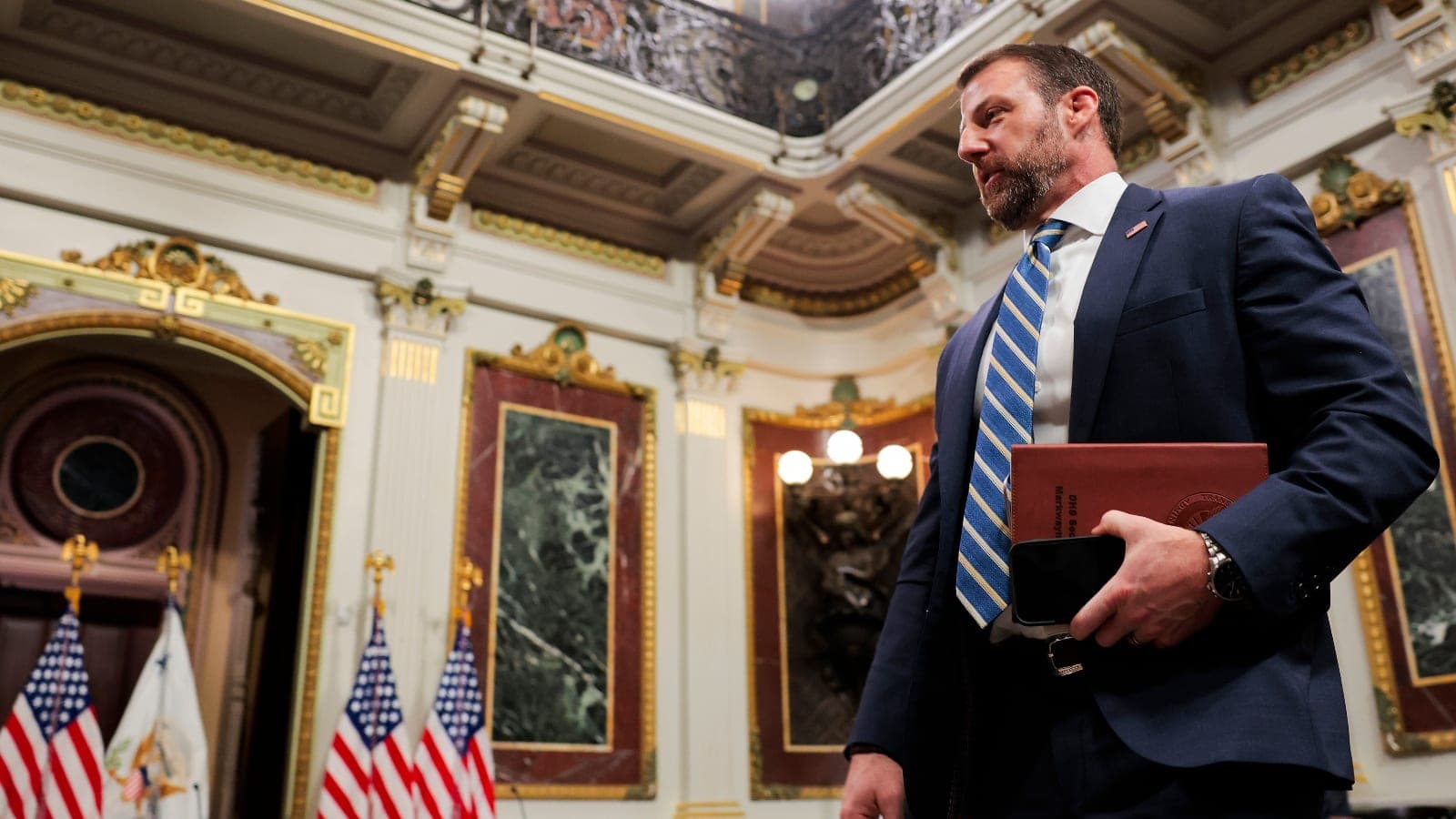
Trump wants to shutter FEMA. Will Markwayne Mullin get it done?
The first year of the Trump administration almost destroyed the Federal Emergency Management Agency. Elon Musk’s purge of the federal civil service was just one of many blows to FEMA. Former Secretary of Homeland Security Kristi Noem instituted a freeze on almost all disaster recovery and response spending, paralyzing the agency’s core function. This held up billions of dollars for communities around the country, delayed disaster response during catastrophic events like the July 4 floods in Central Texas, and all but ended the agency’s efforts to prepare for future disasters. The agency also slow-walked and even denied a large share of aid requests, especially from Democrat-controlled states. Earlier this year, leaked memos showed that the Department of Homeland Security, or DHS, planned to slash FEMA’s on-the-ground response staffing by around half. (FEMA is one of multiple agencies within DHS.) President Trump’s firing of Noem last month — which came after a series of controversies regarding her handling of immigration enforcement, improper personal spending, and allegations that she misled Congress — has stirred hopes that FEMA might regain its footing. Noem’s replacement, former Oklahoma senator Markwayne Mullin, has vowed to end her spending freeze, which he dismissed as “micromanaging.” Mullin has also said he will select a permanent administrator to lead FEMA, something Noem never did. He already appears to have fired many of Noem’s top deputies, according to FEMA employees who requested anonymity because they aren’t authorized to speak with the media. Yet FEMA officials and disaster response experts say they are still unsure if Mullin can restore the agency to a pre-Noem level of functionality — if that is even his goal. They’re also concerned that the agency’s workforce may not be prepared for the fast-approaching hurricane season. Morale remains low, and many key agency functions are still in limbo. “It’s like we are collectively waiting for the other shoe to drop,” said one regional FEMA official who requested anonymity to avoid retaliation from agency leaders. Even though Mullin has vowed to end some of Noem’s policies, FEMA’s operations have not yet changed all that much, according to officials who spoke to Grist. Some disaster reconstruction payments to cities and states have been unfrozen, but many expenses still require high-level approval from Karen Evans, Noem’s handpicked interim administrator. (Evans will lead the agency until Mullin’s pick is approved by the senate.) The agency’s programs that help prepare U.S. infrastructure for future disasters are still inactive; FEMA has not offered new long-term infrastructure aid money from one major program in about a year, and it only gave up its plan to eliminate another resilience program last month after a court order. Essential measures such as the National Flood Insurance Program, which provides subsidized flood coverage to some 5 million households, have been undermined. The program uses a rating system to provide insurance discounts to the cities that are most proactive about flood protection, but the contract with the company that manages the rating system lapsed several weeks ago. The discount program has since been suspended, which means no one from the federal government is monitoring if U.S. cities and counties are rebuilding in floodplains and mitigating flood damage. Though current and former FEMA officials have expressed hope that Mullin will undo some of Noem’s damage, they also expect a lasting shift to a more balkanized emergency response policy. President Trump has long maintained that states should shoulder more of the burden of preparing for and responding to disasters. Mullin appeared to endorse this diminished role for the federal agency during his recent visit to North Carolina, saying that “we shouldn’t look at FEMA as being a first responder, but … as supporting the first responders you already have.” “The state is much more equipped,” he continued, “but we can be there to get them past the first heavy lift.” For some FEMA employees, the comments were an unwelcome sign. “His comments show he has just as little of an understanding of FEMA as Noem did,” said one senior FEMA official. As this official saw it, Mullin’s statements appeared to indicate that he didn’t understand how much most states rely on federal emergency managers right now. (Neither FEMA nor DHS responded to requests for comment.) While FEMA coordinates the immediate response to the largest hurricanes and wildfires, for most disasters it acts as a reimbursement agency, using money set aside by Congress to pay for disaster recovery most states can’t afford. Local and state governments have to ask the agency to repay them for each street repair, each elevated house, and each rebuilt school, and these projects have to comply with federal rules. The agency also runs national grant programs to prevent everything from power outages to tidal floods. Many emergency management experts agree with a version of the viewpoint shared by Trump and Mullin — the idea that states should play a larger role in disaster planning. Florida and Texas, some of the most hurricane-prone states, have well-funded emergency management departments that can coordinate post-disaster response. But those same experts caution that the federal government still plays an essential role in coordinating the recovery from large disasters, and that a transition to the states would need to be accomplished over a long period of time with ample support. “It matters what flavor that comes in,” said Andrew Rumbach, a senior fellow at the Urban Institute who studies disasters and housing. “If it’s a smaller federal role, with smaller federal resources, that has hugely significant impacts.” For example, storm-vulnerable states with meager budgets, like Mississippi and Louisiana, would struggle to keep up with the mounting toll of disasters. “If we’re just transferring responsibility for federal resources to the states,” he continued, “that raises a whole different set of questions — in some places, it might be a step back, but in others you could see some interesting experimentation.” A remote state like Hawaiʻi could use no-strings-attached federal money to pay for modular housing solutions that make sense for its island location, rather than trying to relocate fire survivors to apartments or hotels that might not exist, which is FEMA’s current default policy. But the freedom might also give states wide latitude to make bad decisions with their money; they could potentially prioritize rebuilding rich cities over poor ones without fear of federal intervention, for instance. Any reform along these lines would require an act of Congress, but the Trump administration has been trying to shrink FEMA’s role on its own, just by pulling back assistance the agency has provided in the past. This has left states such as Washington, Maryland, and Vermont to recover from severe flooding under new austerity conditions, without the typical reimbursements from the federal government. Many of these states are now preparing for a future without the guarantee of FEMA aid, and one where state officials must take the lead on disaster planning. After communities in western Maryland suffered a devastating round of river floods last year, the Trump administration refused the state government’s request for more than $30 million in reconstruction money, despite meticulous documentation of the damage. Governor Wes Moore and the state’s congressional delegation appealed the decision, but to no avail. With no federal funds incoming, the state had to go it alone. The Moore administration launched Maryland’s first-ever “state disaster recovery fund” and doled out around $500,000 to the county that had suffered the worst of the flooding. This year, state lawmakers have doubled down on this commitment to independence: They’re workshopping a bill that would establish a new grant fund for projects that promote resilience against future climate disasters, including erosion control structures for shoreline homeowners. The problem, of course, is scale. The damage from last year’s floods was more than triple the threshold for triggering federal aid, and the cost of road and bridge repairs is equivalent to around a fifth of the impacted county’s budget. The local authorities might be able to start planning their recovery, but without some federal backstop, they won’t be able to afford it. The Trump administration last year convened a “review council” of governors and state emergency managers to decide the agency’s fate. In December, the council completed a Noem-approved report that argued for shifting responsibility to the states with the federal government in a “supporting role,” but it never published the report. Trump has since extended the review council’s lifespan until May. Mullin’s statements in North Carolina suggest that he agrees with the direction of the review council and wishes to reduce the federal government’s role in disasters. It remains unclear whether or not he will seek to make such changes this year, as the hurricane and wildfire seasons approach. In the meantime, said Rumbach of the Urban Institute, state and local emergency managers are in limbo. “There’s a lot of, ‘wait and see,’” he said. This story was originally published by Grist with the headline Trump wants to shutter FEMA. Will Markwayne Mullin get it done? on Apr 14, 2026.
Trump wants to shutter FEMA. Will Markwayne Mullin get it done?
The first year of the Trump administration almost destroyed the Federal Emergency Management Agency. Elon Musk’s purge of the federal civil service was just one of many blows to FEMA. Former Secretary of Homeland Security Kristi Noem instituted a freeze on almost all disaster recovery and response spending, paralyzing the agency’s core function. This held up billions of dollars for communities around the country, delayed disaster response during catastrophic events like the July 4 floods in Central Texas, and all but ended the agency’s efforts to prepare for future disasters. The agency also slow-walked and even denied a large share of aid requests, especially from Democrat-controlled states. Earlier this year, leaked memos showed that the Department of Homeland Security, or DHS, planned to slash FEMA’s on-the-ground response staffing by around half. (FEMA is one of multiple agencies within DHS.) President Trump’s firing of Noem last month — which came after a series of controversies regarding her handling of immigration enforcement, improper personal spending, and allegations that she misled Congress — has stirred hopes that FEMA might regain its footing. Noem’s replacement, former Oklahoma senator Markwayne Mullin, has vowed to end her spending freeze, which he dismissed as “micromanaging.” Mullin has also said he will select a permanent administrator to lead FEMA, something Noem never did. He already appears to have fired many of Noem’s top deputies, according to FEMA employees who requested anonymity because they aren’t authorized to speak with the media. Yet FEMA officials and disaster response experts say they are still unsure if Mullin can restore the agency to a pre-Noem level of functionality — if that is even his goal. They’re also concerned that the agency’s workforce may not be prepared for the fast-approaching hurricane season. Morale remains low, and many key agency functions are still in limbo. “It’s like we are collectively waiting for the other shoe to drop,” said one regional FEMA official who requested anonymity to avoid retaliation from agency leaders. Even though Mullin has vowed to end some of Noem’s policies, FEMA’s operations have not yet changed all that much, according to officials who spoke to Grist. Some disaster reconstruction payments to cities and states have been unfrozen, but many expenses still require high-level approval from Karen Evans, Noem’s handpicked interim administrator. (Evans will lead the agency until Mullin’s pick is approved by the senate.) The agency’s programs that help prepare U.S. infrastructure for future disasters are still inactive; FEMA has not offered new long-term infrastructure aid money from one major program in about a year, and it only gave up its plan to eliminate another resilience program last month after a court order. Essential measures such as the National Flood Insurance Program, which provides subsidized flood coverage to some 5 million households, have been undermined. The program uses a rating system to provide insurance discounts to the cities that are most proactive about flood protection, but the contract with the company that manages the rating system lapsed several weeks ago. The discount program has since been suspended, which means no one from the federal government is monitoring if U.S. cities and counties are rebuilding in floodplains and mitigating flood damage. Though current and former FEMA officials have expressed hope that Mullin will undo some of Noem’s damage, they also expect a lasting shift to a more balkanized emergency response policy. President Trump has long maintained that states should shoulder more of the burden of preparing for and responding to disasters. Mullin appeared to endorse this diminished role for the federal agency during his recent visit to North Carolina, saying that “we shouldn’t look at FEMA as being a first responder, but … as supporting the first responders you already have.” “The state is much more equipped,” he continued, “but we can be there to get them past the first heavy lift.” For some FEMA employees, the comments were an unwelcome sign. “His comments show he has just as little of an understanding of FEMA as Noem did,” said one senior FEMA official. As this official saw it, Mullin’s statements appeared to indicate that he didn’t understand how much most states rely on federal emergency managers right now. (Neither FEMA nor DHS responded to requests for comment.) While FEMA coordinates the immediate response to the largest hurricanes and wildfires, for most disasters it acts as a reimbursement agency, using money set aside by Congress to pay for disaster recovery most states can’t afford. Local and state governments have to ask the agency to repay them for each street repair, each elevated house, and each rebuilt school, and these projects have to comply with federal rules. The agency also runs national grant programs to prevent everything from power outages to tidal floods. Many emergency management experts agree with a version of the viewpoint shared by Trump and Mullin — the idea that states should play a larger role in disaster planning. Florida and Texas, some of the most hurricane-prone states, have well-funded emergency management departments that can coordinate post-disaster response. But those same experts caution that the federal government still plays an essential role in coordinating the recovery from large disasters, and that a transition to the states would need to be accomplished over a long period of time with ample support. “It matters what flavor that comes in,” said Andrew Rumbach, a senior fellow at the Urban Institute who studies disasters and housing. “If it’s a smaller federal role, with smaller federal resources, that has hugely significant impacts.” For example, storm-vulnerable states with meager budgets, like Mississippi and Louisiana, would struggle to keep up with the mounting toll of disasters. “If we’re just transferring responsibility for federal resources to the states,” he continued, “that raises a whole different set of questions — in some places, it might be a step back, but in others you could see some interesting experimentation.” A remote state like Hawaiʻi could use no-strings-attached federal money to pay for modular housing solutions that make sense for its island location, rather than trying to relocate fire survivors to apartments or hotels that might not exist, which is FEMA’s current default policy. But the freedom might also give states wide latitude to make bad decisions with their money; they could potentially prioritize rebuilding rich cities over poor ones without fear of federal intervention, for instance. Any reform along these lines would require an act of Congress, but the Trump administration has been trying to shrink FEMA’s role on its own, just by pulling back assistance the agency has provided in the past. This has left states such as Washington, Maryland, and Vermont to recover from severe flooding under new austerity conditions, without the typical reimbursements from the federal government. Many of these states are now preparing for a future without the guarantee of FEMA aid, and one where state officials must take the lead on disaster planning. After communities in western Maryland suffered a devastating round of river floods last year, the Trump administration refused the state government’s request for more than $30 million in reconstruction money, despite meticulous documentation of the damage. Governor Wes Moore and the state’s congressional delegation appealed the decision, but to no avail. With no federal funds incoming, the state had to go it alone. The Moore administration launched Maryland’s first-ever “state disaster recovery fund” and doled out around $500,000 to the county that had suffered the worst of the flooding. This year, state lawmakers have doubled down on this commitment to independence: They’re workshopping a bill that would establish a new grant fund for projects that promote resilience against future climate disasters, including erosion control structures for shoreline homeowners. The problem, of course, is scale. The damage from last year’s floods was more than triple the threshold for triggering federal aid, and the cost of road and bridge repairs is equivalent to around a fifth of the impacted county’s budget. The local authorities might be able to start planning their recovery, but without some federal backstop, they won’t be able to afford it. The Trump administration last year convened a “review council” of governors and state emergency managers to decide the agency’s fate. In December, the council completed a Noem-approved report that argued for shifting responsibility to the states with the federal government in a “supporting role,” but it never published the report. Trump has since extended the review council’s lifespan until May. Mullin’s statements in North Carolina suggest that he agrees with the direction of the review council and wishes to reduce the federal government’s role in disasters. It remains unclear whether or not he will seek to make such changes this year, as the hurricane and wildfire seasons approach. In the meantime, said Rumbach of the Urban Institute, state and local emergency managers are in limbo. “There’s a lot of, ‘wait and see,’” he said. This story was originally published by Grist with the headline Trump wants to shutter FEMA. Will Markwayne Mullin get it done? on Apr 14, 2026.
Trump wants to shutter FEMA. Will Markwayne Mullin get it done?
The first year of the Trump administration almost destroyed the Federal Emergency Management Agency. Elon Musk’s purge of the federal civil service was just one of many blows to FEMA. Former Secretary of Homeland Security Kristi Noem instituted a freeze on almost all disaster recovery and response spending, paralyzing the agency’s core function. This held up billions of dollars for communities around the country, delayed disaster response during catastrophic events like the July 4 floods in Central Texas, and all but ended the agency’s efforts to prepare for future disasters. The agency also slow-walked and even denied a large share of aid requests, especially from Democrat-controlled states. Earlier this year, leaked memos showed that the Department of Homeland Security, or DHS, planned to slash FEMA’s on-the-ground response staffing by around half. (FEMA is one of multiple agencies within DHS.) President Trump’s firing of Noem last month — which came after a series of controversies regarding her handling of immigration enforcement, improper personal spending, and allegations that she misled Congress — has stirred hopes that FEMA might regain its footing. Noem’s replacement, former Oklahoma senator Markwayne Mullin, has vowed to end her spending freeze, which he dismissed as “micromanaging.” Mullin has also said he will select a permanent administrator to lead FEMA, something Noem never did. He already appears to have fired many of Noem’s top deputies, according to FEMA employees who requested anonymity because they aren’t authorized to speak with the media. Yet FEMA officials and disaster response experts say they are still unsure if Mullin can restore the agency to a pre-Noem level of functionality — if that is even his goal. They’re also concerned that the agency’s workforce may not be prepared for the fast-approaching hurricane season. Morale remains low, and many key agency functions are still in limbo. “It’s like we are collectively waiting for the other shoe to drop,” said one regional FEMA official who requested anonymity to avoid retaliation from agency leaders. Even though Mullin has vowed to end some of Noem’s policies, FEMA’s operations have not yet changed all that much, according to officials who spoke to Grist. Some disaster reconstruction payments to cities and states have been unfrozen, but many expenses still require high-level approval from Karen Evans, Noem’s handpicked interim administrator. (Evans will lead the agency until Mullin’s pick is approved by the senate.) The agency’s programs that help prepare U.S. infrastructure for future disasters are still inactive; FEMA has not offered new long-term infrastructure aid money from one major program in about a year, and it only gave up its plan to eliminate another resilience program last month after a court order. Essential measures such as the National Flood Insurance Program, which provides subsidized flood coverage to some 5 million households, have been undermined. The program uses a rating system to provide insurance discounts to the cities that are most proactive about flood protection, but the contract with the company that manages the rating system lapsed several weeks ago. The discount program has since been suspended, which means no one from the federal government is monitoring if U.S. cities and counties are rebuilding in floodplains and mitigating flood damage. Though current and former FEMA officials have expressed hope that Mullin will undo some of Noem’s damage, they also expect a lasting shift to a more balkanized emergency response policy. President Trump has long maintained that states should shoulder more of the burden of preparing for and responding to disasters. Mullin appeared to endorse this diminished role for the federal agency during his recent visit to North Carolina, saying that “we shouldn’t look at FEMA as being a first responder, but … as supporting the first responders you already have.” “The state is much more equipped,” he continued, “but we can be there to get them past the first heavy lift.” For some FEMA employees, the comments were an unwelcome sign. “His comments show he has just as little of an understanding of FEMA as Noem did,” said one senior FEMA official. As this official saw it, Mullin’s statements appeared to indicate that he didn’t understand how much most states rely on federal emergency managers right now. (Neither FEMA nor DHS responded to requests for comment.) While FEMA coordinates the immediate response to the largest hurricanes and wildfires, for most disasters it acts as a reimbursement agency, using money set aside by Congress to pay for disaster recovery most states can’t afford. Local and state governments have to ask the agency to repay them for each street repair, each elevated house, and each rebuilt school, and these projects have to comply with federal rules. The agency also runs national grant programs to prevent everything from power outages to tidal floods. Many emergency management experts agree with a version of the viewpoint shared by Trump and Mullin — the idea that states should play a larger role in disaster planning. Florida and Texas, some of the most hurricane-prone states, have well-funded emergency management departments that can coordinate post-disaster response. But those same experts caution that the federal government still plays an essential role in coordinating the recovery from large disasters, and that a transition to the states would need to be accomplished over a long period of time with ample support. “It matters what flavor that comes in,” said Andrew Rumbach, a senior fellow at the Urban Institute who studies disasters and housing. “If it’s a smaller federal role, with smaller federal resources, that has hugely significant impacts.” For example, storm-vulnerable states with meager budgets, like Mississippi and Louisiana, would struggle to keep up with the mounting toll of disasters. “If we’re just transferring responsibility for federal resources to the states,” he continued, “that raises a whole different set of questions — in some places, it might be a step back, but in others you could see some interesting experimentation.” A remote state like Hawaiʻi could use no-strings-attached federal money to pay for modular housing solutions that make sense for its island location, rather than trying to relocate fire survivors to apartments or hotels that might not exist, which is FEMA’s current default policy. But the freedom might also give states wide latitude to make bad decisions with their money; they could potentially prioritize rebuilding rich cities over poor ones without fear of federal intervention, for instance. Any reform along these lines would require an act of Congress, but the Trump administration has been trying to shrink FEMA’s role on its own, just by pulling back assistance the agency has provided in the past. This has left states such as Washington, Maryland, and Vermont to recover from severe flooding under new austerity conditions, without the typical reimbursements from the federal government. Many of these states are now preparing for a future without the guarantee of FEMA aid, and one where state officials must take the lead on disaster planning. After communities in western Maryland suffered a devastating round of river floods last year, the Trump administration refused the state government’s request for more than $30 million in reconstruction money, despite meticulous documentation of the damage. Governor Wes Moore and the state’s congressional delegation appealed the decision, but to no avail. With no federal funds incoming, the state had to go it alone. The Moore administration launched Maryland’s first-ever “state disaster recovery fund” and doled out around $500,000 to the county that had suffered the worst of the flooding. This year, state lawmakers have doubled down on this commitment to independence: They’re workshopping a bill that would establish a new grant fund for projects that promote resilience against future climate disasters, including erosion control structures for shoreline homeowners. The problem, of course, is scale. The damage from last year’s floods was more than triple the threshold for triggering federal aid, and the cost of road and bridge repairs is equivalent to around a fifth of the impacted county’s budget. The local authorities might be able to start planning their recovery, but without some federal backstop, they won’t be able to afford it. The Trump administration last year convened a “review council” of governors and state emergency managers to decide the agency’s fate. In December, the council completed a Noem-approved report that argued for shifting responsibility to the states with the federal government in a “supporting role,” but it never published the report. Trump has since extended the review council’s lifespan until May. Mullin’s statements in North Carolina suggest that he agrees with the direction of the review council and wishes to reduce the federal government’s role in disasters. It remains unclear whether or not he will seek to make such changes this year, as the hurricane and wildfire seasons approach. In the meantime, said Rumbach of the Urban Institute, state and local emergency managers are in limbo. “There’s a lot of, ‘wait and see,’” he said. This story was originally published by Grist with the headline Trump wants to shutter FEMA. Will Markwayne Mullin get it done? on Apr 14, 2026.
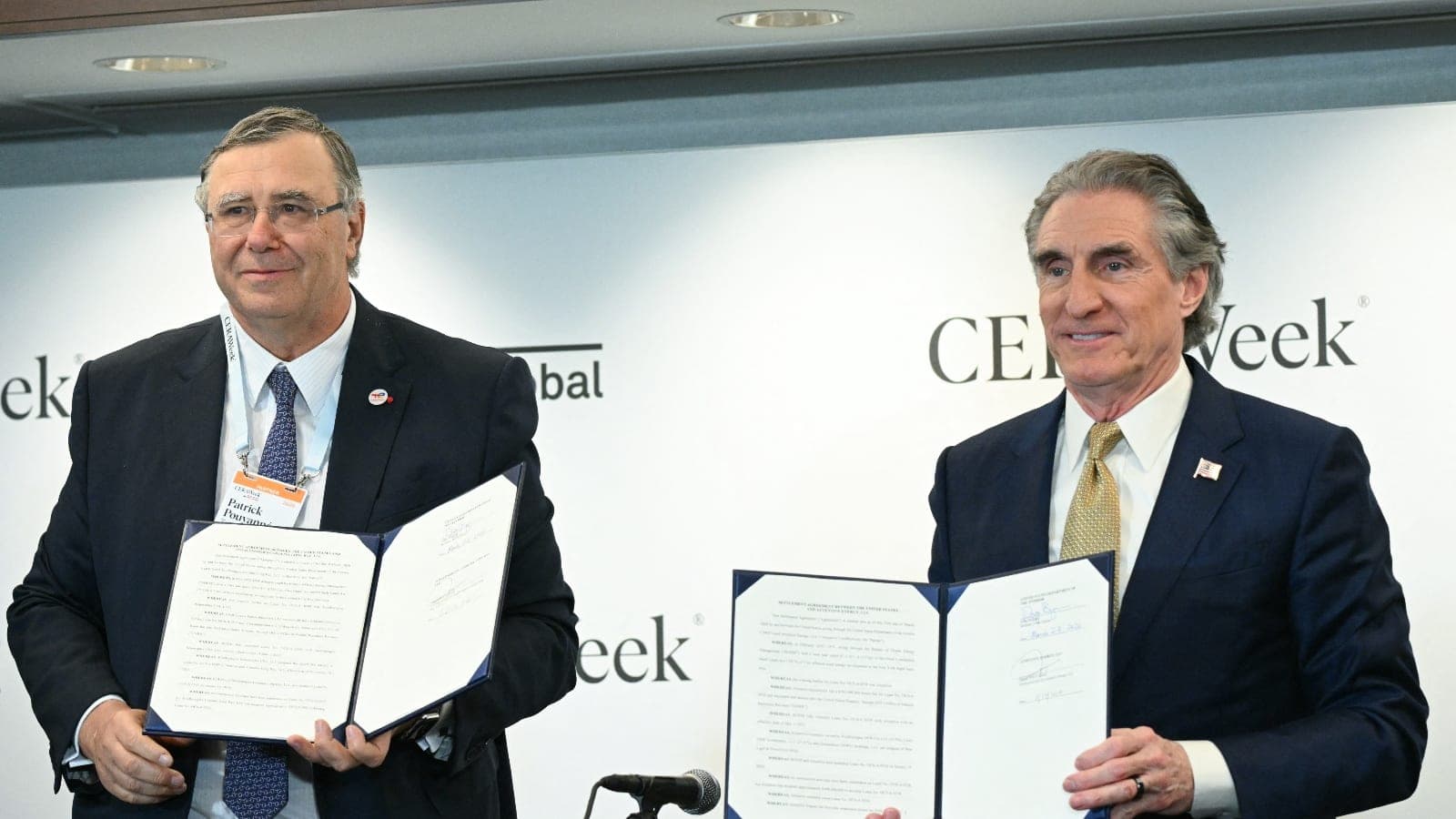
Trump’s $1B payoff to stop offshore wind is even stranger than it sounds
On Monday, President Trump’s Department of the Interior announced that it will refund almost $1 billion to a French multinational oil company. The company, TotalEnergies, had spent that amount during the Biden administration to secure two leases allowing it to build offshore wind farms in the Atlantic Ocean. The Trump administration, which has taken every step possible to block offshore wind development, is so opposed to this possibility that it’s paying Total to give up those leases — which the company wasn’t even using — in exchange for a promise that Total will invest the money in oil and gas projects off the U.S. Gulf Coast — which it was already doing. “This is a backdoor deal done with zero transparency, no public process, and no consideration of the impacts to ratepayers in states that had been planning on that offshore wind to meet their energy needs,” said Elizabeth Klein, who led the federal Interior Department’s Bureau of Ocean Energy Management under former President Joe Biden. The administration may have been trying to buy Total off to avoid litigation, according to Hannes Pfeifenberger, principal at the economic consulting firm the Brattle Group. The French company purchased its offshore wind lease in the coastal area known as the New York-New Jersey Bight for a historically high amount, paying around four times the typical per-acre rate for such leases. Were the administration to attempt to block development, Total might have sued to avoid losing its entire investment. “[Trump’s Interior Department] might have been responsible for damages if the offshore wind developers sued the government for selling them leases and then basically making permitting impossible,” said Pfeifenberger, adding that other developers who purchased leases in the same auction might now look to take the same path out. But Klein and other industry experts also noted that the settlement does not deal a permanent blow to offshore wind development, beyond moves the Trump administration had already made: Trump has already frozen all offshore wind lease auctions and vowed to oppose any new wind farm construction. At worst, the settlement will just set the timeline on new offshore wind development back by a few more years. Though Total’s ocean rights will return to the government for now, a future president could lease them out to another energy company. “Obviously no one expects this administration to be conducting any offshore wind lease sales, but future administrations will,” said Klein. There are other ways that the settlement may be less significant than it seems. Industry experts say most companies that hold ocean leases are looking to offload them or let them sit undeveloped until Trump is out of office. Even before this payoff, most experts believed that wind companies would not return to the Atlantic without legislative reform to protect approved permits from executive interference. The oil side of the settlement is even more confusing. The Interior Department’s announcement says that TotalEnergies will “invest approximately $1 billion — the value of its renounced offshore wind leases — in oil and natural gas,” including offshore oil platforms in the Gulf of Mexico and a liquefied natural gas, or LNG, facility in Texas. But the company is already plowing billions of dollars into new offshore platforms, and it made a “final investment decision” on an expansion of its Texas LNG facility last year. The lease refund would only go to offset these existing investments, not to generate new infrastructure the company hadn’t already planned. A statement from TotalEnergies CEO Patrick Pouyanné announcing the deal contained multiple grammatical errors, and it ended on a humdrum note, with the executive saying: “We believe this is a more efficient use of capital.” As for the debate in the U.S. Senate around so-called permitting reform legislation to secure energy projects from cancellation, the settlement with Total has done nothing to disrupt negotiations. That’s a stark contrast to what happened after the administration’s previous stop-work order on five under-construction wind farms in December, which caused bipartisan Congressional negotiations to collapse. Speaking to reporters last Friday, Senate Democrat Sheldon Whitehouse said that permitting reform talks are proceeding apace despite the new settlement. “So far, so good, with respect to addressing substantive issues,” said Whitehouse, who represents Rhode Island and is known for his leadership on climate and energy issues. He noted that the Trump administration has declined to appeal any of the court injunctions against its actions targeting the five active wind farms. “At the moment, I think they’re getting a strong signal from Republicans and Democrats in the Senate: Knock it off, cut out the nonsense,” he said. This story was originally published by Grist with the headline Trump’s $1B payoff to stop offshore wind is even stranger than it sounds on Mar 25, 2026.