5 stories credited to Government Executive
2 stories on govexec.com credited to other publishers
Latest story Sep 23, 2026 · on ChamberLight since Apr 2026
A story can appear as several articles (copies of the same piece), so counts of stories and of articles differ.
Scores for Government Executive
Writing quality not enough rated stories yet: 3 of 10. How it is measured
Scores last checked Sep 24, 2026.
Articles this site reproduces
How provenance is decidedOriginal publishers of articles on govexec.com
Counted from articles on govexec.com whose original publisher is verified from the page itself or confirmed by an independent signal.
Stories ChamberLight collected, by month
Stories credited to Government Executive, by publication date. ChamberLight collects articles that mention the officials it tracks, so this shows its own coverage of this source, not how much the source publishes.
- Stories from Government Executive
- Shaded: ChamberLight collected no stories, or almost none, from any outlet (a gap in its collection, not in the outlet’s publishing)
Show as a table
| Month | Stories | All outlets |
|---|---|---|
| September 2025 | 2 | 42 |
| October 2025 | 0 | 50 |
| November 2025 | 0 | 79 |
| December 2025 | 0 | 27 |
| January 2026 | 0 | 87 |
| February 2026 | 0 | 180 |
| March 2026 | 0 | 1,094 |
| April 2026 | 2 | 4,537 |
| May 2026 | 0 | none collected |
| June 2026 | 0 | none collected |
| July 2026 | 0 | none collected |
| August 2026 | 0 | 1 (collection gap) |
| September 2026 | 1 | 598 |
Top topics
Share of this source’s stories tagged with each topic. A story can carry several topics, so the shares do not add up to 100%.
- Ethics/Corruption3
60% of 5 stories · 62% across all outlets
- Budget/Spending2
40% of 5 stories · 33% across all outlets
- Healthcare2
40% of 5 stories · 8% across all outlets
- Labor/Unions2
40% of 5 stories · 4% across all outlets
- Criminal Justice1
20% of 5 stories · 20% across all outlets
- Defense/Military1
20% of 5 stories · 26% across all outlets
- Immigration1
20% of 5 stories · 13% across all outlets
- Social Security/Medicare1
20% of 5 stories · 0% across all outlets
The thin mark on each bar is the topic’s share across all outlets.
Who they cover
Party of the officials these stories are mainly about, across all 10 officials named. A story counts once for each official it is mainly about, so the split is over 12 story–official pairs, from 5 stories.
- Democrat83% · 10 pairs
- Republican17% · 2 pairs
Most covered
Stories mainly about each official, and their share of the source’s 5 stories.
Article tone
ChamberLight’s article analysis assigns each story a tone toward the official it covers. It describes the coverage of that official, not Government Executive’s stance, and reader votes do not change it. 5 stories.
- Good Look
- 1 (20%)
- Mixed
- 4 (80%)
- Informational
- 0 (0%)
- Bad Look
- 0 (0%)
Challenges to these scores
No one has challenged a score on this page yet. Anyone can; editors publish every outcome here.
Articles served from govexec.com
17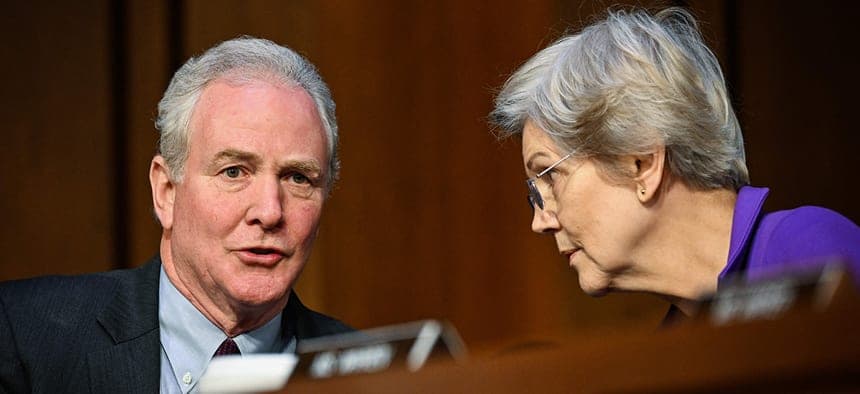
IRS and Social Security will see more employees quit without advanced leave, senators warn
Senate Democrats warn employees will “inevitably leave” both agencies following a suspension of advanced leave, adding to deep staffing cuts.
IRS and Social Security will see more employees quit without advanced leave, senators warn
Senate Democrats warn employees will “inevitably leave” both agencies following a suspension of advanced leave, adding to deep staffing cuts.
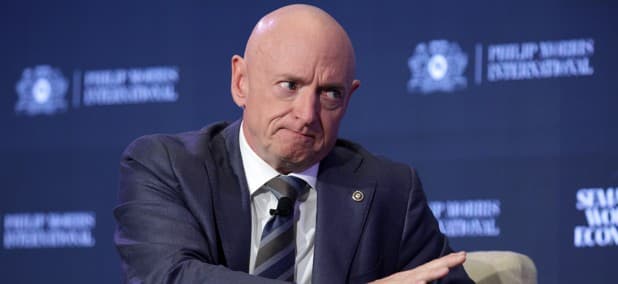
When does federal service really end? DoD case challenges retirees’ speech rights
Arizona Democratic Sen. Mark Kelly’s legal team is urging a federal appeals court to uphold a ruling that allows the former Navy captain to keep his retirement rank and pay while his First Amendment case against the Pentagon moves forward. Benjamin C. Mizer, partner at Arnold & Porter, wrote in a brief filed April 15 that the Defense Department violated Kelly’s constitutional rights when it tried to punish him for appearing alongside other Democrats in the “Don’t Give Up The Ship” video. The Trump administration’s appeal of the district court’s ruling, he wrote, does not cite “a single case” that has expanded the limited speech rights of active-duty military members to “retirees like Senator Kelly.” The legal precedent the Trump administration did reference, Parker v. Levy, “involved an active-duty officer directly urging soldiers at his wartime military post to refuse specific orders to deploy and fight,” Mizer wrote. “Senator Kelly, by contrast, is a retired officer and legislator who publicly called, alongside other members of Congress, for adherence to settled law, not defiance of it,” Mizer wrote. Illegal orders video posted in November Kelly, Michigan Sen. Elissa Slotkin, Colorado Rep. Jason Crow, New Hampshire Rep. Maggie Goodlander and Pennsylvania Reps. Chris Deluzio and Chrissy Houlahan, all Democrats with backgrounds in the military or national security, posted the video at the center of the case on Nov. 18. They said that Americans in those institutions “can” and “must refuse illegal orders.” “No one has to carry out orders that violate the law or our Constitution. We know this is hard and that it’s a difficult time to be a public servant,” they said. “But whether you’re serving in the CIA, in the Army, or Navy, or the Air Force, your vigilance is critical.” Mizer wrote in his legal brief that “Kelly never told members of the armed forces to refuse any particular military orders. The video did not even identify any specific military orders or operations.” Mizer added the obligation to refuse clearly illegal orders “is a bedrock of the law of armed conflict.” Defense Secretary Pete Hegseth announced in January that he would attempt to downgrade Kelly’s retirement rank and pay for his participation in the video, leading the senator to file a lawsuit. Senior Judge Richard J. Leon of the District of Columbia District Court issued a preliminary injunction in February, blocking that from taking effect while the case progresses through the legal system. The Trump administration appealed the preliminary injunction to the Court of Appeals for the D.C. Circuit, which has scheduled oral arguments for May 7. Karen LeCraft Henderson, nominated by President George H.W. Bush in 1990; Cornelia T.L. Pillard, nominated by President Barack Obama in 2013; and Florence Y. Pan, nominated by President Joe Biden in 2022, make up the three-judge panel that will decide whether to uphold the district court’s preliminary injunction or overturn it. DOJ argues discipline at risk Assistant Attorney General Brett A. Shumate wrote in a 71-page brief filed March 20 that the district court judge’s ruling “was gravely wrong and sweeps far beyond Kelly’s suit, calling into question the military’s ability to maintain discipline among service members.” Shumate added later in the filing that “while retired officers may well have greater speech rights than active-duty service members in some respects, the district court erred in holding that they are indistinguishable from civilians for purposes of First Amendment analysis. “The court reasoned that retired officers cannot undermine discipline as significantly as active-duty service members, but that conclusion is unsupportable.” Shumate contended that the “district court also erred insofar as it suggested that Kelly is entitled to heightened First Amendment protection because he is a member of Congress. Whatever enhanced speech rights Kelly has in that capacity, they come from other constitutional provisions, not the First Amendment.” “If anything, Kelly’s role in Congress provides more, not less, reason to hold him as accountable as other service members for counseling disobedience to lawful orders, given that his ‘leadership position’ as a member of the Senate Armed Services Committee gives him ‘unique sway over the military,’” Shumate wrote.
When does federal service really end? DoD case challenges retirees’ speech rights
Arizona Democratic Sen. Mark Kelly’s legal team is urging a federal appeals court to uphold a ruling that allows the former Navy captain to keep his retirement rank and pay while his First Amendment case against the Pentagon moves forward. Benjamin C. Mizer, partner at Arnold & Porter, wrote in a brief filed April 15 that the Defense Department violated Kelly’s constitutional rights when it tried to punish him for appearing alongside other Democrats in the “Don’t Give Up The Ship” video. The Trump administration’s appeal of the district court’s ruling, he wrote, does not cite “a single case” that has expanded the limited speech rights of active-duty military members to “retirees like Senator Kelly.” The legal precedent the Trump administration did reference, Parker v. Levy, “involved an active-duty officer directly urging soldiers at his wartime military post to refuse specific orders to deploy and fight,” Mizer wrote. “Senator Kelly, by contrast, is a retired officer and legislator who publicly called, alongside other members of Congress, for adherence to settled law, not defiance of it,” Mizer wrote. Illegal orders video posted in November Kelly, Michigan Sen. Elissa Slotkin, Colorado Rep. Jason Crow, New Hampshire Rep. Maggie Goodlander and Pennsylvania Reps. Chris Deluzio and Chrissy Houlahan, all Democrats with backgrounds in the military or national security, posted the video at the center of the case on Nov. 18. They said that Americans in those institutions “can” and “must refuse illegal orders.” “No one has to carry out orders that violate the law or our Constitution. We know this is hard and that it’s a difficult time to be a public servant,” they said. “But whether you’re serving in the CIA, in the Army, or Navy, or the Air Force, your vigilance is critical.” Mizer wrote in his legal brief that “Kelly never told members of the armed forces to refuse any particular military orders. The video did not even identify any specific military orders or operations.” Mizer added the obligation to refuse clearly illegal orders “is a bedrock of the law of armed conflict.” Defense Secretary Pete Hegseth announced in January that he would attempt to downgrade Kelly’s retirement rank and pay for his participation in the video, leading the senator to file a lawsuit. Senior Judge Richard J. Leon of the District of Columbia District Court issued a preliminary injunction in February, blocking that from taking effect while the case progresses through the legal system. The Trump administration appealed the preliminary injunction to the Court of Appeals for the D.C. Circuit, which has scheduled oral arguments for May 7. Karen LeCraft Henderson, nominated by President George H.W. Bush in 1990; Cornelia T.L. Pillard, nominated by President Barack Obama in 2013; and Florence Y. Pan, nominated by President Joe Biden in 2022, make up the three-judge panel that will decide whether to uphold the district court’s preliminary injunction or overturn it. DOJ argues discipline at risk Assistant Attorney General Brett A. Shumate wrote in a 71-page brief filed March 20 that the district court judge’s ruling “was gravely wrong and sweeps far beyond Kelly’s suit, calling into question the military’s ability to maintain discipline among service members.” Shumate added later in the filing that “while retired officers may well have greater speech rights than active-duty service members in some respects, the district court erred in holding that they are indistinguishable from civilians for purposes of First Amendment analysis. “The court reasoned that retired officers cannot undermine discipline as significantly as active-duty service members, but that conclusion is unsupportable.” Shumate contended that the “district court also erred insofar as it suggested that Kelly is entitled to heightened First Amendment protection because he is a member of Congress. Whatever enhanced speech rights Kelly has in that capacity, they come from other constitutional provisions, not the First Amendment.” “If anything, Kelly’s role in Congress provides more, not less, reason to hold him as accountable as other service members for counseling disobedience to lawful orders, given that his ‘leadership position’ as a member of the Senate Armed Services Committee gives him ‘unique sway over the military,’” Shumate wrote.
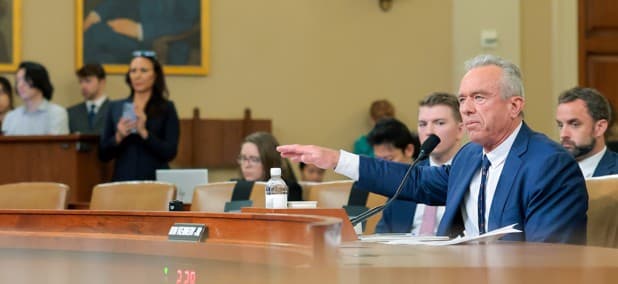
‘Shirtless in a hot tub with Kid Rock’: Dems question RFK Jr. on HHS priorities and budget decisions
Health and Human Services Secretary Robert F. Kennedy Jr. testified before Congress on Thursday that he’s not pleased with how spending cuts to programs that help lower-income Americans afford food will affect his efforts to bolster healthy eating habits. “Am I happy about the cuts? No, I'm not happy about the cuts,” Kennedy said during a lengthy hearing before the House Ways and Means Committee, one of several congressional panels he’ll testify before in the days ahead. Kennedy added that President Donald Trump and White House budget director Russ Vought also didn’t truly want to propose funding cuts to the Special Supplemental Nutrition Program for Women, Infants and Children, often called WIC, and the Supplemental Nutrition Assistance Program, or SNAP. “Nobody wants to make the cuts. Russ Vought doesn't want to make the cuts. President Trump doesn't,” he said. “But we got a $39 trillion debt.” Wisconsin Democratic Rep. Gwen Moore, who asked the questions, then referenced comments Kennedy made earlier in the hearing about Froot Loops, when he said it “isn't even a food. It's just poison.” Moore noted the cereal is “a lot cheaper than good, healthy food.” Froot Loops includes a corn flour blend, sugar, wheat flour, whole-grain oat flour, modified food starch and other ingredients. Trump advocates reductions for HHS The Trump administration’s budget request for the fiscal year set to begin on Oct. 1 proposes Congress increase defense spending by more than half a trillion dollars, accounting for a 43% boost, and that lawmakers cut domestic spending by 10%. It suggested Congress reduce spending at HHS by $15.8 billion, or 12.5%, to $111.1 billion, though lawmakers largely rejected proposed spending cuts to the department during last year’s government funding process. Vought testified earlier this week that the administration expects to ask Congress for additional defense spending for the war in Iran, though he said he couldn’t give lawmakers a ballpark estimate for how much that will add to the current request for $1.5 trillion in defense funding. Lawmakers questioned Kennedy about dozens of other issues throughout the hearing, including how he’s spoken about vaccines since being confirmed HHS secretary, the rise in measles cases throughout the country and comments Kennedy and Trump made about the possible causes of autism. Utah Republican Rep. Blake Moore, after sharing that his 10-year-old is on the autism spectrum, said he was “underwhelmed” by what the administration has released so far about possible causes. He also said that his wife was hurt by claims from Trump and Kennedy that women who take Tylenol when pregnant could increase the risk their children are later diagnosed with autism. “We don't even know if she took Tylenol during her pregnancy, but that was a hurtful moment for her,” Blake Moore said. “And I just want to encourage the administration and your team to keep at it. And I think there's more we can do here with low expectations.” Medical experts say that decades of research show autism is the result of a combination of genetic and environmental factors. Measles death California Democratic Rep. Linda T. Sánchez questioned Kennedy about comments he made during his Senate confirmation hearing on vaccines, arguing that he hasn’t stuck to the commitments he made during that process. She then asked him if the measles vaccine could have prevented a boy from dying of the disease in Texas. “It's possible, certainly,” Kennedy said. But he repeatedly declined to answer a question from Sánchez about whether Trump approved the Centers for Disease Control and Prevention’s decision to remove a messaging campaign to encourage vaccination, even as she asked it several times. Sánchez then displayed a poster showing a photograph of Kennedy and Kid Rock to illustrate her discontent with his work so far as HHS secretary. “Now, one thing that I find incredible is that you suspended this pro-vaccine messaging campaign. But somehow you're spending taxpayer dollars to drink milk shirtless in a hot tub with Kid Rock,” she said. “And somehow you think that's a better public health message than informing the public about the importance of vaccines.” Day care, Medicaid, Black maternal health Illinois Democratic Rep. Danny K. Davis pressed Kennedy about whether he agrees with a statement Trump made earlier this month when the president said, “We can’t take care of day care. It’s not possible for us to take care of day care. Medicaid, Medicare, all of these individual things. They can do it on a state basis. You can’t do it on a federal. We have to take care of one thing, military protection.” Kennedy responded that he was “told to make a 12% cut across our department” because the national debt, which has accumulated over decades, has reached $39 trillion. “We're now having to tighten our belt,” Kennedy said. Davis also questioned Kennedy on funding and initiatives to reduce Black maternal mortality, saying “the Trump administration is undermining Black maternal health from all sides.” “The GOP slashed over a trillion dollars from Medicaid, which pays for over 40% of births in the United States. President Trump just proposed cutting maternal and child health programs by over $800 million,” he said. “DOGE canceled funds for several research projects that could save countless Black mothers, like the Morehouse School of Medicine research on improving the health of Black pregnant and postpartum women.” Kennedy responded by arguing that he and others in the Trump administration are “doing more to advance maternal health than any other administration in history.” “There was tremendous duplication in the departments. We had 42 different maternal health services in our department,” Kennedy said. “And we cut some of those and consolidated them. Right now, we are investing huge amounts of money in maternal health.” RFK Jr.: “Not happy” with cuts to food aid — but still defending them. [[Related Posts]]
‘Shirtless in a hot tub with Kid Rock’: Dems question RFK Jr. on HHS priorities and budget decisions
Health and Human Services Secretary Robert F. Kennedy Jr. testified before Congress on Thursday that he’s not pleased with how spending cuts to programs that help lower-income Americans afford food will affect his efforts to bolster healthy eating habits. “Am I happy about the cuts? No, I'm not happy about the cuts,” Kennedy said during a lengthy hearing before the House Ways and Means Committee, one of several congressional panels he’ll testify before in the days ahead. Kennedy added that President Donald Trump and White House budget director Russ Vought also didn’t truly want to propose funding cuts to the Special Supplemental Nutrition Program for Women, Infants and Children, often called WIC, and the Supplemental Nutrition Assistance Program, or SNAP. “Nobody wants to make the cuts. Russ Vought doesn't want to make the cuts. President Trump doesn't,” he said. “But we got a $39 trillion debt.” Wisconsin Democratic Rep. Gwen Moore, who asked the questions, then referenced comments Kennedy made earlier in the hearing about Froot Loops, when he said it “isn't even a food. It's just poison.” Moore noted the cereal is “a lot cheaper than good, healthy food.” Froot Loops includes a corn flour blend, sugar, wheat flour, whole-grain oat flour, modified food starch and other ingredients. Trump advocates reductions for HHS The Trump administration’s budget request for the fiscal year set to begin on Oct. 1 proposes Congress increase defense spending by more than half a trillion dollars, accounting for a 43% boost, and that lawmakers cut domestic spending by 10%. It suggested Congress reduce spending at HHS by $15.8 billion, or 12.5%, to $111.1 billion, though lawmakers largely rejected proposed spending cuts to the department during last year’s government funding process. Vought testified earlier this week that the administration expects to ask Congress for additional defense spending for the war in Iran, though he said he couldn’t give lawmakers a ballpark estimate for how much that will add to the current request for $1.5 trillion in defense funding. Lawmakers questioned Kennedy about dozens of other issues throughout the hearing, including how he’s spoken about vaccines since being confirmed HHS secretary, the rise in measles cases throughout the country and comments Kennedy and Trump made about the possible causes of autism. Utah Republican Rep. Blake Moore, after sharing that his 10-year-old is on the autism spectrum, said he was “underwhelmed” by what the administration has released so far about possible causes. He also said that his wife was hurt by claims from Trump and Kennedy that women who take Tylenol when pregnant could increase the risk their children are later diagnosed with autism. “We don't even know if she took Tylenol during her pregnancy, but that was a hurtful moment for her,” Blake Moore said. “And I just want to encourage the administration and your team to keep at it. And I think there's more we can do here with low expectations.” Medical experts say that decades of research show autism is the result of a combination of genetic and environmental factors. Measles death California Democratic Rep. Linda T. Sánchez questioned Kennedy about comments he made during his Senate confirmation hearing on vaccines, arguing that he hasn’t stuck to the commitments he made during that process. She then asked him if the measles vaccine could have prevented a boy from dying of the disease in Texas. “It's possible, certainly,” Kennedy said. But he repeatedly declined to answer a question from Sánchez about whether Trump approved the Centers for Disease Control and Prevention’s decision to remove a messaging campaign to encourage vaccination, even as she asked it several times. Sánchez then displayed a poster showing a photograph of Kennedy and Kid Rock to illustrate her discontent with his work so far as HHS secretary. “Now, one thing that I find incredible is that you suspended this pro-vaccine messaging campaign. But somehow you're spending taxpayer dollars to drink milk shirtless in a hot tub with Kid Rock,” she said. “And somehow you think that's a better public health message than informing the public about the importance of vaccines.” Day care, Medicaid, Black maternal health Illinois Democratic Rep. Danny K. Davis pressed Kennedy about whether he agrees with a statement Trump made earlier this month when the president said, “We can’t take care of day care. It’s not possible for us to take care of day care. Medicaid, Medicare, all of these individual things. They can do it on a state basis. You can’t do it on a federal. We have to take care of one thing, military protection.” Kennedy responded that he was “told to make a 12% cut across our department” because the national debt, which has accumulated over decades, has reached $39 trillion. “We're now having to tighten our belt,” Kennedy said. Davis also questioned Kennedy on funding and initiatives to reduce Black maternal mortality, saying “the Trump administration is undermining Black maternal health from all sides.” “The GOP slashed over a trillion dollars from Medicaid, which pays for over 40% of births in the United States. President Trump just proposed cutting maternal and child health programs by over $800 million,” he said. “DOGE canceled funds for several research projects that could save countless Black mothers, like the Morehouse School of Medicine research on improving the health of Black pregnant and postpartum women.” Kennedy responded by arguing that he and others in the Trump administration are “doing more to advance maternal health than any other administration in history.” “There was tremendous duplication in the departments. We had 42 different maternal health services in our department,” Kennedy said. “And we cut some of those and consolidated them. Right now, we are investing huge amounts of money in maternal health.” RFK Jr.: “Not happy” with cuts to food aid — but still defending them. [[Related Posts]]
‘Shirtless in a hot tub with Kid Rock’: Dems question RFK Jr. on HHS priorities and budget decisions
Health and Human Services Secretary Robert F. Kennedy Jr. testified before Congress on Thursday that he’s not pleased with how spending cuts to programs that help lower-income Americans afford food will affect his efforts to bolster healthy eating habits. “Am I happy about the cuts? No, I'm not happy about the cuts,” Kennedy said during a lengthy hearing before the House Ways and Means Committee, one of several congressional panels he’ll testify before in the days ahead. Kennedy added that President Donald Trump and White House budget director Russ Vought also didn’t truly want to propose funding cuts to the Special Supplemental Nutrition Program for Women, Infants and Children, often called WIC, and the Supplemental Nutrition Assistance Program, or SNAP. “Nobody wants to make the cuts. Russ Vought doesn't want to make the cuts. President Trump doesn't,” he said. “But we got a $39 trillion debt.” Wisconsin Democratic Rep. Gwen Moore, who asked the questions, then referenced comments Kennedy made earlier in the hearing about Froot Loops, when he said it “isn't even a food. It's just poison.” Moore noted the cereal is “a lot cheaper than good, healthy food.” Froot Loops includes a corn flour blend, sugar, wheat flour, whole-grain oat flour, modified food starch and other ingredients. Trump advocates reductions for HHS The Trump administration’s budget request for the fiscal year set to begin on Oct. 1 proposes Congress increase defense spending by more than half a trillion dollars, accounting for a 43% boost, and that lawmakers cut domestic spending by 10%. It suggested Congress reduce spending at HHS by $15.8 billion, or 12.5%, to $111.1 billion, though lawmakers largely rejected proposed spending cuts to the department during last year’s government funding process. Vought testified earlier this week that the administration expects to ask Congress for additional defense spending for the war in Iran, though he said he couldn’t give lawmakers a ballpark estimate for how much that will add to the current request for $1.5 trillion in defense funding. Lawmakers questioned Kennedy about dozens of other issues throughout the hearing, including how he’s spoken about vaccines since being confirmed HHS secretary, the rise in measles cases throughout the country and comments Kennedy and Trump made about the possible causes of autism. Utah Republican Rep. Blake Moore, after sharing that his 10-year-old is on the autism spectrum, said he was “underwhelmed” by what the administration has released so far about possible causes. He also said that his wife was hurt by claims from Trump and Kennedy that women who take Tylenol when pregnant could increase the risk their children are later diagnosed with autism. “We don't even know if she took Tylenol during her pregnancy, but that was a hurtful moment for her,” Blake Moore said. “And I just want to encourage the administration and your team to keep at it. And I think there's more we can do here with low expectations.” Medical experts say that decades of research show autism is the result of a combination of genetic and environmental factors. Measles death California Democratic Rep. Linda T. Sánchez questioned Kennedy about comments he made during his Senate confirmation hearing on vaccines, arguing that he hasn’t stuck to the commitments he made during that process. She then asked him if the measles vaccine could have prevented a boy from dying of the disease in Texas. “It's possible, certainly,” Kennedy said. But he repeatedly declined to answer a question from Sánchez about whether Trump approved the Centers for Disease Control and Prevention’s decision to remove a messaging campaign to encourage vaccination, even as she asked it several times. Sánchez then displayed a poster showing a photograph of Kennedy and Kid Rock to illustrate her discontent with his work so far as HHS secretary. “Now, one thing that I find incredible is that you suspended this pro-vaccine messaging campaign. But somehow you're spending taxpayer dollars to drink milk shirtless in a hot tub with Kid Rock,” she said. “And somehow you think that's a better public health message than informing the public about the importance of vaccines.” Day care, Medicaid, Black maternal health Illinois Democratic Rep. Danny K. Davis pressed Kennedy about whether he agrees with a statement Trump made earlier this month when the president said, “We can’t take care of day care. It’s not possible for us to take care of day care. Medicaid, Medicare, all of these individual things. They can do it on a state basis. You can’t do it on a federal. We have to take care of one thing, military protection.” Kennedy responded that he was “told to make a 12% cut across our department” because the national debt, which has accumulated over decades, has reached $39 trillion. “We're now having to tighten our belt,” Kennedy said. Davis also questioned Kennedy on funding and initiatives to reduce Black maternal mortality, saying “the Trump administration is undermining Black maternal health from all sides.” “The GOP slashed over a trillion dollars from Medicaid, which pays for over 40% of births in the United States. President Trump just proposed cutting maternal and child health programs by over $800 million,” he said. “DOGE canceled funds for several research projects that could save countless Black mothers, like the Morehouse School of Medicine research on improving the health of Black pregnant and postpartum women.” Kennedy responded by arguing that he and others in the Trump administration are “doing more to advance maternal health than any other administration in history.” “There was tremendous duplication in the departments. We had 42 different maternal health services in our department,” Kennedy said. “And we cut some of those and consolidated them. Right now, we are investing huge amounts of money in maternal health.” RFK Jr.: “Not happy” with cuts to food aid — but still defending them. [[Related Posts]]

Dem senators boost effort to reinstate two immigration judges
A half dozen Democratic senators this week urged a federal appeals court in Washington to expedite its consideration of two immigration judges’ appeal of their ouster last year, after a quasi-judicial agency said they could be removed at will. Last month, the Merit Systems Protection Board upended decades of precedent when it ruled that the president had Article II constitutional authority to remove inferior officers like immigration judges on an at-will basis. But in their appeal to the U.S. Court of Appeals for the Federal Circuit, Megan Jackler and Brandon Jaroch, who were both fired by then-Attorney General Pam Bondi in February 2025, said that MSPB’s decision mistakenly relied on “dictum,” a legal term for portions of a judge’s writing that is made in passing and not relevant to the actual decision, in Seila Law v. Consumer Financial Protection Bureau, a case invalidating removal protections of principal officers. Unlike the judges in this case, SEC administrative law judges are considered principal officers, due to their lack of a direct supervisor between them and the president. “The crux of [MSPB’s] decision rests on a half-sentence of dictum from Seila Law, in which the Supreme Court characterized its prior precedent as having permitted for-cause removal protections for those inferior officers 'with limited duties and no policymaking or administrative authority,’” they wrote. “According to the MSPB, that half-sentence radically cabined [U.S. v. Perkins] and its progeny to a small subset of civil servants. It bears emphasis: the MSPB’s test for Article II firings—that the [1978 Civil Service Reform Act] may apply only to those with ‘limited duties’—will have enormous ramifications.” The two former immigration judges have asked the circuit court as a whole to hear their case, rather than the traditional three-judge panel. Like the legal challenge to President Trump’s International Emergency Economic Powers Act tariffs, which the Federal Circuit heard en banc last year and the Supreme Court invalidated in February, the judges’ case is the first of many such lawsuits, as administration officials’ citation of “Article II” as sole justification for employee removals last year was widespread. “This appeal is the tip of the iceberg,” attorneys for the fired judges wrote. “The executive branch has fired numerous other civil servants like petitioners, including as many as 100 immigration judges, employees previously assigned to Special Counsel Jack Smith, and prosecutors who handled January 6 cases. The abuses have been egregious: In July 2025, the government fired a career prosecutor apparently because she is the daughter of [former FBI Director Robert Mueller], whom the president views as a vocal critic.” In a filing Monday, six Senate Democrats—Sens. Chris Van Hollen, Md., Tim Kaine and Mark Warner, both Va., Gary Peters, Mich., and Andy Kim, N.J.—lent their support to the judges’ request. They argued that the MSPB ruling effectively usurps Congress’ authority to insulate inferior officers from political interference. “The Merit Systems Protection Board’s decision poses serious consequences for the constitutional systems of separation of powers and checks and balances, and it will affect thousands of federal workers, many of whom are constituents of amici,” they wrote. “The board’s decision, if left standing, would subvert the constitutional authority of the Congress to enact any legislation governing inferior officers in the executive branch. This defies over 140 years of Supreme Court precedent and gives the president unchecked authority to take any action regarding inferior officers, constrained only by the few express limitations stated in the Constitution.” If the court agrees, that means the case would be heard by all 11 active judges on the Federal Circuit bench. A three-judge panel has not yet been assigned.
Dem senators boost effort to reinstate two immigration judges
A half dozen Democratic senators this week urged a federal appeals court in Washington to expedite its consideration of two immigration judges’ appeal of their ouster last year, after a quasi-judicial agency said they could be removed at will. Last month, the Merit Systems Protection Board upended decades of precedent when it ruled that the president had Article II constitutional authority to remove inferior officers like immigration judges on an at-will basis. But in their appeal to the U.S. Court of Appeals for the Federal Circuit, Megan Jackler and Brandon Jaroch, who were both fired by then-Attorney General Pam Bondi in February 2025, said that MSPB’s decision mistakenly relied on “dictum,” a legal term for portions of a judge’s writing that is made in passing and not relevant to the actual decision, in Seila Law v. Consumer Financial Protection Bureau, a case invalidating removal protections of principal officers. Unlike the judges in this case, SEC administrative law judges are considered principal officers, due to their lack of a direct supervisor between them and the president. “The crux of [MSPB’s] decision rests on a half-sentence of dictum from Seila Law, in which the Supreme Court characterized its prior precedent as having permitted for-cause removal protections for those inferior officers 'with limited duties and no policymaking or administrative authority,’” they wrote. “According to the MSPB, that half-sentence radically cabined [U.S. v. Perkins] and its progeny to a small subset of civil servants. It bears emphasis: the MSPB’s test for Article II firings—that the [1978 Civil Service Reform Act] may apply only to those with ‘limited duties’—will have enormous ramifications.” The two former immigration judges have asked the circuit court as a whole to hear their case, rather than the traditional three-judge panel. Like the legal challenge to President Trump’s International Emergency Economic Powers Act tariffs, which the Federal Circuit heard en banc last year and the Supreme Court invalidated in February, the judges’ case is the first of many such lawsuits, as administration officials’ citation of “Article II” as sole justification for employee removals last year was widespread. “This appeal is the tip of the iceberg,” attorneys for the fired judges wrote. “The executive branch has fired numerous other civil servants like petitioners, including as many as 100 immigration judges, employees previously assigned to Special Counsel Jack Smith, and prosecutors who handled January 6 cases. The abuses have been egregious: In July 2025, the government fired a career prosecutor apparently because she is the daughter of [former FBI Director Robert Mueller], whom the president views as a vocal critic.” In a filing Monday, six Senate Democrats—Sens. Chris Van Hollen, Md., Tim Kaine and Mark Warner, both Va., Gary Peters, Mich., and Andy Kim, N.J.—lent their support to the judges’ request. They argued that the MSPB ruling effectively usurps Congress’ authority to insulate inferior officers from political interference. “The Merit Systems Protection Board’s decision poses serious consequences for the constitutional systems of separation of powers and checks and balances, and it will affect thousands of federal workers, many of whom are constituents of amici,” they wrote. “The board’s decision, if left standing, would subvert the constitutional authority of the Congress to enact any legislation governing inferior officers in the executive branch. This defies over 140 years of Supreme Court precedent and gives the president unchecked authority to take any action regarding inferior officers, constrained only by the few express limitations stated in the Constitution.” If the court agrees, that means the case would be heard by all 11 active judges on the Federal Circuit bench. A three-judge panel has not yet been assigned.
Dem senators boost effort to reinstate two immigration judges
A half dozen Democratic senators this week urged a federal appeals court in Washington to expedite its consideration of two immigration judges’ appeal of their ouster last year, after a quasi-judicial agency said they could be removed at will. Last month, the Merit Systems Protection Board upended decades of precedent when it ruled that the president had Article II constitutional authority to remove inferior officers like immigration judges on an at-will basis. But in their appeal to the U.S. Court of Appeals for the Federal Circuit, Megan Jackler and Brandon Jaroch, who were both fired by then-Attorney General Pam Bondi in February 2025, said that MSPB’s decision mistakenly relied on “dictum,” a legal term for portions of a judge’s writing that is made in passing and not relevant to the actual decision, in Seila Law v. Consumer Financial Protection Bureau, a case invalidating removal protections of principal officers. Unlike the judges in this case, SEC administrative law judges are considered principal officers, due to their lack of a direct supervisor between them and the president. “The crux of [MSPB’s] decision rests on a half-sentence of dictum from Seila Law, in which the Supreme Court characterized its prior precedent as having permitted for-cause removal protections for those inferior officers 'with limited duties and no policymaking or administrative authority,’” they wrote. “According to the MSPB, that half-sentence radically cabined [U.S. v. Perkins] and its progeny to a small subset of civil servants. It bears emphasis: the MSPB’s test for Article II firings—that the [1978 Civil Service Reform Act] may apply only to those with ‘limited duties’—will have enormous ramifications.” The two former immigration judges have asked the circuit court as a whole to hear their case, rather than the traditional three-judge panel. Like the legal challenge to President Trump’s International Emergency Economic Powers Act tariffs, which the Federal Circuit heard en banc last year and the Supreme Court invalidated in February, the judges’ case is the first of many such lawsuits, as administration officials’ citation of “Article II” as sole justification for employee removals last year was widespread. “This appeal is the tip of the iceberg,” attorneys for the fired judges wrote. “The executive branch has fired numerous other civil servants like petitioners, including as many as 100 immigration judges, employees previously assigned to Special Counsel Jack Smith, and prosecutors who handled January 6 cases. The abuses have been egregious: In July 2025, the government fired a career prosecutor apparently because she is the daughter of [former FBI Director Robert Mueller], whom the president views as a vocal critic.” In a filing Monday, six Senate Democrats—Sens. Chris Van Hollen, Md., Tim Kaine and Mark Warner, both Va., Gary Peters, Mich., and Andy Kim, N.J.—lent their support to the judges’ request. They argued that the MSPB ruling effectively usurps Congress’ authority to insulate inferior officers from political interference. “The Merit Systems Protection Board’s decision poses serious consequences for the constitutional systems of separation of powers and checks and balances, and it will affect thousands of federal workers, many of whom are constituents of amici,” they wrote. “The board’s decision, if left standing, would subvert the constitutional authority of the Congress to enact any legislation governing inferior officers in the executive branch. This defies over 140 years of Supreme Court precedent and gives the president unchecked authority to take any action regarding inferior officers, constrained only by the few express limitations stated in the Constitution.” If the court agrees, that means the case would be heard by all 11 active judges on the Federal Circuit bench. A three-judge panel has not yet been assigned.
Dem senators boost effort to reinstate two immigration judges
A half dozen Democratic senators this week urged a federal appeals court in Washington to expedite its consideration of two immigration judges’ appeal of their ouster last year, after a quasi-judicial agency said they could be removed at will. Last month, the Merit Systems Protection Board upended decades of precedent when it ruled that the president had Article II constitutional authority to remove inferior officers like immigration judges on an at-will basis. But in their appeal to the U.S. Court of Appeals for the Federal Circuit, Megan Jackler and Brandon Jaroch, who were both fired by then-Attorney General Pam Bondi in February 2025, said that MSPB’s decision mistakenly relied on “dictum,” a legal term for portions of a judge’s writing that is made in passing and not relevant to the actual decision, in Seila Law v. Consumer Financial Protection Bureau, a case invalidating removal protections of principal officers. Unlike the judges in this case, SEC administrative law judges are considered principal officers, due to their lack of a direct supervisor between them and the president. “The crux of [MSPB’s] decision rests on a half-sentence of dictum from Seila Law, in which the Supreme Court characterized its prior precedent as having permitted for-cause removal protections for those inferior officers 'with limited duties and no policymaking or administrative authority,’” they wrote. “According to the MSPB, that half-sentence radically cabined [U.S. v. Perkins] and its progeny to a small subset of civil servants. It bears emphasis: the MSPB’s test for Article II firings—that the [1978 Civil Service Reform Act] may apply only to those with ‘limited duties’—will have enormous ramifications.” The two former immigration judges have asked the circuit court as a whole to hear their case, rather than the traditional three-judge panel. Like the legal challenge to President Trump’s International Emergency Economic Powers Act tariffs, which the Federal Circuit heard en banc last year and the Supreme Court invalidated in February, the judges’ case is the first of many such lawsuits, as administration officials’ citation of “Article II” as sole justification for employee removals last year was widespread. “This appeal is the tip of the iceberg,” attorneys for the fired judges wrote. “The executive branch has fired numerous other civil servants like petitioners, including as many as 100 immigration judges, employees previously assigned to Special Counsel Jack Smith, and prosecutors who handled January 6 cases. The abuses have been egregious: In July 2025, the government fired a career prosecutor apparently because she is the daughter of [former FBI Director Robert Mueller], whom the president views as a vocal critic.” In a filing Monday, six Senate Democrats—Sens. Chris Van Hollen, Md., Tim Kaine and Mark Warner, both Va., Gary Peters, Mich., and Andy Kim, N.J.—lent their support to the judges’ request. They argued that the MSPB ruling effectively usurps Congress’ authority to insulate inferior officers from political interference. “The Merit Systems Protection Board’s decision poses serious consequences for the constitutional systems of separation of powers and checks and balances, and it will affect thousands of federal workers, many of whom are constituents of amici,” they wrote. “The board’s decision, if left standing, would subvert the constitutional authority of the Congress to enact any legislation governing inferior officers in the executive branch. This defies over 140 years of Supreme Court precedent and gives the president unchecked authority to take any action regarding inferior officers, constrained only by the few express limitations stated in the Constitution.” If the court agrees, that means the case would be heard by all 11 active judges on the Federal Circuit bench. A three-judge panel has not yet been assigned.
Dem senators boost effort to reinstate two immigration judges
A half dozen Democratic senators this week urged a federal appeals court in Washington to expedite its consideration of two immigration judges’ appeal of their ouster last year, after a quasi-judicial agency said they could be removed at will. Last month, the Merit Systems Protection Board upended decades of precedent when it ruled that the president had Article II constitutional authority to remove inferior officers like immigration judges on an at-will basis. But in their appeal to the U.S. Court of Appeals for the Federal Circuit, Megan Jackler and Brandon Jaroch, who were both fired by then-Attorney General Pam Bondi in February 2025, said that MSPB’s decision mistakenly relied on “dictum,” a legal term for portions of a judge’s writing that is made in passing and not relevant to the actual decision, in Seila Law v. Consumer Financial Protection Bureau, a case invalidating removal protections of principal officers. Unlike the judges in this case, SEC administrative law judges are considered principal officers, due to their lack of a direct supervisor between them and the president. “The crux of [MSPB’s] decision rests on a half-sentence of dictum from Seila Law, in which the Supreme Court characterized its prior precedent as having permitted for-cause removal protections for those inferior officers 'with limited duties and no policymaking or administrative authority,’” they wrote. “According to the MSPB, that half-sentence radically cabined [U.S. v. Perkins] and its progeny to a small subset of civil servants. It bears emphasis: the MSPB’s test for Article II firings—that the [1978 Civil Service Reform Act] may apply only to those with ‘limited duties’—will have enormous ramifications.” The two former immigration judges have asked the circuit court as a whole to hear their case, rather than the traditional three-judge panel. Like the legal challenge to President Trump’s International Emergency Economic Powers Act tariffs, which the Federal Circuit heard en banc last year and the Supreme Court invalidated in February, the judges’ case is the first of many such lawsuits, as administration officials’ citation of “Article II” as sole justification for employee removals last year was widespread. “This appeal is the tip of the iceberg,” attorneys for the fired judges wrote. “The executive branch has fired numerous other civil servants like petitioners, including as many as 100 immigration judges, employees previously assigned to Special Counsel Jack Smith, and prosecutors who handled January 6 cases. The abuses have been egregious: In July 2025, the government fired a career prosecutor apparently because she is the daughter of [former FBI Director Robert Mueller], whom the president views as a vocal critic.” In a filing Monday, six Senate Democrats—Sens. Chris Van Hollen, Md., Tim Kaine and Mark Warner, both Va., Gary Peters, Mich., and Andy Kim, N.J.—lent their support to the judges’ request. They argued that the MSPB ruling effectively usurps Congress’ authority to insulate inferior officers from political interference. “The Merit Systems Protection Board’s decision poses serious consequences for the constitutional systems of separation of powers and checks and balances, and it will affect thousands of federal workers, many of whom are constituents of amici,” they wrote. “The board’s decision, if left standing, would subvert the constitutional authority of the Congress to enact any legislation governing inferior officers in the executive branch. This defies over 140 years of Supreme Court precedent and gives the president unchecked authority to take any action regarding inferior officers, constrained only by the few express limitations stated in the Constitution.” If the court agrees, that means the case would be heard by all 11 active judges on the Federal Circuit bench. A three-judge panel has not yet been assigned.

VA's failure to use its new authority to boost pay for doctors draws bipartisan criticism
Doctors at the Veterans Affairs Department have yet to receive a pay bump despite a recent law authorizing the increases, which has drawn bipartisan criticism from lawmakers. Currently, VA doctors are capped at earning $400,000 per year, a restriction that has been in place for years. A measure with broad, bipartisan support—known as the Dole Act—that President Biden signed into law shortly before leaving office allowed VA to issue 300 waivers to that cap to recruit or retain staff in critical health care roles. It also allowed VA to retroactively pay employees who previously earned extra compensation but were unable to collect it because they had hit the statutory limit. VA has yet to put forward guidance to implement the provisions, despite it taking effect last July. Sen. Richard Blumenthal, D-Conn., and Rep. Mark Takano, D-Calif., the top Democrats on the Senate and House Veterans Affairs Committees, respectively, spearheaded a letter this week to VA Secretary Doug Collins calling the delay in implementation "unacceptable" and requesting detailed information about physician pay, current staffing levels, recruitment efforts and where things stand with the Dole Act. In a House hearing earlier this year, Collins requested authority to pay some doctors more than the $400,000 cap, despite the law already providing it. The lawmakers said VA has provided updates to committee staff stating the delay stemmed from internal disagreements over how to distribute the waivers. “We would welcome the opportunity to work with you to ensure maximum utilization of the authorities provided to you in this effort,” the Democratic lawmakers said. “However, we request that you genuinely prioritize recruitment and retention of VA’s workforce by discontinuing your attacks on the VA workforce and effectively and expeditiously making use of the various tools Congress has provided.” The department has seen a net loss of medical officers since Trump took office last January, according to data maintained by the Office of Personnel Management. Around 3,300 physicians left VA in the last 15 months, while just 2,200 have joined. Collins last year spearheaded an effort to push out a total of 30,000 VA employees, which followed longstanding efforts to grow the workforce commensurate with a growth in the number of veterans eligible for department care. “Your continuous complaints during congressional hearings about this singular barrier to recruitment only attempt to deflect accountability for your apathy and ineptitude in implementing a solution to this issue and shift blame away from your misguided policies that have doctors and health care professionals leaving the department in droves,” the Democrats said. Quinn Slaven, a VA spokesperson, said the department is still looking to put the Dole Act provisions into practice. “VA is working to implement this provision of the Dole Act in a way that benefits as many Veterans as possible and will respond to the lawmakers’ letter directly,” Slaven said. The lack of implementation has also sparked concern among Republicans. Sen. Jon Husted, R-Utah, and Rep. Max MIller, R-Ohio, wrote a similar letter to Collins in November, urging the secretary to issue regulations that would enable VA to institute the higher pay caps and unwind staffing cuts. Collins originally put forward a proposal to cut 80,000 VA employees through layoffs and various incentives, but pared back the plan after it received bipartisan pushback. “The waivers authorized under this provision will give your department the ability to not just stem the flow of physician departures from VA medical centers, but also to reverse that flow by attracting high-quality physicians from the private sector that want to answer the call to care for America’s veterans,” the lawmakers said. The caps previously drew bipartisan attention and Biden administration officials said lifting them was a “top priority.” President Biden signed the PACT Act into law in 2022, which enabled VA to raise pay caps for nurses which led to 10,000 workers receiving a raise. Collins has rejected the notion that VA needs more staff, recently telling Congress that “throwing employees” at the department’s problems creates “more bureaucracy, more overhead” that leads to “slowing down and actually removes folks from actually supporting our veterans.” After boasting of its efforts to shed 30,000 employees and installing new caps on staffing levels across the country, however, the Veterans Affairs Department said in its recently released budget that it is looking to add 9,000 employees in fiscal 2027, a growth of 2%. Most of those hires will go to medical services.
VA's failure to use its new authority to boost pay for doctors draws bipartisan criticism
Doctors at the Veterans Affairs Department have yet to receive a pay bump despite a recent law authorizing the increases, which has drawn bipartisan criticism from lawmakers. Currently, VA doctors are capped at earning $400,000 per year, a restriction that has been in place for years. A measure with broad, bipartisan support—known as the Dole Act—that President Biden signed into law shortly before leaving office allowed VA to issue 300 waivers to that cap to recruit or retain staff in critical health care roles. It also allowed VA to retroactively pay employees who previously earned extra compensation but were unable to collect it because they had hit the statutory limit. VA has yet to put forward guidance to implement the provisions, despite it taking effect last July. Sen. Richard Blumenthal, D-Conn., and Rep. Mark Takano, D-Calif., the top Democrats on the Senate and House Veterans Affairs Committees, respectively, spearheaded a letter this week to VA Secretary Doug Collins calling the delay in implementation "unacceptable" and requesting detailed information about physician pay, current staffing levels, recruitment efforts and where things stand with the Dole Act. In a House hearing earlier this year, Collins requested authority to pay some doctors more than the $400,000 cap, despite the law already providing it. The lawmakers said VA has provided updates to committee staff stating the delay stemmed from internal disagreements over how to distribute the waivers. “We would welcome the opportunity to work with you to ensure maximum utilization of the authorities provided to you in this effort,” the Democratic lawmakers said. “However, we request that you genuinely prioritize recruitment and retention of VA’s workforce by discontinuing your attacks on the VA workforce and effectively and expeditiously making use of the various tools Congress has provided.” The department has seen a net loss of medical officers since Trump took office last January, according to data maintained by the Office of Personnel Management. Around 3,300 physicians left VA in the last 15 months, while just 2,200 have joined. Collins last year spearheaded an effort to push out a total of 30,000 VA employees, which followed longstanding efforts to grow the workforce commensurate with a growth in the number of veterans eligible for department care. “Your continuous complaints during congressional hearings about this singular barrier to recruitment only attempt to deflect accountability for your apathy and ineptitude in implementing a solution to this issue and shift blame away from your misguided policies that have doctors and health care professionals leaving the department in droves,” the Democrats said. Quinn Slaven, a VA spokesperson, said the department is still looking to put the Dole Act provisions into practice. “VA is working to implement this provision of the Dole Act in a way that benefits as many Veterans as possible and will respond to the lawmakers’ letter directly,” Slaven said. The lack of implementation has also sparked concern among Republicans. Sen. Jon Husted, R-Utah, and Rep. Max MIller, R-Ohio, wrote a similar letter to Collins in November, urging the secretary to issue regulations that would enable VA to institute the higher pay caps and unwind staffing cuts. Collins originally put forward a proposal to cut 80,000 VA employees through layoffs and various incentives, but pared back the plan after it received bipartisan pushback. “The waivers authorized under this provision will give your department the ability to not just stem the flow of physician departures from VA medical centers, but also to reverse that flow by attracting high-quality physicians from the private sector that want to answer the call to care for America’s veterans,” the lawmakers said. The caps previously drew bipartisan attention and Biden administration officials said lifting them was a “top priority.” President Biden signed the PACT Act into law in 2022, which enabled VA to raise pay caps for nurses which led to 10,000 workers receiving a raise. Collins has rejected the notion that VA needs more staff, recently telling Congress that “throwing employees” at the department’s problems creates “more bureaucracy, more overhead” that leads to “slowing down and actually removes folks from actually supporting our veterans.” After boasting of its efforts to shed 30,000 employees and installing new caps on staffing levels across the country, however, the Veterans Affairs Department said in its recently released budget that it is looking to add 9,000 employees in fiscal 2027, a growth of 2%. Most of those hires will go to medical services.
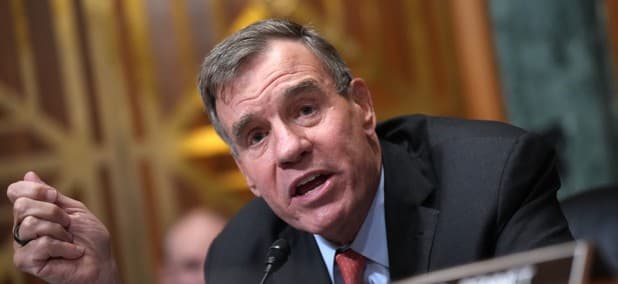
Bill to nullify Trump’s union executive orders introduced by 48 senators
<![CDATA[ A bipartisan group of 48 senators introduced legislation Wednesday that would nullify President Trump’s executive orders aimed at stripping two-thirds of the federal workforce of their collective bargaining rights and restore union contracts that agencies began cancelling last month. Last March, Trump signed an executive order citing a seldom-used provision of the 1978 Civil Service Reform Act to ban unions at most federal agencies, under the auspices of national security. And last month, Trump signed a second edict adding a half dozen more agencies to the March order’s provisions. The edicts are already the subject of several court battles over their legality, though federal appellate courts thus far have allowed the administration to push forward with implementation. The Protect America’s Workforce Act, which has the support of all 47 Democrats as well as Sen. Lisa Murkowski, R-Alaska, would declare the two executive orders null and void, as well as restore all collective bargaining agreements between federal agencies and their unions that were in place on March 26, before the first edict was signed. In a statement Wednesday, Sen. Mark Warner, D-Va., the bill’s lead Senate sponsor, described the two executive orders as “union busting” measures that are part of a larger project of tearing down the nonpartisan civil service. “From the gutting of essential government agencies to the politicization of nonpartisan government jobs, there’s never been a tougher time to be a federal worker,” he said. “As the Trump administration continues to terrorize the federal workforce, I’m proud to introduce legislation to safeguard the longstanding protections that federal employees need right now.” “Every day our patriotic, merit-based civil servants provide essential services to the American public—and their collective bargaining rights are critical to protecting them from unfair labor practices as they carry out that important work,” said Sen. Chris Van Hollen, D-Md. “Trump wants to strip them of these rights so he can continue to gut the federal workforce and easily replace them with political cronies who will do his bidding without regard for the law. This bipartisan bill will stop this lawless union-busting power grab—and protect the integrity of our federal workforce and the services they provide.” The bill’s introduction comes just a week after the House passed its draft of the 2025 National Defense Authorization Act with a provision that would restore the union rights of the Defense Department’s civilian workforce intact, and newly installed Rep. James Walkinshaw, D-Va., became the 216th lawmaker to support a discharge petition that is now two signatures away from forcing a floor vote on the House’s version of the bill to undo the executive orders altogether. Unions lauded the measure’s introduction in the Senate Wednesday, eager to capitalize on the recent legislative momentum. “President Trump’s March executive order stripping most of the federal workforce of collective bargaining rights represents the single most aggressive action taken by the federal government against organized labor in U.S. history, dwarfing any previous action against public or private sector working Americans,” said Everett Kelley, national president of the American Federation of Government Employees. “AFGE members are grateful to Sen. Warner for introducing the Protect America’s Workforce Act and standing up for the nonpartisan civil service, the women and men who serve in it, and the critical role that collective bargaining has played for decades in fostering a safe, productive and collaborative workplace that serves the American people.” “IFPTE was founded in 1918 by federal workers at the Norfolk Naval Shipyard, and other Navy shipyards joined together, just as our nation entered World War I,” said International Federation of Professional and Technical Engineers National President Matt Biggs. “At agencies that support military readiness, advance scientific breakthroughs and space exploration, protect communities and commerce from environmental hazards, our federal sector local unions have a long and proud history of making sure federal employees and the federal agencies can succeed and serve the American public. We know full well that the Trump administration’s executive orders to deny over 1 million federal workers their bargaining rights on a bogus national security rationale make this the most anti-labor, anti-worker administration in United States history.” ]]>

RFK pressured CDC to dismiss career scientists until they backed his views, ousted director says
<![CDATA[ A slashing of staff and silencing of career scientists is undermining public health and putting Americans at risk, former leaders of the Centers for Disease Control and Prevention told Congress on Wednesday. Throughout the Senate hearing, the former head of CDC and its chief medical officer derided Health and Human Service Department Secretary Robert Kennedy for compromising scientific integrity and injecting political goals into scientific work. Susan Monarez, the President Trump appointed and Senate confirmed former CDC director, reiterated to the Senate Health, Education, Labor and Pensions Committee that Kennedy fired her over two major disagreements: Monarez refused to pre-accept forthcoming decisions from the agency’s vaccine advisory panel, as well as to fire career employees without cause. Kennedy met with Monarez and made those demands on Aug. 25, shortly before she was fired just 29 days after her confirmation, the former director said. She told senators the secretary’s requests were “inconsistent with my oath of office and the ethics required of a public official.” Monarez emphasized she was open to signing off on changes to the vaccine schedule for children, but had to first evaluate the evidence that precipitated the alterations. She added, however, she had “no basis to fire scientific experts.” Those staffers were responsible for vaccine policy, Monarez said. Kennedy previously fired all existing members of the Advisory Committee on Immunization Practices and installed his own nominees, many of whom have sparked pushback over their lack of scientific backgrounds. The secretary went on to tell Monarez she would need to continue firing career staff until officials were in place who would sign off on Kennedy’s preferred outcomes, the former director said. “I needed to fire them, promote the next group, and continue to do so until I got to an organization that was compliant with my demands,” Monarez said. Debra Houry, who served as CDC’s chief medical officer until she resigned with other top officials after Monarez’s firing, also testified at Wednesday's hearing “I resigned because CDC leaders were reduced to rubber stamps, supporting policies not based in science, and putting American lives at risk,” Houry said. “Secretary Kennedy censored CDC science, politicized its processes and stripped leaders of independence. I could not and good conscience remain under those conditions.” CDC has shed one-quarter of its staff since Trump took office, much of which was driven by mass layoffs of 2,400 employees. A fraction of those workers have since been recalled, but Houry warned the reductions are having significant impacts. “For the next type of pandemic, a novel pathogen, some of the staff cuts we have faced, we have less ready responders,” Houry said. “We have less visibility into global pathogens at this time.” Kennedy has made clear his distrust of career CDC employees, something he reiterated in his August conversation with Monarez. The secretary “emphasized that CDC employees were horrible people,” Monarez recalled. “He said that CDC employees were killing children and they don't care.” She added that on Aug. 19, she received a directive from HHS leadership that political appointees must approve of any CDC policy. Kennedy subsequently directed Monarez to no longer speak to any career employee, the former director alleged. Monarez’s allegations against Kennedy, which the secretary largely denied in a previous hearing, generated some bipartisan concern. “Turmoil at the top of the nation's top public health agency is not good for the health of the American people,” said Sen. Bill Cassidy, R-La., who chairs the HELP Committee. He added the hearing was just the first step in learning the truth of what happened. Sens. Susan Collins, R-Maine, and Lisa Murkowski, R-Alaska, both said they were distressed by HHS’ political leadership sidelining career staff. Monarez agreed, saying it “really concerns” her due the highly technical nature of the decisions being made. “If you don't have the commensurate skill sets or the ability to ask the right questions, and you're willing to sign off on decisions that are not made with the best available data and evidence,” Monarez said. “It does put at risk our children. It puts at risk others who need these vaccines, and it takes us into a very dangerous place in public health.” Sen. Bernie Sanders, I-Vt., said Monarez was fired for standing up to Kennedy’s “dangerous agenda.” “She took the radical position that she wanted to examine the scientific facts before drawing conclusions,” Sanders said. “I would hope that that is the very least we could expect from any public health official in the United States.” Monarez noted she was told that not only did Kennedy tell her not to talk to career staff, but also banned her from speaking to members of Congress after she reached out to lawmakers over her concern over scientific integrity. “He was very concerned that I had spoken to members of Congress, and he told me I was never to do it again,” Monarez said. [[Related Posts]] ]]>
RFK pressured CDC to dismiss career scientists until they backed his views, ousted director says
<![CDATA[ A slashing of staff and silencing of career scientists is undermining public health and putting Americans at risk, former leaders of the Centers for Disease Control and Prevention told Congress on Wednesday. Throughout the Senate hearing, the former head of CDC and its chief medical officer derided Health and Human Service Department Secretary Robert Kennedy for compromising scientific integrity and injecting political goals into scientific work. Susan Monarez, the President Trump appointed and Senate confirmed former CDC director, reiterated to the Senate Health, Education, Labor and Pensions Committee that Kennedy fired her over two major disagreements: Monarez refused to pre-accept forthcoming decisions from the agency’s vaccine advisory panel, as well as to fire career employees without cause. Kennedy met with Monarez and made those demands on Aug. 25, shortly before she was fired just 29 days after her confirmation, the former director said. She told senators the secretary’s requests were “inconsistent with my oath of office and the ethics required of a public official.” Monarez emphasized she was open to signing off on changes to the vaccine schedule for children, but had to first evaluate the evidence that precipitated the alterations. She added, however, she had “no basis to fire scientific experts.” Those staffers were responsible for vaccine policy, Monarez said. Kennedy previously fired all existing members of the Advisory Committee on Immunization Practices and installed his own nominees, many of whom have sparked pushback over their lack of scientific backgrounds. The secretary went on to tell Monarez she would need to continue firing career staff until officials were in place who would sign off on Kennedy’s preferred outcomes, the former director said. “I needed to fire them, promote the next group, and continue to do so until I got to an organization that was compliant with my demands,” Monarez said. Debra Houry, who served as CDC’s chief medical officer until she resigned with other top officials after Monarez’s firing, also testified at Wednesday's hearing “I resigned because CDC leaders were reduced to rubber stamps, supporting policies not based in science, and putting American lives at risk,” Houry said. “Secretary Kennedy censored CDC science, politicized its processes and stripped leaders of independence. I could not and good conscience remain under those conditions.” CDC has shed one-quarter of its staff since Trump took office, much of which was driven by mass layoffs of 2,400 employees. A fraction of those workers have since been recalled, but Houry warned the reductions are having significant impacts. “For the next type of pandemic, a novel pathogen, some of the staff cuts we have faced, we have less ready responders,” Houry said. “We have less visibility into global pathogens at this time.” Kennedy has made clear his distrust of career CDC employees, something he reiterated in his August conversation with Monarez. The secretary “emphasized that CDC employees were horrible people,” Monarez recalled. “He said that CDC employees were killing children and they don't care.” She added that on Aug. 19, she received a directive from HHS leadership that political appointees must approve of any CDC policy. Kennedy subsequently directed Monarez to no longer speak to any career employee, the former director alleged. Monarez’s allegations against Kennedy, which the secretary largely denied in a previous hearing, generated some bipartisan concern. “Turmoil at the top of the nation's top public health agency is not good for the health of the American people,” said Sen. Bill Cassidy, R-La., who chairs the HELP Committee. He added the hearing was just the first step in learning the truth of what happened. Sens. Susan Collins, R-Maine, and Lisa Murkowski, R-Alaska, both said they were distressed by HHS’ political leadership sidelining career staff. Monarez agreed, saying it “really concerns” her due the highly technical nature of the decisions being made. “If you don't have the commensurate skill sets or the ability to ask the right questions, and you're willing to sign off on decisions that are not made with the best available data and evidence,” Monarez said. “It does put at risk our children. It puts at risk others who need these vaccines, and it takes us into a very dangerous place in public health.” Sen. Bernie Sanders, I-Vt., said Monarez was fired for standing up to Kennedy’s “dangerous agenda.” “She took the radical position that she wanted to examine the scientific facts before drawing conclusions,” Sanders said. “I would hope that that is the very least we could expect from any public health official in the United States.” Monarez noted she was told that not only did Kennedy tell her not to talk to career staff, but also banned her from speaking to members of Congress after she reached out to lawmakers over her concern over scientific integrity. “He was very concerned that I had spoken to members of Congress, and he told me I was never to do it again,” Monarez said. [[Related Posts]] ]]>