3 stories credited to GearJunkie
Latest story Apr 15, 2026 · on ChamberLight since Apr 2026
A story can appear as several articles (copies of the same piece), so counts of stories and of articles differ.
Scores for GearJunkie
Scores last checked Sep 25, 2026.
Stories ChamberLight collected, by month
Stories credited to GearJunkie, by publication date. ChamberLight collects articles that mention the officials it tracks, so this shows its own coverage of this source, not how much the source publishes.
- Stories from GearJunkie
- Shaded: ChamberLight collected no stories, or almost none, from any outlet (a gap in its collection, not in the outlet’s publishing)
Show as a table
| Month | Stories | All outlets |
|---|---|---|
| March 2026 | 1 | 721 |
| April 2026 | 2 | 4,537 |
| May 2026 | 0 | none collected |
| June 2026 | 0 | none collected |
| July 2026 | 0 | none collected |
| August 2026 | 0 | 1 (collection gap) |
| September 2026 | 0 | 598 |
Top topics
Share of this source’s stories tagged with each topic. A story can carry several topics, so the shares do not add up to 100%.
- Economy3
100% of 3 stories · 24% across all outlets
- Environment/Climate3
100% of 3 stories · 4% across all outlets
- Infrastructure2
67% of 3 stories · 7% across all outlets
The thin mark on each bar is the topic’s share across all outlets.
Who they cover
Party of the officials these stories are mainly about, across all 5 officials named. A story counts once for each official it is mainly about, so the split is over 6 story–official pairs, from 3 stories.
- Republican100% · 6 pairs
Most covered
Stories mainly about each official, and their share of the source’s 3 stories.
Article tone
ChamberLight’s article analysis assigns each story a tone toward the official it covers. It describes the coverage of that official, not GearJunkie’s stance, and reader votes do not change it. 3 stories.
- Good Look
- 1 (33%)
- Mixed
- 2 (67%)
- Informational
- 0 (0%)
- Bad Look
- 0 (0%)
Challenges to these scores
No one has challenged a score on this page yet. Anyone can; editors publish every outcome here.
Articles served from gearjunkie.com
6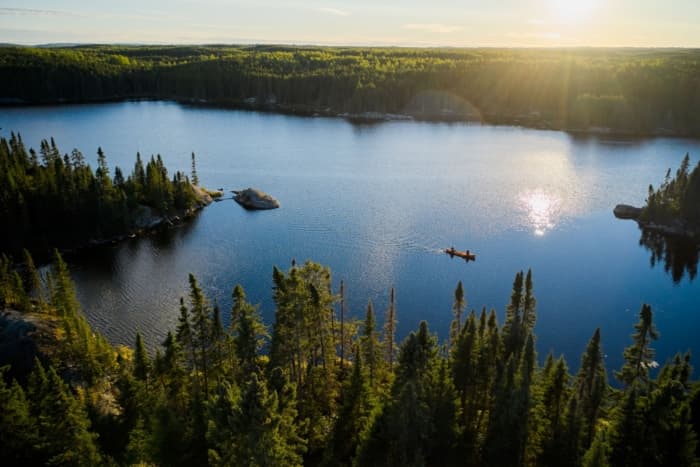
Call Your Senators Now: Boundary Waters Protections Could Hit Senate Floor Today
The fight over Boundary Waters mining protections could hit the Senate floor today. Advocates are urging people to call their senators before a possible vote on H.J. Res. 140, which would overturn the 20-year mining withdrawal protecting 225,504 acres upstream of the Boundary Waters Canoe Area Wilderness. If the resolution passes and gets signed, those protections are gone. For people trying to keep sulfide-ore copper mining out of the Boundary Waters watershed, this is the moment to speak up, not after the vote’s already happened. Senate Democrats’ floor guidance for Wednesday, April 15, said consideration of H.J. Res. 140 was possible during the day’s session. What H.J. Res. 140 Would Do H.J. Res. 140 is a Congressional Review Act resolution aimed at Public Land Order 7917. That order took effect on Jan. 31, 2023, and withdrew about 225,504 acres of Superior National Forest land from mineral and geothermal leasing for 20 years, subject to valid existing rights. The order says the withdrawal was meant to protect the Rainy River watershed, the Boundary Waters Canoe Area Wilderness, the Boundary Waters Canoe Area Wilderness Mining Protection Area, and the 1854 Ceded Territory from the effects of mineral and geothermal development. If Congress overturns that order through the Congressional Review Act, the withdrawal doesn’t just disappear now. The CRA also blocks the government from issuing a substantially similar rule later unless Congress authorizes it. That’s why opponents see this as more than a one-off vote about one project in northern Minnesota. How We Got Here Kekekabic Lake, Boundary Waters Canoe Area; (photo/Chad Fennell) This fight goes back to the proposed Twin Metals mine near the Boundary Waters. In January 2022, the Department of the Interior canceled two hardrock mineral leases tied to that project after finding they’d been improperly renewed in 2019. The DOI said the renewals had legal defects, failed to properly recognize Forest Service consent authority, and relied on inadequate environmental analysis. A year later, the Biden administration finalized the 20-year withdrawal through Public Land Order 7917. Then, on Jan. 21, 2026, the House passed H.J. Res. 140 by a 214-208 vote. That sent the measure to the Senate, where it can still move under the CRA process. Why This Vote Matters Now Advocacy groups are pushing hard because they say the window to stop the resolution is closing. Minnesota Trout Unlimited said Tuesday that the measure was expected to reach the Senate any day and told supporters to contact senators now. Save the Boundary Waters said Wednesday that the vote was likely that day and urged people to tell senators to vote no. Supporters of the resolution want the opposite outcome. Rep. Pete Stauber, who introduced H.J. Res. 140, said the measure would repeal what he calls a 20-year mining ban and allow proposed hardrock mining and helium projects to move through state and federal permitting. He has also framed the push as a jobs and domestic minerals issue. What People Can Do Before a Vote: Call If you are a proponent of Boundary Waters protection, do not wait. Time is limited, and you need to contact your senators now, while the measure is still pending. You can find your senator’s contact information on the official “Contacting U.S. Senators” page. Or you can call the Capitol switchboard number at 202-224-3121.
The 10 Public Lands Most at Risk for Mining and Drilling
On Jan 20., 2025, President Trump issued an executive order that could profoundly affect public lands. “Unleashing American Energy” mandated that the government explore energy production on federal land to achieve American energy independence. A few months later, he issued another order. “Immediate Measures to Increase American Mineral Production” directed the Department of the Interior (DOI) to prioritize energy and mineral production on federal lands. Since those orders, the federal government has sought to economically develop national monuments, wildlife refuges, and wilderness areas, sparking backlash. A recent report from The Wilderness Society (TWS), a conservation nonprofit, identified the landscapes most likely to undergo development. The commercialization of some of these areas, like Boundary Waters Canoe Area Wilderness, has become a national debate, while others, like the Ruby Mountains, have remained more local issues. As arguments over resource extraction on public lands go on, these are 10 debates to follow. Alaska: National Arctic Wildlife Refuge An oil platform service station in Cook Inlet; (photo/Shutterstock) In March 2025, the DOI announced that the entirety of this 1.56-million-acre wildlife refuge would be open to oil and gas leases. It also opened 82% of the National Petroleum Reserve’s 23 million acres to drilling. The Wilderness Society objected to these moves on several counts. “These places sustain wildlife and Indigenous cultures, and they are among the last truly wild public lands in America,” it said in its report. Important wildlife here includes polar bears, migratory birds, and large caribou herds. While proponents of drilling here see it as a necessary step toward protecting national security, opponents worry about potential environmental impacts. “Drilling in the Arctic is risky, with the potential for chronic spills of oil and other toxic substances onto the fragile tundra. Development would forever scar this unspoiled landscape, fragmenting vital habitat and harming its wildlife,” TWS said. The Arctic Defense Campaign, a group of Indigenous Alaskans, conservationists, and other residents, is pushing back against development with the Arctic Refuge Protection Act. This law would permanently protect the state’s Coastal Plain from drilling. Since being referred to the House Committee on Natural Resources in April 2025, there has been no movement on the bill. Recent news: Expanding oil leasing in Alaska so far has been a mixed bag. The Bureau of Land Management said in a press release that sales in March in the National Petroleum Reserve generated $163 million. And yet, in the same month, the BLM received zero bids for oil and gas leases in Cook Inlet. Arizona: Baaj Nwaavjo I’tah Kukveni – Ancestral Footprints of the Grand Canyon National Monument and Ironwood Forest National Monument Ironwood Forest National Monument; (photo/BLM Arizona, Kristen Duarte) Baaj Nwaavjo I’tah Kukveni, a 917,000-acre area near the Grand Canyon, became a National Monument in 2023. It is an important site to 13 different Native American Tribes, and is home to over 2,000 cultural resources, including petroglyphs and pictographs. The land is also a major potential source for uranium, a rare and valuable commodity. When President Biden designated the land a national monument, he made the existing 20-year ban on uranium mining, instituted in 2012, permanent. In September 2025, Congressman Paul Gosar (R-Ariz.) introduced the Northern Arizona Protection Act, which would nullify the land’s national monument status and thus allow mining. Gosar saw Biden’s declaration as a radical land grab. “Federal lands belong to the American people, not unelected bureaucrats or woke presidents who abuse executive authority to shut them off from productive use,” Gosar said in a press release. Since its introduction, the bill has remained with the House Committee on Natural Resources. Groups like the National Parks Conservation Association slammed the bill, criticizing the disregard for Indigenous communities. There’s also concern over how uranium mining would affect the region’s water sources. “Protecting the areas around the Grand Canyon from uranium mining and other mineral extraction is protecting Arizona’s ground water and the Colorado River against irreversible contamination, protections long-fought for by our Tribes,” Dana Orozco, federal organizer for Chispa Arizona, said in a press release. Many of the same issues and people from Baaj Nwaavjo I’tah Kukveni also appear in the debate over Ironwood Forest National Monument. Since President Clinton designated this 129,000-acre parcel of the Sonoran Desert as a monument in 1990, there have been questions about its economic future, with some seeking to mine for gold and copper here. Gosar also introduced another bill, the Southern Arizona Protection Act, to nullify the land’s protected status and allow mining. Recent news: Republicans in the Arizona House of Representatives recently introduced a bill that would require new national monuments in the state to get approval from Congress and the state legislature. The bill would have no legislative power, but rather serves as a rebuke of the current designation process. Utah: Grand Staircase–Escalante National Monument (Photo/BLM, James and Jenny Tarpley) When it comes to national monuments in 2026 to keep an eye on, this one might be at the top of the list. It’s been controversial ever since President Clinton created it in 1996. In 2017, President Trump sparked major debate when he shrank Grand Staircase by nearly 50%, reducing its size to just 1 million acres. Then in 2021, Biden restored Grand Staircase to its former size, a decision that courts upheld in a 2023 ruling. In 2025, the BLM adopted a resource management plan (RMP) for Grand Staircase. An RMP is an expansive document that guides the use, zoning, and permitting of an area. On Jan. 15, 2026, the Government Accountability Office (GAO) judged that the RMP counts as a rule under the Congressional Review Act (CRA). Putting something under the CRA means that Congress can endorse or reject a federal agency’s actions. Then, Sen. Mike Lee and Rep. Celeste Maloy, both Republicans from Utah, introduced a joint resolution of disapproval. If it passes, it would nullify the 2025 RMP, making it so that “no substantially similar plan can” be adopted, and instead restore the 2020 RMP, in turn allowing for more development. Colorado: Western Colorado Canyons and Mesas Part of the land under Colorado BLM management; (photo/Bob Wick, BLM Colorado) 2025’s One Big Beautiful Bill mandated that quarterly land lease auctions be held in several states, including on 72,000 acres in Colorado. The law also reduced the federal royalty rate on leases, making investment cheaper for companies. These parts of Colorado have potential for oil and natural gas, but they’re also home to one of the most important water sources in the West: the Colorado River. The BLM’s 2024 Resource Management Plan (RMP) limited leasing in low- or medium-production areas, but pro-development representatives in Congress could use the same strategy here as they are with Grand Staircase–Escalante to toss the plan out. The TWS says that these efforts would undo years of effort and engagement with local stakeholders. “Recent use of the Congressional Review Act to overturn land‑use plans that were adopted with extensive public input has created a precedent that undermines communities’ ability to shape how their public lands are managed. It also threatens future conservation and introduces legal uncertainty across millions of acres in Western Colorado and across the West,” it said. Recent news: From March 13 to April 13, the BLM is accepting public comment on the potential leasing of 17,250 acres in Colorado in September. A parcel of 160,000 acres is scheduled for a leasing sale in June. Minnesota: Boundary Waters Canoe Area Wilderness (BWCAW) (Photo/Sean McCoy) Of all of the areas on this list, the Boundary Waters has gotten the most public attention. The BWCAW is a 1.1-million-acre area of land in northern Minnesota, close to Voyageurs National Park. It is located within the larger 3-million-acre Superior National Forest. Twin Metals, owned by a Chilean mining company, had been pushing to open a copper mine in the Superior National Forest on the fringe of the BWCAW. In January, the House of Representatives passed a bill to reverse a 20-year ban on mining in the area, instituted under the Biden administration. If passed, the bill would open about one-quarter of the Boundary Waters to mining. Supporters, including Rep. Pete Stauber (R-Minn.), saw the mining ban as a lost economic opportunity. “The Biden Administration’s decision to enact its illegal mining ban in Northern Minnesota was not only an attack on our way of life and cost countless good-paying, union jobs, but it also put our nation’s mineral security at risk,” he said in a press release Friends of the Boundary Waters Wilderness, a local nonprofit, strongly condemned the action on Facebook. “They voted to put the most polluting industry in America at the edge of our cleanest water. They voted to disregard protections for a national treasure.” Recent news: Since the bill was received in the Senate in January, there has been no movement. With other pressing issues, including the current partial government shutdown, it appears unlikely to receive a vote in the immediate future. Nevada: Ruby Mountains Ruby Mountains in Nevada; (photo/USFS) The Ruby Mountains, a series of peaks reaching up to 11,000 feet, are a major hub of outdoor recreation in Nevada. Most of the range falls within the Humboldt–Toiyabe National Forest, and, under the Biden administration, the U.S. Forest Service (USFS) took steps to protect this area. In December 2024, it proposed a 20-year ban on oil, gas, and geothermal development on 264,000 acres. Then, in April 2025, the USFS canceled the proposal, reopening the land for possible resource extraction. In response, Senator Catherine Cortez Masto (D-Nev.) introduced the Ruby Mountains Protection Act, which would make this potential ban law. “The natural beauty of the Ruby Mountains, Nevada’s Swiss Alps, is beloved by locals and draws tourists from across the country,” Senator Cortez Masto said in a press release. “Unproductive oil and gas drilling would only harm Northern Nevada’s tourism economy and keep this natural treasure from generations of future Nevadans.” Recent news: The Senate Subcommittee on Public Lands, Forests, and Mining held hearings on the Bill in February 2026. Utah: Bears Ears National Monument (Photo/Patagonia) In a major example of just how mutable public lands policy can be, Bears Ears National Monument has experienced several pendulum swings in the last decade. President Obama declared it a national monument in December 2016. Less than a year later, President Trump slashed the size by 85%, reducing it from 1.35 million acres to just over 201,000, opening up the land to uranium mining and oil and gas projects. In 2021, President Biden restored the area to its former size. Then in 2025, DOI Secretary Doug Burgum issued Secretarial Order 3418, entitled “Unleashing American Energy.” It directed the agency to review all withdrawn federal land and critical habitat designations, and canceled leases with the stated goal of increasing energy supply. The order “directs the removal of impediments imposed on the development and use of our Nation’s abundant energy and natural resources by the Biden administration’s burdensome regulations.” The area is important to several Native American tribes, who worked with the BLM to create a cooperative management plan that was approved in 2025. “Rollbacks of protections for Bears Ears would undermine Tribal Nation priorities and interests, jeopardize irreplaceable cultural and ecological resources and strip communities of their freedom to shape the future of their homelands,” the NWS said. Recent news: Reporting from Aspen Public Radio indicates that Utah lawmakers are considering using the same Congressional Review Act tactic here that they are with Grand Staircase, should it prove successful. New Mexico: Chaco Culture National Historical Park Fajada Butte and Chaco wash in Chaco Culture National Historic Park; (photo/NPS) Located in Northwest New Mexico, Chaco Canyon is sacred to many Native American peoples, including the Hopi and Pueblo. It contains thousands of archaeological and historic sites. In 2023, the DOI removed 336,000 acres in this area from mineral leasing laws and banned new oil and gas leasing within a 10-mile radius of the park. The current DOI has not reversed this policy yet, but as with Bears Ears, all of these withdrawals are under review by the Secretary. Burgum. There is a long history of mining here, with over 37,000 drilled wells. In 2025, the DOI sent a letter to several Pueblo Nations inviting them to participate in a 14-day comment period about possibly reversing the 2023 order. “The Secretary of the Interior is proposing to revoke PLO No. 7923 and reopen the subject lands to location and entry under the U.S. mining laws and to mineral leasing,” the letter read. Wyoming: Northern Red Desert and Big Sandy Foothills A male greater sage grouse; (photo/NPS) This 3.6-million-acre parcel in Wyoming is a major habitat for rare species like the burrowing owl and sage grouse. If you’re a backpacker with big thru-hiking goals, you might have heard of or hiked through this land. Sections of the Continental Divide Trail and Oregon, California, and Mormon Pioneer trails pass through here. As with several other areas on the list, the debate centers on the resource management plan. In 2024, after a great deal of public engagement, the BLM approved an RMP. Then, in October 2025, the BLM announced its intent to revise the plan. The announcement specifically mentioned changing attitudes toward resource extraction. “Potential for fluid mineral development was previously determined to be low for much of the special management-designated areas; however, new technologies and industry interest have changed over recent years, and the reasonably foreseeable development needs to be reevaluated. Additionally, locatable, coal, solid leasables, and saleable mineral availability needs to be reviewed in consideration of recent Executive Orders,” it said. RMPs take years to devise, and the TWS criticized the agency’s attempt to modify it. “The BLM reopened the widely celebrated resource management plan for the region, raising concerns that the agency’s new leadership will scrap years’ worth of careful planning and public input to produce a new plan that offers far fewer protections for important wildlife habitat and recreation areas,” it said. GearJunkie reached out to the BLM for comment on the report from The Wilderness Society, but did not hear back by the time of publication.
The 10 Public Lands Most at Risk for Mining and Drilling
On Jan 20., 2025, President Trump issued an executive order that could profoundly affect public lands. “Unleashing American Energy” mandated that the government explore energy production on federal land to achieve American energy independence. A few months later, he issued another order. “Immediate Measures to Increase American Mineral Production” directed the Department of the Interior (DOI) to prioritize energy and mineral production on federal lands. Since those orders, the federal government has sought to economically develop national monuments, wildlife refuges, and wilderness areas, sparking backlash. A recent report from The Wilderness Society (TWS), a conservation nonprofit, identified the landscapes most likely to undergo development. The commercialization of some of these areas, like Boundary Waters Canoe Area Wilderness, has become a national debate, while others, like the Ruby Mountains, have remained more local issues. As arguments over resource extraction on public lands go on, these are 10 debates to follow. Alaska: National Arctic Wildlife Refuge An oil platform service station in Cook Inlet; (photo/Shutterstock) In March 2025, the DOI announced that the entirety of this 1.56-million-acre wildlife refuge would be open to oil and gas leases. It also opened 82% of the National Petroleum Reserve’s 23 million acres to drilling. The Wilderness Society objected to these moves on several counts. “These places sustain wildlife and Indigenous cultures, and they are among the last truly wild public lands in America,” it said in its report. Important wildlife here includes polar bears, migratory birds, and large caribou herds. While proponents of drilling here see it as a necessary step toward protecting national security, opponents worry about potential environmental impacts. “Drilling in the Arctic is risky, with the potential for chronic spills of oil and other toxic substances onto the fragile tundra. Development would forever scar this unspoiled landscape, fragmenting vital habitat and harming its wildlife,” TWS said. The Arctic Defense Campaign, a group of Indigenous Alaskans, conservationists, and other residents, is pushing back against development with the Arctic Refuge Protection Act. This law would permanently protect the state’s Coastal Plain from drilling. Since being referred to the House Committee on Natural Resources in April 2025, there has been no movement on the bill. Recent news: Expanding oil leasing in Alaska so far has been a mixed bag. The Bureau of Land Management said in a press release that sales in March in the National Petroleum Reserve generated $163 million. And yet, in the same month, the BLM received zero bids for oil and gas leases in Cook Inlet. Arizona: Baaj Nwaavjo I’tah Kukveni – Ancestral Footprints of the Grand Canyon National Monument and Ironwood Forest National Monument Ironwood Forest National Monument; (photo/BLM Arizona, Kristen Duarte) Baaj Nwaavjo I’tah Kukveni, a 917,000-acre area near the Grand Canyon, became a National Monument in 2023. It is an important site to 13 different Native American Tribes, and is home to over 2,000 cultural resources, including petroglyphs and pictographs. The land is also a major potential source for uranium, a rare and valuable commodity. When President Biden designated the land a national monument, he made the existing 20-year ban on uranium mining, instituted in 2012, permanent. In September 2025, Congressman Paul Gosar (R-Ariz.) introduced the Northern Arizona Protection Act, which would nullify the land’s national monument status and thus allow mining. Gosar saw Biden’s declaration as a radical land grab. “Federal lands belong to the American people, not unelected bureaucrats or woke presidents who abuse executive authority to shut them off from productive use,” Gosar said in a press release. Since its introduction, the bill has remained with the House Committee on Natural Resources. Groups like the National Parks Conservation Association slammed the bill, criticizing the disregard for Indigenous communities. There’s also concern over how uranium mining would affect the region’s water sources. “Protecting the areas around the Grand Canyon from uranium mining and other mineral extraction is protecting Arizona’s ground water and the Colorado River against irreversible contamination, protections long-fought for by our Tribes,” Dana Orozco, federal organizer for Chispa Arizona, said in a press release. Many of the same issues and people from Baaj Nwaavjo I’tah Kukveni also appear in the debate over Ironwood Forest National Monument. Since President Clinton designated this 129,000-acre parcel of the Sonoran Desert as a monument in 1990, there have been questions about its economic future, with some seeking to mine for gold and copper here. Gosar also introduced another bill, the Southern Arizona Protection Act, to nullify the land’s protected status and allow mining. Recent news: Republicans in the Arizona House of Representatives recently introduced a bill that would require new national monuments in the state to get approval from Congress and the state legislature. The bill would have no legislative power, but rather serves as a rebuke of the current designation process. Utah: Grand Staircase–Escalante National Monument (Photo/BLM, James and Jenny Tarpley) When it comes to national monuments in 2026 to keep an eye on, this one might be at the top of the list. It’s been controversial ever since President Clinton created it in 1996. In 2017, President Trump sparked major debate when he shrank Grand Staircase by nearly 50%, reducing its size to just 1 million acres. Then in 2021, Biden restored Grand Staircase to its former size, a decision that courts upheld in a 2023 ruling. In 2025, the BLM adopted a resource management plan (RMP) for Grand Staircase. An RMP is an expansive document that guides the use, zoning, and permitting of an area. On Jan. 15, 2026, the Government Accountability Office (GAO) judged that the RMP counts as a rule under the Congressional Review Act (CRA). Putting something under the CRA means that Congress can endorse or reject a federal agency’s actions. Then, Sen. Mike Lee and Rep. Celeste Maloy, both Republicans from Utah, introduced a joint resolution of disapproval. If it passes, it would nullify the 2025 RMP, making it so that “no substantially similar plan can” be adopted, and instead restore the 2020 RMP, in turn allowing for more development. Colorado: Western Colorado Canyons and Mesas Part of the land under Colorado BLM management; (photo/Bob Wick, BLM Colorado) 2025’s One Big Beautiful Bill mandated that quarterly land lease auctions be held in several states, including on 72,000 acres in Colorado. The law also reduced the federal royalty rate on leases, making investment cheaper for companies. These parts of Colorado have potential for oil and natural gas, but they’re also home to one of the most important water sources in the West: the Colorado River. The BLM’s 2024 Resource Management Plan (RMP) limited leasing in low- or medium-production areas, but pro-development representatives in Congress could use the same strategy here as they are with Grand Staircase–Escalante to toss the plan out. The TWS says that these efforts would undo years of effort and engagement with local stakeholders. “Recent use of the Congressional Review Act to overturn land‑use plans that were adopted with extensive public input has created a precedent that undermines communities’ ability to shape how their public lands are managed. It also threatens future conservation and introduces legal uncertainty across millions of acres in Western Colorado and across the West,” it said. Recent news: From March 13 to April 13, the BLM is accepting public comment on the potential leasing of 17,250 acres in Colorado in September. A parcel of 160,000 acres is scheduled for a leasing sale in June. Minnesota: Boundary Waters Canoe Area Wilderness (BWCAW) (Photo/Sean McCoy) Of all of the areas on this list, the Boundary Waters has gotten the most public attention. The BWCAW is a 1.1-million-acre area of land in northern Minnesota, close to Voyageurs National Park. It is located within the larger 3-million-acre Superior National Forest. Twin Metals, owned by a Chilean mining company, had been pushing to open a copper mine in the Superior National Forest on the fringe of the BWCAW. In January, the House of Representatives passed a bill to reverse a 20-year ban on mining in the area, instituted under the Biden administration. If passed, the bill would open about one-quarter of the Boundary Waters to mining. Supporters, including Rep. Pete Stauber (R-Minn.), saw the mining ban as a lost economic opportunity. “The Biden Administration’s decision to enact its illegal mining ban in Northern Minnesota was not only an attack on our way of life and cost countless good-paying, union jobs, but it also put our nation’s mineral security at risk,” he said in a press release Friends of the Boundary Waters Wilderness, a local nonprofit, strongly condemned the action on Facebook. “They voted to put the most polluting industry in America at the edge of our cleanest water. They voted to disregard protections for a national treasure.” Recent news: Since the bill was received in the Senate in January, there has been no movement. With other pressing issues, including the current partial government shutdown, it appears unlikely to receive a vote in the immediate future. Nevada: Ruby Mountains Ruby Mountains in Nevada; (photo/USFS) The Ruby Mountains, a series of peaks reaching up to 11,000 feet, are a major hub of outdoor recreation in Nevada. Most of the range falls within the Humboldt–Toiyabe National Forest, and, under the Biden administration, the U.S. Forest Service (USFS) took steps to protect this area. In December 2024, it proposed a 20-year ban on oil, gas, and geothermal development on 264,000 acres. Then, in April 2025, the USFS canceled the proposal, reopening the land for possible resource extraction. In response, Senator Catherine Cortez Masto (D-Nev.) introduced the Ruby Mountains Protection Act, which would make this potential ban law. “The natural beauty of the Ruby Mountains, Nevada’s Swiss Alps, is beloved by locals and draws tourists from across the country,” Senator Cortez Masto said in a press release. “Unproductive oil and gas drilling would only harm Northern Nevada’s tourism economy and keep this natural treasure from generations of future Nevadans.” Recent news: The Senate Subcommittee on Public Lands, Forests, and Mining held hearings on the Bill in February 2026. Utah: Bears Ears National Monument (Photo/Patagonia) In a major example of just how mutable public lands policy can be, Bears Ears National Monument has experienced several pendulum swings in the last decade. President Obama declared it a national monument in December 2016. Less than a year later, President Trump slashed the size by 85%, reducing it from 1.35 million acres to just over 201,000, opening up the land to uranium mining and oil and gas projects. In 2021, President Biden restored the area to its former size. Then in 2025, DOI Secretary Doug Burgum issued Secretarial Order 3418, entitled “Unleashing American Energy.” It directed the agency to review all withdrawn federal land and critical habitat designations, and canceled leases with the stated goal of increasing energy supply. The order “directs the removal of impediments imposed on the development and use of our Nation’s abundant energy and natural resources by the Biden administration’s burdensome regulations.” The area is important to several Native American tribes, who worked with the BLM to create a cooperative management plan that was approved in 2025. “Rollbacks of protections for Bears Ears would undermine Tribal Nation priorities and interests, jeopardize irreplaceable cultural and ecological resources and strip communities of their freedom to shape the future of their homelands,” the NWS said. Recent news: Reporting from Aspen Public Radio indicates that Utah lawmakers are considering using the same Congressional Review Act tactic here that they are with Grand Staircase, should it prove successful. New Mexico: Chaco Culture National Historical Park Fajada Butte and Chaco wash in Chaco Culture National Historic Park; (photo/NPS) Located in Northwest New Mexico, Chaco Canyon is sacred to many Native American peoples, including the Hopi and Pueblo. It contains thousands of archaeological and historic sites. In 2023, the DOI removed 336,000 acres in this area from mineral leasing laws and banned new oil and gas leasing within a 10-mile radius of the park. The current DOI has not reversed this policy yet, but as with Bears Ears, all of these withdrawals are under review by the Secretary. Burgum. There is a long history of mining here, with over 37,000 drilled wells. In 2025, the DOI sent a letter to several Pueblo Nations inviting them to participate in a 14-day comment period about possibly reversing the 2023 order. “The Secretary of the Interior is proposing to revoke PLO No. 7923 and reopen the subject lands to location and entry under the U.S. mining laws and to mineral leasing,” the letter read. Wyoming: Northern Red Desert and Big Sandy Foothills A male greater sage grouse; (photo/NPS) This 3.6-million-acre parcel in Wyoming is a major habitat for rare species like the burrowing owl and sage grouse. If you’re a backpacker with big thru-hiking goals, you might have heard of or hiked through this land. Sections of the Continental Divide Trail and Oregon, California, and Mormon Pioneer trails pass through here. As with several other areas on the list, the debate centers on the resource management plan. In 2024, after a great deal of public engagement, the BLM approved an RMP. Then, in October 2025, the BLM announced its intent to revise the plan. The announcement specifically mentioned changing attitudes toward resource extraction. “Potential for fluid mineral development was previously determined to be low for much of the special management-designated areas; however, new technologies and industry interest have changed over recent years, and the reasonably foreseeable development needs to be reevaluated. Additionally, locatable, coal, solid leasables, and saleable mineral availability needs to be reviewed in consideration of recent Executive Orders,” it said. RMPs take years to devise, and the TWS criticized the agency’s attempt to modify it. “The BLM reopened the widely celebrated resource management plan for the region, raising concerns that the agency’s new leadership will scrap years’ worth of careful planning and public input to produce a new plan that offers far fewer protections for important wildlife habitat and recreation areas,” it said. GearJunkie reached out to the BLM for comment on the report from The Wilderness Society, but did not hear back by the time of publication.
The 10 Public Lands Most at Risk for Mining and Drilling
On Jan 20., 2025, President Trump issued an executive order that could profoundly affect public lands. “Unleashing American Energy” mandated that the government explore energy production on federal land to achieve American energy independence. A few months later, he issued another order. “Immediate Measures to Increase American Mineral Production” directed the Department of the Interior (DOI) to prioritize energy and mineral production on federal lands. Since those orders, the federal government has sought to economically develop national monuments, wildlife refuges, and wilderness areas, sparking backlash. A recent report from The Wilderness Society (TWS), a conservation nonprofit, identified the landscapes most likely to undergo development. The commercialization of some of these areas, like Boundary Waters Canoe Area Wilderness, has become a national debate, while others, like the Ruby Mountains, have remained more local issues. As arguments over resource extraction on public lands go on, these are 10 debates to follow. Alaska: National Arctic Wildlife Refuge An oil platform service station in Cook Inlet; (photo/Shutterstock) In March 2025, the DOI announced that the entirety of this 1.56-million-acre wildlife refuge would be open to oil and gas leases. It also opened 82% of the National Petroleum Reserve’s 23 million acres to drilling. The Wilderness Society objected to these moves on several counts. “These places sustain wildlife and Indigenous cultures, and they are among the last truly wild public lands in America,” it said in its report. Important wildlife here includes polar bears, migratory birds, and large caribou herds. While proponents of drilling here see it as a necessary step toward protecting national security, opponents worry about potential environmental impacts. “Drilling in the Arctic is risky, with the potential for chronic spills of oil and other toxic substances onto the fragile tundra. Development would forever scar this unspoiled landscape, fragmenting vital habitat and harming its wildlife,” TWS said. The Arctic Defense Campaign, a group of Indigenous Alaskans, conservationists, and other residents, is pushing back against development with the Arctic Refuge Protection Act. This law would permanently protect the state’s Coastal Plain from drilling. Since being referred to the House Committee on Natural Resources in April 2025, there has been no movement on the bill. Recent news: Expanding oil leasing in Alaska so far has been a mixed bag. The Bureau of Land Management said in a press release that sales in March in the National Petroleum Reserve generated $163 million. And yet, in the same month, the BLM received zero bids for oil and gas leases in Cook Inlet. Arizona: Baaj Nwaavjo I’tah Kukveni – Ancestral Footprints of the Grand Canyon National Monument and Ironwood Forest National Monument Ironwood Forest National Monument; (photo/BLM Arizona, Kristen Duarte) Baaj Nwaavjo I’tah Kukveni, a 917,000-acre area near the Grand Canyon, became a National Monument in 2023. It is an important site to 13 different Native American Tribes, and is home to over 2,000 cultural resources, including petroglyphs and pictographs. The land is also a major potential source for uranium, a rare and valuable commodity. When President Biden designated the land a national monument, he made the existing 20-year ban on uranium mining, instituted in 2012, permanent. In September 2025, Congressman Paul Gosar (R-Ariz.) introduced the Northern Arizona Protection Act, which would nullify the land’s national monument status and thus allow mining. Gosar saw Biden’s declaration as a radical land grab. “Federal lands belong to the American people, not unelected bureaucrats or woke presidents who abuse executive authority to shut them off from productive use,” Gosar said in a press release. Since its introduction, the bill has remained with the House Committee on Natural Resources. Groups like the National Parks Conservation Association slammed the bill, criticizing the disregard for Indigenous communities. There’s also concern over how uranium mining would affect the region’s water sources. “Protecting the areas around the Grand Canyon from uranium mining and other mineral extraction is protecting Arizona’s ground water and the Colorado River against irreversible contamination, protections long-fought for by our Tribes,” Dana Orozco, federal organizer for Chispa Arizona, said in a press release. Many of the same issues and people from Baaj Nwaavjo I’tah Kukveni also appear in the debate over Ironwood Forest National Monument. Since President Clinton designated this 129,000-acre parcel of the Sonoran Desert as a monument in 1990, there have been questions about its economic future, with some seeking to mine for gold and copper here. Gosar also introduced another bill, the Southern Arizona Protection Act, to nullify the land’s protected status and allow mining. Recent news: Republicans in the Arizona House of Representatives recently introduced a bill that would require new national monuments in the state to get approval from Congress and the state legislature. The bill would have no legislative power, but rather serves as a rebuke of the current designation process. Utah: Grand Staircase–Escalante National Monument (Photo/BLM, James and Jenny Tarpley) When it comes to national monuments in 2026 to keep an eye on, this one might be at the top of the list. It’s been controversial ever since President Clinton created it in 1996. In 2017, President Trump sparked major debate when he shrank Grand Staircase by nearly 50%, reducing its size to just 1 million acres. Then in 2021, Biden restored Grand Staircase to its former size, a decision that courts upheld in a 2023 ruling. In 2025, the BLM adopted a resource management plan (RMP) for Grand Staircase. An RMP is an expansive document that guides the use, zoning, and permitting of an area. On Jan. 15, 2026, the Government Accountability Office (GAO) judged that the RMP counts as a rule under the Congressional Review Act (CRA). Putting something under the CRA means that Congress can endorse or reject a federal agency’s actions. Then, Sen. Mike Lee and Rep. Celeste Maloy, both Republicans from Utah, introduced a joint resolution of disapproval. If it passes, it would nullify the 2025 RMP, making it so that “no substantially similar plan can” be adopted, and instead restore the 2020 RMP, in turn allowing for more development. Colorado: Western Colorado Canyons and Mesas Part of the land under Colorado BLM management; (photo/Bob Wick, BLM Colorado) 2025’s One Big Beautiful Bill mandated that quarterly land lease auctions be held in several states, including on 72,000 acres in Colorado. The law also reduced the federal royalty rate on leases, making investment cheaper for companies. These parts of Colorado have potential for oil and natural gas, but they’re also home to one of the most important water sources in the West: the Colorado River. The BLM’s 2024 Resource Management Plan (RMP) limited leasing in low- or medium-production areas, but pro-development representatives in Congress could use the same strategy here as they are with Grand Staircase–Escalante to toss the plan out. The TWS says that these efforts would undo years of effort and engagement with local stakeholders. “Recent use of the Congressional Review Act to overturn land‑use plans that were adopted with extensive public input has created a precedent that undermines communities’ ability to shape how their public lands are managed. It also threatens future conservation and introduces legal uncertainty across millions of acres in Western Colorado and across the West,” it said. Recent news: From March 13 to April 13, the BLM is accepting public comment on the potential leasing of 17,250 acres in Colorado in September. A parcel of 160,000 acres is scheduled for a leasing sale in June. Minnesota: Boundary Waters Canoe Area Wilderness (BWCAW) (Photo/Sean McCoy) Of all of the areas on this list, the Boundary Waters has gotten the most public attention. The BWCAW is a 1.1-million-acre area of land in northern Minnesota, close to Voyageurs National Park. It is located within the larger 3-million-acre Superior National Forest. Twin Metals, owned by a Chilean mining company, had been pushing to open a copper mine in the Superior National Forest on the fringe of the BWCAW. In January, the House of Representatives passed a bill to reverse a 20-year ban on mining in the area, instituted under the Biden administration. If passed, the bill would open about one-quarter of the Boundary Waters to mining. Supporters, including Rep. Pete Stauber (R-Minn.), saw the mining ban as a lost economic opportunity. “The Biden Administration’s decision to enact its illegal mining ban in Northern Minnesota was not only an attack on our way of life and cost countless good-paying, union jobs, but it also put our nation’s mineral security at risk,” he said in a press release Friends of the Boundary Waters Wilderness, a local nonprofit, strongly condemned the action on Facebook. “They voted to put the most polluting industry in America at the edge of our cleanest water. They voted to disregard protections for a national treasure.” Recent news: Since the bill was received in the Senate in January, there has been no movement. With other pressing issues, including the current partial government shutdown, it appears unlikely to receive a vote in the immediate future. Nevada: Ruby Mountains Ruby Mountains in Nevada; (photo/USFS) The Ruby Mountains, a series of peaks reaching up to 11,000 feet, are a major hub of outdoor recreation in Nevada. Most of the range falls within the Humboldt–Toiyabe National Forest, and, under the Biden administration, the U.S. Forest Service (USFS) took steps to protect this area. In December 2024, it proposed a 20-year ban on oil, gas, and geothermal development on 264,000 acres. Then, in April 2025, the USFS canceled the proposal, reopening the land for possible resource extraction. In response, Senator Catherine Cortez Masto (D-Nev.) introduced the Ruby Mountains Protection Act, which would make this potential ban law. “The natural beauty of the Ruby Mountains, Nevada’s Swiss Alps, is beloved by locals and draws tourists from across the country,” Senator Cortez Masto said in a press release. “Unproductive oil and gas drilling would only harm Northern Nevada’s tourism economy and keep this natural treasure from generations of future Nevadans.” Recent news: The Senate Subcommittee on Public Lands, Forests, and Mining held hearings on the Bill in February 2026. Utah: Bears Ears National Monument (Photo/Patagonia) In a major example of just how mutable public lands policy can be, Bears Ears National Monument has experienced several pendulum swings in the last decade. President Obama declared it a national monument in December 2016. Less than a year later, President Trump slashed the size by 85%, reducing it from 1.35 million acres to just over 201,000, opening up the land to uranium mining and oil and gas projects. In 2021, President Biden restored the area to its former size. Then in 2025, DOI Secretary Doug Burgum issued Secretarial Order 3418, entitled “Unleashing American Energy.” It directed the agency to review all withdrawn federal land and critical habitat designations, and canceled leases with the stated goal of increasing energy supply. The order “directs the removal of impediments imposed on the development and use of our Nation’s abundant energy and natural resources by the Biden administration’s burdensome regulations.” The area is important to several Native American tribes, who worked with the BLM to create a cooperative management plan that was approved in 2025. “Rollbacks of protections for Bears Ears would undermine Tribal Nation priorities and interests, jeopardize irreplaceable cultural and ecological resources and strip communities of their freedom to shape the future of their homelands,” the NWS said. Recent news: Reporting from Aspen Public Radio indicates that Utah lawmakers are considering using the same Congressional Review Act tactic here that they are with Grand Staircase, should it prove successful. New Mexico: Chaco Culture National Historical Park Fajada Butte and Chaco wash in Chaco Culture National Historic Park; (photo/NPS) Located in Northwest New Mexico, Chaco Canyon is sacred to many Native American peoples, including the Hopi and Pueblo. It contains thousands of archaeological and historic sites. In 2023, the DOI removed 336,000 acres in this area from mineral leasing laws and banned new oil and gas leasing within a 10-mile radius of the park. The current DOI has not reversed this policy yet, but as with Bears Ears, all of these withdrawals are under review by the Secretary. Burgum. There is a long history of mining here, with over 37,000 drilled wells. In 2025, the DOI sent a letter to several Pueblo Nations inviting them to participate in a 14-day comment period about possibly reversing the 2023 order. “The Secretary of the Interior is proposing to revoke PLO No. 7923 and reopen the subject lands to location and entry under the U.S. mining laws and to mineral leasing,” the letter read. Wyoming: Northern Red Desert and Big Sandy Foothills A male greater sage grouse; (photo/NPS) This 3.6-million-acre parcel in Wyoming is a major habitat for rare species like the burrowing owl and sage grouse. If you’re a backpacker with big thru-hiking goals, you might have heard of or hiked through this land. Sections of the Continental Divide Trail and Oregon, California, and Mormon Pioneer trails pass through here. As with several other areas on the list, the debate centers on the resource management plan. In 2024, after a great deal of public engagement, the BLM approved an RMP. Then, in October 2025, the BLM announced its intent to revise the plan. The announcement specifically mentioned changing attitudes toward resource extraction. “Potential for fluid mineral development was previously determined to be low for much of the special management-designated areas; however, new technologies and industry interest have changed over recent years, and the reasonably foreseeable development needs to be reevaluated. Additionally, locatable, coal, solid leasables, and saleable mineral availability needs to be reviewed in consideration of recent Executive Orders,” it said. RMPs take years to devise, and the TWS criticized the agency’s attempt to modify it. “The BLM reopened the widely celebrated resource management plan for the region, raising concerns that the agency’s new leadership will scrap years’ worth of careful planning and public input to produce a new plan that offers far fewer protections for important wildlife habitat and recreation areas,” it said. GearJunkie reached out to the BLM for comment on the report from The Wilderness Society, but did not hear back by the time of publication.
The 10 Public Lands Most at Risk for Mining and Drilling
On Jan 20., 2025, President Trump issued an executive order that could profoundly affect public lands. “Unleashing American Energy” mandated that the government explore energy production on federal land to achieve American energy independence. A few months later, he issued another order. “Immediate Measures to Increase American Mineral Production” directed the Department of the Interior (DOI) to prioritize energy and mineral production on federal lands. Since those orders, the federal government has sought to economically develop national monuments, wildlife refuges, and wilderness areas, sparking backlash. A recent report from The Wilderness Society (TWS), a conservation nonprofit, identified the landscapes most likely to undergo development. The commercialization of some of these areas, like Boundary Waters Canoe Area Wilderness, has become a national debate, while others, like the Ruby Mountains, have remained more local issues. As arguments over resource extraction on public lands go on, these are 10 debates to follow. Alaska: National Arctic Wildlife Refuge An oil platform service station in Cook Inlet; (photo/Shutterstock) In March 2025, the DOI announced that the entirety of this 1.56-million-acre wildlife refuge would be open to oil and gas leases. It also opened 82% of the National Petroleum Reserve’s 23 million acres to drilling. The Wilderness Society objected to these moves on several counts. “These places sustain wildlife and Indigenous cultures, and they are among the last truly wild public lands in America,” it said in its report. Important wildlife here includes polar bears, migratory birds, and large caribou herds. While proponents of drilling here see it as a necessary step toward protecting national security, opponents worry about potential environmental impacts. “Drilling in the Arctic is risky, with the potential for chronic spills of oil and other toxic substances onto the fragile tundra. Development would forever scar this unspoiled landscape, fragmenting vital habitat and harming its wildlife,” TWS said. The Arctic Defense Campaign, a group of Indigenous Alaskans, conservationists, and other residents, is pushing back against development with the Arctic Refuge Protection Act. This law would permanently protect the state’s Coastal Plain from drilling. Since being referred to the House Committee on Natural Resources in April 2025, there has been no movement on the bill. Recent news: Expanding oil leasing in Alaska so far has been a mixed bag. The Bureau of Land Management said in a press release that sales in March in the National Petroleum Reserve generated $163 million. And yet, in the same month, the BLM received zero bids for oil and gas leases in Cook Inlet. Arizona: Baaj Nwaavjo I’tah Kukveni – Ancestral Footprints of the Grand Canyon National Monument and Ironwood Forest National Monument Ironwood Forest National Monument; (photo/BLM Arizona, Kristen Duarte) Baaj Nwaavjo I’tah Kukveni, a 917,000-acre area near the Grand Canyon, became a National Monument in 2023. It is an important site to 13 different Native American Tribes, and is home to over 2,000 cultural resources, including petroglyphs and pictographs. The land is also a major potential source for uranium, a rare and valuable commodity. When President Biden designated the land a national monument, he made the existing 20-year ban on uranium mining, instituted in 2012, permanent. In September 2025, Congressman Paul Gosar (R-Ariz.) introduced the Northern Arizona Protection Act, which would nullify the land’s national monument status and thus allow mining. Gosar saw Biden’s declaration as a radical land grab. “Federal lands belong to the American people, not unelected bureaucrats or woke presidents who abuse executive authority to shut them off from productive use,” Gosar said in a press release. Since its introduction, the bill has remained with the House Committee on Natural Resources. Groups like the National Parks Conservation Association slammed the bill, criticizing the disregard for Indigenous communities. There’s also concern over how uranium mining would affect the region’s water sources. “Protecting the areas around the Grand Canyon from uranium mining and other mineral extraction is protecting Arizona’s ground water and the Colorado River against irreversible contamination, protections long-fought for by our Tribes,” Dana Orozco, federal organizer for Chispa Arizona, said in a press release. Many of the same issues and people from Baaj Nwaavjo I’tah Kukveni also appear in the debate over Ironwood Forest National Monument. Since President Clinton designated this 129,000-acre parcel of the Sonoran Desert as a monument in 1990, there have been questions about its economic future, with some seeking to mine for gold and copper here. Gosar also introduced another bill, the Southern Arizona Protection Act, to nullify the land’s protected status and allow mining. Recent news: Republicans in the Arizona House of Representatives recently introduced a bill that would require new national monuments in the state to get approval from Congress and the state legislature. The bill would have no legislative power, but rather serves as a rebuke of the current designation process. Utah: Grand Staircase–Escalante National Monument (Photo/BLM, James and Jenny Tarpley) When it comes to national monuments in 2026 to keep an eye on, this one might be at the top of the list. It’s been controversial ever since President Clinton created it in 1996. In 2017, President Trump sparked major debate when he shrank Grand Staircase by nearly 50%, reducing its size to just 1 million acres. Then in 2021, Biden restored Grand Staircase to its former size, a decision that courts upheld in a 2023 ruling. In 2025, the BLM adopted a resource management plan (RMP) for Grand Staircase. An RMP is an expansive document that guides the use, zoning, and permitting of an area. On Jan. 15, 2026, the Government Accountability Office (GAO) judged that the RMP counts as a rule under the Congressional Review Act (CRA). Putting something under the CRA means that Congress can endorse or reject a federal agency’s actions. Then, Sen. Mike Lee and Rep. Celeste Maloy, both Republicans from Utah, introduced a joint resolution of disapproval. If it passes, it would nullify the 2025 RMP, making it so that “no substantially similar plan can” be adopted, and instead restore the 2020 RMP, in turn allowing for more development. Colorado: Western Colorado Canyons and Mesas Part of the land under Colorado BLM management; (photo/Bob Wick, BLM Colorado) 2025’s One Big Beautiful Bill mandated that quarterly land lease auctions be held in several states, including on 72,000 acres in Colorado. The law also reduced the federal royalty rate on leases, making investment cheaper for companies. These parts of Colorado have potential for oil and natural gas, but they’re also home to one of the most important water sources in the West: the Colorado River. The BLM’s 2024 Resource Management Plan (RMP) limited leasing in low- or medium-production areas, but pro-development representatives in Congress could use the same strategy here as they are with Grand Staircase–Escalante to toss the plan out. The TWS says that these efforts would undo years of effort and engagement with local stakeholders. “Recent use of the Congressional Review Act to overturn land‑use plans that were adopted with extensive public input has created a precedent that undermines communities’ ability to shape how their public lands are managed. It also threatens future conservation and introduces legal uncertainty across millions of acres in Western Colorado and across the West,” it said. Recent news: From March 13 to April 13, the BLM is accepting public comment on the potential leasing of 17,250 acres in Colorado in September. A parcel of 160,000 acres is scheduled for a leasing sale in June. Minnesota: Boundary Waters Canoe Area Wilderness (BWCAW) (Photo/Sean McCoy) Of all of the areas on this list, the Boundary Waters has gotten the most public attention. The BWCAW is a 1.1-million-acre area of land in northern Minnesota, close to Voyageurs National Park. It is located within the larger 3-million-acre Superior National Forest. Twin Metals, owned by a Chilean mining company, had been pushing to open a copper mine in the Superior National Forest on the fringe of the BWCAW. In January, the House of Representatives passed a bill to reverse a 20-year ban on mining in the area, instituted under the Biden administration. If passed, the bill would open about one-quarter of the Boundary Waters to mining. Supporters, including Rep. Pete Stauber (R-Minn.), saw the mining ban as a lost economic opportunity. “The Biden Administration’s decision to enact its illegal mining ban in Northern Minnesota was not only an attack on our way of life and cost countless good-paying, union jobs, but it also put our nation’s mineral security at risk,” he said in a press release Friends of the Boundary Waters Wilderness, a local nonprofit, strongly condemned the action on Facebook. “They voted to put the most polluting industry in America at the edge of our cleanest water. They voted to disregard protections for a national treasure.” Recent news: Since the bill was received in the Senate in January, there has been no movement. With other pressing issues, including the current partial government shutdown, it appears unlikely to receive a vote in the immediate future. Nevada: Ruby Mountains Ruby Mountains in Nevada; (photo/USFS) The Ruby Mountains, a series of peaks reaching up to 11,000 feet, are a major hub of outdoor recreation in Nevada. Most of the range falls within the Humboldt–Toiyabe National Forest, and, under the Biden administration, the U.S. Forest Service (USFS) took steps to protect this area. In December 2024, it proposed a 20-year ban on oil, gas, and geothermal development on 264,000 acres. Then, in April 2025, the USFS canceled the proposal, reopening the land for possible resource extraction. In response, Senator Catherine Cortez Masto (D-Nev.) introduced the Ruby Mountains Protection Act, which would make this potential ban law. “The natural beauty of the Ruby Mountains, Nevada’s Swiss Alps, is beloved by locals and draws tourists from across the country,” Senator Cortez Masto said in a press release. “Unproductive oil and gas drilling would only harm Northern Nevada’s tourism economy and keep this natural treasure from generations of future Nevadans.” Recent news: The Senate Subcommittee on Public Lands, Forests, and Mining held hearings on the Bill in February 2026. Utah: Bears Ears National Monument (Photo/Patagonia) In a major example of just how mutable public lands policy can be, Bears Ears National Monument has experienced several pendulum swings in the last decade. President Obama declared it a national monument in December 2016. Less than a year later, President Trump slashed the size by 85%, reducing it from 1.35 million acres to just over 201,000, opening up the land to uranium mining and oil and gas projects. In 2021, President Biden restored the area to its former size. Then in 2025, DOI Secretary Doug Burgum issued Secretarial Order 3418, entitled “Unleashing American Energy.” It directed the agency to review all withdrawn federal land and critical habitat designations, and canceled leases with the stated goal of increasing energy supply. The order “directs the removal of impediments imposed on the development and use of our Nation’s abundant energy and natural resources by the Biden administration’s burdensome regulations.” The area is important to several Native American tribes, who worked with the BLM to create a cooperative management plan that was approved in 2025. “Rollbacks of protections for Bears Ears would undermine Tribal Nation priorities and interests, jeopardize irreplaceable cultural and ecological resources and strip communities of their freedom to shape the future of their homelands,” the NWS said. Recent news: Reporting from Aspen Public Radio indicates that Utah lawmakers are considering using the same Congressional Review Act tactic here that they are with Grand Staircase, should it prove successful. New Mexico: Chaco Culture National Historical Park Fajada Butte and Chaco wash in Chaco Culture National Historic Park; (photo/NPS) Located in Northwest New Mexico, Chaco Canyon is sacred to many Native American peoples, including the Hopi and Pueblo. It contains thousands of archaeological and historic sites. In 2023, the DOI removed 336,000 acres in this area from mineral leasing laws and banned new oil and gas leasing within a 10-mile radius of the park. The current DOI has not reversed this policy yet, but as with Bears Ears, all of these withdrawals are under review by the Secretary. Burgum. There is a long history of mining here, with over 37,000 drilled wells. In 2025, the DOI sent a letter to several Pueblo Nations inviting them to participate in a 14-day comment period about possibly reversing the 2023 order. “The Secretary of the Interior is proposing to revoke PLO No. 7923 and reopen the subject lands to location and entry under the U.S. mining laws and to mineral leasing,” the letter read. Wyoming: Northern Red Desert and Big Sandy Foothills A male greater sage grouse; (photo/NPS) This 3.6-million-acre parcel in Wyoming is a major habitat for rare species like the burrowing owl and sage grouse. If you’re a backpacker with big thru-hiking goals, you might have heard of or hiked through this land. Sections of the Continental Divide Trail and Oregon, California, and Mormon Pioneer trails pass through here. As with several other areas on the list, the debate centers on the resource management plan. In 2024, after a great deal of public engagement, the BLM approved an RMP. Then, in October 2025, the BLM announced its intent to revise the plan. The announcement specifically mentioned changing attitudes toward resource extraction. “Potential for fluid mineral development was previously determined to be low for much of the special management-designated areas; however, new technologies and industry interest have changed over recent years, and the reasonably foreseeable development needs to be reevaluated. Additionally, locatable, coal, solid leasables, and saleable mineral availability needs to be reviewed in consideration of recent Executive Orders,” it said. RMPs take years to devise, and the TWS criticized the agency’s attempt to modify it. “The BLM reopened the widely celebrated resource management plan for the region, raising concerns that the agency’s new leadership will scrap years’ worth of careful planning and public input to produce a new plan that offers far fewer protections for important wildlife habitat and recreation areas,” it said. GearJunkie reached out to the BLM for comment on the report from The Wilderness Society, but did not hear back by the time of publication.

New Bill Will Help Grand Canyon National Park Reopen After Historic Wildfire
The Grand Canyon is one of America’s most iconic natural landscapes, but it’s been struggling as of late. In 2025, its largest-ever wildfire destroyed vast portions of the park, shutting down whole sections, destroying a historic lodge, and causing visitor numbers to drop. The park faces a massive recovery effort, and a major bill to speed up reconstruction and cleanup just passed the House. It’s a big step in the recovery effort, which could take years to fully complete. The Fire In July, the Dragon Bravo Fire began when lightning struck a very dry area of the Grand Canyon. Park officials decided to monitor the small blaze as a controlled burn, but it quickly spiraled out of control, reaching 145,000 acres and ultimately destroying 113 structures, including the historic Grand Canyon Lodge. The North Rim’s Grand Canyon Lodge before the fire; (photo/NPS, Michael Quinn) It shut down the entire North Rim, as well as the iconic Rim-to-Rim trail in the park. The devastation was so severe that Arizona Governor Katie Hobbs called for an investigation into the fire management. GearJunkie has followed up seeking updates on this investigation, but has not received any as of this writing. The Bill: North Rim Restoration Act Back in October, Rep. Eli Crane (R-Ariz.) introduced H.R. 5729, the North Rim Restoration Act, into the House. The bill enables the National Park Service (NPS) to use emergency acquisition flexibilities for “managing or restoring forests, rebuilding structures affected by the fire, improving grounds and structures, [and] conducting recovery efforts” without a disaster declaration or presidential emergency declaration. Essentially, this means the NPS can speed up the process of cleanup and recovery, skipping the typical vetting and approval processes for such contracts. Less red tape should mean that rebuilding can happen more quickly. Firefighters battling the Dragon Bravo Fire in Grand Canyon National Park; (photo/NPS) The measure had support from other Arizona Congressmen, such as Paul Gosar and Andy Biggs, and from several local stakeholders, including the Coconino County Board of Supervisors. The bill was passed under the “suspension of rules,” meaning that debate was limited to 40 minutes, no floor amendments were allowed, and it had to be passed by a two-thirds majority. This is standard practice for bipartisan and non-controversial laws. Next, it will head to the Senate. Why It Matters Grand Canyon National Park is a huge economic engine in Coconino and Mohave counties. The NPS estimated that it contributed $768 million to the local economy in 2023. The closures have already led to a significant drop in visitation. In 2025, the park saw 500,000 fewer visitors. Continued closures may further subdue tourism and impact the local economy. AZ Governor Calls For Investigation After Wildfires 'Decimate' Grand Canyon National Park Two ongoing wildfires have wreaked 'devastation' on the park's North Rim, burning down the rim's only lodge. Read more…