1 story credited to Gadget Review
Latest story Apr 9, 2026 · on ChamberLight since Apr 2026
A story can appear as several articles (copies of the same piece), so counts of stories and of articles differ.
Scores for Gadget Review
Writing quality not enough rated stories yet: 1 of 10. How it is measured
Scores last checked Sep 25, 2026.
Stories ChamberLight collected, by month
Stories credited to Gadget Review, by publication date. ChamberLight collects articles that mention the officials it tracks, so this shows its own coverage of this source, not how much the source publishes.
- Stories from Gadget Review
- Shaded: ChamberLight collected no stories, or almost none, from any outlet (a gap in its collection, not in the outlet’s publishing)
Show as a table
| Month | Stories | All outlets |
|---|---|---|
| April 2026 | 1 | 3,897 |
| May 2026 | 0 | none collected |
| June 2026 | 0 | none collected |
| July 2026 | 0 | none collected |
| August 2026 | 0 | 1 (collection gap) |
| September 2026 | 0 | 598 |
Top topics
Share of this source’s stories tagged with each topic. A story can carry several topics, so the shares do not add up to 100%.
- Ethics/Corruption1
100% of 1 stories · 56% across all outlets
- Foreign Policy1
100% of 1 stories · 28% across all outlets
- Technology/Privacy1
100% of 1 stories · 9% across all outlets
The thin mark on each bar is the topic’s share across all outlets.
Who they cover
Party of the officials these stories are mainly about, across all 2 officials named. A story counts once for each official it is mainly about, so the split is over 2 story–official pairs, from 1 story.
- Republican100% · 2 pairs
Most covered
Stories mainly about each official, and their share of the source’s 1 story.
Article tone
ChamberLight’s article analysis assigns each story a tone toward the official it covers. It describes the coverage of that official, not Gadget Review’s stance, and reader votes do not change it. 1 story.
- Good Look
- 0 (0%)
- Mixed
- 1 (100%)
- Informational
- 0 (0%)
- Bad Look
- 0 (0%)
Challenges to these scores
No one has challenged a score on this page yet. Anyone can; editors publish every outcome here.
Articles served from gadgetreview.com
2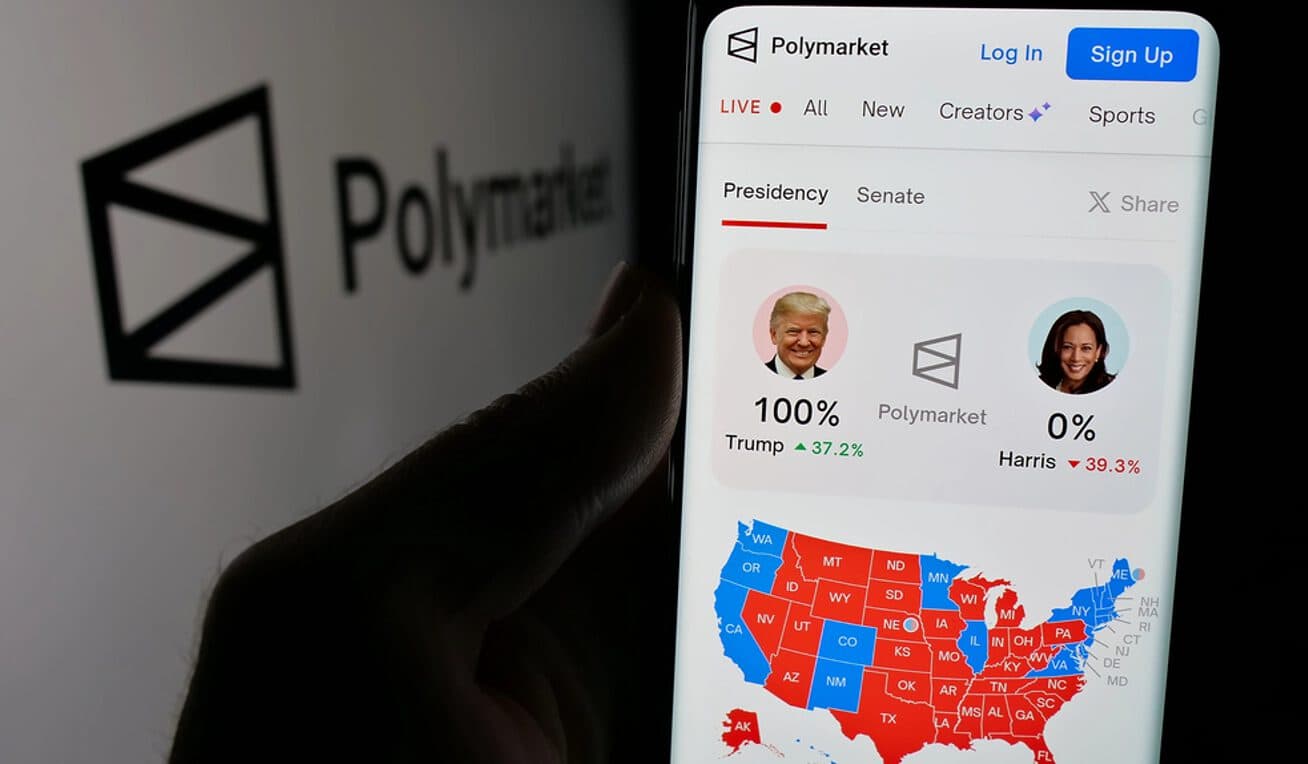
Iran Ceasefire, Then a 6‑Figure Pump: How Polymarket Turned Insiders Into Crypto Millionaires
At least 50 newly created Polymarket accounts scored massive wins hours before President Trump announced a US-Iran ceasefire on April 7, turning small bets into six-figure payouts that smell fishier than a Discord pump-and-dump scheme. One wallet created that morning bet roughly $72,000 at 8.8 cents per share and cashed out with $200,000 in profit. Another account made its first-ever trade just 12 minutes before Trump’s Truth Social post, dropping $31,908 and walking away with $48,500. For a blockchain platform that promises transparency, these trades reveal how crypto’s openness actually enables sophisticated insider schemes. The timing patterns scream insider knowledge. While Trump spent the day posting escalatory rhetoric about Iran’s Strait of Hormuz blockade, these fresh wallets were quietly loading up on “Yes” bets for a ceasefire by April 7. Rep. Blake Moore (R-Utah) didn’t mince words: “It’s highly unlikely that these are good-faith trades; it’s much more likely that these are insiders.” The betting spree happened despite Trump’s earlier deadline warning Iran to reopen shipping routes by 8 PM ET or face “catastrophe.” Polymarket scrambled to contain the damage, labeling the ceasefire market “disputed” and delaying payouts up to 48 hours due to ongoing regional tensions. The platform’s blockchain data shows these suspicious accounts made their first trades on this market, though proxy smart contracts allow single users to operate multiple wallets. This echoes earlier patterns where new accounts profited mysteriously before Nicolás Maduro’s capture in January and previous Iran military actions. Congressional pressure is mounting fast. Todd Philips from Georgia State University emphasized the regulation urgency: “This is why these markets need regulation… We can’t have people trading with inside information.” Both Polymarket and rival Kalshi have implemented insider trading bans while bipartisan bills work through Congress to expand insider trading definitions to prediction markets. The ceasefire market generated $224.6 million in volume since its February 28 launch, proving prediction markets’ mainstream appeal. But episodes like this erode trader trust faster than a DeFi rug pull. You’re essentially competing against people with advance access to government decisions, turning what should be skill-based prediction into a rigged casino. Until meaningful oversight arrives, everyday crypto users remain the house’s favorite mark.
Iran Ceasefire, Then a 6‑Figure Pump: How Polymarket Turned Insiders Into Crypto Millionaires
At least 50 newly created Polymarket accounts scored massive wins hours before President Trump announced a US-Iran ceasefire on April 7, turning small bets into six-figure payouts that smell fishier than a Discord pump-and-dump scheme. One wallet created that morning bet roughly $72,000 at 8.8 cents per share and cashed out with $200,000 in profit. Another account made its first-ever trade just 12 minutes before Trump’s Truth Social post, dropping $31,908 and walking away with $48,500. For a blockchain platform that promises transparency, these trades reveal how crypto’s openness actually enables sophisticated insider schemes. The timing patterns scream insider knowledge. While Trump spent the day posting escalatory rhetoric about Iran’s Strait of Hormuz blockade, these fresh wallets were quietly loading up on “Yes” bets for a ceasefire by April 7. Rep. Blake Moore (R-Utah) didn’t mince words: “It’s highly unlikely that these are good-faith trades; it’s much more likely that these are insiders.” The betting spree happened despite Trump’s earlier deadline warning Iran to reopen shipping routes by 8 PM ET or face “catastrophe.” Polymarket scrambled to contain the damage, labeling the ceasefire market “disputed” and delaying payouts up to 48 hours due to ongoing regional tensions. The platform’s blockchain data shows these suspicious accounts made their first trades on this market, though proxy smart contracts allow single users to operate multiple wallets. This echoes earlier patterns where new accounts profited mysteriously before Nicolás Maduro’s capture in January and previous Iran military actions. Congressional pressure is mounting fast. Todd Philips from Georgia State University emphasized the regulation urgency: “This is why these markets need regulation… We can’t have people trading with inside information.” Both Polymarket and rival Kalshi have implemented insider trading bans while bipartisan bills work through Congress to expand insider trading definitions to prediction markets. The ceasefire market generated $224.6 million in volume since its February 28 launch, proving prediction markets’ mainstream appeal. But episodes like this erode trader trust faster than a DeFi rug pull. You’re essentially competing against people with advance access to government decisions, turning what should be skill-based prediction into a rigged casino. Until meaningful oversight arrives, everyday crypto users remain the house’s favorite mark.