3 stories credited to The Forward (2 on forward.com, 1 reproduced by other sites)
1 story on forward.com credited to other publishers
Latest story Apr 13, 2026 · on ChamberLight since Apr 2026
A story can appear as several articles (copies of the same piece), so counts of stories and of articles differ.
Scores for The Forward
Writing quality not enough rated stories yet: 1 of 10. How it is measured
Scores last checked Sep 24, 2026.
Articles this site reproduces
How provenance is decidedOriginal publishers of articles on forward.com
Counted from articles on forward.com whose original publisher is verified from the page itself or confirmed by an independent signal.
Stories ChamberLight collected, by month
Stories credited to The Forward, by publication date. ChamberLight collects articles that mention the officials it tracks, so this shows its own coverage of this source, not how much the source publishes.
- Stories from The Forward
- Shaded: ChamberLight collected no stories, or almost none, from any outlet (a gap in its collection, not in the outlet’s publishing)
Show as a table
| Month | Stories | All outlets |
|---|---|---|
| March 2026 | 1 | 425 |
| April 2026 | 2 | 4,537 |
| May 2026 | 0 | none collected |
| June 2026 | 0 | none collected |
| July 2026 | 0 | none collected |
| August 2026 | 0 | 1 (collection gap) |
| September 2026 | 0 | 598 |
Top topics
Share of this source’s stories tagged with each topic. A story can carry several topics, so the shares do not add up to 100%.
- Ethics/Corruption3
100% of 3 stories · 62% across all outlets
- Budget/Spending1
33% of 3 stories · 33% across all outlets
- Defense/Military1
33% of 3 stories · 26% across all outlets
- Education1
33% of 3 stories · 3% across all outlets
- Foreign Policy1
33% of 3 stories · 30% across all outlets
- Immigration1
33% of 3 stories · 13% across all outlets
The thin mark on each bar is the topic’s share across all outlets.
Who they cover
Party of the officials these stories are mainly about, across all 5 officials named. A story counts once for each official it is mainly about, so the split is over 6 story–official pairs, from 3 stories.
- Republican83% · 5 pairs
- Democrat17% · 1 pair
Most covered
Stories mainly about each official, and their share of the source’s 3 stories.
Article tone
ChamberLight’s article analysis assigns each story a tone toward the official it covers. It describes the coverage of that official, not The Forward’s stance, and reader votes do not change it. 3 stories.
- Good Look
- 0 (0%)
- Mixed
- 3 (100%)
- Informational
- 0 (0%)
- Bad Look
- 0 (0%)
Challenges to these scores
No one has challenged a score on this page yet. Anyone can; editors publish every outcome here.
Articles served from forward.com
7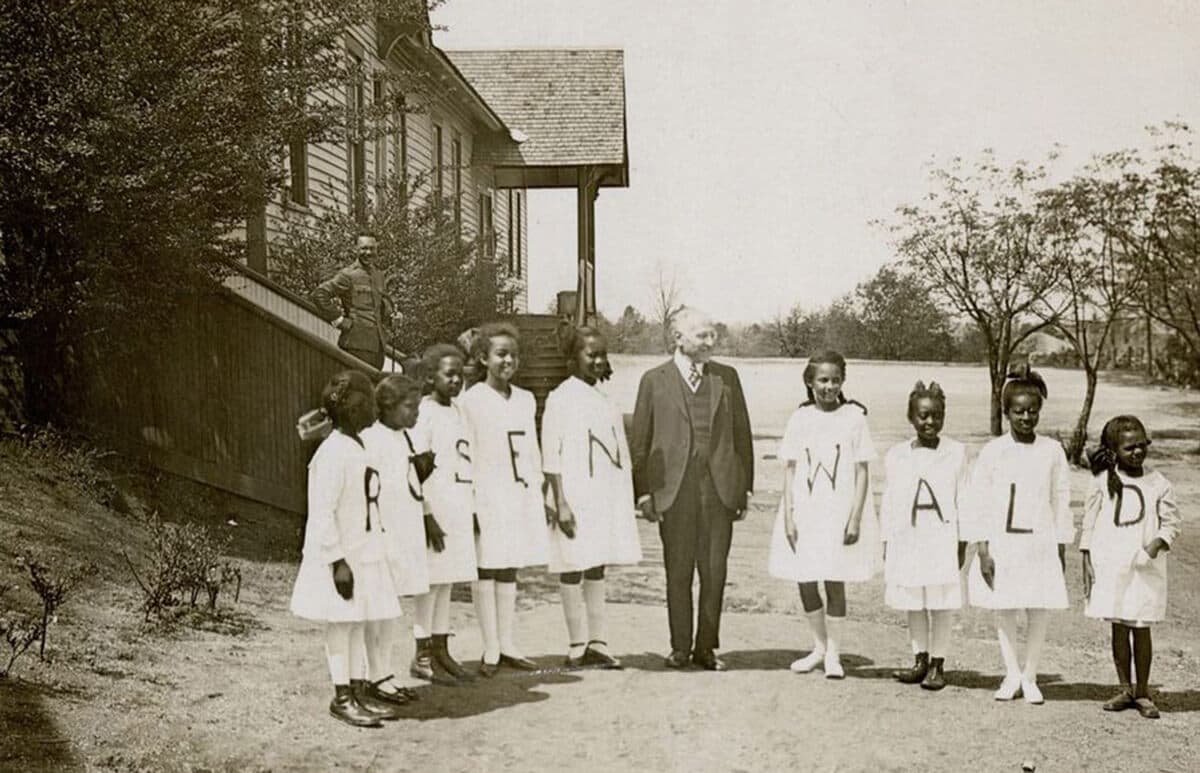
This national park would honor a Jewish philanthropist — if Republicans get back on board
The political climate is hardly favorable for a new national park centered on racial justice. President Donald Trump this week called for sweeping budget cuts to the National Park Service and, in January, for the removal of slavery-related exhibits he said portray American history in a “woke manner.” Yet a campaign to establish a national historic park honoring Julius Rosenwald — the Jewish philanthropist who funded schools for rural Black communities during the Jim Crow era — is pressing ahead. Dorothy Canter, who launched the campaign in 2018, sees an opening for the park to finally become a reality. In February, Sen. Dick Durbin (D-Ill.) introduced legislation to create the Rosenwald National Historic Park, backed by seven Democratic co-sponsors. But advancing the bill out of committee — much less to President Trump’s desk — will require Republican support. At a time when even the mildest celebration of diversity can be deemed an excess of the “woke” left, Canter is betting that Rosenwald’s story will be the exception. “The environment is not the best, obviously, but this is a story that should appeal to anyone,” Canter told the Forward. “This is a positive story. Nobody can say it’s DEI.” Rosenwald’s Legacy Rosenwald was born in Springfield, Illinois, the son of German-Jewish immigrants. At 16, he dropped out of high school to pursue the family clothing business. Julius Rosenwald. Courtesy of Julius Rosenwald & Rosenwald Schools National Historical Park Campaign In 1895, he invested $37,500 in Sears, Roebuck & Company — a decision that would ultimately make him one of the wealthiest men in the United States in the early 20th century. But guided by the Jewish value of tzedakah, he gave much of that fortune away. In 1911, he met Booker T. Washington, the formerly enslaved founder of the Tuskegee Institute, a training center for African American teachers. Washington urged Rosenwald to invest in Black education in the South. Rosenwald would go on to help fund nearly 5,000 schools for Black students across 15 states. By 1928, one in three Black students in the rural South attended a Rosenwald school. Alumni of Rosenwald schools would include congressman John Lewis, poet Maya Angelou and civil rights activist Medgar Evers. Canter, a retired biophysicist and national parks enthusiast, first learned about Rosenwald as an adult through a documentary — and was struck that this story of Black-Jewish cooperation was not more widely known. “I knew that there was not one national park unit among the more than 400 that commemorated the life and legacy of a Jewish American, or told the story of Rosenwald schools,” Canter said. “And I can tell you that today, almost 11 years later, that is still the case.” There are national historic sites and monuments honoring Jewish Americans, including the Rosenwald family home and the David Berger National Memorial. But a national historic park — a designation that often spans multiple sites and has greater cultural cache — has yet to honor a Jewish American. Part of Rosenwald’s relative obscurity, Canter said, stems from his own philosophy. Rosenwald embraced a “give while you live” approach and did not believe in permanent endowments, requiring that the Rosenwald Fund spend all of its money within 25 years of his death. That approach has yielded severe financial challenges decades later. Today, only about 10% of the more than 5,000 Rosenwald school structures remain, according to Brent Leggs, executive director of the African American Cultural Heritage Action Fund at the National Trust for Historic Preservation. The Trust placed Rosenwald schools on its 2002 list of America’s 11 most endangered historic places, warning of an “urgent crisis of erasure, abandonment and deterioration.” Many of the schools were built in rural areas that have since been abandoned, Leggs said, adding that the buildings were made of wood that has slowly decayed. The loss is personal for him: Upon researching the history for his job, Leggs discovered that both of his parents attended Rosenwald schools in Kentucky. “It was a transcendent moment for me,” he said, “because I remember being at a school building that was literally vanishing history.” The surviving schools have mixed ownership, Leggs said. Some act as local community centers, while others operate as commercial or office spaces, such as the Caldwell Rosenwald School in Huntersville, North Carolina — today, home to Burgess Supply, a carpet store. Related Was Julius Rosenwald Our Greatest Philanthropist? A bipartisan issue? In the final days of his first presidency, Trump gave a significant boost to the campaign for a Rosenwald national park. He signed the Julius Rosenwald and the Rosenwald Schools Act into law, directing the Department of Interior to conduct a study assessing the feasibility of establishing the park. Eight Republicans had cosponsored the bill, and it passed with broad bipartisan support. The study “resulted in positive findings,” concluding that the San Domingo School in Sharptown, Maryland, met all the criteria for a national park and recommending that Congress create a grant program to support the preservation of additional Rosenwald schools. But Republican backing for a national park honoring Rosenwald’s legacy now appears to have waned. The Forward called and emailed the three Republicans who cosponsored the 2020 bill and are still in office. None responded to the Forward’s question about their position on Durbin’s bill to establish the Rosenwald park. A White House spokesperson directed the Forward to the national historic site at the Rosenwald family home but declined to say whether Trump was supportive of the national park commemorating Rosenwald schools. Rep. Andy Harris, a Maryland Republican, went so far as to send a letter to President Joe Biden in 2024 expressing his support for “the expedited designation of a Julius Rosenwald And Rosenwald Schools National Park.” His office did not respond to the Forward’s request for comment. Nor did the office of Tim Scott, the Republican senator from South Carolina who previously advertised his support for the restoration of Rosenwald schools in his state. “Booker T. Washington helped build thousands of schools for Black children, advancing impactful educational opportunities throughout the South,” he tweeted in February 2024. “With the restoration of Rosenwald School, his legacy lives on in South Carolina. #BlackHistoryMonth” ‘A story for our time’ Durbin’s bill arrives just as the agency that would create a park faces drastic proposed cuts: Trump this week proposed funding for the already understaffed National Park Service be reduced by $736 million, or 25% of its budget. Meanwhile, the president has sought to recast historical narratives at existing parks. In January, Trump ordered the National Park Service dismantle an exhibit about nine people enslaved by George Washington. Earlier this month, the Trump administration directed the removal of a pride flag from the Stonewall National Monument in New York City. Yet Rosenwald’s story doesn’t fit neatly into the culture-war themes that Trump has singled out. Rosenwald himself was a political conservative, a laissez-faire businessman and steadfast Republican who believed in fostering economic self-sufficiency through education. Dennis Ross, a former Republican congressman from Florida who retired from office in 2019 and has supported the Rosenwald park campaign, told the Forward he sees Rosenwald’s story as one conservatives should embrace. “I’ve heard the argument that this is a way of trying to backdoor DEI. I totally disagree and take issue with that. This is showing what American history is all about,” Ross said. “If you were to dwell on the oppression of slavery, then maybe that argument might work. But I think the important thing is to look at the transition, the evolution from slavery to success.” Canter is also optimistic, and said she plans to meet with a Republican senator — she declined to provide a name — whose staff has expressed interest in the park. As to whether Trump would sign the bill: She hopes the campaign will have the opportunity to put it on his desk. “People with different backgrounds and cultures were able to come together, work together, find common ground and move this country forward,” Canter said. “So if that isn’t a story for our time, I don’t know what is.” Related This would be the only national park telling the story of a Jewish American The post This national park would honor a Jewish philanthropist — if Republicans get back on board appeared first on The Forward.

In rallies taking on Israel, a defiant Hasan Piker boosts Michigan Senate candidate Abdul el-Sayed
(JTA) — ANN ARBOR, Michigan — Outside, in a line that stretched around the block, the hundreds of people who turned out for Abdul el-Sayed’s campaign rally with Hasan Piker gave a range of reasons for showing up. Some said they liked el-Sayed’s message of Medicare for All, a key plank of the former county health executive’s bid for an open Senate seat. Some were furious about the war in Iran, which the candidate has angrily denounced. Others just liked the guy. “He’s a really great speaker and a really passionate person,” Natalie Gould, a master’s candidate in public health who had worked with el-Sayed in Detroit, told the Jewish Telegraphic Agency. Inside, though, one issue made the crowd roar louder than any other: any time a speaker, from el-Sayed to Piker to the newly elected student body president, accused Israel of genocide. The progressive movement in which Piker has styled himself a kingmaker, one that is ardently pro-Palestinian while largely dismissive of any claims of antisemitism, was coalescing. “In the beginning it was a lot lonelier when we spoke out. They used the same exact heinous smear: They said, ‘You’re antisemitic,’” Piker told the crowd. “And back then I felt a lot lonelier. But I don’t feel lonely anymore.” Piker, the leftist Twitch streamer with millions of followers, was the evening’s biggest draw — and its biggest lightning rod. After el-Sayed announced the two would hold a pair of campaign stops together Tuesday, the streamer’s past clips and comments about Jews and Israel led numerous Jewish leaders and both of el-Sayed’s opponents to denounce the events. Some compared Piker to Nick Fuentes, the openly antisemitic far-right streamer who has divided Republicans. Leading Democrats called for the party to distance itself from Piker altogether. Hasan Piker looks on as U.S. Senate candidate Abdul El-Sayed delivers a stump speech in Ann Arbor, Michigan, April 7, 2026. Piker, a popular Twitch streamer accused of antisemitism, prompted controversy for campaigning with El-Sayed. (Andrew Lapin/JTA) Pushback continued until just before the events started. An hour before the first rally, at Michigan State University, that school’s president and governing board issued a joint statement affirming their campus free speech principles while also condemning antisemitism. The school’s Hillel chapter had already called Piker a “known antisemite,” expressing concern about his appearance. At the next stop at the University of Michigan, el-Sayed told the crowd that the campus pro-Israel club Students Supporting Israel had planned to protest the event. But the group wasn’t visible outside the building, and the club’s Instagram page announced that its “March Against Extremism” had been “postponed,” which the group attributed to “extenuating circumstances” that it did not explain. El-Sayed leaned into the energy, embracing Piker onstage and mocking the negative attention the rally had received. The rally overlapped with President Donald Trump’s deadline for Iran to make concessions or “a whole civilization will die,” which led to a temporary ceasefire in the U.S.-Israeli war on Iran. “Apparently, the most important thing happening on Twitter was whether or not we were going to campaign with Hasan,” he told the crowd. “Somehow Fox News found it fit to cover this rally six f–king times and not talk about the fact the president wants to commit a genocide in Iran.” Also leaning in were the night’s other speakers, who were all being showcased on Piker’s livestream — where, during downtime in-between speeches, he bemoaned what he described as a bad-faith campaign to paint him as antisemitic. (He also said he’d been hoping to eat at Zingerman’s, a famous Jewish-style gourmet deli in Ann Arbor.) “I told Piker just now, I was like, ‘You’re never going to be canceled up in Michigan,’” Rep. Rashida Tlaib, the House’s fiercest critic of Israel, said during her own stump speech. Rep. Summer Lee, of Pennsylvania, also delivered a speech, and Rep. Debbie Dingell, of Michigan, attended but did not speak. Candidates for local office also stood next to Piker, including Amir Makled, a candidate for the university’s Board of Regents who was the legal defense for the school’s student pro-Palestinian encampment movement. The crowd was young and diverse in age and race. While Piker received cheers when he shouted out his fans, some of the attendees told JTA they were more mixed on him, while others had little familiarity with his streams. But they all agreed he had juiced El-Sayed’s campaign. “I mean, there’s tons of people here,” Ann Arbor resident Joey Ryan said while queuing up for the over-capacity rally outside, gesturing behind him. “I remember the Joe Biden Michigan stuff, and it was not like this. I remember the Bernie Sanders rally in early 2020, and it was more like this.” Ryan said that Piker, like other streamers, operated in the “attention economy” space, where “saying inflammatory things sometimes can get you attention.” But, he said, “I also think it’s been blown completely out of proportion when you have the president of the United States calling Iranians non-human, as an example, to bomb them, and that includes the synagogue that was blown up in Iran today. Like, there are Jews in Iran as well. Is that not antisemitism?” “Some of the stuff he says is kind of crazy. I’m not going to lie, there’s some stuff he said that I disagree with,” another attendee, a current University of Michigan student who declined to give her name, said of Piker. Content creators, the student said, can “get out over their skis.” If anything, Piker and el-Sayed became more honed in on Israel as the day went on. At their first East Lansing stop, both made only a handful of comments about Israel and AIPAC. By the time they reached Ann Arbor that evening, the headliners had amped up their broadsides, with Piker referencing a new Pew Research Center study showing that 84% of Democrats under 49 have a somewhat or very unfavorable view of Israel. “There’s only a handful of Democrats that are actually outspoken on this atrocity, outspoken on the relationship that we have with a foreign country that we simply always have to send unlimited billions of dollars to — a country that has health care, mind you,” Piker said. “You do not, but Israel has free health care.” The crowd booed at this line. (L-r) U.S. Rep. Summer Lee, Senate candidate Abdul El-Sayed, and Twitch streamer Hasan Piker pose during a rally for El-Sayed, April 7, 2026. (Andrew Lapin/JTA) As another rallying cry, he told them, “When you feel really sad, when you feel really angry, remind yourself of the worst fascist that you know. It could be Donald Trump, it could be Rabbi Shmuley. They’re going to be very excited if you stop fighting.” (Piker later told JTA that he was referring to Rabbi Shmuley Boteach, a pro-Israel Twitter gadfly who Piker said was “pro-genocide.”) The candidate, too, amped up his criticisms of AIPAC in particular. The pro-Israel lobby, which has poured millions of dollars into congressional elections, is facing a resolution of opposition from the Democratic National Committee this week. “AIPAC tells us that the number one goal of our foreign policy is to align with a foreign government,” el-Sayed said, to boos. “You know, when I talk about AIPAC, everybody says, ‘Well, it’s because you’re Arab Muslim.’ No it’s not. It’s because I’m f–king from Michigan, and I want my tax dollars back in Michigan.” He also joked that AIPAC ads against him might finally give him something he’s dreamed about. “The one thing you’re supposed to have, as an American Muslim, is a nice beard,” he said. “And I was never gifted with that. But for three months this summer, AIPAC’s going to give me the beard of my dreams.” At both campaign stops, El-Sayed, who grew up in a heavily Jewish Detroit suburb not far from Temple Israel, the synagogue that was attacked last month, also said he welcomed Jews to his movement. “All of us love and revere Jewish folk, our Jewish neighbors, the faith of Judaism,” he said in Ann Arbor, to applause. “Trust me, nobody will fight harder against antisemitism than somebody who intimately understands what it’s like to be discriminated against because of how I look.” He reiterated the point in an interview after the event. Supporters of Michigan U.S. Senate candidate Abdul El-Sayed cheer Rep. Rashida Tlaib as she denounces Israel during a rally in Ann Arbor, Michigan, that also featured Twitch streamer Hasan Piker, April 7, 2026. (Andrew Lapin/JTA) “I am so grateful I’ve grown up in a community with a large proportion of Jewish Americans. I learned a lot from the Jewish tradition. I’m grateful to have been invited to bar and bat mitzvahs and to be invited to Seders and to be invited to spend time at shul,” el-Sayed told JTA. “I stand deeply and profoundly against antisemitism in the same way that I stand deeply and profoundly against Islamophobia,” he added. “Those two things always run together. It is not antisemitic to criticize a foreign government, and it’s not antisemitic to criticize a super PAC that is intent on aligning our interests with the foreign government.” In the interview, the candidate also reiterated the sentiment behind his own statement on the Temple Israel attack, in which he had referenced the Israeli war in Lebanon. “I also think it’s just critical for us to understand that hurt people do hurt people, and the circumstances happening 6000 miles away can affect the lives that we live here,” el-Sayed said Tuesday. At the end of the rally, Piker climbed back onto the stage with El-Sayed to a standing ovation. The two men embraced, then posed for a selfie with the crowd behind them. This article originally appeared on JTA.org. The post In rallies taking on Israel, a defiant Hasan Piker boosts Michigan Senate candidate Abdul el-Sayed appeared first on The Forward.
In rallies taking on Israel, a defiant Hasan Piker boosts Michigan Senate candidate Abdul el-Sayed
(JTA) — ANN ARBOR, Michigan — Outside, in a line that stretched around the block, the hundreds of people who turned out for Abdul el-Sayed’s campaign rally with Hasan Piker gave a range of reasons for showing up. Some said they liked el-Sayed’s message of Medicare for All, a key plank of the former county health executive’s bid for an open Senate seat. Some were furious about the war in Iran, which the candidate has angrily denounced. Others just liked the guy. “He’s a really great speaker and a really passionate person,” Natalie Gould, a master’s candidate in public health who had worked with el-Sayed in Detroit, told the Jewish Telegraphic Agency. Inside, though, one issue made the crowd roar louder than any other: any time a speaker, from el-Sayed to Piker to the newly elected student body president, accused Israel of genocide. The progressive movement in which Piker has styled himself a kingmaker, one that is ardently pro-Palestinian while largely dismissive of any claims of antisemitism, was coalescing. “In the beginning it was a lot lonelier when we spoke out. They used the same exact heinous smear: They said, ‘You’re antisemitic,’” Piker told the crowd. “And back then I felt a lot lonelier. But I don’t feel lonely anymore.” Piker, the leftist Twitch streamer with millions of followers, was the evening’s biggest draw — and its biggest lightning rod. After el-Sayed announced the two would hold a pair of campaign stops together Tuesday, the streamer’s past clips and comments about Jews and Israel led numerous Jewish leaders and both of el-Sayed’s opponents to denounce the events. Some compared Piker to Nick Fuentes, the openly antisemitic far-right streamer who has divided Republicans. Leading Democrats called for the party to distance itself from Piker altogether. Hasan Piker looks on as U.S. Senate candidate Abdul El-Sayed delivers a stump speech in Ann Arbor, Michigan, April 7, 2026. Piker, a popular Twitch streamer accused of antisemitism, prompted controversy for campaigning with El-Sayed. (Andrew Lapin/JTA) Pushback continued until just before the events started. An hour before the first rally, at Michigan State University, that school’s president and governing board issued a joint statement affirming their campus free speech principles while also condemning antisemitism. The school’s Hillel chapter had already called Piker a “known antisemite,” expressing concern about his appearance. At the next stop at the University of Michigan, el-Sayed told the crowd that the campus pro-Israel club Students Supporting Israel had planned to protest the event. But the group wasn’t visible outside the building, and the club’s Instagram page announced that its “March Against Extremism” had been “postponed,” which the group attributed to “extenuating circumstances” that it did not explain. El-Sayed leaned into the energy, embracing Piker onstage and mocking the negative attention the rally had received. The rally overlapped with President Donald Trump’s deadline for Iran to make concessions or “a whole civilization will die,” which led to a temporary ceasefire in the U.S.-Israeli war on Iran. “Apparently, the most important thing happening on Twitter was whether or not we were going to campaign with Hasan,” he told the crowd. “Somehow Fox News found it fit to cover this rally six f–king times and not talk about the fact the president wants to commit a genocide in Iran.” Also leaning in were the night’s other speakers, who were all being showcased on Piker’s livestream — where, during downtime in-between speeches, he bemoaned what he described as a bad-faith campaign to paint him as antisemitic. (He also said he’d been hoping to eat at Zingerman’s, a famous Jewish-style gourmet deli in Ann Arbor.) “I told Piker just now, I was like, ‘You’re never going to be canceled up in Michigan,’” Rep. Rashida Tlaib, the House’s fiercest critic of Israel, said during her own stump speech. Rep. Summer Lee, of Pennsylvania, also delivered a speech, and Rep. Debbie Dingell, of Michigan, attended but did not speak. Candidates for local office also stood next to Piker, including Amir Makled, a candidate for the university’s Board of Regents who was the legal defense for the school’s student pro-Palestinian encampment movement. The crowd was young and diverse in age and race. While Piker received cheers when he shouted out his fans, some of the attendees told JTA they were more mixed on him, while others had little familiarity with his streams. But they all agreed he had juiced El-Sayed’s campaign. “I mean, there’s tons of people here,” Ann Arbor resident Joey Ryan said while queuing up for the over-capacity rally outside, gesturing behind him. “I remember the Joe Biden Michigan stuff, and it was not like this. I remember the Bernie Sanders rally in early 2020, and it was more like this.” Ryan said that Piker, like other streamers, operated in the “attention economy” space, where “saying inflammatory things sometimes can get you attention.” But, he said, “I also think it’s been blown completely out of proportion when you have the president of the United States calling Iranians non-human, as an example, to bomb them, and that includes the synagogue that was blown up in Iran today. Like, there are Jews in Iran as well. Is that not antisemitism?” “Some of the stuff he says is kind of crazy. I’m not going to lie, there’s some stuff he said that I disagree with,” another attendee, a current University of Michigan student who declined to give her name, said of Piker. Content creators, the student said, can “get out over their skis.” If anything, Piker and el-Sayed became more honed in on Israel as the day went on. At their first East Lansing stop, both made only a handful of comments about Israel and AIPAC. By the time they reached Ann Arbor that evening, the headliners had amped up their broadsides, with Piker referencing a new Pew Research Center study showing that 84% of Democrats under 49 have a somewhat or very unfavorable view of Israel. “There’s only a handful of Democrats that are actually outspoken on this atrocity, outspoken on the relationship that we have with a foreign country that we simply always have to send unlimited billions of dollars to — a country that has health care, mind you,” Piker said. “You do not, but Israel has free health care.” The crowd booed at this line. (L-r) U.S. Rep. Summer Lee, Senate candidate Abdul El-Sayed, and Twitch streamer Hasan Piker pose during a rally for El-Sayed, April 7, 2026. (Andrew Lapin/JTA) As another rallying cry, he told them, “When you feel really sad, when you feel really angry, remind yourself of the worst fascist that you know. It could be Donald Trump, it could be Rabbi Shmuley. They’re going to be very excited if you stop fighting.” (Piker later told JTA that he was referring to Rabbi Shmuley Boteach, a pro-Israel Twitter gadfly who Piker said was “pro-genocide.”) The candidate, too, amped up his criticisms of AIPAC in particular. The pro-Israel lobby, which has poured millions of dollars into congressional elections, is facing a resolution of opposition from the Democratic National Committee this week. “AIPAC tells us that the number one goal of our foreign policy is to align with a foreign government,” el-Sayed said, to boos. “You know, when I talk about AIPAC, everybody says, ‘Well, it’s because you’re Arab Muslim.’ No it’s not. It’s because I’m f–king from Michigan, and I want my tax dollars back in Michigan.” He also joked that AIPAC ads against him might finally give him something he’s dreamed about. “The one thing you’re supposed to have, as an American Muslim, is a nice beard,” he said. “And I was never gifted with that. But for three months this summer, AIPAC’s going to give me the beard of my dreams.” At both campaign stops, El-Sayed, who grew up in a heavily Jewish Detroit suburb not far from Temple Israel, the synagogue that was attacked last month, also said he welcomed Jews to his movement. “All of us love and revere Jewish folk, our Jewish neighbors, the faith of Judaism,” he said in Ann Arbor, to applause. “Trust me, nobody will fight harder against antisemitism than somebody who intimately understands what it’s like to be discriminated against because of how I look.” He reiterated the point in an interview after the event. Supporters of Michigan U.S. Senate candidate Abdul El-Sayed cheer Rep. Rashida Tlaib as she denounces Israel during a rally in Ann Arbor, Michigan, that also featured Twitch streamer Hasan Piker, April 7, 2026. (Andrew Lapin/JTA) “I am so grateful I’ve grown up in a community with a large proportion of Jewish Americans. I learned a lot from the Jewish tradition. I’m grateful to have been invited to bar and bat mitzvahs and to be invited to Seders and to be invited to spend time at shul,” el-Sayed told JTA. “I stand deeply and profoundly against antisemitism in the same way that I stand deeply and profoundly against Islamophobia,” he added. “Those two things always run together. It is not antisemitic to criticize a foreign government, and it’s not antisemitic to criticize a super PAC that is intent on aligning our interests with the foreign government.” In the interview, the candidate also reiterated the sentiment behind his own statement on the Temple Israel attack, in which he had referenced the Israeli war in Lebanon. “I also think it’s just critical for us to understand that hurt people do hurt people, and the circumstances happening 6000 miles away can affect the lives that we live here,” el-Sayed said Tuesday. At the end of the rally, Piker climbed back onto the stage with El-Sayed to a standing ovation. The two men embraced, then posed for a selfie with the crowd behind them. This article originally appeared on JTA.org. The post In rallies taking on Israel, a defiant Hasan Piker boosts Michigan Senate candidate Abdul el-Sayed appeared first on The Forward.

Growing Islamophobia is being overlooked — while drawing on an antisemitic framework
Imagine if a pair of House members launched a “Talmud Free America” caucus predicated on the notion that Jewish law is incompatible with American values. Imagine that more than 50 members quickly signed up to join this caucus, while House leadership either remained silent or joined the caucus themselves. Imagine that members of the new caucus came out with quotes complaining that “from Pico-Robertson to Lakewood, halacha is sweeping across America — and must be stopped” and insisting that their “constituents in New Jersey are constantly expressing their concern and asking what can be done about the rise of mass Jewish immigration in south Florida.” Imagine if one of the president’s top advisers was a self-described “proud antisemite” who believed “Judaism was a cancer on the world” and that “it should be illegal in the United States for Jews to hold office.” And imagine that the president himself moved repeatedly to limit Jewish immigration or travel to the U.S. on national security grounds. Given that many Jews saw echoes of Nazi Germany in the campus protests against Israel following Oct. 7 — comparisons that flourished against following Zohran Mamdani’s election as New York City mayor — I’m confident that the mainstreaming of this kind of unvarnished antisemitism would send them reeling and dominate the media as a pressing societal crisis. And yet, this is almost exactly what has happened with the Sharia Free America Caucus formed by Republican members of Congress in December, and the Trump administration’s punitive approach to Muslim immigration and foreign nations (his defense secretary has spoken about the Iran war in religious terms), while receiving very little attention. Related After Minneapolis, a YouTuber comes for Jewish ‘welfare queens’ I mention this in a newsletter about antisemitism because one of the most common refrains I hear from Jews about antisemitism is that if these things were happening to any other group, we — meaning, I guess, Americans — would never tolerate it. But Americans certainly seem to be tolerating Islamophobia that is far more explicit in its animosity toward Muslims than comparable expressions of hostility against Jews. Rep. Ilhan Omar said “it’s all about the Benjamins baby” in reference to congressional support for Israel — prompting fierce debate over whether she was invoking antisemitic tropes or making a crude but legitimate comment about the influence of money in politics, and drawing an eventual apology from Omar. Contrast that with Rep. Randy Fine, a member of the Sharia Free America Caucus, who said recently that “the choice between dogs and Muslims is not a difficult one” — a remark with no apparent point beyond the suggestion that Muslims are subhuman. *** When many Jews complain about the extent to which antisemitism is tolerated, they’re thinking about progressives or liberal institutions like universities. And while some have struggled, especially in the face of post-Oct. 7 protests, this establishment has also responded to antisemitism in robust ways. President Joe Biden unveiled the first-ever national strategy to counter antisemitism in 2023 and upgraded the State Department’s antisemitism envoy, which has existed since 2005, to the level of ambassador while his administration launched dozens of federal investigations into campus antisemitism. Colleges and universities across the country also created task forces to address antisemitism, and have updated their policies at the behest of Jewish organizations. The national media has been incredibly responsive to Jewish concerns over antisemitism in the aftermath of Oct. 7; it’s difficult to imagine a Muslim pundit who made her name campaigning against Islamophobia being installed atop a major American TV network the way Bari Weiss was at CBS News. And of course this is all on top of establishment antisemitism watchdogs such as the Anti-Defamation League, which despite recent controversies remain influential with liberal business and political leaders. Now contrast that with the conservative ecosystem. While many Jews may hold it to a lower standard, because minority rights have not historically been a right-wing priority, the people promoting this resurgent Islamophobia are either Jewish themselves, like Fine and Trump adviser Laura Loomer, or have positioned themselves as close friends of the Jews. For instance, Rep. Chip Roy, a Texas Republican who co-founded the Sharia Free America Caucus, has railed against campus antisemitism and said his new group is intended to “defend our Judeo-Christian values.” Now, depending on how one looks at the issue, there are reasons for Muslims to feel more existentially secure than Jews. While they’re a tiny sliver of the American population, there are around 2 billion Muslims in the world and many Muslim-majority countries. And claims of Islamophobia are sometimes used to dismiss legitimate concerns over domestic terrorism, opposition to countries with especially repressive policies toward women and minorities like Iran, or questions about Mamdani’s foreign policy positions. There is also legitimate scholarly, political and religious debate over Sharia and Islamic law, including among Muslims with diverse views and practices, summarized well in this backgrounder from the Council on Foreign Relations. *** But perhaps the most striking aspect of the mounting rhetoric toward Muslims that I’m referring to is how closely it mirrors the mechanics of antisemitism. Antisemitism often functions differently than other forms of racism; it is less about describing Jews as inferior and oppressing them than it is about claiming that they hold outsized — and fictional — influence over world affairs, and that they use this power to hurt non-Jews and help themselves. Sen. Tommy Tuberville, an Alabama Republican and Sharia Free American Caucus member, also described Islam as not a religion but a “death cult” whose legal system “teaches that it is righteous to kill all infidels, especially Christians.” That tracks closely to how antisemitic influencers like Candace Owens talk about Judaism as “the synagogue of Satan” and claim that the Talmud teaches that non-Jews are “animals, that they have a right to own us, make us worship them, lie to us, sue us, take everything we have.” And we all know about the tendency to scapegoat a tiny number of Jews for society’s larger problems, which has echoes in dozens of members of Congress joining a caucus focused on the supposed menace posed by Muslims, who make up around 1% of the U.S. population. That’s a reason for Jews to worry about Islamophobia. It’s hard to imagine a very durable barrier between people who believe that a small group of Muslims are using their faith to take over the country and subvert Western civilization and those who would believe the same canards about Jews. The post Growing Islamophobia is being overlooked — while drawing on an antisemitic framework appeared first on The Forward.
Growing Islamophobia is being overlooked — while drawing on an antisemitic framework
Imagine if a pair of House members launched a “Talmud Free America” caucus predicated on the notion that Jewish law is incompatible with American values. Imagine that more than 50 members quickly signed up to join this caucus, while House leadership either remained silent or joined the caucus themselves. Imagine that members of the new caucus came out with quotes complaining that “from Pico-Robertson to Lakewood, halacha is sweeping across America — and must be stopped” and insisting that their “constituents in New Jersey are constantly expressing their concern and asking what can be done about the rise of mass Jewish immigration in south Florida.” Imagine if one of the president’s top advisers was a self-described “proud antisemite” who believed “Judaism was a cancer on the world” and that “it should be illegal in the United States for Jews to hold office.” And imagine that the president himself moved repeatedly to limit Jewish immigration or travel to the U.S. on national security grounds. Given that many Jews saw echoes of Nazi Germany in the campus protests against Israel following Oct. 7 — comparisons that flourished against following Zohran Mamdani’s election as New York City mayor — I’m confident that the mainstreaming of this kind of unvarnished antisemitism would send them reeling and dominate the media as a pressing societal crisis. And yet, this is almost exactly what has happened with the Sharia Free America Caucus formed by Republican members of Congress in December, and the Trump administration’s punitive approach to Muslim immigration and foreign nations (his defense secretary has spoken about the Iran war in religious terms), while receiving very little attention. Related After Minneapolis, a YouTuber comes for Jewish ‘welfare queens’ I mention this in a newsletter about antisemitism because one of the most common refrains I hear from Jews about antisemitism is that if these things were happening to any other group, we — meaning, I guess, Americans — would never tolerate it. But Americans certainly seem to be tolerating Islamophobia that is far more explicit in its animosity toward Muslims than comparable expressions of hostility against Jews. Rep. Ilhan Omar said “it’s all about the Benjamins baby” in reference to congressional support for Israel — prompting fierce debate over whether she was invoking antisemitic tropes or making a crude but legitimate comment about the influence of money in politics, and drawing an eventual apology from Omar. Contrast that with Rep. Randy Fine, a member of the Sharia Free America Caucus, who said recently that “the choice between dogs and Muslims is not a difficult one” — a remark with no apparent point beyond the suggestion that Muslims are subhuman. *** When many Jews complain about the extent to which antisemitism is tolerated, they’re thinking about progressives or liberal institutions like universities. And while some have struggled, especially in the face of post-Oct. 7 protests, this establishment has also responded to antisemitism in robust ways. President Joe Biden unveiled the first-ever national strategy to counter antisemitism in 2023 and upgraded the State Department’s antisemitism envoy, which has existed since 2005, to the level of ambassador while his administration launched dozens of federal investigations into campus antisemitism. Colleges and universities across the country also created task forces to address antisemitism, and have updated their policies at the behest of Jewish organizations. The national media has been incredibly responsive to Jewish concerns over antisemitism in the aftermath of Oct. 7; it’s difficult to imagine a Muslim pundit who made her name campaigning against Islamophobia being installed atop a major American TV network the way Bari Weiss was at CBS News. And of course this is all on top of establishment antisemitism watchdogs such as the Anti-Defamation League, which despite recent controversies remain influential with liberal business and political leaders. Now contrast that with the conservative ecosystem. While many Jews may hold it to a lower standard, because minority rights have not historically been a right-wing priority, the people promoting this resurgent Islamophobia are either Jewish themselves, like Fine and Trump adviser Laura Loomer, or have positioned themselves as close friends of the Jews. For instance, Rep. Chip Roy, a Texas Republican who co-founded the Sharia Free America Caucus, has railed against campus antisemitism and said his new group is intended to “defend our Judeo-Christian values.” Now, depending on how one looks at the issue, there are reasons for Muslims to feel more existentially secure than Jews. While they’re a tiny sliver of the American population, there are around 2 billion Muslims in the world and many Muslim-majority countries. And claims of Islamophobia are sometimes used to dismiss legitimate concerns over domestic terrorism, opposition to countries with especially repressive policies toward women and minorities like Iran, or questions about Mamdani’s foreign policy positions. There is also legitimate scholarly, political and religious debate over Sharia and Islamic law, including among Muslims with diverse views and practices, summarized well in this backgrounder from the Council on Foreign Relations. *** But perhaps the most striking aspect of the mounting rhetoric toward Muslims that I’m referring to is how closely it mirrors the mechanics of antisemitism. Antisemitism often functions differently than other forms of racism; it is less about describing Jews as inferior and oppressing them than it is about claiming that they hold outsized — and fictional — influence over world affairs, and that they use this power to hurt non-Jews and help themselves. Sen. Tommy Tuberville, an Alabama Republican and Sharia Free American Caucus member, also described Islam as not a religion but a “death cult” whose legal system “teaches that it is righteous to kill all infidels, especially Christians.” That tracks closely to how antisemitic influencers like Candace Owens talk about Judaism as “the synagogue of Satan” and claim that the Talmud teaches that non-Jews are “animals, that they have a right to own us, make us worship them, lie to us, sue us, take everything we have.” And we all know about the tendency to scapegoat a tiny number of Jews for society’s larger problems, which has echoes in dozens of members of Congress joining a caucus focused on the supposed menace posed by Muslims, who make up around 1% of the U.S. population. That’s a reason for Jews to worry about Islamophobia. It’s hard to imagine a very durable barrier between people who believe that a small group of Muslims are using their faith to take over the country and subvert Western civilization and those who would believe the same canards about Jews. The post Growing Islamophobia is being overlooked — while drawing on an antisemitic framework appeared first on The Forward.
Growing Islamophobia is being overlooked — while drawing on an antisemitic framework
Imagine if a pair of House members launched a “Talmud Free America” caucus predicated on the notion that Jewish law is incompatible with American values. Imagine that more than 50 members quickly signed up to join this caucus, while House leadership either remained silent or joined the caucus themselves. Imagine that members of the new caucus came out with quotes complaining that “from Pico-Robertson to Lakewood, halacha is sweeping across America — and must be stopped” and insisting that their “constituents in New Jersey are constantly expressing their concern and asking what can be done about the rise of mass Jewish immigration in south Florida.” Imagine if one of the president’s top advisers was a self-described “proud antisemite” who believed “Judaism was a cancer on the world” and that “it should be illegal in the United States for Jews to hold office.” And imagine that the president himself moved repeatedly to limit Jewish immigration or travel to the U.S. on national security grounds. Given that many Jews saw echoes of Nazi Germany in the campus protests against Israel following Oct. 7 — comparisons that flourished against following Zohran Mamdani’s election as New York City mayor — I’m confident that the mainstreaming of this kind of unvarnished antisemitism would send them reeling and dominate the media as a pressing societal crisis. And yet, this is almost exactly what has happened with the Sharia Free America Caucus formed by Republican members of Congress in December, and the Trump administration’s punitive approach to Muslim immigration and foreign nations (his defense secretary has spoken about the Iran war in religious terms), while receiving very little attention. Related After Minneapolis, a YouTuber comes for Jewish ‘welfare queens’ I mention this in a newsletter about antisemitism because one of the most common refrains I hear from Jews about antisemitism is that if these things were happening to any other group, we — meaning, I guess, Americans — would never tolerate it. But Americans certainly seem to be tolerating Islamophobia that is far more explicit in its animosity toward Muslims than comparable expressions of hostility against Jews. Rep. Ilhan Omar said “it’s all about the Benjamins baby” in reference to congressional support for Israel — prompting fierce debate over whether she was invoking antisemitic tropes or making a crude but legitimate comment about the influence of money in politics, and drawing an eventual apology from Omar. Contrast that with Rep. Randy Fine, a member of the Sharia Free America Caucus, who said recently that “the choice between dogs and Muslims is not a difficult one” — a remark with no apparent point beyond the suggestion that Muslims are subhuman. *** When many Jews complain about the extent to which antisemitism is tolerated, they’re thinking about progressives or liberal institutions like universities. And while some have struggled, especially in the face of post-Oct. 7 protests, this establishment has also responded to antisemitism in robust ways. President Joe Biden unveiled the first-ever national strategy to counter antisemitism in 2023 and upgraded the State Department’s antisemitism envoy, which has existed since 2005, to the level of ambassador while his administration launched dozens of federal investigations into campus antisemitism. Colleges and universities across the country also created task forces to address antisemitism, and have updated their policies at the behest of Jewish organizations. The national media has been incredibly responsive to Jewish concerns over antisemitism in the aftermath of Oct. 7; it’s difficult to imagine a Muslim pundit who made her name campaigning against Islamophobia being installed atop a major American TV network the way Bari Weiss was at CBS News. And of course this is all on top of establishment antisemitism watchdogs such as the Anti-Defamation League, which despite recent controversies remain influential with liberal business and political leaders. Now contrast that with the conservative ecosystem. While many Jews may hold it to a lower standard, because minority rights have not historically been a right-wing priority, the people promoting this resurgent Islamophobia are either Jewish themselves, like Fine and Trump adviser Laura Loomer, or have positioned themselves as close friends of the Jews. For instance, Rep. Chip Roy, a Texas Republican who co-founded the Sharia Free America Caucus, has railed against campus antisemitism and said his new group is intended to “defend our Judeo-Christian values.” Now, depending on how one looks at the issue, there are reasons for Muslims to feel more existentially secure than Jews. While they’re a tiny sliver of the American population, there are around 2 billion Muslims in the world and many Muslim-majority countries. And claims of Islamophobia are sometimes used to dismiss legitimate concerns over domestic terrorism, opposition to countries with especially repressive policies toward women and minorities like Iran, or questions about Mamdani’s foreign policy positions. There is also legitimate scholarly, political and religious debate over Sharia and Islamic law, including among Muslims with diverse views and practices, summarized well in this backgrounder from the Council on Foreign Relations. *** But perhaps the most striking aspect of the mounting rhetoric toward Muslims that I’m referring to is how closely it mirrors the mechanics of antisemitism. Antisemitism often functions differently than other forms of racism; it is less about describing Jews as inferior and oppressing them than it is about claiming that they hold outsized — and fictional — influence over world affairs, and that they use this power to hurt non-Jews and help themselves. Sen. Tommy Tuberville, an Alabama Republican and Sharia Free American Caucus member, also described Islam as not a religion but a “death cult” whose legal system “teaches that it is righteous to kill all infidels, especially Christians.” That tracks closely to how antisemitic influencers like Candace Owens talk about Judaism as “the synagogue of Satan” and claim that the Talmud teaches that non-Jews are “animals, that they have a right to own us, make us worship them, lie to us, sue us, take everything we have.” And we all know about the tendency to scapegoat a tiny number of Jews for society’s larger problems, which has echoes in dozens of members of Congress joining a caucus focused on the supposed menace posed by Muslims, who make up around 1% of the U.S. population. That’s a reason for Jews to worry about Islamophobia. It’s hard to imagine a very durable barrier between people who believe that a small group of Muslims are using their faith to take over the country and subvert Western civilization and those who would believe the same canards about Jews. The post Growing Islamophobia is being overlooked — while drawing on an antisemitic framework appeared first on The Forward.
Growing Islamophobia is being overlooked — while drawing on an antisemitic framework
Imagine if a pair of House members launched a “Talmud Free America” caucus predicated on the notion that Jewish law is incompatible with American values. Imagine that more than 50 members quickly signed up to join this caucus, while House leadership either remained silent or joined the caucus themselves. Imagine that members of the new caucus came out with quotes complaining that “from Pico-Robertson to Lakewood, halacha is sweeping across America — and must be stopped” and insisting that their “constituents in New Jersey are constantly expressing their concern and asking what can be done about the rise of mass Jewish immigration in south Florida.” Imagine if one of the president’s top advisers was a self-described “proud antisemite” who believed “Judaism was a cancer on the world” and that “it should be illegal in the United States for Jews to hold office.” And imagine that the president himself moved repeatedly to limit Jewish immigration or travel to the U.S. on national security grounds. Given that many Jews saw echoes of Nazi Germany in the campus protests against Israel following Oct. 7 — comparisons that flourished against following Zohran Mamdani’s election as New York City mayor — I’m confident that the mainstreaming of this kind of unvarnished antisemitism would send them reeling and dominate the media as a pressing societal crisis. And yet, this is almost exactly what has happened with the Sharia Free America Caucus formed by Republican members of Congress in December, and the Trump administration’s punitive approach to Muslim immigration and foreign nations (his defense secretary has spoken about the Iran war in religious terms), while receiving very little attention. Related After Minneapolis, a YouTuber comes for Jewish ‘welfare queens’ I mention this in a newsletter about antisemitism because one of the most common refrains I hear from Jews about antisemitism is that if these things were happening to any other group, we — meaning, I guess, Americans — would never tolerate it. But Americans certainly seem to be tolerating Islamophobia that is far more explicit in its animosity toward Muslims than comparable expressions of hostility against Jews. Rep. Ilhan Omar said “it’s all about the Benjamins baby” in reference to congressional support for Israel — prompting fierce debate over whether she was invoking antisemitic tropes or making a crude but legitimate comment about the influence of money in politics, and drawing an eventual apology from Omar. Contrast that with Rep. Randy Fine, a member of the Sharia Free America Caucus, who said recently that “the choice between dogs and Muslims is not a difficult one” — a remark with no apparent point beyond the suggestion that Muslims are subhuman. *** When many Jews complain about the extent to which antisemitism is tolerated, they’re thinking about progressives or liberal institutions like universities. And while some have struggled, especially in the face of post-Oct. 7 protests, this establishment has also responded to antisemitism in robust ways. President Joe Biden unveiled the first-ever national strategy to counter antisemitism in 2023 and upgraded the State Department’s antisemitism envoy, which has existed since 2005, to the level of ambassador while his administration launched dozens of federal investigations into campus antisemitism. Colleges and universities across the country also created task forces to address antisemitism, and have updated their policies at the behest of Jewish organizations. The national media has been incredibly responsive to Jewish concerns over antisemitism in the aftermath of Oct. 7; it’s difficult to imagine a Muslim pundit who made her name campaigning against Islamophobia being installed atop a major American TV network the way Bari Weiss was at CBS News. And of course this is all on top of establishment antisemitism watchdogs such as the Anti-Defamation League, which despite recent controversies remain influential with liberal business and political leaders. Now contrast that with the conservative ecosystem. While many Jews may hold it to a lower standard, because minority rights have not historically been a right-wing priority, the people promoting this resurgent Islamophobia are either Jewish themselves, like Fine and Trump adviser Laura Loomer, or have positioned themselves as close friends of the Jews. For instance, Rep. Chip Roy, a Texas Republican who co-founded the Sharia Free America Caucus, has railed against campus antisemitism and said his new group is intended to “defend our Judeo-Christian values.” Now, depending on how one looks at the issue, there are reasons for Muslims to feel more existentially secure than Jews. While they’re a tiny sliver of the American population, there are around 2 billion Muslims in the world and many Muslim-majority countries. And claims of Islamophobia are sometimes used to dismiss legitimate concerns over domestic terrorism, opposition to countries with especially repressive policies toward women and minorities like Iran, or questions about Mamdani’s foreign policy positions. There is also legitimate scholarly, political and religious debate over Sharia and Islamic law, including among Muslims with diverse views and practices, summarized well in this backgrounder from the Council on Foreign Relations. *** But perhaps the most striking aspect of the mounting rhetoric toward Muslims that I’m referring to is how closely it mirrors the mechanics of antisemitism. Antisemitism often functions differently than other forms of racism; it is less about describing Jews as inferior and oppressing them than it is about claiming that they hold outsized — and fictional — influence over world affairs, and that they use this power to hurt non-Jews and help themselves. Sen. Tommy Tuberville, an Alabama Republican and Sharia Free American Caucus member, also described Islam as not a religion but a “death cult” whose legal system “teaches that it is righteous to kill all infidels, especially Christians.” That tracks closely to how antisemitic influencers like Candace Owens talk about Judaism as “the synagogue of Satan” and claim that the Talmud teaches that non-Jews are “animals, that they have a right to own us, make us worship them, lie to us, sue us, take everything we have.” And we all know about the tendency to scapegoat a tiny number of Jews for society’s larger problems, which has echoes in dozens of members of Congress joining a caucus focused on the supposed menace posed by Muslims, who make up around 1% of the U.S. population. That’s a reason for Jews to worry about Islamophobia. It’s hard to imagine a very durable barrier between people who believe that a small group of Muslims are using their faith to take over the country and subvert Western civilization and those who would believe the same canards about Jews. The post Growing Islamophobia is being overlooked — while drawing on an antisemitic framework appeared first on The Forward.