25 stories credited to Fortune (21 on fortune.com, 4 reproduced by other sites)
1 story on fortune.com credited to other publishers
Latest story Apr 19, 2026 · on ChamberLight since Apr 2026
A story can appear as several articles (copies of the same piece), so counts of stories and of articles differ.
Scores for Fortune
Political lean
13 stories · 95% range 45–53 · updated Sep 24, 2026
Originality
8 of those 21 carry an unconfirmed copying flag, which is not evidence either way.
22 stories · updated Sep 24, 2026
Writing quality 92 of 100: the average rating of 12 stories, each rated on its own (separate from credibility). How it is measured
Scores last checked Sep 25, 2026.
Articles this site reproduces
How provenance is decidedOriginal publishers of articles on fortune.com
Counted from articles on fortune.com whose original publisher is verified from the page itself or confirmed by an independent signal.
Stories ChamberLight collected, by month
Stories credited to Fortune, by publication date. ChamberLight collects articles that mention the officials it tracks, so this shows its own coverage of this source, not how much the source publishes.
- Stories from Fortune
- Shaded: ChamberLight collected no stories, or almost none, from any outlet (a gap in its collection, not in the outlet’s publishing)
Show as a table
| Month | Stories | All outlets |
|---|---|---|
| September 2025 | 1 | 42 |
| October 2025 | 2 | 50 |
| November 2025 | 1 | 79 |
| December 2025 | 0 | 27 |
| January 2026 | 1 | 87 |
| February 2026 | 1 | 180 |
| March 2026 | 8 | 1,094 |
| April 2026 | 11 | 4,538 |
| May 2026 | 0 | none collected |
| June 2026 | 0 | none collected |
| July 2026 | 0 | none collected |
| August 2026 | 0 | 1 (collection gap) |
| September 2026 | 0 | 1,320 |
Top topics
Share of this source’s stories tagged with each topic. A story can carry several topics, so the shares do not add up to 100%.
- Economy16
64% of 25 stories · 26% across all outlets
- Ethics/Corruption10
40% of 25 stories · 58% across all outlets
- Budget/Spending9
36% of 25 stories · 31% across all outlets
- Foreign Policy7
28% of 25 stories · 29% across all outlets
- Defense/Military6
24% of 25 stories · 25% across all outlets
- Infrastructure6
24% of 25 stories · 8% across all outlets
- Technology/Privacy4
16% of 25 stories · 10% across all outlets
- Criminal Justice2
8% of 25 stories · 19% across all outlets
The thin mark on each bar is the topic’s share across all outlets.
Who they cover
Party of the officials these stories are mainly about, across all 30 officials named. A story counts once for each official it is mainly about, so the split is over 49 story–official pairs, from 25 stories.
- Republican57% · 28 pairs
- Democrat37% · 18 pairs
- Party not recorded6% · 3 pairs
Most covered
Stories mainly about each official, and their share of the source’s 25 stories.
- 1Donald TrumpR12 stories · 48%
- 2Charles SchumerD3 stories · 12%
- 3James JusticeR2 stories · 8%
- 4Jamieson GreerR2 stories · 8%
- 5Jeanne ShaheenD2 stories · 8%
- 6Pete HegsethR2 stories · 8%
- 7Scott TurnerR2 stories · 8%
- 8Thomas TillisR2 stories · 8%
- 9Brendan BoyleD1 story · 4%
- 10Christopher A. Coons–1 story · 4%
+ 20 other officials (20 story–official pairs)
Article tone
ChamberLight’s article analysis assigns each story a tone toward the official it covers. It describes the coverage of that official, not Fortune’s stance, and reader votes do not change it. 25 stories.
- Good Look
- 6 (24%)
- Mixed
- 14 (56%)
- Informational
- 1 (4%)
- Bad Look
- 4 (16%)
Related sources
Lean 95% range 46–51 · updated Sep 25, 2026
Similar lean · 2 shared topics
Lean 95% range 46–52 · updated Sep 25, 2026
Similar lean · 1 shared topic
Lean 95% range 45–52 · updated Sep 25, 2026
Similar lean · 2 shared topics
Lean 95% range 46–52 · updated Sep 25, 2026
Similar lean · 2 shared topics
Lean 95% range 48.9–49.3 · updated Sep 24, 2026
Similar lean · 3 shared topics
Lean 95% range 49–50 · updated Sep 24, 2026
Similar lean · 3 shared topics
Challenges to these scores
No one has challenged a score on this page yet. Anyone can; editors publish every outcome here.
Articles served from fortune.com
44
The U.S. has a $282 billion trade surplus you’ve never heard of — and it’s at risk
Last December, U.S. Trade Representative Jamieson Greer declared 2025 the “Year of the Tariff.” His continued leadership can make 2026 the “Year of Digital Trade.” There could be no better investment in U.S. economic and national security. When Caterpillar provides cloud-based equipment diagnostic services to a mining company in Australia, that’s digital trade. When Midwest farmers use John Deere’s AI-powered precision agriculture platform to sell precision-harvested grain to customers in Japan, that’s digital trade. And when people use Zoom to do business across borders — whether it’s Coursera serving students in India, Cleveland Clinic doctors providing cardiac care to patients in the Middle East, or American Woodmark selling U.S.-made cabinets to global customers — that’s digital trade. Digital trade helps American companies and workers reach the 96 percent of the world’s consumers who live outside our borders. Our $282 billion trade surplus in digitally delivered services is testament to that. Counterintuitively, digital trade’s greatest impacts fall outside the tech sector entirely — in manufacturing, agriculture, health care, financial services, and entertainment. And it’s a game changer for small businesses, allowing them to advertise, execute payments, and manage customs clearance with the sophistication of large corporations. At a time when we are looking to increase affordability, boost manufacturing, and create good middle-class jobs, digital trade is a no-brainer. It gets better. By reinforcing our economic strength, digital trade underwrites our technological leadership and enhances our national security. U.S. firms that do more business abroad can invest more in cutting-edge R&D at home — for example in advanced semiconductors, hypersonic materials, and synthetic biology. In addition, U.S. government support for digital trade helps prevent other governments from forcing American companies to share their valuable intellectual property (IP). Finally, cross-border data flows allow industry and government to better share information about — and thereby prevent — suspected terrorist financial activity, cyberattacks, or supply chain disruptions. For decades, the United States was an unflinching champion for strong digital trade rules. This leadership helped U.S. companies compete in overseas markets, even as many governments pressed them to use local data centers or transfer their IP as a condition of doing business. In October 2023, however, the Biden Administration withdrew U.S. support at the World Trade Organization (WTO) for three core digital trade principles: (1) free cross-border data flows; (2) prohibitions on “data localization” requirements; and (3) protections against forced source code disclosure. This well-intentioned but shortsighted decision allowed many countries to further restrict digital trade. The Trump Administration and Congress should take the following bold, bipartisan, and urgent steps to restore strong U.S. leadership on digital trade: First, reassert U.S. leadership. The Administration should publicly re-adopt the longstanding U.S. position supporting core digital trade protections. Doing so would send a powerful message that the United States intends to write the rules of digital trade and stand by U.S. companies and workers as they compete internationally. Second, take bipartisan Congressional action. Several Members of Congress have been staunchly bipartisan in pushing for strong digital trade rules. Representatives Suzan DelBene (D-WA) and Darin LaHood (R-IL) have co-chaired the House Digital Trade Caucus for years, working together to combat unfair digital trade practices. Senators Todd Young (R-IN), Chris Coons (D-DE), Jerry Moran (R-KS), and Michael Bennet (D-CO) recently introduced the Digital Trade Promotion Act, which would empower the President to negotiate high-standard digital trade agreements. Congress should move swiftly to pass this legislation and send it to the President’s desk. Third, pursue “gold standard” digital trade agreements. The first Trump Administration made important progress on digital trade, concluding high-standard agreements with Japan, Canada, and Mexico. The second Trump Administration should move immediately to negotiate pacts with additional allies and partners, such as Australia, South Korea, and the United Kingdom. Finally, combat unfair digital trade practices. The United States should more forcefully deter other countries from restricting digital trade. This includes threatening the use of U.S. trade laws to resist the digital services taxes (DSTs) that countries such as Canada, France, and India have imposed on U.S. tech firms. It also includes making the WTO “moratorium on customs duties on electronic transmissions” permanent, so that U.S. companies have certainty that their digital exports will not be taxed when they cross borders. Digital trade is essential to our economic competitiveness, technological leadership, and national security. The time to reclaim U.S. leadership in setting the global agenda is now. The opinions expressed in Fortune.com commentary pieces are solely the views of their authors and do not necessarily reflect the opinions and beliefs of Fortune. This story was originally featured on Fortune.com
The U.S. has a $282 billion trade surplus you’ve never heard of — and it’s at risk
Last December, U.S. Trade Representative Jamieson Greer declared 2025 the “Year of the Tariff.” His continued leadership can make 2026 the “Year of Digital Trade.” There could be no better investment in U.S. economic and national security. When Caterpillar provides cloud-based equipment diagnostic services to a mining company in Australia, that’s digital trade. When Midwest farmers use John Deere’s AI-powered precision agriculture platform to sell precision-harvested grain to customers in Japan, that’s digital trade. And when people use Zoom to do business across borders — whether it’s Coursera serving students in India, Cleveland Clinic doctors providing cardiac care to patients in the Middle East, or American Woodmark selling U.S.-made cabinets to global customers — that’s digital trade. Digital trade helps American companies and workers reach the 96 percent of the world’s consumers who live outside our borders. Our $282 billion trade surplus in digitally delivered services is testament to that. Counterintuitively, digital trade’s greatest impacts fall outside the tech sector entirely — in manufacturing, agriculture, health care, financial services, and entertainment. And it’s a game changer for small businesses, allowing them to advertise, execute payments, and manage customs clearance with the sophistication of large corporations. At a time when we are looking to increase affordability, boost manufacturing, and create good middle-class jobs, digital trade is a no-brainer. It gets better. By reinforcing our economic strength, digital trade underwrites our technological leadership and enhances our national security. U.S. firms that do more business abroad can invest more in cutting-edge R&D at home — for example in advanced semiconductors, hypersonic materials, and synthetic biology. In addition, U.S. government support for digital trade helps prevent other governments from forcing American companies to share their valuable intellectual property (IP). Finally, cross-border data flows allow industry and government to better share information about — and thereby prevent — suspected terrorist financial activity, cyberattacks, or supply chain disruptions. For decades, the United States was an unflinching champion for strong digital trade rules. This leadership helped U.S. companies compete in overseas markets, even as many governments pressed them to use local data centers or transfer their IP as a condition of doing business. In October 2023, however, the Biden Administration withdrew U.S. support at the World Trade Organization (WTO) for three core digital trade principles: (1) free cross-border data flows; (2) prohibitions on “data localization” requirements; and (3) protections against forced source code disclosure. This well-intentioned but shortsighted decision allowed many countries to further restrict digital trade. The Trump Administration and Congress should take the following bold, bipartisan, and urgent steps to restore strong U.S. leadership on digital trade: First, reassert U.S. leadership. The Administration should publicly re-adopt the longstanding U.S. position supporting core digital trade protections. Doing so would send a powerful message that the United States intends to write the rules of digital trade and stand by U.S. companies and workers as they compete internationally. Second, take bipartisan Congressional action. Several Members of Congress have been staunchly bipartisan in pushing for strong digital trade rules. Representatives Suzan DelBene (D-WA) and Darin LaHood (R-IL) have co-chaired the House Digital Trade Caucus for years, working together to combat unfair digital trade practices. Senators Todd Young (R-IN), Chris Coons (D-DE), Jerry Moran (R-KS), and Michael Bennet (D-CO) recently introduced the Digital Trade Promotion Act, which would empower the President to negotiate high-standard digital trade agreements. Congress should move swiftly to pass this legislation and send it to the President’s desk. Third, pursue “gold standard” digital trade agreements. The first Trump Administration made important progress on digital trade, concluding high-standard agreements with Japan, Canada, and Mexico. The second Trump Administration should move immediately to negotiate pacts with additional allies and partners, such as Australia, South Korea, and the United Kingdom. Finally, combat unfair digital trade practices. The United States should more forcefully deter other countries from restricting digital trade. This includes threatening the use of U.S. trade laws to resist the digital services taxes (DSTs) that countries such as Canada, France, and India have imposed on U.S. tech firms. It also includes making the WTO “moratorium on customs duties on electronic transmissions” permanent, so that U.S. companies have certainty that their digital exports will not be taxed when they cross borders. Digital trade is essential to our economic competitiveness, technological leadership, and national security. The time to reclaim U.S. leadership in setting the global agenda is now. The opinions expressed in Fortune.com commentary pieces are solely the views of their authors and do not necessarily reflect the opinions and beliefs of Fortune. This story was originally featured on Fortune.com
The U.S. has a $282 billion trade surplus you’ve never heard of — and it’s at risk
Last December, U.S. Trade Representative Jamieson Greer declared 2025 the “Year of the Tariff.” His continued leadership can make 2026 the “Year of Digital Trade.” There could be no better investment in U.S. economic and national security. When Caterpillar provides cloud-based equipment diagnostic services to a mining company in Australia, that’s digital trade. When Midwest farmers use John Deere’s AI-powered precision agriculture platform to sell precision-harvested grain to customers in Japan, that’s digital trade. And when people use Zoom to do business across borders — whether it’s Coursera serving students in India, Cleveland Clinic doctors providing cardiac care to patients in the Middle East, or American Woodmark selling U.S.-made cabinets to global customers — that’s digital trade. Digital trade helps American companies and workers reach the 96 percent of the world’s consumers who live outside our borders. Our $282 billion trade surplus in digitally delivered services is testament to that. Counterintuitively, digital trade’s greatest impacts fall outside the tech sector entirely — in manufacturing, agriculture, health care, financial services, and entertainment. And it’s a game changer for small businesses, allowing them to advertise, execute payments, and manage customs clearance with the sophistication of large corporations. At a time when we are looking to increase affordability, boost manufacturing, and create good middle-class jobs, digital trade is a no-brainer. It gets better. By reinforcing our economic strength, digital trade underwrites our technological leadership and enhances our national security. U.S. firms that do more business abroad can invest more in cutting-edge R&D at home — for example in advanced semiconductors, hypersonic materials, and synthetic biology. In addition, U.S. government support for digital trade helps prevent other governments from forcing American companies to share their valuable intellectual property (IP). Finally, cross-border data flows allow industry and government to better share information about — and thereby prevent — suspected terrorist financial activity, cyberattacks, or supply chain disruptions. For decades, the United States was an unflinching champion for strong digital trade rules. This leadership helped U.S. companies compete in overseas markets, even as many governments pressed them to use local data centers or transfer their IP as a condition of doing business. In October 2023, however, the Biden Administration withdrew U.S. support at the World Trade Organization (WTO) for three core digital trade principles: (1) free cross-border data flows; (2) prohibitions on “data localization” requirements; and (3) protections against forced source code disclosure. This well-intentioned but shortsighted decision allowed many countries to further restrict digital trade. The Trump Administration and Congress should take the following bold, bipartisan, and urgent steps to restore strong U.S. leadership on digital trade: First, reassert U.S. leadership. The Administration should publicly re-adopt the longstanding U.S. position supporting core digital trade protections. Doing so would send a powerful message that the United States intends to write the rules of digital trade and stand by U.S. companies and workers as they compete internationally. Second, take bipartisan Congressional action. Several Members of Congress have been staunchly bipartisan in pushing for strong digital trade rules. Representatives Suzan DelBene (D-WA) and Darin LaHood (R-IL) have co-chaired the House Digital Trade Caucus for years, working together to combat unfair digital trade practices. Senators Todd Young (R-IN), Chris Coons (D-DE), Jerry Moran (R-KS), and Michael Bennet (D-CO) recently introduced the Digital Trade Promotion Act, which would empower the President to negotiate high-standard digital trade agreements. Congress should move swiftly to pass this legislation and send it to the President’s desk. Third, pursue “gold standard” digital trade agreements. The first Trump Administration made important progress on digital trade, concluding high-standard agreements with Japan, Canada, and Mexico. The second Trump Administration should move immediately to negotiate pacts with additional allies and partners, such as Australia, South Korea, and the United Kingdom. Finally, combat unfair digital trade practices. The United States should more forcefully deter other countries from restricting digital trade. This includes threatening the use of U.S. trade laws to resist the digital services taxes (DSTs) that countries such as Canada, France, and India have imposed on U.S. tech firms. It also includes making the WTO “moratorium on customs duties on electronic transmissions” permanent, so that U.S. companies have certainty that their digital exports will not be taxed when they cross borders. Digital trade is essential to our economic competitiveness, technological leadership, and national security. The time to reclaim U.S. leadership in setting the global agenda is now. The opinions expressed in Fortune.com commentary pieces are solely the views of their authors and do not necessarily reflect the opinions and beliefs of Fortune. This story was originally featured on Fortune.com

MacKenzie Scott is bypassing the Ivy League and rewriting the $79 billion higher ed playbook by giving to HBCUs and community colleges
Americans gave an estimated $78.8 billion to colleges and universities in fiscal year 2025, a 4% year-over-year increase that barely kept up with inflation, according to survey findings released Tuesday from the Council for Advancement and Support of Education. But that figure doesn’t fully illustrate where the money is actually going or which schools have historically been left out. Between 2015 and 2019, the average Ivy League school received 178 times as much philanthropic funding as the average HBCU, according to a study by Candid. Total Ivy League gifts over that period topped $5.5 billion, while HBCUs collectively took in just $303 million. Billionaire philanthropist MacKenzie Scott has stepped in to close that gap, especially as government funding for historically Black colleges and universities has been yanked by the Trump administration. During the past five years, Scott has donated more than $1.2 billion to HBCUs, making her one of the most significant donors in that category. (In all, Scott has donated well over $26 billion to thousands of organizations.) In 2025 alone, she gave more than $700 million to more than a dozen HBCUs and affiliated organizations. Scott has also expanded her higher ed giving to include community colleges, Hispanic-serving institutions, and tribal colleges, many of which had never received a gift anywhere close to this size. Scott’s largest donations to HBCUs Many of the donations Scott has made to higher ed institutions are historic. Howard University, the alma mater of former Vice President Kamala Harris, Thurgood Marshall, and Toni Morrison, received $80 million in November 2025—one of the largest single donations in the school’s history, with $17 million earmarked for Howard’s College of Medicine. This gift came at an especially critical time for Howard. As of Oct. 1, 2025, new grant awards from the Department of Education have been halted because nearly 95% of non-student aid staff were furloughed, leaving only essential staff to keep working. That left key programs like the HBCU Capital Financing Program, which offers renovation and construction-loan subsidies, in limbo, even as the Education Department announced in September 2025 a $495 million increase for HBCUs and tribally controlled colleges and universities (TCCUs) for FY 2025. But experts say this action is hard to reconcile with the Trump administration’s desire to dissolve the DOE. “If [the Trump administration] actually … cared about HBCUs and tribal colleges, then you would not see such a big attack on other sectors of higher education,” Mike Hoa Nguyen, an associate professor of education at UCLA, told The American Prospect in October 2025. Other major gifts to HBCUs from Scott include a $63 million donation to Morgan State University (the largest gift in its history); Prairie View A&M also received $63 million, and Bowie State, Norfolk State, Virginia State, and Winston-Salem State each landed $50 million. In early April, Elizabeth City State University celebrated a $42 million gift on its Founders Day. That donation pushed Scott’s cumulative HBCU total past the billion-dollar mark. Scott also gave $70 million to the United Negro College Fund (UNCF) in 2025, aimed at strengthening pooled endowments for private HBCUs. She also gave $70 million to the Thurgood Marshall College Fund, which represents public HBCUs. “MacKenzie Scott is rewriting the book on individual philanthropy, and she’s making a huge difference,” UNCF president and CEO Dr. Michael Lomax said in a PBS NewsHour interview following the UNCF gift. Why Scott’s gifts come at the right time The Trump administration’s fiscal year 2026 budget proposal calls for a 14.4% reduction in Title III funding, which is the federal program that helps HBCUs, tribal colleges, and other under-resourced institutions improve their academic programs, management, and financial stability. This brings the budget down to roughly $668 million. “The budget continues the illegal dismantling of the Department of Education, with no suggestion on how this downsized Department will be able to fulfill its statutory duties,” Rep. Bobby Scott (D-Va.), said in a statement. “[By] eliminating programs that provide direct support services for disadvantaged students that promote college access, President Trump’s budget proposal does nothing to deliver for students.” The White House also proposed cutting $64 million from Howard University‘s direct federal allocation, just days after the president told HBCU leaders during a NewsNation town hall they had nothing to worry about. The Trump administration responded that the reduction was necessary to “to more sustainably support the Nation’s only federally-chartered Historically Black College and University (HBCU).” While the Department of Education redirected approximately $495 million in one-time discretionary funds to HBCUs and tribal colleges in September 2025, that money came at the expense of $350 million in grants redirected from Hispanic-serving institutions and other minority-serving institutions—programs the department called “ineffective and discriminatory.” The proposed budget would also slash the maximum Pell Grant by $1,685 and eliminate Federal Supplemental Educational Opportunity Grants entirely. For schools that educate overwhelmingly low-income, first-generation students, the combination of cuts represents what higher ed researcher Terrell Strayhorn told Higher Ed Dive in May 2025 is threatening “the very presence and long-term sustainability of some HBCUs.” Scott’s gifts don’t completely replace federal funding, but they at least offer some breathing room. Beyond HBCUs: community colleges and tribal schools Scott’s higher education reach extends well beyond HBCUs. In recent months, she has directed tens of millions of dollars to schools that rarely, if ever, make headlines in the philanthropy world. Northern Oklahoma College, the state’s oldest public community college, where roughly 80% of students rely on financial aid, received $17 million—the largest gift in the school’s history. Carl Albert State College in Oklahoma received $23 million. Robeson Community College in rural North Carolina received $24 million, and neighboring Bladen Community College got $12 million. Scott also made record-setting gifts to tribal institutions, including $22 million to Turtle Mountain College in North Dakota, $9 million to Bay Mills Community College in Michigan, and $5 million to Little Priest Tribal College in Nebraska, whose president said the money would help build an entirely new $60 million campus. “This investment will not only expand our physical footprint, but also empower us to better serve our students, community, and generations to come,” Little Priest President Manoj Patil said in a statement. The billionaire philanthropist also directed $50 million each to Lehman College at CUNY and Cal State East Bay, and $38 million to Texas A&M International, Texas A&M University–Kingsville, and UC Merced, all of which are federally designated Hispanic-serving institutions. Scott’s trust-based approach Scott’s gifts to HBCUs and other underserved institutions are especially impactful because she practices trust-based philanthropy and makes unrestricted gifts. That means schools can spend the money however they see fit, whether that means expanding scholarships, hiring faculty, fixing buildings, or growing endowments. That flexibility is rare in philanthropy, where major gifts often come loaded with restrictions, reporting requirements, and donor oversight. “Her style empowers organizations like ours to determine how best to direct funds quickly and innovatively to address pressing issues,” Noni Ramos, CEO of Housing Trust Silicon Valley, told Fortune in 2024. Early evidence suggests Scott’s approach is working. A 2021 analysis by Rutgers Graduate School of Education of the 23 HBCUs that received Scott’s initial 2020 donations found that the schools Scott selected already had median new-student enrollment more than 300 students higher than peer HBCUs that didn’t receive funding, and retention rates averaging 15 percentage points higher, suggesting Scott targeted institutions with demonstrated momentum. “We do this research and deeper diligence not only to identify organizations with high potential for impact, but also to pave the way for unsolicited and unexpected gifts given with full trust and no strings attached,” Scott said, according to the report. The higher ed philanthropy system was built to benefit schools that already had the most, and Scott is systematically redirecting her resources toward the ones that don’t. This story was originally featured on Fortune.com
MacKenzie Scott is bypassing the Ivy League and rewriting the $79 billion higher ed playbook by giving to HBCUs and community colleges
Americans gave an estimated $78.8 billion to colleges and universities in fiscal year 2025, a 4% year-over-year increase that barely kept up with inflation, according to survey findings released Tuesday from the Council for Advancement and Support of Education. But that figure doesn’t fully illustrate where the money is actually going or which schools have historically been left out. Between 2015 and 2019, the average Ivy League school received 178 times as much philanthropic funding as the average HBCU, according to a study by Candid. Total Ivy League gifts over that period topped $5.5 billion, while HBCUs collectively took in just $303 million. Billionaire philanthropist MacKenzie Scott has stepped in to close that gap, especially as government funding for historically Black colleges and universities has been yanked by the Trump administration. During the past five years, Scott has donated more than $1.2 billion to HBCUs, making her one of the most significant donors in that category. (In all, Scott has donated well over $26 billion to thousands of organizations.) In 2025 alone, she gave more than $700 million to more than a dozen HBCUs and affiliated organizations. Scott has also expanded her higher ed giving to include community colleges, Hispanic-serving institutions, and tribal colleges, many of which had never received a gift anywhere close to this size. Scott’s largest donations to HBCUs Many of the donations Scott has made to higher ed institutions are historic. Howard University, the alma mater of former Vice President Kamala Harris, Thurgood Marshall, and Toni Morrison, received $80 million in November 2025—one of the largest single donations in the school’s history, with $17 million earmarked for Howard’s College of Medicine. This gift came at an especially critical time for Howard. As of Oct. 1, 2025, new grant awards from the Department of Education have been halted because nearly 95% of non-student aid staff were furloughed, leaving only essential staff to keep working. That left key programs like the HBCU Capital Financing Program, which offers renovation and construction-loan subsidies, in limbo, even as the Education Department announced in September 2025 a $495 million increase for HBCUs and tribally controlled colleges and universities (TCCUs) for FY 2025. But experts say this action is hard to reconcile with the Trump administration’s desire to dissolve the DOE. “If [the Trump administration] actually … cared about HBCUs and tribal colleges, then you would not see such a big attack on other sectors of higher education,” Mike Hoa Nguyen, an associate professor of education at UCLA, told The American Prospect in October 2025. Other major gifts to HBCUs from Scott include a $63 million donation to Morgan State University (the largest gift in its history); Prairie View A&M also received $63 million, and Bowie State, Norfolk State, Virginia State, and Winston-Salem State each landed $50 million. In early April, Elizabeth City State University celebrated a $42 million gift on its Founders Day. That donation pushed Scott’s cumulative HBCU total past the billion-dollar mark. Scott also gave $70 million to the United Negro College Fund (UNCF) in 2025, aimed at strengthening pooled endowments for private HBCUs. She also gave $70 million to the Thurgood Marshall College Fund, which represents public HBCUs. “MacKenzie Scott is rewriting the book on individual philanthropy, and she’s making a huge difference,” UNCF president and CEO Dr. Michael Lomax said in a PBS NewsHour interview following the UNCF gift. Why Scott’s gifts come at the right time The Trump administration’s fiscal year 2026 budget proposal calls for a 14.4% reduction in Title III funding, which is the federal program that helps HBCUs, tribal colleges, and other under-resourced institutions improve their academic programs, management, and financial stability. This brings the budget down to roughly $668 million. “The budget continues the illegal dismantling of the Department of Education, with no suggestion on how this downsized Department will be able to fulfill its statutory duties,” Rep. Bobby Scott (D-Va.), said in a statement. “[By] eliminating programs that provide direct support services for disadvantaged students that promote college access, President Trump’s budget proposal does nothing to deliver for students.” The White House also proposed cutting $64 million from Howard University‘s direct federal allocation, just days after the president told HBCU leaders during a NewsNation town hall they had nothing to worry about. The Trump administration responded that the reduction was necessary to “to more sustainably support the Nation’s only federally-chartered Historically Black College and University (HBCU).” While the Department of Education redirected approximately $495 million in one-time discretionary funds to HBCUs and tribal colleges in September 2025, that money came at the expense of $350 million in grants redirected from Hispanic-serving institutions and other minority-serving institutions—programs the department called “ineffective and discriminatory.” The proposed budget would also slash the maximum Pell Grant by $1,685 and eliminate Federal Supplemental Educational Opportunity Grants entirely. For schools that educate overwhelmingly low-income, first-generation students, the combination of cuts represents what higher ed researcher Terrell Strayhorn told Higher Ed Dive in May 2025 is threatening “the very presence and long-term sustainability of some HBCUs.” Scott’s gifts don’t completely replace federal funding, but they at least offer some breathing room. Beyond HBCUs: community colleges and tribal schools Scott’s higher education reach extends well beyond HBCUs. In recent months, she has directed tens of millions of dollars to schools that rarely, if ever, make headlines in the philanthropy world. Northern Oklahoma College, the state’s oldest public community college, where roughly 80% of students rely on financial aid, received $17 million—the largest gift in the school’s history. Carl Albert State College in Oklahoma received $23 million. Robeson Community College in rural North Carolina received $24 million, and neighboring Bladen Community College got $12 million. Scott also made record-setting gifts to tribal institutions, including $22 million to Turtle Mountain College in North Dakota, $9 million to Bay Mills Community College in Michigan, and $5 million to Little Priest Tribal College in Nebraska, whose president said the money would help build an entirely new $60 million campus. “This investment will not only expand our physical footprint, but also empower us to better serve our students, community, and generations to come,” Little Priest President Manoj Patil said in a statement. The billionaire philanthropist also directed $50 million each to Lehman College at CUNY and Cal State East Bay, and $38 million to Texas A&M International, Texas A&M University–Kingsville, and UC Merced, all of which are federally designated Hispanic-serving institutions. Scott’s trust-based approach Scott’s gifts to HBCUs and other underserved institutions are especially impactful because she practices trust-based philanthropy and makes unrestricted gifts. That means schools can spend the money however they see fit, whether that means expanding scholarships, hiring faculty, fixing buildings, or growing endowments. That flexibility is rare in philanthropy, where major gifts often come loaded with restrictions, reporting requirements, and donor oversight. “Her style empowers organizations like ours to determine how best to direct funds quickly and innovatively to address pressing issues,” Noni Ramos, CEO of Housing Trust Silicon Valley, told Fortune in 2024. Early evidence suggests Scott’s approach is working. A 2021 analysis by Rutgers Graduate School of Education of the 23 HBCUs that received Scott’s initial 2020 donations found that the schools Scott selected already had median new-student enrollment more than 300 students higher than peer HBCUs that didn’t receive funding, and retention rates averaging 15 percentage points higher, suggesting Scott targeted institutions with demonstrated momentum. “We do this research and deeper diligence not only to identify organizations with high potential for impact, but also to pave the way for unsolicited and unexpected gifts given with full trust and no strings attached,” Scott said, according to the report. The higher ed philanthropy system was built to benefit schools that already had the most, and Scott is systematically redirecting her resources toward the ones that don’t. This story was originally featured on Fortune.com

Trump has no plan to cut the $39 trillion national debt, but he does want to cut child care. His budget director is scrambling to clarify
The confrontation was inevitable. When White House budget director Russell Vought appeared before the House Budget Committee on Wednesday to defend President Trump’s fiscal year 2027 budget, the hearing erupted almost immediately—with protesters ejected from the chamber before Vought could finish his opening statement, and Democratic lawmakers waiting their turn to unload. The budget at the center of it all proposes $1.5 trillion in total defense spending—a roughly 44% increase over current levels—while cutting non-defense discretionary programs by 10% across the board. In dollar terms, that means a roughly $442 billion increase for the Pentagon, funded in part by reductions to Medicaid, housing assistance, child care, and home energy aid for low-income seniors—a trade-off that Democrats called a moral obscenity and Republicans called overdue. “The budget builds upon the historic $1 trillion fiscal year 2026 defense topline by requesting $1.5 trillion for 2027, a 42% increase, as promised by President Trump last year,” Vought told the committee. “The 2027 budget will ensure that the United States continues to maintain the world’s most powerful and capable military as we grapple with an increasingly dangerous world.” The backdrop to Vought’s testimony was a comment Trump made weeks earlier at a private White House Easter lunch, in which he said: “We’re fighting wars. We can’t take care of day care.” Trump went further, lumping in Medicaid and Medicare as things that should be pushed to states, which he said should raise their own taxes to cover the costs. Pressed on those remarks by Rep. Brendan Boyle (D-PA), the committee’s ranking member, Vought pushed back—awkwardly. “No,” Vought said when asked if the administration had taken any steps to turn Medicare over to the states. “The president doesn’t want to do that,” he continued. When Boyle noted Trump had not mentioned fraud in his Easter remarks—and that the comments plainly included Medicaid, Medicare, and child care as programs the federal government simply shouldn’t fund—Vought sidestepped, saying Trump was “talking about fraud” in those programs. The exchange over child care grew sharper when Rep. Becca Balint (D-VT) asked Vought whether $350 billion for the ongoing U.S.-Iran war helped reduce costs for Americans. Vought replied child care is “fully funded” in this budget. Rep. Morgan McGarvey (D-KY) later challenged that claim directly, holding up page 164 of the budget document and citing a provision he said slashed the fruit and vegetable benefit for breastfeeding mothers under the WIC nutrition program from $52 to $13 a month. Vought again replied: “We fully fund the WIC program.” McGarvey cut him off: “No, you don’t. It’s right here.” The macro numbers looming over the debate were stark. The national debt already stands near $39 trillion, and the Congressional Budget Office has said the administration’s One Big Beautiful Bill—enacted last year—adds more to the deficit than any single piece of legislation in American history, stripping health care coverage from as many as 15 million to 17 million Americans, according to CBO and the Kaiser Family Foundation. Boyle asked Vought if he could seriously maintain, with a straight face, that all of those people were either in the country illegally or defrauding the system. “I didn’t say all of them are illegal,” Vought replied, adding, there’s “also the benefit of people returning to the workforce.” The committee also heard from Rep. Pramila Jayapal (D-WA), who noted the Department of Defense has now failed eight consecutive audits and remains the only federal agency that has never passed one—even as Vought requests a historic budget increase for the Pentagon. “You want to talk to me about fraud?” Jayapal asked. “There is over $10 billion in confirmed fraud within the Department of Defense, but you’re not going after any of that.” Meanwhile, energy prices rose nearly 11% last month according to the Department of Labor’s own data—gas up more than 21%, home energy up more than 30%—a backdrop that made the budget’s elimination of the Low Income Home Energy Assistance Program especially pointed. Consumer confidence has plunged to its lowest level ever in the long-running University of Michigan survey, dating back 74 years, hitting 47.6 in preliminary April readings, a 10.7% drop from March. Vought closed his opening remarks with a signature phrase, saying it’s “the end of fiscal futility.” Whether Congress agrees—and whether it can pass a budget before the fiscal year deadline—remains an entirely open question. For this story, Fortune journalists used generative AI as a research tool. An editor verified the accuracy of the information before publishing. This story was originally featured on Fortune.com
Trump has no plan to cut the $39 trillion national debt, but he does want to cut child care. His budget director is scrambling to clarify
The confrontation was inevitable. When White House budget director Russell Vought appeared before the House Budget Committee on Wednesday to defend President Trump’s fiscal year 2027 budget, the hearing erupted almost immediately—with protesters ejected from the chamber before Vought could finish his opening statement, and Democratic lawmakers waiting their turn to unload. The budget at the center of it all proposes $1.5 trillion in total defense spending—a roughly 44% increase over current levels—while cutting non-defense discretionary programs by 10% across the board. In dollar terms, that means a roughly $442 billion increase for the Pentagon, funded in part by reductions to Medicaid, housing assistance, child care, and home energy aid for low-income seniors—a trade-off that Democrats called a moral obscenity and Republicans called overdue. “The budget builds upon the historic $1 trillion fiscal year 2026 defense topline by requesting $1.5 trillion for 2027, a 42% increase, as promised by President Trump last year,” Vought told the committee. “The 2027 budget will ensure that the United States continues to maintain the world’s most powerful and capable military as we grapple with an increasingly dangerous world.” The backdrop to Vought’s testimony was a comment Trump made weeks earlier at a private White House Easter lunch, in which he said: “We’re fighting wars. We can’t take care of day care.” Trump went further, lumping in Medicaid and Medicare as things that should be pushed to states, which he said should raise their own taxes to cover the costs. Pressed on those remarks by Rep. Brendan Boyle (D-PA), the committee’s ranking member, Vought pushed back—awkwardly. “No,” Vought said when asked if the administration had taken any steps to turn Medicare over to the states. “The president doesn’t want to do that,” he continued. When Boyle noted Trump had not mentioned fraud in his Easter remarks—and that the comments plainly included Medicaid, Medicare, and child care as programs the federal government simply shouldn’t fund—Vought sidestepped, saying Trump was “talking about fraud” in those programs. The exchange over child care grew sharper when Rep. Becca Balint (D-VT) asked Vought whether $350 billion for the ongoing U.S.-Iran war helped reduce costs for Americans. Vought replied child care is “fully funded” in this budget. Rep. Morgan McGarvey (D-KY) later challenged that claim directly, holding up page 164 of the budget document and citing a provision he said slashed the fruit and vegetable benefit for breastfeeding mothers under the WIC nutrition program from $52 to $13 a month. Vought again replied: “We fully fund the WIC program.” McGarvey cut him off: “No, you don’t. It’s right here.” The macro numbers looming over the debate were stark. The national debt already stands near $39 trillion, and the Congressional Budget Office has said the administration’s One Big Beautiful Bill—enacted last year—adds more to the deficit than any single piece of legislation in American history, stripping health care coverage from as many as 15 million to 17 million Americans, according to CBO and the Kaiser Family Foundation. Boyle asked Vought if he could seriously maintain, with a straight face, that all of those people were either in the country illegally or defrauding the system. “I didn’t say all of them are illegal,” Vought replied, adding, there’s “also the benefit of people returning to the workforce.” The committee also heard from Rep. Pramila Jayapal (D-WA), who noted the Department of Defense has now failed eight consecutive audits and remains the only federal agency that has never passed one—even as Vought requests a historic budget increase for the Pentagon. “You want to talk to me about fraud?” Jayapal asked. “There is over $10 billion in confirmed fraud within the Department of Defense, but you’re not going after any of that.” Meanwhile, energy prices rose nearly 11% last month according to the Department of Labor’s own data—gas up more than 21%, home energy up more than 30%—a backdrop that made the budget’s elimination of the Low Income Home Energy Assistance Program especially pointed. Consumer confidence has plunged to its lowest level ever in the long-running University of Michigan survey, dating back 74 years, hitting 47.6 in preliminary April readings, a 10.7% drop from March. Vought closed his opening remarks with a signature phrase, saying it’s “the end of fiscal futility.” Whether Congress agrees—and whether it can pass a budget before the fiscal year deadline—remains an entirely open question. For this story, Fortune journalists used generative AI as a research tool. An editor verified the accuracy of the information before publishing. This story was originally featured on Fortune.com
Trump has no plan to cut the $39 trillion national debt, but he does want to cut child care. His budget director is scrambling to clarify
The confrontation was inevitable. When White House budget director Russell Vought appeared before the House Budget Committee on Wednesday to defend President Trump’s fiscal year 2027 budget, the hearing erupted almost immediately—with protesters ejected from the chamber before Vought could finish his opening statement, and Democratic lawmakers waiting their turn to unload. The budget at the center of it all proposes $1.5 trillion in total defense spending—a roughly 44% increase over current levels—while cutting non-defense discretionary programs by 10% across the board. In dollar terms, that means a roughly $442 billion increase for the Pentagon, funded in part by reductions to Medicaid, housing assistance, child care, and home energy aid for low-income seniors—a trade-off that Democrats called a moral obscenity and Republicans called overdue. “The budget builds upon the historic $1 trillion fiscal year 2026 defense topline by requesting $1.5 trillion for 2027, a 42% increase, as promised by President Trump last year,” Vought told the committee. “The 2027 budget will ensure that the United States continues to maintain the world’s most powerful and capable military as we grapple with an increasingly dangerous world.” The backdrop to Vought’s testimony was a comment Trump made weeks earlier at a private White House Easter lunch, in which he said: “We’re fighting wars. We can’t take care of day care.” Trump went further, lumping in Medicaid and Medicare as things that should be pushed to states, which he said should raise their own taxes to cover the costs. Pressed on those remarks by Rep. Brendan Boyle (D-PA), the committee’s ranking member, Vought pushed back—awkwardly. “No,” Vought said when asked if the administration had taken any steps to turn Medicare over to the states. “The president doesn’t want to do that,” he continued. When Boyle noted Trump had not mentioned fraud in his Easter remarks—and that the comments plainly included Medicaid, Medicare, and child care as programs the federal government simply shouldn’t fund—Vought sidestepped, saying Trump was “talking about fraud” in those programs. The exchange over child care grew sharper when Rep. Becca Balint (D-VT) asked Vought whether $350 billion for the ongoing U.S.-Iran war helped reduce costs for Americans. Vought replied child care is “fully funded” in this budget. Rep. Morgan McGarvey (D-KY) later challenged that claim directly, holding up page 164 of the budget document and citing a provision he said slashed the fruit and vegetable benefit for breastfeeding mothers under the WIC nutrition program from $52 to $13 a month. Vought again replied: “We fully fund the WIC program.” McGarvey cut him off: “No, you don’t. It’s right here.” The macro numbers looming over the debate were stark. The national debt already stands near $39 trillion, and the Congressional Budget Office has said the administration’s One Big Beautiful Bill—enacted last year—adds more to the deficit than any single piece of legislation in American history, stripping health care coverage from as many as 15 million to 17 million Americans, according to CBO and the Kaiser Family Foundation. Boyle asked Vought if he could seriously maintain, with a straight face, that all of those people were either in the country illegally or defrauding the system. “I didn’t say all of them are illegal,” Vought replied, adding, there’s “also the benefit of people returning to the workforce.” The committee also heard from Rep. Pramila Jayapal (D-WA), who noted the Department of Defense has now failed eight consecutive audits and remains the only federal agency that has never passed one—even as Vought requests a historic budget increase for the Pentagon. “You want to talk to me about fraud?” Jayapal asked. “There is over $10 billion in confirmed fraud within the Department of Defense, but you’re not going after any of that.” Meanwhile, energy prices rose nearly 11% last month according to the Department of Labor’s own data—gas up more than 21%, home energy up more than 30%—a backdrop that made the budget’s elimination of the Low Income Home Energy Assistance Program especially pointed. Consumer confidence has plunged to its lowest level ever in the long-running University of Michigan survey, dating back 74 years, hitting 47.6 in preliminary April readings, a 10.7% drop from March. Vought closed his opening remarks with a signature phrase, saying it’s “the end of fiscal futility.” Whether Congress agrees—and whether it can pass a budget before the fiscal year deadline—remains an entirely open question. For this story, Fortune journalists used generative AI as a research tool. An editor verified the accuracy of the information before publishing. This story was originally featured on Fortune.com
Trump has no plan to cut the $39 trillion national debt, but he does want to cut child care. His budget director is scrambling to clarify
The confrontation was inevitable. When White House budget director Russell Vought appeared before the House Budget Committee on Wednesday to defend President Trump’s fiscal year 2027 budget, the hearing erupted almost immediately—with protesters ejected from the chamber before Vought could finish his opening statement, and Democratic lawmakers waiting their turn to unload. The budget at the center of it all proposes $1.5 trillion in total defense spending—a roughly 44% increase over current levels—while cutting non-defense discretionary programs by 10% across the board. In dollar terms, that means a roughly $442 billion increase for the Pentagon, funded in part by reductions to Medicaid, housing assistance, child care, and home energy aid for low-income seniors—a trade-off that Democrats called a moral obscenity and Republicans called overdue. “The budget builds upon the historic $1 trillion fiscal year 2026 defense topline by requesting $1.5 trillion for 2027, a 42% increase, as promised by President Trump last year,” Vought told the committee. “The 2027 budget will ensure that the United States continues to maintain the world’s most powerful and capable military as we grapple with an increasingly dangerous world.” The backdrop to Vought’s testimony was a comment Trump made weeks earlier at a private White House Easter lunch, in which he said: “We’re fighting wars. We can’t take care of day care.” Trump went further, lumping in Medicaid and Medicare as things that should be pushed to states, which he said should raise their own taxes to cover the costs. Pressed on those remarks by Rep. Brendan Boyle (D-PA), the committee’s ranking member, Vought pushed back—awkwardly. “No,” Vought said when asked if the administration had taken any steps to turn Medicare over to the states. “The president doesn’t want to do that,” he continued. When Boyle noted Trump had not mentioned fraud in his Easter remarks—and that the comments plainly included Medicaid, Medicare, and child care as programs the federal government simply shouldn’t fund—Vought sidestepped, saying Trump was “talking about fraud” in those programs. The exchange over child care grew sharper when Rep. Becca Balint (D-VT) asked Vought whether $350 billion for the ongoing U.S.-Iran war helped reduce costs for Americans. Vought replied child care is “fully funded” in this budget. Rep. Morgan McGarvey (D-KY) later challenged that claim directly, holding up page 164 of the budget document and citing a provision he said slashed the fruit and vegetable benefit for breastfeeding mothers under the WIC nutrition program from $52 to $13 a month. Vought again replied: “We fully fund the WIC program.” McGarvey cut him off: “No, you don’t. It’s right here.” The macro numbers looming over the debate were stark. The national debt already stands near $39 trillion, and the Congressional Budget Office has said the administration’s One Big Beautiful Bill—enacted last year—adds more to the deficit than any single piece of legislation in American history, stripping health care coverage from as many as 15 million to 17 million Americans, according to CBO and the Kaiser Family Foundation. Boyle asked Vought if he could seriously maintain, with a straight face, that all of those people were either in the country illegally or defrauding the system. “I didn’t say all of them are illegal,” Vought replied, adding, there’s “also the benefit of people returning to the workforce.” The committee also heard from Rep. Pramila Jayapal (D-WA), who noted the Department of Defense has now failed eight consecutive audits and remains the only federal agency that has never passed one—even as Vought requests a historic budget increase for the Pentagon. “You want to talk to me about fraud?” Jayapal asked. “There is over $10 billion in confirmed fraud within the Department of Defense, but you’re not going after any of that.” Meanwhile, energy prices rose nearly 11% last month according to the Department of Labor’s own data—gas up more than 21%, home energy up more than 30%—a backdrop that made the budget’s elimination of the Low Income Home Energy Assistance Program especially pointed. Consumer confidence has plunged to its lowest level ever in the long-running University of Michigan survey, dating back 74 years, hitting 47.6 in preliminary April readings, a 10.7% drop from March. Vought closed his opening remarks with a signature phrase, saying it’s “the end of fiscal futility.” Whether Congress agrees—and whether it can pass a budget before the fiscal year deadline—remains an entirely open question. For this story, Fortune journalists used generative AI as a research tool. An editor verified the accuracy of the information before publishing. This story was originally featured on Fortune.com
Trump has no plan to cut the $39 trillion national debt, but he does want to cut child care. His budget director is scrambling to clarify
The confrontation was inevitable. When White House budget director Russell Vought appeared before the House Budget Committee on Wednesday to defend President Trump’s fiscal year 2027 budget, the hearing erupted almost immediately—with protesters ejected from the chamber before Vought could finish his opening statement, and Democratic lawmakers waiting their turn to unload. The budget at the center of it all proposes $1.5 trillion in total defense spending—a roughly 44% increase over current levels—while cutting non-defense discretionary programs by 10% across the board. In dollar terms, that means a roughly $442 billion increase for the Pentagon, funded in part by reductions to Medicaid, housing assistance, child care, and home energy aid for low-income seniors—a trade-off that Democrats called a moral obscenity and Republicans called overdue. “The budget builds upon the historic $1 trillion fiscal year 2026 defense topline by requesting $1.5 trillion for 2027, a 42% increase, as promised by President Trump last year,” Vought told the committee. “The 2027 budget will ensure that the United States continues to maintain the world’s most powerful and capable military as we grapple with an increasingly dangerous world.” The backdrop to Vought’s testimony was a comment Trump made weeks earlier at a private White House Easter lunch, in which he said: “We’re fighting wars. We can’t take care of day care.” Trump went further, lumping in Medicaid and Medicare as things that should be pushed to states, which he said should raise their own taxes to cover the costs. Pressed on those remarks by Rep. Brendan Boyle (D-PA), the committee’s ranking member, Vought pushed back—awkwardly. “No,” Vought said when asked if the administration had taken any steps to turn Medicare over to the states. “The president doesn’t want to do that,” he continued. When Boyle noted Trump had not mentioned fraud in his Easter remarks—and that the comments plainly included Medicaid, Medicare, and child care as programs the federal government simply shouldn’t fund—Vought sidestepped, saying Trump was “talking about fraud” in those programs. The exchange over child care grew sharper when Rep. Becca Balint (D-VT) asked Vought whether $350 billion for the ongoing U.S.-Iran war helped reduce costs for Americans. Vought replied child care is “fully funded” in this budget. Rep. Morgan McGarvey (D-KY) later challenged that claim directly, holding up page 164 of the budget document and citing a provision he said slashed the fruit and vegetable benefit for breastfeeding mothers under the WIC nutrition program from $52 to $13 a month. Vought again replied: “We fully fund the WIC program.” McGarvey cut him off: “No, you don’t. It’s right here.” The macro numbers looming over the debate were stark. The national debt already stands near $39 trillion, and the Congressional Budget Office has said the administration’s One Big Beautiful Bill—enacted last year—adds more to the deficit than any single piece of legislation in American history, stripping health care coverage from as many as 15 million to 17 million Americans, according to CBO and the Kaiser Family Foundation. Boyle asked Vought if he could seriously maintain, with a straight face, that all of those people were either in the country illegally or defrauding the system. “I didn’t say all of them are illegal,” Vought replied, adding, there’s “also the benefit of people returning to the workforce.” The committee also heard from Rep. Pramila Jayapal (D-WA), who noted the Department of Defense has now failed eight consecutive audits and remains the only federal agency that has never passed one—even as Vought requests a historic budget increase for the Pentagon. “You want to talk to me about fraud?” Jayapal asked. “There is over $10 billion in confirmed fraud within the Department of Defense, but you’re not going after any of that.” Meanwhile, energy prices rose nearly 11% last month according to the Department of Labor’s own data—gas up more than 21%, home energy up more than 30%—a backdrop that made the budget’s elimination of the Low Income Home Energy Assistance Program especially pointed. Consumer confidence has plunged to its lowest level ever in the long-running University of Michigan survey, dating back 74 years, hitting 47.6 in preliminary April readings, a 10.7% drop from March. Vought closed his opening remarks with a signature phrase, saying it’s “the end of fiscal futility.” Whether Congress agrees—and whether it can pass a budget before the fiscal year deadline—remains an entirely open question. For this story, Fortune journalists used generative AI as a research tool. An editor verified the accuracy of the information before publishing. This story was originally featured on Fortune.com
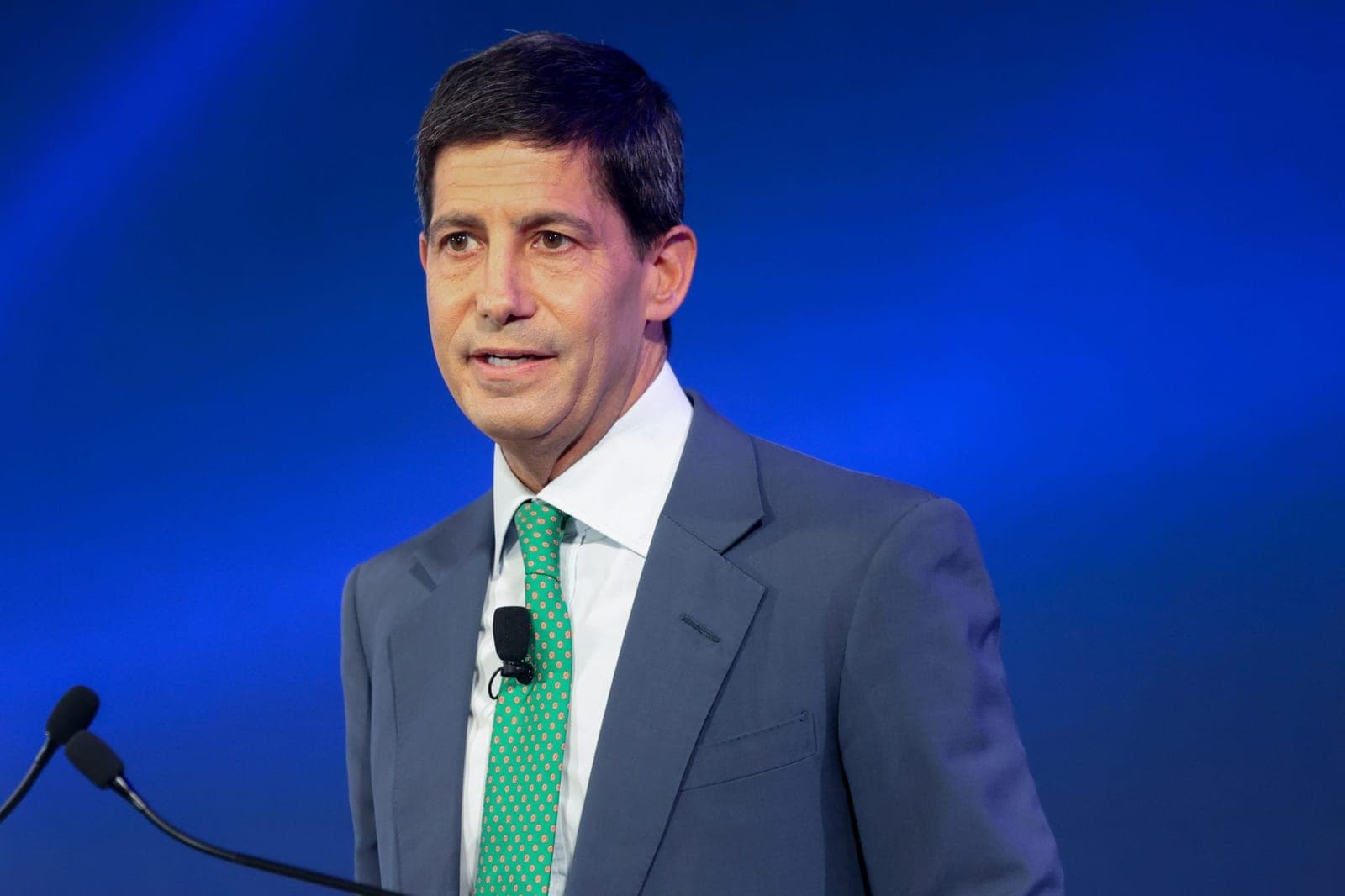
Fed Chair nominee Kevin Warsh is worth more than $100 million and has stakes in SpaceX and Polymarket
Kevin Warsh, President Donald Trump’s pick for the next Federal Reserve chair, is worth more than $100 million, according to a financial disclosure report released by the Office of Government Ethics (OGE) on Tuesday. Warsh will testify before the Senate at a confirmation hearing on April 21. It’s customary for nominated political appointees to submit financial disclosures ahead of Senate confirmation hearings, and the values of their assets are typically given in large ranges. Warsh’s assets are valued between $131 million and more than $209 million in total, according to The Wall Street Journal. His largest assets are two investments in “Juggernaut Fund” worth more than $50 million each. He also owns more than four dozen assets associated with THSDFS LLC, some individually worth as much as $5 million. Warsh reported having stakes in SpaceX and prediction market Polymarket, though did not disclose their value. He also has stakes in several dozen AI companies including Cafe X, the robotic coffee bar company, and several crypto investment and trading firms. Upon confirmation, Warsh will resign his positions on the board of UPS and as a partner at investment firm Duquesne Family Office LLC, where he made $10.2 million in consulting fees. The disclosures also included the holdings of Warsh’s wife, Jane Lauder, the granddaughter of cosmetics billionaire Estée Lauder, who sits on the board of The Estée Lauder Companies. Lauder has a personal net worth of $2 billion and owns more than a million in Class A stock in Estée Lauder, according to the filing. Warsh currently owns between $1 million and $5 million in UPS vested phantom stock and another $1 million and $5 million in vested restricted stock units, according to the filing. Six months after his confirmation, he will receive a cash payment equal to the value of the vested phantom stock, Warsh wrote. He will also resign his positions at the think tanks Group of 30 and the Hoover Institution, as well as a visiting fellow at Stanford University’s Graduate School of Business. Warsh previously served as a Fed governor from 2006 to 2011. Before that, Warsh worked for Morgan Stanley from 1995 to 2002 and left the company as a vice president and executive director. In 2002, President George W. Bush appointed him as special assistant to the president for economic policy and executive secretary at the National Economic Council where he served until 2006 when the president nominated to the Fed. While Warsh’s confirmation hearing is scheduled for next week, it could be some time before he takes over from current Fed Chair Jerome Powell. Sen. Thom Tillis (R-NC) has vowed to block any of the president’s Fed nominees until the Department of Justice’s criminal probe of Powell is resolved. This will most likely lead to a 12-12 split vote on the narrowly divided banking committee, stopping the nomination from reaching the entire Senate for a vote. If confirmed, Warsh will make $253,100 a year, the salary of top-level political appointees such as cabinet secretaries and agency heads. This story was originally featured on Fortune.com

Eric Swalwell suspends campaign for California governor, rocking wide-open contest
Democratic Rep. Eric Swalwell’s abrupt exit from the race for California governor left his rivals scrambling to lock down his former supporters in a crowded contest with no clear leader, injecting more turmoil into the campaign to lead the nation’s most populous state. Swalwell’s decision to suspend his campaign Sunday followed allegations that he sexually assaulted a woman twice, including when she worked for him, that were published Friday in the San Francisco Chronicle and later by CNN. While pulling out of the race he remained defiant in a post on the social platform X, saying, “I will fight the serious, false allegations that have been made — but that’s my fight, not a campaign’s.” For rival candidates in a wide-open race, the key issue is where Swalwell’s supporters will go. He was among the most prominent Democrats in the contest, with mail ballots scheduled to go to voters in early May in advance of the June 2 primary election. Katie Porter, one of the leading Democrats, posted a line from a San Francisco Chronicle column on X, “Democrats can pull victory from the jaws of defeat by coalescing around Porter.” Billionaire hedge fund manager-turned-liberal activist Tom Steyer said he secured the support of Rep. Jared Huffman, a Democrat from the San Francisco Bay Area. With seven established Democrats and two leading Republicans on a primary ballot with more than 50 candidates, the race remains fluid. While Swalwell has suspended his campaign, his name cannot be removed from the ballot. “Nobody has really caught fire,” said Democratic consultant Andrew Acosta, who is not involved in the campaign. Swalwell’s supporters “will scatter out to other candidates.” Many voters remain distant from governor’s race Swalwell is perhaps best known nationally as a House manager in President Donald Trump’s second impeachment trial during his first term in early 2021. But in a media environment dominated by Trump, the race remains distant from many California voters. After the publicity about sexual misconduct allegations, “I think there are probably more people who know who Eric Swalwell is than can articulate a Tom Steyer position paper,” Acosta added. Swalwell was considered a leading contender along with fellow Democrats Steyer and Porter and two Republicans, Riverside County Sheriff Chad Bianco and conservative commentator Steve Hilton. The 48-hour period marked a rapid reversal for a candidate who appeared to be gaining momentum in the packed field to replace outgoing Democratic Gov. Gavin Newsom, who is barred by law from seeking a third term. Though Swalwell has denied the allegations, he has appeared to reference infidelity in multiple statements. “To my family, staff, friends, and supporters, I am deeply sorry for mistakes in judgment I’ve made in my past,” he wrote. That followed a video post on Friday where he apologized to his wife. Swalwell’s exit shakes up campaign The accusations reordered a wide-open gubernatorial race that had Democrats fretting the party’s large number of candidates could lead to them getting shut out of the general election in November. That’s because California has a top-two primary system in which two candidates advance to the general election, regardless of party. Swalwell had become a clear target for his Democratic rivals as he began to lock up institutional support. Some had seized on rumors of sexual misconduct that circulated on social media for weeks before the Chronicle’s report. The San Francisco Chronicle spoke to a woman who alleged Swalwell sexually assaulted her in 2019, when she worked for him, and again in 2024. The woman said she did not go to police at the time of the assaults because she was afraid she would not be believed. In both cases the woman said she was too intoxicated to consent to sex. CNN reported on allegations that appeared to come from the same woman, and spoke to several other women who accused Swalwell of other sexual misconduct. Neither outlet named the woman, and The Associated Press has not been able to independently verify her account and identity. Her lawyer declined to comment. The alleged 2024 incident occurred in New York, and the Manhattan District Attorney’s Office said it’s investigating. That office urged anyone with knowledge to contact its special victims division. House colleagues call for Swalwell to resign As Swalwell’s campaign flailed over the weekend, fellow California Reps. Jared Huffman, Ro Khanna and Sam Liccardo said Swalwell should resign, as did Reps. Teresa Leger Fernández of New Mexico and Pramila Jayapal of Washington state. “This is not a partisan issue,” Jayapal said Sunday. “This cuts across party lines. And it is depravity of the way that women have been treated.” Some representatives said they would support the rare step of expelling him from the U.S. House should he refuse to step aside. It all added to the mounting political pressure on Swalwell, which began with allies like Sen. Adam Schiff and Rep. Jimmy Gomez cutting their support. Gomez had helped run Swalwell’s campaign and said he was immediately ending his role. With the House returning to session Tuesday, the question of whether to expel Swalwell could come to a head quickly. Rep. Anna Paulina Luna, R-Fla., said Saturday that she would be filing a motion to start the process. Expulsion votes in the House are rare and require a two-thirds majority, but there is recent precedent for taking the step. Republican George Santos of New York in 2023 became just the sixth member in House history to be ousted by colleagues for his conduct. Huffman, Jayapal and Leger Fernández said they would vote to expel Swalwell from the House, though they said they also support expelling Rep. Tony Gonzales, R-Texas, who admitted to an affair with a former staff member who later died by suicide. Swalwell, who is originally from Iowa, was elected in 2012 and represents a House district east of San Francisco. He launched a presidential run in April 2019 but shuttered it a few months later after failing to catch on with voters. ___ Associated Press writer Ben Finley in Washington contributed to this report. This story was originally featured on Fortune.com
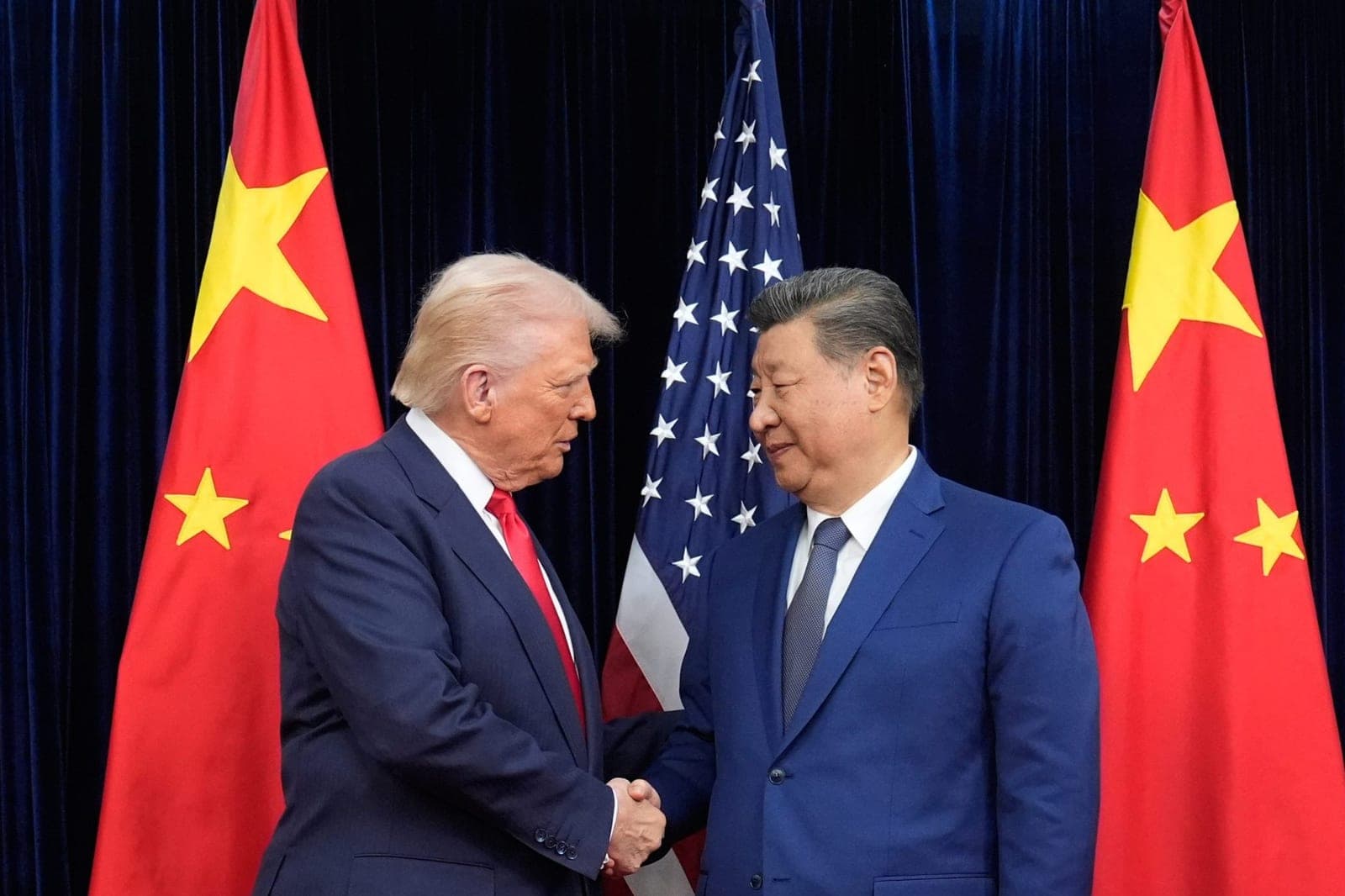
In 2011, Barack Obama said it was time to ‘pivot’ to Asia. But 15 years later, the U.S. is still at war in the Middle East
In 2011, President Barack Obama declared it was time for America to leave behind the wars in Iraq and Afghanistan and “pivot” to Asia to counter the rise of China. Fifteen years later, the U.S. finds itself still at war in the Middle East and has pulled military assets from the Asia-Pacific as it aims to eliminate the threat posed by Iran’s nuclear and missile programs. The demands of the Iran war also caused President Donald Trump to delay by several weeks his highly anticipated trip to China, deepening worries that the U.S. is once again getting distracted at the cost of its strategic interests in Asia, where Beijing seeks to unseat the U.S. as the regional leader. Those skeptical of the U.S. involvement in the Middle East say the war is preventing Trump from adequately preparing for his summit with Chinese leader Xi Jinping next month, when economic interests are on the line, and they warn that a failure to focus on Asia and maintain strong deterrence could lead to greater instability, if China should believe the time is ripe to seize the self-governed island of Taiwan. “This is precisely the wrong time for the United States to turn away and be sucked into another intractable Middle East conflict,” said Danny Russel, a distinguished fellow at the Asia Society Policy Institute. “Rebalancing to Asia is highly relevant to America’s national interests, but it has been undercut by many bad decisions.” Others defend the president’s approach, arguing that the forceful steps he is taking elsewhere, including in Venezuela and Iran, serve to counter China globally. “Beijing is the chief sponsor for the adversaries that President Trump is dealing with sequentially, and it’s wise to do this sequentially,” Matt Pottinger, who served as a deputy national security adviser in the first Trump administration, said in a recent podcast. NATO Secretary General Mark Rutte also said conflicts may not be confined to a single theater, suggesting that China could call upon its “junior partners” elsewhere to divert U.S. attention if it should move against Taiwan. “Most likely it will not be limited, something in the Indo-Pacific to the Indo-Pacific,” Rutte said, speaking Thursday at the Ronald Reagan Institute in Washington. “It will be a multi-theater issue.” Repercussions in Asia of the Iran war Sen. Jeanne Shaheen, the top Democrat on the Senate Foreign Relations Committee, recently led a bipartisan group of senators to Taiwan, Japan and South Korea, where they heard concerns about the impact of the war on energy costs and about the departure of U.S. military assets, including missile defense systems from South Korea and a rapid-response Marine unit from Japan. She sought to reassure them of the U.S. commitment to deterring conflicts in Asia and shoring up regional stability. “Failure is not an option,” Shaheen told The Associated Press after returning from Asia. “We know China has already said they intend to take Taiwan by force if they need to, and they’re on an expedited time schedule. And we also know that what happened in Europe, in the war in Ukraine, in the Middle East is affecting those calculations.” Kurt Campbell, who served as deputy secretary of state in the Biden administration, said he’s worried that the military capabilities that the U.S. had patiently accumulated in the Indo-Pacific region might not return in full even after the Iran war ends. The longer the conflict goes on, the more it will pull resources and focus away from Asia, said Zack Cooper, a senior fellow at the American Enterprise Institute who studies the U.S. strategy in Asia. He added that future arms sales to the region also will be negatively affected. “The United States has expended substantial numbers of munitions in the Middle East and will have to keep an increased force presence there, some of which has been redirected from Asia,” Cooper said. “Meanwhile, Xi Jinping’s wisdom in preparing a ‘war time’ economy by stockpiling and adding alternate energy sources has shown itself to be beneficial.” Shaheen said the U.S. defense industry will struggle to meet the demand to replenish the weapons stockpile. “We’re working on a number of strategies to improve that, but at this point, timelines for weapons delivery are slipping,” she said. The senator from New Hampshire said she’s encouraged that Taiwan, Japan and South Korea are stepping up their own defense. After 15 years and 3 presidents, pivot to Asia remains elusive Obama’s strategic rebalance to Asia reflected his understanding that the U.S. must be a player in the Pacific to harness the region’s growth and ensure continued U.S. leadership in the face of China’s rising influence. “After a decade in which we fought two wars that cost us dearly, in blood and treasure, the United States is turning our attention to the vast potential of the Asia-Pacific region,” Obama said in a speech to the Australian Parliament. “So make no mistake, the tide of war is receding, and America is looking ahead to the future that we must build.” But the strategy was set back when a proposed trade agreement known as the Trans-Pacific Partnership with key U.S. regional partners failed to get through the U.S. Senate. After Trump first took office in 2017, he withdrew the U.S. from the partnership and launched a tariff war with China. His Democratic successor, Joe Biden, kept Trump’s tariffs on China and tightened export controls on advanced technology, while strengthening regional alliances to counter China. Middle East again grabs US attention By the time Trump rolled out his national security strategy in late 2025, the U.S. strategy in Asia had been narrowed to military deterrence in the Taiwan Strait and the First Island Chain, a string of U.S.-aligned islands off China’s coast that restrict its access to the Western Pacific. The national security document says it’s in the economic interest of the U.S. to secure access to advanced chips, which are sourced primarily from Taiwan and are needed to power everything from computers to missiles, and to protect shipping lanes in the South China Sea. “Hence deterring a conflict over Taiwan, ideally by preserving military overmatch, is a priority,” the document says. “We will build a military capable of denying aggression anywhere in the First Island Chain.” The Middle East, it says, should be getting less attention: “As this administration rescinds or eases restrictive energy policies and American energy production ramps up, America’s historic reason for focusing on the Middle East will recede.” Then came the Iran war. This story was originally featured on Fortune.com
In 2011, Barack Obama said it was time to ‘pivot’ to Asia. But 15 years later, the U.S. is still at war in the Middle East
In 2011, President Barack Obama declared it was time for America to leave behind the wars in Iraq and Afghanistan and “pivot” to Asia to counter the rise of China. Fifteen years later, the U.S. finds itself still at war in the Middle East and has pulled military assets from the Asia-Pacific as it aims to eliminate the threat posed by Iran’s nuclear and missile programs. The demands of the Iran war also caused President Donald Trump to delay by several weeks his highly anticipated trip to China, deepening worries that the U.S. is once again getting distracted at the cost of its strategic interests in Asia, where Beijing seeks to unseat the U.S. as the regional leader. Those skeptical of the U.S. involvement in the Middle East say the war is preventing Trump from adequately preparing for his summit with Chinese leader Xi Jinping next month, when economic interests are on the line, and they warn that a failure to focus on Asia and maintain strong deterrence could lead to greater instability, if China should believe the time is ripe to seize the self-governed island of Taiwan. “This is precisely the wrong time for the United States to turn away and be sucked into another intractable Middle East conflict,” said Danny Russel, a distinguished fellow at the Asia Society Policy Institute. “Rebalancing to Asia is highly relevant to America’s national interests, but it has been undercut by many bad decisions.” Others defend the president’s approach, arguing that the forceful steps he is taking elsewhere, including in Venezuela and Iran, serve to counter China globally. “Beijing is the chief sponsor for the adversaries that President Trump is dealing with sequentially, and it’s wise to do this sequentially,” Matt Pottinger, who served as a deputy national security adviser in the first Trump administration, said in a recent podcast. NATO Secretary General Mark Rutte also said conflicts may not be confined to a single theater, suggesting that China could call upon its “junior partners” elsewhere to divert U.S. attention if it should move against Taiwan. “Most likely it will not be limited, something in the Indo-Pacific to the Indo-Pacific,” Rutte said, speaking Thursday at the Ronald Reagan Institute in Washington. “It will be a multi-theater issue.” Repercussions in Asia of the Iran war Sen. Jeanne Shaheen, the top Democrat on the Senate Foreign Relations Committee, recently led a bipartisan group of senators to Taiwan, Japan and South Korea, where they heard concerns about the impact of the war on energy costs and about the departure of U.S. military assets, including missile defense systems from South Korea and a rapid-response Marine unit from Japan. She sought to reassure them of the U.S. commitment to deterring conflicts in Asia and shoring up regional stability. “Failure is not an option,” Shaheen told The Associated Press after returning from Asia. “We know China has already said they intend to take Taiwan by force if they need to, and they’re on an expedited time schedule. And we also know that what happened in Europe, in the war in Ukraine, in the Middle East is affecting those calculations.” Kurt Campbell, who served as deputy secretary of state in the Biden administration, said he’s worried that the military capabilities that the U.S. had patiently accumulated in the Indo-Pacific region might not return in full even after the Iran war ends. The longer the conflict goes on, the more it will pull resources and focus away from Asia, said Zack Cooper, a senior fellow at the American Enterprise Institute who studies the U.S. strategy in Asia. He added that future arms sales to the region also will be negatively affected. “The United States has expended substantial numbers of munitions in the Middle East and will have to keep an increased force presence there, some of which has been redirected from Asia,” Cooper said. “Meanwhile, Xi Jinping’s wisdom in preparing a ‘war time’ economy by stockpiling and adding alternate energy sources has shown itself to be beneficial.” Shaheen said the U.S. defense industry will struggle to meet the demand to replenish the weapons stockpile. “We’re working on a number of strategies to improve that, but at this point, timelines for weapons delivery are slipping,” she said. The senator from New Hampshire said she’s encouraged that Taiwan, Japan and South Korea are stepping up their own defense. After 15 years and 3 presidents, pivot to Asia remains elusive Obama’s strategic rebalance to Asia reflected his understanding that the U.S. must be a player in the Pacific to harness the region’s growth and ensure continued U.S. leadership in the face of China’s rising influence. “After a decade in which we fought two wars that cost us dearly, in blood and treasure, the United States is turning our attention to the vast potential of the Asia-Pacific region,” Obama said in a speech to the Australian Parliament. “So make no mistake, the tide of war is receding, and America is looking ahead to the future that we must build.” But the strategy was set back when a proposed trade agreement known as the Trans-Pacific Partnership with key U.S. regional partners failed to get through the U.S. Senate. After Trump first took office in 2017, he withdrew the U.S. from the partnership and launched a tariff war with China. His Democratic successor, Joe Biden, kept Trump’s tariffs on China and tightened export controls on advanced technology, while strengthening regional alliances to counter China. Middle East again grabs US attention By the time Trump rolled out his national security strategy in late 2025, the U.S. strategy in Asia had been narrowed to military deterrence in the Taiwan Strait and the First Island Chain, a string of U.S.-aligned islands off China’s coast that restrict its access to the Western Pacific. The national security document says it’s in the economic interest of the U.S. to secure access to advanced chips, which are sourced primarily from Taiwan and are needed to power everything from computers to missiles, and to protect shipping lanes in the South China Sea. “Hence deterring a conflict over Taiwan, ideally by preserving military overmatch, is a priority,” the document says. “We will build a military capable of denying aggression anywhere in the First Island Chain.” The Middle East, it says, should be getting less attention: “As this administration rescinds or eases restrictive energy policies and American energy production ramps up, America’s historic reason for focusing on the Middle East will recede.” Then came the Iran war. This story was originally featured on Fortune.com

‘This utter lack of communication and consultation flies in the face of federal law’: states push against immigration detention plans
Homeland Security Secretary Markwayne Mullin is reviewing a plan to transform warehouses across the U.S. into detention facilities for tens of thousands of immigrants. So far immigration officials have spent a total of $1.074 billion for 11 warehouses. They’ve mostly faced fierce opposition. And days after Mullin was sworn in, the Department of Homeland Security paused the purchase of new warehouses intended to house immigrants. The department is scrutinizing all contracts signed under his predecessor, Kristi Noem. A look at some of the locations: Arizona Local officials were told nothing before ICE purchased a 418,000-square-foot (38,833-square-meter) warehouse in the Phoenix suburb of Surprise for $70 million, the state’s top prosecutor, Kris Mayes, said in a letter to former Homeland Security Secretary Kristi Noem. Documents later provided by ICE said the Department of Homeland Security plans a processing site with an average daily capacity of 1,000 to 1,500, and a contract worth at least $313.4 million was awarded to transform it. DHS is now planning something more modest, starting out with 250 people per week and capping occupied beds at 542, according to Surprise Mayor Kevin Sartor. Florida A TV reporter in Orlando spotted private contractors and federal officials in January touring a 439,945-square-foot (40,872-square-meter) industrial warehouse. ICE senior adviser David Venturella told a WFTV reporter the tour was “exploratory.” As of April, the city still hadn’t heard anything, a spokesperson said in an email. Georgia ICE bought a massive warehouse in Social Circle for $128.6 million. The city said the federal government informed it that the facility is expected to house from 7,500 to 10,000 detainees. The city is so concerned about the strain on its water supply that it put a lock on the warehouse’s water meter. DHS has suggested trucking in drinking water and trucking out waste, according to a letter from Georgia Democratic Sens. Raphael Warnock and Jon Ossoff, who said the plan was unworkable. DHS also bought a 540,408-square-foot (50,205-square-meter) warehouse in Oakwood for $68.2 million, a deed shows. City Manager B.R. White said his first inkling that a deal was imminent came when a warehouse supervisor told a city inspector he’d been instructed to clear the job site to make way for the new owners — the federal government. Indiana After the town of Merrillville raised concerns about ICE touring a new 275,000-square-foot (25,548-square-meter) warehouse, owner Opus Holding LLC sent a letter stating it isn’t negotiating with federal officials for the property. The letter said Opus was limited in what it could share because of legal issues. Maryland ICE purchased a warehouse about 60 miles (96 kilometers) northwest of Baltimore in Washington County for $102.4 million and signed a contract worth at least $113 million to renovate it. But work is on hold after Maryland’s attorney general sued. The warehouse has divided the community. County commissioners passed a resolution in support of ICE during a contentious meeting. Michigan After DHS paid $34.7 million for a 250,000-square-foot (23,225-square-meter) warehouse in Romulus, the state and city sued. The suit said the warehouse is in a flood plain, and that the sewage system couldn’t keep up if 500 people are detained inside. It also faults DHS for not considering any of the state’s empty prison facilities and for not talking to state or city officials. Minnesota The owners of warehouses in the Minneapolis suburbs of Woodbury and Shakopee pulled out of possible ICE deals after public outcry, according to local officials. Mississippi Republican U.S. Sen. Roger Wicker posted that Noem agreed to look elsewhere after local elected and zoning officials opposed a possible detention center in the town of Byhalia. Missouri After weeks of public pressure, development company Platform Ventures announced it would not move forward with the sale of a massive warehouse in Kansas City. New Hampshire New Hampshire Gov. Kelly Ayotte said in March that DHS would not move forward with a proposed ICE facility in the town of Merrimack. Ayotte, a Republican, had sparred with federal officials after ICE disclosed plans to spend $158 million to convert a warehouse in the town into a 500-bed processing center. The issue came to a head after an ICE official testified that DHS “has worked with Gov. Ayotte” and provided her with an economic impact summary. Ayotte said the summary was not sent until hours after that testimony. The document erroneously refers to the “ripple effects to the Oklahoma economy” and revenue generated by state sales and income taxes, neither of which exist in New Hampshire. New Jersey After DHS bought a 470,044-square-foot (43,669-square-meter) warehouse in Roxbury for $129.3 million, the township and state sued, alleging that federal officials kept them in the dark. “State and local officials might not have a veto over DHS’s decisions, but this utter lack of communication and consultation flies in the face of federal law,” the suit said. New York ICE said it made a mistake when it announced the purchase of a vacant warehouse in Chester. New York state Assemblyman Brian Maher later said ICE was no longer considering the facility. Oklahoma Oklahoma City Mayor David Holt announced in January that property owners had informed him they are no longer engaged with DHS about a potential acquisition or lease of a warehouse. Pennsylvania DHS purchased a warehouse in Tremont Township for $119.5 million and one in Upper Bern Township for $87.4 million. Democratic Gov. Josh Shapiro has said his administration will fight DHS’ plans. The state’s Department of Environmental Protection has barred water and sewage from being supplied to them for now. Tennessee ICE mistakenly announced it had completed the purchase of a warehouse in Lebanon, Tennessee. The sheriff, Robert Bryan, wrote that a facility of the size and scope being discussed — 14,000 to 16,000 detainees — would “significantly impact local law enforcement resources.” And the mayor, Rick Bell, wrote that as a conservative Republican, he supports a secure border but that his town “is not the place.” Republican U.S. Sen. Marsha Blackburn later announced that the deal was dead. Texas In the El Paso suburb of Socorro, ICE paid $122.8 million for a trio of warehouses that span 826,780 square feet (76,810 square meters). ICE also paid $66.1 million for a 639,595-square-foot (59,420-square-meter) warehouse in San Antonio. The mayors of both cities are opposed. Socorro officials — like others — have questioned water supplies. As of April, San Antonio still had heard nothing from DHS. However, another deal in the state was scuttled following community backlash. In the Dallas suburb of Hutchins, a real estate company confirmed that it was contacted about one of its properties but wouldn’t sell or lease any buildings to DHS for use as a detention facility. California-based Majestic Realty Co. provided no explanation in its statement. Utah DHS bought an 833,280-square-foot (77,414-square-meter) warehouse in Salt Lake City for $145.4 million without notifying the city’s Democratic leaders or the state’s Republican governor or congressional delegation. Mayor Erin Mendenhall said in a statement released in March that ICE officials later told her that the facility will house 7,500 to 10,000 people. The city has moved to cap water use at just a fraction of what would be needed to operate the warehouse as a detention site. The sale of the warehouse came two months after the owner of another Salt Lake City warehouse announced plans not to sell or lease to the federal government amid protests. Virginia Following boycott threats, Jim Pattison Developments announced in January that it would not proceed with a planned sale of a warehouse in the suburbs of Richmond, Virginia. It said it was not aware of the intended use until after it agreed to the sale. ___ Associated Press reporters Holly Ramer, Isabella Volmert and Marc Levy contributed to this report. This story was originally featured on Fortune.com

‘In rural, urban, red, blue, Democrats have overperformed everywhere’: GOP wakes up to freight train heading their way
The bluntest assessment of Republican failures during this week’s elections in Wisconsin came from one of their own. “We got our butts kicked,” said U.S. Rep. Tom Tiffany, who is running for governor. He was referring to Democratic victories in campaigns for the Wisconsin Supreme Court and the mayor’s office in Waukesha, a conservative suburb outside of Milwaukee. But some Republicans were also rattled by a Georgia special election, where their candidate to replace Marjorie Taylor Greene in Congress won by a much slimmer margin than the party enjoyed in the past. Taken together, the swings from red to blue added more data points to an increasingly clear picture of Democratic momentum heading into the November midterms, when control of the U.S. House, U.S. Senate and state governments around the country are up for grabs. “In rural, urban, red, blue, Democrats have overperformed everywhere,” said Jared Leopold, a Democratic consultant whose clients include Keisha Lance Bottoms, a candidate for Georgia governor. “That is a significant canary in the coal mine about what November of ’26 is going to look like.” Some Republicans insisted there was no need to panic, and their fundraising remains stronger than Democrats. Stephen Lawson, a Georgia strategist, said “the sky is not falling.” But he also said his party is running behind where it has been in the past, and Republicans need to be “looking at these results carefully.” ‘A red alarm for Republicans’ Special elections can be notoriously unreliable as political benchmarks, but Democrats have consistently demonstrated surprising strength. They flipped a Texas state Senate district. They won a Florida state House seat in a district that includes President Donald Trump’s Mar-a-Lago resort in Palm Beach. Then they gained ground on Tuesday in the race to replace Greene, who resigned from Congress in January after a falling out with Trump. Clay Fuller, the Republican candidate, prevailed by 12 points. Two years ago, Greene won by 29 points and Trump carried the district by almost 37 points. “That’s a red alarm for Republicans,” said Democratic strategist Meredith Brasher. Fuller defeated Shawn Harris, who plans to challenge him again in November. Jackie Harling, the district’s Republican chairwoman, said she believed that Greene’s resignation energized Democrats while her party is suffering from “election fatigue.” “Marjorie Taylor Greene was like a freight train that you couldn’t stop, and when she pulled out, it gave Democrats hope and it gave them a shot at winning something they believed was unwinnable,” Harling said. ‘Slightly bluer side of purple’ Georgia has key races this year, including an open contest for the governor’s office. Sen. Jon Ossoff, a Democrat, is trying to defend his seat as well. There’s reason to think that simmering discontent could boomerang back on Republicans just two years after Trump harnessed voters’ anger with his comeback presidential campaign. In November, Democrats defeated two Republican incumbents in statewide races for seats on the Public Service Commission, which regulates utilities. Rising electricity rates have been a fault line in recent campaigns, especially as enormous data centers are built to power artificial intelligence. But Georgia Democratic Party Chair Charlie Bailey is trying to maintain modest expectations. “We could cement ourselves, put ourselves, on the slightly bluer side of purple,” he said. ”We’re not going to overnight turn into Colorado.” ‘A very clear sign of momentum’ Wisconsin holds statewide elections for supreme court seats, and liberals expanded their majority with a 20-point blowout victory on Tuesday. Democrats saw gains in red, blue and purple counties when compared to another judicial race last year, which was also won by the liberal candidate. “This to me was a very clear sign of momentum and enthusiasm for Democrats in the fall,” said Wisconsin Democratic Party Chairman Devin Remiker. The state has its own open race for governor this year, and Democrats are hoping to take control of the state legislature and oust Republican U.S. Rep. Derrick Van Orden. “It’s time for us to put this thing in overdrive,” said Mandela Barnes, a Democratic former lieutenant governor who is running for governor. Milwaukee County Executive David Crowley, another Democratic candidate for governor, said it’s clear that “people are really upset with the Republican Party and their brand right now.” “But that doesn’t mean that they’re automatically going to come over to the Democrats,” Crowley said. “And that’s why we have to continue to focus on the issues and speak to the values of all the voters here in the state of Wisconsin.” ‘A lot of anxiety’ Tiffany, the Republican candidate for governor in Wisconsin, cautioned against reading too much into Tuesday’s results. He said “every election is unique,” and he wasn’t making any changes to his campaign. He said the key to winning will be to “paint that clear contrast of how we are going to help everyday Wisconsinites.” But Democrats seemed to be making inroads, including in Waukesha. The city is located outside of Milwaukee in the Republican stronghold of Waukesha County. Democrat Alicia Halvensleben, president of the city’s Common Council, defeated Republican Scott Allen, one of the most conservative members of the state Assembly. She said Trump came up “a lot” when she was campaigning, although she thinks her victory came down to local issues and how the state legislature wasn’t addressing them. “There’s so much uncertainty at the national level,” Halvensleben said. “I think that level of uncertainty is causing people a lot of anxiety, all the way down to the local level.” ___ Amy reported from Atlanta and Cooper reported from Phoenix. This story was originally featured on Fortune.com
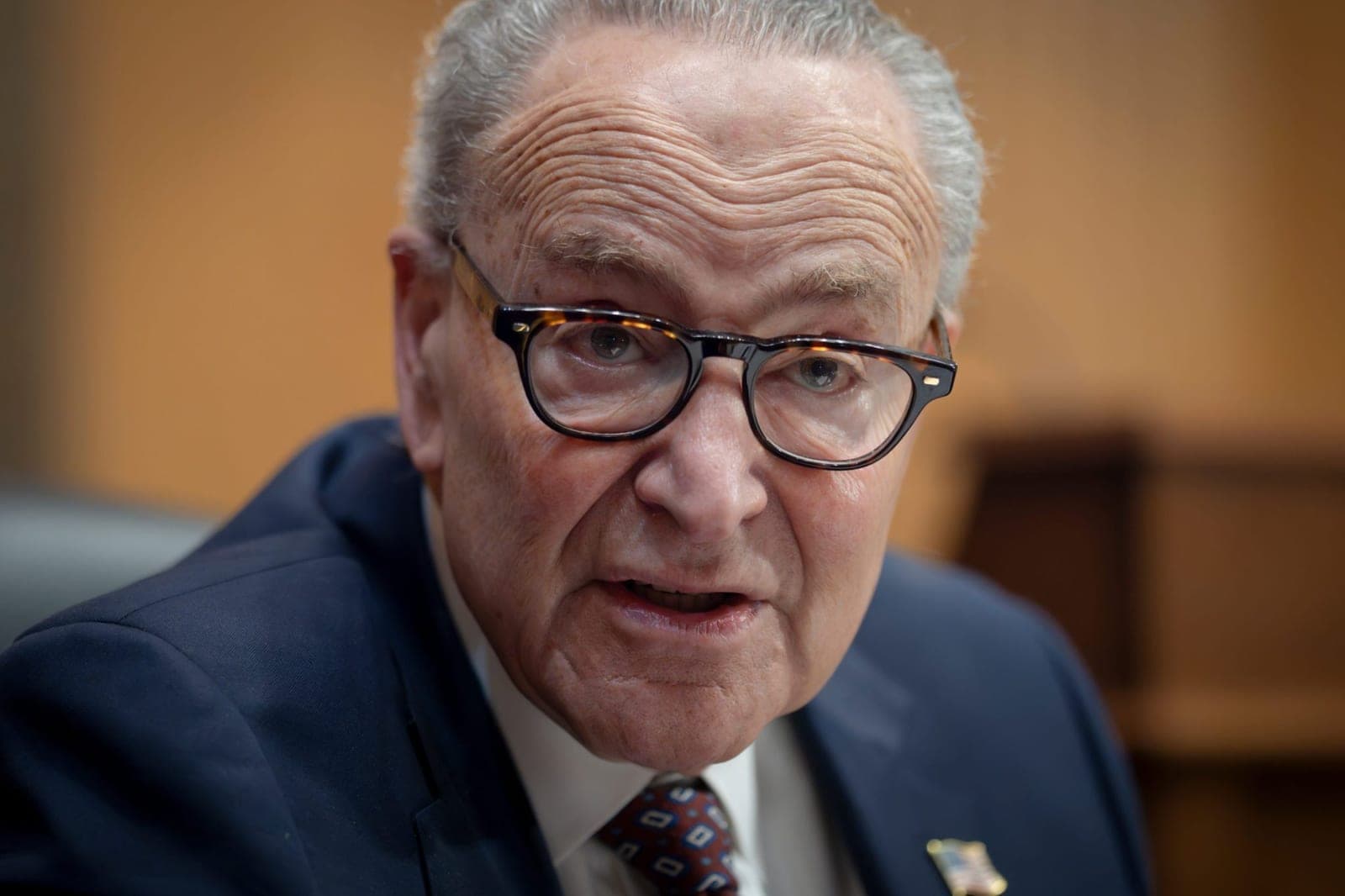
Democrats in disarray as rank and file clash with Chuck Schumer’s plan to run elderly moderates in must-win races
Democrats’ hopes of reclaiming the U.S. Senate are colliding with a fight within their own party. In Maine, Senate Minority Leader Chuck Schumer has thrown his weight behind Gov. Janet Mills in a crucial race, but some of his Senate colleagues are backing insurgent candidate Graham Platner in a rebuke of his strategic vision. A similar dynamic is playing out in other battlegrounds, including Michigan and Minnesota, where progressives senators are endorsing non-establishment candidates. At stake is more than any single race. Democrats are fighting over whether the party’s traditional playbook still works in a country that elected Donald Trump for a second time — and whether leaders like Schumer should remain in charge. “Clearly there’s a disagreement of strategy here,” said New Mexico Sen. Martin Heinrich, who has endorsed Platner. He added that “the business-as-usual calculation for what is going to be successful in a given election cycle does not necessarily, in my view, meet the moment.” The divide reflects a Democratic base frustrated after the last presidential election, when President Joe Biden ran for a second term despite widespread concerns about his age. He dropped out and endorsed Vice President Kamala Harris, who lost to Trump. Nan Whaley, a Democratic strategist in Ohio who ran for governor four years ago, said the debate is no longer about progressive or moderate. “It’s really about, who do you trust? Establishment or not establishment,” she said. “And frankly, the establishment hasn’t given us a lot to trust these past few years.” ‘A rebuke of Schumer’ In Maine, Schumer and the Democratic Senatorial Campaign Committee, or DSCC, have backed Mills, a 78-year-old moderate in her second term. Platner, a veteran and oyster farmer, quickly won the backing of Sen. Bernie Sanders, I-Vt., just days after launching his campaign. His bid has since gained momentum despite scrutiny over past controversial comments and a tattoo resembling a Nazi symbol. In recent weeks, Heinrich, Arizona Sen. Ruben Gallego and Massachusetts Sen. Elizabeth Warren have endorsed Platner as he builds support on Capitol Hill. Heinrich and Rhode Island Sen. Sheldon Whitehouse held a fundraiser for him, too. Gallego, a first-term senator who won a battleground race in 2024, downplayed the endorsements as a broader critique of party leadership. “Senate leadership didn’t back me at the beginning. So I didn’t take that as a critique,” Gallego said. Michigan also has a contentious primary, with three high-profile candidates. State Sen. Mallory McMorrow has said she would not support Schumer as the caucus leader if Democrats regain the majority, and she’s been endorsed by four senators. Abdul El-Sayed, running further to the left, has been endorsed by Sanders and has also run on an anti-establishment platform. U.S. Rep. Haley Stevens has aligned with establishment figures, working with a former DSCC executive director and securing support from two senators. Democratic strategist Lis Smith said the endorsements in races like Maine and Michigan are “as much as a rebuke of Schumer as it is an endorsement of these candidates.” “It’s pretty uncommon for sitting senators to endorse against the Senate leader,” Smith said. “Senators are reading the tea leaves and are getting feedback from the grassroots that they are dissatisfied with Schumer’s performance as leader.” In Minnesota, an open-seat race has similarly emerged as a test of the party’s direction. Rep. Angie Craig is seen as the centrist candidate in the primary, with endorsements from House Democratic Leader Hakeem Jeffries and Rep. Nancy Pelosi. Lt. Gov. Peggy Flanagan, the more progressive candidate, has been backed by Sanders, Warren and others, including Minnesota Sen. Tina Smith, who is vacating the seat. “She understands that right now what we need are fierce fighters, people who are willing to stand up to the status quo,” Smith said in her endorsement. ‘The election may impact’ Schumer’s time as leader Some tensions trace to March 2025, when Schumer voted with Republicans to end a government shutdown, drawing backlash from Democrats who argued he did not push hard enough against Trump’s agenda. Later that year, Democrats held firm in a record-long shutdown fight, helping regain some ground with activists and progressives. But divisions resurfaced when a group of moderates ultimately sided with Republicans, fueling renewed frustration with party leadership even as Schumer opposed the move. Since he became Senate leader in 2017, Schumer’s record in elections has been mixed. He led Democrats back to the majority in 2020 and expanded it in 2022 but lost ground in both 2018 and 2024. “Leader Schumer’s North Star is taking back the Senate and is pursuing a path to do just that,” said Allison Biasotti, a spokesperson for Schumer. He’s recruited high-profile candidates this year in tough Senate races, such as Alaska, Ohio and North Carolina. Maeve Coyle, communications director for the DSCC, said Schumer “created a path to win a Democratic Senate majority this cycle” with the recruitment. “Senate Democrats overperformed in the last four election cycles and in 2026, we will win seats and flip the majority,” she added. David Axelrod, who served as a top strategist for President Barack Obama, said that being Senate leader is never easy, and that Schumer “has been under fire for some time, particularly from progressives in the party.” Schumer’s time as leader, Axelrod added, is likely directly linked to the outcome of the 2026 midterms. “There’s questions as to whether he’ll run in 2028. There’s even questions as to whether he might be challenged as leader,” he said. “I think the results of this election may impact that.” For now, Schumer’s caucus is tentatively standing behind him. None have explicitly called for him to step aside. But discontent has lingered, with some openly questioning whether the party needs a new direction. “How people did politics in the 1990s is going to feel different than in the 2020s,” said Heinrich. This story was originally featured on Fortune.com
Democrats in disarray as rank and file clash with Chuck Schumer’s plan to run elderly moderates in must-win races
Democrats’ hopes of reclaiming the U.S. Senate are colliding with a fight within their own party. In Maine, Senate Minority Leader Chuck Schumer has thrown his weight behind Gov. Janet Mills in a crucial race, but some of his Senate colleagues are backing insurgent candidate Graham Platner in a rebuke of his strategic vision. A similar dynamic is playing out in other battlegrounds, including Michigan and Minnesota, where progressives senators are endorsing non-establishment candidates. At stake is more than any single race. Democrats are fighting over whether the party’s traditional playbook still works in a country that elected Donald Trump for a second time — and whether leaders like Schumer should remain in charge. “Clearly there’s a disagreement of strategy here,” said New Mexico Sen. Martin Heinrich, who has endorsed Platner. He added that “the business-as-usual calculation for what is going to be successful in a given election cycle does not necessarily, in my view, meet the moment.” The divide reflects a Democratic base frustrated after the last presidential election, when President Joe Biden ran for a second term despite widespread concerns about his age. He dropped out and endorsed Vice President Kamala Harris, who lost to Trump. Nan Whaley, a Democratic strategist in Ohio who ran for governor four years ago, said the debate is no longer about progressive or moderate. “It’s really about, who do you trust? Establishment or not establishment,” she said. “And frankly, the establishment hasn’t given us a lot to trust these past few years.” ‘A rebuke of Schumer’ In Maine, Schumer and the Democratic Senatorial Campaign Committee, or DSCC, have backed Mills, a 78-year-old moderate in her second term. Platner, a veteran and oyster farmer, quickly won the backing of Sen. Bernie Sanders, I-Vt., just days after launching his campaign. His bid has since gained momentum despite scrutiny over past controversial comments and a tattoo resembling a Nazi symbol. In recent weeks, Heinrich, Arizona Sen. Ruben Gallego and Massachusetts Sen. Elizabeth Warren have endorsed Platner as he builds support on Capitol Hill. Heinrich and Rhode Island Sen. Sheldon Whitehouse held a fundraiser for him, too. Gallego, a first-term senator who won a battleground race in 2024, downplayed the endorsements as a broader critique of party leadership. “Senate leadership didn’t back me at the beginning. So I didn’t take that as a critique,” Gallego said. Michigan also has a contentious primary, with three high-profile candidates. State Sen. Mallory McMorrow has said she would not support Schumer as the caucus leader if Democrats regain the majority, and she’s been endorsed by four senators. Abdul El-Sayed, running further to the left, has been endorsed by Sanders and has also run on an anti-establishment platform. U.S. Rep. Haley Stevens has aligned with establishment figures, working with a former DSCC executive director and securing support from two senators. Democratic strategist Lis Smith said the endorsements in races like Maine and Michigan are “as much as a rebuke of Schumer as it is an endorsement of these candidates.” “It’s pretty uncommon for sitting senators to endorse against the Senate leader,” Smith said. “Senators are reading the tea leaves and are getting feedback from the grassroots that they are dissatisfied with Schumer’s performance as leader.” In Minnesota, an open-seat race has similarly emerged as a test of the party’s direction. Rep. Angie Craig is seen as the centrist candidate in the primary, with endorsements from House Democratic Leader Hakeem Jeffries and Rep. Nancy Pelosi. Lt. Gov. Peggy Flanagan, the more progressive candidate, has been backed by Sanders, Warren and others, including Minnesota Sen. Tina Smith, who is vacating the seat. “She understands that right now what we need are fierce fighters, people who are willing to stand up to the status quo,” Smith said in her endorsement. ‘The election may impact’ Schumer’s time as leader Some tensions trace to March 2025, when Schumer voted with Republicans to end a government shutdown, drawing backlash from Democrats who argued he did not push hard enough against Trump’s agenda. Later that year, Democrats held firm in a record-long shutdown fight, helping regain some ground with activists and progressives. But divisions resurfaced when a group of moderates ultimately sided with Republicans, fueling renewed frustration with party leadership even as Schumer opposed the move. Since he became Senate leader in 2017, Schumer’s record in elections has been mixed. He led Democrats back to the majority in 2020 and expanded it in 2022 but lost ground in both 2018 and 2024. “Leader Schumer’s North Star is taking back the Senate and is pursuing a path to do just that,” said Allison Biasotti, a spokesperson for Schumer. He’s recruited high-profile candidates this year in tough Senate races, such as Alaska, Ohio and North Carolina. Maeve Coyle, communications director for the DSCC, said Schumer “created a path to win a Democratic Senate majority this cycle” with the recruitment. “Senate Democrats overperformed in the last four election cycles and in 2026, we will win seats and flip the majority,” she added. David Axelrod, who served as a top strategist for President Barack Obama, said that being Senate leader is never easy, and that Schumer “has been under fire for some time, particularly from progressives in the party.” Schumer’s time as leader, Axelrod added, is likely directly linked to the outcome of the 2026 midterms. “There’s questions as to whether he’ll run in 2028. There’s even questions as to whether he might be challenged as leader,” he said. “I think the results of this election may impact that.” For now, Schumer’s caucus is tentatively standing behind him. None have explicitly called for him to step aside. But discontent has lingered, with some openly questioning whether the party needs a new direction. “How people did politics in the 1990s is going to feel different than in the 2020s,” said Heinrich. This story was originally featured on Fortune.com
Democrats in disarray as rank and file clash with Chuck Schumer’s plan to run elderly moderates in must-win races
Democrats’ hopes of reclaiming the U.S. Senate are colliding with a fight within their own party. In Maine, Senate Minority Leader Chuck Schumer has thrown his weight behind Gov. Janet Mills in a crucial race, but some of his Senate colleagues are backing insurgent candidate Graham Platner in a rebuke of his strategic vision. A similar dynamic is playing out in other battlegrounds, including Michigan and Minnesota, where progressives senators are endorsing non-establishment candidates. At stake is more than any single race. Democrats are fighting over whether the party’s traditional playbook still works in a country that elected Donald Trump for a second time — and whether leaders like Schumer should remain in charge. “Clearly there’s a disagreement of strategy here,” said New Mexico Sen. Martin Heinrich, who has endorsed Platner. He added that “the business-as-usual calculation for what is going to be successful in a given election cycle does not necessarily, in my view, meet the moment.” The divide reflects a Democratic base frustrated after the last presidential election, when President Joe Biden ran for a second term despite widespread concerns about his age. He dropped out and endorsed Vice President Kamala Harris, who lost to Trump. Nan Whaley, a Democratic strategist in Ohio who ran for governor four years ago, said the debate is no longer about progressive or moderate. “It’s really about, who do you trust? Establishment or not establishment,” she said. “And frankly, the establishment hasn’t given us a lot to trust these past few years.” ‘A rebuke of Schumer’ In Maine, Schumer and the Democratic Senatorial Campaign Committee, or DSCC, have backed Mills, a 78-year-old moderate in her second term. Platner, a veteran and oyster farmer, quickly won the backing of Sen. Bernie Sanders, I-Vt., just days after launching his campaign. His bid has since gained momentum despite scrutiny over past controversial comments and a tattoo resembling a Nazi symbol. In recent weeks, Heinrich, Arizona Sen. Ruben Gallego and Massachusetts Sen. Elizabeth Warren have endorsed Platner as he builds support on Capitol Hill. Heinrich and Rhode Island Sen. Sheldon Whitehouse held a fundraiser for him, too. Gallego, a first-term senator who won a battleground race in 2024, downplayed the endorsements as a broader critique of party leadership. “Senate leadership didn’t back me at the beginning. So I didn’t take that as a critique,” Gallego said. Michigan also has a contentious primary, with three high-profile candidates. State Sen. Mallory McMorrow has said she would not support Schumer as the caucus leader if Democrats regain the majority, and she’s been endorsed by four senators. Abdul El-Sayed, running further to the left, has been endorsed by Sanders and has also run on an anti-establishment platform. U.S. Rep. Haley Stevens has aligned with establishment figures, working with a former DSCC executive director and securing support from two senators. Democratic strategist Lis Smith said the endorsements in races like Maine and Michigan are “as much as a rebuke of Schumer as it is an endorsement of these candidates.” “It’s pretty uncommon for sitting senators to endorse against the Senate leader,” Smith said. “Senators are reading the tea leaves and are getting feedback from the grassroots that they are dissatisfied with Schumer’s performance as leader.” In Minnesota, an open-seat race has similarly emerged as a test of the party’s direction. Rep. Angie Craig is seen as the centrist candidate in the primary, with endorsements from House Democratic Leader Hakeem Jeffries and Rep. Nancy Pelosi. Lt. Gov. Peggy Flanagan, the more progressive candidate, has been backed by Sanders, Warren and others, including Minnesota Sen. Tina Smith, who is vacating the seat. “She understands that right now what we need are fierce fighters, people who are willing to stand up to the status quo,” Smith said in her endorsement. ‘The election may impact’ Schumer’s time as leader Some tensions trace to March 2025, when Schumer voted with Republicans to end a government shutdown, drawing backlash from Democrats who argued he did not push hard enough against Trump’s agenda. Later that year, Democrats held firm in a record-long shutdown fight, helping regain some ground with activists and progressives. But divisions resurfaced when a group of moderates ultimately sided with Republicans, fueling renewed frustration with party leadership even as Schumer opposed the move. Since he became Senate leader in 2017, Schumer’s record in elections has been mixed. He led Democrats back to the majority in 2020 and expanded it in 2022 but lost ground in both 2018 and 2024. “Leader Schumer’s North Star is taking back the Senate and is pursuing a path to do just that,” said Allison Biasotti, a spokesperson for Schumer. He’s recruited high-profile candidates this year in tough Senate races, such as Alaska, Ohio and North Carolina. Maeve Coyle, communications director for the DSCC, said Schumer “created a path to win a Democratic Senate majority this cycle” with the recruitment. “Senate Democrats overperformed in the last four election cycles and in 2026, we will win seats and flip the majority,” she added. David Axelrod, who served as a top strategist for President Barack Obama, said that being Senate leader is never easy, and that Schumer “has been under fire for some time, particularly from progressives in the party.” Schumer’s time as leader, Axelrod added, is likely directly linked to the outcome of the 2026 midterms. “There’s questions as to whether he’ll run in 2028. There’s even questions as to whether he might be challenged as leader,” he said. “I think the results of this election may impact that.” For now, Schumer’s caucus is tentatively standing behind him. None have explicitly called for him to step aside. But discontent has lingered, with some openly questioning whether the party needs a new direction. “How people did politics in the 1990s is going to feel different than in the 2020s,” said Heinrich. This story was originally featured on Fortune.com
Democrats in disarray as rank and file clash with Chuck Schumer’s plan to run elderly moderates in must-win races
Democrats’ hopes of reclaiming the U.S. Senate are colliding with a fight within their own party. In Maine, Senate Minority Leader Chuck Schumer has thrown his weight behind Gov. Janet Mills in a crucial race, but some of his Senate colleagues are backing insurgent candidate Graham Platner in a rebuke of his strategic vision. A similar dynamic is playing out in other battlegrounds, including Michigan and Minnesota, where progressives senators are endorsing non-establishment candidates. At stake is more than any single race. Democrats are fighting over whether the party’s traditional playbook still works in a country that elected Donald Trump for a second time — and whether leaders like Schumer should remain in charge. “Clearly there’s a disagreement of strategy here,” said New Mexico Sen. Martin Heinrich, who has endorsed Platner. He added that “the business-as-usual calculation for what is going to be successful in a given election cycle does not necessarily, in my view, meet the moment.” The divide reflects a Democratic base frustrated after the last presidential election, when President Joe Biden ran for a second term despite widespread concerns about his age. He dropped out and endorsed Vice President Kamala Harris, who lost to Trump. Nan Whaley, a Democratic strategist in Ohio who ran for governor four years ago, said the debate is no longer about progressive or moderate. “It’s really about, who do you trust? Establishment or not establishment,” she said. “And frankly, the establishment hasn’t given us a lot to trust these past few years.” ‘A rebuke of Schumer’ In Maine, Schumer and the Democratic Senatorial Campaign Committee, or DSCC, have backed Mills, a 78-year-old moderate in her second term. Platner, a veteran and oyster farmer, quickly won the backing of Sen. Bernie Sanders, I-Vt., just days after launching his campaign. His bid has since gained momentum despite scrutiny over past controversial comments and a tattoo resembling a Nazi symbol. In recent weeks, Heinrich, Arizona Sen. Ruben Gallego and Massachusetts Sen. Elizabeth Warren have endorsed Platner as he builds support on Capitol Hill. Heinrich and Rhode Island Sen. Sheldon Whitehouse held a fundraiser for him, too. Gallego, a first-term senator who won a battleground race in 2024, downplayed the endorsements as a broader critique of party leadership. “Senate leadership didn’t back me at the beginning. So I didn’t take that as a critique,” Gallego said. Michigan also has a contentious primary, with three high-profile candidates. State Sen. Mallory McMorrow has said she would not support Schumer as the caucus leader if Democrats regain the majority, and she’s been endorsed by four senators. Abdul El-Sayed, running further to the left, has been endorsed by Sanders and has also run on an anti-establishment platform. U.S. Rep. Haley Stevens has aligned with establishment figures, working with a former DSCC executive director and securing support from two senators. Democratic strategist Lis Smith said the endorsements in races like Maine and Michigan are “as much as a rebuke of Schumer as it is an endorsement of these candidates.” “It’s pretty uncommon for sitting senators to endorse against the Senate leader,” Smith said. “Senators are reading the tea leaves and are getting feedback from the grassroots that they are dissatisfied with Schumer’s performance as leader.” In Minnesota, an open-seat race has similarly emerged as a test of the party’s direction. Rep. Angie Craig is seen as the centrist candidate in the primary, with endorsements from House Democratic Leader Hakeem Jeffries and Rep. Nancy Pelosi. Lt. Gov. Peggy Flanagan, the more progressive candidate, has been backed by Sanders, Warren and others, including Minnesota Sen. Tina Smith, who is vacating the seat. “She understands that right now what we need are fierce fighters, people who are willing to stand up to the status quo,” Smith said in her endorsement. ‘The election may impact’ Schumer’s time as leader Some tensions trace to March 2025, when Schumer voted with Republicans to end a government shutdown, drawing backlash from Democrats who argued he did not push hard enough against Trump’s agenda. Later that year, Democrats held firm in a record-long shutdown fight, helping regain some ground with activists and progressives. But divisions resurfaced when a group of moderates ultimately sided with Republicans, fueling renewed frustration with party leadership even as Schumer opposed the move. Since he became Senate leader in 2017, Schumer’s record in elections has been mixed. He led Democrats back to the majority in 2020 and expanded it in 2022 but lost ground in both 2018 and 2024. “Leader Schumer’s North Star is taking back the Senate and is pursuing a path to do just that,” said Allison Biasotti, a spokesperson for Schumer. He’s recruited high-profile candidates this year in tough Senate races, such as Alaska, Ohio and North Carolina. Maeve Coyle, communications director for the DSCC, said Schumer “created a path to win a Democratic Senate majority this cycle” with the recruitment. “Senate Democrats overperformed in the last four election cycles and in 2026, we will win seats and flip the majority,” she added. David Axelrod, who served as a top strategist for President Barack Obama, said that being Senate leader is never easy, and that Schumer “has been under fire for some time, particularly from progressives in the party.” Schumer’s time as leader, Axelrod added, is likely directly linked to the outcome of the 2026 midterms. “There’s questions as to whether he’ll run in 2028. There’s even questions as to whether he might be challenged as leader,” he said. “I think the results of this election may impact that.” For now, Schumer’s caucus is tentatively standing behind him. None have explicitly called for him to step aside. But discontent has lingered, with some openly questioning whether the party needs a new direction. “How people did politics in the 1990s is going to feel different than in the 2020s,” said Heinrich. This story was originally featured on Fortune.com