1 story credited to Financial World
Latest story Apr 16, 2026 · on ChamberLight since Apr 2026
A story can appear as several articles (copies of the same piece), so counts of stories and of articles differ.
Scores for Financial World
Writing quality not enough rated stories yet: 1 of 10. How it is measured
Scores last checked Sep 25, 2026.
Stories ChamberLight collected, by month
Stories credited to Financial World, by publication date. ChamberLight collects articles that mention the officials it tracks, so this shows its own coverage of this source, not how much the source publishes.
- Stories from Financial World
- Shaded: ChamberLight collected no stories, or almost none, from any outlet (a gap in its collection, not in the outlet’s publishing)
Show as a table
| Month | Stories | All outlets |
|---|---|---|
| April 2026 | 1 | 1,805 |
| May 2026 | 0 | none collected |
| June 2026 | 0 | none collected |
| July 2026 | 0 | none collected |
| August 2026 | 0 | 1 (collection gap) |
| September 2026 | 0 | 598 |
Top topics
Share of this source’s stories tagged with each topic. A story can carry several topics, so the shares do not add up to 100%.
- Budget/Spending1
100% of 1 stories · 30% across all outlets
- Economy1
100% of 1 stories · 24% across all outlets
- Ethics/Corruption1
100% of 1 stories · 56% across all outlets
The thin mark on each bar is the topic’s share across all outlets.
Who they cover
Party of the officials these stories are mainly about, across all 2 officials named. A story counts once for each official it is mainly about, so the split is over 2 story–official pairs, from 1 story.
- Republican50% · 1 pair
- Party not recorded50% · 1 pair
Most covered
Stories mainly about each official, and their share of the source’s 1 story.
Article tone
ChamberLight’s article analysis assigns each story a tone toward the official it covers. It describes the coverage of that official, not Financial World’s stance, and reader votes do not change it. 1 story.
- Good Look
- 0 (0%)
- Mixed
- 1 (100%)
- Informational
- 0 (0%)
- Bad Look
- 0 (0%)
Challenges to these scores
No one has challenged a score on this page yet. Anyone can; editors publish every outcome here.
Articles served from financial-world.org
2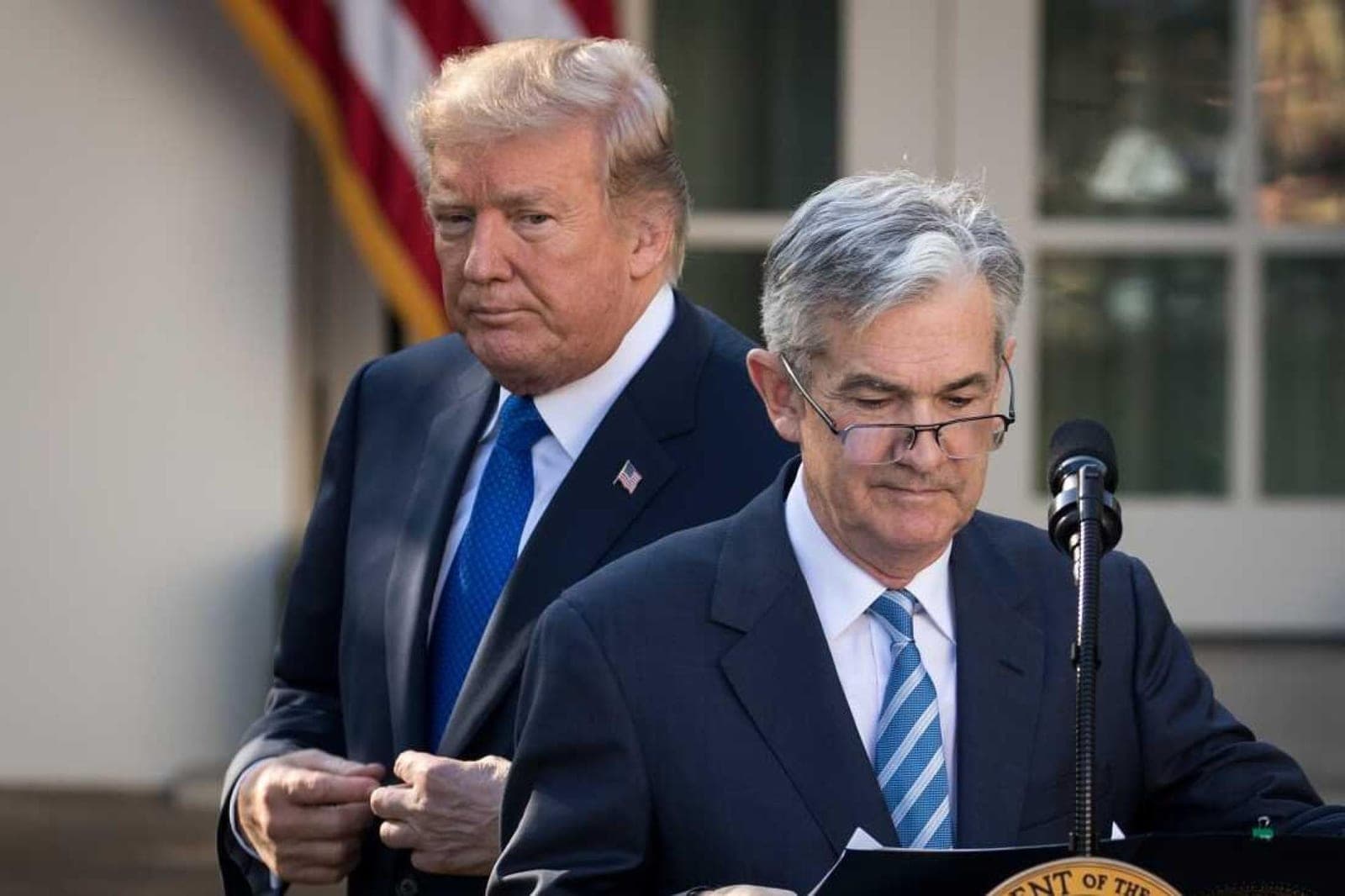
Trump and Powell clash as Warsh nomination stalls at the Fed
What was supposed to be a routine change at the top of the Federal Reserve is turning into a test of whether political pressure can reshape the mechanics of central bank succession. With Jerome Powell’s term as chair due to expire on May 15 and Kevin Warsh still awaiting Senate confirmation, the White House is no longer merely attacking the Fed’s policy stance. It is colliding with the institutional question of who controls the transition when a chair’s tenure ends under active political and legal assault. President Donald Trump made that confrontation explicit on Wednesday. Asked what would happen if Powell remained at the Fed after his term as chair expires, Trump said: “Then I’ll have to fire him.” That threat matters less as a personnel remark than as a signal that the administration is prepared to test the boundaries of its authority over an institution designed to operate at arm’s length from the presidency. The complication is not only that Trump has already nominated Warsh. It is that the nomination is now entangled with a Department of Justice criminal investigation into Powell over his testimony to Congress about the Fed’s headquarters renovation project. North Carolina Republican Senator Thom Tillis has said he will not support Warsh until that probe is finished, creating the possibility that Powell remains in place as chair on an interim basis. Powell himself addressed that scenario in March, saying: “That’s what the law calls for. That’s what we’ve done on several occasions.” In other words, the existing framework anticipates continuity. The administration’s posture, however, treats continuity as defiance. That shift raises the stakes beyond one nomination. A delayed confirmation can happen in Washington. A delayed confirmation paired with prosecutorial pressure, public threats and surprise visits to the Fed’s building turns a staffing issue into a constitutional-style contest over independence. The White House has framed the investigation as a matter of oversight and cost discipline. Jeanine Pirro said: “Any construction project that has cost overruns of almost 80% over the original construction budget deserves some serious review,” adding, “And these people are in charge of monetary policy in the United States?” Trump pushed the argument further, saying: “I have to find out.” Yet politically, the probe does more than scrutinize a building. It keeps Powell on the defensive while also slowing the path for his successor. Trump’s own comments show the contradiction. He wants Powell gone, however he is unwilling to drop the investigation even if it complicates Warsh’s confirmation. Powell has made clear he does not intend to yield under those conditions. “I have no intention of leaving the Board until the investigation is well and truly over with transparency and finality,” he said. The immediate fight is about Powell. The longer-term issue is whether future Fed leadership changes can be shaped by threat of removal, legal escalation and political spectacle. Even if Powell ultimately leaves on schedule, the precedent under construction may prove more consequential than the renovation project now under investigation.
Trump and Powell clash as Warsh nomination stalls at the Fed
What was supposed to be a routine change at the top of the Federal Reserve is turning into a test of whether political pressure can reshape the mechanics of central bank succession. With Jerome Powell’s term as chair due to expire on May 15 and Kevin Warsh still awaiting Senate confirmation, the White House is no longer merely attacking the Fed’s policy stance. It is colliding with the institutional question of who controls the transition when a chair’s tenure ends under active political and legal assault. President Donald Trump made that confrontation explicit on Wednesday. Asked what would happen if Powell remained at the Fed after his term as chair expires, Trump said: “Then I’ll have to fire him.” That threat matters less as a personnel remark than as a signal that the administration is prepared to test the boundaries of its authority over an institution designed to operate at arm’s length from the presidency. The complication is not only that Trump has already nominated Warsh. It is that the nomination is now entangled with a Department of Justice criminal investigation into Powell over his testimony to Congress about the Fed’s headquarters renovation project. North Carolina Republican Senator Thom Tillis has said he will not support Warsh until that probe is finished, creating the possibility that Powell remains in place as chair on an interim basis. Powell himself addressed that scenario in March, saying: “That’s what the law calls for. That’s what we’ve done on several occasions.” In other words, the existing framework anticipates continuity. The administration’s posture, however, treats continuity as defiance. That shift raises the stakes beyond one nomination. A delayed confirmation can happen in Washington. A delayed confirmation paired with prosecutorial pressure, public threats and surprise visits to the Fed’s building turns a staffing issue into a constitutional-style contest over independence. The White House has framed the investigation as a matter of oversight and cost discipline. Jeanine Pirro said: “Any construction project that has cost overruns of almost 80% over the original construction budget deserves some serious review,” adding, “And these people are in charge of monetary policy in the United States?” Trump pushed the argument further, saying: “I have to find out.” Yet politically, the probe does more than scrutinize a building. It keeps Powell on the defensive while also slowing the path for his successor. Trump’s own comments show the contradiction. He wants Powell gone, however he is unwilling to drop the investigation even if it complicates Warsh’s confirmation. Powell has made clear he does not intend to yield under those conditions. “I have no intention of leaving the Board until the investigation is well and truly over with transparency and finality,” he said. The immediate fight is about Powell. The longer-term issue is whether future Fed leadership changes can be shaped by threat of removal, legal escalation and political spectacle. Even if Powell ultimately leaves on schedule, the precedent under construction may prove more consequential than the renovation project now under investigation.