4 stories credited to everythingishorrible.net
Latest story Apr 22, 2026 · on ChamberLight since Apr 2026
A story can appear as several articles (copies of the same piece), so counts of stories and of articles differ.
Scores for everythingishorrible.net
Writing quality not enough rated stories yet: 4 of 10. How it is measured
Scores last checked Sep 24, 2026.
Stories ChamberLight collected, by month
Stories credited to everythingishorrible.net, by publication date. ChamberLight collects articles that mention the officials it tracks, so this shows its own coverage of this source, not how much the source publishes.
- Stories from everythingishorrible.net
- Shaded: ChamberLight collected no stories, or almost none, from any outlet (a gap in its collection, not in the outlet’s publishing)
Show as a table
| Month | Stories | All outlets |
|---|---|---|
| April 2026 | 4 | 4,463 |
| May 2026 | 0 | none collected |
| June 2026 | 0 | none collected |
| July 2026 | 0 | none collected |
| August 2026 | 0 | 1 (collection gap) |
| September 2026 | 0 | 598 |
Top topics
Share of this source’s stories tagged with each topic. A story can carry several topics, so the shares do not add up to 100%.
- Ethics/Corruption4
100% of 4 stories · 62% across all outlets
- Voting Rights3
75% of 4 stories · 20% across all outlets
- Budget/Spending1
25% of 4 stories · 33% across all outlets
- Criminal Justice1
25% of 4 stories · 20% across all outlets
- Immigration1
25% of 4 stories · 13% across all outlets
- Labor/Unions1
25% of 4 stories · 4% across all outlets
The thin mark on each bar is the topic’s share across all outlets.
Who they cover
Party of the officials these stories are mainly about, across all 6 officials named. A story counts once for each official it is mainly about, so the split is over 7 story–official pairs, from 4 stories.
- Republican57% · 4 pairs
- Democrat29% · 2 pairs
- Independent14% · 1 pair
Most covered
Stories mainly about each official, and their share of the source’s 4 stories.
Article tone
ChamberLight’s article analysis assigns each story a tone toward the official it covers. It describes the coverage of that official, not everythingishorrible.net’s stance, and reader votes do not change it. 4 stories.
- Good Look
- 0 (0%)
- Mixed
- 3 (75%)
- Informational
- 0 (0%)
- Bad Look
- 1 (25%)
Challenges to these scores
No one has challenged a score on this page yet. Anyone can; editors publish every outcome here.
Articles served from everythingishorrible.net
7
This Democratic Party Is The Best Democratic Party
Mamdani being ceremonially sworn in as mayor by Bernie Sanders with Mamdani’s wife Rama Duwaji in the background. — I am having a sale today! It’s 40% off, or $30/yr for annual subs. Everything Is Horrible is entirely funded by reader subscriptions. If you find my writing valuable, please consider taking advantage of this offer so I can keep scribbling more such. 40% off; $30/yr — “It should come as no surprise that a Democratic Party that has abandoned working class people would find that the working class has abandoned them,” Vermont Senator Bernie Sanders thundered following Trump’s 2024 victory. This is a common theme for Sanders and for the left in general—and it is often framed, as Sanders does, with a kind of nostalgic tinge. To say that the party has “abandoned” working people suggests, after all, that Democrats at one point, in the past, were a working-class party, who rebuked billionaires and fought for workers, laborers and the underclass. The Democrats used to be Bernie’s party; they have fallen from grace and from class politics. The problem with this analysis is that it is not true. The current Democratic party—the one we have right now, this minute—is as close to a party for working people as the United States has ever had. That is inextricable from the fact that the Democrats are as close to a multi-racial coalition as the United States has ever had. When people on the left—and not just on the left—hark back to an earlier period of class solidarity, they are, in fact, harking back to a period of white racial solidarity, when white cishet men (of every social class) felt represented in large part because they were validated in their political ascension over Black people, Native people, Hispanic people, Asian people, immigrants, women, LGBT people, and everyone else. Making the history of white power into a class power idyll is the politics of MAGA. It leads nowhere good. Black working people never had a party The US was founded as a nation which enslaved Black people. That means Black people have always been (extremely oppressed) workers in the US, and it means that the working class has always been multi-racial. When we say that the Democratic party “abandoned” the working class, therefore we have to ask, during which period did Democrats, or any party, speak for all workers, of every race? Reading Jullia Azari’s 2025 study Backlash Presidents: From Transformative to Reactionary Leaders in American History it quickly becomes clear that the answer to that question is a resounding “never.” Azari’s study is an examination of presidential politics from the founding to the present, looking at how the politics of race have vacillated from white supremacist status quo to brief moments of racial progress to periods of violent backlash—and back to a white supremacist status quo. “[P]residents rely on the kinds of compromises that have kept race off the political agenda or accommodated the most racially conservative forces,” Azari writes. In the period between the revolution and the Civil WAr, presidents (and political leaders in general) worked to avoid confronting slavery; in the period after Reconstruction, leaders worked to avoid confronting Jim Crow; in the period after the Civil Rights Movmeent, leaders worked to maintain a “color blind” approach to racism and to avoid seeing, or rectifying, ongoing inequities. Different presidents and parties at different times did attempt to appeal to workers or less wealthy interests. But these gestures towards class politics were all, more or less explicitly, predicated on the fact that the workers being helped were only, or predominantly, white. Andrew Jackson, presented himself as a populist fighting for the little guy against big banks and the elite. Part of fighting for the little (white) guy was committing a genocide against Native Americans so white people could get their land. Another part was allowing violent mobs to attack abolitionists with little rebuke. A hundred years later FDR positioned himself as a champion of workers—and passed much of his New Deal program by excluding Black people from them and backing Jim Crow in exchange for votes from southern Democrats. 40% off; $30/yr Racial transformation and racial backlash Azari highlights a few moments when presidents, parties, and the political system as a whole embraced racial transformation. After the Civil War, during the Civil Rights Movement, and with Obama’s presidency, the white supremacist status quo was shaken, and there was, to one degree or another, a new birth of freedom. What generally happens in these cases, though, Azari shows, is a powerful backlash, and a swift effort by the political system to domesticate freedom into the more acceptable and familiar politics of everyday tyranny. Following the Civil War, Lincoln was assassinated by a Confederate sympathizer and Andrew Johnson immediately rushed to try to restore the racist status quo in the south. He was stalemated by what I think it is fair to refer to as actively antiracist Republicans in Congress. But the legislation they passed to protect Black people—the most oppressed working people in the country—was almost immediately nullified by the usual compromises and indifference. Ulysses S. Grant has sometimes been portrayed as a champion of Black rights, but Azari notes that his “willingness and ability” to address white Southern violence was limited. Even during his administration, “Republicans nervously began to suspect that being identified as the party of African Americans was a liability at the ballot box.” By 1876, the Matt Yglesiases of the day had won, and Republicans joined Democrats in open oppression of Black people. The 1964 and 1968 Civil Rights Acts, were, like the Thirteenth and Fourteenth Amendment, a major, transformative watershed. But (again) like the Amendments, the party that passed them soon retreated in the face of backlash. Johnson himself, as historian Elizabeth Hinton argues, embraced the idea that urban insurrections were an expression of irrational criminality rather than a response to injustice—an argument that Nixon, Reagan, Clinton, and more picked up in their politics of law and order and mass incarceration. The next Democratic president, Carter, largely avoided ambitious civil rights initiatives and arguably “laid some of the groundwork for the colorblind ideology adopted by subsequent presidents,” Azari writes. And of course, then came Reagan and Bush and the Clintonian policy of triangulation—which meant betraying the multi-racial working class on mass incarceration and the social safety net, but doing so with somewhat less enthusiasm than the Republicans. 40% off; $30/yr Maybe hope, maybe change These compromises didn’t come easily. On the contrary, Azari’s argument is that racially transformative moments led to the enormously disruptive and painful backlash presidencies of Andrew Johnson and Nixon—and, of course, of Trump. In many ways, Obama’s presidency seems less transformative than those of Reconstruction or Lyndon Johnson. Obama passed no major civil rights legislation and did not in general center racial issues during his presidency, though his signature legislation, the ACA, did help working people across the board. But existing as a Black man in the White House, and existing as the visible vanguard of a multi-racial coalition, was seen as a mortal insult to white supremacy. The white people on the right reacted to their brief decentering with a massive paroxysm of rage, throwing the country into its most thoroughgoing Constitutional crisis since the Civil War. We’re still in that crisis, obviously, and it’s difficult to know where we’ll come out. Still, at least in some respects, the Democratic response to the racist backlash this time looks different. There have certainly been many Rahms and Yglesiases in the Democratic coalition urging the party to respond to the politics of white supremacy as it has in the past—with surrender, compromise and appeasement. Throw trans people under wheeled conveyances, get tougher on immigrants than Trump, kick Palestinians, nominate white men and more white men. Find members of the multi-racial coalition to abandon. But, as Toby Buckle writes in the Prospect, this approach has not been winning out. Instead, as he writes, “ordinary US liberals have rallied.” The Democratic base believes in a “pluralistic society” and “individual rights” and they believe those virtues “can only be saved through a knockdown, dragout fight across all levels of society and that the opportunity for an easy compromise has come and gone.” This mass, bottom-up rejection of compromise is key. Biden’s presidency, which backed away from accountability and procedural radicalism, can be seen as an effort to return to a less divisive status quo of slow and perhaps wavering progress. Early in Trump’s term, it was clear that elite institutions—media, education, tech—wanted to abandon justice, and even democracy, and get back to the business of white supremacy, as they had after Reconstruction and after the CRM. These equivocating impulses, however, have been steamrolled by the righteous rage of a Democratic base passionately committed not just to working-class politics, but to multi-racial politics. The stunning, courageous, mass, ongoing resistance in Minneapolis is a resistance, specifically, to a fascist attack on non-white people. The election of Mamdani in New York was an embrace of a vision of New York as a multi-racial democracy which includes and embraces, crucially, Muslims and Palestinians. There’s no better party to go back to This is not to say that the Democratic party is perfect, nor am I arguing that victory is assured. On the contrary, the Democratic party is very often dogshit and—in part as a result—fascism may well win. Like the title of the newsletter says, everything is horrible and there’s every reason to believe that, even in the best possible scenario, we are going to see numerous nightmarish atrocities and further destruction of our democracy before we manage any change for the better. It’s important to recognize, though, that while the current Democrats are an imperfect vessel for working class politics, they are as good a vessel as we have ever had in this country by a significant margin. For most of Amerian history, political parties have put the interests of white people first—which means that the most oppressed workers, who were not white, were ignored when they weren’t actively targeted. In rare instances when a party did align itself with multi-racial workers, it quickly retreated in the face of backlash. The current sustained antifascist multi-racial coalition, with its demands for justice and equality for all, its support for rights for immigrants and Palestinians and all people, is virtually unprecedented in the breadth of its solidarity, its rejection of compromise, and its ability to sustain itself in the face of determined backlash and opposition. Again, that doesn’t mean it will win. It doesn’t mean its adequate, and it doesn’t mean that it will be able to stiffen the spines of feckless and timid party leaders. But it does mean that the only way forward is forward. Andrew Jackson, Lincoln, FDR, LBJ—there is no moment in history when a political party was as committed to the entirety of the working-class the way that the current Democratic party is committed to the entirety of the working-class. That is in part because of Bernie Sanders himself. And yet, for all of Sanders’ valiant and righteous efforts, he’s wrong when he suggests that there was at one point a better working-class party. When people say that the Democrats have abandoned the working class, what they mean, whether they know it or not, is that the Democrats have abandoned white people. The dream of a working-class party past is always a dream of a white party past, because within mainstream political parties, working-class politics of the past were only ever white. It isn’t true that Democrats have abandoned white people either, of course. The core of our current antifascist liberal/left coalition—a core which the Democrats, with much whining and shirking, fitfully embody—is the idea that all working people, and all people, benefit when the multi-racial working class topples tyrants and seizes equality and liberty. That’s a radical idea in politics, not least because no party has truly embraced it. Getting the Democrats there is one of the most important tasks of our moment. There is no blueprint for it, and nostalgia will not help us. Again, the only way forward is forward. 40% off; $30/yr

Why Swalwell But Not Trump?
After a series of women accused him of horrific acts of harassment, rape, and sexual misconduct, Eric Swalwell suspended his bid for California Governor and resigned his seat in Congress. It’s hard to avoid the comparison with Donald Trump, who has also been held liable by a jury for sexual assault and who has been accused of assault and sexual misconduct by at least 28 women. Swalwell was out of politics days after accusations went public. Trump remains the leader of his party and the country more than a decade after many of his accusers came forward. Why did Swalwell face accountability so swiftly while Trump has barely faced accountability at all? It’s not a mystery; Swalwell is gone because his party demanded he go, and Trump is not gone because his party did not. It’s worth looking at the differences a little more closely, though, if we want to see what real pressure on Trump would look like—and who is in the best position to apply it. — Everything Is Horrible depends entirely on reader support. That support has been somewhat flagging this month! So, if you find this article valuable, and you would like me to continue to scribble, please consider becoming a paid subscriber. It’s $5/month, $50/year. Subscribe now Everybody says Swalwell must go A week ago, Swalwell was solidifying his position as the leading Democratic candidate in the California primary. He had numerous endorsements from Congressional colleagues and state level politicians, and close ties to state power brokers like former House Speaker Nancy Pelosi and Senator Adam Schiff. When the accusations were made public last Friday, however, Swalwell’s support swiftly and uniformly abandoned him. Within days every one of his 21 colleagues in Congress—House and Senate—unendorsed him. House leadership called for him to end his campaign. The California Democratic Party Chair did as well. Swalwell’s campaign staff and congressional staff condemned him and resigned en masse. Some random Democratic commenters on social media have defended Swalwell. That’s disheartening, but probably inevitable; you can always find someone to say something foolish and ugly. As far as Democratic elected officials go, however, he did not have a single supporter. Everybody agreed he had to go. Swalwell’s public statements, and his continued insistence that the worst of the charges against him are false, make it clear that he would have preferred to maintain his campaign and to hold onto his seat. Faced with unanimous condemnation, though, he had little choice but to step down. With the entire party counter-endorsing him, he had no path forward in the governor’s race, no way to continue to attract voters, no way to fundraise. Without staff, he also couldn’t even pretend to continue on in Congress. Swalwell faced other mechanisms of accountability. The House had begun the process to potentially expel him, and the Manhattan DA’s office has begun an investigation into accusations that he sexually assaulted a woman in New York in 2024. These moves are important, and they may have helped encourage Democrats to abandon him. But as we’ve seen with Trump, criminal charges do not necessarily end a career, and condemnation from partisan foes, and partisan foes alone, can solidify one’s position in the party. It was not the beginning of often slow formal institutional methods of accountability which forced Swalwell to resign. It was the fact that the Democratic party informally, but forcefully and unanimously, ejected him. Subscribe now Republicans don’t want Trump gone The contrast with Trump is stark. There have been moments when Trump has faced significant pushback from Republicans in the last decade plus—when the Access Hollywood tape was released; after his coup attempt; even this week when he posted a picture of himself as Jesus. Republicans rebuking Trump, however, have rarely demanded his effective ejection from the party—and, perhaps more importantly, they have never turned on him uniformly. Even after the coup, when Trump’s mob literally threatened the lives of everyone in Congress, Republican and Democrat, more than 130 Republicans in House and Senate continued to support him, refusing to certify election results at his behest. There has certainly not been a moment when Trump’s staffers abandoned him or issued a joint letter condemning him. In the absence of coordinated and sustained Republican opposition, GOP critics —from Justin Amash to Liz Cheney to Mitt Romney to Marjorie Taylor Greene—have been isolated and easy to target and eliminate. Essentially, Trump opponents have been treated like Swalwell; they have been de facto expelled from the party. There is no wrongdoing for Republicans, it sometimes seems, other than opposing Trump. This may be changing to some extent; Thomas Massie, a Kentucky GOP congressman who has opposed Trump on key votes, looks like he may retain his seat despite a Trump-backed primary challenge. Media figures like contemptible far right bigots Tucker Carlson, Alex Jones, and Candace Owens have been more willing to speak against him. But sporadic acceptable criticism from non-electeds is still a long way from uniform rejection by the party. Subscribe now What it takes The point here is not to suggest that Democrats are always unproblematically righteous and that Republicans never in any circumstances have any red lines. Rumors about Swalwell had circulated for some time, which raises the question of why his allies and colleagues did not force a reckoning much sooner. Many elected Democrats have embraced Senate candidate Graham Platner in Maine, despite his history of ugly statements, including his use last week of the r word in an interview. And Republicans joined with Democrats this week to force Representative Tony Gonzales to resign; he, like Swalwell, has been accused of sexual impropriety. Party actors are influenced by both the seriousness of the charges and by the power of the person accused of wrongdoing. Platner’s comments on reddit are ugly, but the accusations against Swalwell are inarguably, unambiguously much, much more disqualifying. Republicans are willing to eject Tony Gonzales, a single congressman, at the same time as Swalwell so that they don’t lose their margin in the House. Ejecting Trump, the president and leader of the party—a move that would almost certainly lead to chaos and election losses—is another story. Politicians balance their own sense of what is unacceptable with their own sense of how to maintain and advance their political power and political agenda. Elected leaders always have at least one eye on their own power and influence. Nonetheless, the key takeaway from Swalwell’s swift fall, though, is that parties have the power to discipline their members if they are forceful and unified. Political scientist Julia Azari points out that neither impeachment nor the 25th Amendment is well suited to removing Trump. She’s correct. But it’s also important to recognize that Swalwell wasn’t removed through any formal or institutional method. His party simply withdrew its support in a decisive and effective way. If Republicans did the same for Trump, he would also be isolated and would also face enormous pressure to resign. Of course, Republians aren’t going to do that because they are a fascist, pro-abuser party and they like their fascist abusive president. But GOP support for Trump is not some sort of permanent, transcendent truth. It’s a choice, and they have the power, every one of them, to choose differently. Lisa Murkowski could switch parties; Marco Rubio could resign; John Kennedy could refuse to approve judges. They all have agency and they all have real power. Trump is a collective Republican phenomenon. His individual bad actions are tacitly or less tacitly endorsed and enabled by his party as a whole. The GOP has backed Trump for more than a decade. It is unlikely that they will stop. But they could. And if they did, he, like Eric Swalwell, would be gone. Subscribe now
Why Swalwell But Not Trump?
After a series of women accused him of horrific acts of harassment, rape, and sexual misconduct, Eric Swalwell suspended his bid for California Governor and resigned his seat in Congress. It’s hard to avoid the comparison with Donald Trump, who has also been held liable by a jury for sexual assault and who has been accused of assault and sexual misconduct by at least 28 women. Swalwell was out of politics days after accusations went public. Trump remains the leader of his party and the country more than a decade after many of his accusers came forward. Why did Swalwell face accountability so swiftly while Trump has barely faced accountability at all? It’s not a mystery; Swalwell is gone because his party demanded he go, and Trump is not gone because his party did not. It’s worth looking at the differences a little more closely, though, if we want to see what real pressure on Trump would look like—and who is in the best position to apply it. — Everything Is Horrible depends entirely on reader support. That support has been somewhat flagging this month! So, if you find this article valuable, and you would like me to continue to scribble, please consider becoming a paid subscriber. It’s $5/month, $50/year. Subscribe now Everybody says Swalwell must go A week ago, Swalwell was solidifying his position as the leading Democratic candidate in the California primary. He had numerous endorsements from Congressional colleagues and state level politicians, and close ties to state power brokers like former House Speaker Nancy Pelosi and Senator Adam Schiff. When the accusations were made public last Friday, however, Swalwell’s support swiftly and uniformly abandoned him. Within days every one of his 21 colleagues in Congress—House and Senate—unendorsed him. House leadership called for him to end his campaign. The California Democratic Party Chair did as well. Swalwell’s campaign staff and congressional staff condemned him and resigned en masse. Some random Democratic commenters on social media have defended Swalwell. That’s disheartening, but probably inevitable; you can always find someone to say something foolish and ugly. As far as Democratic elected officials go, however, he did not have a single supporter. Everybody agreed he had to go. Swalwell’s public statements, and his continued insistence that the worst of the charges against him are false, make it clear that he would have preferred to maintain his campaign and to hold onto his seat. Faced with unanimous condemnation, though, he had little choice but to step down. With the entire party counter-endorsing him, he had no path forward in the governor’s race, no way to continue to attract voters, no way to fundraise. Without staff, he also couldn’t even pretend to continue on in Congress. Swalwell faced other mechanisms of accountability. The House had begun the process to potentially expel him, and the Manhattan DA’s office has begun an investigation into accusations that he sexually assaulted a woman in New York in 2024. These moves are important, and they may have helped encourage Democrats to abandon him. But as we’ve seen with Trump, criminal charges do not necessarily end a career, and condemnation from partisan foes, and partisan foes alone, can solidify one’s position in the party. It was not the beginning of often slow formal institutional methods of accountability which forced Swalwell to resign. It was the fact that the Democratic party informally, but forcefully and unanimously, ejected him. Subscribe now Republicans don’t want Trump gone The contrast with Trump is stark. There have been moments when Trump has faced significant pushback from Republicans in the last decade plus—when the Access Hollywood tape was released; after his coup attempt; even this week when he posted a picture of himself as Jesus. Republicans rebuking Trump, however, have rarely demanded his effective ejection from the party—and, perhaps more importantly, they have never turned on him uniformly. Even after the coup, when Trump’s mob literally threatened the lives of everyone in Congress, Republican and Democrat, more than 130 Republicans in House and Senate continued to support him, refusing to certify election results at his behest. There has certainly not been a moment when Trump’s staffers abandoned him or issued a joint letter condemning him. In the absence of coordinated and sustained Republican opposition, GOP critics —from Justin Amash to Liz Cheney to Mitt Romney to Marjorie Taylor Greene—have been isolated and easy to target and eliminate. Essentially, Trump opponents have been treated like Swalwell; they have been de facto expelled from the party. There is no wrongdoing for Republicans, it sometimes seems, other than opposing Trump. This may be changing to some extent; Thomas Massie, a Kentucky GOP congressman who has opposed Trump on key votes, looks like he may retain his seat despite a Trump-backed primary challenge. Media figures like contemptible far right bigots Tucker Carlson, Alex Jones, and Candace Owens have been more willing to speak against him. But sporadic acceptable criticism from non-electeds is still a long way from uniform rejection by the party. Subscribe now What it takes The point here is not to suggest that Democrats are always unproblematically righteous and that Republicans never in any circumstances have any red lines. Rumors about Swalwell had circulated for some time, which raises the question of why his allies and colleagues did not force a reckoning much sooner. Many elected Democrats have embraced Senate candidate Graham Platner in Maine, despite his history of ugly statements, including his use last week of the r word in an interview. And Republicans joined with Democrats this week to force Representative Tony Gonzales to resign; he, like Swalwell, has been accused of sexual impropriety. Party actors are influenced by both the seriousness of the charges and by the power of the person accused of wrongdoing. Platner’s comments on reddit are ugly, but the accusations against Swalwell are inarguably, unambiguously much, much more disqualifying. Republicans are willing to eject Tony Gonzales, a single congressman, at the same time as Swalwell so that they don’t lose their margin in the House. Ejecting Trump, the president and leader of the party—a move that would almost certainly lead to chaos and election losses—is another story. Politicians balance their own sense of what is unacceptable with their own sense of how to maintain and advance their political power and political agenda. Elected leaders always have at least one eye on their own power and influence. Nonetheless, the key takeaway from Swalwell’s swift fall, though, is that parties have the power to discipline their members if they are forceful and unified. Political scientist Julia Azari points out that neither impeachment nor the 25th Amendment is well suited to removing Trump. She’s correct. But it’s also important to recognize that Swalwell wasn’t removed through any formal or institutional method. His party simply withdrew its support in a decisive and effective way. If Republicans did the same for Trump, he would also be isolated and would also face enormous pressure to resign. Of course, Republians aren’t going to do that because they are a fascist, pro-abuser party and they like their fascist abusive president. But GOP support for Trump is not some sort of permanent, transcendent truth. It’s a choice, and they have the power, every one of them, to choose differently. Lisa Murkowski could switch parties; Marco Rubio could resign; John Kennedy could refuse to approve judges. They all have agency and they all have real power. Trump is a collective Republican phenomenon. His individual bad actions are tacitly or less tacitly endorsed and enabled by his party as a whole. The GOP has backed Trump for more than a decade. It is unlikely that they will stop. But they could. And if they did, he, like Eric Swalwell, would be gone. Subscribe now

Why Aren’t Republicans Fleeing Trump?
Ciscomani vs. Fitzpatrick: choose your GOP ghoul This week Trump threatened a genocide, lost an extremely unpopular war, and then Republicans got absolutely shellacked in elections Tuesday night as they have been getting absolutely shellacked in elections since Trump took office. And yet. Barely any Republicans criticized Trump for threatening genocide; almost none of them criticized him for losing an incredibly unpopular war. Instead, as congressional reporter Steven T. Dennis noted, virtually the entire Republican Congressional caucus chose to respond to Trump’s horrific threats and incompetent defeat with silence. Republicans who stand with Trump are getting crushed in polls and at the ballot. But their uniform reaction is to…just keep standing with Trump and hope that things get better somehow. To put it mildly, this is not how politics is supposed to work. Usually, when the president’s approval is spiraling down towards the mid-30s and he keeps doubling down on unpopular policies, people in his party make some effort to distance themselves from the president in an effort to overperform him and keep their seats. There are always strong incentives not to criticize your own president because you don’t want to lose primaries, and also because criticizing the president can drive down his approval even more, damaging the party. But at some point—and that would be now!—self-preservation is supposed to kick in, and people in tough districts are supposed to start heading for the exits. So—why isn’t that happening? — Everything Is Horrible needs your help! If you find my writing valuable, please consider becoming a paid member so I can keep scribbling. It’s $5/month, $50/year. Subscribe now — One useful way to answer that question is to look at the two most exposed Republicans in Congress; Juan Ciscomani in AZ-06, and Brian Fitzpatrick in PA-01. According to analyst G. Elliott Morris, Ciscomani’s district was Trump +1 in 2024; Trump’s approval there is now a shocking -24. Fitzpatrick’s district was Harris+0; Trump’s approval there is now -23. You’d expect Ciscomani and Fitzpatrick to be working to distance themselves from Trump so that some of those people in their district who hate Trump will maybe vote for them. Fitzpatrick And Fitzpatrick is in fact doing just that. He is consistently ranked the most bipartisan member of Congress. In 2021, he was one of ten GOP members to vote to strip Marjorie Taylor Green of her committee assignments in response to comments in which she called for executing leading Democrats. In 2025 he was one of only two Congresspeople to vote against Trump’s Big Ugly Piece of Shit Bill, citing his opposition to the legislation’s Medicaid cuts. At the end of that year he was one of three Republicans to force a discharge petition to bring the extension of ACA subsidies to a vote. This January he gave an interview in which he said he had written in Nikki Haley for the 2024 election and criticized Trump’s “lack of moral clarity”. Critics of Fitzpatrick have pointed out that his efforts to distance himself from Trump are largely performative. He regularly votes with Republicans, and tends to vote against them only when the party has enough of a margin to do what it wants without him. He portrays himself as an independent, but when the chips are down, he is a reliable vote for fascism. The critics aren’t wrong. But the performance still matters. Fitzpatrick is doing what you expect Congresspeople in swing seats to do. He supports his party because a weak and divided party hurts him, but he takes independent votes where he can because a reputation for independence helps him in his district. He is not a hero of the republic. On the contrary, he is a fascist cog destroying the republic. But he is also a member of congress reacting fairly rationally to his electoral incentives. Subscribe now Ciscomani In contrast, Juan Ciscomani—in a district even more anti Trump right now than Fitzpatrick’s—is doing much, much less to establish a reputation for independence. He’s said he opposes a nationwide abortion ban; he’s said he opposes cutting Medicaid. But he has voted with Trump literally 100% of the time. Ciscomani didn’t join Fitzpatrick in opposing the piece of shit budget; he didn’t join Fitzpatrick in the discharge petition to prevent the end of ACA subsidies; he doesn’t criticize Trump’s moral character. Instead, he vomits out sycophantic pro Trump babble that you’d expect from a member in a deep red bulwark, rather than from a guy who’s constituents overwhelmingly loathe their president. So, what gives? Why does Fitzpatrick behave like a repulsive Republican who knows he’s in a difficult district, while Ciscomani behaves like a repulsive Republican who can’t tell his deity from Trump’s ass? Part of the issue is probably down to differences in temperament and intelligence. But I think you also have to look at the fact that the Arizona GOP is deeply broken. It continually nominates conspiratorial freaks and weird Nazis to contest winnable statewide elections which they then lose. In 2021 the state GOP censured their own governor and John McCain’s widow for not being sufficiently rabid and awful. The party is on its way to nominating rabid whacko Andy Biggs to run for governor, and the Maricopa County GOP attacked his primary opponent for pointing out that Biggs has ties to antisemites and Nazis. Now, I’m not saying that the Pennsylvania GOP is a model of health and decorum. They nominated antisemitic fuckhead Doug Mastriano to run for governor in 2022 and comically inept toad Dr. Oz to run for Senate and then watched both of them get crushed in (again) winnable races. But in 2024 the party managed to settle on the merely odious Dave McCormick for Senate, who narrowly won the seat—and one victory in a major statewide race is more than the Arizona GOP has been able to do in the Trump era despite Arizona being a redder state. Nor has the Pennsylvania GOP censured Fitpatrick for his votes or for talking shit about Trump, presumably because they know he’s in a close seat and they would like him to keep holding it. In short, the guy from the state where the GOP is completely divorced from reality is unable to figure out how to respond to electoral incentives; the guy from the state where the GOP is still tenuously tethered to reality behaves more or less as you’d expect a politician to behave. The logical conclusion is that Republicans who are not responding to electoral incentives are being influenced by a rabid authoritarian party that no longer know how or cares to do democracy. Subscribe now The party is broken I don’t think this is a shocking revelation or anything. But I do think it’s at least somewhat controversial, and therefore worth thinking through. You’ll often see people arguing, for example, that Republicans—in office and out—do not defy Trump because he has some sort of personal, charismatic hold over them. Or people will suggest that Republican electeds are physically afraid of Trump’s followers—as they well might be given January 6 and the way he deliberately targets them for death threats. But Fitzpatrick shows that some Republicans do in fact run against Trump when it makes sense to run against Trump. Others like Ciscomani, do not. The difference doesn’t seem to be charisma or death threats. It seems to be the kind of state party they are associated with. Some state GOP parties are more broken, and more openly fascist, than others. But the truth is that the Republican party as a whole is quite broken and quite fascist at this point. And that means the problem we’re facing isn’t just Trump. It’s an authoritarian party that no longer responds to democratic incentives because it hates democracy. When elected leaders don’t respond to democratic incentives, they are easier to beat at the ballot box. That’s the good news. The bad news is that we have not just one fascist, but an entire fascist party to deal with. And that means Democrats need to do more than win elections. They need to crush the fascist party after they win. Are they willing to do that? I hope so. But I am not as certain as I’d like to be. Subscribe now
Why Aren’t Republicans Fleeing Trump?
Ciscomani vs. Fitzpatrick: choose your GOP ghoul This week Trump threatened a genocide, lost an extremely unpopular war, and then Republicans got absolutely shellacked in elections Tuesday night as they have been getting absolutely shellacked in elections since Trump took office. And yet. Barely any Republicans criticized Trump for threatening genocide; almost none of them criticized him for losing an incredibly unpopular war. Instead, as congressional reporter Steven T. Dennis noted, virtually the entire Republican Congressional caucus chose to respond to Trump’s horrific threats and incompetent defeat with silence. Republicans who stand with Trump are getting crushed in polls and at the ballot. But their uniform reaction is to…just keep standing with Trump and hope that things get better somehow. To put it mildly, this is not how politics is supposed to work. Usually, when the president’s approval is spiraling down towards the mid-30s and he keeps doubling down on unpopular policies, people in his party make some effort to distance themselves from the president in an effort to overperform him and keep their seats. There are always strong incentives not to criticize your own president because you don’t want to lose primaries, and also because criticizing the president can drive down his approval even more, damaging the party. But at some point—and that would be now!—self-preservation is supposed to kick in, and people in tough districts are supposed to start heading for the exits. So—why isn’t that happening? — Everything Is Horrible needs your help! If you find my writing valuable, please consider becoming a paid member so I can keep scribbling. It’s $5/month, $50/year. Subscribe now — One useful way to answer that question is to look at the two most exposed Republicans in Congress; Juan Ciscomani in AZ-06, and Brian Fitzpatrick in PA-01. According to analyst G. Elliott Morris, Ciscomani’s district was Trump +1 in 2024; Trump’s approval there is now a shocking -24. Fitzpatrick’s district was Harris+0; Trump’s approval there is now -23. You’d expect Ciscomani and Fitzpatrick to be working to distance themselves from Trump so that some of those people in their district who hate Trump will maybe vote for them. Fitzpatrick And Fitzpatrick is in fact doing just that. He is consistently ranked the most bipartisan member of Congress. In 2021, he was one of ten GOP members to vote to strip Marjorie Taylor Green of her committee assignments in response to comments in which she called for executing leading Democrats. In 2025 he was one of only two Congresspeople to vote against Trump’s Big Ugly Piece of Shit Bill, citing his opposition to the legislation’s Medicaid cuts. At the end of that year he was one of three Republicans to force a discharge petition to bring the extension of ACA subsidies to a vote. This January he gave an interview in which he said he had written in Nikki Haley for the 2024 election and criticized Trump’s “lack of moral clarity”. Critics of Fitzpatrick have pointed out that his efforts to distance himself from Trump are largely performative. He regularly votes with Republicans, and tends to vote against them only when the party has enough of a margin to do what it wants without him. He portrays himself as an independent, but when the chips are down, he is a reliable vote for fascism. The critics aren’t wrong. But the performance still matters. Fitzpatrick is doing what you expect Congresspeople in swing seats to do. He supports his party because a weak and divided party hurts him, but he takes independent votes where he can because a reputation for independence helps him in his district. He is not a hero of the republic. On the contrary, he is a fascist cog destroying the republic. But he is also a member of congress reacting fairly rationally to his electoral incentives. Subscribe now Ciscomani In contrast, Juan Ciscomani—in a district even more anti Trump right now than Fitzpatrick’s—is doing much, much less to establish a reputation for independence. He’s said he opposes a nationwide abortion ban; he’s said he opposes cutting Medicaid. But he has voted with Trump literally 100% of the time. Ciscomani didn’t join Fitzpatrick in opposing the piece of shit budget; he didn’t join Fitzpatrick in the discharge petition to prevent the end of ACA subsidies; he doesn’t criticize Trump’s moral character. Instead, he vomits out sycophantic pro Trump babble that you’d expect from a member in a deep red bulwark, rather than from a guy who’s constituents overwhelmingly loathe their president. So, what gives? Why does Fitzpatrick behave like a repulsive Republican who knows he’s in a difficult district, while Ciscomani behaves like a repulsive Republican who can’t tell his deity from Trump’s ass? Part of the issue is probably down to differences in temperament and intelligence. But I think you also have to look at the fact that the Arizona GOP is deeply broken. It continually nominates conspiratorial freaks and weird Nazis to contest winnable statewide elections which they then lose. In 2021 the state GOP censured their own governor and John McCain’s widow for not being sufficiently rabid and awful. The party is on its way to nominating rabid whacko Andy Biggs to run for governor, and the Maricopa County GOP attacked his primary opponent for pointing out that Biggs has ties to antisemites and Nazis. Now, I’m not saying that the Pennsylvania GOP is a model of health and decorum. They nominated antisemitic fuckhead Doug Mastriano to run for governor in 2022 and comically inept toad Dr. Oz to run for Senate and then watched both of them get crushed in (again) winnable races. But in 2024 the party managed to settle on the merely odious Dave McCormick for Senate, who narrowly won the seat—and one victory in a major statewide race is more than the Arizona GOP has been able to do in the Trump era despite Arizona being a redder state. Nor has the Pennsylvania GOP censured Fitpatrick for his votes or for talking shit about Trump, presumably because they know he’s in a close seat and they would like him to keep holding it. In short, the guy from the state where the GOP is completely divorced from reality is unable to figure out how to respond to electoral incentives; the guy from the state where the GOP is still tenuously tethered to reality behaves more or less as you’d expect a politician to behave. The logical conclusion is that Republicans who are not responding to electoral incentives are being influenced by a rabid authoritarian party that no longer know how or cares to do democracy. Subscribe now The party is broken I don’t think this is a shocking revelation or anything. But I do think it’s at least somewhat controversial, and therefore worth thinking through. You’ll often see people arguing, for example, that Republicans—in office and out—do not defy Trump because he has some sort of personal, charismatic hold over them. Or people will suggest that Republican electeds are physically afraid of Trump’s followers—as they well might be given January 6 and the way he deliberately targets them for death threats. But Fitzpatrick shows that some Republicans do in fact run against Trump when it makes sense to run against Trump. Others like Ciscomani, do not. The difference doesn’t seem to be charisma or death threats. It seems to be the kind of state party they are associated with. Some state GOP parties are more broken, and more openly fascist, than others. But the truth is that the Republican party as a whole is quite broken and quite fascist at this point. And that means the problem we’re facing isn’t just Trump. It’s an authoritarian party that no longer responds to democratic incentives because it hates democracy. When elected leaders don’t respond to democratic incentives, they are easier to beat at the ballot box. That’s the good news. The bad news is that we have not just one fascist, but an entire fascist party to deal with. And that means Democrats need to do more than win elections. They need to crush the fascist party after they win. Are they willing to do that? I hope so. But I am not as certain as I’d like to be. Subscribe now
Trump Is The Status Quo
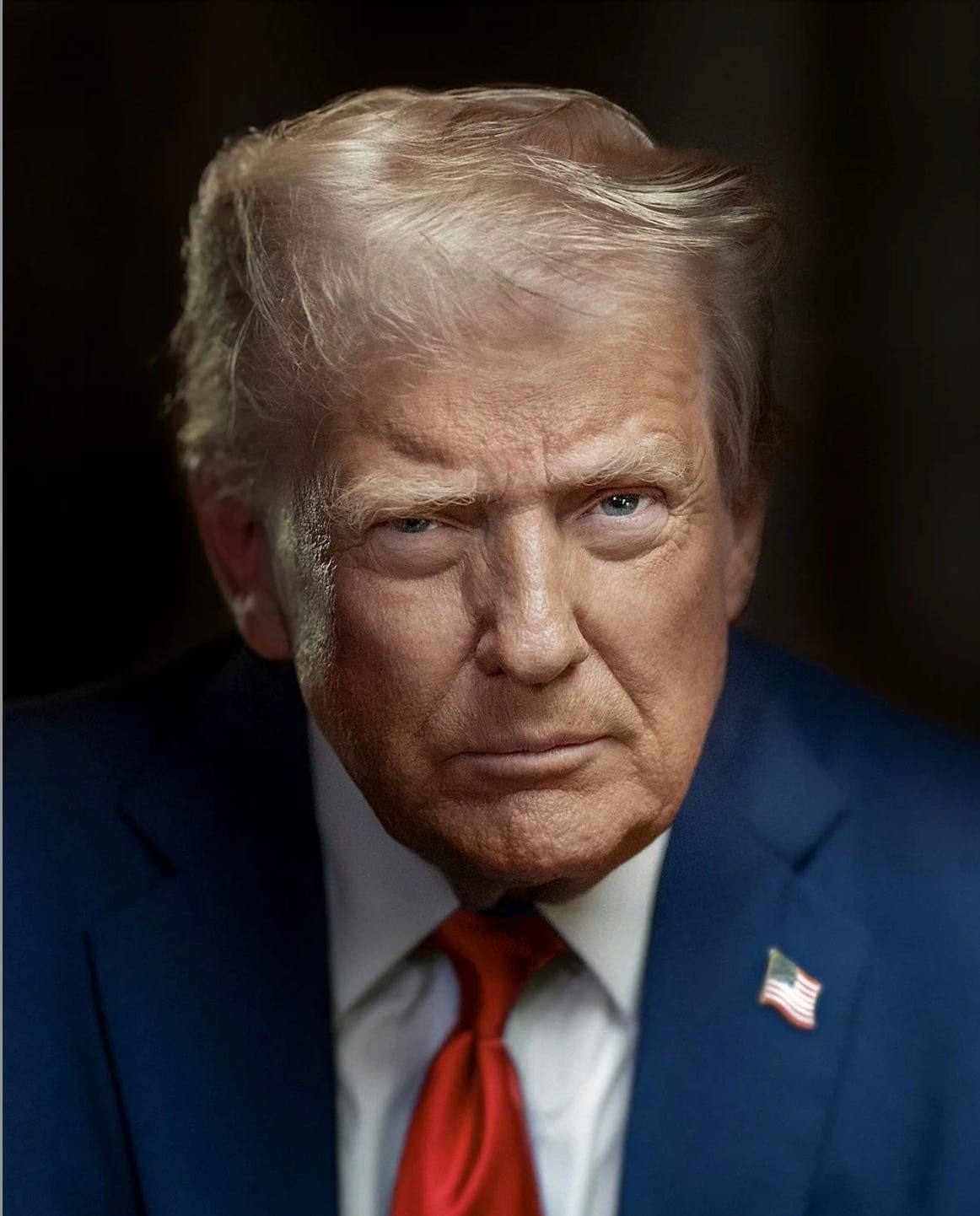
“This is not normal,” New Mexico representative Melanie Stansbury said in 2025, pointing to the DOGE dismantling of federal programs. “This is not who we are,” then presidential candidate Joe Biden said in 2018, referring to the separation of children from their families in immigrant detention during the first Trump administration. Both of these phrases—“this is not normal,” “this is not who we are”—have become regularly repeated mantras among those who (rightly!) oppose the Trump regime and all its works. Both are meant to define Trump as a rupture and an aberration. The message is that Trump is an ugly detour on the road towards greater progress and enlightenment—a mistake, an accident, a misstep. The true America, the normal America, is not this, and if we can only pop this one, repulsive, orange boil, we will return to a status quo of health and democracy. The rhetoric of normalcy is meant to be descriptive and strategic; the hope is that framing not-Trump as the true, normal America will define Trump as unAmerican and outside our traditions, isolate him and cauterize him. And yet, the strategy has not worked; on the contrary, the investment in an idea of an abnormal Trump has led to both tactical disasters and electoral failures. Maybe it’s time to think about some other approaches. After a decade, there’s a good case to be made that Trump is in fact who we are now. If we want to change that, we need to accept that we need to go forwards to a new and changed country, not back to the normal that gave us this. — Everything Is Horrible is only possible because of paid subscribers. If you value my writing, please consider supporting me. It’s $50/yr, $5/month. Subscribe now Trump yesterday and Trump today The claim that Trump and Trumpism is not normal is based on a vision of America as a liberal, Constitutional democracy, which treats all people equal before the law, embraces democratic norms, and holds free and fair elections. There’s no doubt that Trump is in many ways different than presidents who went before him, and that his time in office has been different than those of his predecessors. But that’s trivially true. Time goes forward, people, laws, norms, events change. I think there’s a strong argument that Trump is the worst president in our history by a fair margin. But that’s an impressive feat in no small part because we’ve had a lot of really, really horrible presidents, who have done a lot of really horrible things. In fact, Trump is best understood not as a pioneer of awfulness, but as a shuffling orange gaseous bag, which synthesizes, in its churning odiferous innards the worst of all the evils that have gone before, as a prelude to emitting them in a pestilential fog. The rabid deportation of immigrants—and even of American citizens—is lifted from Eisenhower’s ugly racist attack on Mexicans in the US; Trump’s resegregation of the federal government is a replay of Woodrow Wilson; Trump’s attacks on free speech recall the Cold War Red Scare blacklists; the SAVE act and Trump’s voter suppression measures are inspired by Jim Crow poll taxes and tests; the Iran war is a somehow even stupider replay of the Iraq war; and on and on and on. These repulsive undemocratic fascist policies and actions aren’t just random stumbles on the path to a better tomorrow. They are part of a deliberate, consistent, powerful fascist tradition in America, built on racism, backlash, and a dream of a unified Christian white nation in which dissent is criminalized and crushed. That tradition has been very much alive and active in our lifetime. Republicans have been marinating in Reaganesque right-wing backlash and Fox-News rabid anti-policy posturing for the last thirty to forty years. Anti-immigrant nativism has been (and remains) a 21st century bipartisan consensus, as Daniel Denvir has explained. Bipartisan Zionism, and de facto support for apartheid and ethnic cleansing in Israel/Palestine, has also defined US policy in the Middle East for decades. Bipartisan mass incarceration and militarized policing made the US, in some ways, more fascist than it had ever been before in the run up to 2016. Trump has pushed each of these right wing and/or bipartisan trends to their wicked, disastrous extremes. But does that make him abnormal? Or does it just make him the embodiment of a particular normality we don’t want to look at? Subscribe now Maybe we need change These aren’t questions with a single answer. You can see change and continuity in any historical moment or figure. Different historians and analysts emphasize different things depending on their perspectives and goals. Obviously, the goal of the opposition to Trump has been to get rid of Trump. People like Biden believed that the best way to defeat Trumpism was to make an essentially conservative argument; Trump was a dangerous and aberrant change, and we should go back to a more stable, more just, more sunlit past. The promise to return to normalcy helped Biden win the nomination in 2020. It also got him to a narrow win in the general election deep in the nightmarish Covid pandemic, which people desperately wanted to put behind them. “This is a blip and I will allow you to forget it” was a powerful message—or at least a powerful enough message—at that moment. But there were downsides. The insistence that MAGA was a detour, not a bleak thoroughfare, led Biden and his somnolent AG Merrick Garland to treat Trump as a spent force, who would just fade away after January 6. At worst, they concluded, normal voters looking for normalcy could be safely left to reject fascism if it reared its ugly head again. The same logic held for Senators and Congressmembers who supported the coup, and to the christofascist Supreme Court which Trump had installed. Biden made no effort to treat them as traitors; he didn’t treat the coup as an emergency. He insisted that with Trump gone, we had returned to the America which we are. The belated efforts to prosecute Trump—efforts which still failed to treat his movement as a existential threat—were too little too late. More, the insistence that Trump was an aberration played into his hands in 2024, when he ran once more as an anti-establishment outsider, simultaneously referencing his presidency as a golden age and acting as if it had never happened. Democrats were so committed to the idea that Trump was not normal that they were never able to effectively communicate the real danger, which was that he was a manifestation and extension of the worst aspects of this country, from income inequality to racism to impunity for abusers and scam artists. Trump ran promising to be the change everyone wanted, and the Democrats ran saying he would be a change, but a bad one. That didn’t work. Subscribe now Normal will leave us with MAGA I don’t really think a change in Democratic messaging would have altered the outcome much in 2024—and in any case, Democrats aren’t having much trouble winning elections right at the moment. But we know that “normality” and “this is not who we are” led us to underestimate the momentum and the establishment power of MAGA. If we want to end Trump and his legacy, we need to accept, first of all, that he and his various minions and avatars are not by nature transient. Trump has dominated American politics for eleven years and counting. His allies ooze beneath their robes on the Supreme Court; they occupy key positions in state Republican parties, they are in charge of the House and Senate, they stuff think tanks and have bought major media outlet after major media outlet. They are in control; they rule. We’re the outsiders now. We are the ones who aren’t normal. Which means, if we want to win, we need to be willing to be a little desperate, and we need to be willing to change, not just the people running the institutions, but the institutions themselves. We need to expand the Supreme Court. We need to enfranchise DC and any other territory that wants to become a state. We need to maybe even think seriously about whether California should become multiple states. We need to put Trump and his henchmen behind bars as soon as he leaves office. We need to toss from Congress everyone who supported the coup or who pushes election lies. We need more vigorous antitrust enforcement than ever before. We need to tax billionaires till they weep. We need to make gerrymandering illegal. We need to have tribunals. We need to abolish ICE and dismantle DHS. We need to grant every immigrant targeted by Trump—which is every immigrant—citizenship immediately. And that’s just the start. Middle class tax cuts aren’t going to cut it. Bowing down to the filibuster isn’t going to cut it. Donald Trump free on the streets isn’t going to cut it. Trump is the status quo; overthrowing the status quo is not easy. But if we don’t want to live like this, if we don’t want this to be normal, we need to change the institutions and the norms that have made it normal. Until we do, this is, unfortunately, who we are. Subscribe now
Trump Is The Status Quo
“This is not normal,” New Mexico representative Melanie Stansbury said in 2025, pointing to the DOGE dismantling of federal programs. “This is not who we are,” then presidential candidate Joe Biden said in 2018, referring to the separation of children from their families in immigrant detention during the first Trump administration. Both of these phrases—“this is not normal,” “this is not who we are”—have become regularly repeated mantras among those who (rightly!) oppose the Trump regime and all its works. Both are meant to define Trump as a rupture and an aberration. The message is that Trump is an ugly detour on the road towards greater progress and enlightenment—a mistake, an accident, a misstep. The true America, the normal America, is not this, and if we can only pop this one, repulsive, orange boil, we will return to a status quo of health and democracy. The rhetoric of normalcy is meant to be descriptive and strategic; the hope is that framing not-Trump as the true, normal America will define Trump as unAmerican and outside our traditions, isolate him and cauterize him. And yet, the strategy has not worked; on the contrary, the investment in an idea of an abnormal Trump has led to both tactical disasters and electoral failures. Maybe it’s time to think about some other approaches. After a decade, there’s a good case to be made that Trump is in fact who we are now. If we want to change that, we need to accept that we need to go forwards to a new and changed country, not back to the normal that gave us this. — Everything Is Horrible is only possible because of paid subscribers. If you value my writing, please consider supporting me. It’s $50/yr, $5/month. Subscribe now Trump yesterday and Trump today The claim that Trump and Trumpism is not normal is based on a vision of America as a liberal, Constitutional democracy, which treats all people equal before the law, embraces democratic norms, and holds free and fair elections. There’s no doubt that Trump is in many ways different than presidents who went before him, and that his time in office has been different than those of his predecessors. But that’s trivially true. Time goes forward, people, laws, norms, events change. I think there’s a strong argument that Trump is the worst president in our history by a fair margin. But that’s an impressive feat in no small part because we’ve had a lot of really, really horrible presidents, who have done a lot of really horrible things. In fact, Trump is best understood not as a pioneer of awfulness, but as a shuffling orange gaseous bag, which synthesizes, in its churning odiferous innards the worst of all the evils that have gone before, as a prelude to emitting them in a pestilential fog. The rabid deportation of immigrants—and even of American citizens—is lifted from Eisenhower’s ugly racist attack on Mexicans in the US; Trump’s resegregation of the federal government is a replay of Woodrow Wilson; Trump’s attacks on free speech recall the Cold War Red Scare blacklists; the SAVE act and Trump’s voter suppression measures are inspired by Jim Crow poll taxes and tests; the Iran war is a somehow even stupider replay of the Iraq war; and on and on and on. These repulsive undemocratic fascist policies and actions aren’t just random stumbles on the path to a better tomorrow. They are part of a deliberate, consistent, powerful fascist tradition in America, built on racism, backlash, and a dream of a unified Christian white nation in which dissent is criminalized and crushed. That tradition has been very much alive and active in our lifetime. Republicans have been marinating in Reaganesque right-wing backlash and Fox-News rabid anti-policy posturing for the last thirty to forty years. Anti-immigrant nativism has been (and remains) a 21st century bipartisan consensus, as Daniel Denvir has explained. Bipartisan Zionism, and de facto support for apartheid and ethnic cleansing in Israel/Palestine, has also defined US policy in the Middle East for decades. Bipartisan mass incarceration and militarized policing made the US, in some ways, more fascist than it had ever been before in the run up to 2016. Trump has pushed each of these right wing and/or bipartisan trends to their wicked, disastrous extremes. But does that make him abnormal? Or does it just make him the embodiment of a particular normality we don’t want to look at? Subscribe now Maybe we need change These aren’t questions with a single answer. You can see change and continuity in any historical moment or figure. Different historians and analysts emphasize different things depending on their perspectives and goals. Obviously, the goal of the opposition to Trump has been to get rid of Trump. People like Biden believed that the best way to defeat Trumpism was to make an essentially conservative argument; Trump was a dangerous and aberrant change, and we should go back to a more stable, more just, more sunlit past. The promise to return to normalcy helped Biden win the nomination in 2020. It also got him to a narrow win in the general election deep in the nightmarish Covid pandemic, which people desperately wanted to put behind them. “This is a blip and I will allow you to forget it” was a powerful message—or at least a powerful enough message—at that moment. But there were downsides. The insistence that MAGA was a detour, not a bleak thoroughfare, led Biden and his somnolent AG Merrick Garland to treat Trump as a spent force, who would just fade away after January 6. At worst, they concluded, normal voters looking for normalcy could be safely left to reject fascism if it reared its ugly head again. The same logic held for Senators and Congressmembers who supported the coup, and to the christofascist Supreme Court which Trump had installed. Biden made no effort to treat them as traitors; he didn’t treat the coup as an emergency. He insisted that with Trump gone, we had returned to the America which we are. The belated efforts to prosecute Trump—efforts which still failed to treat his movement as a existential threat—were too little too late. More, the insistence that Trump was an aberration played into his hands in 2024, when he ran once more as an anti-establishment outsider, simultaneously referencing his presidency as a golden age and acting as if it had never happened. Democrats were so committed to the idea that Trump was not normal that they were never able to effectively communicate the real danger, which was that he was a manifestation and extension of the worst aspects of this country, from income inequality to racism to impunity for abusers and scam artists. Trump ran promising to be the change everyone wanted, and the Democrats ran saying he would be a change, but a bad one. That didn’t work. Subscribe now Normal will leave us with MAGA I don’t really think a change in Democratic messaging would have altered the outcome much in 2024—and in any case, Democrats aren’t having much trouble winning elections right at the moment. But we know that “normality” and “this is not who we are” led us to underestimate the momentum and the establishment power of MAGA. If we want to end Trump and his legacy, we need to accept, first of all, that he and his various minions and avatars are not by nature transient. Trump has dominated American politics for eleven years and counting. His allies ooze beneath their robes on the Supreme Court; they occupy key positions in state Republican parties, they are in charge of the House and Senate, they stuff think tanks and have bought major media outlet after major media outlet. They are in control; they rule. We’re the outsiders now. We are the ones who aren’t normal. Which means, if we want to win, we need to be willing to be a little desperate, and we need to be willing to change, not just the people running the institutions, but the institutions themselves. We need to expand the Supreme Court. We need to enfranchise DC and any other territory that wants to become a state. We need to maybe even think seriously about whether California should become multiple states. We need to put Trump and his henchmen behind bars as soon as he leaves office. We need to toss from Congress everyone who supported the coup or who pushes election lies. We need more vigorous antitrust enforcement than ever before. We need to tax billionaires till they weep. We need to make gerrymandering illegal. We need to have tribunals. We need to abolish ICE and dismantle DHS. We need to grant every immigrant targeted by Trump—which is every immigrant—citizenship immediately. And that’s just the start. Middle class tax cuts aren’t going to cut it. Bowing down to the filibuster isn’t going to cut it. Donald Trump free on the streets isn’t going to cut it. Trump is the status quo; overthrowing the status quo is not easy. But if we don’t want to live like this, if we don’t want this to be normal, we need to change the institutions and the norms that have made it normal. Until we do, this is, unfortunately, who we are. Subscribe now