5 stories credited to The Daily Iowan
Latest story Apr 22, 2026 · on ChamberLight since Apr 2026
A story can appear as several articles (copies of the same piece), so counts of stories and of articles differ.
Scores for The Daily Iowan
Writing quality not enough rated stories yet: 5 of 10. How it is measured
Scores last checked Sep 25, 2026.
Stories ChamberLight collected, by month
Stories credited to The Daily Iowan, by publication date. ChamberLight collects articles that mention the officials it tracks, so this shows its own coverage of this source, not how much the source publishes.
- Stories from The Daily Iowan
- Shaded: ChamberLight collected no stories, or almost none, from any outlet (a gap in its collection, not in the outlet’s publishing)
Show as a table
| Month | Stories | All outlets |
|---|---|---|
| April 2026 | 5 | 2,576 |
| May 2026 | 0 | none collected |
| June 2026 | 0 | none collected |
| July 2026 | 0 | none collected |
| August 2026 | 0 | 1 (collection gap) |
| September 2026 | 0 | 598 |
Top topics
Share of this source’s stories tagged with each topic. A story can carry several topics, so the shares do not add up to 100%.
- Agriculture3
60% of 5 stories · 2% across all outlets
- Budget/Spending2
40% of 5 stories · 30% across all outlets
- Veterans Affairs2
40% of 5 stories · 1% across all outlets
- Defense/Military1
20% of 5 stories · 24% across all outlets
- Economy1
20% of 5 stories · 24% across all outlets
- Ethics/Corruption1
20% of 5 stories · 56% across all outlets
- Healthcare1
20% of 5 stories · 7% across all outlets
- Immigration1
20% of 5 stories · 12% across all outlets
The thin mark on each bar is the topic’s share across all outlets.
Who they cover
Party of the officials these stories are mainly about, across all 4 officials named. A story counts once for each official it is mainly about, so the split is over 10 story–official pairs, from 5 stories.
- Republican100% · 10 pairs
Most covered
Stories mainly about each official, and their share of the source’s 5 stories.
Article tone
ChamberLight’s article analysis assigns each story a tone toward the official it covers. It describes the coverage of that official, not The Daily Iowan’s stance, and reader votes do not change it. 5 stories.
- Good Look
- 1 (20%)
- Mixed
- 4 (80%)
- Informational
- 0 (0%)
- Bad Look
- 0 (0%)
Challenges to these scores
No one has challenged a score on this page yet. Anyone can; editors publish every outcome here.
Articles served from dailyiowan.com
10
Iowa GOP aims to pass SAVE Act
WASHINGTON — The process of casting a ballot may become more difficult for voters come midterms if the Safeguard American Voter Eligibility, or SAVE Act, passes through Congress. As Iowa’s congressional delegation points to election security and aims to pass the legislation, Johnson County leaders warn the bill will disenfranchise millions of voters, specifically married women. Under the SAVE Act, the National Voter Registration Act of 1993 would be amended to require proof of U.S. citizenship to register to vote. The SAVE Act would eliminate online and mail registration methods. Voters would need to present documented proof of citizenship to register to vote, such as a passport or driver’s license. Critics of the legislation say this is already the law, and the SAVE Act is an attempt to add an extra hurdle to the democratic process. According to the Bipartisan Policy Center, a nonpartisan think tank, there is no evidence noncitizen noncitizen voting has ever been significant enough to impact an election’s outcome. Most Americans support requiring photo ID to vote in federal elections, although the legislation remains opposed by Democrats. An August 2025 Pew Research Center poll found that 83 percent of U.S. adults support “requiring all voters to show government-issued photo identification to vote.” This number is up from 77 percent support in a 2012 Pew Research Center poll. The SAVE Act has passed the U.S. House of Representatives multiple times since 2024, receiving support from Iowa’s federal representatives, and was passed most recently in the House in February. Iowa representative’s continued support Iowa Republican U.S. Reps. Mariannette Miller-Meeks and Ashley Hinson voted in favor of the bill in two consecutive Congresses. “I think it should be easy to vote and hard to cheat, and I think every voter should know that their vote matters,” Hinson said in an interview with The Daily Iowan. Hinson pointed to election integrity as the reason for her continued support of the legislation. “We’ve had some very close elections in the state of Iowa, so I think every person needs to know the integrity of their vote matters,” Hinson said. “That’s why I’ve supported the SAVE Act.” Hinson launched her bid for the U.S. Senate in September, following U.S. Sen. Joni Ernst, R-Iowa, announcing she will not seek reelection. The seat has attracted multiple candidates, including Republican former state senator Jim Carlin, Iowa Rep. Josh Turek, D-Council Bluffs, Iowa Sen. Zach Wahls, D-Coralville, and Libertarian Thomas Laehn. RELATED: Iowa leaders, lawmakers react to the SAVE Act Primary polling compiled by The New York Times 2026 Poll Tracker shows Wahls as the Democratic frontrunner and Hinson as the GOP’s top pick. Primaries are set for June 2. In the 2024 general election, Miller-Meeks won Iowa’s 1st Congressional District with 50.1 percent of the vote. Following a recount, Miller-Meeks secured her third term in the U.S. House by less than 800 votes. In an email to the DI, Miller-Meeks said a high percentage of U.S. adults who support showing government-issued photo ID to vote, including 71 percent of self-identified Democrats, according to the Pew Research poll. “We already show ID to drive, board an airplane, verify employment, open a bank account, or buy a beer,” Miller-Meeks said in an email to the DI. “Asking for proof of citizenship to participate in federal elections is common sense and essential to maintaining public trust.” Miller-Meeks said Iowa has voter ID laws that work efficiently and voter turnout has increased after the law was implemented. Iowa’s voter ID law was passed by the state legislature in 2017. The law was implemented incrementally to allow poll workers to gain training and familiarity with the changes. The law was partially in place for the 2018 midterm elections and fully in effect for the 2019 elections. Iowa’s 2020 election broke an all-time turnout record for a general election, according to Secretary of State Paul Pate. Roughly 1.7 million Iowans cast a ballot in 2020, according to data from the Secretary of State’s office. This turnout followed Pate sending every eligible voters information on how to request an absentee ballot. In the 2024 general election, about 74 percent of registered voters cast a ballot, according to state data, which is roughly 1.67 million Iowans. Thirty-six states, including Iowa, have voter ID laws, according to the National Conference of State Legislatures. Miller-Meeks said the SAVE Act will make showing voter ID the standard nationwide. “If you’re already registered to vote, you don’t need to reregister,” Miller-Meeks said. Johnson County political leaders worry the SAVE Act will disenfranchise voters and negatively impact voter turnout. JoCo leaders warn negative impacts Vicki Aden, president of the League of Women Voters of Johnson County, said the SAVE Act, as it is written, will do more harm than good. Aden said the legislation is written for a problem that does not exist, and the instances of noncitizen voting are minuscule. Thirty-five of the about 1.67 million ballots counted in the 2024 general election were cast by non-U.S. citizens in Iowa, according to Pate. Iowa Attorney General Brenna Bird’s office charged six individuals with felony election misconduct, and so far, one case has ended in a guilty verdict. “If you’re weighing people who say that noncitizens voting is impacting elections — it’s really not, that’s the claim,” Aden said. “My point would be not allowing people who are qualified to vote to register will impact the elections more because you’re going to disenfranchise many, many more people.” Aden said the SAVE Act will disenfranchise women who have married and changed their last name since the last name on their ID will not match the last name on their birth certificate. Women will have to show an alternative form of ID, such as a passport, Aden said, which has barriers due to a wait time and cost. Aden said lawmakers assuming Iowans have the time and money to acquire the necessary documents to register to vote is a privileged response. The league has received concern from Johnson County residents about whether the SAVE Act will affect their voter registration as well as the burden of providing additional documentation. Aden said if the legislation passes, lawmakers are placing this burden on women. “I’m not quite sure why they don’t understand that requiring a woman to get more documentation than her husband is inherently unfair,” she said. Under the SAVE Act, voter registration drives, carried out by the League of Women Voters and other local political organizations, would no longer be legal. Iowans would need to register to vote in person at the county auditor’s office. There’s no funding to support the time and staff this would take, Aden said, and would be a burden to Johnson County’s election infrastructure. Julie Persons, Johnson County county auditor, wrote in an email to the DI that if the bill passes, the Secretary of State would need to give counties direction on how Iowa will handle the process. “At this time, we don’t know how the proposed legislation would impact election processes,” Persons wrote. Removing the ability to register to vote outside of the auditor’s office would disenfranchise rural voters, Aden said, who may live hours away from their county auditor. The SAVE Act will also negatively impact working voters interested in registering to vote, as they might not be able to take time off work to go in person. College students who likely didn’t bring their documents with them to school and older citizens whose licenses have expired will also face additional hurdles, Aden said. Aden questioned how the U.S. draft is now automatically registering young men, but citizens who turn 18 years old are not automatically registered to vote. “My preference is to make it easier for people who are eligible to be able to register and to vote, not harder,” she said. She described the SAVE Act as a fearmongering tactic to make Americans question the sanctity and security of elections. Johnson County Democrats Chair Ed Cranston said Republicans are pushing the bill to bring up concern about the validity of voters. “The doubt has just been sown by Trump,” Cranston said. In the 2016 GOP primaries, President Donald Trump lost to Sen. Ted Cruz, R-Texas, in the Iowa and Colorado caucuses. “Based on the fraud committed by Senator Ted Cruz during the Iowa Caucus, either a new election should take place or Cruz results nullified,” Trump posted on the social platform X. Following the results of the 2020 election, which resulted in former President Joe Biden sitting in the Oval Office, Trump continued to claim that the results were fraudulent. On Jan. 6, 2021, Trump’s supporters, buoyed by his claims, stormed the Capitol as Congress was going through the certification process of making Biden president. Trump continued discussing voter fraud after the insurrection, and now in his second term, he has continued to make claims about rampant voter fraud, with little to no evidence backing his claims. Cranston said the bill is unrealistic to carry out, especially by midterms in November. “We are in a bind here that we are not represented here in Johnson County by people that are really looking at this bill and thinking through what it would take to implement it,” he said. Cranston said it is already illegal for noncitizens to vote, and to him, the SAVE Act sounds like it’s really about suppressing voters. “Our elections have been really a pride of our country,” Cranston said. “The fact that we have in the past, have had elections and the transfer of power from one party to the next, where that has not been an issue until this last decade, with the wild swing that is taking place both in Washington and in Des Moines.” Iowa senators uncertain Ernst said in an interview with the DI that she does not know if the SAVE Act will move this year, and lawmakers can continue to work on the legislation. “The plan right now is to look for ways that we can begin funding opportunities for states so that if they want to engage in the SAVE Act at the state level, that’s one way to do it and lay the groundwork,” Ernst said. Ernst, a former county auditor, said she is sensitive to concerns about what types of ID will be accepted. She said Iowa has already put many of the legislation’s measures into place, and she thinks most Iowans are “OK” with the SAVE Act. Ernst said she does not think the legislation would disenfranchise voters. “My thought is that we allow the time for women to update those requirements,” she said. “So what is in the SAVE Act today can always be tweaked to accommodate common sense proposals.” U.S. Sen. Chuck Grassley, R-Iowa, a cosponsor of the SAVE Act, said he supports the legislation because it’s a top issue for voters, referencing the Pew Research poll. When asked if he anticipates if the SAVE Act will clear the Senate this Congress, Grassley said to ask U.S. Sen. John Thune, R-South Dakota, the Senate Majority Leader, who introduced the bill. Grassley said the legislation is simple. “There’s one final step that you’d have to take if you can’t have any of those documents because we don’t want to deny anybody that’s a citizen of the United States the right to vote,” Grassley said. The post Iowa GOP aims to pass SAVE Act appeared first on The Daily Iowan.
Iowa GOP aims to pass SAVE Act
WASHINGTON — The process of casting a ballot may become more difficult for voters come midterms if the Safeguard American Voter Eligibility, or SAVE Act, passes through Congress. As Iowa’s congressional delegation points to election security and aims to pass the legislation, Johnson County leaders warn the bill will disenfranchise millions of voters, specifically married women. Under the SAVE Act, the National Voter Registration Act of 1993 would be amended to require proof of U.S. citizenship to register to vote. The SAVE Act would eliminate online and mail registration methods. Voters would need to present documented proof of citizenship to register to vote, such as a passport or driver’s license. Critics of the legislation say this is already the law, and the SAVE Act is an attempt to add an extra hurdle to the democratic process. According to the Bipartisan Policy Center, a nonpartisan think tank, there is no evidence noncitizen noncitizen voting has ever been significant enough to impact an election’s outcome. Most Americans support requiring photo ID to vote in federal elections, although the legislation remains opposed by Democrats. An August 2025 Pew Research Center poll found that 83 percent of U.S. adults support “requiring all voters to show government-issued photo identification to vote.” This number is up from 77 percent support in a 2012 Pew Research Center poll. The SAVE Act has passed the U.S. House of Representatives multiple times since 2024, receiving support from Iowa’s federal representatives, and was passed most recently in the House in February. Iowa representative’s continued support Iowa Republican U.S. Reps. Mariannette Miller-Meeks and Ashley Hinson voted in favor of the bill in two consecutive Congresses. “I think it should be easy to vote and hard to cheat, and I think every voter should know that their vote matters,” Hinson said in an interview with The Daily Iowan. Hinson pointed to election integrity as the reason for her continued support of the legislation. “We’ve had some very close elections in the state of Iowa, so I think every person needs to know the integrity of their vote matters,” Hinson said. “That’s why I’ve supported the SAVE Act.” Hinson launched her bid for the U.S. Senate in September, following U.S. Sen. Joni Ernst, R-Iowa, announcing she will not seek reelection. The seat has attracted multiple candidates, including Republican former state senator Jim Carlin, Iowa Rep. Josh Turek, D-Council Bluffs, Iowa Sen. Zach Wahls, D-Coralville, and Libertarian Thomas Laehn. RELATED: Iowa leaders, lawmakers react to the SAVE Act Primary polling compiled by The New York Times 2026 Poll Tracker shows Wahls as the Democratic frontrunner and Hinson as the GOP’s top pick. Primaries are set for June 2. In the 2024 general election, Miller-Meeks won Iowa’s 1st Congressional District with 50.1 percent of the vote. Following a recount, Miller-Meeks secured her third term in the U.S. House by less than 800 votes. In an email to the DI, Miller-Meeks said a high percentage of U.S. adults who support showing government-issued photo ID to vote, including 71 percent of self-identified Democrats, according to the Pew Research poll. “We already show ID to drive, board an airplane, verify employment, open a bank account, or buy a beer,” Miller-Meeks said in an email to the DI. “Asking for proof of citizenship to participate in federal elections is common sense and essential to maintaining public trust.” Miller-Meeks said Iowa has voter ID laws that work efficiently and voter turnout has increased after the law was implemented. Iowa’s voter ID law was passed by the state legislature in 2017. The law was implemented incrementally to allow poll workers to gain training and familiarity with the changes. The law was partially in place for the 2018 midterm elections and fully in effect for the 2019 elections. Iowa’s 2020 election broke an all-time turnout record for a general election, according to Secretary of State Paul Pate. Roughly 1.7 million Iowans cast a ballot in 2020, according to data from the Secretary of State’s office. This turnout followed Pate sending every eligible voters information on how to request an absentee ballot. In the 2024 general election, about 74 percent of registered voters cast a ballot, according to state data, which is roughly 1.67 million Iowans. Thirty-six states, including Iowa, have voter ID laws, according to the National Conference of State Legislatures. Miller-Meeks said the SAVE Act will make showing voter ID the standard nationwide. “If you’re already registered to vote, you don’t need to reregister,” Miller-Meeks said. Johnson County political leaders worry the SAVE Act will disenfranchise voters and negatively impact voter turnout. JoCo leaders warn negative impacts Vicki Aden, president of the League of Women Voters of Johnson County, said the SAVE Act, as it is written, will do more harm than good. Aden said the legislation is written for a problem that does not exist, and the instances of noncitizen voting are minuscule. Thirty-five of the about 1.67 million ballots counted in the 2024 general election were cast by non-U.S. citizens in Iowa, according to Pate. Iowa Attorney General Brenna Bird’s office charged six individuals with felony election misconduct, and so far, one case has ended in a guilty verdict. “If you’re weighing people who say that noncitizens voting is impacting elections — it’s really not, that’s the claim,” Aden said. “My point would be not allowing people who are qualified to vote to register will impact the elections more because you’re going to disenfranchise many, many more people.” Aden said the SAVE Act will disenfranchise women who have married and changed their last name since the last name on their ID will not match the last name on their birth certificate. Women will have to show an alternative form of ID, such as a passport, Aden said, which has barriers due to a wait time and cost. Aden said lawmakers assuming Iowans have the time and money to acquire the necessary documents to register to vote is a privileged response. The league has received concern from Johnson County residents about whether the SAVE Act will affect their voter registration as well as the burden of providing additional documentation. Aden said if the legislation passes, lawmakers are placing this burden on women. “I’m not quite sure why they don’t understand that requiring a woman to get more documentation than her husband is inherently unfair,” she said. Under the SAVE Act, voter registration drives, carried out by the League of Women Voters and other local political organizations, would no longer be legal. Iowans would need to register to vote in person at the county auditor’s office. There’s no funding to support the time and staff this would take, Aden said, and would be a burden to Johnson County’s election infrastructure. Julie Persons, Johnson County county auditor, wrote in an email to the DI that if the bill passes, the Secretary of State would need to give counties direction on how Iowa will handle the process. “At this time, we don’t know how the proposed legislation would impact election processes,” Persons wrote. Removing the ability to register to vote outside of the auditor’s office would disenfranchise rural voters, Aden said, who may live hours away from their county auditor. The SAVE Act will also negatively impact working voters interested in registering to vote, as they might not be able to take time off work to go in person. College students who likely didn’t bring their documents with them to school and older citizens whose licenses have expired will also face additional hurdles, Aden said. Aden questioned how the U.S. draft is now automatically registering young men, but citizens who turn 18 years old are not automatically registered to vote. “My preference is to make it easier for people who are eligible to be able to register and to vote, not harder,” she said. She described the SAVE Act as a fearmongering tactic to make Americans question the sanctity and security of elections. Johnson County Democrats Chair Ed Cranston said Republicans are pushing the bill to bring up concern about the validity of voters. “The doubt has just been sown by Trump,” Cranston said. In the 2016 GOP primaries, President Donald Trump lost to Sen. Ted Cruz, R-Texas, in the Iowa and Colorado caucuses. “Based on the fraud committed by Senator Ted Cruz during the Iowa Caucus, either a new election should take place or Cruz results nullified,” Trump posted on the social platform X. Following the results of the 2020 election, which resulted in former President Joe Biden sitting in the Oval Office, Trump continued to claim that the results were fraudulent. On Jan. 6, 2021, Trump’s supporters, buoyed by his claims, stormed the Capitol as Congress was going through the certification process of making Biden president. Trump continued discussing voter fraud after the insurrection, and now in his second term, he has continued to make claims about rampant voter fraud, with little to no evidence backing his claims. Cranston said the bill is unrealistic to carry out, especially by midterms in November. “We are in a bind here that we are not represented here in Johnson County by people that are really looking at this bill and thinking through what it would take to implement it,” he said. Cranston said it is already illegal for noncitizens to vote, and to him, the SAVE Act sounds like it’s really about suppressing voters. “Our elections have been really a pride of our country,” Cranston said. “The fact that we have in the past, have had elections and the transfer of power from one party to the next, where that has not been an issue until this last decade, with the wild swing that is taking place both in Washington and in Des Moines.” Iowa senators uncertain Ernst said in an interview with the DI that she does not know if the SAVE Act will move this year, and lawmakers can continue to work on the legislation. “The plan right now is to look for ways that we can begin funding opportunities for states so that if they want to engage in the SAVE Act at the state level, that’s one way to do it and lay the groundwork,” Ernst said. Ernst, a former county auditor, said she is sensitive to concerns about what types of ID will be accepted. She said Iowa has already put many of the legislation’s measures into place, and she thinks most Iowans are “OK” with the SAVE Act. Ernst said she does not think the legislation would disenfranchise voters. “My thought is that we allow the time for women to update those requirements,” she said. “So what is in the SAVE Act today can always be tweaked to accommodate common sense proposals.” U.S. Sen. Chuck Grassley, R-Iowa, a cosponsor of the SAVE Act, said he supports the legislation because it’s a top issue for voters, referencing the Pew Research poll. When asked if he anticipates if the SAVE Act will clear the Senate this Congress, Grassley said to ask U.S. Sen. John Thune, R-South Dakota, the Senate Majority Leader, who introduced the bill. Grassley said the legislation is simple. “There’s one final step that you’d have to take if you can’t have any of those documents because we don’t want to deny anybody that’s a citizen of the United States the right to vote,” Grassley said. The post Iowa GOP aims to pass SAVE Act appeared first on The Daily Iowan.
Q&A | U.S. Rep. Ashley Hinson talks SAVE Act, DHS funding
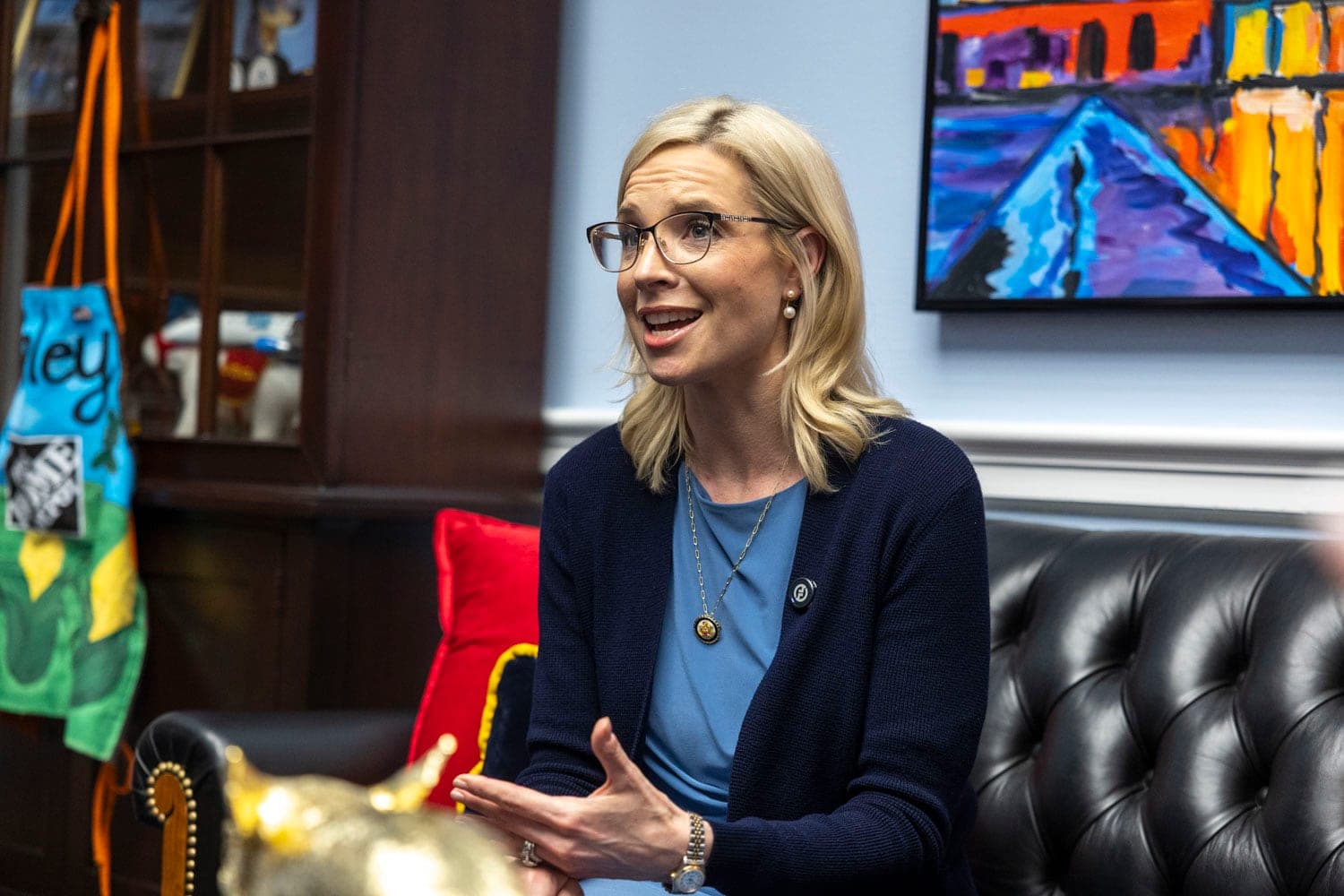
WASHINGTON — In an exclusive interview with The Daily Iowan, U.S. Rep. Ashley Hinson, R-Iowa, gave her thoughts on the SAVE Act, her time in the U.S. House of Representatives, Department of Human Services funding, and fertilizer prices. This interview has been edited for length and clarity. The Daily Iowan: You’ve voted to pass the SAVE Act twice in consecutive Congresses. Can you speak to why you continue to support this legislation and if you anticipate it to clear the Senate? Hinson: I think it should be easy to vote and hard to cheat, and I think every voter should know that their vote matters. We’ve had some very close elections in the state of Iowa, so I think every person needs to know that the integrity of their vote matters. That’s why I’ve supported the SAVE Act. RELATED: Q&A | U.S. Sen. Joni Ernst talks SAVE Act, ceasefire with Iran As you reflect on your time in the House, what are you most proud of accomplishing? I’ve done some amazing work in the space of veterans mental health to make sure that our veterans have great access to care no matter what their zip code is. There was an Iowa veteran who was turned away when he was in a mental health crisis, and he committed suicide later that day. Sergeant Brandon Ketchum, and it was in his honor that we were able to pass a mental health reform bill to make sure the VA is actually getting those patients served. They’ve earned that health care, and we need to make sure that they’re getting it. And then the other place that I’m most passionate about a lot of the work that I’ve done is in the space of child care. I see that as the workforce behind the workforce, and making sure that we have a robust child care system, means we’ll have a robust workforce, and moms like me who are worried about where their kids are going to be during the day so they can go off and do a job. I’m passionate about that work, and I’m very pleased with some of the things we’ve been able to get across the finish line. Republicans are facing internal divisions over reconciliation and DHS funding, and with the partial government shutdown ongoing, how do you plan to tackle this issue? We need to get the Department of Homeland Security funded. Every time I’ve had an option to vote on a funding bill, I’ve voted yes to keep this department funded. I think as we look at the national security issues that we’re facing right now, it’s not just [Customs and Border Protections] and [Immigration and Customs Enforcement]. This is about [Cybersecurity and Infrastructure Security Agency]. This is about [Federal Emergency Management Agency] responding to natural disasters our Coast Guard that is interdicting drug shipments from cartels in the Caribbean and along the Mississippi River. Nobody thinks about the inland waterways. These are all areas where I’m very passionate about making sure we’re protecting the interests of Americans here at home. I want to make sure our Democrat colleagues know also they need to get on board and move this ball forward, because as of right now, they have offered reforms. We’ve agreed to many of those reforms, and then they walked away from the table, and that’s just not negotiating in good faith. So they need to come to the table and get DHS funded. As the war in Iran continues, the demand for fertilizer increases. What are your thoughts on how this impacts Iowa farmers as planting season approaches? Fertilizer prices have been high for several years, and this has been a passion project of mine to make sure we’re lowering those input costs for our producers. I’m proud that this is a bipartisan area of our work. We just introduced the Fertilizer Transparency Act, which would require weekly reporting on fertilizer prices. A little transparency and a little sunshine is often a very, very good thing for getting those prices down. But farmers have been struggling with high input costs and low commodity prices for far too long, and so I’m very passionate about making sure we fix those problems. The post Q&A | U.S. Rep. Ashley Hinson talks SAVE Act, DHS funding appeared first on The Daily Iowan.

Iowa candidates bid for open U.S. Senate seat
WASHINGTON — As the U.S. gears up for another election, members of Iowa’s delegation are preparing for the midterms and reflecting on their time in their respective chambers. U.S. Rep. Ashley Hinson, R-Iowa, formally kicked off her bid for the U.S. Senate seat in September 2025. In an interview with The Daily Iowan on April 15, Hinson said in her time in the House she has done amazing work in the space of veterans’ mental health to make sure veterans have “great access to care no matter what their zip code is.” She also said she is passionate about the work she has done in child care. “I see that as the workforce behind the workforce, and making sure that we have a robust child care system, means we’ll have a robust workforce,” Hinson said. “Moms like me who are worried about where their kids are going to be during the day, can go off and do a job.” RELATED: Iowa U.S. Senator Joni Ernst will not seek reelection At her kick off event on Sept. 14, Hinson said she will run alongside President Donald Trump as his “top ally” in the Senate, if elected. “I will be fighting alongside him to fix what Joe Biden broke,” Hinson said. “We are putting America first, and we are making America great again. Mr. President, I want to say thank you for your support. I will not let you down.” Iowa’s 2026 U.S. Senate race shifted when U.S. Sen. Joni Ernst, R-Iowa, announced she would not seek reelection, leaving the state with its first open Senate seat in over a decade. Hinson, Iowa Sen. Zach Wahls, D-Coralville, and Iowa Rep. Josh Turek, D-Council Bluffs, are all running for the competitive seat. Turek, a two-time Paralympic gold medalist for Team USA, represents Iowa District 20. He announced his bid for the U.S. Senate in August 2025, and has said his main goals for the U.S. Senate are to make Iowa more affordable by improving the health care system across the state, and bringing more access to education. Turek represents the reddest Democratic-held district in the state. Trump had won Turek’s district by 20 points in the 2024, and the two communities he represents, Council Bluffs and Carter Lake, by double digits. Despite Trump carrying the district by a wide margin, Turek won reelection and has campaigned by emphasizing his ability to connect with voters in Republican-leaning areas. In a 2025 interview with The Daily Iowan, Turek said people have appreciated the way he is able to provide solutions in a bipartisan way. “More than Republican versus Democrat, people want hard-working representatives who are willing to do the work to provide bipartisan solutions to their issues,” he said. “And that’s what I’m willing to do.” Wahls, a Johnson County local and UI alum, has said many of his values came from his mothers, Jackie and Terry, and hopes to bring the ideals of integrity and hard work to Capitol Hill. At an event hosted in Iowa City on April 14, Wahls said he wants residents to know Hinson is not an upgrade from Ernst. In an interview with the DI on April 15, Wahls said the core difference in the race is that “unlike Ashley Hinson, when Donald Trump has ideas that are wrong for the state of Iowa, we won’t take them on.” “If Donald Trump has ideas that are good for our state, I’ll work with him the same way that I’ve worked with Republicans in our legislature on bipartisan areas,” he said. In an interview with the DI U.S. Sen. Chuck Grassley, R-Iowa, said while he is not up for reelection until 2028, he has been listening to what Iowans want to see, and has noticed a shift in voters priorities for this cycle. He has heard voters focused on the five-year Farm Bill, E15, and prescription drug prices. Grassley said he would need to be asked in roughly a year about if he would run for reelection. The post Iowa candidates bid for open U.S. Senate seat appeared first on The Daily Iowan.
Iowa candidates bid for open U.S. Senate seat
WASHINGTON — As the U.S. gears up for another election, members of Iowa’s delegation are preparing for the midterms and reflecting on their time in their respective chambers. U.S. Rep. Ashley Hinson, R-Iowa, formally kicked off her bid for the U.S. Senate seat in September 2025. In an interview with The Daily Iowan on April 15, Hinson said in her time in the House she has done amazing work in the space of veterans’ mental health to make sure veterans have “great access to care no matter what their zip code is.” She also said she is passionate about the work she has done in child care. “I see that as the workforce behind the workforce, and making sure that we have a robust child care system, means we’ll have a robust workforce,” Hinson said. “Moms like me who are worried about where their kids are going to be during the day, can go off and do a job.” RELATED: Iowa U.S. Senator Joni Ernst will not seek reelection At her kick off event on Sept. 14, Hinson said she will run alongside President Donald Trump as his “top ally” in the Senate, if elected. “I will be fighting alongside him to fix what Joe Biden broke,” Hinson said. “We are putting America first, and we are making America great again. Mr. President, I want to say thank you for your support. I will not let you down.” Iowa’s 2026 U.S. Senate race shifted when U.S. Sen. Joni Ernst, R-Iowa, announced she would not seek reelection, leaving the state with its first open Senate seat in over a decade. Hinson, Iowa Sen. Zach Wahls, D-Coralville, and Iowa Rep. Josh Turek, D-Council Bluffs, are all running for the competitive seat. Turek, a two-time Paralympic gold medalist for Team USA, represents Iowa District 20. He announced his bid for the U.S. Senate in August 2025, and has said his main goals for the U.S. Senate are to make Iowa more affordable by improving the health care system across the state, and bringing more access to education. Turek represents the reddest Democratic-held district in the state. Trump had won Turek’s district by 20 points in the 2024, and the two communities he represents, Council Bluffs and Carter Lake, by double digits. Despite Trump carrying the district by a wide margin, Turek won reelection and has campaigned by emphasizing his ability to connect with voters in Republican-leaning areas. In a 2025 interview with The Daily Iowan, Turek said people have appreciated the way he is able to provide solutions in a bipartisan way. “More than Republican versus Democrat, people want hard-working representatives who are willing to do the work to provide bipartisan solutions to their issues,” he said. “And that’s what I’m willing to do.” Wahls, a Johnson County local and UI alum, has said many of his values came from his mothers, Jackie and Terry, and hopes to bring the ideals of integrity and hard work to Capitol Hill. At an event hosted in Iowa City on April 14, Wahls said he wants residents to know Hinson is not an upgrade from Ernst. In an interview with the DI on April 15, Wahls said the core difference in the race is that “unlike Ashley Hinson, when Donald Trump has ideas that are wrong for the state of Iowa, we won’t take them on.” “If Donald Trump has ideas that are good for our state, I’ll work with him the same way that I’ve worked with Republicans in our legislature on bipartisan areas,” he said. In an interview with the DI U.S. Sen. Chuck Grassley, R-Iowa, said while he is not up for reelection until 2028, he has been listening to what Iowans want to see, and has noticed a shift in voters priorities for this cycle. He has heard voters focused on the five-year Farm Bill, E15, and prescription drug prices. Grassley said he would need to be asked in roughly a year about if he would run for reelection. The post Iowa candidates bid for open U.S. Senate seat appeared first on The Daily Iowan.
Iowa congressional members say reconciliation bill to end government shutdown will appear next week
WASHINGTON — As a record-breaking partial government shutdown over funding the Department of Homeland Security stretches into its second month, members of Iowa’s congressional delegation anticipate reconciliation will be the solution to ending the standstill. Congress has struggled to reach a bipartisan deal to fund DHS, resulting in a partial shutdown that began in mid-February. Lawmakers remain divided on how to allocate funds for many national security measures, including airport security, the Coast Guard, and U.S. Customs and Border Patrol. The partial shutdown tallied to 60 days on April 15, following the longest government shutdown in U.S. history — a 43 day federal government shutdown caused by partisan disagreement over health care spending that ended in mid-November. President Donald Trump signed a memorandum on April 3 requiring all DHS employees receive pay and benefits as the shutdown drags on, including ICE employees, TSA workers, and the Federal Emergency Management Agency, or FEMA. After a scheduled two week break, federal lawmakers returned to session on April 13, and it remains unclear when action will be taken to end the partial shutdown. However, Iowa lawmakers say they will make moves soon through a party-line budget bill to skirt a Senate filibuster, known as “reconciliation.” U.S. Sen. Chuck Grassley, R-Iowa, said Republicans will pursue a reconciliation process next week. “You may hear some difference of opinions, but I think we had a caucus yesterday that shows unity behind this approach,” he said. Funding for Immigration and Customs Enforcement, or ICE, and U.S. Border Patrol will be included in the reconciliation, Grassley said. The impasse comes from Democrats’ demand for changes to ICE operations following federal agents killing two U.S. citizens in Minnesota. U.S. Sen. Joni Ernst, R-Iowa, also anticipates reconciliation will be the way to end the shutdown. She said it is unfortunate that Democrats have not worked across the aisle to reach an agreement that allows for the funding of DHS, and she doesn’t know why lawmakers wouldn’t want to fund security measures, including investigations into child predators. “We should be able to continue to work together to find a way to fund the entirety of the organization, but it looks like reconciliation will be the way we fund it,” Ernst said. Multiple efforts to pass a budget deal have fallen short of ending the funding lapse. Many deals and bills have been proposed, amended, then rejected in the Senate and the House. On March 25, the Senate failed to pass a vote on a proposal to continue DHS funding, refusing to pass legislation that didn’t include more immigration enforcement reforms. Two days later, a bill unanimously approved by the Senate in a late night vote was stymied by House GOP lawmakers, who did not want to agree to fund all of DHS except ICE and Border Patrol. U.S. Rep. Ashley Hinson, R-Iowa, said Democrats need to “get on board and move this ball forward.” Hinson said she has voted “yes” to keeping DHS funded every time she has voted on a funding bill, but said Democrats are stalling the process. “As of right now, they have offered reforms,” Hinson said. “We’ve agreed to many of those reforms, and then they walked away from the table, and that’s just not negotiating in good faith. They need to come to the table and get DHS funded.” Hinson said the national security issues the U.S. is facing right now aren’t just addressed by U.S. Customs and Border Protection and ICE, but also involved cybersecurity, FEMA, and the Coast Guard. “These are all areas where I’m very passionate about making sure we’re protecting the interests of Americans here at home,” Hinson said. The post Iowa congressional members say reconciliation bill to end government shutdown will appear next week appeared first on The Daily Iowan.

Iowa delegates call for reprieve on fertilizer costs for farmers
WASHINGTON — U.S. Sen. Chuck Grassley and Iowa Rep. Ashley Hinson, R-Iowa, emphasized a need for tackling high fertilizer prices as the war in Iran continues. Grassley cited grievances he has heard from Iowa farmers and a recent agriculture bill he has in the Senate. Grassley’s Fertilizer Research Act, proposed in September 2025, calls for reports on the state of the United States’ fertilizer industry to be made public by the U.S. Department of Agriculture, indicating the size of the market and transparency in price reporting, among others. Grassley said the bill also gives the Secretary of Agriculture Brooke Rollins, the authority to keep up with inventories on phosphates if there are any questions of antitrust in fertilizers. Grassley said President Donald Trump’s recent social media post about fertilizer prices was good news. According to a Truth Social post from April 11, Trump said the U.S. will not be in favor of “price gouging from the fertilizer monopoly,” saying “American farmers, we have your back.” Grassley said he has been working with other senators such as U.S. Sen. Roger Marshall, R-Kansas, on how to best deal with fertilizers across the Midwest. “We are trying to bring attention to it,” Grassley said. On March 27, U.S. Rep. Ashley Hinson, R-Iowa, alongside U.S. Rep. Dusty Johnson, SD-Alabama, introduced the Fertilizer Transparency Act in the U.S. House of Representatives. The act aims to provide accurate information and data on fertilizer prices presented to the public. Hinson said the act would require weekly reporting on fertilizer prices. “A little transparency and a little sunshine is often a very, very good thing for getting those prices down,” Hinson said. The move comes after Hinson reintroduced the Fertilizer Research Act in September. Hinson said tackling fertilizer prices has been a “passion project” of hers to ensure input costs are lowered for producers in the state. Hinson said farmers have been struggling with high input costs and low commodity prices for far too long. “I am very passionate about making sure we fix those problems,” Hinson said. According to the American Farm Bureau Federation, input costs are those incurred by the farm to maintain land and continue production. Grant Kimberley, Senior Director of Market Development for the Iowa Soybean Association and a farmer from Maxwell, Iowa, said fertilizer prices have been steadily increasing for the past several years, outpacing inflation. According to the Fertilizer Institute, in 2025, Iowa accounted for 10 percent of the U.S’s phosphorus and potassium consumption, two key minerals in fertilizer production. Kimberley said phosphate potash, a micronutrient dense fertilizer utilized in farm production, is the primary fertilizer used in soybean farming. According to the Iowa Soybean Association, phosphate prices have doubled in the past five years and potash prices have gone up 41 percent in the same time period. Kimberley said this has placed a heavy burden on farmers dependent on fertilizer for crop production and that many farmers are facing a large cost price margin squeeze. He said such burdens can be chalked up to a variety of factors including unrest in the Middle East, stiff global production, lack of export markets, and overall uncertainty on policies. “You have to update your machinery at times. You got to do other efficiency improvements. So, they’re not going to be able to do as much of that. So those are implications and eventually, we are just going to have to continue to see farm consolidation,” Kimberley said. Impacts on the cost of E15 U.S. senators from both sides of the legislative aisle across the board continue to call for year-round E15 to help U.S. farmers. According to the Institute for Energy Research, eight states — Ohio, Illinois, Iowa, Minnesota, Missouri, Nebraska, South Dakota and Wisconsin — have adopted year-round E15. Grassley said the other 42 states need to adopt the policy and have it established by law as retailers can’t invest in more expensive pumps if it is not law. “You’re going to have certainty that the investment is going to pay off,” Grassley said. U.S. Sen. Joni Ernst, R-Iowa, said transparency is key and that year round E15 would be beneficial for farmers and help bring costs down across the U.S. “Let’s be able to look at why these costs are so high and then find solutions to drive those costs down,” Ernst said. Kimberley said increased production of biofuels, such as biodiesel, renewable diesel and ethanol, would help stabilize commodity prices. However, uncertainty surrounding biofuel policies continues to squeeze farmers. E15 is 15 percent ethanol. Kimberley said agriculture in Iowa continues to go through cycles and upward and downward trends. “We’re going through a deep, tough cycle right now, probably one of the toughest cycles for row crop farmers that we have seen in a long time. And hopefully, we can get to a better place here in the near future,” Kimberley said. The post Iowa delegates call for reprieve on fertilizer costs for farmers appeared first on The Daily Iowan.
Iowa congressional members say reconciliation bill to end government shutdown will appear next week
WASHINGTON — As a record-breaking partial government shutdown over funding the Department of Homeland Security stretches into its second month, members of Iowa’s congressional delegation anticipate reconciliation will be the solution to ending the standstill. Congress has struggled to reach a bipartisan deal to fund DHS, resulting in a partial shutdown that began in mid-February. Lawmakers remain divided on how to allocate funds for many national security measures, including airport security, the Coast Guard, and U.S. Customs and Border Patrol. The partial shutdown tallied to 60 days on April 15, following the longest government shutdown in U.S. history — a 43 day federal government shutdown caused by partisan disagreement over health care spending that ended in mid-November. President Donald Trump signed a memorandum on April 3 requiring all DHS employees receive pay and benefits as the shutdown drags on, including ICE employees, TSA workers, and the Federal Emergency Management Agency, or FEMA. After a scheduled two week break, federal lawmakers returned to session on April 13, and it remains unclear when action will be taken to end the partial shutdown. However, Iowa lawmakers say they will make moves soon through a party-line budget bill to skirt a Senate filibuster, known as “reconciliation.” U.S. Sen. Chuck Grassley, R-Iowa, said Republicans will pursue a reconciliation process next week. “You may hear some difference of opinions, but I think we had a caucus yesterday that shows unity behind this approach,” he said. Funding for Immigration and Customs Enforcement, or ICE, and U.S. Border Patrol will be included in the reconciliation, Grassley said. The impasse comes from Democrats’ demand for changes to ICE operations following federal agents killing two U.S. citizens in Minnesota. U.S. Sen. Joni Ernst, R-Iowa, also anticipates reconciliation will be the way to end the shutdown. She said it is unfortunate that Democrats have not worked across the aisle to reach an agreement that allows for the funding of DHS, and she doesn’t know why lawmakers wouldn’t want to fund security measures, including investigations into child predators. “We should be able to continue to work together to find a way to fund the entirety of the organization, but it looks like reconciliation will be the way we fund it,” Ernst said. Multiple efforts to pass a budget deal have fallen short of ending the funding lapse. Many deals and bills have been proposed, amended, then rejected in the Senate and the House. On March 25, the Senate failed to pass a vote on a proposal to continue DHS funding, refusing to pass legislation that didn’t include more immigration enforcement reforms. Two days later, a bill unanimously approved by the Senate in a late night vote was stymied by House GOP lawmakers, who did not want to agree to fund all of DHS except ICE and Border Patrol. U.S. Rep. Ashley Hinson, R-Iowa, said Democrats need to “get on board and move this ball forward.” Hinson said she has voted “yes” to keeping DHS funded every time she has voted on a funding bill, but said Democrats are stalling the process. “As of right now, they have offered reforms,” Hinson said. “We’ve agreed to many of those reforms, and then they walked away from the table, and that’s just not negotiating in good faith. They need to come to the table and get DHS funded.” Hinson said the national security issues the U.S. is facing right now aren’t just addressed by U.S. Customs and Border Protection and ICE, but also involved cybersecurity, FEMA, and the Coast Guard. “These are all areas where I’m very passionate about making sure we’re protecting the interests of Americans here at home,” Hinson said. The post Iowa congressional members say reconciliation bill to end government shutdown will appear next week appeared first on The Daily Iowan.
Iowa delegates call for reprieve on fertilizer costs for farmers
WASHINGTON — U.S. Sen. Chuck Grassley and Iowa Rep. Ashley Hinson, R-Iowa, emphasized a need for tackling high fertilizer prices as the war in Iran continues. Grassley cited grievances he has heard from Iowa farmers and a recent agriculture bill he has in the Senate. Grassley’s Fertilizer Research Act, proposed in September 2025, calls for reports on the state of the United States’ fertilizer industry to be made public by the U.S. Department of Agriculture, indicating the size of the market and transparency in price reporting, among others. Grassley said the bill also gives the Secretary of Agriculture Brooke Rollins, the authority to keep up with inventories on phosphates if there are any questions of antitrust in fertilizers. Grassley said President Donald Trump’s recent social media post about fertilizer prices was good news. According to a Truth Social post from April 11, Trump said the U.S. will not be in favor of “price gouging from the fertilizer monopoly,” saying “American farmers, we have your back.” Grassley said he has been working with other senators such as U.S. Sen. Roger Marshall, R-Kansas, on how to best deal with fertilizers across the Midwest. “We are trying to bring attention to it,” Grassley said. On March 27, U.S. Rep. Ashley Hinson, R-Iowa, alongside U.S. Rep. Dusty Johnson, SD-Alabama, introduced the Fertilizer Transparency Act in the U.S. House of Representatives. The act aims to provide accurate information and data on fertilizer prices presented to the public. Hinson said the act would require weekly reporting on fertilizer prices. “A little transparency and a little sunshine is often a very, very good thing for getting those prices down,” Hinson said. The move comes after Hinson reintroduced the Fertilizer Research Act in September. Hinson said tackling fertilizer prices has been a “passion project” of hers to ensure input costs are lowered for producers in the state. Hinson said farmers have been struggling with high input costs and low commodity prices for far too long. “I am very passionate about making sure we fix those problems,” Hinson said. According to the American Farm Bureau Federation, input costs are those incurred by the farm to maintain land and continue production. Grant Kimberley, Senior Director of Market Development for the Iowa Soybean Association and a farmer from Maxwell, Iowa, said fertilizer prices have been steadily increasing for the past several years, outpacing inflation. According to the Fertilizer Institute, in 2025, Iowa accounted for 10 percent of the U.S’s phosphorus and potassium consumption, two key minerals in fertilizer production. Kimberley said phosphate potash, a micronutrient dense fertilizer utilized in farm production, is the primary fertilizer used in soybean farming. According to the Iowa Soybean Association, phosphate prices have doubled in the past five years and potash prices have gone up 41 percent in the same time period. Kimberley said this has placed a heavy burden on farmers dependent on fertilizer for crop production and that many farmers are facing a large cost price margin squeeze. He said such burdens can be chalked up to a variety of factors including unrest in the Middle East, stiff global production, lack of export markets, and overall uncertainty on policies. “You have to update your machinery at times. You got to do other efficiency improvements. So, they’re not going to be able to do as much of that. So those are implications and eventually, we are just going to have to continue to see farm consolidation,” Kimberley said. Impacts on the cost of E15 U.S. senators from both sides of the legislative aisle across the board continue to call for year-round E15 to help U.S. farmers. According to the Institute for Energy Research, eight states — Ohio, Illinois, Iowa, Minnesota, Missouri, Nebraska, South Dakota and Wisconsin — have adopted year-round E15. Grassley said the other 42 states need to adopt the policy and have it established by law as retailers can’t invest in more expensive pumps if it is not law. “You’re going to have certainty that the investment is going to pay off,” Grassley said. U.S. Sen. Joni Ernst, R-Iowa, said transparency is key and that year round E15 would be beneficial for farmers and help bring costs down across the U.S. “Let’s be able to look at why these costs are so high and then find solutions to drive those costs down,” Ernst said. Kimberley said increased production of biofuels, such as biodiesel, renewable diesel and ethanol, would help stabilize commodity prices. However, uncertainty surrounding biofuel policies continues to squeeze farmers. E15 is 15 percent ethanol. Kimberley said agriculture in Iowa continues to go through cycles and upward and downward trends. “We’re going through a deep, tough cycle right now, probably one of the toughest cycles for row crop farmers that we have seen in a long time. And hopefully, we can get to a better place here in the near future,” Kimberley said. The post Iowa delegates call for reprieve on fertilizer costs for farmers appeared first on The Daily Iowan.
Iowa congressional members say reconciliation bill to end government shutdown will appear next week
WASHINGTON — As a record-breaking partial government shutdown over funding the Department of Homeland Security stretches into its second month, members of Iowa’s congressional delegation anticipate reconciliation will be the solution to ending the standstill. Congress has struggled to reach a bipartisan deal to fund DHS, resulting in a partial shutdown that began in mid-February. Lawmakers remain divided on how to allocate funds for many national security measures, including airport security, the Coast Guard, and U.S. Customs and Border Patrol. The partial shutdown tallied to 60 days on April 15, following the longest government shutdown in U.S. history — a 43 day federal government shutdown caused by partisan disagreement over health care spending that ended in mid-November. President Donald Trump signed a memorandum on April 3 requiring all DHS employees receive pay and benefits as the shutdown drags on, including ICE employees, TSA workers, and the Federal Emergency Management Agency, or FEMA. After a scheduled two week break, federal lawmakers returned to session on April 13, and it remains unclear when action will be taken to end the partial shutdown. However, Iowa lawmakers say they will make moves soon through a party-line budget bill to skirt a Senate filibuster, known as “reconciliation.” U.S. Sen. Chuck Grassley, R-Iowa, said Republicans will pursue a reconciliation process next week. “You may hear some difference of opinions, but I think we had a caucus yesterday that shows unity behind this approach,” he said. Funding for Immigration and Customs Enforcement, or ICE, and U.S. Border Patrol will be included in the reconciliation, Grassley said. The impasse comes from Democrats’ demand for changes to ICE operations following federal agents killing two U.S. citizens in Minnesota. U.S. Sen. Joni Ernst, R-Iowa, also anticipates reconciliation will be the way to end the shutdown. She said it is unfortunate that Democrats have not worked across the aisle to reach an agreement that allows for the funding of DHS, and she doesn’t know why lawmakers wouldn’t want to fund security measures, including investigations into child predators. “We should be able to continue to work together to find a way to fund the entirety of the organization, but it looks like reconciliation will be the way we fund it,” Ernst said. Multiple efforts to pass a budget deal have fallen short of ending the funding lapse. Many deals and bills have been proposed, amended, then rejected in the Senate and the House. On March 25, the Senate failed to pass a vote on a proposal to continue DHS funding, refusing to pass legislation that didn’t include more immigration enforcement reforms. Two days later, a bill unanimously approved by the Senate in a late night vote was stymied by House GOP lawmakers, who did not want to agree to fund all of DHS except ICE and Border Patrol. U.S. Rep. Ashley Hinson, R-Iowa, said Democrats need to “get on board and move this ball forward.” Hinson said she has voted “yes” to keeping DHS funded every time she has voted on a funding bill, but said Democrats are stalling the process. “As of right now, they have offered reforms,” Hinson said. “We’ve agreed to many of those reforms, and then they walked away from the table, and that’s just not negotiating in good faith. They need to come to the table and get DHS funded.” Hinson said the national security issues the U.S. is facing right now aren’t just addressed by U.S. Customs and Border Protection and ICE, but also involved cybersecurity, FEMA, and the Coast Guard. “These are all areas where I’m very passionate about making sure we’re protecting the interests of Americans here at home,” Hinson said. The post Iowa congressional members say reconciliation bill to end government shutdown will appear next week appeared first on The Daily Iowan.