1 story credited to cohen489.substack.com
Latest story Apr 14, 2026 · on ChamberLight since Apr 2026 · on substack.com
A story can appear as several articles (copies of the same piece), so counts of stories and of articles differ.
Scores for cohen489.substack.com
Credibility
An individual writer or an online community, not a news organization, so the newsroom rating does not apply.
Political lean
An individual writer or an online community, not a news organization, so the newsroom rating does not apply.
Scores last checked Sep 25, 2026.
Stories ChamberLight collected, by month
Stories credited to cohen489.substack.com, by publication date. ChamberLight collects articles that mention the officials it tracks, so this shows its own coverage of this source, not how much the source publishes.
- Stories from cohen489.substack.com
- Shaded: ChamberLight collected no stories, or almost none, from any outlet (a gap in its collection, not in the outlet’s publishing)
Show as a table
| Month | Stories | All outlets |
|---|---|---|
| April 2026 | 1 | 2,921 |
| May 2026 | 0 | none collected |
| June 2026 | 0 | none collected |
| July 2026 | 0 | none collected |
| August 2026 | 0 | 1 (collection gap) |
| September 2026 | 0 | 1,320 |
Top topics
Share of this source’s stories tagged with each topic. A story can carry several topics, so the shares do not add up to 100%.
- Criminal Justice1
100% of 1 stories · 19% across all outlets
- Ethics/Corruption1
100% of 1 stories · 58% across all outlets
- Immigration1
100% of 1 stories · 13% across all outlets
The thin mark on each bar is the topic’s share across all outlets.
Who they cover
Party of the officials these stories are mainly about, across all 2 officials named. A story counts once for each official it is mainly about, so the split is over 2 story–official pairs, from 1 story.
- Democrat50% · 1 pair
- Republican50% · 1 pair
Most covered
Stories mainly about each official, and their share of the source’s 1 story.
Article tone
ChamberLight’s article analysis assigns each story a tone toward the official it covers. It describes the coverage of that official, not cohen489.substack.com’s stance, and reader votes do not change it. 1 story.
- Good Look
- 0 (0%)
- Mixed
- 0 (0%)
- Informational
- 0 (0%)
- Bad Look
- 1 (100%)
Challenges to these scores
No one has challenged a score on this page yet. Anyone can; editors publish every outcome here.
Articles served from cohen489.substack.com
2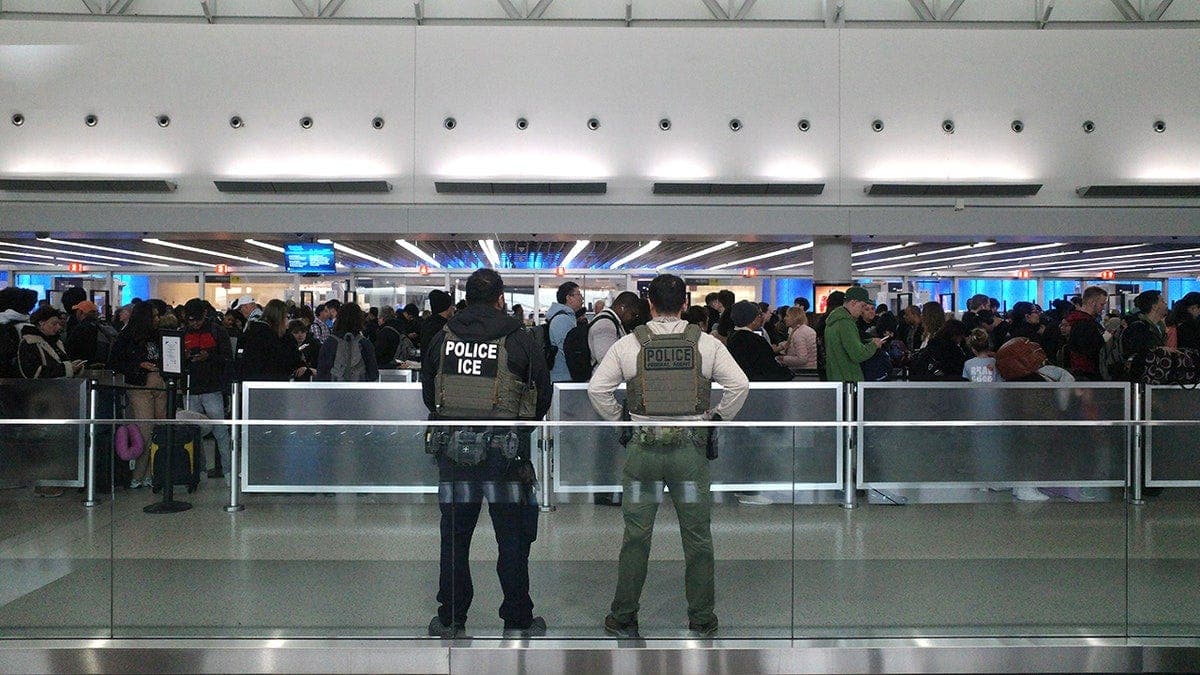
Kinder, Gentler State Violence.
Over the coming months, I’ll be shifting much of my focus and time to Substack instead of short-form content. That means essays will have voiceovers and will also be recorded as standlone video posts. I won’t be sending the videos out as emails, but if you’d rather watch me read this, you can do so here. A few weeks ago, I flew home from a visit with family and friends in Georgia. An ICE agent stood at the head of the TSA PreCheck line at Hartsfield-Jackson Airport, directing people to the ICE agents staffing the TSA check-in counters. Another ICE agent waited on the other side of the check-in, handing people the plastic bins used to send possessions through the X-ray machine. None were masked. All were exceedingly friendly. Last week, flying home from New York, the same scene played out at LaGuardia. Most of my fellow passengers interacted jovially with the ICE agents. Reddit forums and social media posts talked about how friendly they were, how diverse, how helpful. I was not jovial, because these motherfuckers keep teargassing me, and also killing people. Subscribe now Theories abound about President Trump’s reasoning when he decided to deploy ICE agents to airports across the country as Republicans blocked TSA funding nine times in a row.1 Most headlines echoed the President’s professed reasoning, claiming that ICE is there to assist with backlogs caused by TSA staffing shortages.2 But this is circular. The President’s hardline refusal to fund TSA standalone was the cause of the staffing shortages in the first place. His main underlying motivation was not to address backlogs he himself intentionally created. After all, it would have been far more effective to address those backlogs by funding TSA. President Trump is trying to rebrand ICE, countering the vigilante reputation they’ve acquired while masked agents spent the last year or so murdering people in the streets. This rebrand is unlikely to stop ICE from murdering people in the streets. It may be successful in convincing people that ICE murdering people in the streets is acceptable. People have accepted state violence for a long time. As outrage about ICE has grown during Trump’s second term, it’s been met over and over with language condemning not the violence itself, but the lack of procedure followed by the agents committing it. Many Democrats and centrists try to differentiate ICE from other law enforcement agencies. They allege ICE’s violence is exceptional, while also arguing that the violence will be remedied if officers are trained appropriately. Both prongs of this contradictory theory are unsupported by the data, because ICE’s violence is not exceptional. At the time of publishing, ICE has killed 2 people in enforcement actions so far this year. American police have killed more than 300. In 2025, ICE agents are believed to have shot 19 people. In the same year, the Chicago Police Department shot 22. As of the end of 2025, ICE has about 10,000 more agents than CPD has police officers. The only exceptional element of ICE’s level of violence when situated in the broader context of American law enforcement is that ICE is not enforcing criminal law. This distinction ought to matter—not just as related to enforcement, but also as related to long-term detention of people for civil infractions. But the discourse about ICE has focused on this very little. Democratic Congressional leaders Chuck Schumer and Hakeem Jeffries issued a list of demands that call on ICE to behave more like a criminal law enforcement agency. The first ‘demand’ simply states existing law being flouted left and right by the agency: DHS officers cannot enter private property without a judicial warrant. End indiscriminate arrests and improve warrant procedures and standards. Require verification that a person is not a U.S. citizen before holding them in immigration detention. The implication running through all of this rhetoric is that if ICE acted more like other law enforcement agencies, all would be well. Again, ICE is not like criminal law enforcement agencies because it does not enforce criminal law. More importantly: ICE is already acting like other law enforcement agencies in all the ways that matter.3 The difference is how openly the government rejects accountability for ICE agents. This difference is not meaningful. Following the murder of Renee Nicole Good, the New York Times ran an essay titled I’ve Covered Police Abuse for 20 Years. What ICE Is Doing Is Different. The essay—admirably honestly, I suppose—does not argue that ICE violence is what differentiates ICE and the police. It argues the way President Trump and other officials responsible for ICE talk about that violence is a troubling difference, indicative of authoritarianism. It’s one thing to tank or slow-walk an investigation. It’s quite another to publicly declare that no investigation will happen on any level and then announce that you’ll be investigating the victim’s partner and supporters instead. Both paths are unethical and corrupt. Undermining an investigation at least pays lip service to the idea of accountability and public trust. The administration’s actions in Ms. Good’s case are a declaration that there will be no accountability and that it would prefer to instill fear rather than trust. There is no engagement with the obvious follow-up question: does lip service to the idea of accountability actually build trust? Or does trust-building require actual accountability, something the article itself acknowledges is sorely lacking for both police and ICE officers? Even if there is marginally more trust built and accountability had when law enforcement is better trained and apologetic after murders, is that what we ought to consider aspirational? Many elected officials seem to think so. From Chuck Schumer: Democrats have been clear about what Congress needs to do to end ICE’s violence and ensure public safety. ICE needs to end roving patrols, follow basic standards of accountability, and end the secret police who are masked and unidentified. . .It’s ridiculous to think ICE—a force of untrained people—should get special treatment while every other law enforcement agency in the country is asked to follow reasonable basic codes of conduct. Other law enforcement agencies are asked to follow reasonable basic codes of conduct. . . but so is ICE. The New York Times essay excerpted above references a ProPublica [report] on 40 incidents over the past year in which federal immigration officers used potentially fatal chokeholds that are banned by most police agencies. The author fails to name that these potentially fatal chokeholds are also banned by the Department of Homeland Security, despite the underlying ProPublica article pointing it out. Per Gil Kerlikowske, described as a longtime police chief in Seattle who also served as Customs and Border Protection commissioner under President Barack Obama. “You have these guys running around in fatigues, with masks, with ‘Police’ on their uniform,” but they aren’t acting like professional police. If only that were true! In reality, both ICE and U.S. police routinely flout the codes of conduct they’re required to follow. Returning again to Chicago, one of the police agencies that has banned chokeholds: according to CPD’s own data, near-guaranteed to be underreported, CPD officers used the highest level of force against a member of the public — including a gunshot, chokehold or a baton strike to the head or neck — 84 times in 2024. The problem is not that ICE is failing to act like law enforcement. The problem is that they are acting like law enforcement. Treating them more like law enforcement may reduce the public’s perception of ICE as vigilantes brutalizing people unjustly, but it will not stop ICE from brutalizing people unjustly. It will make their brutality justifiable in the public consciousness. Criticism of policing polls horrifically, which is presumably a key factor in the center-left’s insistence that ICE’s actions are outside the bounds of normal law enforcement actions. Part of that insistence includes glomming on to differences that do matter, but probably don’t actually drive ICE’s violence. ICE agents’ masking has become a heavy focus for reformists. It’s true that most police officers do not wear masks. Commenters and politicians say de-masking ICE agents is a necessary step in accountability. This would be a more compelling argument if unmasked law enforcement officers generally faced accountability for use of excessive force. Following the 2016 police murder of Philando Castile, police officer Jeronimo Yanez was charged with second-degree manslaughter and two counts of intentional discharge of firearm that endangers safety. A jury acquitted him of everything. Does this build more trust than Donald Trump’s vocal refusal to prosecute any ICE agents involved in murder at all? By U.S. law enforcement standards, Yanez’s prosecution was itself high-accountability. [I]n 2019, federal prosecutors brought 49 federal criminal deprivation of rights claims against officers out of more than 184,000 federal criminal prosecutions[,] despite officers killing nearly 1,000 people while using their badge and countless other non-lethal excessive force incidents. Does this build more trust than the Trump administration’s rejection of lip service? Unfortunately, it does—among people who will not personally face the harm. ICE’s vigilante air has outraged people who are not actually outraged by ICE’s violence. They are outraged by the idea that the violence is being done the wrong way. ICE’s unpopularity and intentionally sneering, uncivil demeanor might have made people willing to listen to structural critiques. Maybe we could have pushed Americans to understand that our country has come to accept murder of predominantly non-white people as the cost of a notion of safety and order that doesn’t really exist. Instead, the center-left used the moment and their leverage to reinforce the idea that state violence is okay if done right. Donald Trump’s directive to ICE agents not to wear masks in airports but to continue to mask while dealing with hardened criminals deftly creates a world most Americans would be happy to live in, where ICE is only acting with impunity toward people who deserve it. Never mind how we determine who deserves random murder by the state. Americans have already generally accepted this narrative about police violence. The narrative becomes self-reinforcing; ICE only acts that way toward hardened criminals, and so even if they are wrong about whether or not someone is a hardened criminal, they acted that way out of reasonable fear for their lives. The murders of Renee Nicole Good and Alex Pretti were the only real insight most white Americans will ever have into just how much impunity our country grants law enforcement. When we attempt to differentiate how things are now from the way they were two years ago, we open ourselves to legitimate critique about hypocrisy. When we attempt to differentiate ICE’s actions from other law enforcement agencies, we find ourselves arguing that ICE’s underlying actions would be acceptable if they just went about them differently. The problem is much deeper. Make no mistake, the deliberate, open brutality of Trump 2.0 is reflective of a troubling shift in American culture, a willingness to abandon even pretenses of fairness and process that placed some guardrails on the state. But the idea that these policies would be acceptable if the right processes were followed implies that our top priority ought to be process, as opposed to morality and justice. The purpose of a system is what it does, so perhaps our top priority is the sanitization of violence that bureaucracy allows. It shouldn’t be. Planting Trees is a reader-supported publication. To receive new posts and support my work, consider becoming a free or paid subscriber. New to ideas of abolition and structural critique of policing? There’s further reading here. 1 Congresswoman Delia Ramirez outlines one possible reason for the refusal to fund TSA: President Trump and his allies want to privatize TSA, as described in Project 2025. Driving TSA agents to resign as their paychecks become increasingly unpredictable might help speed privatization. Footnoted because this doesn’t explain the decision to deploy other federal employees to take their place, but it feels like a two-things-can-be-true situation. 2 Here, please imagine me saying bullshit through a fake cough. I would say this unquestioning parroting of the President’s talking points regarding his deployment of the secret police is unfathomable, but it is at this point so fathomable as to be unsurprising. 3 Even beyond the prevalence of outright violence among American law enforcement agencies, it’s worth thinking about the collaboration between other law enforcement and this current version of ICE. A viral (and vile) arrest at SFO that took place right after Trump announced ICE would deploy to airports turned out to be unrelated to the new ICE deployment. Instead, it was a result of TSA sharing passenger data with ICE. On April 7, Reuters broke that TSA tips had led to more than 800 ICE arrests.
Kinder, Gentler State Violence.
Over the coming months, I’ll be shifting much of my focus and time to Substack instead of short-form content. That means essays will have voiceovers and will also be recorded as standlone video posts. I won’t be sending the videos out as emails, but if you’d rather watch me read this, you can do so here. A few weeks ago, I flew home from a visit with family and friends in Georgia. An ICE agent stood at the head of the TSA PreCheck line at Hartsfield-Jackson Airport, directing people to the ICE agents staffing the TSA check-in counters. Another ICE agent waited on the other side of the check-in, handing people the plastic bins used to send possessions through the X-ray machine. None were masked. All were exceedingly friendly. Last week, flying home from New York, the same scene played out at LaGuardia. Most of my fellow passengers interacted jovially with the ICE agents. Reddit forums and social media posts talked about how friendly they were, how diverse, how helpful. I was not jovial, because these motherfuckers keep teargassing me, and also killing people. Subscribe now Theories abound about President Trump’s reasoning when he decided to deploy ICE agents to airports across the country as Republicans blocked TSA funding nine times in a row.1 Most headlines echoed the President’s professed reasoning, claiming that ICE is there to assist with backlogs caused by TSA staffing shortages.2 But this is circular. The President’s hardline refusal to fund TSA standalone was the cause of the staffing shortages in the first place. His main underlying motivation was not to address backlogs he himself intentionally created. After all, it would have been far more effective to address those backlogs by funding TSA. President Trump is trying to rebrand ICE, countering the vigilante reputation they’ve acquired while masked agents spent the last year or so murdering people in the streets. This rebrand is unlikely to stop ICE from murdering people in the streets. It may be successful in convincing people that ICE murdering people in the streets is acceptable. People have accepted state violence for a long time. As outrage about ICE has grown during Trump’s second term, it’s been met over and over with language condemning not the violence itself, but the lack of procedure followed by the agents committing it. Many Democrats and centrists try to differentiate ICE from other law enforcement agencies. They allege ICE’s violence is exceptional, while also arguing that the violence will be remedied if officers are trained appropriately. Both prongs of this contradictory theory are unsupported by the data, because ICE’s violence is not exceptional. At the time of publishing, ICE has killed 2 people in enforcement actions so far this year. American police have killed more than 300. In 2025, ICE agents are believed to have shot 19 people. In the same year, the Chicago Police Department shot 22. As of the end of 2025, ICE has about 10,000 more agents than CPD has police officers. The only exceptional element of ICE’s level of violence when situated in the broader context of American law enforcement is that ICE is not enforcing criminal law. This distinction ought to matter—not just as related to enforcement, but also as related to long-term detention of people for civil infractions. But the discourse about ICE has focused on this very little. Democratic Congressional leaders Chuck Schumer and Hakeem Jeffries issued a list of demands that call on ICE to behave more like a criminal law enforcement agency. The first ‘demand’ simply states existing law being flouted left and right by the agency: DHS officers cannot enter private property without a judicial warrant. End indiscriminate arrests and improve warrant procedures and standards. Require verification that a person is not a U.S. citizen before holding them in immigration detention. The implication running through all of this rhetoric is that if ICE acted more like other law enforcement agencies, all would be well. Again, ICE is not like criminal law enforcement agencies because it does not enforce criminal law. More importantly: ICE is already acting like other law enforcement agencies in all the ways that matter.3 The difference is how openly the government rejects accountability for ICE agents. This difference is not meaningful. Following the murder of Renee Nicole Good, the New York Times ran an essay titled I’ve Covered Police Abuse for 20 Years. What ICE Is Doing Is Different. The essay—admirably honestly, I suppose—does not argue that ICE violence is what differentiates ICE and the police. It argues the way President Trump and other officials responsible for ICE talk about that violence is a troubling difference, indicative of authoritarianism. It’s one thing to tank or slow-walk an investigation. It’s quite another to publicly declare that no investigation will happen on any level and then announce that you’ll be investigating the victim’s partner and supporters instead. Both paths are unethical and corrupt. Undermining an investigation at least pays lip service to the idea of accountability and public trust. The administration’s actions in Ms. Good’s case are a declaration that there will be no accountability and that it would prefer to instill fear rather than trust. There is no engagement with the obvious follow-up question: does lip service to the idea of accountability actually build trust? Or does trust-building require actual accountability, something the article itself acknowledges is sorely lacking for both police and ICE officers? Even if there is marginally more trust built and accountability had when law enforcement is better trained and apologetic after murders, is that what we ought to consider aspirational? Many elected officials seem to think so. From Chuck Schumer: Democrats have been clear about what Congress needs to do to end ICE’s violence and ensure public safety. ICE needs to end roving patrols, follow basic standards of accountability, and end the secret police who are masked and unidentified. . .It’s ridiculous to think ICE—a force of untrained people—should get special treatment while every other law enforcement agency in the country is asked to follow reasonable basic codes of conduct. Other law enforcement agencies are asked to follow reasonable basic codes of conduct. . . but so is ICE. The New York Times essay excerpted above references a ProPublica [report] on 40 incidents over the past year in which federal immigration officers used potentially fatal chokeholds that are banned by most police agencies. The author fails to name that these potentially fatal chokeholds are also banned by the Department of Homeland Security, despite the underlying ProPublica article pointing it out. Per Gil Kerlikowske, described as a longtime police chief in Seattle who also served as Customs and Border Protection commissioner under President Barack Obama. “You have these guys running around in fatigues, with masks, with ‘Police’ on their uniform,” but they aren’t acting like professional police. If only that were true! In reality, both ICE and U.S. police routinely flout the codes of conduct they’re required to follow. Returning again to Chicago, one of the police agencies that has banned chokeholds: according to CPD’s own data, near-guaranteed to be underreported, CPD officers used the highest level of force against a member of the public — including a gunshot, chokehold or a baton strike to the head or neck — 84 times in 2024. The problem is not that ICE is failing to act like law enforcement. The problem is that they are acting like law enforcement. Treating them more like law enforcement may reduce the public’s perception of ICE as vigilantes brutalizing people unjustly, but it will not stop ICE from brutalizing people unjustly. It will make their brutality justifiable in the public consciousness. Criticism of policing polls horrifically, which is presumably a key factor in the center-left’s insistence that ICE’s actions are outside the bounds of normal law enforcement actions. Part of that insistence includes glomming on to differences that do matter, but probably don’t actually drive ICE’s violence. ICE agents’ masking has become a heavy focus for reformists. It’s true that most police officers do not wear masks. Commenters and politicians say de-masking ICE agents is a necessary step in accountability. This would be a more compelling argument if unmasked law enforcement officers generally faced accountability for use of excessive force. Following the 2016 police murder of Philando Castile, police officer Jeronimo Yanez was charged with second-degree manslaughter and two counts of intentional discharge of firearm that endangers safety. A jury acquitted him of everything. Does this build more trust than Donald Trump’s vocal refusal to prosecute any ICE agents involved in murder at all? By U.S. law enforcement standards, Yanez’s prosecution was itself high-accountability. [I]n 2019, federal prosecutors brought 49 federal criminal deprivation of rights claims against officers out of more than 184,000 federal criminal prosecutions[,] despite officers killing nearly 1,000 people while using their badge and countless other non-lethal excessive force incidents. Does this build more trust than the Trump administration’s rejection of lip service? Unfortunately, it does—among people who will not personally face the harm. ICE’s vigilante air has outraged people who are not actually outraged by ICE’s violence. They are outraged by the idea that the violence is being done the wrong way. ICE’s unpopularity and intentionally sneering, uncivil demeanor might have made people willing to listen to structural critiques. Maybe we could have pushed Americans to understand that our country has come to accept murder of predominantly non-white people as the cost of a notion of safety and order that doesn’t really exist. Instead, the center-left used the moment and their leverage to reinforce the idea that state violence is okay if done right. Donald Trump’s directive to ICE agents not to wear masks in airports but to continue to mask while dealing with hardened criminals deftly creates a world most Americans would be happy to live in, where ICE is only acting with impunity toward people who deserve it. Never mind how we determine who deserves random murder by the state. Americans have already generally accepted this narrative about police violence. The narrative becomes self-reinforcing; ICE only acts that way toward hardened criminals, and so even if they are wrong about whether or not someone is a hardened criminal, they acted that way out of reasonable fear for their lives. The murders of Renee Nicole Good and Alex Pretti were the only real insight most white Americans will ever have into just how much impunity our country grants law enforcement. When we attempt to differentiate how things are now from the way they were two years ago, we open ourselves to legitimate critique about hypocrisy. When we attempt to differentiate ICE’s actions from other law enforcement agencies, we find ourselves arguing that ICE’s underlying actions would be acceptable if they just went about them differently. The problem is much deeper. Make no mistake, the deliberate, open brutality of Trump 2.0 is reflective of a troubling shift in American culture, a willingness to abandon even pretenses of fairness and process that placed some guardrails on the state. But the idea that these policies would be acceptable if the right processes were followed implies that our top priority ought to be process, as opposed to morality and justice. The purpose of a system is what it does, so perhaps our top priority is the sanitization of violence that bureaucracy allows. It shouldn’t be. Planting Trees is a reader-supported publication. To receive new posts and support my work, consider becoming a free or paid subscriber. New to ideas of abolition and structural critique of policing? There’s further reading here. 1 Congresswoman Delia Ramirez outlines one possible reason for the refusal to fund TSA: President Trump and his allies want to privatize TSA, as described in Project 2025. Driving TSA agents to resign as their paychecks become increasingly unpredictable might help speed privatization. Footnoted because this doesn’t explain the decision to deploy other federal employees to take their place, but it feels like a two-things-can-be-true situation. 2 Here, please imagine me saying bullshit through a fake cough. I would say this unquestioning parroting of the President’s talking points regarding his deployment of the secret police is unfathomable, but it is at this point so fathomable as to be unsurprising. 3 Even beyond the prevalence of outright violence among American law enforcement agencies, it’s worth thinking about the collaboration between other law enforcement and this current version of ICE. A viral (and vile) arrest at SFO that took place right after Trump announced ICE would deploy to airports turned out to be unrelated to the new ICE deployment. Instead, it was a result of TSA sharing passenger data with ICE. On April 7, Reuters broke that TSA tips had led to more than 800 ICE arrests.