5 stories credited to Chicago Tribune
Latest story Mar 8, 2026 · on ChamberLight since Apr 2026
A story can appear as several articles (copies of the same piece), so counts of stories and of articles differ.
Scores for Chicago Tribune
Scores last checked Sep 25, 2026.
Stories ChamberLight collected, by month
Stories credited to Chicago Tribune, by publication date. ChamberLight collects articles that mention the officials it tracks, so this shows its own coverage of this source, not how much the source publishes.
- Stories from Chicago Tribune
- Shaded: ChamberLight collected no stories, or almost none, from any outlet (a gap in its collection, not in the outlet’s publishing)
Show as a table
| Month | Stories | All outlets |
|---|---|---|
| January 2026 | 2 | 38 (collection gap) |
| February 2026 | 2 | 180 |
| March 2026 | 1 | 1,094 |
| April 2026 | 0 | 4,537 |
| May 2026 | 0 | none collected |
| June 2026 | 0 | none collected |
| July 2026 | 0 | none collected |
| August 2026 | 0 | 1 (collection gap) |
| September 2026 | 0 | 598 |
Top topics
Share of this source’s stories tagged with each topic. A story can carry several topics, so the shares do not add up to 100%.
- Ethics/Corruption3
60% of 5 stories · 56% across all outlets
- Budget/Spending2
40% of 5 stories · 30% across all outlets
- Criminal Justice2
40% of 5 stories · 18% across all outlets
- Immigration2
40% of 5 stories · 12% across all outlets
- Voting Rights2
40% of 5 stories · 18% across all outlets
- Defense/Military1
20% of 5 stories · 24% across all outlets
- Economy1
20% of 5 stories · 24% across all outlets
- Foreign Policy1
20% of 5 stories · 28% across all outlets
The thin mark on each bar is the topic’s share across all outlets.
Who they cover
Party of the officials these stories are mainly about, across all 11 officials named. A story counts once for each official it is mainly about, so the split is over 11 story–official pairs, from 5 stories.
- Republican55% · 6 pairs
- Democrat36% · 4 pairs
- Party not recorded9% · 1 pair
Most covered
Stories mainly about each official, and their share of the source’s 5 stories.
- 1Amy KlobucharD1 story · 20%
- 2Charles SchumerD1 story · 20%
- 3Christopher A. Coons–1 story · 20%
- 4Donald TrumpR1 story · 20%
- 5Hakeem JeffriesD1 story · 20%
- 6John JamesR1 story · 20%
- 7John ThuneR1 story · 20%
- 8Katie BrittR1 story · 20%
- 9Lisa MurkowskiR1 story · 20%
- 10Shomari FiguresD1 story · 20%
+ 1 other official (1 story–official pair)
Article tone
ChamberLight’s article analysis assigns each story a tone toward the official it covers. It describes the coverage of that official, not Chicago Tribune’s stance, and reader votes do not change it. 5 stories.
- Good Look
- 1 (20%)
- Mixed
- 4 (80%)
- Informational
- 0 (0%)
- Bad Look
- 0 (0%)
Challenges to these scores
No one has challenged a score on this page yet. Anyone can; editors publish every outcome here.
Articles served from chicagotribune.com
11
On 61st anniversary of Bloody Sunday, worries about the future of voting rights and calls to action
SELMA, Ala. — Sixty-one years after state troopers attacked Civil Rights marchers on the Edmund Pettus Bridge in Selma, thousands gathered in the Alabama city this weekend amid new concerns about the future of the Voting Rights Act. The March 7, 1965, violence that became known as Bloody Sunday shocked the nation and helped spur passage of the landmark legislation that dismantled barriers to voting for Black Americans in the Jim Crow South. The anniversary was celebrated in this southern city, that served as crucible for the voting rights movement, with events through the weekend and ending with a commemorative march across the bridge Sunday. But the commemoration came as the U.S. Supreme Court considers a case that could limit a provision of the Voting Rights Act that has helped ensure some congressional and local districts are drawn so minority voters have a chance to elect their candidate of choice. “I’m concerned that all of the advances that we made for the last 61 years are going to be eradicated,” said Charles Mauldin, 78, one of the marchers beaten on Bloody Sunday. Democratic officeholders, civil rights leaders and tourists descended on the southern city to pay homage to the pivotal moment of the Civil Rights Movement and to issue calls to action. Speakers warned of the looming court decision and criticized the Trump administration’s actions on immigration and efforts to roll back diversity, equity, and inclusion. Standing at the pulpit of the city’s historic Tabernacle Baptist Church, Maryland Gov. Wes Moore said that like the marchers on Bloody Sunday, they must press forward. “Those who marched across the Edmund Pettus Bridge deserve better than us cowering while the freedoms that we inherited and they fought for, are being ripped away,” Moore said. Illinois Gov. JB Pritzker, speaking at a rally at the foot of the bridge, said racism is on the rise in America and “Trump’s Supreme Court is gutting the Voting Rights Act.” “Let’s march forward today with the knowledge that we are the inheritors of the faith that brought marchers to the bridge 61 years ago. It is now on us to bend the arc of the moral universe toward justice,” Pritzker said. The annual commemoration in Selma is a mix of a civil rights remembrances, church services and a street festival filled with vendors and food trucks. It is also part political rally with an eye on November’s midterm elections and a longer view to the 2028 presidential race. The commemoration included a tribute to the late Rev. Jesse Jackson, the civil rights leader and two-time presidential candidate who regularly attended the annual Selma march. He died on Feb. 17 at age 84. Yusef Jackson said his father’s legacy will be carried forward. “In November, we will go back to the polls and take our government back, setting our country on the right path,” Jackson said. The looming court decision cast a shadow over the weekend festivities. Justices are expected to rule soon on a Louisiana case about the role of race in drawing congressional districts. A ruling prohibiting or limiting that role could have sweeping consequences, potentially opening the door for Republican-controlled states to redistrict and roll back majority Black and Latino districts that tend to favor Democrats. U.S. Rep. Shomari Figures won election in 2024 to an Alabama district that was redrawn by a federal court to give Black voters a greater voice. His district will likely be targeted if the state gets the opportunity to redraw lines. He said what happened in Selma and the subsequent passage of the Voting Rights Act “was monumental in shaping what America looks like and how America is represented in Congress.” In 1965, the Bloody Sunday marchers led by John Lewis and Hosea Williams walked in pairs across the Selma bridge headed toward the state capital of Montgomery. Mauldin, then 17, was part of the third pair behind Williams and Lewis. At the apex of the bridge, they could see the sea of law enforcement officers, including some on horseback, waiting for them. But they kept going. “It wasn’t that we didn’t have fear, it’s that we chose courage over fear,” Mauldin recalled. A crowd of several thousand filed behind elected officials on this Sunday for the march across the bridge, this time protected by state law enforcement officers. James and Dianne Reynolds drove from Montgomery for the annual commemoration. James Reynolds, 79, was a high school student in Selma and worked with the Student Nonviolent Coordinating Committee helping to set up demonstrations in Selma. He said he sees echoes of the past in efforts to restrict voting, such as curtailing mail-in voting and absentee voting. “When you look at what’s going on today, we’re still fighting for the right to vote,” Reynolds said.
Homeland Security shutdown seems certain as funding talks between White House and Democrats stall
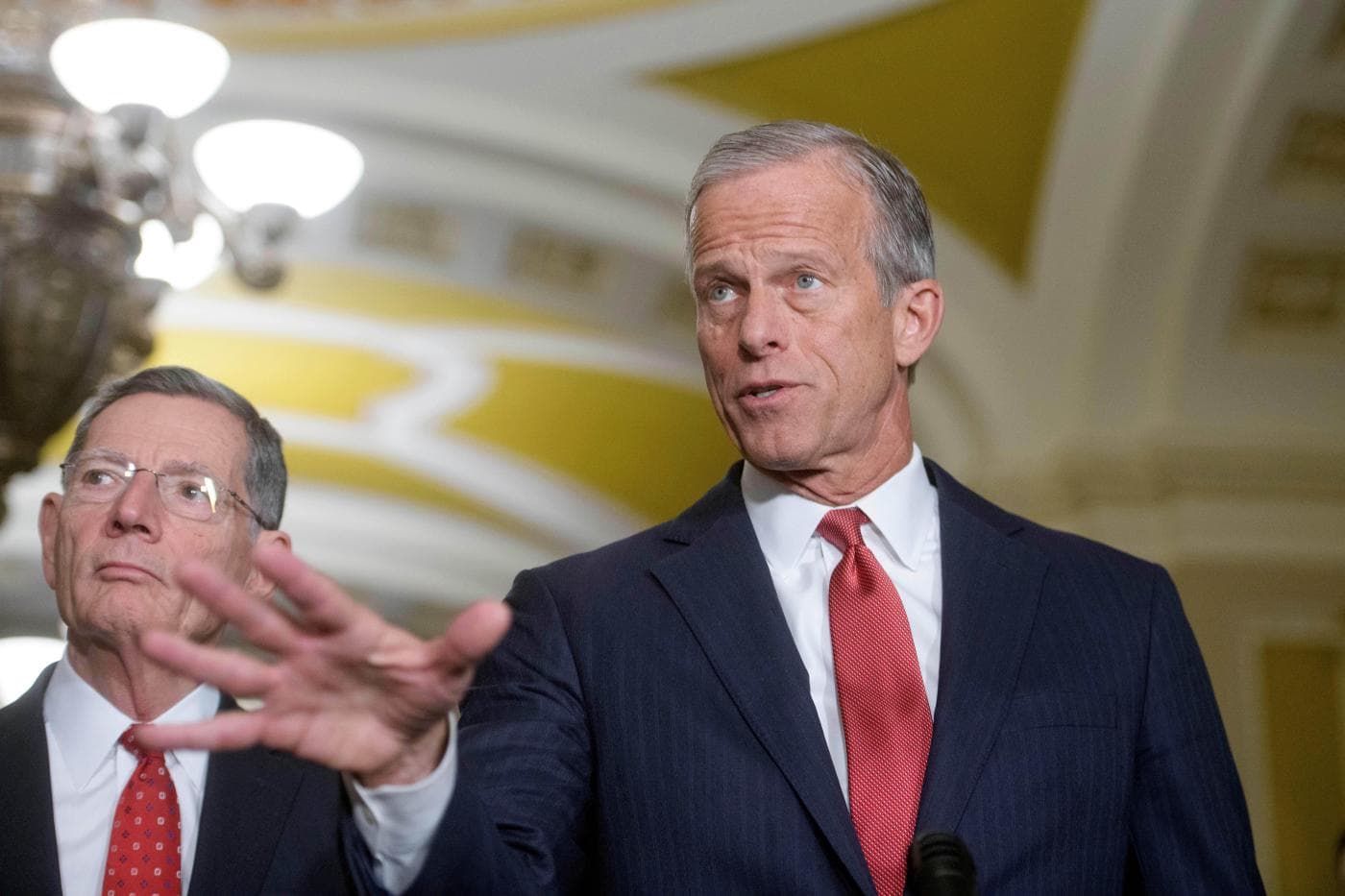
WASHINGTON — A shutdown for the Department of Homeland Security appeared certain Thursday as lawmakers in the House and Senate were set to leave Washington for a 10-day break and negotiations with the White House over Democrats’ demands for new restrictions had stalled. Democrats and the White House have traded offers in recent days as the Democrats have said they want curbs on President Donald Trump’s broad campaign of immigration enforcement. They have demanded better identification for U.S. Immigration and Customs Enforcement and other federal law enforcement officers, a new code of conduct for those agencies and more use of judicial warrants, among other requests. The White House sent its latest proposal late Wednesday, but Trump told reporters on Thursday that some of the Democratic demands would be “very, very hard to approve.” Democrats said the White House offer, which was not made public, did not include sufficient curbs on ICE after two protesters were fatally shot last month. Americans want accountability and “an end to the chaos,” Senate Democratic Leader Chuck Schumer of New York said Thursday, just before the Senate rejected a bill to fund the department. “The White House and congressional Republicans must listen and deliver.” Lawmakers in both chambers were on notice to return to Washington if the two sides struck a deal to end the expected shutdown. Sen. Patty Murray, the top Democrat on the Senate Appropriations Committee, told reporters that Democrats would send the White House a counterproposal over the weekend. “They haven’t taken it seriously yet,” she said of Republicans. Impact of a shutdown Senate Majority Leader John Thune, R-S.D., said after the vote that a shutdown appeared likely. “The people who pay the price are the people of the agencies who are not going to be getting paychecks,” Thune said. The impact of a DHS shutdown is likely to be minimal at first. It would not likely block any of the immigration enforcement operations, as Trump’s tax and spending cut bill passed last year gave ICE about $75 billion to expand detention capacity and bolster enforcement operations. But the other agencies in the department — including the Transportation Security Administration, the Federal Emergency Management Agency, the Secret Service and the Coast Guard — could take a bigger hit over time. Gregg Phillips, an associate administrator at FEMA, said at a hearing this week that its disaster relief fund has sufficient balances to continue emergency response activities during a shutdown, but would become seriously strained in the event of a catastrophic disaster. Phillips said that while the agency continues to respond to threats like flooding and winter storms, long-term planning and coordination with state and local partners will be “irrevocably impacted.” Trump defends officer masking Trump, who has remained largely silent during the bipartisan talks, noted Thursday that a recent court ruling rejected a ban on masks for federal law enforcement officers. “We have to protect our law enforcement,” Trump told reporters. Democrats made the demands for new restrictions on ICE and other federal law enforcement after ICU nurse Alex Pretti was shot and killed by a U.S. Border Patrol officer in Minneapolis on Jan. 24. Renee Good was shot by ICE agents on Jan. 7. Trump agreed to a Democratic request that the Homeland Security bill be separated from a larger spending measure that became law last week. That package extended Homeland Security funding at current levels only through Friday. Schumer and House Democratic leader Hakeem Jeffries of New York have said they want immigration officers to remove their masks, to show identification and to better coordinate with local authorities. They have also demanded a stricter use-of-force policy for the federal officers, legal safeguards at detention centers and a prohibition on tracking protesters with body-worn cameras. Democrats also say Congress should end indiscriminate arrests and require that before a person can be detained, authorities have verified that the person is not a U.S. citizen. Republicans have been largely opposed to most of the items on the Democrats’ list. Sen. Eric Schmitt, R-Mo., said that Republicans who have pushed for stronger immigration enforcement would benefit politically from the Democratic demands. “So if they want to have that debate, we’ll have that debate all they want,” said Schmitt. Judicial warrants a sticking point Thune, who has urged Democrats and the White House to work together, indicated that another sticking point is judicial warrants. “The issue of warrants is going to be very hard for the White House or for Republicans,” Thune said of the White House’s most recent offer. “But I think there are a lot of other areas where there has been give, and progress.” Schumer and Jeffries have said DHS officers should not be able to enter private property without a judicial warrant and that warrant procedures and standards should be improved. They have said they want an end to “roving patrols” of agents who are targeting people in the streets and in their homes. Most immigration arrests are carried out under administrative warrants. Those are internal documents issued by immigration authorities that authorize the arrest of a specific person but do not permit officers to forcibly enter private homes or other nonpublic spaces without consent. Traditionally, only warrants signed by judges carry that authority. But an internal ICE memo obtained by The Associated Press last month authorizes ICE officers to use force to enter a residence based solely on a more narrow administrative warrant to arrest someone with a final order of removal, a move that advocates say collides with Fourth Amendment protections. Far from agreement Thune, R-S.D., said were “concessions” in the White House offer. He would not say what those concessions were, though, and he acknowledged the sides were “a long ways toward a solution.” Schumer said it was not enough that the administration had announced an end to the immigration crackdown in Minnesota that led to thousands of arrests and the fatal shootings of two protesters. “We need legislation to rein in ICE and end the violence,” Schumer said, or the actions of the administration “could be reversed tomorrow on a whim.” Simmering partisan tensions played out on the Senate floor immediately after the vote, as Alabama Sen. Katie Britt, the chairwoman of the Senate Appropriations subcommittee that oversees Homeland Security funding, tried to pass a two-week extension of Homeland Security funding and Democrats objected. Britt said Democrats were “posturing” and that federal employees would suffer for it. “I’m over it!” she yelled. Connecticut Sen. Chris Murphy, the top Democrat on the Homeland spending subcommittee, responded that Democrats “want to fund the Department of Homeland Security, but only a department that is obeying the law.” “This is an exceptional moment in this country’s history,” Murphy said. Associated Press writers Lisa Mascaro, Joey Cappelletti, Stephen Groves and Rebecca Santana contributed to this report.
Homeland Security shutdown seems certain as funding talks between White House and Democrats stall
WASHINGTON — A shutdown for the Department of Homeland Security appeared certain Thursday as lawmakers in the House and Senate were set to leave Washington for a 10-day break and negotiations with the White House over Democrats’ demands for new restrictions had stalled. Democrats and the White House have traded offers in recent days as the Democrats have said they want curbs on President Donald Trump’s broad campaign of immigration enforcement. They have demanded better identification for U.S. Immigration and Customs Enforcement and other federal law enforcement officers, a new code of conduct for those agencies and more use of judicial warrants, among other requests. The White House sent its latest proposal late Wednesday, but Trump told reporters on Thursday that some of the Democratic demands would be “very, very hard to approve.” Democrats said the White House offer, which was not made public, did not include sufficient curbs on ICE after two protesters were fatally shot last month. Americans want accountability and “an end to the chaos,” Senate Democratic Leader Chuck Schumer of New York said Thursday, just before the Senate rejected a bill to fund the department. “The White House and congressional Republicans must listen and deliver.” Lawmakers in both chambers were on notice to return to Washington if the two sides struck a deal to end the expected shutdown. Sen. Patty Murray, the top Democrat on the Senate Appropriations Committee, told reporters that Democrats would send the White House a counterproposal over the weekend. “They haven’t taken it seriously yet,” she said of Republicans. Impact of a shutdown Senate Majority Leader John Thune, R-S.D., said after the vote that a shutdown appeared likely. “The people who pay the price are the people of the agencies who are not going to be getting paychecks,” Thune said. The impact of a DHS shutdown is likely to be minimal at first. It would not likely block any of the immigration enforcement operations, as Trump’s tax and spending cut bill passed last year gave ICE about $75 billion to expand detention capacity and bolster enforcement operations. But the other agencies in the department — including the Transportation Security Administration, the Federal Emergency Management Agency, the Secret Service and the Coast Guard — could take a bigger hit over time. Gregg Phillips, an associate administrator at FEMA, said at a hearing this week that its disaster relief fund has sufficient balances to continue emergency response activities during a shutdown, but would become seriously strained in the event of a catastrophic disaster. Phillips said that while the agency continues to respond to threats like flooding and winter storms, long-term planning and coordination with state and local partners will be “irrevocably impacted.” Trump defends officer masking Trump, who has remained largely silent during the bipartisan talks, noted Thursday that a recent court ruling rejected a ban on masks for federal law enforcement officers. “We have to protect our law enforcement,” Trump told reporters. Democrats made the demands for new restrictions on ICE and other federal law enforcement after ICU nurse Alex Pretti was shot and killed by a U.S. Border Patrol officer in Minneapolis on Jan. 24. Renee Good was shot by ICE agents on Jan. 7. Trump agreed to a Democratic request that the Homeland Security bill be separated from a larger spending measure that became law last week. That package extended Homeland Security funding at current levels only through Friday. Schumer and House Democratic leader Hakeem Jeffries of New York have said they want immigration officers to remove their masks, to show identification and to better coordinate with local authorities. They have also demanded a stricter use-of-force policy for the federal officers, legal safeguards at detention centers and a prohibition on tracking protesters with body-worn cameras. Democrats also say Congress should end indiscriminate arrests and require that before a person can be detained, authorities have verified that the person is not a U.S. citizen. Republicans have been largely opposed to most of the items on the Democrats’ list. Sen. Eric Schmitt, R-Mo., said that Republicans who have pushed for stronger immigration enforcement would benefit politically from the Democratic demands. “So if they want to have that debate, we’ll have that debate all they want,” said Schmitt. Judicial warrants a sticking point Thune, who has urged Democrats and the White House to work together, indicated that another sticking point is judicial warrants. “The issue of warrants is going to be very hard for the White House or for Republicans,” Thune said of the White House’s most recent offer. “But I think there are a lot of other areas where there has been give, and progress.” Schumer and Jeffries have said DHS officers should not be able to enter private property without a judicial warrant and that warrant procedures and standards should be improved. They have said they want an end to “roving patrols” of agents who are targeting people in the streets and in their homes. Most immigration arrests are carried out under administrative warrants. Those are internal documents issued by immigration authorities that authorize the arrest of a specific person but do not permit officers to forcibly enter private homes or other nonpublic spaces without consent. Traditionally, only warrants signed by judges carry that authority. But an internal ICE memo obtained by The Associated Press last month authorizes ICE officers to use force to enter a residence based solely on a more narrow administrative warrant to arrest someone with a final order of removal, a move that advocates say collides with Fourth Amendment protections. Far from agreement Thune, R-S.D., said were “concessions” in the White House offer. He would not say what those concessions were, though, and he acknowledged the sides were “a long ways toward a solution.” Schumer said it was not enough that the administration had announced an end to the immigration crackdown in Minnesota that led to thousands of arrests and the fatal shootings of two protesters. “We need legislation to rein in ICE and end the violence,” Schumer said, or the actions of the administration “could be reversed tomorrow on a whim.” Simmering partisan tensions played out on the Senate floor immediately after the vote, as Alabama Sen. Katie Britt, the chairwoman of the Senate Appropriations subcommittee that oversees Homeland Security funding, tried to pass a two-week extension of Homeland Security funding and Democrats objected. Britt said Democrats were “posturing” and that federal employees would suffer for it. “I’m over it!” she yelled. Connecticut Sen. Chris Murphy, the top Democrat on the Homeland spending subcommittee, responded that Democrats “want to fund the Department of Homeland Security, but only a department that is obeying the law.” “This is an exceptional moment in this country’s history,” Murphy said. Associated Press writers Lisa Mascaro, Joey Cappelletti, Stephen Groves and Rebecca Santana contributed to this report.
Homeland Security shutdown seems certain as funding talks between White House and Democrats stall
WASHINGTON — A shutdown for the Department of Homeland Security appeared certain Thursday as lawmakers in the House and Senate were set to leave Washington for a 10-day break and negotiations with the White House over Democrats’ demands for new restrictions had stalled. Democrats and the White House have traded offers in recent days as the Democrats have said they want curbs on President Donald Trump’s broad campaign of immigration enforcement. They have demanded better identification for U.S. Immigration and Customs Enforcement and other federal law enforcement officers, a new code of conduct for those agencies and more use of judicial warrants, among other requests. The White House sent its latest proposal late Wednesday, but Trump told reporters on Thursday that some of the Democratic demands would be “very, very hard to approve.” Democrats said the White House offer, which was not made public, did not include sufficient curbs on ICE after two protesters were fatally shot last month. Americans want accountability and “an end to the chaos,” Senate Democratic Leader Chuck Schumer of New York said Thursday, just before the Senate rejected a bill to fund the department. “The White House and congressional Republicans must listen and deliver.” Lawmakers in both chambers were on notice to return to Washington if the two sides struck a deal to end the expected shutdown. Sen. Patty Murray, the top Democrat on the Senate Appropriations Committee, told reporters that Democrats would send the White House a counterproposal over the weekend. “They haven’t taken it seriously yet,” she said of Republicans. Impact of a shutdown Senate Majority Leader John Thune, R-S.D., said after the vote that a shutdown appeared likely. “The people who pay the price are the people of the agencies who are not going to be getting paychecks,” Thune said. The impact of a DHS shutdown is likely to be minimal at first. It would not likely block any of the immigration enforcement operations, as Trump’s tax and spending cut bill passed last year gave ICE about $75 billion to expand detention capacity and bolster enforcement operations. But the other agencies in the department — including the Transportation Security Administration, the Federal Emergency Management Agency, the Secret Service and the Coast Guard — could take a bigger hit over time. Gregg Phillips, an associate administrator at FEMA, said at a hearing this week that its disaster relief fund has sufficient balances to continue emergency response activities during a shutdown, but would become seriously strained in the event of a catastrophic disaster. Phillips said that while the agency continues to respond to threats like flooding and winter storms, long-term planning and coordination with state and local partners will be “irrevocably impacted.” Trump defends officer masking Trump, who has remained largely silent during the bipartisan talks, noted Thursday that a recent court ruling rejected a ban on masks for federal law enforcement officers. “We have to protect our law enforcement,” Trump told reporters. Democrats made the demands for new restrictions on ICE and other federal law enforcement after ICU nurse Alex Pretti was shot and killed by a U.S. Border Patrol officer in Minneapolis on Jan. 24. Renee Good was shot by ICE agents on Jan. 7. Trump agreed to a Democratic request that the Homeland Security bill be separated from a larger spending measure that became law last week. That package extended Homeland Security funding at current levels only through Friday. Schumer and House Democratic leader Hakeem Jeffries of New York have said they want immigration officers to remove their masks, to show identification and to better coordinate with local authorities. They have also demanded a stricter use-of-force policy for the federal officers, legal safeguards at detention centers and a prohibition on tracking protesters with body-worn cameras. Democrats also say Congress should end indiscriminate arrests and require that before a person can be detained, authorities have verified that the person is not a U.S. citizen. Republicans have been largely opposed to most of the items on the Democrats’ list. Sen. Eric Schmitt, R-Mo., said that Republicans who have pushed for stronger immigration enforcement would benefit politically from the Democratic demands. “So if they want to have that debate, we’ll have that debate all they want,” said Schmitt. Judicial warrants a sticking point Thune, who has urged Democrats and the White House to work together, indicated that another sticking point is judicial warrants. “The issue of warrants is going to be very hard for the White House or for Republicans,” Thune said of the White House’s most recent offer. “But I think there are a lot of other areas where there has been give, and progress.” Schumer and Jeffries have said DHS officers should not be able to enter private property without a judicial warrant and that warrant procedures and standards should be improved. They have said they want an end to “roving patrols” of agents who are targeting people in the streets and in their homes. Most immigration arrests are carried out under administrative warrants. Those are internal documents issued by immigration authorities that authorize the arrest of a specific person but do not permit officers to forcibly enter private homes or other nonpublic spaces without consent. Traditionally, only warrants signed by judges carry that authority. But an internal ICE memo obtained by The Associated Press last month authorizes ICE officers to use force to enter a residence based solely on a more narrow administrative warrant to arrest someone with a final order of removal, a move that advocates say collides with Fourth Amendment protections. Far from agreement Thune, R-S.D., said were “concessions” in the White House offer. He would not say what those concessions were, though, and he acknowledged the sides were “a long ways toward a solution.” Schumer said it was not enough that the administration had announced an end to the immigration crackdown in Minnesota that led to thousands of arrests and the fatal shootings of two protesters. “We need legislation to rein in ICE and end the violence,” Schumer said, or the actions of the administration “could be reversed tomorrow on a whim.” Simmering partisan tensions played out on the Senate floor immediately after the vote, as Alabama Sen. Katie Britt, the chairwoman of the Senate Appropriations subcommittee that oversees Homeland Security funding, tried to pass a two-week extension of Homeland Security funding and Democrats objected. Britt said Democrats were “posturing” and that federal employees would suffer for it. “I’m over it!” she yelled. Connecticut Sen. Chris Murphy, the top Democrat on the Homeland spending subcommittee, responded that Democrats “want to fund the Department of Homeland Security, but only a department that is obeying the law.” “This is an exceptional moment in this country’s history,” Murphy said. Associated Press writers Lisa Mascaro, Joey Cappelletti, Stephen Groves and Rebecca Santana contributed to this report.
Homeland Security shutdown seems certain as funding talks between White House and Democrats stall
WASHINGTON — A shutdown for the Department of Homeland Security appeared certain Thursday as lawmakers in the House and Senate were set to leave Washington for a 10-day break and negotiations with the White House over Democrats’ demands for new restrictions had stalled. Democrats and the White House have traded offers in recent days as the Democrats have said they want curbs on President Donald Trump’s broad campaign of immigration enforcement. They have demanded better identification for U.S. Immigration and Customs Enforcement and other federal law enforcement officers, a new code of conduct for those agencies and more use of judicial warrants, among other requests. The White House sent its latest proposal late Wednesday, but Trump told reporters on Thursday that some of the Democratic demands would be “very, very hard to approve.” Democrats said the White House offer, which was not made public, did not include sufficient curbs on ICE after two protesters were fatally shot last month. Americans want accountability and “an end to the chaos,” Senate Democratic Leader Chuck Schumer of New York said Thursday, just before the Senate rejected a bill to fund the department. “The White House and congressional Republicans must listen and deliver.” Lawmakers in both chambers were on notice to return to Washington if the two sides struck a deal to end the expected shutdown. Sen. Patty Murray, the top Democrat on the Senate Appropriations Committee, told reporters that Democrats would send the White House a counterproposal over the weekend. “They haven’t taken it seriously yet,” she said of Republicans. Impact of a shutdown Senate Majority Leader John Thune, R-S.D., said after the vote that a shutdown appeared likely. “The people who pay the price are the people of the agencies who are not going to be getting paychecks,” Thune said. The impact of a DHS shutdown is likely to be minimal at first. It would not likely block any of the immigration enforcement operations, as Trump’s tax and spending cut bill passed last year gave ICE about $75 billion to expand detention capacity and bolster enforcement operations. But the other agencies in the department — including the Transportation Security Administration, the Federal Emergency Management Agency, the Secret Service and the Coast Guard — could take a bigger hit over time. Gregg Phillips, an associate administrator at FEMA, said at a hearing this week that its disaster relief fund has sufficient balances to continue emergency response activities during a shutdown, but would become seriously strained in the event of a catastrophic disaster. Phillips said that while the agency continues to respond to threats like flooding and winter storms, long-term planning and coordination with state and local partners will be “irrevocably impacted.” Trump defends officer masking Trump, who has remained largely silent during the bipartisan talks, noted Thursday that a recent court ruling rejected a ban on masks for federal law enforcement officers. “We have to protect our law enforcement,” Trump told reporters. Democrats made the demands for new restrictions on ICE and other federal law enforcement after ICU nurse Alex Pretti was shot and killed by a U.S. Border Patrol officer in Minneapolis on Jan. 24. Renee Good was shot by ICE agents on Jan. 7. Trump agreed to a Democratic request that the Homeland Security bill be separated from a larger spending measure that became law last week. That package extended Homeland Security funding at current levels only through Friday. Schumer and House Democratic leader Hakeem Jeffries of New York have said they want immigration officers to remove their masks, to show identification and to better coordinate with local authorities. They have also demanded a stricter use-of-force policy for the federal officers, legal safeguards at detention centers and a prohibition on tracking protesters with body-worn cameras. Democrats also say Congress should end indiscriminate arrests and require that before a person can be detained, authorities have verified that the person is not a U.S. citizen. Republicans have been largely opposed to most of the items on the Democrats’ list. Sen. Eric Schmitt, R-Mo., said that Republicans who have pushed for stronger immigration enforcement would benefit politically from the Democratic demands. “So if they want to have that debate, we’ll have that debate all they want,” said Schmitt. Judicial warrants a sticking point Thune, who has urged Democrats and the White House to work together, indicated that another sticking point is judicial warrants. “The issue of warrants is going to be very hard for the White House or for Republicans,” Thune said of the White House’s most recent offer. “But I think there are a lot of other areas where there has been give, and progress.” Schumer and Jeffries have said DHS officers should not be able to enter private property without a judicial warrant and that warrant procedures and standards should be improved. They have said they want an end to “roving patrols” of agents who are targeting people in the streets and in their homes. Most immigration arrests are carried out under administrative warrants. Those are internal documents issued by immigration authorities that authorize the arrest of a specific person but do not permit officers to forcibly enter private homes or other nonpublic spaces without consent. Traditionally, only warrants signed by judges carry that authority. But an internal ICE memo obtained by The Associated Press last month authorizes ICE officers to use force to enter a residence based solely on a more narrow administrative warrant to arrest someone with a final order of removal, a move that advocates say collides with Fourth Amendment protections. Far from agreement Thune, R-S.D., said were “concessions” in the White House offer. He would not say what those concessions were, though, and he acknowledged the sides were “a long ways toward a solution.” Schumer said it was not enough that the administration had announced an end to the immigration crackdown in Minnesota that led to thousands of arrests and the fatal shootings of two protesters. “We need legislation to rein in ICE and end the violence,” Schumer said, or the actions of the administration “could be reversed tomorrow on a whim.” Simmering partisan tensions played out on the Senate floor immediately after the vote, as Alabama Sen. Katie Britt, the chairwoman of the Senate Appropriations subcommittee that oversees Homeland Security funding, tried to pass a two-week extension of Homeland Security funding and Democrats objected. Britt said Democrats were “posturing” and that federal employees would suffer for it. “I’m over it!” she yelled. Connecticut Sen. Chris Murphy, the top Democrat on the Homeland spending subcommittee, responded that Democrats “want to fund the Department of Homeland Security, but only a department that is obeying the law.” “This is an exceptional moment in this country’s history,” Murphy said. Associated Press writers Lisa Mascaro, Joey Cappelletti, Stephen Groves and Rebecca Santana contributed to this report.

Republicans rarely criticize Donald Trump in his second term. A racist post briefly changed that.
WASHINGTON — President Donald Trump received rare blowback from Republican lawmakers over a video posted to social media that included a racist image of former President Barack Obama and his wife, Michelle Obama, depicted as primates. Since Trump’s return to the White House, Republican lawmakers have treaded carefully when disagreeing with the president, often communicating their concerns in private for fear of suffering his wrath. But the swift calls to remove the post, which also echoed false conspiracy theories about the 2020 election, represented a rare moment of bipartisan backlash to Trump’s actions from lawmakers on Capitol Hill. Multiple GOP members of the Senate and House joined their Democratic colleagues in voicing disgust and criticism at the post and urged the president to remove it. Trump declined to apologize, saying he did not see the racist portion of the video when he passed it on to staff. How Republican lawmakers reacted South Carolina’s Tim Scott, the only Black Republican senator and chair of the Senate GOP’s campaign arm, criticized the image and urged the president to remove it. “Praying it was fake because it’s the most racist thing I’ve seen out of this White House. The President should remove it,” Scott wrote on social media. Other Republican senators echoed the sentiment. “Even if this was a Lion King meme, a reasonable person sees the racist context to this,” Sen. Pete Ricketts of Nebraska, wrote on social media. “The White House should do what anyone does when they make a mistake: remove this and apologize.” Sen. Susan Collins of Maine called the image “appalling.” Roger Wicker, the senior senator from Mississippi, denounced it as “totally unacceptable.” “The president should take it down and apologize,” Wicker wrote. Sen. John Curtis of Utah called Trump’s post “blatantly racist and inexcusable. It should never have been posted or left published for so long.” In the House, Rep. Mike Lawler of New York called Trump’s post “wrong and incredibly offensive—whether intentional or a mistake—and should be deleted immediately with an apology offered.” Rep. Don Bacon of Nebraska, a frequent Trump critic, quipped on social media about the White House’s shifting explanations for the video’s origin and deletion. Praise for the post being removed More Republicans lodged their objections to the post after the video was taken down. “This content was rightfully removed, should have never been posted to begin with, and is not who we are as a nation,” wrote Sen. Katie Britt, an Alabama Republican. Rep. John James, a Michigan Republican running for governor, said he was “glad to see that trash has been taken down.” James, one of four Black Republicans in the House, said he was “shocked and appalled by that post” but defended Trump’s character. “I know the President. He is not racist,” said James, who campaigned for Trump in Black communities during the 2024 presidential campaign. Still, some of Trump’s closest allies defended him. Laura Loomer, a far right activist and media personality, called on her social media followers to highlight any Republican lawmakers “attacking Trump today with false accusations of racism.” “I am compiling a list of every single GOP Senator who attacked President Trump today, and I am printing it out and giving it to President Trump ahead of the @NRSC Winter Meeting in Palm Beach, Florida this weekend,” wrote Loomer, who has influenced administration policy and threatened retribution against GOP lawmakers in the past. A shifting White House narrative Trump has been a longtime critic of the Obamas. Before entering politics, he earned fame among conservatives as a champion of the “birther” conspiracy theory that falsely claimed that President Obama was not born in the U.S. White House officials made multiple shifting statements about how the animated video, which has circulated among conservatives online for months, came to be posted by the president’s account. White House press secretary Karoline Leavitt at first said the post, which appears to be AI-generated, depicted Trump as “King of the Jungle” and the Obamas and other Democrats as characters from “The Lion King.” But the Disney animated classic does not include any characters depicted as apes, and is set in an African savanna not a jungle. White House officials later said that the video was erroneously posted by a staffer. “I liked the beginning. I saw it and just passed it on, and I guess probably nobody reviewed the end of it,” Trump told reporters on Air Force One. Asked if he condemned the racist parts of the video, Trump said, “Of course I do.” Democrats rally to former first couple Supporters of the Obamas also took to social media not only to condemn the president’s post, but also to celebrate the former first couple. “We should ALL be outraged,” Pete Souza, the former chief White House photographer during the Obama White House, posted to social media. “I will not post a screenshot of the video here. Instead, I thought it best to respond with a few of my photographs of Barack and Michelle.” Rep. Ayanna Pressley, D-Mass., posted images of the Obamas and praised their “brilliance, elegance, and beauty.” “I want Americans, particularly our young people, to know that the vast majority of our country supports and uplifts you despite the filth spewing from the Oval Office,” former House Speaker Nancy Pelosi, D-Calif., wrote to the Obamas on social media.
Republicans rarely criticize Donald Trump in his second term. A racist post briefly changed that.
WASHINGTON — President Donald Trump received rare blowback from Republican lawmakers over a video posted to social media that included a racist image of former President Barack Obama and his wife, Michelle Obama, depicted as primates. Since Trump’s return to the White House, Republican lawmakers have treaded carefully when disagreeing with the president, often communicating their concerns in private for fear of suffering his wrath. But the swift calls to remove the post, which also echoed false conspiracy theories about the 2020 election, represented a rare moment of bipartisan backlash to Trump’s actions from lawmakers on Capitol Hill. Multiple GOP members of the Senate and House joined their Democratic colleagues in voicing disgust and criticism at the post and urged the president to remove it. Trump declined to apologize, saying he did not see the racist portion of the video when he passed it on to staff. How Republican lawmakers reacted South Carolina’s Tim Scott, the only Black Republican senator and chair of the Senate GOP’s campaign arm, criticized the image and urged the president to remove it. “Praying it was fake because it’s the most racist thing I’ve seen out of this White House. The President should remove it,” Scott wrote on social media. Other Republican senators echoed the sentiment. “Even if this was a Lion King meme, a reasonable person sees the racist context to this,” Sen. Pete Ricketts of Nebraska, wrote on social media. “The White House should do what anyone does when they make a mistake: remove this and apologize.” Sen. Susan Collins of Maine called the image “appalling.” Roger Wicker, the senior senator from Mississippi, denounced it as “totally unacceptable.” “The president should take it down and apologize,” Wicker wrote. Sen. John Curtis of Utah called Trump’s post “blatantly racist and inexcusable. It should never have been posted or left published for so long.” In the House, Rep. Mike Lawler of New York called Trump’s post “wrong and incredibly offensive—whether intentional or a mistake—and should be deleted immediately with an apology offered.” Rep. Don Bacon of Nebraska, a frequent Trump critic, quipped on social media about the White House’s shifting explanations for the video’s origin and deletion. Praise for the post being removed More Republicans lodged their objections to the post after the video was taken down. “This content was rightfully removed, should have never been posted to begin with, and is not who we are as a nation,” wrote Sen. Katie Britt, an Alabama Republican. Rep. John James, a Michigan Republican running for governor, said he was “glad to see that trash has been taken down.” James, one of four Black Republicans in the House, said he was “shocked and appalled by that post” but defended Trump’s character. “I know the President. He is not racist,” said James, who campaigned for Trump in Black communities during the 2024 presidential campaign. Still, some of Trump’s closest allies defended him. Laura Loomer, a far right activist and media personality, called on her social media followers to highlight any Republican lawmakers “attacking Trump today with false accusations of racism.” “I am compiling a list of every single GOP Senator who attacked President Trump today, and I am printing it out and giving it to President Trump ahead of the @NRSC Winter Meeting in Palm Beach, Florida this weekend,” wrote Loomer, who has influenced administration policy and threatened retribution against GOP lawmakers in the past. A shifting White House narrative Trump has been a longtime critic of the Obamas. Before entering politics, he earned fame among conservatives as a champion of the “birther” conspiracy theory that falsely claimed that President Obama was not born in the U.S. White House officials made multiple shifting statements about how the animated video, which has circulated among conservatives online for months, came to be posted by the president’s account. White House press secretary Karoline Leavitt at first said the post, which appears to be AI-generated, depicted Trump as “King of the Jungle” and the Obamas and other Democrats as characters from “The Lion King.” But the Disney animated classic does not include any characters depicted as apes, and is set in an African savanna not a jungle. White House officials later said that the video was erroneously posted by a staffer. “I liked the beginning. I saw it and just passed it on, and I guess probably nobody reviewed the end of it,” Trump told reporters on Air Force One. Asked if he condemned the racist parts of the video, Trump said, “Of course I do.” Democrats rally to former first couple Supporters of the Obamas also took to social media not only to condemn the president’s post, but also to celebrate the former first couple. “We should ALL be outraged,” Pete Souza, the former chief White House photographer during the Obama White House, posted to social media. “I will not post a screenshot of the video here. Instead, I thought it best to respond with a few of my photographs of Barack and Michelle.” Rep. Ayanna Pressley, D-Mass., posted images of the Obamas and praised their “brilliance, elegance, and beauty.” “I want Americans, particularly our young people, to know that the vast majority of our country supports and uplifts you despite the filth spewing from the Oval Office,” former House Speaker Nancy Pelosi, D-Calif., wrote to the Obamas on social media.
Democratic Sen. Amy Klobuchar says she’s running for Minnesota governor after Tim Walz dropped out
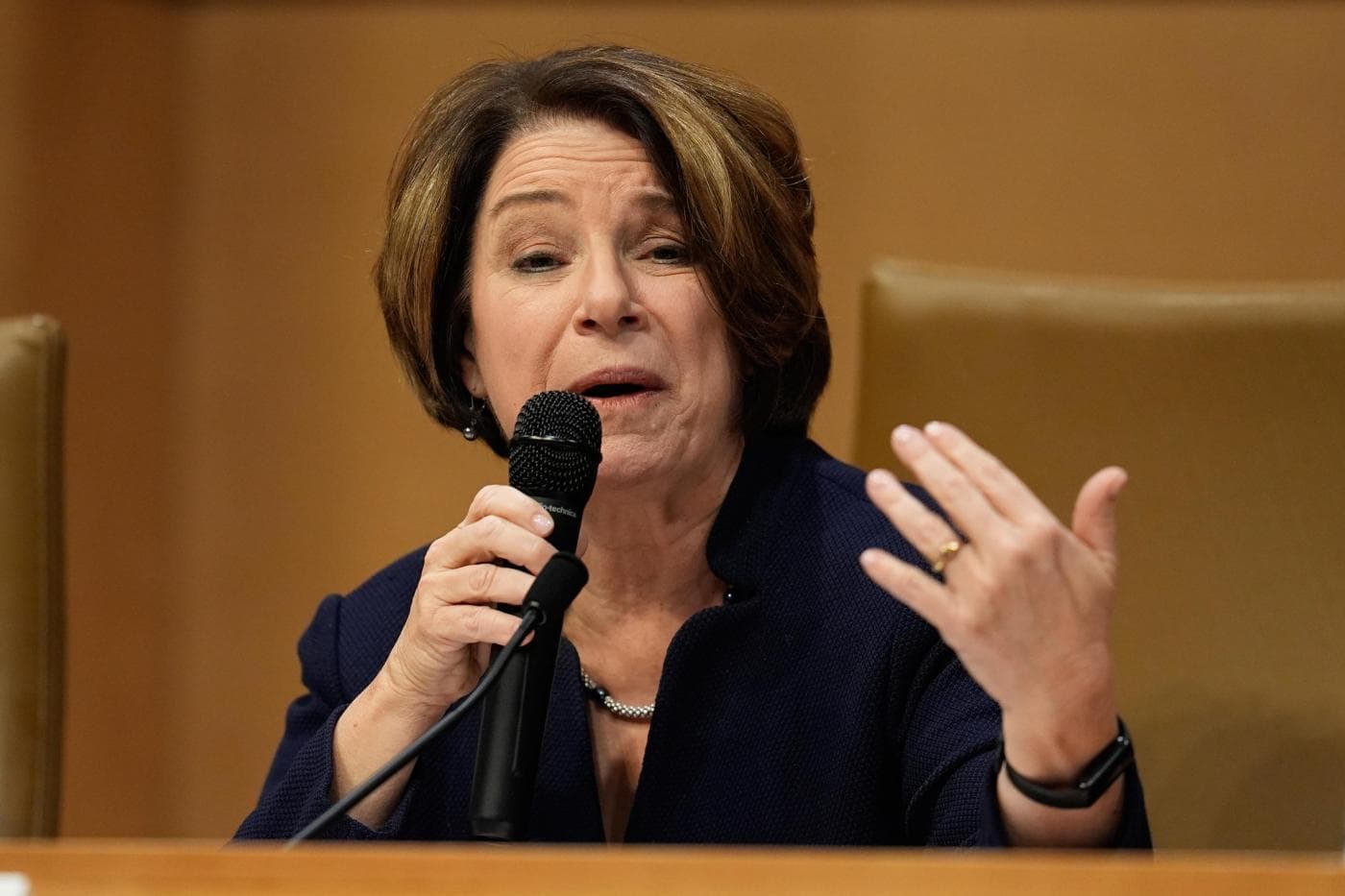
MINNEAPOLIS — U.S. Sen. Amy Klobuchar said Thursday she is running for governor of Minnesota, promising to take on President Donald Trump while unifying a state that has endured a series of challenges even before the federal government’s immigration crackdown. Klobuchar’s decision gives Democrats a high-profile candidate and proven statewide winner as their party tries to hold onto the office occupied by Gov. Tim Walz. The 2024 Democratic vice presidential nominee, Walz abandoned his campaign for a third term earlier this month amid criticism over mismanagement of taxpayer funding for child care programs. “Minnesota, we’ve been through a lot,” Klobuchar said in a video announcement Thursday. “These times call for leaders who can stand up and not be rubber stamps of this administration — but who are also willing to find common ground and fix things in our state.” Klobuchar cited Trump’s immigration crackdown in Minnesota, federal officers killing two Minnesotans who protested, the assassination of a state legislative leader and a school shooting that killed multiple children — all within the last year. She avoided direct mention of ongoing fraud investigations into the child care programs that Trump has made a political cudgel. “I believe we must stand up for what’s right and fix what’s wrong,” Klobuchar said. The senator has been among the loudest Trump critics, most recently over the immigration enforcement effort that has prompted massive protests. Multiple Republicans already are campaigning in what could become a marquee contest among 36 governorships on the ballot in November. Among those running for the GOP nomination are MyPillow founder and chief executive Mike Lindell, a 2020 election denier who is close to Trump; Minnesota House Speaker Lisa Demuth; Dr. Scott Jensen, a former state senator who was the party’s 2022 gubernatorial candidate; and state Rep. Kristin Robbins. Immigration and fraud will be at issue The Minnesota contest is likely to test Trump and his fellow Republicans’ uncompromising law-and-order approach and mass deportation program against Democrats’ criticisms of his administration’s tactics. Federal agents have detained children and adults who are U.S. citizens, entered homes without warrants and engaged protesters in violent exchanges. Minnesota resident and U.S. citizen Renee Good was shot three times and killed by an Immigration and Customs Enforcement officer in early January. On Saturday, federal officers fatally shot ICU nurse Alex Pretti during an encounter. Many Democrats on Capitol Hill, in turn, have voted against spending bills that fund Trump’s Department of Homeland Security. A standoff over the funding could lead to a partial government shutdown. Trump and other Republicans also will try to saddle Klobuchar — or any other Democrat — with questions about the ongoing federal investigation into Minnesota’s child care programs and its Somali community. Trump also has made repeated assertions of widespread fraud in state government, and his administration is conducting multiple investigations of state officials, including Walz. The Democrat has maintained that his administration has investigated, reduced and prosecuted fraud. Klobuchar has won across Minnesota Serving her fourth term in Washington, Klobuchar is a former local prosecutor and onetime presidential candidate who positions herself as a moderate and has demonstrated the ability to win across Minnesota. The senator won her 2024 reelection bid by nearly 16 percentage points and received 135,000 more votes than Democratic presidential nominee Kamala Harris, who had chosen Walz as her running mate. Harris outpaced Trump by fewer than 5 percentage points. Klobuchar gained attention during Trump’s first term for her questioning of his judicial nominees including now-Supreme Court Justice Brett Kavanaugh. At Kavanaugh’s acrimonious confirmation hearings, she asked the future justice, who had been accused of sexual assault as a teenager, if he ever had so much to drink that he didn’t remember what happened. Kavanaugh retorted, “Have you?” The senator, who had talked publicly of her father’s alcoholism, continued her questioning. Kavanaugh, who was confirmed by a single vote, later apologized to Klobuchar. After Trump’s first presidency, Klobuchar was among the most outspoken lawmakers during bipartisan congressional inquiries of the insurrection on Jan. 6, 2021, when Trump supporters attacked the Capitol during certification of Democrat Joe Biden’s victory over him in the 2020 presidential election. As Senate Rules Committee chair, she pressed Capitol Police, administration officials and others for details of what authorities knew beforehand and how rioters breached the Capitol. “It’s our duty to have immediate responses to what happened,” she said after helping write a report focused not on Trump’s role but on better security protocols for the seat of Congress. 2020 presidential bid Klobuchar sought the Democratic presidential nomination in 2020, running as a moderate in the same political lane as Biden. She launched her campaign standing outside in a Minnesota snowstorm to tout her “grit” and Midwestern sensibilities that have anchored her political identity. As a candidate, Klobuchar faced stories of disgruntled Senate staffers who described her as a difficult boss but also distinguished herself on crowded debate stages as a determined pragmatist. She outlasted several better-funded candidates and ran ahead of Biden in the Iowa caucuses and the New Hampshire primary. But Biden, then a former vice president, trounced her and others in the South Carolina primaries, prompting her to drop out and join others in closing ranks behind him. After Biden’s victory, Klobuchar would have been well-positioned for a Cabinet post, perhaps even attorney general. But the Senate’s 50-50 split made it untenable for Biden to create any opening for Republicans to regain control of the chamber. Klobuchar announced in 2021 that she had been treated for breast cancer and in 2024 announced that she was cancer-free but undergoing another round of radiation. There are now four senators seeking to lead their home states. Klobuchar joins Colorado Democrat Michael Bennet, Tennessee Republican Marsha Blackburn and Alabama Republican Tommy Tuberville. Bennet, Blackburn and Klobuchar are not up for reelection in 2026 so could remain in the Senate should they not win their gubernatorial races. Tuberville is in the final year of his six-year term and will leave the Senate in January 2027 regardless. Barrow reported from Atlanta. Associated Press reporter Maya Sweedler in Washington contributed.

Donald Trump stirs talk of ‘new world order’ as leaders signal shifting global alliances
WASHINGTON — President Donald Trump gives. And he takes away. Offended by Canadian Prime Minister Mark Carney’s increasingly assertive posture toward the U.S., Trump revoked an invitation to join his Board of Peace. Many Western allies are suspicious of the organization, which is chaired by Trump and was initially formed to focus on maintaining the ceasefire in Israel’s war with Hamas but has grown into something skeptics fear could rival the United Nations. Appearing at the World Economic Forum, Trump spoke of imposing tariffs on Switzerland — which he ultimately lowered — because the country’s leader “rubbed me the wrong way” during a phone call. Before shelving sweeping tariffs on multiple European countries, Trump pressed Denmark to “say yes” to the U.S. push to control Greenland “and we will be very appreciative. Or you can say no and we will remember,” he said, imperiling the NATO alliance. Over his decades in public life, Trump has never been one for niceties. But even by his standards, the tumult of the past week stood out because it crystallized his determination to erase the rules-based order that has governed U.S. foreign policy — and by extension most of the Western world — since World War II. The president and his supporters have dismissed that approach as inefficient, overly focused on compromise and unresponsive to the needs of people contending with rapid economic change. But in its place, Trump is advancing a system that is poorly understood and could prove far less stable, driven by the whims of a single, often mercurial, leader who regularly demonstrates that personal flattery or animus can shape his decisions. Returning to the U.S. from Davos, home to the World Economic Forum, Republican Sen. Lisa Murkowski of Alaska said the phrase she heard “over and over” was that “we are entering this new world order” as she described a sense of confusion among allies. “It may be you just had a bad telephone call with the president and now you’re going to have tariffs directed at you,” she told reporters. “This lack of stability and reliability, I think, is causing what were traditionally reliable trade partners to be saying to other countries, ‘Hey, maybe you and I should talk because I’m not sure about what’s going on with the United States.’” The Trump-centric approach to governing The Trump-centric approach to governing is hardly surprising for someone who accepted his first Republican presidential nomination in 2016 by declaring that “I alone can fix” the nation’s problems. As he settles into his second term with a far more confident demeanor than his first, he has delighted supporters with his to-the-victor -goes-the-spoils style. Steve Bannon, Trump’s former adviser, recently told the Atlantic that Trump is pursuing a “maximalist strategy” and that he must keep going “until you meet resistance.” “And we haven’t met any resistance,” Bannon said. That’s certainly true in Washington, where the Republican-controlled Congress has done little to check Trump’s impulses. But leaders of other countries, who have spent much of Trump’s administration trying to find ways to work with him, are increasingly vocal. Carney is quickly emerging as a leader of a movement for countries to find ways to link up and counter the U.S. Speaking in Davos ahead of Trump, Carney said, “Middle powers must act together because if you are not at the table, you are on the menu.” “In a world of great power rivalry, the countries in between have a choice: to compete with each other for favor or to combine to create a third path with impact,” he continued. “We should not allow the rise of hard powers to blind us to the fact that the power of legitimacy, integrity, and rules will remain strong — if we choose to wield it together.” Trump did not take kindly to those remarks, responding with threats in Davos before yanking the Board of Peace invitation. “Canada lives because of the United States,” Trump said. “Remember that, Mark, the next time you make your statements.” Some leaders are pushing back Carney, however, was unbowed, speaking of Canada as “an example to a world at sea” as he crafted a potential template for other world leaders navigating a new era. “We can show that another way is possible, that the arc of history isn’t destined to be warped toward authoritarianism and exclusion,” he said in a speech before a cabinet retreat in Quebec City. In the UK, Prime Minister Keir Starmer blasted Trump on Friday for “insulting and frankly appalling” comments in which he expressed doubt that NATO would support the U.S. if requested. The president seemingly ignored that the only time Article 5 of NATO’s founding treaty, which requires all member countries to help another member under threat, was invoked was after the 9/11 attacks on the U.S. Referring to non-US troops, Trump told Fox Business Network, “You know, they’ll say they sent some troops to Afghanistan, or this or that, and they did, they stayed a little back, a little off the front lines.” Starmer, noting the 457 British personnel who died and those with life-long injuries, said he will “never forget their courage, their bravery and the sacrifice they made for their country.” Denmark, which Trump has belittled as “ungrateful” for U.S. protection during World War II, had the highest per capita death toll among coalition forces in Afghanistan. His tactics have raised fears that Trump is imposing long-term damage on the U.S. standing in the world and encouraging countries to rethink their alliances and deepen their ties with China. Carney already traveled there earlier this month to meet with President Xi Jinping. “China’s leadership watched an American president fight with allies, insult world leaders, and engage in bizarre antics, and thought to themselves — this is nothing but good for us,” Jake Sullivan, former President Joe Biden’s national security adviser, said in an email. In a social media post referring to Canada’s ties with Beijing, Trump said China “will eat them up.” Sen. Chris Coons of Delaware, a Democrat on the Foreign Relations Committee, was in Davos and participated in a bipartisan delegation to Denmark with Murkowski that was intended to show unity amid Trump’s bid for Greenland. Recalling his conversations with other leaders, he told reporters on Friday that Trump has shown he only backs down when countries like China “showed toughness and a resiliency.” “Those who were accommodating and who negotiated in good faith, like the EU, which did not impose retaliatory tariffs, seemed to have not won any of his respect,” Coons said. “They can reach their own conclusions, but it would seem to me that trying to find a way to accommodate him when the foundation of his demands about Greenland is unhinged … seem to me to suggest a course of action.” Associated Press writers Becky Bohrer in Juneau, Alaska, Rob Gillies in Toronto and Pan Pylas in London contributed to this report.
Donald Trump stirs talk of ‘new world order’ as leaders signal shifting global alliances
WASHINGTON — President Donald Trump gives. And he takes away. Offended by Canadian Prime Minister Mark Carney’s increasingly assertive posture toward the U.S., Trump revoked an invitation to join his Board of Peace. Many Western allies are suspicious of the organization, which is chaired by Trump and was initially formed to focus on maintaining the ceasefire in Israel’s war with Hamas but has grown into something skeptics fear could rival the United Nations. Appearing at the World Economic Forum, Trump spoke of imposing tariffs on Switzerland — which he ultimately lowered — because the country’s leader “rubbed me the wrong way” during a phone call. Before shelving sweeping tariffs on multiple European countries, Trump pressed Denmark to “say yes” to the U.S. push to control Greenland “and we will be very appreciative. Or you can say no and we will remember,” he said, imperiling the NATO alliance. Over his decades in public life, Trump has never been one for niceties. But even by his standards, the tumult of the past week stood out because it crystallized his determination to erase the rules-based order that has governed U.S. foreign policy — and by extension most of the Western world — since World War II. The president and his supporters have dismissed that approach as inefficient, overly focused on compromise and unresponsive to the needs of people contending with rapid economic change. But in its place, Trump is advancing a system that is poorly understood and could prove far less stable, driven by the whims of a single, often mercurial, leader who regularly demonstrates that personal flattery or animus can shape his decisions. Returning to the U.S. from Davos, home to the World Economic Forum, Republican Sen. Lisa Murkowski of Alaska said the phrase she heard “over and over” was that “we are entering this new world order” as she described a sense of confusion among allies. “It may be you just had a bad telephone call with the president and now you’re going to have tariffs directed at you,” she told reporters. “This lack of stability and reliability, I think, is causing what were traditionally reliable trade partners to be saying to other countries, ‘Hey, maybe you and I should talk because I’m not sure about what’s going on with the United States.’” The Trump-centric approach to governing The Trump-centric approach to governing is hardly surprising for someone who accepted his first Republican presidential nomination in 2016 by declaring that “I alone can fix” the nation’s problems. As he settles into his second term with a far more confident demeanor than his first, he has delighted supporters with his to-the-victor -goes-the-spoils style. Steve Bannon, Trump’s former adviser, recently told the Atlantic that Trump is pursuing a “maximalist strategy” and that he must keep going “until you meet resistance.” “And we haven’t met any resistance,” Bannon said. That’s certainly true in Washington, where the Republican-controlled Congress has done little to check Trump’s impulses. But leaders of other countries, who have spent much of Trump’s administration trying to find ways to work with him, are increasingly vocal. Carney is quickly emerging as a leader of a movement for countries to find ways to link up and counter the U.S. Speaking in Davos ahead of Trump, Carney said, “Middle powers must act together because if you are not at the table, you are on the menu.” “In a world of great power rivalry, the countries in between have a choice: to compete with each other for favor or to combine to create a third path with impact,” he continued. “We should not allow the rise of hard powers to blind us to the fact that the power of legitimacy, integrity, and rules will remain strong — if we choose to wield it together.” Trump did not take kindly to those remarks, responding with threats in Davos before yanking the Board of Peace invitation. “Canada lives because of the United States,” Trump said. “Remember that, Mark, the next time you make your statements.” Some leaders are pushing back Carney, however, was unbowed, speaking of Canada as “an example to a world at sea” as he crafted a potential template for other world leaders navigating a new era. “We can show that another way is possible, that the arc of history isn’t destined to be warped toward authoritarianism and exclusion,” he said in a speech before a cabinet retreat in Quebec City. In the UK, Prime Minister Keir Starmer blasted Trump on Friday for “insulting and frankly appalling” comments in which he expressed doubt that NATO would support the U.S. if requested. The president seemingly ignored that the only time Article 5 of NATO’s founding treaty, which requires all member countries to help another member under threat, was invoked was after the 9/11 attacks on the U.S. Referring to non-US troops, Trump told Fox Business Network, “You know, they’ll say they sent some troops to Afghanistan, or this or that, and they did, they stayed a little back, a little off the front lines.” Starmer, noting the 457 British personnel who died and those with life-long injuries, said he will “never forget their courage, their bravery and the sacrifice they made for their country.” Denmark, which Trump has belittled as “ungrateful” for U.S. protection during World War II, had the highest per capita death toll among coalition forces in Afghanistan. His tactics have raised fears that Trump is imposing long-term damage on the U.S. standing in the world and encouraging countries to rethink their alliances and deepen their ties with China. Carney already traveled there earlier this month to meet with President Xi Jinping. “China’s leadership watched an American president fight with allies, insult world leaders, and engage in bizarre antics, and thought to themselves — this is nothing but good for us,” Jake Sullivan, former President Joe Biden’s national security adviser, said in an email. In a social media post referring to Canada’s ties with Beijing, Trump said China “will eat them up.” Sen. Chris Coons of Delaware, a Democrat on the Foreign Relations Committee, was in Davos and participated in a bipartisan delegation to Denmark with Murkowski that was intended to show unity amid Trump’s bid for Greenland. Recalling his conversations with other leaders, he told reporters on Friday that Trump has shown he only backs down when countries like China “showed toughness and a resiliency.” “Those who were accommodating and who negotiated in good faith, like the EU, which did not impose retaliatory tariffs, seemed to have not won any of his respect,” Coons said. “They can reach their own conclusions, but it would seem to me that trying to find a way to accommodate him when the foundation of his demands about Greenland is unhinged … seem to me to suggest a course of action.” Associated Press writers Becky Bohrer in Juneau, Alaska, Rob Gillies in Toronto and Pan Pylas in London contributed to this report.
Donald Trump stirs talk of ‘new world order’ as leaders signal shifting global alliances
WASHINGTON — President Donald Trump gives. And he takes away. Offended by Canadian Prime Minister Mark Carney’s increasingly assertive posture toward the U.S., Trump revoked an invitation to join his Board of Peace. Many Western allies are suspicious of the organization, which is chaired by Trump and was initially formed to focus on maintaining the ceasefire in Israel’s war with Hamas but has grown into something skeptics fear could rival the United Nations. Appearing at the World Economic Forum, Trump spoke of imposing tariffs on Switzerland — which he ultimately lowered — because the country’s leader “rubbed me the wrong way” during a phone call. Before shelving sweeping tariffs on multiple European countries, Trump pressed Denmark to “say yes” to the U.S. push to control Greenland “and we will be very appreciative. Or you can say no and we will remember,” he said, imperiling the NATO alliance. Over his decades in public life, Trump has never been one for niceties. But even by his standards, the tumult of the past week stood out because it crystallized his determination to erase the rules-based order that has governed U.S. foreign policy — and by extension most of the Western world — since World War II. The president and his supporters have dismissed that approach as inefficient, overly focused on compromise and unresponsive to the needs of people contending with rapid economic change. But in its place, Trump is advancing a system that is poorly understood and could prove far less stable, driven by the whims of a single, often mercurial, leader who regularly demonstrates that personal flattery or animus can shape his decisions. Returning to the U.S. from Davos, home to the World Economic Forum, Republican Sen. Lisa Murkowski of Alaska said the phrase she heard “over and over” was that “we are entering this new world order” as she described a sense of confusion among allies. “It may be you just had a bad telephone call with the president and now you’re going to have tariffs directed at you,” she told reporters. “This lack of stability and reliability, I think, is causing what were traditionally reliable trade partners to be saying to other countries, ‘Hey, maybe you and I should talk because I’m not sure about what’s going on with the United States.’” The Trump-centric approach to governing The Trump-centric approach to governing is hardly surprising for someone who accepted his first Republican presidential nomination in 2016 by declaring that “I alone can fix” the nation’s problems. As he settles into his second term with a far more confident demeanor than his first, he has delighted supporters with his to-the-victor -goes-the-spoils style. Steve Bannon, Trump’s former adviser, recently told the Atlantic that Trump is pursuing a “maximalist strategy” and that he must keep going “until you meet resistance.” “And we haven’t met any resistance,” Bannon said. That’s certainly true in Washington, where the Republican-controlled Congress has done little to check Trump’s impulses. But leaders of other countries, who have spent much of Trump’s administration trying to find ways to work with him, are increasingly vocal. Carney is quickly emerging as a leader of a movement for countries to find ways to link up and counter the U.S. Speaking in Davos ahead of Trump, Carney said, “Middle powers must act together because if you are not at the table, you are on the menu.” “In a world of great power rivalry, the countries in between have a choice: to compete with each other for favor or to combine to create a third path with impact,” he continued. “We should not allow the rise of hard powers to blind us to the fact that the power of legitimacy, integrity, and rules will remain strong — if we choose to wield it together.” Trump did not take kindly to those remarks, responding with threats in Davos before yanking the Board of Peace invitation. “Canada lives because of the United States,” Trump said. “Remember that, Mark, the next time you make your statements.” Some leaders are pushing back Carney, however, was unbowed, speaking of Canada as “an example to a world at sea” as he crafted a potential template for other world leaders navigating a new era. “We can show that another way is possible, that the arc of history isn’t destined to be warped toward authoritarianism and exclusion,” he said in a speech before a cabinet retreat in Quebec City. In the UK, Prime Minister Keir Starmer blasted Trump on Friday for “insulting and frankly appalling” comments in which he expressed doubt that NATO would support the U.S. if requested. The president seemingly ignored that the only time Article 5 of NATO’s founding treaty, which requires all member countries to help another member under threat, was invoked was after the 9/11 attacks on the U.S. Referring to non-US troops, Trump told Fox Business Network, “You know, they’ll say they sent some troops to Afghanistan, or this or that, and they did, they stayed a little back, a little off the front lines.” Starmer, noting the 457 British personnel who died and those with life-long injuries, said he will “never forget their courage, their bravery and the sacrifice they made for their country.” Denmark, which Trump has belittled as “ungrateful” for U.S. protection during World War II, had the highest per capita death toll among coalition forces in Afghanistan. His tactics have raised fears that Trump is imposing long-term damage on the U.S. standing in the world and encouraging countries to rethink their alliances and deepen their ties with China. Carney already traveled there earlier this month to meet with President Xi Jinping. “China’s leadership watched an American president fight with allies, insult world leaders, and engage in bizarre antics, and thought to themselves — this is nothing but good for us,” Jake Sullivan, former President Joe Biden’s national security adviser, said in an email. In a social media post referring to Canada’s ties with Beijing, Trump said China “will eat them up.” Sen. Chris Coons of Delaware, a Democrat on the Foreign Relations Committee, was in Davos and participated in a bipartisan delegation to Denmark with Murkowski that was intended to show unity amid Trump’s bid for Greenland. Recalling his conversations with other leaders, he told reporters on Friday that Trump has shown he only backs down when countries like China “showed toughness and a resiliency.” “Those who were accommodating and who negotiated in good faith, like the EU, which did not impose retaliatory tariffs, seemed to have not won any of his respect,” Coons said. “They can reach their own conclusions, but it would seem to me that trying to find a way to accommodate him when the foundation of his demands about Greenland is unhinged … seem to me to suggest a course of action.” Associated Press writers Becky Bohrer in Juneau, Alaska, Rob Gillies in Toronto and Pan Pylas in London contributed to this report.