2 stories credited to Carson Now
Latest story Apr 8, 2026 · on ChamberLight since Apr 2026
A story can appear as several articles (copies of the same piece), so counts of stories and of articles differ.
Scores for Carson Now
Writing quality not enough rated stories yet: 2 of 10. How it is measured
Scores last checked Sep 25, 2026.
Stories ChamberLight collected, by month
Stories credited to Carson Now, by publication date. ChamberLight collects articles that mention the officials it tracks, so this shows its own coverage of this source, not how much the source publishes.
- Stories from Carson Now
- Shaded: ChamberLight collected no stories, or almost none, from any outlet (a gap in its collection, not in the outlet’s publishing)
Show as a table
| Month | Stories | All outlets |
|---|---|---|
| March 2026 | 1 | 736 |
| April 2026 | 1 | 4,537 |
| May 2026 | 0 | none collected |
| June 2026 | 0 | none collected |
| July 2026 | 0 | none collected |
| August 2026 | 0 | 1 (collection gap) |
| September 2026 | 0 | 598 |
Top topics
Share of this source’s stories tagged with each topic. A story can carry several topics, so the shares do not add up to 100%.
- Economy2
100% of 2 stories · 24% across all outlets
- Environment/Climate2
100% of 2 stories · 5% across all outlets
- Foreign Policy1
50% of 2 stories · 28% across all outlets
- Infrastructure1
50% of 2 stories · 7% across all outlets
The thin mark on each bar is the topic’s share across all outlets.
Who they cover
Party of the officials these stories are mainly about, across all 3 officials named. A story counts once for each official it is mainly about, so the split is over 3 story–official pairs, from 2 stories.
- Democrat33% · 1 pair
- Republican33% · 1 pair
- Party not recorded33% · 1 pair
Most covered
Stories mainly about each official, and their share of the source’s 2 stories.
Article tone
ChamberLight’s article analysis assigns each story a tone toward the official it covers. It describes the coverage of that official, not Carson Now’s stance, and reader votes do not change it. 2 stories.
- Good Look
- 1 (50%)
- Mixed
- 1 (50%)
- Informational
- 0 (0%)
- Bad Look
- 0 (0%)
Challenges to these scores
No one has challenged a score on this page yet. Anyone can; editors publish every outcome here.
Articles served from carsonnow.org
3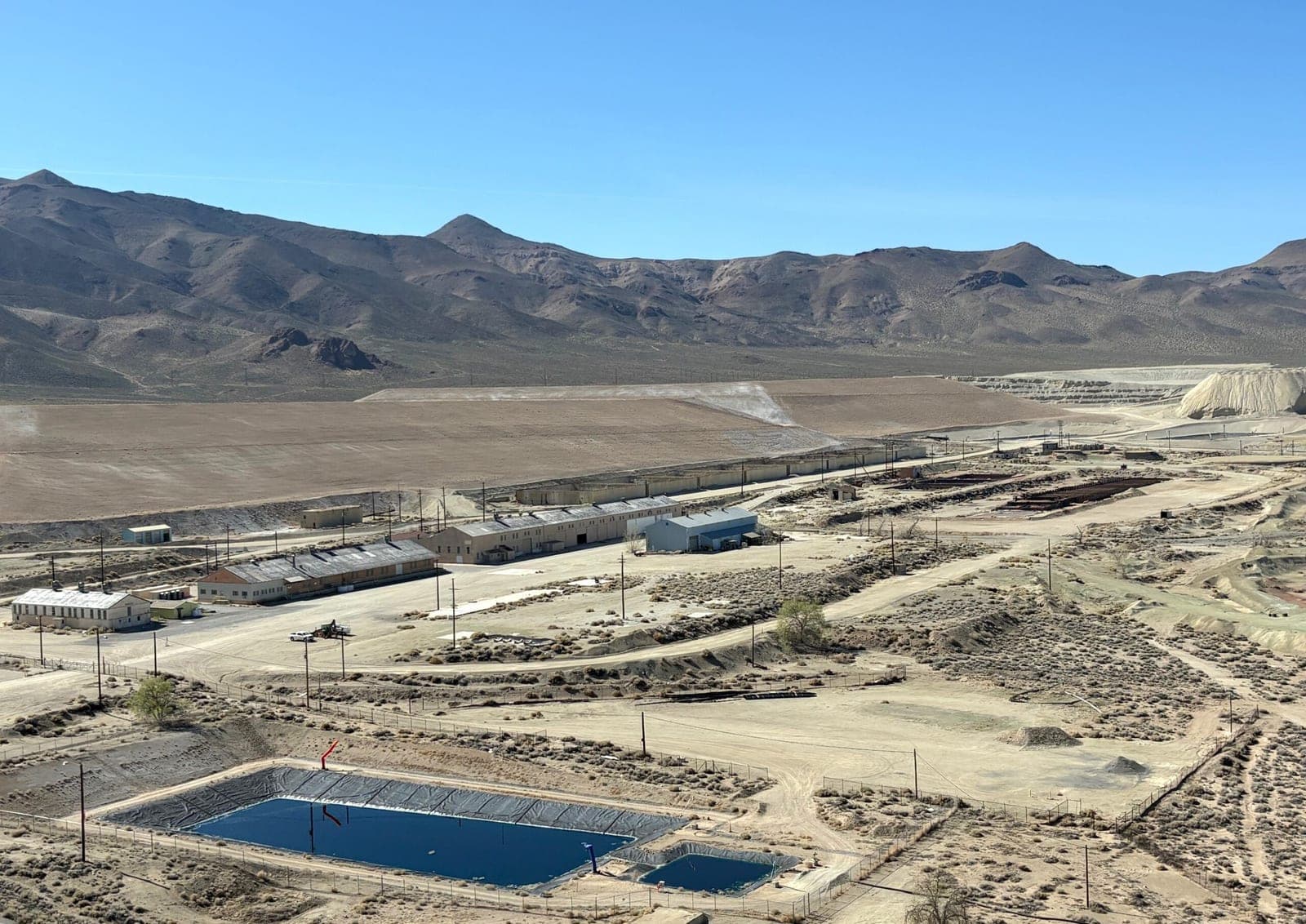
Cleanup’s almost done at notorious Lyon County mine. Potential plans to dig again raise fears.
Nearly a decade after the state and federal government agreed to keep Nevada’s largest abandoned mine off a federal list of highly polluted sites, the mine is almost cleaned up. But now, conversations about reopening the 3,400-acre Anaconda Copper Mine in Lyon County to production are troubling groups that have monitored the defunct property for years. They’re questioning if that could deplete local water sources and cause further pollution — and whether they’ll have any opportunities to weigh in. As the mine’s cleanup approaches its slated 2030 completion date, companies involved with Anaconda have performed exploratory testing at the site and applied for mining-related water permits — moves that have drawn substantial protests. On top of concerns about how mining there again would affect the environment, critics fear the potential sale of roughly half of the mine’s land to a private company, which would mean it’s subject to less stringent environmental review. The land encompassing the mine is privately and publicly owned, split between the federal Bureau of Land Management (BLM) and Singatse Peak Services LLC. BLM is considering selling its approximately 2,000-acre portion of the site to Atlantic Richfield Co. (ARCO). The move would make Anaconda wholly private property. It would be owned jointly by Singatse Peak and ARCO, which is responsible for reclamation because of its liability from its brief period of ownership of Anaconda in the late 1970s and early 1980s. The company has pushed for the sale for years, arguing it would expedite the cleanup. But it also means future mining at the site would only be subject to state permitting requirements, which are not as extensive as federal ones. For decades, environmental groups and the public have relied on federal policies developed in the 1970s that mandate environmental reviews and created opportunities for public comment, said Great Basin Resource Watch Director John Hadder. If the BLM sells its portion of the property to ARCO, he said there would be no federal environmental report if the mine becomes operational again. “That’s what’s missing from the state process — they don’t do any of that,” Hadder said. “Without the federal process, we’re really missing a big piece of what should be disclosed.” For mining on privately owned land, the state requires companies to apply for permits related to reclamation, water pollution and air quality control. But the state doesn’t conduct an environmental review, and companies are not subjected to review under the terms of the National Environmental Policy Act, which is applied in all federal transactions. Some question the rationale behind potentially disturbing an area that was so polluted it narrowly escaped the dreaded Superfund designation. “They’re gonna have to be careful they don’t remobilize contaminants at the site,” Hadder said. But, he said, “without a plan, without a discussion, the public doesn’t know. It’s the old thing that we’ve heard before — ‘Oh, trust us.'” The defunct Anaconda Copper Mine as seen on March 18, 2026. Credit: Amy Alonzo/The Nevada Independent Dodging Superfund designation Located just outside Yerington, Anaconda was headed for the federal Superfund list — a kind of scarlet letter designation for the country’s most toxic sites — when the state assumed oversight of the mine’s remediation, despite the push by many, including former Sen. Harry Reid (D-NV), for the federal Environmental Protection Agency (EPA) to direct the cleanup. The bulk of the site’s pollution resulted from mining by different companies that occurred before the existence of the Nevada Division of Environmental Protection (NDEP) or the establishment of Nevada’s rules around mining reclamation. Mining operations there date back to 1918. From the 1940s to 1970s, the Anaconda Copper Mining Co. operated the mine, extracting ore and leaving behind more than 1,600 acres of waste rock, contaminated tailings and disposal ponds. In 1977, ARCO bought the mine, but the declining prices of copper and ore, along with other factors, soon led the mine to close, and the company sold it shortly thereafter. In 1988, Arimetco assumed control of Anaconda, with its operations adding further pollution. After Arimetco’s 2000 bankruptcy declaration, Singatse Peak Services purchased the property but was exempt from the preexisting environmental liability — that liability reverted back to ARCO after Arimetco abandoned the site. The EPA stepped in, removing superficial contamination and conducting a groundwater study. It sought to place the mine on its National Priorities List — a sublist within the federal Superfund designation for the nation’s most polluted sites. It would have been Nevada’s second Superfund site. For years, the state fought the designation, and in 2018 reached an agreement with the EPA to give NDEP and ARCO control of the cleanup, with the BLM serving as a cooperating agency. Eight years later, cleanup is complete at the mine’s most-polluted sections, the portion formerly owned by Arimetco. ARCO will soon commence the second phase of cleanup and has spent about $45 million thus far, with the state on the hook for about 8 percent of that. ARCO has long wanted ownership of Anaconda’s federally held land and requested a land transfer in 2017. The following year, Rep. Mark Amodei (R-NV)’s legislative effort to secure the transfer failed. In 2021, the BLM initiated the process for selling the land to ARCO. Opponents worried at the time that removing federal oversight of the cleanup would reduce environmental standards, and amid negative community response, the sale never went through. But earlier this year, the BLM again initiated the transfer, offering to sell the property to ARCO for a minimum of $760,000. Hadder, who’s monitored the mine for decades, said he believes the land transfer goes “hand in hand” with future mining at Anaconda. “We’re really concerned about this land sale going through as is,” he said. “The public deserves to see what the plan is and understand it.” The BLM and ARCO did not respond to The Nevada Independent‘s request for comment about future plans for the mine before the publication deadline. The defunct Anaconda Copper Mine as seen on March 18, 2026. (Amy Alonzo/The Nevada Independent) A prior cleanup success story At other polluted mines in the state, NDEP officials and mining companies have said privatizing public land has helped expedite cleanup. Near downtown Henderson lies the sprawling Three Kids Mine site, which was active from 1917 to 1961 and used by the U.S. government during both world wars to extract manganese, a metal that strengthens steel. The site fell into disrepair after its 1961 abandonment, leaving behind asbestos, toxic waste and open pits. Like Anaconda, cleaning up Three Kids was initially complicated because the mine lacked a “responsible party” willing or able to tackle remediation, according to Alan Pineda, an NDEP engineer who is supervising its cleanup. But federal legislation enacted in 2014 authorized the BLM to transfer the mined lands to the City of Henderson. That transfer officially occurred a decade later, in 2024, and Henderson then sold the site to Pulte Homes, which is building a housing development atop the site. NDEP is overseeing Pulte’s activities. BLM’s land transfer helped fix the problem of abandoned land, Pineda told The Indy, as it “paved the way for a public-private partnership and the implementation of what is essentially a voluntary cleanup by a private developer.” The activities at Three Kids and Anaconda show how much more government intervention and enforcement there is in the reclamation of once polluted and abandoned Nevada sites, which were previously allowed to languish as public health hazards. State law didn’t require mining companies to mitigate their environmental damages until 1989. And even after the state began requiring companies to not abandon potentially harmful mining sites, the financial penalties for violations were so toothless that enforcement of reclamation rules was difficult. “None of that existed back then, and that’s why this has been more of a struggle than it should have been,” said Paul Eckert, supervisor of NDEP’s Bureau of Corrective Actions. Eckert said it is NDEP’s belief that going forward, the regulations established in the 1990s will make it harder for operators at sites such as Three Kids and Anaconda to leave behind another mess. “Any future mining company will be responsible, both financially and regulatorily, for cleaning up,” he said. The view from the bottom of Three Kids Mine, a long abandoned open-pit gypsum mine as seen in Henderson on Tuesday, October 4, 2023. (Daniel Clark/The Nevada Independent) Uncharted territory? But unlike at Three Kids, Anaconda could see future operations. Lion Copper and Gold, owner of Singatse Peak Services, has stated it intends to bring the property “back into production through the adoption of new processing technologies and a respectful approach to the environment and local communities.” Opponents question potential unforeseen consequences if there is no federal environmental review of future mining at the property. “We’re not opposed to re-mining. What we’re opposed to is re-mining without a proper public review,” Hadder said. “It needs to be discussed and evaluated, and it needs to be done in a public sphere.” That’s because in addition to a potential Superfund designation, the mine’s various operators have been plagued throughout the decades by a slew of violations for actions that have affected nearby residents. NDEP issued violations to ARCO in 1982 and 1985, for groundwater pollution stemming from pre-ARCO actions. The company installed infrastructure to prevent contamination of local wells and the Walker River, but in the 1990s, residents found elevated arsenic levels in water samples. In 2013, ARCO settled a class-action lawsuit with local residents, agreeing to pay up to $19.5 million without acknowledging wrongdoing. The company was later scrutinized after convincing state regulators to support an analysis showing less pollution tied to the mine, contradicting an EPA report. Concerns from water groups and local tribes about the future of Anaconda are more particular. Anaconda’s pit lake — an open body of water that has filled in the massive cavity where ore was pulled from for decades — sits just 200 yards from the Walker River. A January application by Singatse Peak Services with the Nevada State Engineer’s Office to drain the pit — and following practices that would be required to keep it dry — would all but guarantee a drawdown on the already-beleaguered Walker River and the shrinking Walker Lake, said Peter Stanton, executive director of the Walker Basin Conservancy. The move even drew the attention of the U.S. Board of Water Commissioners. The Walker River Paiute Tribe, which has long opposed the land transfer, said in a statement that draining the pit would “jeopardize delivery of the Tribe’s senior decreed Walker River water right, notably later in the irrigation season, and especially in dry years.” If mining moves forward at Anaconda, Stanton said there appears to be a lack of coordination between companies, regulators and stakeholders “to align land ownership, water rights permitting and water quality permitting for a project like this. “We’re all concerned,” he continued. — This story is used with permission of The Nevada Independent. Go here for updates to this and other Nevada Independent stories. The post Cleanup’s almost done at notorious Lyon County mine. Potential plans to dig again raise fears. appeared first on Carson Now.
Iran war spikes Nevada gas prices; Lombardo asks California to delay emission changes
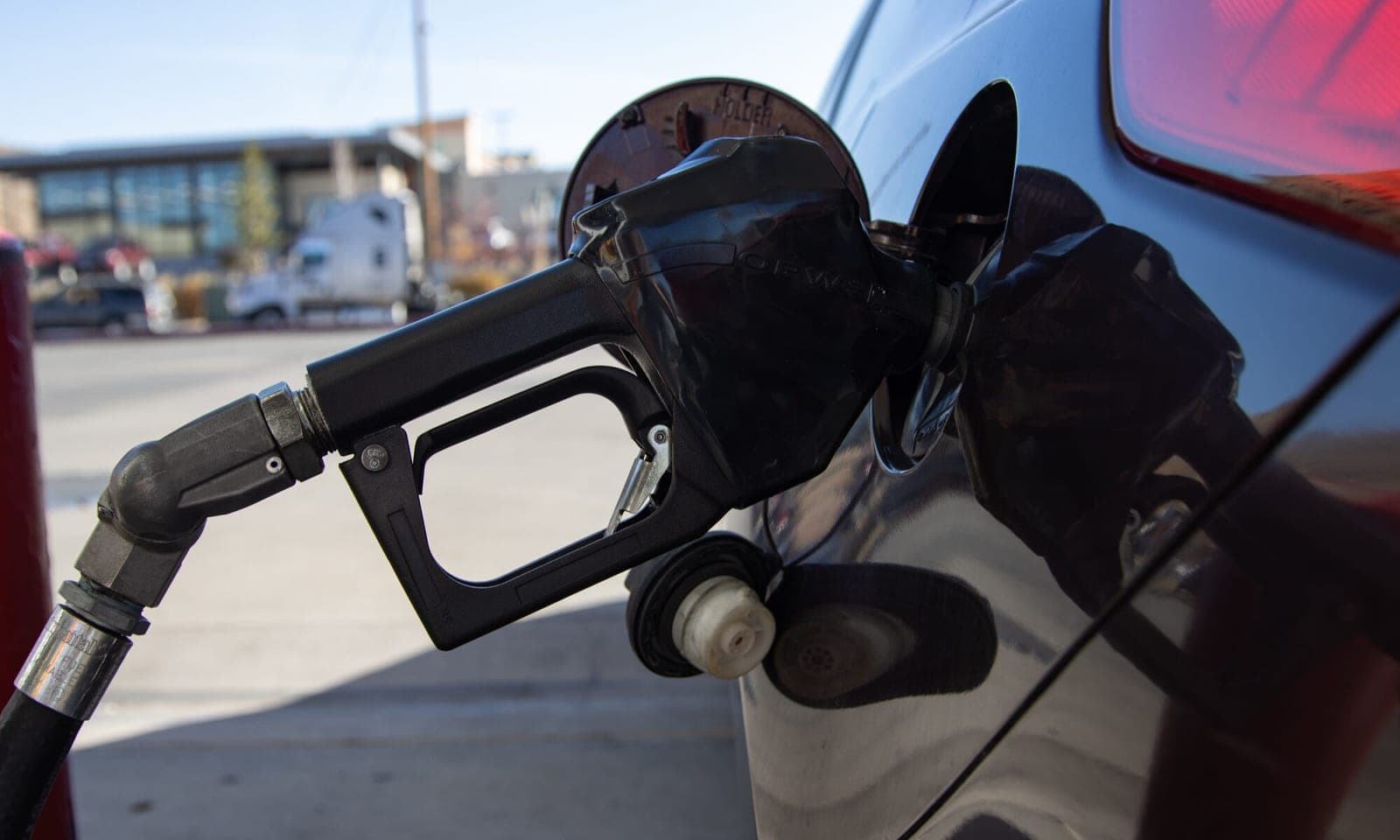
Nevada drivers are paying the highest cost for gasoline in nearly a year, after the start of the U.S. war in the Middle East spiked the cost of crude oil, according to AAA. The nearly 14 percent jump in fuel prices this year comes as Gov. Joe Lombardo (R) is worried about the availability of fuel to Nevada’s residents and visitors because of potential changes in California’s gasoline refinery system. In a letter sent Monday to Gov. Gavin Newsom (D), Lombardo raised concerns about how proposed changes in California’s Cap-and-Invest regulations could disrupt the supply of fuel to Nevada, saying the state is “structurally dependent” on its western neighbor, given roughly 88 percent of the gasoline, diesel and jet fuel consumed in Nevada originates from California refineries. “As a result, policy decisions that materially affect refinery operations in your state directly and immediately impact fuel availability, pricing, and economic stability in Nevada,” Lombardo wrote. The governor said the state does not have a readily available alternative supply network to replace California’s production. “[Lombardo] has spoken with Newsom on multiple occasions, with bipartisan support, asking him to reconsider environmental policies that will ultimately increase the price of gas,” his spokesman Drew Galang told The Nevada Independent in an email. He also wrote that the governor has created a group to assess the state’s oil and fuel supply vulnerabilities. Meanwhile, on Tuesday evening, Newsom targeted Lombardo in a post on X, criticizing the governor for his comments backing Trump at a recent IndyTalks event hosted by The Nevada Independent. As of Wednesday, the average price of a gallon of regular fuel in Nevada was $4.63, up 54 cents from a week ago and 88 cents from a year ago. The cost of a gallon of premium fuel was $4.90, up 50 cents from a week ago and 58 cents from a year ago. In Las Vegas, the price of a gallon of regular gasoline was $4.43, up 59 cents from a week ago and 71 cents from a year ago. Premium was $5 a gallon, up 54 cents from a week ago and 65 cents from a year ago. In Reno, a gallon of regular gasoline was $4.65 a gallon, up 41 cents from a week ago and up 51 cents from a year ago, while a gallon of premium was $5.06, up 40 cents from a week ago and 54 cents from a year ago. In a statement, AAA said similar increases in gas prices happened in March 2022 during the start of the Russia/Ukraine conflict. AAA spokesperson John Treanor said the price per barrel of crude oil was $62 in February. By Monday, the price had jumped to $92 a barrel. He said the other factor driving oil prices up was access to the Strait of Hormuz, which is in the center of the conflict. Approximately 21 million barrels of crude oil and petroleum products pass through the waterway daily. On Wednesday, Jacky Rosen (D-NV) urged President Donald Trump to immediately release oil from the Strategic Petroleum Reserve to help bring down costs. “This is coming at a time when hardworking families are already being squeezed by high costs,” Rosen wrote. Lombardo raised fuel delivery concerns in January after a refinery in the Los Angeles area closed in October, and plans were announced to close a Bay Area refinery by April 2026. Combined, the two refineries produce 284,000 barrels of oil per day, about 17 percent of the state’s refining capacity. The governor said the Silver State does not have the infrastructure to quickly replace lost California refining capacity, and “the geographic isolation of the West Coast fuel market makes it uniquely vulnerable to shortages and price volatility when refining capacity tightens.” “Any increase in foreign dependence adds volatility to the price of fuel and creates supply chain risks,” said Miranda Hoover, state executive for the Energy and Convenience Association of Nevada. “Nevada is a true fuel island where we have no direct access to ports and have a limited supply coming in via pipeline. Diversifying where Nevada is getting its oil and gas has never been more important to the state’s economy and energy resilience than right now. “Our prices are directly reliant upon international conflicts and what is happening in California,” added Hoover, whose group represents liquid fuel and lubricant distributors, transporters, retailers and convenience store owners. According to the Las Vegas Convention and Visitors Authority (LVCVA), Interstate 15 traffic at the California-Nevada border averaged more than 43,000 vehicles per day in 2025. However, LVCVA CEO Steve Hill said Thursday any increases in the cost of fuel alone wouldn’t be enough to deter someone from driving to Las Vegas for a long weekend. “We’ve talked about headwinds for the year, and the added costs for things that are necessities for households have been volatile,” Hill said. “Obviously, [gasoline prices are] high right this minute. We don’t know how long it will last, but it’s giving people one more thing to be concerned about. And that just isn’t helpful.” In January, Las Vegas visitation declined 2.2 percent, but a nearly 7 percent increase in convention attendance helped boost other metrics, such as average daily room rates and revenue per available room — a key metric used to gauge profitability. Hill said the future bookings for convention business are above 2025 levels throughout the year, which wouldn’t be affected by high fuel costs. “Most of those trips are not drive-in, and travel costs are paid by the company,” he said. — This story is used with permission of The Nevada Independent. Go here for updates to this and other Nevada Independent stories. The post Iran war spikes Nevada gas prices; Lombardo asks California to delay emission changes appeared first on Carson Now.
Iran war spikes Nevada gas prices; Lombardo asks California to delay emission changes
Nevada drivers are paying the highest cost for gasoline in nearly a year, after the start of the U.S. war in the Middle East spiked the cost of crude oil, according to AAA. The nearly 14 percent jump in fuel prices this year comes as Gov. Joe Lombardo (R) is worried about the availability of fuel to Nevada’s residents and visitors because of potential changes in California’s gasoline refinery system. In a letter sent Monday to Gov. Gavin Newsom (D), Lombardo raised concerns about how proposed changes in California’s Cap-and-Invest regulations could disrupt the supply of fuel to Nevada, saying the state is “structurally dependent” on its western neighbor, given roughly 88 percent of the gasoline, diesel and jet fuel consumed in Nevada originates from California refineries. “As a result, policy decisions that materially affect refinery operations in your state directly and immediately impact fuel availability, pricing, and economic stability in Nevada,” Lombardo wrote. The governor said the state does not have a readily available alternative supply network to replace California’s production. “[Lombardo] has spoken with Newsom on multiple occasions, with bipartisan support, asking him to reconsider environmental policies that will ultimately increase the price of gas,” his spokesman Drew Galang told The Nevada Independent in an email. He also wrote that the governor has created a group to assess the state’s oil and fuel supply vulnerabilities. Meanwhile, on Tuesday evening, Newsom targeted Lombardo in a post on X, criticizing the governor for his comments backing Trump at a recent IndyTalks event hosted by The Nevada Independent. As of Wednesday, the average price of a gallon of regular fuel in Nevada was $4.63, up 54 cents from a week ago and 88 cents from a year ago. The cost of a gallon of premium fuel was $4.90, up 50 cents from a week ago and 58 cents from a year ago. In Las Vegas, the price of a gallon of regular gasoline was $4.43, up 59 cents from a week ago and 71 cents from a year ago. Premium was $5 a gallon, up 54 cents from a week ago and 65 cents from a year ago. In Reno, a gallon of regular gasoline was $4.65 a gallon, up 41 cents from a week ago and up 51 cents from a year ago, while a gallon of premium was $5.06, up 40 cents from a week ago and 54 cents from a year ago. In a statement, AAA said similar increases in gas prices happened in March 2022 during the start of the Russia/Ukraine conflict. AAA spokesperson John Treanor said the price per barrel of crude oil was $62 in February. By Monday, the price had jumped to $92 a barrel. He said the other factor driving oil prices up was access to the Strait of Hormuz, which is in the center of the conflict. Approximately 21 million barrels of crude oil and petroleum products pass through the waterway daily. On Wednesday, Jacky Rosen (D-NV) urged President Donald Trump to immediately release oil from the Strategic Petroleum Reserve to help bring down costs. “This is coming at a time when hardworking families are already being squeezed by high costs,” Rosen wrote. Lombardo raised fuel delivery concerns in January after a refinery in the Los Angeles area closed in October, and plans were announced to close a Bay Area refinery by April 2026. Combined, the two refineries produce 284,000 barrels of oil per day, about 17 percent of the state’s refining capacity. The governor said the Silver State does not have the infrastructure to quickly replace lost California refining capacity, and “the geographic isolation of the West Coast fuel market makes it uniquely vulnerable to shortages and price volatility when refining capacity tightens.” “Any increase in foreign dependence adds volatility to the price of fuel and creates supply chain risks,” said Miranda Hoover, state executive for the Energy and Convenience Association of Nevada. “Nevada is a true fuel island where we have no direct access to ports and have a limited supply coming in via pipeline. Diversifying where Nevada is getting its oil and gas has never been more important to the state’s economy and energy resilience than right now. “Our prices are directly reliant upon international conflicts and what is happening in California,” added Hoover, whose group represents liquid fuel and lubricant distributors, transporters, retailers and convenience store owners. According to the Las Vegas Convention and Visitors Authority (LVCVA), Interstate 15 traffic at the California-Nevada border averaged more than 43,000 vehicles per day in 2025. However, LVCVA CEO Steve Hill said Thursday any increases in the cost of fuel alone wouldn’t be enough to deter someone from driving to Las Vegas for a long weekend. “We’ve talked about headwinds for the year, and the added costs for things that are necessities for households have been volatile,” Hill said. “Obviously, [gasoline prices are] high right this minute. We don’t know how long it will last, but it’s giving people one more thing to be concerned about. And that just isn’t helpful.” In January, Las Vegas visitation declined 2.2 percent, but a nearly 7 percent increase in convention attendance helped boost other metrics, such as average daily room rates and revenue per available room — a key metric used to gauge profitability. Hill said the future bookings for convention business are above 2025 levels throughout the year, which wouldn’t be affected by high fuel costs. “Most of those trips are not drive-in, and travel costs are paid by the company,” he said. — This story is used with permission of The Nevada Independent. Go here for updates to this and other Nevada Independent stories. The post Iran war spikes Nevada gas prices; Lombardo asks California to delay emission changes appeared first on Carson Now.