4 stories credited to Cardinal News
Latest story Sep 21, 2026 · on ChamberLight since Apr 2026
A story can appear as several articles (copies of the same piece), so counts of stories and of articles differ.
Scores for Cardinal News
Writing quality not enough rated stories yet: 4 of 10. How it is measured
Scores last checked Sep 24, 2026.
Stories ChamberLight collected, by month
Stories credited to Cardinal News, by publication date. ChamberLight collects articles that mention the officials it tracks, so this shows its own coverage of this source, not how much the source publishes.
- Stories from Cardinal News
- Shaded: ChamberLight collected no stories, or almost none, from any outlet (a gap in its collection, not in the outlet’s publishing)
Show as a table
| Month | Stories | All outlets |
|---|---|---|
| April 2026 | 3 | 3,897 |
| May 2026 | 0 | none collected |
| June 2026 | 0 | none collected |
| July 2026 | 0 | none collected |
| August 2026 | 0 | 1 (collection gap) |
| September 2026 | 1 | 598 |
Top topics
Share of this source’s stories tagged with each topic. A story can carry several topics, so the shares do not add up to 100%.
- Budget/Spending2
50% of 4 stories · 33% across all outlets
- Economy2
50% of 4 stories · 26% across all outlets
- Ethics/Corruption2
50% of 4 stories · 62% across all outlets
- Voting Rights2
50% of 4 stories · 20% across all outlets
- Healthcare1
25% of 4 stories · 8% across all outlets
- Taxes1
25% of 4 stories · 5% across all outlets
- Technology/Privacy1
25% of 4 stories · 10% across all outlets
The thin mark on each bar is the topic’s share across all outlets.
Who they cover
Party of the officials these stories are mainly about, across all 9 officials named. A story counts once for each official it is mainly about, so the split is over 9 story–official pairs, from 4 stories.
- Democrat44% · 4 pairs
- Republican33% · 3 pairs
- Party not recorded22% · 2 pairs
Most covered
Stories mainly about each official, and their share of the source’s 4 stories.
Article tone
ChamberLight’s article analysis assigns each story a tone toward the official it covers. It describes the coverage of that official, not Cardinal News’s stance, and reader votes do not change it. 4 stories.
- Good Look
- 0 (0%)
- Mixed
- 3 (75%)
- Informational
- 0 (0%)
- Bad Look
- 1 (25%)
Challenges to these scores
No one has challenged a score on this page yet. Anyone can; editors publish every outcome here.
Articles served from cardinalnews.org
9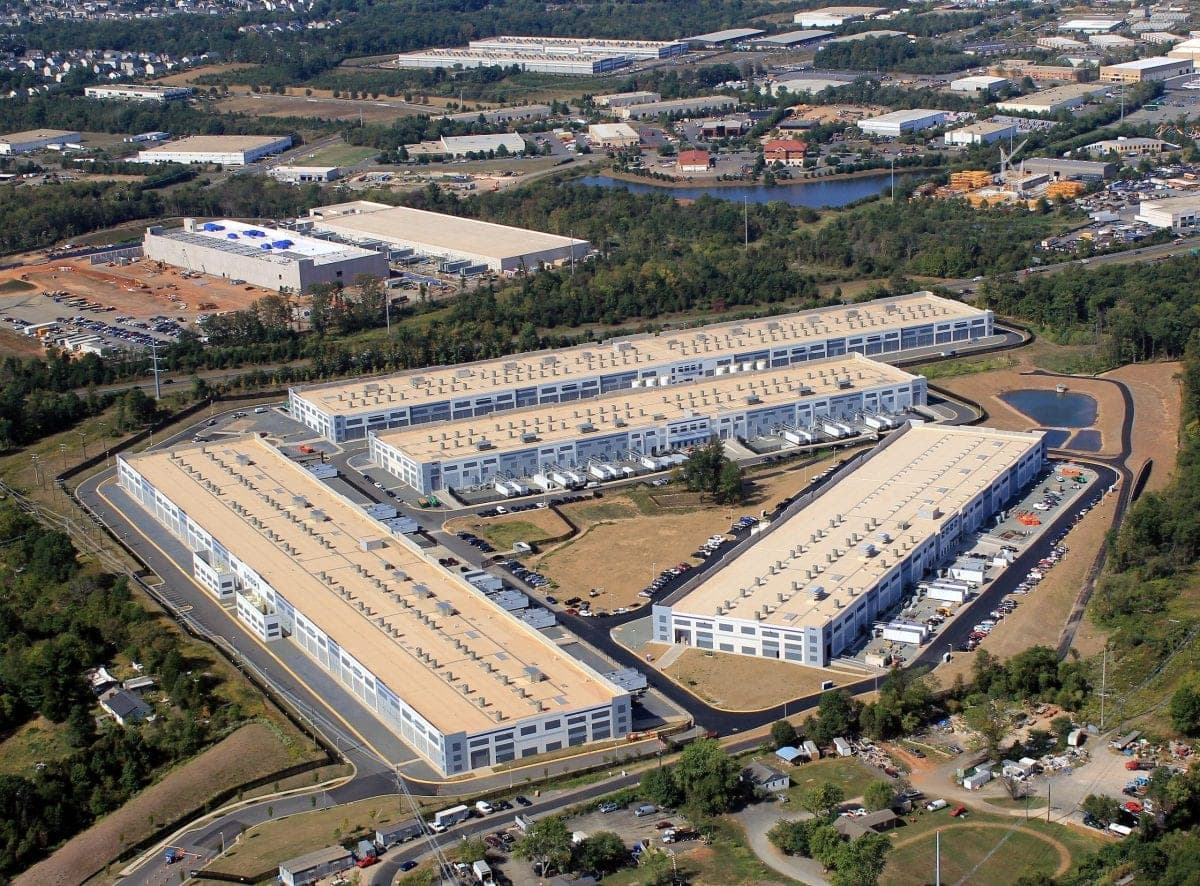
Perriello, Macy hit McGuire, Cline on data centers. Here’s what they’re talking about (and what they’re not saying)
A fact-check on some of the charges the Democratic candidates in the 5th and 6th congressional districts have made about the Republican incumbents. The post Perriello, Macy hit McGuire, Cline on data centers. Here’s what they’re talking about (and what they’re not saying) appeared first on Cardinal News.
Perriello, Macy hit McGuire, Cline on data centers. Here’s what they’re talking about (and what they’re not saying)
A fact-check on some of the charges the Democratic candidates in the 5th and 6th congressional districts have made about the Republican incumbents. The post Perriello, Macy hit McGuire, Cline on data centers. Here’s what they’re talking about (and what they’re not saying) appeared first on Cardinal News.
Perriello, Macy hit McGuire, Cline on data centers. Here’s what they’re talking about (and what they’re not saying)
A fact-check on some of the charges the Democratic candidates in the 5th and 6th congressional districts have made about the Republican incumbents. The post Perriello, Macy hit McGuire, Cline on data centers. Here’s what they’re talking about (and what they’re not saying) appeared first on Cardinal News.
Perriello, Macy hit McGuire, Cline on data centers. Here’s what they’re talking about (and what they’re not saying)
A fact-check on some of the charges the Democratic candidates in the 5th and 6th congressional districts have made about the Republican incumbents. The post Perriello, Macy hit McGuire, Cline on data centers. Here’s what they’re talking about (and what they’re not saying) appeared first on Cardinal News.

‘Dark money’ is fueling both sides of Virginia’s redistricting campaign
Tens of millions of dollars have flowed into Virginia’s pro- and anti-redistricting campaigns from organizations across the country in short order ahead of the April 21 referendum. Most of that money on either side has come from 501(c)(4) organizations — tax-exempt nonprofits that are not required by the IRS to report their donors, named for the code section that governs their tax status. That legal loophole has allowed the organizations to effectively shield the origin of the money that passes through them to a campaign’s coffers. Organizations with a 501(c)(4) designation are known as primary vehicles for “dark money” in political campaigns. Campaigns on both sides of the redistricting referendum have taken tens of millions of dollars in untraceable contributions from dark-money organizations. The “yes” side received $53 million and counting including from multiple 501(c)(4) organizations to the Virginians for Fair Elections referendum committee between February and April. The “no” side received $22 million to its Virginians for Fair Maps referendum committee and $7 million to Justice for Democracy PAC, an anti-redistricting group, including from 501(c)(4) organizations, according to campaign finance reports collected by the State Board of Elections. “Both campaigns are funding their referendum committees the exact same way,” said Mike Young, president of Virginians for Fair Maps, in a statement through the group’s spokesperson. “The Orwellian named Virginians for Fair Elections has taken millions more in dark money (to include from Hakeem Jeffries and George Soros). Virginians for Fair Maps has taken hundreds of contributions directly from Virginians who are sick and tired of the perverse, self-promoting political games being played in Richmond.” Finlay Lee, spokesperson for the Fair Maps group, did not respond when asked to provide proof that the organization had received “hundreds of contributions directly from Virginians.” The bulk of the haul taken in by Fair Maps was contributed by a tax-exempt organization of the same name, effectively shielding those donors from the public. The Virginia Public Access Project released data Monday evening that showed hundreds of smaller cash contributions from individuals to the organization, but it was unclear if those donations came from Virginians. “What the ‘No’ campaign won’t tell you is that their effort is being bankrolled by Trump billionaire Peter Thiel and MAGA allies,” said Dan Gottlieb, spokesperson for Virginians for Fair Elections. Tens of millions of dollars had been raised in just the past few weeks, including $7 million from Thiel’s network alone, Gottlieb said, “to fund misleading ads aimed at deceiving Virginians.” “This is a deliberate MAGA operation built on deception, scare tactics, and distortion because they know voters will reject their agenda if they hear the truth. The pattern is clear: MAGA money and MAGA lies designed to warp a fair vote,” he added. The money trail By name-checking Thiel, Gottlieb is invoking another actor in the tangled web of dark money and anonymous donors in the prelude to the midterm elections in Virginia: a new political action committee called Justice for Democracy. That PAC was at the center of controversy in March after it sent campaign mailers statewide that critics said misused imagery from the Civil Rights Movement and the Jim Crow era. Per Aspera Policy Incorporated, a 501(c)(4), contributed $7 million through three transactions to Justice for Democracy at the end of March and early April. Following the money We won’t know the total amount of contributions until after the April 15 deadline for full campaign finance reports to be submitted to the State Board of Elections. However, each campaign is required to report contributions of $10,000 or more to the state board within 72 hours of receipt of that cash. Here’s what we know now, about those large dollar donations: “No” campaigns Virginians For Fair Maps RC (referendum committee) $22,055,000 across 15 cash contributions of $10,000 or more Eight of those large contributions came from people or groups with Virginia addresses, one contribution came from a foundation based in Connecticut Six contributions totaling $21.5 million came from the newly created Virginians for Fair Maps 501(c)(4) Justice for Democracy (PAC) $7,425,000 across four cash contributions of $10,000 or more All four contributions came from organizations outside of Virginia, two from Massachusetts and one from Iowa Three contributions totaling $7 million came from the 501(c)(4) Per Aspera Policy Incorporated Democracy and Justice (PAC) $243,000 across four large cash contributions from Justice for Democracy (PAC) No Gerrymandering Virginia (PAC) $44,000 across two cash contributions of $10,000 or more Both were from Virginia people and organizations One contribution of $34,000 came from the Virginia Values 501(c)(4) No Gerrymandering Virginia RC (referendum committee) $126,000 across three cash contributions of $10,000 All three contributions came from the same Virginia-based organization Two contributions totaling $101,000 came from the Virginia Values 501(c)(4) “Yes” campaigns Virginians for Fair Elections About $52,985,000 across 35 cash contributions 27 cash contributions came from outside of Virginia, eight from people or organizations with Virginia addresses Six cash contributions totaling $32.8 million came from the House Majority Forward 501(c)(4) Four cash contributions totalling $11 million came from The Fairness Project 501(c)(4) One cash contribution totaling $5 million came from the Fund for Policy Reform Inc. 501(c)(4) $776,584.19 across 17 in-kind contributions 13 in-kind contributions came from outside of Virginia, four came from organizations with Virginia addresses Thiel used the 501(c)(4) in 2022 to contribute $200,000 to now-Vice President JD Vance’s U.S. Senate campaign, though it’s unclear whether Thiel was the source of the $7 million to Justice for Democracy. Per Aspera Policy Incorporated ended 2024 with $1.3 million in net assets, according to documents collected by ProPublica’s Nonprofit Explorer tool. Chris Marston, the group’s paid tax preparer, declined to comment on where the $7 million contributed to Justice for Democracy between March and April came from. When asked who could comment on the money, he replied, “No one.” Former Republican Del. A.C. Cordoza, chairman of Justice for Democracy, also declined to comment and said that the PAC’s treasurer, Christopher Woodfin, would be best suited to answer money-related questions. Woodfin did not respond to a request for comment. The referendum committee for the “no” campaign, Virginians for Fair Maps, received about $21.5 million in cash across six separate contributions in March and April from a 501(c)(4) with the same name. A search of the organization in the IRS tax-exempt search tool rendered no results. A representative from Election CFO LLC, which handles bookkeeping for the referendum committee, declined to comment. The Virginians for Fair Maps referendum committee and Virginians for Fair Maps 501(c)(4) are likely two separate legal entities with the same name, with one passing money to the other, said Brendan Glavin, director of insights with OpenSecrets, a Washington-based research group that tracks money in U.S. politics. “If that is the case, they probably would have formed it very recently,” Glavin said of the Virginians for Fair Maps 501(c)(4). “There can be a lot of lag on the IRS site to actually see a new filing.” More than $53 million in cash contributions have flowed into the main referendum committee for the “yes” side of the campaign: Virginians for Fair Elections. Of that, $32.8 million cash was given by the House Majority Forward 501(c)(4) over six contributions between February and April. House Majority Forward is a Washington-based advocacy arm of the House Majority PAC, a super PAC associated with the U.S. House Democratic leadership. Super PACs are independent, expenditure-only committees that may raise unlimited sums of money from corporations, unions, associations and individuals, then spend unlimited sums to overtly advocate for or against political candidates, according to OpenSecrets. House Majority Forward is a major financial supporter of U.S. congressional Democrats, according to InfluenceWatch. InfluenceWatch is a project of the Capital Research Center that examines nonprofit organizations involved in politics and policymaking. House Majority Forward ended 2024 with $16.1 million in net assets, according to the organization’s 990 tax form. Efforts to reach representatives of House Majority Forward for this story were unsuccessful. Another $11 million was contributed to Virginians for Fair Elections by The Fairness Project over four contributions between February and March. The Fairness Project is a Washington-based, labor union-backed 501(c)(4) that finances and supports state ballot initiative campaigns to promote left-of-center policies, according to InfluenceWatch. The Fairness Project ended 2024 with $4.1 million in net assets, according to the organization’s 990 form. Efforts to reach The Fairness Project were also unsuccessful. What are ‘dark money’ groups? “Political actors have discovered they can use this legal entity in order to get involved in politics and influence elections,” Glavin said. “Anyone can give as much as they want to one of these organizations and with essentially a guarantee that their identity won’t be disclosed.” Those anonymous contributions are often referred to as “dark money.” Dark money groups are organizations that are active in politics but do not have to disclose their donors to any source, and 501(c)(4) organizations are the biggest example of those groups. Referred to as “social welfare” organizations, 501(c)(4)s are nonprofit entities that are registered with the IRS and are required to file tax form 990 annually. Other types of 501(c)(4) organizations exist that are not political in nature, such as homeowners’ associations and volunteer fire departments. Unlike 501(c)(3) nonprofits, donations to 501(c)(4) groups are not tax-deductible. “There is no form that they need to file that discloses their donors, so when they’re giving contributions to campaigns or ballot measure committees, there’s no way to trace that money back to the individuals that it originated with,” said Shanna Ports, senior legal counsel with the Washington-based Campaign Legal Center, a nonpartisan organization that focuses on ethics and legality in political campaigns. The primary purpose of 501(c)(4) organizations is not supposed to be to influence elections. The groups are required to keep their election spending below 50% of their total spending, but the IRS does not appear to have a mechanism to enforce that regulation, Ports said. Contributions to ballot measure committees, such as those involved with the redistricting referendum, are not considered election-related activity. Instead, contributions to ballot measure committees are seen more as lobbying by the IRS. That means the floodgates are wide open into Virginia’s redistricting referendum committees. “The IRS thinks about ballot measures as akin to a legislative action — it’s like the people are acting as a legislators, so you’re trying to convince the people to take a certain position on legislation, aka the ballot question in front of them, then money put to that purpose is lobbying, not election influencing,” Ports said. “These groups can spend a lot of money on ballot measures.” Virginia does not have campaign contribution limits, Glavin said, which makes it easy for big-money interests to drop large sums into an election or referendum in short order through a 501(c)(4) or super PAC, to buy TV or digital ads for an instantaneous effect. The redistricting referendum is taking place on a truncated election cycle, with just months for campaigns to drum up support for or opposition to the measure before April 21. That short time frame created the ideal environment for the infusion of dark money into the campaigns on both sides of the issue, to pay for advertising and events aimed at getting out the vote. And the issue at the heart of the referendum has drawn national attention. “The issue presented with this ballot measure in Virginia is a bit unique because of its national implications,” Ports said. “It will have, people think, an impact on the control of Congress following the 2026 midterms so I think there is a much broader donor base than there often is for ballot measure issues because people who care about federal politics from all across the country are paying attention to this.” How to shine a light on ‘dark money’ “Campaign finance laws exist to curb corruption and provide transparency,” Ports said. “When there’s dark money pouring into elections, voters don’t know who’s behind it and therefore they don’t have the transparency that the law is promising them.” Glavin echoed Ports. “Dark money influencing these votes is problematic,” he said. “It’s hard for people to make good decisions about how they want to vote when they don’t know who is trying to influence them and what their motivations are.” Bills have repeatedly been introduced and failed each time in Congress to tackle dark money. The federal Disclose Act would create a requirement to trace back the source of dark money contributions to the original donor and disclose that publicly. That bill has been introduced every congressional session going back many years without success, Ports said. It was reintroduced in both the U.S. House of Representatives and the U.S. Senate in early March. Some states have introduced or passed similar measures, including Arizona, where a ballot measure was passed with 70% of voter support to require dark money groups to disclose their donors. “We see those across the country,” Ports said. “It’s a great tool to get transparency where there currently is none and this would do a lot of work to solve the dark money problem if there was a bill like that in Virginia.” The post ‘Dark money’ is fueling both sides of Virginia’s redistricting campaign appeared first on Cardinal News.

10 Virginia hospitals listed as ‘at risk,’ but what does that really mean?
Since Congress passed new federal rules last July that change how states can access Medicaid funding, several national analyses have identified rural hospitals as financially vulnerable in the years ahead. In January, the Center for Healthcare Quality and Payment Reform, an independent, nonpartisan policy center, estimated that more than 700 rural hospitals nationwide are at risk of closure. The Cecil G. Sheps Center for Health Services Research, a University of North Carolina research hub, identified 338 rural hospitals at risk, including six in Virginia. More recently, Public Citizen, a nonprofit, left-leaning advocacy organization, released an analysis focused on Medicaid policy changes tied to the federal funding bill. That report identifies 10 Virginia hospitals as at risk of closure, including six in Southwest and Southside Virginia: Buchanan General Hospital, Grundy Carilion Tazewell Community Hospital,Tazewell Twin County Regional Hospital, Galax Dickenson Community Hospital, Clintwood Sentara Halifax Regional Hospital, South Boston Centra Southside Community Hospital, Farmville VCU Health Tappahannock Hospital, Tappahannock Bon Secours Southern Virginia Regional Medical Center, Emporia Sentara Northern Virginia Medical Center, Woodbridge VCU Health Community Memorial Hospital, South Hill Rural hospitals often operate on thin margins due to the high proportion of Medicaid patients they serve. They rely heavily on Medicaid reimbursement to keep the doors open, though those payments don’t cover the full cost of delivering care. Hospitals typically lose money when treating Medicaid patients. Provisions in the federal spending bill significantly reduce the amount of Medicaid funding states can draw from the federal government, which could lead to additional payment reductions. Democrats have pointed to these reports to support their arguments against the scale of Medicaid cuts outlined in the legislation. Virginia’s two senators widely distributed the findings from the Public Citizen report in an April 3 press release. “Following a new report finding that Medicaid cuts have put ten hospitals in Virginia at risk of closure, U.S. Sens. Mark R. Warner and Tim Kaine (both D-VA) underscored the devastating effects of the Republican budget law on communities across the Commonwealth,” the release read. These reports typically rely on historical financial indicators, primarily operating margins, to flag facilities that may be more vulnerable to financial strain, according to Michael Shepherd, an assistant professor with the Department of Health Management and Policy at the University of Michigan. The reports identify hospitals that were already struggling financially, even before the federal cuts were announced. Shepherd’s research focuses on rural health disparities, including rural hospital closures and Medicaid policy. He was not involved in any of the reports regarding at-risk hospitals. Shepherd said he’s concerned that reports like the one from Public Citizen border on being alarmist, signaling with too high a degree of certainty that hospitals with negative operating margins will close as Medicaid changes take shape. At a glance, headlines about hospitals “at risk of closure” can suggest that shutdowns are imminent. But a closer look at the Public Citizen report, which uses publicly available data to show negative operating margins, shows hospitals that may be more vulnerable to financial pressure as federal support changes. “It doesn’t mean that the hospital is going to close tomorrow, but it could over the next few years. There is some uncertainty there. Not every hospital that’s at risk of closing will close,” Shepherd said. “The truth is somewhere in the middle.” Shepherd said the public does need to be prepared for change. The cuts to Medicaid will force hospitals to operate without the billions of dollars of financial support they’ve come to rely on from the federal government. Since rural hospitals were already operating with thin or negative margins, the policy changes may further limit their financial flexibility, and, in some cases, lead to closure. How ‘at risk’ is defined Each research group uses slightly different methods to evaluate hospital finances, Shepherd said. Some studies, like the one from Public Citizen, calculate an average operating margin over a set period and classify hospitals with negative margins as “at risk.” The Public Citizen report averaged margins from 2022 to 2024 and identified 446 rural hospitals nationwide under that definition. Researchers at the Sheps Center have noted the limits of this approach, emphasizing that predicting closures is difficult because many rural hospitals fall into high-risk categories, meaning they normally operate with some financial instability. The center also states that the definition of “financial distress” is often broad. Closures can occur because of a combination of factors such as financial performance, government reimbursement, organizational characteristics and market characteristics, according to the Sheps Center. It is not uncommon for Virginia’s rural hospitals to operate with negative margins, according to a 2024 report from the Virginia Healthcare and Hospital Association, a Richmond-area trade association. All of the Virginia hospitals listed in the Public Citizen report are members of the VHHA, which supports 26 member health systems. In 2022, 36% of Virginia’s rural hospitals operated in the red, according to a report from the association. In 2021, 26% of hospitals were working in negative margins. In 2019, just before the COVID-19 pandemic, 40% of rural hospitals made do with negative margins. Policy changes and uncertainty Julian Walker, vice president of communications with the association, said it is not possible to predict whether the hospitals identified in these reports will close. However, he said the federal policy changes could require hospitals to adjust their operations. The spending bill targets two key funding mechanisms for Virginia’s Medicaid programs: the provider assessment tax and state-directed payments. The assessment tax is a state tax on hospitals, which helps Virginia draw down more Medicaid funding from the federal government. Currently, there are 63 hospitals in Virginia that pay the assessment tax. Each year, the tax generates billions of dollars for Virginia, Walker said during an interview last year. In return for paying the provider tax, hospitals are reimbursed for the care they provide to Medicaid patients. The federal spending bill bars states from establishing new provider taxes. States that already have such programs can keep them for now, but will have to gradually decrease their tax rate by half a percentage point each year until 2031. If these provisions are fully implemented, Medicaid-related changes could reduce funding to Virginia hospitals by more than $2 billion annually, Walker said. Other federal changes to Medicaid policies will roll out incrementally through Oct. 2029. “Hospitals have had to adapt in recent years from a financial perspective and an operational perspective. Many hospitals were in the midst of multi-year plans to try to restore and recover operations back to pre-pandemic levels,” Walker said. “They were in the midst of that work when H.R. 1 [the federal spending bill] passed, so now they’re having to adapt again.” Four of the hospitals identified in the Public Citizen report are in Virginia’s 9th Congressional District, represented by Rep. Morgan Griffith. In a statement, he said he has spoken with hospital administrators across the region and has not been told of any imminent closures. “It is hard for Congress to make determinations on the financial health of our hospitals because the financial state of our hospitals is not as transparent as we would prefer. A majority of the main provisions in the reconciliation bill Congress passed have not taken effect yet,” Griffith said. Buchanan General Hospital, Dickenson Community Hospital and Twin County Regional Hospital, all located in the 9th Congressional District, did not respond to requests for comment for this story. Carilion Clinic directed questions regarding its Tazewell Community Hospital to the VHHA but added that clinic leadership is closely tracking changes associated with the federal spending bill. What happens before a closure Decisions to close a hospital are complex and often follow a series of smaller changes aimed at stabilizing finances, Shepherd said. Hospitals may reduce or eliminate certain services before considering closure. Labor and delivery, an expensive and high resource service, is often one of the first to be cut. Hospitals that are part of larger health systems may be able to draw on system-level resources to stabilize finances, while independent hospitals may have fewer options. Nonprofit status, access to supplemental funding and financial reserves can also influence how long a hospital can absorb losses. Some of those dynamics are already playing out. Centra Southside Community Hospital in Farmville, which is on the Public Citizen list, ended OB-GYN care in December. The hospital cited a combination of factors, including changes in federal Medicaid policy. A spokesperson for the Centra system said the organization has no plans to close the hospital and pointed to recent investments in its emergency department. “Like health systems across Virginia and the country, Centra is adapting to a rapidly changing the healthcare environment,” the statement read. “Medicaid is a critical part of that equation.” Medicaid represents approximately 19% of revenue at Central Southside. Utilization percentages over the past three years for all visits, including the emergency department, indicate 75% of all patients had a governmental payer. Of those, 53% use Medicare and 22% use Medicaid. “At the same time, the needs of our communities are evolving,” the Centra statement said. “We are caring for an aging population with more complex health conditions, while also seeing declining birth rates that shift demand for services. Combined with ongoing workforce shortages and rising costs, these dynamics require us to continually evaluate how we deliver care so we can remain responsive, efficient and sustainable, especially in rural areas.” The post 10 Virginia hospitals listed as ‘at risk,’ but what does that really mean? appeared first on Cardinal News.
10 Virginia hospitals listed as ‘at risk,’ but what does that really mean?
Since Congress passed new federal rules last July that change how states can access Medicaid funding, several national analyses have identified rural hospitals as financially vulnerable in the years ahead. In January, the Center for Healthcare Quality and Payment Reform, an independent, nonpartisan policy center, estimated that more than 700 rural hospitals nationwide are at risk of closure. The Cecil G. Sheps Center for Health Services Research, a University of North Carolina research hub, identified 338 rural hospitals at risk, including six in Virginia. More recently, Public Citizen, a nonprofit, left-leaning advocacy organization, released an analysis focused on Medicaid policy changes tied to the federal funding bill. That report identifies 10 Virginia hospitals as at risk of closure, including six in Southwest and Southside Virginia: Buchanan General Hospital, Grundy Carilion Tazewell Community Hospital,Tazewell Twin County Regional Hospital, Galax Dickenson Community Hospital, Clintwood Sentara Halifax Regional Hospital, South Boston Centra Southside Community Hospital, Farmville VCU Health Tappahannock Hospital, Tappahannock Bon Secours Southern Virginia Regional Medical Center, Emporia Sentara Northern Virginia Medical Center, Woodbridge VCU Health Community Memorial Hospital, South Hill Rural hospitals often operate on thin margins due to the high proportion of Medicaid patients they serve. They rely heavily on Medicaid reimbursement to keep the doors open, though those payments don’t cover the full cost of delivering care. Hospitals typically lose money when treating Medicaid patients. Provisions in the federal spending bill significantly reduce the amount of Medicaid funding states can draw from the federal government, which could lead to additional payment reductions. Democrats have pointed to these reports to support their arguments against the scale of Medicaid cuts outlined in the legislation. Virginia’s two senators widely distributed the findings from the Public Citizen report in an April 3 press release. “Following a new report finding that Medicaid cuts have put ten hospitals in Virginia at risk of closure, U.S. Sens. Mark R. Warner and Tim Kaine (both D-VA) underscored the devastating effects of the Republican budget law on communities across the Commonwealth,” the release read. These reports typically rely on historical financial indicators, primarily operating margins, to flag facilities that may be more vulnerable to financial strain, according to Michael Shepherd, an assistant professor with the Department of Health Management and Policy at the University of Michigan. The reports identify hospitals that were already struggling financially, even before the federal cuts were announced. Shepherd’s research focuses on rural health disparities, including rural hospital closures and Medicaid policy. He was not involved in any of the reports regarding at-risk hospitals. Shepherd said he’s concerned that reports like the one from Public Citizen border on being alarmist, signaling with too high a degree of certainty that hospitals with negative operating margins will close as Medicaid changes take shape. At a glance, headlines about hospitals “at risk of closure” can suggest that shutdowns are imminent. But a closer look at the Public Citizen report, which uses publicly available data to show negative operating margins, shows hospitals that may be more vulnerable to financial pressure as federal support changes. “It doesn’t mean that the hospital is going to close tomorrow, but it could over the next few years. There is some uncertainty there. Not every hospital that’s at risk of closing will close,” Shepherd said. “The truth is somewhere in the middle.” Shepherd said the public does need to be prepared for change. The cuts to Medicaid will force hospitals to operate without the billions of dollars of financial support they’ve come to rely on from the federal government. Since rural hospitals were already operating with thin or negative margins, the policy changes may further limit their financial flexibility, and, in some cases, lead to closure. How ‘at risk’ is defined Each research group uses slightly different methods to evaluate hospital finances, Shepherd said. Some studies, like the one from Public Citizen, calculate an average operating margin over a set period and classify hospitals with negative margins as “at risk.” The Public Citizen report averaged margins from 2022 to 2024 and identified 446 rural hospitals nationwide under that definition. Researchers at the Sheps Center have noted the limits of this approach, emphasizing that predicting closures is difficult because many rural hospitals fall into high-risk categories, meaning they normally operate with some financial instability. The center also states that the definition of “financial distress” is often broad. Closures can occur because of a combination of factors such as financial performance, government reimbursement, organizational characteristics and market characteristics, according to the Sheps Center. It is not uncommon for Virginia’s rural hospitals to operate with negative margins, according to a 2024 report from the Virginia Healthcare and Hospital Association, a Richmond-area trade association. All of the Virginia hospitals listed in the Public Citizen report are members of the VHHA, which supports 26 member health systems. In 2022, 36% of Virginia’s rural hospitals operated in the red, according to a report from the association. In 2021, 26% of hospitals were working in negative margins. In 2019, just before the COVID-19 pandemic, 40% of rural hospitals made do with negative margins. Policy changes and uncertainty Julian Walker, vice president of communications with the association, said it is not possible to predict whether the hospitals identified in these reports will close. However, he said the federal policy changes could require hospitals to adjust their operations. The spending bill targets two key funding mechanisms for Virginia’s Medicaid programs: the provider assessment tax and state-directed payments. The assessment tax is a state tax on hospitals, which helps Virginia draw down more Medicaid funding from the federal government. Currently, there are 63 hospitals in Virginia that pay the assessment tax. Each year, the tax generates billions of dollars for Virginia, Walker said during an interview last year. In return for paying the provider tax, hospitals are reimbursed for the care they provide to Medicaid patients. The federal spending bill bars states from establishing new provider taxes. States that already have such programs can keep them for now, but will have to gradually decrease their tax rate by half a percentage point each year until 2031. If these provisions are fully implemented, Medicaid-related changes could reduce funding to Virginia hospitals by more than $2 billion annually, Walker said. Other federal changes to Medicaid policies will roll out incrementally through Oct. 2029. “Hospitals have had to adapt in recent years from a financial perspective and an operational perspective. Many hospitals were in the midst of multi-year plans to try to restore and recover operations back to pre-pandemic levels,” Walker said. “They were in the midst of that work when H.R. 1 [the federal spending bill] passed, so now they’re having to adapt again.” Four of the hospitals identified in the Public Citizen report are in Virginia’s 9th Congressional District, represented by Rep. Morgan Griffith. In a statement, he said he has spoken with hospital administrators across the region and has not been told of any imminent closures. “It is hard for Congress to make determinations on the financial health of our hospitals because the financial state of our hospitals is not as transparent as we would prefer. A majority of the main provisions in the reconciliation bill Congress passed have not taken effect yet,” Griffith said. Buchanan General Hospital, Dickenson Community Hospital and Twin County Regional Hospital, all located in the 9th Congressional District, did not respond to requests for comment for this story. Carilion Clinic directed questions regarding its Tazewell Community Hospital to the VHHA but added that clinic leadership is closely tracking changes associated with the federal spending bill. What happens before a closure Decisions to close a hospital are complex and often follow a series of smaller changes aimed at stabilizing finances, Shepherd said. Hospitals may reduce or eliminate certain services before considering closure. Labor and delivery, an expensive and high resource service, is often one of the first to be cut. Hospitals that are part of larger health systems may be able to draw on system-level resources to stabilize finances, while independent hospitals may have fewer options. Nonprofit status, access to supplemental funding and financial reserves can also influence how long a hospital can absorb losses. Some of those dynamics are already playing out. Centra Southside Community Hospital in Farmville, which is on the Public Citizen list, ended OB-GYN care in December. The hospital cited a combination of factors, including changes in federal Medicaid policy. A spokesperson for the Centra system said the organization has no plans to close the hospital and pointed to recent investments in its emergency department. “Like health systems across Virginia and the country, Centra is adapting to a rapidly changing the healthcare environment,” the statement read. “Medicaid is a critical part of that equation.” Medicaid represents approximately 19% of revenue at Central Southside. Utilization percentages over the past three years for all visits, including the emergency department, indicate 75% of all patients had a governmental payer. Of those, 53% use Medicare and 22% use Medicaid. “At the same time, the needs of our communities are evolving,” the Centra statement said. “We are caring for an aging population with more complex health conditions, while also seeing declining birth rates that shift demand for services. Combined with ongoing workforce shortages and rising costs, these dynamics require us to continually evaluate how we deliver care so we can remain responsive, efficient and sustainable, especially in rural areas.” The post 10 Virginia hospitals listed as ‘at risk,’ but what does that really mean? appeared first on Cardinal News.
Beyer: Donald Trump is attempting to rig the 2026 midterm. Virginia has a historic opportunity to push back.
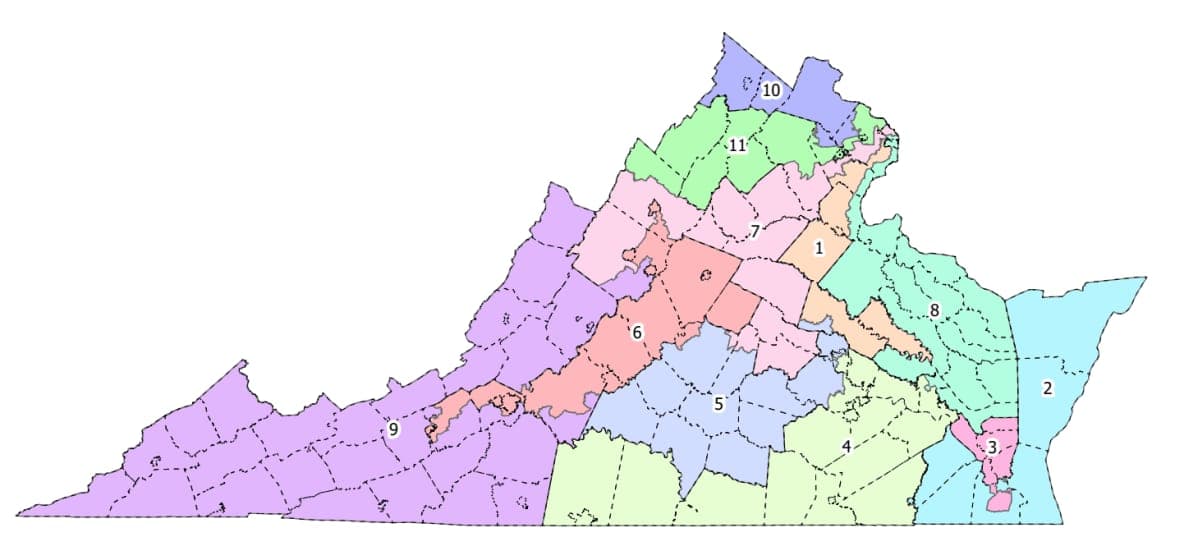
For an opposing point of view, see “It’s in the maps!” by Rep. Morgan Griffith. For more information on the April 21 special election, see our Voter Guide. Got a question about redistricting? Let us know and we’ll try to get it answered. Donald Trump is attempting to rig the 2026 midterm. He is trying to tip the scales because he is terrified that the American people are poised to turn out in droves to reject his catastrophic administration and his allies in Congress. We Virginians have an historic opportunity to push back between now and April 21. By voting for a constitutional amendment that would temporarily allow new congressional maps, Virginians can help restore fairness in the upcoming November elections. I have already voted yes, and I strongly encourage my fellow Virginians to do the same. For years, I have been outspoken about my opposition to gerrymandering. It is a corrosive force that suppresses meaningful electoral competition, undermines public trust and leaves too many voters feeling like their voices do not matter. That is why I have introduced federal legislation to ban gerrymandering nationwide and move us toward a fairer system that better reflects the will of the people. However, the threat facing Virginia today is not theoretical — and it requires a response. Across the country, we are witnessing a troubling escalation in efforts to manipulate our electoral system for partisan gain. President Donald Trump and his MAGA allies have openly pressured state legislatures in Texas, North Carolina, Florida and elsewhere to redraw their congressional maps midcycle to favor Republicans ahead of the November elections — efforts that have been carried out without a public vote. This level of coordinated political interference is unprecedented in modern American elections, and a failure to respond would only guarantee its success. Virginia should not stand by and rubber stamp this betrayal of our democracy. We have a chance to lead, with a measured, temporary response to this unique threat. The ballot question before voters offers a practical step to protect the integrity of our elections at a moment when they are clearly under threat. It is not a permanent overhaul of our election system, but a temporary safeguard designed to meet this specific moment. Importantly, while Trump is trying to take power away from the American people, this amendment places the decision directly in the hands of Virginia voters — where it belongs. Some have raised understandable concerns about changing the redistricting process, even temporarily. Those concerns deserve to be taken seriously. But this proposal does not dismantle the bipartisan redistricting framework Virginia has worked hard to build. That framework, which was the result of hard-fought compromise, will return following the next census in 2030. In that sense, this amendment serves as a bridge. A bridge to protect Virginians’ voices in the near term, ensuring they are not diminished by partisan gerrymandering efforts elsewhere. It does so while preserving the long-term redistricting reforms that Virginians have already embraced. Because at its core, this referendum is about leveling the playing field. On April 21st, Virginia has the opportunity to come together in defense of our democracy and a brighter future for the Commonwealth and the country. And when the time comes to cast your ballot, I hope you will join me in voting yes — because fair elections are, and always must be, the foundation of our democracy. Don Beyer represents Virginia’s 8th Congressional District in the U.S. House of Representatives. He is a Democrat. The post Beyer: Donald Trump is attempting to rig the 2026 midterm. Virginia has a historic opportunity to push back. appeared first on Cardinal News.
Beyer: Donald Trump is attempting to rig the 2026 midterm. Virginia has a historic opportunity to push back.
For an opposing point of view, see “It’s in the maps!” by Rep. Morgan Griffith. For more information on the April 21 special election, see our Voter Guide. Got a question about redistricting? Let us know and we’ll try to get it answered. Donald Trump is attempting to rig the 2026 midterm. He is trying to tip the scales because he is terrified that the American people are poised to turn out in droves to reject his catastrophic administration and his allies in Congress. We Virginians have an historic opportunity to push back between now and April 21. By voting for a constitutional amendment that would temporarily allow new congressional maps, Virginians can help restore fairness in the upcoming November elections. I have already voted yes, and I strongly encourage my fellow Virginians to do the same. For years, I have been outspoken about my opposition to gerrymandering. It is a corrosive force that suppresses meaningful electoral competition, undermines public trust and leaves too many voters feeling like their voices do not matter. That is why I have introduced federal legislation to ban gerrymandering nationwide and move us toward a fairer system that better reflects the will of the people. However, the threat facing Virginia today is not theoretical — and it requires a response. Across the country, we are witnessing a troubling escalation in efforts to manipulate our electoral system for partisan gain. President Donald Trump and his MAGA allies have openly pressured state legislatures in Texas, North Carolina, Florida and elsewhere to redraw their congressional maps midcycle to favor Republicans ahead of the November elections — efforts that have been carried out without a public vote. This level of coordinated political interference is unprecedented in modern American elections, and a failure to respond would only guarantee its success. Virginia should not stand by and rubber stamp this betrayal of our democracy. We have a chance to lead, with a measured, temporary response to this unique threat. The ballot question before voters offers a practical step to protect the integrity of our elections at a moment when they are clearly under threat. It is not a permanent overhaul of our election system, but a temporary safeguard designed to meet this specific moment. Importantly, while Trump is trying to take power away from the American people, this amendment places the decision directly in the hands of Virginia voters — where it belongs. Some have raised understandable concerns about changing the redistricting process, even temporarily. Those concerns deserve to be taken seriously. But this proposal does not dismantle the bipartisan redistricting framework Virginia has worked hard to build. That framework, which was the result of hard-fought compromise, will return following the next census in 2030. In that sense, this amendment serves as a bridge. A bridge to protect Virginians’ voices in the near term, ensuring they are not diminished by partisan gerrymandering efforts elsewhere. It does so while preserving the long-term redistricting reforms that Virginians have already embraced. Because at its core, this referendum is about leveling the playing field. On April 21st, Virginia has the opportunity to come together in defense of our democracy and a brighter future for the Commonwealth and the country. And when the time comes to cast your ballot, I hope you will join me in voting yes — because fair elections are, and always must be, the foundation of our democracy. Don Beyer represents Virginia’s 8th Congressional District in the U.S. House of Representatives. He is a Democrat. The post Beyer: Donald Trump is attempting to rig the 2026 midterm. Virginia has a historic opportunity to push back. appeared first on Cardinal News.