6 stories credited to Bucks County Beacon
Latest story Apr 21, 2026 · on ChamberLight since Apr 2026
A story can appear as several articles (copies of the same piece), so counts of stories and of articles differ.
Scores for Bucks County Beacon
Writing quality not enough rated stories yet: 6 of 10. How it is measured
Scores last checked Sep 24, 2026.
Stories ChamberLight collected, by month
Stories credited to Bucks County Beacon, by publication date. ChamberLight collects articles that mention the officials it tracks, so this shows its own coverage of this source, not how much the source publishes.
- Stories from Bucks County Beacon
- Shaded: ChamberLight collected no stories, or almost none, from any outlet (a gap in its collection, not in the outlet’s publishing)
Show as a table
| Month | Stories | All outlets |
|---|---|---|
| April 2026 | 6 | 4,377 |
| May 2026 | 0 | none collected |
| June 2026 | 0 | none collected |
| July 2026 | 0 | none collected |
| August 2026 | 0 | 1 (collection gap) |
| September 2026 | 0 | 598 |
Top topics
Share of this source’s stories tagged with each topic. A story can carry several topics, so the shares do not add up to 100%.
- Ethics/Corruption5
83% of 6 stories · 62% across all outlets
- Budget/Spending2
33% of 6 stories · 33% across all outlets
- Defense/Military2
33% of 6 stories · 26% across all outlets
- Foreign Policy2
33% of 6 stories · 30% across all outlets
- Healthcare2
33% of 6 stories · 8% across all outlets
- Immigration2
33% of 6 stories · 13% across all outlets
- Voting Rights2
33% of 6 stories · 20% across all outlets
- Abortion/Reproductive Rights1
17% of 6 stories · 1% across all outlets
The thin mark on each bar is the topic’s share across all outlets.
Who they cover
Party of the officials these stories are mainly about, across all 9 officials named. A story counts once for each official it is mainly about, so the split is over 11 story–official pairs, from 6 stories.
- Republican64% · 7 pairs
- Democrat36% · 4 pairs
Most covered
Stories mainly about each official, and their share of the source’s 6 stories.
Article tone
ChamberLight’s article analysis assigns each story a tone toward the official it covers. It describes the coverage of that official, not Bucks County Beacon’s stance, and reader votes do not change it. 6 stories.
- Good Look
- 1 (17%)
- Mixed
- 4 (67%)
- Informational
- 0 (0%)
- Bad Look
- 1 (17%)
Challenges to these scores
No one has challenged a score on this page yet. Anyone can; editors publish every outcome here.
Articles served from buckscountybeacon.com
11
Planned Parenthood Forced to Slash Vital Reproductive Health Care to Pennsylvania Medicaid Patients
Nine months into the rollout of President Trump’s Big Beautiful Bill, Planned Parenthood Keystone says it can no longer offer essential reproductive health care services to Medicaid patients in the communities it serves. The organization announced last month it will no longer see Medicaid patients for wellness exams, cancer screenings, birth control, and STI testing. According to Planned Parenthood Keystone President and CEO Melissa Reed, about 80% of its patients across its seven health centers and telehealth operations are uninsured, underinsured, or rely on Medicaid. Locally in Bucks County, the Bensalem Health Center has the highest population of Medicaid patients at 69%. Since it stopped providing care to Medicaid patients, Reed said staff have been working to connect people with other providers who are considered “Federally Qualified Health Centers” (FQHCs). “Unfortunately, Bucks County does not have any FQHC’s,” Reed added, noting the closest one is in Philadelphia County. Casi Scully, Planned Parenthood Keystone’s associate medical director, said patient traffic has dropped significantly. On what she called a “typical family planning day” prior to the Medicaid switch, she said she’d consult between 20 and 25 patients. Since the switch, she now sees about four per day. READ: Planned Parenthood Pennsylvania PAC Endorses Bucks County Candidates for State House and Senate Kearasten Jordan, a resident of Lancaster County, is a PP Keystone patient with Medicaid insurance. They said PP Keystone helped them identify Planned Parenthood West Chester Health Center – the closest Planned Parenthood outside the Keystone network that is still accepting Medicaid. Jordan will have to take public transportation to get there. “Being told you have to go to a completely different county to receive care is life altering,” they said. How we got here The One Big Beautiful Bill Act, formally known as House Resolution 1, includes “defunding” provisions intended to funnel taxpayer dollars away from Planned Parenthood and other abortion facilities which it labels “prohibited entities.” This means patients with Medicaid could not use their insurance for non-abortion services through Planned Parenthood (abortion was already prohibited through Medicaid via the Hyde Amendment). Up until recently, Planned Parenthood Keystone said it continued to see Medicaid patients, often performing those key non-abortion services for free. But the financial toll of servicing patients without reimbursement eventually became too high – impacting not only PP Keystone but also the rest of their patients, due to the sliding scale pricing model. “It feels like a cruel, targeted undermining of people’s autonomy.” – Dr. Audrey Tashjian, OBGYN and Committee to Protect Health Care Member Combining the loss of Title X funding in December with the loss of revenue from Medicaid patients over the past nine months, Reed said PP Keystone’s budget has dropped by $1.5 million. In response to questions on the campaign trail last year about defunding Planned Parenthood, Vice President JD Vance said, “our view is we don’t think taxpayers should fund late-term abortions.” However, according to Planned Parenthood’s 2023-2024 Annual Report, abortions accounted for just 402,200 of the 9.4 million services rendered during that data period (roughly 4.2%). The bulk of patients received “STI tests and services” (5.2 million) and “birth control services” (2.2 million). “The things they’re cutting off are not even the things they’re fighting over in the culture war,” Scully said. State @reppowell.com: Why Pennsylvania Needs Its Own FACE Act | Anti-abortion extremists must not be allowed to carry out acts of intimidation, obstruction and violence aimed at keeping Pennsylvanians from receiving health care. — Bucks County Beacon (@buckscountybeacon.com) 2026-01-21T18:16:05.862Z Planned Parenthood patients say the care there cannot be replicated Jordan visited Planned Parenthood for the first time prior to leaving home for college and were impressed with the level of care they received. “I felt like I learned more about different types of birth control [at Planned Parenthood] than I did in school.” In 2021, Jordan said a traumatic experience “really solidified [their] love and respect for Planned Parenthood.” After experiencing a sexual assault, Jordan said they went to Lancaster General Hospital and asked for an STD test. They met with a doctor who was “very dismissive” and would not provide an STD test unless they agreed to “submit to a rape kit.” “They basically wouldn’t help me unless I agreed to get the police involved,” they said. They left the hospital and went to Planned Parenthood, where they met with a nurse practitioner who was “obviously trauma informed” and gave them the help and answers they sought. “Since then, I kind of only feel comfortable going to Planned Parenthood,” they said. READ: Abortion Restrictions on Young People in the United States Cause Trauma Another patient, Katie Ellis of Bensalem, has traditional insurance and said she has had similar challenging experiences with traditional providers. She remembered a doctor who made an inappropriate joke that embarrassed her, and another doctor on a separate occasion who laughed at her when she asked for clarity after taking a pregnancy test. “After that, going to the doctor became something I dreaded,” Ellis said. “It’s such a vulnerable experience and I started to feel like I couldn’t trust people who were supposed to help me.” Despite her anxiety, she made an appointment when it came time to update her birth control and arrived in hopes of receiving an IUD, but the doctor said they “couldn’t get it placed.” She left feeling defeated, and that’s when someone recommended Planned Parenthood. She said she was treated with compassion for what felt like the first time, and, after another failed attempt at placing an IUD, she received a birth control implant in her arm, which none of the previous providers had recommended. “Finding Planned Parenthood and getting the implant was so impactful in my life,” Ellis said. While she is not currently barred from her regular services through Medicaid restrictions, Ellis said she believes that she and others can and should speak out for those who are losing access. At a recent event in Doylestown organized to petition Congressman Brian Fitzpatrick to reinstate funding to Planned Parenthood, Ellis shared her testimony with the gathering, which included members of the American Association of University Women (AAUW), MomsRising Together, Pennsylvania Together, and the Committee to Protect Health Care. Crisis Pregnancy Centers in Pennsylvania Are Growing in Numbers–and Predatory Tactics | Abortion providers throughout the state report frustration at these anti-abortion centers’ disinformation campaigns and the confusion and risk this causes vulnerable patients. — Bucks County Beacon (@buckscountybeacon.com) 2025-12-15T15:09:04.779Z Providers fear for the future Another attendee in Doylestown was Dr. Audrey Tashjian, a member of the Committee to Protect Health Care and a private practice OBGYN who has been in the industry for 30 years. Early in her career she volunteered at Planned Parenthood in Trenton, New Jersey, where she performed abortion “as a public service.” “I really treasure Planned Parenthood,” Tashjian said, noting that having worked there, she understands first-hand the kind and non-judgmental care patients get. Tashjian said in recent years since the current administration took office and Planned Parenthood Keystone’s Warminster clinic closed in June 2024, her private practice appears to be treating an increase in “emergency obstetric situations,” including some patients who have forgone prenatal care and show up for their first visit when they’re in labor. In addition to heightened medical risk, Tashjian said the increased traffic has overwhelmed the staff of 28 providers at her practice, who are “overwhelmed and brimming over” trying to fit people in. “We provide great health care at my office,” Tashjian said, “but we can’t care for everybody.” She noted the issue is compounded by “maternity care deserts,” or rural areas where hospitals have stopped offering obstetric care. READ: State Senate Democrats Introduce Bill to Protect and Improve Access to Contraceptives in Pennsylvania If the current trajectory continues, Tashjian said patients will go untreated and “people will suffer.” “It feels like a cruel, targeted undermining of people’s autonomy,” she said. “Undermining of their safety … the ability of people to take care of their families.” Scully said she worries about the patients she previously treated for emergency and specialized care that she believes most traditional providers are not equipped to handle. She also said she feels for the people who are not in crisis but still choose Planned Parenthood. She remembered an 18-year-old patient who came in for a birth control consultation. After discussion, she asked the patient if she wanted a prescription for the pill. The patient said she already had one. “Even after seeing a regular doctor, she chose to come here,” Scully said. “She came to the place where she knew she could get those answers.” For now, Planned Parenthood Keystone is making plans to move forward. Scully said the organization is looking at possibilities to adjust the fee schedule, and Reed said they are “exploring doing more” through their virtual health center to benefit people in rural areas. The one-year defunding provision expires at the end of June, and stakeholders and patients say they’re hoping it won’t be reinstated.

Rep. Brian Fitzpatrick Helps House Reject War Powers Resolution 214-213, Trump Can Continue War on Iran Unchecked by Congress
WASHINGTON (AP) — The House rejected a resolution Thursday requiring President Donald Trump to withdraw U.S. forces from the war with Iran unless Congress authorizes military action. It was the latest such vote that fell short of passage as Republicans largely continue to support Trump’s operation. Democrats voiced concern that the United States is becoming further entrenched in another lengthy conflict in the Middle East. They promised to keep raising the issue through more war powers votes in the coming weeks. The 213-214 vote came one day after a similar effort failed in the Senate. The U.S. and Israel struck Iran on Feb. 28, and a fragile ceasefire is now in its second week. This is the second time Rep. Brian Fitzpatrick voted against a War Powers Resolution since President Trump launched his war on Iran. Democrats overwhelmingly supported the attempt to rein in Trump’s use of military force. “We’re standing at the edge of a cliff and Congress must act before the president pushes off,” said New York Rep. Gregory Meeks, the ranking Democrat on the House Committee on Foreign Affairs. “Every day we delay, we inch closer to a conflict with no exit ramp.” READ: Rep. Brian Fitzpatrick’s Statements and Actions on Iran Unmask His Political Vacuousness and Cowardice Republicans tried to cast the effort as hypocritical. Florida Rep. Brian Mast, the committee chairman, said Congress never voted on a war powers resolution when the U.S. attacked Iranian-backed Houthis in Yemen in 2024 while Democrat Joe Biden was president. “When Joe Biden was responding to merchant marine vessels being attacked, it was OK. No war power needed. It went on for about a year,” Mast said. “President Trump responds — war power, war power, war power. … That’s the hypocrisy.” Under the War Powers Act of 1973, Congress must declare war or authorize use of force within 60 days — a deadline in the Iran war that will arrive at the end of April. The law provides for a potential 30-day extension, but lawmakers have made clear that they want the Republican administration to soon lay out a plan for the war’s end. While the House vote failed, it gave Democrats an opportunity to highlight some of the most negative effects of the war: the billions of dollars spent, the death of at least 13 service members, the soaring gas prices and fissures with long-standing allies who do not support Trump’s actions. “Gas prices at home are up to $7 in my home state, and families are hurting,” said Rep. Pramila Jayapal, D-Wash. “Another 10,000 U.S. troops are being sent in to join 50,000 already stationed in the Middle East with absolutely no strategy, no plan and no exit.” Republicans defended Trump as taking decisive action against an Iranian government that has long terrorized the Middle East and its own people. READ: Pope Leo Says He Does Not Fear Trump, Citing Gospel as He Pushes Back in Feud Over Iran War “President Donald Trump has sent a message that those who threaten the United States and our partners will be ultimately held accountable,” said Rep. Joe Wilson, R-S.C. In Thursday’s vote, Rep. Thomas Massie of Kentucky was the only Republican to cross party lines and vote for removing U.S. forces from the war. Rep. Jared Golden of Maine was the only Democrat to vote against the measure. The first House vote to curb Trump’s miliary action with Iran failed in early March, 212-219. The Bucks County Beacon added to this story to localize it.
Rep. Brian Fitzpatrick Helps House Reject War Powers Resolution 214-213, Trump Can Continue War on Iran Unchecked by Congress
WASHINGTON (AP) — The House rejected a resolution Thursday requiring President Donald Trump to withdraw U.S. forces from the war with Iran unless Congress authorizes military action. It was the latest such vote that fell short of passage as Republicans largely continue to support Trump’s operation. Democrats voiced concern that the United States is becoming further entrenched in another lengthy conflict in the Middle East. They promised to keep raising the issue through more war powers votes in the coming weeks. The 213-214 vote came one day after a similar effort failed in the Senate. The U.S. and Israel struck Iran on Feb. 28, and a fragile ceasefire is now in its second week. This is the second time Rep. Brian Fitzpatrick voted against a War Powers Resolution since President Trump launched his war on Iran. Democrats overwhelmingly supported the attempt to rein in Trump’s use of military force. “We’re standing at the edge of a cliff and Congress must act before the president pushes off,” said New York Rep. Gregory Meeks, the ranking Democrat on the House Committee on Foreign Affairs. “Every day we delay, we inch closer to a conflict with no exit ramp.” READ: Rep. Brian Fitzpatrick’s Statements and Actions on Iran Unmask His Political Vacuousness and Cowardice Republicans tried to cast the effort as hypocritical. Florida Rep. Brian Mast, the committee chairman, said Congress never voted on a war powers resolution when the U.S. attacked Iranian-backed Houthis in Yemen in 2024 while Democrat Joe Biden was president. “When Joe Biden was responding to merchant marine vessels being attacked, it was OK. No war power needed. It went on for about a year,” Mast said. “President Trump responds — war power, war power, war power. … That’s the hypocrisy.” Under the War Powers Act of 1973, Congress must declare war or authorize use of force within 60 days — a deadline in the Iran war that will arrive at the end of April. The law provides for a potential 30-day extension, but lawmakers have made clear that they want the Republican administration to soon lay out a plan for the war’s end. While the House vote failed, it gave Democrats an opportunity to highlight some of the most negative effects of the war: the billions of dollars spent, the death of at least 13 service members, the soaring gas prices and fissures with long-standing allies who do not support Trump’s actions. “Gas prices at home are up to $7 in my home state, and families are hurting,” said Rep. Pramila Jayapal, D-Wash. “Another 10,000 U.S. troops are being sent in to join 50,000 already stationed in the Middle East with absolutely no strategy, no plan and no exit.” Republicans defended Trump as taking decisive action against an Iranian government that has long terrorized the Middle East and its own people. READ: Pope Leo Says He Does Not Fear Trump, Citing Gospel as He Pushes Back in Feud Over Iran War “President Donald Trump has sent a message that those who threaten the United States and our partners will be ultimately held accountable,” said Rep. Joe Wilson, R-S.C. In Thursday’s vote, Rep. Thomas Massie of Kentucky was the only Republican to cross party lines and vote for removing U.S. forces from the war. Rep. Jared Golden of Maine was the only Democrat to vote against the measure. The first House vote to curb Trump’s miliary action with Iran failed in early March, 212-219. The Bucks County Beacon added to this story to localize it.
Rep. Brian Fitzpatrick Helps House Reject War Powers Resolution 214-213, Trump Can Continue War on Iran Unchecked by Congress
WASHINGTON (AP) — The House rejected a resolution Thursday requiring President Donald Trump to withdraw U.S. forces from the war with Iran unless Congress authorizes military action. It was the latest such vote that fell short of passage as Republicans largely continue to support Trump’s operation. Democrats voiced concern that the United States is becoming further entrenched in another lengthy conflict in the Middle East. They promised to keep raising the issue through more war powers votes in the coming weeks. The 213-214 vote came one day after a similar effort failed in the Senate. The U.S. and Israel struck Iran on Feb. 28, and a fragile ceasefire is now in its second week. This is the second time Rep. Brian Fitzpatrick voted against a War Powers Resolution since President Trump launched his war on Iran. Democrats overwhelmingly supported the attempt to rein in Trump’s use of military force. “We’re standing at the edge of a cliff and Congress must act before the president pushes off,” said New York Rep. Gregory Meeks, the ranking Democrat on the House Committee on Foreign Affairs. “Every day we delay, we inch closer to a conflict with no exit ramp.” READ: Rep. Brian Fitzpatrick’s Statements and Actions on Iran Unmask His Political Vacuousness and Cowardice Republicans tried to cast the effort as hypocritical. Florida Rep. Brian Mast, the committee chairman, said Congress never voted on a war powers resolution when the U.S. attacked Iranian-backed Houthis in Yemen in 2024 while Democrat Joe Biden was president. “When Joe Biden was responding to merchant marine vessels being attacked, it was OK. No war power needed. It went on for about a year,” Mast said. “President Trump responds — war power, war power, war power. … That’s the hypocrisy.” Under the War Powers Act of 1973, Congress must declare war or authorize use of force within 60 days — a deadline in the Iran war that will arrive at the end of April. The law provides for a potential 30-day extension, but lawmakers have made clear that they want the Republican administration to soon lay out a plan for the war’s end. While the House vote failed, it gave Democrats an opportunity to highlight some of the most negative effects of the war: the billions of dollars spent, the death of at least 13 service members, the soaring gas prices and fissures with long-standing allies who do not support Trump’s actions. “Gas prices at home are up to $7 in my home state, and families are hurting,” said Rep. Pramila Jayapal, D-Wash. “Another 10,000 U.S. troops are being sent in to join 50,000 already stationed in the Middle East with absolutely no strategy, no plan and no exit.” Republicans defended Trump as taking decisive action against an Iranian government that has long terrorized the Middle East and its own people. READ: Pope Leo Says He Does Not Fear Trump, Citing Gospel as He Pushes Back in Feud Over Iran War “President Donald Trump has sent a message that those who threaten the United States and our partners will be ultimately held accountable,” said Rep. Joe Wilson, R-S.C. In Thursday’s vote, Rep. Thomas Massie of Kentucky was the only Republican to cross party lines and vote for removing U.S. forces from the war. Rep. Jared Golden of Maine was the only Democrat to vote against the measure. The first House vote to curb Trump’s miliary action with Iran failed in early March, 212-219. The Bucks County Beacon added to this story to localize it.
Rep. Brian Fitzpatrick Helps House Reject War Powers Resolution 214-213, Trump Can Continue War on Iran Unchecked by Congress
WASHINGTON (AP) — The House rejected a resolution Thursday requiring President Donald Trump to withdraw U.S. forces from the war with Iran unless Congress authorizes military action. It was the latest such vote that fell short of passage as Republicans largely continue to support Trump’s operation. Democrats voiced concern that the United States is becoming further entrenched in another lengthy conflict in the Middle East. They promised to keep raising the issue through more war powers votes in the coming weeks. The 213-214 vote came one day after a similar effort failed in the Senate. The U.S. and Israel struck Iran on Feb. 28, and a fragile ceasefire is now in its second week. This is the second time Rep. Brian Fitzpatrick voted against a War Powers Resolution since President Trump launched his war on Iran. Democrats overwhelmingly supported the attempt to rein in Trump’s use of military force. “We’re standing at the edge of a cliff and Congress must act before the president pushes off,” said New York Rep. Gregory Meeks, the ranking Democrat on the House Committee on Foreign Affairs. “Every day we delay, we inch closer to a conflict with no exit ramp.” READ: Rep. Brian Fitzpatrick’s Statements and Actions on Iran Unmask His Political Vacuousness and Cowardice Republicans tried to cast the effort as hypocritical. Florida Rep. Brian Mast, the committee chairman, said Congress never voted on a war powers resolution when the U.S. attacked Iranian-backed Houthis in Yemen in 2024 while Democrat Joe Biden was president. “When Joe Biden was responding to merchant marine vessels being attacked, it was OK. No war power needed. It went on for about a year,” Mast said. “President Trump responds — war power, war power, war power. … That’s the hypocrisy.” Under the War Powers Act of 1973, Congress must declare war or authorize use of force within 60 days — a deadline in the Iran war that will arrive at the end of April. The law provides for a potential 30-day extension, but lawmakers have made clear that they want the Republican administration to soon lay out a plan for the war’s end. While the House vote failed, it gave Democrats an opportunity to highlight some of the most negative effects of the war: the billions of dollars spent, the death of at least 13 service members, the soaring gas prices and fissures with long-standing allies who do not support Trump’s actions. “Gas prices at home are up to $7 in my home state, and families are hurting,” said Rep. Pramila Jayapal, D-Wash. “Another 10,000 U.S. troops are being sent in to join 50,000 already stationed in the Middle East with absolutely no strategy, no plan and no exit.” Republicans defended Trump as taking decisive action against an Iranian government that has long terrorized the Middle East and its own people. READ: Pope Leo Says He Does Not Fear Trump, Citing Gospel as He Pushes Back in Feud Over Iran War “President Donald Trump has sent a message that those who threaten the United States and our partners will be ultimately held accountable,” said Rep. Joe Wilson, R-S.C. In Thursday’s vote, Rep. Thomas Massie of Kentucky was the only Republican to cross party lines and vote for removing U.S. forces from the war. Rep. Jared Golden of Maine was the only Democrat to vote against the measure. The first House vote to curb Trump’s miliary action with Iran failed in early March, 212-219. The Bucks County Beacon added to this story to localize it.

Mulling Over Markwayne Mullin and Theocratic Creep in the GOP
Written by Frederick Clarkson This article was originally published by Political Research Associates on April 2, 2026. On March 24, the U.S. Senate voted to confirm Senator Markwayne Mullin as President Trump’s next Secretary of Homeland Security, following the disastrous tenure of Kristi Noem. Republican Senators were joined by Democratic Senators John Fetterman (D-PA) and Martin Heinrich (D-NM) in a 54-45 vote. But there is more to this news than may meet the eye. At a contentious hearing before the Senate Committee, Mullin faced questions about his temperament; past statements endorsing physical violence against Committee Chair Rand Paul (R-KY) and the murder of Alex Pretti by federal agents in Minneapolis; and policy positions amid the Trump administration’s focus on mass deportations, border security, and ongoing DHS funding challenges (including a partial government shutdown). But one thing did not come up during the discussion of concerns about Mullin’s nomination: his involvement with City Elders, a Tulsa, Oklahoma-based political organization enmeshed with the theocratic New Apostolic Reformation (NAR) movement. City Elders is meant to be a model for governance at all levels that parallels the NAR’s model for the church. They aim to be prepared to assume authority after current institutions fail, and the success of officials they support, like Mullin, indicates that they will already have some established leaders should that happen. NAR-connected candidates have also run for major offices in key states, most notably the (unsuccessful) GOP candidates for governor of California and Pennsylvania in 2022. Meanwhile, the NAR is revisioning, reforming, and reorganizing charismatic and Pentecostal Christianity. It plays a dynamic political role, primarily in the MAGA movement, and has been critical to Donald Trump’s election campaigns. The term New Apostolic Reformation was coined by apostolic leaders and scholars in the 1990s to describe the trend of Pentecostal and charismatic churches that operate outside of denominational structures—the fastest growing sector of Christianity in the United States and worldwide. They saw in this trend an emerging new paradigm that they eventually sought to shape, organize and lead. Their vision of NAR features more than just networks of independent or nondenominational churches. It introduced historic changes to church governance featuring the restoration of modern-day apostles and prophets and what’s called the Five-Fold Ministry. Believing that historic Christianity has gotten it mostly wrong, they seek to restore the offices of the church—apostles, prophets, evangelists, pastors, and teachers, as outlined in the New Testament’s Letter to the Ephesians (4:11-13). Their goal is to take Christianity back to the First Century and essentially start over—with a strong vision of religious and political dominion. READ: Shocking Online Manifesto Reveals Project 2025’s Link to a Coordinated ‘Christian Nationalism Project’ When City Elders founder Jesse Leon Rodgers introduced Mullin to a gathering of the group on October 6, 2023, he said that Mullin had served 10 years as a Member of Congress before being elected to the Senate in 2022. “We’ve been in friendship for many years and he’s been to City Elders almost from our inception,” he added. “He has been here many times, as a congressman and now as a senator.” Mullin thanked Rodgers and said, “The first time you and I met, you came to my office and started sharing with me the vision of City Elders. I got it and started talking about going into our small towns, going into our cities, working on the school boards, working on the city councils, and getting godly people elected.” Their chummy relationship epitomizes the theocratic creep in the Republican Party. Rodgers’ role in politics seems to have originated with his role as the state representative of Watchmen on the Wall which organizes clergy to pray for the nation. It’s a project of the Washington, DC headquartered Family Research Council, a leading Christian Right political organization since the mid-1980s. Its 40 state political affiliates play important political and policy roles in their respective state capitals. Mullin rightly views City Elders as a critical component of his Christian Right electoral base. [The NAR’s] goal is to take Christianity back to the First Century and essentially start over—with a strong vision of religious and political dominion. The name City Elders is both a biblical reference and a description of the group’s focus on county seats as the planned locus of theocratic action. The group seeks to develop permanent political infrastructures to select and elect candidates for local bodies such as school boards and county commissions, to exert ongoing influence. There are statewide City Elders groups in at least Oklahoma, Kansas, and Virginia, and a local group in Arkansas. (The Missouri City Elders group, founded in 2021, appears to be defunct, although their website says it is “under construction.”) The group does not seem to have expanded much since I first wrote about them in 2023, and it would be wrong to overstate their political significance outside of Oklahoma, and perhaps Virginia. But they do stage regular banquets and conferences in Oklahoma that draw prominent candidates and government officials. (Mullin is now among the highest ranking government officials to have addressed the group.) In addition to Senator Mullin, speakers at their events in recent years (videos preserved on Rumble and YouTube) include Oklahoma Governor Kevin Stitt, Oklahoma Lt. Governor Matt Pinnell, Oklahoma Superintendent of Public Instruction Ryan Walters, former State Senator and State GOP Party Chairman Nathan Dahm, and U.S. Rep. Kevin Hern, who is Trump’s candidate to replace Mullin in the Senate. City Elders events have featured leading NAR apostles, including Dutch Sheets, Cindy Jacobs, and Jim Garlow. They have also featured appearances by such NAR figures as Rafael Cruz (father of Ted), podcaster Andrew Wommack, and prophets Lou Engle and Mario Murillo. City Elders seems to be a hybrid experiment in religious and political organizing. While the most active elements appear to be charismatic and Pentecostal Christians, the group has been cultivating close political relationships with other conservative evangelicals, especially Baptists and conservative business leaders. Their goal is effective conservative Christian political control. On the group’s website, former convening apostle of the U.S. Coalition of Apostolic Leaders Joseph Mattera says, “City Elders is perhaps the greatest model in the nation combining church place [sic] and workplace leaders as gatekeepers to influence society in each county in the United States.” The City Elders political vision also overlaps with the broader county movement, operating in other sectors of the far Christian and political Right. LISTEN: The New Apostolic Reformation: A Revolutionary Theocratic Movement Coming for Pennsylvania, the Nation, and the World A Whiff of Revolution I wrote one of the first two major stories on City Elders from outside of the state for Salon, along with the Daily News Record in Harrisonburg, Virginia, in November 2023, when there were local City Elders groups in formation in Virginia. These stories were followed by the Baptist Global News in 2024. With the Mullin nomination, City Elders is back in the news. People magazine, among others, highlighted his remarks to the group about corporal punishment of children, and Baptist News Global emphasized the effort of the liberal group Faithful America that opposes Mullin. In a letter, they wrote of Mullin’s election denialism: “Election denial is a hallmark of Christian nationalism. It prioritizes a distorted religious-political aim over democratic processes, while perpetuating a specific narrative elevating ‘the anointed’ over the will of the people. Mullin knows this well. For years, he’s built a relationship with City Elders, a Tulsa-based Christian nationalist group whose leaders seek to take control of government at every level in the name of ‘Establishing the Kingdom of God.’” During his March 18, 2026, confirmation hearing, Mullin seemed to want to avoid sparks going into election season. He took a non-confrontational tone when asked whether he would place uniformed DHS officers at polling places during the 2026 midterm elections in November. Without confirming or ruling it out completely, he said, if “it’s about a specific threat.” Yet he also promised agency reforms on such unpopular matters as slow disaster aid and the lack of judicial warrants before invading people’s homes. How Mullin will carry out his responsibilities remains to be seen. He did not serve on the Homeland Security committees in the House or the Senate; has no experience running a large organization of any kind; and has no experience in law enforcement, or any of the other functions of the federal government’s third largest department. He seems to have been picked primarily because he is a Trump loyalist and has good relationships with other members of Congress. He is, however, a former mixed martial arts fighter who notoriously once challenged a witness at a Senate hearing—Sean O’Brien, the president of the International Brotherhood of Teamsters—to a fight. Mullin is also the first member of the Cherokee Nation to serve in the cabinet. Some tribal leaders believe—based on his lived experience and his record on the Senate Committee on Indian Affairs—that he will bring greater sensitivity and respect for tribal sovereignty to immigration enforcement and border security than his predecessor, even while maintaining the administration’s policies in this area. Mullin is not unique among Indigenous people in having a relationship with the NAR. The movement has recognized and sought apologies for past violence against Indigenous people, and has a following among some Native nations. READ: Senator Josh Hawley: ‘Christian Nationalism Founded American Democracy’ NAR leaders see those who are not the right kind of Christian as demonic threats, or at the very least, obstacles to advancing of the Kingdom of God as they see it. These “spiritual warriors” have long targeted Indigenous communities for conversion via the language and ceremonial practice of reconciliation. This may seem contradictory, given conversion’s role in the violence of historic and ongoing colonization. But the NAR has recruited Indigenous followers by appealing to this desire for acknowledgment and healing. There may not be major changes to the Trump administration’s policies or their enforcement under the new secretary. But Mullin is now in a position to reward his supporters with jobs. It would be surprising if there were not members of the Christian Right, including NAR devotees, quietly hired for DHS positions, great and small, which has longer-term implications for democratic governance. Beyond City Elders’ theocratic political vision, there is a whiff of revolution in the air. NAR leaders see those who are not the right kind of Christian as demonic threats, or at the very least, obstacles to advancing of the Kingdom of God as they see it. At the group’s September 7, 2023 event, Apostle Jim Garlow spoke at length about his view that the United States federal government is on the verge of “collapse,” and religious civil war may be on the horizon. But he is looking ahead to the post-collapse period. He said, “What you’re going to do as City Elders, under Jesse’s leadership—the vision he’s given—you’re going to start watching your valley.” Garlow held aloft the City Elders strategy manual, stating, “I’ve gone through major parts of this [and] this is a strategy that is executable!” He envisions using it to take power across the country, “county by county by county.” (The City Elders website says, “Join us as Governing Councils are built in every county seat of America.”) One key point in the manual, Garlow said, is making the transition to “dominion.” “Now the ‘dominion’ word, boy, the Left gets nervous about that one!” he exclaimed. “Oh, ‘Christian nationalists’ … ‘Dominionism,’ they have a whole string of words. They’re just terribly nervous. It just simply means that we are going to fast and pray and declare the word and let God be God! It’s that simple.” Garlow also emphasized that theological differences in his audience are not as significant as they may sometimes seem, and the overriding fact is that they are in a war. “Some people believe in a five-fold ministry,” he said. “Some don’t. But I must tell you that all of you—whether you like it or not—are prophetic and you are apostolic!” READ: Pennsylvania’s Prayer Warrior: Abby Abildness And Her Dominionist Crusade In The Commonwealth He emphasized that leaders need to be talent scouting and recruiting. What was important, he said, was not how many people attend Sunday services but “how many are deployed into action, who are actually threats to the enemy of God.” Mullin relies more on metaphor than Garlow, but in his talk to City Elders, he said he likes to talk about David, a biblical king and military leader. He said, “I look forward to riding back in that battle. I want to be on the horse beside him. I want to be carrying the sword and I want to see the field. I want to see it. I want to be that warrior. I want to be that fighter.” He goes on to talk about the need to raise kids to be Davids. In fairness, it is not clear from his association with City Elders that the new Secretary of Homeland Security shares all of their views or those of the prominent speakers at their gatherings. However, it is also fair to note that he was not asked about it by reporters or by the Senators responsible for vetting him. City Elders will no doubt continue to seek to organize groups in as many counties as they can and influence politicians and government officials. This is concerning, given how their materials, conference speeches, and videos do not indicate any respect for democratic institutions, the religious and civil rights of others, or the bedrock value of equal rights under the law. For City Elders and their NAR sponsors, elections are primarily about using the tools of electoral democracy to erode and end it. Politicians who seek out City Elders for support understand this, and those who claim they did not know should not be given a pass. This ignoring of the unambiguous views of the likes of City Elders—and importantly, the politicians who run with them—explains much about the creeping theocratization of the Republican Party and the ongoing destabilization of U.S. constitutional democracy. Frederick Clarkson is a Senior Research Analyst at PRA and has written about politics and religion for more than four decades. His work has appeared in a wide range of publications from Mother Jones, Church & State, and Ms. Magazine to The Christian Science Monitor, Salon.com, and Religion Dispatches. He is the author of Eternal Hostility: The Struggle Between Theocracy and Democracy, and editor of Dispatches from the Religious Left: The Future of Faith and Politics in America. He has worked as an investigative editor at Planned Parenthood Federation of America; as Communications Director at the Institute for Democracy Studies; and co-founded the group blog, Talk to Action.
Democrats Grapple With How to Handle Super PACs Flooding Their Primaries With Campaign Cash
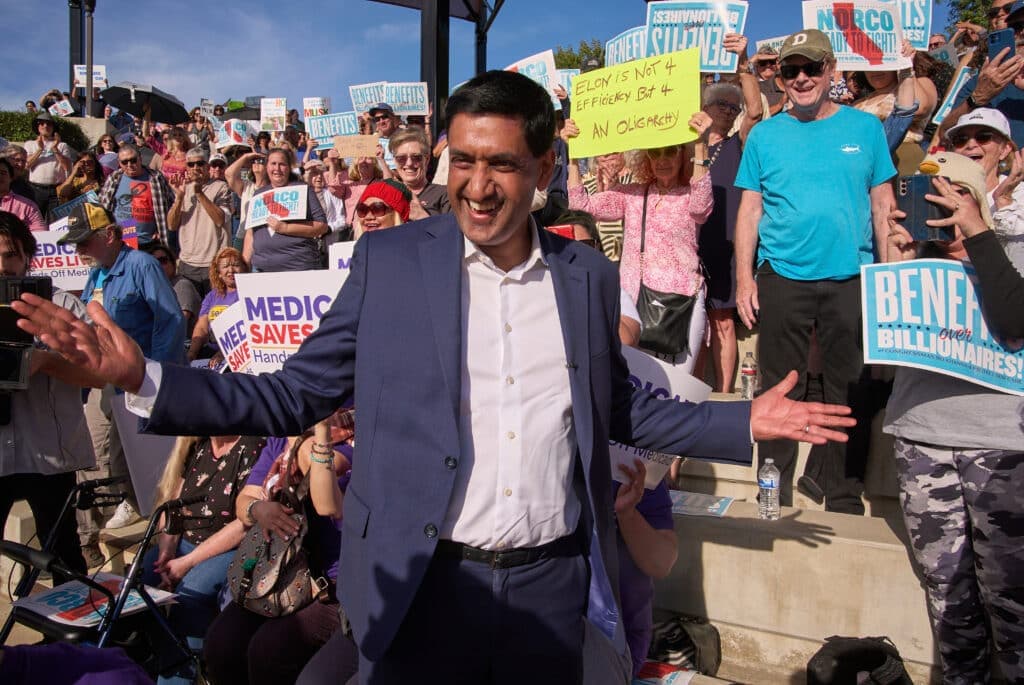
WASHINGTON (AP) — Democrats are struggling to come up for air after outside groups flooded their first round of midterm primaries with campaign cash. As the party fights to regain control of Congress, organizations affiliated with the American Israel Public Affairs Committee, cryptocurrency and artificial intelligence have dominated the airwaves, sometimes leaving candidates on the sidelines of their own campaigns. Democratic pollster Zac McCrary said the primaries have “become proxy wars, and the candidates are almost afterthoughts in larger skirmishes.” In an effort to push back, the Democratic National Committee voted at its spring meeting in New Orleans to condemn the surge in spending. Members who opposed the package of resolutions wanted language to condemn specific groups, such as AIPAC, which was founded to foster stronger relations between Israel and the U.S. The organization has become especially controversial during the war in Gaza and because of its aggressive campaign tactics. The flood of money from a variety of groups has exacerbated tensions within the party. Candidates who lost have pointed their fingers at special interests, blaming them for derailing their campaigns. Others who are still in the running are courting voters by denouncing deep-pocketed outside groups. Even those who have benefited from the spending have expressed concern. “It’s definitely a brave new world,” McCrary said. “We’re not talking about doubling of campaign expenditures,” he added. “We’re talking about 10 times or 20 times more.” READ: AI Super PACs Are Unleashing Millions to Tilt Primaries in Their Favor Dan Sena, a former executive director at the Democratic Congressional Campaign Committee, said party organizations are no longer the only ones with the clout to push favored candidates. “All that’s been completely smashed now,” Sena said. Even if Democrats regain control of the U.S. House, he warned that outside spending could damage the party in the long run. Referring to House Minority Leader Hakeem Jeffries, he said, “You’re going to hand Jeffries a caucus that is divided.” Industry Front Group Enlists Democrats in Pennsylvania to Promote Natural Gas | Natural Allies for a Clean Energy Future pays politicians to convince voters that natural gas is the “most affordable and reliable energy source,” reports @kiley.bsky.social at @insideclimatenews.org. — Bucks County Beacon (@buckscountybeacon.com) 2026-04-11T14:39:09.234Z Democrats bear the brunt of big spending So far this cycle, outside money in U.S. House races has largely targeted districts particularly friendly to Democrats, meaning the primaries will likely determine who will win the general election in November. After a record number of House members retired this year, many of those seats opened up for the first time in years, drawing dozens of Democratic hopefuls. In Illinois, for example, there was more than $125 million in outside spending across five open Democratic primaries. In all but one of those congressional races, the outside spending exceeded candidate spending. While it’s still early in the calendar, there are indicators that many more races could see big spending. Almost 40 seats have already seen more than $1 million in outside spending, according to Federal Election Commission filings. READ: America, We Have a Super PAC Problem In Illinois, the top three spenders in U.S. House races were groups affiliated with AIPAC, according to AdImpact, which tracks ad buys in political races, followed by the cryptocurrency-affiliated Fairshake. A resolution presented to a subcommittee at the DNC specifically named AIPAC, but that one didn’t pass. Instead, members voted for a separate resolution that “condemns the influence of unregulated dark money in Democratic primary elections.” “We had various resolutions that focused on different industries and groups, and instead of going one-by-one, we passed a blanket repudiation,” DNC Chair Ken Martin said in a statement. ‘They Roll Right Over’: Many Democrats Call Their Party Weak and Ineffective, AP-NORC Poll Finds | About 15% described it using words like “weak," or “apathetic,” while an additional 10% believe it is broadly “ineffective” or "disorganized.” — Bucks County Beacon (@buckscountybeacon.com) 2025-08-03T14:44:17.180Z Campaign spending has divided Democrats The latest DNC meeting marked another chapter in longstanding disputes between progressives and the party establishment. Some progressives want the party to adopt official language that all Democratic presidential contenders oppose money from dark-money groups, or super PACs that aren’t required to disclose their donors. “It’s necessary that we actually have the party do something on this issue, not just say something,” said Larry Cohen, co-chair of Our Revolution, a progressive group founded by independent Sen. Bernie Sanders of Vermont, who caucuses with Democrats. The resolution passed at the DNC meeting in New Orleans is viewed by progressives as a step toward that goal. However, some Democrats warn against weakening their candidates when facing a Republican Party that’s flush with cash. INTERVIEW: Could Progressive Congressional Candidate Lucia Simonelli Shock PA-01 With a Victory in the May Democratic Primary? “Provided that we don’t handcuff ourselves in the general elections — because if the Republicans are going to use dark money in general elections, we should be using our money in general elections, too — if you provide an even playing field, I think then that’s fine,” said Sen. Ruben Gallego, an Arizona Democrat. “But we just can’t be handcuffing ourselves in the general to lose races.” DNC resolutions do not stop outside groups from surging funds into primary contests or general elections. But some Democrats believe the issue is core to the party’s values. “We should eliminate any super PAC in a Democratic primary. And I think every presidential candidate in 2028 should pledge that they will not have any super PAC spending in a Democratic primary,” said Rep. Ro Khanna, a progressive and possible Democratic presidential contender who co-chaired Sanders’ 2020 presidential campaign. “That should be a litmus test,” Khanna argued. “If you’re not willing to take that pledge, then you’re part of the problem.”
Trump’s Save America Act Would End Voter Registration Drives Nationwide
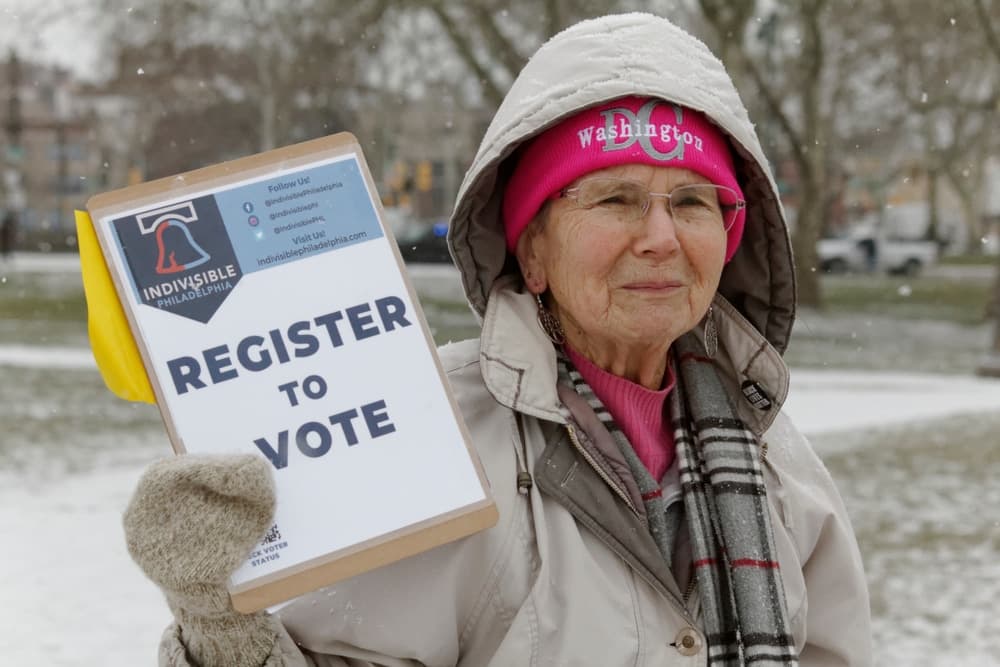
Before Wyoming elections, the state’s League of Women Voters tries to get voter registration information into the hands of residents at events and gatherings. But under state law, League volunteers can’t sign up voters themselves — only local election officials can do that. “It’s been tough,” said Linda Barton, president of the League of Women Voters of Wyoming. She added that her group does its best to offer registration information. “We provide a lot of printed literature that we hand out all over the state.” Congress may take Wyoming’s approach nationwide. The SAVE America Act would effectively ban voter registration drives, a mainstay of college campuses and neighborhood events. The U.S. Senate began debating a version of President Donald Trump’s signature elections measure last month, after the House passed it in February. The legislation would require voters to show photo identification to cast a ballot. It would also require individuals to present documents proving their citizenship, such as a passport or birth certificate, to government officials in person to register to vote. Trump and Republican members of Congress have cast the proposal as necessary to secure elections and crack down on noncitizen voters ahead of the midterms. Democrats and other critics warn it risks disenfranchising wide swaths of Americans. Studies have shown noncitizen voting is extremely rare. READ: Rep. Brian Fitzpatrick Helped the House Pass the SAVE Act. It Could Disenfranchise Millions of Voters In many states, civic groups have long provided applications to would-be voters that they can quickly fill out. During the 2024 election cycle, voter registration drives accounted for 3.7% of registrations, according to survey data from the federal Election Assistance Commission. While a small percentage, the figure still represents 2.1 million Americans. Twenty-four states and the District of Columbia placed no restrictions on voter registration drives as of November 2024, according to the Movement Advancement Project, a Colorado-based think tank. An additional 24 states impose some limits, while Wyoming and New Hampshire prohibit them. Bill would end registration drives nationwide Every form of voter registration drive would effectively end under the SAVE America Act as currently drafted in the Senate, said Brian Miller, executive director of NonprofitVOTE, which aids nonprofit organizations in helping individuals vote and participate in the democratic process. Community-based groups, universities, food pantries and others who help register voters would all be affected. “That’s the high school civics teacher who works with his graduating class … gone, they can’t do that anymore,” Miller said. NonprofitVOTE, working with 120 organizations across nine states, engaged 60,000 voters during the 2022 midterm cycle, according to a report by the group. It found that individuals reached by nonprofits were 10 percentage points more likely to cast a ballot than comparable registered voters. READ: Here’s How the Rep. Brian Fitzpatrick-Backed ‘Show Your Papers’ Election Bill Could Block Millions of American Citizens from Voting The effect was more pronounced among younger voters. Those ages 18 to 24 who were engaged by nonprofit groups were 12 percentage points more likely to cast a ballot than comparable registered voters. Hispanic Federation, a nationwide Hispanic and Latino advocacy group, says it has registered 160,000 voters since 2016. Frederick Vélez III Burgos, the federation’s senior director for communications and community outreach, said the organization works to register voters because of language and cultural barriers, work schedules and other factors that make the process challenging. “There’s just a group of people and communities that is just very difficult to get registered through normal means,” Burgos said. “Why The Trump-Backed SAVE America Act Threatens Election Security Nationwide *** Buried in the Act is a mandate requiring every state to funnel voter data into a centralized voter-purge system plagued by security & accuracy concerns and controlled by the Trump administration.” By Jennifer Cohn 1/ — Jenny Cohn (@jennycohn.bsky.social) 2026-03-16T22:40:24.689Z Top Trump priority Trump has made clear the SAVE America Act is his top legislative priority and he has urged Congress to pass the measure before moving to other business. While Republicans control both chambers of Congress, support for the proposal falls short of the 60 votes needed to break a filibuster in the Senate. “The SAVE Act would gut tried-and-true methods of voter registration, including registration by mail and registering online,” Senate Minority Leader Chuck Schumer, a New York Democrat, said earlier this year. Still, Senate Republican leaders in March kicked off an extended, wide-ranging debate over the bill. It remains unclear when the debate will end. Congress is scheduled to be in recess until mid-April. READ: Trump Regrets Not Calling up Troops to Seize Voting Machines After the 2020 Election. What Stops Him in 2026? GOP proponents have dismissed concerns that the legislation would make registering to vote and casting a ballot difficult. Sen. Chuck Grassley, an Iowa Republican, said on the Senate floor that the bill offers multiple ways to prove citizenship and “gives states the flexibility to create other pathways to show proof of citizenship.” Grassley noted that his mother was one of the first women to cast a ballot after ratification of the 19th Amendment, which guaranteed women the right to vote. “The SAVE America Act doesn’t infringe on these hard-fought voting rights. It would preserve the integrity of every vote cast in a federal election,” Grassley said. Hard-to-reach voters Third-party voter registration drives date back to voter education and registration efforts by the National American Woman Suffrage Association, according to Joshua Douglas, a University of Kentucky law professor who specializes in voting rights and election law. The association eventually morphed into the League of Women Voters, which helped spearhead registration efforts following the 19th Amendment. Voter registration drives typically aid voters who may not otherwise have opportunities to register, Douglas wrote in an email to States Newsroom. They may not have a driver’s license or may not be thinking about registering. “There is a long history of civic organizations engaged in voter registration drives and this legislation would make that work harder,” Douglas wrote. READ: On This International Women’s Day, the SAVE America Act Reminds Us the Fight for Women’s Suffrage Is Still Being Fought Tom Lopach, president and CEO of the nonpartisan Voter Participation Center, an organization that works to register voters from underrepresented populations, said he fears some members of Congress haven’t fully read the bill or digested how it would affect voting. Since VPC was founded in 2003, it has helped register 7 million voters, Lopach said. “And that’s just us,” he said. “When you think about the League of Women Voters, when you think about in-person voter registration drives happening in a grocery store parking lot, or knocking doors in a neighborhood, you would have tens of millions of Americans not registered and then not voting.” States trending toward more restrictions Even if the SAVE America Act doesn’t become law, some states have taken steps to make voter registration drives more difficult. The Center for Public Integrity and NPR found in 2024 that at least six states had passed legislation cracking down on voter registration drives following the 2020 election. Some of the bills imposed massive fines for violations or barred noncitizens from participating. As recently as March, the North Carolina State Board of Elections announced it would require groups conducting voter registration drives to print their own registration forms. The board cited significant costs, after it provided nearly 1.3 million applications to organizations and government agencies in 2024 at a cost of more than $269,000. “Nothing about this temporary tightening of our practice surrounding voter registration drives changes the fact that any North Carolina citizen who wants a voter registration application will always be able to get one simply by contacting their county board of elections or the State Board,” Sam Hayes, the board’s executive director, told NC Newsline. Courts have blocked some state-level restrictions. A federal court prohibited Kansas from enforcing a 2021 law that barred out-of-state organizations from distributing advance mail ballot applications to voters and prohibited applications that contained personalized voter information. Kansas has appealed the decision. READ: The Secret Plot to Take the Election Out of Voters’ Hands The Missouri Supreme Court last week ruled against a state law that prohibited groups like the League of Women Voters from using paid workers in voter registration drives. The state’s high court also struck down requirements that individuals who solicit more than 10 registration applications must register with the state and be Missouri voters. The law had also prohibited encouraging someone to obtain an absentee ballot. Kay Park, president of the League of Women Voters of Missouri, called the restrictions “ridiculous” and said that while they were in effect the organization did nothing with absentee ballots — such as suggesting an absentee ballot could be an option for someone with a disability, for instance. The League of Women Voters of Missouri holds voter registration drives in high schools, Park said. While Missouri residents must be 18 to vote, they can register once they’re 17 ½ years old. The SAVE America Act would effectively end those drives. If the legislation becomes law, Park said the Missouri league would likely focus more of its efforts on helping individuals obtain identification documents and birth certifications — something it’s already trying to do. “It just puts another cog in the wheel,” Park said. Democrats Sue to Block Trump’s Executive Order Targeting Mail Ballots | “President Trump has tried again and again to rewrite election rules for his own perceived partisan advantage,” their lawsuit states. — Bucks County Beacon (@buckscountybeacon.com) 2026-04-02T13:13:50.864Z Wyoming model In Wyoming, Barton and her fellow League of Women Voters members are already grappling with a state-level proof-of-citizenship voter registration law passed last year, regardless of whether Congress passes the SAVE America Act. Residents who want to register to vote must visit a county clerk’s office and bring a valid passport or birth certificate. Wyoming also accepts REAL ID-compliant driver’s licenses and tribal IDs, as long as they do not indicate the individual is a noncitizen, and a few other documents, such as a naturalization certificate. Individuals may register by mail but must include copies of their documents along with a notarized application. The new state requirements were championed by Wyoming Secretary of State Chuck Gray, a Republican who is running for the state’s U.S. House seat. READ: On 61st Anniversary of Bloody Sunday, Worries About the Future of Voting Rights and Calls to Action “As the chief election official of Wyoming that has experience with these common sense election integrity measures, I can tell you that the SAVE America Act will be easy for states to implement,” Gray wrote in a March 17 letter to Senate Majority Leader John Thune, a South Dakota Republican. Gray didn’t respond to questions from States Newsroom. Barton said without the option to hold voter registration drives, going to events and speaking to clubs and organizations like Rotary are imperative. “I just think that the only other choice is to be out there, communicating as much as possible,” she said. Stateline, where this article was originally published, is part of States Newsroom, a nonprofit news network supported by grants and a coalition of donors as a 501c(3) public charity. Stateline maintains editorial independence. Contact Editor Scott S. Greenberger for questions: info@stateline.org.
Trump’s Save America Act Would End Voter Registration Drives Nationwide
Before Wyoming elections, the state’s League of Women Voters tries to get voter registration information into the hands of residents at events and gatherings. But under state law, League volunteers can’t sign up voters themselves — only local election officials can do that. “It’s been tough,” said Linda Barton, president of the League of Women Voters of Wyoming. She added that her group does its best to offer registration information. “We provide a lot of printed literature that we hand out all over the state.” Congress may take Wyoming’s approach nationwide. The SAVE America Act would effectively ban voter registration drives, a mainstay of college campuses and neighborhood events. The U.S. Senate began debating a version of President Donald Trump’s signature elections measure last month, after the House passed it in February. The legislation would require voters to show photo identification to cast a ballot. It would also require individuals to present documents proving their citizenship, such as a passport or birth certificate, to government officials in person to register to vote. Trump and Republican members of Congress have cast the proposal as necessary to secure elections and crack down on noncitizen voters ahead of the midterms. Democrats and other critics warn it risks disenfranchising wide swaths of Americans. Studies have shown noncitizen voting is extremely rare. READ: Rep. Brian Fitzpatrick Helped the House Pass the SAVE Act. It Could Disenfranchise Millions of Voters In many states, civic groups have long provided applications to would-be voters that they can quickly fill out. During the 2024 election cycle, voter registration drives accounted for 3.7% of registrations, according to survey data from the federal Election Assistance Commission. While a small percentage, the figure still represents 2.1 million Americans. Twenty-four states and the District of Columbia placed no restrictions on voter registration drives as of November 2024, according to the Movement Advancement Project, a Colorado-based think tank. An additional 24 states impose some limits, while Wyoming and New Hampshire prohibit them. Bill would end registration drives nationwide Every form of voter registration drive would effectively end under the SAVE America Act as currently drafted in the Senate, said Brian Miller, executive director of NonprofitVOTE, which aids nonprofit organizations in helping individuals vote and participate in the democratic process. Community-based groups, universities, food pantries and others who help register voters would all be affected. “That’s the high school civics teacher who works with his graduating class … gone, they can’t do that anymore,” Miller said. NonprofitVOTE, working with 120 organizations across nine states, engaged 60,000 voters during the 2022 midterm cycle, according to a report by the group. It found that individuals reached by nonprofits were 10 percentage points more likely to cast a ballot than comparable registered voters. READ: Here’s How the Rep. Brian Fitzpatrick-Backed ‘Show Your Papers’ Election Bill Could Block Millions of American Citizens from Voting The effect was more pronounced among younger voters. Those ages 18 to 24 who were engaged by nonprofit groups were 12 percentage points more likely to cast a ballot than comparable registered voters. Hispanic Federation, a nationwide Hispanic and Latino advocacy group, says it has registered 160,000 voters since 2016. Frederick Vélez III Burgos, the federation’s senior director for communications and community outreach, said the organization works to register voters because of language and cultural barriers, work schedules and other factors that make the process challenging. “There’s just a group of people and communities that is just very difficult to get registered through normal means,” Burgos said. “Why The Trump-Backed SAVE America Act Threatens Election Security Nationwide *** Buried in the Act is a mandate requiring every state to funnel voter data into a centralized voter-purge system plagued by security & accuracy concerns and controlled by the Trump administration.” By Jennifer Cohn 1/ — Jenny Cohn (@jennycohn.bsky.social) 2026-03-16T22:40:24.689Z Top Trump priority Trump has made clear the SAVE America Act is his top legislative priority and he has urged Congress to pass the measure before moving to other business. While Republicans control both chambers of Congress, support for the proposal falls short of the 60 votes needed to break a filibuster in the Senate. “The SAVE Act would gut tried-and-true methods of voter registration, including registration by mail and registering online,” Senate Minority Leader Chuck Schumer, a New York Democrat, said earlier this year. Still, Senate Republican leaders in March kicked off an extended, wide-ranging debate over the bill. It remains unclear when the debate will end. Congress is scheduled to be in recess until mid-April. READ: Trump Regrets Not Calling up Troops to Seize Voting Machines After the 2020 Election. What Stops Him in 2026? GOP proponents have dismissed concerns that the legislation would make registering to vote and casting a ballot difficult. Sen. Chuck Grassley, an Iowa Republican, said on the Senate floor that the bill offers multiple ways to prove citizenship and “gives states the flexibility to create other pathways to show proof of citizenship.” Grassley noted that his mother was one of the first women to cast a ballot after ratification of the 19th Amendment, which guaranteed women the right to vote. “The SAVE America Act doesn’t infringe on these hard-fought voting rights. It would preserve the integrity of every vote cast in a federal election,” Grassley said. Hard-to-reach voters Third-party voter registration drives date back to voter education and registration efforts by the National American Woman Suffrage Association, according to Joshua Douglas, a University of Kentucky law professor who specializes in voting rights and election law. The association eventually morphed into the League of Women Voters, which helped spearhead registration efforts following the 19th Amendment. Voter registration drives typically aid voters who may not otherwise have opportunities to register, Douglas wrote in an email to States Newsroom. They may not have a driver’s license or may not be thinking about registering. “There is a long history of civic organizations engaged in voter registration drives and this legislation would make that work harder,” Douglas wrote. READ: On This International Women’s Day, the SAVE America Act Reminds Us the Fight for Women’s Suffrage Is Still Being Fought Tom Lopach, president and CEO of the nonpartisan Voter Participation Center, an organization that works to register voters from underrepresented populations, said he fears some members of Congress haven’t fully read the bill or digested how it would affect voting. Since VPC was founded in 2003, it has helped register 7 million voters, Lopach said. “And that’s just us,” he said. “When you think about the League of Women Voters, when you think about in-person voter registration drives happening in a grocery store parking lot, or knocking doors in a neighborhood, you would have tens of millions of Americans not registered and then not voting.” States trending toward more restrictions Even if the SAVE America Act doesn’t become law, some states have taken steps to make voter registration drives more difficult. The Center for Public Integrity and NPR found in 2024 that at least six states had passed legislation cracking down on voter registration drives following the 2020 election. Some of the bills imposed massive fines for violations or barred noncitizens from participating. As recently as March, the North Carolina State Board of Elections announced it would require groups conducting voter registration drives to print their own registration forms. The board cited significant costs, after it provided nearly 1.3 million applications to organizations and government agencies in 2024 at a cost of more than $269,000. “Nothing about this temporary tightening of our practice surrounding voter registration drives changes the fact that any North Carolina citizen who wants a voter registration application will always be able to get one simply by contacting their county board of elections or the State Board,” Sam Hayes, the board’s executive director, told NC Newsline. Courts have blocked some state-level restrictions. A federal court prohibited Kansas from enforcing a 2021 law that barred out-of-state organizations from distributing advance mail ballot applications to voters and prohibited applications that contained personalized voter information. Kansas has appealed the decision. READ: The Secret Plot to Take the Election Out of Voters’ Hands The Missouri Supreme Court last week ruled against a state law that prohibited groups like the League of Women Voters from using paid workers in voter registration drives. The state’s high court also struck down requirements that individuals who solicit more than 10 registration applications must register with the state and be Missouri voters. The law had also prohibited encouraging someone to obtain an absentee ballot. Kay Park, president of the League of Women Voters of Missouri, called the restrictions “ridiculous” and said that while they were in effect the organization did nothing with absentee ballots — such as suggesting an absentee ballot could be an option for someone with a disability, for instance. The League of Women Voters of Missouri holds voter registration drives in high schools, Park said. While Missouri residents must be 18 to vote, they can register once they’re 17 ½ years old. The SAVE America Act would effectively end those drives. If the legislation becomes law, Park said the Missouri league would likely focus more of its efforts on helping individuals obtain identification documents and birth certifications — something it’s already trying to do. “It just puts another cog in the wheel,” Park said. Democrats Sue to Block Trump’s Executive Order Targeting Mail Ballots | “President Trump has tried again and again to rewrite election rules for his own perceived partisan advantage,” their lawsuit states. — Bucks County Beacon (@buckscountybeacon.com) 2026-04-02T13:13:50.864Z Wyoming model In Wyoming, Barton and her fellow League of Women Voters members are already grappling with a state-level proof-of-citizenship voter registration law passed last year, regardless of whether Congress passes the SAVE America Act. Residents who want to register to vote must visit a county clerk’s office and bring a valid passport or birth certificate. Wyoming also accepts REAL ID-compliant driver’s licenses and tribal IDs, as long as they do not indicate the individual is a noncitizen, and a few other documents, such as a naturalization certificate. Individuals may register by mail but must include copies of their documents along with a notarized application. The new state requirements were championed by Wyoming Secretary of State Chuck Gray, a Republican who is running for the state’s U.S. House seat. READ: On 61st Anniversary of Bloody Sunday, Worries About the Future of Voting Rights and Calls to Action “As the chief election official of Wyoming that has experience with these common sense election integrity measures, I can tell you that the SAVE America Act will be easy for states to implement,” Gray wrote in a March 17 letter to Senate Majority Leader John Thune, a South Dakota Republican. Gray didn’t respond to questions from States Newsroom. Barton said without the option to hold voter registration drives, going to events and speaking to clubs and organizations like Rotary are imperative. “I just think that the only other choice is to be out there, communicating as much as possible,” she said. Stateline, where this article was originally published, is part of States Newsroom, a nonprofit news network supported by grants and a coalition of donors as a 501c(3) public charity. Stateline maintains editorial independence. Contact Editor Scott S. Greenberger for questions: info@stateline.org.
Trump’s Save America Act Would End Voter Registration Drives Nationwide
Before Wyoming elections, the state’s League of Women Voters tries to get voter registration information into the hands of residents at events and gatherings. But under state law, League volunteers can’t sign up voters themselves — only local election officials can do that. “It’s been tough,” said Linda Barton, president of the League of Women Voters of Wyoming. She added that her group does its best to offer registration information. “We provide a lot of printed literature that we hand out all over the state.” Congress may take Wyoming’s approach nationwide. The SAVE America Act would effectively ban voter registration drives, a mainstay of college campuses and neighborhood events. The U.S. Senate began debating a version of President Donald Trump’s signature elections measure last month, after the House passed it in February. The legislation would require voters to show photo identification to cast a ballot. It would also require individuals to present documents proving their citizenship, such as a passport or birth certificate, to government officials in person to register to vote. Trump and Republican members of Congress have cast the proposal as necessary to secure elections and crack down on noncitizen voters ahead of the midterms. Democrats and other critics warn it risks disenfranchising wide swaths of Americans. Studies have shown noncitizen voting is extremely rare. READ: Rep. Brian Fitzpatrick Helped the House Pass the SAVE Act. It Could Disenfranchise Millions of Voters In many states, civic groups have long provided applications to would-be voters that they can quickly fill out. During the 2024 election cycle, voter registration drives accounted for 3.7% of registrations, according to survey data from the federal Election Assistance Commission. While a small percentage, the figure still represents 2.1 million Americans. Twenty-four states and the District of Columbia placed no restrictions on voter registration drives as of November 2024, according to the Movement Advancement Project, a Colorado-based think tank. An additional 24 states impose some limits, while Wyoming and New Hampshire prohibit them. Bill would end registration drives nationwide Every form of voter registration drive would effectively end under the SAVE America Act as currently drafted in the Senate, said Brian Miller, executive director of NonprofitVOTE, which aids nonprofit organizations in helping individuals vote and participate in the democratic process. Community-based groups, universities, food pantries and others who help register voters would all be affected. “That’s the high school civics teacher who works with his graduating class … gone, they can’t do that anymore,” Miller said. NonprofitVOTE, working with 120 organizations across nine states, engaged 60,000 voters during the 2022 midterm cycle, according to a report by the group. It found that individuals reached by nonprofits were 10 percentage points more likely to cast a ballot than comparable registered voters. READ: Here’s How the Rep. Brian Fitzpatrick-Backed ‘Show Your Papers’ Election Bill Could Block Millions of American Citizens from Voting The effect was more pronounced among younger voters. Those ages 18 to 24 who were engaged by nonprofit groups were 12 percentage points more likely to cast a ballot than comparable registered voters. Hispanic Federation, a nationwide Hispanic and Latino advocacy group, says it has registered 160,000 voters since 2016. Frederick Vélez III Burgos, the federation’s senior director for communications and community outreach, said the organization works to register voters because of language and cultural barriers, work schedules and other factors that make the process challenging. “There’s just a group of people and communities that is just very difficult to get registered through normal means,” Burgos said. “Why The Trump-Backed SAVE America Act Threatens Election Security Nationwide *** Buried in the Act is a mandate requiring every state to funnel voter data into a centralized voter-purge system plagued by security & accuracy concerns and controlled by the Trump administration.” By Jennifer Cohn 1/ — Jenny Cohn (@jennycohn.bsky.social) 2026-03-16T22:40:24.689Z Top Trump priority Trump has made clear the SAVE America Act is his top legislative priority and he has urged Congress to pass the measure before moving to other business. While Republicans control both chambers of Congress, support for the proposal falls short of the 60 votes needed to break a filibuster in the Senate. “The SAVE Act would gut tried-and-true methods of voter registration, including registration by mail and registering online,” Senate Minority Leader Chuck Schumer, a New York Democrat, said earlier this year. Still, Senate Republican leaders in March kicked off an extended, wide-ranging debate over the bill. It remains unclear when the debate will end. Congress is scheduled to be in recess until mid-April. READ: Trump Regrets Not Calling up Troops to Seize Voting Machines After the 2020 Election. What Stops Him in 2026? GOP proponents have dismissed concerns that the legislation would make registering to vote and casting a ballot difficult. Sen. Chuck Grassley, an Iowa Republican, said on the Senate floor that the bill offers multiple ways to prove citizenship and “gives states the flexibility to create other pathways to show proof of citizenship.” Grassley noted that his mother was one of the first women to cast a ballot after ratification of the 19th Amendment, which guaranteed women the right to vote. “The SAVE America Act doesn’t infringe on these hard-fought voting rights. It would preserve the integrity of every vote cast in a federal election,” Grassley said. Hard-to-reach voters Third-party voter registration drives date back to voter education and registration efforts by the National American Woman Suffrage Association, according to Joshua Douglas, a University of Kentucky law professor who specializes in voting rights and election law. The association eventually morphed into the League of Women Voters, which helped spearhead registration efforts following the 19th Amendment. Voter registration drives typically aid voters who may not otherwise have opportunities to register, Douglas wrote in an email to States Newsroom. They may not have a driver’s license or may not be thinking about registering. “There is a long history of civic organizations engaged in voter registration drives and this legislation would make that work harder,” Douglas wrote. READ: On This International Women’s Day, the SAVE America Act Reminds Us the Fight for Women’s Suffrage Is Still Being Fought Tom Lopach, president and CEO of the nonpartisan Voter Participation Center, an organization that works to register voters from underrepresented populations, said he fears some members of Congress haven’t fully read the bill or digested how it would affect voting. Since VPC was founded in 2003, it has helped register 7 million voters, Lopach said. “And that’s just us,” he said. “When you think about the League of Women Voters, when you think about in-person voter registration drives happening in a grocery store parking lot, or knocking doors in a neighborhood, you would have tens of millions of Americans not registered and then not voting.” States trending toward more restrictions Even if the SAVE America Act doesn’t become law, some states have taken steps to make voter registration drives more difficult. The Center for Public Integrity and NPR found in 2024 that at least six states had passed legislation cracking down on voter registration drives following the 2020 election. Some of the bills imposed massive fines for violations or barred noncitizens from participating. As recently as March, the North Carolina State Board of Elections announced it would require groups conducting voter registration drives to print their own registration forms. The board cited significant costs, after it provided nearly 1.3 million applications to organizations and government agencies in 2024 at a cost of more than $269,000. “Nothing about this temporary tightening of our practice surrounding voter registration drives changes the fact that any North Carolina citizen who wants a voter registration application will always be able to get one simply by contacting their county board of elections or the State Board,” Sam Hayes, the board’s executive director, told NC Newsline. Courts have blocked some state-level restrictions. A federal court prohibited Kansas from enforcing a 2021 law that barred out-of-state organizations from distributing advance mail ballot applications to voters and prohibited applications that contained personalized voter information. Kansas has appealed the decision. READ: The Secret Plot to Take the Election Out of Voters’ Hands The Missouri Supreme Court last week ruled against a state law that prohibited groups like the League of Women Voters from using paid workers in voter registration drives. The state’s high court also struck down requirements that individuals who solicit more than 10 registration applications must register with the state and be Missouri voters. The law had also prohibited encouraging someone to obtain an absentee ballot. Kay Park, president of the League of Women Voters of Missouri, called the restrictions “ridiculous” and said that while they were in effect the organization did nothing with absentee ballots — such as suggesting an absentee ballot could be an option for someone with a disability, for instance. The League of Women Voters of Missouri holds voter registration drives in high schools, Park said. While Missouri residents must be 18 to vote, they can register once they’re 17 ½ years old. The SAVE America Act would effectively end those drives. If the legislation becomes law, Park said the Missouri league would likely focus more of its efforts on helping individuals obtain identification documents and birth certifications — something it’s already trying to do. “It just puts another cog in the wheel,” Park said. Democrats Sue to Block Trump’s Executive Order Targeting Mail Ballots | “President Trump has tried again and again to rewrite election rules for his own perceived partisan advantage,” their lawsuit states. — Bucks County Beacon (@buckscountybeacon.com) 2026-04-02T13:13:50.864Z Wyoming model In Wyoming, Barton and her fellow League of Women Voters members are already grappling with a state-level proof-of-citizenship voter registration law passed last year, regardless of whether Congress passes the SAVE America Act. Residents who want to register to vote must visit a county clerk’s office and bring a valid passport or birth certificate. Wyoming also accepts REAL ID-compliant driver’s licenses and tribal IDs, as long as they do not indicate the individual is a noncitizen, and a few other documents, such as a naturalization certificate. Individuals may register by mail but must include copies of their documents along with a notarized application. The new state requirements were championed by Wyoming Secretary of State Chuck Gray, a Republican who is running for the state’s U.S. House seat. READ: On 61st Anniversary of Bloody Sunday, Worries About the Future of Voting Rights and Calls to Action “As the chief election official of Wyoming that has experience with these common sense election integrity measures, I can tell you that the SAVE America Act will be easy for states to implement,” Gray wrote in a March 17 letter to Senate Majority Leader John Thune, a South Dakota Republican. Gray didn’t respond to questions from States Newsroom. Barton said without the option to hold voter registration drives, going to events and speaking to clubs and organizations like Rotary are imperative. “I just think that the only other choice is to be out there, communicating as much as possible,” she said. Stateline, where this article was originally published, is part of States Newsroom, a nonprofit news network supported by grants and a coalition of donors as a 501c(3) public charity. Stateline maintains editorial independence. Contact Editor Scott S. Greenberger for questions: info@stateline.org.