33 stories credited to BitcoinEthereumNews.com
1 story on bitcoinethereumnews.com credited to other publishers
Latest story Apr 21, 2026 · on ChamberLight since Apr 2026
A story can appear as several articles (copies of the same piece), so counts of stories and of articles differ.
Scores for BitcoinEthereumNews.com
Political lean
16 stories · 95% range 47–57 · updated Sep 24, 2026
Originality
14 of those 33 carry an unconfirmed copying flag, which is not evidence either way.
33 stories · updated Sep 24, 2026
Writing quality 76 of 100: the average rating of 16 stories, each rated on its own (separate from credibility). How it is measured
Scores last checked Sep 25, 2026.
Stories ChamberLight collected, by month
Stories credited to BitcoinEthereumNews.com, by publication date. ChamberLight collects articles that mention the officials it tracks, so this shows its own coverage of this source, not how much the source publishes.
- Stories from BitcoinEthereumNews.com
- Shaded: ChamberLight collected no stories, or almost none, from any outlet (a gap in its collection, not in the outlet’s publishing)
Show as a table
| Month | Stories | All outlets |
|---|---|---|
| March 2026 | 15 | 1,043 |
| April 2026 | 18 | 4,537 |
| May 2026 | 0 | none collected |
| June 2026 | 0 | none collected |
| July 2026 | 0 | none collected |
| August 2026 | 0 | 1 (collection gap) |
| September 2026 | 0 | 598 |
Top topics
Share of this source’s stories tagged with each topic. A story can carry several topics, so the shares do not add up to 100%.
- Economy32
97% of 33 stories · 24% across all outlets
- Technology/Privacy32
97% of 33 stories · 9% across all outlets
- Ethics/Corruption18
55% of 33 stories · 56% across all outlets
- Taxes5
15% of 33 stories · 4% across all outlets
- Budget/Spending3
9% of 33 stories · 30% across all outlets
- Defense/Military2
6% of 33 stories · 24% across all outlets
- Foreign Policy2
6% of 33 stories · 28% across all outlets
- Agriculture1
3% of 33 stories · 2% across all outlets
The thin mark on each bar is the topic’s share across all outlets.
Who they cover
Party of the officials these stories are mainly about, across all 28 officials named. A story counts once for each official it is mainly about, so the split is over 61 story–official pairs, from 33 stories.
- Republican72% · 44 pairs
- Democrat23% · 14 pairs
- Party not recorded5% · 3 pairs
Most covered
Stories mainly about each official, and their share of the source’s 33 stories.
- 1Cynthia LummisR16 stories · 48%
- 2Thomas TillisR5 stories · 15%
- 3Angela AlsobrooksD3 stories · 9%
- 4Elizabeth WarrenD3 stories · 9%
- 5Jon HustedR3 stories · 9%
- 6Scott BessentR3 stories · 9%
- 7Donald TrumpR2 stories · 6%
- 8Max MillerR2 stories · 6%
- 9Sheri BiggsR2 stories · 6%
- 10Sherrod Brown–2 stories · 6%
+ 18 other officials (20 story–official pairs)
Article tone
ChamberLight’s article analysis assigns each story a tone toward the official it covers. It describes the coverage of that official, not BitcoinEthereumNews.com’s stance, and reader votes do not change it. 33 stories.
- Good Look
- 6 (18%)
- Mixed
- 26 (79%)
- Informational
- 1 (3%)
- Bad Look
- 0 (0%)
Related sources
Lean 95% range 47.7–57.2 · updated Sep 25, 2026
Similar lean · 2 shared topics
Lean 95% range 51–55 · updated Sep 24, 2026
Similar lean · 2 shared topics
Lean 95% range 47–54 · updated Sep 25, 2026
Similar lean · 3 shared topics
Lean 95% range 48–53 · updated Sep 25, 2026
Similar lean · 2 shared topics
Lean 95% range 47–53 · updated Sep 25, 2026
Similar lean · 3 shared topics
Lean 95% range 47–54 · updated Sep 25, 2026
Similar lean · 1 shared topic
Challenges to these scores
No one has challenged a score on this page yet. Anyone can; editors publish every outcome here.
Articles served from bitcoinethereumnews.com
62
CLARITY Act Faces Delay as Banks Push Back on Stablecoins
The post CLARITY Act Faces Delay as Banks Push Back on Stablecoins appeared on BitcoinEthereumNews.com. CLARITY Act may face delay as banks push stricter stablecoin rules while lawmakers seek compromise before the 2026 midterm elections. U.S. lawmakers are preparing to delay the CLARITY Act after rising pressure from major banks. The proposed legislation will influence the crypto market regulations, particularly stablecoins. Nevertheless, conflicts between banks and crypto companies have slowed down the development. Consequently, legislators have more time to reach a balanced agreement. Senate Faces Pressure as Stablecoin Debate Delays CLARITY Act Thom Tillis has called on a delay, according to Punchbowl News reports. He requested the Senate Banking Committee to postpone the debate to May. Thus, the intended markup of April is no longer likely to occur. This would give time to further negotiations among the key stakeholders. News: Sen. Tillis (R-NC) told Senate Banking Committee Chair Tim Scott (R-SC) the panel should not plan to advance a major crypto bill in April. Negotiators need more time to finalize a bank-crypto compromise on stablecoin yield, Tillis said, pointing to a potential May markup pic.twitter.com/PIaAjPCb24 — Brendan Pedersen (@BrendanPedersen) April 20, 2026 Tillis elaborated that haste in the process may result in poor policy decisions. Rather, he emphasized the importance of listening to everyone. He also agreed with Tim Scott who is the chair of the committee. This means that the committee has a narrow decision window this week. Related Reading: CLARITY Act Delay Hits Stablecoin Yield Rules In the meantime, banks are mounting pressure on legislators to strengthen crypto regulations. They desire more stringent restrictions on the activities of stablecoins, in particular on the generation of yield. Passive yield enables users to receive interest by simply holding tokens. Thus, banks think that such features can pose financial risks. One of the suggested compromises is to deal with these issues. It would ban passive yield…
CLARITY Act Faces Delay as Banks Push Back on Stablecoins
The post CLARITY Act Faces Delay as Banks Push Back on Stablecoins appeared on BitcoinEthereumNews.com. CLARITY Act may face delay as banks push stricter stablecoin rules while lawmakers seek compromise before the 2026 midterm elections. U.S. lawmakers are preparing to delay the CLARITY Act after rising pressure from major banks. The proposed legislation will influence the crypto market regulations, particularly stablecoins. Nevertheless, conflicts between banks and crypto companies have slowed down the development. Consequently, legislators have more time to reach a balanced agreement. Senate Faces Pressure as Stablecoin Debate Delays CLARITY Act Thom Tillis has called on a delay, according to Punchbowl News reports. He requested the Senate Banking Committee to postpone the debate to May. Thus, the intended markup of April is no longer likely to occur. This would give time to further negotiations among the key stakeholders. News: Sen. Tillis (R-NC) told Senate Banking Committee Chair Tim Scott (R-SC) the panel should not plan to advance a major crypto bill in April. Negotiators need more time to finalize a bank-crypto compromise on stablecoin yield, Tillis said, pointing to a potential May markup pic.twitter.com/PIaAjPCb24 — Brendan Pedersen (@BrendanPedersen) April 20, 2026 Tillis elaborated that haste in the process may result in poor policy decisions. Rather, he emphasized the importance of listening to everyone. He also agreed with Tim Scott who is the chair of the committee. This means that the committee has a narrow decision window this week. Related Reading: CLARITY Act Delay Hits Stablecoin Yield Rules In the meantime, banks are mounting pressure on legislators to strengthen crypto regulations. They desire more stringent restrictions on the activities of stablecoins, in particular on the generation of yield. Passive yield enables users to receive interest by simply holding tokens. Thus, banks think that such features can pose financial risks. One of the suggested compromises is to deal with these issues. It would ban passive yield…

US Lawmakers Urged to Advance CLARITY Act as Digital Chamber Pushes Senate Markup – Bitcoin News
The post US Lawmakers Urged to Advance CLARITY Act as Digital Chamber Pushes Senate Markup – Bitcoin News appeared on BitcoinEthereumNews.com. Key Takeaways: The Digital Chamber increased pressure on Senate leaders to move the bill to markup. Senate Banking faces mounting urgency as the CLARITY Act remains stalled after House approval. Industry groups expect the next phase to accelerate digital asset oversight efforts. Senate Leaders Face Growing Pressure U.S. digital asset legislation faced renewed pressure on April 20 as blockchain trade association The Digital Chamber urged Senate leaders to move market structure talks into a formal markup stage. The group sent a letter to Senate Banking Committee Chairman Tim Scott and Ranking Member Elizabeth Warren, arguing that the committee should advance the bill while continuing work in a transparent, deliberative, and bipartisan manner. The association announced on social media platform X: “Today, we sent a letter to Banking GOP leadership urging the Committee to move digital asset market structure legislation to markup and continue improving the bill in a transparent, deliberative, and bipartisan manner.” That post aligned with the message outlined in the formal communication and indicated the organization’s preference for immediate procedural movement rather than prolonged private discussions. In addition to Scott and Warren, the letter was sent to Senate Banking Digital Assets Subcommittee Chairwoman Cynthia Lummis and Ranking Member Ruben Gallego, extending the appeal to other lawmakers directly involved in digital asset oversight. The push comes as the Digital Asset Market Clarity Act, often called the CLARITY Act, remains stalled in the Senate Banking Committee despite earlier momentum. The bill passed the U.S. House of Representatives on July 17, 2025, with a bipartisan 294 to 134 vote. Senate progress has since slowed amid disputes over key provisions, including stablecoin yield restrictions, regulatory authority, and potential liability for software developers. Supporters argue the measure would replace regulation by enforcement with clearer rules, while critics contend it could weaken investor protections.…
US Lawmakers Urged to Advance CLARITY Act as Digital Chamber Pushes Senate Markup – Bitcoin News
The post US Lawmakers Urged to Advance CLARITY Act as Digital Chamber Pushes Senate Markup – Bitcoin News appeared on BitcoinEthereumNews.com. Key Takeaways: The Digital Chamber increased pressure on Senate leaders to move the bill to markup. Senate Banking faces mounting urgency as the CLARITY Act remains stalled after House approval. Industry groups expect the next phase to accelerate digital asset oversight efforts. Senate Leaders Face Growing Pressure U.S. digital asset legislation faced renewed pressure on April 20 as blockchain trade association The Digital Chamber urged Senate leaders to move market structure talks into a formal markup stage. The group sent a letter to Senate Banking Committee Chairman Tim Scott and Ranking Member Elizabeth Warren, arguing that the committee should advance the bill while continuing work in a transparent, deliberative, and bipartisan manner. The association announced on social media platform X: “Today, we sent a letter to Banking GOP leadership urging the Committee to move digital asset market structure legislation to markup and continue improving the bill in a transparent, deliberative, and bipartisan manner.” That post aligned with the message outlined in the formal communication and indicated the organization’s preference for immediate procedural movement rather than prolonged private discussions. In addition to Scott and Warren, the letter was sent to Senate Banking Digital Assets Subcommittee Chairwoman Cynthia Lummis and Ranking Member Ruben Gallego, extending the appeal to other lawmakers directly involved in digital asset oversight. The push comes as the Digital Asset Market Clarity Act, often called the CLARITY Act, remains stalled in the Senate Banking Committee despite earlier momentum. The bill passed the U.S. House of Representatives on July 17, 2025, with a bipartisan 294 to 134 vote. Senate progress has since slowed amid disputes over key provisions, including stablecoin yield restrictions, regulatory authority, and potential liability for software developers. Supporters argue the measure would replace regulation by enforcement with clearer rules, while critics contend it could weaken investor protections.…

Rep. Sheri Biggs Doubles Down on Bitcoin, Buys Up to $250K of BlackRock’s ETF
The post Rep. Sheri Biggs Doubles Down on Bitcoin, Buys Up to $250K of BlackRock’s ETF appeared on BitcoinEthereumNews.com. In brief Rep. Sheri Biggs (R-SC) disclosed on Friday that she purchased up to $250,000 worth of BlackRock’s spot Bitcoin ETF (IBIT) last month. The U.S. lawmaker “strongly supports crypto,” according to the Stand With Crypto Alliance, a grassroots advocacy group launched by Coinbase. Biggs also bet on Bitcoin last July, disclosing another IBIT purchase that was valued at up to $250,000. Rep. Sheri Biggs (R-SC) disclosed on Friday that she purchased up to $250,000 worth of BlackRock’s spot Bitcoin ETF (IBIT) last month, marking the conservative House member’s latest bet on the leading digital asset by market capitalization. The purchase could have been as little as $100,000, Unusual Whales data showed, because U.S. lawmakers are only required to disclose the value of trades within a broad range. Around the time that she scooped up Wall Street’s most popular vehicle for Bitcoin exposure, Biggs purchased shares in a private credit fund offered by asset manager Apollo. Meanwhile, the representative sold a similar product established by Apollo competitor Oaktree. Biggs’ latest IBIT purchase was made on March 4, a few days after the U.S.-Israel war with Iran broke out. At the time, Bitcoin was valued as low as $67,800, according to CoinGecko. Bitcoin’s price has jumped around 14% since that nadir. Over time, investments associated with digital assets have become commonplace among U.S. lawmakers, from meme coins to shares in Strategy (MSTR), the Bitcoin-buying behemoth. Former Rep. Marjorie Taylor Greene (R-GA) was the last politician to disclose a purchase of BlackRock’s spot Bitcoin ETF last November that was valued between $1,000 and $15,000. Although Biggs’ official congressional homepage is devoid of language associated with digital assets, the representative is viewed as someone who “strongly supports crypto” by the Stand With Crypto Alliance, a grassroots advocacy group launched by Coinbase. The…

Rep. Sheri Biggs Discloses $250,000 Bitcoin ETF Buy Amid Reserve Bill Push
The post Rep. Sheri Biggs Discloses $250,000 Bitcoin ETF Buy Amid Reserve Bill Push appeared on BitcoinEthereumNews.com. Rep. Sheri Biggs (R-SC) disclosed a purchase of $100,001 to $250,000 in BlackRock’s iShares Bitcoin Trust ETF (IBIT) on March 4, made through her spouse’s professionally managed account at UBS Financial Services. The filing, submitted to the House Clerk on April 16, landed within the STOCK Act’s 45-day reporting window. It arrives as the Senate weighs legislation that could turn the federal government into a large-scale Bitcoin (BTC) buyer. Biggs Adds to Growing Bitcoin Position The March trade marks at least the second six-figure IBIT purchase by the Biggs household. In July 2025, her husband acquired between $100,001 and $250,000 of the same ETF roughly one week before pro-crypto legislation passed the House. Sherri Biggs Bought BlackRock’s IBIT Bitcoin ETF. Source: Quiver Quantitative That earlier transaction was disclosed months late, violating the STOCK Act’s 45-day rule and triggering a $200 penalty. Trackers noted IBIT gained about 12% in the three months following the buy. The same April filing also listed two smaller purchases of Apollo Debt Solutions BDC and a sale of Oaktree Strategic Credit Fund holdings, signaling a broader portfolio shift toward crypto and debt exposure. Strategic Bitcoin Reserve Bill Looms in Senate The timing draws additional scrutiny because S.954, the BITCOIN Act of 2025, remains before the Senate Banking Committee. Introduced by Sen. Cynthia Lummis (R-WY), the bill would direct the Treasury to acquire one million BTC over five years and store them in a decentralized network of secure federal facilities with a 20-year minimum hold. The BITCOIN Act is back. pic.twitter.com/WNeU6SWPj3 — Senator Cynthia Lummis (@SenLummis) March 11, 2025 Related efforts continue to build momentum. The Mined in America Act, introduced March 30 by Sens. Cassidy and Lummis, would codify President Trump’s executive order establishing the reserve and let certified U.S. miners sell newly mined BTC directly…

CFTC Uses Microsoft AI Tools to Surveil Crypto and Prediction Markets, Chairman Tells Congress – Regulation Bitcoin News
The post CFTC Uses Microsoft AI Tools to Surveil Crypto and Prediction Markets, Chairman Tells Congress – Regulation Bitcoin News appeared on BitcoinEthereumNews.com. Key Takeaways: CFTC Chairman Michael Selig confirmed the agency is deploying AI and automation tools to surveil markets with a 20%-reduced staff since FY2024. Six Polymarket accounts reportedly earned $1.2 million betting on U.S. Iran strikes hours before the February 28th action, raising insider trading alarms. Selig called bipartisan crypto market structure legislation under the Clarity Act essential, urging Congress to send the bill to the president’s desk in 2025. Selig Calls Clarity Act Essential as CFTC Faces Congressional Heat Over Polymarket Insider Trading Fears Chairman Michael Selig, sworn in roughly 100 days before the hearing, testified that the Commodity Futures Trading Commission (CFTC) has authorized the use of Microsoft 365 Copilot across its workforce and is building new AI-driven surveillance systems to flag fraud, market manipulation, and insider trading. The agency’s headcount has dropped from 708 full-time employees at the end of fiscal year 2024 to approximately 543, a reduction of more than 20%. Selig defended the cuts, telling the panel the agency is running more efficiently than ever. Ranking Member Angie Craig of Minnesota pushed back directly. Craig argued the CFTC cannot adequately oversee digital commodity trading and prediction markets with staffing levels below what the first Trump administration had itself requested. She called for the agency to be fully funded and said Congress never intended for a single commissioner to run the CFTC alone. Selig is currently the only sitting commissioner, with four seats vacant. Multiple members questioned Selig about a pattern of well-timed trades on Polymarket, Kalshi, and other platforms tied to sensitive government actions. Rep. Jim McGovern of Massachusetts cited roughly $500 million in oil and equities futures placed just before President Trump posted on Truth Social at 7:04 a.m. on March 23rd that the U.S. had begun ceasefire talks with Iran. Rep. April McClain…

House Rejects Iran War Resolution 213-214
The post House Rejects Iran War Resolution 213-214 appeared on BitcoinEthereumNews.com. The House voted to reject a resolution Thursday directing President Trump to remove US armed forces from hostilities against Iran, 213 to 214, falling one vote short along almost entirely party lines. Summary Rep. Gregory Meeks of New York proposed the resolution directing the president to end military action in Iran unless explicitly authorized by Congress; it failed 213–214 on Thursday, one day after the Senate voted 52–47 to reject a similar measure. Rep. Thomas Massie of Kentucky was the lone Republican to support the measure; Rep. Jared Golden of Maine was the sole Democrat to vote against it; Rep. Warren Davidson of Ohio voted “present” and three Republicans did not vote. Democrats described the effort as forcing Republicans on the record defending an unpopular war that has driven up gas prices and weighed on GOP approval ratings ahead of November’s midterms. The Republican-controlled House voted 213–214 Thursday to reject a war powers resolution that would have directed President Trump to end US military involvement in Iran without explicit congressional authorization. The vote was nearly identical in partisan breakdown to the Senate’s 52–47 rejection of a similar measure the day before. Rep. Gregory Meeks of New York proposed the measure, stating on the House floor: “Donald Trump has dragged the American people into a war of choice, launched without congressional authorization.” Rep. Thomas Massie of Kentucky was the only Republican to vote in favor of the resolution, continuing a consistent position he has held on war powers across multiple votes this year. Rep. Jared Golden of Maine was the sole Democrat to vote against it. Rep. Warren Davidson of Ohio, who had previously voted to end the Iran war in an earlier round, voted “present” on Thursday. Three Republicans did not cast a vote at all, which effectively tightened the…
House Rejects Iran War Resolution 213-214
The post House Rejects Iran War Resolution 213-214 appeared on BitcoinEthereumNews.com. The House voted to reject a resolution Thursday directing President Trump to remove US armed forces from hostilities against Iran, 213 to 214, falling one vote short along almost entirely party lines. Summary Rep. Gregory Meeks of New York proposed the resolution directing the president to end military action in Iran unless explicitly authorized by Congress; it failed 213–214 on Thursday, one day after the Senate voted 52–47 to reject a similar measure. Rep. Thomas Massie of Kentucky was the lone Republican to support the measure; Rep. Jared Golden of Maine was the sole Democrat to vote against it; Rep. Warren Davidson of Ohio voted “present” and three Republicans did not vote. Democrats described the effort as forcing Republicans on the record defending an unpopular war that has driven up gas prices and weighed on GOP approval ratings ahead of November’s midterms. The Republican-controlled House voted 213–214 Thursday to reject a war powers resolution that would have directed President Trump to end US military involvement in Iran without explicit congressional authorization. The vote was nearly identical in partisan breakdown to the Senate’s 52–47 rejection of a similar measure the day before. Rep. Gregory Meeks of New York proposed the measure, stating on the House floor: “Donald Trump has dragged the American people into a war of choice, launched without congressional authorization.” Rep. Thomas Massie of Kentucky was the only Republican to vote in favor of the resolution, continuing a consistent position he has held on war powers across multiple votes this year. Rep. Jared Golden of Maine was the sole Democrat to vote against it. Rep. Warren Davidson of Ohio, who had previously voted to end the Iran war in an earlier round, voted “present” on Thursday. Three Republicans did not cast a vote at all, which effectively tightened the…
House Rejects Iran War Resolution 213-214
The post House Rejects Iran War Resolution 213-214 appeared on BitcoinEthereumNews.com. The House voted to reject a resolution Thursday directing President Trump to remove US armed forces from hostilities against Iran, 213 to 214, falling one vote short along almost entirely party lines. Summary Rep. Gregory Meeks of New York proposed the resolution directing the president to end military action in Iran unless explicitly authorized by Congress; it failed 213–214 on Thursday, one day after the Senate voted 52–47 to reject a similar measure. Rep. Thomas Massie of Kentucky was the lone Republican to support the measure; Rep. Jared Golden of Maine was the sole Democrat to vote against it; Rep. Warren Davidson of Ohio voted “present” and three Republicans did not vote. Democrats described the effort as forcing Republicans on the record defending an unpopular war that has driven up gas prices and weighed on GOP approval ratings ahead of November’s midterms. The Republican-controlled House voted 213–214 Thursday to reject a war powers resolution that would have directed President Trump to end US military involvement in Iran without explicit congressional authorization. The vote was nearly identical in partisan breakdown to the Senate’s 52–47 rejection of a similar measure the day before. Rep. Gregory Meeks of New York proposed the measure, stating on the House floor: “Donald Trump has dragged the American people into a war of choice, launched without congressional authorization.” Rep. Thomas Massie of Kentucky was the only Republican to vote in favor of the resolution, continuing a consistent position he has held on war powers across multiple votes this year. Rep. Jared Golden of Maine was the sole Democrat to vote against it. Rep. Warren Davidson of Ohio, who had previously voted to end the Iran war in an earlier round, voted “present” on Thursday. Three Republicans did not cast a vote at all, which effectively tightened the…

Elon Musk’s X Money Sparks Elizabeth Warren Warning as Oversight Pressure Intensifies – Bitcoin News
The post Elon Musk’s X Money Sparks Elizabeth Warren Warning as Oversight Pressure Intensifies – Bitcoin News appeared on BitcoinEthereumNews.com. Key Takeaways: Warren flagged Elon Musk’s X Money launch as posing consumer and security risks. Concerns tie X expansion to crypto rules and oversight gaps under the GENIUS Act. The letter calls for congressional attention as X moves further into financial services. Elizabeth Warren Targets X Money Over Risks and Oversight Gaps Digital payments and stablecoin policy are drawing sharper scrutiny as technology platforms move toward financial services. On April 14, Senator Elizabeth Warren (D-MA), ranking member of the Senate Banking, Housing, and Urban Affairs Committee, sent a letter to X Corp owner, chairman, and CTO Elon Musk, raising concerns about the April launch of X Money. Warren said the product raises consumer, national security, financial stability, and crypto-related regulatory concerns. The senator tied the issue directly to Musk’s stated goal of making X an everything app with financial services at its core. The letter noted that after acquiring Twitter and renaming it X, Musk has repeatedly described finance as central to the platform’s future. The lawmaker added that Musk said in 2023 X could become the largest financial institution in the world and that users might not need a bank account. She also pointed to X securing 40 state money transmitter licenses ahead of the X Money launch. Warren warned: “If your track record operating X is any indication of how you’ll operate X Money, consumers, our national security, and the stability of the financial system may be at risk.” She also linked the launch to her claim that Musk worked with Acting Consumer Financial Protection Bureau Director Russ Vought to dismantle the Consumer Financial Protection Bureau, the agency responsible for policing consumer financial products such as X Money. She said this sequence raises the need for congressional attention as X moves further into financial services. Musk said on…

Sentinel Action Fund pledges $8M to support pro-crypto Jon Husted in Ohio Senate race
The post Sentinel Action Fund pledges $8M to support pro-crypto Jon Husted in Ohio Senate race appeared on BitcoinEthereumNews.com. A multi-million dollar influx from crypto-aligned donors is set to shape the 2026 Ohio Senate race as the Sentinel Action Fund commits $8 million to support Republican Senator Jon Husted. Summary The Sentinel Action Fund and its affiliate Right Vote pledged $8 million to back Republican Senator Jon Husted in the 2026 Ohio Senate race. Husted remains a primary legislative ally for the digital asset industry through his support of the GENIUS Act and his advocacy for a pro-innovation regulatory framework. Sentinel Action Fund officials announced Wednesday that the super PAC, alongside its affiliate Right Vote, will direct the funds toward Husted’s bid to retain his seat in the upcoming November midterms. The move signals a concerted effort by the digital asset industry to solidify its influence in Washington following significant shifts in the 2024 election cycle. Husted, a consistent advocate for blockchain technology, has built a reputation as a “strongly supports crypto” candidate through his backing of the GENIUS Act and calls for a pro-innovation regulatory framework. “Digital asset technology represents the next wave of economic opportunity for working families,” Husted stated, advocating for a federal approach that encourages domestic growth rather than restrictive oversight. Federal Election Commission records show that the Solana Institute and Multicoin Capital are the primary drivers behind Sentinel’s current war chest, contributing $750,000 and $250,000, respectively. The PAC has also drawn support from traditional Wall Street heavyweights, including Blackstone CEO Stephen Schwarzman and Fisher Investments Chairman Kenneth Fisher, bringing together Silicon Valley capital and established finance in a way that sets Husted apart from his predecessor, Sherrod Brown, who lost his seat in 2024 after frequently challenging the industry over concerns tied to sanctions evasion and illicit finance. “[Brown] has stood in the way of pro-innovation policies when it comes to digital assets,” Sentinel…

US Midterm Election Mirrors 2024 with Crypto Moving into Ohio Races
The post US Midterm Election Mirrors 2024 with Crypto Moving into Ohio Races appeared on BitcoinEthereumNews.com. Another political action committee (PAC) aligned with the cryptocurrency industry announced its endorsement for a candidate in Ohio’s Senate race, signaling a move that could mirror the 2024 US election. In a Wednesday notice, Sentinel Action Fund, a group that claims to be the “only conservative Super PAC advancing pro-crypto candidates and supporting pro-crypto innovation,” said it would be supporting Republican Jon Husted in this year’s race to represent Ohio in the US Senate. Husted was appointed by Ohio Governor Mike DeWine in January 2025 to replace JD Vance, who was elected vice president alongside US President Donald Trump in his 2024 election win. He still faces a field of Republican candidates ahead of a May 5 primary in Ohio, where former Senator Sherrod Brown will also face off in the Democratic primary against Ron Kincaid. Sentinel Action Fund President Jessica Anderson specifically cited Brown as having “stood in the way of pro-innovation policies when it comes to digital assets” in the PAC’s endorsement of Husted. Although filings with the Federal Election Commission (FEC) as of Tuesday showed no disbursements supporting Husted in 2026, the PAC and its sister organization, Right Vote, pledged to spend more than $8 million in the Buckeye state. The Sentinel Action Fund reported about $9 million raised from January 2025 through March 2026, including $750,000 in contributions from the digital asset advocacy organization Solana Policy Institute and $250,000 from crypto investment company Multicoin Capital. Total raised by Sentinel Action Fund Super PAC as of March 31. Source: FEC The PAC’s move into the Ohio race could serve as a bellwether for how money from crypto-aligned interest groups will respond to the upcoming US elections. In 2024, crypto-backed PACs spent more than $40 million in the US State to support Republican Bernie Moreno’s run to unseat…
US Midterm Election Mirrors 2024 with Crypto Moving into Ohio Races
The post US Midterm Election Mirrors 2024 with Crypto Moving into Ohio Races appeared on BitcoinEthereumNews.com. Another political action committee (PAC) aligned with the cryptocurrency industry announced its endorsement for a candidate in Ohio’s Senate race, signaling a move that could mirror the 2024 US election. In a Wednesday notice, Sentinel Action Fund, a group that claims to be the “only conservative Super PAC advancing pro-crypto candidates and supporting pro-crypto innovation,” said it would be supporting Republican Jon Husted in this year’s race to represent Ohio in the US Senate. Husted was appointed by Ohio Governor Mike DeWine in January 2025 to replace JD Vance, who was elected vice president alongside US President Donald Trump in his 2024 election win. He still faces a field of Republican candidates ahead of a May 5 primary in Ohio, where former Senator Sherrod Brown will also face off in the Democratic primary against Ron Kincaid. Sentinel Action Fund President Jessica Anderson specifically cited Brown as having “stood in the way of pro-innovation policies when it comes to digital assets” in the PAC’s endorsement of Husted. Although filings with the Federal Election Commission (FEC) as of Tuesday showed no disbursements supporting Husted in 2026, the PAC and its sister organization, Right Vote, pledged to spend more than $8 million in the Buckeye state. The Sentinel Action Fund reported about $9 million raised from January 2025 through March 2026, including $750,000 in contributions from the digital asset advocacy organization Solana Policy Institute and $250,000 from crypto investment company Multicoin Capital. Total raised by Sentinel Action Fund Super PAC as of March 31. Source: FEC The PAC’s move into the Ohio race could serve as a bellwether for how money from crypto-aligned interest groups will respond to the upcoming US elections. In 2024, crypto-backed PACs spent more than $40 million in the US State to support Republican Bernie Moreno’s run to unseat…

Solana Policy Institute-backed PAC spends millions to jam Sherrod Brown’s Senate run
The post Solana Policy Institute-backed PAC spends millions to jam Sherrod Brown’s Senate run appeared on BitcoinEthereumNews.com. A conservative U.S. political action committee backed by the Solana Policy Institute — the Sentinel Action Fund — has committed to a massive advertising spend on the political opponent of former Senator Sherrod Brown, a Democrat and prominent crypto skeptic who is trying to return to Washington in this year’s Ohio Senate election. Sentinel and its affiliated nonprofit, Right Vote, committed $8 million to Jon Husted, the Republican named to fill Vice President JD Vance’s seat, according to a Wednesday statement. The committee accused his opponent, Brown, who had been the chairman of the Senate Banking Committee prior to losing his seat in 2024, of having “stood in the way of pro-innovation policies when it comes to digital assets.” The super PAC is partially funded by the Solana Institute and crypto venture firm Multicoin Capital, in addition to several high-profile financial figures such as Blackstone CEO Stephen Schwarzman, Ken Fisher of Fisher Investments, AQR Capital Management co-founder Cliff Asness and Paul Singer, the billionaire co-CEO of hedge fund Elliott Management who has a stake in Michael Saylor’s bitcoin behemoth, Strategy. The leading donor to the PAC, though, is a nonprofit, Townsend Six Corp., which was established in late 2024 and backed by an $8 million contribution from an unidentified donor. The Ohio election will be among the hotly contested Senate battles that decide the majority of that chamber for next year. While the lineup of open seats had been a difficult one for Democrats, the slip in Republican popularity during the administration of President Donald Trump has given Democrats a chance to retake that majority. While polling last year had indicated that Husted had a strong lead over Brown, more recent polls have shown the race going neck and neck. Sentinel joins the crypto industry’s leading PAC, Fairshake, and this…
Solana Policy Institute-backed PAC spends millions to jam Sherrod Brown’s Senate run
The post Solana Policy Institute-backed PAC spends millions to jam Sherrod Brown’s Senate run appeared on BitcoinEthereumNews.com. A conservative U.S. political action committee backed by the Solana Policy Institute — the Sentinel Action Fund — has committed to a massive advertising spend on the political opponent of former Senator Sherrod Brown, a Democrat and prominent crypto skeptic who is trying to return to Washington in this year’s Ohio Senate election. Sentinel and its affiliated nonprofit, Right Vote, committed $8 million to Jon Husted, the Republican named to fill Vice President JD Vance’s seat, according to a Wednesday statement. The committee accused his opponent, Brown, who had been the chairman of the Senate Banking Committee prior to losing his seat in 2024, of having “stood in the way of pro-innovation policies when it comes to digital assets.” The super PAC is partially funded by the Solana Institute and crypto venture firm Multicoin Capital, in addition to several high-profile financial figures such as Blackstone CEO Stephen Schwarzman, Ken Fisher of Fisher Investments, AQR Capital Management co-founder Cliff Asness and Paul Singer, the billionaire co-CEO of hedge fund Elliott Management who has a stake in Michael Saylor’s bitcoin behemoth, Strategy. The leading donor to the PAC, though, is a nonprofit, Townsend Six Corp., which was established in late 2024 and backed by an $8 million contribution from an unidentified donor. The Ohio election will be among the hotly contested Senate battles that decide the majority of that chamber for next year. While the lineup of open seats had been a difficult one for Democrats, the slip in Republican popularity during the administration of President Donald Trump has given Democrats a chance to retake that majority. While polling last year had indicated that Husted had a strong lead over Brown, more recent polls have shown the race going neck and neck. Sentinel joins the crypto industry’s leading PAC, Fairshake, and this…
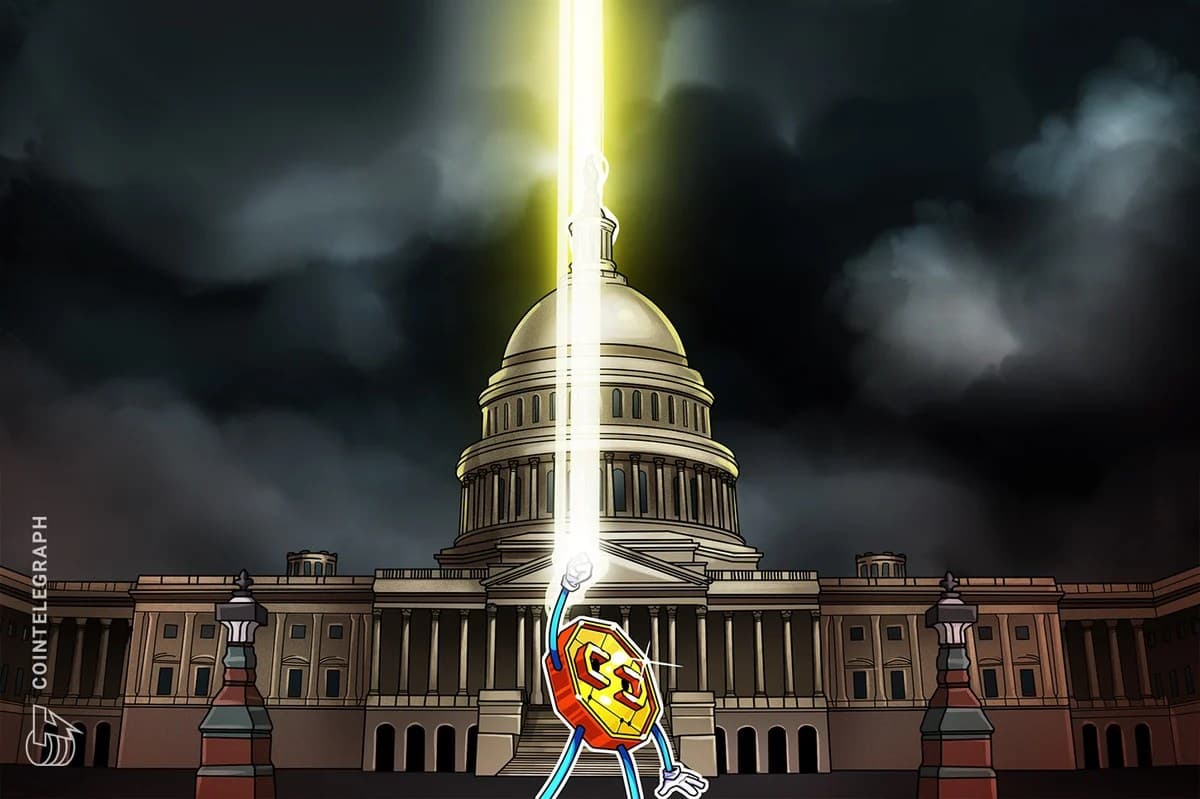
Crypto, Banks Clash Continues With New Proposal Concerns
The post Crypto, Banks Clash Continues With New Proposal Concerns appeared on BitcoinEthereumNews.com. Bank and crypto lobbyists have both relayed concerns over the latest proposal to end the stalemate on stablecoin yields in the US Senate’s crypto market structure bill, legislation that has been in limbo since the House passed the CLARITY Act in July. Senator Thom Tillis told Politico on Monday that he plans to publicly release a draft agreement this week that aims to end a fight over a provision in the Senate’s crypto policing bill that would ban third parties, such as crypto exchanges, from offering stablecoin yield payments. The draft had already been seen by banking and crypto representatives earlier this month, with Politico reporting that it drew pushback from the banks, according to three people with knowledge of the matter. “I think that people are apprehensive because they haven’t seen the full text,” Tillis said. “Directionally, it has been instructed by what we consider to be the legitimate issues that we have around deposit flight when we’re talking about yield.” The Senate’s crypto market structure bill would outline how the country’s two major market watchdogs would regulate the sector, legislation that the crypto industry has widely pushed for with the Trump administration. However, the bill’s progress has been stalled as banking and crypto groups have been at odds over language banning stablecoin yields, despite three White House-mediated meetings between the groups to find a middle ground. Stablecoin yields are a major business for crypto platforms, but the bank lobby wants to outlaw third-party stablecoin yield payments, arguing they are a risk to the banking system, as customers may pull deposits out of savings accounts. Thom Tillis, pictured in 2024 at a meeting, has said progress has been made on stablecoin provisions in a Senate crypto bill. Source: City of Greenville, North Carolina Tillis said he was open to…

Elizabeth Warren Raises Concerns Over Musk’s X Money Ahead of Launch
The post Elizabeth Warren Raises Concerns Over Musk’s X Money Ahead of Launch appeared on BitcoinEthereumNews.com. Senator Elizabeth Warren has raised fresh concerns about the planned launch of X Money, a financial service tied to the social platform owned by Elon Musk. In a letter sent Tuesday, the Massachusetts Democrat warned that the initiative could pose risks to consumers and the broader financial system. The concerns come as Musk moves forward with his vision of transforming X, formerly known as Twitter, into a multi-purpose platform that integrates financial services. The proposed April launch marks a significant step toward that goal. Regulatory and Consumer Risks Highlighted Warren’s letter questions whether X can safely manage financial services. She pointed to past operational issues on the platform as a reason for caution. The senator argued that the company’s track record does not inspire confidence in its ability to handle sensitive financial data or transactions. She warned that consumers, national security, and financial stability could be at risk if proper safeguards are not in place. Warren also cited concerns about harmful content on the platform, including issues linked to its AI chatbot Grok. These problems, she said, raise doubts about oversight and accountability. The senator emphasized that financial platforms require strict compliance standards. She argued that any failure in risk management could have wider consequences beyond individual users. Her letter reflects ongoing scrutiny of large technology firms expanding into financial services. Ambitions for an “Everything App” Musk has repeatedly outlined his plan to turn X into what he calls an “everything app.” The concept includes messaging, social media, and financial tools in a single ecosystem. According to Warren, Musk has suggested that X could eventually replace traditional banking for many users. X Money is expected to play a central role in that strategy. Early materials suggest users may earn returns of up to 6% APY on deposits. This figure stands…

Crypto industry races to pass CLARITY Act before 2026 midterm
The post Crypto industry races to pass CLARITY Act before 2026 midterm appeared on BitcoinEthereumNews.com. Make CryptoSlate preferred on A coordinated push to enact the CLARITY Act is colliding with a rapidly closing legislative window, prompting warnings from industry advocates that a failure to pass the bill this spring could stall crypto developments until the end of the decade. With the November 2026 midterms looming, the legislative calendar is shrinking, and the complex jurisdictional divide among federal financial committees threatens to derail a bill that has been months in the making. The CLARITY Act, which advanced through the House of Representatives in July 2025, remains bogged down in the Senate amidst an intense lobbying war between traditional financial institutions and the digital asset sector over the treatment of yield-bearing stablecoins. Crypto advocates are sounding the alarm that if the Senate Banking Committee does not schedule a markup soon, the legislation will be swallowed by election-year politics. Related Reading Digital Asset Market Clarity Act moves to House floor with bipartisan backing Advancing with bipartisan backing, the CLARITY Act aims to end jurisdictional ambiguity, designating oversight of digital assets to either the SEC or CFTC. Jun 11, 2025 · Liam ‘Akiba’ Wright In an X post, Sen. Cynthia Lummis echoed the growing anxiety across the digital asset space, while warning: “This is our last chance to pass the Clarity Act until at least 2030. We can’t afford to surrender America’s financial future.” Notably, market sentiment is already reflecting this pessimism. Bettors on the decentralized prediction platform Polymarket currently price the odds of the CLARITY Act passing this year at 58%, a sharp decline from 82% in February. On Kalshi, traders are projecting just a 13% probability that the legislation passes before June, 28% before July, and a 62% chance it remains unresolved into 2027. A shifting industry consensus Despite the tightening timeline, the crypto industry is presenting…

Crypto-Aligned Super PAC Begins to Endorse Candidates for US Midterms
The post Crypto-Aligned Super PAC Begins to Endorse Candidates for US Midterms appeared on BitcoinEthereumNews.com. Fellowship, a super political action committee (PAC) that claims to have $100 million in its war chest from crypto-aligned parties ahead of the 2026 US midterms, has begun reporting spending and endorsements for the next election. According to a filing with the Federal Election Commission (FEC), the Fellowship PAC reported spending $300,000 on advertising for Clay Fuller, a Republican who won a special election for Georgia’s 14th Congressional District to replace resigning congresswoman Marjorie Taylor Greene. The spending, reported disbursed on Tuesday, comes about a month before Georgia’s Republican primary on May 19. Source: Federal Election Commission Fellowship is just one of several crypto-backed or aligned PACs expected to pour money in to support or oppose candidates in another critical US election season. In 2024, the Fairshake PAC spent more than $130 million in media buys in congressional races, possibly influencing the outcomes in key battlegrounds like the US Senate seat for Ohio. According to the FEC, super PACs may “receive unlimited contributions from individuals, corporations, labor unions and other PACs for the purpose of financing independent expenditures and other independent political activity.” In addition to its only reported expenditure since the Fellowship PAC’s statement of organization filed in 2025, Fellowship posted endorsements for candidates to its X account on Thursday, signaling support for Republicans in races across five states. The candidates included Alan Wilson for South Carolina governor, Blake Miguez for Louisiana’s 5th Congressional District, Mike Collins for the US Senate in Georgia, Julia Letlow for the US Senate in Louisiana, Pete Ricketts for the US Senate in Nebraska and Nate Morris for the US Senate in Kentucky. Related: Chainlink and Anchorage Digital back launch of crypto-aligned PAC Fellowship announced its launch in September, claiming to have “over $100 million” from undisclosed backers aligned with the crypto industry. On…