2 stories credited to American Partisan
Latest story Apr 12, 2026 · on ChamberLight since Apr 2026
A story can appear as several articles (copies of the same piece), so counts of stories and of articles differ.
Scores for American Partisan
Scores last checked Sep 24, 2026.
Stories ChamberLight collected, by month
Stories credited to American Partisan, by publication date. ChamberLight collects articles that mention the officials it tracks, so this shows its own coverage of this source, not how much the source publishes.
- Stories from American Partisan
- Shaded: ChamberLight collected no stories, or almost none, from any outlet (a gap in its collection, not in the outlet’s publishing)
Show as a table
| Month | Stories | All outlets |
|---|---|---|
| March 2026 | 1 | 763 |
| April 2026 | 1 | 4,537 |
| May 2026 | 0 | none collected |
| June 2026 | 0 | none collected |
| July 2026 | 0 | none collected |
| August 2026 | 0 | 1 (collection gap) |
| September 2026 | 0 | 598 |
Top topics
Share of this source’s stories tagged with each topic. A story can carry several topics, so the shares do not add up to 100%.
- Defense/Military2
100% of 2 stories · 26% across all outlets
- Technology/Privacy2
100% of 2 stories · 10% across all outlets
- Ethics/Corruption1
50% of 2 stories · 62% across all outlets
- Foreign Policy1
50% of 2 stories · 30% across all outlets
The thin mark on each bar is the topic’s share across all outlets.
Who they cover
Party of the officials these stories are mainly about, across all 3 officials named. A story counts once for each official it is mainly about, so the split is over 4 story–official pairs, from 2 stories.
- Republican75% · 3 pairs
- Party not recorded25% · 1 pair
Most covered
Stories mainly about each official, and their share of the source’s 2 stories.
Article tone
ChamberLight’s article analysis assigns each story a tone toward the official it covers. It describes the coverage of that official, not American Partisan’s stance, and reader votes do not change it. 2 stories.
- Good Look
- 1 (50%)
- Mixed
- 0 (0%)
- Informational
- 1 (50%)
- Bad Look
- 0 (0%)
Challenges to these scores
No one has challenged a score on this page yet. Anyone can; editors publish every outcome here.
Articles served from americanpartisan.org
4
Rep. Tim Burchett Says “Names, Dates, People And Locations” Set To Be Revealed In UFO Briefings
Authored by Steve Watson via Modernity.news, Rep. Tim Burchett (R-TN) says he is looking forward to what he has seen in classified UFO briefings be made public next week. In a clip that’s ripping across X, Stephen A. Smith asked point-blank: “You’ve said you’ve seen UFO briefings that would, quote, set the earth on fire, end quote. And you also said publicly, you’re not su*cidal. That’s a serious statement. What exactly are you being told that the American people aren’t allowed to hear, sir, about UFOs?” Burchett responded: “I’ve been briefed and seen pictures and talked enough… If they would just release what I was briefed on just a couple weeks ago. Again, we had somebody come in there, a colleague, a friend if you will, that was basically there to disrupt. And they tried to ruffle this guy’s feathers and ask him stuff.” Burchett continued, “he named names, dates, people in the meetings, where these items, if you will, are located. It’s too much. It’s too much, sir. Too much is going on.” He doubled down on the only man who can break the logjam: “Trump’s the guy to do it. If anybody will do it, if anybody’s a disruptor, it’s Donald J. Trump, and he will disrupt with this.” “And I had a conversation with folks at the White House today, just about that. Hopefully some things will be coming out soon,” Burchett added. This bombshell comes as the pattern of mysterious deaths and disappearances among top scientists with access to NASA secrets and classified programs continues to explode – exactly the kind of experts who might know “too much” about the very topics Burchett is demanding be released. As we reported days ago, the latest victim in the string was NASA Jet Propulsion Laboratory scientist Michael David Hicks, who died under suspicious circumstances with no public cause or autopsy released. That brought the toll to nine experts tied to advanced propulsion, asteroid defense, space surveillance, and programs that blur the line between civilian NASA work and military applications. FOX 32 Chicago interviewed Harvard astrophysicist Avi Loeb about the mystery. Loeb cautioned against assuming a grand coordinated plot, telling FOX: “Each of them has a different expertise, but I think it looks like these cases are unrelated… I would caution of assigning too much significance to those.” He added, “Of course, each of these cases is a mystery that has to be resolved.” Yet even Loeb acknowledged the risks: adversarial nations could be targeting individuals involved in classified Air Force technologies or nuclear fusion programs with major national security implications. These losses are hitting as President Trump pushes aggressively for UAP transparency – including a direct directive to declassify information on potential nonhuman technology. Burchett’s fresh comments to the White House signal that momentum is building fast under the current administration. For years, the deep state bureaucracy has buried this information behind layers of classification, gatekeepers, and outright disruption – exactly what Burchett described in the briefing room. Scientists and officials with firsthand knowledge of advanced propulsion, surveillance systems, and anomalous phenomena keep turning up dead or missing while the American people are kept in the dark. Your support is crucial in helping us defeat mass censorship. Please consider donating via Locals or check out our unique merch. Follow us on X @ModernityNews. The post Rep. Tim Burchett Says “Names, Dates, People And Locations” Set To Be Revealed In UFO Briefings appeared first on American Partisan.
Rep. Tim Burchett Says “Names, Dates, People And Locations” Set To Be Revealed In UFO Briefings
Authored by Steve Watson via Modernity.news, Rep. Tim Burchett (R-TN) says he is looking forward to what he has seen in classified UFO briefings be made public next week. In a clip that’s ripping across X, Stephen A. Smith asked point-blank: “You’ve said you’ve seen UFO briefings that would, quote, set the earth on fire, end quote. And you also said publicly, you’re not su*cidal. That’s a serious statement. What exactly are you being told that the American people aren’t allowed to hear, sir, about UFOs?” Burchett responded: “I’ve been briefed and seen pictures and talked enough… If they would just release what I was briefed on just a couple weeks ago. Again, we had somebody come in there, a colleague, a friend if you will, that was basically there to disrupt. And they tried to ruffle this guy’s feathers and ask him stuff.” Burchett continued, “he named names, dates, people in the meetings, where these items, if you will, are located. It’s too much. It’s too much, sir. Too much is going on.” He doubled down on the only man who can break the logjam: “Trump’s the guy to do it. If anybody will do it, if anybody’s a disruptor, it’s Donald J. Trump, and he will disrupt with this.” “And I had a conversation with folks at the White House today, just about that. Hopefully some things will be coming out soon,” Burchett added. This bombshell comes as the pattern of mysterious deaths and disappearances among top scientists with access to NASA secrets and classified programs continues to explode – exactly the kind of experts who might know “too much” about the very topics Burchett is demanding be released. As we reported days ago, the latest victim in the string was NASA Jet Propulsion Laboratory scientist Michael David Hicks, who died under suspicious circumstances with no public cause or autopsy released. That brought the toll to nine experts tied to advanced propulsion, asteroid defense, space surveillance, and programs that blur the line between civilian NASA work and military applications. FOX 32 Chicago interviewed Harvard astrophysicist Avi Loeb about the mystery. Loeb cautioned against assuming a grand coordinated plot, telling FOX: “Each of them has a different expertise, but I think it looks like these cases are unrelated… I would caution of assigning too much significance to those.” He added, “Of course, each of these cases is a mystery that has to be resolved.” Yet even Loeb acknowledged the risks: adversarial nations could be targeting individuals involved in classified Air Force technologies or nuclear fusion programs with major national security implications. These losses are hitting as President Trump pushes aggressively for UAP transparency – including a direct directive to declassify information on potential nonhuman technology. Burchett’s fresh comments to the White House signal that momentum is building fast under the current administration. For years, the deep state bureaucracy has buried this information behind layers of classification, gatekeepers, and outright disruption – exactly what Burchett described in the briefing room. Scientists and officials with firsthand knowledge of advanced propulsion, surveillance systems, and anomalous phenomena keep turning up dead or missing while the American people are kept in the dark. Your support is crucial in helping us defeat mass censorship. Please consider donating via Locals or check out our unique merch. Follow us on X @ModernityNews. The post Rep. Tim Burchett Says “Names, Dates, People And Locations” Set To Be Revealed In UFO Briefings appeared first on American Partisan.
Drones are a ‘rapidly evolving’ threat to U.S., and developing countermeasures poses challenges
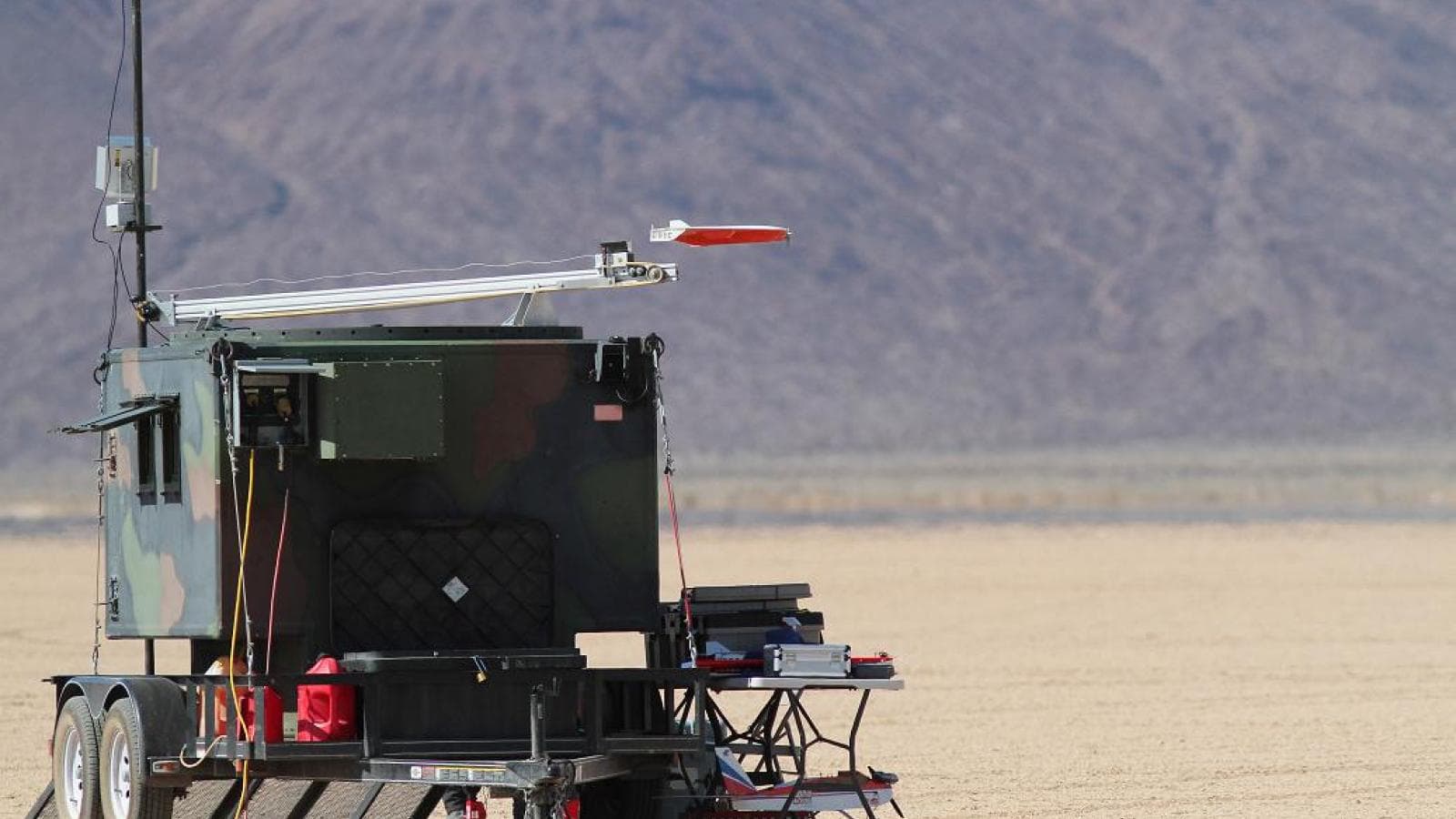
Original article here Iran’s Shahed-style drones each cost between $20,000 and $50,000, but they can do a lot of damage. Since the latest conflict began, Iran’s drones have killed six members of the Army Reserve at a command center in Kuwait on Sunday, and Iranian drones have wreaked havoc on Middle East petroleum facilities. The FBI is now warning that Iranian drones potentially pose risks to targets in California. Some journalists in the legacy media are shocked to discover that the U.S. has limited capabilities to counter these destructive and lethal aerial devices. While it’s true that neutralizing drone threats is difficult, it’s a problem the Department of War has been aware of and working to address since long before the conflict in Iran. Nearly twenty years ago In 2007, Tom Rullman, president and CEO of GT Aeronautics, ended up sharing a cab ride with a two-star general in Washington, D.C. GT Aeronautics develops a variety of drones for commercial and defense purposes, and in 2006, it was developing a drone with air to ground capabilities, called a Bandito. The small devices have a wingspan of 16 inches, weigh less than two pounds, and fly at 200 miles per hour. During the chance encounter with the general, Rullman discussed the Bandito and showed him charts of the drone. The general was very interested in the technology and invited Rullman to brief the Air Force at the Pentagon on what his Banditos could do. Image A ‘Bandito’ is fired from a command center during a test in Southern California. (Courtesy GT Aeronautics) “There were like 40 generals in the room, and I had a 20-minute time slot. That brief turned into three hours,” Rullman told Just the News. Among the questions the generals asked Rullman was if his Banditos could be used to, say, attack the White House. “Absolutely,” Rullman told the generals. “We can launch a Bandito outside the window of a truck that’s moving, do it 20 miles away and send it to a target on the ground.” That got the Pentagon’s attention. The government asked GT Aeronautics to help develop drones that could take out air targets. By 2009, Ruleman was flying Banditos out in the California desert near Point Mugu Naval Air Station and developing the systems that allow them to track targets. A defining feature of modern warfare Col. Guy Yelverton is a project manager for the U.S. Army’s counter-unmanned aircraft system (UAS) — what the military and FAA call drones. Yelverton said the Department of War is actively working to address the risk that drones are posing to U.S. troops. The U.S. military has seen a proliferation of low-cost adversarial drones in recent years, and they range from small, commercial-style drones to larger, more capable platforms. “They’re becoming a defining feature of modern warfare,” Yelverton told Just the News. These drones increase the ability of our adversaries, as well as “non-state actors,” to conduct reconnaissance, targeting and harassment with little risk to their own personnel, Yelverton said. “They can make a drone pretty cheaply and then hang something off of it that could do some damage,” Yelverton said. On the battlefield, adversaries’ use of drones provides them with persistent surveillance and enables rapid strokes. This presents a situation for U.S. troops where decision-making timelines are severely compressed. Unleashing American drone dominance In his second term, President Donald Trump recognized the need for better counter-UAS technology. In June, he signed the “Unleashing American Drone Dominance” executive order. The order accelerates commercial drone technology development, but it also contains provisions to facilitate programs for counter-UAS development. In August, the Department of War established the Joint Interagency Task Force 401 (JIATF-401), which aims to rapidly deliver counter-UAS capabilities to the U.S. military. Yelverton, who is involved in the JIATF-401 program, has been working in counter-UAS capabilities for over two years. He said he’s in meetings every week at various levels of the Department of War that look at options. Members of Congress are also looking into the issue. In June, Rep. Harriet Hageman, R-Wyo., toured the GT Aeronautics facilities at the Powell Municipal Airport in Powell, Wyoming. “It is great to see a company dedicated to producing remotely piloted and unmanned aircraft systems using 100% USA-made components,” Hageman said on X. The challenges of countering drones Yelverton said there are three main challenges to developing effective systems to counter drone threats. The first is detecting and identifying drone threats at scale. Small drones can be difficult to detect in a cluttered environment, and then, once identified, the intent of the drone has to be determined. When a drone is determined to be a threat, the response requires a quick decision to determine how to engage and neutralize the target. The other aspect of a good counter-UAS system, Yelverton explained, is cost and capacity. Using million-dollar missiles to destroy or disable cheap drones that are sometimes deployed in large quantities isn’t a sustainable long-term solution. “We’re constantly looking at how we can manage the cost of an interceptor, especially when you start thinking about mass threats,” Yelverton said. Video file The other aspect of a good counter system is integration. Yelverton called it a “system of systems.” This requires a detection system, a command and control system to decide how to defeat a threat, and then a determination of the best means to address such a threat, whether it be electronic warfare, a kinetic option such as bullets, or possibly directed energy, such as lasers or microwaves. “I need to sense, decide and act. And I need to bring all that together in a system of systems. But then I also need trained operators to be able to support all that,” Yelverton explained. Yelverton said that a good counter-UAS that discerns a threat will require the processing of a lot of information at once. Artificial intelligence might be one tool that can help. It wouldn’t do the work of the operators, he said, but it would give the operators choices to make decisions quickly. Yelverton said the Department of War is also looking at systems that can easily integrate into the systems of all branches of the military and the Department of Homeland Security. “We’re collaborating, but there are pieces and parts. They work together. We can plug and play together,” Yelverton said. Drones create threats at home The attempted assassinations of President Trump and the murder of Charlie Kirk resulted in widespread praise for the perpetrators on social media. That shows that there are people here in the U.S. who are quite comfortable killing those with whom they disagree. It’s not hard to imagine a terrorist using a drone to target a crowd with a pipe bomb. Electricity-grid infrastructure is also vulnerable to drone attacks, and U.S. bases could become targets. Last month, there were reports of hundreds of drone incursions over U.S. military installations, and the Pentagon expanded base commanders’ authority to respond to potential threats. No one is entirely sure what the intent of all drones has been. Rullman said that the ability to reach malicious drones at range is important, so expanding the commanders’ authority to respond outside the base perimeter was a good move. “Most of the engagements are happening right overhead, which is kind of too late. If it’s dropping a grenade on you, that’s too late,” he said. The Bandito satisfies many of the aspects of counter-UAS technology that the military needs, Rullman said, and he is hoping that his designs can satisfy the military’s needs for effective counter-UAS. During tests in the California desert, the Bandito was able to get within 18 inches of its targets that were 50 miles away. The targeting system uses existing radar, so it can be integrated into existing air defense systems. The drones are cheap, and every military base could stock thousands of them for costs in the millions of dollars, Rullman said. “If someone shot 300 drones, and we shot 300 Banditos to take them down, we’d only use up 1/6 of our inventory of munitions,” he said. Kevin Killough is the energy reporter for Just The News. You can follow him on X for more coverage. The post Drones are a ‘rapidly evolving’ threat to U.S., and developing countermeasures poses challenges appeared first on American Partisan.
Drones are a ‘rapidly evolving’ threat to U.S., and developing countermeasures poses challenges
Original article here Iran’s Shahed-style drones each cost between $20,000 and $50,000, but they can do a lot of damage. Since the latest conflict began, Iran’s drones have killed six members of the Army Reserve at a command center in Kuwait on Sunday, and Iranian drones have wreaked havoc on Middle East petroleum facilities. The FBI is now warning that Iranian drones potentially pose risks to targets in California. Some journalists in the legacy media are shocked to discover that the U.S. has limited capabilities to counter these destructive and lethal aerial devices. While it’s true that neutralizing drone threats is difficult, it’s a problem the Department of War has been aware of and working to address since long before the conflict in Iran. Nearly twenty years ago In 2007, Tom Rullman, president and CEO of GT Aeronautics, ended up sharing a cab ride with a two-star general in Washington, D.C. GT Aeronautics develops a variety of drones for commercial and defense purposes, and in 2006, it was developing a drone with air to ground capabilities, called a Bandito. The small devices have a wingspan of 16 inches, weigh less than two pounds, and fly at 200 miles per hour. During the chance encounter with the general, Rullman discussed the Bandito and showed him charts of the drone. The general was very interested in the technology and invited Rullman to brief the Air Force at the Pentagon on what his Banditos could do. Image A ‘Bandito’ is fired from a command center during a test in Southern California. (Courtesy GT Aeronautics) “There were like 40 generals in the room, and I had a 20-minute time slot. That brief turned into three hours,” Rullman told Just the News. Among the questions the generals asked Rullman was if his Banditos could be used to, say, attack the White House. “Absolutely,” Rullman told the generals. “We can launch a Bandito outside the window of a truck that’s moving, do it 20 miles away and send it to a target on the ground.” That got the Pentagon’s attention. The government asked GT Aeronautics to help develop drones that could take out air targets. By 2009, Ruleman was flying Banditos out in the California desert near Point Mugu Naval Air Station and developing the systems that allow them to track targets. A defining feature of modern warfare Col. Guy Yelverton is a project manager for the U.S. Army’s counter-unmanned aircraft system (UAS) — what the military and FAA call drones. Yelverton said the Department of War is actively working to address the risk that drones are posing to U.S. troops. The U.S. military has seen a proliferation of low-cost adversarial drones in recent years, and they range from small, commercial-style drones to larger, more capable platforms. “They’re becoming a defining feature of modern warfare,” Yelverton told Just the News. These drones increase the ability of our adversaries, as well as “non-state actors,” to conduct reconnaissance, targeting and harassment with little risk to their own personnel, Yelverton said. “They can make a drone pretty cheaply and then hang something off of it that could do some damage,” Yelverton said. On the battlefield, adversaries’ use of drones provides them with persistent surveillance and enables rapid strokes. This presents a situation for U.S. troops where decision-making timelines are severely compressed. Unleashing American drone dominance In his second term, President Donald Trump recognized the need for better counter-UAS technology. In June, he signed the “Unleashing American Drone Dominance” executive order. The order accelerates commercial drone technology development, but it also contains provisions to facilitate programs for counter-UAS development. In August, the Department of War established the Joint Interagency Task Force 401 (JIATF-401), which aims to rapidly deliver counter-UAS capabilities to the U.S. military. Yelverton, who is involved in the JIATF-401 program, has been working in counter-UAS capabilities for over two years. He said he’s in meetings every week at various levels of the Department of War that look at options. Members of Congress are also looking into the issue. In June, Rep. Harriet Hageman, R-Wyo., toured the GT Aeronautics facilities at the Powell Municipal Airport in Powell, Wyoming. “It is great to see a company dedicated to producing remotely piloted and unmanned aircraft systems using 100% USA-made components,” Hageman said on X. The challenges of countering drones Yelverton said there are three main challenges to developing effective systems to counter drone threats. The first is detecting and identifying drone threats at scale. Small drones can be difficult to detect in a cluttered environment, and then, once identified, the intent of the drone has to be determined. When a drone is determined to be a threat, the response requires a quick decision to determine how to engage and neutralize the target. The other aspect of a good counter-UAS system, Yelverton explained, is cost and capacity. Using million-dollar missiles to destroy or disable cheap drones that are sometimes deployed in large quantities isn’t a sustainable long-term solution. “We’re constantly looking at how we can manage the cost of an interceptor, especially when you start thinking about mass threats,” Yelverton said. Video file The other aspect of a good counter system is integration. Yelverton called it a “system of systems.” This requires a detection system, a command and control system to decide how to defeat a threat, and then a determination of the best means to address such a threat, whether it be electronic warfare, a kinetic option such as bullets, or possibly directed energy, such as lasers or microwaves. “I need to sense, decide and act. And I need to bring all that together in a system of systems. But then I also need trained operators to be able to support all that,” Yelverton explained. Yelverton said that a good counter-UAS that discerns a threat will require the processing of a lot of information at once. Artificial intelligence might be one tool that can help. It wouldn’t do the work of the operators, he said, but it would give the operators choices to make decisions quickly. Yelverton said the Department of War is also looking at systems that can easily integrate into the systems of all branches of the military and the Department of Homeland Security. “We’re collaborating, but there are pieces and parts. They work together. We can plug and play together,” Yelverton said. Drones create threats at home The attempted assassinations of President Trump and the murder of Charlie Kirk resulted in widespread praise for the perpetrators on social media. That shows that there are people here in the U.S. who are quite comfortable killing those with whom they disagree. It’s not hard to imagine a terrorist using a drone to target a crowd with a pipe bomb. Electricity-grid infrastructure is also vulnerable to drone attacks, and U.S. bases could become targets. Last month, there were reports of hundreds of drone incursions over U.S. military installations, and the Pentagon expanded base commanders’ authority to respond to potential threats. No one is entirely sure what the intent of all drones has been. Rullman said that the ability to reach malicious drones at range is important, so expanding the commanders’ authority to respond outside the base perimeter was a good move. “Most of the engagements are happening right overhead, which is kind of too late. If it’s dropping a grenade on you, that’s too late,” he said. The Bandito satisfies many of the aspects of counter-UAS technology that the military needs, Rullman said, and he is hoping that his designs can satisfy the military’s needs for effective counter-UAS. During tests in the California desert, the Bandito was able to get within 18 inches of its targets that were 50 miles away. The targeting system uses existing radar, so it can be integrated into existing air defense systems. The drones are cheap, and every military base could stock thousands of them for costs in the millions of dollars, Rullman said. “If someone shot 300 drones, and we shot 300 Banditos to take them down, we’d only use up 1/6 of our inventory of munitions,” he said. Kevin Killough is the energy reporter for Just The News. You can follow him on X for more coverage. The post Drones are a ‘rapidly evolving’ threat to U.S., and developing countermeasures poses challenges appeared first on American Partisan.