AMAC - The Association of Mature American Citizens
amac.us
6 stories credited to AMAC - The Association of Mature American Citizens
Latest story Apr 16, 2026 · on ChamberLight since Apr 2026
A story can appear as several articles (copies of the same piece), so counts of stories and of articles differ.
Scores for AMAC - The Association of Mature American Citizens
Writing quality not enough rated stories yet: 4 of 10. How it is measured
Scores last checked Sep 24, 2026.
Stories ChamberLight collected, by month
Stories credited to AMAC - The Association of Mature American Citizens, by publication date. ChamberLight collects articles that mention the officials it tracks, so this shows its own coverage of this source, not how much the source publishes.
- Stories from AMAC - The Association of Mature American Citizens
- Shaded: ChamberLight collected no stories, or almost none, from any outlet (a gap in its collection, not in the outlet’s publishing)
Show as a table
| Month | Stories | All outlets |
|---|---|---|
| March 2026 | 1 | 148 |
| April 2026 | 5 | 4,537 |
| May 2026 | 0 | none collected |
| June 2026 | 0 | none collected |
| July 2026 | 0 | none collected |
| August 2026 | 0 | 1 (collection gap) |
| September 2026 | 0 | 598 |
Top topics
Share of this source’s stories tagged with each topic. A story can carry several topics, so the shares do not add up to 100%.
- Ethics/Corruption4
67% of 6 stories · 62% across all outlets
- Budget/Spending2
33% of 6 stories · 33% across all outlets
- Economy2
33% of 6 stories · 26% across all outlets
- Criminal Justice1
17% of 6 stories · 20% across all outlets
- Education1
17% of 6 stories · 3% across all outlets
- Environment/Climate1
17% of 6 stories · 5% across all outlets
- Foreign Policy1
17% of 6 stories · 30% across all outlets
- Immigration1
17% of 6 stories · 13% across all outlets
The thin mark on each bar is the topic’s share across all outlets.
Who they cover
Party of the officials these stories are mainly about, across all 10 officials named. A story counts once for each official it is mainly about, so the split is over 12 story–official pairs, from 6 stories.
- Republican50% · 6 pairs
- Democrat33% · 4 pairs
- Party not recorded17% · 2 pairs
Most covered
Stories mainly about each official, and their share of the source’s 6 stories.
Article tone
ChamberLight’s article analysis assigns each story a tone toward the official it covers. It describes the coverage of that official, not AMAC - The Association of Mature American Citizens’s stance, and reader votes do not change it. 6 stories.
- Good Look
- 3 (50%)
- Mixed
- 1 (17%)
- Informational
- 0 (0%)
- Bad Look
- 2 (33%)
Challenges to these scores
No one has challenged a score on this page yet. Anyone can; editors publish every outcome here.
Articles served from amac.us
12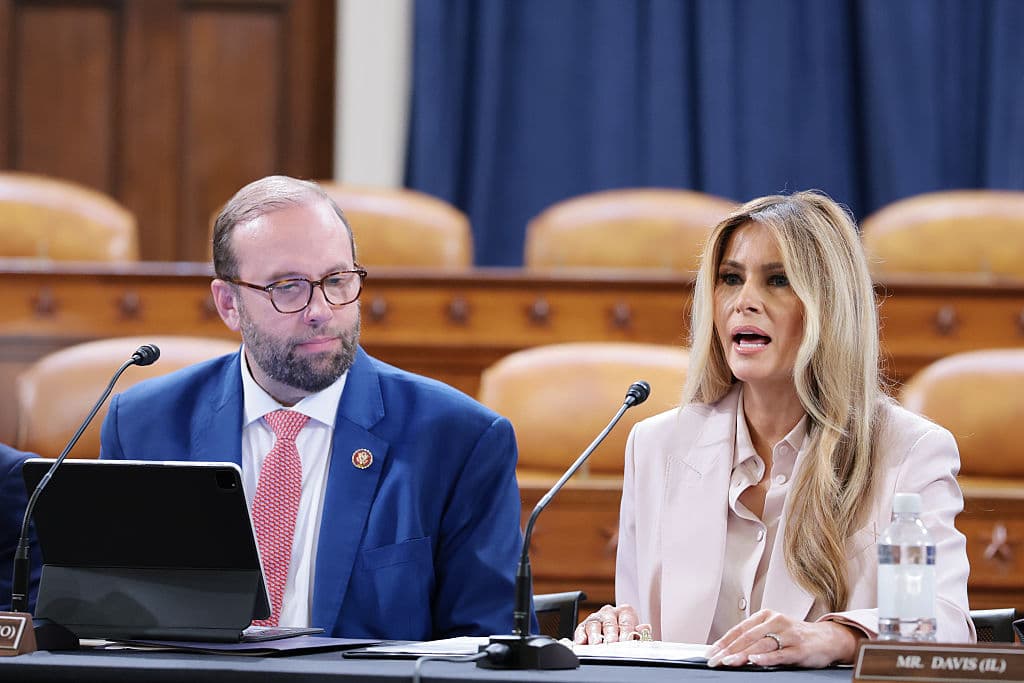
EXCLUSIVE: Daines Moves to Lock in First Lady’s Foster Care Reforms
FIRST ON THE DAILY SIGNAL—Sen. Steve Daines, R-Mont., will introduce bipartisan legislation Thursday to codify key aspects of first lady Melania Trump’s “Fostering the Future” initiative. The move comes after the first lady made a rare trip to Capitol Hill on Wednesday, where she addressed members of the House Ways and Means Committee and urged Congress to put her foster care initiatives into law. “New legislation for the foster care community is a moral imperative,” Trump told the committee. ???? NOW: Melania Trump speaks at the US Capitol on bi-partisan efforts to REVAMP America's foster care system "In safeguarding our children's well-being, we shape the integrity of our nation." "My goal is to prepare [foster kids] to secure entry-level jobs, become financially… pic.twitter.com/VviXdeR3OP — Nick Sortor (@nicksortor) April 15, 2026 Daines, along with co-sponsor Sen. Maggie Hassan, D-N.H., will bring the Foster Youth Education and Workforce Opportunity Act to the Senate. The bill incorporates language from a November presidential executive order expanding educational opportunities for children in the foster care system, and it creates additional workforce pathways for those transitioning out of care. “One of the greatest gifts that we can give our children is the opportunity to succeed,” Daines told The Daily Signal. “Unfortunately, foster youth aging out of the system often lack access to the education and workforce training needed to build a career, especially in rural states like Montana,” he added. Each year, more than 20,000 children age out of the foster care system and face barriers to employment and education. By their mid-20s, former foster youth earn roughly 50% less than their peers. The legislation would expand education and training vouchers from $5,000 to $12,000 annually and allow the funds to be used more flexibly for apprenticeships and technical education. The bill also targets challenges in rural states, including transportation gaps and complex application processes. Pro-life at all stages. Every child deserves to grow up in a safe environment & this EO will help youth in foster care successfully transition from that system into flourishing adulthood. https://t.co/Y86R31cqAs — Steve Daines (@SteveDaines) November 13, 2025 “My goal is to prepare these individuals to secure entry-level jobs, become financially independent, and eventually innovate, create new businesses, and generate employment opportunities,” Trump said during the committee hearing. “Our bill will support the first lady’s efforts to improve pathways to success for America’s foster youth and set them up for a bright future,” Daines said. “I’ll fight to get it across the finish line.” Daines noted that companion legislation has been introduced in the House by Reps. Nathaniel Moran, R-Texas; Max Miller, R-Ohio; Dwight Evans, D-Pa.; and Judy Chu, D-Calif. Trump to Sign Groundbreaking Executive Order Bolstering Foster Carehttps://t.co/PoW4sgBmHc — Rapid Response 47 (@RapidResponse47) November 12, 2025 Reprinted with permission from The Daily Signal by Virginia Grace McKinnon. The opinions expressed by columnists are their own and do not necessarily represent the views of AMAC or AMAC Action.

Declassified Testimony Shows Dems’ First Impeachment of Trump Was Totally Bogus
Freshly declassified information released this week by Director of National Intelligence Tulsi Gabbard has further exposed Democrats’ first impeachment effort against President Donald Trump in 2019 as totally bunk – and vindicated his claims that the inquiry was politically motivated from the start. To understand just how outrageous the entire impeachment scam was, it helps to rewind the clock seven years and remember what Democrats were alleging. In September 2019 – with Trump fresh off several high-profile policy victories and gearing up for a re-election bid – House Democrats formally launched an impeachment inquiry following reports about a July 25, 2019, phone call between Trump and Ukrainian President Volodymyr Zelenskyy. At the center of the controversy was a whistleblower complaint alleging that Trump had urged Ukraine to investigate Joe Biden and his son, Hunter, while the administration was withholding nearly $400 million in congressionally approved military aid. Democrats argued that this sequence of events suggested Trump was using the power of his office and U.S. foreign policy tools to solicit foreign interference in the upcoming 2020 election. The first great irony, of course, is that even if Trump did tell Zelenskyy to investigate the Bidens, he would have been completely justified in doing so. Hunter Biden was paid millions of dollars per year by a notoriously corrupt Ukrainian oil and gas company Burisma despite have no experience in the industry. Smoking-gun emails also revealed how Hunter introduced Ukrainian businessmen to his father while he was vice president in an apparent influence-peddling scheme. Perhaps most shockingly of all, during a Council on Foreign Relations event in 2018, Joe Biden openly bragged on camera about forcing the Ukrainian government to fire the prosecutor who was investigating Burisma and his son. Nonetheless, in December 2019, the Democrat-controlled House of Representatives approved two articles of impeachment against Trump – abuse of power and obstruction of Congress. The case then moved to the Senate, where he was ultimately acquitted in February 2020. Democrats’ entire case rested on the reliability of the whistleblower who alleged the impropriety. But as Gabbard revealed this week, the whistleblower wasn’t reliable at all. According to the newly declassified materials, the Intelligence Community Inspector General at the time, Michael Atkinson, built his “investigation” almost entirely on second-hand information. The whistleblower himself (who has never been identified) admitted he had no direct knowledge of the Trump-Zelensky call. He was not on the call, did not hear it firsthand, and instead relied on what others told him and his own interpretations. That alone should have been disqualifying. Instead, it became the foundation for an impeachment. It gets worse. Atkinson reportedly interviewed just four individuals – the whistleblower, a key associate who helped shape the complaint, and two people who had no firsthand knowledge of the call. One of those key sources admitted that their conclusions about any supposed wrongdoing came only “in hindsight,” required “reading between the lines,” and were not based on anything explicit in the call itself. In other words, this was not evidence – it was speculation layered on top of hearsay. Even more damning, the documents show that one of the central figures feeding information into the complaint was involved in crafting the now-discredited 2017 intelligence assessment that fueled the totally debunked Russia collusion hoax. That same individual had professional ties to former FBI agent Peter Strzok and openly acknowledged being frustrated with Trump’s policies. So, the supposedly “neutral” process that launched an impeachment was, in reality, built on the input of politically biased actors with a track record of weaponizing their positions of public trust to hurt Trump. The whistleblower himself later admitted to the Inspector General that he had communicated with Democrat congressional staff before filing his complaint – a fact he initially concealed. He also acknowledged being a registered Democrat and having worked closely with Joe Biden on Ukraine policy, raising obvious questions about bias and motive that were conveniently ignored at the time. Meanwhile, Atkinson appears to have disregarded standard procedures. Despite knowing a transcript of the call existed, he never sought to review it during his preliminary inquiry. The Department of Justice concluded there was no basis for criminal action and that the complaint did not even meet the statutory definition of an “urgent concern.” Atkinson ignored that guidance and pushed the complaint forward anyway, ensuring it reached Congress and, soon after, the media. From there, the political machine took over. Then-House Intelligence Committee Chairman Adam Schiff and Speaker Nancy Pelosi seized on the narrative, amplifying it through sympathetic media coverage and using it as the basis to launch an impeachment circus. But wait – wasn’t there another witness? There was. It was Deep State bureaucrat Alexander Vindman, who was actually on the infamous call. Vindman corroborated the whistleblower’s claims. But like the whistleblower, he’s hardly a neutral figure. He is now running for Senate in Florida as a Democrat on an explicitly anti-Trump platform, while his brother, Eugene Vindman, is a Democrat congressman in Virginia. That’s hardly the profile of an unbiased observer. Taken together, these revelations paint a picture that is even more troubling than many conservative critics suspected at the time. This was not a careful, fact-driven inquiry into serious allegations. It was a rushed, politically charged effort built on second-hand claims, partisan actors, and a willingness to ignore basic investigative standards. And for what? Impeachment is one of the most serious constitutional powers Congress possesses. It is supposed to be reserved for clear, demonstrable misconduct that threatens the integrity of the republic. Instead, Democrats turned it into a political weapon. The irony is impossible to ignore. Democrats claimed Trump was trying to influence the 2020 election. Yet their impeachment crusade functioned as a full-scale attempt to do exactly that by dominating headlines, shaping public perception, and weakening Trump politically heading into an election year. Even worse, the episode deepened divisions in the country, eroded trust in key institutions, and set a dangerous precedent for using impeachment as a partisan cudgel. It also elevated the profiles of many of the figures involved – from Schiff, who is now a U.S. senator, to the Vindman brothers, who parlayed their roles into political careers. What was sold to the American people as a solemn defense of democracy now looks even more like a cynical power play built on a flimsy and compromised foundation. The more we learn, the clearer it becomes that this impeachment was never about protecting the Constitution. It was about politics. And with each new revelation, Trump’s claim right from the start that it was a sham looks more and more justified. Shane Harris is the Editor-in-Chief of AMAC Newsline. You can follow him on X @shaneharris513.
Declassified Testimony Shows Dems’ First Impeachment of Trump Was Totally Bogus
Freshly declassified information released this week by Director of National Intelligence Tulsi Gabbard has further exposed Democrats’ first impeachment effort against President Donald Trump in 2019 as totally bunk – and vindicated his claims that the inquiry was politically motivated from the start. To understand just how outrageous the entire impeachment scam was, it helps to rewind the clock seven years and remember what Democrats were alleging. In September 2019 – with Trump fresh off several high-profile policy victories and gearing up for a re-election bid – House Democrats formally launched an impeachment inquiry following reports about a July 25, 2019, phone call between Trump and Ukrainian President Volodymyr Zelenskyy. At the center of the controversy was a whistleblower complaint alleging that Trump had urged Ukraine to investigate Joe Biden and his son, Hunter, while the administration was withholding nearly $400 million in congressionally approved military aid. Democrats argued that this sequence of events suggested Trump was using the power of his office and U.S. foreign policy tools to solicit foreign interference in the upcoming 2020 election. The first great irony, of course, is that even if Trump did tell Zelenskyy to investigate the Bidens, he would have been completely justified in doing so. Hunter Biden was paid millions of dollars per year by a notoriously corrupt Ukrainian oil and gas company Burisma despite have no experience in the industry. Smoking-gun emails also revealed how Hunter introduced Ukrainian businessmen to his father while he was vice president in an apparent influence-peddling scheme. Perhaps most shockingly of all, during a Council on Foreign Relations event in 2018, Joe Biden openly bragged on camera about forcing the Ukrainian government to fire the prosecutor who was investigating Burisma and his son. Nonetheless, in December 2019, the Democrat-controlled House of Representatives approved two articles of impeachment against Trump – abuse of power and obstruction of Congress. The case then moved to the Senate, where he was ultimately acquitted in February 2020. Democrats’ entire case rested on the reliability of the whistleblower who alleged the impropriety. But as Gabbard revealed this week, the whistleblower wasn’t reliable at all. According to the newly declassified materials, the Intelligence Community Inspector General at the time, Michael Atkinson, built his “investigation” almost entirely on second-hand information. The whistleblower himself (who has never been identified) admitted he had no direct knowledge of the Trump-Zelensky call. He was not on the call, did not hear it firsthand, and instead relied on what others told him and his own interpretations. That alone should have been disqualifying. Instead, it became the foundation for an impeachment. It gets worse. Atkinson reportedly interviewed just four individuals – the whistleblower, a key associate who helped shape the complaint, and two people who had no firsthand knowledge of the call. One of those key sources admitted that their conclusions about any supposed wrongdoing came only “in hindsight,” required “reading between the lines,” and were not based on anything explicit in the call itself. In other words, this was not evidence – it was speculation layered on top of hearsay. Even more damning, the documents show that one of the central figures feeding information into the complaint was involved in crafting the now-discredited 2017 intelligence assessment that fueled the totally debunked Russia collusion hoax. That same individual had professional ties to former FBI agent Peter Strzok and openly acknowledged being frustrated with Trump’s policies. So, the supposedly “neutral” process that launched an impeachment was, in reality, built on the input of politically biased actors with a track record of weaponizing their positions of public trust to hurt Trump. The whistleblower himself later admitted to the Inspector General that he had communicated with Democrat congressional staff before filing his complaint – a fact he initially concealed. He also acknowledged being a registered Democrat and having worked closely with Joe Biden on Ukraine policy, raising obvious questions about bias and motive that were conveniently ignored at the time. Meanwhile, Atkinson appears to have disregarded standard procedures. Despite knowing a transcript of the call existed, he never sought to review it during his preliminary inquiry. The Department of Justice concluded there was no basis for criminal action and that the complaint did not even meet the statutory definition of an “urgent concern.” Atkinson ignored that guidance and pushed the complaint forward anyway, ensuring it reached Congress and, soon after, the media. From there, the political machine took over. Then-House Intelligence Committee Chairman Adam Schiff and Speaker Nancy Pelosi seized on the narrative, amplifying it through sympathetic media coverage and using it as the basis to launch an impeachment circus. But wait – wasn’t there another witness? There was. It was Deep State bureaucrat Alexander Vindman, who was actually on the infamous call. Vindman corroborated the whistleblower’s claims. But like the whistleblower, he’s hardly a neutral figure. He is now running for Senate in Florida as a Democrat on an explicitly anti-Trump platform, while his brother, Eugene Vindman, is a Democrat congressman in Virginia. That’s hardly the profile of an unbiased observer. Taken together, these revelations paint a picture that is even more troubling than many conservative critics suspected at the time. This was not a careful, fact-driven inquiry into serious allegations. It was a rushed, politically charged effort built on second-hand claims, partisan actors, and a willingness to ignore basic investigative standards. And for what? Impeachment is one of the most serious constitutional powers Congress possesses. It is supposed to be reserved for clear, demonstrable misconduct that threatens the integrity of the republic. Instead, Democrats turned it into a political weapon. The irony is impossible to ignore. Democrats claimed Trump was trying to influence the 2020 election. Yet their impeachment crusade functioned as a full-scale attempt to do exactly that by dominating headlines, shaping public perception, and weakening Trump politically heading into an election year. Even worse, the episode deepened divisions in the country, eroded trust in key institutions, and set a dangerous precedent for using impeachment as a partisan cudgel. It also elevated the profiles of many of the figures involved – from Schiff, who is now a U.S. senator, to the Vindman brothers, who parlayed their roles into political careers. What was sold to the American people as a solemn defense of democracy now looks even more like a cynical power play built on a flimsy and compromised foundation. The more we learn, the clearer it becomes that this impeachment was never about protecting the Constitution. It was about politics. And with each new revelation, Trump’s claim right from the start that it was a sham looks more and more justified. Shane Harris is the Editor-in-Chief of AMAC Newsline. You can follow him on X @shaneharris513.
Declassified Testimony Shows Dems’ First Impeachment of Trump Was Totally Bogus
Freshly declassified information released this week by Director of National Intelligence Tulsi Gabbard has further exposed Democrats’ first impeachment effort against President Donald Trump in 2019 as totally bunk – and vindicated his claims that the inquiry was politically motivated from the start. To understand just how outrageous the entire impeachment scam was, it helps to rewind the clock seven years and remember what Democrats were alleging. In September 2019 – with Trump fresh off several high-profile policy victories and gearing up for a re-election bid – House Democrats formally launched an impeachment inquiry following reports about a July 25, 2019, phone call between Trump and Ukrainian President Volodymyr Zelenskyy. At the center of the controversy was a whistleblower complaint alleging that Trump had urged Ukraine to investigate Joe Biden and his son, Hunter, while the administration was withholding nearly $400 million in congressionally approved military aid. Democrats argued that this sequence of events suggested Trump was using the power of his office and U.S. foreign policy tools to solicit foreign interference in the upcoming 2020 election. The first great irony, of course, is that even if Trump did tell Zelenskyy to investigate the Bidens, he would have been completely justified in doing so. Hunter Biden was paid millions of dollars per year by a notoriously corrupt Ukrainian oil and gas company Burisma despite have no experience in the industry. Smoking-gun emails also revealed how Hunter introduced Ukrainian businessmen to his father while he was vice president in an apparent influence-peddling scheme. Perhaps most shockingly of all, during a Council on Foreign Relations event in 2018, Joe Biden openly bragged on camera about forcing the Ukrainian government to fire the prosecutor who was investigating Burisma and his son. Nonetheless, in December 2019, the Democrat-controlled House of Representatives approved two articles of impeachment against Trump – abuse of power and obstruction of Congress. The case then moved to the Senate, where he was ultimately acquitted in February 2020. Democrats’ entire case rested on the reliability of the whistleblower who alleged the impropriety. But as Gabbard revealed this week, the whistleblower wasn’t reliable at all. According to the newly declassified materials, the Intelligence Community Inspector General at the time, Michael Atkinson, built his “investigation” almost entirely on second-hand information. The whistleblower himself (who has never been identified) admitted he had no direct knowledge of the Trump-Zelensky call. He was not on the call, did not hear it firsthand, and instead relied on what others told him and his own interpretations. That alone should have been disqualifying. Instead, it became the foundation for an impeachment. It gets worse. Atkinson reportedly interviewed just four individuals – the whistleblower, a key associate who helped shape the complaint, and two people who had no firsthand knowledge of the call. One of those key sources admitted that their conclusions about any supposed wrongdoing came only “in hindsight,” required “reading between the lines,” and were not based on anything explicit in the call itself. In other words, this was not evidence – it was speculation layered on top of hearsay. Even more damning, the documents show that one of the central figures feeding information into the complaint was involved in crafting the now-discredited 2017 intelligence assessment that fueled the totally debunked Russia collusion hoax. That same individual had professional ties to former FBI agent Peter Strzok and openly acknowledged being frustrated with Trump’s policies. So, the supposedly “neutral” process that launched an impeachment was, in reality, built on the input of politically biased actors with a track record of weaponizing their positions of public trust to hurt Trump. The whistleblower himself later admitted to the Inspector General that he had communicated with Democrat congressional staff before filing his complaint – a fact he initially concealed. He also acknowledged being a registered Democrat and having worked closely with Joe Biden on Ukraine policy, raising obvious questions about bias and motive that were conveniently ignored at the time. Meanwhile, Atkinson appears to have disregarded standard procedures. Despite knowing a transcript of the call existed, he never sought to review it during his preliminary inquiry. The Department of Justice concluded there was no basis for criminal action and that the complaint did not even meet the statutory definition of an “urgent concern.” Atkinson ignored that guidance and pushed the complaint forward anyway, ensuring it reached Congress and, soon after, the media. From there, the political machine took over. Then-House Intelligence Committee Chairman Adam Schiff and Speaker Nancy Pelosi seized on the narrative, amplifying it through sympathetic media coverage and using it as the basis to launch an impeachment circus. But wait – wasn’t there another witness? There was. It was Deep State bureaucrat Alexander Vindman, who was actually on the infamous call. Vindman corroborated the whistleblower’s claims. But like the whistleblower, he’s hardly a neutral figure. He is now running for Senate in Florida as a Democrat on an explicitly anti-Trump platform, while his brother, Eugene Vindman, is a Democrat congressman in Virginia. That’s hardly the profile of an unbiased observer. Taken together, these revelations paint a picture that is even more troubling than many conservative critics suspected at the time. This was not a careful, fact-driven inquiry into serious allegations. It was a rushed, politically charged effort built on second-hand claims, partisan actors, and a willingness to ignore basic investigative standards. And for what? Impeachment is one of the most serious constitutional powers Congress possesses. It is supposed to be reserved for clear, demonstrable misconduct that threatens the integrity of the republic. Instead, Democrats turned it into a political weapon. The irony is impossible to ignore. Democrats claimed Trump was trying to influence the 2020 election. Yet their impeachment crusade functioned as a full-scale attempt to do exactly that by dominating headlines, shaping public perception, and weakening Trump politically heading into an election year. Even worse, the episode deepened divisions in the country, eroded trust in key institutions, and set a dangerous precedent for using impeachment as a partisan cudgel. It also elevated the profiles of many of the figures involved – from Schiff, who is now a U.S. senator, to the Vindman brothers, who parlayed their roles into political careers. What was sold to the American people as a solemn defense of democracy now looks even more like a cynical power play built on a flimsy and compromised foundation. The more we learn, the clearer it becomes that this impeachment was never about protecting the Constitution. It was about politics. And with each new revelation, Trump’s claim right from the start that it was a sham looks more and more justified. Shane Harris is the Editor-in-Chief of AMAC Newsline. You can follow him on X @shaneharris513.
Don’t Be Fooled by Democrats’ Empty Tax Cut Promises This Tax Day
Taxes are inevitably on the mind of American voters every April 15, and this year is no different – although the burden is far lighter thanks to President Donald Trump’s “One Big Beautiful Bill.” Democrats know just how popular those tax cuts are, and with the midterms and the 2028 presidential election looming, they are suddenly trying to shed their tax-and-spend identity. But a long history of high-tax excess gives voters every reason to be skeptical of this apparent change of heart. Clearly attempting to take a page out of President Donald Trump’s playbook, New Jersey Democrat Sen. Cory Booker has proposed eliminating federal income taxes on the first $75,000 of income by increasing the standard deduction. Meanwhile, Maryland Democrat Sen. Chris Van Hollen – another name that has been floated as a potential 2028 presidential hopeful – has rolled out a similar pitch for “working Americans.” Vermont Sen. Bernie Sanders has given the tax cuts message his own socialist spin, pushing a wealth tax on the ultra-rich in order to finance direct payments to everyone else – a pure Marxist redistribution scheme. On the surface, all these proposals seem like a striking about-face from the party that spent years attacking Republican middle- and working-class tax relief as a giveaway to the rich. But this shift is hardly the result of some Democrat reckoning with economic and political realities. Democrats understand that tax cuts are popular, and Trump’s tax agenda holds strong appeal with voters. So, they’re doing their best to mimic it. As history shows, Democrats are masters of promising one thing during campaign season and delivering another if they win power. One need only look at the voting record of the same Democrats now pushing “tax cuts” to see that their actions don’t match their rhetoric. Last year, Congress passed, and President Trump signed the One Big Beautiful Bill, extending key provisions of his popular 2017 tax cuts and averting a major tax increase scheduled for 2026. Broad bipartisan majorities of Americans support these tax relief measures. Yet not one single Democrat in Congress voted for the bill. That includes Booker, Van Hollen, and Sanders. Just to the south of D.C. in the Commonwealth of Virginia, Americans can see another glimpse into the reality of empty Democrat promises. New Governor Abigail Spanberger, a supposed “moderate,” ran on an affordability agenda, including specific promises to work with either party to abolish the car tax and lower costs for working families. But immediately after taking power, Spanberger and her Democrat allies in Richmond proposed more than 50 new taxes. Democrats killed multiple Republican proposals to eliminate the car tax. Just this week, Spanberger signed a bill returning Virginia to the Regional Greenhouse Gas Initiative, a policy that is expected to impose a de facto $500 million annual power bill tax on everyone who pays for electricity. Americans should pay attention to what’s going on in Virginia because it is what is in store for the entire country if Democrats take back the House and Senate this year and the presidency in 2028. They’ll say whatever they need to say to get elected, regardless of the feasibility of their promises. Even if we are to take Democrats at their word, their proposals do not stand up to basic scrutiny. Booker’s pitch, for instance, would not simply let Americans keep more of what they earn and call it a day. It would also expand the child tax credit, broaden the earned income tax credit, and add a baby bonus. All that sounds great. But what Booker isn’t saying is that he’s also planning to pair that with a gargantuan expansion of the welfare state and costly government programs. Then comes the inconvenient question no liberal wants to hear: Who is going to pay for all that? Booker’s answer is liberals’ favorite bogeyman – rich people. Yale Budget Lab estimates that Booker’s plan would add trillions to the deficit. Eventually, that gap would have to be covered through some combination of more borrowing, higher taxes, or spending cuts. Van Hollen’s proposal, involving an alternative maximum tax, is somewhat different in structure, but not in spirit. He presents it as “budget-neutral” because it pairs tax relief for some workers with a new surtax on higher earners. He also plans to preserve government spending by shifting the burden onto a narrower class of taxpayers. But as states like California and New York are proving right now, squeezing the wealthy even harder doesn’t work. The top one percent of earners in the United States already contribute an astonishing 46 percent of all federal income taxes. Eventually, the wealthy will simply find new places to park their money that won’t punish them for success. Sanders is even more explicit, proposing to tax the wealth of billionaires (not income) in order to cut checks to everyone else. That is the common thread running through all these Democrat tax-cut pitches. None of them begins with the obvious premise that if Americans are overtaxed, Washington must be overspending. None of them seriously grapples with the fact that tax cuts are only sustainable when they are paired with spending cuts. Instead, Democrats are peddling a politically convenient fantasy: lower taxes and free stuff for you, and someone else will pick up the tab. Democrats are not offering a smaller, simpler, more growth-oriented tax system. They are seeking to redistribute wealth through tax policy. A real tax-cut agenda would begin with a far simpler idea than anything Democrats are now offering. If Washington wants to ease the burden on families, it cannot promise lower taxes for some Americans while preserving bigger government and forcing a smaller class of taxpayers to cover the difference. As the Tax Foundation notes, not all taxes are created equal, and taxes on wealth and capital are among the most damaging because they discourage investment, entrepreneurship, and long-term growth. Democrats are trying to capture the popularity of tax cuts without accepting the discipline needed to make them real. There is no tax-cut revolution going on inside the Democrat Party. It is election-year demagoguery built on bad math and the same old socialist instincts. Sarah Katherine Sisk is a proud Hillsdale College alumna and a master’s student in economics at George Mason University. You can follow her on X @SKSisk76.
Don’t Be Fooled by Democrats’ Empty Tax Cut Promises This Tax Day
Taxes are inevitably on the mind of American voters every April 15, and this year is no different – although the burden is far lighter thanks to President Donald Trump’s “One Big Beautiful Bill.” Democrats know just how popular those tax cuts are, and with the midterms and the 2028 presidential election looming, they are suddenly trying to shed their tax-and-spend identity. But a long history of high-tax excess gives voters every reason to be skeptical of this apparent change of heart. Clearly attempting to take a page out of President Donald Trump’s playbook, New Jersey Democrat Sen. Cory Booker has proposed eliminating federal income taxes on the first $75,000 of income by increasing the standard deduction. Meanwhile, Maryland Democrat Sen. Chris Van Hollen – another name that has been floated as a potential 2028 presidential hopeful – has rolled out a similar pitch for “working Americans.” Vermont Sen. Bernie Sanders has given the tax cuts message his own socialist spin, pushing a wealth tax on the ultra-rich in order to finance direct payments to everyone else – a pure Marxist redistribution scheme. On the surface, all these proposals seem like a striking about-face from the party that spent years attacking Republican middle- and working-class tax relief as a giveaway to the rich. But this shift is hardly the result of some Democrat reckoning with economic and political realities. Democrats understand that tax cuts are popular, and Trump’s tax agenda holds strong appeal with voters. So, they’re doing their best to mimic it. As history shows, Democrats are masters of promising one thing during campaign season and delivering another if they win power. One need only look at the voting record of the same Democrats now pushing “tax cuts” to see that their actions don’t match their rhetoric. Last year, Congress passed, and President Trump signed the One Big Beautiful Bill, extending key provisions of his popular 2017 tax cuts and averting a major tax increase scheduled for 2026. Broad bipartisan majorities of Americans support these tax relief measures. Yet not one single Democrat in Congress voted for the bill. That includes Booker, Van Hollen, and Sanders. Just to the south of D.C. in the Commonwealth of Virginia, Americans can see another glimpse into the reality of empty Democrat promises. New Governor Abigail Spanberger, a supposed “moderate,” ran on an affordability agenda, including specific promises to work with either party to abolish the car tax and lower costs for working families. But immediately after taking power, Spanberger and her Democrat allies in Richmond proposed more than 50 new taxes. Democrats killed multiple Republican proposals to eliminate the car tax. Just this week, Spanberger signed a bill returning Virginia to the Regional Greenhouse Gas Initiative, a policy that is expected to impose a de facto $500 million annual power bill tax on everyone who pays for electricity. Americans should pay attention to what’s going on in Virginia because it is what is in store for the entire country if Democrats take back the House and Senate this year and the presidency in 2028. They’ll say whatever they need to say to get elected, regardless of the feasibility of their promises. Even if we are to take Democrats at their word, their proposals do not stand up to basic scrutiny. Booker’s pitch, for instance, would not simply let Americans keep more of what they earn and call it a day. It would also expand the child tax credit, broaden the earned income tax credit, and add a baby bonus. All that sounds great. But what Booker isn’t saying is that he’s also planning to pair that with a gargantuan expansion of the welfare state and costly government programs. Then comes the inconvenient question no liberal wants to hear: Who is going to pay for all that? Booker’s answer is liberals’ favorite bogeyman – rich people. Yale Budget Lab estimates that Booker’s plan would add trillions to the deficit. Eventually, that gap would have to be covered through some combination of more borrowing, higher taxes, or spending cuts. Van Hollen’s proposal, involving an alternative maximum tax, is somewhat different in structure, but not in spirit. He presents it as “budget-neutral” because it pairs tax relief for some workers with a new surtax on higher earners. He also plans to preserve government spending by shifting the burden onto a narrower class of taxpayers. But as states like California and New York are proving right now, squeezing the wealthy even harder doesn’t work. The top one percent of earners in the United States already contribute an astonishing 46 percent of all federal income taxes. Eventually, the wealthy will simply find new places to park their money that won’t punish them for success. Sanders is even more explicit, proposing to tax the wealth of billionaires (not income) in order to cut checks to everyone else. That is the common thread running through all these Democrat tax-cut pitches. None of them begins with the obvious premise that if Americans are overtaxed, Washington must be overspending. None of them seriously grapples with the fact that tax cuts are only sustainable when they are paired with spending cuts. Instead, Democrats are peddling a politically convenient fantasy: lower taxes and free stuff for you, and someone else will pick up the tab. Democrats are not offering a smaller, simpler, more growth-oriented tax system. They are seeking to redistribute wealth through tax policy. A real tax-cut agenda would begin with a far simpler idea than anything Democrats are now offering. If Washington wants to ease the burden on families, it cannot promise lower taxes for some Americans while preserving bigger government and forcing a smaller class of taxpayers to cover the difference. As the Tax Foundation notes, not all taxes are created equal, and taxes on wealth and capital are among the most damaging because they discourage investment, entrepreneurship, and long-term growth. Democrats are trying to capture the popularity of tax cuts without accepting the discipline needed to make them real. There is no tax-cut revolution going on inside the Democrat Party. It is election-year demagoguery built on bad math and the same old socialist instincts. Sarah Katherine Sisk is a proud Hillsdale College alumna and a master’s student in economics at George Mason University. You can follow her on X @SKSisk76.
Don’t Be Fooled by Democrats’ Empty Tax Cut Promises This Tax Day
Taxes are inevitably on the mind of American voters every April 15, and this year is no different – although the burden is far lighter thanks to President Donald Trump’s “One Big Beautiful Bill.” Democrats know just how popular those tax cuts are, and with the midterms and the 2028 presidential election looming, they are suddenly trying to shed their tax-and-spend identity. But a long history of high-tax excess gives voters every reason to be skeptical of this apparent change of heart. Clearly attempting to take a page out of President Donald Trump’s playbook, New Jersey Democrat Sen. Cory Booker has proposed eliminating federal income taxes on the first $75,000 of income by increasing the standard deduction. Meanwhile, Maryland Democrat Sen. Chris Van Hollen – another name that has been floated as a potential 2028 presidential hopeful – has rolled out a similar pitch for “working Americans.” Vermont Sen. Bernie Sanders has given the tax cuts message his own socialist spin, pushing a wealth tax on the ultra-rich in order to finance direct payments to everyone else – a pure Marxist redistribution scheme. On the surface, all these proposals seem like a striking about-face from the party that spent years attacking Republican middle- and working-class tax relief as a giveaway to the rich. But this shift is hardly the result of some Democrat reckoning with economic and political realities. Democrats understand that tax cuts are popular, and Trump’s tax agenda holds strong appeal with voters. So, they’re doing their best to mimic it. As history shows, Democrats are masters of promising one thing during campaign season and delivering another if they win power. One need only look at the voting record of the same Democrats now pushing “tax cuts” to see that their actions don’t match their rhetoric. Last year, Congress passed, and President Trump signed the One Big Beautiful Bill, extending key provisions of his popular 2017 tax cuts and averting a major tax increase scheduled for 2026. Broad bipartisan majorities of Americans support these tax relief measures. Yet not one single Democrat in Congress voted for the bill. That includes Booker, Van Hollen, and Sanders. Just to the south of D.C. in the Commonwealth of Virginia, Americans can see another glimpse into the reality of empty Democrat promises. New Governor Abigail Spanberger, a supposed “moderate,” ran on an affordability agenda, including specific promises to work with either party to abolish the car tax and lower costs for working families. But immediately after taking power, Spanberger and her Democrat allies in Richmond proposed more than 50 new taxes. Democrats killed multiple Republican proposals to eliminate the car tax. Just this week, Spanberger signed a bill returning Virginia to the Regional Greenhouse Gas Initiative, a policy that is expected to impose a de facto $500 million annual power bill tax on everyone who pays for electricity. Americans should pay attention to what’s going on in Virginia because it is what is in store for the entire country if Democrats take back the House and Senate this year and the presidency in 2028. They’ll say whatever they need to say to get elected, regardless of the feasibility of their promises. Even if we are to take Democrats at their word, their proposals do not stand up to basic scrutiny. Booker’s pitch, for instance, would not simply let Americans keep more of what they earn and call it a day. It would also expand the child tax credit, broaden the earned income tax credit, and add a baby bonus. All that sounds great. But what Booker isn’t saying is that he’s also planning to pair that with a gargantuan expansion of the welfare state and costly government programs. Then comes the inconvenient question no liberal wants to hear: Who is going to pay for all that? Booker’s answer is liberals’ favorite bogeyman – rich people. Yale Budget Lab estimates that Booker’s plan would add trillions to the deficit. Eventually, that gap would have to be covered through some combination of more borrowing, higher taxes, or spending cuts. Van Hollen’s proposal, involving an alternative maximum tax, is somewhat different in structure, but not in spirit. He presents it as “budget-neutral” because it pairs tax relief for some workers with a new surtax on higher earners. He also plans to preserve government spending by shifting the burden onto a narrower class of taxpayers. But as states like California and New York are proving right now, squeezing the wealthy even harder doesn’t work. The top one percent of earners in the United States already contribute an astonishing 46 percent of all federal income taxes. Eventually, the wealthy will simply find new places to park their money that won’t punish them for success. Sanders is even more explicit, proposing to tax the wealth of billionaires (not income) in order to cut checks to everyone else. That is the common thread running through all these Democrat tax-cut pitches. None of them begins with the obvious premise that if Americans are overtaxed, Washington must be overspending. None of them seriously grapples with the fact that tax cuts are only sustainable when they are paired with spending cuts. Instead, Democrats are peddling a politically convenient fantasy: lower taxes and free stuff for you, and someone else will pick up the tab. Democrats are not offering a smaller, simpler, more growth-oriented tax system. They are seeking to redistribute wealth through tax policy. A real tax-cut agenda would begin with a far simpler idea than anything Democrats are now offering. If Washington wants to ease the burden on families, it cannot promise lower taxes for some Americans while preserving bigger government and forcing a smaller class of taxpayers to cover the difference. As the Tax Foundation notes, not all taxes are created equal, and taxes on wealth and capital are among the most damaging because they discourage investment, entrepreneurship, and long-term growth. Democrats are trying to capture the popularity of tax cuts without accepting the discipline needed to make them real. There is no tax-cut revolution going on inside the Democrat Party. It is election-year demagoguery built on bad math and the same old socialist instincts. Sarah Katherine Sisk is a proud Hillsdale College alumna and a master’s student in economics at George Mason University. You can follow her on X @SKSisk76.
AMAC Supports Federal Spending Oversite
For senior Americans who have contributed taxes to this country for decades, the federal government must demonstrate transparency in how it manages public funds. April 8th, 2026 The Honorable Josh Brecheen 2nd Congressional District of Oklahoma 351 Cannon House Office Building Washington, DC 20515 Dear Congressman Brecheen, On behalf of AMAC Action, the advocacy affiliate of the Association of Mature American Citizens (AMAC), with over 2 million members nationwide, I write to express our strong support for the Expedited Transparency Act. Our organization represents seniors who have spent decades working, paying taxes, and contributing to the strength and prosperity of this nation. We believe deeply in fiscal responsibility, limited government, and accountability to the American people. For our members, many of whom live on fixed incomes, stopping fraud and abuse of taxpayer dollars is a top priority. The Expedited Transparency Act offers a commonsense improvement to federal spending oversight. While USASpending.gov was an important step forward when it was created, the current delays in reporting, often stretching weeks or even months, undermine its purpose. Simply put, transparency delayed is accountability denied. By requiring that federal disbursements be made public within three business days, this legislation brings transparency into the modern era. With today’s technology, there is no justification for prolonged reporting gaps that leave taxpayers in the dark. Prompt disclosure will empower citizens, watchdog organizations, and policymakers to identify waste, fraud, and abuse far more effectively. For seniors who have honored their obligations to this country, the federal government must demonstrate the same level of responsibility in how it manages public funds. The Expedited Transparency Act will help to restore confidence that taxpayer dollars are being handled with care and openness. AMAC Action applauds your leadership on this important issue, and we look forward to working with you to move this legislation forward in the 119th Congress. Sincerely, Rebecca Weber CEO, Association of Mature American Citizens (AMAC) Chairwoman, AMAC Action Print Support Letter

The Dignity Act Is a Trojan Horse for Mass Amnesty
When anyone in Congress introduces immigration “reform” legislation and claims that it’s “bipartisan,” you can safely bet that it’s an amnesty bill. And that is precisely what we have in the “Dignity for Immigrants while Guarding our Nation to Ignite and Deliver the American Dream Act,” (the DIGNIDAD or Dignity Act) introduced by Rep. Maria Elvira Salazar of Florida. Yep, Salazar is a Republican, as are 19 of the bill’s 39 co-sponsors. But the “R” next to their names belies the fact that this legislation betrays everything that conservative voters believe when it comes to border security and immigration enforcement. In practice, the Dignity Act would reward those who broke U.S. laws and only incentivize more illegal immigration. As George Fishman of the Center for Immigration Studies (CIS) points out, “The Dignity Act grants first-tier amnesty (green cards) to somewhere between 2.5 and 2.7 million illegal aliens (Dreamers) who came to the U.S. before January 2, 2021.” That’s just the beginning. Fishman goes on to explain, “The Dignity Act grants second-tier amnesty (work permits) to somewhere around 11.8 million illegal aliens (Dignity-ers) who came to the U.S. before January 1, 2021.” At this point, the natural question becomes: What could possibly possess so many Republicans to co-sponsor such a bill? The answer, unfortunately, is more of the same establishment GOP nonsense that should have been excised from the party long ago. The reality is that many Republicans in Congress actually believe corporate media reports that the Latino voters who returned them to the majority in 2024 will desert them this fall. This is purportedly due to dissatisfaction with President Trump’s deportation policies. But wait a minute – were Trump’s plans to secure the border and deport illegal aliens really some big secret? Trump specifically pledged to take aggressive action against illegal aliens in 2024, explicitly promising “the largest mass deportation operation in American history.” He still received a record number of Latino votes. Yet the Republican co-sponsors of the Dignity Act are willing to “betray” their voters, as Rep. Brandon Gill (R-TX) phrased it in an X post last week. In doing so, Republicans are shamefully engaging in the same sort of cynical identity politics and vote-buying efforts that Democrats have leaned on for years. Rep. Salazar has angrily lashed out at critics of her bill: “Calling the DIGNITY Act ‘amnesty’ isn’t just wrong. It’s a deliberate distortion and it exposes just how little you know about the bill.” She further claimed, “This is enforcement first: zero tolerance for criminals, permanent border security, and hard, earned requirements to step forward and face the law, so American workers are protected, not undercut.” To call Salazar’s claims dishonest would be far too generous. Her “enforcement first” bill is a Trojan Horse for amnesty. As Heritage Action sums it up: “The Dignity Act dangles minor border security investments as an exchange for major amnesty and immigration expansions that would severely handicap President Trump’s mass deportation mandate. Rather than operating as a ‘solution,’ this bill would be a historically destructive amnesty proposal with the largest amnesty lookback ever. The legislation hides the long-term costs on the American taxpayer and acknowledges but does nothing to improve the undermining of wages for American workers.” It boggles the mind how Salazar can claim that her bill is not an amnesty bill. It gives green cards to millions of people who crossed the border illegally and are in the United States in violation of federal law. That is the definition of amnesty. But not only would this bill grant mass amnesty to illegal aliens, it would also effectively halt virtually all deportations. Andrew R. Arthur, also of CIS, explains the loopholes for amnesty applicants embedded within each of the two tiers that his colleague George Fishman describes: “Under sections 2203 (for the first amnesty) and 2303(d) (for the second one) of the bill, no applicant who ‘appears to be prima facie eligible for status’ can be removed until a final determination is made on that application, including those who have already been ordered removed.” In other words, even illegal aliens who have pending orders of removal would be given amnesty under this bill. Arthur also points out that the bill allows the amnesty applicants to seek judicial review of a denial. This is an obvious “tell” concerning the actual intentions of the Dignity Act. Immigration cases are normally decided by administrative judges and the Board of Immigration Appeals (BIA) under the aegis of the Department of Justice. Rep. Salazar knows perfectly well that allowing judicial review for deportation orders issued by the BIA would swamp the federal judiciary and effectively bring deportations to a halt. This is, of course, one of the primary goals of the Dignity Act, and everyone knows it. Ironically, the bill was reintroduced last summer and didn’t create much of a stir. The current tumult began when Rep. Salazar and her co-sponsors launched a “Dignity Tour” in late March to promote the bill. “The launch marks a major step in building a durable, cross-sector movement to advance immigration reform grounded in both economic reality and the fundamental principle of human dignity,” a press release from Salazar’s office reads. However, as Will Chamberlain of the Article III Project writes for Fox News: “To demonstrate how ridiculous her bill is, let’s apply it to the ‘Maryland Father,’ Kilmar Abrego Garcia. He’s the illegal alien from El Salvador who came here in 2011 when he was 16. Law enforcement has tied him to MS-13. His wife accused him of beating her. He was caught on a police bodycam ferrying other illegals up from Texas to Maryland. Yet under Salazar’s bill, he checks every box for the ‘Dreamer’ track that leads straight to a green card and then citizenship.” Yet, Salazar’s Republican co-sponsors wax poetic about the bill. Rep. Mike Kelly (R-PA) insists, “The Dignity Act is about fixing a broken system the right way, with fairness and accountability. It’s not about amnesty, it’s about dignity.” Rep. Monica De La Cruz (R-TX) gushes, “The Dignity Act is a bipartisan effort to fix our laws, strengthen our workforce, and restore the American Dream with dignity. This is our moment to come together and finally get it done.” The other 17 Republican co-sponsors use the same trite phrases. President Trump and Speaker of the House Mike Johnson should make sure that these 19 representatives all know the Republican House majority they enjoy was handed to them by voters who came to the polls in 2024 expecting something to be done about illegal immigration. And that something did not include anything resembling a monstrosity like “the DIGNIDAD (Dignity) Act.” Lawmakers who ignore that reality and align themselves with policies that even remotely resemble mass amnesty risk a growing disconnect with their own base. That disconnect rarely goes unanswered – often taking the form of well-funded primary challengers who are more faithful to the rule of law and the promises that put Republicans back in power. In their misguided efforts to win more voters rather than delivering for the voters who elected them in the first place, Republicans who compromise on protecting American sovereignty may ironically find themselves out of office all the same. David Catron is a Senior Editor at the American Spectator. His writing has also appeared in PJ Media, the American Thinker, the Providence Journal, the Catholic Exchange and a variety of other publications.
The Dignity Act Is a Trojan Horse for Mass Amnesty
When anyone in Congress introduces immigration “reform” legislation and claims that it’s “bipartisan,” you can safely bet that it’s an amnesty bill. And that is precisely what we have in the “Dignity for Immigrants while Guarding our Nation to Ignite and Deliver the American Dream Act,” (the DIGNIDAD or Dignity Act) introduced by Rep. Maria Elvira Salazar of Florida. Yep, Salazar is a Republican, as are 19 of the bill’s 39 co-sponsors. But the “R” next to their names belies the fact that this legislation betrays everything that conservative voters believe when it comes to border security and immigration enforcement. In practice, the Dignity Act would reward those who broke U.S. laws and only incentivize more illegal immigration. As George Fishman of the Center for Immigration Studies (CIS) points out, “The Dignity Act grants first-tier amnesty (green cards) to somewhere between 2.5 and 2.7 million illegal aliens (Dreamers) who came to the U.S. before January 2, 2021.” That’s just the beginning. Fishman goes on to explain, “The Dignity Act grants second-tier amnesty (work permits) to somewhere around 11.8 million illegal aliens (Dignity-ers) who came to the U.S. before January 1, 2021.” At this point, the natural question becomes: What could possibly possess so many Republicans to co-sponsor such a bill? The answer, unfortunately, is more of the same establishment GOP nonsense that should have been excised from the party long ago. The reality is that many Republicans in Congress actually believe corporate media reports that the Latino voters who returned them to the majority in 2024 will desert them this fall. This is purportedly due to dissatisfaction with President Trump’s deportation policies. But wait a minute – were Trump’s plans to secure the border and deport illegal aliens really some big secret? Trump specifically pledged to take aggressive action against illegal aliens in 2024, explicitly promising “the largest mass deportation operation in American history.” He still received a record number of Latino votes. Yet the Republican co-sponsors of the Dignity Act are willing to “betray” their voters, as Rep. Brandon Gill (R-TX) phrased it in an X post last week. In doing so, Republicans are shamefully engaging in the same sort of cynical identity politics and vote-buying efforts that Democrats have leaned on for years. Rep. Salazar has angrily lashed out at critics of her bill: “Calling the DIGNITY Act ‘amnesty’ isn’t just wrong. It’s a deliberate distortion and it exposes just how little you know about the bill.” She further claimed, “This is enforcement first: zero tolerance for criminals, permanent border security, and hard, earned requirements to step forward and face the law, so American workers are protected, not undercut.” To call Salazar’s claims dishonest would be far too generous. Her “enforcement first” bill is a Trojan Horse for amnesty. As Heritage Action sums it up: “The Dignity Act dangles minor border security investments as an exchange for major amnesty and immigration expansions that would severely handicap President Trump’s mass deportation mandate. Rather than operating as a ‘solution,’ this bill would be a historically destructive amnesty proposal with the largest amnesty lookback ever. The legislation hides the long-term costs on the American taxpayer and acknowledges but does nothing to improve the undermining of wages for American workers.” It boggles the mind how Salazar can claim that her bill is not an amnesty bill. It gives green cards to millions of people who crossed the border illegally and are in the United States in violation of federal law. That is the definition of amnesty. But not only would this bill grant mass amnesty to illegal aliens, it would also effectively halt virtually all deportations. Andrew R. Arthur, also of CIS, explains the loopholes for amnesty applicants embedded within each of the two tiers that his colleague George Fishman describes: “Under sections 2203 (for the first amnesty) and 2303(d) (for the second one) of the bill, no applicant who ‘appears to be prima facie eligible for status’ can be removed until a final determination is made on that application, including those who have already been ordered removed.” In other words, even illegal aliens who have pending orders of removal would be given amnesty under this bill. Arthur also points out that the bill allows the amnesty applicants to seek judicial review of a denial. This is an obvious “tell” concerning the actual intentions of the Dignity Act. Immigration cases are normally decided by administrative judges and the Board of Immigration Appeals (BIA) under the aegis of the Department of Justice. Rep. Salazar knows perfectly well that allowing judicial review for deportation orders issued by the BIA would swamp the federal judiciary and effectively bring deportations to a halt. This is, of course, one of the primary goals of the Dignity Act, and everyone knows it. Ironically, the bill was reintroduced last summer and didn’t create much of a stir. The current tumult began when Rep. Salazar and her co-sponsors launched a “Dignity Tour” in late March to promote the bill. “The launch marks a major step in building a durable, cross-sector movement to advance immigration reform grounded in both economic reality and the fundamental principle of human dignity,” a press release from Salazar’s office reads. However, as Will Chamberlain of the Article III Project writes for Fox News: “To demonstrate how ridiculous her bill is, let’s apply it to the ‘Maryland Father,’ Kilmar Abrego Garcia. He’s the illegal alien from El Salvador who came here in 2011 when he was 16. Law enforcement has tied him to MS-13. His wife accused him of beating her. He was caught on a police bodycam ferrying other illegals up from Texas to Maryland. Yet under Salazar’s bill, he checks every box for the ‘Dreamer’ track that leads straight to a green card and then citizenship.” Yet, Salazar’s Republican co-sponsors wax poetic about the bill. Rep. Mike Kelly (R-PA) insists, “The Dignity Act is about fixing a broken system the right way, with fairness and accountability. It’s not about amnesty, it’s about dignity.” Rep. Monica De La Cruz (R-TX) gushes, “The Dignity Act is a bipartisan effort to fix our laws, strengthen our workforce, and restore the American Dream with dignity. This is our moment to come together and finally get it done.” The other 17 Republican co-sponsors use the same trite phrases. President Trump and Speaker of the House Mike Johnson should make sure that these 19 representatives all know the Republican House majority they enjoy was handed to them by voters who came to the polls in 2024 expecting something to be done about illegal immigration. And that something did not include anything resembling a monstrosity like “the DIGNIDAD (Dignity) Act.” Lawmakers who ignore that reality and align themselves with policies that even remotely resemble mass amnesty risk a growing disconnect with their own base. That disconnect rarely goes unanswered – often taking the form of well-funded primary challengers who are more faithful to the rule of law and the promises that put Republicans back in power. In their misguided efforts to win more voters rather than delivering for the voters who elected them in the first place, Republicans who compromise on protecting American sovereignty may ironically find themselves out of office all the same. David Catron is a Senior Editor at the American Spectator. His writing has also appeared in PJ Media, the American Thinker, the Providence Journal, the Catholic Exchange and a variety of other publications.

Newsom Is Murdering California’s Energy Industry
When I was growing up, many Americans viewed California as the sunny state with unlimited resources, an entrepreneurial spirit that inspired people across the country, and energy sources that the U.S. and the world desperately needed. Today’s California is the exact opposite of that, and it’s truly a shame. Everyone can see that California Gov. Gavin Newsom is preparing a run for president in 2028. While he comes from the same far left, woke camp as former Vice President Kamala Harris, he also owns an energy policy record in California that all Americans should understand—and run away from. California’s failures impact the energy security of our country, but it’s even more concerning to consider a future where Newsom takes his anti-fossil fuel policies to the national stage and drags the entire country into this costly abyss. Newsom’s policies have resulted in an energy industry exodus that is truly historic and costly for California. Chevron, one of the most storied names in American energy, recently packed up its headquarters and headed to Houston, Texas. Oil refiner Phillips 66 announced it will shutter its Los Angeles-area refinery and stop all crude refining in California due to regulations. Valero is closing their Benicia refining facility. One by one, Newsom’s policies have resulted in California’s energy jobs and major in-state production facilities leaving. The impact? Fewer local jobs, higher energy prices, and more reliance on imported oil and gas from foreign nations. The toll on everyday Californians I’ve talked to has been costly. Gas prices in California exceed the national average by nearly two dollars, and electricity rates are almost double those in states like Wyoming. Working-class families and small businesses are being squeezed by energy costs that barely register for the wealthy donors and coastal elites whose priorities seem to drive Newsom’s agenda. These are results that the rest of the country don’t want to see in our states. And it’s only getting worse. Two refinery closures are about to nix 20% of the state’s refining capacity. This is occurring while California already imports over 60% of its crude oil from foreign countries instead of producing its own. They’ve even resorted to shipping in large quantities of gasoline from the Bahamas. The Trump administration, trying to help, just directed offshore oil production that could provide real relief today and for years to come. Unsurprisingly, California’s politicians are fighting to prevent American oil from reaching their own constituents. Californians and other nearby states are stuck paying foreign prices at the pump because Newsom and his allies decided that far-left politics matters more than the people they represent. As our country’s energy needs grow in the coming years, these very policies should concern Americans just now learning about Newsom. Gavin Newsom and his party don’t understand the economy, don’t care about long-term American energy infrastructure, and don’t understand just how much reliable and affordable baseload energy will be needed in the years and decades to come. Under Joe Biden, we saw a president who was focused on doing everything possible to raise costs for consumers, to destroy energy production across the country, to kill good paying energy jobs, to stop future projects, and above all else, use taxpayer dollars to prop up his cronies in green energy. Newsom was Biden’s biggest cheerleader and defender. Even after the presidential debate where it became clear to the entire world that Joe Biden was not fit to serve, Newsom was still out there defending his agenda and pushing Americans to give him four more years in the White House. That tells you everything you need to know about Newsom’s judgment. President Donald Trump and his administration came in and have worked overtime to correct Biden’s failed policies and to unleash America’s amazing energy opportunities for the long haul. We can’t go back to the failed, expensive, low-energy future that Newsom represents. Congress and the American people need to make sure the California energy agenda doesn’t go national again. Our country has the energy resources, the experienced workers, and now the leadership in Washington to build a real American energy future. When I hire people in my office, I look at their resume. Well I’ve looked at Governor Newsom’s, and it’s a clear cautionary story to all of the U.S. to avoid this candidate and his policies. Sen. Cynthia Lummis represents Wyoming in the U.S. Senate and serves as chair of the Senate Western Caucus. Reprinted with permission from The Daily Signal by Sen. Cynthia Lummis. The opinions expressed by columnists are their own and do not necessarily represent the views of AMAC or AMAC Action.
Newsom Is Murdering California’s Energy Industry
When I was growing up, many Americans viewed California as the sunny state with unlimited resources, an entrepreneurial spirit that inspired people across the country, and energy sources that the U.S. and the world desperately needed. Today’s California is the exact opposite of that, and it’s truly a shame. Everyone can see that California Gov. Gavin Newsom is preparing a run for president in 2028. While he comes from the same far left, woke camp as former Vice President Kamala Harris, he also owns an energy policy record in California that all Americans should understand—and run away from. California’s failures impact the energy security of our country, but it’s even more concerning to consider a future where Newsom takes his anti-fossil fuel policies to the national stage and drags the entire country into this costly abyss. Newsom’s policies have resulted in an energy industry exodus that is truly historic and costly for California. Chevron, one of the most storied names in American energy, recently packed up its headquarters and headed to Houston, Texas. Oil refiner Phillips 66 announced it will shutter its Los Angeles-area refinery and stop all crude refining in California due to regulations. Valero is closing their Benicia refining facility. One by one, Newsom’s policies have resulted in California’s energy jobs and major in-state production facilities leaving. The impact? Fewer local jobs, higher energy prices, and more reliance on imported oil and gas from foreign nations. The toll on everyday Californians I’ve talked to has been costly. Gas prices in California exceed the national average by nearly two dollars, and electricity rates are almost double those in states like Wyoming. Working-class families and small businesses are being squeezed by energy costs that barely register for the wealthy donors and coastal elites whose priorities seem to drive Newsom’s agenda. These are results that the rest of the country don’t want to see in our states. And it’s only getting worse. Two refinery closures are about to nix 20% of the state’s refining capacity. This is occurring while California already imports over 60% of its crude oil from foreign countries instead of producing its own. They’ve even resorted to shipping in large quantities of gasoline from the Bahamas. The Trump administration, trying to help, just directed offshore oil production that could provide real relief today and for years to come. Unsurprisingly, California’s politicians are fighting to prevent American oil from reaching their own constituents. Californians and other nearby states are stuck paying foreign prices at the pump because Newsom and his allies decided that far-left politics matters more than the people they represent. As our country’s energy needs grow in the coming years, these very policies should concern Americans just now learning about Newsom. Gavin Newsom and his party don’t understand the economy, don’t care about long-term American energy infrastructure, and don’t understand just how much reliable and affordable baseload energy will be needed in the years and decades to come. Under Joe Biden, we saw a president who was focused on doing everything possible to raise costs for consumers, to destroy energy production across the country, to kill good paying energy jobs, to stop future projects, and above all else, use taxpayer dollars to prop up his cronies in green energy. Newsom was Biden’s biggest cheerleader and defender. Even after the presidential debate where it became clear to the entire world that Joe Biden was not fit to serve, Newsom was still out there defending his agenda and pushing Americans to give him four more years in the White House. That tells you everything you need to know about Newsom’s judgment. President Donald Trump and his administration came in and have worked overtime to correct Biden’s failed policies and to unleash America’s amazing energy opportunities for the long haul. We can’t go back to the failed, expensive, low-energy future that Newsom represents. Congress and the American people need to make sure the California energy agenda doesn’t go national again. Our country has the energy resources, the experienced workers, and now the leadership in Washington to build a real American energy future. When I hire people in my office, I look at their resume. Well I’ve looked at Governor Newsom’s, and it’s a clear cautionary story to all of the U.S. to avoid this candidate and his policies. Sen. Cynthia Lummis represents Wyoming in the U.S. Senate and serves as chair of the Senate Western Caucus. Reprinted with permission from The Daily Signal by Sen. Cynthia Lummis. The opinions expressed by columnists are their own and do not necessarily represent the views of AMAC or AMAC Action.