3 stories credited to Activist Post
Latest story Apr 22, 2026 · on ChamberLight since Apr 2026
A story can appear as several articles (copies of the same piece), so counts of stories and of articles differ.
Scores for Activist Post
Writing quality not enough rated stories yet: 1 of 10. How it is measured
Scores last checked Sep 25, 2026.
Stories ChamberLight collected, by month
Stories credited to Activist Post, by publication date. ChamberLight collects articles that mention the officials it tracks, so this shows its own coverage of this source, not how much the source publishes.
- Stories from Activist Post
- Shaded: ChamberLight collected no stories, or almost none, from any outlet (a gap in its collection, not in the outlet’s publishing)
Show as a table
| Month | Stories | All outlets |
|---|---|---|
| March 2026 | 2 | 763 |
| April 2026 | 1 | 4,537 |
| May 2026 | 0 | none collected |
| June 2026 | 0 | none collected |
| July 2026 | 0 | none collected |
| August 2026 | 0 | 1 (collection gap) |
| September 2026 | 0 | 598 |
Top topics
Share of this source’s stories tagged with each topic. A story can carry several topics, so the shares do not add up to 100%.
- Defense/Military2
67% of 3 stories · 24% across all outlets
- Economy2
67% of 3 stories · 24% across all outlets
- Foreign Policy2
67% of 3 stories · 28% across all outlets
- Budget/Spending1
33% of 3 stories · 31% across all outlets
- Ethics/Corruption1
33% of 3 stories · 57% across all outlets
- Technology/Privacy1
33% of 3 stories · 9% across all outlets
The thin mark on each bar is the topic’s share across all outlets.
Who they cover
Party of the officials these stories are mainly about, across all 7 officials named. A story counts once for each official it is mainly about, so the split is over 8 story–official pairs, from 3 stories.
- Democrat38% · 3 pairs
- Republican38% · 3 pairs
- Independent13% · 1 pair
- Party not recorded13% · 1 pair
Most covered
Stories mainly about each official, and their share of the source’s 3 stories.
Article tone
ChamberLight’s article analysis assigns each story a tone toward the official it covers. It describes the coverage of that official, not Activist Post’s stance, and reader votes do not change it. 3 stories.
- Good Look
- 0 (0%)
- Mixed
- 2 (67%)
- Informational
- 0 (0%)
- Bad Look
- 1 (33%)
Challenges to these scores
No one has challenged a score on this page yet. Anyone can; editors publish every outcome here.
Articles served from activistpost.com
8
Congress’s To-Do List as it Returns to Washington
End the War on Iran, Stop Weapons to Israel, Impeach the President Reasonable people wonder if it was a coincidence the escalation (and now fragile ceasefire) of the massively unpopular, senseless, illegal US-Israeli war of aggression on Iran occurred while Congress was away from Capitol Hill for two weeks. Maybe so, but speculation aside, it soon won’t matter, as Congress returns to Washington to resume legislative business Tuesday, April 14. In the wake of President Trump’s monstrous nuclear threat to obliterate Iran’s civilization, calls for his removal from office are rising, understandably. Doing so via the 25th Amendment, which would require Vice President J.D. Vance and the spineless supine sycophants in the Cabinet to certify Trump unfit for office, is the longest of long shots, though U.S. Rep. Jamie Raskin (D-MD), a former Constitutional law professor and ranking Democrat on the House Judiciary Committee, notes the amendment mentions the ability for Congress to establish its own mechanism to remove an incompetent chief executive. While that seems remote, the more familiar route would be impeachment by the House of Representatives, followed by a trial by the Senate, and removal from office. Trump is of course familiar with this as he was impeached twice by the House, but not convicted by the Senate. US Rep. John Larson (D-CT) recently filed Articles of Impeachment, and for what it’s worth, the betting platform Kalshi put the likelihood of it succeeding at 27%, higher than it had been, but still low. Anyone who wants to rein in this traitorous regime should press in any way possible, including calling for the 25th Amendment and impeachment, but should not expect those to bear fruit anytime soon. However, Congress will soon be forced to vote on Iran War Powers Resolutions (WPRs) to declare its opposition to the war on Iran, and Joint Resolutions of Disapproval (JRDs) to prevent transfers of US bombs and bulldozers to Israel. On War Powers, recent votes were close, and almost entirely partisan; with only a few exceptions, Republicans in both Houses of Congress voted against, and Democrats voted for, rebuking the Administration and reclaiming its clear Constitutional authority over the grave matter of taking the country to war. The House might muster the votes to pass an Iran War Powers Resolution, sponsored by US Rep. Gregory Meeks (D-NY), though the Senate is unlikely to do so. While it would not end the war immediately, a House vote in favor of the WPR would be important in representing the clear will of the American people, and clarify the president has no legal authority for its war of choice. The votes on Joint Resolutions of Disapproval on bombs and bulldozers to Israel, brought forward by US Senator Bernie Sanders (I-VT), with cosponsors Chris Van Hollen (D-MD), Jeff Merkley (D-OR) and Peter Welch (D-VT), will be interesting, to put it mildly. The Trump Administration, as it has often done, bypassed the usual Congressional notification on these weapons transfers, spuriously claiming a national emergency. The “emergency” is Israel may be running low on bombs to drop on the people of Gaza, Iran, Lebanon, Syria and Yemen. Israel is also running low on interceptor missiles, but this JRD is only about the delivery of 12,000 half-ton bombs. The Caterpillar bulldozers have long been used in demolitions of Palestinian homes, to make room for expanding Israeli settlements on Palestinian land, mostly in the West Bank. The political dynamics of these JRD votes will be relatively simple. Expect all Republicans to vote no, with the possible exception of Rand Paul (R-KY). On the Democratic side, while the most recent JRD votes on other weapons sales to Israel last July garnered (for the first time), majority support among Senate Democrats, they still lost decisively. The difficulty for certain Democratic Senators such as Cory Booker (NJ), Chuck Schumer (NY), Kirsten Gillibrand (NY), Adam Schiff and Alex Padilla (both of California) and others who are rightly slamming Trump’s unauthorized war on Iran, is they never vote to prevent weapons transfers to Israel. Their constituents, facing increased economic hardship caused by this foolish war, which as the New York Times reported Trump was all too easily persuaded to wage by Israeli Prime Minister Benjamin Netanyahu, will certainly be unhappy with this contradiction. Going forward, if the Administration comes to Congress with a war funding request for up to $200 billion (on top of its unprecedented proposal for $1.5 trillion for the Pentagon’s “regular” budget), possibly dressed up with sweeteners such as farm aid (as farmers are hurting not just from increased fuel and fertilizer costs from the war, but also from Trump’s tariffs), said senators will be challenged to adopt Sen. Van Hollen’s position of “hell no,” not another dime for the Iran war. Political calculations aside, any and all attempts are welcome to stop this awful war, to end the needless death and suffering of Iranians, Lebanese, Israelis, Americans and people in the Gulf states, and to alleviate the shock to the global economy. We live in a flawed but still functioning democracy. The American people are solidly, sensibly against this stupid war, and need to make sure their lawmakers get the message – Congress, do your job, and stop this madness, by any and all means at your disposal. The post Congress’s To-Do List as it Returns to Washington appeared first on Activist Post.
Congress’s To-Do List as it Returns to Washington
End the War on Iran, Stop Weapons to Israel, Impeach the President Reasonable people wonder if it was a coincidence the escalation (and now fragile ceasefire) of the massively unpopular, senseless, illegal US-Israeli war of aggression on Iran occurred while Congress was away from Capitol Hill for two weeks. Maybe so, but speculation aside, it soon won’t matter, as Congress returns to Washington to resume legislative business Tuesday, April 14. In the wake of President Trump’s monstrous nuclear threat to obliterate Iran’s civilization, calls for his removal from office are rising, understandably. Doing so via the 25th Amendment, which would require Vice President J.D. Vance and the spineless supine sycophants in the Cabinet to certify Trump unfit for office, is the longest of long shots, though U.S. Rep. Jamie Raskin (D-MD), a former Constitutional law professor and ranking Democrat on the House Judiciary Committee, notes the amendment mentions the ability for Congress to establish its own mechanism to remove an incompetent chief executive. While that seems remote, the more familiar route would be impeachment by the House of Representatives, followed by a trial by the Senate, and removal from office. Trump is of course familiar with this as he was impeached twice by the House, but not convicted by the Senate. US Rep. John Larson (D-CT) recently filed Articles of Impeachment, and for what it’s worth, the betting platform Kalshi put the likelihood of it succeeding at 27%, higher than it had been, but still low. Anyone who wants to rein in this traitorous regime should press in any way possible, including calling for the 25th Amendment and impeachment, but should not expect those to bear fruit anytime soon. However, Congress will soon be forced to vote on Iran War Powers Resolutions (WPRs) to declare its opposition to the war on Iran, and Joint Resolutions of Disapproval (JRDs) to prevent transfers of US bombs and bulldozers to Israel. On War Powers, recent votes were close, and almost entirely partisan; with only a few exceptions, Republicans in both Houses of Congress voted against, and Democrats voted for, rebuking the Administration and reclaiming its clear Constitutional authority over the grave matter of taking the country to war. The House might muster the votes to pass an Iran War Powers Resolution, sponsored by US Rep. Gregory Meeks (D-NY), though the Senate is unlikely to do so. While it would not end the war immediately, a House vote in favor of the WPR would be important in representing the clear will of the American people, and clarify the president has no legal authority for its war of choice. The votes on Joint Resolutions of Disapproval on bombs and bulldozers to Israel, brought forward by US Senator Bernie Sanders (I-VT), with cosponsors Chris Van Hollen (D-MD), Jeff Merkley (D-OR) and Peter Welch (D-VT), will be interesting, to put it mildly. The Trump Administration, as it has often done, bypassed the usual Congressional notification on these weapons transfers, spuriously claiming a national emergency. The “emergency” is Israel may be running low on bombs to drop on the people of Gaza, Iran, Lebanon, Syria and Yemen. Israel is also running low on interceptor missiles, but this JRD is only about the delivery of 12,000 half-ton bombs. The Caterpillar bulldozers have long been used in demolitions of Palestinian homes, to make room for expanding Israeli settlements on Palestinian land, mostly in the West Bank. The political dynamics of these JRD votes will be relatively simple. Expect all Republicans to vote no, with the possible exception of Rand Paul (R-KY). On the Democratic side, while the most recent JRD votes on other weapons sales to Israel last July garnered (for the first time), majority support among Senate Democrats, they still lost decisively. The difficulty for certain Democratic Senators such as Cory Booker (NJ), Chuck Schumer (NY), Kirsten Gillibrand (NY), Adam Schiff and Alex Padilla (both of California) and others who are rightly slamming Trump’s unauthorized war on Iran, is they never vote to prevent weapons transfers to Israel. Their constituents, facing increased economic hardship caused by this foolish war, which as the New York Times reported Trump was all too easily persuaded to wage by Israeli Prime Minister Benjamin Netanyahu, will certainly be unhappy with this contradiction. Going forward, if the Administration comes to Congress with a war funding request for up to $200 billion (on top of its unprecedented proposal for $1.5 trillion for the Pentagon’s “regular” budget), possibly dressed up with sweeteners such as farm aid (as farmers are hurting not just from increased fuel and fertilizer costs from the war, but also from Trump’s tariffs), said senators will be challenged to adopt Sen. Van Hollen’s position of “hell no,” not another dime for the Iran war. Political calculations aside, any and all attempts are welcome to stop this awful war, to end the needless death and suffering of Iranians, Lebanese, Israelis, Americans and people in the Gulf states, and to alleviate the shock to the global economy. We live in a flawed but still functioning democracy. The American people are solidly, sensibly against this stupid war, and need to make sure their lawmakers get the message – Congress, do your job, and stop this madness, by any and all means at your disposal. The post Congress’s To-Do List as it Returns to Washington appeared first on Activist Post.
Congress’s To-Do List as it Returns to Washington
End the War on Iran, Stop Weapons to Israel, Impeach the President Reasonable people wonder if it was a coincidence the escalation (and now fragile ceasefire) of the massively unpopular, senseless, illegal US-Israeli war of aggression on Iran occurred while Congress was away from Capitol Hill for two weeks. Maybe so, but speculation aside, it soon won’t matter, as Congress returns to Washington to resume legislative business Tuesday, April 14. In the wake of President Trump’s monstrous nuclear threat to obliterate Iran’s civilization, calls for his removal from office are rising, understandably. Doing so via the 25th Amendment, which would require Vice President J.D. Vance and the spineless supine sycophants in the Cabinet to certify Trump unfit for office, is the longest of long shots, though U.S. Rep. Jamie Raskin (D-MD), a former Constitutional law professor and ranking Democrat on the House Judiciary Committee, notes the amendment mentions the ability for Congress to establish its own mechanism to remove an incompetent chief executive. While that seems remote, the more familiar route would be impeachment by the House of Representatives, followed by a trial by the Senate, and removal from office. Trump is of course familiar with this as he was impeached twice by the House, but not convicted by the Senate. US Rep. John Larson (D-CT) recently filed Articles of Impeachment, and for what it’s worth, the betting platform Kalshi put the likelihood of it succeeding at 27%, higher than it had been, but still low. Anyone who wants to rein in this traitorous regime should press in any way possible, including calling for the 25th Amendment and impeachment, but should not expect those to bear fruit anytime soon. However, Congress will soon be forced to vote on Iran War Powers Resolutions (WPRs) to declare its opposition to the war on Iran, and Joint Resolutions of Disapproval (JRDs) to prevent transfers of US bombs and bulldozers to Israel. On War Powers, recent votes were close, and almost entirely partisan; with only a few exceptions, Republicans in both Houses of Congress voted against, and Democrats voted for, rebuking the Administration and reclaiming its clear Constitutional authority over the grave matter of taking the country to war. The House might muster the votes to pass an Iran War Powers Resolution, sponsored by US Rep. Gregory Meeks (D-NY), though the Senate is unlikely to do so. While it would not end the war immediately, a House vote in favor of the WPR would be important in representing the clear will of the American people, and clarify the president has no legal authority for its war of choice. The votes on Joint Resolutions of Disapproval on bombs and bulldozers to Israel, brought forward by US Senator Bernie Sanders (I-VT), with cosponsors Chris Van Hollen (D-MD), Jeff Merkley (D-OR) and Peter Welch (D-VT), will be interesting, to put it mildly. The Trump Administration, as it has often done, bypassed the usual Congressional notification on these weapons transfers, spuriously claiming a national emergency. The “emergency” is Israel may be running low on bombs to drop on the people of Gaza, Iran, Lebanon, Syria and Yemen. Israel is also running low on interceptor missiles, but this JRD is only about the delivery of 12,000 half-ton bombs. The Caterpillar bulldozers have long been used in demolitions of Palestinian homes, to make room for expanding Israeli settlements on Palestinian land, mostly in the West Bank. The political dynamics of these JRD votes will be relatively simple. Expect all Republicans to vote no, with the possible exception of Rand Paul (R-KY). On the Democratic side, while the most recent JRD votes on other weapons sales to Israel last July garnered (for the first time), majority support among Senate Democrats, they still lost decisively. The difficulty for certain Democratic Senators such as Cory Booker (NJ), Chuck Schumer (NY), Kirsten Gillibrand (NY), Adam Schiff and Alex Padilla (both of California) and others who are rightly slamming Trump’s unauthorized war on Iran, is they never vote to prevent weapons transfers to Israel. Their constituents, facing increased economic hardship caused by this foolish war, which as the New York Times reported Trump was all too easily persuaded to wage by Israeli Prime Minister Benjamin Netanyahu, will certainly be unhappy with this contradiction. Going forward, if the Administration comes to Congress with a war funding request for up to $200 billion (on top of its unprecedented proposal for $1.5 trillion for the Pentagon’s “regular” budget), possibly dressed up with sweeteners such as farm aid (as farmers are hurting not just from increased fuel and fertilizer costs from the war, but also from Trump’s tariffs), said senators will be challenged to adopt Sen. Van Hollen’s position of “hell no,” not another dime for the Iran war. Political calculations aside, any and all attempts are welcome to stop this awful war, to end the needless death and suffering of Iranians, Lebanese, Israelis, Americans and people in the Gulf states, and to alleviate the shock to the global economy. We live in a flawed but still functioning democracy. The American people are solidly, sensibly against this stupid war, and need to make sure their lawmakers get the message – Congress, do your job, and stop this madness, by any and all means at your disposal. The post Congress’s To-Do List as it Returns to Washington appeared first on Activist Post.
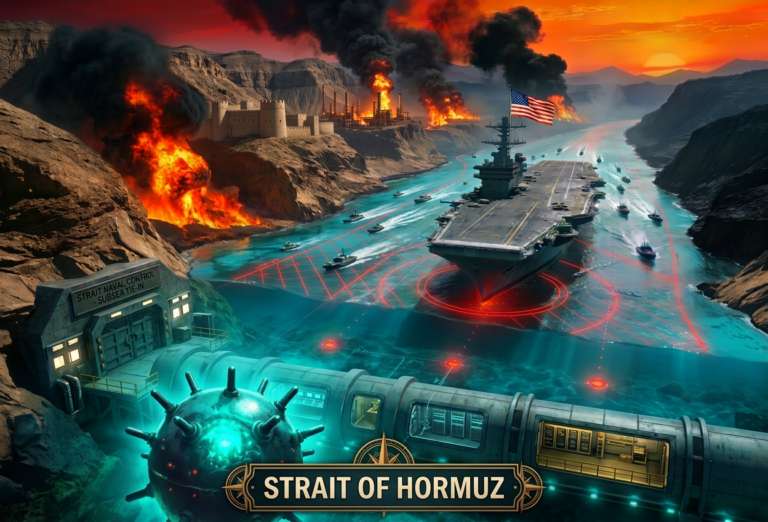
The Hormuz Humiliation: Iran’s Mine Warfare vs Washington’s ‘NO PLAN’ Disaster
“We have lost control of the seas to a nation without a navy, using pre-World War I weapons, laid by vessels that were utilized at the time of the birth of Christ.” Rear Admiral Allan E. Smith, who wrote these words, learned this the hard way at Wonsan Harbour in 1950, when he realised the US Navy could lose control of the seas not to enemy fleets, but to thousands of cheap mines scattered from wooden fishing boats. Seventy-six years later, the same trap is snapping shut in the Strait of Hormuz. The Islamic Republic of Iran Navy (IRIN), the blue-water force built for conventional combat, has been pummeled by American and Israeli strikes, although its submarine fleet remains viable. But that was never the force that mattered. The Islamic Revolutionary Guard Corps Navy (IRGCN), the asymmetric warfare specialists, remain intact, lethal, and purpose-built for exactly this confrontation. They do not seek to control the sea. They seek to deny it through swarming fast boats, drones, mini-submarines, coastal defenses, and the weapon that could easily neutralise the trillion-dollar carrier groups for the price of a used sedan: the naval mine. IMAGE: IRGCN minelaying boat (Source: Fars / IRGC file image) What follows is an anatomy of strategic failure which disects how the United States launched an illegal war against Iran without a coherent objective, how the Pentagon’s $800 billion annual budget produced “NO PLAN” for the scenario its own intelligence warned was “100% foreseeable,” and how a few thousand naval mines, descendants of the same devices that bled the British Navy at Gallipoli and stalled MacArthur’s landing craft at Wonsan, have brought twenty percent of global oil shipments to the edge of paralysis. Today, we dive into the specific mechanics of Iran’s mine arsenal, including the EM-52 rocket-propelled rising mine that can reach a carrier’s keel in under four seconds. You will see how Washington’s claims of destroying “inactive” Iranian mine-layers collapse under scrutiny, and how a single IRGC commander, speaking from an underwater missile tunnel, projects more strategic clarity than the combined Pentagon briefing rooms where US Senator Chris Murphy heard officials admit they have no idea how to reopen the Strait if Iran chooses to close it. The mines in Hormuz are not a threat to be managed. They are a verdict on the hubris of believing that military dominance can solve political problems, a verdict written in explosives, delivered by a force that exists precisely to exploit the gap between American capability and American understanding. When Donald Trump fired off his latest Truth Social salvo that Monday afternoon, warning Tehran to remove “any mines” from the Strait immediately or face “military consequences at a level never seen before,” he wasn’t just blustering into the void. He was confessing to strategic bankruptcy. The President of the United States was admitting that his multi-billion-dollar naval armada, backed by Israeli intelligence and the most sophisticated surveillance technology on earth, had no answer for one of the oldest weapons in maritime warfare. The gap between declared intent and operational reality became clearest over three hours on March 10. At 1:07 PM, Trump threatened “military consequences at a level never seen before” if mines were not removed. At 4:07 PM, he posted a follow-up claiming U.S. forces had “hit, and completely destroyed, 10 inactive mine-laying boats and/or ships, with more to follow!” The linguistic slip revealed the trap: the vessels were “inactive” because the mines were already in the water. By evening, CENTCOM had adjusted the number to 16 vessels destroyed, a statistic designed to suggest momentum, captured in grainy thermal footage showing explosions on dark water. But military mathematics doesn’t care about press releases. The IRGC Navy operates an estimated 200 small boats capable of mine-laying, each able to deploy two to three devices before returning to hidden coves along 1,500 miles of Iranian coastline. For every craft destroyed, nine remain operational. CNN reported that Iran retains 80 to 90 percent of its mine-laying capacity, meaning it could deploy hundreds of additional mines regardless of how many “inactive” boats litter the seabed. The irony is almost too perfect. For decades, American military planners have obsessed over Iranian missiles, calculating strike packages against underground silos and analysing radar evasion capabilities. They built missile defense shields in the Gulf and deployed Patriot batteries across Saudi Arabia. Yet the weapon that finally checkmated Washington wasn’t hypersonic or nuclear-capable. It was the naval mine, a device essentially unchanged since the American Civil War, now sitting quietly on the seabed of the world’s most critical oil chokepoint, waiting. This is asymmetric warfare in its purest form, and it’s forcing a reckoning that neither Trump nor his generals seems prepared to face. Iran isn’t trying to win a conventional naval battle against the United States because it doesn’t need to. It just needs to make the Strait of Hormuz ungovernable for long enough to break the global economy and expose the limits of American military power. Iranian Foreign Minister Abbas Araghchi, who has dubbed this war “Operation Epic Mistake”, didn’t mince words in his response on X, accusing U.S. officials of “posting fake news to manipulate markets.” His assessment cut closer to the bone than anything emerging from Washington’s increasingly incoherent messaging operation. “Markets are facing biggest shortfall in HISTORY,” Araghchi wrote, “bigger than the Arab Oil Embargo, Iran ‘s Islamic Revolution and the Kuwait invasion COMBINED.” Furthermore, the naval commander of Iran’s Islamic Revolutionary Guard Corps (IRGC) warned on X that any US military vessels or those of its allies traversing the Strait of Hormuz will be targeted. “The claim that an oil tanker passed through the Strait of Hormuz under U.S. military escort is completely false,” wrote IRGC Navy chief Alireza Tangsiri. “Any movement by U.S. fleets and their allies will be stopped within the range of Iranian missiles and drones.” The comments came after US Energy Secretary Chris Wright’s claim, in a post he later deleted from X, that the US Navy had escorted an oil tanker through the strait. Tangsiri added a direct challenge: “If you have any doubt, come closer and test it.” Meanwhile, Mohammad Bagher Ghalibaf, the speaker of the Islamic Republic of Iran’s Parliament, also responded to Chris Wright’s post (now taken down) with a touch of sarcasm. Commenting on the assertion, he remarked that if a tanker truly navigated the strait under the protection of U.S. naval forces, “maybe it occurred on a PlayStation.” But while diplomats traded accusations on social media, the military reality was crystallising in classified briefings on Capitol Hill. Connecticut Senator Chris Murphy emerged from two hours of Pentagon presentations to report what should have dominated headlines: the administration’s war goals DO NOT involve destroying Iran’s nuclear program, despite Trump’s repeated claims, and “regime change” is also NOT on the list. The briefers could offer no answer to what happens when bombing stops, and Iran rebuilds. They hinted at more bombing, a grim reminder of the US’s endless war. IMAGE: Sen. Chris Murphy (D-CT) speaks during the Senate Foreign Relations Committee hearing – January 2021. (Source: Connecticut Public) On the Strait itself, they had nothing. Murphy sat in stunned silence as officials admitted they had “NO PLAN” for reopening Hormuz if Iran chose to close it. “I can’t go into more detail about how Iran gums up the Strait,” he wrote afterwards, “but suffice it to say, right now, they don’t know how to get it safely back open. Which is unforgivable, because this part of the disaster was 100% foreseeable.” The United States has spent $800 billion annually on its military, maintains 11 carrier strike groups, and operates the most sophisticated mine-clearance technology ever developed. And in the most critical maritime chokepoint on earth, they have no plan. The Geometry of Inescapability To understand why Washington is panicking, you need to understand what Iran has built beneath the waves—devices that turn the physics of naval warfare into a cruel joke played on trillion-dollar fleets. The Islamic Republic maintains an estimated inventory of 5,000 to 6,000 naval mines, ranging from simple contact variants to sophisticated rocket-propelled systems that would give any admiral nightmares. The star of this arsenal is the EM-52 (also known as T-1), a Chinese-designed rising mine that represents everything wrong with America’s approach to Gulf security. A report from the China Maritime Studies Institute at the U.S. Naval War College in Rhode Island reveals that “China has developed and offers at least two rising mines for export. Its EM-52 rocket rising mine, of which Iran purchased an unknown quantity in 1994, and reportedly has an operating depth of at least two hundred meters.” The EM-52 doesn’t announce itself. It listens. For hours, days, weeks, it sits in the dark, running algorithms that distinguish between a fishing trawler and an oil tanker based on the acoustic signature of engines, the magnetic distortion of a steel hull, the pressure displacement of 100,000 tons pushing through water. When the parameters align, a solid-fuel rocket ignites with no warning visible on the surface. IMAGE: The Chinese EM52 (also known as the Special-1) is a submarine-launched, fast-rising, rocket-propelled bottom-dwelling mine. It is stored on the seabed and will be rapidly brought to the surface using its rocket engine. The mine is unguided. (Source: GlobalMil) The math is brutal. A 250-kilogram warhead travelling at 100 knots covers the distance from seabed to hull in approximately 3.8 seconds. The USS Abraham Lincoln requires 15 minutes and three miles of open water to execute an emergency stop. The geometry is inescapable. The EM-52 sits on the seabed in up to 350 feet of water, listening for the magnetic, acoustic, pressure, or seismic signatures that betray a ship’s presence. Military Periscope, the defense intelligence database, notes that the weapon is “difficult to sweep” and triggers on multiple sensor inputs, making traditional mine countermeasures nearly useless. You can’t just send a minesweeper through with a magnetic cable and call it clean. Each EM-52 must be located individually, identified against acoustic clutter that includes fishing nets, rocks, and debris, then neutralised by remotely operated vehicles or divers. In the confined, high-traffic waters of Hormuz, that’s a task measured in weeks or months, not hours. And Iran isn’t limiting itself to the EM-52. It is worth noting that Iran also fields the Azhdar UUV, an underwater drone functioning as a mobile mine, reaching 18-25 knots and operating submerged for days. Designed for stealth patrol and mine warfare in strategic chokepoints, it hunts rather than waits VIDEO: 96 Hours Underwater, Then It Kills – Iran’s ‘Azhdar’ UUV Strikes Ships Without Warning (Source: VERTEX) The Revolutionary Guards have demonstrated the Fajr-5 Multiple Launch Rocket System adapted for mine laying, allowing them to deploy naval mines by rocket artillery from concealed positions along the coastline. This isn’t theoretical anymore. Iranian state television broadcast exercises in 2025 showing the Fajr-5 delivering sea mines at long distances, offering a highly efficient method of area denial that requires no ships, no aircraft, and no vulnerable mine-laying vessels for American jets to target. VIDEO: Iranian state television unveiled a striking new tactic the Islamic Revolutionary Guard Corps (IRGC) employed during their naval exercises: using the Fajr-5 Multiple Launch Rocket System (MLRS) to lay sea mines (Source: News Military | Youtube) When you combine this with the IRGC Navy’s fleet of small boats, each capable of carrying two to three mines, and the reported underwater missile tunnels Tehran unveiled in January, which house hundreds of cruise missiles in literally ungovernable subterranean redoubts, you get a layered defense system that makes the Strait virtually uncloseable by military force. CNN reported that Iran has deployed “a few dozen” mines in recent days while retaining 80 to 90 percent of its mine-laying craft. That means for every boat Trump claims to have destroyed, nine more remain operational, each capable of seeding the strait with enough explosives to halt shipping for months. IRGC Navy Commander Rear Admiral Alireza Tangsiri put it with the calm confidence of a man holding the better cards. “The security of the Strait of Hormuz is dependent on decisions taken in Tehran,” he said, standing in one of the underwater missile tunnels broadcast on state television. “We exercise complete dominance over this waterway across air, surface, and underwater domains. The faith of the people and our missiles are Iran’s deterrent weapons.” He didn’t need to mention the mines. He didn’t need to. Everyone already knew. VIDEO: Iran Unveils New Underwater Missile Tunnel – US Ships To Be Hit From Below? Hormuz Strait Threat (Hindustan Times) The Devil’s Arithmetic At the Vitol trading desk in London, a senior crude oil trader watched Brent futures spike and thought not about “markets” but about his brother-in-law who drives a tanker out of Kuwait. The man had texted that morning: “We’re holding at anchor. The captain says we move when the Americans clear the channel. Nobody believes the Americans can clear the channel.” The trader understood, in the way that people who move the world’s resources understand, that his brother-in-law’s cargo wouldn’t sail this week. Or next. Perhaps not for months. Oil traders are already pricing in catastrophe. Vitol warned that “this risk is currently underpriced in markets” and suggested Iran is still holding back its most damaging responses. The prevalent theory among commodities analysts is that Tehran has been using older missiles and drones first to deplete allied air defenses, keeping its most effective weapons in reserve. When those reserves deploy, the Strait closes. Cormac McCarry, a maritime security director at Control Risks, put the timeline in stark terms. “If sea mines are laid, it will take a long time to deal with them,” he told Reuters. “That ‘s where we will be looking at months of destruction.” Not days. Not weeks. Months. During which approximately 21 million barrels of oil per day stop flowing to global markets. The cascading effects would make the 1973 Arab oil embargo look like a minor supply hiccup. China, India, Japan, and South Korea, all heavily dependent on Gulf crude, would face immediate energy crises. European markets, already strained by the cutoff of Russian gas, would see prices spike to levels that trigger industrial shutdowns. And the United States, despite its domestic production capacity, would watch inflation explode as global trade seizes up. This is Iran’s leverage, and it is absolute. The Escort Fantasy For weeks, rumours circulated that the U.S. Navy would organise military escorts for commercial tankers through the Strait, reprising the tanker war operations of the 1980s. Reuters put that fantasy to rest on Monday, reporting that the Navy has informed the shipping industry that “Hormuz escorts are not possible now.” The reason is obvious to any naval strategist who isn’t trying to sell a political narrative: escorting vessels through a mined waterway isn’t deterrence, it’s assisted suicide. When a tanker or container ship hits a mine, it doesn’t matter how many destroyers are riding shotgun. The vessel sinks or burns, the crew evacuates, and the insurance markets panic. Because modern influence mines like the EM-52 and the Russian-designed MDM-6 can differentiate between military and commercial traffic based on acoustic signatures, there’s no guarantee that warships could even clear a safe path for civilian vessels. The mines might simply wait for the escorted merchantman to pass before activating. This is the trap Trump walked into. By launching an illegal war of aggression against Iranian nuclear and military facilities—without congressional authorisation, without UN sanction, without even a coherent strategic objective beyond “destroying missiles and boats”, he created the exact scenario his military advisors warned against. Iran’s response wasn’t to meet American stealth bombers with its own air force; It was to reach for the weapon that nullifies every advantage Washington possesses: patience, geography, and thousands of cheap explosives sitting on the ocean floor, waiting. The Lesson of the Sahand Iran’s mastery of mine warfare didn’t emerge overnight. It dates back to the anti-shipping campaigns during the Iran-Iraq War (1980-1988), when Tehran learned hard lessons about conventional naval combat against superior American forces—lessons written in fire and hull fragmentation. In April 1988, when American warships destroyed the Iranian frigate Sahand during Operation Praying Mantis, the Pentagon believed it had taught Tehran a permanent lesson about the futility of challenging U.S. naval power. What it actually taught was the opposite. Iranian commanders studied the battle not as a defeat but as a blueprint, specifically, the moments when their ships had been most vulnerable. They noticed that mines had complicated American operations even when they didn’t detonate, forcing costly evasive manoeuvres and slowing transit times. They noticed that the psychological effect of not knowing where the next threat lay had degraded the U.S. Navy’s decision-making tempo. And they noticed, most importantly, that the Americans had won the battle but lost the strategic patience to stay in a grinding war of attrition against a determined adversary willing to absorb losses. The EM-52s sitting on the Hormuz seabed today are the grandchildren of that observation. Since the burning hull of the Sahand slipped beneath the waves, Iran has built its defensive doctrine around weapons that negate American technological superiority. Submarines, anti-ship missiles, swarming fast-attack boats, and naval mines form a layered defense designed not to win a decisive battle but to make any victory Pyrrhic. READ MORE: The $15 Billion Sitting Duck: Twenty Ghosts in the Shallows The EM-52 acquisition from China, the adaptation of rocket artillery for mine laying, and the construction of underwater missile tunnels visible in January’s state television broadcasts all serve this strategy. Iran doesn’t need to sink the USS Abraham Lincoln. It just needs to make the price of keeping the Strait open higher than the oil is worth. The Verdict The fires burning in the Strait on Tuesday evening were not the beginning of Iran’s retaliation but its culmination. For decades, Tehran has prepared for exactly this confrontation—not to win a conventional war against an enemy it cannot defeat, but to demonstrate that such a victory is irrelevant. The EM-52s, the Fajr-5 adaptations, the underwater tunnels—all of it has led to this moment when the empire’s $4.5 billion carrier must wait, impotent, while a $50,000 device decides whether the global economy breathes. There is a bitter symmetry here that future historians will trace with grim fascination. Washington launched this war to prevent Iran from acquiring weapons it might someday use, and in doing so, forced Iran to use the weapons it already had. The mines in the Strait are not a threat to be managed. They are a verdict, delivered in explosives, on the hubris of believing that military dominance can solve political problems. The exit doesn’t exist on the Pentagon’s maps because it was never a military problem to begin with—it was always a political failure, a refusal to accept that the era of American unilateralism in the Gulf ended not with a carrier battle, but with a handful of cheap devices scattered across the seabed, waiting for someone wise enough to recognize that the only way out is to stop digging and start realising that there is still a short window for Israel and the US to avoid total humiliation. READ MORE IRAN NEWS AT: 21st Century Wire IRAN Files SUPPORT OUR INDEPENDENT MEDIA PLATFORM – BECOME A MEMBER @21WIRE.TV VISIT OUR TELEGRAM CHANNEL The post The Hormuz Humiliation: Iran’s Mine Warfare vs Washington’s ‘NO PLAN’ Disaster appeared first on Activist Post.
The Hormuz Humiliation: Iran’s Mine Warfare vs Washington’s ‘NO PLAN’ Disaster
“We have lost control of the seas to a nation without a navy, using pre-World War I weapons, laid by vessels that were utilized at the time of the birth of Christ.” Rear Admiral Allan E. Smith, who wrote these words, learned this the hard way at Wonsan Harbour in 1950, when he realised the US Navy could lose control of the seas not to enemy fleets, but to thousands of cheap mines scattered from wooden fishing boats. Seventy-six years later, the same trap is snapping shut in the Strait of Hormuz. The Islamic Republic of Iran Navy (IRIN), the blue-water force built for conventional combat, has been pummeled by American and Israeli strikes, although its submarine fleet remains viable. But that was never the force that mattered. The Islamic Revolutionary Guard Corps Navy (IRGCN), the asymmetric warfare specialists, remain intact, lethal, and purpose-built for exactly this confrontation. They do not seek to control the sea. They seek to deny it through swarming fast boats, drones, mini-submarines, coastal defenses, and the weapon that could easily neutralise the trillion-dollar carrier groups for the price of a used sedan: the naval mine. IMAGE: IRGCN minelaying boat (Source: Fars / IRGC file image) What follows is an anatomy of strategic failure which disects how the United States launched an illegal war against Iran without a coherent objective, how the Pentagon’s $800 billion annual budget produced “NO PLAN” for the scenario its own intelligence warned was “100% foreseeable,” and how a few thousand naval mines, descendants of the same devices that bled the British Navy at Gallipoli and stalled MacArthur’s landing craft at Wonsan, have brought twenty percent of global oil shipments to the edge of paralysis. Today, we dive into the specific mechanics of Iran’s mine arsenal, including the EM-52 rocket-propelled rising mine that can reach a carrier’s keel in under four seconds. You will see how Washington’s claims of destroying “inactive” Iranian mine-layers collapse under scrutiny, and how a single IRGC commander, speaking from an underwater missile tunnel, projects more strategic clarity than the combined Pentagon briefing rooms where US Senator Chris Murphy heard officials admit they have no idea how to reopen the Strait if Iran chooses to close it. The mines in Hormuz are not a threat to be managed. They are a verdict on the hubris of believing that military dominance can solve political problems, a verdict written in explosives, delivered by a force that exists precisely to exploit the gap between American capability and American understanding. When Donald Trump fired off his latest Truth Social salvo that Monday afternoon, warning Tehran to remove “any mines” from the Strait immediately or face “military consequences at a level never seen before,” he wasn’t just blustering into the void. He was confessing to strategic bankruptcy. The President of the United States was admitting that his multi-billion-dollar naval armada, backed by Israeli intelligence and the most sophisticated surveillance technology on earth, had no answer for one of the oldest weapons in maritime warfare. The gap between declared intent and operational reality became clearest over three hours on March 10. At 1:07 PM, Trump threatened “military consequences at a level never seen before” if mines were not removed. At 4:07 PM, he posted a follow-up claiming U.S. forces had “hit, and completely destroyed, 10 inactive mine-laying boats and/or ships, with more to follow!” The linguistic slip revealed the trap: the vessels were “inactive” because the mines were already in the water. By evening, CENTCOM had adjusted the number to 16 vessels destroyed, a statistic designed to suggest momentum, captured in grainy thermal footage showing explosions on dark water. But military mathematics doesn’t care about press releases. The IRGC Navy operates an estimated 200 small boats capable of mine-laying, each able to deploy two to three devices before returning to hidden coves along 1,500 miles of Iranian coastline. For every craft destroyed, nine remain operational. CNN reported that Iran retains 80 to 90 percent of its mine-laying capacity, meaning it could deploy hundreds of additional mines regardless of how many “inactive” boats litter the seabed. The irony is almost too perfect. For decades, American military planners have obsessed over Iranian missiles, calculating strike packages against underground silos and analysing radar evasion capabilities. They built missile defense shields in the Gulf and deployed Patriot batteries across Saudi Arabia. Yet the weapon that finally checkmated Washington wasn’t hypersonic or nuclear-capable. It was the naval mine, a device essentially unchanged since the American Civil War, now sitting quietly on the seabed of the world’s most critical oil chokepoint, waiting. This is asymmetric warfare in its purest form, and it’s forcing a reckoning that neither Trump nor his generals seems prepared to face. Iran isn’t trying to win a conventional naval battle against the United States because it doesn’t need to. It just needs to make the Strait of Hormuz ungovernable for long enough to break the global economy and expose the limits of American military power. Iranian Foreign Minister Abbas Araghchi, who has dubbed this war “Operation Epic Mistake”, didn’t mince words in his response on X, accusing U.S. officials of “posting fake news to manipulate markets.” His assessment cut closer to the bone than anything emerging from Washington’s increasingly incoherent messaging operation. “Markets are facing biggest shortfall in HISTORY,” Araghchi wrote, “bigger than the Arab Oil Embargo, Iran ‘s Islamic Revolution and the Kuwait invasion COMBINED.” Furthermore, the naval commander of Iran’s Islamic Revolutionary Guard Corps (IRGC) warned on X that any US military vessels or those of its allies traversing the Strait of Hormuz will be targeted. “The claim that an oil tanker passed through the Strait of Hormuz under U.S. military escort is completely false,” wrote IRGC Navy chief Alireza Tangsiri. “Any movement by U.S. fleets and their allies will be stopped within the range of Iranian missiles and drones.” The comments came after US Energy Secretary Chris Wright’s claim, in a post he later deleted from X, that the US Navy had escorted an oil tanker through the strait. Tangsiri added a direct challenge: “If you have any doubt, come closer and test it.” Meanwhile, Mohammad Bagher Ghalibaf, the speaker of the Islamic Republic of Iran’s Parliament, also responded to Chris Wright’s post (now taken down) with a touch of sarcasm. Commenting on the assertion, he remarked that if a tanker truly navigated the strait under the protection of U.S. naval forces, “maybe it occurred on a PlayStation.” But while diplomats traded accusations on social media, the military reality was crystallising in classified briefings on Capitol Hill. Connecticut Senator Chris Murphy emerged from two hours of Pentagon presentations to report what should have dominated headlines: the administration’s war goals DO NOT involve destroying Iran’s nuclear program, despite Trump’s repeated claims, and “regime change” is also NOT on the list. The briefers could offer no answer to what happens when bombing stops, and Iran rebuilds. They hinted at more bombing, a grim reminder of the US’s endless war. IMAGE: Sen. Chris Murphy (D-CT) speaks during the Senate Foreign Relations Committee hearing – January 2021. (Source: Connecticut Public) On the Strait itself, they had nothing. Murphy sat in stunned silence as officials admitted they had “NO PLAN” for reopening Hormuz if Iran chose to close it. “I can’t go into more detail about how Iran gums up the Strait,” he wrote afterwards, “but suffice it to say, right now, they don’t know how to get it safely back open. Which is unforgivable, because this part of the disaster was 100% foreseeable.” The United States has spent $800 billion annually on its military, maintains 11 carrier strike groups, and operates the most sophisticated mine-clearance technology ever developed. And in the most critical maritime chokepoint on earth, they have no plan. The Geometry of Inescapability To understand why Washington is panicking, you need to understand what Iran has built beneath the waves—devices that turn the physics of naval warfare into a cruel joke played on trillion-dollar fleets. The Islamic Republic maintains an estimated inventory of 5,000 to 6,000 naval mines, ranging from simple contact variants to sophisticated rocket-propelled systems that would give any admiral nightmares. The star of this arsenal is the EM-52 (also known as T-1), a Chinese-designed rising mine that represents everything wrong with America’s approach to Gulf security. A report from the China Maritime Studies Institute at the U.S. Naval War College in Rhode Island reveals that “China has developed and offers at least two rising mines for export. Its EM-52 rocket rising mine, of which Iran purchased an unknown quantity in 1994, and reportedly has an operating depth of at least two hundred meters.” The EM-52 doesn’t announce itself. It listens. For hours, days, weeks, it sits in the dark, running algorithms that distinguish between a fishing trawler and an oil tanker based on the acoustic signature of engines, the magnetic distortion of a steel hull, the pressure displacement of 100,000 tons pushing through water. When the parameters align, a solid-fuel rocket ignites with no warning visible on the surface. IMAGE: The Chinese EM52 (also known as the Special-1) is a submarine-launched, fast-rising, rocket-propelled bottom-dwelling mine. It is stored on the seabed and will be rapidly brought to the surface using its rocket engine. The mine is unguided. (Source: GlobalMil) The math is brutal. A 250-kilogram warhead travelling at 100 knots covers the distance from seabed to hull in approximately 3.8 seconds. The USS Abraham Lincoln requires 15 minutes and three miles of open water to execute an emergency stop. The geometry is inescapable. The EM-52 sits on the seabed in up to 350 feet of water, listening for the magnetic, acoustic, pressure, or seismic signatures that betray a ship’s presence. Military Periscope, the defense intelligence database, notes that the weapon is “difficult to sweep” and triggers on multiple sensor inputs, making traditional mine countermeasures nearly useless. You can’t just send a minesweeper through with a magnetic cable and call it clean. Each EM-52 must be located individually, identified against acoustic clutter that includes fishing nets, rocks, and debris, then neutralised by remotely operated vehicles or divers. In the confined, high-traffic waters of Hormuz, that’s a task measured in weeks or months, not hours. And Iran isn’t limiting itself to the EM-52. It is worth noting that Iran also fields the Azhdar UUV, an underwater drone functioning as a mobile mine, reaching 18-25 knots and operating submerged for days. Designed for stealth patrol and mine warfare in strategic chokepoints, it hunts rather than waits VIDEO: 96 Hours Underwater, Then It Kills – Iran’s ‘Azhdar’ UUV Strikes Ships Without Warning (Source: VERTEX) The Revolutionary Guards have demonstrated the Fajr-5 Multiple Launch Rocket System adapted for mine laying, allowing them to deploy naval mines by rocket artillery from concealed positions along the coastline. This isn’t theoretical anymore. Iranian state television broadcast exercises in 2025 showing the Fajr-5 delivering sea mines at long distances, offering a highly efficient method of area denial that requires no ships, no aircraft, and no vulnerable mine-laying vessels for American jets to target. VIDEO: Iranian state television unveiled a striking new tactic the Islamic Revolutionary Guard Corps (IRGC) employed during their naval exercises: using the Fajr-5 Multiple Launch Rocket System (MLRS) to lay sea mines (Source: News Military | Youtube) When you combine this with the IRGC Navy’s fleet of small boats, each capable of carrying two to three mines, and the reported underwater missile tunnels Tehran unveiled in January, which house hundreds of cruise missiles in literally ungovernable subterranean redoubts, you get a layered defense system that makes the Strait virtually uncloseable by military force. CNN reported that Iran has deployed “a few dozen” mines in recent days while retaining 80 to 90 percent of its mine-laying craft. That means for every boat Trump claims to have destroyed, nine more remain operational, each capable of seeding the strait with enough explosives to halt shipping for months. IRGC Navy Commander Rear Admiral Alireza Tangsiri put it with the calm confidence of a man holding the better cards. “The security of the Strait of Hormuz is dependent on decisions taken in Tehran,” he said, standing in one of the underwater missile tunnels broadcast on state television. “We exercise complete dominance over this waterway across air, surface, and underwater domains. The faith of the people and our missiles are Iran’s deterrent weapons.” He didn’t need to mention the mines. He didn’t need to. Everyone already knew. VIDEO: Iran Unveils New Underwater Missile Tunnel – US Ships To Be Hit From Below? Hormuz Strait Threat (Hindustan Times) The Devil’s Arithmetic At the Vitol trading desk in London, a senior crude oil trader watched Brent futures spike and thought not about “markets” but about his brother-in-law who drives a tanker out of Kuwait. The man had texted that morning: “We’re holding at anchor. The captain says we move when the Americans clear the channel. Nobody believes the Americans can clear the channel.” The trader understood, in the way that people who move the world’s resources understand, that his brother-in-law’s cargo wouldn’t sail this week. Or next. Perhaps not for months. Oil traders are already pricing in catastrophe. Vitol warned that “this risk is currently underpriced in markets” and suggested Iran is still holding back its most damaging responses. The prevalent theory among commodities analysts is that Tehran has been using older missiles and drones first to deplete allied air defenses, keeping its most effective weapons in reserve. When those reserves deploy, the Strait closes. Cormac McCarry, a maritime security director at Control Risks, put the timeline in stark terms. “If sea mines are laid, it will take a long time to deal with them,” he told Reuters. “That ‘s where we will be looking at months of destruction.” Not days. Not weeks. Months. During which approximately 21 million barrels of oil per day stop flowing to global markets. The cascading effects would make the 1973 Arab oil embargo look like a minor supply hiccup. China, India, Japan, and South Korea, all heavily dependent on Gulf crude, would face immediate energy crises. European markets, already strained by the cutoff of Russian gas, would see prices spike to levels that trigger industrial shutdowns. And the United States, despite its domestic production capacity, would watch inflation explode as global trade seizes up. This is Iran’s leverage, and it is absolute. The Escort Fantasy For weeks, rumours circulated that the U.S. Navy would organise military escorts for commercial tankers through the Strait, reprising the tanker war operations of the 1980s. Reuters put that fantasy to rest on Monday, reporting that the Navy has informed the shipping industry that “Hormuz escorts are not possible now.” The reason is obvious to any naval strategist who isn’t trying to sell a political narrative: escorting vessels through a mined waterway isn’t deterrence, it’s assisted suicide. When a tanker or container ship hits a mine, it doesn’t matter how many destroyers are riding shotgun. The vessel sinks or burns, the crew evacuates, and the insurance markets panic. Because modern influence mines like the EM-52 and the Russian-designed MDM-6 can differentiate between military and commercial traffic based on acoustic signatures, there’s no guarantee that warships could even clear a safe path for civilian vessels. The mines might simply wait for the escorted merchantman to pass before activating. This is the trap Trump walked into. By launching an illegal war of aggression against Iranian nuclear and military facilities—without congressional authorisation, without UN sanction, without even a coherent strategic objective beyond “destroying missiles and boats”, he created the exact scenario his military advisors warned against. Iran’s response wasn’t to meet American stealth bombers with its own air force; It was to reach for the weapon that nullifies every advantage Washington possesses: patience, geography, and thousands of cheap explosives sitting on the ocean floor, waiting. The Lesson of the Sahand Iran’s mastery of mine warfare didn’t emerge overnight. It dates back to the anti-shipping campaigns during the Iran-Iraq War (1980-1988), when Tehran learned hard lessons about conventional naval combat against superior American forces—lessons written in fire and hull fragmentation. In April 1988, when American warships destroyed the Iranian frigate Sahand during Operation Praying Mantis, the Pentagon believed it had taught Tehran a permanent lesson about the futility of challenging U.S. naval power. What it actually taught was the opposite. Iranian commanders studied the battle not as a defeat but as a blueprint, specifically, the moments when their ships had been most vulnerable. They noticed that mines had complicated American operations even when they didn’t detonate, forcing costly evasive manoeuvres and slowing transit times. They noticed that the psychological effect of not knowing where the next threat lay had degraded the U.S. Navy’s decision-making tempo. And they noticed, most importantly, that the Americans had won the battle but lost the strategic patience to stay in a grinding war of attrition against a determined adversary willing to absorb losses. The EM-52s sitting on the Hormuz seabed today are the grandchildren of that observation. Since the burning hull of the Sahand slipped beneath the waves, Iran has built its defensive doctrine around weapons that negate American technological superiority. Submarines, anti-ship missiles, swarming fast-attack boats, and naval mines form a layered defense designed not to win a decisive battle but to make any victory Pyrrhic. READ MORE: The $15 Billion Sitting Duck: Twenty Ghosts in the Shallows The EM-52 acquisition from China, the adaptation of rocket artillery for mine laying, and the construction of underwater missile tunnels visible in January’s state television broadcasts all serve this strategy. Iran doesn’t need to sink the USS Abraham Lincoln. It just needs to make the price of keeping the Strait open higher than the oil is worth. The Verdict The fires burning in the Strait on Tuesday evening were not the beginning of Iran’s retaliation but its culmination. For decades, Tehran has prepared for exactly this confrontation—not to win a conventional war against an enemy it cannot defeat, but to demonstrate that such a victory is irrelevant. The EM-52s, the Fajr-5 adaptations, the underwater tunnels—all of it has led to this moment when the empire’s $4.5 billion carrier must wait, impotent, while a $50,000 device decides whether the global economy breathes. There is a bitter symmetry here that future historians will trace with grim fascination. Washington launched this war to prevent Iran from acquiring weapons it might someday use, and in doing so, forced Iran to use the weapons it already had. The mines in the Strait are not a threat to be managed. They are a verdict, delivered in explosives, on the hubris of believing that military dominance can solve political problems. The exit doesn’t exist on the Pentagon’s maps because it was never a military problem to begin with—it was always a political failure, a refusal to accept that the era of American unilateralism in the Gulf ended not with a carrier battle, but with a handful of cheap devices scattered across the seabed, waiting for someone wise enough to recognize that the only way out is to stop digging and start realising that there is still a short window for Israel and the US to avoid total humiliation. READ MORE IRAN NEWS AT: 21st Century Wire IRAN Files SUPPORT OUR INDEPENDENT MEDIA PLATFORM – BECOME A MEMBER @21WIRE.TV VISIT OUR TELEGRAM CHANNEL The post The Hormuz Humiliation: Iran’s Mine Warfare vs Washington’s ‘NO PLAN’ Disaster appeared first on Activist Post.