Bills · S 1602
REPORTED· 119TH CONGRESS
Senate BillS 1602Adoption and foster careRural conditions and development
Mathematical and Statistical Modeling Education Act
INTRO MAY 5· LAST ACTION MAR 20
READING
12MIN
COSPONSORS
1
READER REACTIONS0 TOTAL
NO VOTES YET · BE THE FIRST
- Reported, not passed
LEGISLATIVE PROGRESS
STEP 3 / 8Introduced
In Committee
Reported
Passed Senate
Passed House
Conference
To President
Became Law
WHAT THE BILL DOES
AI-writtenThis bill matters because it seeks to bridge a significant gap between traditional math education and the rapidly evolving skills needed for many modern jobs, particularly in booming sectors like data science, artificial intelligence, and advanced technology. If enacted, it could lead to substantial changes in how K-12 math is taught, shifting towards more hands-on, relevant, and career-connected learning experiences. This could mean students are better prepared for college and high-demand careers, potentially strengthening the nation's competitive edge in innovation and technology.
Without this bill, critics argue that the current math education system might continue to lag behind industry needs, potentially contributing to a persistent shortage of skilled workers and requiring employers to invest more heavily in training new employees to fill skill gaps. The bill also highlights global competition and the need to engage a broader, more diverse student population in STEM, which could have long-term societal and economic benefits.
KEY PROVISIONS
5AI-extractedPROVISION 01
Coordinates Federal research and development efforts to modernize mathematics in STEM education.
This ensures a focused, national approach to updating math education to meet current and future workforce demands.
PROVISION 02
Authorizes the National Science Foundation (NSF) to award competitive grants for innovative approaches to teaching mathematical and statistical modeling in K-12 schools.
This provides funding to develop and test effective, modern math curricula and teaching methods in schools.
PROVISION 03
Emphasizes teaching data-driven and computational thinking, problem-based learning, and career connections.
This equips students with highly sought-after, practical skills directly applicable to modern STEM careers.
PROVISION 04
Encourages partnerships to support critical student transitions, such as from middle school to high school, and from school to jobs or internships.
This aims to create smoother educational and career pathways for students, helping them stay engaged in STEM.
PROVISION 05
Requires award applications to describe how research will engage students, including those historically underrepresented in STEM.
This addresses historical inequities in STEM access and aims to broaden participation in critical fields.
SPONSORSHIP
1 + 1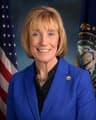
D· New Hampshire
YRS IN OFFICE
9
BILLS LED
55
COSPONSOR BREAKDOWNBIPARTISAN · 0%
DEM 0 REP 1 IND 0
ACTION TIMELINE
6 EVENTSMAR 20
Referred sequentially to the Committee on Commerce, Science, and Transportation, pursuant to the order of March 3, 1988, for 30 calendar days excluding any day on which the Senate is not in session, and if not reported by that day, the Committee be discharged from further consideration thereof, and the bill be placed on the calendar.
MAR 11
Committee on Health, Education, Labor, and Pensions. Reported by Senator Cassidy without amendment. Without written report.
MAR 11
Placed on Senate Legislative Calendar under General Orders. Calendar No. 353.
FEB 26
Committee on Health, Education, Labor, and Pensions. Ordered to be reported without amendment favorably.
BILL INFO
TypeSenate Bill
NumberS 1602
Congress119th
StatusReported
IntroducedMay 5, 2025
Last actionMar 20, 2026
READER REACTIONS
OVERALL SENTIMENT
No reactions yet. Be the first to weigh in.
Discussion
Loading comments...
REPORTED· 119TH CONGRESS · HEALTH, EDUCATION, LABOR, AND PENSIONS COMMITTEE · INTRODUCED MAY 5, 2025
Senate BillS 1602Adoption and foster careRural conditions and development
Mathematical and Statistical Modeling Education Act
INTRODUCED MAY 5, 2025· LAST ACTION MAR 20, 2026
PASSAGE CHANCES
—%
READING
12 min
COSPONSORS
1
COMPLEXITY
Moderate