Bills · HR 6780
IN COMMITTEE· 119TH CONGRESS
House BillHR 6780Agriculture and Food
Producing Real Opportunities for Technology and Entrepreneurs Investing in Nutrition Act
INTRO DEC 17· LAST ACTION MAY 20
READING
10MIN
COSPONSORS
17
READER REACTIONS0 TOTAL
NO VOTES YET · BE THE FIRST
- Introduced only
LEGISLATIVE PROGRESS
STEP 2 / 8Introduced
In Committee
Reported
Passed House
Passed Senate
Conference
To President
Became Law
WHAT THE BILL DOES
AI-writtenThis bill matters because it addresses growing concerns about global food security, the stability of our food supply chains, and the need for new economic opportunities. With predictions that the global demand for meat will double by 2050, finding diverse and sustainable protein sources is becoming increasingly urgent. By actively investing in alternative protein research and manufacturing within the U.S., this bill aims to reduce the country's reliance on imported commodities, strengthen domestic food systems against disruptions, and create new jobs in innovative bioeconomy sectors.
If this bill becomes law, it could accelerate the development and widespread availability of new food technologies, potentially making alternative proteins more accessible and affordable for consumers. It could also position the U.S. as a leader in this emerging field. If it doesn't pass, the U.S. might fall behind other countries that are already investing heavily in alternative proteins, potentially missing out on economic growth and job creation, and leaving its food system more vulnerable to future challenges.
KEY PROVISIONS
5AI-extractedPROVISION 01
Directs the Secretary of Agriculture to establish at least three "centers of excellence" for alternative protein innovation, including one at an 1890 Institution.
This creates dedicated research hubs to advance new food technologies and train a future workforce in this emerging field.
PROVISION 02
Establishes a new national program within the Agricultural Research Service focused on protein security, specifically on bioprocessing and biomanufacturing of under-utilized biomass into high-value ingredients.
This creates a sustained federal effort to develop new protein sources and potentially improve rural economies by utilizing agricultural byproducts.
PROVISION 03
Creates a grant program to help U.S.-based entities (companies, universities, etc.) build, expand, or retool facilities for large-scale production of edible alternative proteins and fats.
This provision directly supports the commercialization and scaling up of alternative protein manufacturing within the United States.
PROVISION 04
Authorizes $15,000,000 annually for the research centers and $10,000,000 annually for the ARS national program for fiscal years 2026 through 2030.
This provides significant, long-term funding to support the new initiatives for several years.
PROVISION 05
Amends an existing competitive grant program (the Agriculture and Food Research Initiative) to include tools and production methods for increasing edible protein sources using bioprocessing and biomanufacturing.
This expands an existing funding stream to prioritize and support research in alternative proteins more broadly.
SPONSORSHIP
1 + 17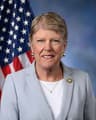
D· California
YRS IN OFFICE
13
BILLS LED
54
COSPONSOR BREAKDOWNBIPARTISAN · 0%
DEM 17 REP 0 IND 0
ACTION TIMELINE
4 EVENTSMAY 20
Referred to the Subcommittee on Conservation, Research, and Biotechnology.
DEC 17
Introduced in House
DEC 17
Referred to the Committee on Agriculture, and in addition to the Committee on Education and Workforce, for a period to be subsequently determined by the Speaker, in each case for consideration of such provisions as fall within the jurisdiction of the committee concerned.
DEC 17
Referred to the Committee on Agriculture, and in addition to the Committee on Education and Workforce, for a period to be subsequently determined by the Speaker, in each case for consideration of such provisions as fall within the jurisdiction of the committee concerned.
BILL INFO
TypeHouse Bill
NumberHR 6780
Congress119th
StatusIn Committee
IntroducedDec 17, 2025
Last actionMay 20, 2026
READER REACTIONS
OVERALL SENTIMENT
No reactions yet. Be the first to weigh in.
Discussion
Loading comments...
IN COMMITTEE· 119TH CONGRESS · AGRICULTURE COMMITTEE · INTRODUCED DEC 17, 2025
House BillHR 6780Agriculture and Food
Producing Real Opportunities for Technology and Entrepreneurs Investing in Nutrition Act
INTRODUCED DEC 17, 2025· LAST ACTION MAY 20, 2026
PASSAGE CHANCES
—%
READING
10 min
COSPONSORS
17
COMPLEXITY
Moderate