Bills · HR 51
IN COMMITTEE· 119TH CONGRESS
House BillHR 51Congressional districts and representationGovernment buildings, facilities, and property
Washington, D.C. Admission Act
INTRO JAN 3· LAST ACTION JAN 3
READING
86MIN
COSPONSORS
208
READER REACTIONS0 TOTAL
NO VOTES YET · BE THE FIRST
- Introduced only
LEGISLATIVE PROGRESS
STEP 2 / 8Introduced
In Committee
Reported
Passed House
Passed Senate
Conference
To President
Became Law
WHAT THE BILL DOES
AI-writtenThis bill addresses a fundamental issue of democratic representation for D.C. residents, who currently pay federal taxes, serve in the military, and are subject to federal laws, but lack voting representation in Congress. Supporters argue it would correct a historical injustice and ensure that all American citizens have an equal voice in their federal government. If the bill passes, D.C. residents would finally have their votes counted in the Senate and House, and their local decisions would not be overridden by Congress.
If the bill doesn't pass, D.C. residents will continue to live without full representation, a situation often referred to as 'taxation without representation.' This legislation touches upon principles of self-determination and equality, and its outcome has significant implications for democratic governance in the United States, as well as the political landscape with the addition of a new state.
KEY PROVISIONS
5AI-extractedPROVISION 01
Declares the majority of the current District of Columbia as the 51st state, to be known as "Washington, Douglass Commonwealth," admitted into the Union on equal footing with other states.
This provision is the core purpose of the bill, establishing D.C. as a full state with all the rights and responsibilities that come with it.
PROVISION 02
Establishes a compact federal capital, separate from the new state, which would include the White House, the U.S. Capitol, the Supreme Court, and federal monuments and parks.
This addresses constitutional concerns about maintaining a federal district as the seat of government while granting statehood to the residential areas.
PROVISION 03
Provides for the election of two U.S. Senators and one U.S. Representative from the new State of Washington, Douglass Commonwealth.
This grants D.C. residents full voting representation in Congress, ending their current status as citizens without a vote in federal lawmaking.
PROVISION 04
Transfers authority over local laws and budget from Congress to the new state government, while ensuring continuity of certain federal functions and benefits.
This grants the new state self-governance, allowing its residents to control their own local affairs without federal interference.
PROVISION 05
Allows individuals residing in the remaining federal capital area to vote in federal elections in their most recent state of domicile.
This ensures that even those working in the small federal district retain the right to vote in federal elections, preventing them from being disenfranchised.
SPONSORSHIP
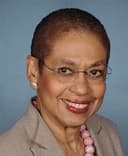
1 + 208
D· District of Columbia
YRS IN OFFICE
35
BILLS LED
114
COSPONSOR BREAKDOWNBIPARTISAN · 0%
DEM 208 REP 0 IND 0
ACTION TIMELINE
8 EVENTSJAN 3
Introduced in House
JAN 3
Sponsor introductory remarks on measure. (CR E1-2)
JAN 3
Introduced in House
JAN 3
Referred to the Committee on Oversight and Government Reform, and in addition to the Committees on Rules, Armed Services, the Judiciary, and Energy and Commerce, for a period to be subsequently determined by the Speaker, in each case for consideration of such provisions as fall within the jurisdiction of the committee concerned.
BILL INFO
TypeHouse Bill
NumberHR 51
Congress119th
StatusIn Committee
IntroducedJan 3, 2025
Last actionJan 3, 2025
READER REACTIONS
OVERALL SENTIMENT
No reactions yet. Be the first to weigh in.
Discussion
Loading comments...
IN COMMITTEE· 119TH CONGRESS · OVERSIGHT AND GOVERNMENT REFORM COMMITTEE · INTRODUCED JAN 3, 2025
House BillHR 51Congressional districts and representationGovernment buildings, facilities, and property
Washington, D.C. Admission Act
INTRODUCED JAN 3, 2025· LAST ACTION JAN 3, 2025
PASSAGE CHANCES
—%
READING
86 min
COSPONSORS
208
COMPLEXITY
Moderate