Bills · HR 4506
IN COMMITTEE· 119TH CONGRESS
House BillHR 4506International Affairs
Securing Global Telecommunications Act
INTRO JUL 17· LAST ACTION JUL 17
READING
6MIN
COSPONSORS
2
READER REACTIONS0 TOTAL
NO VOTES YET · BE THE FIRST
- Introduced only
LEGISLATIVE PROGRESS
STEP 2 / 8Introduced
In Committee
Reported
Passed House
Passed Senate
Conference
To President
Became Law
WHAT THE BILL DOES
AI-writtenVoters should care about this bill because it addresses who controls the global internet and phone networks, which has significant implications for national security, data privacy, and economic competitiveness. If this bill becomes law, the U.S. will actively work to steer other nations away from technologies it considers a security risk, potentially shaping the global technological landscape for decades. This could mean more secure and reliable networks for some countries, but it might also intensify geopolitical competition over technology. Without this bill, the U.S. government's efforts in this area might be less coordinated and less focused, allowing the influence of rival nations in global telecommunications to potentially grow unchecked.
KEY PROVISIONS
4AI-extractedPROVISION 01
Requires the Secretary of State to develop a 'Strategy to Secure Global Telecommunications Infrastructure' within 90 days of the bill becoming law.
This establishes a clear, coordinated U.S. government plan to promote secure global communication networks.
PROVISION 02
The strategy must include specific sections on mobile networks (including Open RAN and 'rip-and-replace' projects), data centers, 6G technologies, and low-Earth orbit satellites.
This ensures the strategy addresses key areas of modern and future telecommunications, focusing on competition against specific foreign vendors.
PROVISION 03
Mandates a report within 90 days on Russian and Chinese efforts to influence the International Telecommunication Union (ITU) and advance authoritarian interests.
This aims to expose and counter attempts by rival nations to shape global internet governance and standards to their advantage.
PROVISION 04
Requires consultation with several U.S. agencies, including the Export-Import Bank, Development Finance Corporation, USAID, and the FCC, when developing the strategy.
This ensures a comprehensive approach that leverages various U.S. government tools, from diplomacy to financing, to achieve the bill's goals.
SPONSORSHIP
1 + 2
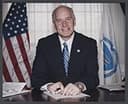
D· Massachusetts
YRS IN OFFICE
15
BILLS LED
22
COSPONSOR BREAKDOWNBIPARTISAN · 0%
DEM 0 REP 2 IND 0
ACTION TIMELINE
2 EVENTSJUL 17
Introduced in House
JUL 17
Referred to the House Committee on Foreign Affairs.
BILL INFO
TypeHouse Bill
NumberHR 4506
Congress119th
StatusIn Committee
IntroducedJul 17, 2025
Last actionJul 17, 2025
READER REACTIONS
OVERALL SENTIMENT
No reactions yet. Be the first to weigh in.
Discussion
Loading comments...
IN COMMITTEE· 119TH CONGRESS · FOREIGN AFFAIRS COMMITTEE · INTRODUCED JUL 17, 2025
House BillHR 4506International Affairs
Securing Global Telecommunications Act
INTRODUCED JUL 17, 2025· LAST ACTION JUL 17, 2025
PASSAGE CHANCES
—%
READING
6 min
COSPONSORS
2
COMPLEXITY
Moderate