Bills · HR 3971
IN COMMITTEE· 119TH CONGRESS
House BillHR 3971Labor and Employment
Domestic Workers Bill of Rights Act
INTRO JUN 12· LAST ACTION JUN 12
READING
106MIN
COSPONSORS
115
READER REACTIONS0 TOTAL
NO VOTES YET · BE THE FIRST
- Introduced only
LEGISLATIVE PROGRESS
STEP 2 / 8Introduced
In Committee
Reported
Passed House
Passed Senate
Conference
To President
Became Law
WHAT THE BILL DOES
AI-writtenThis bill matters because it addresses a large sector of the workforce—domestic workers—who have historically been excluded from many federal labor protections. If it becomes law, it would provide these workers with fundamental rights like overtime pay, paid sick leave, and protection from discrimination, which are standard for most other American workers. This could lead to improved economic stability and better working conditions for millions, many of whom are women, women of color, and immigrants, as highlighted in the bill's findings.
If the bill does not become law, domestic workers will continue to rely on varying state-level protections, or lack thereof, and will not have a nationwide baseline of rights for wages, scheduling, and anti-discrimination. This means they could continue to face issues such as unpredictable hours, lack of paid time off, wage deductions, and discriminatory practices without federal recourse. Voters should care because these services are essential to many households and the economy, and the conditions of these workers can impact the quality and availability of care and household support.
KEY PROVISIONS
5AI-extractedPROVISION 01
Extends overtime pay eligibility to live-in domestic employees, meaning they would receive higher pay for hours worked beyond a standard workweek.
This provision would ensure fair compensation for a group of workers often excluded from such protections, impacting their financial well-being.
PROVISION 02
Requires employers to provide domestic employees with written agreements detailing wages, hours, duties, and other terms of employment.
This would bring clarity and transparency to the employment relationship, reducing potential disputes and exploitation.
PROVISION 03
Guarantees domestic employees the right to earn paid sick days, allowing them to take time off for illness without losing pay.
This would provide essential health and economic security, ensuring workers don't have to choose between their health and their livelihood.
PROVISION 04
Amends federal civil rights law to explicitly include certain domestic employees in protections against discrimination based on race, color, religion, sex, and national origin.
This would extend critical anti-discrimination safeguards to domestic workers, addressing historical exclusions and promoting equity.
PROVISION 05
Establishes a Domestic Employee Standards Board to advise on and develop standards for domestic work, and authorizes funding for community-based education and a national hotline.
These measures would create infrastructure for ongoing policy development, awareness, and enforcement of domestic worker rights.
SPONSORSHIP
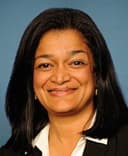
1 + 115
D· Washington
YRS IN OFFICE
9
BILLS LED
48
COSPONSOR BREAKDOWNBIPARTISAN · 0%
DEM 115 REP 0 IND 0
ACTION TIMELINE
2 EVENTSJUN 12
Introduced in House
JUN 12
Referred to the Committee on Education and Workforce, and in addition to the Committees on House Administration, Energy and Commerce, Ways and Means, Oversight and Government Reform, and the Judiciary, for a period to be subsequently determined by the Speaker, in each case for consideration of such provisions as fall within the jurisdiction of the committee concerned.
BILL INFO
TypeHouse Bill
NumberHR 3971
Congress119th
StatusIn Committee
IntroducedJun 12, 2025
Last actionJun 12, 2025
READER REACTIONS
OVERALL SENTIMENT
No reactions yet. Be the first to weigh in.
Discussion
Loading comments...
IN COMMITTEE· 119TH CONGRESS · OVERSIGHT AND GOVERNMENT REFORM COMMITTEE · INTRODUCED JUN 12, 2025
House BillHR 3971Labor and Employment
Domestic Workers Bill of Rights Act
INTRODUCED JUN 12, 2025· LAST ACTION JUN 12, 2025
PASSAGE CHANCES
—%
READING
106 min
COSPONSORS
115
COMPLEXITY
Moderate