Bills · HR 1774
IN COMMITTEE· 119TH CONGRESS
House BillHR 1774Transportation and Public Works
To amend title 23, United States Code, to withhold certain apportionment funds from the District of Columbia unless the Mayor of the District of Columbia removes the phrase Black Lives Matter from the street symbolically designated as Black Lives Matter Plaza, redesignates such street as Liberty Plaza, and removes such phrase from each website, document, and other material under the jurisdiction of the District of Columbia.
INTRO MAR 3· LAST ACTION MAR 3
READING
2MIN
COSPONSORS
0
READER REACTIONS0 TOTAL
NO VOTES YET · BE THE FIRST
- Introduced only
LEGISLATIVE PROGRESS
STEP 2 / 8Introduced
In Committee
Reported
Passed House
Passed Senate
Conference
To President
Became Law
WHAT THE BILL DOES
AI-writtenThis bill matters because it represents a direct federal intervention into local naming conventions and symbols within the District of Columbia. It raises questions about the balance of power between the federal government and local D.C. governance, particularly since D.C. does not have full statehood.
Voters should care because it could set a precedent for the federal government dictating specific cultural or political expressions at the local level. If this bill becomes law, D.C. could lose substantial funding for its transportation infrastructure, which directly affects residents' daily lives and the city's ability to manage its public services. If it doesn't become law, D.C. retains local control over its street names and official communications without the threat of federal funding cuts.
KEY PROVISIONS
5AI-extractedPROVISION 01
Requires the Mayor of the District of Columbia to remove the phrase 'Black Lives Matter' from 16th Street, N.W., known as 'Black Lives Matter Plaza'.
This provision directly targets a symbolic street designation established by the local D.C. government.
PROVISION 02
Requires the Mayor to redesignate the aforementioned street segment as 'Liberty Plaza'.
This specifies the new name the street must adopt, replacing the current symbolic designation.
PROVISION 03
Requires the Mayor to remove the phrase 'Black Lives Matter' from all official websites, documents, and other materials under the District of Columbia's jurisdiction.
This extends the requirement beyond the physical street to all official communications and records of the D.C. government.
PROVISION 04
Withholds 50% of federal highway apportionment funds from the District of Columbia if the Mayor does not comply with these requirements.
This establishes the financial consequence for non-compliance, impacting a significant portion of D.C.'s transportation budget.
PROVISION 05
Sets a 60-day deadline for the Mayor of the District of Columbia to comply with the requirements after the bill's enactment.
This establishes a specific timeframe for the District of Columbia to implement the changes to avoid funding cuts.
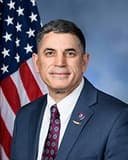
SPONSORSHIP
1 + 0
R· Georgia
YRS IN OFFICE
5
BILLS LED
33
ACTION TIMELINE
3 EVENTSMAR 3
Introduced in House
MAR 3
Referred to the House Committee on Transportation and Infrastructure.
MAR 3
Referred to the Subcommittee on Highways and Transit.
BILL INFO
TypeHouse Bill
NumberHR 1774
Congress119th
StatusIn Committee
IntroducedMar 3, 2025
Last actionMar 3, 2025
READER REACTIONS
OVERALL SENTIMENT
No reactions yet. Be the first to weigh in.
Discussion
Loading comments...
IN COMMITTEE· 119TH CONGRESS · TRANSPORTATION AND INFRASTRUCTURE COMMITTEE · INTRODUCED MAR 3, 2025
House BillHR 1774Transportation and Public Works
To amend title 23, United States Code, to withhold certain apportionment funds from the District of Columbia unless the Mayor of the District of Columbia removes the phrase Black Lives Matter from the street symbolically designated as Black Lives Matter Plaza, redesignates such street as Liberty Plaza, and removes such phrase from each website, document, and other material under the jurisdiction of the District of Columbia.
INTRODUCED MAR 3, 2025· LAST ACTION MAR 3, 2025
PASSAGE CHANCES
—%
READING
2 min
COSPONSORS
0
COMPLEXITY
Moderate