Bills · HR 139
PASSED HOUSE· 119TH CONGRESS
House BillHR 139Science, Technology, Communications
Sunshine Protection Act of 2025
INTRO JAN 3· LAST ACTION JUL 15
READING
2MIN
COSPONSORS
35
READER REACTIONS0 TOTAL
NO VOTES YET · BE THE FIRST
- Introduced only
LEGISLATIVE PROGRESS
STEP 4 / 8Introduced
In Committee
Reported
Passed House
Passed Senate
Conference
To President
Became Law
WHAT THE BILL DOES
AI-writtenThis bill matters because it proposes an end to the twice-yearly clock changes that many Americans find disruptive. Voters often care about this because the practice of "springing forward" and "falling back" has been linked to issues like temporary increases in health problems such as heart attacks and strokes, sleep disturbances, and a decrease in productivity.
If this bill becomes law, most of the country would experience more daylight in the evenings year-round, which could allow for more after-work outdoor activities or leisure time. However, it would also mean significantly darker winter mornings for many. If the bill does not pass, the current system of switching between Standard Time and Daylight Saving Time will continue, maintaining the existing pattern of daylight hours throughout the year. The decision often comes down to weighing potential public health benefits and economic advantages against concerns about dark mornings and potential disruptions to certain sectors.
KEY PROVISIONS
3AI-extractedPROVISION 01
Repeals the section of federal law that defines the annual temporary period for Daylight Saving Time.
This directly eliminates the legal basis for the twice-yearly clock changes.
PROVISION 02
Amends existing law to permanently shift all standard time zones forward by one hour, effectively making the current Daylight Saving Time the year-round standard.
This is the primary mechanism for implementing permanent Daylight Saving Time across the majority of the United States.
PROVISION 03
Grants states and areas that previously opted out of Daylight Saving Time the choice to either adopt the new permanent time or continue observing their previous year-round standard time.
This provision maintains local autonomy for regions that historically preferred not to observe the time change.
SPONSORSHIP
1 + 35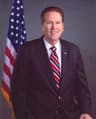
R· Florida
YRS IN OFFICE
19
BILLS LED
46
COSPONSOR BREAKDOWNBIPARTISAN · 29%
DEM 3 REP 32 IND 0
ACTION TIMELINE
14 EVENTSJUL 15
Received in the Senate and Read twice and referred to the Committee on Commerce, Science, and Transportation.
JUL 14
Considered under the provisions of rule H. Res. 1423. (consideration: CR H4445-4452)
JUL 14
Rule provides for consideration of H.R. 139, H.R. 8595, H.R. 9237 and H.R. 1181. The resolution provides for consideration of H.R. 139, H.R. 9237, and H.R. 1181 under a closed rule, and H.R. 8595 under a structured rule with one hour of debate and one motion to reconsider on each bill.
JUL 14
DEBATE - The House proceeded with one hour of debate on H.R. 139.
BILL INFO
TypeHouse Bill
NumberHR 139
Congress119th
StatusPassed House
IntroducedJan 3, 2025
Last actionJul 15, 2026
READER REACTIONS
OVERALL SENTIMENT
No reactions yet. Be the first to weigh in.
Discussion
Loading comments...
PASSED HOUSE· 119TH CONGRESS · ENERGY AND COMMERCE COMMITTEE · INTRODUCED JAN 3, 2025
House BillHR 139Science, Technology, Communications
Sunshine Protection Act of 2025
INTRODUCED JAN 3, 2025· LAST ACTION JUL 15, 2026
PASSAGE CHANCES
—%
READING
2 min
COSPONSORS
35
COMPLEXITY
Moderate